PARIS, Jan 9 (Reuters) – French power group Areva is set to sign a memorandum of understanding (MoU) for a Chinese nuclear re-processing deal worth about 10 billion euros ($11.9 billion), a source with knowledge of the matter said.
The deal with the China National Nuclear Corp (CNNC) was expected to be signed on Tuesday, during a state visit to China by French President Emmanuel Macron.
$1 = 0.8375 euros Reporting by Benjamin Mallet; Writing by Sudip Kar-Gupta; Editing by Leigh Thomas and Jean-Michel Belot
Putin fears nuclear power plant drone attack: Special military until is set up to prevent terrorist strike after the gadgets are used to bomb Russian bases in Syria Daily Mail Australia
Vladimir Putin is poised to create a special force to protect nuclear power plants
The move involves developing of technology to reliably zap incoming drones
It comes amid fears that terrorists could destroy bases using long-range missiles
Concerns have been heightened by jihadist attacks on its military bases in Syria
By Will Stewart and Rod Ardehali For Mailonline, 10 January 2018Vladimir Putin is poised to create a special force to protect against terrorist drone strikes on key nuclear power stations, following attacks on Russian bases in Syria.
The move – involving the development of technology to reliably zap drones – comes amid fears that terrorists could use sophisticated long-distance weapons to target nuclear bases.
Russian concerns have been heightened by jihadist attacks on its military bases in Syria using UAVs – unmanned aerial vehicles.
Vladimir Putin is poised to create a special force to protect key Russian installations like nuclear power stations from drone attacks in the same week his forces came under attack from ‘assault drones’ at its Khmeimim air base and Tartus naval base in Syria
Technology to zap drones has been developed in Russia but needs testing, said Col-General Sergey Melikov, first deputy director of the national guard.
He made clear nuclear power plants were among the state facilities that required protection.
Russia’s Ministry of Defence this week shared an image of what it claims is a drone fitted with explosives brought down before it attacked one of their military bases in Syria.
Russian concerns have been heightened by jihadist attacks on its military bases in Syria using UAVs – unmanned aerial vehicles.
The Kremlin has demanded that the Defence Ministry, several secret service agencies and the Russian National Guard work together to find a solution to destroy drones before they reach their targets.
Technology to zap drones has been developed in Russia but needs testing, said Col-General Sergey Melikov, first deputy director of the national guard.
He made clear nuclear power plants were among the state facilities that required protection.
‘We are considering an option to create groups to test experimental equipment to fight UAVs within our units,’ he said.
‘We have a certain device but it is not clear how easy is it to use.
‘It needs to be tested first.
‘If we realise that a special unit with a team of specialists needs to be created, of course we will do so.’
The move – involving the development of technology to reliably zap drones – comes amid fears that terrorists could use sophisticated long-distance weapons to target nuclear bases.
He revealed the plan is being studied by experts including those from the Defence Ministry and FSB, the former KGB counter-intelligence service.
Security expert Yury Zakharchenko said there was no universal technology yet to fight sophisticated drone attacks.
Such a system or systems must recognise and identify incoming UAVs and then launch an appropriate strike by either radio electronic attack or missile.
‘This task has not been resolved anywhere in the world because it’s difficult, but the work is being done,’ he said.
‘The establishment of a separate unit of Rosgvardia (national guard) will perhaps allow us to intensify research and development in this area.’
Recent pictures of captured Jihadist drones in Syria were released.
Cumbria Trust 9th Jan 2018, Former Leader of Cumbria County Council, and current Director of Cumbria Trust, Eddie Martin was interviewed by BBC Radio Cumbria, to discuss the latest plans to find a site to bury the UK’s nuclear waste. Our members will recall that it was Eddie Martin who along with his cabinet, halted the last search process. During the interview Eddie is challenged to respond to a point from Professor Francis Livens of Manchester University, who claimed that it would be possible to engineer a Geological Disposal Facility (GDF) in West Cumbria, although he admitted that it would be quicker, easier and cheaper elsewhere.
What Professor Livens omitted to say was that it would also be safer elsewhere as well since geology forms the final barrier. That was the conclusion of the £400m Nirex investigation in the 1980s and 90s, and the government-funded geologist during the last process backed the view that the prospects of finding the right geology were so poor in Cumbria that no commercial organisation would continue.
Perhaps Professor Livens,who is a radio-chemist rather than a geologist, is unaware of the history of this project, and particularly the conclusions reached by geologists on both sides of the debate. The entire purpose of the National Geological
screening exercise is to seek volunteers from geologically suitable areas and his intervention appears to preempt the report which is due to be released in the next few months.
The Nuclear Decommissioning Authority (NDA) is a non-departmental public body sponsored by the Department for Business, Energy & Industrial Strategy. The NDA is responsible for the operation, decommissioning and clean-up of 17 nuclear reactor and research sites in the UK.
Of the 17 sites, Sellafield is the largest in terms of size and annual expenditure. It is also one of the most complex and hazardous nuclear sites in Europe. In 2015, the NDA announced that the management arrangements it had in place for the Sellafield site were ineffective; in April 2016, Sellafield Ltd became a wholly-owned subsidiary of the NDA. The NDA says these new arrangements will enable faster hazard and risk reduction at the site, and a more effective management of major projects. Alongside these changes, Sellafield is readying itself for the end of its reprocessing activities in 2020, meaning its operational focus will be on reducing high hazard reduction and decommissioning nuclear facilities. Sellafield has set out a transformation plan to support these changes.
This study will examine whether the new arrangements at Sellafield are effective in reducing high risk and hazard on the site, and whether the NDA is making progress with the performance of its major projects.
If you would like to provide evidence for our study please email the study team on enquiries@nao.gsi.gov.uk, putting the study title in the subject line.
The team will consider the evidence you provide; however, please note that due to the volume of information we receive we may not respond to you directly. If you need to raise a concern please use our contact form.
China, France sign deal to enhance cooperation on nuclear energy Xinhua | 2018-01-10 07:17 GUANGZHOU— A Chinese nuclear power operator signed an agreement Tuesday with a French energy organization to deepen cooperation on nuclear power technology.
The deal, between China General Nuclear Power Corporation (CGN) and the French Alternative Energy and Atomic Energy Commission (CEA), focuses on areas such as nuclear reactor technology, advanced fuels and materials, and nuclear fuel cycles.
Under the agreement, CGN and CEA will deepen cooperation in the upstream and downstream nuclear power industry chain, including reactor life management and the concept design of the fourth-generation nuclear energy technology.
He Yu, chairman of CGN, said the new agreement will enhance bilateral exchanges in nuclear power technology and open new space for Sino-French nuclear power cooperation.
Founded in 1994, CGN is the largest nuclear power operator in China, with 39,000 employees worldwide. It focuses on the development of clean energies such as nuclear power, nuclear fuel, wind power and solar power.
The CEA is a key organization in research, development and innovation in France. Its main areas include defense and security, nuclear and renewable energy, and physical and life sciences.
A group of anti-war protestors marched on Shannon Airport early this morning to show their opposition to the US military’s use of the airport.
The march was led by 82-year-old peace activist Margaretta D’Arcy who was previously jailed for making an illegal incursion onto the runway at Shannon in 2012. Shortly before 7am today, Ms D’Arcy led the group of about 15 women on the 2km walk to the main airport building.
The women had been taking part in a 25-hour peace vigil at a camp at Drumgeely close to the airport.
The 25-hour event was organised by Shannon Airport Women’s Peace Camp to mark Nollaig na mBan
A spokeswoman said: “We gathered to draw attention to the use of Shannon Airport as a military base and to demonstrate the revulsion at state-sponsored violence and facilitation of the US military.”
When the group reached the security checkpoint at the entrance to the airport, they were advised they could march to the terminal but would not be allowed inside.
On reaching the airport building, the women sat and sang peace songs before dispersing again at around 9am and returning to their camp.
Some members of ShannonWatch, a group that monitors US military used of Shannon Airport, also attended and supported the event.
‘Significant’ radioactive waste problem at Trident submarine base, The Ferret, Ferret Journalists on January 7, 2018, Scotland’s environmental watchdog has criticised nuclear waste handling at the UK Trident bomb base on the Clyde after a “significant” mix-up over the disposal of submarine waste.
During an August 2017 visit to the Royal Naval Armaments Depot at Coulport, Scottish Environment Protection Agency (Sepa) staff found untested waste from submarines, potentially containing radioactive material, had been mixed with other waste.
This meant that radioactive waste could have been taken off site and disposed of as if it were non-radioactive waste.
Sepa also said that the Royal Navy was in breach of an agreement about when and how it should tell Sepa about waste incidents, prompting the SNP to say the issue was “deeply worrying” while calling on the UK Government to investigate.
The Ministry of Defence (MOD) is supposed to tell Sepa ‘without delay’ when an environmental incident occurs. It should then provide a written report within 14 days.
Documents released under freedom of information legislation show that an internal MOD probe found that no radioactive waste left the site. But the only reason the untested material was not taken off the base is because vigilant civilian waste contractors refused to pick up the incorrectly processed waste.
A Sepa letter to the MOD said that the watchdog considered this type of incident as “significant” adding that had the Royal Navy been a civilian operator, it would have considered issuing a formal written warning.
Sepa’s chief officer, John Kenny, told The Ferret that the incident raised concerns regarding the “adequacy of arrangements for radioactive waste handling” at the Coulport site…….
“The most damning thing about this is that nothing has changed,” it said. “The MOD are still failing to follow their own operating procedures, and they’re still failing dismally when it comes to telling the regulator and protecting the environment.”
The group called for more to be done by both the MOD and Sepa to alert the public when environmental incidents occur.
“It shouldn’t be the case that this information should come to light by freedom of information, they should have a statutory public duty to disclose this information,” it said. https://theferret.scot/trident-sepa-radioactive-waste/
The profitability of nuclear plant construction has been worsening all over the world
Nevertheless, the government intends to extend all-out support for the project.
Japanese gov’t to guarantee bank loans for Hitachi’s nuclear plant project in Britainhttps://mainichi.jp/english/articles/20180103/p2a/00m/0na/004000c (Mainichi Japan) The Japanese government is poised to guarantee the full amount of loans that three megabanks will extend for a nuclear plant construction project in Britain by Hitachi Ltd., sources familiar with the project said.
A group of banks, including the three megabanks and the government-affiliated Japa n Bank for International Cooperation (JBIC), will extend approximately 1.5 trillion yen in loans to Hitachi’s atomic power station project.
Of the amount, the government will fully guarantee loans to be extended by the megabanks, while the governmental Development Bank of Japan (DBJ) will support the project by making capital investments. Chubu Electric Power Co. and other utilities are also considering investing in the project.
The state will thus join hands with the private sector in extending all-out support for the project to export a nuclear plant worth some 3 trillion yen.
However, concerns have been raised that if the project were to run into the red, taxpayers could be forced to shoulder the burden.
The project to be covered with loans and investments is an atomic power station that a Hitachi subsidiary in Britain is aiming to build in Anglesey, Britain. The firm hopes to start operations at the plant in the mid-2020s.
Hitachi Ltd. is poised to make a final decision on whether to invest in the project by the end of fiscal 2019. However, Hitachi is consulting with the Japanese and British governments and financial institutions over loans, their guarantees and investment on the grounds that the electronics giant alone cannot take risks.
Japanese financial institutions and the governmental Nippon Export and Investment Insurance (NEXI) offered in December last year to extend financial assistance for the project.
According to the sources, Hitachi estimates the total cost of the project at about 3 trillion yen. Hitachi aims to obtain about 1.5 trillion yen in loans to cover half of the amount while raising another 1.5 trillion yen through investments.
Each of the three megabanks — the Bank of Tokyo-Mitsubishi UFJ, Ltd., Sumitomo Mitsui Banking Corp. and Mizuho Bank, Ltd. — intend to extend loans of more than 100 billion yen, totaling some 500 billion yen. NEXI will guarantee the loans. Hitachi intends to obtain the reminder of the loans from the JBIC and commercial financial institutions in Britain.
The DBJ has notified Hitachi of its intention to make capital investments in the atomic power station project, while Chubu Electric Power and Japan Atomic Power Co. are also considering investing in the venture.
Hitachi has also asked other utilities including Tokyo Electric Power Co. and trading houses to invest in the project in a bid to disperse risks involving the project.
The British government, which is speeding up the construction of nuclear plants, also intends to invest in the project, and Japanese and British Cabinet ministers in charge of energy policy exchanged a memorandum on cooperation in December last year.
The profitability of nuclear plant construction has been worsening all over the world due to an increase in the costs of ensuring safety since the outbreak of the Fukushima nuclear crisis in March 2011, contributing to the financial crisis of Toshiba Corp., another electronics giant.
Nevertheless, the government intends to extend all-out support for the project.
“It’s essential to win a contract on the British project in order to maintain Japan’s nuclear technology,” said a high-ranking official of the Economy, Trade and Industry.
He says through its social media manipulation operations, spy agency Government Communications Headquarters (GCHQ) tried to influence online activists during the 2009 Iranian presidential election protests, and the 2011 uprisings widely known as the Arab Spring.
Al-Bassam told the Chaos Communication Congress in Germany last week that the Joint Threat Research Intelligence Group (JTRIG) – a unit in GCHQ – uses “dirty tricks” to target activists.
He says JTRIG has been tasked by the British government to “[use] online techniques to make something happen in the real or cyber world.” To fulfil this aim, a wide but basic array of technological tools and software are used, including ‘DEADPOOL,’ which is described as a “URL shortening service,” and ‘HUSK,’ a “secure one-to-one web based dead-drop messaging platform.”
He told the conference: “It’s basically a fancy name for sitting on Twitter and Facebook all day and trolling online. What they do, is they conduct what they call ‘human intelligence’ – which is like the act of interacting with humans online to try and make something happen in the real world.
“In their own words one of the things they do is to use ‘dirty tricks’ to ‘destroy, deny, degrade [and] disrupt’ enemies by ‘discrediting’ them.”
JTRIG has been involved in infiltrating hacktivist groups Anonymous and LulzSec, and protesters in Iran, Syria and Bahrain, he says.
As a “honey pot” to attract activists, GCHQ set up free URL shortening service lurl.me, which was used on Twitter and other social media platforms to spread revolutionary messages in the Middle East. These messages would attract people protesting against the government there, and British intelligence would collect information on them.
Al-Bassam said he discovered this information among the documents leaked by NSA whistleblower Edward Snowden. “In 2011, I was unknowingly messaged… by a covert agent from [GCHQ], who was investigating the hacktivist groups of Anonymous and Lulzsec. Later that year, I was arrested and banned from the internet for my involvement in Lulzsec.
Then, in 2014, I discovered through a new Snowden leak that GCHQ had targeted Anonymous and Lulzsec, and that the person that messaged me was a covert employee, pretending to be a hacktivist.”
He added: “Because I was myself targeted in the past, I was aware of a key detail – a honeypot URL shortening service set up by GCHQ, that was actually redacted in the Snowden documents published in 2014. This URL shortening service enabled GCHQ to deanonymize another hacktivist and discover his real name and Facebook account, according to the leaked document.
“Using this key detail, I was able to discover a network of sockpuppet Twitter accounts and websites set up by GCHQ, pretending to be activists during the Arab spring of 2011,” he said.
Times 1st Jan 2018,Consultancy firms working for the government on the Hinkley Point C nuclear power station were advising the project’s Chinese investor and its French builder at the same time, an investigation by The Times has revealed.
KPMG, the professional services group, was paid £4.4 million between 2012 and 2017 as a financial adviser to the energy and business departments, despite telling officials that it was also acting for China General Nuclear Power
Corp on the project.
The apparent conflict of interest has been revealed after the Information Commissioner’s Office intervened to press for
disclosure from the Department for Business, Energy and Industrial Strategy. Previously, officials had redacted the information, claiming that it was commercially sensitive.
In a second potential conflict, Lazard, the financial advisory firm, was paid £2.6 million between 2012 and 2015 to
advise the business department on Hinkley Point. Details of its previously redacted tender documents reveal that it was an adviser to EDF, the French developer that is investing in Hinkley Point alongside the Chinese. A source said that Lazard’s advice to EDF was not related to the Somerset project.
Meg Hillier, chairwoman of the Commons public accounts committee, said that Hinkley Point was crucial public infrastructure and therefore it was “vital that auditors get full sight” of the potential conflicts. It “looks cosy”, she said, adding that it was “not really appropriate” for firms to be advising both sides.
The details have been released more than a year and half after The Times complained to the Information Commissioner’s Office, which informally advised the business department to reconsider its position. The department previously had handed over heavily redacted documents in response to a Freedom of Information request.
The Information Commissioner’s Office said that there was a “significant and important public interest”, something that had been strengthened by a report from the National Audit Office in June, which found that the government’s deal had “locked consumers into a risky and expensive project with uncertain strategic and economic benefits”. The project has been riddled with delays and controversy over its spiralling costs.
The National Audit Office also criticised the business department for insufficiently managing the potential conflict of Leigh Fisher, another government adviser. The Times reported in November 2016 that Leigh Fisher, the management consultant, had been awarded contracts worth a combined £1.2 million despite telling officials that the British division of Jacobs Engineering Group, an American firm that owns Leigh Fisher, was working for EDF on Hinkley Point. https://www.thetimes.co.uk/edition/business/advisers-on-hinkley-point-c-nuclear-power-station-had-cosy-ties-to-both-sides-xftxcl9sz
The decommissioning process at the site, which closed in December 2015, has been hit by delays following problems with machinery.
About half of the fuel has been removed from the plant and work to remove fuel was expected to be completed by the end of 2018.
Operator Magnox has now said it will not be completed until November 2019. The site’s two reactors held 49,000 fuel elements which have to be cleared as part of the decommissioning process.
But the work has been delayed because the 50-year-old machine used to remove them needed new parts.
Wylfa is the last of Magnox’s 12 UK power stations to be switched off and, across the firm’s sites, the cost of the process has almost doubled to an estimated £6bn.
It will take more than 100 years for the site to be fully cleared.
Horizon wants to build a replacement nuclear plant, Wylfa Newydd, next to the site, which would operate for 60 years and generate electricity for around five million homes.
But the proposals have to overcome planning and cost hurdles – the “strike price” for the electricity generated – before the plant can get the go ahead.
While this number was much lower than the previous year, one incident was above the lowest level on the INES scale, for the first time since 2015.
The International Nuclear Events Scale (INES) has seven levels, Level 1 being the lowest.
In 2016 there were 15 nuclear incidents in Belgium, all on Level 1. While there were fewer incidents this year, one of these was on Level 2.
That incident took place in July, during the transport of poorly packaged radioactive material that had been sent on passenger flights from Cairo to Brussels via Zurich. Many passengers, including one Belgian, were potentially exposed to radiation above the prescribed limit, but without any significant consequences for their health.
One of the Level 1 incidents was at the Doel plant where a deterioration of the concrete was observed in October.
Blunders, catastrophic, delays, even bankruptcy… ANOTHER nuclear power plant is going into financial meltdownhttp://www.thisismoney.co.uk/money/article-5223475/ANOTHER-nuclear-power-plant-enerting-financial-meltdown.html Neil Craven for The Mail on Sunday, 1 January 2018The company behind one of Britain’s biggest nuclear power projects has plunged to a £266 million loss citing ‘uncertainties’ over its future and the viability of crucial technology.
Japanese firm Toshiba said the huge loss incurred by one of its UK subsidiaries was due to writing off hundreds of millions of pounds of investment in the proposed Moorside plant, in west Cumbria.
It is the latest sign of financial strain at the Tokyo-based firm amid wider concerns over the spiralling costs and catastrophic delays that have beset the UK’s nuclear industry.
Britons were last week supposed to be cooking their turkeys with power from EDF’s nuclear plant at Hinkley Point in Somerset, which is now not expected to be in use for another decade. ‘EDF will turn on its first nuclear plant in Britain before Christmas 2017,’ said Vincent de Rivaz in 2007, who stepped down as group chief executive in November. ‘It is the moment of the power crunch. Without it, the lights will go out.’
It was envisaged that new nuclear plants at Moorside, Hinkley Point and Wylfa in Anglesey would between them generate a fifth of the UK’s electricity.
This may still happen. But right now, nuclear firms are struggling with the expense, stringent regulatory hurdles and costly project delays – just as the cost of other forms of electricity fall. Toshiba won the contract to build the nuclear power plant at Moorside, on land next to the Sellafield nuclear fuel reprocessing site.
But it was forced in March to place its US nuclear division Westinghouse into bankruptcy protection. Last month, it said it would sell Westinghouse for £4 billion. Troubled Toshiba is now in talks to sell its interests in the Moorside project to Kepco, majority-owned by the South Korean government.
Toshiba has two UK subsidiaries: Advance Energy UK, which incurred the £266 million loss; and NuGeneration, which is directly responsible for running Moorside.
With a cloud of uncertainty over the project, the Japanese firm has admitted in reports issued by its UK subsidiaries: ‘The directors do not know whether a sale of the shares of [NuGeneration] will be completed nor how any successful bidder will frame the deal.’
Kepco said it hoped to complete a deal to take over the running of the project early next year.
Uncertainties are understood to include the use of Westinghouse’s AP1000 reactor. Approval for use at Moorside was first sought from UK regulators in 2011. It was granted approval by the Office for Nuclear Regulation in March – just days after Westinghouse entered bankruptcy protection.
Should Kepco decide to ditch the design and use its own, the project would likely be delayed for years until a new design is approved. Some estimates say that could put any launch back from 2025 to the late 2020s at the very earliest. ‘The whole thing is a mess,’ said Martin Forwood of campaign group Core, which opposes the Moorside development.
‘Kepco would almost certainly push to use its own reactors so the big question is whether they would have to start afresh on consultation.
‘A lot of people around Moorside believe it will never take off.’
Forwood said the costs of other forms of renewable energy are falling and energy storage systems are being developed. ‘The longer these plans get delayed the less nuclear is needed,’ he added.
And, according to Forwood, the firms involved in the projects at Moorside and Wylfa ‘are not going to get anywhere near what the Government signed up for at Hinkley’.
The House of Commons Public Accounts Select Committee last month said there had been ‘grave strategic errors’ awarding French government-backed EDF the Hinkley Point contract.
It said ‘the economics of nuclear power in the UK have deteriorated’ and a ‘blinkered determination’ to agree the 35-year Hinkley deal, ‘regardless of changing circumstances’ had lumbered consumers with £30 billion payments over market rates for electricity.
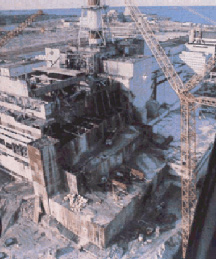
Scientists might have been wrong about the Chernobyl disaster, New York Post ,By James Rogers, November 20, 2017 A new theory on the Chernobyl disaster could shed fresh light on the world’s worst nuclear accident.
In an article published in the journal Nuclear Technology, scientists argue that the first of two explosions reported by eyewitnesses was a nuclear, not a steam explosion, as is widely thought. Instead, the researchers believe that the first explosive event noted by eyewitnesses was a jet of debris ejected to an altitude of almost 2 miles by a series of nuclear explosions within the Chernobyl reactor. Some 2.7 seconds later, they say, a steam explosion ruptured the reactor and sent yet more debris into the atmosphere at lower altitudes.
“We realized that we, based on real measurements and observations, could explain details in the Chernobyl accident scenario and the nature of the two major explosions that occurred during a few seconds that unfortunate night more than 31 years ago,” explained the report’s lead author Lars-Erik De Geer, in an email to Fox News.
The 1986 explosion at the Chernobyl nuclear plant in Ukraine sparked a widespread environmental disaster. Thirty workers died either from the explosion at the number four reactor or from acute radiation sickness within several months. The accident exposed millions in the region to dangerous levels of radiation and forced a wide-scale, permanent evacuation of hundreds of towns and villages in Ukraine and Belarus.
A cloud of radioactive particles from the disaster reached other parts of parts of Europe, such as Sweden.
The report cites xenon isotopes detected by the VG Khlopin Radium Institute in Leningrad four days after the accident. Leningrad, now known as Saint Petersburg, is about 599 miles north of Chernobyl. Xenon isotopes were also reported in Cherepovets, about 622 miles north of Chernobyl.
The result of recent nuclear fission, the isotopes were likely caused by a recent nuclear explosion, according to the experts. This is in contrast to the main Chernobyl debris that contained equilibrium xenon isotopes from the reactor’s rupture and drifted toward Scandinavia.
This new theory presented by experts from the Swedish Defense Research Agency, the Swedish Meteorological and Hydrological Institute and Stockholm University, could offer fresh insight into the disaster. The new analysis could help prevent similar incidents from occurring, experts say.
The destroyed reactor tank suggests that the first explosion caused temperatures high enough to melt a 6.6-foot bottom plate in part of the core, the researchers said, noting that this damage is consistent with a nuclear explosion. In the rest of the core, the bottom plate was relatively intact, but had dropped by nearly 13 feet. This, they say, is consistent with a steam explosion, noting that the temperature would not be sufficient to melt the plate, but could generate enough pressure to force it down.
Additionally, seismic measurements and eyewitness reports of a blue flash above the reactor a few seconds after the first explosion could also support the new theory of a nuclear explosion followed by a steam explosion……..
The disaster shone a spotlight on lax safety standards and government secrecy in the former Soviet Union. The explosion on April 26, 1986, was not reported by Soviet authorities for two days and then only after winds had carried the fallout across Europe and Swedish experts had gone public with their concerns.
The final death toll from Chernobyl is subject to speculation, due to the long-term effects of radiation. Estimates range from 9,000 by the World Health Organization to one of a possible 90,000 by the environmental group Greenpeace.
Times 29th Dec 2017, In 1987 Ray Burke,
then environment minister, received a firm reply from his British
counterpart after calling for the closure of the Sellafield nuclear
processing plant.
State papers showed that Peter Walker, the UK energy
secretary, rejected what he claimed were the Fianna Fáil TD’s unfounded
allegations about the safety of British nuclear energy facilities,
including Sellafield. Walker, who died in 2010, said that the Nuclear
Installations Inspectorate, the British nuclear watchdog at the time, was
satisfied that closure of the plant would be “out of all proportion to
the very low risks which arose from a few minor incidents”.
Mr Burke wrote to Walker on March 24, 1987 to raise concerns about the threat posed
to Irish citizens by nuclear installations in Britain. He also criticised
the British government’s decision to proceed with the construction of
another nuclear reactor at Sizewell in Suffolk given the number of
incidents at British nuclear plants. https://www.thetimes.co.uk/article/uk-rejected-irish-ministers-nuclear-power-complaints-7fvbnhmh7








 nuclear-news