Nuclear power plants must be able to withstand fires caused by aircraft impacts
https://www.sciencedaily.com/releases/2018/01/180116123750.htm
- Date:
- January 16, 2018
- Source:
- VTT Technical Research Centre of Finland
- Summary:
- Researches examined the transport, evaporation and combustion of liquids in large-scale fire incidents.
In his dissertation, Topi Sikanen, a Master of Science (Technology) and Research Scientist at VTT, examined the transport, evaporation and combustion of liquids in large-scale fire incidents. He developed practical models which will help to predict the consequences for nuclear power plants of fires caused by aircraft impacts.
Analyses of airliner impacts became mandatory after terrorists deliberately crashed two aircraft into the World Trade Center twin towers in New York in 2001.
Nuclear power plants must continuously improve their safety standards. A modern nuclear power plant, for example, must withstand fires caused by aircraft crashing into it. In his dissertation, Topi Sikanen developed methods of modelling unusual and major accidents. The practical outcome of the dissertation was a number of tested, applicable models which help to predict the consequences of fires at nuclear power plants
Sikanen applied the computational tools of fluid dynamics to the fire safety analyses he presented in his three-part dissertation. The first part of the dissertation concerns the conveyance of liquid discharged from fuel tanks in connection with aircraft impacts. In the second part, Sikanen modelled liquid pool fires, the evaporation of liquid, and the heat transfer. In the last part, Sikanen applied the methods that he had developed to the analysis of the impact of aircraft crashing into a nuclear power plant.
The results of the safety and fire safety analyses presented in this dissertation, which falls under construction technology, can be used by the designers and implementers of nuclear power plants and other large buildings.
Russia’s new underwater drone – a ‘doomsday’ weapon
Pentagon confirms existence of Russian ‘doomsday’ weapon, A NEW weapon of immense destructive power is now in Russia’s hands — and the rest of the world should be worried, particularly the United States. News.com.au, James Law@JournoLawJ 17 Jan 18
THE Pentagon has confirmed that Russia has developed an unmanned underwater nuclear drone that has the potential to devastate US ports and harbours, according to a leaked government report.
The revelation is one of many alarming findings in a draft version of the US’s Nuclear Posture Review due for release next month.
The paper, published by the Huffington Post, argues that America has been left exposed because Russia has continued to develop nukes since the end of the Cold War, while the US has reduced their role in its security strategy.
The US Defence Department cites this risk — combined with growing military threats from China, North Korea and Iran — to argue for increased spending on nuclear weapons.
Russia has embarked on a “comprehensive modernisation” of its nuclear arsenal, the paper says.
“Russia’s strategic nuclear modernisation has increased and will continue to increase its warhead delivery capacity, and provides Russia with the ability to rapidly expand its deployed warhead numbers,” the draft paper states.
“In addition to modernising ‘legacy’ Soviet nuclear systems, Russia is developing and deploying new nuclear warheads and launchers.
“These efforts include multiple upgrades for every leg of the Russian nuclear triad of strategic bombers, sea-based missiles, and land-based missiles.
“Russia is also developing at least two new intercontinental range systems, a hypersonic glide vehicle and a new intercontinental nuclear-armed undersea autonomous torpedo.”
The mention of the “torpedo” is the first time the Pentagon has publicly confirmed the existence of the weapon, referred to elsewhere in the document as a “AUV”, or autonomous underwater vehicle.
Russia first teased that it was working on the weapon in 2015 when blueprints of the drone were filmed over the shoulder of general during a meeting with President Vladimir Putin and broadcast on state television.
Experts argued at the time that the exposure of the plans wasn’t an accident; it was a deliberate warning to Washington and the rest of the West.
The Russian blueprint claims that the weapon, known officially as Ocean Multipurpose System Status-6, has a range of 10,000km, can descend 1km below sea level and can reach a top speed faster than 56 knots. It is designed to carry a 100-megaton nuclear warhead.
According to a BBC translation of the plans, the drone is designed to “destroy important economic installations of the enemy in coastal areas and cause guaranteed devastating damage to the country’s territory by creating wide areas of radioactive contamination, rendering them unusable for military, economic or other activity for a long time”.
While the Pentagon has admitted the risks of the Russians having this technology, there is no mention in the Nuclear Posture Review of the US developing a similar nuclear-tipped weapon.
US intelligence agencies detected that Russia tested the drone when it was launched from a Sarov-class submarine in 2016, The Washington Free Beacon reported.
“Status-6 is designed to kill civilians by massive blast and fallout,” former Pentagon official Mark Schneider told the Free Beacon at the time.
“The Russian government daily Rossiyskaya Gazeta reported that to achieve ‘extensive radioactive contamination’ the weapon ‘could envisage using the so-called cobalt bomb, a nuclear weapon designed to produce enhanced amounts of radioactive fallout compared to a regular atomic warhead.
“A cobalt bomb is a ‘doomsday’ weapons concept conceived during the Cold War, but apparently never actually developed.”
The weapon could be used to threaten the US’s two nuclear missile submarine bases in Georgia and Washington state………
The paper ultimately argues for increased investment in the US’s nuclear triad — which consists of land-based intercontinental ballistic missiles (ICBMs), strategic bombers and submarine-launched ballistic missiles.
The Defence Department’s “top priority” is to secure an additional 3 to 4 per cent of its budget to maintain its nuclear arsenal, which it says is essential to deter attacks from enemies.
“Our goal is to convince adversaries they have nothing to gain and everything to lose from the use of nuclear weapons,” Mr Mattis writes.
He suggests continuing the weapons modernisation program started by the Obama administration to replace nuclear ballistic missile submarines, strategic bombers, nuclear air-launched cruise missiles and ICBMs. He also expresses the aim to boost investment in nuclear weapons laboratories, fighter bombers and F-35A fighter jets.
This aim fits with reports last year that US President Donald Trump told military chiefs he wanted a nearly tenfold increase in the country’s nuclear arsenal. http://www.news.com.au/technology/pentagon-confirms-existence-of-russian-doomsday-weapon/news-story/16ef0f8642b1699f805f324489942345
UK nuclear lobby uses the good old “medical” pretense in its zeal for government subsidies
 Dr David Lowry, 15 January 2018
Nuclear red herring thrown into Euratom Exit debate by desperate nuclear sector seeing significant subsidies disappearing
The nuclear industry lobby is desperate for the UK to remain in Euratom, as it would mean the massive subsidies they receive for research and development via Euratom would be lost. But they don’t believe such concerns would really bother most politicians, but claiming Brexatom would result in loss of radioactive isotope supplies for medical diagnoses, which does concern the public and politicians. So they have made a huge song and dance – successfully- over this red herring claim, to keep the UK in Euratom. Below is the latest in this ongoing saga.
Nuclear research and medical isotopes, European Scrutiny Committee, 15 January 2018
|
Committee’s assessment
|
Politically important
|
…….Summary and Committee’s conclusions……..While the substance of the proposal was not controversial, its political context is—of course—Brexit. The Prime Minister’s formal notification of the UK’s withdrawal from the EU under Article 50 of the Treaty on European Union (TEU) also included Euratom.17 Nuclear industry stakeholders have expressed concerns that the two-year negotiating period under Article 50 is insufficient for the UK to replicate Euratom’s existing regulatory safeguards regime for nuclear facilities domestically and agree new cooperation agreements with the EU, the IAEA and third countries. In addition, the medical establishment has warned that withdrawal from Euratom could impact on the availability and cost of medical isotopes in the UK post-Brexit……
On 28 July, the new Minister for Energy (Richard Harrington) replied to our predecessors’ letter of 25 April. He noted that the Government had not conducted a formal impact assessment on leaving Euratom, but emphatically confirmed that the UK’s ability to import medical isotopes from the EU or the rest of the world “will not be affected by withdrawal from Euratom”.
He also acknowledged the nuclear industry’s broader concerns about the UK’s exit from Euratom, noting that an “unsatisfactory withdrawal risks significant impacts for the nuclear sector”.
Chernobyl – from nuclear wreck to solar power farm
Chernobyl nuclear power plant transformed into a massive solar plant, http://www.news.com.au/technology/environment/chernobyl-nuclear-power-plant-transformed-into-a-massive-solar-plant/news-story/2d8d365ca1a6a7bde0c75c2372e888ed [excellent graphs and photos]
IT was the site of the world’s worst ecological disaster, but Chernobyl has risen from the ashes of its nuclear meltdown and is undergoing a massive makeover. News Corp Australia Network JANUARY 15, 2018 AT ground zero of Ukraine’s Chernobyl tragedy, workers in orange vests are busy erecting hundreds of dark-coloured panels as the country gets ready to launch its first solar plant to revive the abandoned territory.
The new one-megawatt power plant is located just a hundred metres from the new “sarcophagus”, a giant metal dome sealing the remains of the 1986 Chernobyl accident, the worst nuclear disaster in the world.
“This solar power plant can cover the needs of a medium-sized village”, or about 2,000 flats, Yevgen Varyagin, the head of the Ukrainian-German company Solar Chernobyl which carried out the project, told AFP.
Eventually, the region is to produce 100 times the initial solar power, the company says.
The amount of sunshine “here is the same as in the south of Germany,” says Varyagin.
Ukraine, which has stopped buying natural gas from Russia in the last two years, is seeking to exploit the potential of the Chernobyl uninhabited exclusion zone that surrounds the damaged nuclear power plant and cannot be farmed.
CHERNOBYL EXCLUSION ZONE ‘SUITABLE FOR SCIENCE’
Reactor Number Four of the Chernobyl plant exploded April 26, 1986 and the fallout contaminated up to three quarters of Europe, according to some estimates, especially hitting Russia, Ukraine and Belarus.
Following the disaster, Soviet authorities evacuated hundreds of thousands of people and this vast territory, over 2,000 square kilometres wide, has remained abandoned.
The plant continued to operate the remaining reactors, the last of which was shut down in 2000, ending industrial activity in the area.
People cannot return to live in the zone for “more than 24,000 years”, according to the Ukrainian authorities, who nevertheless argue that a prudent industrial use can be possible again.
“This territory obviously cannot be used for agriculture, but it is quite suitable for innovative and scientific projects,” Ostap Semerak, Ukrainian Minister of the Environment and one of the promoters of placing solar projects in Chernobyl, told AFP in 2016.
The installation of a huge dome above the ruins of the damaged reactor just over a year ago made the realisation of the solar project possible.
Funded by the international community, it covered the old concrete structure which had become cracked and unstable, to ensure greater isolation of the highly radioactive magma in the reactor.
As a result, radiation near the plant plummeted to just one-tenth of previous levels, according to official figures
Even so, precautions are still necessary: the solar panels are fixed onto a base of concrete blocks rather than placed on the ground.
The soil remains contaminated, explains Varyagin, whose group is a joint venture between the Ukrainian firm Rodina Energy Group and Germany’s Enerparc AG.
“We can not drill or dig here because of the strict safety rules,” he says.
Last year the consortium completed a 4.2-megawatt solar power plant in the irradiated zone in neighbouring Belarus, not far from Chernobyl.
Ukrainian authorities offered investors nearly 2,500 hectares (25 square kilometres) for potential construction of solar power plants in Chernobyl.
Kiev has received about 60 proposals from foreign companies — including American, Chinese, Danish and French — who are considering participating in future solar developments in the area, according to Olena Kovalchuk, spokeswoman of the State Administration for the zone of Chernobyl.
Investors are attracted by the price that Ukraine has set for solar electricity, which “exceeds on average by 50 per cent of that in Europe”, Oleksandr Kharchenko, executive director of the Energy Industry Research Center, told AFP
He adds that cheap land and the proximity of the power grids makes Chernobyl particularly attractive, though there is still no rush of western investors to the region.
Safety concerns and Ukraine’s notorious bureaucracy and corruption has put some off.
“It is very important to have guarantees that working in the Chernobyl zone will be safe for those who will be doing it,” says Anton Usov, adviser to the European Bank for Reconstruction and Development (EBRD).
The bank does not currently foresee any investment to Ukraine in this field.
Horizon Nuclear’s Wylfa nuclear plan will increase UK’s radioactive trash by 80%

 NFLA 15th Jan 2018, NFLA submission on radioactive waste elements of the reactor design for the
Wylfa B site – it could increase the UK inventory of radioactive waste by as much as 80%. The Nuclear Free Local Authorities (NFLA) Welsh Forum has submitted its views to Natural Resources Wales (NRW) on the radioactive
waste elements of the Advanced Boiling Water Reactor (ABWR) design proposed for the Wylfa site in Anglesey.
The NFLA Welsh Forum has taken a very close eye with the proposed development of Wylfa B and has raised a number oftimes that a new nuclear reactor in Anglesey is not required. In March 2017it raised in detail concerns over the design of the Advanced Boiling Water Reactor in reference to issues arising from the Fukushima disaster.
NRW is consulting on whether it will issue an environmental permit to Horizon Nuclear, wholly owned by Hitachi, for Wylfa B. This is concentrating now on issues around the radioactive waste that would be generated from such a
reactor, how it will be managed and stored and for how long it will remain on site.
NFLA Vice-Chair Councillor David Blackburn said: “This NFLA submission on Wylfa B’s radioactive waste programme has gone into much detail about the radioactive high burn-up fuel that would be produced from such a reactor, should it ever be built. Such waste would have to remain on site for as much as 160 years and Wylfa B alone could increase the current UK radioactive waste inventory by as much as 80%.
NFLA does not see such a waste burden being beneficial to the people of Anglesey or of Wales. There are far safer, less expensive alternatives that do not produce such hazardous materials as what Wylfa will generate. Wales would be far better off then to build solar, tidal, wind, hydroelectric and geothermal energy facilities instead, with energy efficiency and energy storage solutionsadequate to deal with intermittency issues.”
http://www.nuclearpolicy.info/news/nfla-submission-radioactive-waste-elements-reactor-design-wylfa-b-increase-uk-inventory-radioactive-waste/
Managing Radioactive Waste Safely (MRWS) search processes indicate Cumbria’s unsuitability for nuclear waste dumping
Cumbria Trust 15th Jan 2018, Tim Knowles, who chaired the last search process, known as Managing Radioactive Waste Safely (MRWS) has changed his view since 2013 and no longer supports the idea of geological disposal of nuclear waste in Cumbria. He appears to share Cumbria Trust’s view that Cumbria does not have suitable geology, and that there are much better sites elsewhere in the country.
It is interesting that we have now had 2 search processes in Cumbria and both the Lead Inspector of the first Nirex process, and now the Chair of the second MRWS process have reached the same conclusion – that the search should move to an area of simple geology in the east or south of the country. Both of them want Cumbria to not volunteer again.
In a few months the national geological screening report will be published before councils are asked to volunteer for the third search process. We know that the GDF developer, Radioactive Waste Management, has decided to take
control of this report by producing the narrative itself, and our concern is that they may manipulate the output to suit their intention to return to Cumbria for a third time.
https://cumbriatrust.wordpress.com/2018/01/15/a-change-of-view-for-tim-knowles/
Russian nuclear torpedo is ‘threat to coastal cities’
Tom Parfitt, Moscow, January 16 2018, Russia is developing an underwater “nuclear drone” that could be used to devastate coastal cities, according to a leaked Pentagon document.
France’s costly and unsatisfactory efforts at dismantling nuclear reactors
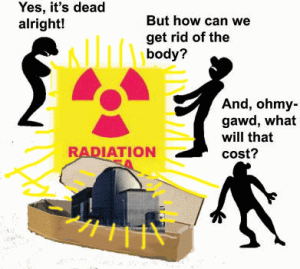
 Romandie 12th Jan 2018 [Machine Translation] Dismantling: in France, nuclear country, the task remains immense. EDF may well show international ambitions in terms of nuclear dismantling, the industry still has to prove itself in France, the world’s second largest producer of nuclear electricity, where the task remains immense and the delays numerous.
“We dismantle nine reactors in France We consider that our know-how can put us in a very good position to win real market share internationally,” assured AFP on Wednesday Sylvain Granger director of deconstruction projects at EDF. An ambition
“staggering” for Barbara Romagnan, former PS MP, author of a parliamentary report that highlighted in early 2017 the “underrated” costs and growing delays of these projects.
“None of these French reactors has yet been totally dismantled, even though they were closed between 1985 and 1997,”
she argues. Elsewhere in the world, seventeen reactor vessels (more than 100 MW) have been dismantled in the United States, Germany and Spain, according to the Institute for Radiation Protection and Safety (IRSN).
In Chooz, EDF’s most advanced site, located in the Ardennes, the dismantling of the tank, the ultimate and most delicate stage, began in 2017. But the cutting of the internal components of the tank was suspended after the contamination. in June, a Swedish employee from Westinghouse, to whom EDF subcontracted this operation, according to the French company. EDF
estimates at 79 billion euros the cost of dismantling all its reactors in France (including 18.5 billion spent fuel management), said Thursday the company that spoke in 2000 of 16 billion euros.
https://www.romandie.com/news/880085.rom
Nuclear submarines left to rot at Devonport for nearly 30 years.

Plymouth Herald 14th Jan 2018, 13 former Royal Navy subs are awaiting disposal in Plymouth – with a further seven in
Rosyth. The MoD says the submarines are “safely stored” and subject to
rigorous checks. It adds that there has been “no measurable increase in
exposure for local people”.
But the cost of storing and maintaining the laid-up vessels is vast. Over five years – between 2010 and 2015- the total
bill for storing the vessels at the two sites, both owned by Plymouth-based engineering firm Babcock, reached more than £16million.
The estimated cost of the MoD’s submarine dismantling programme, which started in December 2016 and is due to take more than 25 years to complete, have not been released. The MoD says this is due to ongoing commercial negotiations withBabcock – it’s main contractor for the programme – and other key suppliers.
http://www.plymouthherald.co.uk/news/plymouth-news/nuclear-submarines-left-rot-devonport-1043977
UK government national environment strategy ignores nuclear dangers
 Nuclear polluting elephant in the great green room Dr David Lowry http://drdavidlowry.blogspot.com.au/2018/01/nuclear-polluting-elephant-in-great.html
The UK Government launched on 11 January – with a media fanfare- its long delayed 150-page national environmental strategy (for England) titled ‘A Green Future: Our 25 Year Plan to Improve the Environment (https://www.gov.uk/government/publications/25-year-environment-plan).
Prime Minister May asserted in her foreword: “We hold our natural environment in trust for the next generation. By implementing the measures in this ambitious plan, ours can become the first generation to leave that environment in a better state than we found it and pass on to the next generation a natural environment protected and enhanced for the future.
……. We will use this opportunity to strengthen and enhance the protections our countryside, rivers, coastline and wildlife habitats enjoy, and develop new methods of agricultural and fisheries support which put the environment first.”
In his own foreword, Environment Secretary Michael Gove added:“Environment is – at its roots – another word for nature, for the planet that sustains us, the life on earth that inspires wonder and reverence, the places dear to us we wish to protect and preserve. We value those landscapes and coastlines as goods in themselves, places of beauty which nurture and support all forms of wildlife….We will underpin all this action with a comprehensive set of environmental principles. To ensure strong governance, we will consult on plans to set up a world-leading environmental watchdog, an independent, statutory body, to hold Government to account for upholding environmental standards.”
These warm green words are, however, not backed up with the kind of action that recognizes the real environmental priorities with which ministers need to get a grip.
The most egregious omission for action is anything to halt, reverse and deal with nuclear industry radiological pollution and nuclear waste from power generation, spent irradiate nuclear fuel reprocessing and nuclear warhead production.
Chapter 4 is titled’ Increasing resource efficiency and reducing pollution and waste’ but makes zero mention of nuclear waste or radiological pollution, but does expend time and effort addressing far less ecologically damaging no radiotoxic waste pollution. Here is an extract:
- Improving management of residual waste
Since 2000 we have diverted significant quantities of residual waste – i.e. waste that cannot be reused or recycled – from landfill through the development of energy from waste (EfW) facilities. These generally recover energy from the waste to produce electricity. In 2016/17, some 38% of waste collected by Local Authorities went to EfW compared with 16% that went to landfill. More can be done however. We want to make sure that materials ending up in the residual waste stream are managed so that their full value as a resource is maximised and the impact on the environment of treating them is minimised.
We will continue to encourage operators to maximise the amount of energy recovered from residual waste while minimising the environmental impact of managing it, for example by utilising the heat as well as electricity produced. The actions set out in this Plan will help us build on this to ensure that the value of residual waste as a resource is fully realised and that emissions of carbon dioxide during the energy recovery process are kept as low as possible. We must bear in mind that any infrastructure must be able to adapt to future changes in the volume and make-up of residual waste generated and developments in technology. That way, waste is not locked into residual waste treatment processes when it could be reused or recycled. (page 94)
Annex 2 of the two Government reports on Environment 25 titled Government strategies to protect and improve the environment(https://www.gov.uk/government/uploads/system/uploads/attachment_data/file/673160/25-year-environment-plan-annex2.pdf comprises of nearly 50 “strategies and plans for some of the government’s work to protect and conserve the environment,” but contains not one report that addresses environmental protection from radiation or from nuclear industry operations!
However, two days before the 25-year green strategy was issued, the Government quietly released ( to absolutely zero media attention) a 221- page document that explains how it plans to deal with nuclear waste in the UK. Clearly ministers wanted attention on plastic waste policy, but none fon radioactive waste policy.
The report, titled UK’s sixth national report on compliance with the obligations of the Joint Convention on the safety of spent fuel and radioactive waste management states it “considers each of the Joint Convention’s obligations and explains how the United Kingdom addresses them.”https://www.gov.uk/government/uploads/system/uploads/attachment_data/file/672640/20171020_-_UK_Sixth_National_Report_to_the_Joint_Convention.pdf )
Document (The fifth report was published in January 2015.)
China unlikely to go ahead with AREVA’s nuclear reprocessing plan, despite Macron’s support
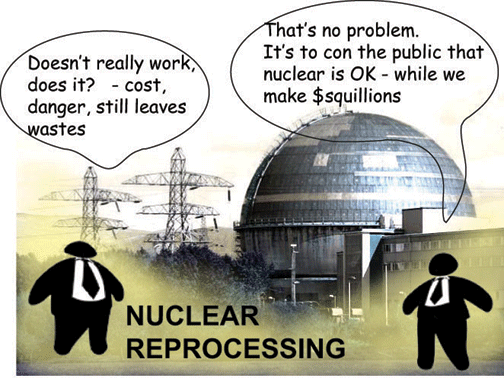 Reuters 11th Jan 2018, So close yet so far: China deal elusive for France’s Areva. A deal long
sought by French company Areva to build a $12-billion nuclear waste
reprocessing plant in China looks increasingly unlikely to go ahead despite
a visit to Beijing by President Emmanuel Macron meant to drum up business.
During Macron’s state visit this week, Areva and China National Nuclear
Corp (CNNC) signed a new “protocol agreement” to build the plant but,
not for the first time, no definitive contract was signed.
Since talks began more than a decade ago – when uranium prices UXXc1 were near record
highs – a series of non-committal French-Chinese memorandums of
understanding have been signed for building a reprocessing plant in China
modeled on state-owned Areva’s plant in La Hague, northern France.
The reprocessing of nuclear fuel waste involves separating plutonium from the
spent uranium and reusing it in “Mixed Oxide” (MOX) fuel at nuclear
power stations.
But the 2011 Fukushima nuclear disaster and competition
from renewable energy are weighing on the nuclear sector, and uranium
prices are down 80 percent from a decade ago, making the expensive and
dangerous recycling process less attractive. Chinese nuclear scientist Li
Ning, dean of Xiamen University’s College of Energy and a member of State
Nuclear Power Technology Corporation’s (SNPTC) expert committee, sees
“a fairly low probability” that China will sign a formal contract for
the project.
https://www.reuters.com/article/us-areva-china-nuclearpower-analysis/so-close-yet-so-far-china-deal-elusive-for-frances-areva-idUSKBN1F01RJ
Japanese and British taxpayers at risk as their governments commit to $20 billion loan for Wylfa nuclear project
 Asahi Shimbin 11th Jan 2018, Japan and Britain have agreed to provide the lion’s share of financing for
a nuclear power plant project planned by Hitachi Ltd. on the island of
Anglesey off northwest Wales, sources said.
financial institutions and acquire a stake in Horizon Nuclear Power Ltd., a
British company purchased by Hitachi to operate the plant. The total cost
of the project is estimated at 3 trillion yen.
doing so, they must share the risk if the project suffers a financial loss,
but that tab could eventually be passed on to taxpayers.
http://www.asahi.com/ajw/articles/AJ201801110057.html
European civic leaders worried about dangers of nuclear facilities stationed near borders of their counties

 DiaNuke 12th Jan 2018, A joint letter, co-signed by the Chairs of the Cities for a Nuclear Free
Europe (CNFE) and the UK and Ireland Nuclear Free Local Authorities (NFLA),
has been submitted to the European Commission over concerns around the
international inspection of nuclear plants in Europe.
The letter arises from concerns raised by the Dutch city Bergen op Zoom, which is located
less than 20 kilometres from the nuclear power plant Doel in Belgium, but
has no legal rights regarding the life time extension of this nuclear
plant.
Many towns and cities around Europe are in the same position. One
third of existing European nuclear power plants are situated in a border
region. As such, these nuclear power plants are situated in such a way that
more than one country is affected when security and safety is at risk.
For example, on numerous occasions Luxembourg, Germany and the Netherlands have
expressed their concerns about the nuclear plants in Doel and Tihange,
Belgium. Furthermore, an internal audit of the Belgian nuclear regulator
Federal Agency for Nuclear Control (FANC) from 2016 showed that its own
independence is to be questioned.
In the joint letter signed by CNFE, NFLA
and by the Mayor of Bergen op Zoom, they ask to place the supervision of
nuclear plants not only in the hands of national authorities, but at a
European level as well. In their collective view, creating effective
instruments for supervision shall ensure that the legitimate interests of
the population of neighbouring countries are safeguarded, as well as those
of the people of the country of origin.
Nuclear Liability – UK government sets out new rules for ‘intermediate risks’
The Department for Business, Energy & Industrial Strategy (BEIS) late last
week published its position on the criteria for determining the new
category of ‘intermediate risk’ nuclear sites that is to be established in
UK law.
Helen Peters, a nuclear expert at Pinsent Masons, the law firm
behind Out-Law.com, said that the changes that BEIS has made to the
criteria are to be welcomed and would enable the government to move forward
with laying the draft Nuclear Installations (Prescribed Sites and
Transport) Regulations in parliament at some point in the near future.
The new regulations once introduced will come into force at the same time as
the amendments to Nuclear Installations Act 1965 which are set out in the
Nuclear Installations (Liability for Damage) Order 2016. These amendments
support the implementation of the 2004 Protocols to the Paris Convention on
nuclear third party liability and the Brussels Supplementary Convention.
The decision on the criteria for intermediate risk sites has been made
further to a consultation in 2016 on the proposed definitions for the
purposes of nuclear liability for low risk nuclear sites, intermediate
sites, relevant disposal sites and the transport of low risk nuclear
matter.
After considering the responses to the 2016 consultation, the
government elected to further consider the definition for intermediate risk
sites. It elected to reconsult on the matter in 2017 because the proposed
revised definition was significantly different to the one set out in the
2016 proposal. The BEIS paper published last week contained the
government’s response (12-page / 101KB PDF) to the feedback it received to
its reconsultation. A new liability limit of €160 million will apply to
nuclear sites classed as ‘intermediate risk’ once the legislative changes
come into force. As many as 14 nuclear sites could qualify as ‘intermediate
risk’ sites under the new criteria that has been established, BEIS said.
https://www.out-law.com/en/articles/2018/january/uk-government-clarifies-criteria-for-intermediate-risk-nuclear-sites/
The troubled and exorbitantly expensive history of the EPR nuclear reactor.
 Romandie 9th Jan 2018, [Machine translation] The EPR, the flagship of the French nuclear industry
with many setbacks. Paris – The EPR, to be launched for the first time in China in about six months, is a third-generation nuclear reactor designed to offer improved power and safety, but whose yards have accumulated setbacks in France and elsewhere. Finland.
Launched in 1992, this technology, touted as the flagship of the French nuclear industry, was co-developed by the French company Areva and German Siemens, within their joint venture Areva NP, which Siemens has since withdrawn. EDF has just taken control of this activity as part of the reorganization of the French nuclear industry orchestrated by the State.
The first project was launched in Olkiluoto (Finland) in 2005, on behalf of the TVO electrician, with Areva and Siemens directly prime contractors. But the setbacks and budget slippages have accumulated. TVO lamented an umpteenth delay in the commissioning of the EPR in October, which is now scheduled for May 2019. It was initially scheduled for 2009.
There is a dispute between TVO and Areva and Siemens, with each party blaming the delays on the other.
claiming billions in compensation. The case is under arbitration.
The second EPR, which has been under construction since 2007 in Flamanville (western France) has also accumulated setbacks, mainly due to anomalies discovered on the composition of the steel cover and bottom of the tank. The Nuclear Safety Authority (ASN) requires that the tank cover be replaced before the end of 2024. EDF, prime contractor, has postponed the commissioning of the reactor several times. The electrician plans to start the Flamanville EPR at the end of 2018, for commercial commissioning in
2019, when the initial schedule was for 2012.
Its cost has meanwhile more than tripled to 10.5 billion euros. Two other EPRs are under construction in Taishan (China), with a joint venture owned 51% by the Chinese state power company CGN, 30% by EDF and, since 2012, 19% by the electrical utility of
Guangdong province.
https://www.romandie.com/news/878943.rom
1 This Month

Cuba Is Not a Failed State – It Is a Besieged State
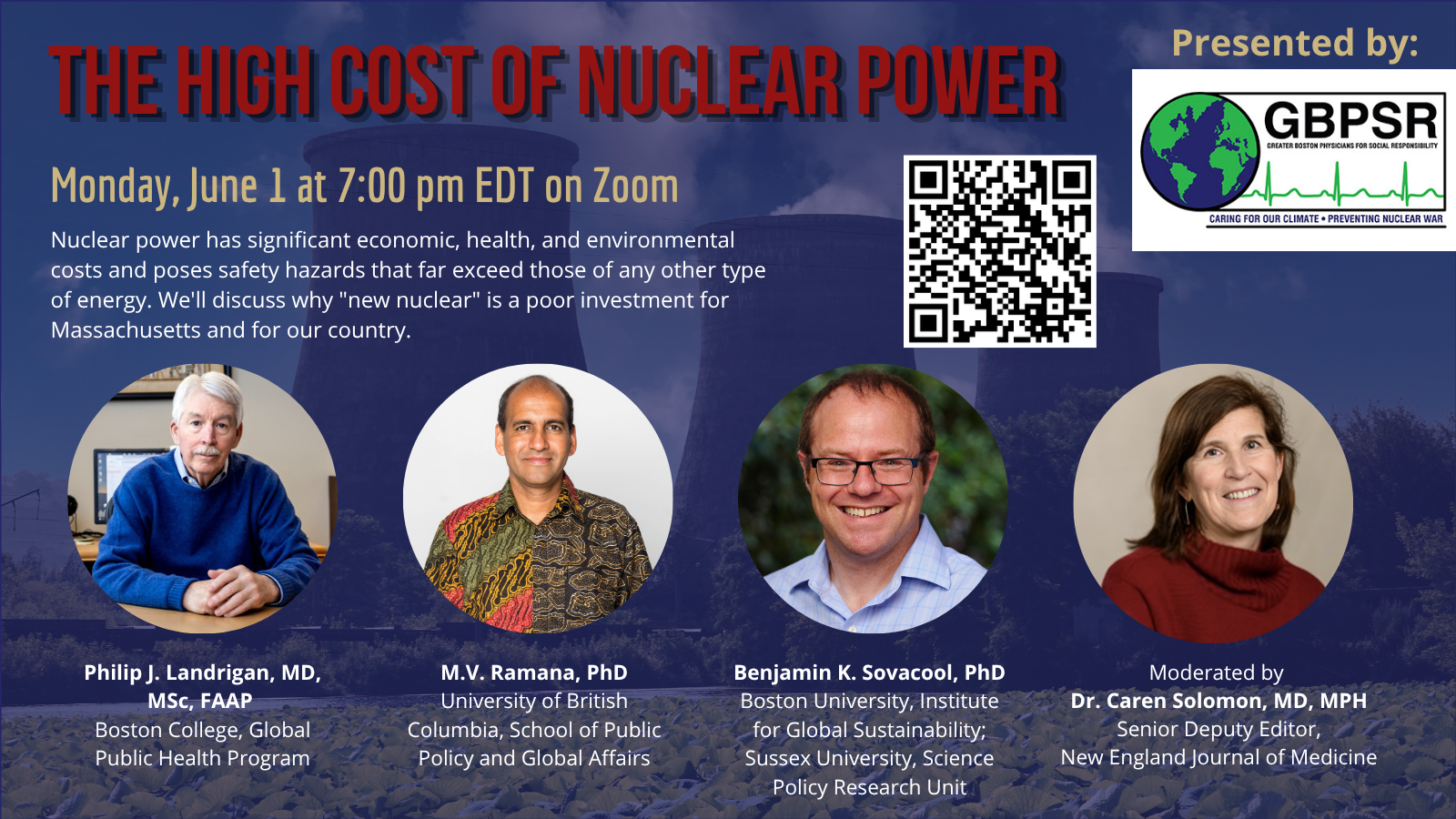
1 June Webinar – The High Cost of Nuclear Power – Register


of the week– Nuclear Reactor Information Task Force
To see nuclear-related stories in greater depth and intensity – go to https://nuclearinformation.wordpress.com
-
Archives
- May 2026 (272)
- April 2026 (356)
- March 2026 (251)
- February 2026 (268)
- January 2026 (308)
- December 2025 (358)
- November 2025 (359)
- October 2025 (376)
- September 2025 (257)
- August 2025 (319)
- July 2025 (230)
- June 2025 (348)
-
Categories
- 1
- 1 NUCLEAR ISSUES
- business and costs
- climate change
- culture and arts
- ENERGY
- environment
- health
- history
- indigenous issues
- Legal
- marketing of nuclear
- media
- opposition to nuclear
- PERSONAL STORIES
- politics
- politics international
- Religion and ethics
- safety
- secrets,lies and civil liberties
- spinbuster
- technology
- Uranium
- wastes
- weapons and war
- Women
- 2 WORLD
- ACTION
- AFRICA
- Atrocities
- AUSTRALIA
- Christina's notes
- Christina's themes
- culture and arts
- Events
- Fuk 2022
- Fuk 2023
- Fukushima 2017
- Fukushima 2018
- fukushima 2019
- Fukushima 2020
- Fukushima 2021
- general
- global warming
- Humour (God we need it)
- Nuclear
- RARE EARTHS
- Reference
- resources – print
- Resources -audiovicual
- Weekly Newsletter
- World
- World Nuclear
- YouTube
-
RSS
Entries RSS
Comments RSS
 nuclear-news