Russia’s nuclear corporation Rosatom extending its grip on Uzbekistan
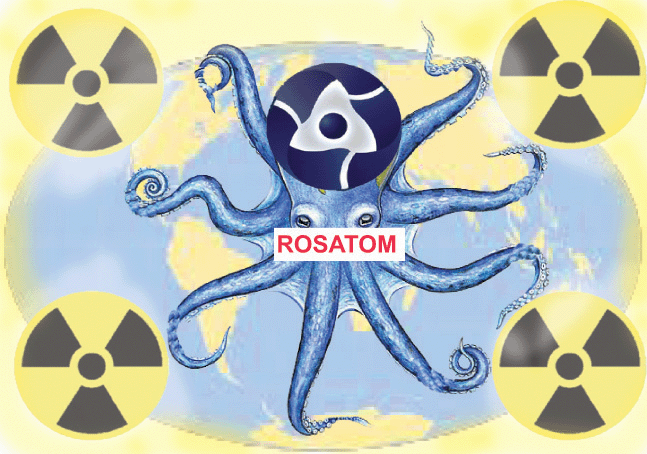 Russia And Uzbekistan Sign Nuclear Energy Deal, Rosatom said the agreement was signed on December 29 by its Director-General Aleksei Likhachyov and Uzbek Deputy Prime Minister Nodir Otajonov.
“The collaboration could include creation and development of infrastructure in Uzbekistan, training, construction of nuclear power plants and research reactors, as well as operational and maintenance support during their life cycle,” the Rosatom statement said.
“It could also cover exploration and mining of uranium, handling of uranium waste, and the production of radioisotopes for use in medicine, agriculture, and academic research,” the state-owned firm said.
Likhachyov said Rosatom was ready to build a two-unit nuclear power plant in Uzbekistan and has offered to start training Uzbek nuclear experts-to-be at Moscow’s expense beginning in September 2018.
In early November, during a visit to Tashkent by Russian Prime Minister Dmitry Medvedev, a memorandum on cooperation between Rosatom and Uzbekistan’s Academy of Science was signed, along with an agreement on production and provision of nuclear fuel by Uzbekistan for Rosatom.
Radioactive leak in German nuc lear reactor
Suddeutsche Zeitung 29th Dec 2017, [Machine Translation] In the nuclear power plant Neckarwestheim a leak hasbeen discovered during a tour in Block II in the control area. This was
announced by the Ministry of the Environment on Friday in Stuttgart. As a
result of the leak on a pipeline behind a circulation pump discovered on 22
December, about 100 liters of radioactive concentrate had leaked into the
control area of the reactor auxiliary building. However, this has no or
only a very low safety significance, said the Ministry. The operator had
shut off the pump. The affected area had been decontaminated, people were
not harmed. The cause will be further investigated. The system will be out
of service until the repair is complete.
http://www.sueddeutsche.de/news/wirtschaft/atomkraft—stuttgart-leck-in-rohrleitung-bei-atomkraftwerk-neckarwestheim-dpa.urn-newsml-dpa-com-20090101-171229-99-447002
UK: Renewables a better option than nuclear power: but nuclear is needed for maintaining nuclear weapons
 Cheap renewables undercut nuclear power, The technology advances and plunging costs of cheap renewables make base load nuclear power redundant. Climate News Network, by Paul Brown, LONDON, 29 December, 2017 “………Completion doubts
Even the former UK energy secretary Sir Edward Davey, who signed off on the Hinkley Point deal, said “the economics have clearly gone away.” He doubted that the building would ever be completed, he told Greenpeace in an interview.
All the other UK nuclear projects are still at various stages of planning, and how any of them will be paid for is yet to be worked out. It is already clear that none can be financed without government subsidy.
An important political development in 2017 was that for the first time both the US and the UK admitted that their support for the nuclear industry is linked to the need to maintain their military capability in nuclear submarines and personnel. This is key, because both powers have previously claimed that there is no link between civil and military nuclear industries.
Even before their admission it was already clear that the big economies which have no nuclear weapons, like Germany, can see no point in having a civil nuclear industry.
Export drive
That does not stop smaller countries, some without any nuclear power stations at all at present, signing agreements with the Russian state-owned company Rosatom. In what many see as a Russian policy to extend its international influence, Rosatom already says it is building reactors in Belarus, China, India, Bangladesh, Hungary, Turkey, Finland and Iran, and is seeking to expand, with tenders in for 23 other reactors abroad.
These include Sudan, where the current president is wanted for war crimes. Whether all the plans will come to fruition remains doubtful. https://climatenewsnetwork.net/cheap-renewables-undercut-nuclear-power/
Russia’s warning to USA and North Korea: risk of the worst war in human history
‘War worse than ANY in human history’ Russia’s stark warning to US and North Korea https://www.dailystar.co.uk/news/world-news/669884/North-Korea-War-Russia-US-Vladimir-Putin-Donald-Trump-Kim-Jong-un-Missile-Nuclear-Test, 30 Dec 17
RUSSIA has warned North Korea and the US are on course for an explosive war of a level “never before seen in human history”. US President Donald Trump and Kim Jong-un could stumble into a nuclear war of “unprecedented scale”, warned Vladimir Putin’s top diplomat Oleg Burmistrov.
Russia’s so-called ambassador-at-large predicted the start a war could be “unprovoked” and said the US it is “playing with fire” in goading North Korea.
Moscow has repeatedly called for calm in the region as Trump and Kim’s fiery war of words stoked the conflict to horrifying new heights in recent months.
Burmistrov called on the world to do “everything possible” to prevent the war that would spiral into the first use of nuclear weapons since World War 2.
North Korea is feared to be plotting another missile test before the end of the year – with US “missile sniffer” plane Cobra Ball taking flight yesterday amid Kim’s threats.Burmistrov told Sputnik: “[It could be] the catastrophe of the scale, never before seen in human history.
“We are talking not only about a major military conflict but also about a conflict that potentially has a nuclear component.
“Now we are in the face of a major military conflict, which can become a reality if the military solution plan is implemented.
“And we need to do everything possible to prevent this from happening.” Putin’s top man suggested US war drills in the region may be “testing” North Korea and looking for grounds to impose a total economic blockade on Pyongyang.
He described the region as a “powder keg” as military forces continue to march into the Korean Peninsula.
The ambassador added: “The situation on the Korean Peninsula is characterised by an unprecedented level of tension, there is a growing danger of slipping into an armed conflict, unprovoked, but which may begin due to accidental circumstances.”
Burmistrov has previously visited Pyongyang to discuss the nuclear crisis and has also hosted meetings with North Korean officials in Moscow. This week, Russian foreign minister Sergey Lavrov met with US secretary of state Rex Tillerson to discuss North Korea.
Despite separate tensions between Moscow and Washington, the two came to an agreement that they would “never accept” a nuclear-armed Kim.
North Korea is believed to be gearing up to launch a space rocket, which experts have warned could be a cover for another weapons test. Kim should be expected to carry out at least one more launch before the end of the year, North Korea expert Michael Madden told Daily Star Online.
Pyongyang is believed to have long-term ambitions to launch a nuclear missile into the heart of the Pacific.
This test is known as the dreaded Juche Bird – and has been described as Trump’s “red line” that could spark World War 3.
Disturbing links between Britain’s nuclear power stations and the military
 Military secrets of our nuclear power plants https://www.theguardian.com/uk-news/2017/dec/27/military-secrets-of-our-nuclear-power-plants
Disturbing links between Britain’s nuclear power stations and the military are highlighted by Dr David Lowry. In her excellent article on the Hinkley C nuclear plant financial fiasco (The long read, 21 December), Holly Watt mentions the innovative insight of Sussex University academics Prof Andy Stirling and Dr Phil Johnstone, who have identified the central importance of expansion of the skill base of the new nuclear build programme – headed by Hinkley C – for the Trident military nuclear renewal programme. Watt also mentions the first nuclear plant built on the same site, Hinkley A. What is barely acknowledged about this reactor is it was both built and operated to manufacture plutonium for British nuclear warheads, and probably some plutonium it created was sent to the US for use in its military stockpile too.
And that is exactly what they did. The nuclear world has thus turned full circle, as the atomic conjoined twins that had been painfully separated for nearly 50 years are being rejoined in an insidious way by this new Conservative government.
Dr David Lowry
Senior research fellow, Institute for Resource and Security Studies
Sellafield Ltd buries the cost of its expensive Evaporator D Nuclear waste processing project
 CORE 26th Dec 2017, There can’t be many nuclear bodies that choose to bury – just three days before Christmas – what is touted as a good news story by the industry. But this is exactly what Sellafield Ltd has contrived to do in its 22nd December announcement that the long overdue and eye-wateringly expensive Evaporator D has come on line at Sellafield.
Yet by confirming that the new Evaporator actually came on line at 0800 on the 8th December, the start-up has been kept under wraps for a fortnight until a time when public attention was focused on seasonal festivities rather than on nuclear
news. Keeping such a story under the public radar for so long is, to say the least, wholly out of character for the industry – though the Evaporator’s history is hardly something to shout about.
It is not however just about the burial of ‘good’ news itself that many will find disturbing, but rather the manner in which the burial rites have been manipulated and massaged to dupe the wider world. Designed to process the dangerous high level waste liquids produced by the site’s reprocessing operations so that they can be vitrified and canned for eventual disposal, Evaporator D is located in the site’s Highly Active Liquid Evaporation and Storage (HALES) facility.
Its tortured construction track record since its inception over a decade ago by British Nuclear Fuels (BNFL) is well
documented and gives the lie to its original costings and timescale. As reported in the industry’s Nuclear Fuel journal in 2009 ‘Sellafield operators estimated (in 2007) the cost of the proposed Evaporator D at GBP90 million and said they expected it to be operational around 2010/2011’. Now in operation over six years late, the Evaporator’s £750M cost today represents an eight-fold increase on its original costing. …..
There are few positives to be taken from the Evaporator D saga that rivals the similar squandering of public money on the ill-fated and now defunct Sellafield MOX plant and even – when its financial accounts are eventually exposed publicly for the first time – the THORP plant itself. The one positive that will bring at least some cheer to the UK taxpayer is that, then costed at £600M, plans for an Evaporator E were abandoned by Sellafield in 2012. http://corecumbria.co.uk/briefings/sellafields-delayed-evaporator-d-now-operating-and-gift-wrapped-for-christmas/
USA and Russian Ministers say that North Korea will not be accepted as a nuclear power
North Korea will not be accepted as a nuclear power by US or Russia, say Rex Tillerson and Sergei Lavrov Both sides agree to pursue a ‘diplomatic solution’ to the crisis, The Independent, Mythili Sampathkumar New York @MythiliSk 28 Dec 17 The US and Russia have insisted they will not accept North Koreaas a “nuclear state”, amid a series of missile tests by the East Asian nation and increased rhetoric from both Kim Jong-un and Donald Trump.
US Secretary of State Rex Tillerson and Russian Foreign Minister Sergei Lavrov spoke by phone on a myriad of issues, but both agreed on their stance regarding Pyongyang’s continued development of nuclear weapons despite United Nations sanctions.
State Department Heather Nauert said in a statement that “both sides agreed that they will continue to work towards a diplomatic solution to achieve a denuclearised Korean peninsula”. However, on the same call on Tuesday, Mr Lavrov criticised President Donald Trump’s “aggressive rhetoric” towards North Korea……..
Late last week, the UN Security Council also unanimously passed – including votes from Russia and China who have closer ties to Pyongyang – more sanctions on North Korea, further limiting its oil supplies and slave labour market. …..
according to Chinese customs data, China exported no oil products to North Korea in November – something that was above and beyond UN sanctions requirements. Beijing also imported no North Korean iron ore, coal or lead in last months, the second full month of those trade sanctions, the data showed….. http://www.independent.co.uk/news/world/asia/north-korea-us-russia-nuclear-power-recognise-rex-tillerson-sergei-lavrov-a8130316.html
Climate change will mean three times the number of migrants reaching Europe by 2100
Climate Change To Triple Number Of Migrants Reaching European Union By 2100, Study Predicts, Clean Technica, December 28th, 2017 by James Ayre
 The number of migrants making their way into the European Union will nearly triple by the year 2100 if rapid climate warming occurs, according to a new study published in the journal Science.
The new study — which was actually requested by the European Commission itself — relates directly only to climate warming, it should noted — mass migrations triggered by wars and cultural conflicts would be in addition to those discussed by the study……
the reality is that the findings are likely a vast underestimate of what will be occurring during the second half of the 21st century — as climate warming and weirding intensify; and as the common human activities of projection, scapegoating, and lazy thinking do as well.
According to the new study, asylum applications to the EU (from across 103 different nations) tended “to rise in the 2000–2014 period when temperatures at home were far hotter or colder than the ideal for growing maize.”
The projection put forward by the study is that asylum applications could climb to 1.01 million per year by 2100 (up from an average of 351,000 during 2000-2014) under a scenario that sees temperatures rise fairly fast. The primary driver of this rise would be reduced agricultural productivity (again, the human conflict aspects of what’s coming aren’t being factored into this work).
As I noted above, the reality is that even that figure is likely a vast underestimate of what’s coming — based on a look back at earlier periods of rapid climatic change and/or ecological collapse (soil fertility loss included) and taking into account more factors than the research did………
won’t rising temperatures and falling agricultural yields lead directly to weakening civil institutions (self-consumption), political repression, and civil war? Isn’t that exactly what’s happened in Syria over the last decade?
I’ll end things here with the study’s assertion that “our findings support the assessment that climate change, especially continued warming, will add another ‘threat multiplier’ that induces people to seek refuge abroad.”https://cleantechnica.com/2017/12/28/climate-change-triple-number-migrants-reaching-european-union-2100-study-predicts/
France’s President Emmanuel Macron to save France’s nuclear export industry?
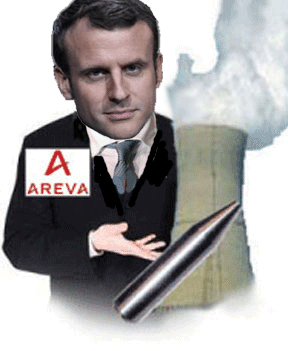 Final negotiations for Areva reprocessing plant in China, Les Echos, Frédéric Schaeffer, Correspondant à Pékin, 26 Dec 17, Areva’s president was in Beijing on Thursday. Paris hopes to sign an agreement during Emmanuel Macron’s visit to China in early January. The contract would be around ten billion euros for Areva……
“There have been comprehensive discussions with many Chinese officials in France and French in Planned over 10 years. This project could be agreed upon during the visit of Emmanuel Macron early January in the Middle Kingdom. “We are accelerating the final negotiations in view of the President’s visit” ….”the visit of Emmanuel Macron will mark a key stage” – French nuclear officials
…. The stakes are crucial for New Areva, the agency resulting from the restructuring of the French nuclear industry and now refocused on the fuel cycle. This could be the key – with a contract of ten billion euros. …. CNNC originally chose the coastal city of Lianyungang to locate the plant. But that announcement had sparked violent protests last year, forcing a halt to preliminary work. Since then, CNNC and the government have examined several coastal sites but have been careful not to make their choice known.https://www.lesechos.fr/industrie-services/energie-environnement/0301060536871-ultimes-negociations-pour-lusine-de-retraitement-dareva-en-chine-2141002.php
France to study effects of nuclear testing on 21,000 nuclear test veterans
Ed. note. Incidentally, this is the period during which Professor Ernest Titterton managed to cancel testing of of radioactive fallout to the East coast of Australia
France to study nuclear test veterans, https://www.radionz.co.nz/international/pacific-news/347025/france-to-study-nuclear-test-veterans Reports from French Polynesia say the French government will launch an epidemiological study of 21,000 nuclear test veterans. According to Radio1 in Tahiti, the defence ministry will test all those whose exposure to radiation was measured between 1966 and 1996 – the period during which France tested 193 atomic bombs.
The study is to update the findings of two previous studies into mortality and morbidity.
The first found that by the end of 2008 more than 5,500 had died.
The study of the remaining 21,000 veterans is to help improve assessing their health care risks.
In Germany, electricity prices dipping below zero

 New York Times 25th Dec 2017, Germany has spent $200 billion over the past two decades to promote cleaner
sources of electricity. That enormous investment is now having an unexpected impact — consumers are now actually paid to use power on occasion, as was the case over the weekend.
Power prices plunged below zero for much of Sunday and the early hours of Christmas Day on the EPEX Spot, a
large European power trading exchange, the result of low demand, unseasonably warm weather and strong breezes that provided an abundance of wind power on the grid.
Such “negative prices” are not the norm in Germany, but they are far from rare, thanks to the country’s effort to
encourage investment in greener forms of power generation. Prices for electricity in Germany have dipped below zero — meaning customers are being paid to consume power — more than 100 times this year alone, according to EPEX Spot.
https://www.nytimes.com/2017/12/25/business/energy-environment/germany-electricity-negative-prices.html
Russia: no nuclear transparency, and still using Soviet style tactics against anti nuclear activists

CRACKDOWN IN RUSSIA: CRITICS ACCUSE NUCLEAR AUTHORITIES OF SOVIET-STYLE COVER-UPS AND HEAVY-HANDED TACTICS, Newsweek, BY When Russia’s FSB security service raided Fyodor Maryasov’s apartment in Siberia last year, the authorities seized his computer and a scathing report he had compiled about Rosatom, the Kremlin-owned nuclear corporation. Among other things, the authorities accused him of inciting hatred against nuclear industry employees, an unusual charge that carries a maximum sentence of five years behind bars. “They accused me of revealing state secrets in my report,” the 49-year-old environmental activist says. “But every single thing in it was taken from open sources.”
The raid came as activists are increasingly criticizing Rosatom over a range of issues, including the way it handles nuclear waste. This fall, for instance, critics alleged that one of its facilities was the source of a mysterious cloud of radioactive pollution that drifted across Europe.
Russian authorities have responded to these critics with tough tactics—including raids and smear campaigns—and in recent years, they’ve employed similar measures against other environmental groups. Rosatom says it was in no way trying to stifle dissent. “We strongly believe that every voice should be heard,” a spokesman for the nuclear agency tells Newsweek, “and we welcome open dialogue with civil society, including with those who are opposed to nuclear power.”
Maryasov says the crackdown is a continuation of the routine cover-ups of nuclear accidents and atomic pollution during the Soviet era and beyond—from the 1957 Kyshtym disaster to the meltdown at Chernobyl in 1986. “Trust in Rosatom and the authorities,” he says, “is at an absolute minimum.”
The activist’s recent troubles began after he spoke out against Rosatom’s plans for a permanent underground nuclear waste repository in his hometown of Zheleznogorsk, in eastern Siberia. If the project goes ahead, Russian authorities would likely begin storing hundreds of thousands of tons of radioactive waste at the site. Zheleznogorsk was built in 1950, under the supervision of Stalin’s secret police chief, Lavrentiy Beria, for the production of weapons-grade plutonium. Until 1992, plant employees regularly disposed of nuclear waste in the nearby Yenisey River, causing health problems for tens of thousands of people in the area. Russian authorities stopped the production of plutonium for nuclear weapons at the Zheleznogorsk plant in 2010.
But critics say the shadow of nuclear catastrophe still hangs over the region. In the event of a massive natural disaster or terrorist attack, the nuclear waste repository plan poses what Maryasov says is a threat to “every living thing” in the region. Zheleznogorsk is a mere 40 miles downstream from Krasnoyarsk, the regional capital, with a population of just over 1 million. And people in the area are concerned. More than 85,000 so far have signed a petition Maryasov drafted calling for Rosatom to scrap its plans for the repository.
The nuclear agency says it is building an underground lab at the Zheleznogorsk site to study the feasibility of its plans. It says those plans are open to public debate, and it points to similar storage sites currently operated in Finland, Sweden and the United States.
Critics, however, say it’s hard to access reliable information about Rosatom’s plans because many of its nuclear facilities are in so-called closed cities, like Zheleznogorsk. There are around 40 of these towns across Russia, the majority of which are sealed off from the outside world by barbed wire, fences and armed guards. Access is forbidden to foreigners, and even Russians who don’t live there have to receive special permission from the authorities to visit.
Those restrictions mean it’s easier for the authorities to ramp up the pressure against critics. Maryasov says he was the victim of a “vicious psychological campaign,” and he accuses the authorities of distributing fake news claiming he had advocated violence against atomic energy workers. The unrelenting pressure, he says, led to the breakup of his marriage of almost two decades.
“The constitution stipulates freedom of information and forbids censorship, as well as guaranteeing the right to everyone to information about the state of the environment,” Greenpeace said in a statement. “In order to realize those rights, someone has to seek out and make public this information, which is what Maryasov was engaged in doing.”
In recent months, critics have hammered Russia’s nuclear industry over allegations that Mayak, a notorious nuclear plant in Ozyorsk, a closed city in central Russia, was the source of radioactive pollution observed over Western Europe in late September. Mayak, which was built in 1948, produces components for nuclear weapons and stores and converts spent nuclear fuel. France’s Institute for Radioprotection and Nuclear Safety said the cloud that passed over Austria, France and other European countries was harmless, but it warned that the estimated level of radiation at the site of the suspected nuclear accident posed a serious threat to human health.
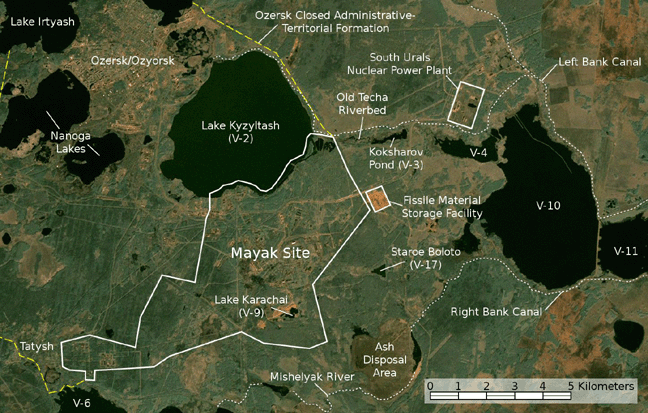
In November, Russian state meteorologists reported that high atmospheric concentrations of the radioactive isotope Ruthenium-106 had been detected around Mayak, triggering accusations that the secretive facility in Ozyorsk was the source of the pollution. However, Rosatom denied an accident had taken place there, said the levels detected by meteorologists were far below the admissible norm and insisted it had not carried out any operations that could have led to the isotope’s release into the atmosphere “for many years.”
Yet on December 13, Yuri Morkov, a senior executive at Mayak, admitted that Ruthenium-106 is routinely released as part of the plant’s processing of spent nuclear fuel. He insisted, however, that levels are so insignificant that there is no cause for concern.
Russian environmentalists are skeptical of his denials, in part because of Mayak’s history. Between 1949 and 1951, the factory dumped radioactive waste from the nuclear facility into the local river, polluting water supplies for tens of thousands of locals. In 1957, a storage tank containing highly radioactive nuclear weapons waste exploded at Mayak, exposing at least 272,000 people to dangerous levels of radiation. The accident was the third most serious nuclear disaster of all time, after far more famous accidents at Chernobyl and Fukushima. Eco-activists say the Soviets sent thousands of people, including some 2,000 pregnant women and hundreds of children, to clean up the disaster site with nothing more than rags and mops.
The atomic catastrophe was shrouded in secrecy: It wasn’t until 1989 that the USSR admitted it had taken place. Cancer rates in the worst affected areas around Mayak are between 2.5 and 3.5 times the national average, according to Greenpeace. In 2007, Russia’s constitutional court ruled that the unborn children exposed to radiation during the clean-up were not entitled to government benefits as adults, as they were not officially employed by the state.
This fall’s reports of the alleged nuclear leak at Mayak rekindled memories of the 1957 disaster. But Rosatom denies there have been any major incidents at its plants in recent years…….
There is no evidence suggesting Rosatom is directly responsible for the harassment of regional activists. A source close to the Russian nuclear industry tells Newsweekthat the “appalling and totally unacceptable” pressure is more likely coming from regional FSB officials trying to please their superiors in Moscow in the lead-up to Russia’s presidential election, a time when there’s increasingly less tolerance for dissent. Another possibility: lower-level officials who stand to benefit financially from Rosatom’s activities. “Russia is Russia,” the source says, asking for anonymity because of the sensitivity of the matter. “They play their own game as always.”
As for Maryasov, the Siberian activist faces an uncertain future as he continues his campaign against the nuclear waste repository. Finding a job has been hard because of his legal troubles, but he has no intention of moving.
“Too many people have put their trust in me,” he says, “I can’t let them down.” http://www.newsweek.com/crackdown-russia-critics-accuse-nuclear-authorities-soviet-style-cover-ups-and-755389
Hinkley point Nuclear Power – a bad deal in every way – obsolete before it ever starts working?
 Hinkley Point: the ‘dreadful deal’ behind the world’s most expensive power plant, The Guardian, 21 Dec 17 Building Britain’s first new nuclear reactor since 1995 will cost twice as much as the 2012 Olympics – and by the time it is finished, nuclear power could be a thing of the past. How could the government strike such a bad deal? By Holly Watt Hinkley Point, on the Somerset coast, is the biggest building site in Europe. Here, on 430 acres of muddy fields scattered with towering cranes and bright yellow diggers, the first new nuclear power station in the UK since 1995 is slowly taking shape. When it is finally completed, Hinkley Point C will be the most expensive power station in the world. But to reach that stage, it will need to overcome an extraordinary tangle of financial, political and technical difficulties. The project was first proposed almost four decades ago, and its progress has been glacial, having faced relentless opposition from politicians, academics and economists every step of the way.
Survey finds strong support in France for renewable energy, not nuclear
 French people support energy transition, survey reveals, Energy Transition by Energiewende Team19 Dec 2017“……… It is often said that the French people strongly support nuclear energy as a jewel of the French industry. However, a survey commissioned by the French office of the Heinrich Boell Foundation and the French Think tank La Fabrique écologique, carried out by the research institute Harris Interactive, shows that the French people would rather like to pull up the anchor and set sail for a new model based on renewable energy.
Indeed, 91 % of interviewees consider the energy transition as “priority issue” (47%) or a “major issue” (44%). 63% see the energy transition as an opportunity rather than as a threat (11 %). But what should energy transition look like, according to them?
A clear preference for the development of renewable energy
The trend is very clear: 83 % of French people think France should prioritize investments in renewable energy. Only 12% of the interviewees prefer that investments go towards the modernization and life extension of nuclear power plants. 66 % of respondents come out against the construction of new nuclear power plants. It shows that the advertising and constantly repeated arguments that nuclear energy – often described as “clean energy” – is the only adequate solution when it comes to fighting climate change is not having the intended effect on French public opinion.
Also surprising is the fact that the actor in which the French people have the most confidence to lead the energy transition is neither the state (trusted by 49% of the interviewees) nor the energy producers and providers like the state owned EDF (trusted by only 46%). Rather, people trust citizen energy cooperatives (trusted by 78%), as well as NGOs and associations (trusted by 66 %).
A positive view of the Energiewende
Another salient point of the survey is the opinion of the French people about the German energy transition. Respondents perceived the German Energiewende much more positively than their economic and political elites……..
Over half of them see the Energiewende as “a good example for the energy transition.” Last but not least, the French people think France should work more closely with Europe (54%) and with Germany (51%) on energy issues……
The complete results of the survey (in French) are available here: Enquête “Le rapport des Francais à l’énergie” – Harris Interactive
In the press :
- FAZ: Die Franzosen wollen weniger Atomenergie
- Libération: Energie : les Français veulent plus de renouvelable et moins de nucléaire (französisch)
- Alternatives Economiques: Climat : la France est-elle vraiment exemplaire? (französisch) https://energytransition.org/2017/12/french-people-support-energy-transition-survey-reveals/?t=1&cn=ZmxleGlibGVfcmVjc18y&refsrc=email&iid=b0fd4fb85ba34dc690d233cf08200f82&uid=585629311&nid=244+293670920
Nuclear radiation: Russia has no transparent system for monitoring the state of its environment

Wake up and smell the ruthenium https://www.opendemocracy.net/od-russia/violetta-ryabko/wake-up-and-smell-ruthenium Violetta Ryabko is head of Greenpeace Russia’s press service. Russia’s recent ruthenium scare, which went viral around the globe, brought a serious problem to light: the absence in Russia of proper and transparent monitoring of its environment.
In early October, information about a leak of the radioactive isotope ruthenium-106 into the atmosphere appeared in western media. Germany’s radiation watchdog announced that the source of the leak was most probably in the southern Urals, and French experts confirmed that conclusion.

Russia’s state-owned nuclear corporation Rosatom, however, denied the claim, saying that according to Roshydromet, the country’s environmental monitoring body, tests for particulate pollutants carried out between 25 September and 7 October failed to find any traces of Ruthenium, apart from a single instance in St Petersburg.
However, at the end of November, Greenpeace Russia received a response to a query it had sent Rosgidromet. This confirmed the discovery of ruthenium-106 in late September in the Chelyabinsk region, just to the east of the Ural mountains. The element was detected near the Mayak complex, a facility for reprocessing spent nuclear fuel. Ruthenium was also found in the atmospheres of Tatarstan, Bashkortostan, and the Krasnodar, Volgograd, and St Petersburg regions.
Ukrainian scientists also published data about its presence in the Altai, Dubno, Kirov, and Yakutia regions. Roshydromet admitted that in late September and early October atmospheric conditions were right for active movement of air masses, including pollutants, from the southern Urals towards the Mediterranean area and then northern Europe.
This news triggered an instant sensation, with Russia’s media simultaneously advancing all kinds of theories: it wasn’t Mayak at fault, but another Rosatom facility; the ruthenium could have come from a crashed satellite (although no satellites crashed at the time), and you can’t launch a satellite unnoticed; the source of the leak was in Romania, Kazakhstan, China… One theory held that it was an attempt to discredit Russia in the eyes of the world. Instead of releasing information about the accident to the public, Rosatom instead lashed out at western media for daring to report it.
A few days later, Rosatom invited journalists to a press trip where they could have a sniff of Ruthenium and discover how perfectly safe it was. More than 200 took up the offer, but only 17 were admitted. This triggered general anger, especially as the selection criteria were unclear. Then Rosatom created an advert showing a little cartoon lump of Ruthenium with big eyes, declaring how harmless it was: “What have I done to you? There’s nothing bad about me!”
Rosatom’s website then announced that a commission would be established to determine the source of the radiation, but it is unclear when this would happen and who would do it. On 8 December the commission held a press conference, where journalists were once again told that Mayak could not be the source of the emission, and were handed copies of the commission’s conclusion that the culprit had to be an unidentified satellite. Greenpeace sent a petition to the Russian General Prosecutor’s Office: by the next day it had been signed by more than 10,000 people.
Under the carpet
The hype around the ruthenium leak is that Russia has no transparent system for monitoring the state of its environment.
Radiation monitoring is overseen by Rosgidromet, which answers to Russia’s Ministry of Natural Resources and the Environment. The Roshydromet site quotes monthly radiation figures prepared by the Taifun scientific development centre, but they are not very easy to find. Occasionally it publishes other information, but in reality, all you can see is background gamma radiation from a few automatically selected detector elements: you can’t discover anything about the presence of specific radionuclides.
Russia has an automated radiation monitoring system: in other words, all nuclear installations are surrounded by automatic sensors that measure a number of indicators, and Rosatom is responsible for reporting accidents. So, if an accident happens, staff are inevitably made aware of emissions.
Rosgidromet, on the other hand, is only responsible for measuring emissions, but it takes a very long time to process these measurements and in the case of a serious radioactive emission, the publication of the relevant data a month later won’t save anyone from its consequences. For example, we still don’t know what happened in late September near the ruthenium emission zone. And the reports that we do have contain incomplete and sometimes contradictory data, although in faraway France the list of monitoring stations and the measurements around them appeared very fast.
In Russia, by contrast, no one plans to search for the emission’s source, on the supposed grounds that the concentration of ruthenium was too small to monitor. Yet by this logic, we can never learn any lessons from the incident at all. By the time an emission of a larger concentration is detected, it will be too late to look for its source.
Keeping the public happy
It looks as though Russia’s nuclear monitoring and information system is inadequate for the country’s needs. Immediately after the Chernobyl accident in 1986, the Soviet authorities set up a body now known as the federal nuclear and radiation safety authority, a powerful enough watchdog at the time, which even managed to halt work at Mayak. However, in 2004 this body became just a subsidiary arm of Rostekhnadzor, the federal environmental, industrial and nuclear supervision service, thereby losing some of its powers.
Meanwhile, Rosatom goes from strength to strength: it is now responsible for the development of Russia’s North Sea Shipping Route and is expected to acquire yet more functions. But are monitoring organs and systems growing at the same rate? Apparently the opposite is happening, and it’s a dangerous tendency.
The very fact that the source of the ruthenium is still officially unknown reveals, at best, the inadequacy of the current radiation monitoring and public reporting systems and at worst, Rosatom’s ability to lobby for secrecy and lying to the public. The precedents for further problems down the road have already been set.
In 1993, Russia experienced its first nuclear accident after the fall of the Soviet Union. This took place at the Siberian Chemical Combine in Tomsk region, which released ruthenium-106. Greenpeace’s archive contains a telling document of the time: a report on the radiation situation compiled by the Commission of the State Committee on Civil Defence, Emergency Situations and Liquidating Natural Disasters. In the letter that accompanies it, Sergey Shoigu, the head of the committee, notes that “just like the Chernobyl disaster, the Atomic Ministry informed both the immediate area and the capital about the accident with a significant delay, which could have led to serious consequences.” That said, even when this delay had been noted, it wasn’t reflected in the Commission’s reports — “in order to calm public opinion”, according to Shoigu.
Books have been written about how the news of the Chernobyl disaster and the 1957 Mayak accident was kept secret. Time passes, but we still don’t know anything about the radiation situation in our own country.
Translated by Liz Barnes.
1 This Month

Cuba Is Not a Failed State – It Is a Besieged State
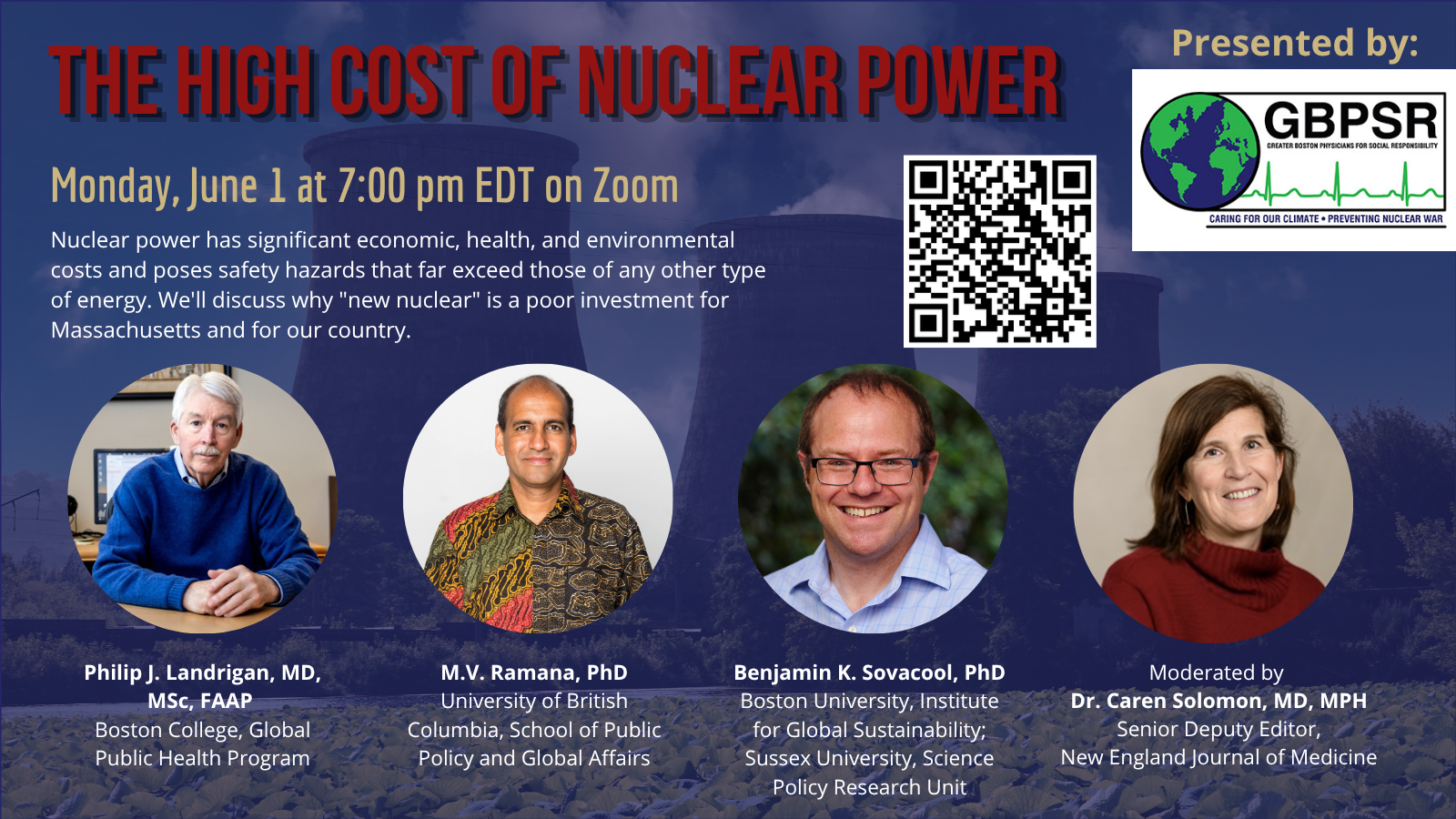
1 June Webinar – The High Cost of Nuclear Power – Register


of the week– Nuclear Reactor Information Task Force
To see nuclear-related stories in greater depth and intensity – go to https://nuclearinformation.wordpress.com
-
Archives
- May 2026 (272)
- April 2026 (356)
- March 2026 (251)
- February 2026 (268)
- January 2026 (308)
- December 2025 (358)
- November 2025 (359)
- October 2025 (376)
- September 2025 (257)
- August 2025 (319)
- July 2025 (230)
- June 2025 (348)
-
Categories
- 1
- 1 NUCLEAR ISSUES
- business and costs
- climate change
- culture and arts
- ENERGY
- environment
- health
- history
- indigenous issues
- Legal
- marketing of nuclear
- media
- opposition to nuclear
- PERSONAL STORIES
- politics
- politics international
- Religion and ethics
- safety
- secrets,lies and civil liberties
- spinbuster
- technology
- Uranium
- wastes
- weapons and war
- Women
- 2 WORLD
- ACTION
- AFRICA
- Atrocities
- AUSTRALIA
- Christina's notes
- Christina's themes
- culture and arts
- Events
- Fuk 2022
- Fuk 2023
- Fukushima 2017
- Fukushima 2018
- fukushima 2019
- Fukushima 2020
- Fukushima 2021
- general
- global warming
- Humour (God we need it)
- Nuclear
- RARE EARTHS
- Reference
- resources – print
- Resources -audiovicual
- Weekly Newsletter
- World
- World Nuclear
- YouTube
-
RSS
Entries RSS
Comments RSS
 nuclear-news