UK govt offers up to £2.5million to prospective “nuclear dustbin” communities
‘nuclear dustbin’ and bury masses of radioactive waste near their homes.
Hundreds of tons of radioactive nuclear power station waste needs to be
stored a kilometre – roughly 3,000ft – deep in the ground. The facility
will need to hold 750,000 cubic metres of waste – enough to fill three
quarters of Wembley stadium – and will cost an estimated £8billion to
build. To provide an incentive to hosting the dumping ground, the selected
area will be given between £1million and £2.5million a year for community
projects, the Government said. The sweetener comes after the last attempt
to find a nuclear burial ground flopped in 2013 – following five years of
consultations – when Cumbria county council rejected the plan. It is
expected the process to find a site will take 20 years, and it will take
ten years to build. It will then need to remain safe for up to 200,000
years.
https://www.dailymail.co.uk/news/article-6543459/Towns-villages-offered-2-5million-Britains-nuclear-dustbin.html
The nuclear lobby will be delighted with this knighthood, earned for obscuring the cause of leukaemia
Knighted for Services Rendered: Don’t Worry about the Nukiller Plant on your doorstop – Just Let Them Drink
Let Them Drink Yoghurt!

The national press trumpet the clarion cry that could have come from the nuclear industry’s PR book: “From this perspective, the disease has nothing to with power lines or nuclear fuel reprocessing stations, as has been suggested in the past, but is caused by a double whammy of interacting prenatal and environmental events, as Greaves outlined in the journal Nature Reviews Cancer earlier this year.”
It seems a good time to revisit one of our early blog posts which first appeared on Indymedia back in 2009. What has changed? The Nuclear Spin has got more blatant and God Forbid that anyone should mention nukiller and leukaemia in the same breath.
What ever did happen to all that research from the body snatching scandal?
Marianne Birkby 04.09.2009
Is this alarmist, you might ask? No, not really. Let’s look at “bodysnatching”: remember the Redfern Inquiry into the taking
of body parts from radioactively-contaminated workers in Cumbria? Radiation Free Lakeland has been contacted by many people anxious to know when the findings of this Inquiry will be revealed so that justice and closure can
take place.
Sustainable Development Commission in 2006. There are many options for reducing our CO2 emissions, but it turns out nuclear is the least cost effective.
scandalous.So why are we being steam-rollered into a nuclear future? Let’s stand up together and say, loudly, NO TO NUCLEAR.Medicine, Conflict and Survival
Publication details, including instructions for authors and subscription information:

Childhood cancers near German nuclear power stations: hypothesis to explain
the cancer increases
Ian Fairlie
Online Publication Date: 01 July 2009
UK has no idea how to dispose of 38 nuclear submarines – saw Scotland as a “nuclear dustbin”

Detailed and highly confidential MoD studies concluded the plan was “feasible” and would “obviate the international problems which we would face were we to dispose of these vessels in international waters.”
According to one MoD official the aim was “to remove submarines from public view”. Another hoped that “everyone will forget about these submarines and that they will be allowed to quietly rot away indefinitely.”
The revelations have sparked anger and outrage from politicians and campaigners, who accused the MoD of seeing Scotland as a “nuclear dustbin”. The MoD stressed that current submarine disposal plans met the strictest standards of safety and security.
The 1989 sea-dumping plan ended up being quietly dropped. But the MoD has still not solved the problem of what to do with the accumulating number of nuclear submarines that have now been taken out of service.
Since the 1980s seven defunct submarines have been laid up at the Rosyth naval dockyard in Fife. Since the 1990s, thirteen have been laid up at Devonport naval dockyard in Plymouth, nine of them still containing radioactive fuel.
There are a further eight nuclear submarines in service, one in overhaul and nine due to come into service at Faslane on the Clyde, including the proposed new generation of four Trident-armed submarines. That’s a total of 38 nuclear submarines that will eventually require disposal……..https://theferret.scot/nuclear-submarines-dump-scotland/
Solar power for 97 Spanish grand hotels

 Observer 30th Dec 2018 Spain’s state-owned chain of paradores, the grand hotels often housed in ancient castles and monasteries, has announced that all 97 of its establishments will use only electricity from renewable sources from the start of the new year.
The 90-year-old chain said the decision to switch to green electricity had been made for both environmental and symbolic
reasons. “Paradores is a company that supports sustainable tourism in every sense of the word,” said its chair, Óscar López Águeda. “What’s more, as a public company, we also want to set an example when it comes to investments that encourage energy saving and responsible consumption.”
https://www.theguardian.com/world/2018/dec/30/spain-paradores-solar-power-pledge
Russian commentator Yakovenko says “Putinism is 21st century fascism with nuclear weapons”
Putinism is 21st century fascism with nuclear weapons, Yakovenko says https://www.stopfake.org/en/putinism-is-21st-century-fascism-with-nuclear-weapons-yakovenko-says/ This article represents personal opinions of the author. Stopfake editors may not share this opinion. By Paul Goble, Window on Eurasia, 30 Dec 18
UK’s Ministry of Defence setting up a smokescreen about the British nuclear bombing disgrace in Australia
Hiding Britain’s H-bomb secrets https://www.theguardian.com/global/2018/dec/27/hiding-britains-h-bomb-secrets Sue Rabbitt Roff is alarmed at files being withdrawn by the Nuclear Decommissioning Authority That the Nuclear Decommissioning Authority has withdrawn files relating to the development of the British H-bomb in Australia 70 years ago (Nuclear weapons and energy files removed from archives, 24 December) is indeed alarming to those of us trying to get behind the smokescreens already set up by the Ministry of Defence’s closing access to files over the past decades.
My own research has been into why Sir Mark Oliphant, Australia’s premier nuclear physicist and a prime mover in the Tube Alloys group that showed the Americans how to build atomic bombs in time to use in the second world war, never spoke out about the contamination (from H-bomb tests) of his beloved home state of South Australia and further eastward just weeks before the 1956 Olympic Games took place in Melbourne.
He told me in 1993: “The Brits thought they could ensure any fallout or contamination was not too big. They were very pigheaded about it. The people in control were very haphazard about the estimates.” Why didn’t he speak out about the residual radioactive contamination at Monte Bello, Maralinga and Emu Field, even when he was governor of South Australia? He replied: “You can really decontaminate Maralinga by leaving it alone. Plutonium alpha particles contamination, I think, is grossly overplayed. The Aborigines are using it to the full. At the same time it was very naughty of the British to leave it, and to think of spreading it that way in the first place was very nasty. The British people were very reticent about revealing contamination, especially regarding food contamination. They hugged that to their chests very closely.”
I suggest that Sir Mark Oliphant was Australia’s – and Britain’s – J Robert Oppenheimer. The evidence is set out on my website www.rabbittreview.com and was mostly found in the files I accessed in the UK National Archives.
Inconvenient truths on nuclear waste ignored or buried by UK Government (again).
Industrial Strategy (BEIS) department published two important new documents dealing with the UK radioactive waste strategy.
http://drdavidlowry.blogspot.com/2018/12/inconvenient-truths-on-nuclear-waste.html
Bizarre way in which Britain planned to kill their allies! – Russian soldiers during World War 2
Blue Peacock was designed to be buried on German soil along likely Soviet routes of advance. As the British were pushed back, the Soviet Army would advance, and probably would set up things like headquarters, supply depots, and other units directly above a buried Blue Peacock mine. Once the bomb went off, a ten-kiloton atomic explosion would made a significant dent in the Soviet invasion force.
The weapon could go off in one of three ways: an 8-day timer, remote control, or if someone tampered with it. One proposed arming mechanism was placing chickens in the bomb along with just enough food for the chickens to die of starvation after eight days. Seriously. https://www.popularmechanics.com/military/weapons/a25645798/blue-peacock-land-mine/
Britain’s historic nuclear records removed from public view
 British nuclear archive files withdrawn without explanation https://www.theguardian.com/world/2018/dec/23/british-nuclear-archive-files-withdrawn-without-explanation British nuclear archive files withdrawn without explanation https://www.theguardian.com/world/2018/dec/23/british-nuclear-archive-files-withdrawn-without-explanation
Historical papers removed from public view by Nuclear Decommissioning Authority
Thousands of archive files relating to Britain’s nuclear weapons and atomic energy programmes have been withdrawn without warning from public view. A vast cache of material dating from 1939 until the 1980s and including more than 1,700 files about the creation of Britain’s first nuclear bombs at Aldermaston has been unexpectedly withdrawn by the National Archives within the last week, researchers have reported. The files were withdrawn at the instruction of the government’s Nuclear Decommissioning Authority, according to the National Archives. They range from the private papers of Sir John Cockcroft, the Nobel Prize-winning physicist who split the atomic nucleus, to reports of atomic bomb tests carried out as part of the creation of Britain’s nuclear deterrent in Australia and the Pacific. Attempts to access them online are met with the message: “This record is closed whilst access is under review.” Neither the National Archives at Kew nor the NDA were able to comment on Sunday about why they had been removed. Speculation among academics who rely on the papers for their research ranged from whether the NDA had realised there was something in the files that shouldn’t have been made public to more prosaic suggestions such as a reorganisation of the files or a shift in location. The papers are in two sections. The records of the Atomic Weapons Establishment (AWE) and its predecessors concern the research, development and testing of Britain’s atomic weapons including bomb trials, feasibility reports on new systems and notes on the theoretical physics behind nuclear weapons. They include files with titles such as “structural vulnerability of aeroplanes to blast from atomic bomb” and “measurement of air blast using petrol cans and toothpaste tubes”. The records of the United Kingdom Atomic Energy Authority largely concern the civilian nuclear energy programme. They include photographs detailing the construction of nuclear reactors and daily log books from nuclear power stations. “We would like to know what is going on,” said Jon Agar, a professor of history of science and technology at University College London. “We would be alarmed as historians that it has been taken out of public view. These are important records for understanding the nuclear project in the UK. A couple of days ago a PhD student noticed that everything in the catalogue is coming up as temporarily retained. We are scratching our heads. It is all a bit mysterious.” A spokeswoman for the National Archives said: “We have been asked to temporarily withdraw these records, which is why they now appear on our catalogue as ‘access under review’. For further information, please speak to the transferring authority.” The transferring authority is the NDA, which comes under the auspices of the Department for Business, Energy and Industrial Strategy. A spokesman for the NDA said he could not yet explain why the records had been removed, but said: “The NDA is absolutely committed to openness and transparency.” |
|
|
Communities call on France’s government to stop EDF from setting up nuclear facilities on agricultural land.
|
Le Quotidien 20th Dec 2018 In a letter addressed to the highest authorities of the French state,
associations denounce the massive purchase of land by EDF around nuclear power plants, including that of Cattenom. They suspect the company of planning the construction of EPR and call for the respect of the right of neighboring countries, including Luxembourg, to live in a preserved environment. Following the acquisition by EDF of agricultural land around
nuclear sites, including Cattenom, defense associations are concerned about the vagueness of these purchases and the uncertainties that weigh on their future use. The Daily publishes below all of their letter addressed to the President of the Republic, the Prime Minister, the Minister of Ecological Transition and local elected representatives: “No to the extension of nuclear, yes to the protection of agricultural land http://www.lequotidien.lu/grande-region/extension-de-cattenom-vers-la-construction-dun-epr/ |
|
AREVA – ORANO? -Framatome? – corruption in the air yet again for France’s nuclear corporation?
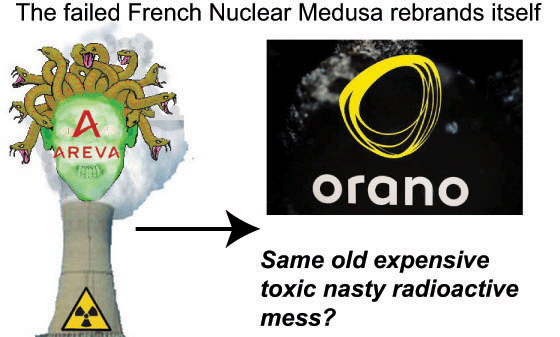
Orano’s activities in Mongolia under judicial investigation for suspicion of corruption https://www.lemonde.fr/energies/article/2018/12/19/les-activites-d-orano-en-mongolie-visees-par-une-enquete-judiciaire-pour-des-soupcons-de-corruption_5399983_1653054.html 19th Dec 2018 These suspicions of “bribery of a foreign public official” involve one of the service providers of Orano, the consulting firm Eurotradia International.
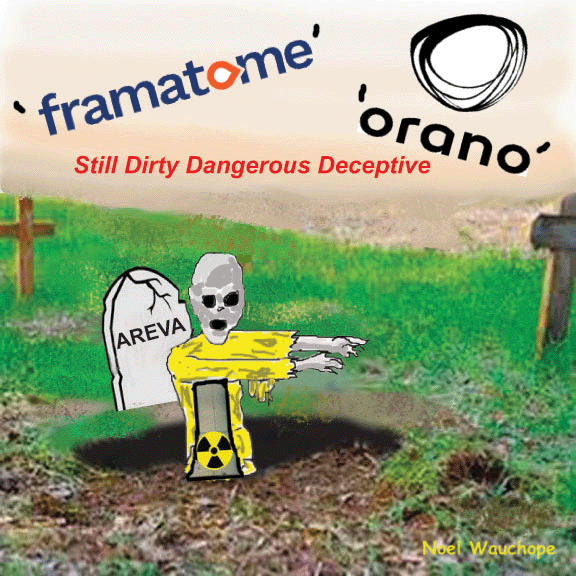 The French nuclear group Orano, [or is it Framatome?] formerly Areva, is in
  the sights of the national prosecutor’s office that investigates suspicions of corruption in Mongolia, it was learned, Wednesday, December 19,from sources close to the case. These suspicions of “bribery of a foreign public official” involve one of the service providers of Orano, the consulting firm Eurotradia International.
Anti-corruption campaign in Mongolia
In October 2013, under the chairmanship of Luc Oursel, Areva entered into a strategic partnership to exploit two uranium deposits in the Gobi Desert (southeast) with Mongolian Mon-Atom and Japan’s Mitsubishi. The agreement came after more than ten years of exploration of the French group in Mongolia, but it remained uncertain until the last moment. The project had sparked strong environmental opposition in this huge country of three million inhabitants, whose subsoil is rich in ores (uranium, copper, gold, coal).
The case is part of an anti-corruption campaign in Mongolia where, in another case, two former prime ministers were jailed in April for controversial deals with the mining giant, Anglo-Australian Rio Tinto.
In addition, the French nuclear group has already been targeted since 2015 by a preliminary survey of the PNF. This case, dubbed “uraniumgate”, is about the controversial sale in the fall of 2011, a large amount of Nigerian uranium for $ 320 million. https://www.lemonde.fr/energies/article/2018/12/19/les-activites-d-orano-en-mongolie-visees-par-une-enquete-judiciaire-pour-des-soupcons-de-corruption_5399983_1653054.html
Outages extended at Hunterston nuclear plant in Britain
plant in Britain, where two reactors were taken offline after cracks were
discovered in March and October. The Hunterston B-7 reactor is now expected
to return to service on April 30 while Hunterston B-8 is expected to be
back online from March 31, EDF Energy said on its website. No one from EDF
Energy, owned by French energy group EDF, was available immediately to
comment on why the outages had been extended.
https://www.reuters.com/article/britain-nuclear/edf-extends-outages-at-british-nuclear-plant-where-cracks-were-found-idUSL8N1YN3IX
University of Manchester partners with Chinese government agency
 Birmingham joins China’s nuclear regulator for safe and clean energy research
https://www.birmingham.ac.uk/news/latest/2018/12/safe-and-clean-energy-research.aspx19 Dec 2018 University of Birmingham experts are partnering with Chinese nuclear regulators in helping develop cleaner, safer and more sustainable civil atomic energy.
The University has signed an agreement with the Nuclear and Radiation Safety Centre (NSC), Ministry of Ecology and Environment to work on collaborative education and research in nuclear policy, safety and regulation, as well as the environmental impact and assessment of nuclear radiation.
Following an earlier visit of a University of Birmingham team to NSC headquarters in Beijing, a senior delegation headed by Deputy-Director General CHAI Guohang visited Birmingham to further develop the collaboration and sign the agreement. The visit was attended by a representative from the Chinese Embassy in London.
Signing the agreement on behalf of the University of Birmingham, Pro-Vice-Chancellor Professor Andy Schofield commented: “The University of Birmingham is delighted to partner with NSC, to work together in the research and education of civil nuclear safety, policy and regulation. This is such an important area for both our countries as we develop civil nuclear power as a key part of clean and sustainable energy production.
“We are very proud of the University’s accomplishments in having the largest and longest continually-running civil nuclear education programmes in the UK, matched by a diverse research capability, and with influence on the development of UK nuclear energy policy. We look forward to working with NSC to continue the development of safe and efficient civil nuclear system in UK and China.”
As the nuclear regulator of China, NSC affiliates directly to the Chinese Ministry of Ecology and Environment, and provides all-round support and assurance in safety regulation and administration of China’s civil nuclear facilities and radiation protection.
In the development of civil nuclear power in China to meet its increasing energy demand, NSC is actively forming a wide range of collaborations with high level domestic and internal partners, including with IAEA and the UKs ONR.
The NSC Deputy-Director General Mr CHAI Guohang said: “As one of the top 100 world universities, the University of Birmingham strength in nuclear science and engineering, its work in nuclear policy and its long standing achievements in civil nuclear education and research are well-known. For these reasons we chose Birmingham as our first international university partner. We believe our collaboration will deliver successful and mutually beneficial results.”
Hitachi having trouble financing new nuclear reactors in Wales – may pull the plug on Wylfa project

Hitachi may freeze British nuclear project due to swelling costs, https://www.japantimes.co.jp/news/2018/12/16/business/corporate-business/hitachi-may-freeze-british-nuclear-project-due-swelling-costs/#.XBawLdIzbGg
KYODO 17 Dec 18, Hitachi Ltd. is considering freezing its plan to build nuclear reactors in Wales after facing difficulties in finding investors to finance the project’s ballooning costs, sources close to the matter said Sunday.
If the Japanese conglomerate freezes the ¥3 trillion Wylfa Newydd plant construction, all of the overseas nuclear projects promoted by the government of Prime Minister Shinzo Abe as part of his growth strategy would have faltered.
Mitsubishi Heavy Industries Ltd. is mulling withdrawing from a nuclear project in Turkey amid swelling safety-related costs following the 2011 Fukushima nuclear accident, while Toshiba Corp. has decided to exit from the nuclear plant business outside Japan after incurring huge losses in the United States.
Hitachi has said it wants to lower its stake in Horizon Nuclear Power Ltd., a wholly owned unit it acquired in 2012 from two German electric utilities to take over the nuclear project, to below 50 percent to limit the impact on the Hitachi group of the construction of two advanced boiling water reactors on the Isle of Anglesey in Wales.
Hitachi is likely to have told the British and Japanese governments of its plan to freeze the project, the sources said. The issue will likely be discussed at the planned meeting between Abe and British Prime Minister Theresa May in January, they said.
The company has been contacting prospective investors in the project, including Japanese utilities, but little progress has been made amid concerns that costs will further swell, they said.
Hitachi also remains at odds with the British government over the purchase price of electricity to be generated by the plant, a key factor in determining the project’s profitability for the company and potential investors.
Given the current turmoil in British politics over May’s proposed deal with the European Union on the United Kingdom’s departure from the bloc, price-setting talks are at a “deadlock,” a senior Hitachi official said.
Cost of Chinese-designed and largely Chinese-owned nuclear reactor for Bradwell UK will probably blow out hugely

 Dave Toke’s Blog 16th Dec 2018 The UK’s Office for Nuclear Regulation (ONR) has requested a long series of safety improvements to the proposed design of the Chinese HPR1000 (‘Hualong’) reactor proposed to be built at Bradwell in Essex. Previous experience suggests this could presage a big increase in costs for the plant which is likely to cost a lot more than similar plant built in China. The HPR100 design Bradwell, UKis based on one being built in China at by China General Nuclear Power Group (CGN). CGN will own around two-thirds of the project, with EDF owning the remaining share.
‘follow up’ point materials must severely question any financial estimates of the plant’s costs that have been based on the plant being built in
China.
https://realfeed-intariffs.blogspot.com/2018/12/office-for-nuclear-reactor-demands.html
1 This Month
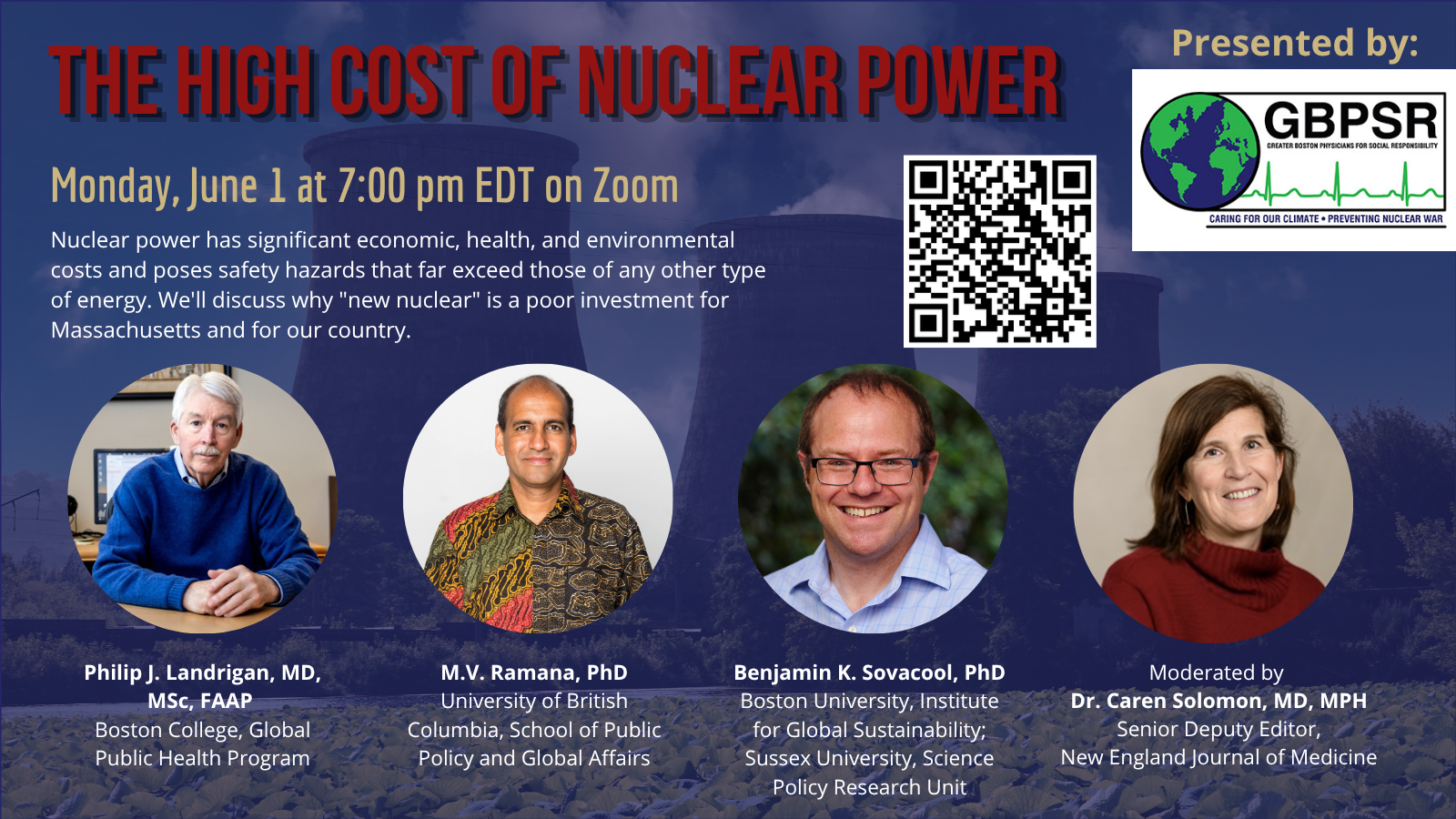
1 June Webinar – The High Cost of Nuclear Power – Register


of the week– Nuclear Reactor Information Task Force
To see nuclear-related stories in greater depth and intensity – go to https://nuclearinformation.wordpress.com
-
Archives
- May 2026 (262)
- April 2026 (356)
- March 2026 (251)
- February 2026 (268)
- January 2026 (308)
- December 2025 (358)
- November 2025 (359)
- October 2025 (376)
- September 2025 (257)
- August 2025 (319)
- July 2025 (230)
- June 2025 (348)
-
Categories
- 1
- 1 NUCLEAR ISSUES
- business and costs
- climate change
- culture and arts
- ENERGY
- environment
- health
- history
- indigenous issues
- Legal
- marketing of nuclear
- media
- opposition to nuclear
- PERSONAL STORIES
- politics
- politics international
- Religion and ethics
- safety
- secrets,lies and civil liberties
- spinbuster
- technology
- Uranium
- wastes
- weapons and war
- Women
- 2 WORLD
- ACTION
- AFRICA
- Atrocities
- AUSTRALIA
- Christina's notes
- Christina's themes
- culture and arts
- Events
- Fuk 2022
- Fuk 2023
- Fukushima 2017
- Fukushima 2018
- fukushima 2019
- Fukushima 2020
- Fukushima 2021
- general
- global warming
- Humour (God we need it)
- Nuclear
- RARE EARTHS
- Reference
- resources – print
- Resources -audiovicual
- Weekly Newsletter
- World
- World Nuclear
- YouTube
-
RSS
Entries RSS
Comments RSS
 nuclear-news