Five of France’s EDF nuclear reactors shut down, awaiting regulatory approval
Creusot: 5 EDF reactors still without ASN green light. Five nuclear
reactors are still waiting for an operating license from the Nuclear Safety
Authority (ASN) as part of the investigation of the manufacturing records
of the Creusot plant, while the other 53 have already received fire green,
Creusot’s spokesperson said .
“We are still waiting for elements of answers from EDF,” she said to explain the delay of the
investigation which was to end on December 31, 2018. The five reactors
concerned are Cattenom 4 (1,300 MW ), Fessenheim 1 (880 MW), Flamanville 2
(1,330 MW), Golfech 1 (1,310 MW) and Tricastin 2 (915 MW). All five
reactors will be shut down for maintenance in the coming weeks, as follows:
Cattenom 4 (January 19th to April 11th), Fessenheim 1 (January 19th to
March 20th), Flamanville 2 (January 10th to July 10), Golfech 1 (February
16 to March 23) and Tricastin 2 (January 26 to April 1). The reactors will
not be able to restart without prior approval from ASN.
Russian blogger reveals photo of venting cloud of radioactive dust from 1987 nuclear test gone wrong
Photo shows venting radioactivity from 1987 nuclear bomb tests at Novaya Zemlya https://thebarentsobserver.com/en/security/2019/01/photo-shows-venting-radioactivity-nuclear-bomb-tests-novaya-zemlya
It is two hours past midnight on August 2nd 1987 when the Soviet nuclear weapons scientists push the button triggering a series of five nuclear devises inside a tunnel at the Matochkin Shar nuclear testing site.
A load boom follows and the ground is shaking like an earthquake. A huge dust cloud blows out from the tunnel supposed to be hermetical sealed by meters thick stone- and concrete walls.
The radioactive dust cloud came as a big surprise to the personnel witnessing.
Now, more than 30 years later, a photo from the accident is published by Russian blogger who focuses on nuclear thematic and also posts photos on twitter.
Leakage of radioactivity from the August tests in 1987 is known from before, listed in a 2005 publication by Science and Global Security. Now, the photo from the site gives the public a better understanding of the size of tunnel collapse.
The photo is taken no more than a kilometer from the tunnel entrance and shows a military helicopter parked in in front. Each of the tunnels in the area where underground nuclear weapons testing took place from 1964 to 1990 has its own code number. The one collapsing on this photo is known as tunnel A-37A.
According to a list of all underground nuclear weapons tests at Novaya Zemlya, published by Science and Global Security, the total yield of the five devises exploded on August 2nd were 150 KT, ten times the size of the bomb dropped on Hiroshima in 1945.
The leakages of radioactivity was estimated to 56 TBq. The gamma radiation near the entrance to the tunnel was measured to more than 500 R/h. First radioactive gases were detected 90 seconds after the blast.
500 R/h is about 1000 times the annual dose for an average human. Exposed directly, such dose could be lethal within an hour or two.
In the book USSR Nuclear Explosions about the northern test site at Novaya Zemlya, published in 1991, a group of Soviet radiation experts writes about the accident. «A powerful burst of a radioactive gas-jet.stream occurred just above the mouth of the adit, just 1,5 minutes after the explosion. It was later established that gas penetrated along a geologic fault that extended along the adit axis and hot gases melted the surface ice.»
The authors describe how an emergency program was immediately instituted evacuating all staff within a period of a few minutes. No cases of radiation sickness occurred amon the test site personnel at Novaya Zemlya.
Mountian Moiseev, where the nuclear weapons tests took place, is located about 10 kilometers south of Severny, the military settlement on the shores of the Matochkin Shar serving as the centre for the nuclear test site.
The last real nuclear weapon test at Novaya Zemlya took place on October 24th 1990. Today, only subcritical nuclear weapon tests are conducted on the Russian Arctic archipelago.
EDF’s plans for construction of the Sizewell C twin-reactor will cause widespread disruption
East Anglian Daily Times 7th Jan 2019 ,Campaigners have been left furious over the latest plans for a new nuclear power plant on the Suffolk coast – and say EDF Energy is still not
listening to residents’ concerns. The construction of the Sizewell C
twin-reactor is expected to cause widespread disruption with concern over
hundreds of trucks using unsuitable roads, the impact on the local economy
and worries over the effect on RSPB Minsmere. A main concern is the use of
land near Eastbridge for a campus for 2,400 workers which campaigners say
are “substantially unchanged” from early designs. Alison Downes,
co-chairman of Theberton and Eastbridge Action Group on Sizewell (TEAGS),
was furious at the lack of consideration being taken of the villages as EDF
clamours to start construction.
https://www.eadt.co.uk/news/edf-energy-sizewell-plan-slated-by-theberton-middleton-eastbridge-activists-1-5840910
Russia might revive its fearful automatic nuclear weapons launch system
Meet “Dead Hand”: This Might Be Russia’s Most Terrifying Nuclear Weapons Idea Yet https://nationalinterest.org/blog/buzz/meet-dead-hand-might-be-russias-most-terrifying-nuclear-weapons-idea-yet-40937
Perhaps the most terrifying was a Cold War doomsday system that would automatically launch missiles—without the need for a human to push the button—during a nuclear attack. But the system, known as “Perimeter” or “Dead Hand,” may be back and deadlier than ever, f Russia is now discussing Perimeter publicly, that’s reason for the rest of us to worry.
Russia has a knack for developing weapons that—at least on paper—are terrifying: nuclear-powered cruise missiles, robot subs with 100-megaton warheads .
Perhaps the most terrifying was a Cold War doomsday system that would automatically launch missiles—without the need for a human to push the button—during a nuclear attack.
But the system, known as “Perimeter” or “Dead Hand,” may be back and deadlier than ever.
This comes after the Trump administration announced that the United States is withdrawing from the 1987 Intermediate-Range Nuclear Forces Treaty, which eliminated the once-massive American and Russian stockpiles of short- and medium-range missiles. Donald Trump alleges that Russia has violated the treaty by developing and deploying new, prohibited cruise missiles.
This has left Moscow furious and fearful that America will once again, as it did during the Cold War, deploy nuclear missiles in Europe. Because of geographic fate, Russia needs ICBMs launched from Russian soil, or launched from submarines, to strike the continental United States. But shorter-range U.S. missiles based in, say, Germany or Poland could reach the Russian heartland.
Viktor Yesin, who commanded Russia’s Strategic Rocket Forces in the 1990s, spoke of Perimeter/Dead Hand during an interview last month in the Russian newspaper Zvezda [Google English translation here]. Yesin said that if the United States starts deploying intermediate-range missiles in Europe, Russia will consider adopting a doctrine of a preemptive nuclear strike. But he also added this:
Zvezda: “Will we have time to answer if the flight time is reduced to two to three minutes when deploying medium-range missiles near our borders? In this version, all hope is only on Perimeter. And for a retaliatory strike. Or was Perimeter also disassembled for parts?
It is not clear what Yesin meant when he said the system has been “improved,” or even exactly what he meant by “functioning.” Perimeter works by launching specially modified SS-17 ICBMs, which transmit a launch signal to regular nuclear-tipped ICBMs in their silos.
“Higher authority” would flip the switch if they feared they were under nuclear attack. This was to give the “permission sanction.” Duty officers would rush to their deep underground bunkers, the hardened concrete globes, the shariki. If the permission sanction were given ahead of time, if there were seismic evidence of nuclear strikes hitting the ground, and if all communications were lost, then the duty officers in the bunker could launch the command rockets. If so ordered, the command rockets would zoom across the country, broadcasting the signal “launch” to the intercontinental ballistic missiles. The big missiles would then fly and carry out their retaliatory mission.
There have been cryptic clues over the years that Perimeter still exists.
Which illustrates one of the curiosities of this system, which is that the Soviet Union kept its existence secret from the American enemy whom it was supposed to deter.What is unmistakable is that Perimeter is a fear-based solution. Fear of a U.S. first-strike that would decapitate the Russian leadership before it could give the order to retaliate. Fear that a Russian leader might lose his nerve and not give the order.
And if Russia is now discussing Perimeter publicly, that’s reason for the rest of us to worry.
Michael Peck is a contributing writer for the National Interest. He can be found on Twitter and Facebook.
The Nuclear Free Local Authorities (NFLA) will brief Scottish Parliament on Hunterston nuclear power plant
The National 8th Jan 2019 ,ANTI-nuclear campaigners will brief MSPs tomorrow on their concerns about the safety of two reactors at the Hunterston B nuclear power plant in North
Ayrshire. Reactors 3 and 4 have been offline since March and October
respectively after cracks were found during a routine inspection. Operators
EDF hope to gain approval for their re-opening in the spring.
The Nuclear Free Local Authorities (NFLA) will give the Scottish Parliament briefing,
which will be chaired by Green MSP Ross Greer. He said: “Long-running
safety and job concerns from the community around Hunterston have increased
significantly.”
https://www.thenational.scot/news/17341200.msps-to-meet-anti-nuclear-campaigners/
Increasing major cracks in Hunterston nuclear reactors: call to close them permanently
 Ferret 9th Jan 2019 Pressure is mounting to keep two nuclear power reactors at Hunterston in
North Ayrshire closed after the company that runs them, EDF Energy, said it
had found more cracks and was again postponing plans to restart.
of reactor three and 200 cracks in the core of reactor four. Reactor three has been closed down since 9 March 2018, and reactor four since 2 October.
discovered in reactor three in breach of an operating safety limit, EDF
postponed restarting both reactors to January and February.
Hunterston for MSPs in the Scottish Parliament. Experts will call for the
reactors to stay closed rather than risking a nuclear accident, and for new
jobs to be created in Ayrshire. Nuclear policy consultant, Dr Ian Fairlie,
will argue that the increasing number of cracks in the ageing reactors
spelled their end. “There is only one thing you can do and that is close
them, as they cannot be repaired,” he told The Ferret.
https://theferret.scot/cracks-hunterston-reactors/
Misgivings in UK about China’s involvement in Bradwell nuclear project, as enthusiasm for ‘new nuclear’ wanes

 FT 7th Jan 2019 The Huawei affair has revived the unresolved question of whether the non-Chinese world can trust Chinese companies as the country becomes an industrial superpower. The US has cited Huawei’s alleged breaches of Iranian sanctions to request the extradition of Meng Wanzhou, the company’s chief financial officer, from Canada, but it is clear that the real concern is about the ability of Huawei’s advanced technology to gather information.
will focus not just on Huawei but also on the proposed development of Bradwell B. The plant is intended to be a joint project between the Chinese nuclear company CGN and France’s EDF, with CGN set to own 66.5 per cent of the venture and use its HPR 1000 nuclear reactor. CGN is, on its own estimation, the world’s third largest nuclear power company but its operations have so far been concentrated in China and Bradwell would be a flagship project for its international ambitions.
https://www.ft.com/content/8a1d7432-0e8b-11e9-a3aa-118c761d2745
Extreme weather shuts down Dounreay nuclear site: all 1,200 staff have been evacuated
 Dounreay nuclear site closed due to high winds https://www.energyvoice.com/otherenergy/nuclear/190151/dounreay-nuclear-site-closed-due-to-high-winds/ David McPhee, 7 Jan 19The Dounreay nuclear site has been closed due to extremely high winds, according to a spokeswoman.
The site was officially closed at 1pm after the bosses took advice from the Met Office.
All 1,200 staff have been evacuated after winds had battered the nuclear site for a couple of hours.
A spokeswoman for Dounreay Site Restoration (DSRL) said “the safety of staff was paramount”, adding that DSRL “take their lead from the Met Office, resulting in us officially closing the site at 1pm this afternoon.”
DSRL are decommissioning the site at a cost of £2.32 billion. – 07/01/2019
Unusual damage to UK nuclear submarine
|
Nuclear patrol submarine returns to base with ‘unusual’ amount of damage, Telegraph UK defence correspondent, 6 JANUARY 2019 One of Britain’s nuclear deterrent submarines has suffered an “unusual” amount of damage as pictures emerge of HMS Vengeance returning from patrol with around 30 per cent of her sonar panels missing.
The ballistic missile submarine returned last week from her latest three-month patrol. As the nuclear-armed vessel surfaced near the Faslane naval base on the Clyde it was obvious the expected level of wear and tear had been exceeded by up to three times the usual amount.Britain’s ballistic missile submarines are covered with sonar panels – specially designed acoustic shields to mask any sound from inside the submarine and absorb the sound waves of an active sonar emitted by another vessel looking…(subscribers only) https://www.telegraph.co.uk/news/2019/01/06/nuclear-patrol-submarine-suffers-unusual-amount-damage-government/ |
|
UK govt now prevents any one local council from pulling out of plans for a vast underground nuclear waste dump in Cumbria

Times 5th Jan 2019 A million tonnes of nuclear waste could be buried under the Lake District after the government removed the right of county councils to veto plans for a vast underground dump.
The £19 billion “geological disposal facility” will have an underground area of up to 20 square kilometres, with radioactive waste stored in vaults at depths of between 200m and 1km.
Copeland borough council in Cumbria — the home of Sellafield, where most of Britain’s nuclear waste is stored — had wanted to be considered for the dump because it would create thousands of highly paid jobs and require local investment. But in 2013 Cumbria county council vetoed the idea.
Now the Department for Business, Energy and Industrial Strategy has published a plan for “the long-term management of higher activity radioactive waste” that prevents any one council in areas with two tiers of local government from pulling out of discussions on hosting the dump. Both councils can choose to withdraw but “no single principal local authority
will be able to unilaterally invoke the right”.
https://www.thetimes.co.uk/article/radioactive-waste-could-be-buried-under-lake-district-rqxpm9pjw
President Vladimir Putin’s new secret weapon -NUCLEAR drone which sends 1,640ft high WAVES
WHY RUSSIA’S ‘POSEIDON’ UNMANNED UNDERWATER DRONE IS A DOOMSDAY WEAPON
Russia boasts of ‘impossible to detect’ NUCLEAR drone which sends 1,640ft high WAVES https://www.dailystar.co.uk/news/world-news/751603/russia-news-vladimir-putin-underwater-drone-nuclear-war-world-war-3
RUSSIAN ministry of defence officials have hinted that a new underwater nuclear warhead-carrying drone is impossible to detect. By Douglas Patient / 5th January 2019 Dubbed President Vladimir Putin‘s new secret weapon – it’s even more deadly than originally thought according to Russia. The navy will be armed with Poseydon drones as soon as 2027.
It carries nuclear warheads and was created in order to obliterate enemy ports. But being equipped with warheads of 100 megatons, it can also be used against coastal cities.
Attacks would involve detonating the warhead underwater, creating huge tidal waves up to 1,640ft high.
At the same time it would contaminate enemy territory with radiation.
Unlike conventional nuclear weapons it would also be immune to being hit by missiles, lasers and railguns.
The concept of the strategic underwater drone named Poseydon was first put forward in 2015 and mentioned by Putin in March last year during his state-of-the-nation speech.
It was initially believed that the Poseydon will be able to travel up to 70 knots, which is about 80mph, while underwater.
But now it has been confirmed that the sample actually be capable of travelling as fast as 125mph (more than 110 knots).
In an official statement ministry said: “The drone will travel to its destination at a speed of 200 kph (125mph) and a depth of 1km (0.6 miles). The drone will be moving in a so-called ‘air-cavern’ (a process in which a steam filled bubble forms around the drone, which reduces the resistance of the water and allows it to move so fast).
“The drone will constantly be performing different manoeuvres and will not stay on one trajectory, which together with its high speed will make it impossible to intercept.”
Officials also released a video showing the computer presentation of Poseydon drones from the Russian Ministry of Defence.
This comes as Russia said it was developing a drone sub that has an underwater rifle to fire at enemy divers.
Renewables beating coal energy in Germany
The shift marks progress as Europe’s biggest economy aims for renewables to provide 65 percent of its energy by 2030 in a costly transition as it abandons nuclear power by 2022 and is devising plans for an orderly long-term exit from coal.
The research from the Fraunhofer organisation of applied science showed that output of solar, wind, biomass and hydroelectric generation units rose 4.3 percent last year to produce 219 terawatt hours (TWh) of electricity. That was out of a total national power production of 542 TWh derived from both green and fossil fuels, of which coal burning accounted for 38 percent.
Green energy’s share of Germany’s power production has risen from 38.2 percent in 2017 and just 19.1 percent in 2010.
Bruno Burger, author of the Fraunhofer study, said it was set to stay above 40 percent this year.
“We will not fall below the 40 percent in 2019 because more renewable installations are being built and weather patterns will not change that dramatically,” he said……….https://www.weforum.org/agenda/2019/01/renewables-overtake-coal-as-germanys-main-energy-source?utm_source=Facebook%20Videos&utm_medium=Facebook%20Video
UK’s legal battle over botched handling of the Magnox nuclear decommissioning contract.
 Former chiefs of UK’s nuclear body launch legal action over Magnox fiasco http://www.cityam.com/271148/former-chiefs-uks-nuclear-body-launch-legal-action-over, Jessica Clark, 5 Jan 19,
 Putin puts shipping safety regulation in the Arctic into the hands of the nuclear industry!
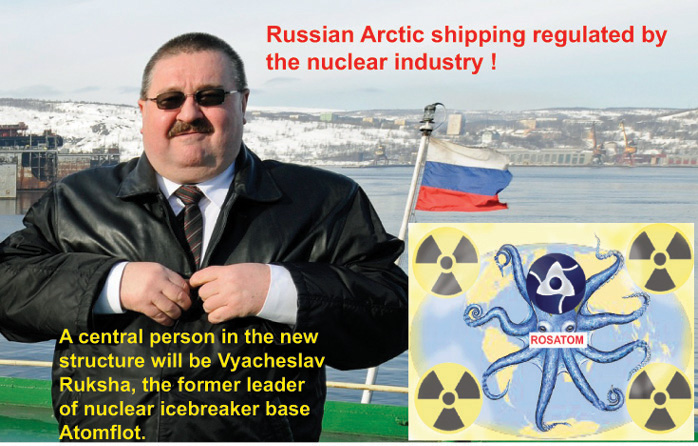
It’s a law – Russian Arctic shipping to be regulated by Rosatom https://thebarentsobserver.com/en/arctic/2019/01/its-law-russian-arctic-shipping-be-regulated-rosatom
President Putin signs the bill that makes the country’s state nuclear power company top regulator of the Northern Sea Route.By Atle Staalesen, January 02, 2019
Rosatom has officially been granted the leading role in the development of the vast Russian Arctic. The company that employs more than 250,000 people and engages in a multitude of activities related to nuclear power development and production is now formally Russia’s management authority for the Northern Sea Route.
The law was adopted by the State Duma on the 11th December and on the 28th signed by Vladimir Putin.
The new legislation comes as Russian Arctic shipping is on rapid increase. In 2018, about 18 million tons of goods was transported on the sea route, an increase of almost 70 percent from 2017. And more is to come. According to Vladimir Putin so-called May Decrees, the top national priorities, shipping on the Northern Sea Route is to reach 80 million tons already by year 2024.
Rosatom’s new powers in the Arctic include development and operational responsibilities for shipping, as well as infrastructure and sea ports along the northern Russian coast.
The responsibilities of the Northern Sea Route Administration, that until now has operated under the Ministry of Transport, will now be transferred to Rosatom.
It was Putin himself who in early 2017 made clear that a coordinating government agency for the Northern Sea Route was needed. A battle between Rosatom and the Ministry of Transport followed. In December 2017, it became clear that the nuclear power company had won that fight.
A central person in the new structure will be Vyacheslav Ruksha, the former leader of nuclear icebreaker base Atomflot.
The nuclear power company has since 2008 operated the fleet of nuclear-power icebreakers. Currently, five icebreakers are based in Atomflot, Murmansk, and several more ships are under construction, including four powerful LK-60 vessels.
Rosatom is also in the planning process of the «Lider», the 120 MW capacity super-powerful ship that can break through two meter thick ice at an unprecedented 10-12 knot speed.
Between USA’s John Bolton, and Russia’s nuclear hawks – the fragmentation of nuclear arms control spells global danger
 Fragmenting nuclear arms controls leave world in a more dangerous place https://www.theguardian.com/world/2019/jan/03/fragmenting-nuclear-arms-controls-leave-world-in-a-more-dangerous-place Andrew Roth in Moscow 3 Jan 2019 Fragmenting nuclear arms controls leave world in a more dangerous place https://www.theguardian.com/world/2019/jan/03/fragmenting-nuclear-arms-controls-leave-world-in-a-more-dangerous-place Andrew Roth in Moscow 3 Jan 2019 US could withdraw from a second treaty while Vladimir Putin’s Russia promises a new generation of nuclear weapons The decision on whether or not to destroy the world came down to a humble Soviet duty officer early one morning in 1983. Stanislav Petrov was told by his computer that the United States had launched at least five intercontinental ballistic missiles at the Soviet Union, and that they would strike in just 25 minutes.Rather than send the alarm up the chain of command, the lieutenant colonel did nothing and averted a nuclear clash over what turned out to be a systems malfunction. For his troubles, Petrov was reprimanded for failing to keep careful notes during the incident and left the service the following year. He died at 77 just last year, on the cusp of the collapse of the architecture that has governed nuclear arms control for the last two generations. Potential nuclear clashes may seem the stuff of Cold War lore, but the framework to prevent them is recent and increasingly endangered.
The next pillar to fall could be the New Start treaty, signed by Barack Obama and Dmitri Medvedev in 2010, which reduced strategic missile launchers by half. That treaty will expire in 2021 unless it is extended, and President Trump has called it a “bad deal” in a telephone call with Vladimir Putin. Russia’s foreign minister has said he believes the United States is “preparing the soil to dismantle this deal.” Putin also threatened the United States with a new line of nuclear-capable weapons earlier this year, blaming the United States’ decision to exit the 1972 anti-ballistic missile treaty for a new arms race. His state of the nation speech, usually a staid affair, was accompanied by a low-resolution animation of a nuclear-powered cruise missile sailing from the Atlantic Ocean, around Cape Horn and then northward toward California. “You didn’t listen to our country then,” Putin said of the US leaving the ABM in 2001. “Listen to us now.” Taken together, these treaties are the bulk of the nuclear arms control framework that the United States and Russia inherited from the Cold War or have developed since. Experts from both sides note that the treaties weren’t perfect but warn that brokering deals is far more difficult than breaking them. The probability of an arms buildup is growing. “The INF decision and failure to get into real discussions about extending New START has us sleepwalking into a new nuclear arms race,” said Richard Burt, a former ambassador who served as chief negotiator for the United States on the Strategic Arms Reduction Treaty, during an Atlantic Council event earlier this year. Viktor Yesin, the former chief of staff of the Russian Federation Strategic Missile Force, said that the US decision to exit the INF was largely with an eye to military developments in China and other countries not bound by the treaty. But the decision could lead to deployments of missiles in Europe, he said, unless the United States and Russia take steps to avoid it. Only “political measures” could avert “the worst outcome for Russia and Europe in the development of a ‘missile crisis,’ which will unavoidably arise after the United States exits the INF,” he said. Those warnings appear to be apt. A leaked memo published by the Washington Post showed that Bolton had ordered the Pentagon to “develop and deploy ground-launched missiles at the earliest possible date.” The order was tabled only after European allies intervened to prevent an immediate US pullout from the INF. Washington has issued Moscow a 60-day ultimatum, after which it will exit the treaty. Russia, which has not admitted to violating the treaty, has signalled it won’t change its behaviour. The driving force behind the pullout is seen as Bolton, who has spoken fervently against similar arms control treaties and presided over the demolition of both the anti-ballistic missile treaty in 2001 and now the INF. Determined individuals can change the course of history. In 1983, Petrov’s decision not to alert his superiors came down to a “funny feeling in my gut.” Now, Bolton appears resolved to finally see a United States released from the bonds of missile treaties and nuclear arms control. |
|

1 This Month
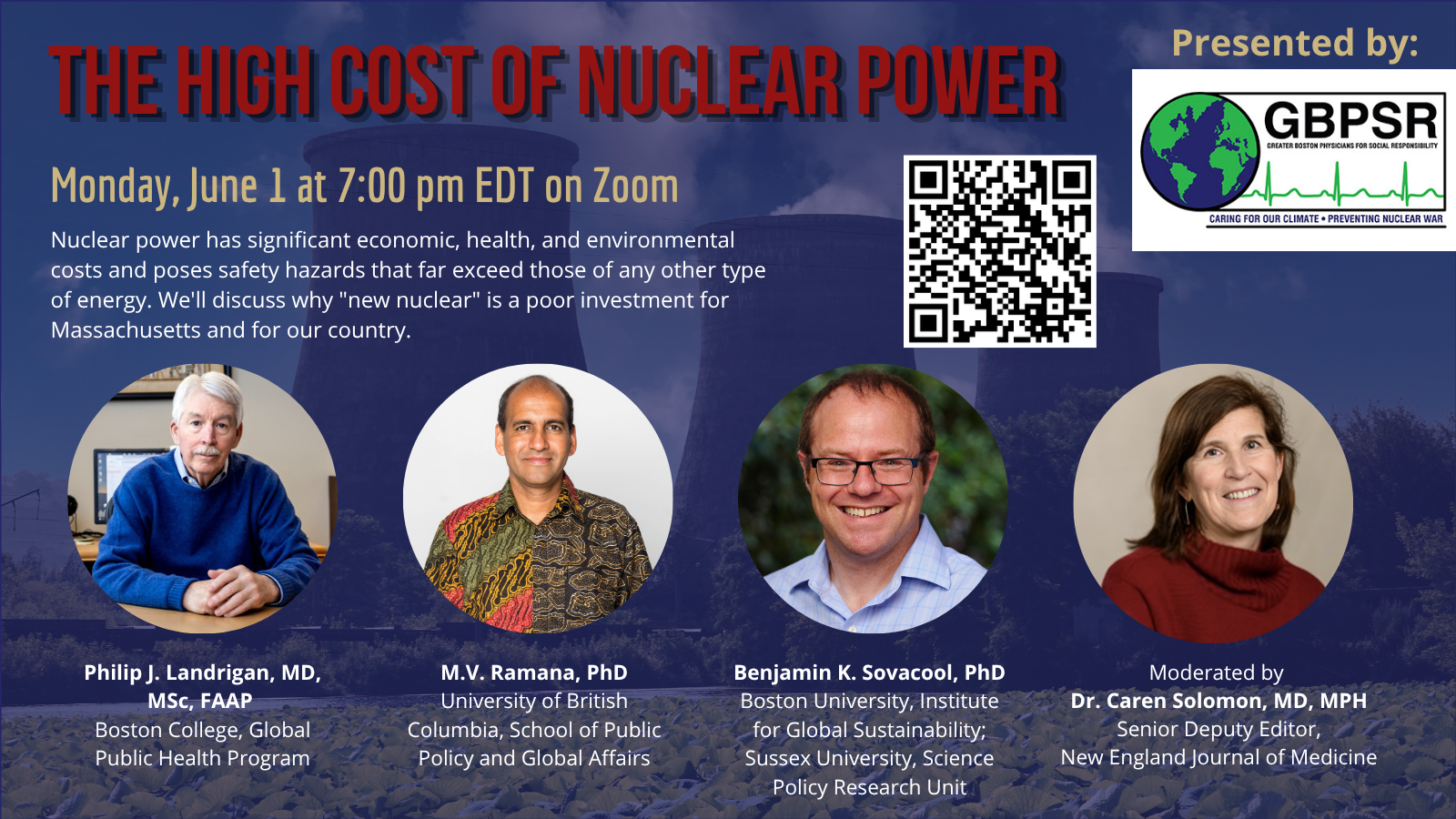
1 June Webinar – The High Cost of Nuclear Power – Register


of the week– Nuclear Reactor Information Task Force
To see nuclear-related stories in greater depth and intensity – go to https://nuclearinformation.wordpress.com
-
Archives
- May 2026 (262)
- April 2026 (356)
- March 2026 (251)
- February 2026 (268)
- January 2026 (308)
- December 2025 (358)
- November 2025 (359)
- October 2025 (376)
- September 2025 (257)
- August 2025 (319)
- July 2025 (230)
- June 2025 (348)
-
Categories
- 1
- 1 NUCLEAR ISSUES
- business and costs
- climate change
- culture and arts
- ENERGY
- environment
- health
- history
- indigenous issues
- Legal
- marketing of nuclear
- media
- opposition to nuclear
- PERSONAL STORIES
- politics
- politics international
- Religion and ethics
- safety
- secrets,lies and civil liberties
- spinbuster
- technology
- Uranium
- wastes
- weapons and war
- Women
- 2 WORLD
- ACTION
- AFRICA
- Atrocities
- AUSTRALIA
- Christina's notes
- Christina's themes
- culture and arts
- Events
- Fuk 2022
- Fuk 2023
- Fukushima 2017
- Fukushima 2018
- fukushima 2019
- Fukushima 2020
- Fukushima 2021
- general
- global warming
- Humour (God we need it)
- Nuclear
- RARE EARTHS
- Reference
- resources – print
- Resources -audiovicual
- Weekly Newsletter
- World
- World Nuclear
- YouTube
-
RSS
Entries RSS
Comments RSS
 nuclear-news