Hitachi calling on Britain to further subsidise new nuclear reactors for Wales

 Hitachi to ask UK for further funding as nuclear project stalls https://asia.nikkei.com/Business/Companies/Hitachi-to-ask-UK-for-further-funding-as-nuclear-project-stalls
Company struggles to find other Japanese parties willing to invest TAKAFUMI HOTTA and SHINICHIRO IBUSUKI, Nikkei staff writers, DECEMBER 18, 2018
TOKYO — Hitachi will ask the British government for additional support for a nuclear power project in Wales as it struggles to recruit other Japanese investors amid international headwinds for atomic energy.
The company will consider scrapping the project, worth more than 3 trillion yen ($26.6 billion), should negotiations with London fail to reach a conclusion by January.
Aborting Japan’s last active proposal to build an overseas nuclear power plant would deal a blow to the government’s plan to expand exports of energy-related infrastructure, as similar projects face setbacks around the world.
“It is a fact that it is facing a difficult situation,” Hitachi Chairman Hiroaki Nakanishi said at a news conference Monday. “I told the British government that we are already reaching the limit.”
Nakanishi was speaking in his capacity as chairman of the Japan Business Federation, the nation’s top business lobby, better known as Keidanren. The news conference was held after reports emerged that Hitachi is considering scrapping the project altogether due to the difficulty of securing funding from Japanese companies.
With aid from the British government, Hitachi’s nuclear power segment intends to build two reactors on the Welsh island of Anglesey through British subsidiary Horizon Nuclear Power. It was scheduled to make a decision on the project’s economic feasibility sometime in 2019 but will probably push that decision forward by more than six months as the business environment worsens.
Nuclear power is losing its competitiveness as the price of renewable energy falls. The U.K. government also plans to buy electricity from the Wales plant for lower prices than those charged by other nuclear power facilities.
The Japanese government has promoted overseas nuclear power plant construction as a pillar of its strategy to boost infrastructure exports. Since the 2011 Fukushima disaster, no new reactors have been approved inside Japan. To maintain nuclear expertise and talent, Japan’s public and private sectors have teamed up to sell the technology abroad.
But ground has not broken on any project to date. A Japanese public-private consortium led by Mitsubishi Heavy Industries is planning to scrap a nuclear power plant in Turkey, for instance. Should the nuclear industry lose its legs, it could affect the restating and decommissioning of existing plants.
Hitachi has said it will move forward with the project if it can limit its exposure by reducing its 100% stake in Horizon Nuclear to around 30%. The U.K. has pledged more than 2 trillion yen in loans for the project, with the remaining cost of about 900 billion yen to be split among investments from Hitachi, the British government and business as well as the Japanese government and businesses.
Lining up Japanese investors, however, has proved to be a challenge. Tokyo Electric Power Co. Holdings, also known as Tepco, is reluctant to provide funding. Chubu Electric Power and other Japanese companies probably will follow its lead. Without other investors on the horizon, Hitachi is asking the British to share more of the burden.
Aside from Tepco and Chubu Electric, Hitachi also solicited investments from Japan Atomic Power, the Japan Bank for International Cooperation, the Development Bank of Japan and other parties. But the industrial conglomerate is having trouble gathering the necessary 300 billion yen.
The British government is no position to acquiesce to these demands. Having already pledged around $18 billion in loans, it risks backlash from the public by providing further financial support. Prime Minister Theresa May can ill afford another fight as her government risks collapse over negotiations to leave the European Union.
At a separate news conference held by Hitachi, Toshiaki Higashihara, the company’s president and CEO, did not attempt to downplay the situation. “Hitachi is a private company,” he said, “and there is a limit to how much risk it can take. If the project is not economically rational, it is possible that the project will be halted.”
Higashihara added that the final investment decision will be made by the end of 2019.
Hitachi Executive Vice President and Executive Officer Toshikazu Nishino also spoke, saying the company “has not given up yet,” though it recognizes “the negotiations are not easy.”
Britain’s nuclear nightmare -the Thermal Oxide Reprocessing Plant
 UK’s dream is now its nuclear nightmare https://climatenewsnetwork.net/uks-dream-is-now-its-nuclear-nightmare/?fbclid=IwAR3CEunSXXOxdK_-N8Ka9kwpCMzvHFXNkZf23VGjd6oFuDecember 14, 2018, by Paul Brown
Nobody knows what to do with a vast uranium and plutonium stockpile built up in the UK by reprocessing spent fuel. It is now a nuclear nightmare.
LONDON, 14 December, 2018 − Thirty years ago it seemed like a dream: now it is a nuclear nightmare. A project presented to the world in the 1990s by the UK government as a £2.85 billion triumph of British engineering, capable of recycling thousands of tons of spent nuclear fuel into reusable uranium and plutonium is shutting down – with its role still controversial.
Launched amid fears of future uranium shortages and plans to use the plutonium produced from the plant to feed a generation of fast breeder reactors, the Thermal Oxide Reprocessing Plant, known as THORP, was thought to herald a rapid expansion of the industry.
In the event there were no uranium shortages, fast breeder reactors could not be made to work, and nuclear new build of all kinds stalled. Despite this THORP continued as if nothing had happened, recycling thousands of tons of uranium and producing 56 tons of plutonium that no one wants. The plutonium, once the world’s most valuable commodity, is now classed in Britain as “an asset of zero value.” Continue reading
Radioactive reindeer in Finland and Norway
Rudolph the radioactive reindeer https://beyondnuclearinternational.org/2018/12/16/rudolph-the-radioactive-reindeer/ December 16, 2018
Reindeer carry heavy radioactive doses, mainly of cesium-137, because they devour lichen, moss and fungi, which bioaccumulate radioactive deposits from fallout. Norway’s radioactive contamination is primarily from Chernobyl, made worse because it was snowing heavily at the time of the April 26 accident.
The Sami story is beautifully explained in this stunning photo essay by Amos Chapple and Wojtek Grojec for Radio Free Europe/Radio Liberty.
As the essay describes it, despite the length of time since the Chernobyl disaster, the fallout is a nasty gift that keeps on giving. “In 2014, there was a huge spike in radiation levels that scientists put down to a bumper season for mushrooms. Hundreds of Norwegian reindeer intended for slaughter had to be released back into the wild.” Levels apparently shot from 1,500 becquerels per kilogram to 8,200.
A video of Chapple and Grojec’s work, on Tech Insider, also explains the impact of cesium-137 fallout on reindeer and their herders. [0n originall]
Unfortunately, Norway’s “allowable” radiation standards are far higher than in other parts of Europe, at 3,000 becquerels per kilogram of food compared to the EU standard of 600 becquerels. When Chapple and Grojec were compiling their story, the herd they visited was testing at 2,100 becquerels, passing the Norwegian test for “safe”. The authors say that the higher levels were established by the Norwegian government in “response to radiation levels in reindeer that threatened the very existence of the Sami herders.”
This practice of simply moving the radiation goalposts to make dangerous levels safe still goes on today, of course, most notably in Japan. As was pointed out in an earlier story on our site, the Japanese government, eager to show the world that the Fukushima region could quickly be made safe for habitation, simply raised the “allowable” annual exposure rate from 1 millisievert to 20, an entirely unacceptable dose for most people, especially women and children.
In Finland, most of the persistent radiation levels are due to atomic testing during the Cold War. Measurements continue to be taken among the Lapland reindeer herders where cesium levels are ten times higher than in the rest of Finland. Although cesium levels in humans were a shocking 45,000 becquerels per kilo in the 1960s according to one report, they still hover at over 1,000 today.
The reduction in slaughter of reindeer comes with other side effects as well. As far back as 1997, it was already being observed that the increase in reindeer population, leading to “Over-grazing and trampling, is causing more damage to the fragile tundra than some of the world’s most seriously polluting factories,” wrote Geoffrey Lean in The Independent.
Now, as Russia begins using floating nuclear reactors to plunder the Arctic Ocean for oil, the region has been placed under threat of a radioactive catastrophe again. From both an economic and health perspective, neither the reindeer nor their indigenous herders can afford a second assault.
Some good news in the climate battle – over 1000 institutions to divest from fossil fuels
 Climate change: More than 1000 institutions pledge to withdraw investment from fossil fuels https://www.independent.co.uk/environment/fossil-fuels-divest-climate-change-global-warming-emissions-campaign-a8681931.html ‘This is a moral movement as well as a financial one,’ campaigners say Josh Gabbatiss Science Correspondent @josh_gabbatiss 14 Dec 18, Governments, universities and banks have quit fossil fuels in their hundreds after a global campaign to convince institutions to pull their investments.
Trump and Putin could save The Intermediate-Range Nuclear Force Treaty, and it’s worth saving
Landmark nuclear treaty can still benefit US, NATO and Russia security. They should delay action for six months and negotiate ways to show compliance. The Intermediate-Range Nuclear Force Treaty — a key part of the post cold war nuclear system of controls and restraint — is on life support. President Donald Trump announced his desire to withdraw from the 1987 INF pact in October, citing Russian cheating and a desire to deploy missiles against China as motives. German Chancellor Angela Merkel reportedly convinced Trump this month to hold off on withdrawal for at least two months so the NATO alliance could act in a more united fashion to either bring Russia back into compliance or show it was trying.
As officials who helped negotiate the last two major strategic arms control agreements, we believe there is a deal to save the treaty and ensure its benefits can continue. This will require creative, serious and genuine negotiations by Washington and Moscow. We know firsthand, however, that negotiating with Russia can lead to surprising and positive results. Such engagement is desperately needed now, and could save a critical part of the post-Cold War arms control system that benefits American security
There’s no doubt that Russia violated INF Treaty The INF Treaty signed by President Ronald Reagan and General Secretary Mikhail Gorbachev bans the US and Russia from having land-based missiles with ranges from 500-5500 kilometers. The Treaty helped end the cold war and paved the way for reductions in strategic nuclear weapons. Banning these weapons gave leaders in Russia, Europe and America more time to make decisions in a crisis, and the treaty is worth saving if all sides can show there are fully complying with the deal.
There is no real question that Russia has violated the INF treaty. The United States has been sure of this since 2013 and has been increasingly clear about how Russia has violated the deal. Russia tested its 9M729 cruise missiles from a mobile fixed launcher to a distance of over 500 KM — something allowed by the treaty — and then later tested the same system from a ground-mobile launcher, making the missile a ground-launched system under the terms of INF.
Russia denies the 9M729 missile violates INF and instead accuses the United States of violating the INF by deploying the Mark-41 missile launcher as part of NATO missile defenses in Europe. The Mk-41 on shore is used to launch missile defense interceptors, but is used by the U.S. Navy on ships to launch offensive missiles. Russia claims this violates INF. Washington says the Mk-41 launcher for NATO’s defense is physically capable of holding canisters to launch offensive missiles like the Tomahawk cruise missile, but the land-based variant deployed in NATO is not equipped with firing software. Washington claims this makes the launcher legal, but this explanation gives Moscow little comfort.
For five years, the two countries have tried to get the other to admit their violation. That approach has failed and the treaty is now at risk of disappearing. The only way to save it — something both countries say they want — is for both to go beyond what the treaty requires to assure the other that it is in compliance.
Over the last year, former officials and experts from Russia and the United States have met privately to explore what an extra transparency regime might look like. Russian former military officials have said that the 9M729 should be made available for both inspection and even taken apart for American inspectors to determine if it can travel over 500km. While not an official Russia government offer, it seems unlikely that former officials would suggest such a thing without a sense that it might be possible.
The INF Treaty is beneficial and worth saving
Former American officials, for their part, have said NATO missile defense sites could be made available for visits by Russian officials to show no offensive missiles deployed on site. Other more extreme steps might be to modify the Mk-41 launcher so that it cannot physically hold or launch offensive missiles.
This deal is worth official exploration. Trump and Russian President Vladimir Putin should pledge not to take any unilateral steps on the INF Treaty — including withdrawal — for at least six months. They should send senior officials from their militaries, the State and Defense departments, and the White House and Kremlin to negotiate on a continual basis to see if such a deal is technically feasible. The teams should be directed to produce a draft deal for both presidents and for NATO — whose security is most at risk and whose members will need to agree to steps providing transparency over NATO missile defense sites — in three months for official consideration.
Trying to save the INF treaty can have important benefits for the United States and its NATO allies. Now that the US has publicly released details of Russia violations, European NATO states may be able to bring more pressure on Russia to come back into compliance. If in the end, Russia’s violations cannot be reversed, making these efforts will show it is a lack of political will, and not technical problems, that led to the treaty’s demise. This will in itself help NATO allies as they wrestle with how to manage security and stability in a post-INF world.
Treaties should only remain in force if they benefit American and allied security, and sometimes treaties outlive their usefulness. But the INF still can protect these interests, and Russian security as well, if all sides are prepared to show that they remain in compliance.
Richard Burt is for the former ambassador to Germany and led the 1991 START Agreement talks. Ellen Tauscher is the former undersecretary of state for arms control and international security and oversaw negotiation of the New START Treaty. Both are members of the Nuclear Crisis Group based in Washington.
Just the bare 60 years later, they will start to dismantle UK’s Dounreay nuclear reactor
 Scotland’s oldest nuclear reactor to go as demolition contract awarded, The decommissioning of Dounreay’s oldest nuclear reactor has taken a major step forward with the award of a multi-million pound contract Gov. UK 14 December 2018
Bulgaria’s planned nuclear power station unlikely to ever be built
The Plan to Build a Nuclear Future From a Communist Relic, In the poorest corner of the European Union, political leaders are looking for a savior with 10 billion euros to spare. Bloomberg By James M Gomez, Elizabeth Konstantinova, and Slav Okov, December 14, 2018,
On the edge of a small Bulgarian town on the southern bank of the Danube River lies a relic from communism with eerie echoes of one of the Soviet era’s most infamous places.
Empty apartment buildings squat on the snow like forgotten boxes. Windows are broken, facades are crumbling and weeds flourish where gardens were meant to blossom. It looks like the ghost town at the abandoned Chernobyl nuclear site 1,200 kilometers (750 miles) north.
Except the crucial difference is that the one at Belene in Bulgaria was never occupied, save for the occasional squatter. The buildings were erected in the 1980s by the government to house workers at a planned facility. But the project was scrapped, revived and scrapped again during the eastern bloc’s transition from communism to capitalism.
Now, in the heart of the European Union’s poorest corner, Bulgaria plans to get the nuclear plant off the ground for real. Facing a dilemma that’s familiar across the continent, the government says the nation can’t keep up with demand for electricity any other way.
It will solicit bids from investors early next year to build a 2,000 megawatt plant at a capped cost of 10 billion euros ($11.4 billion). The land, empty apartment blocks, already prepped foundations and two unused Russian-made reactors will be thrown in as incentives.
Like with nuclear projects everywhere, there’s opposition and—given Bulgaria’s track record—plenty of skepticism as the government makes its case with promises that the effort won’t break state coffers or saddle taxpayers with the bill.
It’s a hard sell. Governments, builders and investors across Europe are shying away from the high cost of nuclear construction and turning toward renewable energy sources such as solar and wind. The consensus of local residents, industry analysts, economists and even some lawmakers is that it won’t work. And if it does, it will be for the benefit of Russia trying to wield influence in Bulgaria.
“It’s a complete mess,” said Krassen Stanchev, head of the KC2 consultancy in Sofia, an associate professor at the Sofia University and a long-time critic of the process. “This project will never fly.”
The Center for the Study of Democracy based in the Bulgarian capital reckons there’s no need for new capacity for almost another three decades and the plant would generate losses of 4.5 billion euros by 2050.
“The main reason not to build this plant is that it will be extremely costly and it can’t offer competitive prices,” said Martin Vladimirov, an energy analyst at the center. “At some point it will turn into a stranded asset, it will turn into a zombie plant without any real role in the electricity system.”
……..Behind a kilometers-long barbed wire fence outside Belene, the proposed plant site boasts a handful of buildings and careworn warehouses. Inside them are grey wooden crates stuffed with equipment meant to secure the reactors to the foundations and connect them to the system. There is also a water treatment facility ready to go online, a spur of railway track and a concrete plant ready to pour.

The only sign of the foundations is a flat, sunken section of ground larger than a football field and surrounded by 15-story cranes that haven’t been used since the 1990s.
The reactors, bought from Rosatom in the last attempt to get the project going, are each rated at 1,000 megawatts—about the same output as Chernobyl reactors. They sit in a field boxed up against the elements.
Though the Bulgarian government is sticking to its cost estimate, most analysts say cost overruns are typical in the industry. Because of that and the strict conditions that free Bulgaria from any financial responsibility, the number of prospective investors may be limited to Russian and Asian companies. China National Nuclear Corp. and Korea Hydro & Nuclear Power Co. have both expressed interest.
“The Bulgarian government doesn’t want to provide those price guarantees and unfortunately you need that to underpin the nuclear development,” said Elchin Mammadov, an energy analyst for Bloomberg Intelligence, who says he is bearish on new projects. “It’s too risky and too expensive for a private company to fund it.”………………… https://www.bloomberg.com/news/features/2018-12-14/the-plan-to-build-a-nuclear-future-from-a-communist-relic
Residential batteries ready to compete with fossil fuels and nuclear in Germany
Sonnen: Residential batteries ready to compete with fossil fuels and nuclear in Germany Energy Storage, 14 Dec 18 , Batteries in private households will be now able to perform the “same tasks as a conventional power plant”, across the whole of Germany, the CEO of Sonnen has said, following a ruling that opens up grid services markets to the company’s devices.
Sonnen last week announced that it has obtained pre-qualification to enter Germany’s Primary Control Reserve market by grid operator TenneT for its battery energy storage units installed across the country. Primary Control Reserve is a form of frequency regulation, keeping the grid to within acceptable boundaries of its optimum 50Hz operating frequency……….
If every solar home in Germany – there are around 1.5 million at present – was equipped with a SonnenBatterie, the power capacity would add up to 4.5GW, with an energy capacity of 15GWh. Such systems, connected to the virtual battery, or virtual power plant (VPP), could replace four large thermal power plants, equivalent to the entire capacity currently being used for PCR across the entire European continent.
The possibility for scaling up the model, in other words, “is one large step towards a clean and decentralised energy structure,” Ostermann said………https://www.energy-storage.news/news/sonnen-residential-batteries-ready-to-compete-with-fossil-fuels-and-nuclear
Concern that Hinkley Point C will have ‘devastating’ impact on sea fish numbers in Burnham
Burnham-on-Sea 13th Dec 2018 . Concern that Hinkley Point C will have ‘devastating’ impact on sea fish
numbers in Burnham. Proposals to scrap plans for an acoustic fish deterrent
system in the sea next to Hinkley Point C will have a ‘devastating’ impact
on fish stocks in the sea around Burnham-On-Sea and the Bristol Channel, it
has been predicted this week. Sea anglers in Burnham claim EDF’s plans
not to install a fish deterrent system around the cooling water intakes in
the channel will lead to “significant” numbers of fish being killed.
https://www.burnham-on-sea.com/news/concern-over-hinkley-point-c/
Explosion and fire at German Advanced Nuclear Fuels plant
Sortir du Nucleaire 6th Dec 2018 , An explosion followed by a major fire took place on 6 December 2018 at the
Advanced Nuclear Fuels plant in Lingen (Lower Saxony). This plant, located
near the Emsland nuclear reactor in northwestern Germany, is owned by
Framatome. Nuclear fuel elements are manufactured and sent to several
countries, including France. As a spokesman for the plant later confirmed
to the media Norddeutscher Rundfunk, the fire broke out in the laboratory
of a manufacturing workshop , where the quality of the uranium is tested
before shipment. This laboratory is located in the nuclear part of the
facility. Although quickly controlled, the fire required the intervention
of 150 firefighters from the area. The staff was evacuated. Since then, the
plant has been idling.
https://www.sortirdunucleaire.org/Allemagne-Lingen-Explosion-et-incendie-dans-l-usine-Framatome-de-fabrication-de-combustible-nucleaire1
How France multiplies hazardous nuclear waste.
 Reporterre 11th Dec 2018 Claiming to ” recycle ” used nuclear fuel, the reprocessing industry complicates the management of waste by increasing the amount of plutonium and hazardous materials.
According to the official communication, the reprocessing does not generate
contamination, only ” authorized discharges ” . They are spit by the
chimneys, dumped at the end of a pipe buried in the Channel.
authorized to reject 20,000 times more radioactive rare gases and more than
500 times the amount of liquid tritium that only one of the Flamanville
reactors located 15 km away. ” . It contributes ” almost half to the
radiological impact of all civilian nuclear installations in Europe ” .
https://reporterre.net/Comment-la-France-multiplie-les-dechets-nucleaires-dangereux
REPLACING NUCLEAR WITH RENEWABLES WOULD SAVE FRANCE $44.5 BILLION

 Futurism, 13 Dec 18 The French government just announced a plan to power 95 percent of the country with solar and wind energy by 2060. And by doing so, the government would spend about $44.5 billion (39 billion euros) less than it would if it maintained its current energy infrastructure.
To get there, the government would need to cancel plans to construct 15 new nuclear power plants, and instead replace its aging nuclear reactors with renewable infrastructure over the next several decades, according to a new report published Monday by the French environmental agency.
The report details how France could increase its dependence on solar and wind energy over time, gradually shutting down nuclear power plants to make room for renewables.
But doing so will still be costly: the report suggests that developing these new power plants as well as the necessary infrastructure to support them will cost the government $1.45 trillion (1.28 trillion euros) over the next 42 years. That’s a huge investment, but it’s still much cheaper than maintaining the status quo and replacing the country’s aging nuclear power plants with more modernized reactors…….. https://futurism.com/the-byte/nuclear-plants-renewable-energy-france
Mayor of London has plan to tackle the climate emergency
 London mayor unveils plan to tackle ‘climate emergency’https://www.theguardian.com/uk-news/2018/dec/11/london-mayor-sadiq-khan-city-climate-emergency, – Matthew Taylor, Sadiq Khan accuses government of dragging its feet and calls for investment to avert catastrophe London’s mayor, Sadiq Khan, has declared a climate emergency and urged the UK government to do more to avert an ecological breakdown that he says poses an existential threat to future generations.
Speaking as City Hall outlined its new climate change plan, Khan said he was implementing measures to protect people from floods, fires and the political upheaval caused by climate change. He accused central government of “dragging its feet” on dealing with these issues.
“We are in the midst of a climate emergency which poses a threat to our health, our planet and our children and grandchildren’s future,” Khan told the Guardian. “City Hall is doing everything in our power to mitigate the risk in London but the stark reality is that we need urgent government action and funding.”
The acknowledgement of the scale and nature of the ecological crisis by the leader of one of the world’s major cities comes amid growing concern about the impact of climate change. A succession of scientific reports have laid bare the scale of the unfolding disaster, including one from the UN that said there were only 12 years left to avert the most extreme consequences of climate breakdown.
On Sunday 100 academics, philosophers and authors wrote to the Guardian to back a new civil disobedience group – Extinction Rebellion – and called for people around the world to rise up and organise against the “paralysis” of political leaders.
Khan’s intervention follows that of civic leaders in the UK and around the world. Last month Bristol declared a climate emergency and set a goal of becoming carbon neutral by 2030, while Manchester said it would become “carbon zero” by 2038. Both are more ambitious than the UK’s national target of an 80% reduction in emissions by 2050. It follows similar moves by several US cities.
London’s existing plan, unveiled by Khan in May, was for the city to be carbon neutral by 2050. But last week the London Assembly passed a motionsaying that target should be brought forward to 2030 and called on Khan to draw up “a specific emergency plan”.
Caroline Russell from the Green party, who proposed the motion, said it was crucial Khan backed a more radical target and called on the government to give him the appropriate powers and funding.
“Catastrophic climate breakdown might be as little as 12 years away,” she said. “This would have profound impacts on every aspect of our lives in London from flooding and overheating in summers, disruption in our food supply chains as well as in the wider natural world.
“The mayor needs to be at the forefront of this challenge, declaring a climate emergency and an urgent updating of his carbon reduction targets to make London carbon neutral by 2030, decades ahead of his current plans, setting a precedent for other major and world cities.”
Khan said he had already introduced a series of measures to tackle climate breakdown – from investing £500m in low carbon technologies to divesting pension funds from fossil fuels.
But he said a City Hall analysis due to be published on Wednesday showed London would need a huge programme of investment as well as new powers to bring forward its zero-carbon target to 2030. The cash would be used to:
• Retrofit hundreds of thousands of homes and offices to make them more energy efficient.
• Decarbonise the national grid.
• Install low-carbon heating systems, such as heat pumps.
• Move private and public transport away from diesel and petrol, and towards electric.
Khan said: “My message to ministers is clear – stop dragging your feet and gambling with our future and give London and cities across the UK the real powers and funding needed to protect our future generations.”
The Green party welcomed Khan’s move and backed his call for more help from central government. But Russell said there was more that could be done now. “Sadiq should start this mission by cancelling the Silvertown road tunnel and fighting harder against things that will make the climate crisis worse.
“He should call right now for a halt to climate-wrecking aviation expansion, including at Gatwick, and ask his C40 [global green city network] counterparts to join him.”
UK’s “nuclear revival”?Japanese company Hitachi may walk away from Wylfa project
 Times 11th Dec 2018 , Doubts over Britain’s planned nuclear revival increased yesterday amid
fears that the Japanese company developing a new plant on Anglesey may be
preparing to scrap the project. Shares in Hitachi rose by as much as 2.9
per cent at one point after Japanese media reported that it was considering
abandoning work on the proposed Wylfa plant because of rising costs.
at which the fate of Horizon, the subsidiary developing the £15
billion-plus project, will be discussed.
the British government over financial support for Wylfa and is understood
to want a deal by the middle of next year or else could walk away. TV
Asahi, the Japanese broadcaster, reported that a decision was likely to be
taken by the end of the business year in March.
https://www.thetimes.co.uk/article/b6c04dec-fcbc-11e8-9a88-fa81ced0c139
1 This Month
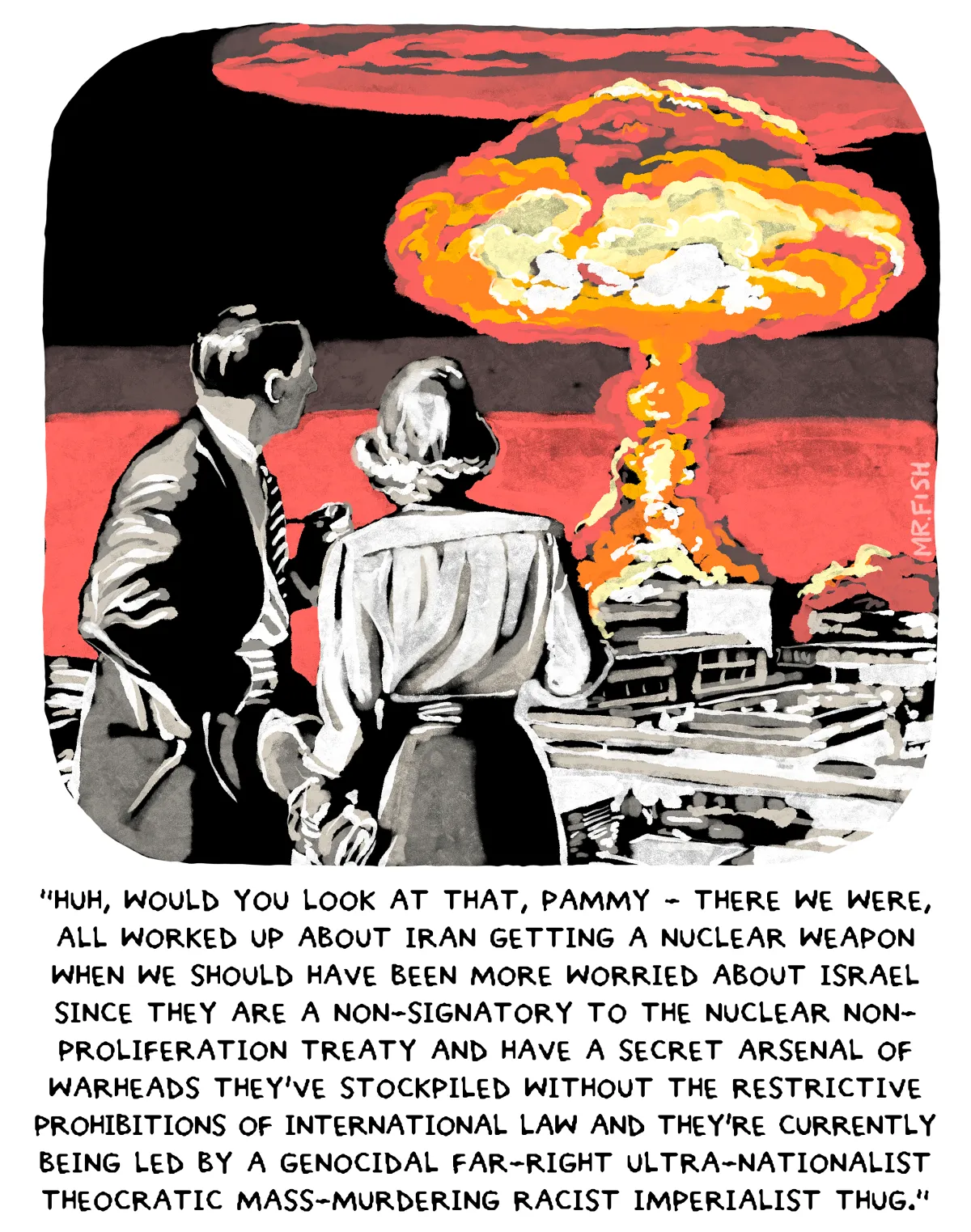
1 June Webinar – The High Cost of Nuclear Power – Register
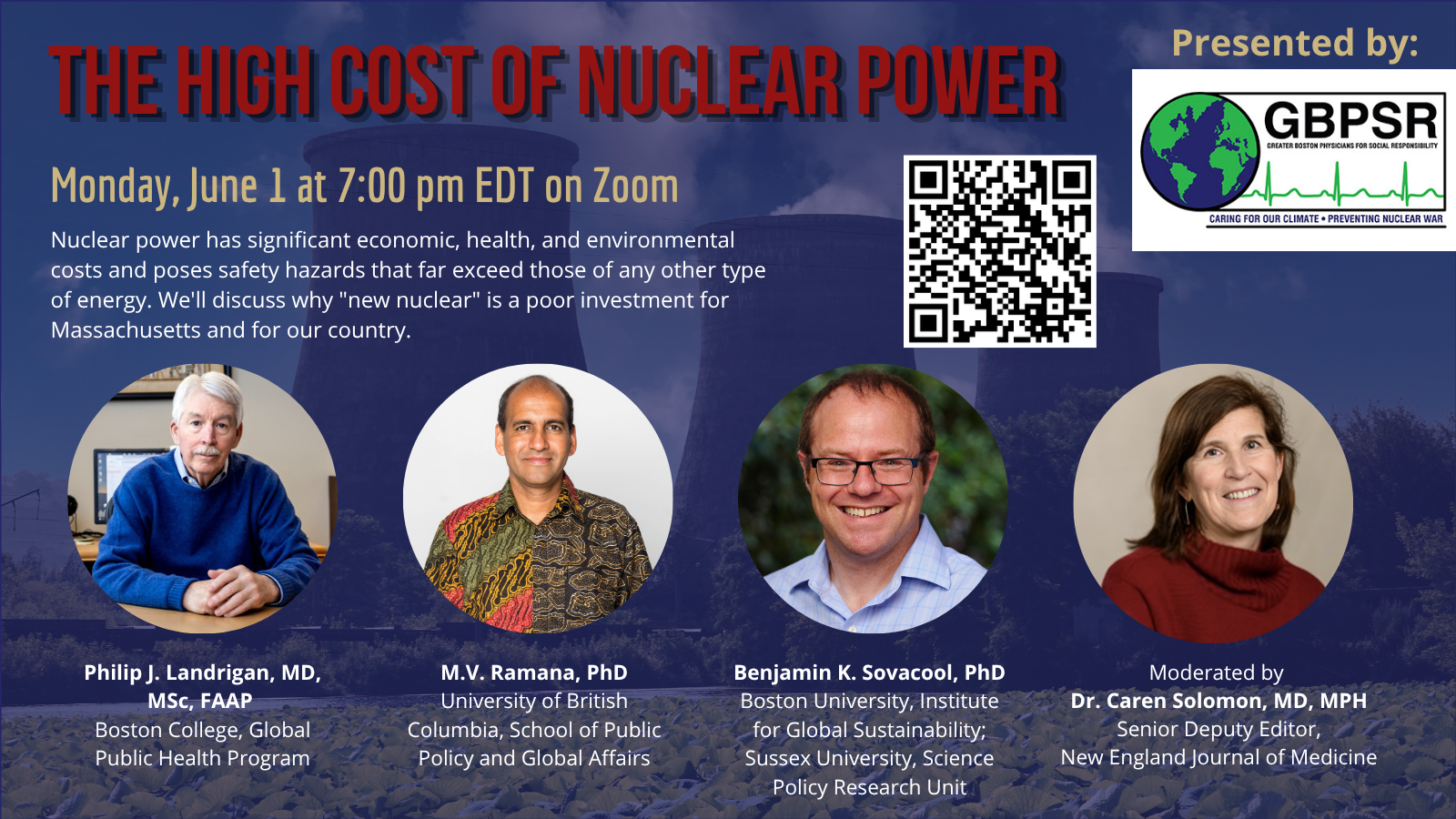


of the week– Nuclear Reactor Information Task Force
To see nuclear-related stories in greater depth and intensity – go to https://nuclearinformation.wordpress.com
-
Archives
- May 2026 (262)
- April 2026 (356)
- March 2026 (251)
- February 2026 (268)
- January 2026 (308)
- December 2025 (358)
- November 2025 (359)
- October 2025 (376)
- September 2025 (257)
- August 2025 (319)
- July 2025 (230)
- June 2025 (348)
-
Categories
- 1
- 1 NUCLEAR ISSUES
- business and costs
- climate change
- culture and arts
- ENERGY
- environment
- health
- history
- indigenous issues
- Legal
- marketing of nuclear
- media
- opposition to nuclear
- PERSONAL STORIES
- politics
- politics international
- Religion and ethics
- safety
- secrets,lies and civil liberties
- spinbuster
- technology
- Uranium
- wastes
- weapons and war
- Women
- 2 WORLD
- ACTION
- AFRICA
- Atrocities
- AUSTRALIA
- Christina's notes
- Christina's themes
- culture and arts
- Events
- Fuk 2022
- Fuk 2023
- Fukushima 2017
- Fukushima 2018
- fukushima 2019
- Fukushima 2020
- Fukushima 2021
- general
- global warming
- Humour (God we need it)
- Nuclear
- RARE EARTHS
- Reference
- resources – print
- Resources -audiovicual
- Weekly Newsletter
- World
- World Nuclear
- YouTube
-
RSS
Entries RSS
Comments RSS
 nuclear-news