Magnox Silo Liquor “Crack Under Control.” note: it isn’t.
How does the Nuclear Industry get away with wanting to produce ever more and ever hotter nuclear wastes when they cannot contain the existing wastes. The Magnox Swarf silo is leaking – from an unknown point – part
of the silo is below ground. United Utilities are abstracting drinking water for West Cumbria from boreholes at South Egremont a short distance away.
This is just one of the tenders Sellafield has put out for help with “seepage.” Sellafield are asking contractors to help: The Key Questionis “Can We Stop This Leak Which Is In The Building” “Can We Identify The Location”.
Radiation Free Lakeland 25th June 2021
Magnox Silo Liquor “Crack Under Control.” note: it isn’t
Russia unveils largest nuclear submarine built in 30 years
Russia unveils largest nuclear submarine built in 30 years https://www.tvnz.co.nz/one-news/world/russia-unveils-largest-nuclear-submarine-built-in-30-years Russia has unveiled what’s believed to be its largest submarine built in 30 years amid a tense standoff with Britain in the Black Sea. The Belgorod sailed for the first time today, just days after the Russian military assets fired warning shots at a British Royal Navy destroyer after it came too close to what Moscow has claimed is its territorial waters near Crimea last week. Bombs were also dropped by jets near the vessel.
While the nuclear submarine’s specifications have not been revealed, the Belgorod will be able to launch nuclear strikes, according to the Daily Telegraph.
It will also act as a mothership for smaller submarines.
Russia, China Pledge to Not Use Nuclear Weapons First, Avoid Firing Missiles at Each Other
Russia, China Pledge to Not Use Nuclear Weapons First, Avoid Firing Missiles at Each Other , NewsWeek, BY JENNI FINK ON 6/28/21 Russia and China reaffirmed their friendship treaty amid increasing concerns about their growing relationship and the two countries continued a vow not to fire strategic missiles at each other.
Russia President Vladimir Putin and Chinese President Xi Jinping extended the 20-year Treaty of Good-Neighborliness and Friendly Cooperation, a document Putin credited with taking their relationship to “unprecedented height.” An extension that’s set to last for five years, it outlines that both countries will support each others’ right to defend their “national unity” and territories.
Article 2 has both countries promising to using “peaceful means” to resolve their differences, not the use of force, threat of force or economic pressures.
The contracting parties reaffirm their commitment that they will not be the first to use nuclear weapons against each other nor target strategic nuclear missiles against each other,” the treaty states.
Russia and China have grown closer as their relationships with the United States has deteriorated. Although Putin’s summit with President Joe Biden was seen as a positive step, America and Russia failed to see eye-to-eye on a number of topics, but they agreed to work together on the issue of nuclear weapons.
In a joint statement, the two countries agreed to “embark” on dialogue that would “lay the groundwork” for future arms control and risk reduction measures, acknowledging that “nuclear war cannot be won and must never be fought.”
One of two biggest nuclear powers, Putin’s endorsement of Russia’s nuclear deterrent policy raised concerns. The policy allows him to use nuclear weapons in response to a strike with conventional weapons, or if Russia gets “reliable information” about the launch of an attack against its territory or allies.
The strategy is “purely defensive,” according to General of the Army Valery Gerasimov, chief of the General Staff of the Armed Forces, but he defended Russia’s ability to use nuclear weapons at the Moscow International Security Conference last week……. https://www.newsweek.com/russia-china-pledge-not-use-nuclear-weapons-first-avoid-firing-missiles-each-other-1604865
French corporation EDF will close down all 7 of its advanced gas-cooled reactor nuclear power stations in Britain within the next decade.
French-based global power developer EDF Energy vowed to put all seven of its advanced gas-cooled reactor nuclear power stations in the United Kingdom into the defueling and decommissioning stages within the next decade.
The company’s agreement with the UK government calls for shutting down the AGR stations by 2030. At that point EDF’s generating capacitywill consist of Sizewell B, HPC, potentially Sizewell C (currently under construction) and renewables including solar, onshore and offshore wind.
Power Engineering 25th June 2021
French company EDF’s Plan A – Britain to legislate finance for Sizewell nuclear plant: there is no Plan B.
REUTERS EVENTS EDF calls for funding legislation for new UK nuclear power plant, Kate Holton LONDON, June 23 (Reuters) – France’s EDF (EDF.PA) called on the British government to deliver the legislation that would underpin the financing of a new nuclear plant, Sizewell C, saying it was now essential………
Asked if his company had a Plan B in the event the government did not advance with the legislation, Simone Rossi, the UK head of EDF, said: “We do not really. I have to say that would be for the UK government to consider.”………
China General Nuclear Power Corporation (CGN) which holds a 20% share in the pre-construction phase of the Sizewell C project, is on a U.S. government list of companies Washington deems are acting contrary to U.S. interests………….https://www.reuters.com/business/energy/reuters-events-edf-calls-uk-produce-sizewell-funding-legislation-2021-06-23/
Britain facing a massive series of nuclear decommissioning
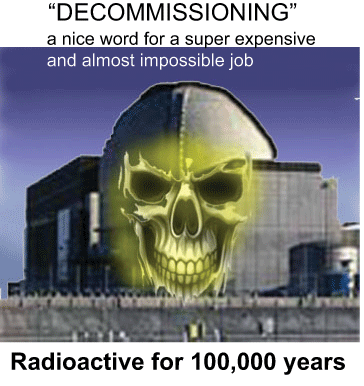
Britain prepares for new wave of nuclear decommissioning
Sceptics of the fuel argue the plans demonstrate why no new plants should be built, Ft.com Nathalie Thomas in Edinburgh 23 June, 21, At Dungeness B nuclear power station on a remote stretch of the Kent coast in south-east England, workers are making preparations to carefully remove thousands of radioactive fuel elements from its reactors and transfer them to a purpose-built pond for at least 90 days for cooling. The spent fuel will later be packed into 53-tonne “flasks” fortified with 39cm-thick steel walls before being transported across country by train to Sellafield in Cumbria.
The nuclear facility in north-west England is host to most of the radioactive remnants of Britain’s civil nuclear programme that dates back to the 1950s. These include highly toxic waste that will remain there until a suitable site is found for an underground repository where it will have to be stored for more than 100,000 years to make it safe.
Preparations for the “defuelling” of Dungeness B started with “immediate effect” on June 7 when its majority owner, French state-controlled utility EDF, announced it would close the plant seven years early. It had not been operational since September 2018 as engineers tried to fix problems, including corrosion and cracks in its pipework.
The 1.1GW plant is the first of seven built in the UK between the mid-1960s and late-1980s using advanced gas-cooled reactor (AGR) technology to come out of service. It will kickstart a decommissioning process spanning generations, which sceptics argue strikes at the heart of why no new nuclear plants should be built.
The remaining six AGR plants are due to be retired by the end of this decade at the latest, leaving the more modern Sizewell B plant in Suffolk, which uses pressurised water reactor technology, as the only one operational out of the existing fleet
. “[Decommissioning of] many of these facilities will continue well into the 22nd century,” said Paul Dorfman of University College London’s Energy Institute. “The problem with decommissioning is it always turns out to be more complex than one had imagined.”
Critics also point out that the decommissioning of Britain’s 17 earliest atomic power sites has been extremely costly. The latest clean-up bill for those sites, which include a generation of nuclear plants known as the “Magnox” stations, is estimated at more than £130bn over 120 years. ……
Climate activists, such as E3G and Greenpeace, have long argued that the debate over building costly, complex new nuclear plants detracts from investment in cheaper, climate-friendly technologies……….
The exact arrangements for the decommissioning of Dungeness and the six other AGR plants are subject to negotiation between EDF and the government. It will be financed via a £14.5bn fund set up in 2005.
The French utility is expected to take at least three years to remove all fuel from each site and potentially carry out some early demolition work before handing them over to the UK state-owned Nuclear Decommissioning Authority. EDF declined to comment. The next stage will probably involve the treatment and removal of waste and demolition of facilities that are no longer needed. Some facilities will be left untouched for 85 years — to allow residual radioactive materials to decay — before demolition. …….. https://www.ft.com/content/0381e567-d088-4802-a2e4-e125c8099605
New UK energy report – need for investment in wind and solar, no need for new nuclear.
The UK should grow its solar capacity to 210GW by 2050, unlocking a low
cost transition to net zero, a new report has found. Wind and solar will
need increased investment to grow to generate 98% of the electricity mix,
up from 27% in 2020, according to the report, published by energy provider
Good Energy with modelling from the Energy Systems Catapult (ESC).
Solar Power Portal 22nd June 2021
This will require over 200GW of solar, as well as 150GW of wind and 100GW of
lithium-ion battery energy storage, the Renewable Nation: Pathways to a
Zero Carbon Britain report has said. A substantial amount of that growth is
possible by the end of this decade, with 100GW of solar and 70GW of wind
needed to produce 84% of the country’s electricity by 2030.
The report – which is the first to use the ESC’s Storage and Flexibility model,
which itself combines long-term investment planning with hour-by-hour grid
balancing – found that no new nuclear beyond that under construction
currently was needed for net zero.
The dangersof transporting nuclear weapons and other nuclear materials
Nuclear Transports**
The UK & Ireland Nuclear Free Local Authorities (NFLA) today publishes a
detailed analysis considering the wide range and large number of transports
of nuclear materials around the UK and Europe, and from the UK to other
countries.
The report highlights nuclear transports are continuing to
increase and remain a concern from the perspective of an accident or
malicious incident taking place with one of them. Nuclear transport is of
particular concern to the NFLA as radioactive materials are at their most
vulnerable when they are being transported off site, as they are away from
dedicated safe storage facilities and are in an ‘uncontrolled’
environment where they face a greater level of risk.
The report considersin detail the following transports: The safety of nuclear weapon road
convoys – it considers recent reports by the Nuclear Information Service,
ICAN UK and Nukewatch Scotland. The future transport by road of vehicles
containing redundant submarine reactors from Rosyth and Devonport to
Capenhurst by road. The report highlights the sheer number of road
transports involving nuclear materials as well.
The transport by rail of spent nuclear fuel from existing and decommissioned reactors, with
particular focus on the rail transports of radioactive materials from
Dounreay to Sellafield. It also highlights learning points from recent
conventional rail transport accidents. The transport of radioactive
materials by sea around the British Isles and globally to fulfil
international contracts. The transport of highly enriched uranium materials
stored at Dounreay by air to a site in South Carolina, United States.
Thereis also reference to a historical list of accidents involving planes with
nuclear weapons.
NFLA 22nd June 2021
UK government’s fantasy of a nuclear fusion energy plant at Bradwell
**Fusion** The announcement by the Government that Bradwell is on the long list of
fifteen possible sites for the UK’s prototype fusion energy plant has
come out of the blue. Chair of the Blackwater Against New Nuclear Group
(BANNG) Professor Andy Blowers, described the idea to develop fusion
(essentially the process that goes on inside the sun and in hydrogen bombs)
to produce electricity as ‘yet another nuclear fantasy, like the
philosopher’s stone full of golden promise but impossible to realise.
Bradwell is not a soft touch for such speculative and dangerous
experimentation’.The Government has committed £400M to the fusion
programme and the UK Atomic Energy Authority (UKAEA) put out a call for
sites to host STEP (the Spherical Tokamak for Energy Production), the
prototype fusion plant. The fifteen sites include the usual suspects –
Sellafield, North Wales, Dounreay – together with other nuclear sites,
former coal-fired power station sites and, at the end of the list, Bradwell
nominated by Belport Ltd., an entrepreneurial property and asset management
company.
BANNG 22nd June 2021
House-building plans thrown into doubt as doubts grow about Wylfa nuclear project
Councillor secures debate amid Welsh language fears Sunday, 20 June 2021 – by Gareth Wyn Williams – Local democracy reporter,
An extraordinary meeting of Gwynedd Council has been called regarding the second homes housing crisis and Welsh language fears.
Backbench members have triggered a mechanism to call a full council meeting amid concerns over the existing Joint Local Development Plan (JLDP).
The document proposes why and where up to 7,184 new homes should be built across Anglesey and Gwynedd over the period up to 2026.
The plan was ratified separately by both authorities in 2017, with a scheduled monitoring review set to take place this year.
But after reaching the minimum allowed threshold of five councillors to trigger an extraordinary meeting of all 75 members, one Llyn councillor has called for a debate on the plans.
Even when Gwynedd Council approved the plan, the knife-edge decision was only made thanks to the casting vote by the council’s chair, facing much opposition due to concerns it would lead to a drop in the number of Welsh speakers in both counties.
Cllr Gruffydd Williams, the unaffiliated member for Nefyn, believes there is a need to go further than the scheduled review and asked councillors to also consider 12 recommendations raised by Porthmadog academic, Dr Simon Brooks, in a recent report on second homes and their impact on Welsh speaking communities.
He said: “When you take into account Brexit, Covid-19 and Wylfa Newydd, so many things have changed since the plan was adopted, house prices are shooting up and the plight of Welsh speaking communities looking more perilous than ever.
“I wanted to called this meeting, having already spoken to around 30 councillors, as I feel it’s only right that all members of Gwynedd, and Anglesey councils in fairness, are given a chance to have their say rather than all the burden being placed on the few that sit on the JLDP committee”
Cllr Williams noted: “It would be desirable to give particular priority, going past what is noted as the usual monitoring period within the plan itself and to submit proposals which correspond to Dr Simon Brooks’ report “Second Homes – Developing New Policies in Wales” which was commissioned by the Welsh Government.”
Adding that with any prospect of a major nuclear development on Anglesey looking more uncertain than ever, he argued that this should be taken into consideration as it was a major cornerstone of the plan when first ratified.
While Wylfa Newydd had been earmarked for a site near Cemaes in northern Anglesey, Gwynedd Council had also made arrangements for increased demand on housing in the Arfon area.
Anti-Nuclear group PAWB has long argued that both the JLDP and the North Wales Growth Plan were drawn up on the assumption that Wylfa B “would happen and that it would be a good thing.”……….The extraordinary meeting will be held next Monday, 28 June https://www.cambrian-news.co.uk/article.cfm?id=136455&headline=Councillor%20secures%20debate%20amid%20Welsh%20language%20fears&searchyear=2021
Biden and Putin agree: ‘Nuclear war cannot be won and must never be fought’
Biden and Putin agree: ‘Nuclear war cannot be won and must never be fought’ DW, 17 June 21
US President Joe Biden and Russian President Vladimir Putin have concluded a high-stakes summit aimed at cooperation but dominated by deep disagreements.
US President Joe Biden and his Russian counterpart Vladimir Putin have ended their highly anticipated summit in Geneva.
The leaders’ first in-person meeting since Biden became president took place at a lakeside villa amid soaring tensions between their two countries.
As talks ended after less than the five hours either side thought they would need, Biden gave a thumbs up. Members of the US team said the meeting had been “quite successful.”
After the meeting, the two sides released a joint statement on one of the main topics of discussion, nuclear proliferation. The statement read, “Nuclear war cannot be won and must never be fought.”
DW Moscow correspondent Emily Sherwin said, “Biden managed to walk a fine line with Putin,” recognizing Russia’s desire to be seen as a major geopolitical power.
The joint US-Russian statement said progress on shared goals could be achieved, “even in periods of tension,” going on to state, “The United States and Russia will embark together on an integrated bilateral Strategic Stability Dialogue in the near future that will be deliberate and robust.”
The statement added that the countries “seek to lay the groundwork for future arms control and risk reduction measures.” …………………… https://www.dw.com/en/biden-and-putin-agree-nuclear-war-cannot-be-won-and-must-never-be-fought/a-57921072
We don’t need costly, slow, nuclear power: solar, wind, tidal and wave power can amply do the job

WHEN I visited Orkney in the 1970s, it was deeply involved in the North
Sea Oil boom. The Flotta oil terminal is still operating but renewable
energy – mainly wind and some tidal – generates up to 120 percent of the
electricity needed by Orkney’s 22,000 inhabitants.
The European Marine Energy Centre based in Stromness is trialling 48 tidal and wave power
projects. These include the world’s most powerful tidal turbine, Orbital
Marine Power’s O2 which from the air looks like a giant 250ft long rowing
boat off the isle of Eday. Its 2MW capacity means it could generate enough
clean, predictable electricity to meet the demand of around 2,000 UK homes
and offset approximately 2,200 tonnes of CO2 production per year.
It is just one of countless schemes around the world testing the potential of
renewables other than wind and solar to power the world and save it from
climate change. At an earlier stage of development and planned for near
Liverpool is the £3billion TPGen24, the brainchild of engineer Stuart
Murphy. Its promotional video says: “There is more than enough energy in
the UK’s tidal waters to satisfy the entire needs of the country, if only
it could be captured.
Does Britain need nuclear power to turn us green?
Yes, says Professor Ian Fells, Technical Director of Penultimate Power UK
Ltd which builds compact nuclear High Temperature Gas-cooled Reactor Energy
Hubs.
NO Says Dale Vince Eco-entrepreneur Energy independence from clean,
green renewables is a prize well worth having – and perfectly feasible. We
have enough wind and sun to power this country many times over. Throw in
other sources, such as geothermal – heat from deep under the ground – and
marine power and there should be no need for the UK to waste £50billion a
year and rising on importing oil and gas.
Nuclear has many problems. It is hugely expensive. Nuclear power stations take 10 years to design, 10 years
to build and another 10 years to pay back their carbon debt. We don’t
have time. And at three times the cost of renewables, we don’t need to
pay for that. We can power the grid entirely from renewable energy, at a
fraction of the price in a fraction of the time and have real carbon
reductions almost straight away.
Express 14th June 2021
https://www.express.co.uk/news/nature/1449592/Green-Britain-tide-turning-renewable-energy
Collaboration between Russia and Europe finally cleans up the most dangerous nuclear ship in the Arctic.
After 27 Years, Lepse No Longer Poses a Nuclear Threat to the Arctic, High North News, PETER B. DANILOV 17 June 21, Last week, the Russian service ship Serebryanka delivered the last spent-fuel bundles from the Lepse floating maintenance base to an Atomflot storage site in Murmansk, completing the final stage of securing the nuclear waste……. To ensure the dismantling of the Lepse floating maintenance base, it was necessary to specially develop new technologies and equipment and make innovative decisions,” said FSUE Atomflot Director General Mustafa Kashka.
In July 2020, the Lepse floating maintenance base’s main batch of spent nuclear fuel was unloaded at the Nerpa shipyard. A total of 620 spent-fuel bundles were extracted and unloaded.
Lepse was regarded as the most dangerous nuclear vessel in the north and the Norwegian environmental NGO Bellona began the work of securing the spent nuclear fuel onboard the vessel in 1994.
……….. The project to dismantle and dispose of the Lepse Floating Maintenance Base is multilaterally implemented.
In 1996, the project was included in the EU’s TACIS program (Technical Assistance to the Commonwealth of Independent States), which involved the allocation of funds for the inspection of the state of spent nuclear fuel.
Since 2008, the project has been carried out in the framework of a Grant Agreement between the European Bank for Reconstruction and Development (EBRD), Rosatom, and JSC NFC Logistics Centre (the project’s customer and coordinator).
The EBRD has provided 54 million euros from the Northern Dimension Environmental Partnership Fund (NDEP). https://www.highnorthnews.com/en/after-27-years-lepse-no-longer-poses-nuclear-threat-arctic
French nuclear company and Chinese government once again have a problem with their much vaunted EPR nuclear reactor design
Nuclear reactor problem a new headache for designer and China. Bangkok Post, 16 June 21, PARIS – The emergence of problems in a new-generation nuclear reactor in China threatens to undermine efforts by its French designer to sell it elsewhere, and could hurt Beijing’s nuclear industry, analysts said.
French energy giant EDF and the Chinese government have sought to ease concerns about a gas build-up at the Taishan Nuclear Power Plant after a CNN report of a potential leak at the site.
The Chinese foreign ministry said Tuesday that radiation levels remained normal at the site in southern Guangdong province and there were no safety concerns.
But it is the latest snag to hit EDF’s much-vaunted EPR reactor.
The Taishan power station became in 2018 the first site worldwide to use the pressurised water design, which has been subject to years of delays in similar projects in Britain, France and Finland.
A second EPR reactor was launched at Taishan a year later. The facility is partly owned by EDF along with state-owned China General Nuclear Power Group, the majority stakeholder and operator of the plant.
EDF said the plant’s number one reactor experienced a build-up of gases in part of the cooling system following the deterioration of the coating on some uranium fuel rods.
The French company was first informed about the problem with the fuel rods in October, but only learned about the gas build-up on Saturday, according to EDF.
The problem and the silence of Chinese authorities triggered criticism of EDF, whose EPR reactor is supposed to be safer, last longer and produce more electricity than previous versions.
– EDF seeks contracts –
It seems that both the Chinese nuclear regulators and the French nuclear corporations may have acted in bad faith,” said Paul Dorfman, a researcher at the University College London’s Energy Institute.
“If so, this new EPR debacle should have important consequences for any further plans for new EPR builds in France, the UK, and internationally,” he added…….
The Taishan incident comes as EDF, which is currently struggling to finish the Flamanville EPR in France after more than a dozen years of work, is hoping to win new contracts.
France, which must eventually decide whether to renew its park of ageing nuclear reactors, is holding off on making a decision until Flamanville comes online, which is now expected in late-2022 at best………. https://www.bangkokpost.com/world/2133307/nuclear-reactor-problem-a-new-headache-for-designer-and-china
NATO readies for a collective response to attacks in space

NATO says attack in space could trigger mutual defense clause Defense News By: Lorne Cook, The Associated Press 16 June 21BRUSSELS — NATO leaders on Monday expanded the use of their all for one, one for all, mutual defense clause to include a collective response to attacks in space.
Article 5 of NATO’s founding treaty states that an attack on any one of the 30 allies will be considered an attack on them all. Until now, it’s only applied to more traditional military attacks on land, sea, or in the air, and more recently in cyberspace.
In a summit statement, the leaders said they “consider that attacks to, from, or within space” could be a challenge to NATO that threatens “national and Euro-Atlantic prosperity, security, and stability, and could be as harmful to modern societies as a conventional attack.”
“Such attacks could lead to the invocation of Article 5. A decision as to when such attacks would lead to the invocation of Article 5 would be taken by the North Atlantic Council on a case-by-case basis,” they said.
Around 2,000 satellites orbit the earth, over half operated by NATO countries, ensuring everything from mobile phone and banking services to weather forecasts. Military commanders rely on some of them to navigate, communicate, share intelligence and detect missile launches.
In December 2019, NATO leaders declared space to be the alliance’s “fifth domain” of operations, after land, sea, air and cyberspace. Many member countries are concerned about what they say is increasingly aggressive behavior in space by China and Russia.
Around 80 countries have satellites, and private companies are moving in, too. In the 1980s, just a fraction of NATO’s communications was via satellite. Today, it’s at least 40%. During the Cold War, NATO had more than 20 stations, but new technologies mean the world’s biggest security organization can double its coverage with a fifth of that number.
NATO’s collective defense clause has only been activated once, when the members rallied behind the United States following the Sept. 11, 2001, attacks…………..
Biden said Monday that Article 5 is “a sacred obligation” among allies. “I just want all of Europe to know that the United States is there,” he said. “The United States is there.” https://www.defensenews.com/smr/nato-priorities/2021/06/14/nato-says-attack-in-space-could-trigger-mutual-defense-clause/
1 This Month
19 May – Webinar No To Nuclear: Why Nuclear Power Destroys Lives, Derails Climate Progress and Provokes War

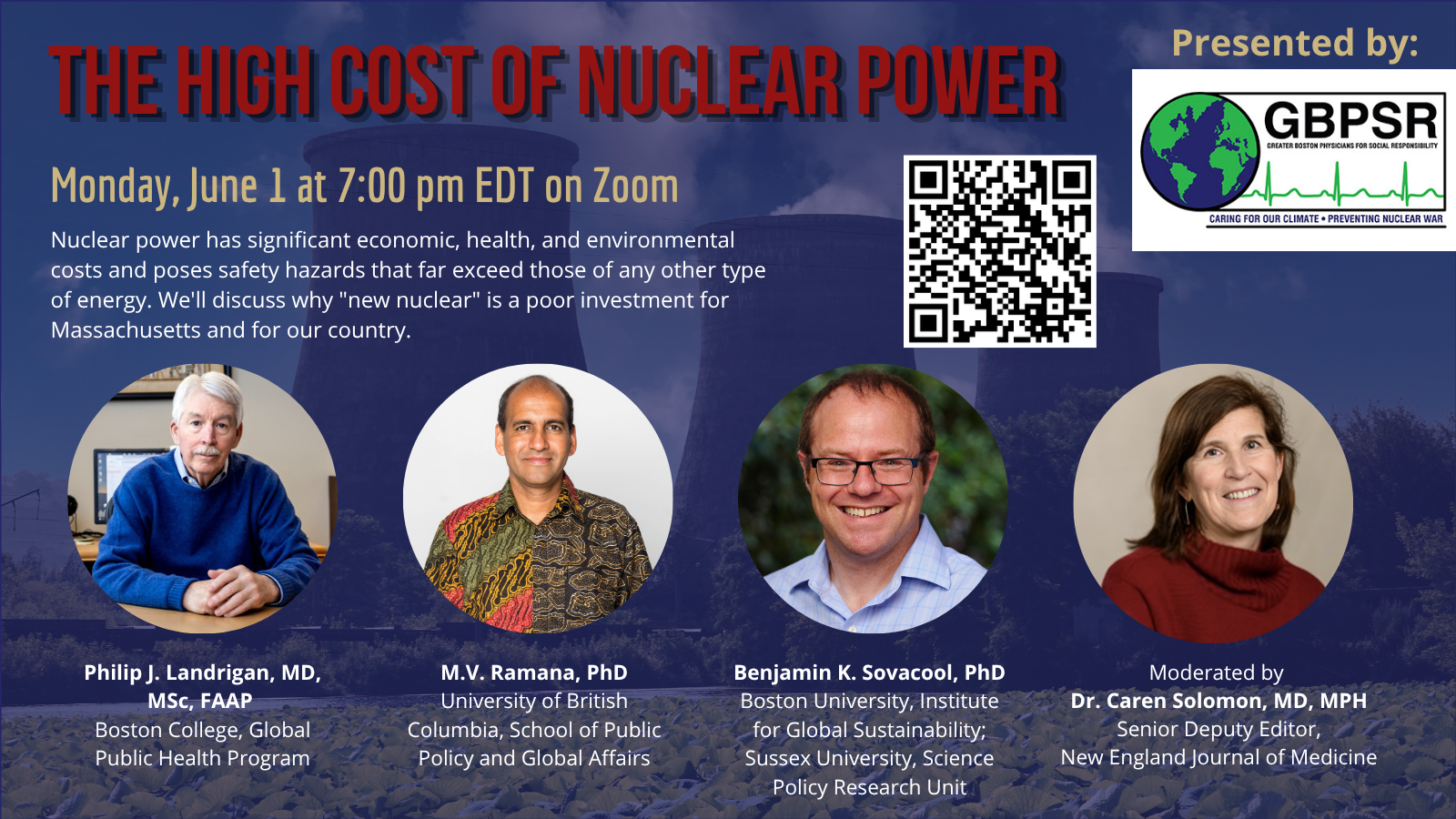
1 June Webinar – The High Cost of Nuclear Power – Register


of the week– Nuclear Reactor Information Task Force
To see nuclear-related stories in greater depth and intensity – go to https://nuclearinformation.wordpress.com
-
Archives
- May 2026 (211)
- April 2026 (356)
- March 2026 (251)
- February 2026 (268)
- January 2026 (308)
- December 2025 (358)
- November 2025 (359)
- October 2025 (376)
- September 2025 (257)
- August 2025 (319)
- July 2025 (230)
- June 2025 (348)
-
Categories
- 1
- 1 NUCLEAR ISSUES
- business and costs
- climate change
- culture and arts
- ENERGY
- environment
- health
- history
- indigenous issues
- Legal
- marketing of nuclear
- media
- opposition to nuclear
- PERSONAL STORIES
- politics
- politics international
- Religion and ethics
- safety
- secrets,lies and civil liberties
- spinbuster
- technology
- Uranium
- wastes
- weapons and war
- Women
- 2 WORLD
- ACTION
- AFRICA
- Atrocities
- AUSTRALIA
- Christina's notes
- Christina's themes
- culture and arts
- Events
- Fuk 2022
- Fuk 2023
- Fukushima 2017
- Fukushima 2018
- fukushima 2019
- Fukushima 2020
- Fukushima 2021
- general
- global warming
- Humour (God we need it)
- Nuclear
- RARE EARTHS
- Reference
- resources – print
- Resources -audiovicual
- Weekly Newsletter
- World
- World Nuclear
- YouTube
-
RSS
Entries RSS
Comments RSS
 nuclear-news