Climate and weather hazards to France’s nuclear reactors in summer 2021
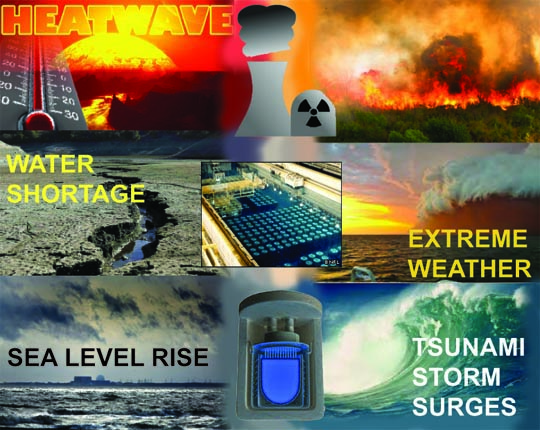
Weather conditions can have a significant impact on the production of
French nuclear power plants: over the past six years, heat waves and
droughts have caused nearly 360 shutdowns or reductions in production on
the French nuclear fleet, causing up to 6.2GW unavailability.
Since itscreation in 2019, Callendar has acquired expertise in the short-term
forecasting of these downtimes and the modeling of the long-term effects of
climate change on nuclear production. For the first time, we are proposing
an assessment of the risk of unavailability due to medium-term
meteorological causes for the summer of 2021.
Callendar (accessed) 15th June 2021
http://callendar.climint.com/fr/disponibilite-nucleaire-canicule-secheresse-ete-2021/
Is the leak in a nuclear reactor in China due to a Framatome manufacturing defect ?
Is the leak in a nuclear reactor in China due to a manufacturing defect in
the Drôme? The nuclear rods for reactor n ° 1 in Taishan, China, are
manufactured by the Framatome site in Romans-sur-Isère. One of the
hypotheses considered to explain the leak in the circuit could be a
manufacturing defect.
It is difficult to know for the moment what caused
the leak within the reactor n ° 1 of the EPR of Taishan, in China. In
recent months, “rare gases” have been identified in the primary circuit
after the degradation of a few rods containing the uranium pellets. These
pencils are made in Romans-sur-Isère, on the Framatome site.
France Bleu 16th June 2021
Fire at Hinkley Point C building site
A fire broke out on the building site for Hinkley Point C this morning
(Tuesday, June 15). A pall of smoke was spotted in the sky over the power
station near Bridgwater in Somerset and reports of a blaze quickly began to
circulate on social media.
Devon and Somerset Fire and Rescue attended the
plant after one of the galleries used to run pipes and cables around the
station caught alight. Shortly after 9.30am, pictures of the smoke cloud
were uploaded to Facebook by people living nearby, in Burnham-on-Sea. A
spokesman confirmed that the Hinkley Point’s internal fire crew
extinguished the blaze and there were no casualties. He said the incident
was now being investigated and EDF energy will ensure “lessons are learned”
from the event.
Somerset Live 15th June 2021
https://www.somersetlive.co.uk/news/somerset-news/hinkley-point-c-fire-confirmed-5530409
Chris Hedges: Julian Assange and the Collapse of the Rule of Law

“Lliving in truth in a despotic system is the supreme act of defiance. This truth terrifies those in power.”
Chris Hedges: Julian Assange and the Collapse of the Rule of Law — Rise Up Times Julian exposed the truth. He exposed it over and over and over until there was no question of the endemic illegality, corruption and mendacity that defines the global ruling elite.
Chris Hedges gave this talk at a rally Thursday night in New York City in support of Julian Assange. John and Gabriel Shipton, Julian’s father and brother, also spoke at the event, which was held at The People’s Forum. By Chris Hedges / Original to ScheerPost
BY MODERATOR June 11, 2021 This why we are here tonight. Yes, all of us who know and admire Julian decry his prolonged suffering and the suffering of his family. Yes, we demand that the many wrongs and injustices that have been visited upon him be ended. Yes, we honor him up for his courage and his integrity. But the battle for Julian’s liberty has always been much more than the persecution of a publisher. It is the most important battle for press freedom of our era. And if we lose this battle, it will be devastating, not only for Julian and his family, but for us.
Tyrannies invert the rule of law. They turn the law into an instrument of injustice. They cloak their crimes in a faux legality. They use the decorum of the courts and trials, to mask their criminality. Those, such as Julian, who expose that criminality to the public are dangerous, for without the pretext of legitimacy the tyranny loses credibility and has nothing left in its arsenal but fear, coercion and violence.
The long campaign against Julian and WikiLeaks is a window into the collapse of the rule of law, the rise of what the political philosopher Sheldon Wolin calls our system of inverted totalitarianism, a form of totalitarianism that maintains the fictions of the old capitalist democracy, including its institutions, iconography, patriotic symbols and rhetoric, but internally has surrendered total control to the dictates of global corporations.
I was in the London courtroom when Julian was being tried by Judge Vanessa Baraitser, an updated version of the Queen of Hearts in Alice-in Wonderland demanding the sentence before pronouncing the verdict. It was judicial farce. There was no legal basis to hold Julian in prison. There was no legal basis to try him, an Australian citizen, under the U.S. Espionage Act. The CIA spied on Julian in the embassy through a Spanish company, UC Global, contracted to provide embassy security. This spying included recording the privileged conversations between Julian and his lawyers as they discussed his defense. This fact alone invalidated the trial. Julian is being held in a high security prison so the state can, as Nils Melzer, the U.N. Special Rapporteur on Torture, has testified, continue the degrading abuse and torture it hopes will lead to his psychological if not physical disintegration.
The U.S. government directed, as Craig Murray so eloquently documented, the London prosecutor James Lewis. Lewis presented these directives to Baraitser. Baraitser adopted them as her legal decision. It was judicial pantomime. Lewis and the judge insisted they were not attempting to criminalize journalists and muzzle the press while they busily set up the legal framework to criminalize journalists and muzzle the press. And that is why the court worked so hard to mask the proceedings from the public, limiting access to the courtroom to a handful of observers and making it hard and at times impossible to access the trial online. It was a tawdry show trial, not an example of the best of English jurisprudence but the Lubyanka.
Now, I know many of us here tonight would like to think of ourselves as radicals, maybe even revolutionaries. But what we are demanding on the political spectrum is in fact conservative, it is the restoration of the rule of law. It is simple and basic. It should not, in a functioning democracy, be incendiary. But living in truth in a despotic system is the supreme act of defiance. This truth terrifies those in power………..https://riseuptimes.org/2021/06/14/chris-hedges-julian-assange-and-the-collapse-of-the-rule-of-law/
NATO’s hostility to the Nuclear Weapons Ban Treaty is in conflict with its true goal – to become a non-nuclear alliance .
NATO’s Nuclear Two-Step, An alliance that avows nuclear disarmament should not cling so dangerously to its weapons. https://www.defenseone.com/ideas/2021/06/natos-nuclear-two-step/174703/ BY RICHARD LENNAN, EFORMER UN DISARMAMENT OFFICIAL, JUNE 14, 2021
NATO wants to become a non-nuclear alliance. That sentence might surprise many, but it’s true: when the organization achieves its long-standing goal of full implementation of the Nuclear Non-proliferation Treaty, its members will no longer possess nuclear weapons.
Given the growing risks, it would be natural for NATO to be reinvigorating and accelerating its efforts on nuclear disarmament. Perversely, however, the alliance has been moving in the opposite direction.
Despite NPT commitments to work to reduce stockpiles and diminish the role of nuclear weapons in security doctrines, the three nuclear-armed NATO members are all improving their nuclear arsenals. NATO rhetoric in favor of nuclear weapons is hardening, and the alliance is “circling the wagons” around nuclear deterrence. Although the North Atlantic Treaty makes no mention of nuclear weapons, NATO was officially dubbed a “nuclear alliance” in the 2010 Strategic Concept and this deliberate embedding of nuclear weapons in the alliance’s identity has steadily continued.
Political support by individual NATO members for retaining NATO’s nuclear weapons capability is increasingly seen as a test of loyalty and unity; discussion of alternatives is discouraged, even punished. Bizarrely, the NATO 2030 Reflection Group report recommended that “NATO should better communicate on the key role of its nuclear deterrence policy… so as to effectively counter hostile efforts to undermine this vital policy.” An uninitiated observer could be forgiven for thinking that NATO’s raison d’être is not “to safeguard the freedom, common heritage and civilization” of its members, but rather to defend and protect their right to use weapons of mass destruction.
When much of the world is strengthening the norm against nuclear weapons by joining the 2017 Treaty on the Prohibition of Nuclear Weapons, or TPNW, NATO is undermining its own security by encouraging proliferation of nuclear weapons, by provoking arms races with nuclear-armed rivals, and by constraining the ability of alliance members to pursue effective steps towards nuclear disarmament.
Nowhere is the harmful effect of this trend clearer than in NATO’s counterproductive hostility to the TPNW. The treaty’s objective is also one professed by NATO: ending the nuclear weapons threat by eliminating nuclear weapons. Any differences therefore come down to the means by which this objective is to be achieved. Yet NATO has reacted to the TPNW as if it were some kind of dangerous assault on its core values, if not a threat to its very existence.
The reasons given for NATO’s opposition have been described by Hans Blix as “strained” and by former Canadian foreign minister Lloyd Axworthy as “phoney baloney”. There is no legal reason that NATO allies cannot join the TPNW, and NATO’s obsessive focus on the treaty has prevented any consideration of what it can offer the alliance.
By supporting and joining the the treaty, individual NATO states can help to build a robust new global norm against nuclear weapons, strengthening barriers against proliferation, diminishing pressure for nuclear arms races, and reducing the overall reliance of NATO on nuclear weapons, opening up pathways for progress on disarmament. They will also demonstrate their commitment to fully discharging their disarmament obligations under the earlier Non-Proliferation Treaty, easing tensions among its signatories.
Conversely, the approach of blanket dismissal of and hostile non-engagement with the TPNW will only constrain NATO’s options, alienate potential partners, and push the alliance’s nuclear disarmament goal further out of reach.
Outside the alliance’s current leadership, there is growing support within a number of member states for joining the TPNW. A range of former leaders, including NATO secretaries general and defense and foreign ministers, have called on NATO states to join. Parliaments in NATO states have passed motions in support of the treaty; cities across the alliance have called on their governments to join it. Opinion polls in many NATO states consistently support, by a clear margin, accession to the treaty.
NATO as a non-nuclear alliance would be something to celebrate. Yet rather than openly aspiring to such status, and discussing how it might look and function, the alliance seems to be actively avoiding – even suppressing – any consideration of the possibility. This is a dangerously counterproductive and shortsighted approach.
It is time for NATO members to shake off the restrictions of reactive, short-term thinking about nuclear weapons, and instead to re-embrace the vision of nuclear disarmament as a preventative tool for shaping NATO’s security environment. While total elimination of nuclear weapons may remain a distant goal, envisioning and planning for NATO as a non-nuclear alliance should begin now. Positive and constructive engagement with the TPNW, including joining the treaty for those NATO members willing and ready to do so, would be a logical place to start.
Richard Lennane is a former Australian diplomat and UN disarmament official. He is a principal co-author of A Non-Nuclear Alliance: Why NATO Members Should Join the UN Ban on Nuclear Weapons, published on 10 June 2021 by the International Campaign to Abolish Nuclear Weapons (ICAN).
Romania’s dilemma – nuclear power or clean energy
Nuclear vs renewable, the debate dividing Romania’s green transition, euronews. By Hans von der Brelie 11/06/2021 ”………………..Member States like Poland, the Czech Republic, Slovakia, Hungary, Bulgaria and Romania have plans to invest heavily in nuclear energy. But Austrian and German officials argue nuclear energy is not a way out of the climate crisis. They insist renewables are the way forward…….Member States like Poland, the Czech Republic, Slovakia, Hungary, Bulgaria and Romania have plans to invest heavily in nuclear energy. But Austrian and German officials argue nuclear energy is not a way out of the climate crisis. They insist renewables are the way forward.
……Romania now wants to build two more reactors there and upgrade the existing ones. That’s an investment of around six billion euros, according to Teodor Chirica, the chairman of the board and former President of FORATOM, a Brussels-based pro-nuclear organisation.
However, the European Commission is shortly expected to label nuclear energy as green or not, thereby putting future investments into the industry in question.
… Teodor Chirica believes that if people don’t accept nuclear energy as a green one, then nuclear won’t have the same access to financing as other competitors. That in turn will “affect the economic part” of the project to increase the nuclear plants’ capacities.
The Anti-Nuclear movement
Lavinia Andrei is the President of Terra Mileniul III, a known figure within Romania’s still small anti-nuclear movement. She tells us that using public funds to invest in nuclear energy will have a negative impact on the development of renewables.
“If you allocate this money for nuclear power, that means that you disadvantage another sector, like renewables. The transport company of energy said that the capacity of the network is not enough for the nuclear power plant and for the renewables”, she explains.
Climate change and nuclear energy
There is one other problem. Climate change means that rivers have less water, water which is needed to cool nuclear plants. Even the Danube has been affected by this. Cernavoda had to close down once already in summer and such scenarios could happen more often in the future……….
Sorin Zamfir is the maintenance supervisor at the ENEL wind park in Dobrogea. He says that “harnessing wind energy implies using a new, modern, high-end technology”. He thinks it’s “very important to bring this kind of new technology to the local community”. It’s something that he feels brings them closer to Europe, “putting them on the map”.
ENEL tells us that for wind energy to fully develop, “the most important factor is the building of new transmission lines which are needed to bring the electricity from the wind/solar power plants to the customers”. A problem at the moment is that “the development speed of wind projects is much higher compared to the development of new transmission lines” and that represents a huge challenge to renewable energies.
Room for development
There is no doubt that Romania’s wind energy potential is not yet fully exploited. Many more turbines could be installed. Sorin believes that wind parks could expand and produce all of Romania’s energy needs.
Romania is also a sunny place, solar power could play a bigger role in the country’s future energy mix. Andrei Bucur is an elected board member of Cooperativa de Energie, Romania’s first 100 percent green energy supplier. The small cooperative has ambitious plans.
Bucur points out that solar energy has huge potential in Romania. He sees the 1.5 million square meters of warehouse roofs as a perfect place for solar panel installation………..
The European Commission must stay neutral regarding the energy sources member states choose to use, but labelling nuclear green or not will have a huge impact on investment decisions for years to come. https://www.euronews.com/2021/06/11/nuclear-vs-renewable-the-debate-dividing-romania-s-green-transition
‘Unsustainable, unmanageable, unacceptable and unsuitable’ – both Bradwelll and Sizewell nuclear projects
‘Unsustainable, unmanageable, unacceptable and unsuitable’. Nuclear waste expert urges Government to ditch both Bradwell B and Sizewell C projects now. 8 June 21,
An international expert on radioactive waste management and sustainable development has written to the Sizewell C Examining Authority declaring that both Bradwell B and Sizewell C should be abandoned as a whole now to avoid falling victims to catastrophic impacts of climate change later.
Andrew Blowers OBE, Chair of the Blackwater Against New Nuclear Group (BANNG), Professor of Social Sciences at the Open University and formerly a member of various Government scientific advisory bodies on nuclear waste, insists that far from being ‘potentially suitable’ sites, as the Government declared a decade ago, Bradwell and Sizewell are ‘totally unsuitable’ for the deployment of nuclear reactors and highly radioactive spent fuel stores which will remain on site until the latter half of the next century.
Professor Blowers states: ‘There is the possibility of calamitous risks being passed on to generations in the far future. This may be acceptable to the developers and Government, in which case they should say so. It is not acceptable to those, like me, who oppose this development’.
Both Bradwell and Sizewell are fragile, low-lying coastal sites vulnerable to inundation and will be increasingly exposed to the impacts of climate change in the form of sea-level rise, storm surges and coastal processes. Both are situated in areas of considerable environmental sensitivity, which will be severely compromised by nuclear development.
In terms of their sheer scale and location, the two power stations would be inappropriate, gross intrusions into the landscape with devastating impacts on habitats, wetlands and the marine environment. These impacts may be individually tackled by adaptation, mitigation or compensation. But, Professor Blowers goes on, ‘such a piecemeal approach is not acceptable in so far as it may lead to an outcome that is wholly unacceptable. That is why I would claim that both projects must be judged as a whole’.
It is the impact of climate change that provides the most compelling reason for abandoning these proposals now. Even in the unlikely event of global warming of 20C being achieved, there will still be global sea-level rise of around a metre by 2100. If present warming trends continue, a rise of 2m. and more is conceivable. It is questionable whether the proposed hard defences will be proof against inundation, storm surges and coastal processes in deteriorating circumstances. In any case, in conditions of increasing uncertainty, it must be questioned whether such colossal infrastructures should be developed on such inappropriate sites on the vulnerable East Anglian shores……
In conclusion, Professor Blowers writes: ‘the proposal for new nuclear power stations at Bradwell and Sizewell must be rejected as a whole on the grounds of their immense scale and environmental impact on sites that will become unsustainable, unmanageable, unacceptable and unsuitable’.
Nuclear energy – Nuclear weapons – the inseparable link
Nuclear energy – Nuclear weapons – the inseparable link, Jonathon Porritt, 4 June 21

whether we’re talking big reactors or small reactors, fission or fusion. The simple truth is this: we should see nuclear as another 20th century technology, with an ever-diminishing role through into the 21st century, incapable of overcoming its inherent problems of cost, construction delay, nuclear waste, decommissioning, security (both physical and cyber), let alone the small but still highly material risk of catastrophic accidents like Chernobyl and Fukushima. My ‘Net Zero Without Nuclear’ report goes into all these inherent problems in some detail.
So why are the UK’s politicians (in all three major parties) still in thrall to this superannuated technology? It’s here we have to go back to Amchitka! Some environmentalists may still be taken aback to discover that the Government’s principal case for nuclear power in the UK today is driven by the need to maintain the UK’s nuclear weapons capability – to ensure a ‘talent pool’ of nuclear engineers and to support a supply chain of engineering companies capable of providing component parts for the nuclear industry, both civilian and military. The indefatigable work of Andy Stirling and Phil Johnston at Sussex University’s Science Policy Research Unit has established the depth and intensity of these interdependencies, demonstrating how the UK’s military industrial base would become unaffordable in the absence of a nuclear energy programme.
”……….nuclear power plays no part in Greenpeace’s modelling of a rapid transition to a Net Zero carbon world. It’s been very supportive of my new report, ‘Net Zero Without Nuclear’.
I wrote this report partly because the nuclear industry itself is in full-on propaganda mode, and partly because that small caucus of pro-nuclear greens (that’s existed for as long as I can remember) seems to be winning new supporters.
And I can see why. The Net Zero journey we’re now starting out on for real (at long last!) is by far the most daunting challenge that humankind has ever faced. Writing in the Los Angeles Review of Books in June 2019, author and Army veteran Roy Scranton put it like this:
‘Climate change is bigger than the New Deal, bigger than the Marshall Plan, bigger than World War II, bigger than racism, sexism, inequality, slavery, the Holocaust, the end of nature, the Sixth Extinction, famine, war, and plague all put together, because the chaos it’s bringing is going to supercharge every other problem. Successfully meeting this crisis would require an abrupt, traumatic revolution in global human society; failing to meet it will be even worse.’
Not many people see it like that – as yet. But more and more will, as signals of that kind of chaos start to multiply. And we already know that the kind of radical decarbonisation on which our future depends is going to be incredibly hard. So why should we reject a potentially powerful contribution to that decarbonisation challenge?
………….. there is no longer any doubt about the viability of that [renewables] alternative. In 2020, Stanford University issued a collection of 56 peer-reviewed journal articles, from 18 independent research groups, supporting the idea that all the energy required for electricity, transport, heating and cooling, and all industrial purposes, can be supplied reliably with 100% (or near 100%) renewable energy.[i] The solutions involve transitioning ASAP to 100% renewable wind – water – solar (WWS), efficiency and storage.
The transition is already happening. To date, 11 countries have reached or exceeded 100% renewable electricity. And a further 12 countries are intent on reaching that threshold by 2030. In the UK, the Association for Renewable Energy and Clean Technology says we can reach 100% renewable electricity by 2032. Last year, we crossed the 40% threshold.
Continue readingNFLA report on UK plutonium policy amid new concerns over plutonium dumped in the Irish Sea
 | |||
| |||
NFLA publishes report on UK plutonium policy amid new concerns over plutonium remobilisation in the Irish Sea https://www.nuclearpolicy.info/news/nfla-report-uk-plutonium-policy-concerns-plutonium-remobilisation-irish-sea/
The UK & Ireland Nuclear Free Local Authorities (NFLA) publishes today on its website an expert overview of national plutonium policy and recent concerns over the potential for plutonium remobilisation in the Irish Sea. (1)
The report was developed by the NFLA Policy Advisor, Pete Roche, and was first published on the website ‘No2nuclearpower.org.uk’. (2) Recent research on this area was also presented by Pete to the most recent meetings of the NFLA English Forum and NFLA All Ireland Sustainable Energy Forum. (3)
The report notes that the Nuclear Decommissioning Authority (NDA) expects the Magnox Reprocessing Plant at Sellafield to close this year (2021) – one year later than previously planned. This follows on from the closure of the Thermal Oxide Reprocessing Plant (THORP) in November 2018. Reprocessing, which NFLA has always argued has been completely unnecessary, is the chemical separation of plutonium and unused uranium from spent nuclear waste fuel.
When reprocessing ends there will be around 140 tonnes of separated civil plutonium stored at Sellafield – the world’s largest stockpile. Since 2008, the NDA has been discussing how to deal with this embarrassment, given that it is highly toxic, poses a permanent risk of proliferation, and will cost taxpayers around £73 million a year to store for the next century. (3) 13 years later, after much dithering, the UK Government has failed to make any decisions, but still appears to favour the re-use option, which would probably involve transporting weapons-useable plutonium or Mixed Oxide Fuel (MoX) fuel to reactor sites, such as Hinkley Point C and Sizewell B (and C if it is ever built) with an armed escort.
The report looks at this sorry saga and the options for dealing with this stockpile. NFLA believe that the plutonium should be immobilised and stored safely. NDA is continuing to investigate how immobilisation and reuse might be implemented, arguing that using the material as MOX fuel in light water reactors is the most mature option from a technical and licensing perspective. The UK government says it can only make a decision when it can be underpinned with sufficient evidence.
When reprocessing ends there will be around 140 tonnes of separated civil plutonium stored at Sellafield – the world’s largest stockpile. Since 2008, the NDA has been discussing how to deal with this embarrassment, given that it is highly toxic, poses a permanent risk of proliferation, and will cost taxpayers around £73 million a year to store for the next century. (3) 13 years later, after much dithering, the UK Government has failed to make any decisions, but still appears to favour the re-use option, which would probably involve transporting weapons-useable plutonium or Mixed Oxide Fuel (MoX) fuel to reactor sites, such as Hinkley Point C and Sizewell B (and C if it is ever built) with an armed escort.
The report looks at this sorry saga and the options for dealing with this stockpile. NFLA believe that the plutonium should be immobilised and stored safely. NDA is continuing to investigate how immobilisation and reuse might be implemented, arguing that using the material as MOX fuel in light water reactors is the most mature option from a technical and licensing perspective. The UK government says it can only make a decision when it can be underpinned with sufficient evidence.
The NFLA report also highlights its concerns that plutonium particles dumped in the Irish Sea from Sellafield could remobilise. Low-level aqueous radioactive waste has been discharged from the Sellafield site into the Irish Sea for more than 50 years.
Unfortunately, it has since emerged that a proportion of such sediment associated radioactivity has remobilised, and is being actively transported around the Irish Sea, while the remainder is temporarily “sequestered” in the seabed but subject to any future disturbance mechanisms such as storm, wave and seismic activity. In addition, a proportion of dissolved nuclides did not necessarily remain dissolved in liquid form in the water column, but it could become incorporated into organic particles and deposited into sedimentary environments where they could be temporarily sequestered, but subsequently recycled back into the environment by dredging, trawling storm and seismic activity.
For NFLA, there remains real concern that this ‘Sellafield Mudpatch’ in the Irish Sea could be disturbed if either a deep-underground coal mine is developed off the coast of Cumbria, or similarly if a deep-underground radioactive waste repository is built under the Irish Sea again off the Cumbrian coast. It calls for the NDA and Radioactive Waste Management (RWM) to study these issues urgently before any such development is ever considered to be developed.
FLA Steering Committee Chair Councillor David Blackburn said:
“This report on the NFLA policy outlines one of the most embarrassing and perplexing elements of UK nuclear policy – what to do with its world record plutonium stockpile. The NFLA report highlights there are no easy answers, but delays on pursuing sensible immobilisation options have cost money and lead to further storage challenge. This report also highlights ongoing scientific and environmental alarm about building deep-underground facilities off the Cumbria coast that could remobilise plutonium and other dangerous particles that lie on the Irish Sea. Real caution and detailed research are required before any decisions are made. I urge councillors and council waste management officers to reads this important report.”
Ends – for more information please contact Sean Morris, NFLA Secretary, on 07771 930196.
Russia’s Approach to Nuclear Power in Outer Space
Russia’s Approach to Nuclear Power in Outer Space
Jamestown Foundation, Eurasia Daily Monitor Volume: 18 Issue: 92 By: Pavel Luzinune 9, 2021
Russia has been conducting research and development (R&D) on using nuclear power in outer space for years. On May 22, Alexander Bloshenko, executive director for advanced programs and science of Roscosmos, announced that the first mission of the nuclear-powered spacecraft, also known as the transport and energy module (TEM), is scheduled for 2030 (TASS, May 22). A week before this announcement, there was a deliberate leak from the Keldysh Center, a Roscosmos subsidiary entity, that this nuclear-powered spacecraft might be used for military purposes along with civil ones (RIA Novosti, May 13). These verbal interventions almost coincided with the hearings in the US Congress on the NASA budget request that proposes $585 million for nuclear thermal propulsion technology in FY2022 and ongoing American efforts in this field (SpaceNews, May 19; Physics Today, May 28). That means the Russian program on space nuclear power systems has not only technological but also geopolitical goals.
The current Russian program has a Soviet background. The USSR launched 33 military reconnaissance and targeting spacecraft with nuclear reactors into low-Earth orbit from 1969 to 1988. Most of them used thermoelectric nuclear power plants “Buk,” and the last two spacecraft used more advanced thermal electron emission NPPs “Topaz” with 4.5–5.5 kW of electric power. The Soviet Union also developed the prototypes of nuclear rocket engines, but the project was closed in 1986. In the early 1990s, a Russian-American project aimed to develop the “Topaz” reactors further, but was canceled by 1995. In 2000–2007, Russia tried to cooperate with China in this field (Kukharkin, 2012).
Despite long-term economic decline, Moscow has also tried to continue its independent efforts in space nuclear power systems since 1998, and during the presidency of Dmitry Medvedev, these efforts were proclaimed among the Kremlin’s key priorities (Pravo.gov.ru, February 2, 1998; RG.ru, November 13, 2009).
The program’s budget of 17 billion rubles for the period 2010–2018 was divided between Roscosmos (9.8 billion rubles) and Rosatom (7.2 billion rubles), totaling $560 million according to the exchange rates of 2010 (RG.ru, October 3, 2012). However, the actual spending was smaller. In 2010, only 500 million rubles ($16.5 million) were assigned for the purpose (Roscosmos, February 10, 2010). During the following decade, the total spending has reached almost 10 billion rubles or $213 million according to open data on federal budget funds and procurements released by Roscosmos and Rosatom (Vesti.ru, January 19, 2011; Interfax, October 12, 2020; Zakupki.gov.ru, 2013–2021). The current results of these efforts are less than initially planned………..
In comparison with NASA that tries to design a 10 kW space nuclear reactor with a Stirling engine intended to increase efficiency, the thermal electron emission remains the central paradigm of Russia’s R&Ds and the idea of using engines or turbines together with space nuclear reactors still remains theoretical (NASA, May 2, 2018; Issledovaniya Naukograda, July–September 2017). It is doubtful that Russia will develop the space nuclear power system with 1 MW of electric power and ion thrusters with more power in the foreseeable future. Still, Moscow definitely will try to convert existing results into some advance in outer space and foreign policy.
Along with a significant deficiency in other dimensions of Russia’s space activity and the country’s overall economic weakness, these problems prompt the Kremlin to look for an ace up its sleeve. While there is still a long way to go to develop nuclear reactors for space exploration missions, Russian industry and authorities are seeking to apply nuclear power for military satellites (KB Arsenal, September 1, 2020). Such spacecraft may be used for radar reconnaissance and electronic warfare (jamming) and be deployed to low, medium or geosynchronous orbits. However, there have not been any flight tests or technological demonstrations of such a satellite yet. This means Moscow will not be ready to deploy these satellites any time soon……… https://jamestown.org/program/russias-approach-to-nuclear-power-in-outer-space/
Nuclear Notebook: How many nuclear weapons does Russia have in 2021?
Nuclear Notebook: How many nuclear weapons does Russia have in 2021? Bulletin of the Atomic Scientists . By Hans M. Kristensen, Matt Korda, March 15, 2021, Russia is in the middle of a decades-long modernization of its strategic and nonstrategic nuclear forces to replace Soviet-era weapons with newer systems. In December 2020, President Vladimir Putin reported that modern weapons and equipment now make up 86 percent of Russia’s nuclear triad (Russian Federation 2020a), compared to the previous year’s 82 percent (Russian Federation 2019a). He additionally noted that he expects that number to rise to 88.3 percent in 2021. As in previous years, Putin’s remarks emphasized the need for Russia’s nuclear forces to keep pace with Russia’s competitors: It is absolutely unacceptable to stand idle. The pace of change in all areas that are critical for the Armed Forces is unusually fast today. It is not even Formula 1 fast—it is supersonic fast. You stop for one second and you start falling behind immediately” (Russian Federation 2020a).
Putin also noted his disappointment with the “deterioration” of the US-Russia arms control regime, and declared that the United States withdrew from the Anti-Ballistic Missile Treaty, the Intermediate-Range Nuclear Forces Treaty, and the Open Skies Treaty under “contrived pretexts.” He also addressed the “uncertainty” around New START: “We have repeatedly stated our readiness to extend the treaty but there has been no response” (Russian Federation 2020a).
As of early 2021, we estimate that Russia has a stockpile of nearly 4,500 nuclear warheads assigned for use by long-range strategic launchers and shorter-range tactical nuclear forces……………….
Russia has significantly reduced the number of warheads deployed on its ballistic missiles to meet the New START limit of no more than 1,550 deployed strategic warheads. Russia achieved the required reduction by the February 5, 2018 deadline, when it declared 1,444 strategic warheads attributed to 527 launchers (Russian Federation Foreign Affairs Ministry 2018). The most recent data, declared on September 1, 2020, listed Russia with 1,447 deployed warheads attributed to 510 strategic launchers………….
Russia has significantly reduced the number of warheads deployed on its ballistic missiles to meet the New START limit of no more than 1,550 deployed strategic warheads. Russia achieved the required reduction by the February 5, 2018 deadline, when it declared 1,444 strategic warheads attributed to 527 launchers (Russian Federation Foreign Affairs Ministry 2018). The most recent data, declared on September 1, 2020, listed Russia with 1,447 deployed warheads attributed to 510 strategic launchers…………
Overall, Russia’s nuclear modernization effort will present the international arms control community with new challenges. Unless a new arms reduction agreement is reached in the future to replace New START, the shrinking of Russia’s strategic nuclear arsenal that has characterized the past two decades will likely come to an end, …………………………………………. https://thebulletin.org/premium/2021-03/nuclear-notebook-russian-nuclear-weapons-2021/?utm_source=Newsletter&utm_medium=Email&utm_campaign=MondayNewsletter03152021&utm_content=Notebook_Russia_03152021
UK spent more than £8000 every minute on nuclear weapons in 2020,

UK spent more than £8000 every minute on nuclear weapons in 2020, report says, The National , By Kirsteen Paterson @kapaterson 7 June 21, THE UK spent more than £8300 a minute on nuclear weapons last year, a new report claims.
The International Campaign to Abolish Nuclear Weapons (Ican) estimates £4.38 billion was splurged on the defence systems in 2020, making the UK the fourth biggest spender behind the US, China and Russia.
The UK has around 200 nuclear weapons and is committed to replacing the ageing Trident submarine system, which is housed at HM Naval Base Clyde, near Scotland’s biggest population centre. However, it does not publish detailed accounts of its spending on this area.
In a report released today, analysis by Ican suggests that is equivalent to $11,769 per minute. The estimate is based on reports from the National Audit Office, the Ministry of Defence and more.
Janet Fenton, Ican’s Scottish liaison and the vice chair of Scottish CND, told The National: “Scotland has been forced to act as an involuntary host to the UK’s nuclear weapons, while the UK is one of the least transparent nuclear armed states about its expenditure and the technical difficulties it faces in upgrading and replacing its nuclear weapons system.
“All this is regardless of the complete democratic deficit in a Scotland that has just elected a parliament with a majority that supports independence and returned an even bigger number of parliamentarians who are committed to supporting the Treaty on the Prohibition of Nuclear Weapons than the number who support independence.”………………..
The Scottish Greens are vocal opponents of nuclear weapons. The party’s external affairs spokesperson Ross Greer MSP, who represents the West Scotland region, said: “Nuclear weapons are an abomination. The day the world is free of these weapons of mass slaughter can’t come soon enough. Not only do nuclear weapons present a real and immediate danger, this report shows that they put us at greater risk by diverting vast sums of public money which could otherwise be spent on what really keeps us safe, such as high quality health and care services during a pandemic.
“Spending such vast sums on these evil weapons can never be justified but for the UK Government to prioritise this expenditure at a time when it is slashing international aid budgets just sums up the mentality of this heartless Tory administration.” https://www.thenational.scot/news/19353768.uk-spent-8000-every-minute-nuclear-weapons-2020-report-says/
Russia beefs up its sub-critical non-nuclear experiments at its top secret far remote Novaya Zemlya site.
12th Directorate beefs up support facilities at nuclear test site, Russian Defence Ministry’s 12th Directorate talks public about ongoing subcritical experiments with nuclear warheads material at Novaya Zemlya. Barents Observer, By Thomas Nilsen June 07, 2021
The Defence Ministry’s own TV channel Zvezda on Sunday broadcasted a nearly 40 minutes long unique documentary about one of Russia’s top-secret military units, the Central Test Site at Novaya Zemlya.
Established in the mid-1950s, a total of 132 nuclear weapon tests are carried out at the archipelago in the period until October 24th 1990. Much less is told about the activities after President Mikhael Gorbachev the year after announced a unilateral nuclear test moratorium.
“Non-nuclear experiments are being carried out to confirm the reliability of the existing nuclear ammunition,” said the head of the Defence Ministry’s 12th Main Directorate, Major General Igor Kolesnikov, from his office in Moscow.
Non-nuclear experiments do not mean that weapons-grade material is not included. Simply, it means experiments are carried out but with no nuclear yield.
For example, such a test could include a small portion of plutonium, enough to explode, but not enough to reach a critical mass and therefore not create a self-sustaining chain reaction, or a nuclear bang. The effects of a full-size bang are then validated in advanced computer simulations.
Subcritical tests are done for two main purposes, determine the status of ageing plutonium warheads or aimed at developing new warheads.
“I must say that the United States is doing the same, they are also conducting similar experiments in Nevada,” Kolesnikov said in the interview with TV Zvezda.
Sub-critical tests are allowed under the Comprehensive Test Ban Treaty (CTBT). However, carrying out such tests in tunnels deep into the mountains in the far remote Novaya Zemlya have caused speculations that real, although very small, nuclear explosions could happen without the global network of monitoring stations would be able to detect it.
The Major General, though, said only non-nuclear explosive experiments take place at Novaya Zemlya…………… https://thebarentsobserver.com/en/nuclear-safety/2021/06/12th-directorate-beefs-support-facilities-nuclear-test-site
Austria and other European countries concerned about safety aspects of Hungary’s nuclear power plant expansion.
Hungary’s nuclear power plant expansion unnerves Austria, euobserver, By ESZTER ZALAN 7 June 21, BRUSSELS,
Austria’s Federal Environmental Agency has raised concerns over Hungary’s planned Russian-built Paks II nuclear power station, saying it lies on an active seismological fault line.
The report adds to existing concerns over safety issues surrounding the expansion of the Paks nuclear plant, a project pushed by the government of prime minister Viktor Orbán.
The potential occurrence of a permanent surface displacement on the site cannot be reliably excluded by scientific evidences. The Paks II site should therefore be deemed unsuitable,” the report, published last month, said.
The report also raises concerns over the authorisation-process for the site, saying the study compiled by the company behind the project, Paks II Ltd., which underpins the site-licensing, “omits relevant data”.
The report also notes that Hungarian legislation requires that “permanent surface replacement” needs to be “reliably excluded by scientific evidences” before a site can be deemed suitable.
The report stated that the Hungarian Atomic Energy Agency (HAEA) granted the site licence for the Paks nuclear plant II in 2017 in spite of the “potential conflict” with Hungarian regulations and the safety issues…………….
MEPs concern
The safety issue was also raised recently by a group of six Green MEPs, in a question to the EU Commission.
They say that “significant discrepancy has emerged from the location approval process for the Paks II nuclear plant between the results obtained by baseline studies on the earthquake risk of the site and the official application submitted by the MVM II company for site approval by the Hungarian nuclear supervisory authority”……….
”This nuclear power plant should never have been approved for many reasons. There is proof now that the site of Paks is at high risk of earthquakes. This applies not only to the new expansion, but also to the four existing power units. Any further expansion must be stopped immediately. The EU Commission must not be blinded by Orbán’s charade and must act immediately,” said Austrian Green MEP Thomas Waitz………. https://euobserver.com/climate/152035
France’s government criminalises anti nuclear activists
Hasty translation of part of this article – the rest available only to subscribers
par Nicolas Celnik Liberation 5th June 2021
Sezin Topçu: “The state monitors militants and plutonium with the same fears” For the sociologist of science, the trial of the Bure activists shows that nuclear power is a strategic issue for France, which explains a”criminalization of anti-nuclear action”.
Twelve months firm required for one, 10 to 18 months suspended sentence required for the other six defendants: the anti-nuclear fight could cost them dearly. The judgment of the seven opponents of the disposal project of the National Agency for the Management of Radioactive Waste (Andra), dubbed “Cigeo”, whose trial was held between Tuesday and Thursday, will be delivered on September 21. The means put in place by the justice system (which would have spent nearly a million euros for the investigation, according to Reporterre and Mediapart) have not yet made it possible to prove anything else on this “organized band” of “criminals” that the organization of an unauthorized demonstration, for “willful violence …
1 This Month
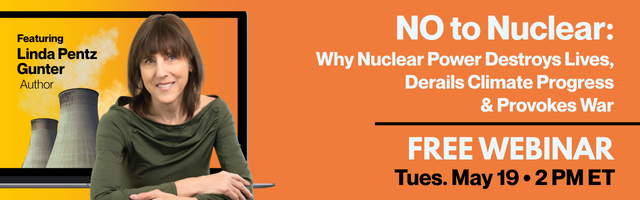
19 May – Webinar No To Nuclear: Why Nuclear Power Destroys Lives, Derails Climate Progress and Provokes War
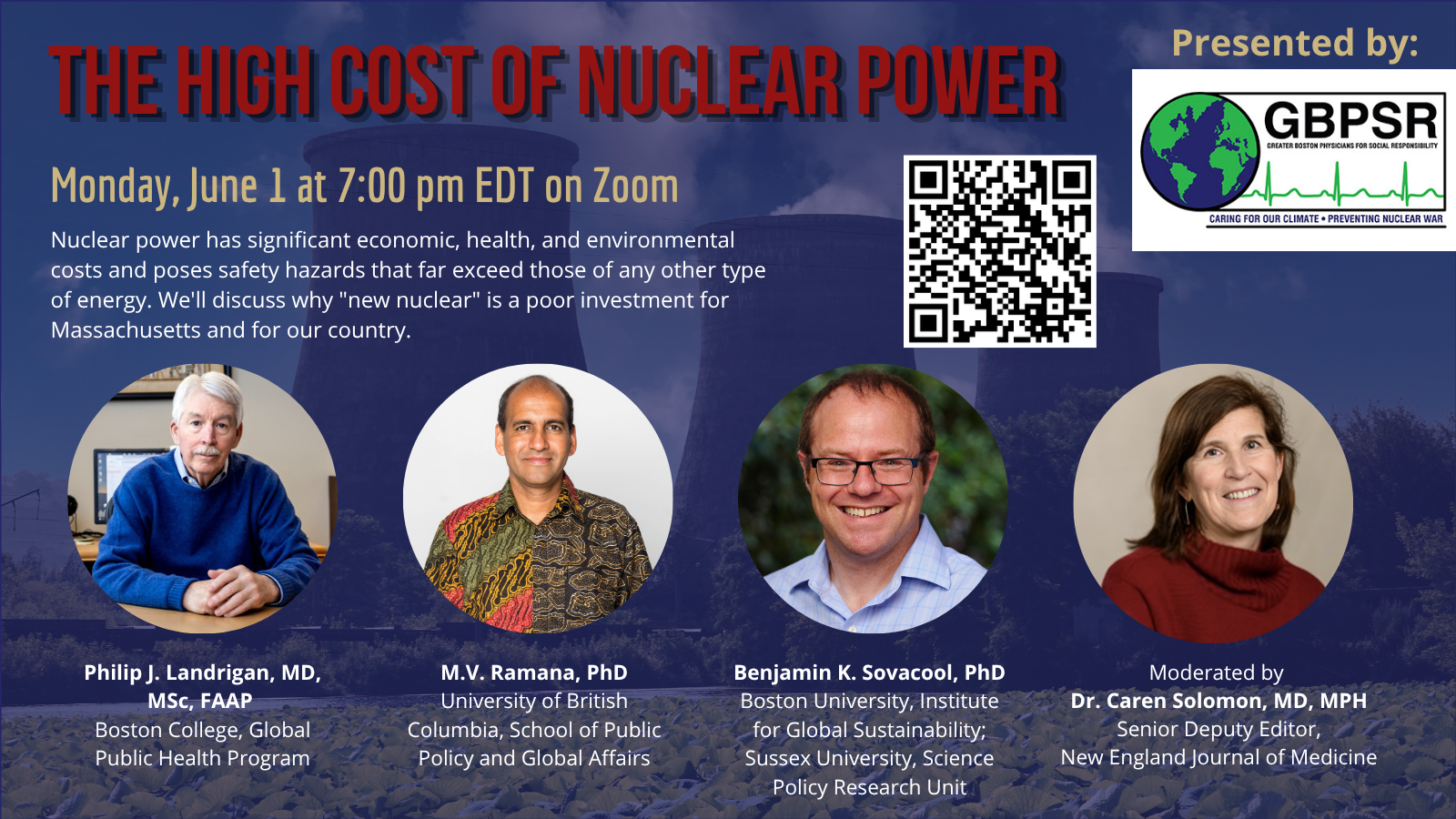
1 June Webinar – The High Cost of Nuclear Power – Register


of the week– Nuclear Reactor Information Task Force
To see nuclear-related stories in greater depth and intensity – go to https://nuclearinformation.wordpress.com
-
Archives
- May 2026 (211)
- April 2026 (356)
- March 2026 (251)
- February 2026 (268)
- January 2026 (308)
- December 2025 (358)
- November 2025 (359)
- October 2025 (376)
- September 2025 (257)
- August 2025 (319)
- July 2025 (230)
- June 2025 (348)
-
Categories
- 1
- 1 NUCLEAR ISSUES
- business and costs
- climate change
- culture and arts
- ENERGY
- environment
- health
- history
- indigenous issues
- Legal
- marketing of nuclear
- media
- opposition to nuclear
- PERSONAL STORIES
- politics
- politics international
- Religion and ethics
- safety
- secrets,lies and civil liberties
- spinbuster
- technology
- Uranium
- wastes
- weapons and war
- Women
- 2 WORLD
- ACTION
- AFRICA
- Atrocities
- AUSTRALIA
- Christina's notes
- Christina's themes
- culture and arts
- Events
- Fuk 2022
- Fuk 2023
- Fukushima 2017
- Fukushima 2018
- fukushima 2019
- Fukushima 2020
- Fukushima 2021
- general
- global warming
- Humour (God we need it)
- Nuclear
- RARE EARTHS
- Reference
- resources – print
- Resources -audiovicual
- Weekly Newsletter
- World
- World Nuclear
- YouTube
-
RSS
Entries RSS
Comments RSS
 nuclear-news