Several European States urge that nuclear energy be excluded from the EU’s green finance taxonomy.
EU anti-nuclear states urge excluding nuclear from green taxonomy, Nuclear Engineering, 5 July 2021 A group of five EU member states led by Germany have sent a letter to the European Commission (EC) asking for nuclear energy to be kept out of the EU’s green finance taxonomy.

“Many savers and investors would lose faith in financial products marketed as ‘sustainable’ if they had to fear that by buying these products they would be financing activities in the area of nuclear power.”
the JRC report also “disregards the life-cycle approach” to environmental risk assessment when it comes to geological storage of nuclear waste. ”
The letter, which was signed by the environment or energy ministers from Austria, Denmark, Germany, Luxembourg, and Spain, notes “shortcomings” in a report by the European Commission’s Joint Research Centre (JRC).
Although the letter is undated, Euractiv said it understands it was sent to the EC on 30 June. Signatories include: Svenja Schulze (Germany), Leonore Gewessler (Austria), Dan Jørgensen and Simon Kollerup (Denmark), Carole Dieschbourg (Luxembourg), Teresa Ribera Rodríguez and Nadia Calviño Santamaría (Spain).
“Nuclear power is incompatible with the Taxonomy Regulation’s ‘do no significant harm’ principle,” the ministers wrote, urging the Commission to keep nuclear out of the EU’s green finance rules. “We are concerned that including nuclear power in the Taxonomy would permanently damage its integrity, credibility and therefore its usefulness,” they warned.
The letter says the EC’s assessment of the safety of nuclear power installations is flawed. “We were disconcerted to learn that in the opinion of the Joint Research Centre (JRC), there were no indications that the high-risk technology that is nuclear power is more damaging to human health and to the environment than other forms of energy generation, such as wind and solar energy.” The ministers add: “Nuclear power, however, is a high-risk technology – wind energy is not. This essential difference must be taken into account.” They say the JRC report deliberately ignored the possibility of a serious incident.
The Ministers argue: “Many savers and investors would lose faith in financial products marketed as ‘sustainable’ if they had to fear that by buying these products they would be financing activities in the area of nuclear power.” They allege that the JRC report also “disregards the life-cycle approach” to environmental risk assessment when it comes to geological storage of nuclear waste.,,,,,,,,,,,
The letter says the EC’s assessment of the safety of nuclear power installations is flawed. “We were disconcerted to learn that in the opinion of the Joint Research Centre (JRC), there were no indications that the high-risk technology that is nuclear power is more damaging to human health and to the environment than other forms of energy generation, such as wind and solar energy.” The ministers add: “Nuclear power, however, is a high-risk technology – wind energy is not. This essential difference must be taken into account.” They say the JRC report deliberately ignored the possibility of a serious incident.
The Ministers argue: “Many savers and investors would lose faith in financial products marketed as ‘sustainable’ if they had to fear that by buying these products they would be financing activities in the area of nuclear power.” They allege that the JRC report also “disregards the life-cycle approach” to environmental risk assessment when it comes to geological storage of nuclear waste.https://www.neimagazine.com/news/newseu-anti-nuclear-states-urge-excluding-nuclear-from-green-taxonomy-8869307
Germany joins 15 other nations to call for an end to nuclear testing ‘once and for all’
Germany, Spain and Sweden: ‘End nuclear weapons testing’ https://www.dw.com/en/germany-spain-and-sweden-end-nuclear-weapons-testing/a-58158956
Germany is joining 15 other countries for a nuclear disarmament conference aiming to build momentum after a US-Russia summit renewed hopes for more arms control between the two nuclear powers.
German Foreign Minister Heiko Maas said ahead of a nuclear arms control conference on Monday that the threat of a nuclear arms race grows “where tension and mistrust predominate.”
“More than ever, we need steps that encourage trust through verifiable agreements created between nuclear-weapons states,” Maas said before departing to Madrid for a meeting of the Stockholm Initiative, which brings together 16 countries advocating global nuclear arms reduction.
The conference follows last month’s summit in Geneva between US President Joe Biden and Russian President Vladimir Putin pledged to start talks on arms control.
A statement after the summit said the US and Russia “seek to lay the groundwork for future arms control and risk reduction measures.”
“We need to build on this with clear steps by nuclear weapons states to fulfill their responsibility and obligations on disarmament,” Maas said, adding that the Geneva summit shows how progress is possible.
An end to nuclear testing ‘once and for all’
A joint editorial written by Maas, Spanish Foreign Minister Arancha Gonzalez Laya, and Swedish Foreign Minister Ann Linde listed several steps nuclear-weapons countries could take toward disarmament.
“This could include downgrading the role of nuclear weapons in strategies and doctrines, reducing the risk of conflict and an accidental nuclear weapon deployment, further reducing nuclear stockpiles and laying the foundations for a new generation of arms control agreements,” the foreign ministers wrote Monday in the Rheinische Post newspaper.
“We must end nuclear weapons testing once and for all by finally bringing the Comprehensive Nuclear-Test-Ban Treaty into force, restarting negotiations on a treaty banning the production of fissile material for military use, and building robust and credible capabilities to verify nuclear disarmament steps,” the editorial added.
What is the status of global nuclear arms control?
In February, the US and Russia agreed to extend the New START disarmament treaty. It limits the nuclear arsenals of both countries to 800 launchers and 1,550 ready-to-use nuclear warheads each.
The New START treaty is the only major arms control treaty in place between the US and Russia after the US withdrew from the Open Skies Treaty in May citing Russian non-compliance.
At the beginning of 2021, the US, Russia, the UK, France, China, India, Pakistan, Israel and North Korea possessed a total of 13,080 nuclear warheads, a decrease of 320 from the previous year, according to the Stockholm Peace Research Institute SIPRI annual report published in June.
UK’s Ministry of Defence kept ‘devastating’ nuclear accident risks under wraps
‘Devastating’ nuclear accident risks kept under wraps, The Ferret, Rob Edwards, July 4, 2021,
A ruling allowing the Ministry of Defence (MoD) to keep nuclear safety problems secret has been condemned as a threat to democracy, with “devastating” accident risks.
An information tribunal in London has rejected a bid to release reports about Trident nuclear bomb and submarine hazards on the Clyde because of fears about leaks to an increasingly “aggressive” Russia.
But the secrecy has come under fierce fire from a former nuclear submarine commander and campaigners. They criticised the MoD for hiding its nuclear blunders, putting people in danger, and edging the UK towards a “closed and dictatorial state”.
The Scottish National Party attacked the MoD’s secrecy as “absolutely untenable”. The idea that withholding information would keep the UK safe was “a very dangerous delusion”, the party argued.
The MoD, however, insisted that nuclear information had to be protected “for reasons of national security”. The defence nuclear programme was “fully accountable” to ministers, it said.
Annual reports by the MoD’s internal watchdog, the Defence Nuclear Safety Regulator (DNSR), were published for ten years under freedom of information law. But this ceased in 2017.
The Ferret revealed that the reports for 2005 to 2015 highlighted “regulatory risks” 86 times, including 13 rated as high priority. One issue repeatedly seen as a high risk was a growing shortage of suitably qualified and experienced nuclear engineers.
The DNSR report for 2014-15 warned that the lack of skilled staff was “the principal threat to the delivery of nuclear safety”. It also cautioned that “attention is required to ensure maintenance of adequate safety performance” for ageing nuclear submarines at the Faslane naval dockyard near Helensburgh.
The Ferret reported in 2019 that a belatedly released extract from the 2015-16 report showed that the Defence Nuclear Safety Regulator was itself struggling with staff shortages. It could not complete all the “essential tasks” to ensure nuclear safety.
The MoD’s decision to stop publishing DNSR reports was appealed to the First Tier Tribunal on information rights by researcher and campaigner, Peter Burt. Hearings were held in London in December 2019, but the verdict was delayed by the coronavirus pandemic.
The ruling, which has now been made available, dismissed his appeal and endorsed the MoD arguments for secrecy. Key parts of the tribunal proceedings were conducted in private, with Burt banned from taking part……………….. https://theferret.scot/nuclear-accident-risks-under-wraps/
EDF launches the “EPR2” After the Flamanville and Finland fiascoes, what could go wrong?

After the Flamanville and Finland fiascoes, what could go wrong?
EDF launches the “EPR2” — Beyond Nuclear International The politics of “fait accompli” will ensure a new industrial and financial disaster
Editor’s note: Despite the latest safety failures at the Taishan EPR in China; the endless delays and cost over-runs at the EPR projects in France and Finland; the technical fiascos and do-overs at the EPR construction sites in France, Finland and the UK; and the ongoing reckless plans for 6 EPRs in India, the French nuclear sector has far from abandoned its hubris. Instead, incredibly, and as Stéphane Lhomme tells us in a recent new blog on the topic, here translated into English, EDF has announced plans to begin construction of the “EPR2”. What could possibly go wrong?
By Stéphane Lhomme. 4 July 21,
Despite the fact that it has proven incapable of properly carrying out the construction of the EPR reactor at the never-ending Flamanville site underway since 2008, EDF leadership has nevertheless decided — according to the media outlet, Contexte — to allocate hundreds of millions of Euros to launch a construction program for new reactors, called “EPR2”.
Despite being fiercely pro-nuclear, President Macron has declared on several occasions that the EPR at Flamanville would need to be operational before any decision to build other reactors could be made.
However, it’s very likely that Mr. Macron is perfectly well aware of — and complicit in — this decision by EDF management to move forward with a new project.
Just as it has often done in the past, in its contempt for democracy and the interests of the French public, the leadership of EDF intends to use the politics of fait accompli: it proposes to spend hundreds of billions to start one or several “EPR2” reactor construction projects in order to then proclaim that the ship has sailed so the program cannot be stopped…. under threat of wasting hundreds of billions.
But it’s precisely by building nuclear reactors that EDF is already wasting astronomic sums, just as Areva did before that, going bankrupt due to the disastrous EPR construction project in Finland (which began in 2005, was supposed to come on line in 2009….but is still not complete)!
EDF claimed to have EPR construction under control despite Areva’s setbacks in Finland, but the construction at Flamanville is also a total catastrophe. So how can we possibly believe that, miraculously, EDF would be capable of building new EPR reactors, and moreover modified ones (hence the concept “EPR2”)?
For sure, from the anti-nuclear point of view, it is reassuring to be able to count on the incompetence and manifest inability of EDF to build nuclear reactors. But there is no justification for wasting incredible sums of money that are so needed for energy efficiency and renewable energy development.
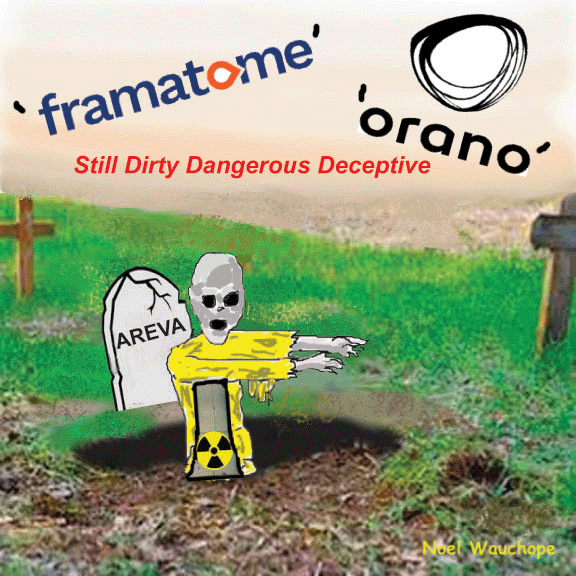
On the contrary, EDF is guaranteeing failure with these delusional nuclear projects, and, as is the case for Areva (renamed Orano), it is the public who will pay for the steep losses. If this “EPR2” program is not stopped as quickly as possible, it will end in a new industrial and financial disaster.
The least that the President of the Republic can do, assuming that he has a good grasp on democracy, is to prohibit EDF (which is 85% state-owned) from launching this new nuclear program before the startup of the Flamanville EPR.
But obviously the best decision would be to cancel all the new reactor projects and immediately to begin a rapid closure of the 56 reactors that pose a daily threat to the lives of French citizens and a majority of Europeans; reactors that produce radioactive waste for which there is no existing solution and that serve as a pretext for the totalitarian repression of citizens who oppose waste burial at the Cigéo at Bure in the Meuse.
Stéphane Lhomme is a longtime French anti-nuclear campaigner and runs the anti-nuclear network, Nuclear Observatory (Observatoire Du Nucléaire).
Headline photo of EPR protest in Colmar, France, by Linda Pentz Gunter.
Under cover of the nation’s preoccupation with the pandemic, France changes the rules, to permit nuclear installations in urbanised areas.

A government decree authorizes the construction of nuclear installations in urbanized or urbanizable areas. While the media, health and political institutions are grinding the brains of citizens with a virus, the government continues to issue decrees spiraling out of control.
This time, on June 29, 2021, a decree dispensing with the town planning code will allow the establishment of nuclear installations in urbanized areas, including where people reside! The ministers of ecology and housing signed this crap. The whole territory is now at the mercy of nuclear predation. It’s radioactivity in your garden or on the balcony.
Insanity presides over autocratic political power and lobbying.
Co-ordination Antinucleaire 2nd July 2021
UK Treasury’s new green savings bonds says YES to wind energy, NO to nuclear

the nuclear energy aspect had been scrapped in the process of working out suitable investments.
Yes to wind, no to nuclear: the green bonds investment planSavers can be part of £15bn scheme with just £100m
Sunday July 04 2021, The Sunday Times The money raised through the Treasury’s new green savings bonds will not be used to fund any nuclear energy projects, despite the power source being a crucial part of the government’s ten-point plan towards net zero.
The term net zero means achieving a balance between the carbon emitted into the atmosphere and the carbon removed from it.
Investors might be able to help fund the government’s plans to “build back better and greener” as early as September, when it is expected that the first tranche of bonds will be launched.
Farnam Bidgoli, the head of environmental, social and governance (ESG) solutions at HSBC, said that the nuclear energy aspect had been scrapped in the process of working out suitable investments. “When doing our market research,……….. (subscribers only) https://www.thetimes.co.uk/article/yes-to-wind-no-to-nuclear-the-green-bonds-investment-plan-9pcrz6rsw
United Kingdom will not finance any nuclear-energy related expenditures under its Green Financing Framework
Nuclear energy has been excluded from the UK government’s Green Financing Framework, while several EU Member States have written to the European Commission to oppose nuclear’s inclusion in the bloc’s green taxonomy.
The UK’s Green Financing Framework describes how the government plans to finance expenditures through the issuance of green gilts and the retail Green Savings Bonds that it says will be critical in tackling climate change and other environmental challenges. The framework, which was produced and published yesterday by the Treasury, sets out the basis for identification, selection, verification and reporting of the green projects that are eligible for such financing.
Under ‘exclusions’, the document says: “Recognising that many sustainable investors have exclusionary criteria in place around nuclear energy, the UK government will not finance any nuclear energy-related expenditures under the Framework.”
World Nuclear News 2nd July 2021
https://www.world-nuclear-news.org/Articles/UK-excludes-nuclear-from-green-taxonomy
European Court of Justice condemns France for preventing anti-nuclear group from access to legal justice.
Le Figaro 1st July 2021

Bure: France condemned for having rejected the legal action of an
 antinuclear association. The European Court of Human Rights (ECHR) on
 Thursday condemned France for having "disproportionately" restricted access
to justice to an association opposed to the nuclear waste burial project in
 Bure (Meuse).

The seven judges of the judicial body of the Council of Europe which sits in Strasbourg considered that France had violated article 6.1 of the European Convention on Human Rights which guarantees "the right of access to a court »Regarding the Mirabel-LNE association.......


The Cigéo project, on the border of the Meuse and Haute-Marne, aims to eventually store some 85,000 m3 of nuclear waste at a depth of nearly 500 meters.
 Le Figaro 1st July 2021

 https://www.lefigaro.fr/flash-eco/bure-la-france-condamnee-pour-avoir-rejete-le-recours-en-justice-d-une-association-antinucleaire-20210701
Buried in the sand of Southern Algeria – the radioactive pollution from French nuclear tests

Algérie: sous le sable, les déchets nucléaires français, translation by
Hervé CourtoisC.A.N. Coalition Against Nukes, 2 July 21
This is one of the major issues in the reconciliation of memories between France and Algeria. A subject that has long remained buried in the sands of the Sahara: the pollution of southern Algeria by French nuclear tests.
More than fifty years after the last test in 1966, Algiers has just created an agency for the rehabilitation of former nuc;ea test sites.
The Propaganda
From 1960 to 1966, the French army conducted 17 nuclear tests in southern Algeria, on the sites of Reggane and In Ekker. At the time, Albdekrim Touhami, a native of Tamanrasset, was a teenager. In Ekker is 150 kilometers north. He remembers the installation of the French military base, seen then as a welcome source of employment.”For us, it was a godsend. Everyone came running to get a job as a laborer or simple worker on the site. We didn’t think that this bomb was going to be a disaster for the region. We were told, “Here it is, the bomb will go off at such and such a time. You may feel some shaking, like an earthquake. But don’t worry, there will be no problem.” “
Fifteen years after Hiroshima and Nagasaki, the danger of nuclear weapons is known. Southern Algeria is chosen to conduct these tests, because the area is considered quite deserted compared to the Southern Alps or Corsica, while being close to the French mainland.
France wanted to quickly demonstrate its capacity to use the bomb in the context of the Cold War and the race for nuclear deterrence.”France wanted to catch up with the other nuclear powers, the United States, Russia and the United Kingdom, to remain in what was called at the time “the big league”. This partly explains why the priority was the result, not the concern about the environmental impact or the collateral damage to the population. The priority was to explode the bomb,” recalls Patrice Bouveret, co-founder of the Observatoire de l’armement, an independent center of expertise.A highly polluted area .
In1962, Algeria became independent. The tests continued. Most of them, eleven, were carried out between 1962 and 1966 and therefore with the agreement of the new Algerian authorities. Systematically, the waste generated by these tests was buried, explains Jean-Marie Collin, spokesperson for Ican-France (International Campaign for the Abolition of Nuclear Weapons) who published a study with Patrice Bouveret, “Under the sand, the radioactivity! “.
Very clearly, France has a desire to bury,” emphasizes Jean-Marie Collin. It considers the desert as an ocean, an ocean of sand, and it buries everything that is likely to be contaminated. Algerian independence and the fact that France left Algeria under rather complicated conditions did not play in favor of depollution. On the contrary, even more waste was left behind. “Waste that goes from the simple screwdriver to the tank exposed to test the resistance of military equipment to the atomic bomb. Another pollution linked to nuclear tests, the accidental one during the Berryl underground test in 1962.
The reason for the tests was that the nuclear technology was not fully mastered and therefore there were accidents that released radioactive lava,” continues the Ican-France spokesman. The test concerned was in 1962. We were there in 2007. The scientists measured the radioactivity, which was extremely high, and they told us: “You should not stay more than twenty minutes on the spot, if you do not want to absorb radioactivity that is dangerous for your body. “
Only one victim compensated.
Contaminated rocks left in the open air, in areas of passage. Contaminated sand disseminated by the winds beyond the Algerian borders, particularly in neighboring Niger. For about fifteen years, in the area of Tamanrasset and with very few means, Abdelkrim Touhami and his association Taourirt tries to draw up a sanitary assessment.We learned that many people died of suspicious deaths,” he confides. People were dying little by little. Babies were being born with deformities. Cancers were occurring through this disaster. “
To date, no official census of the people exposed, whether French or Algerian. Only one Algerian victim has been compensated under the Morin Law (2010). The decree of May 31 creating an agency for the rehabilitation of test sites in Algeria is an important step for Jean-Marie Collin of Ican-France.
Until now,” he explains, “the Algerian state created a certain surveillance zone on these sites, but there had never been any action to protect these zones in order to avoid any real access. This decree opens up the possibility that international organizations such as States could come and help rehabilitate these nuclear test sites. What we have at the same time are discussions between France and Algeria, officially revealed in April, whereas until then, these discussions did not officially exist.
“These discussions took place within the framework of the Franco-Algerian working group on nuclear tests, created in 2008 under the presidency of Nicolas Sarkozy. This issue of rehabilitation was also included in the report by Benjamin Stora on the reconciliation of memories between France and Algeria. Algiers must ratify the Tian, the Treaty for the Prohibition of Nuclear Weapons, to which France is not a signatory, before mid-October.
.Supporters of the rehabilitation of former nuclear test sites want a joint Franco-Algerian mission to be sent to map the polluted sites in order to circumscribe them, and eventually treat them so that the inhabitants are no longer exposed to radioactivity. . https://www.rfi.fr/fr/afrique/20210629-alg%C3%A9rie-sous-le-sable-les-d%C3%A9chets-nucl%C3%A9aires-fran%C3%A7ais?fbclid=IwAR2Gn0qmn8xngwhyIaCBN1ut9lU9w_YwziHLSr9S2SkwmBGc9oaWL0f18As
5 European nations warn the European Commission that nuclear energy must be excluded from the EU’s green finance taxonomy.
A group of five EU member states led by Germany have sent a letter to the European Commission asking for nuclear energy to be kept out of the EU’s green finance taxonomy. The letter – signed by the environment or energy ministers of Austria, Denmark, Germany, Luxembourg, and Spain – points to “shortcomings” in a report by the European Commission’s Joint Research Centre published on 2 April, which concluded that nuclear energy is safe.
“Nuclear power is incompatible with the Taxonomy Regulation’s ‘do no significant harm’ principle,” the ministers wrote, urging the Commission to keep nuclear out of the EU’s green finance rules. “We are concerned that including nuclear power in the Taxonomy would permanently damage its integrity, credibility and therefore its usefulness,” they warned.
Euractiv 2nd July 2021
Germany’s success in phasing out nuclear energy, and remarkable uptake of solar.

Germany’s nuclear phase out expected to be complete by 2022 as country
cuts capacity by over 60% last decade, says GlobalData. Between 2010 and
2020, installed nuclear capacity in Germany declined from 20.5GW to 8.1GW,
according to GlobalData, which estimates the country will reach 4.1GW by
the end of this year.
The leading data and analytics company notes that
this progression sets Germany on track to completely phase out nuclear by
2022. Rohit Ravetkar, Power Analyst at GlobalData says: “The German
Government has made steady progress towards the elimination of nuclear
power following the Fukushima nuclear disaster in Japan.
Under the Energiewende policy, the country’s aim to fill its power generation void
with renewable power includes a planned increase of solar PV capacity to
100GW by 2030.
The expansion of solar PV systems has been the most
successful in Germany, increasing at an impressive compound annual growth
rate (CAGR) of 11.6% between 2010 and 2020.” Germany has been at the
forefront in the adoption of solar PV technology since 2000. The country
launched the 100,000 rooftop PV program way back in 1999, providing a
significant push to the solar PV technology.
Global Data 29th June 2021
 |
Russia tests giant nuclear submarine equipped with secret weapons
,
9 News By Richard Wood • Senior Journalist Jun 29, 2021, Russia has unveiled a nuclear submarine armed with advanced weapons that’s believed to be the largest built anywhere in the world over the last 30 years.The Belgorod started sea trials on the weekend amid rising tensions between Russia and NATO navies, reports Naval News.The 184 metre-long nuclear-powered submarine is armed with six intercontinental Poseidon torpedoes but can also act as a mothership for smaller submarines.The torpedoes can carry nuclear warheads and have an unlimited range.With a speed of about 70 knots and capable of reaching depths of 1000 metres, they cannot be countered with current weapons, reports say…….https://www.9news.com.au/world/russia-trials-biggest-nuclear-submarine-built-in-thirty-years-secret-weapons/3d4e5cc3-d184-494a-b187-29465131e036
Dounreay nuclear waste clean-up- an enormous job, for just a temporary solution.
| WORK to clean-up the radioactive waste in the shaft and silo at Dounreay is underway and has been described as “one of the most significant decommissioning projects” at the site. Radioactive waste was historically consigned to the 65-metre deep shaft and the silo, an underground waste storage vault, over several decades starting in the late 1950s. Now the higher activity waste must be retrieved and repackaged, suitable for long-term storage in a safe modern facility. John O’Groat Journal 27th June 2021 https://www.johnogroat-journal.co.uk/news/shaft-and-silo-work-at-dounreay-is-underway-242653/ |
Bradwell anti-nuclear campaigners may face fight against nuclear fusion plan
CAMPAIGNERS battling proposals for a new nuclear power station at Bradwell
could have to fight on a second front. The UK Atomic Energy Authority has
put Bradwell on a ‘long-list’ of 15 possible sites for the UK’s prototype
fusion energy plant – STEP. Others include Sellafield, north Wales and
Dounreay, together with other nuclear and former coal-fired power station
sites. The UKAEA says the successful site will become a “global hub” for
fusion energy and associated, industries and create thousands of highly
skilled jobs during the construction and operation of the plant, while
attracting investment that will enable the development of a new UK science
and technology centre of excellence”.
Essex Gazette 28th June 2021
https://www.gazette-news.co.uk/news/19399659.bradwell-earmarked-fusion-power-plant/
Protests against France’s Tricastin nuclear station, Greenpeace activists face gaol.
Despite the lawsuits, we, Greenpeace, will continue to warn of nuclear
danger. Thirty-four Greenpeace activists will appear on June 29 in court in
Valencia. They had entered the Tricastin nuclear site to denounce the
danger. Greenpeace reaffirms in this forum its commitment and calls for the
dismantling of the plant.
Reporterre 26th June 2021
“40 years is enough”: 300 people gathered in Montélimar to demand the
shutdown of the Tricastin power plant.
France Bleu 26th June 2021
1 This Month
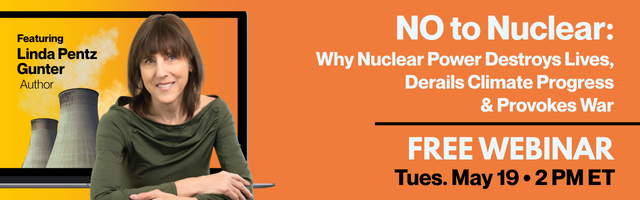
19 May – Webinar No To Nuclear: Why Nuclear Power Destroys Lives, Derails Climate Progress and Provokes War
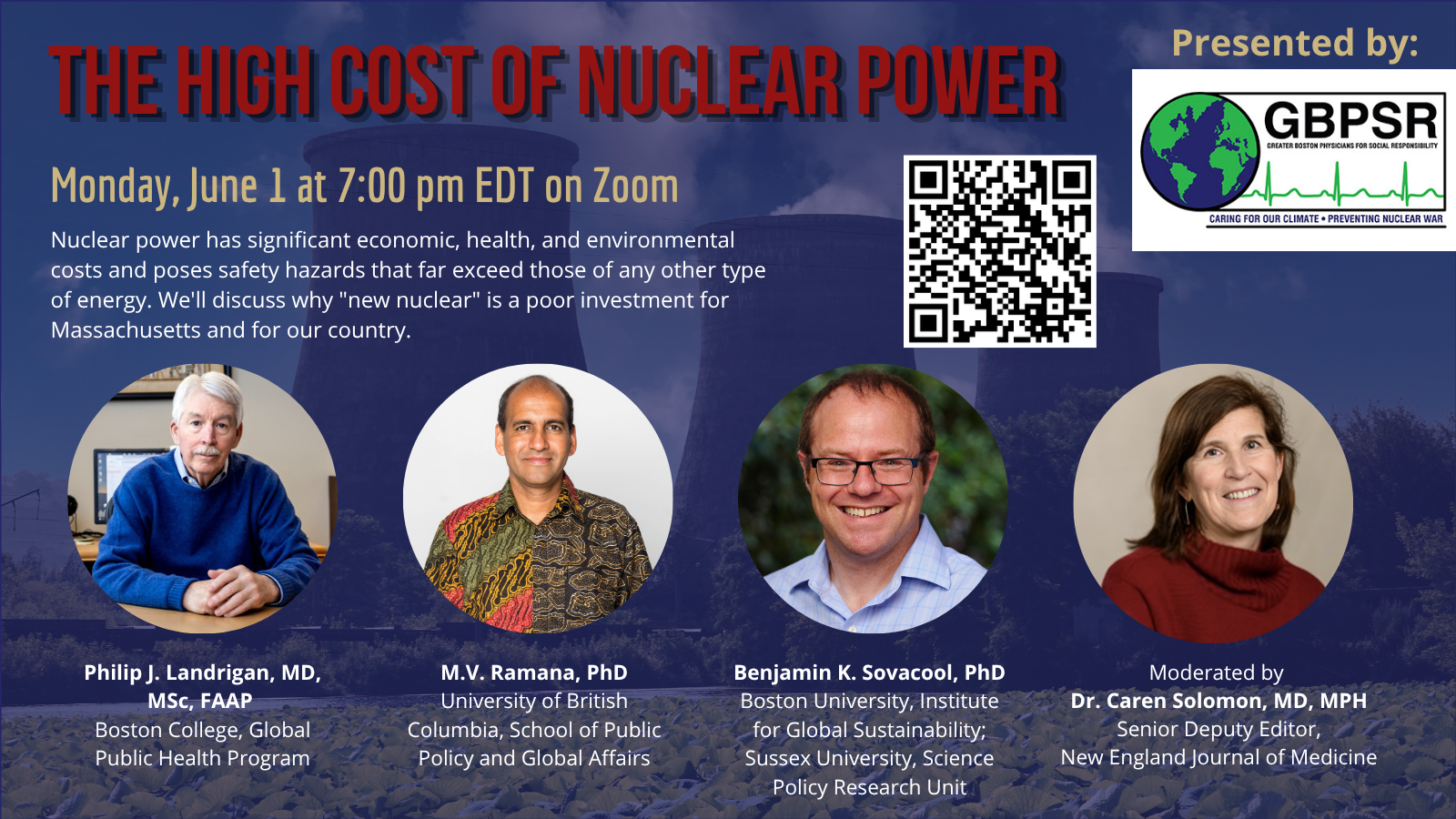
1 June Webinar – The High Cost of Nuclear Power – Register


of the week– Nuclear Reactor Information Task Force
To see nuclear-related stories in greater depth and intensity – go to https://nuclearinformation.wordpress.com
-
Archives
- May 2026 (211)
- April 2026 (356)
- March 2026 (251)
- February 2026 (268)
- January 2026 (308)
- December 2025 (358)
- November 2025 (359)
- October 2025 (376)
- September 2025 (257)
- August 2025 (319)
- July 2025 (230)
- June 2025 (348)
-
Categories
- 1
- 1 NUCLEAR ISSUES
- business and costs
- climate change
- culture and arts
- ENERGY
- environment
- health
- history
- indigenous issues
- Legal
- marketing of nuclear
- media
- opposition to nuclear
- PERSONAL STORIES
- politics
- politics international
- Religion and ethics
- safety
- secrets,lies and civil liberties
- spinbuster
- technology
- Uranium
- wastes
- weapons and war
- Women
- 2 WORLD
- ACTION
- AFRICA
- Atrocities
- AUSTRALIA
- Christina's notes
- Christina's themes
- culture and arts
- Events
- Fuk 2022
- Fuk 2023
- Fukushima 2017
- Fukushima 2018
- fukushima 2019
- Fukushima 2020
- Fukushima 2021
- general
- global warming
- Humour (God we need it)
- Nuclear
- RARE EARTHS
- Reference
- resources – print
- Resources -audiovicual
- Weekly Newsletter
- World
- World Nuclear
- YouTube
-
RSS
Entries RSS
Comments RSS
 nuclear-news