UN and Red Cross demand immediate global rules on autonomous weapons amid rising AI threats

[your]NEWS, Tue, 25 Aug 2026, https://www.sott.net/article/508094-UN-and-Red-Cross-demand-immediate-global-rules-on-autonomous-weapons-amid-rising-AI-threats
Leaders warn of moral and legal dangers as fully autonomous arms near deployment, urging binding treaties to prevent unchecked use in warfare.
The United Nations Secretary-General António Guterres and the President of the International Committee of the Red Cross, Mirjana Spoljaric, issued a joint warning on Tuesday, stating that the world is “dangerously close to crossing a moral red line: the autonomous targeting of humans by machines.”
“Negotiations must begin now to urgently adopt a legally binding instrument to regulate autonomous weapon systems with clear prohibitions and restrictions,” the leaders stated. Their appeal comes as states prepare to meet in Geneva next week to discuss potential new rules governing the use of AI-assisted and semi-autonomous weapons, which have already been deployed in conflicts in Ukraine, Sudan, Gaza, Iran, and the Gulf.
The discussions, which began in 2014, have seen some progress, but technological advancements have outpaced regulatory efforts. While fully autonomous weapons, such as anti-missile systems on warships, are already in use, there is no confirmed evidence of their deployment against human targets — yet.
Human rights groups have expressed concerns that AI-driven systems may not be adequately predictable or controllable, increasing the risk of fatal errors, such as failing to recognize injured or surrendering soldiers. Additionally, the lack of human oversight complicates accountability in potential war crimes cases.
“States must show political courage and move beyond incremental discussions towards decisive action,” the joint statement urged, pushing for formal negotiations to commence in November during a major review conference held every five years in Geneva.
Carolyne Mélanie Régimbal, chief of service at the U.N. Office for Disarmament Affairs, stated during a Geneva press briefing following the release of the joint statement:
“Some decisions must forever remain with the human being, none more than the decision of taking or not a human life.”
Although states agree that international humanitarian law (IHL) applies to lethal autonomous weapon systems, there are currently no specific binding international standards for these technologies. Opposition from major powers like Russia and the United States, who argue that existing laws are sufficient, has stalled progress. The Geneva talks, which require consensus to move forward, are taking place amid heightened geopolitical tensions and recent European withdrawals from treaties like the landmine ban, driven by Russian threats.
Britain’s Storm Shadow tech transfer to Ukraine will lead to more escalation. We need dialogue!

Campaign for Nuclear Disarmament, August 25, 2026, https://cnduk.org/britains-storm-shadow-tech-transfer-to-ukraine-will-lead-to-more-escalation-we-need-dialogue/?link_id=1&can_id=0a448bf4278898648e02a8f6dea4650f&source=email-britain-pushes-for-more-escalation-in-ukraine-aukus-webinar-register-for-cnd-agm-policy-conference&email_referrer=email_3374903&email_subject=britain-pushes-for-more-escalation-in-ukraine-aukus-webinar-register-for-cnd-conference
Britain’s decision to join France in transferring classified Storm Shadow blueprints to Ukraine so it can domestically produce the long-range cruise missile will only increase nuclear risks, warns CND.
Prime Minister Andy Burnham made the announcement about the technology transfer during a visit to Kyiv on Monday.
The Storm Shadow is co-produced with France by the multi-national arms company MBDA and has a range of 155 miles (250km). The air-launched missiles also have bunker-busting warheads and are capable of hitting Russian targets in its territory. In November 2024, the British government, in coordination with the US administration, gave permission for Ukraine to use these weapons to hit targets deep inside Russian territory. This was in spite of Russia’s threat to use its nuclear weapons against such long-range attacks.
France already agreed to hand over its own blueprints for the SCALP-EG (its French export name) in July, as part of a wider arms deal that included Rafale fighter jets and interceptor missiles.
On Sunday, Russia’s foreign ministry said it had withdrawn its ambassador to London, Andrei Kelin, accusing Britain of choosing a “path of confrontation.” This comes after Russia announced that there would be consequences for attacks on civilian infrastrcutrue by British-made long-range drones. Some reports have suggested that this could mean British drone factories could be attacked by “unknown sources.”
Burnham’s announcement has been interpreted as an attempt by Britain and France to push the US into giving Ukraine its Patriot interceptor technology so it can produce them locally. During July’s NATO summit, Donald Trump told Ukrainian President Volodymyr Zelensky that the US would give a licence to produce Patriots only to backtrack on the promise weeks later saying it “a hard thing to give away.”
The reversal coincided with an escalation in the US’s illegal war on Iran in July. That conflict, ongoing since February, has led to a shortage in stocks of both Patriot and Tomahawk as the US and its Gulf allies use them to counter Iranian ballistic missiles and drones. It’s estimated that only 1,000 Patriot missiles remain in US stocks and current annual production is currently 600. Plans are already in place to set up new production lines in Germany and Poland to help replenish their stocks given to Ukraine, while Zelensky is also calling for a line to be set up in Ukraine.
CND General Secretary Sophie Bolt said:
“The British government’s strategy of escalation is very dangerous. We have already seen the nuclear risks from such escalation in 2024 when Russia threatened to use its nuclear weapons against long-range missiles. Burnham needs to end this reckless war-mongering and focus on dialogue and de-escalation.”
Is Putin about to test ‘Flying Chernobyl’ nuclear-powered missile that can fly for DAYS?
By WILL STEWART and SOPHIA STANFORD, 25 August 2026,
https://www.dailymail.com/news/article-16078037/Putin-test-Flying-Chernobyl.html
Vladimir Putin may be about to test a nuclear-powered cruise missile – dubbed the Flying Chernobyl – that can fly for days, according to analysts.
An influx of aircraft and shipping has converged in the Arctic in a telltale sign that a new experimental firing is expected of a weapon powered by its own atomic reactor, say analysts.
The ‘invincible’ Burevestnik missile – with a nickname inspired by the nuclear catastrophe that could be inflicted, much like the Chernobyl power plant explosion in 1986 – carries a nuclear warhead with an ‘unlimited range’ and is designed to fly for days at a time before striking the West, according to the Russians.
Norwegian defence analyst Thord Are Iversen said the movements followed the pattern seen during previous tests of Putin’s experimental 9M730 Burevestnik cruise missile.
‘It now appears that everything is ready for actual Burevestnik flight testing,’ he told independent Russian outlet The Insider.
In the Arctic, two specialist Il-976 SKIP aircraft used to monitor missile trajectories and collect test data arrived at Rogachyovo airbase on the remote Novaya Zemlya archipelago, reports say.
Satellite imagery also shows an A-50U airborne early-warning aircraft, four An-26 military transports, an An-74 and several helicopters at the base amid a suspected test of Putin’s Flying Chernobyl missile.
Civilian vessels previously involved in missile trials have taken up positions in the Barents and Kara seas around the Pankovo test range.
A Nuclear Option Against Iran Would Be a Catastrophe – Not a Solution
Taut Bataut, August 21, 2026, https://journal-neo.su/2026/08/21/a-nuclear-option-against-iran-would-be-a-catastrophe-not-a-solution/
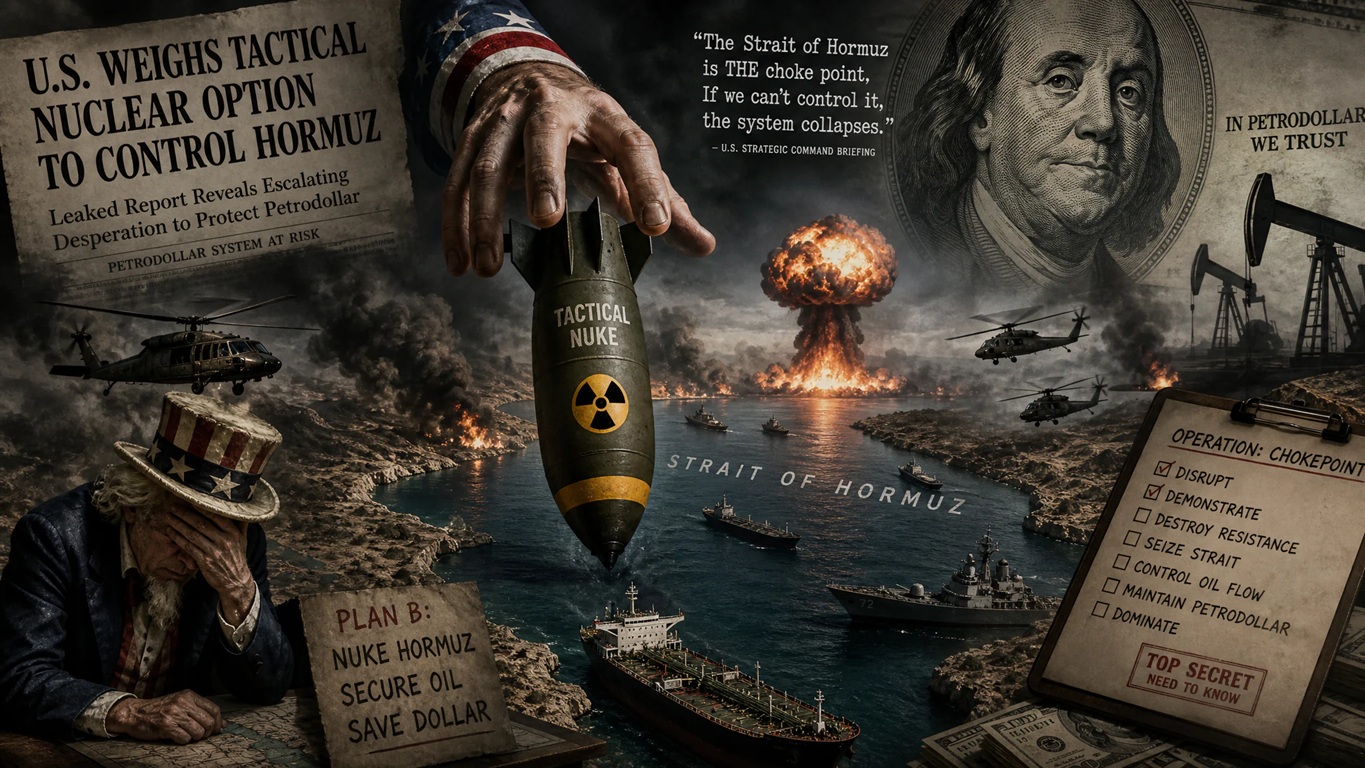
Driven by desperation after failing conventionally in West Asia, the U.S. demonstrates reckless foreign policy by entertaining the use of tactical nuclear weapons to forcibly capture the Strait of Hormuz and preserve petrodollar hegemony.
his reliance on nuclear blackmail reflects a long-standing U.S. pattern of resorting to aggressive, unconventional force whenever its global military dominance is challenged.
A line in the sand that, once crossed, cannot be uncrossed. “They are discussing using nuclear weapons on Iran in strategy meetings. Yes, you read that correctly. It’s real. I’m not speculating; I know. And it’s pure evil.” This is what former US Congresswoman Marjorie Taylor Greene wrote on her X account on 17 August 2026. Although this statement is neither confirmed by the White House nor does it unveil any implicit information, the mere consideration of such an option signals a dangerous psychological shift in U.S. foreign policy. Heading towards any such move against Iran could result in global catastrophe, and the consequences would then be out of control. The real query here is whether the ongoing Middle Eastern volatility is paving the way for a nuclear holocaust or not.
Historical Perspective
To understand the ongoing situation in the Middle East, it is necessary to look into the historical perspective. When the US used nuclear weapons against Japan in World War II, we were told that the Japanese surrendered because of the nuclear weapons. This is false. Anyone who has studied World War II carefully will understand that the Japanese forces were already surrendering. So why was there a need to use nuclear weapons? The reason is that the US was running a secret project called the ‘Manhattan Project.’ Under this project, Americans were developing both uranium and plutonium bombs. So, the US wanted to test its weapon and thus bombed Japan. That’s why two bombs were dropped; however, only one could be enough. And thus, the US claimed itself as the number one military power in the world.
Later on, in the 1950s, Americans once again found that Soviet military dominance had surpassed them. So, the US introduced the tactical nuclear weapons to surpass the Soviet’s conventional superiority. However, till the 1970s, Soviets also developed tactical nuclear weapons in large numbers. In retaliation, the US started investing in space projects to develop long-range conventional missiles. By 2010, now the US military concluded that the Chinese military had become equal to ours. So, now the US is introducing artificial intelligence and autonomy in its military. But the PLA, without any doubt, has significantly outpaced the US military in this regard. This clears one thing: the US establishment did not want President Trump to sign an MoU with Iran, which was a clear surrender of the US military. So, as the US has completely failed against Iran in conventional terms, it might opt for some unconventional means to maintain its military superiority in the region.
Why the U.S. Might Opt for Tactical Nuclear Weapons
As of now, it is clear that there is no way to stop Iran through conventional capabilities. So, the statement made by Greene actually depicts the current strategic thinking inside the US: that even if the 50,000 US troops stationed at the 19 airbases in West Asia withdraw, if they do, and the US maintains control of the Strait of Hormuz, which could then be declared as US territory, then the petrodollar will remain intact. Therefore, the plan is to move out of the region and capture the Hormuz region through tactical nukes.
The next question then becomes, how is this going to be done? When one talks of tactical nuclear weapons, they mean the weapons whose power ranges from sub-kilotons to 50 kilotons. Just to remind you, the weapons the US dropped on Japan during WWII were tactical and weighed 15 kilotons. But now through modern technology, one can create a critical mass with just using a few kgs of uranium or plutonium, which could result in a chain reaction, and a nuclear weapon can be used.
Technically, this is possible today. If the Strait of Hormuz’s chokepoint could be opened with the use of a very small, limited-range, sub-blast, or sub-kiloton nuclear weapon. So, the US could capture the Strait of Hormuz in this way, declare it its own territory, and continue to generate petrodollars. This is the reason President Donald Trump recently said, “After we finish defeating Iran, which is being very badly defeated, pretty soon I’ll be declaring the Hormuz Strait a territory of the United States.”
The Devastating Consequences
Elbridge Colby, Under Secretary of War for Policy, has recently warned, “What I would fear more is a regional war, a kind of local war, a conventional war that might have local employment, God forbid, of nuclear weapons that could escalate from there as it expanded outward.” The consequences would be catastrophic. We know that many countries in the world today possess nuclear weapons, and we are also aware that North Korea has openly declared that if nuclear weapons are used against Iran, it will stand in solidarity with Iran. In addition, many analysts are of the view that Iran might have already developed nuclear weapons. But here the question is, could Iran have done this?
There are two reasons for which it can be concluded that Iran would not have done it. First, Iran is trying to develop a regional security framework, and the Mecca Defense Pact is its best manifestation, which could be expanded in the near future. Iran wants every regional country to see it as a partner nation. Thus, if Iran pursues developing nukes, it could start an arms race in the region where countries like Saudi Arabia would also demand a bomb. Second, Iran is a signatory of the NPT. So, Iran would first announce its withdrawal from the treaty, and then it will head forward in this direction.
China’s Role and Supremacy
Here China can play a pivotal and powerful role. Today China has approximately $800 billion in US Treasury bonds. If the Chinese were to tell Americans today that they were selling half or a large amount of their Treasury bonds, it would create problems with the US’s indebted economy. Inflation would spike, the stock market would crash, and the economy would be in dire condition. Moreover, China also has dominance over the world’s rare earth minerals, on which American conventional capabilities are highly dependent. Also, the PRC could also pressurize the US over the upcoming visit of Chinese President Xi Jinping to the US in September 2026. Thus, China has a lot to do in this regard, and it’s already doing it in one way or another to preserve the world’s peace.
A Nuclear Strike is not a Solution
A nuclear attack against Iran is not an answer; it is a recipe for disaster that is bound to happen sooner rather than later. This policy of desperation would be a betrayal of principles and a failure of our ideals and would not help to bring peace. The rest of the world should make its voice heard and condemn such rhetoric before it normalizes something unimaginable. There are reasons that dictate that we should rely on diplomacy and patience, no matter how desperate the situation becomes. The unthinkable should remain unthinkable; to think about such an option is to play with fire.
Russia signals willingness to consider new Ukraine peace ideas but insists any deal reflect battlefield conditions

[your]NEWS, Fri, 21 Aug 2026 , https://www.sott.net/article/508073-Russia-signals-willingness-to-consider-new-Ukraine-peace-ideas-but-insists-any-deal-reflect-battlefield-conditions
Russian Deputy Foreign Minister Sergei Ryabkov said Moscow remains willing to hear new U.S. proposals for ending the war in Ukraine, while maintaining that any settlement must account for Russia’s stated objectives and the territorial situation created by nearly 4½ years of fighting.
Russia says it remains prepared to consider new proposals for ending the war in Ukraine, but Moscow is continuing to insist that any potential settlement account for what it calls the “realities on the ground.”
Russian Deputy Foreign Minister Sergei Ryabkov made the comments in an interview with News.ru published Friday, signaling that Moscow is still open to negotiations with Washington even as diplomatic efforts to end the conflict have largely stalled amid the war in Iran.
Ryabkov said the United States has demonstrated both a willingness to engage in “constructive dialog” and an “understanding of Russia’s position.”
He suggested, however, that Moscow believes the larger question is whether the United States can influence Ukraine and its European allies.
“At this stage, it is more important to what extent Washington is able to influence the decisions of the Kyiv regime and its European sponsors, who still dream of a ‘strategic defeat’ of Russia,” Ryabkov said.
Russia and the United States have held negotiations aimed at finding a path toward ending the Ukraine war, but those efforts have lost momentum as international attention has shifted toward the conflict involving Iran.
The Kremlin said Thursday that it had no information about when U.S. presidential envoys Jared Kushner and Steve Witkoff might next travel to Moscow.
Kushner and Witkoff have previously played leading roles in U.S. negotiations with Russian officials.
Secretary of State Marco Rubio reiterated Washington’s interest in ending the Ukraine conflict last month following a meeting with Russian Foreign Minister Sergei Lavrov in Manila.
Rubio cautioned at the time that a rapid breakthrough should not be expected and said the United States was attempting to “find a middle ground.”
Ryabkov responded that Moscow remains prepared to consider new ideas from Rubio and to continue discussions with the Trump administration:
“The Russian Federation is ready to listen to any reasonable proposals and ideas that are in line with the goals set by the Russian president and meet the ‘realities on the ground,'”
That formulation reflects a longstanding Russian position that any eventual agreement must take into account territorial changes resulting from the war.
After almost 4½ years of fighting, Russian forces control approximately one-fifth of Ukraine’s internationally recognized territory.
Moscow has repeatedly said it is willing to negotiate but has maintained that talks must acknowledge what Russian officials describe as the “new realities on the ground.”
The territorial question remains one of the central obstacles to reaching a negotiated settlement.
Ukraine and its international supporters have continued to regard the areas seized by Russia as sovereign Ukrainian territory, while Moscow has sought to make its control of occupied regions part of the framework for any eventual peace agreement.
Ryabkov’s remarks indicate that Russia is not rejecting further American diplomatic initiatives but is setting clear parameters for what it would regard as a viable proposal.
His comments also place renewed emphasis on Washington’s ability to persuade Kyiv and European governments to accept compromises that Moscow considers necessary.
The diplomatic opening comes as U.S.-Russian negotiations over Ukraine have slowed considerably from earlier efforts.
Although Rubio has publicly reaffirmed Washington’s commitment to finding a way to end the conflict, he has also acknowledged the substantial differences separating the parties.
Ryabkov’s interview addressed another major area of U.S.-Russian relations as well: nuclear arms control.
The New START nuclear weapons treaty expired in February, leaving the United States and Russia without binding limits on their strategic nuclear arsenals for the first time in more than 50 years.
The treaty had imposed restrictions on deployed strategic nuclear warheads and delivery systems held by the world’s two largest nuclear-armed powers.
Despite its expiration, Moscow has said it intends to continue observing the treaty’s limits on missiles and warheads as long as Washington does the same.
Ryabkov indicated that Russia wants to keep diplomatic channels open on nuclear weapons even without a formal treaty currently in force.
“We remain open in the future to find political and diplomatic ways to stabilize this area,” he said.
His comments suggest that Moscow sees room for continued U.S.-Russian engagement on two of the most consequential issues between the countries: ending the Ukraine war and establishing a new framework for managing their strategic nuclear arsenals.
For Ukraine negotiations, however, Russia continues to make clear that it will judge any American proposal against both President Vladimir Putin’s stated objectives and the military situation that now exists after years of war.
Walt Zlotow- NATO letting Ukraine die, not by a thousand cuts, but by a thousand drones.

Neither the UK’s Burnham, France’s Macron nor Germany’s Merz are friends of Ukraine, fair- weather or otherwise. They’ve spent the last 12 years promoting war between Ukraine and Russia that has left Ukraine a shell of its former self.
Walt Zlotow West Suburban Peace Coalition Glen Ellyn IL , 23 Aug 26
The thousands of drones NATO is squandering their desperately needed treasure to give Ukraine to fire wildly into Russia have backfired spectacularly.
The drones have no strategic value on Ukraine’s war prospects. They are mere pinpricks having no effect on the inevitable Russian victory on the battlefield. But they have enraged the Russian populous and leadership to ramp up the destruction of Ukraine’s economy and infrastructure which will speed up Ukraine’s collapse.
Foremost in this campaign in closing off Ukraine’s access to the Black Sea and other ports greatly shutting down vital exports and imports, the lifeblood of the Ukraine economy. Energy facilities thruout Ukraine are being targeted in daily attacks that unlike Ukraine’s scattershot drone strikes, strategically cripple Ukraine life. Ukraine has no defensive missiles to shoot down incoming Russian drones and missiles with none forthcoming from either Europe or the US.
Virtually none of this gets reported in Western media. Most reporting touts NATO supplied Ukrainian drone strikes on Russia as evidence Ukraine is still in the fight. Utter nonsense.
NATO leaders brag how they’re bringing the war home to Russia and that Ukraine can prevail. They are locked into a a long history of Russophobia they cannot not shake regardless of how their war support is hurting their economies and alienating their constituencies. Their facing a lost cause in Ukraine, bankruptcy at home and electoral defeat.
The UK’s Keir Starmer has already been pushed out. But his successor Andy Burnham hasn’t got the clear message. After Russia’s Putin warned the UK of consequences for Britain providing Ukraine with drones fired into Russia, Burnham replied “London will continue to support Ukraine 100%. We are not fair-weather friends, we will be there in Ukraine’s hour of need and that won’t change.”
Neither the UK’s Burnham, France’s Macron nor Germany’s Merz are friends of Ukraine, fair- weather or otherwise. They’ve spent the last 12 years promoting war between Ukraine and Russia that has left Ukraine a shell of its former self.
How? By supporting the 2014 coup that ousted Russian leaning Ukraine President Victory Yanukovych. By promoting the Minsk I and II Accords in 2014 and 2015 that lulled Russia into believing NATO was going to provide regional autonomy for Russian leaning Donbas Ukrainians when it was simply a ruse to build up Ukrainian forces to crush the Donbas Ukrainians. By conspiring with the US to goad Russia into invading Ukraine in February 2022 by refusing to address Russia’s valid security concerns regarding NATO expansion to Russia’s borders in Ukraine.
And when Ukraine does collapse, possibly as early as this year, NATO countries will be left with nothing to show but greatly weakened economies and inroads from right wing governments sick of squandering critically needed domestic treasure on senseless, lost foreign causes. NATO leaders can ponder forever their descent into madness that destroyed Ukraine for nothing but their hatred of Russia.
Mission impossible? Quantifying military emissions

Military and wartime emissions are difficult to track—but too important to ignore.
Bulletin, By Neta C. Crawford, August 24, 2026
ow much does war, and the preparation and recovery from it, contribute to the climate crisis? Nobody knows, because there is no comprehensive accounting of global warming emissions from militaries, military industries, or war. While some military emissions are reported, those are the tip of the iceberg. The failure to quantify the emissions from this sector inhibits the ability to reduce them and keeps them largely sacrosanct.
One can make some educated guesses as to what they may be, which I’ve attempted here. This rough estimate—which is on the conservative side—shows that US and global military, military-industrial, and wartime emissions are enormous and should be factored into our understanding of global warming.
The procedures and criteria for nations to make a comprehensive report of their greenhouse emissions were first worked out as part of the 1997 Kyoto Protocol Treaty process.
A 1997 Pentagon memo—a piece of rhetorical genius—explained the stakes very clearly: The military was the US government’s single largest fossil fuel user. Ensuring the US military remained preeminent in the world required unlimited fuel use for training and operations. Reporting emissions could lead to a push for reductions, and “limitations on tactical and strategic military systems would … adversely impact operations and readiness.”
The Pentagon argued that even a 10 percent reduction in fuel use would harm military readiness and “represent a serious threat to national security.”
To forestall this, the Pentagon suggested draft language for the Kyoto treaty proposing that parties “shall exclude from its measurement of anthropogenic emissions by sources any emissions attributable to military tactical or strategic systems used for military operations in support of national or collective security, humanitarian activities, peacekeeping, peace enforcement, or United Nations, NATO, and other multinational actions.” The Pentagon also proposed excluding measurement of any “emissions attributable to military tactical or strategic systems used in training” for those operations.
The Defense Department also asserted that “to minimize fundamental conflicts between national security and global environmental protection, the Protocol itself must address military operations and readiness so that the [sic] we can pursue and enjoy the fruits of national security as well as the benefits of a healthy planet.”
The White House agreed, and the United States successfully lobbied to exempt most military emissions from countries’ annual National Inventory Reports of greenhouse gas emissions.
Even though military emissions reporting was made voluntary in 2015 at the UN’s climate conference in Paris, there is still no comprehensive accounting of direct military emissions by all countries. But even if and when those institutional numbers are reported, most accounting is still partial because it undercounts military emissions and excludes the emissions from military industry and war. Every uncounted metric ton is an obstacle to grasping the full scale of the problem and hampers the ability to reduce the worst effects of warming.
US military emissions. The US Defense Department is still the single largest energy user and institutional greenhouse gas emitter in the country. And that is before we account for all the national security related emissions that are counted as emissions in other departments. Indeed, as I show below, there are significant military related emissions that are essentially under or uncounted…………………………………………………………………….
But most significantly, Defense Department emissions have fallen because many of its functions are now essentially off-book, as the US military has increasingly outsourced its operations to contractors.
Nearly 4,000 million metric tons of carbon dioxide equivalent is a large quantity, but this is a conservative estimate since the Defense Department, which provides the data to the Energy Department, uses a lower 100-year Global Warming Potential for methane than the Intergovernmental Panel on Climate Change. My estimate also does not include the Defense Department’s biogenic emissions (from organic waste decay), which averaged .78 million metric tons of carbon dioxide equivalent from 2010 to 2024………………………………………………………………………………………………………………………………………………………………………………………………………
States will deliberately destroy the forests of their enemies. The United States used chemicals, bombardment, and plows to destroy 417,000 hectares (roughly 1,600 square miles) of tropical forests and mangroves of Southern Vietnam during the Vietnam War, releasing an estimated 183.6 – 535.6 million metric tons of carbon dioxide equivalent emissions. An additional 5.6 million hectares (or 21,600 square miles) of forests were partially destroyed. If damaged forests are not regrown, their sequestration potential is reduced or even eliminated…………………………………………………………..
More concerning perhaps are the ways that war contributes to fugitive methane emissions—from slow leaks, deliberate venting, and accidents—that are already a large source of warming. Methane has a 29.8 times higher global warming potential on a 100-year time scale than carbon dioxide. War related emissions of methane, which vary depending on the source and cause of the emissions, largely go uncounted. During the 1991 Gulf War, one location, Mansoria station in northern Kuwait, recorded a 50 percent increase in atmospheric methane due to a fire set by Iraq.
Oil infrastructure continues to be targeted now, regardless of the long-term environmental consequences. The diagram below, from the US Joint Chiefs of Staff Joint Targeting publication, illustrates all the options the United States considers available for targeting oil infrastructure…………………………………………………………………………………………..
A team of scholars led by Ben Neimark has attempted to estimate the emissions of all phases of the Israel-Gaza war from pre-conflict, conflict, and reconstruction. The immediate human toll was staggering: Tens of thousands of people killed, millions displaced, and health care infrastructure in Gaza gutted. They estimate that “emissions from the open conflict surpassed 1.3 million tons CO2 equiv by January 2025,” but that including pre-war mobilization and post-war reconstruction, emissions from this war may be as high as 33 million metric tons of carbon dioxide equivalent.
Both these wars illustrate how the effects of military emissions extend beyond borders. The Russian invasion of Ukraine has caused increased military spending and military industrialization not only in Russia and Ukraine, but also in NATO, and increased global arms manufacturing as countries rush to supply Ukraine with weapons, much of which will outlast the war once it ends. Similarly, the Israel-Gaza war, which includes Israeli attacks in Lebanon and other countries, has generated increased military mobilization in the Middle East as well as increased arms sales. It may be fair to say that, since war became industrialized—if we take greenhouse gas emissions into account—there is no longer such thing as a purely local or regional war………………………………………………………………………………………………………………………………….
Why don’t we have the military and military-industrial data, and why do the impacts of war on emissions remain largely unexamined? On one level, as harmful as wartime greenhouse gas emissions may be, they are essentially not covered under either the laws of war or international humanitarian law. The 1976 Convention on the Prohibition of Military or Any Other Hostile Use of Environmental Modification Techniques is focused on “the deliberate manipulation of natural processes—the dynamics, composition or structure of the earth, including its biota, lithosphere, hydrosphere and atmosphere, or of outer space.” The greenhouse gas emissions of war are an unintended, albeit foreseeable and now foreseen side effect of combat.
Just as political leaders often aver that wars will be short, effective, decisive, cheap, and controllable—even if war is rarely any of those things—they assume that the environmental consequences of mobilization, armaments, and war are local, even trivial externalities, without long-term consequences that can change the planet itself. Indeed, in some respects, as soon as war and military industry began to be powered by fossil fuels in the 19th century, there was no longer any such thing as a purely “local” war.
Policymakers tend to assume that national security, understood as military security, is the sine qua non of survival. As the 1997 Pentagon memo urging that most or all military emissions be exempt from reporting explained, “We must not sacrifice our national security to achieve reductions in greenhouse gas emissions. We must not see this as an issue of being able to achieve either national security or protection of the global climate.” But to a certain extent, nonreporting, and the failure to count all other military, military-industrial, and war related emissions, may have done just that—put military capability and American preeminence above survival, and thus jeopardized the latter. https://thebulletin.org/2026/08/mission-impossible-quantifying-military-emissions/?utm_source=ActiveCampaign&utm_medium=email&utm_content=How%20much%20does%20war%20contribute%20to%20the%20climate%20crisis%3F&utm_campaign=20260824%20Monday%20Newsletter
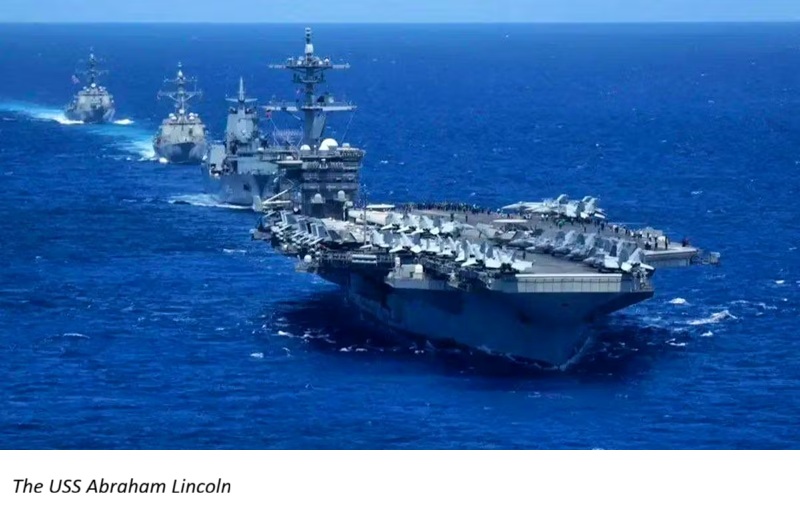
Deprived at Sea: The Tribulations of the USS Abraham Lincoln
25 August 2026 Dr Binoy Kampmark, https://theaimn.net/deprived-at-sea-the-tribulations-of-the-uss-abraham-lincoln/
The conflict with Iran continues to deliver its mean shocks to an increasingly doddering US imperium. Depleted munitions, depleted stocks of goodwill and, it would seem, a disruption in resupplying warships operating in the Middle East, have become dents in a struggling war machine.
This month, the aircraft carrier USS Abraham Lincoln, lengthily stationed in the Arabian Sea, caught the attention of naval observers with reports of mental distress and sheer desperation on the part of members of the 5,000-strong crew of sailors and Marines. Personnel had endured a nine-month deployment – a record – having made only one stop in Guam in mid-December since leaving San Diego. (The previous record had been set by the USS Dwight D. Eisenhower in a stint lasting 206 days during the COVID-19 pandemic.) Shortages of fresh food and necessaries, the presence of contaminated water, broken latrines, plumbing problems, disruptions in the mail system and exhaustion were just some of the things noted. On August 12, the Navy Times revealed instances where individual crew members had tried to jump overboard. Similar details were also reported in Stars and Stripes.
Meetings between concerned family members and acting Secretary of the Navy Hung Cao were convened earlier in the month regarding the crisis. At one virtual town hall meeting Vice Admiral Joseph Cahill, commander of Naval Surface Forces, conceded the strain placed on sailors and their families. “We hear you loud and clear [regarding] the impact this has on families, on service members and the long-term ability of us to stand, sustain our forces’ health.” He outlined an approach involving counsellors and chaplains, linked with “Command Resilience Team Human Factors Councils,” a jabberwocky designation intended to cover, according to Navy policy, “human factors that impact the wellness of individuals within the command and identify primary prevention efforts to reduce relevant risks(s).” This involved, Cahill elaborated with little assuredness, “the unit understanding and sitting down with sailors individually with their Human Factors Councils and having a conversation about where they’re at in the moment in time.”
Other vicissitudes were given the managerial heave-ho. The blocking of toilets in parts of the ship had arisen because of a “stubborn clog” (seemingly an understatement), though these had been addressed by the sailors over time. Mould that had been detected in the showers was also in hand, with industrial hygienists used to test the bathrooms to ensure the adequate functioning of fans and the flow of air.
The reason for the punishing spell lay in yet another unforeseen aspect of the war with Tehran: its ability to strike at logistics hubs in the Gulf region. Most critically, Iran successfully struck Naval Support Activity Bahrain in Manama, headquarters of the US Navy’s Fifth Fleet in the opening days of battle. Over a dozen buildings, two AN/GSC-52B satellite communications terminals, and a communications facility, were destroyed. In June, the Wall Street Journal noted that US officials had begun “reevaluating” the American footprint in the region as a result of the damage inflicted on the country’s “sole naval base in the Middle East – along with hits to at least 20 US sites across the region.”
The pressing threat of Iranian threats on other ports in the Gulf region necessitated the decision by the Pentagon to scour for other more distant supply options. Diego Garcia, the joint US-UK facility located to the south of the Maldives, became an option. This redeployment certainly caught the interest of Tehran, given an attempted strike on the island with ballistic missiles on March 20.
Shifting focus to Diego Garcia away from Bahrain precipitated its fair share of headaches. “When Bahrain was no longer a port for logistics, food and mail,” reasoned Vice Admiral Douglas Verissimo to attendees at the townhall meeting, “all of the gear that was there when the shooting started got stuck there.” This presented “an initial very large backlog” and “also caused us to, under very contested logistics, very difficult and long supply lines.” Priorities had to be sorted: first, food, followed by important items for the ship’s store, such as toothpaste and shampoo, then the supply of mail. Ensuring a fresh supply of fresh food was problematic, given spoliation on route.
Never one to let bad news inconvenience him, President Donald Trump seemed untroubled. In remarks to reporters on the matter, the increasingly detached chief magistrate of the Republic felt that the deployment had not gone on for “nearly long enough.” He had also been reassured by an unnamed retired admiral that the Lincoln was “beautifully maintained and beautifully taken care of.” Acting Secretary Cao had also mangled matters in his August 14 statement, declaring with evident irritation that “our force and their families are not victims. They are the epitome of American strength and resilience.” Irresponsible members of the media, however, had tried “to paint our warriors as victims. Not only is that dishonest but it takes away from the focus on the enemy and the threat it poses against our nation, people, and the way of life.” Rather than conceding how serious matters were on the Lincoln, Cao simply referenced a negligible number of “mental health cases” that had been treated with no loss of life and claimed that meals had merely been adjusted to cope with the lack of fresh supplies.” Calls made to family members of the crew “were limited when the operational threat was too high.”
On August 22, crew members of the Lincoln finally received news of a scheduled port call, with a possible planned rest and recreation stop in Thailand come early September. “The ship,” announced Senator Jack Reed, the top-ranking Democrat on the Armed Service Committee, “is scheduled to return to its homeport in coming weeks.” The Japan-based carrier USS George Washington is the intended replacement. Its mission will be as misguided and cloudy as the vessel it has replaced.
Ukraine can hit Russia deep inside its territory. But is it bringing the war closer to peace?
Trump’s most difficult task is not to give Ukraine more weapons or to pressure Kyiv into concessions. It is to create a settlement that gives both Putin and Zelenskyy a reason to change their positions.
Timur Maslov, [your]NEWS, Wed, 19 Aug 2026
From Kyiv, the growing Ukrainian ability to strike deep inside Russia is changing the geography of the war. But after four and a half years of fighting, one question remains: can military escalation actually produce a diplomatic breakthrough?
For more than four years, Ukrainians have lived with a war that rarely feels distant. Missiles and drones arrive at night. Energy infrastructure is repeatedly damaged. Businesses struggle to operate. Families prepare for another difficult winter. But the geography of the war is changing. Ukraine is increasingly capable of striking targets deep inside Russia. In recent days, Ukrainian forces launched one of the largest drone attacks on Russia since the beginning of the full-scale invasion. Russian authorities reported hundreds of Ukrainian drones targeting Moscow and other regions, while Russian strikes continued across Ukraine.
The strategy is becoming increasingly clear: if Russia can bring the war to Ukrainian cities, Ukraine wants Russia to experience at least some of the consequences of the war on its own territory. But there is a difficult question behind this strategy:
Does making the war more painful for Russia actually bring peace closer?
“People celebrate — and then wait for the response”
In Kyiv, the reaction to Ukrainian strikes deep inside Russia is complicated. People celebrate when Ukrainian drones reach targets near Moscow or elsewhere in Russia. There is a widespread feeling that Russia should experience some of the fear and uncertainty that Ukrainians have lived with for years.
But there is also another understanding. People know what usually comes next. A Ukrainian strike is followed by a Russian response and the response can be deadly. That cycle has become one of the most difficult realities of the war. As Ukrainian President Volodymyr Zelenskyy has put it, both sides can play the same game — but every action has consequences. The recent escalation illustrates the point. While Ukraine launched a major drone offensive against Russia, Russian missiles struck Ukrainian cities and infrastructure. A Russian attack on Kryvyi Rih damaged power and industrial facilities, while another strike in Kharkiv region killed civilians.
For Ukrainians, the result is a brutal paradox.
They may be pleased to see Russia hit — while knowing that another Russian attack may soon follow.
And ordinary people pay the price on both sides.
When the war reaches a supermarket shelf
The consequences of escalation are not always measured in destroyed military facilities. Sometimes they are much smaller and much closer to home. In Kyiv, I have personally seen empty shelves in some supermarkets, particularly in sections selling eggs and vegetables. This is not a nationwide food shortage. People can still buy essential products, and the situation may be temporary.
But the shortages appeared after Russian attacks damaged logistics infrastructure and warehouses supplying Kyiv’s supermarket chains. Ukrainian media reported that several logistics centers connected to Fozzy Group were damaged in a major August 5 attack, after which some products became harder to find in Kyiv stores. People are also buying more food than usual, creating additional pressure on supplies.
For someone outside Ukraine, this might sound like a minor inconvenience. For people who have lived through years of war, it feels different. A strike on infrastructure can eventually become an empty supermarket shelf. That is how military escalation reaches ordinary life.
Ukraine is developing its own long-range weapons
The next stage could be even more significant. Ukraine is developing ballistic missiles capable of reaching deep inside Russian territory.
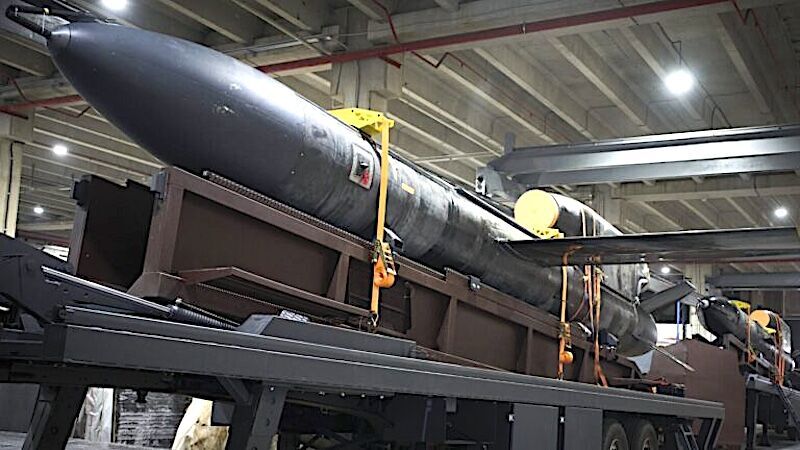
Ukrainian defense company Fire Point has displayed its FP-7 and FP-9 ballistic missile systems at international defense exhibitions. The company says the FP-9 is designed to carry a warhead of up to 800 kilograms and reach targets hundreds of kilometers away. Independent defense reporting has cited an expected range of roughly 700-855 kilometers, depending on the configuration and information source.
Fire Point has also presented the smaller FP-7 system. Ukrainian officials have suggested that domestically produced ballistic weapons could enter combat use later this year, although their deployment and production depend on testing, certification, financing and access to components. That distinction matters.
A missile displayed at an exhibition is not the same thing as a weapon being mass-produced and operationally deployed.
But the direction is clear. Ukraine wants to reduce its dependence on foreign long-range weapons and develop the ability to strike Russian military and strategic targets with weapons produced domestically. If that capability becomes operational at scale, it could significantly expand Kyiv’s options.
It could also create another escalation problem.
What happens if Ukrainian ballistic missiles reach Russia?
This is the question that worries me most. Ukraine already has long-range drones capable of reaching Moscow and other Russian regions. A domestically produced ballistic missile would represent a different capability. It would potentially allow Ukraine to strike selected targets much faster and with a different level of destructive power. The FP-9’s publicly presented specifications — including a claimed range of up to roughly 855 kilometers and a payload of up to 800 kilograms — would theoretically put a large number of Russian military and industrial targets within reach.
Ukrainian President Volodymyr Zelenskyy has said that Ukraine could potentially use a domestically produced ballistic missile against Russia as early as this autumn, provided the necessary financing and components are available. That does not mean that a missile will necessarily hit Moscow this autumn. It means something more important:
Ukraine is trying to build a long-term domestic strike capability.
And Moscow will have to take that seriously.
Will this change Putin’s position?
I am skeptical. Ukraine’s ability to strike deeper into Russia may increase the cost of the war. It may disrupt fuel supplies, logistics and military infrastructure. But I do not believe that strikes alone will force Vladimir Putin to negotiate. Russia has already demonstrated that it is willing to absorb enormous military and economic costs to continue the war.
The recent attacks inside Russia have also produced fuel disruptions. Reuters reported on August 19 that gasoline stations in Moscow and surrounding regions had begun limiting sales amid shortages linked to Ukrainian drone attacks on Russian refineries, combined with seasonal demand and refinery problems.
That is a real economic consequence.But economic pain is not automatically political capitulation. And there is another problem. The more Ukraine strikes Russia, the greater the possibility that Moscow responds with another escalation against Ukraine.
The result can become a cycle:
Ukraine strikes Russia.
Russia retaliates.
Ukraine responds again.
The war becomes more dangerous.
But the political positions remain unchanged.
I don’t think Russian society will suddenly turn against the war
There is an argument that if Russians begin experiencing the war directly, public opinion will eventually turn against Vladimir Putin. I am not convinced. Russia has already demonstrated that external pressure can produce the opposite reaction. When the situation becomes more dangerous, patriotic rhetoric intensifies. The population may become more defensive rather than more willing to question the war.
For years, many Russians in Moscow and other major cities lived with a war that was geographically distant. Now drones are reaching their cities. But that does not necessarily mean they will conclude that the war should end. It could instead convince some people that Russia needs to fight harder. That is one of the biggest risks of the current strategy.
Europe is becoming part of the equation
Ukraine is also receiving increasing support for its domestic defense industry. European countries have their own geopolitical interests, of course. But European governments increasingly understand that Ukraine’s ability to produce drones and missiles is becoming strategically important. Britain, for example, has committed to supplying Ukraine with large numbers of drones and has reaffirmed its support despite Russian warnings that London could face “consequences” over alleged use of British-made drones in attacks inside Russia. The more sophisticated Ukraine’s domestic weapons industry becomes, the less dependent Kyiv is on decisions made in Washington or European capitals.
That could strengthen Ukraine’s negotiating position. But it could also make the conflict more difficult to contain.
Trump faces a problem that weapons cannot solve
This brings us back to Donald Trump. In my view, neither increasing weapons supplies nor applying pressure to only one side will be enough. Trump needs to get Vladimir Putin and Volodymyr Zelenskyy into a serious negotiating process. Not separately. Together.
Both leaders are deeply entrenched in their positions. Putin continues to speak about Russia’s objectives and the “root causes” of the war. Ukraine does not want a temporary pause that could simply give Russia time to prepare for another attack. That is why a simple ceasefire is unlikely to solve the underlying problem. Trump’s challenge is to find an agreement that both leaders believe is worth accepting.That is much harder than sending weapons.
And much harder than demanding that one side make concessions.
The anger of living through the war
After four and a half years of living in Kyiv during this war, I feel anger when I see another escalation. Not because I believe Ukraine should simply stop defending itself. And not because I believe Russia should be allowed to attack without consequences. I feel anger because people continue to die while the political positions of the two leaders remain so far apart. Almost everyone I know has lost someone — a friend, a relative, a father, a husband — because of this war. People want it to end.
But Ukrainians also understand that Russia has repeatedly said it wants more than simply a temporary halt to fighting. That leaves Ukraine facing an extremely difficult choice. Continue increasing the cost of the war for Russia — knowing that Russia will respond or reduce the intensity of the fighting and risk giving Moscow time to regroup. Neither option guarantees peace.
The real question
Ukraine has demonstrated that it can reach deep into Russia. It can damage military facilities. It can disrupt logistics. It can put pressure on Russia’s energy system and it is developing increasingly sophisticated weapons of its own. But military capability and strategic success are not the same thing. The question is no longer whether Ukraine can hit Russia.
It can.
The question is whether those strikes change the political calculation in Moscow. So far, there is little evidence that they have and there is little evidence that Ukrainian leadership is prepared to abandon its own fundamental demands either. That is why I believe Trump’s most difficult task is not to give Ukraine more weapons or to pressure Kyiv into concessions. It is to create a settlement that gives both Putin and Zelenskyy a reason to change their positions.
Otherwise, the war may continue not for another few months, but for another five or even ten years. And after everything Ukraine has already lost, that may be the most frightening possibility of all.
Comment: The price of war is excruciating, deadly, unrelenting and now escalating… Interesting how many countries want it.
Miscarriages and stillbirths in Gaza surge as Israel’s siege, malnutrition, toxic exposure and displacement ravage mothers

Eva Karene Bartlett, Aug 22, 2026
August 20, 2026, RT.com, Shocking news of a sudden over-threefold year-on-year increase of the number of miscarriages and stillbirths should be front page on global media. But because it is one of the latest consequences of the ongoing Israeli genocide of Palestinians in Gaza, it will probably go ignored by most Western corporate media.
In fact, since a ‘ceasefire’ supposedly came into effect in October 2025, media coverage of Gaza has decreased dramatically. But – as with ceasefires prior – Israel has continued to kill Palestinians in Gaza on a near-daily basis, by bombing, machinegun fire, quadcopter fire, drone strikes, and by (continuing its near twenty-year siege on Gaza) not allowing in adequate amounts of humanitarian aid, medical supplies, and other things needed to just sustain life at the very basic level.
As of August 19, the Gaza Health Ministry reports 1,273 Palestinians have been killed, 4,223 wounded since October 11, 2025.
In mid-July, Ahmad Abu Foul, a Palestinian medic who I’ve known since I lived in Gaza, told me of the sudden increase in miscarriages, primarily among women living in displacement tents across the Gaza Strip.
He cited Dr. Mohammed Al-Bashiti, an obstetrics and gynecology specialist at Nasser Medical Complex in Khan Younis, as warning of this disturbing increase and attributing it to various environmental and physical factors, notably, severe malnutrition and anemia, and “extreme physical fatigue due to repeated displacement from one place to another. Many are forced to carry heavy loads beyond their physical capacity, putting their pregnancies at greater risk.”
But it’s also caused by exposure to toxic chemicals – explosive residues, TNT-related materials, smoke – which put the baby at risk. Ahmad said that his sister just had a miscarriage at four months pregnant, and his niece had a stillbirth at eight months.
The Israeli newspaper, Haaretz, on July 30 published an article highlighting the dramatic rise in miscarriages. It cited a recent UN report stating from January to June 2026, 3,950 miscarriages had been reported. This is over triple the 1,197 miscarriages reported from July to December 2025. The miscarriage rate, it notes, is one-sixth of all pregnancies.
Haaretz cited Dr. Ahmed al-Farra, head of the pediatric department at Nasser Hospital as likewise saying the contributing factors to the increase in miscarriages are malnutrition and stress and also water shortages: “We have reached a point where each person has three liters of water a day, far below the minimum required. Ninety percent of the water is not fit for drinking. The water shortage leads to infections, weakening the immune system and worsening malnutrition.”
With the complete destruction of the Gaza Strip by Israel, and with Palestinians constantly forced to suddenly move their inadequate tents elsewhere, the lack of clean drinking water, and the near-complete dependence on financial and humanitarian aid from the outside world set the stage for a host of food-, water-, and hygiene-related illnesses, and now this dramatic increase in miscarriages.
Although it was stipulated in the ‘ceasefire’, Israel hasn’t been allowing sufficient food, water and medicines to enter Gaza.
Euro-Med Human Rights Monitor reported on August 9, 2026, that, “Israel enforces a comprehensive policy that disrupts the entire supply chain, starting from the entry of goods and aid through crossings until they reach the population.”
It notes the dearth of aid trucks entering Gaza in the first place, and that those which are permitted entry are not guaranteed to reach those in need, “due to the destruction or impairment of the transportation, storage, and distribution infrastructure.” It also notes that delays in shipping “cause frozen food, medicine, and other vital materials to spoil before reaching those in need.”
Euro-Med points out that Israel, “as the occupying power, has an obligation under Articles 55 and 59 of the Fourth Geneva Convention to guarantee that the population receives food and medical supplies when local resources are insufficient.”
From a logistical perspective, many of the illnesses plaguing Gaza could be eradicated were Israel to adhere to international law and allow in sufficient food, water and medical aid.
Israel is of course aware of this, as it has been since enforcing a full siege on Gaza in 2007. But the Israeli authorities know no international body or state – certainly not its biggest backer, the US – will force it to stop its genocide and allow in aid.
The invisible, creeping ‘Yellow Line’
Israel has been expanding its control of Gaza via a constantly-expanding, mostly-invisible, ‘Yellow Line’ – a demarcation line set out in the Israeli-US ‘peace plan’ of 2025. The Palestinians can mainly only guess at where it lies, aside from some yellow cement blocks which are periodically moved still further into Gaza, to claim more land………………………………………………………………………………………
Nonstop killing continues…………………………………………………………………………… https://evakarenebartlett.substack.com/p/miscarriages-and-stillbirths-in-gaza?utm_source=post-email-title&publication_id=3046064&post_id=212152652&utm_campaign=email-post-title&isFreemail=true&r=1ise1&triedRedirect=true&utm_medium=email
A blank check to the Pentagon while the facts on the “Golden Dome” are concealed from the public.

Elaine Cimino, 21 Aug 26
The Pentagon says Golden Dome will cost $185 billion. The Congressional Budget Office estimates a comparable system could cost $1.2 trillion. Other estimates range as high as $2.4 trillion.
When independent analysts challenge the Pentagon’s figure, Golden Dome’s director dismisses their estimates as false because they do not reflect what the military is actually building.
But the Pentagon will not tell Congress, the CBO or the public what it is actually building.
That is not national-security oversight. It is a blank check protected by classification.
Billions are already flowing to missile, satellite and weapons contractors while the architecture, total cost and technical feasibility remain concealed. Even the CBO’s trillion-dollar model would not provide an impenetrable shield or stop a full-scale attack by Russia or China.
This is ambush by concealment. By hiding the full architecture, government also hides the program’s full economic and environmental footprint: public subsidies, long-term operating costs and resources diverted from essential needs, as well as the consequences of manufacturing, testing, launching and continually replacing thousands of missiles, interceptors and satellites.
Meanwhile, in NM city councils and county commissions are being told to vote for “jobs” without seriously examining the consequences for surrounding communities—and they are voting unanimously. They approve public land, infrastructure, financing and development agreements without independent environmental review, cumulative-impact analysis or full disclosure of the hazards on weapons systems facilities ci tribute ng to the Golden Dome project and more. What do we call unanimous approval when decision-makers have not demanded the information necessary to protect the public?
Rubber-stamp government. Approval by concealment.
Communities are being committed to weapons production, hazardous materials, explosive testing, industrial pollution and intensive resource use before the public can evaluate the cumulative cost—or meaningfully object.
Golden Dome is therefore not simply a missile-defense program. It is an enormous, open-ended transfer of public wealth into a weapons system whose design cannot be examined, whose cost cannot be verified and whose promised protection cannot be guaranteed.
The public is being asked to fund the shield without being allowed to see whether the shield exists.
Golden Dome is Reagan’s “Star Wars” project on steroids—larger, more secretive, more expensive and already driving a nationwide expansion of missile production, weapons testing and the militarization of spac
Russia Warns West Against New Arms Race

Aug 21, 2026 , By Ellie Cook, Senior Defense Reporter, https://www.newsweek.com/russia-warns-west-against-new-arms-race-12346603
A senior Russian official has warned that President Donald Trump’s new defense plans, including for the vast Golden Dome missile shield currently in development, will lead to a new space “arms race” and could be “devastating.”
“The risks of turning outer space into an arena of armed confrontation have ceased to be hypothetical,” Gennady Gatilov, Russia’s envoy to the United Nations in Geneva, said in remarks reported by Russia’s Tass state news agency on Thursday.
“Its consequences will be devastating for all of humanity,” he added.
Although militaries worldwide already use satellites for intelligence gathering, communications, missile warnings and navigation, putting weapons in orbit has been controversial for decades.
A major part of the planned design for the Golden Dome will be orbiting interceptors to knock out incoming missile attacks, with early-warning sensors positioned in space, although the United States government and military haven’t released a full breakdown of how the system would be put together.
A White House spokesperson told Newsweek in a statement: “President Trump is building on the transformational achievements of his first term to maintain America’s leadership in space.”
Newsweek reached out to the Department of Defense via email for comment.
Russian President Vladimir Putin and China’s Xi Jinping jointly said in May 2025 the proposed outline for the futuristic Golden Dome was an “obvious threat to strategic stability,” while North Korea said the program smacked of “self-righteousness” and “arrogance.”
The Trump administration says the project is needed to counter next-generation attacks on U.S. soil, like fast-moving ballistic missiles and hypersonic weapons able to travel at more than five times the speed of sound. Moscow and Beijing have invested heavily in hypersonic programs, while the U.S. and NATO have lagged behind in developing these weapons.
Advocates for the Golden Dome say technology is now advanced enough to build a partially space-based system. Trump has explicitly linked the project to an ultimately shelved initiative launched by late Republican President Ronald Reagan during the Cold War arms race, popularly dubbed “Star Wars” because it planned to intercept Soviet missiles with lasers in space.
But critics argue that despite the ballooning projected costs, Trump’s Golden Dome may not protect the U.S. from a full-scale attack by Russia or China.
Costly and Possibly ‘Overwhelmed’
The Congressional Budget Office—the nonpartisan agency that advises American lawmakers on funding—said in May the “Golden Dome” will cost roughly $1.2 trillion over the next 20 years, far exceeding the initial $175 billion allocated to the project.
The CBO said up to 70 percent of the acquisition costs and 60 percent of the total bill would be linked to the space-based components. It has also said that while the Golden Dome could cope with a “small-scale” assault or a North Korean attack, it would be “overwhelmed by a full-scale attack” from a country like Russia or China.
A dozen companies are competing to develop this space-based layer, including defense giants Lockheed Martin and Northrop Grumman. The U.S. Space Force says it can show off an “initial capability” by 2028.
In separate remarks on Wednesday, senior CBO official David Mosher said the agency hadn’t been able to contact the team in charge of the Golden Dome in the Pentagon and hadn’t secured briefings on the program, despite requesting updates.
“I know nothing about what they’re actually building,” he said during an appearance at the Brookings Institution.
Last year, Oregon Senator Jeff Merkley and three other Democratic lawmakers said the Golden Dome would be “detrimental to U.S. and global security by igniting a nuclear arms race with Russia and China.”
Unanswered Questions
The Golden Dome is expected to cover the U.S. mainland, Alaska and Hawaii. But Canada is in talks to come under the Golden Dome’s umbrella, and the U.S. has said previously that its northern neighbor would need to pay tens of billions of dollars to be included.
Currently, both the U.S. and Canada’s defenses against long-range intercontinental ballistic missiles are handled by the binational North American Aerospace Defense Command (NORAD). At this point, it’s hard to work out how an air defense system for long-range attacks would work without Canadian cooperation.
It’s also not clear how the Golden Dome will address the threat posed by drones, particularly after the U.S.’s experience intercepting unmanned aerial vehicles (UAVs) in the Middle East since the start of the war with Iran.
The Pentagon said in its National Defense Strategy released in January that the Golden Dome would have a “specific focus on options to cost-effectively defeat large missile barrages and other advanced aerial attacks.”
Because air defense interceptors that can shoot down sophisticated weapons often cost several million dollars apiece, many global militaries are wrestling with how to reliably knock out major air threats like drones at a far lower cost than in past years.
Earlier this month, the Pentagon said it had set up a new “hub” for defense companies, academics and investors with the Department of Defense, which it said would slash red tape often found in defense procurement negotiations.
‘Can we justify £15bn on nuclear weapons?’

By Andrea Dow, Rothesay1, 20 Aug 2026,
https://argyllbute24.co.uk/can-we-justify-15bn-on-nuclear-weapons/
EVEN if you believe in the logic of Mutually Assured Destruction (MAD). Even if you think a nuclear base on the Clyde is a deterrent rather than a likely potential target.
Even if the phrase “increased readiness, availability and lethality” gives you a warm fuzzy glow rather than prostrating you with terror – does £15 billion not seem a lot to spend on something supposedly designed to never be used?
Aside from the repeated leaks of tritium and the inevitable cover-ups by both the MOD and Scottish Environmental Protection Agency (military bases are exempt from civilian pollution controls), the watchdog organisation, the Infrastructure and Projects Authority, published a damning report stating the project is in doubt, with major risks or issues apparent in a number of key areas, having “major issues with project definition, schedule, budget, quality and/or benefits delivery which at this stage do not appear to be manageable or resolvable”.
Faslane is the home of the nation’s nuclear deterrent and the new generation of hunter-killer submarines. Each submarine carries up to 16 missiles. Each missile carries up to eight warheads. Each warhead has a yield of 100 kilotons of TNT, six times greater than the bomb that destroyed Hiroshima – is it just me, or does this make the case for increased lethality seem a little shaky?
To quote the independent organisation Scientists for Global Responsibility, “Nuclear weapons are the epitome of an unsustainable security strategy and create enormous risks for humanity and the global environment.” The case for abandoning this grandiose project and committing the UK to a future without weapons of mass destruction is becoming stronger by the day.
Maybe I’m just a pessimist, but as a child the regular sight of nuclear subs patrolling the Clyde during the Cold War did not make me feel safe.
They were the stuff of nightmares – nightmares I’d hoped we were beginning to collectively waken from. Apparently not so. And despite the clear and obvious risks to all, some few will continue to benefit richly from this folly (just as they will from the proposed data centre at Ardyne). Just another example of what author Kapka Kasabova calls the “genocidal, ecocidal greed” of the global industrial-military complex whose appetites are incompatible with the survival of a human Earth.
Frightened anyone? Or is it just me?
Golden Dome Secrecy Poses Challenge for Estimating Costs.

The Pentagon has said it expects the program to cost $185 billion to build over the next 10 years, but think tank experts and government analysis have argued the bill for what Trump’s executive order articulated will likely be much higher. One of the first outside estimates, released last year by the American Enterprise Institute, projected costs ranging anywhere from $250 billion to $2.4 trillion. In May, the Congressional Budget Office pegged the program’s cost at $1.2 trillion.
COMMENT, by Alice Slater. Don’t forget that Russia and China have been urging us for years to negotiate a treaty to prohibit weapons and war in space which the US and our Peace Movement generally ignores! Most recently, they issued a Joint Proposal on the 80th Anniversary of WWII last summer for more global cooperation., criticizing the Golden Dome and urging that we negotiate their draft treaty to ban weapons and war in space, pledging never to be the first to put weapons or war in space!!! Why aren’t we all urging the US government and its allies in crime to take up this proposal and save one and a half trillion dollars on the Golden Dumb!! See Russian and Chinese proposal here: http://en.kremlin.ru/supplement/6310
Aug. 19, 2026 | By Courtney Albon, https://www.airandspaceforces.com/golden-dome-secrecy-challenge-cost-estimates/
While Pentagon officials have revealed some details about the architecture behind the Golden Dome missile defense project, crafting an independent cost estimate for a largely classified program remains a challenge, experts said Aug. 19.
President Donald Trump issued an executive order in January 2025 directing the Pentagon to build a multilayered missile defense shield to protect the U.S. from traditional and advanced missile threats, to include hypersonic weapons. Defense Department officials have said the system will consist of command-and-control nodes, satellite sensors, and ground-and- space-based interceptors, but the finer details of that architecture—including numbers of satellites and interceptors—remain shrouded in secrecy.
The Pentagon has said it expects the program to cost $185 billion to build over the next 10 years, but think tank experts and government analysis have argued the bill for what Trump’s executive order articulated will likely be much higher. One of the first outside estimates, released last year by the American Enterprise Institute, projected costs ranging anywhere from $250 billion to $2.4 trillion. In May, the Congressional Budget Office pegged the program’s cost at $1.2 trillion.
These wide-ranging projections point to the lack of a common, unclassified understanding of what systems and technology will underpin the program, which experts said is the fundamental challenge of estimating Golden Dome’s cost.
Speaking at a Brookings Institute event, CBO’s Director of National Security Analysis David Mosher said the organization was tasked by lawmakers to put a price tag on the scope laid out in Trump’s initial executive order rather than try to estimate what the Golden Dome program office is actually building—an important distinction.
“The Golden Dome they’re building is perhaps different than the Golden Dome in the executive order,” Mosher said. “We couldn’t have costed what they’re building because nobody knows what they’re building yet.”
With the executive order as the baseline, the report constructed an architecture with the elements included in Trump’s directive and then sized it “to protect what we thought was a sort of plausible, relatively large attack from North Korea, or a modest attack from Russia or China,” Mosher said. The resulting notional architecture features four interceptor layers designed to target multiple missile types and to operate either independently or in concert with an associated command-and-control network:
- A space-based constellation of 7,800 satellites designed to take out up to 10 intercontinental ballistic missiles launched near simultaneously as well as hypersonic glide vehicle threats
- An upper wide-area surface layer comprised of three Ground-Based Midcourse Defense sites, each with 60 Next-Generation Interceptors or Ground-Based Interceptors focused on engaging ICBM threats
- A lower wide-area surface layer with four U.S.-based sites, each equipped with 48 SM-3 Block IIA interceptors to defeat ICBMs or hypersonic glide vehicles
- A “regional sector” layer with 35 interceptor and radar sites loaded with THAAD, SM-6 Block IB, and Patriot interceptors that can target ICBMs, glide vehicles, and cruise missiles
The space-based interceptor constellation would be the most expensive element of this architecture by far, costing $743 billion over 20 years, or 60 percent of the total cost. The report, which calls its architecture a “middle ground” between more limited and high-end alternatives, estimates each SBI-equipped satellite would cost $22 million and have a five-year service life.
CBO’s report also includes the cost of a satellite sensing layer—which it projects would require about $90 billion to develop, field, and maintain—as well as the battle management and communication systems needed to coordinate the broader architecture. The sensing layer would include satellites such as the Hypersonic and Ballistic Tracking Space Sensor, which the Space Development Agency is fielding as part of its low-Earth orbit missile-tracking constellation, and space-based air moving target indication satellites, which the Space Force is currently developing.
Golden Dome Director Gen. Michael Guetlein has pushed back on CBO’s estimates, saying they’re built on inaccurate assumptions about what his team is actually building. According to Guetlein, the report’s assumptions are based on technology envisioned in the early 2000s “for a different fight”—one focused on point defense, or defense of a limited area, rather than the regional, homeland defense mission that underpins Golden Dome.
“That is not what we need for the homeland,” he said in May. “In a regional defense, there’s a different architecture. And you can’t just take what we’ve done in the past and multiply it forward or you’re going to get large numbers like CBO got.”
Mosher acknowledged the report is detached from the program office’s architecture, pointing out multiple times that CBO and the general public do not have access to those details. He said CBO has asked for briefings but hasn’t been able to meet with program officials.
“I know nothing about what they’re actually building except what I read in publications,” Mosher said.
According to Guetlein, a key difference between the architecture envisioned in the CBO report and what the Pentagon is pursuing through Golden Dome is the use of “next-generation” technology like AI, advanced computing, and directed energy.
Mosher said that for the most part, the report used existing systems as a baseline because they’re a known quantity. He said it’s true that harnessing advanced technology could lower costs over time, especially for some space-based elements of the architecture. However, other technologies like high-energy lasers in space aren’t yet ready for prime time, which means it’s likely not a near-term differentiator.
“We tend to estimate what we see,” he said. “New technologies might provide the opportunity for that, I think we mentioned that as a possibility, but it’s not what you would have in the near term, which is what they’re trying to do.”
The defense revolving-door, Silicon Valley edition
he Trump administration has installed a revolving door between defense-tech companies and the Pentagon.
An eye-opening glimpse at the links between two congressional committees and more than 100 defense contractors, consultants, and lobbyists.
By John Mecklin, August 17, 2026, https://thebulletin.org/2026/08/the-defense-revolving-door-silicon-valley-edition/?utm_source=ActiveCampaign&utm_medium=email&utm_content=The%20defense%20revolving-door%2C%20Silicon%20Valley%20edition&utm_campaign=20260817%20Monday%20Newsletter%20%28Copy%29
ince President Eisenhower more-or-less invented the term military-industrial complex, US defense spending has grown, dramatically in some eras, leveling off a bit in others, but overall heading ever-upward. Annual US defense expenditures now approach $1 trillion—and, if the Trump administration gets its way, will head toward $1.5 trillion in the coming fiscal year. A variety of factors has driven this rise in defense outlays, but one has become persistent: the revolving door that some national service officials walk through to take well-compensated positions at private-sector military contractors and the firms that lobby the government on their behalf.
The phenomenon and its corruptive possibilities have been much-studied and widely criticized. US Sen. Elizabeth Warren, the noted progressive, commissioned a report on the issue in 2023 with the withering title “Pentagon Alchemy: How Defense Officials Pass rough the Revolving Door and Peddle Brass for Gold.” The libertarian-to-conservative Cato Institute writes less compelling headlines (“Dealing with the Defense Industry’s Revolving Door in the 2027 NDAA”) but doesn’t like the revolving door, either. And in its 2023 report, “March of the Four–Stars: The Role of Retired Generals and Admirals in the Arms Industry,” the heterodox Quincy Institute basically supports Warren’s attempt to at least slow the revolving door via the “Department of Defense Ethics and Anti-Corruption Act.” Warren initially introduced the bill in 2019 and reintroduced it in 2021 and 2023, to no avail.
The interactive display below [on original] illustrates one piece of the defense revolving door as it has evolved over the last decade. During that time, former congressional officials have strolled through the door and wound up working not just at the largest defense contractors (often called “primes”) but also for a new class of high-technology firms—often involved in artificial intelligence and headquartered in Silicon Valley—that has aggressively expanded its Pentagon contracting efforts. And to be clear, the door leads in both directions; private sector bigwigs sometimes move into influential government positions that could affect the fortunes of their companies.
As UC Berkeley investigative reporter Bernice Yeung recently wrote for the Bulletin:
[T]he Trump administration has installed a revolving door between defense-tech companies and the Pentagon. The deputy secretary of defense, Steve Feinberg, is the cofounder and former CEO of a private equity firm that invests heavily in companies with Pentagon contracts. The President’s Council of Advisors on Science and Technology co-chair David Sacks is a venture capitalist who invests in defense tech. The country’s science and technology advisor, Michael Kratsios, was previously an executive at top AI defense firm, Scale AI. The armed services are also stacked with senior leaders with ties to the tech industry, such as Under Secretary of the Army Michael Obadal, an Anduril alum.
The interactive is anything but comprehensive. It looks only at members of Congress who served and top staffers who worked on the House and Senate armed services committees during the 2015-2025 decade. The graphic does not deal with defense-related political contributions, or with the many employees of the Pentagon, military services, State Department, and Energy Department who also rode the revolving door connecting government service to high-paying positions with defense contractors and the K Street firms that lobby for them. The interactive simply shows some of the ways in which the two congressional committees that deal with the country’s armed services are connected with private-sector defense contractors, consultants, and lobbyists. Even within this limited scope, the connections are eye-opening.
1 This Month
23-25 October – on Zoom – World BEYOND War’s annual global conferenc


Shut down the radiation-damaged Heysham nuclear reactors now
To see nuclear-related stories in greater depth and intensity – go to https://nuclearinformation.wordpress.com

Say No to NASA’s Reckless Nuclear Reactor on the Moon
Say No to NASA’s Reckless Nuclear Reactor on the Moon

-
Archives
- October 2026 (247)
- September 2026 (339)
- August 2026 (330)
- July 2026 (355)
- June 2026 (287)
- May 2026 (306)
- April 2026 (356)
- March 2026 (251)
- February 2026 (267)
- January 2026 (308)
- December 2025 (358)
- November 2025 (359)
-
Categories
- 1
- 1 NUCLEAR ISSUES
- business and costs
- climate change
- culture and arts
- ENERGY
- environment
- health
- history
- indigenous issues
- Legal
- marketing of nuclear
- media
- opposition to nuclear
- PERSONAL STORIES
- politics
- politics international
- Religion and ethics
- safety
- secrets,lies and civil liberties
- spinbuster
- technology
- Uranium
- wastes
- weapons and war
- Women
- 2 WORLD
- ACTION
- AFRICA
- Atrocities
- AUSTRALIA
- Christina's notes
- Christina's themes
- culture and arts
- Events
- Fuk 2022
- Fuk 2023
- Fukushima 2017
- Fukushima 2018
- fukushima 2019
- Fukushima 2020
- Fukushima 2021
- general
- global warming
- Humour (God we need it)
- Nuclear
- RARE EARTHS
- Reference
- resources – print
- Resources -audiovicual
- Weekly Newsletter
- World
- World Nuclear
- YouTube
-
RSS
Entries RSS
Comments RSS

