The Russian Art of War – Why the West Has No Strategy and Ukraine will lose
Baud is careful to stress that understanding an adversary is not the same as endorsing them. Intelligence, he reminds us, comes from the Latin intelligere — to understand. Without that understanding, diplomacy becomes impossible and force becomes the only remaining instrument.
.
A conversation with Colonel Jacques Baud
Ian Proud, Aug 28, 2026, https://thepeacemonger.substack.com/p/the-russian-art-of-war-why-the-west?utm_source=post-email-title&publication_id=3221990&post_id=211519795&utm_campaign=email-post-title&isFreemail=true&r=1ise1&triedRedirect=true&utm_medium=email
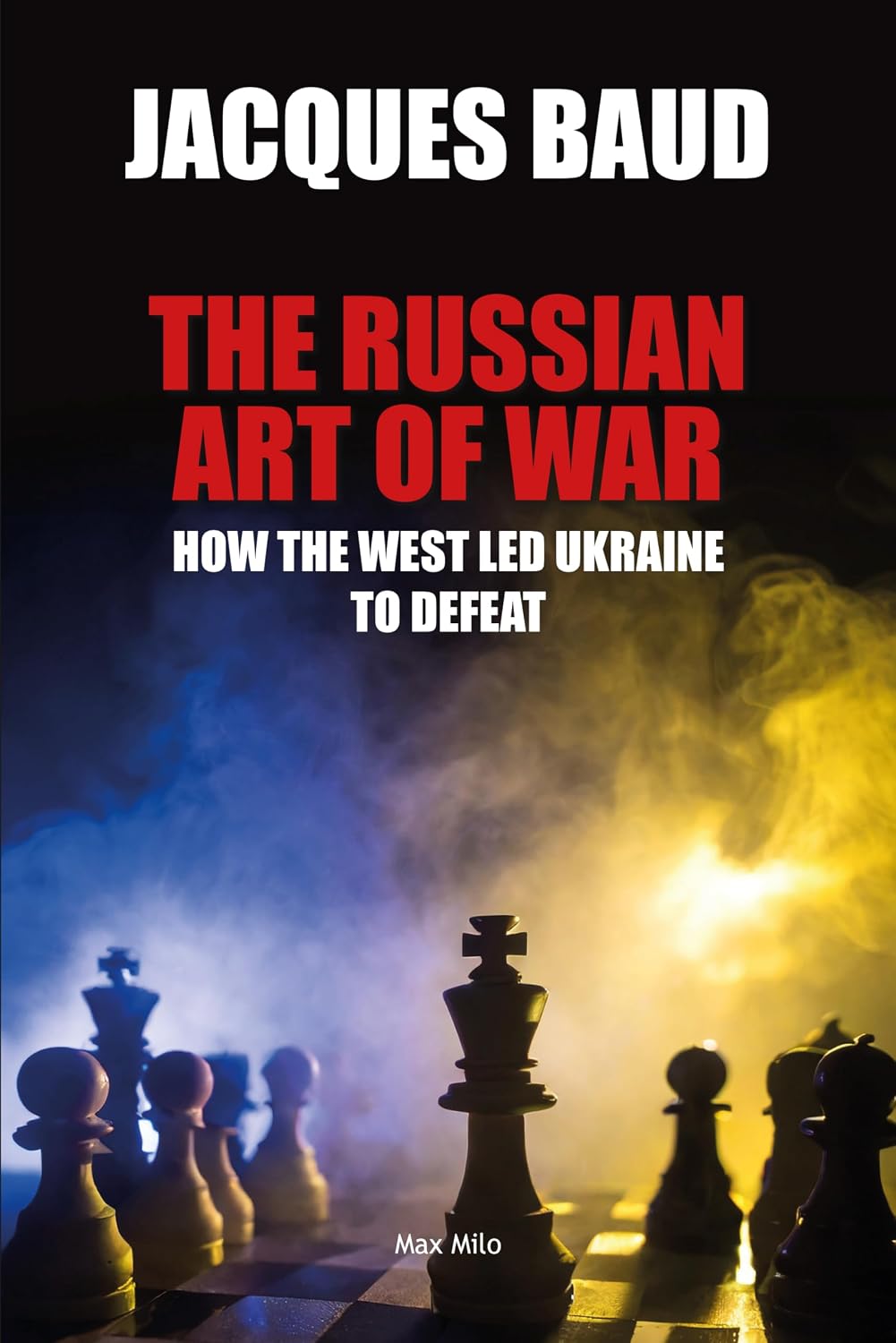
Colonel Jacques Baud, former Swiss strategic intelligence officer and author of The Russian Art of War: How the West led Ukraine to Defeat, has spent decades studying how different military cultures understand and wage war. His detailed, heavily referenced book — written early in the conflict — remains one of the clearest explanations of why Russia continues to hold the strategic advantage in Ukraine.
Baud’s central argument is simple but profound. During the Cold War, both NATO and the Warsaw Pact organised their forces around three interlocking levels of warfare: tactical, operational and strategic.
After 2001, Western armies largely abandoned the operational level as they shifted to counter-terrorism.
Fighting insurgents in Iraq and Afghanistan reduced war to a series of tactical engagements.
When the same mindset and equipment were transferred to Ukraine, the results were predictable.
Russia never made that shift. Its art of war remains built on the classic three levels.
Early in the Special Military Operation, deep operational thrusts toward Kyiv and Kherson were designed to create strategic pressure and force negotiations. When that phase ended, Russia adjusted — not by descending into pure tactics, but by systematically destroying Ukrainian forces while still linking tactical actions to operational and strategic goals.
Ukraine, trained and equipped largely by the West, has remained stuck at the tactical level.
This difference explains much of what we see on the battlefield. Russia’s objectives have been consistent: protect the population of the Donbas, prevent Ukrainian NATO membership, and secure a neutral buffer.
The Istanbul draft of March 2022 already reflected these goals, drawing on historical models of neutrality such as Austria in 1955 and Switzerland in 1815.
The West, by contrast, has never articulated clear, measurable political objectives beyond the vague slogans of “weakening Russia” and “supporting Ukraine.”
Without clear objectives, there can be no coherent strategy and no exit plan.
Industrial capacity reinforces the disparity. Russia’s state-influenced military-industrial complex can prioritise and scale production — whether of artillery shells, missiles or drones — with a flexibility that privatised Western industry lacks.
Lead times for systems such as Patriot missiles are measured in years.
Once Russia recognised the importance of drones, it moved from relative disadvantage to local superiority through industrial mobilisation.
Baud is careful to stress that understanding an adversary is not the same as endorsing them. Intelligence, he reminds us, comes from the Latin intelligere — to understand. Without that understanding, diplomacy becomes impossible and force becomes the only remaining instrument.
The tragedy is that a clearer grasp of Russian thinking in 2022 might have spared Ukraine much of the destruction that followed.
The conversation ends with a sober conclusion. Russia has a coherent political-military strategy underpinned by industry, energy and time.
The West and Ukraine are fighting a war by committee with no clear strategic destination.
In such conditions, the side that knows what it wants — and organises itself accordingly — almost always prevails.
You can watch the full conversation here:
No comments yet.
1 This Month



26 September – International Day for the Total Elimination of Nuclear Weapons


PLEASE OPPOSE HR 8255 AND S.3639 – bills would accelerate satellite deployment, with no environmental review or safeguards – https://ncstd5li.quorum.us/campaign/169331/
To see nuclear-related stories in greater depth and intensity – go to https://nuclearinformation.wordpress.com
-
Archives
- September 2026 (269)
- August 2026 (330)
- July 2026 (355)
- June 2026 (287)
- May 2026 (306)
- April 2026 (356)
- March 2026 (251)
- February 2026 (267)
- January 2026 (308)
- December 2025 (358)
- November 2025 (359)
- October 2025 (375)
-
Categories
- 1
- 1 NUCLEAR ISSUES
- business and costs
- climate change
- culture and arts
- ENERGY
- environment
- health
- history
- indigenous issues
- Legal
- marketing of nuclear
- media
- opposition to nuclear
- PERSONAL STORIES
- politics
- politics international
- Religion and ethics
- safety
- secrets,lies and civil liberties
- spinbuster
- technology
- Uranium
- wastes
- weapons and war
- Women
- 2 WORLD
- ACTION
- AFRICA
- Atrocities
- AUSTRALIA
- Christina's notes
- Christina's themes
- culture and arts
- Events
- Fuk 2022
- Fuk 2023
- Fukushima 2017
- Fukushima 2018
- fukushima 2019
- Fukushima 2020
- Fukushima 2021
- general
- global warming
- Humour (God we need it)
- Nuclear
- RARE EARTHS
- Reference
- resources – print
- Resources -audiovicual
- Weekly Newsletter
- World
- World Nuclear
- YouTube
-
RSS
Entries RSS
Comments RSS


Leave a comment