The danger of a nuclear Saudi Arabia
The risks of a nuclear Saudi Arabia April 7, 2014 by Nick Butler”……….The issue is set out in an excellent new paper for the Belfer Center at Harvard by Olli Heinonen and Simon Henderson. The Saudis’ explanation of their newfound interest in nuclear technology is that they want to use it to produce electric power and to converse oil supplies which can be exported. There is a core of truth in this of course – Saudi Arabia’s domestic oil consumption is rising inexorably and is now more than 3m barrels a day. But, of course, this is exactly the argument used by Iran for its own nuclear research.
Heinonen and Henderson believe the Saudis are preparing the way and giving themselves the option of being able to move beyond civil nuclear power to the point where they could within a matter of months produce some form of weapon. The country undoubtedly has the money to buy whatever is needed and they have close and dangerous allies within Pakistan, a country which is already a nuclear state. Scrutiny by the International Atomic Energy Agency is minimal (bizarrely the organisation spends more money monitoring Jordan) and the Saudis could go a long way down the path to nuclear capability without it becoming obvious until very late in the day.
The prospect of nuclear weapons in the hands of the fragile government of Saudi Arabia is bad enough. The country is fundamentally unstable – held together only by force and by the flow of oil money to an ever growing number of citizens who high expectations and low productivity. But equally concerning is that any further conflict in the region – even at a level below the nuclear threshold – could shake the global energy economy to its foundations……..” http://blogs.ft.com/nick-butler/2014/04/07/the-risks-of-a-nuclear-saudi-arabia/
USA bumping up its weapons exports to Asian region
 World Cuts Back Military Spending, But Not Asia, Inter Press Service Analysis by John Feffer WASHINGTON, Apr 14 2014 (IPS) – For the second year in a row, the world is spending a little less on the military. Asia, however, has failed to get the memo. The region is spending more at a time when many others are spending less.
Last year, Asia saw a 3.6 percent increase in military spending, according to figures just released by the Stockholm International Peace Research Institute. The region — which includes East Asia, South Asia, Central Asia and Oceania — posted topping off a 62 percent increase over the last decade. In 2012, for the first time Asia outpaced Europe in its military spending. That year, the world’s top five importers of armaments all came from Asia: India, China, Pakistan, South Korea, and (incredibly) the city-state of Singapore.
China is responsible for the lion’s share of the increases in East Asia, having increased its spending by 170 percent over the last decade. It has also announced a 12.2 percent increase for 2014.
But China is not the only driver of regional military spending. South Asia – specifically the confrontation between India and Pakistan – is responsible for a large chunk of the military spending in the region. Rival territorial claims over tiny islands – and the vast resources that lie beneath and around them — in both Northeast and Southeast Asia are pushing the claimants to boost their maritime capabilities.
Even Japan, which has traditionally kept its military spending to under one percent of GDP, is getting into the act. Tokyo has promised of a 2.8 percent increase in 2014-15.
The United States, a Pacific power whose military spending is not included in the Asia figures, has also played an important role in driving up the expenditures in the region. The Barack Obama administration’s “Pacific pivot” is designed to reboot the U.S. security presence in this strategically critical part of the world………
The modest reduction in Pentagon spending will not necessarily lead to a corresponding decline in exports. In fact, the opposite is likely to be true, as was the case during the last Pentagon slowdown in the 1990s. The Obama administration has pushed through a streamlining of the licensing process in order to facilitate an increase in military exports – in part to compensate U.S. arms manufacturers for a decline in orders from the Pentagon…..
Asia and Oceania represent the primary target for U.S. military exports, absorbing nearly half of all shipments. Of that number, East Asia represents approximately one-quarter (South Asia accounts for nearly half).
The biggest-ticket item is the F-35 fighter jet, which Washington has already sold to Japan, South Korea, and Australia. Long-range missile defence systems have been sold to Japan, South Korea, and Taiwan. Overall between 2009 and 2013, Australia and South Korea have been the top U.S. clients. With its projected increase in military spending, Japan will also likely rise much higher on the list.
The more advanced weaponry U.S. allies purchase, the more they are locked into future acquisitions. The United States emphasises “interoperability” among its allies. Not only are purchasers dependent on the United States for spare parts and upgrades, but they must consider the overall system of command and control (which is now C5I — Command, Control, Communications, Computers, Combat systems and Intelligence).
Although a French fighter jet or a Russian naval vessel might be a cheaper option in a competitive bid, the purchasing country must also consider how the item integrates with the rest of its hardware and software……
The continued increase in military spending by countries in East Asia and the massive influx of arms into the region are both symptoms and drivers of conflict. Until and unless the region restrains its appetite for military upgrades, the risk of clashes and even all-out war will remain high.
In such an increasingly volatile environment, regional security agreements – on North Korea’s nuclear programme, the several territorial disputes, or new technological threats like cyberwarfare – will be even more difficult to achieve.
Most importantly, because of these budget priorities, the region will have fewer resources and less political will to address other pressing threats, such as climate change, which cannot be defeated with fighter jets or the latest generation of battle ship. http://www.ipsnews.net/2014/04/world-cuts-back-military-spending-asia/
India will keep is ‘no first use’ nuclear weapons policy
 No-first-use nuclear policy to stay: Rajnath Kumar Uttam, Hindustan Times 13 Apil 14, The BJP will leave unchanged India’s stand not to be the first side to use nuclear weapons in a conflict, the party said Sunday, ending speculation about one of the defining principles of New Delhi’s foreign policy. The no-first-use policy for nuclear weapons was a well thought out stand of the NDA government led by Atal Behari Vajpayee. We don’t intend to reverse it,” BJP chief Rajnath Singh told HT.
Party leaders say the policy has not only boosted India’s standing in the international community but also gives a certain amount of leverage in foreign-policy matters.
David Cameron acknowledges damage to nuclear test veterans and their offspring
- David Cameron gives nuclear test veterans glimmer of hope after our 12-year campaign for justice
 http://www.mirror.co.uk/news/uk-news/david-cameron-gives-nuclear-test-3406479
- Apr 12, 2014 Prime Minister has promised to investigate setting up a £25 million health fund for descendants of those exposed to genetic suffering genetic defects
David Cameron has at last given hope to families of nuclear test veterans after a 12-year Sunday Mirror campaign for justice.
The Prime Minister has promised to investigate setting up a £25million health fund for descendants suffering genetic defects passed down by servicemen exposed to 1950s blasts.
He will also look at offering personal thanks to the veterans and recognising their sacrifice with a medal.
Campaigners say the breakthrough at a half-hour meeting is the closest they have been to formal recognition of the suffering caused by the South Pacific explosions.
It came days after the Sunday Mirror called for the PM to recognise the plight ofchildren like 15-month-old Ella Denson, who was born with a deformity linked to her great-grandad Eric Denson’s exposure to radiation on Christmas Island in 1958.
The meeting between Mr Cameron and Tory MP John Baron last Wednesday was the first time the veterans have had their case put forward to any prime minister.
Mr Baron, patron of the British Nuclear Test Veterans’ Association, told the PM descendants had 10 times the normal rate of birth defects, their wives had elevated rates of miscarriage, and no other veterans’ group had suffered harm which spread down the generations.
A New Zealand study found veterans’ genes had three times the damage of Chernobyl survivors. The tests have never been repeated here.
Scientists say effects could last for 20 generations.
As Mr Cameron listened, Ella, of Morden, South London, was recovering from her latest hospital admission to deal with her severe defect. She was born with two tubes to a kidney instead of one and needs daily antibiotics to stop infection before having surgery at three.
At the weekend she was rushed to hospital for the third time in her short life. Her brother Jamie and mum Kimberley have teeth deformities.
Ella’s great-gran Shirley Denson, 79, had four daughters with bomb veteran husband Eric and has seen more than a third of his descendants suffer.
She said: “I pray the Prime Minister does the right thing, for the sake of my Ella and all the thousands like her.”
Eric was one of 22,000 men ordered to witness the detonation of nuclear bombs between 1952 and 1967.
He later suffered crippling headaches and killed himself in 1976. Fewer than 3,000 veterans survive.
France, the US, Australia, New Zealand, Russia, China and even the Isle of Man recognise and compensate test veterans. The MoD has always insisted no harm befell the men.
Mr Baron said: “The meeting with Mr Cameron was constructive. He is going to get back to me.”
Israel’s 300 nuclear warhead arsenal
 Israel possesses at least 300 nuclear warheads: Carter, Tehran Times,13 April 14, Former U.S. President Jimmy Carter says that Israel has at least 300 nuclear warheads which is far more dangerous than estimates that are being hypothetically made about Iran’s potential access to nuclear weapons.
How many people would die instantly if an H-bomb hit a city?
1-megaton H-bomb would kill 370,000 instantly: Japanese research http://www.globalpost.com/dispatch/news/kyodo-news-international/140412/1-megaton-h-bomb-would-kill-370000-instantly-japanese- An estimated 370,000 people would die instantly if a one-megaton hydrogen bomb were dropped on a city with one million residents, according to a report compiled by a Japanese research group.
The report was distributed Saturday at a meeting in Hiroshima of foreign ministers from 12 non-nuclear weapons states belonging to the Non-Proliferation and Disarmament Initiative.
The NPDI consists of Australia, Canada, Chile, Germany, Japan, Mexico, the Netherlands, Nigeria, the Philippines, Poland, Turkey and the United Arab Emirates.
A one-megaton hydrogen bomb is about 50 times as powerful as the atomic bomb dropped on Nagasaki on Aug. 9, 1945.
Some 66,000 people would be killed instantly in a city with one million residents if hit by a 16-kiloton atomic bomb, the same scale as the bomb dropped on Hiroshima on Aug. 6, 1945, the report said.
The group of researchers, including Masao Tomonaga, president of the Japanese Red Cross Nagasaki Genbaku Hospital, compiled the report aimed at looking into the inhuman nature of nuclear weapons, at the request of the Japanese Foreign Ministry.
As the blast from a one-megaton hydrogen bomb radiates for 18 kilometers, another 460,000 people would be injured in addition to the 370,000 killed, and 36,000 people within 3 kilometers of the center of the explosion would be affected by radiation, the report said.
“We found such a bomb would inflict heavy damage on even a modern-day city,” Tomonaga said. “The Foreign Ministry will be using our report as a scientific basis to show the inhuman nature” of nuclear weapons.
Dwindling group of Hiroshima survivors bear witness to the nuclear horror
Hiroshima survivors offer peace and hope for nuclear disarmament April 13, 2014 SMH, Daniel Flitton The two young brothers looked into the bright blue sky and waved happily at the shiny plane flying far above.
Their sister, Emiko Okada, eight years old at the time, remembers an intense flash of light and her mother suddenly rushing into the yard to the children, bleeding from where shards of glass had lodged in her head.
Next came the fire – and people running, hair standing on end, white bones exposed, skin and flesh burning. People were vomiting, not just blood but black ooze from their nose and mouth.
Mito Kosei, in his mother’s womb at the time of the atomic attack, guides tourists around the memorial peace park in Hiroshima.
This was the day the A-bomb fell on Hiroshima.
Ms Okada is one of a dwindling group of survivors from that morning in 1945, determined never to let the terrible human cost of nuclear war be forgotten, even after they are gone.
”Frightening is not the world I can use, it was something much worse,” she said via a translator, still upset by the memory.
Emiko Okada who as an eight-year-old survived the atomic attack on Hiroshima.
Stories from the survivors, known in Japan as hibakusha, were told to foreign ministers of a 12-nation group, including Australia, gathered in Hiroshima at the weekend to kickstart global talks on nuclear disarmament.
Survivors’ stories are being preserved in an online archive by the Tokyo Metropolitan University………http://www.smh.com.au/world/hiroshima-survivors-offer-peace-and-hope-for-nuclear-disarmament-20140412-36k3t.html
The historic peace ship, the Golden Rule, will sail again

 World War II U.S. naval commander. Appalled by the atomic bombing of Hiroshima, he became a Quaker and, in 1955, working with the American Friends Service Committee, sought to deliver a petition against nuclear testing to the White House. Rebuffed by government officials, Bigelow and other pacifists organized a small group, Non-Violent Action Against Nuclear Weapons, to employ nonviolent resistance in the struggle against the Bomb. After the U.S. government announced plans to set off nuclear bomb blasts near Eniwetok in the Marshall Islands―an island chain governed by the United States as a “trust territory” for the native people―Bigelow and other pacifists decided to sail a 30-foot protest vessel, the Golden Rule, into the nuclear testing zone. Explaining their decision, Bigelow declared: “All nuclear explosions are monstrous, evil, unworthy of human beings.”
If India’s govt changes its “no first use” nuclear weapons policy, – it’s a mockery of disarmament policy
 Former Foreign Minister Yashwant Sinha of the opposition Bharatiya Janata Party (BJP), is widely expected to win the elections advocates changing India’s policy of “no first use” of nuclear weapons
Can a nuclear-weapons state champion disarmament? Japan Times BY RAMESH THAKUR 9 April 14 Forty-four years after the nuclear Non-Proliferation Treaty (NPT) came into force, the world still finds itself perilously close to the edge of the nuclear cliff. The cliff is perhaps not quite as steep as it was in the 1980s, when there were more than 70,000 nuclear weapons compared to today’s 17,000, but going over it would be fatal for planet Earth.
Authoritative road maps exist to walk us back to the relative safety of a denuclearized world, but a perverse mixture of hubris and arrogance on the part of the nine nuclear-armed states (China, France, India, Israel, North Korea, Pakistan, Russia, the United Kingdom and the United States) exposes us to the risk of sleepwalking into a nuclear disaster.
For nuclear peace to hold, deterrence and fail-safe mechanisms must work every single time. For nuclear Armageddon to break out, deterrence or fail-safe mechanisms need to break down only once. This is not a comforting equation.
Deterrence stability depends on rational decision-makers being always in office on all sides: a dubious and not very reassuring precondition. It depends equally critically on there being no rogue launch, human error or system malfunction: an impossibly high bar.
According to one U.S. study reported by Eric Schlosser last year, more than 1,200 nuclear weapons were involved in significant incidents from 1950-68 because of security breaches, lost weapons, failed safety mechanism or accidents resulting from weapons being dropped or crushed in lifts………
an increasing number of voices are demanding that the sole function of nuclear weapons, as long as they exist, should be to deter a nuclear attack, all the nuclear armed states should join together to establish a global no-first-use norm.
It is simplistic to dismiss “no first use” as merely declaratory, easily ignored in wartime. A universal no-first-use policy by all nine nuclear-armed states would have considerable practical import with flow-on requirements for nuclear force posture and deployment — for example, de-alerting (taking warheads off hair-trigger alert), de-mating (separating warheads from delivery systems) and de-targeting. This strengthened norm of nonuse would then lay the groundwork for further gradual reductions in the number of nuclear warheads held by the various nuclear armed states and their eventual elimination through a nuclear weapons convention.
Ramesh Thakur is director of the Center for Nuclear Non-Proliferation and Disarmament, Australian National University, and coeditor of the recently published four-volume reference set “Nuclear Politics” (2014).
Obama’s efforts to get rid of some of USA’s costly nuclear missiles
 US will cut deployed nuclear missile force by 50 News Sentinel, By Robert Burns of The Associated Press Tuesday, April 8, 2014 WASHINGTON — The U.S. will keep its current force of 450 land-based nuclear missiles but remove 50 from their launch silos as part of a plan to bring the U.S. into compliance with a 2011 U.S.-Russia arms control treaty, the Pentagon said Tuesday.
The resulting launch-ready total of 400 Minuteman 3 intercontinental ballistic missiles would be the lowest deployed ICBM total since the early 1960s.
The decisions come after a strong push by members of Congress from the states that host missile bases — North Dakota, Wyoming and Montana — to not eliminate any of the silos from which the missiles would be launched. Fifty silos will be kept in “warm” status — empty of missiles but capable of returning to active use……..
Some question the value of retaining ICBMs, although President Barack Obama has committed to keeping them as part of the nuclear “triad” of forces that can be launched from land, sea and air. In addition to the 450 ICBM silos currently in use, the Air Force has four at Vandenberg Air Force Base, Calif., used only for test launches. They will remain.
The Pentagon said Tuesday it probably will cost about $300 million to implement all the announced changes required to comply with New START by 2018. About two-thirds of the cost will be for altering some of the missile tubes aboard Navy submarines so they can no longer launch ballistic missiles.
The nuclear sub fleet is far more costly to operate than either the land-based missiles or the bombers, but its strategic advantage is the relative invulnerability of the submarines while at sea, and thus their ability to survive a first strike.
The New START treaty also requires both Russia and the U.S. to reduce to 1,550 the number of nuclear warheads associated with the deployed missiles and bombers. The Pentagon has not spelled out how it will do that, but analysts have said they believe the breakdown will be: 1,090 warheads aboard subs, 400 on land-based missiles and the 60 bombers counting as one warhead each.
Obama announced last summer that the U.S. would be ready to reduce its total warheads by another one-third, to about 1,100, in a new round of negotiations with Russia. But there is scant chance of that happening anytime soon, especially with the crisis over Russian intervention in Ukraine. http://www.news-sentinel.com/apps/pbcs.dll/article?AID=/20140408/NEWS/140409697
Obama’s new nuclear weapons strategy
Obama’s new nuclear weaponshttp://theweek.com/article/index/259589/obamas-new-nuclear-weapons The U.S government today released a precise accounting of its strategic nuclear forces, something it is required to do by treaty, and it’s worth a careful read.
The world now knows that, by February of 2018, the U.S. will have approximately 400 intercontinental ballistic missiles, down from 450; 240 submarine-launched ballistic missiles, down about 50; and 60 nuclear-capable heavy bomber fighters (B-2As and B-52Hs), converting 30 B-52s to a non-nuclear role.
Since most of the nuclear payloads contain multiple warheads, the U.S. must also disclose the number of strategic nuclear weapons it will maintain on an alert status. As of 2018, that will be 1,550.
The good news: the number of viable nuclear warheads in the world will go down. President Obama has prioritized nuclear arms reduction, and the Senate in 2010 ratified a treaty with Russia that reduces to 700 the number of nuclear delivery vehicles. (The U.S. can keep an extra 100 platforms in storage.)
The timing is interesting, of course, but the decisions to reduce certain types of weapons is even more interesting. Of the three “guns,” the silo-based ICBMs are the oldest, the least efficient, and operated by missileers who have had well-publicized troubles with cheating and morale. But the cuts to that “leg” of the triad are much smaller, proportionally, than the cuts sustained by the Air Force’s nuclear fighter wings and the Navy’s ballistic missile submarines.
It may well be that the Obama administration decided to boost the confidence of the missileers, but the plan to keep most of the ICBMs might serve another purpose. It will require future administrations to cut the ICBM force more heavily, while giving nuclear planners more time to adapt the new set of platforms to existing targets. The composition of the nuclear force is unclassified; virtually everything else about nuclear war remains a state secret.
For example: cutting the number of strategic warheads will force a big change to the Joint Strategic Capabilities Supplement annex to the current nuclear war plan, OPLAN 8010-12 Strategic Deterrent and Force Employment, as well as to the exercises used to test forces on the plan and the intelligence that guides it. Also, the U.S. maintains a stockpile of battlefield nuclear weapons, which have “yields,” or explosive power equivalent to as little as 300 tons of TNT. Most are kept in storage in bunkers across the world. Their locations, types, and numbers are classified, although the U.S. admits to a force of at least 500 “battlefield” weapons.
The U.S. also keeps a big reserve of nuclear weapons material and equipment — the “nuclear strategic reserve,” which, while disassembled, do not count towards any of the treaty’s red lines. As of 2010, the reserve stock was equivalent to 2,800 weapons. These are intended (in nuclear doctrine) to hedge against strategic surprise, but the number is probably significantly higher than it needs to be, particularly if the classified target countries (China, North Korea, Russia, Iran, Syria) are no longer formally chartered enemies.
Though President Obama has changed the policy undergirding the employment of nuclear weapons, the exact language of the war plan, as well as the thresholds that might trigger the consideration for the use of nuclear weapons, remain classified, even though there is considerable ambiguity built into the precision. It is not known, for example, how flexible the U.S. can be in response to a conventional attack from a non-nuclear country, like Syria. After 9/11, a “WMD hedge” was built into the war plan, too. The U.S. does not rule out using nuclear weapons to respond to a terrorist attack from a non-state actor.
India may abandon its ‘no first use’ policy on nuclear weapons
 India’s BJP puts ‘no first use’ nuclear policy in doubt Yahoo 7 News, April 8, 2014, By Sanjeev Miglani and John Chalmers NEW DELHI (Reuters) –India’s opposition Bharatiya Janata Party (BJP), widely tipped to form the next government, pledged on Monday to revise the country’s nuclear doctrine, whose central principle is that New Delhi would not be first to use atomic weapons in a conflict.
Unveiling its election manifesto, the party gave no details,
but sources involved in drafting the document said the “no-first-use” policy introduced after India conducted a series of nuclear tests in 1998 would be reconsidered……..http://au.news.yahoo.com/world/a/22459963/indias-bjp-puts-no-first-use-nuclear-policy-in-doubt/
Argentina says that Falkland Islands are a NATO nuclear base
Falklands a NATO nuclear base: Argentina SMH, April 3, 2014 Buenos Aires: Argentine President Cristina Kirchner has claimed that the Falkland Islands serve as a nuclear base for the NATO alliance in the South Atlantic.
Britain’s secret deals with USA on nuclear weaponry
 Secret talks on future of Britain’s nuclear arsenal, Guardian UK, Richard Norton Taylor and Ewen Macaskill, 3 April 14,
• Nature, cost, and timing, of new warheads will also depend on US.
While the Nato allies are collectively preoccupied by Vladimir Putin’s intentions in eastern Europe, Britain and the US are secretly renegotiating a pact which is a bedrock of their very special bilateral relationship.Their Mutual Defence Agreement (MDA), first signed in 1958, is due for renewal this year. Britain relies on it to secure, maintain, and upgrade, its nuclear warheads.
“The UK regards safety, security and reliability as central to the maintenance of its nuclear warheads”, the Foreign Office stated in an “explanatory memorandum” on an amendment to the MDA ten years ago. It added: “The programme benefits from long-standing collaboration with US scientists, including the sharing of data and test results and the use of US test facilities”.
The extent to which Britain’s nuclear arsenal is dependent on American help, through the MDA, is clearly set out in The Bang Behind The Buck, a paper just published by the Royal United Services Institute.
It warns that the future shape of the US nuclear arsenal is uncertain and it is unlikely Britain will be able to decide the future of its own arsenal until the US has agreed on the future of its own arsenal, whatever condition the UK’s warheads are in………
The government should not get away with renewing in secret an agreeement that has serious implications for the non-proliferation treaty (NPT), the nature of Britain’s “independent deterrent”, and its relationship with the US.
As one commentator has remarked: “On past performance, most MPs will need some considerable external encouragement before accepting that the renewal of the MDA is a subject that ought to be debated openly and democratically, both within and without Westminster.
“At the moment, it rather looks as if the Conservative government of prime minister Cameron is intent on following in the footsteps of the Labour government of Tony Blair by ensuring that the US-UK Mutual Defence Agreement is in the bag for a further ten years before the parliamentary summer recess, and quite possibly before the Easter recess.” http://www.theguardian.com/world/defence-and-security-blog/2014/apr/02/nuclear-weapons-warheads-trident
Lax record keeping and security in USA nuclear arsenal
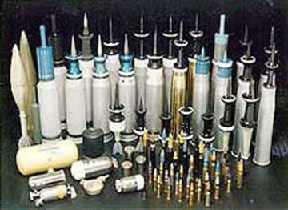 The Guardians Of the U.S. Nuclear Arsenal Don’t Keep Very Good Records http://io9.com/the-guardians-of-the-u-s-nuclear-arsenal-dont-keep-ve-1557024074 3 April 14, The scathing 19-page report, available on the website of Energy Department’s Office of Inspector General, warns that the range of problems “may ultimately increase costs and could negatively impact the reliability and safety” of the U.S. nuclear arsenal.
As the Global Security Newswire notes: In one case, officials incorrectly approved two components to be added to a variant of the W-76 nuclear warhead. The error, they said, cost between $20 million and $25 million, and held up preparation of new parts by an extra 12 months.
The United States never “treated the maintenance of original nuclear weapons [records] as a priority” during or after the Cold War…The auditors argued, though, that “recapturing the department’s original nuclear weapons data in a configurable format can potentially save tens of millions of dollars.”
Even worse—yes, there’s a “worse”—the investigation found that lax security at the Los Alamos National Laboratory “had given system access to approximately 30 nuclear weapons designers regardless of whether they were assigned to a nuclear weapon project.” Translation: Saboteurs could potentially tamper with existing weapons designs.
1 This Month
23-25 October – on Zoom – World BEYOND War’s annual global conferenc


Shut down the radiation-damaged Heysham nuclear reactors now
To see nuclear-related stories in greater depth and intensity – go to https://nuclearinformation.wordpress.com

Say No to NASA’s Reckless Nuclear Reactor on the Moon
Say No to NASA’s Reckless Nuclear Reactor on the Moon

-
Archives
- October 2026 (199)
- September 2026 (339)
- August 2026 (330)
- July 2026 (355)
- June 2026 (287)
- May 2026 (306)
- April 2026 (356)
- March 2026 (251)
- February 2026 (267)
- January 2026 (308)
- December 2025 (358)
- November 2025 (359)
-
Categories
- 1
- 1 NUCLEAR ISSUES
- business and costs
- climate change
- culture and arts
- ENERGY
- environment
- health
- history
- indigenous issues
- Legal
- marketing of nuclear
- media
- opposition to nuclear
- PERSONAL STORIES
- politics
- politics international
- Religion and ethics
- safety
- secrets,lies and civil liberties
- spinbuster
- technology
- Uranium
- wastes
- weapons and war
- Women
- 2 WORLD
- ACTION
- AFRICA
- Atrocities
- AUSTRALIA
- Christina's notes
- Christina's themes
- culture and arts
- Events
- Fuk 2022
- Fuk 2023
- Fukushima 2017
- Fukushima 2018
- fukushima 2019
- Fukushima 2020
- Fukushima 2021
- general
- global warming
- Humour (God we need it)
- Nuclear
- RARE EARTHS
- Reference
- resources – print
- Resources -audiovicual
- Weekly Newsletter
- World
- World Nuclear
- YouTube
-
RSS
Entries RSS
Comments RSS

