THe significance of the Marshall Islands lawsuit against the 5 nuclear weapons nations
the importance of the lawsuit is based on its ability to highlight the emergence of a new politics of nuclear disarmament, a politics that challenges the very legitimacy and legality of nuclear weapons possession.
 The import of the Marshall Islands nuclear lawsuit Bulletin of the Atomic Scientists, Avner CohenLily Vaccaro 8 May 14, The tiny Republic of the Marshall Islands recently filed an extraordinary lawsuit at the International Court of Justice in The Hague, suing all nine nuclear weapons possessors for failing to eliminate their nuclear arsenals. The legal basis of the case is derived from Article VI of the Nuclear Non-Proliferation Treaty (NPT), which obligates the five nuclear weapons states under the treaty (the United States, the Russian Federation, the United Kingdom, France, and the People’s Republic of China) “to pursue negotiations in good faith on effective measures relating to cessation of the nuclear arms race at an early date and to nuclear disarmament.”
The lawsuit also charges the four nuclear weapons states outside of the NPT—including one, Israel, which has never even acknowledged possessing nuclear weapons—with violating international customary law. But is this lawsuit more than a publicity gimmick? How seriously should it be taken? What does it tells us about current international nonproliferation regime?
It is easy, of course, to dismiss the lawsuit as an exercise in futility, or at best an act of moral inspiration that will have almost no political impact on the real world. Continue reading
2014 may begin the slide into WW3- time to review the MAD theory
 Nuclear game theory: time for a review, News 24 2014-05-06 Clem Sunter
“……….The MAD logic
The reason I am giving these statistics is that classic game theory examines every possible strategy a player must consider when taking into account all the possible responses of his or her adversary. It obviously applies to nuclear conflicts as well. Right now you have the two nations most heavily armed with nuclear weapons locking horns over Ukraine – Russia and America. They did so in 1962 over the Cuban missile crisis and narrowly missed a full-scale nuclear exchange as a result of mutually misunderstanding each other’s position. Once again, they are eyeball to eyeball like two chess players poring over the next move.
John von Neumann, a US Hungarian mathematician, was the founder of game theory in 1928. He later coined the acronym MAD which stands for “mutually assured destruction” in the nuclear game. The argument was that neither of two players would resort to nuclear conflict if a first strike by either one triggered a response by the other which caused an overwhelming loss to the initial aggressor. Thus, a second strike capability on both sides guaranteed peace between them according to the principle of minimising your maximum potential loss. The latter is a core element of optimising your strategy under game theory (known as the minimax theorem).
The current state of the nuclear game
In 1985 there were estimated to be 68 000 active nuclear warheads around the world. As a consequence of disarmament treaties since then, the figure is now put at 4 100 with the bulk being fairly equally distributed between Russia and America. The remainder are in the hands of the UK, France, China, India, Pakistan, North Korea and Israel. To keep the equilibrium demanded by MAD, treaties between the two principal nuclear players have also limited the numbers of strategic launchers, heavy bombers and anti-ballistic missile systems owned by each. However, a destabilising factor is that while 17 300 warheads are reckoned to have been decommissioned, they have yet to be destroyed. Equally, a single inter-continental ballistic missile can deliver as many as 10 separate warheads at a time. It can also be accompanied by 40 decoys meaning that 50 rockets are required to neutralise an incoming missile. Secrecy means outsiders have no idea of the latest technical advances in attack or defence systems………
1. Is MAD still a valid concept which makes a nuclear conflict highly improbable?
2. What would be the estimated damage and loss of life today caused by a nuclear conflict between the US and Europe on the one hand and Russia on the other? What harm would be done to the environment in the short and long term?
3. What would be the impact on the rest of the world and would the whole world recover from such a global war as quickly as it did after 1945?
4. What are the probabilities of the current game in Ukraine remaining localised or deteriorating into a direct military conflict between the major players with potential nuclear consequences?
5. Does the chance of terrorist groups acquiring nuclear weapons nullify MAD since they belong to no fixed abode which can be destroyed if they attack first?
6. How does emotion feature in the mathematical models of game theory since patriotism as much as logic can be responsible for the onset of nuclear war?
Conclusion
I have not come across a single word in the printed/social media, on the internet, on television or radio or anywhere in the public domain addressing this issue. As a scenario planner, you always look at the end game to decide what your next move should be. That is why Herman Kahn wrote his famous book On Thermonuclear War in 1960, followed by Thinking about the Unthinkable in 1962.
Neither Putin nor Obama talk about a quantum leap in confrontation; but they wouldn’t, would they? Every step will be calibrated so that it does not cause too much anger between the Russian bear and the American buffalo. In the end, a compromise may be reached which is classified as neither appeasement nor victory, but which for the time being is a solution.
Alternatively, 2014 may go down in the history books as the beginning of an unanticipated slide into a third world war. Hence, it is now time to review nuclear game theory before the rivalry between Russia and America becomes unstoppable in its progress towards a nuclear showdown. http://www.news24.com/Columnists/ClemSunter/Nuclear-game-theory-Time-for-a-review-20140506
USA signs up to Central Asian Nuclear-Weapon-Free Zone Treaty
 United States Signs Protocol to Central Asian Nuclear-Weapon-Free Zone Treaty http://www.state.gov/r/pa/prs/ps/2014/05/225681.htm
Office of the Spokesperson
The United States is not eligible to be a party to the CANWFZ Treaty itself, but as an NPT nuclear weapons state is eligible to join the Treaty’s Protocol. The Protocol provides legally-binding assurances not to use or threaten to use nuclear weapons against CANWFZ Treaty parties. The United States understands the importance of such negative security assurances to states that have foresworn nuclear weapons and abide by their nuclear non-proliferation obligations.
The Administration is satisfied that the CANWFZ Treaty is consistent with U.S. and international criteria for such zones. The United States believes that such zones, when fully and rigorously implemented, contribute to our nonproliferation goals and to international peace and security. The United States has concluded that the CANWFZ Treaty and its Protocol will not disturb existing U.S. security arrangements or military operations, installations, or activities. The CANWFZ Treaty and its Protocol will also promote regional cooperation, security, and stability and provide a vehicle for the extension of legally-binding negative security assurances, consistent with the strengthened negative security assurance announced in the 2010 U.S. Nuclear Posture Review.
The United States previously signed similar protocols to the Treaties of Pelindaba and Rarotonga concerning nuclear-weapon-free zones in Africa and the South Pacific, respectively, and has ratified the protocols to the Treaty of Tlatelolco, which established a nuclear-weapon-free zone for Latin America and the Caribbean. With respect to the nuclear-weapon-free zone treaty in force in Southeast Asia, the United States looks forward to continuing consultations with zone parties to explore possible U.S. support for signature and ratification of the applicable protocol.
Ukraine crisis highlights the very real peril of nuclear war
 Another View: Ukraine crisis puts focus on danger of nuclear war Des Moines Register By Ira Helfand May 3, 2014 The ongoing crisis in Ukraine has made it clear that the danger of nuclear war is still with us and may be greater than at any time since the height of the Cold War. What does that mean for United States nuclear policy?
There are today more than 15,000 nuclear warheads in the world. The vast majority, more than 95 percent, are in the arsenals of the United States and Russia. Some 3,000 of these warheads are on “hair-trigger” alert. They are mounted on missiles that can be fired in 15 minutes and destroy their targets around the world less than 30 minutes later.
During the Cold War, there was a widespread understanding of what nuclear weapons could do.
That is not true today.
Those who lived through the Cold War have put this painful information out of mind, and a generation has come of age that never learned about the terrible effects of nuclear war. This must change if we are to make rational decisions about nuclear policy. Continue reading
World’s Five nuclear weapons-free zones
 Nuclear weapon free zones and banning nuclear weapons http://www.article36.org/nuclear-weapons/nuclear-weapon-free-zones-and-banning-nuclear-weapons/ May 1, 2014
This publication, issued by Article 36 at the 2014 Preparatory Committee of the Nuclear Non-Proliferation Treaty, sets out a summary of the prohibitions and other obligations contained in the five Nuclear Weapon Free Zone treaties. It discusses the relationship between these treaties and a proposed new international treaty to prohibit nuclear weapons.
There are five Nuclear Weapon Free Zone treaties (NWFZs) covering the regions of Latin America and the Caribbean (the 1967 Treaty of Tlatelolco), the South Pacific (the 1985 Treaty of Rarotonga), South East Asia (the 1995 Treaty of Bangkok), Africa (the 1996 Treaty of Pelindaba) and Central Asia (the 2006 Treaty of Semipalatinsk). These zones combined comprise 115 states, accounting for 60% of all UN Member States, and cover the entire southern hemisphere. The NWFZ treaties are all structured and drafted slightly differently but they share many key characteristics. They all prohibit nuclear weapons in their respective regions. Globally, they provide important contributions towards the rejection and stigmatization of nuclear weapons and a strong basis for developing an international prohibition on nuclear weapons. Through their preambles these treaties envision a global prohibition on nuclear weapons, alongside all weapons of mass destruction, that provides a framework for their elimination.
This paper argues that NWFZ agreements are important building blocks that should be expanded upon through an international ban treaty. Just as groups of states within these regions worked together to develop regional agreements to prohibit nuclear weapons, so a group of likeminded states can work at the global level to achieve an international ban treaty.
Central Asia to be a nuclear weapons free zone
Five Powers Agree to Respect Central Asian Nuclear-Free Zone National Journal, 30 April 14, By Rachel Oswald The world’s five nuclear powers announced on Tuesday they had agreed to never use their atomic arms against five Central Asian countries.
“They commit not to attack them with nuclear weapons or to threaten them with nuclear weapons and also respect the other [treaty] provisions” banning the deployment or testing of atomic arms in Central Asia, said nonproliferation expert Gaukhar Mukhatzhanova, who is attending the Preparatory Committee meeting in New York City where the announcement was made by the five powers.
The Central Asia Nuclear Weapon Free Zone commits its signatories — Kazakhstan, Kyrgyzstan, Tajikistan, Turkmenistan and Uzbekistan — to refrain from developing, acquiring or possessing nuclear weapons. The treaty entered into force in 2009 without the world’s formally recognized nuclear-armed countries — China, France, Russia, the United Kingdom and the United States — agreeing to abide by its limits.
It took five years of “intensive consultations” for the five powers to agree to sign a protocol to the Central Asian treaty, according to Mukhatzhanova, a senior research associate at the James Martin Center for Nonproliferation Studies.
“It’s certainly one of the bigger news [items] so far” to come out of the Preparatory Committee meeting, Mukhatzhanova said in a Tuesday phone interview. The so-called “PrepCom” gathering is being held in advance of next year’s Review Conference for the Nuclear Nonproliferation Treaty. Peter Jones, director of defense and international security at the British Foreign and Commonwealth Office, in astatement to the meeting said the United Kingdom was “delighted” to demonstrate its “commitment to legally binding negative security assurances by signing a protocol” to the treaty.
Moscow in its statement said it wished to sign the protocol “as soon as possible.” Washington similarly expressed its anticipation for inking the text.
Mukhatzhanova said she believed any signing ceremony at the meeting would take place in private, with the five powers submitting the treaty to their respective legislative bodies for ratification at a later date.
An agreement by the five powers to sign the pact had been held up for years, due to problems that London, France and particularly Washington had with some of the accord’s language, she said. The specific point of contention dealt with Article 12, which states that the agreement “does not affect the rights and obligations of the parties under other [pre-existing] international treaties.”…….http://www.nationaljournal.com/global-security-newswire/five-powers-agree-to-respect-central-asian-nuclear-free-zone-20140430
Saudi Arabia shows off nuclear-capable missiles
The DF-3 has a range of 2,650 km and carries a payload of 2,150 kg. It is equipped with a single nuclear warhead with a 1-3 MT yield.
Watched by a wide array of Saudi defense and military dignitaries, headed by Crown Prince and Deputy Prime Minister Salman bin Abdulaziz, the parade marked the end of the large-scale “Abdullah’s Sword” military war game.
Conspicuous on the saluting stand was the Pakistani Chief of Staff Gen. Raheel Sharif alongside eminent visitors, including King Hamad of Bahrain and Sheikh Muhammad bin Zayed, the crown prince of Abu Dhabi………
By showing off their ageing Chinese missiles, the Saudis intimated that they had acquired the more advanced generation of this weapon, which they are keeping under wraps. DEBKAfile’s intelligence sources report that in recent visits to Beijing, high-ranking Saudi officials negotiated the purchase of Dong-Feng 21 (DF-21), whose range is shorter, 1,700 km, but more precise and effective in view of its terminal radar guidance system. The West has no information about when the new Chinese missiles were delivered to Saudi Arabia.
5. The presence of the top Pakistani soldier at the parade of military and nuclear hardware was meant as corroboration of Islamabad’s active role as the source of the Saudi nuclear arsenal.
6. The Saudis no longer rely on the American nuclear umbrella. They are developing their own nuclear strike force with the help of China and Pakistan. http://www.debka.com/article/23878/Saudis-parade-nuclear-missiles-for-the-first-time-in-defiance-of-US-Iranian-nuclear-accord
Near misses – the chance of a nuclear weapons accident is rising
 Risk of nuclear accidents is rising, says report on near-misses
Chatham House report lists 13 instances since 1962 when nuclear weapons were nearly launched Julian Borger, diplomatic editor theguardian.com, Wednesday 30 April 2014 A report recounting a litany of near-misses in which nuclear weaponscame close to being launched by mistake concludes that the risk of potentially catastrophic accidents is higher than previously thought and appears to be rising.
Too Close for Comfort: Cases of Near Nuclear Use and Options for Policy, published by Chatham House, says that “individual decision-making, often in disobedience of protocol and political guidance, has on several occasions saved the day”, preventing the launch of nuclear warheads.
The report lists 13 instances since 1962 when nuclear weapons were nearly used. In several cases the large-scale launch of nuclear weapons was nearly triggered by technical malfunctions or breakdowns in communication causing false alarms, in both the US and Russia. Disaster was averted only by cool-headed individuals gambling that the alert was caused by a glitch and not an actual attack.
The Chatham House authors say the risks appear to be rising. Nuclear weapons are spreading – most recently to North Korea – and disarmament is stalling. Russia and the US still have an estimated 1,800 warheads on high alert, ready to launch between five and 15 minutes after receiving the launch order – a fact that becomes all the more significant with rising tensions over Ukraine.
“The question today is: are these risks worth it?” said Patricia Lewis, Chatham House research director for international security and one of the report’s authors. “You can imagine a situation in which tensions rise and signals come in and people misinterpret what is going on. Will people always have sound enough minds to take the time to make a reasoned decision?”
The mental state of some of the leaders who had their fingers on the nuclear button has sometimes been a source of worry. Richard Nixon and Boris Yeltsin both raised concerns among their top advisers with their heavy drinking. In May 1981 the newly elected French president, François Mitterand, left the French nuclear launch codes at home in the pocket of his suit……..ww.theguardian.com/world/2014/apr/29/nuclear-accident-near-misses-report
Antiquated computer systems at USA’s nuclear missile facilities
America’s feared nuclear missile facilities are still controlled by computers from the 1960s and floppy disks
- 60 Minutes received a tour of the F.E. Warren Air Force Base in Cheyenne, Wyoming, the storage facility of 450 nuclear warheads and a Minuteman III missile
- The facility was built in the 1960s to withstand a nuclear attack and alot of its equipment dates back to that time
- The floppy disks that contain the missile launch codes are safe and effective because it allows center to stay disconnected from the internet and prevent cyber terrorism, the military claims
- Tour comes in the wake of a major cheating scandal that has implicated 91 Air Force nuclear missile officers, nine of which were fired
Mail Online, By JOEL CHRISTIE, 27 April 2014 The isolated U.S. military silo that contains one of deadliest nuclear arsenals in the world – some 450 warheads that are each 20 times more powerful than the bomb dropped on Hiroshima – is being controlled by computers dating back to 1960s and a launch system that relies on floppy disks.
But security officials maintain their methods are not only functional but hack-free, with the underground control room in Wyoming not connected to the internet, stopping any cyber terrorists gaining control over the weapons.
60 Minutes gained access to the F.E. Warren Air Force Base in Cheyenne and will broadcast its full report from the facility tonight.
CBS Correspondent Lesley Stahl said she believed the unprecedented invitation to take a look inside was part of a move by the military to show the public their system was safe in the wake of a widespread cheating scandal among their ranks.
Four Air Force nuclear missile officers were found to be at the center of the still-unfolding scandal, with nine officers were fired at the 341st Missile Wing at Malmstrom Air Force Base, Montana, and 82 others facing disciplinary action after being caught cheating on proficiency tests.
The officers need to get 100 percent on the exams in order to work at facilities, such as the one in Cheyenne.
The four ‘librarians’, as they have been dubbed, allegedly faciliated the cheating, in part by transmitting test answers via text message. ….. http://www.dailymail.co.uk/news/article-2614323/Americas-feared-nuclear-missile-facilities-controlled-computers-1960s-floppy-disks.html#ixzz30DZNgbTC
Abolish nuclear weapons – say Buddhist, Christian and Muslim leaders
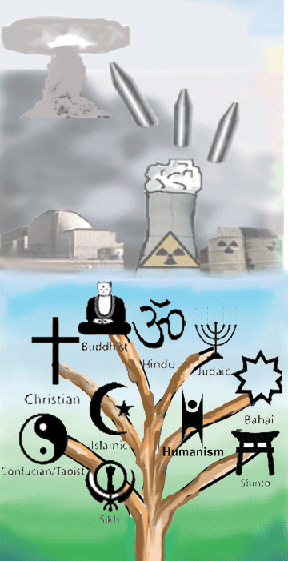 US Faith Groups Unite to Call for Nuclear Weapons Abolition, Stressing Devastating Humanitarian Impact, Religion News Service April 25, 2014 Buddhist, Christian and Muslim Communities at US Institute of Peace in Advance of UN Non-Proliferation Conference
WASHINGTON DC: On April 24, 2014, Buddhist association Soka Gakkai International (SGI) sponsored “Making a Difference – Faith Communities and the Humanitarian Consequences of Nuclear Weapons,” a one-day interfaith symposium held at the US Institute of Peace in Washington DC.
Over 100 participants from diverse faiths including Buddhist, Christian, Jewish and Muslim traditions came together with peace activists and experts to identify common concerns and refresh their determination to rid the world of these inhuman weapons.
At the symposium, representatives of 11 different faith groups adopted a joint statement pledging increased activism by religious communities toward nuclear weapons abolition. This statement will be presented to the chair of the Nuclear Non-Proliferation Treaty (NPT) Preparatory Committee (PrepCom) taking place at the UN Headquarters in New York from April 28 to May 9.
The statement reads, “The continued existence of nuclear weapons forces humankind to live in the shadow of apocalyptic destruction…. The moral insights of our traditions teach us that this threat is unacceptable and must be eliminated.” See http://www.sgi.org/assets/pdf/Joint-Faith-Statement-Antinukes.pdf………
Cosponsors of the event included Abolition 2000, American Values Network, Federation of American Scientists (FAS), Arms Control Association (ACA), Global Zero, International Campaign to Abolish Nuclear Weapons (ICAN), Pax Christi International, Pax Christi-USA and Women’s Action for New Direction (WAND).
Soka Gakkai International (SGI) is a grassroots Buddhist association with 12 million members around the world. Its activities to promote peace, culture and education are part of the longstanding tradition of Buddhist humanism. SGI-USA has 120,000 members throughout the U.S.A.
Contact
William Aiken
waiken@sgi-usa.org
301-346-0167
!8 demolished US nuclear missile facilities inspected by Russians
Russians inspect demolished missile facilities http://helenair.com/news/state-and-regional/russians-inspect-demolished-missile-facilities/article_14343d6d-0f7d-587f-9125-51b77eac9abc.html HELENA, Mont. (AP) — Air Force officials say Russian inspectors visited Montana this month to verify that 18 nuclear missile launch facilities have been demolished as part of a 2011 arms-control treaty.
Malmstrom Air Force Base officials said Monday the inspectors spent 12 hours on April 9 viewing the facilities in central Montana to see the doors had been removed and the launcher tubes filled with earth and gravel.
Treaty compliance chief Richard Bialczak of the 341st Missile Wing says the inspection was the first of its kind at Malmstrom.
The demolished facilities were operated by the 564th Missile Squadron, which was deactivated in 2008. Three other missile squadrons are responsible for the 150 intercontinental ballistic missiles at Malmstrom.
Air Force officials say all 50 of the 546th squadron’s launch facilities will be demolished.
UK’s surviving atomic test veterans cautiously welcome David Cameron’s statement
Thorpe St Andrew nuclear test veteran speaks of defect fears, after PM gives  hope to families, Norwich Evening News 24, 17 April 14
“………Veterans say they were made ill as a result of being exposed to radiation during the tests, and have been battling for recognition and compensation for years.
Mr Freeman, a father-of-three and grandfather-of-eight, said his ninth grandchild was expected next month, but added: “I’ve got grandchildren who suffer from deafness and one was born with one kidney. With another grandchild due, we are all worried that everything is going to be OK, as you can never tell.”
Nuclear test campaigners say Mr Cameron’s pledge is the closest they have been to formal recognition of the suffering caused by the South Pacific explosions. The meeting between Mr Cameron and Tory MP John Baron last week was the first time the veterans had their case put forward to any prime minister.
Mr Baron, patron of the British Nuclear Test Veterans’ Association, told the PM descendants had 10 times the normal rate of birth defects, their wives had elevated rates of miscarriage, and no other veterans’ group had suffered harm which spread down the generations. France, the US, Australia, New Zealand, Russia, China and even the Isle of Man recognise and compensate test veterans. The MoD has always insisted no harm befell the men.
Are you a veteran of nuclear testing living in the Norwich area? Email reporter David Bale at david.bale2@archant.co.uk http://www.eveningnews24.co.uk/news/thorpe_st_andrew_nuclear_test_veteran_speaks_of_defect_fears_after_pm_gives_hope_to_families_1_3562535
Ukraine crisis: a good opportunity for USA to put even more nuclear missile bases in Europe?
 After Ukraine, Countries That Border Russia Start Thinking About Nuclear Deterrents, NewsWeek, By Elisabeth Braw / April 15, 2014“………In a new report, Doran and several co-authors, including The Economist’s Europe editor Edward Lucas, argue that since Russia violated international treaties by annexing Crimea, NATO can renege on its promise not to base nuclear weapons in former Warsaw Pact states……
The West arranges to allow Israel to take part in nuclear trade

 International nuclear body to curry favor with Israel: Exposed Press TV, 15 April 14 The US and some European allies seek deeper nuclear ties with Israel and other non-members of the Nuclear Non-Proliferation Treaty (NPT), a confidential paper reveals. Israel which by policy does not confirm its estimated stockpile of 80 or more nuclear warheads, is the first on the list, according to the report…….The paper also outlined different types of “possible benefits the NSG could consider granting” an entity that is even not in the 48-member group.
These could include sharing of information, access to NSG meetings and “facilitated export arrangements,” suggesting possible access to some nuclear trade with NSG members.
Israel, the only possessor of nuclear weapons in the Middle East, is widely known to have between 200 and 400 nuclear warheads.
The Israeli regime rejects all the regulatory international nuclear agreements — the NPT in particular — and refuses to allow its nuclear facilities to come under international regulatory inspections.http://www.presstv.ir/detail/2014/04/15/358676/nuclear-body-to-curry-favor-with-israel/
Strong reasons why UK should abandon Trident nuclear weapons system
Five interesting stories about Trident http://www.leftfootforward.org/2014/04/five-interesting-stories-about-trident/
1. Strikes at Faslane
In March, hundreds of workers at the Faslane naval base staged theirfirst walkout in 42 years, following negotiations over pay. Faslane is home to the UK’s Vanguard-class nuclear-powered and nuclear-armed submarines. The Scotsman reported that employees responsible for fitting out boats and loading weapons were involved in the action. The Unite union said that further stoppages were planned, as well as a work to rule and ban on overtime.
2. Top Tory says No James Arbuthnot, veteran chairman of the Defence Select Committee, has publicly questioned the logic of replacing Trident. In a recent interview with the Guardian he stated, “Nuclear deterrence does not provide the certainty that it seemed to in the past. It’s not an insurance policy, it is a potential booby trap.”
Despite voting for replacement in 2007, Arbuthnot referred to Trident at the time as ‘of doubtful usefulness’.
3. Resignations at AWE Burghfield
In January, junior defence minister Anna Soubry confirmed that 44 Ministry of Defence Police officers based at the Atomic Weapons Establishment in Burghfield were subject to a major misconduct investigation. AWE Burghfield hosts facilities in which the UK’s nuclear weapons are built and maintained. Seven officers resigned during the course of the investigation, with some media reporting that a number had missed patrols due to being ‘asleep’.
4. UK’s youth disapprove
A recent ComRes survey suggests that younger people are opposed to like-for-like Trident replacement. Of the respondents, only 19 per cent of those aged 18-35 supported renewing Trident at its current size and capacity (this compared to 33 per cent of over 35s). The poll was commissioned by WMD Awareness, who launched this campaign last week to get the UK’s youth debating nuclear weapons.
5. Radioactive leaks in Caithness
In March, Scotland’s first minister Alex Salmond demanded an apology for failing to be informed for over two years about problems with a submarine test reactor. This was in response to defence secretary Philip Hammond’s confirmation that “low levels of radioactivity were detected in a prototype core” at the Vulcan Naval Reactor Test Establishment at Dounreay, Caithness, in 2012. These kinds of spats suggest nuclear defence will continue to be an issue in the Scottish independence campaign.
The above stories touch on some major problems with Trident: it’s unpopular, politically contentious, and the system relies on shaky security arrangements. Anyone for abandoning it?
1 This Month
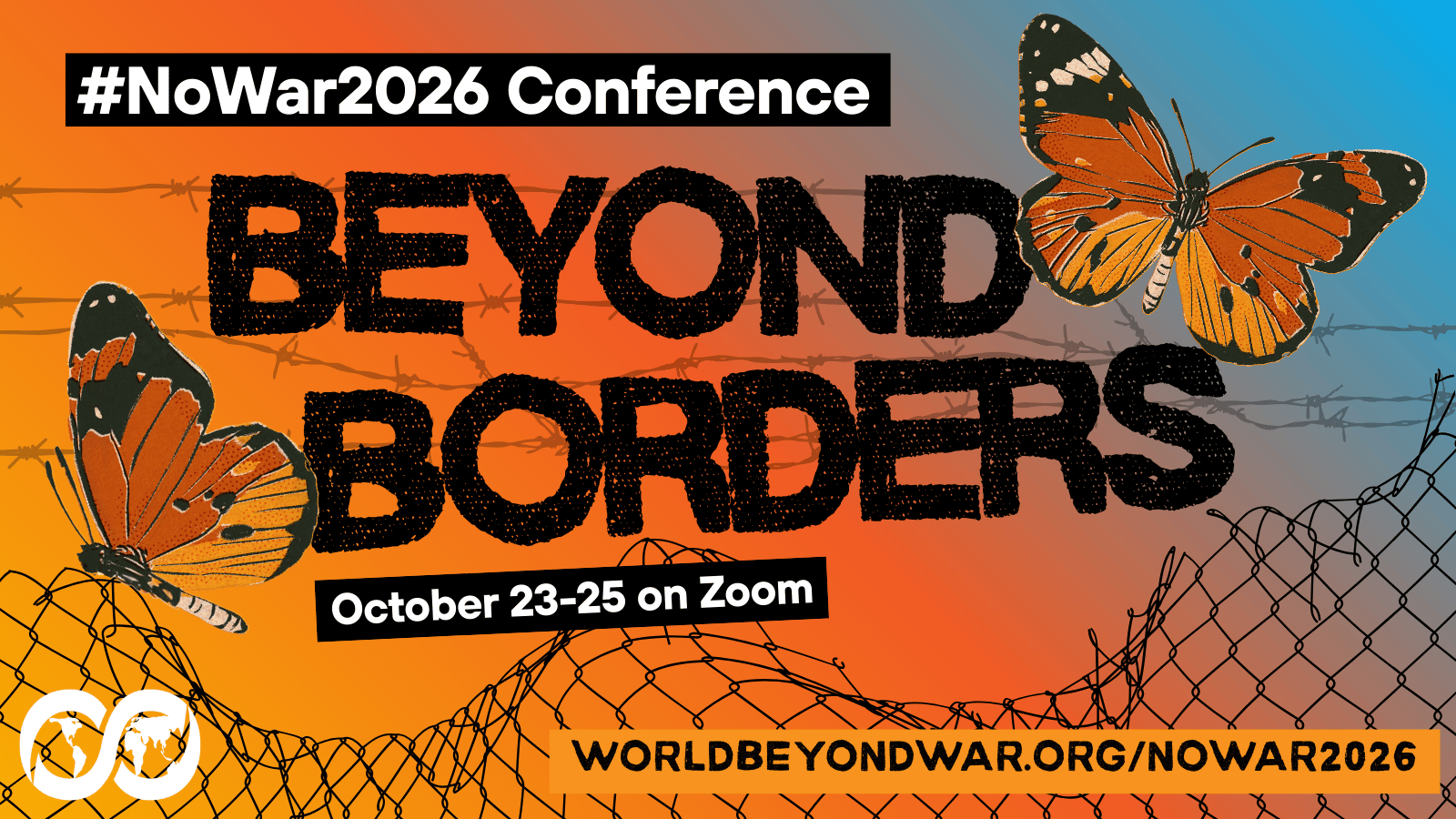
23-25 October – on Zoom – World BEYOND War’s annual global conferenc

Shut down the radiation-damaged Heysham nuclear reactors now
To see nuclear-related stories in greater depth and intensity – go to https://nuclearinformation.wordpress.com

Say No to NASA’s Reckless Nuclear Reactor on the Moon
Say No to NASA’s Reckless Nuclear Reactor on the Moon

-
Archives
- October 2026 (199)
- September 2026 (339)
- August 2026 (330)
- July 2026 (355)
- June 2026 (287)
- May 2026 (306)
- April 2026 (356)
- March 2026 (251)
- February 2026 (267)
- January 2026 (308)
- December 2025 (358)
- November 2025 (359)
-
Categories
- 1
- 1 NUCLEAR ISSUES
- business and costs
- climate change
- culture and arts
- ENERGY
- environment
- health
- history
- indigenous issues
- Legal
- marketing of nuclear
- media
- opposition to nuclear
- PERSONAL STORIES
- politics
- politics international
- Religion and ethics
- safety
- secrets,lies and civil liberties
- spinbuster
- technology
- Uranium
- wastes
- weapons and war
- Women
- 2 WORLD
- ACTION
- AFRICA
- Atrocities
- AUSTRALIA
- Christina's notes
- Christina's themes
- culture and arts
- Events
- Fuk 2022
- Fuk 2023
- Fukushima 2017
- Fukushima 2018
- fukushima 2019
- Fukushima 2020
- Fukushima 2021
- general
- global warming
- Humour (God we need it)
- Nuclear
- RARE EARTHS
- Reference
- resources – print
- Resources -audiovicual
- Weekly Newsletter
- World
- World Nuclear
- YouTube
-
RSS
Entries RSS
Comments RSS

