Nuclear weapons, nuclear safety – the $trillion USA cost
 Money for Food or for Nuclear Bombs?OpEdNews Op Eds 3/31/2014 By Madelyn Hoffman We live in strange times, indeed. In the past few months, the U.S. Congress has failed to extend unemployment benefits for 1.3 million people and has passed legislation that will cut $8.6 billion in food stamps over the next 10 years, affecting 850,000 households in 1/3 of the states. At the same time, the 2015 budget shows a 7% increase in spending on nuclear weapons, from $18.6 billion to $19.4 billion — almost $1 billion. While the overall amount allocated for nuclear weapons is greater than last year, the funds dedicated to nuclear nonproliferation programs — programs to reduce the numbers of available warheads or securing so-called “loose nukes” was cut, making more dollars available to either build new nuclear weapons hardware or spend billions to modernize old ones, such as the B-61 bomb……… costs added together total $1.0095 trillion for 2015! Here are two ways to reduce this. Two nearly identical bills in the U.S. Congress today target nuclear weapons spending to save money. Senator Markey, D-Mass, introduced the “Smarter Approach to Nuclear Expenditures (SANE)” Act and Rep. Blumenauer, D-Ore, introduced the “Reduce Expenditures in Nuclear Infrastructure Now (REIN-IN)” Act. According toEric Tamerlani’s article “Reining in Nuke Spending the Smart Way” in the March 12th Roll Call, these bills will save taxpayers $100 billion on nuclear weapons over 10 years. The bills would reduce the number of new nuclear submarines, cap tactical nuke modernization and scrap the F-35’s nuclear mission. In late April, pro-disarmament activists from around the world will gather at the United Nations to prepare nuclear disarmament proposals to present at the 2015 Nuclear Nonproliferation Treaty (NPT) Review Conference. Sharon Dolev, Director of the Israeli Disarmament Movement, will participate. She will also speak on “Cooling the Hot Spot: A Nuclear Weapons Free Middle East” at NJPA’s April 27th Annual Dinner at the Regency House in Pompton Plains. Her talk will address what a nuclear weapons free Middle East means for Israel, the region, and the world, as well as obstacles within Israel to attaining that important goal. For more information and to make reservations, visit www.njpeaceaction.org. Cooling off tensions in the Middle East and preventing another war will release funds for programs that address community needs. This is not only timely, but essential, for genuine security in our nation and the world. http://www.opednews.com/articles/Money-for-Food-or-for-Nucl-by-Madelyn-Hoffman-Budget_Diplomacy_Food-Stamps_Food-Stamps-140331-42.html |
What to do with 40,000 depleted uranium rounds scattered around Serbia?
 Serbian Minister, UN representatives discuss depleted uranium http://inserbia.info/today/2014/03/serbias-minister-un-representatives-discuss-depleted-uranium-sites/sites BELGRADE – Serbia’s Minister without portfolio for Kosovo-Metohija Aleksandar Vulin has discussed with UN representatives in Belgrade the progress made in research on locations in Serbia where higher levels of depleted uranium have been detected. Vulin on Thursday met with Peter Due, the Representative of the UN Secretary-General and Head of the UN Office in Belgrade, and UN Resident Coordinator Irena Vojackova-Solorano, the Serbian government’s Office for Kosovo-Metohija said in a statement.
Following field research in 1999 and 2002, the UN Environment Programme (UNEP) published reports on locations with higher levels of depleted uranium, the statement said.
During the 1999 bombing campaign, NATO forces used banned depleted uranium ammunition and Yugoslav Forces figures said that 30,000 to 50,000 rounds of depleted uranium ammunition were scattered on 112 locations across the country, but mostly in Kosovo-Metohija.
On the 15th anniversary of the bombing of the Federal Republic of Yugoslavia, Vulin discussed with the UN representatives the progress made in research on locations with higher depleted uranium levels in the territory of central Serbia, but also in Kosovo-Metohija.
Such research is helpful not only to Serbia, but also to other countries, Minister Vulin said.
Vojackova-Solorano said that the reports were the first of their kind and that the time has come to monitor the situation again, especially if the Serbian government has evidence of an impact of the bombing campaign on the health of the population in Serbia, the statement said.
She said that the UN agency will strive to provide support to Serbia’s health care system in the coming years.
Due also inquired about the progress in the technical negotiations on establishing the community of Serb municipalities and organising judicial authorities in northern Kosovo-Metohija.
Minister Vulin reiterated that any armed force in Kosovo-Metohija other than Kfor – the force envisioned by UN Security Council Resolution 1244 – is absolutely unacceptable to Serbia.
Defence Committee foresees non nuclear defence system
 CND welcomes Defence Committee’s vision of a post-nuclear future http://www.cnduk.org/cnd-media/item/1886-cnd-welcomes-defence-
 committee%E2%80%99s-vision-of-a-post-nuclear-future 27 March 2014
The Campaign for Nuclear Disarmament (CND) has welcomed a report by the House of Commons Defence Committee which highlights the decreasing salience of nuclear weapons in UK defence policy.
The report, Deterrence in the twenty-first century, states:
‘It is possible to foresee an environment in which the core role of nuclear deterrence – to protect a state from attack – is achieved by the deployment of advanced conventional weapons… This will be a matter which our successor Committee may wish to examine further.’
The paper explores issues around the UK’s possession of nuclear weapons in a shifting security landscape: emphasising ‘the greater significance of asymmetric threats compared to the Cold War strategic context’.
CND’s General Secretary, Kate Hudson, said:
‘It’s good to see the Defence Committee taking a dispassionate and evidence-based approach to nuclear weapons policy: the Ministry of Defence should follow suit.’
‘While the report does not challenge government plans to replace Trident, it presents a stark analysis of a changing security landscape in which it sees nuclear weapons as increasingly irrelevant.’
‘Most tellingly, the report emphasises the difficulty in identifying or retaliating against “asymmetric threats”, as well as concerns amongst senior military figures over the impact of Trident spending on cuts to the Armed Forces.’
‘As we approach a parliamentary vote in 2016 on whether or not to spend £100bn on a new generation of nuclear weapons, greater public and parliamentary debate about this crucial issue is needed: and this report is a step in the right direction.’
How to destroy the world – one ‘small’ nuclear war can do it
 Study: ‘Small’ Nuclear War Would Destroy The World http://denver.cbslocal.com/2014/03/26/study-small-nuclear-war-would-destroy-the-world/ March 26, 2014 DENVER (CBS4) – With an estimated 17,000 nuclear weapons in the world, we have the power to exterminate humanity many times over.
But it wouldn’t take a full-scale nuclear war to make Earth uninhabitable, reports Live Science.
Even a relatively small regional nuclear war, like a conflict between India and Pakistan, could spark a global environmental catastrophe, says a new study.
“Most people would be surprised to know that even a very small regional nuclear war on the other side of the planet could disrupt global climate for at least a decade and wipe out the ozone layer for a decade,” said lead author Michael Mills, an atmospheric scientist at the National Center for Atmospheric Research in Colorado.
Researchers developed a computer model of the Earth’s atmosphere and ran simulations to find out what would happen if there was a nuclear war with just a fraction of the world’s arsenal.
What they saw was the stuff of nightmares:
Firestorms would belch over 5 million tons of ash into the sky.
The ash would absorb the sun’s rays, causing deadly cooling on the surface.
Global temperatures would plummet my nearly 3 degrees Farenheit on average, with most of North America experiencing winters that would be colder by 4 to 10 degrees.
Lethal frosts would cover the Earth and reduce the growing seasons bu about a month for several years.Rainfall and other precipitation would be reduced by about 10 percent, triggering worldwide droughts and leading to wildfires in the Amazon, which would spew more smoke into the atmosphere.
The sky ash would heat the stratosphere and accelerate the chemical reactions that destroy the ozone layer.
The intense ultraviolet radiation that would get through to the surface would be a dramatic threat to human health and damage fragile ecosystems on land and sea.
“All in all, these effects would be very detrimental to food production and to ecosystems,” Mills said.
The findings are published in the journal Earth’s Future.
Thanks to Putin, the Pentagon can push their case for new nuclear weapons

 Ukraine Fallout: Putin Hands The Pentagon A Rationale For New Nuclear Weapons Loren Thompson, Forbes 20 Mar 14 There’s a plausible case to be made that Russia’s reabsorption of Crimea after 60 years of being attached to the Ukraine isn’t all that important, and the West is over-reacting. Well don’t expect to find anybody in Washington pushing that view. Today’s Washington Post features a lead editorial entitled, “A Dangerous Russian Doctrine,” and all four essays on the op-ed page explore the ominous implications of what Vladimir Putin has done. The persistent drumbeat of disquieting coverage and commentary about Ukraine reminds me of a term I used often when I taught nuclear strategy at Georgetown — overkill.
As chance would have it, this strategic shift occurs at precisely the moment when modernization of the U.S. nuclear arsenal has become a major issue among military planners. …….. The Pentagon has plans for developing new subs and bombers before the current arsenal has to be retired, but funding is problematic — particularly with spending caps imposed by the 2011 Budget Control Act.
Although President Obama has not interfered with these plans, he has been more focused on arms control as a solution to the nation’s nuclear security. …….
it is inevitable that Pentagon officials will use the Ukraine crisis to build political support for their nuclear plans. ……….
Many people in Washington might have been prepared to forego spending money on a new generation of nuclear weapons before Putin made his move, but he has now changed the strategic calculation. http://www.forbes.com/sites/lorenthompson/2014/03/20/ukraine-fallout-putin-hands-the-pentagon-a-rationale-for-new-nuclear-weapons/
NATO to spend up big on nuclear weapons security
 Analyst: NATO Poised to Ramp Up Nuclear-Arms Security Spending National Journal By Diane Barnes 12 Mar 14, An issue expert says NATO is preparing a major increase in spending to protect U.S. nuclear arms fielded in allied European states.
The U.S. Defense Department’s fiscal 2015 budget proposal calls for $154 million to bolster defenses at military installations spread across Belgium, Germany, Italy, Turkey and the Netherlands. That amount would come in addition to $80 million the alliance has spent in the last 14 years to protect nuclear arms in the six European nations, says a Tuesday report by Hans Kristensen, who heads the Nuclear Information Project at the Federation of American Scientists.
Kristensen said more than three-fourths of the security spending to date took place in 2011 and 2012, after an Air Force panel determined that defenses at most U.S. nuclear-arms facilities in Europe did not meet Pentagon standards.
Nuclear Iran less of a worry than nuclear India and Pakistan?
The evolution of South Asia’s nuclear powers, Journal Pioneer, Henry Srebrnik on January 26, 2014 While much of the world’s attention these days is focused on Iran’s nuclear program, it should not be forgotten that its eastern neighbours, Pakistan and India, South Asia’s two largest countries and long-time enemies, both are nuclear-armed states.
India is not a party to the 1968 Nuclear Non-Proliferation Treaty (NPT) and tested what it called a “peaceful nuclear explosive” in 1974. The test was the first after the creation of the NPT, and India’s secret development of nuclear weaponry, using civilian nuclear technology, caused great concern and anger from nations such as Canada, that had supplied its nuclear reactors for peaceful and power generating needs……..
India is also expanding its ability to produce highly enriched uranium for military purposes, including more powerful nuclear weapons, according to a U.S.-based think tank that cited satellite imagery taken last April of a gas centrifuge facility under construction at the Rare Materials Plant near Mysore in Karnataka.
The Institute for Science and International Security (ISIS) published a report in 2013 stating that this new facility “could significantly increase India’s ability to produce highly enriched uranium for military purposes, including more powerful nuclear weapons.”
Pakistan, too, is not a signatory to the Nuclear Non-Proliferation Treaty, and built its first nuclear power plant near Karachi with equipment and materials supplied mainly by western nations in the early 1970s. Pakistani Prime Minister Zulfiqar Ali Bhutto had promised in 1965 that if India built nuclear weapons then Pakistan would too, “even if we have to eat grass.”……http://www.journalpioneer.com/Opinion/Columnists/2014-01-26/article-3591613/The-evolution-of-South-Asia%26rsquo%3Bs-nuclear-powers/1
Criminality of atomic bomb testing in Marshall Islands
U.S. Human Radiation Experiments Covered Up by Public Broadcasting Op Ed News, By William Boardman — Reader Supported News 10 Jan 14 ”……..director [of film Nobles Savages] Adam Horowitz has been angry about American treatment of the Marshall Islands for a long time. In late 2013 he told a reporter the U.S. “destroyed an entire country that we were not at war with, that we were at peace with. Not only did they blow up all these islands, but they purposely contaminated all these people as human experiments. It’s a very unknown story here.”

The story was classified top secret until the 1990s, when the Clinton administration declassified documents related to nuclear testing that including previously unknown information on the Project 4.1 program to use Pacific Islanders as human guinea pigs for assessing the impact of ionizing radiation. Even the official historian of U.C. nuclear testing, Barton Hacker, who tries to minimize the criminality of Project 4.1, ended up writing in 1994 that an “unfortunate choice of terminology may help explain later charges that the AEC [Atomic Energy Commission] had deliberately exposed the Marshallese to observe the effects. Like the American radium dial painters of the 1920s and the Japanese of Hiroshima and Nagasaki in 1945, the Marshallese of 1954 inadvertently were to provide otherwise unobtainable data on the human consequences of high radiation exposures.” Continue reading
Could USA go broke, due to its $1 trillion nuclear weapons arsenal?
U.S. Nuclear-Weapons Plan Is So Expensive, It Can’t Be Implemented,National Journal by Douglas P. Guarino January 8, 2014 A new study says the strategy to update the U.S. triad of nuclear-armed aircraft, submarines and missiles would cost $1 trillion over the next 30 years, even under conservative assumptions
U.S. plan for modernizing the nation’s nuclear arsenal is so expensive that it cannot be implemented, the authors of a new study contend.
“It’s just not real,” Jeffrey Lewis, one of the report’s co-authors, said in reference to the current U.S. modernization blueprint. “It’s inconceivable to me that we will execute anything like the plan that they say they’re going to do.” The analysis, released on Tuesday by the James Martin Center for Nonproliferation Studies, says the strategy to update the U.S. triad of nuclear-armed bomber aircraft, submarines and ground-based missiles would cost $1 trillion over the next 30 years, even under conservative assumptions.
The estimate relies largely on official government figures, the authors say, and does not include costs associated missile defense, nonproliferation efforts and related intelligence programs Continue reading
Nuclear weapons now accessible to fewer countries
Number of Nuclear Capable Countries Drops, VOA January 08, 2014 The number of countries possessing the makings for a nuclear weapon has dropped by almost one-quarter during the past two years, according to a study by the U.S. based Nuclear Threat Initiative. But the study released Wednesday says there are “dangerous weak links” in nuclear materials security that could be exploited by terrorist groups.
The Nuclear Threat Initiative says Mexico, Sweden, Ukraine, Vietnam, Austria, the Czech Republic and Hungary have removed all or most of the weapons-usable nuclear materials from their territory since 2012. It says there are 25 countries with at least one kilogram of weapons-usable nuclear materials, down from 32 countries in 2012……http://www.voanews.com/content/number-of-nuclear-capable-countries-drops/1825957.html
India’s nuclear capable missiles and submarines program
India test-fires nuclear-capable Prithvi-II missileRajat Pandit,TNN | Jan 7, 2014, NEW DELHI: India on Tuesday morning test-fired its nuclear-capable Prithvi-II missile, which has a strike range of 350-km, from the integrated test range at Chandipur off the Odisha coast as part of “a scenario-based live launch training exercise”. ……
After a nuclear war between India and Pakistan – a global nuclear winter
 Kent Shifferd: Nuclear winter follows war http://www.battlecreekenquirer.com/article/20140105/OPINION02/301050007/Kent-Shifferd-Nuclear-winter-follows-war Kent Shifferd, Ph.D., Jan. 3, 2014 What could be worse than a nuclear war? A nuclear famine following a nuclear war. And where is the most likely nuclear war to break out? The India-Pakistan border.
Both countries are nuclear armed, and although their arsenals are “small” compared to the U.S. and Russia, they are extremely deadly. Pakistan has about 100 nuclear weapons; India about 130.
They have fought three wars since 1947 and are contending bitterly for control over the Kashmir and for influence in Afghanistan……
Experts predict a nuclear war between India and Pakistan would kill about 22 million people from blast, acute radiation, and firestorms. However, the global famine caused by such a “limited” nuclear war would result in two billion deaths over 10 years.
That’s right, a nuclear famine. A war using fewer than half their weapons would lift so much black soot and soil into the air that it would cause a nuclear winter. Such a scenario was known as far back as the 1980s, but no one had calculated the impact on agriculture.
The irradiated cloud would cover vast portions of the earth, bringing low temperatures, shorter growing seasons, sudden crop-killing extremes of temperature, altered rainfall patterns and would not dissipate for about 10 years.
Now, a new report based on some very sophisticated studies reveals the crop losses that would result and the number of people who would be put at risk for malnutrition and starvation.
The computer models show declines in wheat, rice, corn, and soybeans. Overall production of crops would fall, hitting their low in year five and gradually recovering by year ten.
Corn and soybeans in Iowa, Illinois, Indiana and Missouri would suffer an average of 10 percent and, in year five, 20 percent.
In China, corn would fall by 16 percent over the decade, rice by 17 percent, and wheat by 31 percent. Europe would also have declines.
Making the impact even worse, there are already almost 800 million malnourished people in the world. A mere 10 percent decline in their calorie intake puts them at risk for starvation.
And we will add hundreds of millions of people to the world population over the next couple of decades……
And what follows famine is epidemic disease.
“Nuclear Famine: Two Billion People at Risk?” is a report from a world-wide federation of medical societies, the International Physicians for the Prevention of Nuclear War (Nobel Peace Prize recipients, 1985) and their American affiliate, Physicians for Social Responsibility.
It’s online at http://www.psr.org/resources/two-billion-at-risk.html They have no political axe to grind. Their sole concern is human health.
What can you do? The only way to assure ourselves this global disaster will not happen is to join the global movement to abolish these weapons of mass destruction.
Start with the International Campaign to Abolish Nuclear Weapons (http://www.icanw.org/). We abolished slavery. We can get rid of these terrible instruments of destruction.
The global menace of uranium
Uranium – the ‘demon metal’ that threatens us all, Ecologist, Chris Busby, 1st January 2014 Ingested Uranium is linked with health impacts far greater than is explained by orthodox risk models. Chris Busby explains how the ‘demon metal’ does its damage – and why the nuclear industry is desperate to hide the truth. I am going to ramble about a bit here, but it’s a bit of a rambling tale, which I hope will come together at the end………
Fallujah – shake, bake, irradiate In 2009 I helped organize the first study of cancer and infant mortality in Fallujah Iraq – a paper which has now had 27,000 accesses and 18,000 downloads from the journal website and has been something of a phenomenon in the media (though not of course the BBC).
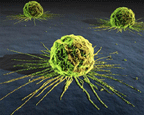 The results showed an enormous increase in cancer, and this was most clear for in children (0-14) where the rate was 12.6 times the expected and in leukemia in young adults 0-34 where the rate was 38 times the expected.
Now these are pretty astonishing findings. The biggest leukemia increase in Hiroshima was about 17-fold, and this was ascribed to radiation exposures. But whatever caused this in Fallujah, also increased rates of congenital defects in the newborn and altered the sex ratio at birth.
 The sex ratio, the number of boys born per 1000 girls, fell from 1050 to about 800, a signal of genetic damage. We looked for the cause of this genetic damage in the hair of the mothers of the birth defect children and found a huge excess of Uranium. This result also caused a splash, with 16,000 accesses to the paper since its publication in 2011.
Uranium weapons cause genetic damage Of course, these Fallujah studies just confirmed what the Iraqi doctors had been saying ever since Gulf War 1 when the US vapourised about 350 tons of the stuff over the Iraqi population. Uranium weapons were causing the genetic damage.
There were reports of similar effects in the Balkans and in Gulf war veterans and their children. Discussion can be found in these papers and the third one, where the congenital malformation rates are calculated.
The UK Gulf veterans are now in their 40s and are beginning to develop cancer. There are studies showing that US veterans have had children with birth defects. I have been involved in a number of Gulf war cancer cases in Ministry of Defence Pensions appeals, and notably in a coroner inquest in 2009 into the death of Gulf Veteran Stuart Dyson.
He died from colon cancer at the young age (for that disease) of 40, and the jury concluded that his cancer was caused by Depleted Uranium exposure, a finding that caused severe headaches for the Secretary of State for Defence.
Bomb test veterans It is not only the Gulf veterans that were exposed to Uranium. The atmospheric nuclear tests involved huge bombs that were constructed entirely of Uranium.
The UK Grapple Y 3 megaton test on Christmas Island in 1958 (video here ~ 1 minute) involved a 4 ton lump of the stuff that was atomized by the explosion and created a black rain of Uranium oxide nanoparticles that fell from the sky (along with fish that had been sucked from the sea into the cloud).
The nuclear test veterans have suffered all the same effects: cancers and a whole range of health problems. And birth defects in the children. I know about the birth defects as a result of an epidemiological study I carried out with Mireille de Messieres in 2007. This showed a 9-fold excess risk of a congenital defect in the children and an 8- fold excess in the grandchildren.
And I know about the Uranium in the bombs and the black rain as it is evidence in the case I am currently fighting in the Royal Courts of Justice in a nuclear test veteran Pensions Appeal……..http://www.theecologist.org/News/news_analysis/2205213/uranium_the_demon_metal_that_threatens_us_all.html
USA’s nuclear weapons cost is $355 billion, not the planned $214 billion!
Obama Administration Underestimated Cost of Maintaining Nuclear Weapons by $140 Billion, AllGov, 27 Dec 13 Defense officials in the Obama administration were more than a little off when they told Congress the cost of maintaining the nation’s nuclear weapons arsenal over the next 10 years.
They missed the mark by at least $140 billion.
Two years ago, the Pentagon informed lawmakers that they would need to allocate $214 billion over the coming decade to operate and upgrade the stockpile of nuclear warheads and delivery systems.
But the Congressional Budget Office (CBO) looked at the Defense Department’s future plans and found that nuclear weapons-related costs were more likely to reach $355 billion by 2023.
That’s 66% higher than the 2011 estimate.
The $355 billion includes $136 billion to modernize and operate submarines, bombers and missiles that deliver warheads, $105 billion to run weapons labs, weapons and naval reactors, $56 billion for command and control systems, and $59 billion for unforeseen technical problems or mismanagement.
And that’s just the direct costs related to the nuclear arsenal.
CBO officials point out there are other, very costly programs that exist because of the nuclear weapons program, such as cleaning up shuttered nuclear fuel facilities or the nation’s missile defense systems for shooting down other nation’s nuclear missiles.
These other costs will likely cost the government another $215 billion over the next decade…..http://www.allgov.com/news/where-is-the-money-going/obama-administration-underestimated-cost-of-maintaining-nuclear-weapons-by-140-billion-dollars?news=852020
One nation that abandoned nuclear weapons – South Africa
Unfortunately, South Africa is still the only state that has ever voluntarily dismantled its entire nuclear weapons capability. Nuclear states continue to do lip service to the goal of nuclear disarmament, but little has been achieved in practice. South Africa has illustrated that long-term security can be far better assured by the abrogation of nuclear weapons than by their retention.
 South Africa: Nation that gave up its nuclear arsenal The solution was not the acquisition of greater military power through the development of nuclear weapons but the abolition of apartheid Gulf Times, F.W. de Klerk Former president of South Africa December 25, 2013It will be a mistake to think that the end of the Cold War also ended the threat posed by nuclear weapons. Nuclear-armed states continue to deploy huge arsenals of nuclear weapons, other states continue with their efforts to acquire nuclear weapons and there is the alarming possibility that such weapons may fall into the hands of terrorists. Accordingly, it may be helpful to consider the factors that led South Africa to develop nuclear weapons in the 1970s and the reasons why it decided to dismantle them in 1989…..
Soon after I became president in 1989, foreign minister Pik Botha urged me to take two key steps if we wished to improve South Africa’s relationship with the world: The first was to release Nelson Mandela and the second was to dismantle our nuclear weapons and accede to the Nuclear Nonproliferation Treaty (NPT). Continue reading
1 This Month
23-25 October – on Zoom – World BEYOND War’s annual global conferenc


Shut down the radiation-damaged Heysham nuclear reactors now
To see nuclear-related stories in greater depth and intensity – go to https://nuclearinformation.wordpress.com

Say No to NASA’s Reckless Nuclear Reactor on the Moon
Say No to NASA’s Reckless Nuclear Reactor on the Moon

-
Archives
- October 2026 (199)
- September 2026 (339)
- August 2026 (330)
- July 2026 (355)
- June 2026 (287)
- May 2026 (306)
- April 2026 (356)
- March 2026 (251)
- February 2026 (267)
- January 2026 (308)
- December 2025 (358)
- November 2025 (359)
-
Categories
- 1
- 1 NUCLEAR ISSUES
- business and costs
- climate change
- culture and arts
- ENERGY
- environment
- health
- history
- indigenous issues
- Legal
- marketing of nuclear
- media
- opposition to nuclear
- PERSONAL STORIES
- politics
- politics international
- Religion and ethics
- safety
- secrets,lies and civil liberties
- spinbuster
- technology
- Uranium
- wastes
- weapons and war
- Women
- 2 WORLD
- ACTION
- AFRICA
- Atrocities
- AUSTRALIA
- Christina's notes
- Christina's themes
- culture and arts
- Events
- Fuk 2022
- Fuk 2023
- Fukushima 2017
- Fukushima 2018
- fukushima 2019
- Fukushima 2020
- Fukushima 2021
- general
- global warming
- Humour (God we need it)
- Nuclear
- RARE EARTHS
- Reference
- resources – print
- Resources -audiovicual
- Weekly Newsletter
- World
- World Nuclear
- YouTube
-
RSS
Entries RSS
Comments RSS

