Continuing struggle to rid Okinawa of USA military bases
Struggle against U.S. bases continues in Okinawa http://happening-here.blogspot.com.au/ The elected governor of the Japanese-controlled island of Okinawa has said no, again, to further construction of a new U.S. base. Okinawans have been trying to reclaim their territory for decades. The island is part of the Ryukyu archipelago which the U.S. conquered at the end of World War II. Japan recovered sovereignty, but although since 1945 Japan has been ostensibly a nuke-free zone, the U.S. has been allowed to bring nuclear armed vessels to Okinawa if not the Japanese mainland.
The 1.3 million Okinawans have repeatedly elected officials who promise to oust the U.S. military. These local officials have then been overruled from Tokoyo repeatedly.
The U.S. Marines are not considered good neighbors on the island: they are seen as the source of drunken louts and rapists who usually enjoy impunity from the local justice system.
Okinawans are Japan’s largest minority group.
I have written previously about Okinawa’s special place and its irritants to the U.S. empire here and here.
Long range missile tested by Iran
Iran Tests Long-Range Missile, Possibly Violating Nuclear Accord http://www.nytimes.com/2015/10/12/world/middleeast/iran-tests-long-range-missile-possibly-violating-nuclear-accord.html?_r=0 By THOMAS ERDBRINK OCT. 11, 2015 TEHRAN — Iran tested a new guided long-range ballistic missile on Sunday, hours before Parliament, in a rowdy session, approved the generalities of the nuclear agreement reached in July between Iran and world powers, the state news agency IRNA reported.
The missile launch may have violated the terms of the agreement, reached in Vienna with six world powers. According to some readings of the deal, it placed restrictions on Iran’s ambitious missile program.
Experts have been debating the interpretation of a United Nations Security Council resolution, adopted a few days after the accord was agreed upon, that bars Iran from developing missiles “designed to carry nuclear warheads.”
Hard-line Iranian officials had for months been demanding new missile tests, a common practice before the negotiations over the country’s nuclear program began in 2013.
The missile — named Emad, or pillar — is a step up from Iran’s Shahab-3 missiles because it can be guided toward its target, the Iranian defense minister, Hossein Dehghan, told the semiofficial Fars news agency. In recent decades, with Iran’s air force plagued by economic sanctions and other restrictions, the country has invested heavily in its nuclear program and has produced missiles that can reach as far as Europe.
“We don’t seek permission from anyone to strengthen our defense and missile capabilities,” Mr. Dehghan said.
Also on Sunday, members of Parliament voted in favor of a bill approving the generalities of the nuclear agreement, but they had been denied information on its details. State television broadcast the session using only audio and archived images of Parliament.
The head of the Atomic Energy Organization of Iran, Ali Akbar Salehi, who had gone to Parliament to defend the deal, said in a speech that a member had threatened to kill him and bury his body “in the cement of the Arak heavy-water reactor.”
Under the nuclear agreement, a heavy-water plant in Arak will be redesigned and turned into a relatively less dangerous light-water reactor. The threat, which sounded like something from an American gangster film, was made in front of witnesses by a hard-line representative, Ruhollah Hosseinian, according to reports.
USA worries about Pakistan’s nuclear agendas
India, Pakistan’s Nuclear Agendas Concern U.S., Value Walk, Brinda Banerjee October 10, 2015 A high-ranking official from within the Obama administration has recently likened India and Pakistan to North Korea and Iran in a conversation regarding the countries’ nuclear capabilities. The comment was made in a discussion about countries that are actively pursuing nuclear development and growth even as the international community remains apprehensive about weapons proliferation and the potential fallout of the same.
Addressing a seminar at Oslo, Norway, U.S. official Frank Rose recently said, “India and Pakistan are adding to their arsenals; North Korea’s nuclear and missile programs remain a concern to all; and Iran, despite the landmark nuclear deal, continues its ballistic missile programs”. Mr. Rose currently serves as the Assistant Secretary of State at the Bureau of Arms Control, Verification and Compliance of the United States Department of State.
At present, India possesses between 80 and 100 nuclear warheads while Pakistan’s stockpile is estimated at between 100 and 120 nuclear warheads. Assessments based on Pakistan’s nuclear development goals reveal that the country is poised to own the third-largest supply of nuclear weapons within the next ten years.
At present, Russia and the United States have the biggest nuclear weapons supplies in the world, with both Moscow and Washington totaling in at approximately 1,600 each. China, France and the United Kingdom follow suit with 250, 300 and 225 nuclear warheads respectively.
Security experts interpret Pakistan’s ever-expanding nuclear arsenal as a cause for concern given the country’s history of proliferation. Talk of Pakistan and the nuclear issue is incomplete without mention of Pakistani scientist Abdul Qadeer Khan who was found guilty of selling nuclear weapons technology and information on the black-market to bidders in Iran, Libya and North Korea. The country’s record with nuclear technology, its experiences with internal security challenges and extremism and the historic rivalry with India have all caused the international community to worry about regional security and international fallout should nuclear growth in the region be allowed to continue unchecked.
Comprehensive Nuclear-Test-Ban Treaty And Proliferation Concerns
While the Comprehensive Nuclear-Test-Ban Treaty (CTBT) is the overarching international regulation by way of which the global community aims to prevent nuclear proliferation, the agreement has not been fully effected. This is, due in part to the reluctance of some states to fully agree to the covenant.
The United States and Iran are amongst the countries that have signed the CTBT but are yet to ratify it. Other states that have signed the treaty but not ratified it include China, Egypt and Israel. India, North Korea and Pakistan are the three countries that have not signed the agreement. Signing began in the year 1996; since then, only three countries have been conclusively known to have carried out nuclear testing: India, North Korea and Pakistan. India and Pakistan both conducted two rounds of nuclear tests in 1998 while North Korea organized its tests in 2006, 2009 and 2013……….
U.S. Considers Nuclear Accord With Pakistan, India Objects
The United States is reportedly exploring options for a nuclear arrangement with Pakistan. The deal, if it were to be realized, would witness a definite capping of Pakistan’s nuclear stockpile in return for a greater supply of nuclear material. The deal will allow the U.S. access to Pakistan’s nuclear production facilities and raw materials. For Pakistan, the tradeoff will include the U.S.’ assistance in purchasing nuclear materials and necessary capabilities from the Nuclear Suppliers Group, which at present does not transact with countries that have not signed the Non Proliferation Treaty.
While Pakistan has demanded a “non-discriminatory approach on nuclear issues” in its pursuit of a nuclear agreement like the one India enjoys with the United States, Islamabad has not been as successful in realizing its ambitions.
However, The Washington Post has reported that Pakistan’s wishes may soon be realized and while the White House is yet to lend credence to these allusions, Pakistani Prime Minister Nawaz Sharif’s upcoming trip to the United States may indeed spell a new era for Pak-U.S. strategic ties. http://www.valuewalk.com/2015/10/india-pakistans-nuclear-agendas-concern-u-s/
Time to end the madness of USA’s nuclear weapons deployed in Europe
Nuclear deterrence is the archetypal security dilemma. You have to keep threatening to use nuclear weapons to make it work. And the more you threaten, the more likely it is that they will be used.
This is the moment where nuclear weapon-free countries need to call out for a ban on nuclear weapons to stop this madness. It is also the right time for nuclear co-dependents, like Germany, to make up its mind to give its nuclear dependency up.

Nuclear madness – NATO’s WMD ‘sharing’ must end http://www.theecologist.org/blogs_and_comments/commentators/2985795/nuclear_madness_natos_wmd_sharing_must_end.html Xanthe Hall 9th October 2015
The US’s development of its new ‘smart’ nuclear bomb, the B61-12, is an outright violation of the Non Proliferation Treaty, writes Xanthe Hall. Yet five other ‘non-nuclear’ NATO nations – Germany, Holland, Belgium, Italy and Turkey – are set to accept it onto their territories, so their own aircraft can use it in nuclear attacks.
It was already announced some years ago, but last week Germany woke up to the fact that new US nuclear weapons are actually going to be deployed at its base in Büchel.
Frontal 21, a programme on the second main TV channel reported last Tuesday that preparation for this deployment was due to begin at the German air force base. The runway is being improved, perimeter fences strengthened, new maintenance trucks arriving and the Tornado delivery aircraft will get new software.
It is a little known fact: Germany, Holland, Belgium, Italy and Turkey host nuclear weapons as part of NATO ‘nuclear sharing’.
This means that in a nuclear attack the US can load its bombs onto those countries’ aircraft and the pilots of those countries will drop them on an enemy target. Continue reading
What a nuclear apocalypse would do to the Earth’s atmosphere
The Unknown Danger of Nuclear Apocalypse, Foreign Policy Journal, by Dr. Stoyan Sarg October 9, 2015
The nightmare scenario of nuclear war may actually be more frightening than you could ever have imagined. Life on the Earth is in danger of total destruction like never before. An apocalypse caused not by a natural event but from human behavior due to a scientific misconception. What is that? It is the incorrect concept about space, adopted a hundred years ago. Despite the accumulated evidence about this misconception, the status quo is kept by the established authorities in favor of powerful forces so as not to jeopardize their global interests. For people not aware of this issue, it may seem unimportant. However, it leads to a very dangerous strategy taken by politicians and military adventurers. With the new cold war tension and the present nuclear arsenals, life on Earth is endangered from an apocalyptic event that is not predicted by contemporary science due to the mentioned above misconception……..

Middle East getting more havoc, more nuclear weapons, with foreign interventions
Foreign Interventions in the Middle East: More Havoc, Nuclear Weapons, Less Order, San Diego FreePress OCTOBER 9, 2015 BY AT LARGE By Frank Thomas Middle Eastern states are breaking down in an endless escalation of civil wars where Syria, Libya, Yemen, Iraq are collapsing. The resulting power vacuums exploited by rebel factions and demonic jihadist Islamic state are threatening the Middle East. The ancient, ongoing Sunni-Shiite mutual hatreds are afire.
U.S. foreign regime change interventions – by military engagement, funding, training insurgency groups, supporting coups d’etats, protecting regional dictatorships – have boosted instability and mayhem in Syria, Iraq, Libya, Yemen, Egypt, etc. Emerging unscathed in these interventions, the U.S. departs leaving the wreckage behind to go on to the next trouble-spot. Continue reading
The madness of Europe hosting USA’s nuclear weapons
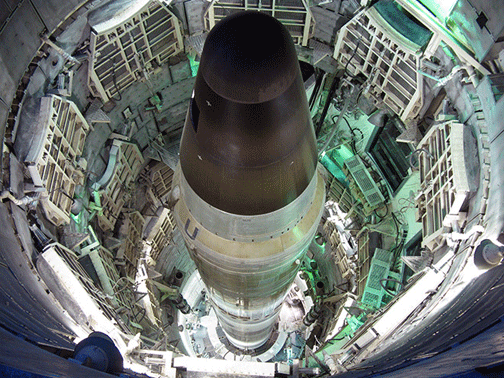 Time for nuclear sharing to end https://www.opendemocracy.net/can-europe-make-it/xanthe-hall/time-for-nuclear-sharing-to-end#.Vhg51kDhUXc.twitter openDemocracy XANTHE HALL 8 October 2015 You have to keep threatening to use nuclear weapons to make nuclear deterrence work. A view from Germany on the planned deployment of new US nuclear weapons. It was already announced some years ago, but last week Germany woke up to the fact that new US nuclear weapons are actually going to be deployed at its base in Büchel. Frontal 21, a programme on the second main TV channel reported last Tuesday that preparation for this deployment was due to begin at the German air force base. The runway is being improved, perimeter fences strengthened, new maintenance trucks arriving and the Tornado delivery aircraft will get new software.
It is a little known fact: Germany (and four other European countries) host nuclear weapons as part of NATO “nuclear sharing”. This means that in a nuclear attack the US can load its bombs onto German (or Belgian, Italian, Turkish and Dutch) aircraft and the pilots of those countries will drop them on an enemy target. This arrangement pre-dates the Non-Proliferation Treaty (NPT), which explicitly disallows any transfer of nuclear weapons from a nuclear weapon state to a non-nuclear weapon state, thus undermining the spirit of the treaty.
This new nuclear bomb – the B61-12 – is intended to replace all its older versions and be able to destroy more targets than previous models. It is touted by the nuclear laboratories as an “all-in-one” bomb, a “smart” bomb, that does not simply get tossed out of an aircraft, but can be guided and hit its target with great precision using exactly the right amount of explosive strength to only destroy what needs to be destroyed. Sound good?
Not to us – a guided nuclear bomb with mini-nuke capability could well lower the threshold for use. And the use of any kind of nuclear weapon would lead to the use of more nuclear weapons – this we know from the policies and planning of all nuclear weapon states. It has already been well established by three evidence-based conferences in recent years on the humanitarian impact of nuclear weapons that any use of nuclear weapons would have catastrophic humanitarian consequences.
This new “magic bomb” is not yet with us. It is still being developed and is planned to be deployed in five years time, if there are no more delays. The development of the B61-12 – euphemistically called a “Life Extension Programme” although it is a full redesign not just an update – has fortunately taken longer than intended, giving us more time to convince European leaders what a bad idea it is to deploy new nuclear weapons in Europe.
The debate is already under way in the “host” countries, most prominently in the Netherlands where the parliament has already voted not to task the new F35 aircraft with a nuclear role. However, the Dutch government is not listening. The German Bundestag voted in 2010 to get rid of the B61, and the government was nominally in favour, but after the change of government in 2013, Foreign Minister Steinmeier put the decision on ice, quoting the new security situation.
Yet the current confrontation between NATO and Russia needs deescalation, not rearmament. Sending a signal to Russia that NATO is modernising its European infrastructure and deploying new high-tech bombs is bound to elicit a reaction. Even as we write, reports are coming in that Russia will respond by withdrawing from the INF-Treaty, basing SS-26/Iskander missiles in Kaliningrad (didn’t they already do that?) and targeting Germany with nuclear weapons.
And what will be the NATO response to all of those threats? When will this escalation become hysteria and the first ‘shot across the bows’ start a nuclear war? Nuclear deterrence is the archetypal security dilemma. You have to keep threatening to use nuclear weapons to make it work. And the more you threaten, the more likely it is that they will be used.
This is the moment where nuclear weapon-free countries need to call out for a ban on nuclear weapons to stop this madness. It is also the right time for nuclear co-dependents, like Germany, to make up its mind to give its nuclear dependency up.
Deploying new nuclear weapons is forbidden by the NPT, which obligates its members to end the arms race. The transfer of nuclear weapons from the US to Germany and any plans to do so also undermine the NPT. As a responsible member state of this important treaty, it is time to denounce nuclear weapons and to join the international community of nuclear weapon-free countries that is signing the ‘Humanitarian Pledge’, calling for the legal gap to prohibit and eliminate nuclear weapons to be closed. Time for Germany to show some real leadership for nuclear disarmament.
If you enjoyed this article then please consider liking Can Europe Make it? onFacebook and following us on Twitter @oD_Europe
Time to give up the irrational doctrine of ‘nuclear deterrence’
a doctrine of mutual assured destruction……..in the case of nuclear arms, retaliation – whereby, in response to half the world being destroyed, you decide to destroy the other half – would not only be morally inexcusable, but irrational. Welcome to the nuclear hall of mirrors…..
there’s one thing that deterrence doesn’t protect against – the possibility of nuclear accident.
If a world without nuclear weapons is achievable, it will require political leadership. A country giving up its own would be a rare and shining thing: an altruistic act in world affairs. The cost would be minimal, the savings great, and it would make us far more convincing when trying to dissuade others from acquiring nuclear capability. Britain should do it.
 It’s time to leave the nuclear hall of mirrors, Guardian, David Shariatmadari, 6 Oct 15
Deterrence isn’t enough to keep us safe: the prospect of a nuclear accident alone justifies ridding the world of these weapons. Britain should lead the way “Nuclear weapons can wipe out life on Earth, if used properly.” Despite being found in the liner notes of a Talking Heads album, this is the sentence I think best captures the bizarre contradictions of the atomic age. Human beings have manufactured bombs explicitly designed to unleash destructive forces equivalent to hundreds of thousands of tonnes of TNT. Deploy them and millions die; civilisation as we know it could disappear. And yet, they’re not actually supposed to be used. In fact, their proper function is to remain in the ground, or at sea, or in the air. Launch, fire or drop ‘em and the whole system has failed. Is there any other device so intricately constructed in order to decrease the likelihood of its own use?
Last week, Jeremy Corbyn, a man with at least a chance of being entrusted with the launch codes for 225 British warheads, stated that he would never press the nuclear button. I asked philosopher Jonathan Glover, whose book Humanity: A Moral History of the 20th Century, includes a study of the Cuban missile crisis, about the comments. He confirmed most analyses so far. “On the assumption that if he’s PM he has full say, that would indeed get rid of any deterrence”. In other words, were Corbyn to gain power, those weapons would become immediately impotent. His shadow defence secretary, Maria Eagle, called the remarks “unhelpful”.
Corbyn had let the air out of the nuclear balloon, given the game away. Continue reading
UK PM David Cameron willing to make a nuclear attack if ‘justified’
David Cameron says that he would use nuclear weapons The PM described nuclear bombs as ‘the ultimate insurance policy’ and said the attack could be ‘justified’, The Independent, Jon stone Sunday 4 October 2015 David Cameron has said there are circumstances in which he would launch a nuclear attack on another country.
The PM described nuclear bombs as “the ultimate insurance policy” and said the attack could be “justified”.
Mr Cameron’s statement comes after Labour leader Jeremy Corbyn said he would not use nuclear bombs on another country’s population.
“If you … believe like me that Britain should keep the ultimate insurance policy of an independent nuclear deterrent, you have to accept there are circumstances in which its use would be justified,” Mr Cameron told BBC One’s Andrew Marr show on 4 October…….Warheads carried on Britain’s nuclear submarines are eight times more powerful than the atomic bombs used in 1945.
Parliament is set to vote during this parliamentar on whether to renew the Trident nuclear weapons system.
Mr Corbyn opposes renewal, but some Labour MPs have said they disagree with him.
The Opposition’s official policy remains in support of Trident after the party’s leadership failed to secure a policy vote to change it at annual conference last week.
The SNP and Green Party oppose Trident. The Liberal Democrats want a small nuclear weapons system which they say would be less costly. http://www.independent.co.uk/news/uk/politics/david-cameron-says-that-he-would-use-nuclear-weapons-a6679256.html
Facts on UK’s nuclear arsenal
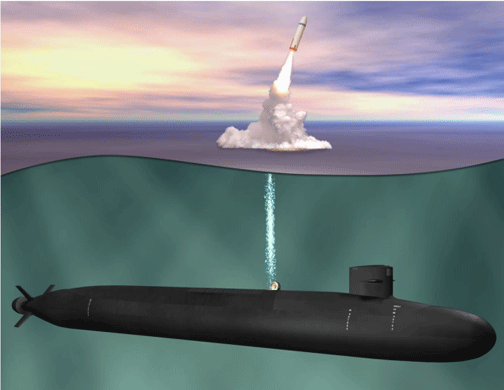 13 Things You Need To Know About Britain’s Nuclear Arsenal, Buzzfed, Tom Chivers, 2 Oct 15
Jeremy Corbyn’s election as Labour leader has reignited the debate about whether to replace Britain’s nuclear weapons. Here are the facts about the missiles and the submarines that launch them.
1. Next year, Britain will decide whether to build a new generation of nuclear missile submarines.
Since 1998, the only nuclear weapons Britain has are Trident intercontinental ballistic missiles aboard four Vanguard-class submarines.
The submarines are expected to be retired in 2028. In 2007, MPs voted overwhelmingly (by 409 votes to 61) to replace them; a final decision will be taken in 2016…………….
4. A 100kt bomb detonated in the air over central London would probably kill about 250,000 people, almost instantly.
That’s before taking into consideration the effects of radioactive fallout.
(Technical note: The 250,000 figure has been worked out using Nukemap, thispopulation-measuring map, and a rule of thumb that the total dead caused by a nuclear explosion is roughly equivalent to the population inside the “5psi overpressure” radius.)………
7. According to the Royal Navy, the Trident missilehas a range of 4,000 nautical miles, or 7,500km.
That means that a submarine at its base in Faslane could hit targets in Nevada, or central India.
Within two minutes of launch the missile will be travelling at 6km a second, and can reach a target at maximum range in about 20 minutes……..
9. The Trident missiles are built, and owned, by the US, although the warheads and submarines are British-built.
The US weapons manufacturer Lockheed Martin builds the missiles, and provides the technical support to keep them operational………
11. When a new prime minister is elected, they give the commanders of each of the four submarines a sealed letter, known as the letter of last resort.
These letters contain orders of what to do in the event that the government has been destroyed, and the prime minister and the “second person” have been killed or incapacitated, in a nuclear attack on Britain.
When the prime minister leaves office, their orders are destroyed unopened. No one knows what Gordon Brown, Tony Blair, or any of their predecessors wrote in their letters of last resort, and what action would have been taken if there had been an attack.
Russia Bolsters Pacific Ocean Submarine Presence
By Wendy Laursen 2015-09-30 The Russian navy has announced that it is developing its strategic nuclear submarine presence in the Pacific Ocean with the addition of the newest member of its submarine fleet……..http://www.maritime-executive.com/article/russia-bolsters-pacific-ocean-submarine-presence
Iran nuclear deal an example of sensible diplomacy

 People’s Forum: Iran agreement would prevent nuclear weapons http://www.elkharttruth.com/discussions/local-dialogue/peoples-forum/2015/10/02/People-s-Forum-Carl-Helrich-Iran-agreement-would-prevent-nuclear-weapons.html
Carl Helrich of Goshen breaks down the Iran nuclear agreement. Our agreement with Iran is to prevent Iran from pursuing a nuclear weapon. With John Kerry and one of our greatest nuclear physicists Ernest Moniz at the table we were not confused by the physics.
To see why this is a good agreement requires some knowledge of nuclear weapons. The lowest level weapon is a uranium bomb (Hiroshima). This requires 90 percent enriched uranium. The next level is a plutonium bomb (Nagasaki). This is considerably more complex in production and triggering. The problems are known; details are classified. The physics limits sizes of these, which we attained in WWII. Modern American, Russian, British, French, Chinese and probably Israeli arsenals contain fusion weapons, for which size is (in principle) unlimited.
Iran is enriching uranium. The agreement stops enrichment at a level sufficient for power plants, but far short of the 90 percent necessary for a weapon. The time required to “break out” and produce 90 percent will decrease as centrifuge technology improves. The agreement, however, provides the IAEA access to Iran’s sites. And successful breakout still puts Iran at the lowest level in the hierarchy of nuclear weapons. Any attempt to move higher will be evident and we will respond.
The agreement will stop Iran from obtaining a nuclear weapon for 15 years and, because it opens inspection of Iran’s nuclear sites, it also opens communication.
The world will be a better place if no nuclear weapon is ever again detonated in anger. But force can never guarantee that. And we can never erase the knowledge we have of nuclear weapons. Our only hope is in diplomacy and peaceful cooperation among nations.
Jeremy Corbyn opposes renewal of Trident nuclear weapons programme
Jeremy Corbyn row after ‘I’d not fire nuclear weapons’ comment, BBC News 30 September 2015 Jeremy Corbyn has faced criticism from senior Labour colleagues for saying he would not fire Britain’s nuclear weapons if he were prime minister.
Shadow defence secretary Maria Eagle said the words were “not helpful”, while shadow foreign secretary Hilary Benn said Mr Corbyn should abide by the party’s decision on renewing Trident.
Mr Corbyn said nuclear weapons “didn’t do the USA much good on 9/11”.
He added that he was elected leader on a platform opposing Trident renewal.
Prime Minister David Cameron said Mr Corbyn’s comments showed Labour could not be trusted with Britain’s national security.
Following the shadow cabinet criticism of his comments, Mr Corbyn was asked by the BBC’s John Pienaar what the point of the Labour defence policy debate and review was.
He said: “The point of a policy debate is to try and bring people with me.”
n his conference address on Tuesday, Mr Corbyn said his landslide leadership win gave a “mandate” for his views on disarmament of Britain’s nuclear weapons.
On Wednesday’s BBC Radio 4 Today programme he said: “I am opposed to the use of nuclear weapons. I am opposed to the holding of nuclear weapons. I want to see a nuclear-free world. I believe it is possible.
“I do not think we should be renewing Trident… I think we should be promoting an international nuclear weapons convention which would lead to a nuclear-free world.”…….http://www.bbc.com/news/uk-politics-34399565?SThisFB
USA nuclear fans trivialise effects of nuclear bombing
Photos of what the Manhattan Project’s plutonium bomb did to human beings at Nagasaki prove the point. There is radioactive blowback in the fact that the thousands of tons of plutonium created since 1945 is so dangerously hot and long-lived that, like the underworld itself, nobody knows how to handle it at all — except maybe to trivialize it.
Hoping perhaps to show that the bomb from hell can be transformed from a vengeful, self-destructive, nightmare demon, into a benign, peace-loving, fairy-tale prince, nuclear propagandists and their friends in Congress are establishing nuclear war theme parks — without the taint of mass destruction — at former bomb factories and nuclear weapons launch pads all across the country: Continue reading
International experts report on increasing risk of nuclear weapons use

 Leading U.S., Russia, European Experts Say Risk of Nuclear Use Rising, Ten Factors Heighten Risk http://www.nti.org/newsroom/news/leading-us-russia-european-experts-say-risk-nuclear-use-rising-ten-factors-heighten-risk/ 28 Sep 15, The risk of nuclear weapons use in the Euro-Atlantic region is on the rise—and it is higher today than it has been since the end of the Cold War, according to a new study and report from the Nuclear Threat Initiative (NTI).
The report, Rising Nuclear Dangers: Assessing the Risk of Nuclear Use in the Euro-Atlantic Region, was based on the results of a survey of leading security experts from the United States, Russia, and Europe who responded to a questionnaire from NTI. Nearly all shared the view that the significant deterioration in relations between the United States and Russia has led to dangerous conditions that make nuclear weapons use more likely—although the probability remains low.
“The United States and Russia are on an increasingly dangerous path. Weak channels of communication, close military encounters, and the other factors described in this report have increased the likelihood of misunderstanding and the possibility that a significant escalation in tensions could lead to catastrophe,” said NTI Co-chairman and CEO Sam Nunn.
The report cites 10 contributing factors to the heightened risk: Competing, irreconcilable narratives that drive heightened threat perceptions; a deficit of trust; domestic political imperatives; alliance politics; close military encounters; broken channels of communication; failing safeguards to prevent nuclear use; conventional force disparity; reckless nuclear saber rattling; and lack of nuclear experience.
The NTI report comes as President Obama and Russian President Vladimir Putin prepare this week to address the United Nations General Assembly. The presidents, who have not met one-on-one in more than a year, are scheduled to meet today in New York.
Report authors Robert Berls, NTI senior advisor for Russia and Eurasia, and Leon Ratz, also a Russia nuclear security expert at NTI, cited the risk of miscalculation as being of greatest concern. “It is the possibility of a major transformative event, such as a mid-air collision (between NATO and Russian warplanes) or a skirmish along NATO or Russian borders, that is on the rise,” the report says. “Such an incident involving the world’s two largest nuclear powers could plausibly shift alert postures and lead to a rapid series of escalatory measures precipitated by miscalculation and exacerbated by mistrust.”
1 This Month
23-25 October – on Zoom – World BEYOND War’s annual global conferenc


Shut down the radiation-damaged Heysham nuclear reactors now
To see nuclear-related stories in greater depth and intensity – go to https://nuclearinformation.wordpress.com

Say No to NASA’s Reckless Nuclear Reactor on the Moon
Say No to NASA’s Reckless Nuclear Reactor on the Moon
-
Archives
- October 2026 (190)
- September 2026 (339)
- August 2026 (330)
- July 2026 (355)
- June 2026 (287)
- May 2026 (306)
- April 2026 (356)
- March 2026 (251)
- February 2026 (267)
- January 2026 (308)
- December 2025 (358)
- November 2025 (359)
-
Categories
- 1
- 1 NUCLEAR ISSUES
- business and costs
- climate change
- culture and arts
- ENERGY
- environment
- health
- history
- indigenous issues
- Legal
- marketing of nuclear
- media
- opposition to nuclear
- PERSONAL STORIES
- politics
- politics international
- Religion and ethics
- safety
- secrets,lies and civil liberties
- spinbuster
- technology
- Uranium
- wastes
- weapons and war
- Women
- 2 WORLD
- ACTION
- AFRICA
- Atrocities
- AUSTRALIA
- Christina's notes
- Christina's themes
- culture and arts
- Events
- Fuk 2022
- Fuk 2023
- Fukushima 2017
- Fukushima 2018
- fukushima 2019
- Fukushima 2020
- Fukushima 2021
- general
- global warming
- Humour (God we need it)
- Nuclear
- RARE EARTHS
- Reference
- resources – print
- Resources -audiovicual
- Weekly Newsletter
- World
- World Nuclear
- YouTube
-
RSS
Entries RSS
Comments RSS

