USA’s budgetary tug of war between nuclear weapons and radioactive trash clean-up
The clean-up work, which includes a mixture of radioactive and chemical wastes, “is the largest environmental remediation ever undertaken by mankind and the most technically challenging”
One reason for the Energy Department’s struggles is a budgetary tug of war within the agency. One part of the department maintains the US’s atomic arsenal, and another is in charge of cleaning up the contamination from nuclear work. Funds for both come from the same pot, and in a shift from the 1990s, an increasing portion is going towards ensuring the readiness of the weapons arsenal

 Toxic remnants of US nuclear program http://www.theaustralian.com.au/business/wall-street-journal/toxic-remnants-of-us-nuclear-program/story-fnay3ubk-1227591352430m JOHN R. EMSHWILLER, GARY FIELDS THE WALL STREET JOURNAL NOVEMBER 03, 2015
About 70km southeast of San Francisco, in an 320ha mini-city built to create atomic bombs, there’s a contaminated building slated for eventual demolition.
Mark Costella, a facilities manager at the Energy Department’s Lawrence Livermore National Laboratory, would prefer to tear down the structure, but doesn’t have the tens of millions of dollars needed.
Instead, he is spending $US500,000 ($700,000) to fix the roof.
These are the kinds of contradictions at the heart of the complicated, expensive and struggling effort to clean up the US’s 70-year-old nuclear weapons program.
The Energy Department’s clean-up operation is wrestling with reduced budgets, tens of billions of dollars in ballooning cost estimates and 2700 structures on its to-do list. Officials said more than 350 additional unneeded facilities controlled by other programs in the Energy Department are probably eligible for transfer to the clean-up operation. But that office said its funds were limited and it was not accepting any more projects, no matter their significance.
That means some of the nation’s toughest threats are now on the backburner, possibly for decades, while relatively low-priority work moves forward.
Dirty and decaying structures where weapons work and other nuclear activities were carried out — some the size of several football fields and old enough to qualify for Social Security — are clustered in federal sites from South Carolina to California. Some are within easy walking distance of people’s homes. Continue reading
What’s happening? USA’s weapons program and nuclear waste clean-up funds come from the same kitty!
 Q&A: What’s Next for America’s Nuclear-Waste Clean-Up, http://blogs.wsj.com/washwire/2015/11/02/qa-whats-next-for-americas-nuclear-waste-clean-up/ WSJ, By GARY FIELDS and JOHN R. EMSHWILLER
The Senate and House are expected as early as this week to take up the defense authorization bill President Barack Obama vetoed last month and try to push a version of it through again. Buried in the bill is a proposal that could dramatically re-order nuclear-weapons clean-up activities, a decades-long effort that is costing taxpayers hundreds of billions of dollars
The proposal is five paragraphs, barely noticeable in the 1,000-plus-page document. But, if implemented, its effects could be felt in communities around the country. Here’s a Q&A:
What is the problem?
Creating America’s nuclear arsenal left thousands of structures around the U.S. tainted with radioactive and chemical contamination. Over the past quarter century, the Energy Department clean-up office has disposed of about 2,800 of them with a like number still to do. However, for various reasons some of the dirtiest and most dangerous buildings aren’t yet on that clean-up list and might not be added for decades.
How many structures are in this sort of limbo?
An Energy Department inspector general’s report this year put the number at over 350. Among them is Alpha 5 in Tennessee. Larger than ten football fields, it produced uranium for the Hiroshima bomb but is now a decaying structure of radioactive and chemical contamination where “the speed of degradation is far outpacing” maintenance funding, said an Energy Department report.
Why aren’t these places getting addressed?
The issue, as with many things, is money. The Energy Department’s money for the weapons program and the clean-up effort come from the same the same kitty. A quarter century ago, with the end of the Cold War, more money for the first time started flowing into clean-up than weapons. In recent years that situation has reversed. Plus, much of the money available to the clean-up operation is committed at various sites and there isn’t enough money to take to address some of these other buildings–even if they are more in need of attention than some of the structures being dealt with.
What are Congress and the administration doing?
The energy secretary has appointed a working group to review clean-up priorities. The provision in the vetoed defense bill would require buildings such as Alpha 5 to be added to the clean-up operation within three years—a timetable the Obama administration says isn’t possible.
Strong vote by Scottish Labour against renewal of trident nuclear missile system
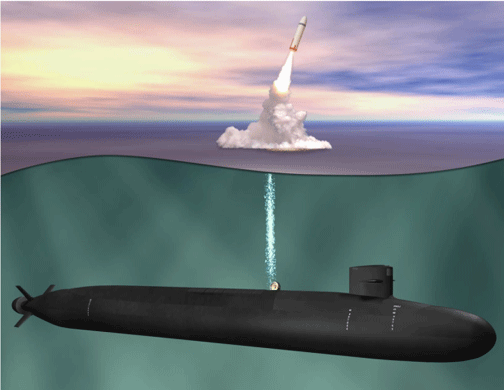
 Scottish Labour votes against renewal of Trident nuclear weapon system, Ft.com
Mure Dickie in Perth, 1 Nov 15 Scottish Labour has voted emphatically against renewing the Trident nuclear weapon system, offering a major boost to supporters of unilateral disarmament in the UK party, including its leader, Jeremy Corbyn. Party members and union delegates to a conference in Perth both voted by 70 per cent to 30 to abandon plans to maintain a “massively expensive” and “militarily useless” submarine-launched ballistic nuclear missile system.
Ian Murray, Labour’s only MP in Scotland and a member of the UK shadow cabinet, said the more than two-thirds majority meant disarmament was now formal policy for the Scottish party. That would mean it must be considered by UK Labour policy planners and could be included as part of Labour’s platform for the Scottish parliamentary elections next May. “It should be in the manifesto,” Mr Murray said.
The vote highlights uncertainty about Labour’s policy on Trident since Mr Corbyn’s election and will be portrayed by the Scottish National party as evidence of deep divisions between him and the UK party’s mainstream.
But many Scottish Labour members praised the decision of Kezia Dugdale, the Scottish party’s new leader and an opponent of unilateral disarmament, to allow delegates to choose to debate and vote on Trident and other issues.
The vote came after a vigorous and often passionate debate in which opponents of Trident renewal stressed what many called the fundamental immorality of nuclear weapons while supporters focused on the threat that scrapping them would pose to thousands of well-paid jobs.
Union representatives were divided on whether to back Trident renewal, with many fearing that promised defence industry diversification would not deliver equivalent employment for highly skilled workers…….. delegate Stephen Low said scrapping nuclear weapons would free money to be spent in more economically productive ways.
“I’d rather have pie in the sky on my horizon than a mushroom cloud,” Mr Low said. “You get a lot of bang for your buck with Trident . . . but you don’t get that many jobs.”
Defence policy is decided by the UK party, but Bill Butler, a candidate for the party in next May’s Scottish parliamentary election, said it could help build momentum for nuclear disarmament……..http://www.ft.com/intl/cms/s/0/fb106dec-809b-11e5-84dc-31c8b3b18e5f.html#axzz3qGtjP1GJ
Vietnam: Nonproliferation and Nuclear Energy
Nonproliferation and Nuclear Energy: The Case of Vietnam Is Vietnam diverting its civilian know-how to create an indigenous nuclear weapons program? Not yet, says the CSS’ Oliver Thränert, but increased tensions or overt conflict with China could lead Hanoi to develop its own nuclear deterrent. By Oliver Thränert for Center for Security Studies (CSS) 26 October 2015
For many years, the international nuclear non-proliferation regime has been in deep crisis. This became apparent most recently when the ninth Review Conference of the Parties to the Treaty on the Non-Proliferation of Nuclear Weapons (NPT) in May 2015 ended without a common final document. At the same time, a number of threshold countries are planning to begin using nuclear energy for peaceful purposes. In a time of increasing international tensions, some of them might build on know-how acquired through their civilian programs to safeguard their national security needs through a nuclear weapons program in the near future. Vietnam is an interesting case in point. Irrespective of certain delays in the development of its peaceful nuclear program, the country has progressed quite far. At the same time, it is engaged in an increasingly precarious conflict with its main neighbor, nuclear-armed China. Currently, there are no signs of a Vietnamese nuclear weapons program. In the framework of the nuclear non-proliferation regime, the country is a model of transparency and cooperation. But it is uncertain whether this will always remain the case. On the contrary, Hanoi might change its policy if the conflict with China should come to a head while the NPT continues to be weakened…….
Vietnam’s strategic situation Vietnam’s strategic environment is rapidly changing. This is especially true for Vietnam’s relations with China. While the Communist parties of the two countries regard each other as brother parties and economic relations run deep, the two countries also have disputes over certain small islands in the South China Sea and over the mutual demarcation of exclusive economic zones in these waters. The extent of widespread anti-Chinese feeling among the general public became evident in May 2014, when a Chinese oil platform was discovered in an area claimed by Vietnam. Subsequently, there were not only skirmishes between Chinese and Vietnamese vessels, but also demonstrations in several Vietnamese cities that escalated into violence in which several people were killed.
With an increasingly aggressive China next door, Vietnam, like most of the riparian states, is seeking closer engagement with the US. Washington has become one of Vietnam’s main trading partners. Military relations, too, have been intensified. In July 2013, speaking in Washington, D.C., US President Barack Obama and Vietnamese President Truong Tan Sang announced a comprehensive bilateral partnership. One important step towards the closer development of ties was the passing in Congress of a 123 Agreement in September 2014, which paved the way for future cooperation in the peaceful use of the atom.
Despite the interest in improving cooperation with the US across the board, however, the leadership in Vietnam must be aware that issues such as the country’s single-party system, together with a human-rights situation that the US continues to regard as problematic, are certain to resurface time and again in relations with Washington. Against this background, US security guarantees such as Japan and South Korea have been given can hardly be expected by Vietnam. At the same time, there is the danger that an overly evident rapprochement with Washington might provoke reactions by China. Thus, Hanoi is forced to perform a difficult tightrope walk, balancing out its relations with China on the one hand against those with the US on the other………http://www.isn.ethz.ch/Digital-Library/Articles/Detail/?id=194337
Cost of renewing UK’s Trident nuclear submarines balloons out to $256 billion
A final decision on replacing the existing vessels carrying the Trident missiles — four Vanguard-class submarines — is due next year and Cameron says he will press ahead with the renewal
UK nuclear deterrent to cost $256 billion, far more than expected, Reuters, LONDON | BY ELIZABETH PIPER, 25 Oct 15 The overall cost of replacing and maintaining Britain’s nuclear deterrent will reach 167 billion pounds ($256 billion), much more than expected, according to a lawmaker’s and Reuters’ calculations based on official figures.
The Scottish Nationalist Party, which wants Britain’s Scotland-based nuclear-armed Trident submarines scrapped, called the sum “unthinkable and indefensible” at a time when deep cuts under the government’s “austerity” policies mean “thousands of people across the UK are struggling to afford basics like food”.
Some military officials also oppose investment in Trident, saying the money would be better spent on maintaining the army and on more conventional technology, which have also faced cuts. Continue reading
Time USA ratified Comprehensive Nuclear Test Ban Treaty as Eisenhower and JFK wanted
 let’s finish what Ike and JFK started by ratifying the Comprehensive Nuclear Test Ban Treaty. Republicans and Democrats can finish this journey and help build a more peaceful world for us all.
It’s Time to Finish What Ike and JFK Started and Ban Nuclear Weapons Testing by William Lambers, History News Network, 25 Oct 2015, William Lambers is the author of “Nuclear Weapons On an October day in 1987 people in Las Vegas thought they were having an earthquake. Tremors rattled the city’s buildings. But this was not nature at work. This was an underground nuclear test explosion at the Nevada Test Site.
Residents of Hattiesburg, Mississippi had their own similar experiences from underground nuclear tests. There have been over 1000 U.S. nuclear tests with severe public health consequences from radiation. And these nuke tests cost many billions of taxpayer dollars. Why would anyone want to relive those chapters of the Cold War?
Instead, how about Senate Democrats and Republicans ratifying the Comprehensive Nuclear Test Ban Treaty (CTBT), which bans all nuclear test explosions.
Now these two political parties working together may sound like a fairy tale. But history reveals that Dems and Reps, for the most part, have shared this goal of ending nuke testing.
Since the days of President Dwight Eisenhower (a Republican), the United States has sought a treaty ending nuclear testing. In a letter to Soviet Premier Nikita Khrushchev, Eisenhower wrote that a nuclear test ban “would be an important step toward reduction of international tensions and would open the way to further agreement on substantial measures of disarmament.”
Ike and his team worked very hard to achieve a treaty ending nuclear testing. They contributed much research for building an international monitoring system to detect anyone cheating a treaty by setting off a secret nuclear explosion.
Eisenhower got the ball rolling and his successor, Democrat John F. Kennedy, took up the fight. Achieving a nuclear test ban treaty became a major initiative of JFK’s presidency. This was during the most dangerous period of the Cold War with the Soviet Union. Continue reading
United Arab Emirates called upon to lead in regional nuclear disarmament
UAE must lead by example for regional nuclear disarmament ABU DHABI , Caline Malek The National.ae, 25 Oct 15 The head of a European nuclear safety organisation is calling on the UAE to lead its neighbours into a treaty that prevents testing of nuclear weapons.
Dr Lassina Zerbo, secretary general of the Preparatory Commission for the Comprehensive Nuclear-Test-Ban Treaty Organisation (CTBTO), said on Sunday that a Middle East free of nuclear weapons could not happen without a test-free zone.
“If people in the region are concerned about the Iran nuclear deal, one of the things they should see is that it can only contribute to building confidence in the region,” he said on the sidelines of the World Economic Forum in Abu Dhabi.
“It could conclude a framework for countries in the Middle East and the Gulf, [such as] Iran, Israel, Egypt and Saudi Arabia, to adhere to all pending arms control and non-proliferation treaties that are out there.”
The UAE has signed and ratified a number of nuclear treaties, including the CTBTO’s treaty, which prevents nuclear testing, and the United Nations’ Treaty on the Non-Proliferation of Nuclear Weapons, which is the main legal framework for nuclear disarmament, non-proliferation and peaceful use of nuclear energy.
Hamad Alkaabi, UAE Ambassador to the International Atomic Energy Agency (IAEA), said the UAE viewed global nuclear non-proliferation and disarmament as critical to regional and international peace and security. “The comprehensive nuclear test ban treaty is instrumental in achieving the goals of nuclear disarmament,” he said. “This year marks 70 years since the atomic bombings of Hiroshima and Nagasaki in Japan, and yet the international community has not been able to put the CTBT into force.”
Although the treaty has now reached 183 signatures and 164 ratifications, Mr Alkaabi said more needed to be done.
“The UAE will continue to support all efforts to reach this end,” he said. “In particular, the UAE has been encouraging states that have not yet signed and ratified the treaty to do so without further delay.”
Dr Zerbo said the UAE could be of great help to organisations like the CTBTO.
“I think they can help us to deal with what is happening in the region, a region that is difficult,” he said. “They could be of help in defusing the tensions that are here, should they have the will to [lead], which they can because they have the possibilities – financially, technically and politically.
“We need a country that can lead this region into that process of confidence-building that is required for all countries in the Middle East to adhere to the arms control and non-proliferation treaties that are still pending.”
He called nuclear security a global issue linked to arms control, making them a priority on the international agenda……..http://www.thenational.ae/uae/government/uae-must-lead-by-example-for-regional-nuclear-disarmament
Pakistan edging towards deal on nuclear non proliferation
 Islamabad moves closer to total disclosure over nuclear weapons, The National ae, Tom Hussain, 25 Oct 15, It has been more than 17 years since Pakistan detonated five nuclear warheads, in a tit-for-tat exchange with India that announced weapons of mass destruction were now part of the South Asian strategic theatre.
Since then, very little has been made public about the underlying philosophy of Pakistan’s programme. In fact, the sole stated “known” is that Pakistan has refused to embrace the no-first-strike commitment made by India, on the ground that Pakistan’s strategic weapons exist to discourage India from using its conventional military superiority to overwhelm it. That position was taken in 2001.
Until recently, the only other information in the public realm was gleaned from Pakistan’s ballistic missile tests. For example, its tests two years ago of short-range missiles revealed they would be used, in theory, against an Indian force that had seized a strategically important parcel of Pakistani territory. However, it has never been specified which parcels of territory would qualify under that inferred criterion.
Pakistan’s so-called “red lines” – events that would trigger a nuclear weapons launch – are unstated and the subject of conjecture. Security analysts have learnt of no more than three such scenarios and they are statements of the obvious for those familiar with recent history……..
Against that backdrop, and that of annual upward revisions of estimates of the number of Pakistan’s nuclear warheads, there have been occasional outbursts of alarm in the US media, reflecting how little is actually known.
Subtly, that situation has begun to change. In June, a US-Pakistan working group issued a statement about their shared desire to ensure the security of Pakistan’s nuclear arsenal and steps Pakistan had taken to prevent even unintentional proliferation of its technology. Then, in August, the Carnegie Endowment for International Peace and the Stimson Centre proposed that Pakistan’s strategic programme should be accepted and brought into the global non-proliferation scheme, in exchange for its commitment to a ceiling on the number of warheads it would produce and the range of its ballistic missile delivery platforms. This month, Washington Post columnist David Ignatius disclosed that Carnegie’s proposals had, in fact, been adopted by the Obama administration and offered to Islamabad. The veracity of the disclosure was confirmed, by inference, in a statement issued after a meeting of Pakistan’s civilian and military leadership held the next day and, the following day, by the White House.
But a deal is not imminent……..
Last Wednesday, however, 24 hours before prime minister Nawaz Sharif’s meeting with Barack Obama, Pakistan’s press, quoting the same unnamed official sources, reported the government’s position was markedly different to the long-perceived policy of zero compromise. It would not accept limits on the number of tactical battlefield warheads, it was reported. No mention was made of other types of devices, the strong hint being that a compromise could be reached on those, eventually, if India were prepared to make a matching commitment.
That is, by far, the biggest shift in – and disclosure of – Pakistan’s nuclear doctrine since the 1998 tests……..
It would appear Pakistan has taken the first steps towards joining the global non-proliferation regime. Nobody is suggesting a breakthrough will happen soon, but in a world increasingly characterised by regional conflicts, Pakistan’s willingness to negotiate is an encouraging sign that responsible attitudes are being adopted.
Tom Hussain is Asia-Pacific editor of The World Weekly On Twitter: @tomthehack http://www.thenational.ae/opinion/comment/islamabad-moves-closer-to-total-disclosure-over-nuclear-weapons
Pakistan refuses to limit tactical nuclear weapons
Pakistan tells US it won’t accept limits on tactical nuclear arms October 23, 201 Mehreen Zahra-Malik Islamabad: Pakistani Prime Minister Nawaz Sharif, who met US President Barack Obama at the White House on Thursday, has rebuffed attempts to limit his country’s use of tactical nuclear weapons, Pakistani officials said.
Pakistan insists smaller weapons would deter a sudden attack by its neighbour India, which is also a nuclear power. But the US worries they may further destabilise an already volatile region because their smaller size makes them more tempting to use in a conventional war.
The Obama administration is preparing to sell eight F-16 fighter jets to Pakistan in an attempt to bolster the two countries’ relationship, despite Washington’s concerns about Pakistan’s growing nuclear arsenal.
The Federation of American Scientists, a leading US group that monitors the spread of nuclear weapons, published a report on Wednesday that shows that Pakistan has expanded its arsenal to between 110 and 130 warheads, up from 90 to 110 four years ago.
Officials in Washington have said they are exploring whether a deal might be possible to halt Pakistan’s deployment of tactical nuclear weapons that US experts fear are vulnerable to being launched without authorisation, or stolen, on the battlefield.
Pakistan says the US is demanding unreasonable limits on its use of nuclear weapons and not offering much in return apart from a hazy promise to consider Pakistan as a recognised recipient of nuclear technology………The Federation of American Scientists, a leading US group that monitors the spread of nuclear weapons, published a report on Wednesday that shows that Pakistan has expanded its arsenal to between 110 and 130 warheads, up from 90 to 110 four years ago.
Officials in Washington have said they are exploring whether a deal might be possible to halt Pakistan’s deployment of tactical nuclear weapons that US experts fear are vulnerable to being launched without authorisation, or stolen, on the battlefield.
Pakistan says the US is demanding unreasonable limits on its use of nuclear weapons and not offering much in return apart from a hazy promise to consider Pakistan as a recognised recipient of nuclear technology. http://www.smh.com.au/world/pakistan-to-tell-us-it-wont-accept-limits-on-tactical-nuclear-arms-20151022-gkgees.html#ixzz3phoMZJnK
Vatican insists that United Nations must work for nuclear disarmament
Holy See: (Vatican Radio) The Holy See on Thursday said it was “incumbent” upon the United Nations “to redouble its efforts” to implement provisions of treaties which aim to reduce further the role of nuclear weapons in international security.
Archbishop Bernardito Auza, the Permanent Observer of the Holy See to the United Nations, was speaking during a General Assembly meeting on Disarmament.
“Non-proliferation, arms control and disarmament are vital elements of advancing global security and stability,” said Archbishop Auza. “Without them, the achievement of the just adopted 2030 Agenda for Sustainable Development is jeopardized.”
The full statement is below
New York, 22 October 2015
Mr. Chair,
My delegation extends congratulations to you as you lead the First Committee, the work of which is critical to the mandate of the United Nations to bring about a more peaceful and stable world.
At the outset of its seventieth session, Pope Francis addressed the General Assembly and spoke directly of the challenges we deal with in this Committee. He noted that “the constant tendency to the proliferation of arms, especially weapons of mass destruction, such as nuclear weapons,” is contrary to the foundations of the fundamental juridical framework set out in the Preamble and the first Article of the Charter of the United Nations, and in practice denies them.
The Pope affirmed that “an ethics and a law based on the threat of mutual destruction – and possibly the destruction of all mankind – are self-contradictory and an affront to the entire framework of the United Nations, which would end as ‘nations united by fear and distrust.’ There is an urgent need to work for a world free of nuclear weapons, in full application of the Non-proliferation Treaty, in letter and spirit, with the goal of a complete prohibition of these weapons.”
Recalling the words of Pope Francis and noting the failure of the Ninth Review Conference of the Treaty on the Non-Proliferation of Nuclear Weapons (NPT) to agree on a final document, the Holy See wishes to underline once more that nuclear deterrence and the threat of mutually assured destruction are irreconcilable with, and contrary to, an ethics of fraternity and peaceful coexistence among peoples and among States……..http://en.radiovaticana.va/news/2015/10/23/holy_see_united_nations_must_work_for_nuclear_disarmament/1181365
Will Canada now oppose depleted uranium weapons?

 Will Canada’s election deliver Real Change on its depleted uranium weapons policy? http://www.bandepleteduranium.org/en/canadas-liberal-party-opposed-depleted-uranium The Liberal Party opposed depleted uranium weapons during the 2015 election, will Canada’s new government break from the stance of the Harper government on DU?
Under Harper’s government, Canada failed to join the Arms Trade Treaty and dragged its heels on the Convention on Cluster Munitions, all the while claiming leadership on disarmament issues in spite of strong evidence to the contrary. Wereviewed their position in February this year. Can we expect the situation to improve under Trudeau’s leadership?
Prior to the election Mines Action Canada (MAC) undertook informal polling of all the main parties on a range of humanitarian disarmament topics, including on DU weapons. Canada has historically abstained on UN General Assembly resolutionson DU, even though it no longer has the weapons in service – an in-depth ICBUW briefing on Canada’s position on DU is available in English and French.
MAC posed the same DU question to all the main parties – Harper’s Conservatives failed to respond to any of the questions.
“The use of depleted uranium weapons has come under international scrutiny in recent years due to significant concerns about the long term health consequences of their use. If your party forms the next government, what will Canada’s policy be on the use of depleted uranium weapons? What will be Canada’s position on providing technical and financial assistance in order to aid decontamination of affected states and reduce the risks to civilians?”
The response from the Liberal Party was short and to the point:
“The Liberal Party of Canada opposes the use of depleted uranium munitions.”
“Le Parti libéral du Canada s’oppose à l’utilisation de munitions à l’uranium appauvri.”
While the Liberal’s tone was clearly welcome, it failed to elaborate on how it would fulfil this opposition if elected. Nor did their very short answer make any mention of assistance for decontamination. Nevertheless, it could be seen as a sign that Canada’s policy may change in the coming months and ICBUW urges its Canadian supporters to seek clarification on the Liberal position once the election excitement has subsided.
The first big test of the Liberal’s position will come in October 2016, when a sixth UN General Assembly resolution on DU will be tabled. A vote in favour from Canada would be a welcome development, and would help to reinforce the norms on transparency and assistance that the resolutions have been helping to build since 2007.
Nuclear-Tipped Missiles very dangerous, as Russia is proving
Russia is Proving Why Nuclear-Tipped Cruise Missiles Are a Very Bad Idea, Defense One OCTOBER 19, 2015 BY TOM Z. COLLINAWILLIAM SAETREN
Those four cruise missiles that crashed in Iran could’ve been carrying nuclear warheads — which is why the US should ban them, not renew them. When Russia this month launched 26 cruise missiles from ships in the Caspian Sea into Syria, more than 900 miles away, the missiles had to pass over Iran and Iraq. Four crashed in Iran. According to reports, a number of cows were killed in the ensuing blast.
Apologies to the cows, but this could have been a lot worse.
The Russian cruise missiles, the Kalibr-NK, were armed with conventional warheads. But these missiles are also capable of carrying nuclear warheads. That’s a problem. Cruise missile attacks are inherently ambiguous and can add major risks to a crisis. Had the target been the United States, military leaders would not have known until impact if it was a nuclear attack. This kind of uncertainty can increase the risk of nuclear war and it’s why nuclear-tipped cruise missiles should banned completely.
Cruise missiles are unreliable. In the case of Moscow’s attack into Syria, if nuclear warheads had been involved and some of them crashed in Iran without detonating (which is likely), Tehran could have retrieved them. This scenario is not as far fetched as one might think. In 2007, six nuclear-armed cruise missiles were mistakenly loadedonto a B-52 bomber and flown across the United States. Because nuclear-armed cruise missiles are virtually indistinguishable from conventional ones, the error went undetected for 36 hours. If this can happen under strict American guidelines, imagine what could happen from Russia to the Middle East…
why is the U.S. Air Force planning to spend $20 billion to build approximately 1,000 new nuclear-armed Air-Launched Cruise Missiles, or ALCMs, with refreshed warheads, to replace its current fleet? It should not. Not only are they “uniquely destabilizing” but their mission has evaporated.
As Perry and Weber explain, nuclear cruise missiles were initially conceived to keep the B-52 flying until it could be replaced by the stealthier B-2 bomber. During the Vietnam War, many B-52s were lost to enemy surface-to-air defenses making it painfully obvious that the plane was no longer able to safely operate in contested airspace. But with the cruise missile, the B-52 could still strike targets deep in the heart of enemy territory. This feature was deemed necessary during the Cold War so NATO could offset the Warsaw Pact’s larger conventional forces.
That was then. As Perry and Weber write, such a Cold War posture “no longer reflects the reality of today’s U.S.conventional military dominance.”
In fact, the ALCM was supposed to be retired long ago along with the B-52 bomber when the B-2 came on line……..
President Obama can safely cancel the new nuclear cruise missile and challenge other nations, like Russia, to eliminate these destabilizing weapons. This step would save tens of billions of dollars, reduce the risk of nuclear war and provide momentum toward Obama’s goal of eliminating nuclear weapons. And, ironically, it would eliminate yet another potential pathway for Iran to get the bomb. http://www.defenseone.com/ideas/2015/10/russia-proving-why-nuclear-tipped-cruise-missiles-are-very-bad-idea/122938/
South Korea claims that North Korea is preparing for nuclear test
Seoul says North Korea preparing for nuclear test http://www.thestar.com/news/world/2015/10/20/seoul-says-north-korea-preparing-for-nuclear-test.html The South Korean spy agency says its assessment is based on the monitoring of activities at North Korea’s main Nyongbyon nuclear complex. By: The Associated Press, Published on Tue Oct 20 2015
The office of lawmaker Lee Cheol Woo said the National Intelligence Service made the assessment after monitoring activities at North Korea’s main Nyongbyon nuclear complex.
Lee and another lawmaker, Shin Kyung-min, said the spy agency didn’t say how it obtained the information. Shin said it also didn’t elaborate on what test preparations meant. The spy agency’s public affairs office said it could not confirm the reported assessment.
Last month, North Korea said it had upgraded and restarted all of its atomic fuel plants, sparking speculation that it might carry out a fourth nuclear test explosion.
The speculation subsided after North Korea did not go ahead with a threat to conduct a banned long-range rocket launch to send what it called a satellite into orbit earlier this month. All of North Korea’s three previous nuclear tests in 2006, 2009 and 2013 came after it launched long-range rockets.
A fourth test could put North Korea a step closer to its goal of building a nuclear warhead small enough to mount on a long-range missile that could threaten the United States. North Korea says it has already manufactured such a warhead, but many foreign analysts are skeptical of its claim.
World Medical Association calls for ban and elimination of nuclear weapons
|
|
World Medical Association (WMA) Statement on Nuclear Weapons
Adopted 17 October 2015
- The WMA Declarations of Geneva, of Helsinki and of Tokyo make clear the duties and responsibilities of the medical profession to preserve and safeguard the health of the patient and to consecrate itself to the service of humanity. The WMA considers that it has a duty to work for the elimination of nuclear weapons.
- Therefore the WMA:
2.1 Condemns the development, testing, production, stockpiling, transfer, deployment, threat and use of nuclear weapons;
2.2 Requests all governments to refrain from the development, testing, production, stockpiling, transfer, deployment, threat and use of nuclear weapons and to work in good faith towards the elimination of nuclear weapons;
2.3 Advises all governments that even a limited nuclear war would bring about immense human suffering and substantial death toll together with catastrophic effects on the earth’s ecosystem, which could subsequently decrease the worlds food supply and would put a significant portion of the world’s population at risk of famine; and
2.4 Requests that all National Medical Associations join the WMA in supporting this Declaration, use available educational resources to educate the general public and to urge their respective governments to work towards the elimination of nuclear weapons.
2.5 Requests all National Medical Associations to join the WMA in supporting this Declaration and to urge their respective governments to work to ban and eliminate nuclear weapons.
Overwhelming costs of Britain’s Trident nuclear submarines – cannot be measured
The Conservative government has not given an up-to-date estimate of the program costs. Previously, it has said the submarines would cost between £11 billion and £14 billion at 2006 prices and estimated an overall cost of up to £20 billion when infrastructure and other costs are wrapped in……….
The Labour Party, the main opposition party, has previously been committed to a credible nuclear deterrent, but the recent election of the left-winger Jeremy Corbyn as the party leader has thrown that policy into confusion…….
 Nuclear Sub Project Poses UK’s Biggest Financial Challenge, Defense News By Andrew Chuter October 15, 2015 LONDON — Britain’s nuclear submarine effort is a monster-sized undertaking that keeps the Ministry of Defence’s top civil servant awake at night, the official admitted to the Parliamentary Public Accounts Committee Wednesday.
Jon Thompson, the permanent undersecretary at the MoD and the man responsible for keeping defense spending in check, told lawmakers that renewing Britain’s nuclear deterrent was the biggest project the ministry was ever going to tackle.
“The project I worry about the most in relation to future financial risk is the nuclear enterprise. It’s a significant element of the overall equipment plan … it most keeps me awake at night,” he told the committee during a session examining the MoD’s progress in improving financial management.
The defense nuclear enterprise covers the equipment, infrastructure and people required to deliver the UK deterrent and nuclear powered submarines, including the new Astute-class hunter killer boats and Trident missile boats. Continue reading
1 This Month
23-25 October – on Zoom – World BEYOND War’s annual global conferenc


Shut down the radiation-damaged Heysham nuclear reactors now
To see nuclear-related stories in greater depth and intensity – go to https://nuclearinformation.wordpress.com

Say No to NASA’s Reckless Nuclear Reactor on the Moon
Say No to NASA’s Reckless Nuclear Reactor on the Moon
-
Archives
- October 2026 (190)
- September 2026 (339)
- August 2026 (330)
- July 2026 (355)
- June 2026 (287)
- May 2026 (306)
- April 2026 (356)
- March 2026 (251)
- February 2026 (267)
- January 2026 (308)
- December 2025 (358)
- November 2025 (359)
-
Categories
- 1
- 1 NUCLEAR ISSUES
- business and costs
- climate change
- culture and arts
- ENERGY
- environment
- health
- history
- indigenous issues
- Legal
- marketing of nuclear
- media
- opposition to nuclear
- PERSONAL STORIES
- politics
- politics international
- Religion and ethics
- safety
- secrets,lies and civil liberties
- spinbuster
- technology
- Uranium
- wastes
- weapons and war
- Women
- 2 WORLD
- ACTION
- AFRICA
- Atrocities
- AUSTRALIA
- Christina's notes
- Christina's themes
- culture and arts
- Events
- Fuk 2022
- Fuk 2023
- Fukushima 2017
- Fukushima 2018
- fukushima 2019
- Fukushima 2020
- Fukushima 2021
- general
- global warming
- Humour (God we need it)
- Nuclear
- RARE EARTHS
- Reference
- resources – print
- Resources -audiovicual
- Weekly Newsletter
- World
- World Nuclear
- YouTube
-
RSS
Entries RSS
Comments RSS

