Don’t be fooled: science shows that low dose ionising radiation harms living organisms
Radiation Impact Studies: Chernobyl and Fukushima, Dissident Voice, by Robert Hunziker / September 23rd, 2015 Some nuclear advocates suggest that wildlife thrives in the highly-radioactive Chernobyl Exclusion Zone, animals like it, and not only that, a little radiation for anybody and everybody is harmless and maybe good, not bad. This
 may seem like a senseless argument to tackle were it not for the persistence of positive-plus commentary by nuke lovers. The public domain deserves better, more studied, more crucial answers.
Fortunately, as well as unfortunately, the world has two major real life archetypes of radiation’s impact on the ecosystem: Chernobyl and Fukushima. Chernobyl is a sealed-off 30klm restricted zone for the past 30 years because of high radiation levels, whereas PM Abe’s government in Japan has already started returning people to formerly restricted zones surrounding the ongoing Fukushima nuclear melt-down.
 The short answer to the supposition that a “little dab of radiation is A-Okay” may be suggested in the title of a Washington Blog d/d March 12, 2014 in an interview of Dr. Timothy Mousseau, the world-renowned expert on radiation effects on living organisms. The hard answer is included further on in this article.
Dr. Mousseau is former Program Director at the National Science Foundation in Population Biology, Panelist for the National Academy of Sciences’ Panels on Analysis of Cancer Risks in Populations Near Nuclear Facilities and GAO Panel on Health and Environmental Effects from Tritium Leaks at Nuclear Power Plants, and a biology professor – and former Dean of the Graduate School, and Chair of the Graduate Program in Ecology – at the University of South Carolina.
The title of the Washington Blog interview is:
“Chernobyl and Fukushima Studies Show that Radiation Reduces Animal and Plant Numbers, Fertility, Brain Size and Diversity… and Increases Deformities and Abnormalities”
Dr. Mousseau made many trips to Chernobyl and Fukushima, making 896 inventories at Chernobyl and 1,100 biotic inventories in Fukushima. His mission was to test the effects of radiation on plants and animals. The title of his interview (above) handily serves to answer the question of whether radiation is positive for animals and plants. Without itemizing reams and reams of study data, the short answer is: Absolutely not! It is not positive for animals and plants, period.
Moreover, low doses of radiation, aka “radiation hormesis”, is not good for humans, as advocated by certain energy-related outlets. Data supporting their theory is extremely shaky and more to the point, flaky.
Furthermore, according to the Cambridge Philosophical Society’s journalBiological Reviews, including reported results by wide-ranging analyses of 46 peer-reviewed studies published over 40 years, low-level natural background radiation was found to have small, but highly statistically significant, negative effects on DNA and several measures of good health.
Dr. Mousseau, with co-author Anders Møller of the University of Paris-Sud, examined more that 5,000 papers involving background radiation in order to narrow their findings to 46 peer-reviewed studies. These studies examined plants and animals with a large preponderance of human subjects.
The scientists reported significant negative effects in a range of categories, including immunology, physiology, mutation and disease occurrence. The frequency of negative effects was beyond that of random chance.
There is no threshold below which there are no effects of radiation.
With the levels of contamination that we have seen as a result of nuclear power plants, especially in the past, and even as a result of Chernobyl and Fukushima and related accidents, there’s an attempt in the industry to downplay the doses that the populations are getting, because maybe it’s only one or two times beyond what is thought to be the natural background level…. But they’re assuming the natural background levels are fine. And the truth is, if we see effects at these low levels, then we have to be thinking differently about how we develop regulations for exposures, and especially intentional exposures to populations, like the emissions from nuclear power plants…… http://dissidentvoice.org/2015/09/radiation-impact-studies-chernobyl-and-fukushima/
At least four Russian cruise missiles have crash-landed in Iran
 Russian missiles crash in Iran: what we know, Vox World, by Max Fisher on October 8, 2015
- At least four Russian cruise missiles, headed for Syria, have reportedly crash-landed in Iran, Pentagon sources tell CNN and other outlets.
- So far neither Russian nor Iranian sources have confirmed the incident, though Iran’s semi-official Fars News Agency is carrying the story (but crediting CNN).
- It is not known whether the missiles detonated or whether there are any casualties. Iran has enough empty space that it’s possible the missiles crashed harmlessly…….http://www.vox.com/2015/10/8/9482023/russia-missiles-iran-crash
Britain’s national embarrassment – the failing Hinkley nuclear white elephant

 The Hinkley Saga is a National Embarrassment no2 nuclear power nuCLEARnews No 78 October 2015 Two of the world’s biggest ratings agencies have warned that EDF and its Chinese partners face credit-rating downgrades if they press ahead with the £24.5 billion Hinkley Point C nuclear project, according to The Times. And the Chinese appear to be refusing to take a 40% equity stake in the project – opting instead for 30% or less.
Time to end the madness of USA’s nuclear weapons deployed in Europe
Nuclear deterrence is the archetypal security dilemma. You have to keep threatening to use nuclear weapons to make it work. And the more you threaten, the more likely it is that they will be used.
This is the moment where nuclear weapon-free countries need to call out for a ban on nuclear weapons to stop this madness. It is also the right time for nuclear co-dependents, like Germany, to make up its mind to give its nuclear dependency up.

Nuclear madness – NATO’s WMD ‘sharing’ must end http://www.theecologist.org/blogs_and_comments/commentators/2985795/nuclear_madness_natos_wmd_sharing_must_end.html Xanthe Hall 9th October 2015
The US’s development of its new ‘smart’ nuclear bomb, the B61-12, is an outright violation of the Non Proliferation Treaty, writes Xanthe Hall. Yet five other ‘non-nuclear’ NATO nations – Germany, Holland, Belgium, Italy and Turkey – are set to accept it onto their territories, so their own aircraft can use it in nuclear attacks.
It was already announced some years ago, but last week Germany woke up to the fact that new US nuclear weapons are actually going to be deployed at its base in Büchel.
Frontal 21, a programme on the second main TV channel reported last Tuesday that preparation for this deployment was due to begin at the German air force base. The runway is being improved, perimeter fences strengthened, new maintenance trucks arriving and the Tornado delivery aircraft will get new software.
It is a little known fact: Germany, Holland, Belgium, Italy and Turkey host nuclear weapons as part of NATO ‘nuclear sharing’.
This means that in a nuclear attack the US can load its bombs onto those countries’ aircraft and the pilots of those countries will drop them on an enemy target. Continue reading
What a nuclear apocalypse would do to the Earth’s atmosphere
The Unknown Danger of Nuclear Apocalypse, Foreign Policy Journal, by Dr. Stoyan Sarg October 9, 2015
The nightmare scenario of nuclear war may actually be more frightening than you could ever have imagined. Life on the Earth is in danger of total destruction like never before. An apocalypse caused not by a natural event but from human behavior due to a scientific misconception. What is that? It is the incorrect concept about space, adopted a hundred years ago. Despite the accumulated evidence about this misconception, the status quo is kept by the established authorities in favor of powerful forces so as not to jeopardize their global interests. For people not aware of this issue, it may seem unimportant. However, it leads to a very dangerous strategy taken by politicians and military adventurers. With the new cold war tension and the present nuclear arsenals, life on Earth is endangered from an apocalyptic event that is not predicted by contemporary science due to the mentioned above misconception……..

Study shows there is no safe low level of ionising radiation
Radiation Impact Studies: Chernobyl and Fukushima, Dissident Voice, by Robert Hunziker / September 23rd, 2015
“…….A consortium of researchers coordinated by the International Agency for Research on Cancer (IARC) in Lyon, France, examined causes of death in a study of more than 300,000 nuclear-industry workers in France, the United States and the United Kingdom, all of whom wore dosimeter badges.1
The workers received on average just 1.1 millisieverts (mSv) per year above background radiation, which itself is about 2–3 mSv per year from sources such as cosmic rays and radon. The study confirmed that the risk of leukemia does rise proportionately with higher doses, but also showed that this linear relationship is present at extremely low levels of radiation.
The study effectively “scuppers the popular idea that there might be a threshold dose below which radiation is harmless.”
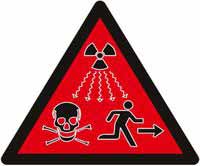
Even so, the significant issue regarding radiation exposure for humans is that it is a “silent destroyer” that takes years and only manifests once damage has occurred; for example, 200 American sailors of the USS Reagan have filed a lawsuit against TEPCO et al because of radiation-related illnesses, like leukemia, only four years after radiation exposure from Fukushima….. http://dissidentvoice.org/2015/09/radiation-impact-studies-chernobyl-and-fukushima/
Chilling Fukushima photos by Arkadiusz Podniesinski
 Four years after nuclear incident, chilling Fukushima photos show healing is still not complete, Rocket News 24 chilling Fukushima photos by Arkadiusz Podniesinski Casey Basee, 10 Oct 15
“………..More than four years later, access to much of Fukushima is still restricted due to dangerous amounts of radiation, but Podniesinski recently traveled to the affected area and brought back haunting images that drive home how abruptly the end of life as residents knew it came, and how many sings of the devastation still remain.
Access to contaminated areas is still restricted, however, and in the case of the towns with the highest radiation levels, separate government-issued passes must be obtained for each one. Podniesinski says that these passes are difficult to come by, with the authorities reluctant to grant them even to journalists. Through his network of contacts, though, and also the reputation he’s earned through his Chernobl projects, he was eventually able to obtain the permissions he needed, although not until after arriving in Japan.
As part of the ongoing clean-up process in Fukushima, workers are removing the top, most irradiated layer of soil from the earth in contaminated areas. The soil is then placed in sacks, stacked one atop another and awaiting transportation to a yet-to-be-determined storage area.

Even more concerning is that large-scale soil removal is difficult to carry out in heavily wooded or mountainous areas. Podniesinski points out the potential danger of contaminated soil, left on hillsides and the forest floor, eroding to city lowlands during storms.
▼ Along with bags of contaminated soil, abandoned vehicles were a common sight on Podniesinski’s trip. The photographer says many cannot be removed without first obtaining the owner’s permission.
Podniesinski quotes a survey stating that only 10 percent of the approximately 120,000 still-displaced residents of the disaster area have a firm desire to return to it someday. Some 65 percent said they have no intention of coming back. In light of some of the conditions he saw, Podniesinski can understand why they came to that decision……….
These are just a sample of Podniesinski’s Fukushima photographs, and there are many more, along with additional stories from his trip, on his website here. As he did with Chernobyl, Podniesinski intends to return to Fukushima again to continue to document the damage and recovery, and also to remind us all of the dangers of taking the issue of nuclear power lightly.
Related: Arkadiusz Podniesinski website, Facebook
Source: Yuruku Yaru
Images: Arkadiusz Podniesinski website
http://en.rocketnews24.com/2015/10/09/four-years-after-nuclear-incident-chilling-fukushima-photos-show-healing-is-still-not-complete/
Nuclear power building – UK’s worry of China’s poor health and safety record
 nuclearnews No 2 nuclear power Oct 15 ..…….. it is China’s poor health and safety record which is most worrying. With the power of the Chinese Government and the UK Government’s enthusiasm for Chinese money the concern is that the UK’s nuclear regulators will be sidestepped.
China’s health and safety standards have been thrust into the spotlight this year by a series of chemical explosions. An explosion at a chemical plant in the eastern Chinese province of Shandong shortly before midnight on 31st August 2015 was the second to occur at a chemical plant in Shandong province in a matter of days.
Although no casualties were reported, the blast happened about a fortnight after explosions in the port city of Tianjin, northern China, which killed over 145 people. In the wake of the Tianjin blast, the Communist Party has sacked the head of China’s safety regulator, who was previously the vice mayor of the city. Shortly after, 12 government officials and company executives were detained. (6)
 According to Ben Chu, author of ‘Chinese Whispers: Why Everything You’ve Heard About China is Wrong, the disaster in Tianjin was the latest consequence of a system that places personal profit before public safety. He says in China today behind every industrial accident lies a reeking morass of corruption.
Chinese state media reported that the son of a former local police chief was secretly a joint owner of the Tianjin warehouse that went up in a devastating fireball last week, killing 145 people, injuring 674 and damaging some 17,000 homes. He used his official connections to obtain licences for the warehouse, even though it flagrantly breached regulations prohibiting the storage of hazardous chemicals (sodium cyanide in this case) near residential areas. (7)
UK’s new National Infrastructure Commission – first casualty may be Hinkley nuclear
The National Infrastructure Commission nuCLEAR news No 2 nuclear power October 15 At the Conservative Party Conference George Osborne announced the establishment of a National Infrastructure Commission (NIC). (1) It looks as though this will take control over the entire energy policy brief out of the Department for Energy and Climate Change.
Oliver Tickell, writing in the Ecologist, asks if this could be a way out of the Hinkley C debacle for the Government. (2) Osborne told the Conference that he wants the NIC and its chairman Lord Adonis to begin work immediately: “to make sure Britain has the energy supplies it needs.” Tickell says: “It was notable that in his speech on Monday Osborne had absolutely nothing to say about nuclear power or Hinkley C – even though he had only just returned from a trip to China to drum up controversial Chinese investment in Hinkley C and other nuclear power stations.
That could reflect that fact that there is still no agreement over key elements of the proposed deal. Meanwhile questions proliferate – over safety fears, ballooning costs, why the UK energy consumer should be financing the Chinese Communist Party, and the wisdom of having the very company that makes China’s nuclear weapons running nuclear plants in the UK.”
 The first casualty of handing over decisions about energy to the NIC, which is answerable to the Treasury, could be Hinkley Point C. The Treasury’s information page on the NIC indicates some welcome strategic thinking on energy – something that has been almost entirely lacking in recent government policy. “The UK’s power sector has a growing problem in matching demand and supply, meaning that keeping the lights on requires a level of redundancy in the system – generation which is not always used.
The NIC will look at how to optimise solutions to this problem, including through large scale power storage – where innovation is needed to bring down costs; demand management – how to incentivise flexibility in demand so we don’t need as many power stations; and interconnection – how we best link the UK to the markets in the rest of Europe.” (3) ……..http://www.no2nuclearpower.org.uk/nuclearnews/NuClearNewsNo78.pdf
Surge in thyroid cancers in Fukushima

 UPI: ‘Skyrocketing’ cancer cases in Fukushima — AP: ‘Alarming’ cancer rates after nuclear disaster — Times: Child cancers up 5,000% — Radiation doses may be “considerably higher” than estimated — Expert: Cancer outbreak shows officials must now prepare for onset of leukemia, other diseases (VIDEO) http://enenews.com/times-child-cancers-5000-after-fukushima-disaster?utm_source=feedburner&utm_medium=email&utm_campaign=Feed%3A+ENENews+%28Energy+News%29
The Times, Oct 8 2015 (emphasis added): Child cancers up fiftyfold after Fukushima disaster— Cases of thyroid cancer among children living close to the Fukushima nuclear power plant have increased fiftyfold since the meltdown in 2011, according to Japanese scientists… in one of the most pessimistic assessments of the health implications of the world’s second-worst nuclear disaster. He urged the Japanese authorities to stop quibbling over the interpretation of cancer statistics, and to muster medical resources. “We need to prepare for leukaemia, breast cancer and (remainder of article only available to subscribers)… Photo Caption: 104 cases of thyroid cancer have been identified, a far higher rate than the national average
AP, Oct 9, 2015: Study shows alarming thyroid cancer rates in children living near Fukushima… “This is more than expected and emerging faster than expected,” lead author Toshihide Tsuda said…
UPI, Oct 8, 2015: Fukushima radiation has been linked to a surge in thyroid cancer among children near the disaster area… A team of Japanese researchers led by Toshihide Tsuda, a professor of environmental epidemiology at Okayama University, said cases of thyroid cancer in Fukushima Prefecture have skyrocketed since March 2011… and the culprit was increased radiation exposure since the Fukushima nuclear disaster…
T. Tsuda, A. Tokinobu, E. Suzuki, E. Yamamoto (Okayama Univ.), Oct 5, 2015:
- Thyroid Cancer Detection by Ultrasound Among Residents Ages 18 Years and Younger in Fukushima… 2011 to 2014
- The highest incidence rate ratio… was observed in the central middle district of the prefecture… incidence rate ratio = 50…
- … estimated doses ranged from 119 to 432 mSv among mothers and from 330 to 1,190 mSv in their infants for those living 45 to 220 km south or southwest, including Iwaki City in the Fukushima Prefecture, Ibaragi Prefecture, and Chiba Prefecture.
- … we could infer that the incidence of thyroid cancer in Fukushima rose more rapidly than expected… as estimated by the World Health Organization.
- The radiation burden to the thyroid in Fukushima Prefecture might have been considerably higher than estimated…
- The minimum empirical induction time for thyroid cancer is 2.5 years for adults and 1 year for children, according to the [CDC]. Therefore, we considered it possible to detect thyroid cancer… even within the 2011 fiscal year.
- In Chernobyl, excesses of thyroid cancer became more remarkable 4 or 5 years after… the observed excess alerts us to prepare for more potential cases.
European regulators approve nuclear waste plan – all too generous to the operators
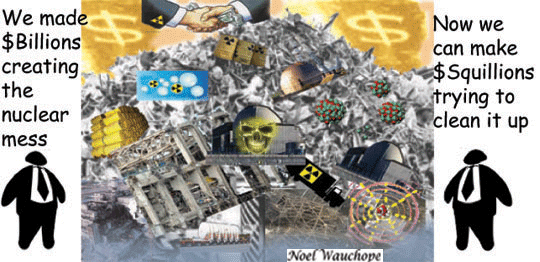 Nuclear energy is a sensitive political issue in Europe that pits the European Union’s biggest economy Germany – and its plans to phase out atomic energy and pin costs on its utilities – against supporters of the energy source, such as Britain and France.
Britain wants to build a facility to store nuclear waste, with the operating date planned around 2040 and disposal expected to start around 2075 and last until 2140.
It sought approval from the European Commission for a pricing formula that limits the price that plant operators will pay for disposing of nuclear waste.
The Commission, responsible for setting a level playing field in the 28-country bloc, gave the green light, saying that the plan was in line with EU state aid rules.
“The Commission’s assessment showed that the UK pricing methodology makes sure that operators of new power plants will bear the disposal costs for their spent fuel and intermediate level waste,” the EU executive said in a statement.
Greenpeace however said the regulator should have sought more feedback before issuing its decision and the taxpayer was likely to face a huge long-term bill. “It’s a transfer of risk to the taxpayer,” Doug Parr, Greenpeace policy director, said.
“It’s odd that the Commission did not see the need to have a full enquiry when other countries are facing different circumstances.”
While some member states support nuclear power, others question whether Britain’s plans to fund new nuclear reactors at Hinkley Point in conjunction with EDF are illegal state aid, even though the Commission approved them.
Germany‘s E.ON is smarting from having to take on liability for billions of euros of decommissioning costs and a court ruling that a German tax, contested by the big utilities, on the use of nuclear energy, does not break EU laws.
(Editing by David Clarke and Adrian Croft)
Middle East getting more havoc, more nuclear weapons, with foreign interventions
Foreign Interventions in the Middle East: More Havoc, Nuclear Weapons, Less Order, San Diego FreePress OCTOBER 9, 2015 BY AT LARGE By Frank Thomas Middle Eastern states are breaking down in an endless escalation of civil wars where Syria, Libya, Yemen, Iraq are collapsing. The resulting power vacuums exploited by rebel factions and demonic jihadist Islamic state are threatening the Middle East. The ancient, ongoing Sunni-Shiite mutual hatreds are afire.
U.S. foreign regime change interventions – by military engagement, funding, training insurgency groups, supporting coups d’etats, protecting regional dictatorships – have boosted instability and mayhem in Syria, Iraq, Libya, Yemen, Egypt, etc. Emerging unscathed in these interventions, the U.S. departs leaving the wreckage behind to go on to the next trouble-spot. Continue reading
Wikileaks released text of Trans Pacific Partnership – worrying sections about freedom of information
 Wikileaks release of TPP deal text stokes ‘freedom of expression’ fears, Guardian, Sam Thielman , 9 Oct 15 Intellectual property rights chapter appears to give Trans-Pacific Partnership countries’ countries greater power to stop information from going public Wikileaks has released what it claims is the full intellectual property chapter ofthe Trans-Pacific Partnership (TPP), the controversial agreement between 12 countries that was signed off on Monday.
TPP was negotiated in secret and details have yet to be published. But critics including Democrat presidential hopefuls Hillary Clinton and Bernie Sanders,unions and privacy activists have lined up to attack what they have seen of it. Wikileaks’ latest disclosures are unlikely to reassure them.
One chapter appears to give the signatory countries (referred to as “parties”) greater power to stop embarrassing information going public. The treaty would give signatories the ability to curtail legal proceedings if the theft of information is “detrimental to a party’s economic interests, international relations, or national defense or national security” – in other words, presumably, if a trial would cause the information to spread.
A drafter’s note says that every participating country’s individual laws about whistleblowing would still apply.
“The text of the TPP’s intellectual property chapter confirms advocates warnings that this deal poses a grave threat to global freedom of expression and basic access to things like medicine and information,” said Evan Greer, campaign director of internet activist group Fight for the Future. “But the sad part is that no one should be surprised by this. It should have been obvious to anyone observing the process, where appointed government bureaucrats and monopolistic companies were given more access to the text than elected officials and journalists, that this would be the result.”
Among the provisions in the chapter (which may or may not be the most recent version) are rules that say that each country in the agreement has the authority to compel anyone accused of violating intellectual property law to provide “relevant information […] that the infringer or alleged infringer possesses or controls” as provided for in that country’s own laws.
The rules also state that every country has the authority to immediately give the name and address of anyone importing detained goods to whoever owns the intellectual property…….
TPP is now facing a rough ride through Congress where President Obama’s opponents on the right argue the agreement does not do enough for business while opponents on the left argue it does too much.
Twelve Pacific rim countries have signed a sweeping trade deal but will it cut red tape and boost commerce or is it a sellout to big business that will cost jobs? Obama has pledged to make the TPP public but only after the legislation has passed…..http://www.theguardian.com/business/2015/oct/09/wikileaks-releases-tpp-intellectual-property-rights-chapter?CMP=share_btn_tw
Exaggerated, inaccurate, reporting about nuclear smugglers
Media Reports ISIS Nuclear Plot That Never Actually Involved ISIS, Fair – Fairness and Accuracy In Reporting, By Adam Johnson , 9 Oct 15 The AP published this week (10/5/15) a thrilling account of how the FBI, in concert with Moldovan authorities, “disrupted” a smuggling ring that was supposedly trying to sell “nuclear material” to ISIS and other terror organizations over a five-year span. The primary developments in the story are almost a year old, but the resurfaced tale made news across the English-speaking world:
‘Annihilate America’: Inside a Secret, Frightening Scheme to Sell Nuclear Material to ISIS
—Salon (10/7/15)
AP: Smugglers Busted Trying to Sell Nuclear Material to ISIS
—CBS News (10/7/15)
FBI Foils Smugglers’ Plot to Sell Nuclear Material to ISIS
—The Independent (10/7/15)
There was only one problem: At no point do the multiple iterations of the AP‘s reporting show that anyone involved in the FBI sting were members of or have any connection to the Islamic State in Iraq and Syria (aka ISIL or Daesh). While one of several smuggling attempts discussed in AP‘s reporting involved an actual potential buyer–an otherwise unknown Sudanese doctor who four years ago “suggested that he was interested” in obtaining uranium–the “terrorists” otherwise involved in the cases were FBI and other law enforcement agents posing as such. According to the AP and NBC’s Pete Williams:
However, the official emphasized that there was no known ISIS connection. An undercover informant, working with Moldovan police, claimed that he was an ISIS representative.
“But that was totally made up,” the official said.
This would not perturb the American press, who once again eager to hype an ISIS threat, either A) heavily implied this “plot” was evidence of ISIS seeking a nuclear weapon or B) actually went a step further and said as much despite it being wholly untrue.
First the outlets who heavily implied ISIS was involved but used the qualifiers “attempted,” “tried” or the abstract “plots” so as to not expressly lie:
Smugglers Tried to Sell Nuclear Material to ISIS
—NBC News (10/7/15)
Smugglers Try to Sell Nukes to ISIS
—Fox News (10/7/15)
FBI Has Foiled 4 Attempts by Gangs to Sell Nuclear Material to ISIS Through Russian Connections
—Daily Mail (10/7/15)
(Note that the Daily Mail managed to also work the threat du jour into the headline by means of the reference to “Russian connections”–a phrase so vague as to be virtually meaningless.)
Then there were the publications who said ISIS was involved (a falsehood):
AP Investigation Finds That Nuclear Smugglers Shopped Radioactive Material to ISIS and Other Terrorists
—Business Insider(10/6/15)
Nuclear Smugglers Shopped Radioactive Material to Islamic State, Other Terrorists: AP report
—Chicago Tribune (10/6/15)
Again, there was nothing “shopped” to ISIS, because ISIS was never involved. Continue reading
Smugglers tried to sell radioactive material to extremists
“You can make a dirty bomb, which would be perfect for the Islamic State,” the smuggler said. “If you have a connection with them, the business will go smoothly.
But the smuggler, Valentin Grossu, wasn’t sure the client was for real — and he was right to worry. The client was an informant, and it took some 20 meetings to persuade Grossu that he was an authentic Islamic State representative. Eventually, the two men exchanged cash for a sample in a sting operation that landed Grossu in jail.
The previously unpublicized case is one of at least four attempts in five years in which criminal networks with suspected Russian ties sought to sell radioactive material to extremists through Moldova, an investigation by The Associated Press has found. One investigation uncovered an attempt to sell bomb-grade uranium to a real buyer from the Middle East, the first known case of its kind.
In that operation, wiretaps and interviews with investigators show, a middleman for the gang repeatedly ranted with hatred for America as he focused on smuggling the essential material for an atomic bomb and blueprints for a dirty bomb to a Middle Eastern buyer.
In wiretaps, videotaped arrests, photographs of bomb-grade material, documents and interviews, AP found that smugglers are explicitly targeting buyers who are enemies of the West. The developments represent the fulfillment of a long-feared scenario in which organized crime gangs are trying to link up with groups such as the Islamic State and al-Qaida — both of which have made clear their ambition to use weapons of mass destruction.
The sting operations involved a partnership between the FBI and a small group of Moldovan investigators, who over five years went from near total ignorance of the black market to wrapping up four sting operations. Informants and police posing as connected gangsters penetrated the smuggling networks, using old-fashioned undercover tactics as well as high-tech gear from radiation detectors to clothing threaded with recording devices.
But their successes were undercut by striking shortcomings: Kingpins got away, and those arrested evaded long prison sentences, sometimes quickly returning to nuclear smuggling, AP found.
For strategic reasons, in most of the operations arrests were made after samples of nuclear material had been obtained rather than the larger quantities. That means that if smugglers did have access to the bulk of material they offered, it remains in criminal hands.The repeated attempts to peddle radioactive materials signal that a thriving nuclear black market has emerged in an impoverished corner of Eastern Europe on the fringes of the former Soviet Union. Moldova, which borders Romania, is a former Soviet republic.Moldovan police and judicial authorities shared investigative case files with the AP in an effort to spotlight how dangerous the black market has become. They say a breakdown in cooperation between Russia and the West means that it is much harder to know whether smugglers are finding ways to move parts of Russia’s vast store of radioactive materials……… http://www.ynetnews.com/articles/0,7340,L-4707806,00.html
1 This Month
26 September – International Day for the Total Elimination of Nuclear Weapons





PLEASE OPPOSE HR 8255 AND S.3639 – bills would accelerate satellite deployment, with no environmental review or safeguards – https://ncstd5li.quorum.us/campaign/169331/
To see nuclear-related stories in greater depth and intensity – go to https://nuclearinformation.wordpress.com
-
Archives
- September 2026 (305)
- August 2026 (330)
- July 2026 (355)
- June 2026 (287)
- May 2026 (306)
- April 2026 (356)
- March 2026 (251)
- February 2026 (267)
- January 2026 (308)
- December 2025 (358)
- November 2025 (359)
- October 2025 (375)
-
Categories
- 1
- 1 NUCLEAR ISSUES
- business and costs
- climate change
- culture and arts
- ENERGY
- environment
- health
- history
- indigenous issues
- Legal
- marketing of nuclear
- media
- opposition to nuclear
- PERSONAL STORIES
- politics
- politics international
- Religion and ethics
- safety
- secrets,lies and civil liberties
- spinbuster
- technology
- Uranium
- wastes
- weapons and war
- Women
- 2 WORLD
- ACTION
- AFRICA
- Atrocities
- AUSTRALIA
- Christina's notes
- Christina's themes
- culture and arts
- Events
- Fuk 2022
- Fuk 2023
- Fukushima 2017
- Fukushima 2018
- fukushima 2019
- Fukushima 2020
- Fukushima 2021
- general
- global warming
- Humour (God we need it)
- Nuclear
- RARE EARTHS
- Reference
- resources – print
- Resources -audiovicual
- Weekly Newsletter
- World
- World Nuclear
- YouTube
-
RSS
Entries RSS
Comments RSS

