In 1999 Pakistan planned to drop nuclear bomb on India
 Kargil war: Pakistan planned to drop nuclear bomb on India during conflict, says former CIA officer http://www.independent.co.uk/news/world/asia/pakistan-india-nuclear-bomb-kargil-war-former-cia-officer-sandy-berger-bruce-riedel-a6758501.html Emma Henderson , 3 Dec 15
The information was revealed after former CIA analyst, Bruce Riedel, wrote an obituary for Sandy Berger who died of cancer on Wednesday. Mr Berger and was a former national security advisor to the then American President Bill Clinton.
The CIA had warned President Clinton of the plans, which formed part of the daily top secret classified briefing on July 4, 1999, when he was scheduled to meet visiting Pakistan Prime Minister Nawaz Sharif.
Mr Riedel wrote: “The morning of the Fourth, the CIA wrote in its top-secret Daily Brief that Pakistan was preparing its nuclear weapons for deployment and possible use. The intelligence was very compelling. The mood in the Oval Office was grim.
“Berger urged Clinton to hear out Sharif, but to be firm.
“Pakistan started this crisis and it must end it without any compensation. The president needed to make clear to the prime minster that only a Pakistani withdrawal could avert further escalation.
“Sandy knew Clinton better than anyone, his natural inclination was to find a deal. This time, no deal was possible, it must be an unequivocal Pakistani climbdown.
“It worked. Sharif agreed to pull back his troops. It later cost him his job: the army ousted him in a coup and he spent a decade in exile in Saudi Arabia. But the risk of a nuclear exchange in south Asia was averted.
“It was Berger’s finest hour.”
The Kargil war took place along the Pakistan-India Line of Control (LOC) in Ladakh, in the northern Indian state of Jammu and Kashmir.
The infiltration of Pakistani armed forces into Indian Territory, led by General Ashraf Rashid initiated the conflict.
The Indian army managed to recapture the majority of the Indian side of the LOC.
Nuclear weapons on hair-trigger alert: time to take steps towards safety


 Could U.S.-Russia Tensions Go Nuclear? Politico Believe it or not, hair-trigger launch alerts are still with us—and perhaps even more dangerous than during the Cold War. By Bruce Blair November 27, 2015 The Russian warplane recently shot down inside Turkey’s border with Syria fits a pattern of brinkmanship and inadvertence that is raising tensions and distrust between Russia and U.S.-led NATO. Low-level military encounters between Moscow and Washington are fanning escalatory sparks not witnessed since the Cold War. And there exists a small but steadily growing risk that this escalation could morph by design or inadvertence into a nuclear threat.
The backdrop for these concerns is that both the United States and Russia maintain their nuclear command posts and many hundreds of strategic nuclear warheads on hair-trigger alert. This is a long-standing practice, or habit, driven by the inertia of the Cold War. The two sides adopted the accident-prone tactic known as launch-on-warning in order to ensure that their strategic forces could be fired before incoming warheads arrived. President Barack Obama’s recent nuclear employment guidance reiterated the need to preserve this option. Our nuclear command system and forces practice it several times a week. So do the Russians.
And believe it or not, Russia has shortened the launch time from what it was during the Cold War. Today, top military command posts in the Moscow area can bypass the entire human chain of command and directly fire by remote control rockets in silos and on trucks as far away as Siberia in only 20 seconds.
Why should this concern us? History shows that crisis interactions, once triggered, take on a life of their own. Military encounters multiply; they become more decentralized, spontaneous and intense. Safeguards are loosened and unfamiliar operational environments cause accidents and unauthorized actions. Miscalculations, misinterpretations and loss of control create a fog of crisis out of which a fog of war may emerge. In short, the slope between the low-level military encounters, the outbreak of crisis and escalation to a nuclear dimension is a steep and slippery one.
Somewhere along this slope, a psychological construct known as “deterrence” is supposed to kick in to prevent the use of nuclear weapons. But deterrence can become an extreme sport during a confrontation, a game of taking and manipulating existential risk, morphing into games of chicken, bluff, coercion and blackmail. The basic idea is to instill fear in an adversary’s mind that events could spin out of control and result in a nuclear war.
That’s especially true since the public doesn’t realize just how little time exists for our leaders to make a decision to use nuclear weapons, even today—and if anything the atmosphere has become even more hair trigger with the threat of cyberwarfare. A launch order is the length of a tweet. Missile crews in turn transmit a short stream of computer signals that immediately ignite the rocket engines of many hundreds of land-based missiles. For the United States, this takes 1 minute. As a former nuclear-missile launch officer, I personally practiced it hundreds of times. We were called Minutemen. U.S. submarine crews take a little longer; they can fire their missiles in 12 minutes.
The last time the U.S. brandished nukes wholesale for the purpose of deterrence was in 1973………
Do U.S. leaders understand that the Russians may fear a decapitation threat is emerging, and that this threat may be the underlying driver raising the stakes for Russia to the level of an existential threat warranting preparations for the use of nuclear weapons? I doubt they do.
At some point one side or the other may blink and back off, or maybe not.
Tensions could continue to rise until the crisis escalates by intention or inadvertence to the threshold of nuclear use. In the case of Russia, this threshold is low. Russia’s strategy in Europe was devised by President Vladimir Putin himself in the year 2000 in response to NATO’s bombing of the Balkans. The strategy is called “de-escalatory escalation,’ which unleashes tens to hundreds of nuclear weapons in a first strike meant to shock an adversary into paralysis. And so it might, or it might just escalate into a nuclear exchange………
It is aggravated by a murky new threat—cyberwarfare. Given our poor comprehension of this cyberthreat, it seems imprudent in the extreme to keep U.S. and Russian command systems poised to launch on warning, and nuclear missiles poised to fly as soon as they receive a short stream of computer signals, whose origin may not be authorized.
Given all this risk-taking, which extends with even greater force to other nuclear weapons countries, and given that deterrence itself is nothing more or less than the manipulation of nuclear risk, we cannot reasonably expect nuclear weapons never to be used..
The obvious solution is to eliminate nuclear weapons entirely, but of course that will not happen overnight. Meanwhile, the following seven measures would help move the dial further away from nuclear midnight. They draw upon the recent report of the Global Zero Commission on Nuclear Risk Reduction……..
One. The United States and Russia could agree to eliminate launch-on-warning from their strategy………
Two. They could agree to begin taking their strategic missile forces off of hair trigger,……
Three. All the nuclear weapons countries could agree to refrain from putting any nuclear forces on high alert except under tightly controlled conditions…..
Four. The U.S. and Russia could work with other nuclear establishments to share knowledge, best practices and technologies in the area of safety and security..
Five. The U.S. and Russia, perhaps with China, could lead an effort to ban cyberwarfare…..
Six. Confidence-building measures agreed to through military-to-military dialogue ……
http://www.politico.com/magazine/story/2015/11/russia-us-tensions-nuclear-cold-war-213395#ixzz3sirbYxpC
India again tests a Nuclear-Capable Missile
India Completes Agni-I Nuclear-Capable Missile Test, defense World, November 27, 2015 India has test fired home-made nuclear capable Agni-I missile that can hit target from a distance of 700kms.
The missile was launched from off the Odisha coast as a part of Strategic Forces Command (SF) training centre, NDTV reported today.
The surface-to-surface, single-stage missile, was powered by solid propellants. It was test-fired from a mobile launcher at 1002 hours from launch pad-4 of the Integrated Test Range (ITR) at Abdul Kalam Island (Wheeler Island)…….he missile, which has already been inducted into armed forces, weighs 12 tonnes. The 15-metre-long missile is designed to carry a payload of more than one tonne. Moreover, its strike range can be extended by reducing the payload…….http://www.defenseworld.net/news/14714/India_Completes_Agni_I_Nuclear_Capable_Missile_Test#.Vli4odIrLGg
Declaration of the World Nuclear Victims Forum in Hiroshima
The world nuclear victims forum was held at Hiroshima.
“A charter of world Nuclear Victim’s rights” was adopted. https://www.facebook.com/permalink.php?story_fbid=10154396267119937&id=685379936
世界核被害者フォーラム
Declaration of the World Nuclear Victims Forum in Hiroshima
(Draft Elements of a Charter of World Nuclear Victims’ Rights)
November 23, 2015
1. We, participants in the World Nuclear Victims Forum, gathered in Hiroshima from November 21 to 23 in 2015, 70 years after the atomic bombings by the US government.
2. We define the rights of nuclear victims in the narrow sense of not distinguishing between victims of military and industrial nuclear use, including victims of the atomic bombings in Hiroshima and Nagasaki and of nuclear testing, as well as victims of exposure to radiation and radioactive contamination created by the entire process including uranium mining and milling, and nuclear development, use and waste. In the broad sense, we confirm that until we end the nuclear age, any person anywhere could at any time become a victim=a Hibakusha, and that nuclear weapons, nuclear power and humanity cannot coexist.
3. We recall that the radiation, heat and blast of the atomic bombings of Hiroshima and Nagasaki sacrificed not only Japanese but also Koreans, Chinese, Taiwanese and people from other countries there as a result of Japan’s colonization and invasion, and Allied prisoners of war. Continue reading
Is everyone forgetting the greenhouse gas emissions from military sources?
These issues will be explored at a series of launch events for the book Secure and Dispossessed – Challenging the militarization of climate change (Pluto Press/TNI) published this month. The London launch will be held at 6.30pm on 25 November at Free Word Centre, London, the Amsterdam launch at 7.30pm Tuesday 1 December at Pakhuis de Zwijger and the Paris launch during the climate forum meetings on the 5 and 6 December. An earlier version of this article was published by Global Justice Now.
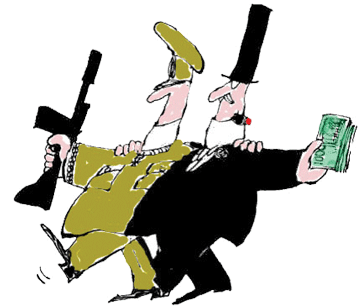 The elephant in Paris – the military and greenhouse gas emissions http://newint.org/blog/2015/11/19/the-military-and-greenhouse-gas-emissions/
There is no shortage of words in the latest negotiating document for the UN climate negotiations taking place in Paris at the end of November – 32,731 words to be precise, and counting. Yet strangely there is one word you won’t find: military. It is a strange omission, given that the US military alone is the single largest user of petroleum in the world and has been the main enforcer of the global oil economy for decades.
The history of how the military disappeared from any carbon accounting ledgers goes back to the UN climate talks in 1997 in Kyoto. Under pressure from military generals and foreign policy hawks opposed to any potential restrictions on US military power, the US negotiating team succeeded in securing exemptions for the military from any required reductions in greenhouse gas emissions. Even though the US then proceeded not to ratify the Kyoto Protocol, the exemptions for the military stuck for every other signatory nation. Even today, the reporting each country is required to make to the UN on their emissions excludes any fuels purchased and used overseas by the military.
As a result it is still difficult to calculate the exact responsibility of the world’s military forces for greenhouse gas emissions. A US Congressional report in 2012 said that the Department of Defense consumed about 117 million barrels of oil in 2011, only a little less than all the petrol and diesel use of all cars in Britain the same year. Deploying that oil across the globe to the fuel-greedy hummers, jets and drones has become a growing preoccupation of NATO military strategists.
But the responsibility of the military for the climate crisis goes much further than their own use of fossil fuels. As we witnessed in Iraq, the military, the arms corporations and their many powerful political supporters have consistently relied on (and aggressively pushed for) armed intervention to secure oil and energy supplies. The military is not just a prolific user of oil, it is one of the central pillars of the global fossil-fuel economy. Today whether it is in the Middle East, the Gulf, or the Pacific, modern-day military deployment is about controlling oil-rich regions and defending the key shipping supply routes that carry half the world’s oil and sustain our consumer economy.
The resulting expansion of conflict across the globe has consumed ever-increasing levels of military expenditure: in 2014, global military expenditure reached $1.8 trillion dollars. This money is a huge diversion of public resources that could be invested instead in renewable energy as well as providing support for those most affected by climate change. When the British government in 2014 allocates £25 billion to the Ministry of Defence but only £1.5 billion to the Department of Energy & Climate Change, it is clear where its priorities lie.
Ironically despite their role in the climate crisis, one of the loudest voices calling for action on climate change is coming from the military. British Rear Admiral Morisetti is typical of a growing chorus of military generals identifying climate change as the major security challenge of this century. He argues for action on climate change because it will be a ‘threat multiplier’ with the potential to exacerbate the ‘development-terrorism’ nexus. The argument has been readily picked up by politicians who increasingly talk about the security implications of climate change.
This could seem a welcome development. After all who would not want one of the most powerful forces on your side in tackling humanity’s greatest ever challenge? But there is a good reason also to be cautious of who we jump into bed with. A close look at military climate change strategies reveals that their focus is on securing borders, protecting trade supply-routes for corporations, controlling conflicts around resources and instability caused by extreme weather, and repressing social unrest. They turn the victims of climate change into ‘threats’ to be controlled or combated. There is no critical examination of the military’s own role in enforcing a corporate-dominated fossil-fuel economy that has caused the climate crisis.
In fact, there is evidence that many players in this corporate-military-security industrial nexus are already seeing climate change not just as a threat but an opportunity. Arms and security industries thrive on conflict and insecurity and climate change promises another financial boon to add to the ongoing War on Terror. British arms giant BAE Systems was surprisingly open about this in one of their annual reports explaining ‘New threats and conflict arenas are placing unprecedented demands on military forces and presenting BAE Systems with new challenges and opportunities.’ An Energy Environmental Defence and Security (E2DS) conference in 2011 jubilantly proclaimed that ‘the aerospace, defence and security sector is gearing up to address what looks set to become its most significant adjacent market since the strong emergence of the civil/homeland security business almost a decade ago.’
In the aftermath of the terrible killings in Paris, military responses are again taking central stage. It seems that the lack of evidence of any success from 14 years of bombings, drone killings, armed invasions is no obstacle to the military-security juggernaut. Do we really want the same forces to now dominate our response to climate change which will affect millions of people over the coming decades? A growing number of social movements are saying that climate change demands breaking the cycle of violence in order to build a collective caring response to a crisis that will affect us all. The Paris climate talks are an opportunity to draw attention to the military elephant in the room and demand that adaptation to climate change is led by principles of human rights and solidarity, rather than militarism and corporate profits.
Hackers could shut down UK’s £31 billion nuclear weapon system – warns defence expert

 A former Defence Secretary has warned that the UK’s £31 billion nuclear weapon system could be shut down by hackers, Business Insider SAM SHEAD , 24 Nov 15, Former Defence Secretary Lord Browne has told the BBC that the UK’s nuclear weapon system, Trident, could be rendered obsolete by hackers.
The ex-Labour minister, who was Defence Secretary between 2006 and 2008, said “weak spots” in Trident need to be addressed — otherwise Prime Minister David Cameron won’t be able to rely on the nuclear deterrent “when he needs to reach for it.”
Trident, the UK’s nuclear programme, consists of four Vanguard-class submarines armed withTrident II D-5 ballistic missiles. It is the most powerful capability of the British military forces but at £31 billion it’s also the most expensive.
Lord Browne told BBC political editor Laura Kuenssberg that the Tory government has an “obligation” to assure MPs that all aspects of Trident have been assessed against the risk of a cyber attack and that the appropriate security measures were in place.
“If they are unable to do that then there is no guarantee that we will have a reliable deterrent or the prime minister will be able to use this system when he needs to reach for it,” he added……http://www.businessinsider.com.au/trident-at-risk-from-hack-lord-browne-nuclear-weapons-hacking-2015-11
Shaky consensus in Britain’s parliament, about Trident nuclear weapons system
Nuclear consensus comes under pressure in Commons vote, Ft.com John McDermott, Political Correspondent, 24 Nov 15 The fragility of Britain’s cross-party consensus on nuclear weapons was revealed on Tuesday in a sour debate on the renewal of the Trident deterrent, which Michael Fallon said would cost at least £6bn more than planned.
The defence secretary confirmed that the price tag for four new submarines to replace the Vanguard Class had risen to £31bn from £26bn, not including a £10bn contingency fund. David Cameron, prime minister, acknowledged on Monday that their delivery could take five years longer than planned.
The debate was meant to showcase divisions in Jeremy Corbyn’s Labour party, meaning that concerns about the cost and timing of the government’s new plans were often replaced by squabbles and polemics.
Outside the Commons, however, senior defence figures raised questions about the Strategic Defence and Security Review, which Mr Cameron announced in parliament on Monday………http://www.ft.com/cms/s/0/62c6e428-92cd-11e5-bd82-c1fb87bef7af.html#axzz3sTiS5XiU
USA research shows that Israel has 115 Nuclear Warheads
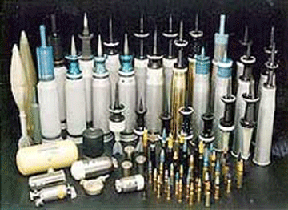
 Israel Has 115 Nuclear Warheads, U.S. Research Institute Says, Haaretz, 22 Nov 15
USA tests non-nuclear version of B61-12 gravity bomb in Nevada
 USAF Completes Testing Of Non-nuclear Gravity Bomb, Defense World, November 17, 2015 The National Nuclear Security Administration (NNSA) and United States Air Force (USAF) have tested non-nuclear version of the B61-12 gravity bomb at Tonopah Test Range in Nevada.
The test was performed in a realistic guided flight environment, the USAF announced today.
This test is the last of three development flight tests for the B61-12 Life Extension Program (LEP). The B61-12 test asset was released by a USAF F-15E Strike Eagle and it demonstrated successful performance in a realistic guided flight environment…….
The development flight test asset contained representative non-nuclear components but no highly enriched uranium or plutonium, which is consistent with test treaty obligations, NNSA added……..The B61-12 is expected to replace earlier B61 models, including the B61-3, B61-4, B61-7, and B61-10. Development engineering of the B61-12 LEP began in February 2012 as a joint USAF-NNSA program. http://www.defenseworld.net/news/14614/USAF_Completes_Testing_Of_Non_nuclear_Gravity_Bomb#.VkwpS9IrLGg
America ramping up its nuclear weapons systems – sea, land, and air

 The U.S. Is Now Flexing Its Nuclear Muscles on a Weekly Basis, Popular Mechanics,
The Pentagon is suddenly very interested in making sure Russia knows America’s nukes still work. By Kyle Mizokami Nov 12, 2015 The Last Three Weeks Has Seen A Surge In Testing Of American Nuclear Weapon Systems, Accompanied By Carefully Released Photos On Social Media. The Tests And Pictures Appear Calculated To Drive Home One Point: The Cold War May Have Ended 24 Years Ago, But America’s Nuclear Weapons Still Work.
On October 21, a Minuteman III intercontinental ballistic missile (ICBM) was launched from Vandenberg Air Force Base in in Southern California. The missile, launched by crews from the 90th Missile Wing at F.E. Warren Air Force Base, Wyoming, delivered a re-entry test vehicle to Kwajalein Atoll 4,200 miles away.
On November 7, a Trident II D-5 submarine-launched ballistic missile launched from the Pacific Missile Test Center in Southern California, also at Kwajalein Atoll. This launch from the nuclear submarine USS Kentucky was seen up and down the West Coast, as far as Arizona and San Francisco, and widely photographed and shared on social media. Five members of Congress were on board to observe the launch. On November 9 a second Trident was launched from Pacific Missile Test Center……..
There you have it: All three legs of America’s nuclear “triad”—land, sea, and air-based nukes—have been doing some stretches in the past three weeks……..
The first Trident II launch occurred during evening commute hours in Southern California, which virtually guaranteed the public would see it. The Minuteman III test occurred at 5:45 AM on the West Coast, which was 4:00 PM the same day in Moscow. Both launches probably were meant to generate publicity—in their own way—that would make its way back to Putin.
Either that, or America really doesn’t like Kwajalein Atoll. http://www.popularmechanics.com/military/weapons/a18154/americas-nuclear-muscle-flexing-now-a-weekly-thing/
Oh goody! America has a more ‘usable’ bomb in Europe!
America’s new, more ‘usable’, nuclear bomb in Europe The B61 bomb, 180 of which are stockpiled in Europe, is getting an upgrade which will make it more “usable” in the eyes of some in the American military, Guardian, Julian Borger Wednesday 11 November 2015, The $8 billion upgrade to the US B61 nuclear bomb has been widely condemnedas an awful lot of money to spend on an obsolete weapon. As an old fashioned ‘dumb’ bomb it has no role in US or NATO nuclear doctrine, but the upgrade has gone ahead anyway, in large part as a result of lobbying by the nuclear weapons laboratories.
In non-proliferation terms however the only thing worse than a useless bomb is a ‘usable’ bomb. Apart from the stratospheric price, the most controversial element of the B61 upgrade is the replacement of the existing rigid tail with one that has moving fins that will make the bomb smarter and allow it to be guided more accurately to a target. Furthermore, the yield can be adjusted before launch, according to the target.
The modifications are at the centre of a row between anti-proliferation advocates and the government over whether the new improved B61-12 bomb is in fact a new weapon, and therefore a violation of President Obama’s undertaking not to make new nuclear weapons. His administration’s 2010 Nuclear Posture Reviewsaid life extension upgrades to the US arsenal would “not support new military missions or provide for new military capabilities.”
The issue has a particular significance for Europe where a stockpile of 180 B61’s is held in six bases in five countries. If there is no change in that deployment by the time the upgraded B61-12’s enter the stockpile in 2024, many of them will be flown out to the bases in Belgium, the Netherlands, Germany, Italy and Turkey………
The great thing about nuclear weapons was that their use was supposed to be unthinkable and they were therefore a deterrent to contemplation of a new world war. Once they become ‘thinkable’ we are in a different, and much more dangerous, universe.
It is a universe in which former vice president Dick Cheney has apparently lived for some ………….http://www.theguardian.com/world/julian-borger-global-security-blog/2015/nov/10/americas-new-more-usable-nuclear-bomb-in-europe
Russia leaks ‘Secret’ Plans For Nuclear Weapons
Russian News Stations Air ‘Secret’ Plans For Nuclear Weapons, Huffington Post 12 Nov 15
A spokesman for Russian President Vladimir Putin said the plans should not have been aired. MOSCOW (AP) — President Vladimir Putin’s spokesman said plans for a new submarine-launched nuclear torpedo shown on Kremlin-controlled television were secret and should never have been aired.
NTV and Channel One showed a large document — filmed over a military officer’s shoulder during a meeting with Putin — with drawings and details of a weapons system called Status-6.
The torpedoes could create “extensive zones of radioactive contamination” that would make enemy coastal areas “unsuitable for military, economic, business or other activity for a long time,” the document said.
The channels later removed the footage, which was shot during a meeting on Monday in Sochi.
“It’s true that some secret information was caught by the camera and therefore it was subsequently removed,” Putin spokesman Dmitry Peskov said late Wednesday. “We hope this will not happen again.”
The appearance of the video on television channels under such tight Kremlin control raised suspicions that it was done intentionally to cause alarm in the West….. http://www.huffingtonpost.com/entry/russia-nuclear-weapons-plans_5644a8f2e4b045bf3dede9fa
Narrowly avoided accidental nuclear apocalypse in 1983 revealed
 Top Secret Documents Reveal A NATO Training Exercise Nearly Started A Nuclear Apocalypse With Russia http://www.huffingtonpost.co.uk/2015/11/12/top-secret-documents-reveal-a-nato-training-exercise-nearly-started-a-nuclear-apocalypse-with-russia-_n_8542766.html The Huffington Post UK | By Thomas Tamblyn
A recently declassified document has revealed that in 1983, the United States and Russia were almost plunged into nuclear war and here’s the real kicker: It would have been completely by accident
It is thought that the exercise could have, at some stages, brought the two countries closer to war than even the famous Cuban Missile Crisis in 1962.
Codenamed Able Archer, the NYT reveals in its exposé of the training exercise that many NATO commanders were seemingly oblivious to the knife edge that they were creating.
Then US President Ronald Reagan rather eloquently described the situation as ‘Really scary’ after reading the briefing documents that summarised how perilously close the situation had become.
The document was finally declassified earlier this month, some 11-years after the request had been made by the National Security Archive at George Washington University.
Speaking to the NYT about the significance of the event archive director Thomas S. Blanton said: “Turns out, 1983 is a classic, like the Cuban missile crisis, where neither superpower intended to go nuclear, but the risk of inadvertence, miscalculation, misperception were just really high. Cuba led J.F.K. to the test ban. Nineteen eighty-three led Reagan to Reykjavik and almost to abolition.”
What might be the most terrifying piece of news is that before and during the exercise, the Soviets weren’t just using human judgement but were inputting some 40,000 scenarios into a supercomputer in an effort to try and assess how likely a nuclear strike actually was.
Ironically it was the then leader of the Soviet Union Mikhail Gorbachev who summed up the severity of the situation later in 1986:
“Never, perhaps, in the postwar decades has the situation in the world been as explosive and, hence, more difficult and unfavorable as in the first half of the 1980’s.”
The New START treaty – arms control pact between USA and Russia
Carroll: The enduring nuclear threat, By Vincent Carroll, Denver Post 7 Nov 15 “…Undersecretary of State for Arms Control and International Security, Rose E. Gottemoeller was the chief negotiator for the New START treaty, an arms control pact with the Russians that went into effect in 2011. Her career in arms control and national security goes back many years and spans government, academia and think tanks.….
The New START treaty will take our nuclear weapons that are deployed down to 1,550 — and the same with the Russians — by February 2018. By contrast, when we signed the first START treaty in 1994, we and the Russians both had approximately 12,000 deployed nuclear warheads.
Even after the Ukraine crisis and their grab of Crimea, they continued to have a businesslike attitude toward the implementation of START. We conduct 18 inspections a year in Russia and they come here, too. Everything is reciprocal. And we exchange on a daily basis the status of our strategic nuclear forces. If the Russians take an ICBM out of its silo to a repair facility, they have to tell us that.
Q:Has the megatonnage come down proportionately with those reductions in warheads?
A: Absolutely. It’s been a real success story. So no matter what the ups and downs of our relationship, this process has been good for U.S. national security, and for predictability and mutual stability for these two great nuclear powers. And I would say especially now, when relations aren’t so hot, it’s good to have a clear idea of what’s going on with their nuclear forces.
The question is what to do about the future. Between 2010 and 2014 under President Obama we did a posture review, and in 2013 the president concluded we could go up to one-third lower in the New START, from 1,550 down even as low as 1,000 and still maintain our security. So in Berlin in June 2013, we put that offer on the table and said to the Russians, “Let’s work on the next nuclear disarmament negotiation.” But so far the Russians haven’t picked that offer up from the table, even though I think it would be good for them, too.
I think their reaction is wrapped up in a lot of things, such as Vladimir Putin’s sense that nuclear weapons mean a lot for Russian security at this moment to concerns, he says, in our national missile defense program. But it’s ridiculous to think that our limited missile defense system can somehow threaten the Russian strategic offensive deterrent.
Q:That system is for a smaller rogue regime?
A: It’s North Korea. And I’m glad we have it available as an insurance policy. ………
Q:Where do you see the major threats to proliferation?
A: The biggest new threat we face today is nuclear weapons in the hands of terrorists. And not only nuclear weapons, but fissile material, highly enriched plutonium or uranium that could be used to craft a simple nuclear bomb. President Obama was really clear about this in his Prague speech back in 2009.
This threat is undeterrable. Even North Korea, as crazy as they are, knows they will be facing a very intense response if they attack us with a nuclear weapon. Countries hold off on that basis. That’s why the president said we need to push step by step for a world without nuclear weapons. The policy is to minimize the amount of highly enriched uranium and plutonium around the world, and to constantly press toward fewer weapons.
Q:Don’t terrorists need the assistance of a state to develop a nuclear weapon, at least in terms of getting the fuel?
A: The key factor is having enough fissile material, highly enriched uranium or plutonium. Then the designs for simple devices are on the Internet basically. So the concern is that they could get enough fissile material to make a bomb on their own or that they could steal a bomb or the material from somewhere.
In some cases, we do worry about state sponsorship. That’s one of the reasons we’re watching so closely North Korea, because they ship missile parts around the world and might get into this business as well……..http://www.denverpost.com/perspective/ci_29081465/carroll-enduring-nuclear-threat
USA trying to persuade Pakistan to constrain its nuclear weapons program
The Pakistan Nuclear Nightmare, NYT By THE EDITORIAL BOARD NOV. 7, 2015 With as many as 120 warheads, Pakistan could in a decade become the world’s third-ranked nuclear power, behind the United States and Russia, but ahead of China, France and Britain. Its arsenal is growing faster than any other country’s, and it has become even more lethal in recent years with the addition of small tactical nuclear weapons that can hit India and longer-range nuclear missiles that can reach farther.
These are unsettling truths. The fact that Pakistan is also home to a slew of extremist groups, some of which are backed by a paranoid security establishment obsessed with India, only adds to the dangers it presents for South Asia and, indeed, the entire world.
Persuading Pakistan to rein in its nuclear weapons program should be an international priority. The major world powers spent two years negotiating an agreement to restrain the nuclear ambitions of Iran, which doesn’t have a single nuclear weapon. Yet there has been no comparable investment of effort in Pakistan, which, along with India, has so far refusedto consider any limits at all.
The Obama administration has begun to address this complicated issue with greater urgency and imagination, even though the odds of success seem small. The recent meeting at the White House on Oct. 22 between President Obama and Prime Minister Nawaz Sharif of Pakistan appears to have gone nowhere. Yet it would be wrong not to keep trying, especially at a time of heightened tensions between Pakistan and India over Kashmir and terrorism.
What’s new about the administration’s approach is that instead of treating the situation as essentially hopeless, it is now casting about for the elements of a possible deal in which each side would get something it wants. For the West, that means restraint by Pakistan and greater compliance with international rules for halting the spread of nuclear technology. For Pakistan, that means some acceptance in the family of nuclear powers and access to technology………
The competition with India, which is adding to its own nuclear arsenal, is a losing game, and countries like China, a Pakistan ally, should be pushing Pakistan to accept that. Meanwhile, Narendra Modi, India’s prime minister, has done nothing to engage Islamabad on security issues, and he also bears responsibility for current tensions. The nuclear arms race in South Asia, which is growing more intense, demands far greater international attention. http://www.nytimes.com/2015/11/08/opinion/sunday/the-pakistan-nuclear-nightmare.html?_r=0
1 This Month
23-25 October – on Zoom – World BEYOND War’s annual global conferenc


Shut down the radiation-damaged Heysham nuclear reactors now
To see nuclear-related stories in greater depth and intensity – go to https://nuclearinformation.wordpress.com

Say No to NASA’s Reckless Nuclear Reactor on the Moon
Say No to NASA’s Reckless Nuclear Reactor on the Moon
-
Archives
- October 2026 (190)
- September 2026 (339)
- August 2026 (330)
- July 2026 (355)
- June 2026 (287)
- May 2026 (306)
- April 2026 (356)
- March 2026 (251)
- February 2026 (267)
- January 2026 (308)
- December 2025 (358)
- November 2025 (359)
-
Categories
- 1
- 1 NUCLEAR ISSUES
- business and costs
- climate change
- culture and arts
- ENERGY
- environment
- health
- history
- indigenous issues
- Legal
- marketing of nuclear
- media
- opposition to nuclear
- PERSONAL STORIES
- politics
- politics international
- Religion and ethics
- safety
- secrets,lies and civil liberties
- spinbuster
- technology
- Uranium
- wastes
- weapons and war
- Women
- 2 WORLD
- ACTION
- AFRICA
- Atrocities
- AUSTRALIA
- Christina's notes
- Christina's themes
- culture and arts
- Events
- Fuk 2022
- Fuk 2023
- Fukushima 2017
- Fukushima 2018
- fukushima 2019
- Fukushima 2020
- Fukushima 2021
- general
- global warming
- Humour (God we need it)
- Nuclear
- RARE EARTHS
- Reference
- resources – print
- Resources -audiovicual
- Weekly Newsletter
- World
- World Nuclear
- YouTube
-
RSS
Entries RSS
Comments RSS

