Did North Korea fake its footage of submarine-launched ballistic missile?
 Claims North Korea faked test footage to hide ‘catastrophic failure’ of submarine-launched ballistic missile, ABC News 14 Jan 15 Experts analysing footage released by North Korea last week showing the firing of a submarine-launched ballistic missile say the images appear to be faked. In defiance of a United Nations ban, North Korea said it tested ballistic missile technology that would allow it to launch a nuclear warhead from a submarine.
North Korea released the submarine launch footage after it separately conducted a fourth nuclear weapons test on January 6.
Two days later, North Korean state television aired footage of the submarine test which it said took place in December.
Unlike a previous submarine-launched ballistic missile (SLBM) test in May, it was not announced at the time.
At the weekend, South Korea’s military said North Korea appeared to have modified the video and edited it with Scud missile footage from 2014.
However, an official said the ejection technology might have improved since that test.
Now, analysis by the California-based James Martin Centre for Nonproliferation Studies (CNS) shows two frames of the state media video where flames engulf the missile and small parts of its body break away.
“The rocket ejected, began to light, and then failed catastrophically,” CNS senior research associate Melissa Hanham said.
“North Korea used heavy video editing to cover over this fact.”
Ms Hanham said North Korea state media used different camera angles and editing to make it appear the launch was several continuous launches, when in fact it was a single event.
Launch likely from barge, not submarine: expert
She said the CNS study showed editors used rudimentary techniques to crop and flip old video footage of an earlier SLBM test and Scud missile launch.
John Schilling, an aerospace engineer who is a specialist in satellite and launch vehicle propulsion systems, said it appeared from the video that the launch was conducted from a submerged barge rather than a submarine…….
Crispin Rovere, an Australia-based nuclear policy and arms control specialist, said the 5.1-magnitude tremor detected at the North’s Punggye-ri nuclear test site was too small to support Pyongyang’s claim.
“The seismic data that’s been received indicates that the explosion is probably significantly below what one would expect from an H-bomb test,” Mr Rovere said.
“So, initially, it seems to be that they’ve successfully conducted a nuclear test but unsuccessfully completed the second-stage hydrogen explosion.”
This test came just two days before leader Kim Jong-un’s birthday. Analysts said the leader had been looking for a major achievement to highlight at a rare ruling party congress scheduled for May, the first gathering of its kind for 35 years. http://www.abc.net.au/news/2016-01-13/claims-north-korea-faked-missile-test-footage/7085094
Iraq war is a bonanza for US weapons salesmen
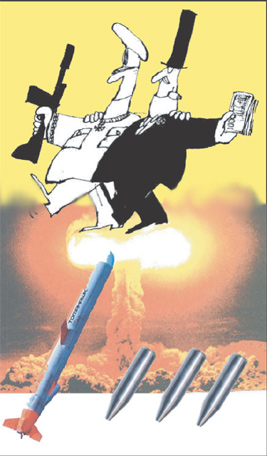 Even as the Obama administration stumbles and bumbles along in search of a magical political strategy in Iraq that would make sense of everything, American weapons-makers can expect a bountiful future. In the meantime, Washington is putting forces in place that, by doing more of the same for the third time in a disintegrating Iraq in the middle of a fracturing region, guarantee more of the same. In that sense, you might say that American forces are partly in place to help promote the investment. If one needed an example of how the military-industrial complex works today, that might be it. Every mistake by Washington is a boon for future arms sales.
Once Again, American Weapons-Makers Are Making a Killing in Iraq Our battle with ISIS lacks goals and direction, but that doesn’t mean there isn’t a profit to be made.Mother Jones—By Peter Van Buren Fri Jan. 16,his story first appeared on the TomDispatch website.
The current American war in Iraq is a struggle in search of a goal. It began in August as a humanitarian intervention, morphed into a campaign to protect Americans in-country, became a plan to defend the Kurds, followed by a full-on crusade to defeat the new Islamic State (IS, aka ISIS, aka ISIL), and then… well, something in Syria to be determined at a later date.
At the moment, Iraq War 3.0 simply drones on, part bombing campaign, part mission to train the collapsed army the US military created for Iraq War 2.0, all amid a miasma of incoherent mainstream media coverage. American troops are tiptoeing closer to combat (assuming you don’t count defensive operations, gettingmortared, and flying ground attack helicopters as “combat”), even as they act likearchaeologists of America’s warring past, exploring the ruins of abandoned US bases. Meanwhile, Shia militias are using the conflict for the ethnic cleansing of Sunnis and Iran has become an ever-more significant player in Iraq’s affairs. Key issues of the previous American occupation of the country—corruption,representative government, oil revenue-sharing—remain largely unresolved. The Kurds still keep “winning” against the militants of IS in the city of Kobani on the Turkish border without having “won.”…….
there is one bright side to the situation. If you can’t create Victory in Iraq for future VI Day parades, you can at least make a profit from the disintegrating situation there.
Team America’s Arms Sales Force
In the midst of the December holiday news-dumping zone, the US Defense Security Cooperation Agency (DSCA) quietly notified Congress of several pending arms deals for Iraq. DSCA is the Pentagon office responsible for coordinating arms agreements between American defense contractors and foreign buyers.
Before those thousands of not-boots-on-the-ground troops started hemorrhaging back into Iraq late last year, DSCA personnel made up a significant portion of all US military personnel still there. Its staff members are, in fact, common in US embassies in general. This shouldn’t be surprising, since the sales of weaponry and other kinds of war equipment are big business for a range of American companies, and the US government is more than happy to assist. In fact, there is even ahandbook to guide foreign governments through the buying process.
The DSCA operates under a mission statement which says the “US may sell defense articles and services to foreign countries and international organizations when the President formally finds that to do so will strengthen the security of the US andpromote world peace.” While the Pentagon carries out the heavy lifting, actual recommendations on which countries can buy US gear are made by the secretary of state, and then rubber-stamped by Congress………
Would You Like the Extended Warranty?
Iraqis have a saying: “The rug is never sold.” It means that there’s always more money to be made from any transaction. General Dynamics would agree. Arms sales work remarkably like consumer electronics (and Iraqi carpets). Want the extended warranty for your new smartphone? Extra battery? Accessories? Insurance against loss or damage? Suddenly the cost of your phone doubles.
Same for tanks. The M1 is a complex beast. You’ll need to pay General Dynamics for trainers to teach your guys to operate its systems. You’ll need lots of spare parts, especially operating in the desert. And it won’t be long before you’ll want to do some upgrades—maybe better computers or a faster engine. The US is currently working on “urban warfare” upgrades for the 140 M1s the Iraqis have hung onto. In the defense world, these after-sales are known as the “tail.” And the longer the tail, the bigger the profits.
For example, built into the contract for the new M1 tank sale is the provision that “approximately five US Government and one hundred contractor representatives [will] travel to Iraq for a period of up to five years for delivery, system checkout, program support, and training.” And that isn’t going to come cheap from General Dynamics, though the five government employees may be a bargain financed by American taxpayers.
None of this even touches on the potential for repeat sales. ………..
from any point of view except General Dynamics’s, the Islamic State’s, or maybe the Iranians’, these tank sales don’t add up.
Call Your Broker
It’s easy enough to toss around terms like “military-industrial complex” and equally easy to slip from there into what some might consider blood-for-oil conspiracy theories or suggestions that Iraq War 2.0 was all about the mega-contractor Halliburton’s bottom line. While oil and Halliburton were certainly part of that past war’s calculus, they can no more account for it than the piles of money General Dynamics is about to make selling tanks can alone account for Iraq War 3.0.
Still, it’s hard to ignore the way defense companies find themselves buried in cash from selling weapons that aren’t needed to people who can’t use them, sales that are, in the end, likely to harm, not help, America’s geopolitical interests. Perhaps it is better to see the immediate profits from such deals as just a part of a muchbigger process, one that demands America have enemies to crusade against to ensure the survival of the national security state.
To such a “wartime” paradigm one just needs to plug in new bad guys from time to time, which is proving an ever-easier venture, since each of our previous wars and conflicts seems to offer a remarkably helpful hand in creating them. In this way, radical Islam has proven, with Washington’s help, a worthy successor to the Soviet Union, itself once a superb money-making venture and a great way to build a monumental national security state.
Even as the Obama administration stumbles and bumbles along in search of a magical political strategy in Iraq that would make sense of everything, American weapons-makers can expect a bountiful future. In the meantime, Washington is putting forces in place that, by doing more of the same for the third time in a disintegrating Iraq in the middle of a fracturing region, guarantee more of the same. In that sense, you might say that American forces are partly in place to help promote the investment. If one needed an example of how the military-industrial complex works today, that might be it. Every mistake by Washington is a boon for future arms sales.
So if you’ve got money to invest in General Dynamics, you might want to call your broker. http://www.motherjones.com/politics/2015/01/iraq-military-win-business-not-war
Nuclear weapons material: North Korea’s reactor not fully operational
North Korea nuclear reactor not fully operational: US think tank https://au.news.yahoo.com/world/a/30571677/north-korea-nuclear-reactor-not-fully-operational-us-think-tank/ January 14, 2016 Seoul (AFP) – Recent satellite images suggest the nuclear reactor seen as North Korea’s main source of weapons-grade plutonium is still not operating at full capacity, a US think tank said on Thursday.
North Korea mothballed the Yongbyon reactor in 2007 under an aid-for-disarmament accord, but began renovating it after its third nuclear test in 2013.
When fully operational, the reactor is capable of producing around six kilos (13 pounds) of plutonium a year — enough for one nuclear bomb, experts say.
Analysing satellite imagery from late 2014 to the end of 2015, the Washington-based Institute for Science and International Security (ISIS) concluded the reactor has been operating intermittently or at low power throughout the period.
Using tell-tale operational markers, including steam emissions and hot water discharges, the ISIS experts discerned a pattern of limited operations for a few weeks, followed by an apparent shutdown.
“The reasons for this type of operation are unknown,” the institute said.
Its findings contradict a North Korean statement in September last year that all facilities at the Yongbyon nuclear complex were working normally.
The ISIS experts did detect signs that a gas centrifuge plant for enriching uranium was operational, given snow melt on the roofs of the plant’s main buildings.
Activity at Yongbyon is closely monitored for any sign of reprocessing activity.
At some point North Korea is expected to shut down the reactor, discharge the spent fuel, and chemically process it in a nearby radiochemical laboratory to extract weapons-grade plutonium.
North Korea has carried out four nuclear tests since 2006, the most recent being last week when it announced it had detonated its first hydrogen bomb.
Experts have disputed the H-bomb claim, saying the yield from the test was far too low for a full-fledged thermonuclear device.
Jeremy Corbyn – inconveniently sensible on nuclear weapons
 Corbyn says the Trident isn’t worth the money. It is a costly weapon that can never be used. British security concerns should be focused on terrorism, economic turmoil and catastrophic climate change; nuclear weapons are irrelevant to all that. Corbyn argues, sensibly, that the Cold War era is long gone
Jeremy Corbyn talks common sense on nuclear weapons, WP. By Katrina vanden Heuvel January 12 The new leader of the British Labour Party, Jeremy Corbyn, has sparked a political firestorm by challenging the myths around nuclear weapons and Cold War deterrence. Corbyn announced that he would never use a nuclear weapon. He followed that apostasy by declaring that he opposed renewal of the British nuclear Trident submarine program.“I am opposed to the use of nuclear weapons. I am opposed to the holding of nuclear weapons. I want to see a nuclear-free world. I believe it is possible,” Corbyn declared.
Several Labour shadow ministers suggested they might resign if that became Labour’s policy. Conservative Prime Minister David Cameron and the right-wing British press have been pillorying Corbyn as a threat to national security for his heresy.
Corbyn’s aides argue this is not a new version of the debate over unilateral disarmament that wracked Labour in the 1980s. Rather, they insist the question is whether renewing the fleet is worth the money. Corbyn’s doubts are shared by some current and retired military officers. The British fleet of four Trident submarines is slated for retirement in the late 2020s. It will take almost that long to develop a successor. Renewing and operating the Trident program will cost an estimated 167 billion British pounds over the next four decades. The Army has already been reduced to below 82,000 soldiers, the lowest number since the 1700s. Renewing the Trident fleet would likely force more cuts.
Corbyn says the Trident isn’t worth the money. It is a costly weapon that can never be used. British security concerns should be focused on terrorism, economic turmoil and catastrophic climate change; nuclear weapons are irrelevant to all that. Corbyn argues, sensibly, that the Cold War era is long gone….
The Corbynites are sensitive about being accused of unilateral disarmament, since the party’s adoption of that position in the 1980s at the height of Cold War tensions was electorally damaging. Yet a British commitment to give up nuclear weapons unilaterally might just be the highest and best use of the Trident fleet…..
Corbyn is now taking a beating in the conservative tabloids for his blasphemies. Yet he is talking common sense. No leader in his right mind would use nuclear weapons. The British people would be better off spending the money that renewal would cost elsewhere. The reality is that the British nuclear arsenal will have greater global significance if it is dismantled rather than renewed. Corbyn is meeting fierce resistance, even inside his own party, but he is raising questions that deserve a full debate. https://www.washingtonpost.com/opinions/jeremy-corbyn-talks-common-sense-on-nuclear-weapons/2016/01/12/52e8c886-b88f-11e5-b682-4bb4dd403c7d_story.html
Against all reason, Republican hawks still trying to sabotage Iran nuclear agreement
 Opponents of Iran Nuclear Deal Just Won’t Quit http://www.huffingtonpost.com/alan-elsner/opponents-of-iran-nuclear_b_8962566.html?ir=Australia Opponents of the Joint Comprehensive Plan of Action (JCPOA) between Iran and six world powers to deal with Iran’s nuclear program mounted a massive campaign last summer, spending tens of millions of dollars to sabotage the agreement.
They failed — but they have not quit.
Days after reports that Iran has dismantled one of the most dangerous parts of its program by removing the core of its heavy-water reactor in Arak and filling it with cement, Republicans in the House of Representatives are mounting a new attempt to kill the agreement that has already made the world much safer.
The “Iran Terror Finance Transparency Act” would prevent the President from lifting sanctions imposed on Iranian individuals and entities unless the Administration can “certify the entity is not a terror financier, human rights abuser or involved in the proliferation of weapons of mass destruction.”
President Obama has already vowed to veto the bill, should it reach his desk, for the simple reason that it tangles up an agreement on Iran’s nuclear program with other issues that have nothing to do with it. The new bill is simply a poison pill, designed to kill the nuclear deal.
The deal was designed to do one very important thing — make the world safe from the threat of a nuclear-armed Iran. It does not aim to tackle Iran’s role in regional conflicts, or its sponsorship of terrorist groups or its domestic human rights abuses.
There are separate sanctions imposed on Iran to confront those issues, all of which will remain in place. And the United States and its partners should remain vigilant and take appropriate action when faced with Iranian provocations — like the ballistic missile test they conducted last October which violated UN Security Council resolutions. But none of these factors have anything to do with the nuclear deal.
If the latest bill passed, the White House warned, the legislation “could result in the collapse of a comprehensive diplomatic arrangement that peacefully and verifiably prevents Iran from acquiring a nuclear weapon.”
That would lead to the end of international inspections and monitoring of Iranian nuclear facilities and leave Iran free to restart its program. It would “lead to the unraveling of the international sanctions regime against Iran, and deal a devastating blow to America’s credibility as a leader of international diplomacy,” the White House said.
Republicans have the votes to pass this bill in the House. It will be more interesting to see how it fares in the Senate, where prominent Republicans expected to face strong Democratic challengers this year, like Mark Kirk of Illinois and Ron Johnson of Wisconsin, have been strong backers of previous efforts to sabotage the agreement.
What opponents don’t get is that the nuclear deal is already proving itself. The Iranians have moved faster than most experts believed would happen to fulfill their part of the agreement. Notably, they shipped 25,000 pounds of low-enriched uranium to Russia, leaving them without enough material for a bomb.
“This step is vital because it is irreversible, since the low-enriched uranium is never coming back and would instead need to be produced again,” said Ilan Goldenberg, who directs the Middle East security program at the Center for a New American Security, writing in The National Interest.
The Iranians have also removed centrifuges as required and allowed intrusive inspections of its facilities, as laid down by the JCPOA. And now they are rendering the Arak plant harmless.
It will soon be time for the United States and its partners to live up to their side of the agreement. Once the designated international authorities confirm that Iran has met its obligations, the international community must begin to lift sanctions originally imposed because of Iran’s nuclear program.
Opponents can be expected to continue their campaign to kill the agreement one way or another. That’s why supporters, and all those who believe in diplomatic solutions to tough international problems, must remain vigilant, ready to take political action whenever needed to preserve this important breakthrough.
Dangers in transporting nuclear weapons through residential areas

 Fears voiced as nuclear weapons are transported through the Vale of Leven (incl video) Daily Record, 12 JAN 2016 BY MARTIN LAING A CONCERNED resident says movement of warheads in difficult driving conditions put lives at risk
CONCERN has been expressed for public safety after a nuclear convoy was filmed rumbling through residential areas of West Dunbartonshire.
Renton man Les Robertson shot video of the mult-vehicle convoy as it moved past the Co-Op store in Balloch and through the Vale of Leven on Saturday at tea time.
However, a spokesman for the Ministry of Defence denied there was any threat to public safety and said the police had been involved in helping to organise the movement of materials to the Clyde naval base at Faslane and Couplort.
Mr Robertson wrote to the Lennox Herald this week to highlight his fears that the transportation of live nuclear warheads through the area put lives at risk.
He said: “On Saturday, January 9, a nuclear warhead convoy, consisting of four warhead carriers and support vehicles, travelled through West Dunbartonshire on route to Coulport.
“Trident warheads are carried in large crates inside the large green trucks. They are fully assembled and complete. The core of the warhead is a ball of plutonium and uranium. This is surrounded by specially developed conventional high explosives which would be ignited to create the critical mass necessary for a nuclear detonation when launched and targeted.
“The Ministry of Defence says there is little risk of a nuclear detonation during transport but, in an accident, the highly volatile conventional explosive could be set off, causing the warhead to jet plutonium. It estimates that in a serious accident a circle some 550 metres in radius would be affected by blast and fragments of explosive.
“Given the terrible driving conditions on Saturday evening, the risk of an accident was heightened yet a convoy carrying its deadly cargo was allowed to travel close to a busy supermarket in Balloch and heavily populated housing schemes including the Haldane and Dalvait.”……… To view the video, go to www.lennoxherald.co.uk.
Highest alert level for US military in South Korea
 North Korea: US forces in South put on highest level of alert; allies discuss ‘strategic assets’ , ABC News, 11 Jan 16
Key points:
- Media reports say a US aircraft carrier, B-2 bombers, submarines and F-22 fighters being considered for deployment to South
- Inter-Korean Kaesong industrial park restrictions to increase on Tuesday
- South Korea and Japan used a military hotline for the first time after North’s test
- North’s state media says Kim Jong-un congratulated nuclear scientists
The US and its ally South Korea are in talks to send further strategic assets to the Korean peninsula, a day after a US B-52 bomber flew over the South in response to the test…..
Under the US-South Korea military alliance, there are nearly 30,000 US troops permanently stationed in South Korea, which is also protected by the US “nuclear umbrella”. http://www.abc.net.au/news/2016-01-11/us-troops-in-south-korea-on-high-alert-after-north-nuclear-test/7081296
Birth defects in families of Britain’s nuclear test veterans: the fight for justice
Their wives have been found to have three times the usual number of miscarriagesand even their grandchildren have eight times the normal amount of birth defects.
Nuclear test veterans bid for £1million to prove blasts caused cancer and birth defects http://www.mirror.co.uk/news/uk-news/nuclear-test-veterans-bid-1million-7147105 9 JAN 2016 BY SUSIE BONIFACE Britain’s nuclear heroes are bidding for a £1million research fund to finally prove the awful genetic legacy of the UK bomb tests.
Veterans are hoping the government cash will help them win a 60-year fight for justice after they were left with a crippling legacy of cancers , rare disease and 10 times the normal rate of birth defects in their children.
Nige Heaps of the British Nuclear Test Veterans’ Association said: “We hope that with this money we’ll be able to do the scientific work necessary to help prove the case, as well as improving the lives of survivors and their children.”
In his March budget Chancellor George Osborne praised the veterans’ campaign for recognition, backed by this newspaper, and announced a £25m fund to help all veterans over 60.
- The BNTVA has spent the past nine months preparing a detailed bid which has already had draft approval and will be formally submitted on Monday.The £1m they are asking for includes:
- £500,000 over two years for a genetic study by Brunel University
- £250,000 for research by charity Combat Stress into the mental health effects
- £150,000 for a two-year study at the University of Southampton on the sociological impact
- £6,000 to begin a remembrance project and future archive
- £94,000 to provide items like electric wheelchairs, home adaptations, transport or other help for those who need it
There is no guarantee BNTVA will get a penny. The Aged Veterans Fund they are applying to has £5million next year to split between eight veterans’ groups expected to bid.
- But Mr Heaps says he is confident of a breakthrough.He added: “There is no way scientifically to say any genetic damage was caused by radiation from the tests.
“The best we can hope for is to prove the veterans have a higher rate of genetic damage than the rest of the population. We have to fight the battles we can win.”
Around 22,000 men, many on National Service, were ordered to Australia and Christmas Island in the South Pacific from 1952 to witness the explosion of dozens of atomic and hydrogen bombs.
They were forced to live amid the toxic fallout for up to a year afterwards.Read more: Nuclear test veterans fighting for £72k payout after being irradiated by the Government
On their return, they began to report increased cases of blood, thyroid and tongue cancers and rare blood and bone disorders.
Their wives have been found to have three times the usual number of miscarriagesand even their grandchildren have eight times the normal amount of birth defects.
- The Ministry of Defence has always denied being to blame, and has spent millions fighting legal cases. Today fewer than 3,000 veterans survive, along with an estimated 150,000 descendants carrying the curse of their fathers’ service.But in 2007 genetic research in New Zealand – similar to that now proposed here – showed veterans had DNA damage three times worse than that suffered by survivors of Chernobyl.
Read more: Nuclear test veteran says his photos prove men were exposed to deadly radiation
Derek Fiddaman has had 200 cancers removed from his face and head – and expects to develop 100 more.
Derek was a 21-year-old naval rating on HMS Cossack when it was ordered to Christmas Island in 1957 as guardship for several hydrogen bomb tests codenamed Operation Grapple.
- The crew was ordered on deck to watch the explosions.In 1975 he developed lumps on his face and began 40 years and 1,000 hospital visits to have basal cell carcinomas – cancers rooted in the deepest layer of skin – cut out.
Derek, now 78, of Horsham, West Sussex, said: “I have about five cut out every year, so if I live another 20 years there’ll be 100 more.
“Each time they cut one out and I go back and there’s another one growing in the scar.”
- He’s one of those demanding the MoD admit irradiating them.He said: “I’m one of the lucky ones – it’s not going to kill me and they can at least cut my cancers out.
“You get used to it. All I want is to hear the word ‘sorry’. They never will, but that’s all I want.”
The proposed UK research will involve analysis of the DNA in blood and saliva of around 50 surviving veterans, wives and children, to assess genetic damage and see if it was passed on.
It will also look for a “radiation signature” in the DNA, if one is present.
If approved, the money will be released in the spring.http://www.mirror.co.uk/news/uk-news/nuclear-test-veterans-bid-1million-7147105
USA’s show of force: bomber flies over South Korea
US bomber flies over South Korea amid standoff over North Korea nuclear tests, Guardian,10 Jan 16
B-52 bomber a show of force in Cold War-style impasse following Pyongyang’s fourth nuclear test A powerful US B-52 bomber flew over South Korea on Sunday, in a clear show of force from the United States as a Cold War-style standoff deepened between its ally Seoul and North Korea following Pyongyang’s fourth nuclear test.The Observer view on North Korea’s nuclear bomb test. China and America must put aside their differences to counter Kim Jong-un’s menace
The B-52 flight follows a victory tour by North Korean leader Kim Jong-un to celebrate the country’s widely disputed claim of a hydrogen bomb test. Kim is seeking to rally pride in an explosion viewed with outrage by much of the world to boost his domestic political goals.
There was no immediate reaction from North Korea’s state media to the B-52 fly-over, which also happened after North Korea’s third nuclear test in 2013.
Kim’s first public comments about last week’s test came in a visit to the country’s military headquarters, where he called the explosion “a self-defensive step” meant to protect the region “from the danger of nuclear war caused by the US-led imperialists,” according to a dispatch on Sunday from the state-run Korean Central News Agency.
“It is the legitimate right of a sovereign state and a fair action that nobody can criticise,” Kim was reported as saying during his tour of the People’s Armed Forces Ministry.
The tone of Kim’s comments, which sought to glorify him and justify the test, is typical of state media propaganda. But they also provide insight into North Korea’s long-running argument that it is the presence of tens of thousands of U.S. troops in South Korea and Japan, and a “hostile” U.S. policy that seeks to topple the government in Pyongyang, that make North Korea’s pursuit of nuclear weapons absolutely necessary……http://www.theguardian.com/world/2016/jan/10/us-bomber-flies-over-south-korea-amid-standoff-over-north-korea-nuclear-tests
Canada’s UN ambassador to spearhead Anti-nuclear weapon effort
Anti-nuclear weapon effort to be spearheaded by Canada’s UN ambassador Renewed push comes as Justin Trudeau is expected to attend Barack Obama’s Nuclear Security Summit, CBC News By Mike Blanchfield, The Canadian Press Jan 10, 2016 Canada plans to kick-start a long-stalled international effort aimed at ridding the world of the key ingredients needed for nuclear weapons, The Canadian Press has learned. The renewed push this week by Canada’s United Nations ambassador to Geneva to spearhead the creation of a Fissile Material Cut-off Treaty or FMCT, comes as Prime Minister Justin Trudeau is expected to attend U.S. President Barack Obama’s Nuclear Security Summit.
Trudeau’s presence at the Obama summit, March 31 and April 1, would come just three weeks after his scheduled March 10 gala state dinner at the White House.
Canada’s renewed focus on nuclear non-proliferation efforts has been in the works for months, but the effort has new urgency because of North Korea’s recent claim to have conducted a test of a hydrogen bomb.
“I think it sent a chill through the world community and reinvigorates this discussion and this debate,” Rosemary McCarney, Canada’s permanent representative to the United Nations in Geneva, told The Canadian Press……. http://www.cbc.ca/news/politics/canada-nuclear-weapons-un-1.3397601
Hope for nuclear disarmament – the Marshall Islands legal case
 Say hello to the Marshall Islands, the tiny, heroic island nation in Micronesia, with a population just over 70,000. This former U.S. territory, which still bears the terrible scars of 67 above-ground nuclear blasts between 1946 and 1958, when this country used it as an expendable nuclear test site, has engaged the United States — and, indeed, all nine nations that possess nuclear weapons — in lawsuits demanding that they comply with the 1968 Nuclear Non-Proliferation Treaty and begin the process of negotiating global nuclear disarmament.
Taking on the Nuclear Goliath http://www.counterpunch.org/2016/01/08/taking-on-the-nuclear-goliath/ by ROBERT KOEHLER
“Just as we stood for freedom in the 20th century, we must stand together for the right of people everywhere to live free from fear in the 21st century. And . . . as the only nuclear power to have used a nuclear weapon, the United States has a moral responsibility to act. We cannot succeed in this endeavor alone, but we can lead it, we can start it.
“So today, I state clearly and with conviction America’s commitment to seek the peace and security of a world without nuclear weapons.”
Uh…
These words, the core of President Obama’s first major foreign policy speech, delivered in Prague in April 2009, now resonate with nothing so much as toxic irony — these pretty words, these words of false hope, which disappeared into Washington’s military-industrial consensus and failed to materialize into action or policy.
James Carroll, writing at Mother Jones in 2013, describes what happened in the wake of this extraordinary policy declaration:
“In order to get the votes of Senate Republicans to ratify the START treaty, Obama made what turned out to be a devil’s bargain. He agreed to lay the groundwork for a vast ‘modernization’ of the US nuclear arsenal, which, in the name of updating an aged system, is already morphing into a full-blown reinvention of the arms cache at an estimated future cost of more than a trillion dollars. In the process, the Navy wants, and may get 12 new strategic submarines; the Air Force wants, and may get a new long-range strike bomber force. Bombers and submarines would, of course, both be outfitted with next-generation missiles, and we’d be off to the races. The arms races.”
And the cause of global nuclear disarmament, once a dream with geopolitical cred, may wind up entombed in eternal apathy. Continue reading
Nuclear weapons now more likely to be used, with Pentagon’s new B61-12 bomb
 it also poses the contrary reality of an increased probability that nuclear weapons will actually be launched.
This concept of greater usability entirely forgoes the core assumption of deterrence theory, which asserts that credible nuclear deterrents are always present but never utilized.
The Pentagon’s New Nuclear Gravity Bomb, Global Risk Insights by Ian Armstrong , January 8, 2016 Despite its advertisement as a low-yield, lower-risk alternative to existing missile models, the recently tested B61-12 nuclear gravity bomb presents several risks that may in fact elevate the threat of nuclear use and encourage proliferation.
Late last year, the United States successfully completed testing of the newest addition to its nuclear arsenal — the B61-12 nuclear gravity bomb. Part of a $355 billion effort to modernize its increasingly outdated nuclear capability, the U.S. has developed the B61-12 to the tune of over $10.4 billion as the most adaptable, precise nuclear gravity missile on the planet.
Successful testing of the missile has now created a clear pathway for production engineering to begin in 2016, and with that, the United States is now poised to acquire 480 bombs total by the 2020-2024 period.
Washington argues that the development of an enhanced B61 gravity bomb is an important facet of the broader nuclear modernization efforts required to protect itself and its Western allies from threats like Russia and Iran. Other countries, especially non-nuclear states, underscore the hypocrisy of a nuclear modernization effort given President Obama’s stated commitment towards disarmament and nonproliferation…….
Lower Nuclear Yield, Higher Nuclear Probability
Yet, in contradictory fashion, the same unique technical qualities that make the B61-12 a more accurate, secure, and effective U.S. nuclear deterrent also conjure implied risks with the potential to negate any positive impacts.
By significantly increasing accuracy and eroding the barriers to use previously presented by unintended casualties, the B61-12 does indeed increase the deterrent capability of the United States — but it also poses the contrary reality of an increased probability that nuclear weapons will actually be launched.
This concept of greater usability entirely forgoes the core assumption of deterrence theory, which asserts that credible nuclear deterrents are always present but never utilized. In short, B61-12s will broaden the range of circumstances that U.S. military strategists might reasonably consider employing nuclear weapons, a move which in turn would naturally create an immediate possibility of escalation towards full-fledged nuclear war.
In addition, the sheer expense and symbolism of creating a highly modernized, highly precise nuclear weapon like the B61-12 challenges the notions of nonproliferation and disarmament.
Washington’s pursuit of the B61-12 simultaneously legitimizes Russian vertical proliferation while potentially intimidating Beijing into accelerated arsenal growth. It also assures unofficial nuclear powers like Pakistan, India, and Israel that acquisition of low-yield nuclear weapons is an acceptable alternative to procuring high-yield strategic missiles……….http://globalriskinsights.com/2016/01/the-pentagons-new-nuclear-gravity-bomb/
Nuclear war danger now becoming greater than during the Cold War
In a new study, the arms control advocacy group Global Zero analysed 146 such incidents over the past 21 months, classing two of them as high risk. It deemed 33 provocative in that they “stray from the norm of routine incidents, resulting in more aggressive or confrontational interaction that can quickly escalate to higher-risk incidents or even conflict”.
Perry said: “In the cold war, we and Russia were in the process of dismantling nuclear weapons … Today, in contrast, both the Russia and the US are beginning a complete rebuilding of the cold war nuclear arsenals.”
Nuclear weapons risk greater than in cold war, says ex-Pentagon chief
William Perry lists a series of factors that he says mean the chance of a ‘calamity’ is higher today than in the 1970s and 80s, Guardian, Julian Borger, 8 Jan 16, The risks of a nuclear catastrophe – in a regional war, terrorist attack, by accident or miscalculation – is greater than it was during the cold war and rising, a former US defence secretary has said.
William Perry, who served at the Pentagon from 1994 to 1997, made his comments a few hours before North Korea’s nuclear test on Wednesday, and listed Pyongyang’s aggressive atomic weapons programme as one of the global risk factors.
He also said progress made after the fall of the Soviet Union to reduce the chance of a nuclear exchange between the US and Russia was now unravelling.
“The probability of a nuclear calamity is higher today, I believe, that it was during the cold war,” Perry said. “A new danger has been rising in the past three years and that is the possibility there might be a nuclear exchange between the United States and Russia … brought about by a substantial miscalculation, a false alarm.”…… Continue reading
Cruel nuclear winter, deadly famine from one “small” nuclear war
One small atomic war could trigger cruel nuclear winters and global famine http://www.techinsider.io/nuclear-explosions-earth-atmosphere-temperature-2016-1 Kevin Loria 7 Jan 16
North Korea’s fourth test of a nuclear weapon — whether it was a hydrogen bomb or not — calls attention to a well-known but sobering fact: There are a terrifying number of nuclear weapons in the arsenals of major powers around the world.
But worse, unprecedented and widespread devastation doesn’t require the unlikely scenario of all those powers unleashing all the firepower at once, according to a recent study published in an American Geophysical Union journal.
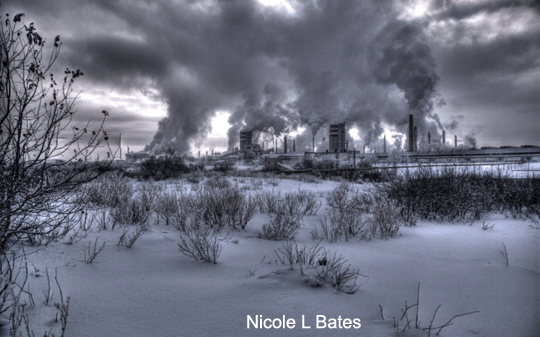
In fact, that study found that a “limited, regional nuclear war” using 100 “small nuclear weapons” — the size of the bomb dropped at Hiroshima — could cause a nuclear winter that would last decades. Continue reading
Was North Korea’s nuclear test really and H-Bomb: Science can tell
 SCIENCE CAN TELL IF NORTH KOREA’S TEST WAS REALLY AN H-BOMB, Wired, 7 Jan 16, “……North Korea has a history of exaggerating its military claims to achieve its political ends. (South Korea, the US, and Japan are typically named…… because North Korea’s leader Kim Jong Un is unlikely to let international inspectors anywhere near the test site, the only real way to tell whether North Korea’s big boom was the big H is by analyzing data collected from a suite of global sensors……
Hydrogen bombs, on the other hand, use nuclear fusion—melding atoms together—to release way more explosive energy. These “thermonuclear” weapons are so powerful that they actually need atomic fission to kickstart the fusion process. That’s right, H-bombs use an A-bomb just to get going. American scientists detonated the first H-bomb in 1952, on a Pacific atoll. It was over 500 times more powerful than the bomb the US dropped on Nagasaki. Modern H-bombs are at least twice as powerful. Which is why everyone is so freaked out about whether North Korea, the world’s most famous renegade nation, has a hydrogen bomb…….
why seismologists take recordings from multiple sensors. The agency responsible for monitoring atomic blasts, the Comprehensive Nuclear-Test-Ban Treaty Organization, currently has 42 certified seismic stations distributed around the globe (plus over 100 auxiliary stations). Because seismic signals bounce through the Earth, not only did Russia and Japan pick up North Korea’s event, but so did the US……….
The smoking gun can only really come by detecting radioactive material. To that end, CTBTO has radionuclide detection stations scattered throughout the globe. These come in two flavors. The first looks for radioactive dust—fallout. These systems use suction pumps to pull air through a filter, which then goes through a radiation counter. The types of particles present, and their radioactivity, would give a lot of clues as to the bomb’s type. Let’s say you have a typical atom bomb: Its fallout particles would be decayed bits of uranium or plutonium.
A hydrogen bomb also uses those materials, but they’d be mostly burned away by the super hot fusion reaction. According to this 1991 analysis of a Chinese explosionpublished in Science and Global Security, an H-bomb’s radioactive particulate signature would have a lot less decayed plutonium and uranium, and also different ratios of their various decayed isotopes. But if someone knew the exact particles found after an H-bomb went off, they could use that knowledge to build their own H-bomb (that’s probably one of the ways the Soviets copied the US’s weapon). Which is why Wallace told me the details of the analysis are secret. But if the blast is underground, as this one seems to have been, radionuclide detection is little help—the particles get contained.
The other type of detector looks for radioactive gases, rather than particles. Xenon gas is the most potent of these, partly because it is a noble gas that doesn’t interact with other substances. Xenon can, however, decay. And the rate of decay tells scientists the gas atoms’ exact age. For instance, after North Korea’s 2013 test, a Japanese sensor picked up xenon isotopes that scientists deduced were exactly 55 days old. The exact same day as North Korea’s test…….
it matters not just what kind of bomb North Korea detonated, but that the country detonated one at all. http://www.wired.com/2016/01/science-can-tell-if-north-koreas-test-was-really-an-h-bomb/
1 This Month
23-25 October – on Zoom – World BEYOND War’s annual global conferenc


Shut down the radiation-damaged Heysham nuclear reactors now
To see nuclear-related stories in greater depth and intensity – go to https://nuclearinformation.wordpress.com

Say No to NASA’s Reckless Nuclear Reactor on the Moon
Say No to NASA’s Reckless Nuclear Reactor on the Moon
-
Archives
- October 2026 (190)
- September 2026 (339)
- August 2026 (330)
- July 2026 (355)
- June 2026 (287)
- May 2026 (306)
- April 2026 (356)
- March 2026 (251)
- February 2026 (267)
- January 2026 (308)
- December 2025 (358)
- November 2025 (359)
-
Categories
- 1
- 1 NUCLEAR ISSUES
- business and costs
- climate change
- culture and arts
- ENERGY
- environment
- health
- history
- indigenous issues
- Legal
- marketing of nuclear
- media
- opposition to nuclear
- PERSONAL STORIES
- politics
- politics international
- Religion and ethics
- safety
- secrets,lies and civil liberties
- spinbuster
- technology
- Uranium
- wastes
- weapons and war
- Women
- 2 WORLD
- ACTION
- AFRICA
- Atrocities
- AUSTRALIA
- Christina's notes
- Christina's themes
- culture and arts
- Events
- Fuk 2022
- Fuk 2023
- Fukushima 2017
- Fukushima 2018
- fukushima 2019
- Fukushima 2020
- Fukushima 2021
- general
- global warming
- Humour (God we need it)
- Nuclear
- RARE EARTHS
- Reference
- resources – print
- Resources -audiovicual
- Weekly Newsletter
- World
- World Nuclear
- YouTube
-
RSS
Entries RSS
Comments RSS

