The West creating conditions to inflame Middle East and lead to wider war
Slouching Toward Global Disaster, Reader Supported News By Richard Falk, CounterPunch 01 January 16
 here are many disturbing signs that the West is creating conditions in the Middle East and Asia that could produce a wider war, most likely a new Cold War, containing, as well, menacing risks of World War III. The reckless confrontation with Russia along its borders, reinforced by provocative weapons deployments in several NATO countries and the promotion of governing regimes hostile to Russia in such countries as Ukraine and Georgia seems to exhibit Cold War nostalgia, and is certainly not the way to preserve peace.
Add to this the increasingly belligerent approach recently taken by the United States naval officers and defense officials to China with respect to island disputes and navigational rights in the South China Seas. Such posturing has all the ingredients needed for intensifying international conflict, giving a militarist signature to Obama’s ‘pivot to Asia.’
These developments are happening during the supposedly conflict averse Obama presidency. Looking ahead to new leadership, even the most optimistic scenario that brings Hillary Clinton to the White House is sure to make these pre-war drum beats even louder.
From a more detached perspective it is fair to observe that Obama seems rather peace-oriented only because American political leaders and the Beltway/media mainstream have become so accustomed to relying on military solutions whether successful or not, whether dangerous and wasteful or not, that is, only by comparison with more hawkish alternatives.
The current paranoid political atmosphere in the United States is a further relevant concern, calling for police state governmental authority at home, increased weapons budgets, and the continuing militarization of policing and law enforcement.
Such moves encourage an even more militaristic approach to foreign challenges that seem aimed at American and Israeli interests by ISIS, Iran, and China. Where this kind of war-mongering will lead is unknowable, but what is frighteningly clear is that this dangerous geopolitical bravado is likely to become even more strident as the 2016 campaign unfolds to choose the next American president.
Already Donald Trump, the clear Republican frontrunner, has seemed to commit the United States to a struggle against all of Islam by his foolish effort to insist that every Muslim is a terrorist suspect Islam as a potential terrorist who should be so treated. Even Samuel Huntington were he still alive might not welcome such an advocate of ‘the clash of civilizations’!
Historical Deep Roots………http://readersupportednews.org/opinion2/277-75/34377-slouching-toward-global-disaster
Underground nuclear testing – the stages
Stages of an underground nuclear test, BBC News [excellent diagrams] 6 January 2016 Nuclear devices are often tested underground to prevent radioactive material released in the explosion reaching the surface and contaminating the environment.
This method also ensures a degree of secrecy.
The release of radiation from an underground nuclear explosion – an effect known as “venting” – would give away clues to the technical composition and size of a country’s device, and therefore its nuclear capability.
The test site is carefully geologically surveyed to ensure suitability. Such tests usually take place well away from population centres.
The nuclear device is placed into a drilled hole or tunnel usually between 200-800m (650-2,600ft) below the surface, and several metres wide.
A lead-lined canister containing monitoring equipment is lowered into the shaft above the chamber. The hole is then plugged with gravel, sand, gypsum and other fine materials to contain the explosion and fallout underground.
The device is remotely detonated from a surface control bunker. The nuclear explosion vaporises subterranean rock, creating an underground chamber filled with superheated radioactive gas.
As this cools, a pool of molten rock collects at the bottom of the chamber.
Minutes or hours after the blast, as the pressure falls, the chamber collapses in on itself causing subsidence and a crater to appear on the surface. North Korea’s test……http://www.bbc.com/news/world-asia-35244474
America’s secret plutonium experiments on humans
Then there is the horrifying reality that these experiments were taking place in the shadow of Nazi Germany; some of the scientists involved in the radiation experiments were the very men whose earlier experimental designs had tormented prisoners of concentration camps. Welsome describes Operation Paperclip, conducted under the auspices of the U.S. government. Paperclip imported Nazi scientists and supported their work, helping to confer, in the words of scientist Joseph G. Hamilton, “a little of the Buchenwald touch” on American medicine.
This valuable work represents an elegy to lost ideals, lost health, and lost trust. One can only hope it will serve as a cautionary tale.
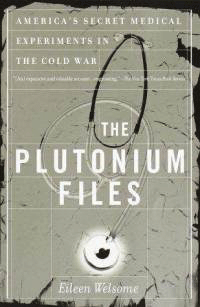 The Plutonium Files: America’s secret medical experiments in the Cold War N Engl J Med 1999; 341:1941-1942 December 16, 1999 Harriet A. Washington
The Plutonium Files: America’s secret medical experiments in the Cold WarBy Eileen Welsome. 580 pp. New York, Dial Press, 1999. $26.95. ISBN: 0-385-31402-7
Amid the embarrassments of Monicamania and of multiple public mea culpas, the past few years have not been exemplary ones for American journalism. This fact makes the triumph of The Plutonium Files all the sweeter, because this superlative book is a reminder of the purpose of investigative journalism.
This richly detailed, subtly nuanced history of government-engineered radiation experiments on unwitting Americans is based on the Pulitzer-prize–winning series Eileen Welsome wrote for the Albuquerque Tribune. Welsome’s tenacious and resourceful detective work has unveiled the saga of a sordid, tragic, yet fascinating chapter in the history of American medical science. The book succeeds on many levels. It is a gripping exposé of governmental exploitation and of medicine’s moral failures in an era in which blind trust defined the normal relationship between physicians and patients.
Between April 1945, scant months before the bombing of Hiroshima, and July 1947, the scientists of the Manhattan Project followed the construction of the atomic bomb with a chilling second act: medical experimentation on hundreds of unsuspecting Americans. Continue reading
Cold war fears of Nuclear Armageddon ( that risk remains now)
 Memories of Whistling Past Nuclear Armageddon, NYT By FRANCIS X. CLINESJAN. 2, 2016 No one called it terrorism back then, but the angst of day-to-day existence during the Cold War was chillingly recalled with the release last month of the government’s top-secret nuclear target list for 1959. “Population” was the obscenely brief title of target category No. 275 — population, as in the citizens of major cities who war planners estimated would necessarily die by the millions……..
“Duck and cover” jokes and tight-lipped laughter became the real civil defense in the Cold War. It felt smarter to seek survival in satire like Stanley Kubrick’s “Dr. Strangelove.” Or in Mort Sahl’s stand-up skewering of Dr. Wernher von Braun, the captured German rocket scientist, who metamorphosed into an American space-age hero. Mr. von Braun said in his best-selling autobiography that “I aim at the stars.” “But,” Mr. Sahl amended, “sometimes hit London,”……..

the notion of nuclear Armageddon reappeared with the discovery by the New York State Assembly during a routine session that the state, in 1963, had actually constructed a bomb shelter with 4½-foot-thick walls and drawn up a list of 700 or so people who would be privileged to survive in it.
The long-forgotten shelter was a quiet, pet project of Gov. Nelson Rockefeller, who was also one of the era’s chief promoters of bunkers. Immediately, questions arose among the lawmakers: Why didn’t I know about this until now? More urgently: How do I get on the list?…….http://www.nytimes.com/2016/01/03/opinion/sunday/memories-of-whistling-past-nuclear-armageddon.html?_r=0
India’s race for nuclear weapons, promoted by US government policies
Indian Nuclear Program – A global migraine , The Nation Muhammad Umar December 30, 2015 American experts have been incessantly warning their government of the dire consequences of exempting India from the Nuclear Suppliers Group (NSG) requirements. On December 8, while testifying in front of the United States House Committee on Foreign Affairs, the Executive Director of the Nonproliferation Policy Education Center, Henry D. Sokolski said, “The US persuaded the NSG to allow India to import uranium for its civilian nuclear program but, as predicted, this has only allowed India to dedicate more of its meager domestic uranium production to military purposes. India, in short, with the deal now can make more bombs.”
Since last December, Putin, Obama, and Xi Jinping have all visited India, and with each one Modi has made promises that contradict the commitments he has made to the others. Modi thinks he can pull the wool over everyone’s eyes – yes, he does, but cannot fool them any longer. He used President Xi Jinping’s visit to leverage Russia and the visit by Vladimir Putin to force Barack Obama into his arms. This is the real face of the so-called incredible India.
The construction of this new top-secret nuclear city, as detailed in Levy’s report is clear evidence that America’s attempt to offer India a civil nuclear incentive has failed to reign in their nuclear weapons program, instead it has helped the weapons program grow to unthinkable new heights. The city when completed in 2017 would be “the subcontinent’s largest military-run complex of nuclear centrifuges, atomic-research laboratories, and weapons- and aircraft-testing facilities”, the report said.
Regional stability is essential to avoid war, the NSG exemption secured by the America for India has freed up un-safeguarded Indian uranium for weapons use, and as revealed by Levy for an entire city dedicated to building nuclear bombs. After all this, America still choses to continue with backing India’s bid for full membership to the NSG, ironically the very organization created to prevent future proliferation after India exploded their first bomb.
The Americans must know that if India is allowed to build such a huge facility for the sole purpose of enriching uranium, it will create instability in the region. It will further aggravate Pakistan’s security dilemma, and at the same time enrage the Chinese.
According to the report, the construction began three years ago, and it is hard to imagine that strategic thinkers in the United States did not raise any red flags……… http://nation.com.pk/columns/30-Dec-2015/indian-nuclear-program-a-global-migraine
USA planned extensive nuclear bombing of populations – declassified documents reveal

 Stranger than Strangelove: how the US planned for nuclear war in the 1950s, The Conversation, Paul Lashmar, Senior Lecturer in Journalism, University of Sussex December 28, 2015 Those who have written about the nuclear Cold War remain grateful to Stanley Kubrick for giving us the satirical 1964 film Dr Strangelove which captures the madness that swept the world for 40 years. The name Strangelove may be overused but the United States has now released a secret file that really does justify the sobriquet: “Stranger than Strangelove”. Almost anodyne in title, Atomic Weapons Requirements Study for 1959 is a truly shocking document, revealing the scale of the holocaust that would have been unleashed in a nuclear war.
Underwater drones becoming a threat to UK’s Trident nuclear submarines
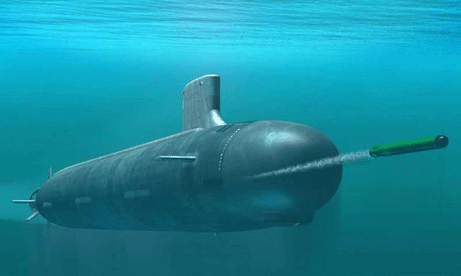
 Trident: Nuclear deterrent under threat from underwater drones, expert warns, The Independent 27 Dec 15 Advances in technology may turn Britain’s £31bn nuclear submarine programme into an expensive liability. Britain’s independent nuclear deterrent could be torpedoed by an increasingly sophisticated breed of underwater drone, a leading defence expert has warned.
Rapid advances in underwater drone technology – autonomous underwater vehicles that can be controlled by ship- or land-based operators – threaten to make the controversial Trident nuclear submarines vulnerable, according to Paul Ingram, the chief executive of the British American Security Information Council (Basic).
Submarines have traditionally been seen as capable of providing stealth and invulnerability to pre-emptive attacks. The current requirement for Trident replacement subs is for them to operate as near to silently as possible.
However, a revolution in underwater drones, as well as advances in sonar, satellite and other anti-submarine warfare systems, mean that even totally silent submarines are likely to become detectable. Some sensor technologies can detect large submerged objects by monitoring small movements of surface water.
Experts warn that as the capabilities of detecting systems improve and their cost falls, large-scale remote and potentially autonomous sensor deployments become possible. The result is that the world’s oceans will become increasingly transparent, seriously calling into question the UK’s heavy reliance upon the Trident submarine programme for its nuclear deterrence………
In January, Carol Naughton, of the non-proliferation group British Pugwash, will launch a research project into the appropriateness of Trident as a platform for the UK’s nuclear weapons capability.
“We are in danger of embarking on a major spend that will not only fail to deliver the invulnerability required of the proposed deterrent system, but is also likely to add a worrying degree of instability into the nuclear weapons situation,” she said.
Last month the Prime Minister revealed that the strategic defence and security review (SDSR) had put the cost of the four subs at £31bn, up from £25bn nine years ago. The review said a contingency fund of £10bn would be set aside, suggesting the MoD anticipates the costs could rise still further.
The first sub is not due to come into service until the early 2030s. http://www.independent.co.uk/life-style/gadgets-and-tech/news/trident-nuclear-deterrent-under-threat-from-underwater-drones-expert-warns-a6786946.html
Christmas joy for the weapons makers, especially in USA
 US foreign arms deals up by nearly $13 billion December 27, 2015 Nicholas Fandos The United States controls just over 50 per cent of the world’s weapons markets, Read more: http://www.theage.com.au/world/us-foreign-arms-deals-up-by-nearly-13-billion-20151226-glv3sx.html#ixzz3vU4qe9zF Nicholas Fandos, 27 Dedc 15 . Washington: Foreign arms sales by the United States jumped by almost $US10 billion ($13 billion) in 2014, about 35 per cent, even as the global weapons market remained flat and competition among suppliers increased, a new congressional study has found.
American weapons receipts rose to $US36.2 billion in 2014 from $US26.7 billion the year before, bolstered by multibillion-dollar agreements with Qatar, Saudi Arabia and South Korea. Those deals and others ensured that the United States remained the single largest provider of arms around the world last year, controlling just over 50 per cent of the market.
Russia followed the US as the top weapons supplier, completing $US10.2 billion in sales, compared with $US10.3 billion in 2013. Sweden was third, with roughly $US5.5 billion in sales, followed by France with $US4.4 billion and China with $US2.2 billion.
South Korea, a key US ally, was the world’s top weapons buyer in 2014, completing $US7.8 billion in contracts. It has faced continued tensions with neighbouring North Korea in recent years over the North’s nuclear weapons program and other provocations. The bulk of South Korea’s purchases were made with the United States, worth more than $US7 billion, and included transport helicopters and related support, as well as advanced unmanned aerial surveillance vehicles.
Brazil, another developing nation building its military force, was third with $US6.5 billion worth of purchase agreements, primarily for Swedish aircraft.
The report to Congress found that total global arms sales rose slightly in 2014 to $US71.8 billion, from $US70.1 billion in 2013. Despite that increase, the report concluded that “the international arms market is not likely growing over all” because of “the weakened state of the global economy”.
It was the second successive year that global sales remained steady, suggesting that the market has begun to level off after several years of extreme fluctuation.
Read more:
USA’s historic nuclear targets, simply called “Population”
“this document may be history, but unfortunately the weapons are not yet history.”
1950s U.S. Nuclear Target List Offers Chilling Insight, NYT By SCOTT SHANEDEC. 22, 2015WASHINGTON — Target category No. 275 from the nuclear target list for 1959 may be the most chilling. It is called simply “Population.”

For the first time, the National Archives and Records Administration has released a detailed list of the United States’ potential targets for atomic bombers in the event of war with the Soviet Union, showing the number and the variety of targets on its territory, as well as in Eastern Europe and China.
It lists many targets for “systematic destruction” in major cities, including 179 in Moscow (like “Agricultural Equipment” and “Transformers, Heavy”), 145 in Leningrad and 91 in East Berlin. The targets are referred to as DGZs or “designated ground zeros.” While many are industrial facilities, government buildings and the like, one for each city is simply designated “Population.”
“It’s disturbing, for sure, to see the population centers targeted,” said William Burr, a senior analyst at the National Security Archive, a research group at George Washington University that obtained the target list in response to a request first made in 2006. Mr. Burr, who specializes in nuclear history, said he believed it was the most detailed target list the Air Force had ever made public.
The targets are identified only generically, with code numbers that correspond to specific locations. The exact addresses and names of facilities from that period are in a still-classified “Bombing Encyclopedia,” which Mr. Burr said he was trying to get declassified.
The 800-page document, marked “Top Secret” and in a fuzzy gray typescript, comes to light as the issue of air power and the possible targeting of civilians is again in the news. The United States has avoided bombing the Islamic State’s headquarters in Raqqa, Syria, for instance, because of the presence of civilian prisoners in the same complex.
But some presidential candidates have criticized President Obama for not ordering more strikes, including Senator Ted Cruz, Republican of Texas, who has called for “carpet bombing” the Islamic State in Syria and Iraq. When challenged, Mr. Cruz said that “the object isn’t to level a city.”
“The object is to kill the ISIS terrorists,” he added, using an acronym for the Islamic State.
The newly declassified target list is titled “Atomic Weapons Requirements Study for 1959.” It is essentially a huge spreadsheet, produced by the Strategic Air Command in 1956 and projecting what could and should be hit in a potential war three years later…….
Stephen I. Schwartz, an independent consultant on nuclear weapons policy and the co-author and editor of a 1998 book on American nuclear weapons, “Atomic Audit,” called the target list “grim and frankly appalling.” But he said he was pleased that the document had been published at a time when fewer and fewer Americans, including policy makers, have much knowledge of nuclear weapons.
“We’ve known the general contours of nuclear war planning for a few decades,” he said. “But it’s great that the details are coming out. These are extraordinary weapons, capable of incredible destruction. And this document may be history, but unfortunately the weapons are not yet history.” http://www.nytimes.com/2015/12/23/us/politics/1950s-us-nuclear-target-list-offers-chilling-insight.html?_r=0
Pakistan’s arsenal of ”tiny” nuclear weapons
Pakistan’s army is building an arsenal of ”tiny” nuclear weapons—and it’s going to backfire, Quartz, C. Christine Fair December 21, 2015
Pakistan has the fastest growing nuclear arsenal and, within the next five to ten years, it is likely to double that of India, and exceed those of France, the United Kingdom, and China. Only the arsenals of the United States and Russia will be larger.
In recent years, Pakistan has boasted of developing “tactical nuclear weapons” to protect itself against potential offensive actions by India. In fact, Pakistan is the only country currently boasting of makingincreasingly tiny nuclear weapons (link in Urdu).
Why would Pakistan want “the world’s smallest nuclear weapons”?……….http://qz.com/579334/pakistans-army-is-building-an-arsenal-of-tiny-nuclear-weapons-and-its-going-to-backfire/
Threat to Russia of USA’s tactical nuclear weapons in Europe
U.S. tactical nuclear weapons in Europe threaten Russia – Putin http://rbth.com/international/2015/12/20/us-tactical-nuclear-weapons-in-europe-threaten-russia-putin_552869
“U.S. tactical nuclear weapons have always been there [on the planes] after WWII, after America became a nuclear power. They are simply modernizing them now,” the president said in an interview in a documentary, “World Order,” of the Rossiya-1 (VGTRK) television channel.
“Indeed, this is a dangerous thing now. Why? Because our tactical nuclear weapons are not strategic for the United States, they cannot reach their territory, while U.S. tactical nuclear weapons in Europe can reach our territory. In this sense, they are strategic for us and they are posing a bigger threat to us than our strategic nuclear weapons,” the president said.
“Culture of quiet” about India’s Top-Secret Nuclear City to Produce Thermonuclear Weapons
The nuclear city would, in short, be ringed by a security perimeter of thousands of military and paramilitary guards.
in choosing to remain publicly silent, the United States was taking a risk, evidently to try and reap financial and strategic rewards.

 India Is Building a Top-Secret Nuclear City to Produce Thermonuclear Weapons, Experts Say The weapons could upgrade India as a nuclear power — and deeply unsettle Pakistan and China. Foreign Policy.com BY ADRIAN LEVY DECEMBER 16, 2015 “………A culture of quiet
Like the villagers in Challakere, some key members of the Indian Parliament say they know little about the project.
One veteran lawmaker, who has twice been a cabinet minister, and who asked not to be named due to the sensitivity of the topic, said his colleagues are rarely briefed about nuclear weapons-related issues. “Frankly, we in Parliament discover little,” he said, “and what we do find out is normally from Western newspapers.” And in an interview with Indian reporters in 2003, Jayanthi Natarajan, a former lawmaker who later served as minister for environment and forests, said that she and other members of Parliament had “tried time and again to raise [nuclear-related] issues … and have achieved precious little.” Continue reading
The importance of understanding USA’s nuclear triad
What the nuclear triad is, why it matters By Kingston Reif December 16, 2015 Kingston Reif is the director for Disarmament and Threat Reduction Policy at the Arms Control Association. @KingstonAReif.(CNN)National security issues dominated Tuesday night’s Republican presidential candidate debate. And while the recent terrorist attacks in Paris and San Bernardino — and the conflict with ISIS — took center stage, the candidates also sparred on the under-the-radar issue of nuclear weapons policy. The question is whether any of the candidates fully understand quite how critical this subject is to America’s security.
As former Defense Secretary William Perry recently warned, the United States and Russia are on the verge of a new nuclear arms race, and Washington is currently planning to spend roughly $1 trillion dollars on nuclear weapons over the next 30 years without any real national debate.
How did the candidates do on the issue Tuesday?
Debate panelist Hugh Hewitt asked Donald Trump and Sen. Marco Rubio how they would approach the stewardship of America’s aging nuclear arsenal. Trump clearly had not done his homework on the subject, ending a rambling answer with “nuclear is just the power, the devastation is very important to me.”
Rubio, meanwhile, said that all three legs of America’s nuclear triad — submarines, land-based missiles, and bombers –“are critical” and in need of modernization. Ironically, he recommended the same course of action that President Barack Obama is pursuing: namely, a multi-hundred-billion-dollar plan to rebuild all three legs of the triad and their associated warheads and supporting infrastructure.
While many Republicans believe that the Obama administration has allowed America’s nuclear weapons to atrophy, the reality is that the administration has requested huge increases for nuclear weapons programs at the Defense and Energy Departments to sustain and modernize the arsenal.
For example, the administration’s fiscal year 2016 request for nuclear weapons programs at the Energy Department is roughly $3.5 billion more than the Bush administration’s final budget request. In fact, the GOP-led Congress has provided less funding for this program than requested by President Obama.
The reality is that the key issue is not so much that the Obama administration has spent too little on nuclear weapons, but that its current plans are unrealistic and would sustain an arsenal that U.S. military leaders have concluded is larger than necessary to deter a nuclear attack against America and its allies.
According to a Congressional Budget Office report in January, the direct costs of the administration’s plans for nuclear forces will total about $350 billion between fiscal 2015 and fiscal 2024. And this is just the tip of the spending iceberg, as most of these modernization programs are still in the research and development phase. Over the next 30 years, the bill could add up to $1 trillion, according to three separate independent estimates.
Meanwhile, U.S. military leaders continue to warn that the United States faces a cash crunch in the near future when it comes to sustaining and modernizing nuclear forces………
Ultimately, though, no matter what one’s perspective is on the role of nuclear weapons in U.S. national strategy — and whether the current plan to rebuild a bloated U.S. arsenal is necessary or affordable — the GOP candidates for president should at least be able to explain to the American people how the they propose to pay for the current modernization plans. And they should also be prepared to tell taxpayers why they should pay for more nuclear weapons than is required for deterrence, and how they would seek to reduce the danger to the United States posed by Russia’s nuclear arsenal. http://edition.cnn.com/2015/12/16/opinions/reif-nuclear-weapons-policy/
Increased risk of nuclear war by accident, by miscalculation
 Red lines and mushroom clouds, Online opinion, By Marko Beljac , 16 December 2015 When the great powers set red lines they do so under the shadow cast by mushroom clouds.It’s just as hard to miss the tinge of red in the mushroom clouds produced by the explosion of a hydrogen bomb as it is the setting of “red lines” that has coloured much international relations over recent times.
In June 1983 the General Secretary of the Central Committee of the Communist Party of the Soviet Union, Yuri Andropov, warned US envoy Averell Harriman that the actions and rhetoric of the Reagan administration were leading the US and the USSR toward “the dangerous red line” of nuclear war through “miscalculation.” Six months later that red line was reached, but thankfully, was not breached. It was a close run affair, we now know……
Today all the nuclear powers, so far as we are aware, are modernising their nuclear weapons precisely as they are setting new red lines. They are doing so because they understand that red lines stay bright red when the shadow cast by the mushroom cloud remains clear to all and sundry.
All this moves us toward the “dangerous red line” of nuclear war through “miscalculation.” This is because the nuclear weapons of the US and Russia remain on high alert, a posture known as “launch on warning.” In a crisis high alert levels lead to a “use them or lose them” dynamic that puts a premium on striking first…….
To make matters worse the red line that the United States casts for Russia now sits on her very borders. That has been perhaps the most significant long term strategic affect of the crisis in Ukraine. We now have both Washington and Moscow thinking they can play cat and mouse with nuclear weapons, and that when the red lines sit upon the Rodina herself.
The United States has no red lines; it is free to subvert, bomb and invade at will in order to advance its interests. Russia, by contrast, cannot act to secure its interests beyond the red line…….
Despite what may be the case on the ground the most important strategic affect of the Ukraine crisis is the official extension of the US red line to the borders of Russia.
The imposition of sanctions, the isolation of Russia politically, and the significant freezing of US-Russian relations means precisely this……..
In Syria we see the deployment of military firepower by both Russia, US allies such as Turkey and, of course, the United States itself. These deployments seek to establish and maintain red lines, as demonstrated by Turkey’s shooting down of a Russian military aircraft, a dangerous precedent, and Russia’s deployment of firepower to prevent anti Assad forces from crossing red lines in the internal conflict. The United States has also set red lines in Syria which Assad dare not cross.
The scramble to set red lines also occurs in the Asia Pacific as witnessed by the interplay between China, the United States and Japan. China is setting red lines a little bit beyond its borders in strategically and economically significant islands.
However, as with Russia, the United States has set its red line on China’s border as evidenced by its efforts to counter what it calls Beijing’s strategy of “anti access/area denial,” which is designed, we are told, to deny the Pentagon access to China’s red lines namely her borders…….
As the world slowly becomes more multipolar the expansive US setting of red lines, whilst maintaining freedom of action for itself, undermines global strategic stability, for the setting and counter setting of red lines compels the military forces of the great powers to increasingly engage in military exercises in close proximity to each other…..
In the nuclear age more than ever security is a common property or a common resource. This is because, despite all the efforts to achieve escalation control, the nuclear powers are locked into a condition of interdependency that technology and strategy cannot break.
To reignite an impetus for common security will require remobilising the peace movement; one of the benefits of the end of the cold war for elites was that it had the affect of demobilising the movement. Although it sprang up again in the context of Iraq and the “war on terror” it lacked an encompassing vision for common security, was largely reactive, and so as a consequence was easily dispersed.
We need to rearticulate a programme of common security and fight for it using the panoply of mobilisations and direct actions that the peace movement of the 1980s was noted for.
Meaningful human survival will depend upon an aroused global citizenry that dares once again to set red lines for the world’s elites. http://www.onlineopinion.com.au/view.asp?article=17898
India’s secret nuclear weapons building city
India Is Building a Top-Secret Nuclear City to Produce Thermonuclear Weapons, Experts Say The weapons could upgrade India as a nuclear power — and deeply unsettle Pakistan and China. Foreign Policy.com BY ADRIAN LEVY DECEMBER 16, 2015 “………..Only after construction on the site began that year did it finally become clear to the tribesmen and others that two secretive agencies were behind a project that experts say will be the subcontinent’s largest military-run complex of nuclear centrifuges, atomic-research laboratories, and weapons- and aircraft-testing facilities when it’s completed, probably sometime in 2017. Among the project’s aims: to expand the government’s nuclear research, to produce fuel for India’s nuclear reactors, and to help power the country’s fleet of new submarines.But another, more controversial ambition, according to retired Indian government officials and independent experts in London and Washington, is to give India an extra stockpile of enriched uranium fuel that could be used in new hydrogen bombs, also known as thermonuclear weapons, substantially increasing the explosive force of those in its existing nuclear arsenal.
India’s close neighbors, China and Pakistan, would see this move as a provocation: Experts say they might respond by ratcheting up their own nuclear firepower. Pakistan, in particular, considers itself a military rival, having engaged in four major conflicts with India, as well as frequent border skirmishes.
New Delhi has never published a detailed account of its nuclear arsenal, which it first developed in 1974, and there has been little public notice outside India about the construction at Challakere and its strategic implications. The government has said little about it and made no public promises about how the highly enriched uranium to be produced there will be used. As a military facility, it is not open to international inspection.
But a lengthy investigation by the Center for Public Integrity (CPI), including interviews with local residents, senior and retired Indian scientists and military officers connected to the nuclear program, and foreign experts and intelligence analysts, has pierced some of the secrecy surrounding the new facility, parts of which are slated to open in 2016. This new facility will give India a nuclear capability — the ability to make many large-yield nuclear arms — that most experts say it presently lacks.
A nuclear stockpile in a dangerous neighborhood
The independent Stockholm International Peace Research Institute (SIPRI)estimates that India already possesses between 90 and 110 nuclear weapons, as compared to Pakistan’s estimated stockpile of up to 120. China, which borders India to the north, has approximately 260 warheads…..
India, according to former Australian nonproliferation chief John Carlson, is one of just three countries that continue to produce fissile materials for nuclear weapons — the others are Pakistan and North Korea. The enlargement of India’s thermonuclear program would position the country alongside the United Kingdom, the United States, Russia, Israel, France, and China, which already have significant stockpiles of such weapons.
Few authorities in India are willing to discuss these matters publicly, partly because the country’s Atomic Energy Act and the Official Secrets Act shroud everything connected to the Indian nuclear program and in the past have been used to bludgeon those who divulge details. Spokesmen for the two organizations involved in the Challakere construction, the Defense Research and Development Organisation (DRDO) and the Bhabha Atomic Research Centre (BARC), which has played a leading role in nuclear weapons design, declined to answer any of CPI’s questions, including about the government’s ambitions for the new park. The Indian Ministry of External Affairs also declined to comment.
The secret city emerges
Western analysts, speaking on condition of anonymity, say, however, that preparation for this enrichment effort has been underway for four years, at a second top-secret site known as the Rare Materials Plant, 160 miles to the south of Challakere, near the city of Mysore.
Satellite photos of that facility from 2014 have revealed the existence of a new nuclear enrichment complex that is already feeding India’s weapons program
Satellite photos of that facility from 2014 have revealed the existence of a new nuclear enrichment complex that is already feeding India’s weapons program and, some Western analysts maintain, laying the groundwork for a more ambitious hydrogen bomb project. It is effectively a test bed for Challakere, they say, a proving ground for technology and a place where technicians can practice producing the highly enriched uranium the military would need……..
Gary Samore, who served from 2009 to 2013 as the White House coordinator for arms control and weapons of mass destruction, said there was little misunderstanding. “I believe that India intends to build thermonuclear weapons as part of its strategic deterrent against China,” said Samore. It is unclear, he continued, when India will realize this goal of a larger and more powerful arsenal, but “they will.”
A former senior British official who worked on nuclear issues likewise said intelligence analysts on both sides of the Atlantic are “increasingly concerned” about India’s pursuit of thermonuclear weapons and are “actively monitoring” both sites. U.S. officials in Washington said they shared this assessment. “Mysore is being constantly monitored, and we are constantly monitoring progress in Challakere,” a former White House official said.
Robert Kelley, who served as the director of the Iraq Action Team at the International Atomic Energy Agency (IAEA) from 1992-1993 and 2001-2005, is a former project leader for nuclear intelligence at the Los Alamos National Laboratory. He told CPI that after analyzing the available satellite imagery, as well as studying open source material on both sites, he believes that India is pursuing a larger thermonuclear arsenal. Its development, he warned, “will inevitably usher in a new nuclear arms race” in a volatile region.
However, Western knowledge about how India’s weapons are stored, transported, and protected, and how the radiological and fissile material that fuels them is guarded and warehoused — the chain of custody — remains rudimentary. After examining nuclear security practices in 25 countries with “weapons-usable nuclear materials,” the Nuclear Threat Initiative (NTI), a nonprofit organization headquartered in Washington, in January 2014 ranked India’s nuclear security practices 23rd, above only Iran and North Korea. An NTI analyst who asked to remain unnamed told CPI that India’s score stemmed in part from the country’s opacity and “obfuscation on nuclear regulation and security issues.”
But the group also noted the prevalence of corruption in India and the insecurity of the region: the rise ofIslamist jihad fronts in India and nearby Bangladesh, Pakistan, and Afghanistan, as well as homegrown leftist insurgencies. “Many other countries, including China, have worked with us to understand the ratings system and better their positions.” But India did not, the NTI analyst said.
A culture of quiet
Like the villagers in Challakere, some key members of the Indian Parliament say they know little about the project. ….http://foreignpolicy.com/2015/12/16/india_nuclear_city_top_secret_china_pakistan_barc/
1 This Month
23-25 October – on Zoom – World BEYOND War’s annual global conferenc


Shut down the radiation-damaged Heysham nuclear reactors now
To see nuclear-related stories in greater depth and intensity – go to https://nuclearinformation.wordpress.com

Say No to NASA’s Reckless Nuclear Reactor on the Moon
Say No to NASA’s Reckless Nuclear Reactor on the Moon
-
Archives
- October 2026 (190)
- September 2026 (339)
- August 2026 (330)
- July 2026 (355)
- June 2026 (287)
- May 2026 (306)
- April 2026 (356)
- March 2026 (251)
- February 2026 (267)
- January 2026 (308)
- December 2025 (358)
- November 2025 (359)
-
Categories
- 1
- 1 NUCLEAR ISSUES
- business and costs
- climate change
- culture and arts
- ENERGY
- environment
- health
- history
- indigenous issues
- Legal
- marketing of nuclear
- media
- opposition to nuclear
- PERSONAL STORIES
- politics
- politics international
- Religion and ethics
- safety
- secrets,lies and civil liberties
- spinbuster
- technology
- Uranium
- wastes
- weapons and war
- Women
- 2 WORLD
- ACTION
- AFRICA
- Atrocities
- AUSTRALIA
- Christina's notes
- Christina's themes
- culture and arts
- Events
- Fuk 2022
- Fuk 2023
- Fukushima 2017
- Fukushima 2018
- fukushima 2019
- Fukushima 2020
- Fukushima 2021
- general
- global warming
- Humour (God we need it)
- Nuclear
- RARE EARTHS
- Reference
- resources – print
- Resources -audiovicual
- Weekly Newsletter
- World
- World Nuclear
- YouTube
-
RSS
Entries RSS
Comments RSS

