£100 billion Trident nuclear weapons system could all too soon become obsolete
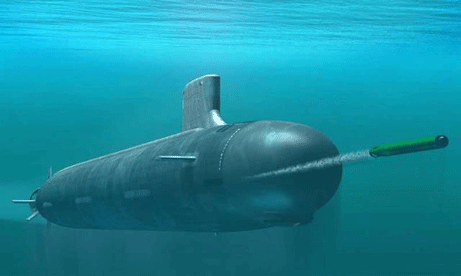
 The Trident nuclear weapons system could become obsolete during its lifetime, Labour warns The shadow defence secretary says new technologies are being developed to expose submarines, Independent Jon Stone @joncstone 9 Feb 16 The Trident nuclear weapons system could become technologically obsolete within its lifetime, Labour’s shadow defence secretary has warned.
Emily Thornberry said that emerging technologies could render Trident ineffective as a nuclear deterrent during its 30-year lifetime. She said the development of under-sea drones and other technologies on the horizon might make a long-term lifetime spending commitment of between £100 billion and £160 billion unwise.
“The idea of the Trident replacement is that it can hide in the sea – if technology is moving faster than that then it may well be that Trident is not able to hide,” she told BBC Radio 4’s Today programme. “If that’s right and we are to bet everything on mutually assured destruction then we have to be assured that it’s going to work. If it can’t hide any more that is a problem.
“It is right for the opposition to make sure that it works before voting for a commitment that according to Crispin Blunt would cost £167 billion.”
The shadow defence secretary is currently leading a review of Labour’s policy on nuclear weapons………
The independent Trident Commission estimated that the system would cost £100 billion over its lifetime, though estimates compiled by Reuters with the help of Tory MP Crispin Blunt and official Ministry of Defence statistics suggest the cost could be as high as £167 billion http://www.independent.co.uk/news/uk/politics/trident-labour-policy-nuclear-weapons-deterrent-obsolete-emily-thornberry-a6862501.html
North Korea rocket launch: UN Security Council condemns Pyongyang, vows ‘serious consequences’
The UN Security Council has strongly condemned North Korea’s rocket launch, saying it will speed up work on a sanctions resolution “in response to these dangerous and serious violations”.
http://www.abc.net.au/news/2016-02-08/un-security-council-condemns-north-korea-missile-launch/7147354
The dangers in Pakistan’s nuclear strategy
The Other Bomb: Pakistan’s Dangerous Nuclear Strategy, Huffington Post 02/07/2016
For the last seventy-five years, the international politics of the Indian subcontinent, and, to a lesser extent, the broader south and central Asian region that surrounds it, have revolved around the continuing Indian-Pakistani conflict. …….
The program got a significant boost when A.Q. Kahn, a metallurgist working in the Dutch subsidiary of the British-based Uranium Enrichment Company (URENCO Group) returned to Pakistan in 1975. Khan brought with him blueprints for various centrifuge designs and a broad array of business contacts. By buying individual components rather than complete gas centrifuges, he was able to evade existing export controls and acquire the necessary equipment.
Khan would go on to establish an illicit nuclear weapons technology procurement and consulting operation, the “Khan Network,” that would play a major role in the transmission of nuclear weapons technology to Iran, Libya and to a lesser extent, North Korea. The Pakistani government has denied that it had any knowledge of Khan’s illicit side business but under American pressure arrested A.Q. Khan, sentencing him to house arrest, and dismantled his network.
There continue to be reports, however, that rogue elements of that network continue to operate clandestinely……..
According to various intelligence sources, Pakistan currently has between 100 and 120 nuclear weapons under its control. It is believed, however, that Pakistan has produced and stockpiled around 3,000 kilograms (6,600 lbs) of weapons grade HEU and about 200 kilograms (440 lbs) of plutonium. Pakistan’s HEU based warheads utilize an implosion design that requires between 15 and 20 kg of HEU. The current stockpile is enough for an additional 150 to 200 weapons, depending on the warhead’s desired yield……….
Ultimately, in the long-term, the future direction of Pakistan’s nuclear weapons policy is going to be a function of the state of Indian-Pakistan relations on the subcontinent. In the short-term, however, Pakistan’s rapid growth of its nuclear arsenal and its deployment of battlefield nuclear weapons adds one more factor of instability to the regions international politics and further raises the risk that nuclear weapons could fall into the hands of either rogue elements in Pakistan or international jihadist groups.
South Korea’s President Park under pressure from nuclear weapons lobby
Pressure For South Korea To ‘Go Nuclear’ For Defense Against North’s Arsenal, Forbes, Donald Kirk , CONTRIBUTOR , 4 Feb 16
North Korea’s success in conducting a fourth nuclear test has ignited calls for South Korea also to produce nuclear warheads as a “defensive” measure that could heighten the balance of terror that already threatens the Korean peninsula.
South Korean nuclear physicists and engineers have been tinkering with developing nuclear warheads since 1970 but have been frustrated by U.S. insistence that the South abide by the nuclear non-proliferation treaty, which the South signed under U.S. pressure in 1975. The most they can do, under a deal reached with the U.S. last year, is to enrich uranium up to 20% — way above the 4% level for nuclear energy but far below the level for nuclear warheads……..
Calls for South Korea to develop a nuclear arsenal are heard in public, in the media and in political gatherings. The conservative Chosun Ilbo, South Korea’s biggest-selling newspaper, articulated the argument in an editorial reflecting the widespread view that China will do nothing to stop North Korea from exploding more warheads and firing more missiles – and that sanctions against the North will be weak and ineffective……..
At the same time, South Korea would have to abrogate the agreement signed by both Koreas in 1991 for denuclearizing the Korean peninsula – a deal that the North violated from the outset.
‘The U.S. has passed the buck for taming North Korea to China,’ said Chosun Ilbo. “China is doing nothing. Seoul now faces a real need for public discussion of the development of its own nuclear weapons.”
GlobalSecurity.org, a website that specializes in such issues, traced South Korea’s recurring interest in developing its own nukes back to the presidency of Park Chung-hee, father of the current president, Park Geun-hye……..
The current President Park has said her government will abide by the 1991 denuclearization agreement, but she faces rising demands at least for a review of longstanding policy……http://www.forbes.com/sites/donaldkirk/2016/02/04/pressure-mounts-in-south-korea-for-its-own-nukes-to-combat-north-koreas-nuclear-arsenal/#3e42677c345f
25 toxic years of use of depleted uranium weapons
 “The most toxic war in history” – 25 years later, International Coalition to Ban Uranium Weapons, Quarter of a century on from the first widespread use of depleted uranium munitions, have lessons been learned about the need to protect civilians, military personnel and the environment from conflict pollution and the toxic remnants of war? 1 February 2016 – Doug Weir
This month marks the 25th anniversary of the start of Operation Desert Storm, the combat phase of the Gulf War. Precipitated by Iraq’s invasion and annexation of Kuwait in August 1990, the conflict was the first to see the widespread use of depleted uranium (DU) ammunition. US and UK forces subsequently acknowledged firing a combined 286,000kg of DU – the vast majority of which was fired by US Abrams and M60 tanks, and A10 and Harrier aircraft.
The decision to deploy the radioactive and chemically toxic weapons, which had been under development since the 1950s as a response to Cold War concerns over defeating Soviet armoured divisions, would prove highly contentious in the following years. Once the media and military’s enthusiasm for what was promoted as a new paradigm in high-tech low-casualty warfare began to subside, veterans, journalists and civil society organisations in the US and UK increasingly began to challenge the general conduct of the war, and the use of DU in particular.
“The most toxic war in history”
As increasing numbers of veterans began to report post-deployment health problems in the years that followed, attention began to focus on the overall toxicity of the conflict. From oil fires and pesticides, to the use and disposal of chemical weapons, the Gulf War was increasingly viewed as “the most toxic in history”. Whether it was – conflict pollution had been developing in concert with the mechanisation of warfare and industrialisation throughout the 20th Century, or whether this just represented a growing awareness of the linkages between chemicals and health is a matter of debate. Nevertheless, questions were asked about whether possible exposures to a suite of chemicals could be responsible for the ailments reported by veterans. These ranged from birth defects to chronic fatigue, and led to the emergence of the catch all term Gulf War Syndrome (GWS)…..
In the case of DU, it also became clear that scientifically unjustified assumptions had been made about the health risks it posed. Continue reading
Doomsday Clock to stay at 3 minutes to midnight
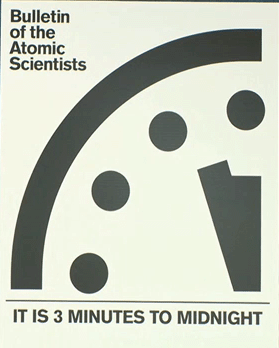 ‘Doomsday Clock’ to stand still amid nuclear tensions http://www.bbc.com/news/world-us-canada-35412454 26 January 2016 The so-called Doomsday Clock will remain set at three-minutes-to-midnight amid global perils such as climate change and nuclear proliferation.
The Bulletin of the Atomic Scientists (BPA), the group behind the clock, said the standing still is “not good news”.
The minute hand on the Doomsday Clock is a metaphor for how vulnerable the world is to catastrophe.
“It remains the closest it has been over the past 20 years,” said Rachel Bronson, BPA’s executive director.
In addition to nuclear arms and climate change, the group also cited growing cyber threats and an uptick in terrorist attacks in their decision to keep clock unchanged.
Lawrence Krauss, chairman of the BPA’s Board of Sponsors said that the Iran nuclear agreement and the Paris climate accord were good news, but said it remained unclear if the Paris agreement would actually reduce greenhouse gas emissions.
He also noted increased tensions between the US and Russia as a sore point.
Last year, the scientists moved the clock up from five-minutes-to-midnight, noting the threat of climate change, the modernisation of nuclear weapons as well as large nuclear arsenals.
At the time, they said the threats were “extraordinary and undeniable threats to the continued existence of humanity”.
The Bulletin of the Atomic Scientists was founded at the University of Chicago in 1945 by a group of scientists who helped develop the first atomic weapons. Their metaphorical clock was created two years later.
Today, the group includes physicists and environmental scientists from around the world, who decide whether to adjust the clock in consultation with the group’s Board of Sponsors – which includes 17 Nobel laureates.
The closest the clock has come to midnight was in 1953, when it was moved to two minutes from the apocalyptic midnight, following hydrogen bomb tests by the US and Russia.
Senior Tories agree with Jeremy Corbyn on ditching Trident nuclear weapons system
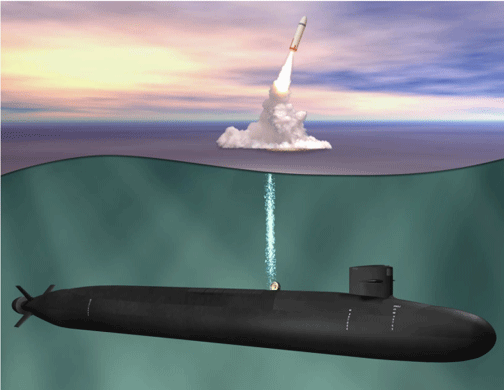 Not just Jeremy Corbyn – senior Tories also think ditching Trident might be a good idea https://tompride.wordpress.com/2016/01/18/not-just-jeremy-corbyn-senior-tories-also-think-ditching-trident-might-be-a-good-idea/18 Jan 2016 by Tom Pride
Perhaps the Cameron government should be more careful before labelling Jeremy Corbyn a national security ‘threat’ just for saying Trident should be scrapped. Because there are several influential people in the Tory Party who think Trident should be scrapped too.
Former Conservative Defence Secretary Michael Portillo agrees with Jeremy Corbyn:
“Our independent nuclear deterrent is not independent and doesn’t constitute a deterrent against anybody that we regard as an enemy. It is a waste of money and it is a diversion of funds that might otherwise be spent on perfectly useful and useable weapons and troops. But some people have not caught up with this reality.”
And Tim Montgomerie – who has been called one of the most influential Tories outside the cabinet – has also floated ditching Trident (from the Times last March): In fact, in 2009 Montgomerie praised the willingness of the Tory Party to discuss the scrapping of Trident as “tough thinking”.
Veteran Tory MP and former Tory Party chairman David Davis has alsoquestioned the affordability of Trident.
And before he was Prime Minister, David Cameron himself refused to rule outscrapping Trident.
But it’s not just senior Tories who agree with Corbyn.
Field Marshal Lord Bramall, General Lord Ramsbotham, General Lord Ramsbotham and General Sir Hugh Beach have denounced Trident as “irrelevant”.
And in 2009, that well-known hotbed of radical socialism, the Daily Telegraphdiscussed reasons why Trident should be scrapped.
Even the Daily Mail has in the past pondered getting rid of Britain’s nuclear deterrent.
OK. I think I’ve just about got the hang of this Trident discussion thing now.
Scrapping Trident is only a threat to national security when it’s not being proposed by a Tory?
Oh shit. Our nuclear deterrent runs on Windows XP. No, really, it does.
Anniversary of a nuclear disaster in Spain
 The day America dropped 4 nuclear bombs on Spain, [excellent photos] Daily Mail, 19 Jan 18 … but the disaster, 50 years ago, has been forgotten by all but its surviving victims
- On January 16 1966, a U.S. B-52 Stratofortress took off from Seymour Johnson Air Force base in North Carolina
- Bombers were continually flown on 24-hour missions across the Atlantic, to provide the States’ nuclear capability
- It was a routine mission for the crew but then disaster struck over Palomares, Andalucia, as the aircraft refuelled
- Four hydrogen bombs plummeted to earth at horrific speeds, which would have killed millions had they exploded
By GUY WALTERS FOR THE DAILY MAIL18 January 2016 “……the B-52 had overshot and the boom had missed the fuel nozzle in the top of the plane. Instead, the boom had smashed into the bomber with such force that its left wing was ripped off.
Fire quickly spread up the fuel-filled boom and ignited all 30,000 gallons of the tanker’s kerosene, causing it to plummet to the ground. Meanwhile, the bomber started to break up, and the crew did their best to get out of the plane using parachutes.
As for the hydrogen bombs, there was nothing that could be done. In less than two minutes, they would be crashing into the Earth at an enormous speed — potentially destroying much of the regions of Andalucia and Murcia.
Hundreds of thousands of people could be about to die, and the nuclear fallout would have the capacity to kill millions more all over Europe — not just from radiation poisoning but from cancers for decades to come……..
The nuclear payloads of the four American B28 hydrogen bombs mercifully did not detonate when they landed, even though the conventional explosives in two of the bombs did explode, showering some 500 acres around the fishing village of Palomares with three kilograms of highly radioactive plutonium-239. Continue reading
How long are people going to tolerate this nuclear tragedy?
 The Shockingly High Number of Casualties of America’s Nuclear Weapons Program http://historynewsnetwork.org/article/161607?__scoop_post=74a15000-b971-11e5-b8b0-00221934899c&__scoop_topic=2427585#__scoop_post=74a15000-b971-11e5-b8b0-00221934899c&__scoop_topic=2427585 by Lawrence S. Wittner– When Americans think about nuclear weapons, they comfort themselves with the thought that these weapons’ vast destruction of human life has not taken place since 1945—at least not yet. But, in reality, it has taken place, with shocking levels of U.S. casualties.
This point is borne out by a recently-published study by a team of investigative journalists at McClatchy News. Drawing upon millions of government records and large numbers of interviews, they concluded that employment in the nation’s nuclear weapons plants since 1945 led to 107,394 American workers contracting cancer and other serious diseases. Of these people, some 53,000 judged by government officials to have experienced excessive radiation on the job received $12 billion in compensation under the federal government’s Energy Employees Occupational Illness Compensation Program. And 33,480 of these workers have died.
How could this happen? Let’s examine the case of Byron Vaigneur. In October 1975, he saw a brownish sludge containing plutonium break through the wall of his office and start pooling near his desk at the Savannah River, South Carolina nuclear weapons plant. Subsequently, he contracted breast cancer, as well as chronic beryllium disease, a debilitating respiratory condition. Vaigneur, who had a mastectomy to cut out the cancer, is today on oxygen, often unable to walk more than a hundred feet. Declaring he’s ready to die, he has promised to donate his body to science in the hope that it will help save the lives of other people exposed to deadly radiation.
Actually, workers in nuclear weapons plants constitute only a fraction of Americans whose lives have been ravaged by preparations for nuclear war. A 2002 report by the U.S. Department of Health and Human Services maintained that, between 1951 and 1963 alone, the atmospheric testing of nuclear weapons—more than half of it done by the United States—killed 11,000 Americans through cancer. As this estimate does not include internal radiation exposure caused by inhaling or swallowing radioactive particles, the Institute for Energy and Environmental Research has maintained that the actual number of fatal cancers caused by nuclear testing could be 17,000. Of course, a larger number of people contracted cancer from nuclear testing than actually died of it. The government study estimated that those who contracted cancer numbered at least 80,000 Americans.
Who were these Americans? Many of them were “downwinders”—people whose towns and cities were located near U.S. nuclear testing sites and, thus, were contaminated by deadly clouds of nuclear fallout carried along by the wind. During the 1950s, the U.S. government conducted close to a hundred atmospheric nuclear explosions at its Nevada test site. Nearly 30 percent of the radioactive debris drifted over the towns to the east, which housed a population of roughly 100,000 people. The residents of St. George, Utah recalled that a “pink cloud” would hang over them while they worked amid the fallout, walked in it, breathed it, washed their clothes in it, and ate it. “Even the little children ate the snow,” recalled one resident. “They didn’t know it was going to kill them later on.”
During subsequent decades, leukemia and other cancer rates soared in the counties adjoining the Nevada test site, as they did among the 250,000 U.S. soldiers exposed to U.S. nuclear weapons tests. From the standpoint of U.S. military commanders, it was vital to place American soldiers close to U.S. nuclear explosions to get them ready to fight in a nuclear war. Subsequently, as many of these soldiers developed cancer, had children with birth defects, or died, they and their family members organized atomic veterans’ groups to demand that the federal government provide medical care and financial compensation for their suffering. Today, atomic veterans receive both from the federal government.
Uranium miners comprise yet another group of Americans who have suffered and died from the U.S. nuclear weapons program. To obtain the uranium ore necessary to build nuclear weapons, the U.S. government operated thousands of uranium mines, often on the lands of Native Americans, many of whom worked as miners and died premature deaths. The U.S. Public Health Service and the National Institute for Public Safety and Health conducted studies of uranium miners that discovered alarmingly high rates of deaths from lung cancer, other lung diseases, tuberculosis, emphysema, blood disease, and injuries. In addition, when the uranium mines were played out or abandoned for other reasons, they were often left as open pits, thereby polluting the air, land, and water of the surrounding communities with radiation and heavy metals.
This American nuclear catastrophe is not only a matter of the past, but seems likely to continue well into the future. The U.S. government is now beginning a $1 trillion program to “modernize” its nuclear weapons complex. This involves building new nuclear weapons factories and labs, as well as churning out new nuclear weapons and warheads for firing from the air, land, and sea. Of course, if these weapons and their overseas counterparts are used, they will destroy the world. But, as we have seen, even when they are not used in war, they exact a dreadful toll—in the United States and, it should be noted, in other nations around the world. How long are people going to tolerate this nuclear tragedy?
“Modernisation” making nuclear war more likely: time to renew disarmament process
Modernizing’ the Opportunities for Nuclear War Huffington Post, Lawrence Wittner Professor of History emeritus, SUNY Albany, 18 Jan 16, A fight now underway over newly-designed U.S. nuclear weapons highlights how far the Obama administration has strayed from its commitment to build a nuclear-free world.
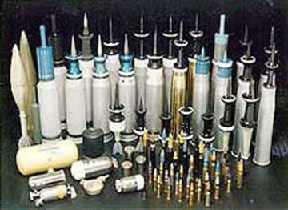 ……The fight, as a recent New York Times article indicates, concerns a variety
 of nuclear weapons that the U.S. military is currently in the process of developing or, as the administration likes to say, “modernizing.” Last year, the Pentagon flight-tested a mock version of the most advanced among them, the B61 Model 12. This redesigned nuclear weapon is the country’s first precision-guided atomic bomb, with a computer brain and maneuverable fins that enable it to more accurately target sites for destruction. It also has a “dial-a-yield” feature that allows its handlers to adjust the level of its explosive power……
The Federation of Atomic Scientists pointed out that the high accuracy of the weapon and its lower settings for destructiveness might tempt military commanders to call for its use in a future conflict…….
Another weapon undergoing U.S. government “modernization” is the cruise missile. Designed for launching by U.S. bombers, the weapon–charged William Perry, a former secretary of defense–raised the possibilities of a “limited nuclear war.” Furthermore, because cruise missiles can be produced in nuclear and non-nuclear versions, an enemy under attack, uncertain which was being used, might choose to retaliate with nuclear weapons.
Overall, the Obama administration’s nuclear “modernization” program–including not only redesigned nuclear weapons, but new nuclear bombers, submarines, land-based missiles, weapons labs, and production plants–is estimated to cost as much as $1 trillion over the next thirty years. Andrew C. Weber, a former assistant secretary of defense and former director of the interagency body that oversees America’s nuclear arsenal, has criticized it as “unaffordable and unneeded.” After all, the U.S. government already has an estimated 7,200 nuclear weapons.
The nuclear weapons modernization program is particularly startling when set against President Obama’s April 2009 pledge to build a nuclear weapons-free world. Although this public commitment played a large part in his receipt of the Nobel Peace Prize that year, in succeeding years the administration’s action on this front declined precipitously.
It did manage to secure a strategic arms reduction treaty (New START) with Russia in 2010 and issue a pledge that same year that the U.S. government would “not develop new nuclear warheads.” But, despite promises to bring the 1996 Comprehensive Test Ban Treaty to the Senate for ratification and to secure further nuclear arms agreements with Russia, nuclear disarmament efforts ground to a halt. Instead, plans for “nuclear modernization” began. The president’s 2016 State of the Union address contained not a word about nuclear disarmament, much less a nuclear weapons-free world.
What happened?
Two formidable obstacles derailed the administration’s nuclear disarmament policy. At home, powerful forces moved decisively to perpetuate the U.S. nuclear weapons program: military contractors, the weapons labs, top military officers, and, especially, the Republican Party. Republican support for disarmament treaties was crucial, for a two-thirds vote of the U.S. Senate was required to ratify them. Thus, when the Republicans abandoned the nuclear arms control and disarmament approach of past GOP presidents and ferociously attacked the Obama administration for “weakness” or worse, the administration beat an ignominious retreat. To attract the backing of Republicans for the New START Treaty, it promised an upgraded U.S. nuclear weapons program.
Russia’s lack of interest in further nuclear disarmament agreements with the United States provided another key obstacle. With 93 percent of the world’s nuclear weapons in the arsenals of these two nations, a significant reduction in nuclear weapons hinged on Russia’s support for it. But, angered by the sharp decline of its power in world affairs, including NATO’s advance to its borders, the Russian governmentengaged in its own nuclear buildup and spurned U.S. disarmament proposals.
Despite these roadblocks, the Obama administration could renew the nuclear disarmament process. Developing better relations with Russia, for example by scrapping NATO’s provocative expansion plan, could smooth the path toward a Russian-American nuclear disarmament agreement. And this, in turn, would soften the objections of the lesser nuclear powers to reducing their own nuclear arsenals. If Republican opposition threatened ratification of a disarmament treaty, it could be bypassed through an informal U.S.-Russian agreement for parallel weapons reductions. Moreover, even without a bilateral agreement, the U.S. government could simply scrap large portions of its nuclear arsenal, as well as plans for modernization. Does a country really need thousands of nuclear weapons to deter a nuclear attack? Britain possesses only 215. And the vast majority of the world’s nations don’t possess any.
Given the terrible dangers and costs posed by nuclear weapons, isn’t it time to get back on the disarmament track? http://www.huffingtonpost.com/lawrence-wittner/modernizing-the-opportuni_b_9005600.html?ir=Australia
Anything to make nuclear look good – Russia’s asteroid plan
Scientists plan nuclear strike to save earth http://www.theaustralian.com.au/news/world/the-times/scientists-plan-nuclear-strike-to-save-earth/news-story/803d9da83072b44a5934fcb60f1a1268 MARC BENNETTS THE TIMES JANUARY 18, 2016
Russian scientists have come up with plans to protect the planet from asteroids heading towards Earth by launching nuclear missiles.
Although the use of nuclear weapons in outer space is prohibited under a 1967 treaty, Russian scientists say that the ban would be lifted if the planet was in genuine danger. “If the asteroid threat becomes a matter of massive destruction or even the very existence of life on the planet, that ban would naturally be lifted,” they said.
The plan would not be to destroy the asteroid but to deflect it off course to a safe distance from Earth.
The strategy was formulated as part of the 2012-15 European Union-funded NEOShield project. Researchers from Roscosmos, the Russian space agency, said: “Work was distributed among participants from different countries and organisations, and work on deflecting dangerous space objects with nuclear explosions was conducted by Russia.”
NEOShield, which received most of its funding from the EU, brought together researchers from Germany, France, Britain, Spain, Russia and the US. A three-year follow-up programme, NEOShield-2, began last March.
Other proposals developed as part of the project include a “kinetic impactor”, deflecting asteroids by crashing small unmanned spacecraft into them.
The Irradiated of the Republic: Testimonies of the French nuclear test victims.
 Brothers in Nuclear Arms:
Testimony of a Veteran of French Nuclear Testing Nuclear Free by 2045? 13 Jan 16 the oral histories of nuclear victims are still met with official dismissal, no matter how methodically they are compiled.
Simulated pre-emptive nuclear strike on North Korea in the planning?


 US and South Korea plan simulated nuclear strike on North Korea http://www.telegraph.co.uk/news/worldnews/asia/northkorea/12099482/US-and-South-Korea-plan-simulated-nuclear-strike-on-North-Korea.htmlUpdated plans would help them prepare their defenses against a potential nuclear strike from Pyongyang By Julian Ryall, Tokyo. 14 Jan 2016
In November, the two governments agreed upon an updated set of plans to defend South Korea from missile, nuclear, chemical and biological threats. Known as the 4D Operational Concept, the plans are designed to detect, disrupt, destroy and defend the South from threats posed by the North.
The additional capability would be on top of the military hardware that South Korea has asked its closest security partner to provide.
In the wake of Pyongyang’s fourth underground nuclear test on January 6, however, Seoul and Washington are examining the possibility of conducting manoeuvers to extend the reach of the plan, the Chosun Ilbo reported on Thursday. The two countries are discussing ways to reflect parts of the 4D concept during the joint annual exercises in March and then to develop it as a full scale operational system”, an official of the defence ministry in Seoul told the newspaper.
Analysts say the two governments – along with others in the region – will have drawn up contingency plans for a number of possible scenarios on the Korean peninsula, including indications of an imminent nuclear strike, an invasion of the South with conventional forces or the collapse of Kim Jong-un’s regime.
One situation that military planners are particularly concerned about would be the current regime imploding but a number of factions – potentially armed with nuclear or other non-conventional weapons – jostling for power.
“North Korean assets that are capable of waging nuclear war will obviously be of the highest priority”, Lance Gatling, a defence analyst and president of Nexial Research Inc., told the Telegraph.
“These will be the mobile launch tractors that the North has for its tactical medium-range ballistic missiles, which can reach targets in South Korea and Japan”, he said.
“They will also be targeting the openings to underground facilities where weapons are stored in preparation for launch, although it can be very difficult to find all these sites”.
The US has said it will “not accept North Korea as a nuclear armed state”.
Pyongyang has in the past condemned joint US-South Korean military exercises as provocation and preparations for an invasion of the North. It is likely to react angrily to suggestions that its perceived enemies are preparing a first-strike capability.
Did North Korea fake its footage of submarine-launched ballistic missile?
 Claims North Korea faked test footage to hide ‘catastrophic failure’ of submarine-launched ballistic missile, ABC News 14 Jan 15 Experts analysing footage released by North Korea last week showing the firing of a submarine-launched ballistic missile say the images appear to be faked. In defiance of a United Nations ban, North Korea said it tested ballistic missile technology that would allow it to launch a nuclear warhead from a submarine.
North Korea released the submarine launch footage after it separately conducted a fourth nuclear weapons test on January 6.
Two days later, North Korean state television aired footage of the submarine test which it said took place in December.
Unlike a previous submarine-launched ballistic missile (SLBM) test in May, it was not announced at the time.
At the weekend, South Korea’s military said North Korea appeared to have modified the video and edited it with Scud missile footage from 2014.
However, an official said the ejection technology might have improved since that test.
Now, analysis by the California-based James Martin Centre for Nonproliferation Studies (CNS) shows two frames of the state media video where flames engulf the missile and small parts of its body break away.
“The rocket ejected, began to light, and then failed catastrophically,” CNS senior research associate Melissa Hanham said.
“North Korea used heavy video editing to cover over this fact.”
Ms Hanham said North Korea state media used different camera angles and editing to make it appear the launch was several continuous launches, when in fact it was a single event.
Launch likely from barge, not submarine: expert
She said the CNS study showed editors used rudimentary techniques to crop and flip old video footage of an earlier SLBM test and Scud missile launch.
John Schilling, an aerospace engineer who is a specialist in satellite and launch vehicle propulsion systems, said it appeared from the video that the launch was conducted from a submerged barge rather than a submarine…….
Crispin Rovere, an Australia-based nuclear policy and arms control specialist, said the 5.1-magnitude tremor detected at the North’s Punggye-ri nuclear test site was too small to support Pyongyang’s claim.
“The seismic data that’s been received indicates that the explosion is probably significantly below what one would expect from an H-bomb test,” Mr Rovere said.
“So, initially, it seems to be that they’ve successfully conducted a nuclear test but unsuccessfully completed the second-stage hydrogen explosion.”
This test came just two days before leader Kim Jong-un’s birthday. Analysts said the leader had been looking for a major achievement to highlight at a rare ruling party congress scheduled for May, the first gathering of its kind for 35 years. http://www.abc.net.au/news/2016-01-13/claims-north-korea-faked-missile-test-footage/7085094
Iraq war is a bonanza for US weapons salesmen
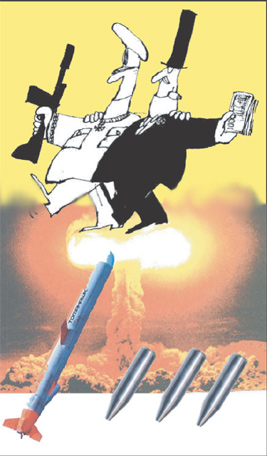 Even as the Obama administration stumbles and bumbles along in search of a magical political strategy in Iraq that would make sense of everything, American weapons-makers can expect a bountiful future. In the meantime, Washington is putting forces in place that, by doing more of the same for the third time in a disintegrating Iraq in the middle of a fracturing region, guarantee more of the same. In that sense, you might say that American forces are partly in place to help promote the investment. If one needed an example of how the military-industrial complex works today, that might be it. Every mistake by Washington is a boon for future arms sales.
Once Again, American Weapons-Makers Are Making a Killing in Iraq Our battle with ISIS lacks goals and direction, but that doesn’t mean there isn’t a profit to be made.Mother Jones—By Peter Van Buren Fri Jan. 16,his story first appeared on the TomDispatch website.
The current American war in Iraq is a struggle in search of a goal. It began in August as a humanitarian intervention, morphed into a campaign to protect Americans in-country, became a plan to defend the Kurds, followed by a full-on crusade to defeat the new Islamic State (IS, aka ISIS, aka ISIL), and then… well, something in Syria to be determined at a later date.
At the moment, Iraq War 3.0 simply drones on, part bombing campaign, part mission to train the collapsed army the US military created for Iraq War 2.0, all amid a miasma of incoherent mainstream media coverage. American troops are tiptoeing closer to combat (assuming you don’t count defensive operations, gettingmortared, and flying ground attack helicopters as “combat”), even as they act likearchaeologists of America’s warring past, exploring the ruins of abandoned US bases. Meanwhile, Shia militias are using the conflict for the ethnic cleansing of Sunnis and Iran has become an ever-more significant player in Iraq’s affairs. Key issues of the previous American occupation of the country—corruption,representative government, oil revenue-sharing—remain largely unresolved. The Kurds still keep “winning” against the militants of IS in the city of Kobani on the Turkish border without having “won.”…….
there is one bright side to the situation. If you can’t create Victory in Iraq for future VI Day parades, you can at least make a profit from the disintegrating situation there.
Team America’s Arms Sales Force
In the midst of the December holiday news-dumping zone, the US Defense Security Cooperation Agency (DSCA) quietly notified Congress of several pending arms deals for Iraq. DSCA is the Pentagon office responsible for coordinating arms agreements between American defense contractors and foreign buyers.
Before those thousands of not-boots-on-the-ground troops started hemorrhaging back into Iraq late last year, DSCA personnel made up a significant portion of all US military personnel still there. Its staff members are, in fact, common in US embassies in general. This shouldn’t be surprising, since the sales of weaponry and other kinds of war equipment are big business for a range of American companies, and the US government is more than happy to assist. In fact, there is even ahandbook to guide foreign governments through the buying process.
The DSCA operates under a mission statement which says the “US may sell defense articles and services to foreign countries and international organizations when the President formally finds that to do so will strengthen the security of the US andpromote world peace.” While the Pentagon carries out the heavy lifting, actual recommendations on which countries can buy US gear are made by the secretary of state, and then rubber-stamped by Congress………
Would You Like the Extended Warranty?
Iraqis have a saying: “The rug is never sold.” It means that there’s always more money to be made from any transaction. General Dynamics would agree. Arms sales work remarkably like consumer electronics (and Iraqi carpets). Want the extended warranty for your new smartphone? Extra battery? Accessories? Insurance against loss or damage? Suddenly the cost of your phone doubles.
Same for tanks. The M1 is a complex beast. You’ll need to pay General Dynamics for trainers to teach your guys to operate its systems. You’ll need lots of spare parts, especially operating in the desert. And it won’t be long before you’ll want to do some upgrades—maybe better computers or a faster engine. The US is currently working on “urban warfare” upgrades for the 140 M1s the Iraqis have hung onto. In the defense world, these after-sales are known as the “tail.” And the longer the tail, the bigger the profits.
For example, built into the contract for the new M1 tank sale is the provision that “approximately five US Government and one hundred contractor representatives [will] travel to Iraq for a period of up to five years for delivery, system checkout, program support, and training.” And that isn’t going to come cheap from General Dynamics, though the five government employees may be a bargain financed by American taxpayers.
None of this even touches on the potential for repeat sales. ………..
from any point of view except General Dynamics’s, the Islamic State’s, or maybe the Iranians’, these tank sales don’t add up.
Call Your Broker
It’s easy enough to toss around terms like “military-industrial complex” and equally easy to slip from there into what some might consider blood-for-oil conspiracy theories or suggestions that Iraq War 2.0 was all about the mega-contractor Halliburton’s bottom line. While oil and Halliburton were certainly part of that past war’s calculus, they can no more account for it than the piles of money General Dynamics is about to make selling tanks can alone account for Iraq War 3.0.
Still, it’s hard to ignore the way defense companies find themselves buried in cash from selling weapons that aren’t needed to people who can’t use them, sales that are, in the end, likely to harm, not help, America’s geopolitical interests. Perhaps it is better to see the immediate profits from such deals as just a part of a muchbigger process, one that demands America have enemies to crusade against to ensure the survival of the national security state.
To such a “wartime” paradigm one just needs to plug in new bad guys from time to time, which is proving an ever-easier venture, since each of our previous wars and conflicts seems to offer a remarkably helpful hand in creating them. In this way, radical Islam has proven, with Washington’s help, a worthy successor to the Soviet Union, itself once a superb money-making venture and a great way to build a monumental national security state.
Even as the Obama administration stumbles and bumbles along in search of a magical political strategy in Iraq that would make sense of everything, American weapons-makers can expect a bountiful future. In the meantime, Washington is putting forces in place that, by doing more of the same for the third time in a disintegrating Iraq in the middle of a fracturing region, guarantee more of the same. In that sense, you might say that American forces are partly in place to help promote the investment. If one needed an example of how the military-industrial complex works today, that might be it. Every mistake by Washington is a boon for future arms sales.
So if you’ve got money to invest in General Dynamics, you might want to call your broker. http://www.motherjones.com/politics/2015/01/iraq-military-win-business-not-war
1 This Month
23-25 October – on Zoom – World BEYOND War’s annual global conferenc


Shut down the radiation-damaged Heysham nuclear reactors now
To see nuclear-related stories in greater depth and intensity – go to https://nuclearinformation.wordpress.com

Say No to NASA’s Reckless Nuclear Reactor on the Moon
Say No to NASA’s Reckless Nuclear Reactor on the Moon
-
Archives
- October 2026 (180)
- September 2026 (339)
- August 2026 (330)
- July 2026 (355)
- June 2026 (287)
- May 2026 (306)
- April 2026 (356)
- March 2026 (251)
- February 2026 (267)
- January 2026 (308)
- December 2025 (358)
- November 2025 (359)
-
Categories
- 1
- 1 NUCLEAR ISSUES
- business and costs
- climate change
- culture and arts
- ENERGY
- environment
- health
- history
- indigenous issues
- Legal
- marketing of nuclear
- media
- opposition to nuclear
- PERSONAL STORIES
- politics
- politics international
- Religion and ethics
- safety
- secrets,lies and civil liberties
- spinbuster
- technology
- Uranium
- wastes
- weapons and war
- Women
- 2 WORLD
- ACTION
- AFRICA
- Atrocities
- AUSTRALIA
- Christina's notes
- Christina's themes
- culture and arts
- Events
- Fuk 2022
- Fuk 2023
- Fukushima 2017
- Fukushima 2018
- fukushima 2019
- Fukushima 2020
- Fukushima 2021
- general
- global warming
- Humour (God we need it)
- Nuclear
- RARE EARTHS
- Reference
- resources – print
- Resources -audiovicual
- Weekly Newsletter
- World
- World Nuclear
- YouTube
-
RSS
Entries RSS
Comments RSS

