Russia’s will to win in Ukraine
https://www.americanthinker.com/blog/2022/07/russias_will_to_win_in_ukraine.html By Jared Peterson 8 July 22,
There was never a U.S. or Western strategic interest in Ukraine for which it was rational for us to provoke this war. And once this war started, Russia’s commitment to its successful conclusion — inevitably, unavoidably — was known to all who could fog a mirror as greater than that of the U.S. and the West.
Western policy elites who claim not to have seen this war coming — after the Biden administration treated Ukraine as a de facto member of NATO during all of 2021, and after Russia had been saying for nearly a decade that it would not tolerate Ukraine as a U.S. military bulwark on its border — are just plain fools. If they really were this blind, they were unqualified for their jobs.
Before the war started, as late as December of 2021, the Russians very probably would have settled the Ukraine problem by a declaration of permanent Ukrainian neutrality (i.e., no NATO membership, ever); some form of reasonable autonomy for the Russian-speaking, pro-Russian Donbas within Ukraine; and recognition of Crimea as Russian. This settlement in no way would have adversely affected legitimate U.S./Western interests. The only U.S. ox that would have been gored by this settlement would have been that of our odious neocon triumphalists, who want America to destroy Russia and become the world’s unquestioned hegemon.
Now, after Russian lives, treasure, and U.S.-orchestrated sanctions and obloquy, who knows what Russia’s demands will be?
Those who think Russia will be defeated in this war are whistling past the graveyard. They should listen to John Mearsheimer.
The Russians will not be defeated, period, for the simple reason that, by orders of magnitude, Ukraine means more to them than it does to us. They see a Ukraine within NATO, armed to the teeth with U.S. sophisticated weapons aimed at them, as an existential threat to mother Russia. They won’t let it happen. They have said so for years. If the war looks as though it’s moving toward a Russian defeat, they will do what it takes to avert that. We don’t want that outcome. That way lies catastrophe.
The West’s interest in Ukraine, on the other hand, is merely a neocon, U.S. hegemony adventure, seeking to assert U.S. top dog dominance in Eastern Europe, and thereafter the world. Failing to achieve this foolish and arrogant goal, the culmination of U.S.-sponsored eastern expansion of NATO to which Russia has objected vigorously since the time of Yeltsin would in no way threaten any real U.S. or Western interest.
Other things being roughly equal (as they are in this war), victory in war goes to the side with the greater commitment and willingness to suffer. Russia has the greater will in this war. And it knows how to suffer. Therefore, it wins.
Unless the Pentagon chooses nuclear Armageddon, in which case both sides will lose.
It was a fool’s errand for the U.S. to provoke this war, and for that matter a fool’s errand from the start (1999), for the U.S. to expand NATO eastward in the total absence of any Russian threat after the collapse of the Soviet Union.
It’s very hard to see how this can end other than very badly.
This proxy war has no exit strategy – the West’s desired outcome – a long and gruelling war?

In short, there is no exit strategy to this proxy war. There are no plans in place to deliver Putin a swift defeat, and the Biden administration remains steadfastly dismissive of even the slightest gestures toward diplomacy with Moscow. Boris Johnson has reportedly been buzzing around admonishing Ukraine’s President Zelensky, France’s President Macron and who knows who else not to work toward peace in Ukraine. The doors to ending this war quickly by either winning it or negotiating a peace settlement are both bolted shut, all but guaranteeing a long and bloody slog.
Which as it turns out suits Washington just fine. Biden administration officials have stated that the goal is to use the Ukraine war to “weaken” Russia, ……….. And since this is the course of action that has been taken by the empire, we can only assume that this is its desired outcome: not victory, not peace, but a long and gruelling war.
Caitlin Johnstone, 15 July 22. The International Committee of the Democratic Socialists of America has released a statement opposing the US government’s ongoing proxy war in Ukraine, saying the billions being funneled into the military-industrial complex “at a time when ordinary Americans are struggling to pay for housing, groceries, and fuel” is “a slap in the face for working people.” The statement advocates a negotiated settlement for peace, saying continuing to pour weapons into the country will “needlessly prolong the war, resulting in more civilian deaths” and that it “risks escalating and widening the war – up to and including nuclear war.”
In response to this entirely reasonable and moderate position, the DSA is currently being raked over the coals with accusations of Kremlin loyalty and facilitation of murder and bloodshed by blue-checkmarked narrative managers on Twitter. This is because the only acceptable positions for anyone of significant influence to have about this war range from supporting continuing current proxy warfare operations to initiating a direct hot war between NATO and Russia.
That’s how narrow the permissible spectrum of debate has been shrunk regarding this conflict: status quo hawkish to omnicidal hawkish. Anything outside that spectrum gets framed as radical extremism. As Noam Chomsky said: “The smart way to keep people passive and obedient is to strictly limit the spectrum of acceptable opinion, but allow very lively debate within that spectrum — even encourage the more critical and dissident views. That gives people the sense that there’s free thinking going on, while all the time the presuppositions of the system are being reinforced by the limits put on the range of the debate.”
This spectrum of debate has been shrunk on the one hand by imperial spinmeisters continually hammering home the message that any support for de-escalation and diplomatic solutions is “appeasement” and indicative of Russian sympathies, and on the other by hawkish pundits and politicians pushing for the most freakishly aggressive responses to this war possible. By forbidding the spectrum of acceptable debate to move toward peace while shoving it as hard as possible in the direction of warmongering extremism, imperial narrative managers have successfully created an Overton window wherein the only debate permitted is over how directly and forcefully Russia should be confronted, with calls for peace now falling far outside that window.
Which is a problem, because both direct NATO hot war with Russia and continuing along the empire’s current course of action in Ukraine are stupid. Direct conflict between nuclear powers likely means a very fast and very radioactive third world war, and the status quo proxy warfare approach isn’t stopping Russia as more and more territory is taken in the east in cool defiance of western claims that Ukraine is bravely vanquishing its evil invaders. Biden administration officials have told the press that they doubt Ukraine will even be able to reclaim the territory it has lost already. Unless and until something significant changes, Ukraine has no apparent path to victory in this war anytime soon.
In short, there is no exit strategy to this proxy war. There are no plans in place to deliver Putin a swift defeat, and the Biden administration remains steadfastly dismissive of even the slightest gestures toward diplomacy with Moscow. Boris Johnson has reportedly been buzzing around admonishing Ukraine’s President Zelensky, France’s President Macron and who knows who else not to work toward peace in Ukraine. The doors to ending this war quickly by either winning it or negotiating a peace settlement are both bolted shut, all but guaranteeing a long and bloody slog.
Which as it turns out suits Washington just fine. Biden administration officials have stated that the goal is to use the Ukraine war to “weaken” Russia, ………………. And since this is the course of action that has been taken by the empire, we can only assume that this is its desired outcome: not victory, not peace, but a long and gruelling war. …………………………. https://caitlinjohnstone.substack.com/p/this-proxy-war-has-no-exit-strategy?utm_source=substack&utm_medium=email
Ukraine reveals negotiation ‘end point’
Foreign Minister warns of Kiev’s red lines before any talks.
Ukraine will not agree to any territorial concessions as part of a peace agreement with Russia, its Foreign Minister Dmitry Kuleba told journalists on Wednesday. Talks between Moscow and Kiev have been in a deadlock since March.
“The objective of Ukraine in this war… is to liberate our territories, restore our territorial integrity, and full sovereignty in the east and south of Ukraine,” Kuleba said, as reported by Reuters. “This is the end point of our negotiating position.”
Moscow recognized the independence of the Donetsk and Lugansk People’s Republics in the Donbass region shortly before the military operation in Ukraine was launched in late February. Crimea, which was also once part of Ukraine, voted to join Russia in a referendum in 2014 after the Maidan coup in Kiev led to the overthrow of the democratically elected government.
In the southern part of Ukraine, Russian forces and Donbass militias seized Kherson Region and the majority of Zaporozhye Region. In the East, allied forces wrested control of the territory of the Lugansk People’s Republic (LPR) from Ukraine in early July. Russian troops and militias also control parts of the Ukrainian Kharkov Region bordering the LPR. The two sides are now fighting for control over the territory of the Donetsk People’s Republic.
Peace talks between Moscow and Kiev remain stalled at the moment, Kuleba said, adding that Kiev sees no reason to engage in negotiations. “Currently there are no [peace] talks between Russia and Ukraine because of Russia’s position and its continued aggression against our country,” he told journalists.
The US and Germany have also said they see no point in negotiating with Russia. Moscow accused the West of preventing Kiev from even thinking about peace talks, previously saying Ukraine could end the conflict if it agrees to Moscow’s demands……………… https://www.rt.com/russia/558942-ukraine-end-point-negotiating-position/
The prohibition of nuclear weapons: a public health priority
The Lancet. July 16, 2022, DOI:https://doi.org/10.1016/S0140-6736(22)01203-X
The ongoing conflict in Ukraine confirms how wars and armed conflicts are a serious threat to public health and environmental integrity. The crisis has made clear that nuclear war is closer than ever.
As people working in the biomedical field, we are urged to stress that any reasoning about just causes of war loses any hypothetical meaning when compared with the destructive potential of modern nuclear technology. The very concept of defence is not applicable to nuclear weapons, which, by their very nature, clearly violate all of the principles enshrined in international humanitarian law and the protocols of the Geneva Conventions.
Nuclear weapons cause immediate damage by death and injury that far exceeds the capacity for health care even in well organised settings. Global health-care infrastructure is not, and cannot, be prepared for the humanitarian catastrophe that would result from the use of these weapons.
The long-term damage to the health of the population and the environment could easily be beyond the resilience, not only of individual countries or territories, but of the entire world. As long as these weapons of mass destruction exist, humanity’s survival is under threat.
The Treaty on the Prohibition of Nuclear Weapons entered into force on Jan 22, 2021, and the first meeting of state parties took place in June, 2022. In an open letter to the Italian Government, the Italian Association of Epidemiology urged the Italian government to attend the meeting, with the ultimate goal of signing and ratifying the treaty as soon as possible.
As the Italian historian of medicine, Giorgio Cosmacini, opportunely pointed out in reference to the two world wars: “The fact that no one—or very few—among the protagonists of medicine…has posed the problem of the prevention of one of the deadliest pandemics in the history of human societies should make us reflect on the actual coherence of a medical science that, while professing to be at the service of life, refuses to take sides and declares itself neutral………………… https://www.thelancet.com/journals/lancet/article/PIIS0140-6736(22)01203-X/fulltext
There Is No ‘Magic Bullet’ That Can Turn The Tide For Ukraine
1945 By Daniel Davis 8 July 22
It is necessary, in light of these physical realities, for U.S. and Western policies to change. Continuing to give verbal support to Ukraine and claiming that eventually, Kyiv’s side will win the war is not likely to change the outcome and is likely to result in a policy failure for Washington.
There Is No ‘Magic Bullet’ That Can Turn The Tide For Ukraine,8 July 22, Last Sunday when the remaining Ukrainian soldier withdrew from Lysychansk, Ukrainian President Volodymyr Zelensky said evacuating his troops from the city “where the enemy has the greatest advantage in fire power,” was the right call, but “means only one thing… That we will return thanks to our tactics, thanks to the increase in the supply of modern weapons.” While many in the West would like that to be true, the reality is very different: there is no basis upon which to hope for a future offensive to drive Russian troops out of conquered territories.
The most likely result for the Ukrainian Armed Forces (UAF) if they continue fighting the Russians is that more of Zelensky’s troops will be killed, more Ukrainian cities will be turned to rubble, and more territory Kyiv will lose to the invaders. A sober analysis of the capacity of the of the two armed forces, an assessment of the military fundamentals that have historically proven decisive on the battlefield, and an examination of the sustainability potential for both sides, make it plain that Russia will almost certainly win a tactical victory.
Ukrainian Presidential Advisor Oleksiy Arestovych said that, to the contrary, the withdrawals in Severodonetsk and Lysychansk weren’t defeats at all, but instead “successful” in that he claimed they allowed Ukraine to “buy time for the supply of Western weapons and the improvement of the second line of defense, to create conditions for our offensive actions in other areas of the front.” This is a common belief in the West but one not borne out by the facts……………..
The much-ballyhooed supply of “heavy weapons” from the West that both Zelensky and Arestovych claim is coming will not be enough to turn the tide. Not even close. Zelensky advisor Mykhailo Podolyak correctly noted that the minimum needed by Ukraine to have a chance at reaching parity with the Russian invaders would require modern kit in the range of 1,000 howitzers, 500 tanks, and 300 rocket launchers.
As detailed by The Kiel Institute for the World Economy, the sum total of all heavy weapons delivered or promised by the West through last week’s G7 and NATO summits amounts to a paltry 175 howitzers, 250 Soviet-era tanks, and an anemic dozen or so rocket launchers. To date, no other help is being considered.
The ramifications of this mismatch should be clear: despite numerous and boisterous claims of Western support, it is militarily unsound for Ukraine to base its defense plans on the hope that major quantities of high quality Western heavy weapons will show up to help Ukraine stop the Russians. But there is a bigger, less obvious truth at play as well: even if Zelensky got everything on Podolyak’s list, it still would not likely change the battlefield dynamics.
The reason is that, like in all modern wars, military victory or defeat in the Russian-Ukraine War is likely to be determined by the side that has the highest quality of manpower and less on the platforms of war. For all its major missteps in the opening round, Russia began the war with a total active force of 900,000 whereas Ukraine had approximately 250,000…………………………
In short, there is no valid military path through which Ukraine can hope that trading space for time will result in stopping Russia’s methodical progress through Ukraine – much less reverse it. To continue contesting every town and city is to ensure the Ukrainian casualties continue to mount and its urban areas destroyed. In the end, Russia is still likely to achieve a tactical victory.
It is necessary, in light of these physical realities, for U.S. and Western policies to change. Continuing to give verbal support to Ukraine and claiming that eventually, Kyiv’s side will win the war is not likely to change the outcome and is likely to result in a policy failure for Washington.
No one wants to negotiate from a position of weakness with an invading power, but the harsh truth is that the longer Zelensky and his Western supporters continue pursuing unrealistic objectives, the more likely Ukraine eventually suffers an outright military defeat.
Expert Biography: Now a 1945 Contributing Editor, Daniel L. Davis is a Senior Fellow for Defense Priorities and a former Lt. Col. in the U.S. Army who deployed into combat zones four times. He is the author of “The Eleventh Hour in 2020 America.” Follow him @DanielLDavis. https://www.19fortyfive.com/2022/07/there-is-no-magic-bullet-that-can-turn-the-tide-for-ukraine/
Biden moves US closer to confrontation with Russia
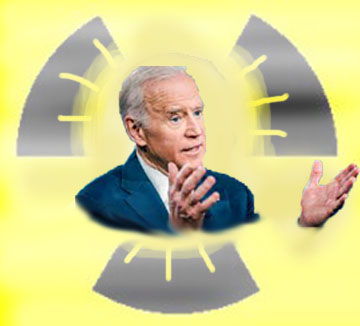
His latest step reflects his choice of war over peace — or as he might put it, his belief that peace can best be achieved through war.
For American strategic planners, this war has little to do with Ukraine. They see it as a battering ram against Russia. Since saving Ukrainian lives is not their priority, they view diplomacy as an enemy.
Negotiation would inevitably give Russia at least some of what it wants. Russia’s war with Ukraine, on the other hand, holds out the delicious prospect of bringing Russia to its knees. That’s why Congress voted to send Ukraine billions of dollars in weaponry, and why President Biden asserted when making his announcement that rather than send diplomats to the crisis zone, he prefers “stepping up” US military involvement there.
His announcement to step up military involvement in Europe reflects his choice of war over peace.
Boston Globe ,By Stephen Kinzer July 11, 2022,
The United States is sinking its flag deeper into European soil. President Biden announced late last monththat the American military will soon open a “permanent base” in Poland, deploy two squadrons of F-35 fighter jets to Britain, send more warships to our sprawling base in Spain, and increase our troop strength in Romania, Latvia, Lithuania, and Estonia. Instead of promoting diplomacy that could lead to peace, he chose a course guaranteed to increase tensions with Russia at a moment when they are already approaching an all-time high. This brings us one step closer to direct confrontation with another nuclear-armed power.
Biden and other promoters of this policy — a group that includes virtually everyone in Washington — say it is necessary to counter Russian aggression in Ukraine. In fact, it will have little effect in Ukraine. The true purpose of this American buildup is to threaten and intimidate Russia.
For complex reasons that are as much psychological as political, many Americans have come to regard Russia as a font of evil. Many in Washington dream of destroying Russia utterly and forever — stripping it of all power and then perhaps breaking it up into smaller states that would submit to American influence.
For American strategic planners, this war has little to do with Ukraine. They see it as a battering ram against Russia. Since saving Ukrainian lives is not their priority, they view diplomacy as an enemy. Negotiation would inevitably give Russia at least some of what it wants. Russia’s war with Ukraine, on the other hand, holds out the delicious prospect of bringing Russia to its knees. That’s why Congress voted to send Ukraine billions of dollars in weaponry, and why President Biden asserted when making his announcement that rather than send diplomats to the crisis zone, he prefers “stepping up” US military involvement there.
Outlines of what will probably be the peace settlement in Ukraine are already clear. Russia will withdraw its army, eastern regions of Ukraine will be guaranteed autonomy, and Ukraine will agree to keep Western troops out of its territory. Such a peace, however, would end the dream of inflicting a “strategic defeat” on Russia. That is why many in Washington consider it anathema — and why Secretary of State Antony Blinken refused to meet his Russian counterpart when both were at a summit in Bali last week.
An obsession with crushing Russia lies behind Washington’s passionate embrace of the Ukrainian cause. But there is another, more cosmic reason. We are seeing a textbook example of what geo-strategists call the classic security dilemma. One country takes steps to secure itself, but others see those steps as preparation for war. They respond with buildups of their own. Fears, accusations, and demonizing propaganda intensify until fighting breaks out.
This syndrome has led to countless wars. World War I is just one example. Germany began strengthening its navy to protect trade routes and overseas colonies. Britain, determined to “rule the waves,” took this as a threat and began producing radically more destructive warships. Germany presumed it was the intended target of those warships, and began building its own. The competition became so intense that it took only a single spark, an assassination in Bosnia, to set off the conflagration.
The same cascade of military pride and ambition — the same inability to see things from the other side’s point of view — led to the Ukraine war. Democrats and Republicans alike insist that we only ever wanted freedom for Ukraine, that we offered to bring it into the NATO military alliance in 2008 to guarantee that freedom, that we helped depose its Russia-friendly government in 2014 because it was corrupt, and that we are sending tens of billions of dollars in weaponry to Ukraine only to help it defend itself against aggression.
Russians see things quite differently: America is fiercely dedicated to destroying Russia; it is increasing troop strength in Europe to prepare for a future assault; and if Russia doesn’t stop this tide in Ukraine, it will sooner or later find itself defending Moscow against a US-led attack.
It’s not necessary to decide which of these versions is right, only to recognize that both exist. Like many Americans, Biden sees Russia through a lens at least as distorted as the one through which Russia views us. His latest step reflects his choice of war over peace — or as he might put it, his belief that peace can best be achieved through war. That will haunt the world long after the Ukraine conflict ends.
Stephen Kinzer is a senior fellow at the Watson Institute for International and Public Affairs at Brown University.
https://www.bostonglobe.com/2022/07/11/opinion/biden-moves-us-closer-confrontation-with-russia/
How To End the War in Ukraine?
Anti War.com by Jean Bricmont
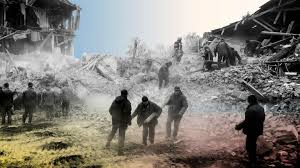
Given the devastating effects of this war, first in Ukraine but also, through sanctions, on the world economy and the risks of famine that they entail, it seems obvious that the first task of any diplomat and political leader should be to end this war.
The problem is that there are at least two ways of considering how this will end and they are irreconcilable.
The first, which until recently was the view of the U.S. government, which is the view of the Ukrainian government, European Greens, and the majority of our media, is that the Russian invasion is illegitimate, unprovoked, and must simply be repelled: Ukraine must regain all of its territory, including Crimea (which has been attached to Russia since 2014).
The other, supported by individuals as different as Chomsky, the Pope, Lula in Brazil, and Kissinger, is that a negotiated solution is inevitable, which in practice means Ukraine giving up territories such as Crimea and Donbass and presumably other regions, as well as agreeing to the neutrality of that country.
The supporters of the first solution shower those of the second with insults: Putin-lovers, pro-Russians, supporters of appeasement in the face of Russian fascism etc. But we can ask at least two questions about this first solution: is it fair? And is it realistic?
The fundamental problem with the fairness of this solution is that it assumes that there is one Ukraine and one Ukrainian people under attack by Russia. But Ukraine, which became independent in 1991 with the dissolution of the USSR, was not a former nation annexed by Russia in the past. Certainly, there was a historical Ukraine that had been absorbed into the Russian empire, but what became independent in 1991 was the former Ukrainian Soviet Socialist Republic, created in 1922 following the October revolution and which incorporated Russian-speaking populations in the east of the present Ukraine, and to whose opinion was never asked by anybody. It included also territories in the west added to Ukraine in 1939-1945 as well as the Crimea added in 1954.………………………………
If the right to self-determination of peoples is sacrosanct in the face of the territorial integrity of states in which they are minorities, then why does the territorial integrity of republics, which were in part administrative entities in dissolving multinational states, suddenly become sacrosanct in the face of the aspirations of minorities living in those republics?
……………………….. The precedent of the Kosovo war is often recalled by the Russians: if the NATO intervention there was legitimate to support the Kosovars, why is the Russian “military operation” to protect the inhabitants of Donbass not legitimate?
There have been many other conflicts of the same kind, and much bloodier: for example, the partition of the British Empire of India in 1948 between India and Pakistan, which initially included the present Bangladesh (called at the time East Pakistan) that became independent after a fierce war in 1971.
There is no simple solution to this kind of conflict. In principle, there could be one: ask by referendum on a local basis to which state each population wants to belong. But this solution is accepted by almost no one: if a referendum in Crimea is in favor of joining Russia, of which Crimea was a part between 1783 and 1954 (and, at that time, the joining of Crimea to Ukraine was decided in a purely authoritarian way), the West declares it illegitimate. If other referendums are held in the rest of Ukraine, they will also be declared illegitimate.
What we should hope for in order to resolve these local conflicts is that foreign powers do not use them to advance their economic and strategic interests. However, the United States and Britain have done exactly the opposite since 2014 (if not before) in Ukraine, first encouraging a coup that led to the overthrow of the legally elected president, Yanukovych, who had to flee for his life. This president was seen as pro-Russian, and the United States and Britain were not prepared to accept the situation. As the new power in Kiev was not only violently anti-Russian but also hostile to the Russian-speaking part of its population, a fraction of the latter demanded more autonomy within Ukraine, which was refused. Since then, there has been a more or less low-intensity war between part of the Donbass and the Ukrainian army.
Again, in principle, a peaceful solution could have been found through negotiations with the leaders of the rebel provinces, and this is what the Minsk agreements, accepted by the Ukrainian government but never implemented by it, provided.
It is true that there are other minorities in the world who are persecuted or badly treated by their governments, but it was particularly irresponsible for the Kiev government to behave in this way towards its minority in the east of the country, knowing that it could benefit from the protection of the Russian “big brother.” And it is unlikely that this conduct would have been adopted without the encouragement and political and military support of the United States and Britain.
This is why it can be considered that it was the American-British policy that pushed Russia to intervene. One can obviously condemn this intervention as contrary to international law, but then one would have to answer the question: what should the Russians have done to protect the populations of eastern Ukraine, assuming that their demands for autonomy are accepted as legitimate (and if not, in the name of what to refuse them)? Wait? Negotiate? But that is what they have been doing for eight years, sending very clear signals at the end of 2021 that their patience had limits.
Moreover, it is difficult for the architects of the wars in Yugoslavia, Iraq, Libya and Afghanistan to pose as great defenders of international law in the face of the Russians. Whatever one thinks of their military intervention in Ukraine, it is less illegitimate than the Western wars mentioned above.
…………………………………………….It is also necessary to point out the incredible hypocrisy of the discourse on the war in Ukraine, and on the accompanying sanctions, on the part of most of our journalists and intellectuals: when did we do anything similar during the US invasion of Iraq?
…………………………. In terms of interests, it is clear that the United States is using every weapon at its disposal, including espionage, to favor its businesses at the expense of ours.
………………………………………. As for the military issue, it is difficult to make definite predictions, but for the moment the Russians are moving forward, even if much more slowly than at the beginning. No Ukrainian counter-offensive has had a lasting effect. Some hope for a reversal of the situation following the delivery of sophisticated weapons to Ukraine by the United States and its allies, but this remains to be seen, and various voices in Washington itself are considering the need for negotiation as the only solution to the crisis.
it seems unlikely that Ukraine’s war aims of recovering the entire eastern part of the country and Crimea can be achieved. The Russians consider these territories, and especially Crimea, to be part of the “motherland” and they are far from having committed all their forces to this battle……………………………………..
In the end, it is likely that the only ones who will have defended the true interests of the Ukrainian people (as well as those of Europe) will be those who have advocated from the beginning (i.e., at least since 2014) for a negotiated solution to the conflict.
Jean Bricmont is a retired Belgian theoretical physicist. He is the co-author with Alan Sokal of Fashionable Nonsense Postmodern Intellectuals’ Abuse of Science (Picador, NY, 1998), of Humanitarian Imperialism; Using human rights to sell war (Monthly Review, NY, 2007), and of Quantum Sense and Nonsense (Springer, 2017).
https://original.antiwar.com/jean_bricmont/2022/07/11/how-to-end-the-war-in-ukraine/
The Nuclear Ban Treaty Had a Conference. Now it Has a Plan.
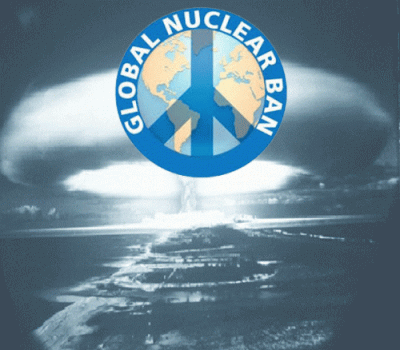
https://allthingsnuclear.org/jknox/the-nuclear-ban-treaty-had-a-conference-now-it-has-a-plan/ Jennifer Knox July 13, 2022 The Treaty on the Prohibition of Nuclear Weapons (TPNW) entered into force in early 2021, for the first time defining nuclear weapons as illegitimate tools of war under international law. In Vienna from June 21-23, states parties gathered for the first time alongside other state observers, civil society groups, and survivors of nuclear use, testing, and development to define concrete steps towards implementing the obligations of the treaty. At its conclusion, states parties adopted the Vienna Declaration and 50-point Action Plan.
The Vienna Declaration
The Vienna Declaration is a forceful statement against nuclear weapons. It reaffirms the treaty’s goal of a world without nuclear weapons and asserts “that the risk of a nuclear weapon detonation by accident, miscalculation or design concerns the security of all humanity.”
The Declaration also addresses the growing risks of nuclear war. Members were divided on whether to explicitly condemn Russia’s invasion of Ukraine and escalating threats of nuclear use; many participating states issued statements condemning Russian aggression, but others did not. Ultimately, while the Declaration acknowledged an environment of “increasingly strident nuclear rhetoric,” it did not single out Russia. Instead, the Declaration “[condemns] unequivocally any and all nuclear threats, whether they be explicit or implicit and irrespective of the circumstances.”
While Russia’s recent nuclear threats are particularly egregious and irresponsible, they are unfortunately not unique. Other nuclear powers engage in similar rhetoric, using the threat of nuclear use not for their own defense but as a coercive tool of policy. Former US President Donald Trump repeatedly issued such threats during his administration. National populist leaders like Vladimir Putin and Donald Trump are more likely to resort to dangerous rhetoric and take risks in pursuit of their goals. As national populism continues to rise in nuclear-armed states, norms of nuclear restraint will continue to erode.
However, nuclear threats do not only come from national populists through speeches or tweets. The threat of nuclear use is fundamental to the security of every nuclear-armed state and any other state that relies on nuclear deterrence. Nuclear deterrence is the threat of nuclear use, issued in the hope that the risk of catastrophic humanitarian disaster will disincentivize conflict. Helplessness, uncertainty and terror are foundational to theories of nuclear deterrence – this is how the system works by design.
The Vienna Declaration denounces not a single bad actor but the very practice of nuclear deterrence, a system which both permits and perpetuates Russia’s nuclear coercion. While nuclear powers and their allies recommit indefinitely to global terror through nuclear deterrence, the Vienna Declaration is a timely reminder that most states have explicitly rejected the threat of mass destruction as a form of security. Nine states possess nuclear weapons. Another 33 states have or will soon have collective security relationships with nuclear powers. They include:
- 6 of which host US nuclear weapons)
- Soon-to-be NATO members Finland and Sweden
- Australia, Japan, and South Korea, which have military alliances with the United States
- Belarus, which may soon host Russian nuclear weapons
That leaves 151 states that do not rely on nuclear weapons in any form for their security. All but one of those states (South Sudan) have committed to never develop or possess nuclear weapons as members of the Nuclear Non-Proliferation Treaty (NPT). 114 of those states are members of regional nuclear-weapons-free zones. 66 (so far) have signed and ratified the TPNW – for many, joining the TPNW is the third time they have formally affirmed their commitment to abstain from nuclear weapons.
Nuclear weapons are not inevitable or irreplaceable. Most governments and most people in the world have chosen not to seek their own security through the threat of mass destruction.
The Action Plan
State parties also adopted a 50-point Action Plan. This document contains concrete actions for members of the TPNW to advance nuclear disarmament and fulfill their obligations under the treaty. Many of these provisions relate to the treaty’s ‘positive obligations:’ measures to reduce both the past, present, and future harm caused by nuclear weapons. The treaty obliges its members to provide victim assistance and environmental remediation for frontline communities impacted by nuclear use, testing, and development.
The humanitarian impacts of nuclear weapons are widespread, affecting people all over the world. The nuclear age began with the destruction of the cities of Hiroshima and Nagasaki, creating hundreds of thousands of casualties and leaving behind generations affected by the consequences. In the following 70 years, over 2,000 nuclear tests were conducted throughout North America, Eurasia, Africa, and the Pacific. Further environmental contamination resulted from mining, development, production, waste storage, and disposal activities related to nuclear weapons. Indigenous communities and people of color have disproportionately born the health and environmental consequences of nuclear weapons, and, in most cases, those harms have not been addressed. In the Action Plan, states parties committed to
- consult closely with affected communities and international organizations to develop sustainable, effective, and detailed plans for victim assistance and environmental remediation.
- appoint government officials and adopt national laws and policies required to carry out that work.
- establish voluntary reporting on national initiatives and progress.
- provide technical, material, and financial assistance to states in need of additional support that have been affected by nuclear weapons.
- develop guidelines for how to address age- and gender-specific nuclear harm.
The Action Plan also emphasizes the role of scientific and technical expertise in creating a shared understanding of the humanitarian impact of nuclear weapons and guiding implementation of the treaty. The Action Plan calls for states parties to
- establish
The Action Plan also emphasizes the role of scientific and technical expertise in creating a shared understanding of the humanitarian impact of nuclear weapons and guiding implementation of the treaty. The Action Plan calls for states parties to
- establish a Scientific Advisory Group to advise treaty members and aid in achieving the treaty’s goals.
- create a broad network of experts from relevant fields that are diverse in terms of geography and gender.
Beyond the immediate objectives of the Action Plan, this document is also meaningful as a sign of forward momentum on nuclear disarmament issues. It represents the first conclusive plan of work to result from multilateral disarmament efforts in over a decade. In the past, review conferences for the NPT have been seen as important opportunities to make progress on nuclear disarmament, a key pillar of the treaty. The 2010 NPT Review Conference produced an action plan for the first time, but it was never fully implemented. The 2015 Review Conference failed to produce a consensus document, in large part because of a lack of progress on the 2010 action plan. Prospects for a better outcome during the 2022 Review Conference this August are bleak. Beyond the immediate objectives of the Action Plan, this document is also meaningful as a sign of forward momentum on nuclear disarmament issues. It represents the first conclusive plan of work to result from multilateral disarmament efforts in over a decade. In the past, review conferences for the NPT have been seen as important opportunities to make progress on nuclear disarmament, a key pillar of the treaty. The 2010 NPT Review Conference produced an action plan for the first time, but it was never fully implemented. The 2015 Review Conference failed to produce a consensus document, in large part because of a lack of progress on the 2010 action plan. Prospects for a better outcome during the 2022 Review Conference this August are bleak.
Meanwhile, the Conference on Disarmament, established to be the primary forum for disarmament negotiations, has not produced an arms control agreement since the 1996 Comprehensive Nuclear Test Ban Treaty. As tensions between nuclear powers rise, there is little hope of a breakthrough in the foreseeable future.
The TPNW’s first meeting of states parties was not just a review of treaty progress but an international forum for states to work collaboratively on nuclear disarmament issues and to create a plan for moving forward. While states possessing nuclear weapons have boycotted the TPNW, several states that rely on nuclear deterrence through NATO engaged constructively with the conference as observers. Hopefully that meeting will only be the first among many such opportunities, and the action plan that resulted will be the first of many such action plans.
The states parties expressed in the Vienna Declaration that they “have no illusions about the challenges and obstacles that lie before us,” but that they will “move ahead with optimism and resolve.” They offer no false hope that the destination is easy or close, but at least one more pathway is open.
“The consequences of a war between the US and China” – Kevin Rudd
The Hon. Kevin Rudd, president and CEO of Asia Society, served as Australia’s 26th Prime Minister from 2007 to 2010, then as Foreign Minister from 2010 to 2012, before returning as Prime Minister in 2013. He discusses major topics of his new book, “The Avoidable War: The Dangers of a Catastrophic Conflict between the US and Xi Jinping’s China” Rudd graduated from the Australian National University with honors in Chinese studies, and is fluent in Mandarin. He also studied at the National Taiwan Normal University in Taipei.
NATO’S 2022 PLAN DECLARES SECOND COLD WAR ON RUSSIA AND CHINA
- Popular Resistance, By Ben Norton, Multipolarista., July 10, 20
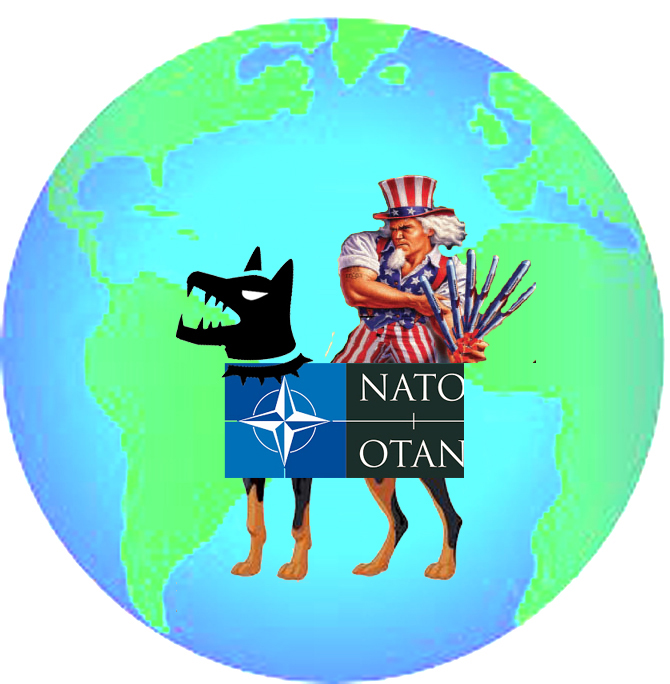
NATO’s 2022 “Strategic Concept,” Its First New Plan Since 2010, Declares Russia A “Threat” And China “Systemic Challenge.”
It demonizes the Eurasian powers as “authoritarian actors” and “strategic competitors,” essentially declaring a second cold war to maintain Western hegemony.
The US-led NATO military alliance has published a historic new plan outlining its goals. The document, officially titled the 2022 “Strategic Concept,” is the first such blueprint NATO has released since 2010.
The 2022 Strategic Concept is essentially a call for a new cold war on both Russia and China.
In the document, NATO condemned Russia and China as “authoritarian actors” and “strategic competitors” that pose “systemic challenges.”
NATO referred to the Russian Federation specifically as “the most significant and direct threat.” It also claimed China “challenge[s] our interests, security and values” and “strives to subvert the rules-based international order.”
The plan made it clear that the US-led military cartel is very concerned about the growing Eurasian alliance between Beijing and Moscow.
“The deepening strategic partnership between the People’s Republic of China and the Russian Federation and their mutually reinforcing attempts to undercut the rules-based international order run counter to our values and interests,” NATO wrote.
The document euphemistically refers to this new cold war climate as an “environment of strategic competition.”
NATO’s Madrid Summit: New Cold War On Russia And China, Continued Expansion, More Military Spending
The 2022 Strategic Concept was adopted unanimously by the leaders of NATO member states in a summit in Madrid, Spain in late June……………………….
The Madrid summit showed how the US-led military cartel is expanding, and not just in Europe, but also in the Pacific region.
Japan, South Korea, Australia, and New Zealand – all of which are very far from the North Atlantic region – attended the NATO summit for the first time…………
After the Madrid summit, NATO boasted that it had agreed to “the biggest overhaul of Allied collective defence and deterrence since the Cold War.”
The US-led cartel announced more common funding, and said member states agreed to increase their national military spending to 2% or more of GDP……………….
Like the NATO conference, the G7 summit was clearly aimed at coordinating tactics in a new cold war to weaken Russia and China. At that meeting, the G7 pledged $600 billion in spending on public-private partnerships to challenge Beijing’s global Belt and Road Initiative.
NATO Portrays Second Cold War On Russia And China As Supposed Battle Between ‘Democracy’ And ‘Authoritarianism’
While dubbing Russia its top “threat” and China a “systemic challenge” and “strategic competitor,” NATO’s 2022 Strategic Concept portrays the second cold war that it is waging as a supposed battle between “democracy” and “authoritarianism.”………………………….
In addition to focusing on Russia and China, the Strategic Concept portrayed Iran, Syria, and North Korea as threats.
The document asserted that NATO exists to “safeguard our freedom and democracy” and is based on “shared democratic values,” in order to protect a “rules-based international order.”
Left completely unmentioned was that numerous authoritarian regimes are currently members of NATO, including Turkey, Hungary, and Poland.
Portugal’s former fascist dictatorship was likewise a founding member of NATO in 1949.
NATO’s insistence that it is supposedly dedicated to protecting democracy, and not US hegemony, is especially ironic considering that the Madrid summit prominently featured Turkey’s autocratic leader Recep Tayyip Erdogan.
Western officials’ constant refrain at the Madrid summit that NATO exists to defend democracy was similarly undermined by the fact that Sweden and Finland refused to hold popular referenda on membership, meaning their people had no voice in the process and no opportunity to vote on whether or not they think joining the US-led military cartel is a good idea.
NATO’s democratic window dressing was even more transparently contradicted by the opening of the summit on June 28, which featured a “special address” by Spain’s King Felipe VI.
“The long-standing global struggle between tyranny and democracy is as relevant as ever,” Spain’s unelected hereditary monarch declared, without a hint of irony………………………
In the plan, the US-led military cartel also emphasized its commitment to continue expanding.
“NATO’s enlargement has been a historic success,” it insisted, underlining, “We reaffirm our Open Door policy.”……………
The 2022 Strategic Concept described NATO as a “defensive alliance,” despite its offensive wars on Libya in 2011, Afghanistan from 2001 to 2021, and Yugoslavia in the 1990s.……
The US-led military cartel hinted it is ready for World War III if deemed necessary, underscoring that it is prepared for “high-intensity, multi-domain warfighting against nuclear-armed peer-competitors.”
The Strategic Concept emphasized its firm commitment to nuclear weapons, describing them as unnegotiable: “As long as nuclear weapons exist, NATO will remain a nuclear alliance.”
……………………………… The US-led military cartel claimed “NATO does not seek confrontation and poses no threat to the Russian Federation,” although the alliance has surrounded Moscow with hostile military bases and repeatedly expanded right up to its borders. https://popularresistance.org/natos-2022-plan-declares-second-cold-war-on-russia-and-china/
Relax folks: NYC tells us how to be OK when our city is nuclear-bombed

NYC Prepares People for ‘Big One’ With Nuclear Attack PSA Video. By Isabella Steger, July 12, 2022
The city of New York released a public service announcement video outlining the three steps that residents should take in case of a nuclear attack.
The video, released Monday on NYC Emergency Management’s YouTube channel, says New Yorkers should do the following in the case of “the big one”: ………………………….. (subscribers only) https://www.bloomberg.com/news/articles/2022-07-12/-the-big-one-has-hit-nyc-releases-psa-video-on-nuclear-attack#xj4y7vzkg
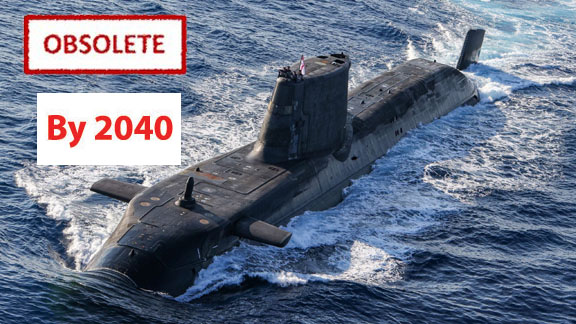
Australia ‘Punctures’ US-UK Nuclear Submarine Proposal Under AUKUS; Says Hi-Tech Arms Better Than Nuke Subs
Eurasia Times. By Parth Satam, July 11, 2022
Australia’s new Defense Minister Richard Marles’ recent comment about “hi-tech arms” being “more important” than “nuclear submarines” while being in the US to meet his counterpart, Secretary of Defense Llyod Austin, presents a grim future for the Australia-United Kingdom-United States (AUKUS) pact.
This comes amidst Prime Minister Anthony Albanese’s government’s outreach to China, deployment and technical shortcomings with the USS Virginia-class nuclear submarines, and; oversight of the International Atomic Energy (IAEA) regarding the use of nuclear propulsion material some of the dampeners staring at Canberra.
Sky News Australia reported that this was Marles’ first since assuming office, making the statement a significant signal.
The AUKUS deal was announced on September 15 last year under then Prime Minister Scott Morrison in a secret agreement with Washington and London that envisages Australia acquiring at least eight nuclear submarines.
………… the deal’s biggest drawback is the monetary, operational, and technical challenges more than the political repercussions.
Nuclear Submarines Overrated?
The first submarine, which is probably a version of the US Virginia class attack, will not be operationally available until the early 2040s and the last vessel by 2060.
The extended timeline that will leave the Royal Australian Navy without serious undersea capability calls for a stopgap interim arrangement. It could be an improved version of the Swedish-origin Collins-class ship to bridge the looming capability gap.
The Virginia class has been afflicted with maintenance problems and, over the last 33 years, has only performed 15 six-monthly deployments. Conventionally powered submarines are now commonly equipped with air-independent propulsion (AIP), which makes them quieter than nuclear submarines.
The latter must keep their reactor cooling pumps going and use noisy giant meshing gears between the steam turbines and propellers.
Nuclear submarines can also be detected by their constant release of hot water by leaving wakes on the surface when running at high speeds. A section of naval strategists within the US has been making a case for a return to diesel-electric or AIP-powered boats, given the technological improvements that have enhanced their speed, submerged endurance, and diving depths.
Diesel-electrics and AIP SSKs like the Swedish Gotland class or the Indian Navy’s Russian origin Kilo-class have also ‘sank’ US carriers often in exercises. Worse, the nuclear propulsion of the Virginia-class is not suitable in the littoral, shallow waters of the South and East China Seas…..
Naval bases in the first island chain around China like Guam, Subic Bay, Singapore, and Okinawa already provide proximity making attributes like range and endurance irrelevant, making conventional submarines more suited for the task.
The cost of the project also dwarfs Australia’s financial wherewithal. Australia’s defense budget this financial year stood at $48.6 billion.
But the upgraded USS Virginia-class boat that the AUKUS pact promises would be $3.5 billion per unit alone. This doesn’t include the highly sophisticated infrastructure required to maintain the fleet, which will entail additional expenses and having to rely on UK and US support until the facilities are functioning.
While former Australian Prime Minister Scott Morrison had announced that the submarines would be built within the country, the construction of advanced nuclear-powered submarines involves steep learning curves, experience, and transfer of technology costs.
Morrison had announced that the hulls would be fabricated in Australia and then sent to the US to install nuclear propulsion and other components. Only time will tell what will be the order book at overburdened US shipyards like the General Dynamics Electric Boat then.
Nuclear Proliferation Safeguards
Lastly, possible run-ins with the International Atomic Energy Agency (IAEA), the UN’s nuclear watchdog, will likely trigger different diplomatic hurdles. The IAEA prohibits the transfer of fissile material for nuclear purposes, preventing the use of nuclear fuel from Australia’s civil nuclear power plants from diverting it for the nuclear submarines.
Australia may be exempted under Paragraph 14 of the standard pact with the IAEA that allows the transfer of nuclear material for “non-prescribed military activity” like nuclear weapons or explosive nuclear material. But that raises a question of a different standard for Iran, whose IAEA-approved civil nuclear program is heavily monitored and safeguarded.
When the new Australian Foreign Minister Penny Wong has to assure IAEA chief Rafael Grossi about Canberra’s “total commitment” to nuclear non-proliferation, it portends tough nuclear diplomacy. Australia is a signatory of the Nuclear Non-Proliferation Treaty (NPT) and the South Pacific Nuclear Free Zone Treaty (SPNFZT) https://eurasiantimes.com/australia-punctures-us-uk-nuclear-submarine-proposal-under-aukus/
Let’s Eliminate Nuclear Weapons, Before They Eliminate Us
InDepth news, By Thalif Deen
UNITED NATIONS (IDN) — When UN Secretary-General António Guterres congratulated States Parties to the Treaty on the Prohibition of Nuclear Weapons (TPNW) on the successful conclusion of their first meeting in Vienna, his warning was dead on target.
“Let’s eliminate these weapons before they eliminate us,” he said pointing out that nuclear weapons are a deadly reminder of countries’ inability to solve problems through dialogue and collaboration.
“These weapons offer false promises of security and deterrence—while guaranteeing only destruction, death, and endless brinksmanship,” he declared, in a video message to the conference, which concluded on June 23 in the Austrian capital.
Guterres welcomed the adoption of the Political Declaration and Action Plan, which will help set the course for the Treaty’s implementation—and are “important steps toward our shared goal of a world free of nuclear weapons”.
Alice Slater, who serves on the boards of World Beyond War and the Global Network Against Weapons and Nuclear Power in Space, told IDN : “On the heels of a precedent-shattering First Meeting (1MSP) of the States Parties to the new Treaty for the Prohibition of Nuclear Weapons in Vienna, the dark clouds of war and strife continue to plague the world.”
“We are enduring continued violence in Ukraine, new nuclear threats issued by Russia including a possibility of sharing nuclear weapons with Belarus, in the context of tens of billions of dollars in armaments being poured into Ukraine by the US, and a brutal and careless rush to expand the boundaries of NATO to include Finland and Sweden despite promises given to Gorbachev that NATO would not expand east of Germany, when the wall came down and the Warsaw Pact was dissolved.”
She said the news in the Western Media has been unrelentingly critical of Putin and has barely mentioned the new treaty to ban the bomb, despite the stunning Declaration issued in Vienna.
The States Parties, she pointed out, proposed thoughtful plans to move forward on establishing various bodies to deal with the many promises of the treaty including steps for monitoring and verifying the total elimination of nuclear weapons under a limited time frame, with full cognizance of the relationship between the TPNW and the Non-Proliferation Treaty.
“They provide for the development of unprecedented victims assistance for the dreadful suffering and radiation poisoning visited upon so many poor and indigenous communities during the long, horrible and devastating era of nuclear testing, weapons development, waste pollution and more”, said Slater who is also the UN Representative for the Nuclear Age Peace Foundation.
Dr M.V. Ramana, Professor and Simons Chair in Disarmament, Global and Human Security, Graduate Program Director, MPPGA, School of Public Policy and Global Affairs at the University of British Columbia, Vancouver, told IDN the meeting of the States parties to the TPNW offers one of the few positive ways forward from the dangerous nuclear situation that the world is confronting.
“Russia’s attack on Ukraine and its nuclear threats have served as reminders of the fact that as long as nuclear weapons exist, they can be used, albeit under rare circumstances.”
As famed truth teller/whistle blower Daniel Ellsberg has pointed out over the decades, nuclear weapons can be used in two senses: one of exploding them over an enemy target (as happened in Hiroshima and Nagasaki) and the other sense of threatening to explode them if the adversary did something that was not acceptable to the possessor of the nuclear arsenal, Dr Ramana said…………………………………..
According to ICAN, the Vienna meeting also took a number of decisions on practical aspects of moving forward with implementation of the Treaty which was adopted on June 23, 2022.
These included:…………………………..more https://www.indepthnews.net/index.php/armaments/nuclear-weapons/5435-let-s-eliminate-nuclear-weapons-before-they-eliminate-us
China Reaffirms Support for ASEAN’s Nuclear Weapon-Free Zone
https://jakartaglobe.id/news/china-reaffirms-support-for-aseans-nuclear-weaponfree-zone BY :JAYANTY NADA SHOFA. JULY 11, 2022
Jakarta. China recently pledged to take its ties with ASEAN to greater heights, among others, by backing the Southeast Asian bloc’s nuclear-weapon-free treaty.
China reaffirmed its readiness to ink the protocol to the treaty when its senior diplomat Wang Yi visited the ASEAN Secretariat in Jakarta on Monday.
“We will continue to support ASEAN’s efforts in building a nuclear-weapon-free zone and reaffirm that China is ready to sign the protocol to the Treaty of Southeast Asia Nuclear-Weapon-Free Zone at any time,” Wang Yi said at the ASEAN Secretariat.
According to Wang Yi, over the past years, China has made several historic milestones in its ties with ASEAN, among others, in regard to the country’s support to help keep the Southeast Asian region free of nuclear arms.
“[China was] the first to publicly express its willingness to sign the protocol to the Southeast Asia nuclear-weapon-free zone,” Chinese Foreign Minister Wang Yi said.
In 1995, the ten ASEAN member states, including Indonesia, agreed to a nuclear weapons moratorium treaty known as the Bangkok Treaty.
The protocol for this treaty is open for signature by the five nuclear-weapon states recognized by the Non-Proliferation Treaty, namely China, France, the UK, the US, and Russia.
The protocol obliges its signatories not to use or threaten to use nuclear weapons within the zone or against any state party to the treaty. To date, none of the nuclear-weapon states has penned the protocol.
Chinese President Xi Jinping has pledged to sign the protocol as early as possible. Xi Jinping made this commitment at last year’s China-ASEAN Special Summit, which marked the 30th anniversary of dialogue relations between the two sides.
Russia and other nuclear-armed parties must be held to account for violations of non-proliferation treaty
As a model, NPT states can look to the Vienna Declaration – adopted by state parties to another nuclear weapons treaty, the Treaty on the Prohibition of Nuclear Weapons – on June 23 where states condemned “unequivocally any and all nuclear threats, whether they be explicit or implicit and irrespective of the circumstances”.
Let’s not forget that there is a cycle of complicity when it comes to nuclear weapons.
A handful of companies have secured multi-decade, multibillion-dollar contracts to keep nuclear weapons around forever. These companies employ a virtual army of lobbyists and fund think tanks to undermine the long-term solutions that could reduce nuclear arsenals and nuclear risks.
The increase in the obscene amount of money spent on nuclear weapons flies in the face of a commitment to non-proliferationWhen parties meet in August, they must call out nuclear-armed states for violating the historic treaty and international law more broadly
https://www.scmp.com/comment/opinion/article/3184443/russia-and-other-nuclear-armed-parties-must-be-held-account Alicia Sanders-Zakre and Susi Snyder 9 Jul, 2022
Every minute of 2021, the nine nuclear-armed countries spent US$156,000, almost twice the median US family income, on nuclear weapons designed to destroy cities in a flash of light.
This month, five of these countries – China, France, Russia, the United Kingdom and the United States – will join over 100 others at the United Nations in New York to discuss progress, or lack thereof, on a more-than-50-year-old treaty that commits countries party to the treaty with nuclear weapons to work towards disarmament and all others not to acquire nuclear weapons.
The 1970 Treaty on the Non-Proliferation of Nuclear Weapons (NPT) has 191 state parties, including five of the nine nuclear-armed states. Countries that have joined the treaty meet nearly every year to review its implementation, including month-long conferences every five years where they try to agree on a common plan of action to take it forward.
The 10th NPT Review Conference will be held in August. The last agreed plan of action was adopted over a decade ago, at the 2010 review, and remains largely unimplemented.
The countries getting together in New York should talk about how nuclear-weapon states have violated their commitments to the NPT and under international law more broadly.
The most egregious breach of international law, the threats to use nuclear weapons by Russia – a depositary of the NPT – and its invasion of a non-nuclear-armed state, should be universally and unequivocally condemned by all states parties and in a final outcome document.
As a model, NPT states can look to the Vienna Declaration – adopted by state parties to another nuclear weapons treaty, the Treaty on the Prohibition of Nuclear Weapons – on June 23 where states condemned “unequivocally any and all nuclear threats, whether they be explicit or implicit and irrespective of the circumstances”.
Instead of meeting their obligations under the treaty, nuclear-armed states are doubling down on nuclear spending and engaging in a new nuclear arms race, increasing their spending on nuclear weapons by US$6.5 billion in 2021 over the previous year – and that’s after adjusting for inflation.
Why would these countries blatantly disrespect international law and their obligation to pursue nuclear disarmament? Let’s not forget that there is a cycle of complicity when it comes to nuclear weapons.
A handful of companies have secured multi-decade, multibillion-dollar contracts to keep nuclear weapons around forever. These companies employ a virtual army of lobbyists and fund think tanks to undermine the long-term solutions that could reduce nuclear arsenals and nuclear risks.
New contracts for nuclear-weapons-related manufacturing and development actually increased in 2021 from 2020. Companies in France, the UK and the US were awarded US$30 billion in new contracts – some spanning decades into the future – twice as much as they received in 2020.
At least 12 major think tanks that research and write about nuclear weapons in India, France, the UK and the US collectively received between US$5.5 million and US$10 million from companies that produce nuclear weapons. The CEOs and board members of companies that produce nuclear weapons sit on some of their advisory boards, serve as trustees and are listed as “partners” on their websites.
Nuclear-armed states spent an obscene amount of money on illegal weapons of mass destruction in 2021, while most of the world’s countries support a global nuclear weapons ban. This spending failed to deter a war in Europe and squandered valuable resources that could be better used to address current security challenges, or cope with the outcome of a still raging global pandemic.
This corrupt cycle of wasteful spending must be put to an end, and the first step is calling out the problem. In August, nuclear-armed states must be held to account for their flagrant violation of this historic nuclear weapons treaty and for broader violations of international law.
1 This Month





PLEASE OPPOSE HR 8255 AND S.3639 – bills would accelerate satellite deployment, with no environmental review or safeguards – https://ncstd5li.quorum.us/campaign/169331/
To see nuclear-related stories in greater depth and intensity – go to https://nuclearinformation.wordpress.com
-
Archives
- October 2026 (29)
- September 2026 (339)
- August 2026 (330)
- July 2026 (355)
- June 2026 (287)
- May 2026 (306)
- April 2026 (356)
- March 2026 (251)
- February 2026 (267)
- January 2026 (308)
- December 2025 (358)
- November 2025 (359)
-
Categories
- 1
- 1 NUCLEAR ISSUES
- business and costs
- climate change
- culture and arts
- ENERGY
- environment
- health
- history
- indigenous issues
- Legal
- marketing of nuclear
- media
- opposition to nuclear
- PERSONAL STORIES
- politics
- politics international
- Religion and ethics
- safety
- secrets,lies and civil liberties
- spinbuster
- technology
- Uranium
- wastes
- weapons and war
- Women
- 2 WORLD
- ACTION
- AFRICA
- Atrocities
- AUSTRALIA
- Christina's notes
- Christina's themes
- culture and arts
- Events
- Fuk 2022
- Fuk 2023
- Fukushima 2017
- Fukushima 2018
- fukushima 2019
- Fukushima 2020
- Fukushima 2021
- general
- global warming
- Humour (God we need it)
- Nuclear
- RARE EARTHS
- Reference
- resources – print
- Resources -audiovicual
- Weekly Newsletter
- World
- World Nuclear
- YouTube
-
RSS
Entries RSS
Comments RSS

