U.N. report on crimes, human rights violations in Ukraine-Russia war includes abuses done by the Ukrainian side
 | |||
|
UN OHCHR report on human rights violations in Ukraine-Russia war reminds us of the ugly, inhumane nature of warfare. The relevance for Westerners is the documentation of Ukrainian crimes, incl torture, disappearances, abuse of POWs, corpse desecration &c
US nukes in UK ‘would provoke Putin and put Britons on front line in any nuclear war’
THE RETURN of US nukes to the UK would be “insanely provocative” and put Britons on the front line of a nuclear war, it has been claimed.
https://www.express.co.uk/news/uk/1636941/vladimir-putin-russia-us-nuclear-weapons-lakenheath-return-latest By JON KING. Jul 9, 2022 US Government budget papers revealed earlier this year that vaults at RAF Lakenheath in Suffolk are being upgraded so they can store B61-12 nuclear bombs. The air base received the latest nuclear capable fighter jet, the F-35A, in December with 48 expected to be stationed there.
Hans Kristensen, Director of the Nuclear Information Project at the Federation of American Scientists, spotted the US Department of Defense had added the UK to a list of NATO nuclear weapons storage locations.
RAF Lakenheath has been home to US nuclear weapons in the past and has been undergoing upgrade work amounting to £600million, most of which is paid for by US taxpayers.
The Ministry of Defence (MoD), however, has neither confirmed nor denied that US nuclear weapons are in Britain or going to come to UK shores.
CND General Secretary Kate Hudson, commenting on US nuclear weapons coming to Britain, told Express.co.uk: “We should be very worried by this. Allowing the US to bring these weapons back to Britain is a very dangerous development.
“It would be insanely provocative. It would put us even more on the front line in any nuclear exchange. To have new, US [nuclear weapons] here when there’s a considerable possibility of a war between NATO, the US, and Russia – it is very, very dangerous.
“We hope the US will pull back from any actual deployment.”
An MOD spokesperson said: “It is NATO and UK policy to neither confirm nor deny the presence of nuclear weapons at a given location.”
It comes at a time of heightened tensions between Russia and the West with Russian President Vladimir Putin having put his country’s nuclear deterrent on alert at the beginning of the war in Ukraine.
Russia’s foreign ministry said last month Moscow would supply ally Belarus with missile systems capable of carrying nuclear weapons.
Former Russian President Dmitry Medvedev told the United States on Wednesday (July 6) attempts by the West to punish a nuclear power such as Russia for the war in Ukraine risked endangering humanity.
Commenting before Boris Johnson announced he was stepping down as leader of the Conservative Party, Ms Hudson accused the PM of being a “vociferous advocate” of escalating the war against Russia and putting Britain in a “very dangerous” position.
She continued: “If that continues, it is likely we will have a nuclear exchange. It is pretty impossible to imagine Britain would not be at the front of that exchange, knocking out Lakenheath and Faslane.”
NO TO NATO IN MADRID

The statement states that “NATO propaganda paints a false picture of NATO representing the so-called democratic countries versus an authoritarian world to legitimize its militaristic course. In reality, NATO is stepping up its confrontation with rival and emerging superpowers in pursuit of geopolitical hegemony, control over transport routes, markets and natural resources. Although NATO’s strategic concept claims to be working toward disarmament and arms control, it is doing just the opposite.”
- By Ann Wright, Popular Resistance., July 6, 2022
NATO’S Summit In Madrid And Lessons Of War At The City’s Museums.
I was one of hundreds who attended the NO to NATO peace summit June 26-27, 2022 and one of tens of thousands who marched for NO to NATO in Madrid, Spain a few days before the leaders of the 30 NATO countries arrived in the city for their latest NATO Summit to map out NATO’s future military actions.
Two conferences, the Peace Summit and the Counter-Summit, provided opportunities for Spaniards and international delegations to hear the impact of ever-increasing military budgets on NATO countries that give weaponry and personnel to the war mongering capabilities of NATO at the expense of health, education, housing and other true human security needs.
In Europe, the disastrous decision by the Russian Federation to invade Ukraine and the tragic loss of life and destruction of large parts of the industrial base of the country and in the Dombass region is seen as a situation precipitated by a US sponsored coup in Ukraine in 2014. Not to defend or justify the Russian attack on Ukraine, however, NATO, the US and the European Union’s endless rhetoric of Ukraine joining their organizations is acknowledged as is the often-cited Russian Federation’s “redlines” of its national security. The continuing large-scale US and NATO military war maneuvers, creation of US/NATO bases and deployment of missiles on the border with Russia are identified as provocative, aggressive actions by the US and NATO. Ever more powerful weapons are being injected into the Ukrainian battlefields by NATO countries which could inadvertently, or purposefully, quickly escalate to the disastrous use of nuclear weapons.
In the peace summits, we heard from people directly affected by NATO’s military action. The Finnish delegation is strongly opposed to Finland joining NATO and spoke of the relentless media campaign by the government of Finland that has influenced traditional No to NATO Finns to acquiese to the government’s decision to join NATO. We also heard by zoom from speakers from Ukraine and Russia who both want peace for their countries not wars and who urged their governments to begin negotiations to end the horrific war.
The summits had a wide-range of panel and workshop topics:………………………………
The Madrid Peace Summit ended with a final declaration………………….
”………………………..NATO’s new security concept called NATO 360º radius, calls for military intervention by NATO anywhere, anytime, all around the planet. The Russian Federation and the People’s Republic of China are singled out as military adversaries and, for the first time, the Global South appears within the scope of the Alliance’s intervention capabilities,
NATO 360 is prepared to intervene outside the imperative mandates of the UN Charter, as it did in Yugoslavia, Afghanistan, Iraq and Libya. This violation of international law, as we have also seen in Russia’s invasion of Ukraine, has sped up the pace at which the world becomes insecure and militarized.
This southward focus shift will bring about an extension in the capabilities of US military bases deployed in the Mediterranean; in the case of Spain, the bases in Rota and Morón.
NATO 360º strategy is a threat to peace, an obstacle to progress towards shared demilitarized security.………………..”
NO TO NATO international coalition statement
The NO to NATO international coalition issued a strong and extensive statement on July 4, 2022 contesting NATO’s Madrid summit strategy and its continuing aggressive actions. The coalition expressed “outrage” at the decision of NATO’s heads of government to further increase confrontation, militarization and globalization instead of opting for dialogue, disarmament and peaceful co-existence.
The statement states that “NATO propaganda paints a false picture of NATO representing the so-called democratic countries versus an authoritarian world to legitimize its militaristic course. In reality, NATO is stepping up its confrontation with rival and emerging superpowers in pursuit of geopolitical hegemony, control over transport routes, markets and natural resources. Although NATO’s strategic concept claims to be working toward disarmament and arms control, it is doing just the opposite.”
The coalition statement reminds that NATO member states combined “account for two-thirds of the global arms trade that destabilizes entire regions and that warring countries like Saudi Arabia are among NATO’s best customers. NATO maintains privileged relationships with gross human rights violators like Colombia and apartheid state Israel… The military alliance is abusing the Russia-Ukraine war to dramatically increase the armament of its member states by many tens of billions and by expanding it’s Rapid Reaction Force on a massive scale…Under the leadership of the US, NATO applies a military strategy aimed at weakening Russia rather than bringing a swift end to the war. This is a dangerous policy that can only contribute to increase the suffering in Ukraine and can bring the war into dangerous levels of (nuclear) escalation.”………………………………………………………………………………………………….. more https://popularresistance.org/no-to-nato-in-madrid/
Ann Wright served 29 years in the U.S. Army and Army Reserves and retired as a Colonel. She was also a U.S. diplomat and served in U.S. embassies in Nicaragua, Grenada, Somalia, Uzbekistan, Kyrgyzstan, Micronesia, Afghanistan and Mongolia. She resigned in 2003 in opposition to the U.S. war on Iraq. She is the co-author of “Dissent: Voices of Conscience.”
America’s $1.4 Trillion So-Called “National Security” Budget Makes Us Less Safe—Not More
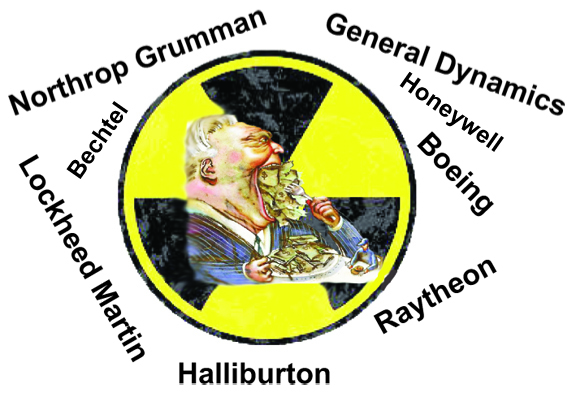
America and the world would be far safer places if this outrageous spending was drastically cut and those funds redirected to “moral” investments in people, society, and planetary health—not war and weapons.
Common Dreams WILLIAM HARTUNG, July 7, 2022 by TomDispatch
This March, when the Biden administration presented a staggering $813 billion proposal for “national defense,” it was hard to imagine a budget that could go significantly higher or be more generous to the denizens of the military-industrial complex. After all, that request represented far more than peak spending in the Korean or Vietnam War years, and well over $100 billion more than at the height of the Cold War.
It was, in fact, an astonishing figure by any measure — more than two-and-a-half times what China spends; more, in fact, than (and hold your hats for this one!) the national security budgets of the next nine countries, including China and Russia, combined. And yet the weapons industry and hawks in Congress are now demanding that even more be spent.
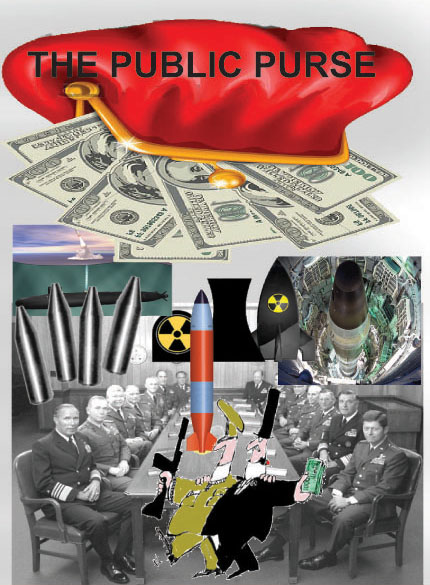
In recent National Defense Authorization Act proposals, which always set a marker for what Congress is willing to fork over to the Pentagon, the Senate and House Armed Services Committees both voted to increase the 2023 budget yet again — by $45 billion in the case of the Senate and $37 billion for the House. The final figure won’t be determined until later this year, but Congress is likely to add tens of billions of dollars more than even the Biden administration wanted to what will most likely be a record for the Pentagon’s already bloated budget.
This lust for yet more weapons spending is especially misguided at a time when a never-ending pandemic, growing heat waves and other depredations of climate change, and racial and economic injustice are devastating the lives of millions of Americans. Make no mistake about it: the greatest risks to our safety and our future are non-military in nature, with the exception, of course, of the threat of nuclear war, which could increase if the current budget goes through as planned.
But as TomDispatch readers know, the Pentagon is just one element in an ever more costly American national security state. Adding other military, intelligence, and internal-security expenditures to the Pentagon’s budget brings the total upcoming “national security” budget to a mind-boggling $1.4 trillion. And note that, in June 2021, the last time my colleague Mandy Smithberger and I added up such costs to the taxpayer, that figure was almost $1.3 trillion, so the trend is obvious.
To understand how these vast sums are spent year after year, let’s take a quick tour of America’s national security budget, top to bottom.
The Pentagon’s proposed “base” budget, which includes all of its routine expenses from personnel to weapons to the costs of operating and maintaining a 1.3 million member military force, came in at $773 billion for 2023, more than $30 billion above that of 2022. Such an increase alone is three times the discretionary budget of the Centers for Disease Control and Prevention and more than three times the total allocation for the Environmental Protection Agency.
In all, the Pentagon consumes nearly half of the discretionary budget of the whole federal government, a figure that’s come down slightly in recent years thanks to the Biden administration’s increased investment in civilian activities. That still means, however, that almost anything the government wants to do other than preparing for or waging war involves a scramble for funding, while the Department of Defense gets virtually unlimited financial support.

And keep in mind that the proposed Biden increase in Pentagon spending comes despite the ending of 20 years of U.S. military involvement in Afghanistan, a move that should have meant significant reductions in the department’s budget. Perhaps you won’t be surprised to learn, however, that, in the wake of the Afghan disaster, the military establishment and hawks in Congress quickly shifted gears to touting — and exaggerating — challenges posed by China, Russia, and inflation as reasons for absorbing the potential savings from the Afghan War and pressing the Pentagon budget ever higher.
It’s worth looking at what America stands to receive for its $773 billion — or about $2,000 per taxpayer, according to an analysis by the National Priorities Project at the Institute for Policy Studies. More than half of that amount goes to giant weapons contractors like Raytheon and Lockheed Martin, along with thousands of smaller arms-making firms.
The most concerning part of the new budget proposal, however, may be the administration’s support for a three-decades long, $1.7-trillion plan to build a new generation of nuclear-armed missiles (as well, of course, as new warheads to go with them), bombers, and submarines. As the organization Global Zero has pointed out, the United States could dissuade any country from launching an atomic attack against it with far fewer weapons than are contained in its current nuclear arsenal. There’s simply no need for a costly — and risky — nuclear weapons “modernization” plan. Sadly, it’s guaranteed to help fuel a continuing global nuclear arms race, while entrenching nuclear weapons as a mainstay of national security policy for decades to come. (Wouldn’t those decades be so much better spent working to eliminate nuclear weapons altogether?)
The riskiest weapon in that nuclear plan is a new land-based, intercontinental ballistic missile (ICBM). As former Secretary of Defense William Perry once explained, ICBMs are among “the most dangerous weapons in the world” because a president warned of a nuclear attack would have only a matter of minutes to decide whether to launch them, increasing the risk of an accidental nuclear war based on a false alarm. Not only is a new ICBM unnecessary, but the existing ones should be retired as well, as a way of reducing the potential for a world-ending nuclear conflagration……………………..
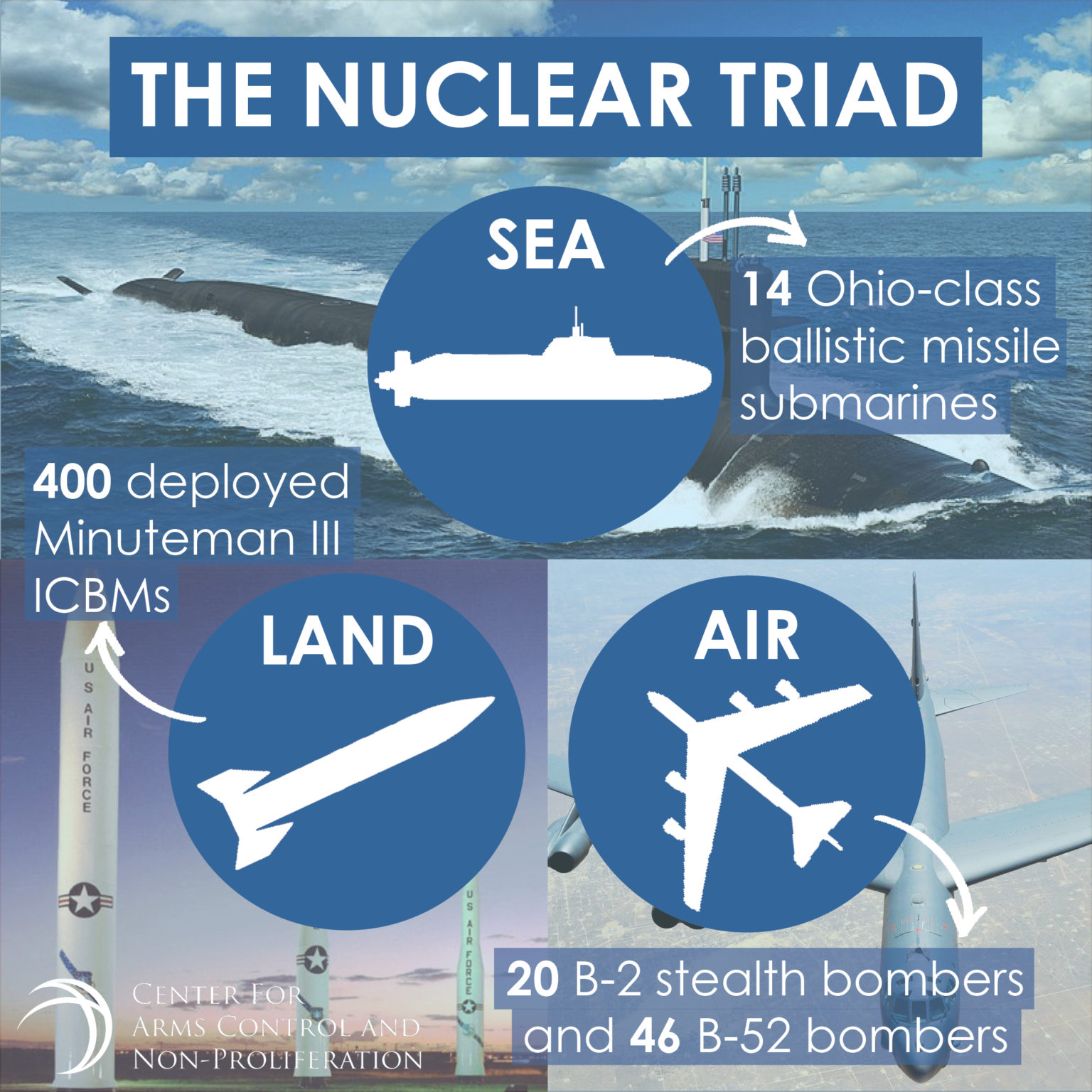
The Nuclear Budget
The average taxpayer no doubt assumes that a government agency called the Department of Energy (DOE) would be primarily concerned with developing new sources of energy, including ones that would reduce America’s dependence on fossil fuels to help rein in the ravages of climate change. Unfortunately, that assumption couldn’t be less true.
Instead of spending the bulk of its time and money on energy research and development, more than 40% of the Department of Energy’s budget for 2023 is slated to support the National Nuclear Security Administration (NNSA), which manages the country’s nuclear weapons program, principally by maintaining and developing nuclear warheads. Work on other military activities like reactors for nuclear submarines pushes the defense share of the DOE budget even higher. The NNSA spreads its work across the country, with major locations in California, Missouri, Nevada, New Mexico, South Carolina, Tennessee, and Texas. Its proposed 2023 budget for nuclear-weapons activities is $16.5 billion, part of a budget for defense-related projects of $29.8 billion……………………………
Our Misguided Security Budget
Spending $1.4 trillion to address a narrowly defined concept of national security should be considered budgetary malpractice on a scale so grand as to be almost unimaginable — especially at a time when the greatest risks to the safety of Americans and the rest of the world are not military in nature. After all, the Covid pandemic has already taken the lives of more than one million Americans, while the fires, floods, and heat waves caused by climate change have impacted tens of millions more.
Yet the administration’s proposed allocation of $45 billion to address climate change in the 2023 budget would be less than 6% of the Pentagon’s proposed budget of $773 billion……………………………….. https://www.commondreams.org/views/2022/07/07/americas-14-trillion-so-called-national-security-budget-makes-us-less-safe-not-more
Nuclear war would turn oceans upside down, crash food web
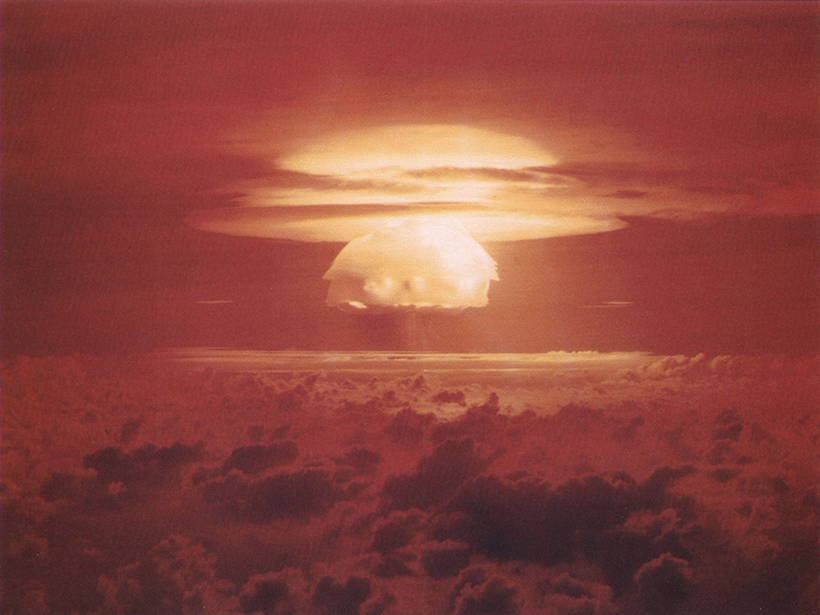
https://news.wisc.edu/nuclear-war-would-turn-oceans-upside-down-crash-food-web/ July 8, 2022 By Chris Barncard , Russia’s invasion of Ukraine has given the specter of nuclear war renewed weight as a global threat, and a new study of the environmental impact of a nuclear conflict describes dire consequences for the world’s oceans.
“If there were a nuclear war, these huge explosions and the firestorms they cause could throw so much soot — teragrams, or millions of tons — into the atmosphere, it would block out enough sunlight to cool the atmosphere significantly,” says Elizabeth Maroon, a professor of atmospheric and oceanic sciences at the University of Wisconsin–Madison.
In just one month after a nuclear exchange between Russia and the United States or India and Pakistan, average global temperatures would drop by 13 degrees Fahrenheit — a larger temperature change than in the last ice age — according to climate modeling by Maroon and collaborators from around the world. The research team, led by Louisiana State University professor of oceanography and coast sciences Cheryl Harrison, published their findings July 7 in the journal AGU Advances.
Even setting aside radioactive fallout, the consequences on land would be dire, including widespread crop failures. But in just a year, the planet’s interconnected oceans would enter a state unfamiliar to scientists like Maroon who study the way oceans have changed on much longer time scales. And, unlike effects on the atmosphere and on land, oceans would not fully recover within the 30-year time period covered by the researchers’ simulations of nuclear conflicts.
“Changes in the ocean take longer than in the atmosphere or on land, but our modeling shows that even in the first year after a nuclear war the ocean circulation would have started changing drastically,” says Maroon, an expert on the interplay between the Atlantic Ocean’s complex circulation patterns and Earth’s climate.
The Atlantic’s major circulation turn-around in the northern latitudes — in which warm surface water streaming north to Greenland, Iceland and Norway cools and sinks into middle depths to be drawn south again — comes unhinged.
“Within the first year or two, water in the North Atlantic sinks all the way to the bottom of the ocean, which we think has not happened even in the ice ages,” says Maroon. “In today’s ocean, only near Antarctica does water sink all the way to the seafloor.”
That unprecedented mixing and ocean circulation speed-up — which would last for about two decades — would move nutrients in the ocean vital for supporting the smallest and most numerous marine organisms, like plankton, into entirely unfamiliar conditions around the world.
It would also result in cooling so strong it would extend sea ice and render impassable major seaports that are now open year-round, and would likely cause significant damage to much of the ocean food web.
“It’s no secret that nuclear winter would be terrible,” Maroon says. “What this study shows are the lasting extent of effects we hadn’t really addressed before on ocean circulation and ecosystems and the very base of the food web.”
To read more about the study and its findings, visit: https://www.lsu.edu/mediacenter/news/2022/07/07docs_harrison_aguadvances.php
Not only Russian: Ukrainian forces also are killing children
Ukrainian shelling kills ten-year-old girl, Rt.com, 5 July 22
The child was torn apart by a shell that hit a residential district in Donetsk, the devastated family told journalists.
A 10-year-old girl was sitting by a bank in front of her house in Donetsk when a shell fired by Ukrainian forces landed in the middle of the street, killing her. The child was torn apart by shrapnel, the grieving family told RT’s Ruptly video news agency.
“My granddaughter has been blown into three pieces,” the girl’s grandfather told journalists. “Look there, there is blood everywhere,” he said, pointing to the metallic gates leading to the yard of his house.
Pools of blood were still covering the street in the spot where the girl had been hit by the shell’s fragments.
She did not make it home,” the girl’s grandfather added, pointing to the girl’s sneakers, which were lying on the ground near her home’s gate. The girl’s body has already been taken to a morgue. “She and a boy … they were just walking around,” the girl’s mother said. “She sought to run home…” she began, before bursting into tears.
The family’s neighbor told reporters she had heard a loud bang and rushed to the street only to find “one girl’s leg lying near a garden plot and another one here, at the gate.”
Ukrainian forces were shelling different parts of the capital of the Donetsk People’s Republic (DPR) on Tuesday, the city’s mayor, Aleksey Kuzmin, said in a Telegram post. Several people received shrapnel wounds, Kuzmin said, as he confirmed the girl’s death as well. The child’s identity has not been made public.
According to the mayor, the Ukrainian soldiers had used 155mm caliber shells. This caliber is common in NATO artillery systems, while the Russian and Ukrainian artillery pieces usually have a caliber of 152mm. RT could not independently verify which artillery type was used by the Ukrainian forces…………. https://www.rt.com/russia/558431-donetsk-child-killed-shelling-ukraine/
National Endowment for Democracy (NED) – a CIA front group laid the foundations for the Ukraine war

HOW CIA FRONT LAID FOUNDATIONS FOR UKRAINE WAR By Kit Klarenberg, Substack., July 5, 2022
”…………………………………………. many of the CIA’s traditional responsibilities and activities being farmed out to “overt” organizations, most significantly the National Endowment for Democracy (NED). Founded in November 1983, then-CIA director William Casey was at the heart of NED’s creation.
………………… September 2013, and Carl Gershman, National Endowment for Democracy (NED) chief from its launch until summer 2021, authored an op-ed for The Washington Post, outlining how his organization was hard at work wresting countries in Russia’s near abroad – the constellation of former Soviet republics and Warsaw Pact states – away from Moscow’s orbit.
Along the way, he described Ukraine as “the biggest prize” in the region, suggesting Kiev joining Europe would “accelerate the demise” of Russian President Vladimir Putin. Six months later, Ukraine’s elected president Viktor Yanukovych was ousted in a violent coup.
Writing in Consortium News earlier that month, investigative legend Robert Parry recorded how, over the previous year, NED had funded 65 projects in Ukraine totaling over $20 million. This amounted to what the late journalist dubbed “a shadow political structure of media and activist groups that could be deployed to stir up unrest when the Ukrainian government didn’t act as desired.”
NED’s pivotal role in unseating Yanukovych can be considered beyond dispute,,,,,,,,,,,,,,,,, NED has removed many entries from its website in the years since the coup, which amply underline its role in Yanukovych’s overthrow.
………………………… the country remained captured by Western financial, political and ideological interests post-Maidan. It was a roadmap NED subsequently followed to the letter.
[Ed. This article gives the complex story of the role of NED and other U.S. and British agencies, in the overthrow of the popular leader Yanukovych and the rise of the corrupt Petro Poroshenko.]
……………………… Trump’s term in office was typified by ever-escalating hostility between Washington and Moscow, the Oval Office resident going to dangerous lengths his predecessor had consistently refrained from to arm and galvanize the most reactionary and violent elements of the Ukrainian armed forces, including the notorious Neo-Nazi Azov Battalion, and tear up Cold War arms control treaties, much to Moscow’s chagrin…………….
………..Leshchenko, [prominent corrupt politician in Kiev], was voted out of parliamentc, Zelensky’s Servant of the People party candidate taking his seat in a landslide……
Despite no longer being part of the legislature, Leshchenko has continued to wield significant sway over the Ukrainian government, directly advising Zelensky on “Russian disinformation” to this day.
What direct influence NED still exerts over him – and Ukraine’s President by extension – isn’t certain. Although, mere days before the Russian invasion began, in an interview with The Guardian, Leshchenko referred to the Minsk Accords – which Zelensky stood on a specific platform of implementing – as “toxic”, suggesting the leader would “betray” his country by adhering to their obligations, which included granting autonomy to Donetsk and Luhansk.
This reflects NED’s position – on February 14th this year, its Journal of Democracy published an article declaring the Accords to be “a bad idea for the West and a serious threat to Ukrainian democracy and stability,” ……….
….. an objective analysis of what actually happened and why, in which NED is completely central. Still, the organization didn’t need to rely purely on Leshchenko to keep the Minsk Accords moribund. Its extensive network of assets in the country, and Washington’s dark alliance with Ukraine’s far-right, was more than sufficient to ensure that Zelensky’s overwhelmingly popular mission of restoring relations with Russia would and could never be fulfilled.
An archive of NED funding in Ukraine over 2021 – which has now been replaced with a statement “in solidarity” with Kiev – offers extensive detail on the precise projects backed by the CIA front over that pivotal 12-month period.
It points to a preponderant focus on purported Russian misdeeds in eastern Ukraine. One grant, of $58,000, was provided to the NGO Truth Hounds to “monitor, document, and spotlight human rights violations” and “war crimes” in the Donetsk and Luhansk regions.
Another, of $48,000, was provided to Ukraine’s War Childhood Museum to “educate the Ukrainian public about the consequences of the war through a series of public events.” Yet another received by charity East-SOS aimed to “raise public awareness” of “Russia’s policies of persecution and colonization in the region, and document illustrative cases,” its findings circulated to the UN Human Rights Council, European Courts of Human Rights, and International Court of Justice.
There was no suggestion this wellspring would be used to document any abuses by Ukrainian government forces. UN research indicates 2018 – 2021, over 80 percent of civilian casualties were recorded on the Donbas side. Meanwhile, Organization for Security and Cooperation in Europe reports show that shelling of civilian areas in the breakaway regions intensified dramatically in the weeks leading up to February 24th, potentially the precursor of a full-blown military offensive.
As such, NED’s expurgation of records exposing its role in fomenting and precipitating the horror now unfolding in southeast Ukraine not only protects de facto CIA agents on the ground. It also reinforces and legitimizes the Biden administration’s sprawling, fraudulent narrative, endlessly and uncritically reiterated in Western media, that Russia’s invasion was entirely unprovoked and groundless.
Ukrainians now live with the mephitic legacy of that reckless, unadmitted meddling in the most brutal manner imaginable. They may well do so for many years to come. Meanwhile, the men and women who orchestrated it rest comfortably in Washington DC, insulated from any scrutiny or consequence whatsoever, every day cooking up fresh schemes to undermine and topple troublesome foreign leaders, hailed as champions of liberty by the mainstream press every step of the way. https://popularresistance.org/how-cia-front-laid-foundations-for-ukraine-war/
USA causing tensions and uncertainty with its expanding militarism in the Pacific, targeting China

Wshington should stop playing dangerous games https://www.chinadaily.com.cn/a/202207/04/WS62c225a5a310fd2b29e6a123.html By Martin Sieff | CHINA DAILY , 6 Jul 22
US President Joe Biden has taken a vague approach on an understanding with Beijing over the Taiwan question negotiated in 1972 by then president Richard Nixon that has ensured peace and mutual prosperity in the Pacific for half a century.
The US-led West continues to push NATO’s eastward expansion and build NATO-like military alliances in the Asia-Pacific region such as AUKUS, the much-touted Australia-United Kingdom-United States strategic alliance. Now the Western powers with some other countries are holding RIMPAC 2022, or Rim of the Pacific, military exercises, the largest in the program’s history, which will further increase uncertainties in the Asia-Pacific.
The alleged reason the West cites for trying to brainwash the prosperous and, left to themselves, peaceful and well-meaning populations of those and other countries is that China, Russia and some other countries present some hideous threat to the rest of the world like Hitler’s Nazi Germany and therefore must be resisted.
Yet the Joe Biden administration, oblivious to the ageless teachings, remains consistent in holding on to the extraordinary irony and blasphemy that its own political values and ideology-which it so manifestly fails to live up to in its own domestic policies and society-must nevertheless be imposed as the inevitable and unavoidable destiny on the rest of the world. Such ridiculous hubris, or arrogance according to the classical Greek view of life, must inevitably generate an annihilating nemesis: total destruction.
How else can one explain the determination of the US administration, pulling its Pacific allies in tow, to provoke a full-scale confrontation, threatening no holds barred confrontation with China over the Taiwan question?
US President Joe Biden has taken a vague approach on an understanding with Beijing over the Taiwan question negotiated in 1972 by then president Richard Nixon that has ensured peace and mutual prosperity in the Pacific for half a century. Biden is also continuing to arm Ukraine to the teeth so Kyiv can keep fighting a bloody conflict it cannot possibly win against Moscow.
What possible sanity can lie behind provoking a war and openly threatening the world’s two other leading strategic and nuclear-armed powers with destabilization and destruction at the same time?
Now, the next step on this march of folly to an extended war has also been taken. Following the recently concluded G7 summit which was apparently targeted at both Russia and China, the Biden administration has dragooned its Pacific allies of New Zealand, Australia and (maybe a reluctant) Japan into the latest RIMPAC exercises specifically aimed at targeting Beijing and bullying it into accepting Washington’s diktat over Taiwan.
Neither Biden nor any of his national security team of Secretary of State Antony Blinken, National Security Advisor Jake Sullivan, Secretary of Defense Lloyd Austin and Under Secretary of State for Policy Victoria Nuland shows the slightest realization that all their policies are certain to bring about the very Armageddon they claim to be determined to deter.
In fact, in his first face-to-face meeting with Austin on the sidelines of the Shangri-La Dialogue in Singapore on June 10, Chinese State Councilor and Defense Minister Wei Fenghe made clear that any move, encouraged or manipulated by the US, to get Taiwan to declare independence would be immediately taken by Beijing as a casus belli.
This would be an insane risk for the US administration to take even if it was to secure peace with the rest of the world, and at no risk of a full-scale war with Russia, another catastrophe which Biden has been assiduously courting.
Far from deterring China, the announcement of the latest RIMPAC exercises, as well as the provocative, hostile and contemptuous language in which that statement was made, can only lock the US even further into its suicidal leap of the Gadarene swine off the edge of a gigantic cliff from which there can be no return or recovery.
Only about 25 people are reported to have survived trying to commit suicide by jumping off the Golden Gate Bridge in San Francisco since it was completed in 1937 out of the 1,700 who have tried. Every one of those survivors has testified that they realized they had made a terrible mistake as soon as they jumped the 67 meters into San Francisco Bay.
Will Biden, Blinken, Sullivan and Nuland experience a similar far-too-late moment of clarity when the catastrophe they have worked so ceaselessly to provoke finally explodes on their country and its allies? By that point, it will not matter: the damned cannot escape their inevitable destruction. One can only weep for the hundreds of millions they will take with them.
The author is a senior fellow at the American University in Moscow.
Seventy years after first UK atom bomb, time to right this ‘criminal wrong’, says NFLA
As the international community and civil society marks the fifth
anniversary of the adoption of the UN Treaty on the Prohibition of Nuclear
Weapons tomorrow (7 July), the Nuclear Free Local Authorities have written
to the Prime Minister and Minister for Veterans Affairs calling for urgent
recognition and compensation for Britain’s atom and nuclear bomb test
veterans.
NFLA 6th July 2022
Congress poised to shoot down Biden’s nuclear rollback

The White House wants to cancel a nuclear cruise missile, but Democrats have joined Republicans to try to save it.
Politico, By LAWRENCE UKENYE and CONNOR O’BRIEN, 07/06/2022 ,
Progressives were already disappointed with President Joe Biden’s plans for the nation’s nuclear arsenal. Now they’re poised to lose one of the few things about the White House’s blueprint that they liked.
In recent weeks, Democrats have joined Republicans in adding money back into the Pentagon budget to continue developing a sea-launched nuclear cruise missile that former President Donald Trump initiated in 2018. Biden proposed canceling the missile, which arms control advocates say is redundant, costly and potentially destabilizing……………………..
The Pentagon’s still-classified Nuclear Posture Review, which lays out a long-term roadmap for the nuclear arsenal, spurred the decision to zero out funding for the missile in Biden’s most recent budget. The public split between top civilians and military commanders amounted to a “green light” for Democrats to hedge on the program, according to Tom Collina, policy director at Ploughshares Fund.
…………………… The situation marks a retreat from the campaign pledges of then-candidate Biden, who long advocated for reducing reliance on nuclear weapons, only to turn around and dedicate tens of billions of dollars to the modernization of all three legs of the triad for two years in a row. Arms control advocates also called on him to establish a “no first use” policy and cancel two weapons added on by the Trump administration: the cruise missile and a low-yield submarine-launched missile, which has already entered the fleet.
Biden’s nuclear plans, outlined in a brief summary released in March, omit a “no first use” policy. The low-yield warhead introduced during the Trump years remains a part of the arsenal.
As for the cruise missile, now that both the House and Senate Armed Services committees have authorized funding, albeit with differing conditions, Congress will likely send Biden a compromise defense policy bill this year that foils his plan to cancel the program.
A spokesperson for the White House National Security Council said in a statement that the administration “stands by the President’s budget submission, which canceled the SLCM-N,” which refers to the sea-launched cruise missile-nuclear. The spokesperson noted the decision to kill the missile “was based on the findings and recommendations” of the Nuclear Posture Review.
Biden’s fiscal 2023 defense budget proposes spending $50.9 billion on nuclear weapons programs across the Defense and Energy Departments, while also attempting to cancel the SLCM and retire the aging inventory of B83 gravity bombs. The latter system is also in play in defense talks.
Senate Armed Services voted to place limits on the retirement of the B83 by requiring a study on striking hardened and deeply buried targets before any of the bombs could be scrapped.
Both versions of the National Defense Authorization Act greenlight $25 million for the Navy’s research and development efforts on the cruise missile and another $20 million for the National Nuclear Security Administration to continue research on the W80-4 warhead to be used on the missile. But the House version restricts a portion of the $45 million from being spent until the Navy and NNSA deliver several reports, including analyses outlining the cost of the warhead and delivery system as well as the possible limitations of the vessels that carry the missile………………………………….
The debate won’t end with the Armed Services Committees, as Congress must still appropriate money to continue the program.
Democrats on the House Appropriations Committee sided with Biden and allocated no money for the missile or its warhead in their versions of annual defense and energy spending bills. But Armed Services’ action is likely to put pressure on appropriators in their talks over a spending compromise…………………. https://www.politico.com/news/2022/07/06/congress-biden-nuclear-rollback-00044344
—
Nuclear War Could Mean Annihilation, But Biden and Congress Are Messing Around

https://truthout.org/articles/nuclear-war-could-mean-annihilation-but-biden-and-congress-are-messing-around/?eType=EmailBlastContent&eId=eccf0454-e0d8-49d3-8e0c-8125c5a4fd5f The Biden administration hasn’t just remained mum about current nuclear war dangers — it’s actively exacerbating them. ANTON PETRUS
Only diplomacy can halt the carnage in Ukraine and save the lives of millions now at risk of starvation. And the dangers of nuclear war can be reduced by rejecting the fantasy of a military solution to the Ukraine conflict.
BY Norman Solomon, Truthout 3 July 22, President Joe Biden and top subordinates have refused to publicly acknowledge the danger of nuclear war — even though it is now higher than at any other time in at least 60 years. Their silence is insidious and powerful, and their policy of denial makes grassroots activism all the more vital for human survival.
In the aftermath of the 1962 Cuban missile crisis, President John F. Kennedy was more candid. Speaking at American University, he said: “A single nuclear weapon contains almost 10 times the explosive force delivered by all the allied air forces in the Second World War.” Kennedy also noted, “The deadly poisons produced by a nuclear exchange would be carried by wind and water and soil and seed to the far corners of the globe and to generations yet unborn.” Finally, he added, “All we have built, all we have worked for, would be destroyed in the first 24 hours.”
Kennedy was no dove. He affirmed willingness to use nuclear weapons. But his speech offered some essential honesty about nuclear war — and the need to seriously negotiate with the Kremlin in the interests of averting planetary incineration — an approach sorely lacking from the United States government today.
At the time of Kennedy’s presidency, nuclear war would have been indescribably catastrophic. Now — with large arsenals of hydrogen bombs and what scientists know about “nuclear winter” — experts have concluded that a nuclear war would virtually end agriculture and amount to omnicide (the destruction of human life on earth).
In an interview after publication of his book The Doomsday Machine, Pentagon Papers whistleblower Daniel Ellsberg summed up what he learned as an insider during the Kennedy administration:
What I discovered — to my horror, I have to say — is that the Joint Chiefs of Staff contemplated causing with our own first strike 600 million deaths, including 100 million in our own allies. Now, that was an underestimate even then because they weren’t including fire, which they found was too incalculable in its effects. And of course, fire is the greatest casualty-producing effect of thermonuclear weapons. So the real effect would’ve been over a billion — not 600 million — about a third of the Earth’s population then at that time.
Ellsberg added:
What turned out to be the case 20 years later in 1983 and confirmed in the last 10 years very thoroughly by climate scientists and environmental scientists is that that high ceiling of a billion or so was wrong. Firing weapons over the cities, even if you call them military targets, would cause firestorms in those cities like the one in Tokyo in March of 1945, which would loft into the stratosphere many millions of tons of soot and black smoke from the burning cities. It wouldn’t be rained out in the stratosphere. It would go around the globe very quickly and reduce sunlight by as much as 70 percent, causing temperatures like that of the Little Ice Age, killing harvests worldwide and starving to death nearly everyone on Earth. It probably wouldn’t cause extinction. We’re so adaptable. Maybe 1 percent of our current population of 7.4 billion could survive, but 98 or 99 percent would not.
Even before the Russian invasion of Ukraine four months ago, the risks of global nuclear annihilation were at a peak. In January, the Bulletin of the Atomic Scientists set its Doomsday Clock at a mere 100 seconds from apocalyptic Midnight, compared to six minutes a decade ago. As Russia’s horrific war on Ukraine has persisted and the U.S. government has bypassed diplomacy in favor of massive arms shipments, the hazards of a nuclear war between the world’s two nuclear superpowers have increased.
But the Biden administration has not only remained mum about current nuclear war dangers; it’s actively exacerbating them. Those at the helm of U.S. foreign policy now are ignoring the profound lessons that President Kennedy drew from the October 1962 confrontation with Russia over its nuclear missiles in Cuba.
“Above all, while defending our own vital interests, nuclear powers must avert those confrontations which bring an adversary to a choice of either a humiliating retreat or a nuclear war,” Kennedy said. “To adopt that kind of course in the nuclear age would be evidence only of the bankruptcy of our policy — or of a collective death-wish for the world.”
In sync with the overwhelmingly hawkish U.S. media, members of Congress and “national security” establishment, Biden has moved into new Cold War overdrive. The priority aim is to make shrewd moves on the geopolitical chessboard — not to engage in diplomacy that could end the slaughter in Ukraine and prevent the war from causing widespread starvation in many countries.
As scholar Alfred McCoy just wrote, “With the specter of mass starvation looming for some 270 million people and, as the [United Nations] recently warned, political instability growing in those volatile regions, the West will, sooner or later, have to reach some understanding with Russia.” Only diplomacy can halt the carnage in Ukraine and save the lives of millions now at risk of starvation. And the dangers of nuclear war can be reduced by rejecting the fantasy of a military solution to the Ukraine conflict.
In recent months, the Russian government has made thinly veiled threats to use nuclear weapons. Meanwhile, the U.S. has been shipping huge quantities of weapons to Ukraine, while Washington has participated in escalating the dangerous rhetoric. President Biden doubled down on conveying that he seeks regime change in Moscow, and Defense Secretary Lloyd Austin has declared that the U.S. wants the Russian military “weakened” — an approach that is opposite from Kennedy’s warning against “confrontations which bring an adversary to a choice of either a humiliating retreat or a nuclear war.”
We’d be gravely mistaken to wait for Washington’s officialdom to level with us about nuclear war dangers, much less take steps to mitigate them. The power corridors along Pennsylvania Avenue won’t initiate the needed changes. The initiatives and the necessary political pressure must come from grassroots organizing.
A new “Defuse Nuclear War” coalition of about 90 national and regional organizations (which I’m helping to coordinate) launched in mid-June with a livestream video featuring an array of activists and other eloquent speakers, drawn together by the imperative of preventing nuclear war. (They included antiwar activists, organizers, scholars and writers Daniel Ellsberg, Mandy Carter, David Swanson, Medea Benjamin, Leslie Cagan, Pastor Michael McBride, Katrina vanden Heuvel, Hanieh Jodat Barnes, Judith Ehrlich, Khury Petersen-Smith, India Walton, Emma Claire Foley, retired Army Col. Ann Wright and former California Gov. Jerry Brown.)
The U.S. government’s willingness to boost the odds of nuclear war is essentially a political problem. It pits the interests of the people of the world — in desperate need of devoting adequate resources to human needs and protection of the environment — against the rapacious greed of military contractors intertwined with the unhinged priorities of top elected officials.
The Biden administration and the bipartisan leadership in Congress have made clear that their basic approach to the surging danger of nuclear war is to pretend that it doesn’t exist — and to encourage us to do the same. Such avoidance might seem like a good coping strategy for individuals. But for a government facing off against the world’s other nuclear superpower, the denial heightens the risk of exterminating almost all human life. There’s got to be a better way.
World’s most nuclear contaminated island left uninhabitable for 77 years
Jasper King, Saturday 2 Jul 2022 In the middle of the Pacific Ocean lies the world’s most nuclear contaminated island, devastated since the days of the Hiroshima and Nagisaki nuclear attacks.
The small coral islands of Bikini Atoll have remained uninhabited since 1945 when atomic bombs were dropped in Japan and the United States started using them for nuclear tests.
The tiny population of 167 people were advised to move elsewhere by the military and told the tests were necessary to prevent any future wars.
No one has lived there since.
The islands met the military’s criteria because it was under US control – as detailed in a report by the Natural Resources Defence Council and within 1,000 miles of a base from which bombers could take off.
The lagoon the atoll encircled offered a protected harbour for Navy ships, including vessels used as targets.
But residents who were moved from the island at the time were angry, however their leader King Juda at the time said: ‘We will go, believing that everything is in the hands of God.’
Although it was promised residents could eventually return one day, they were instead permanently relocated to other islands in the Marshalls
Between 1946 and 1958, the US detonated 23 nuclear devices on the islands, including 20 hydrogen bombs.
The Castle Bravo H-bomb test was conducted on the islands on March 1, 1954, and reached a yield of 15 megatons – 1,000 times more powerful than the atomic bomb which destroyed Nagisaki in 1945.
The bomb’s blast in to the air is estimated to be the equivalent of 216 Empire State Buildings, according to Stanford
|
|
Nuclear warheads expected to increase in next 10 years
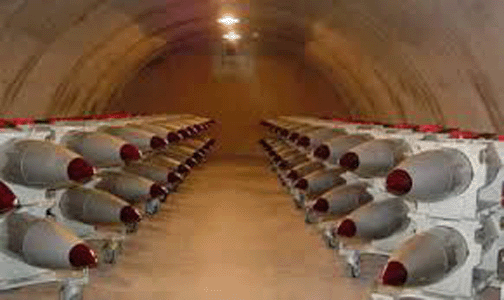
Nuclear-armed nations might seek out more weapons in coming decade despite cut in nuclear warheads during past 50 years, data show
AA, Fuat Kabakci |01.07.2022, ANKARA
Nuclear-armed nations are projected to seek out more weapons in the coming decade, despite the fact that there has been a drastic decline in the number of nuclear warheads worldwide during the past 50 years.
According to the data gathered by Anadolu Agency from Stockholm Institute for Peace Research (SIPRI) and other related sources, the number of nuclear warheads could rise globally.
The Nuclear Non-Proliferation Treaty (NPT) was signed on July 1, 1968, and entered into force in 1970 to prevent an escalating nuclear arms race as the US used the first nuclear bomb in the world against Japan in World War 2.
The agreement is based on three basic principles: the prevention of nuclear proliferation, the use of nuclear energy for civilian purposes and nuclear disarmament.
Nine countries have nuclear warheads with the US and Russia owning about 90% of these warheads, which total 12,705. As of January 2022, the US has 5,428 warheads while Russia has 5,997.
China has 350 warheads, France 290, and the UK possesses 225 warheads. The list continues with Pakistan having 165, India 156, Israel 90, and North Korea 20 nuclear warheads.
Increase in number of warheads
SIPRI’s “2022 Yearbook” report warned that the number of nuclear warheads could rise globally again after the Cold War if countries with nuclear weapons do not take concrete action on disarmament as soon as possible.
According to the report, the present decrease in the nuclear warheads of the US and Russia compared to 2021 and the previous years is due to the dismantling of obsolete warheads within the framework of modernization efforts.
China, which does not have a transparent policy about nuclear weapons, is at an important threshold of increasing its nuclear weapons capacity. Satellite images taken from the country show 300 new missile silos under construction.
In 2021, the UK announced its decision to increase its nuclear warhead capacity to 260. The UK also reported that the country would not publicly release figures on its operational nuclear warhead capacity, deployed warheads and missiles.
North Korea has also made its current military nuclear program a central element of its national security strategy. It is estimated that the country has enough material to produce 40-45 warheads, although the number of warheads at its disposal currently is about 20.
France has also announced the launch of a program to develop a nuclear-fueled ballistic missile submarine.
India and Pakistan also announced last year that they would develop missiles capable of carrying nuclear warheads.
Race for nuclear weapons
There are about 13,000 nuclear warheads in the world today………………… https://www.aa.com.tr/en/world/nuclear-warheads-expected-to-increase-in-next-10-years/2628075
NATO has completed its post-Cold War transformation from Europe’s guard dog into America’s attack dog

The guard dog had, it seems, been re-trained as an attack dog.
https://www.rt.com/russia/558168-nato-defensive-alliance-global-cop/ Scott Ritter 1 July 22, From an ostensible defensive alliance, NATO has grown into an aggressor designed to promote ‘rules’ dictated by the US,
The North Atlantic Treaty Organization, or NATO, has just wrapped up its annual summit in Madrid, Spain. The one-time trans-Atlantic defensive alliance has, over the past three decades, transformed itself from the guardian of Western Europe into global cop, seeking to project militarily a so-called values- and rules-based posture.
NATO’s first Secretary General, Lord Ismay, famously noted that the mission of the bloc was “to keep the Russians out, the Germans down, and the Americans in.” In short, NATO served as a wall against the physical expansion of the Soviet Union from the perch it had established in eastern Europe at the end of the Second World War. Likewise, the creation of NATO prevented a treaty from being concluded between Germany and the Soviet Union that would enable the reunification of Germany. And lastly, the existence of NATO mandated that the US retain a significant full-time military presence in Europe, helping break America’s traditional tendency toward isolationism.
At the Madrid Summit, NATO radically redefined its mission to reflect a new mantra which could be encapsulated as “keep the Russians down, the Americans in, and the Chinese out.” It is an aggressive–even hostile–posture, premised on sustaining Western (i.e., American) supremacy.
This mission is to be accomplished through the defense and promulgation of a so-called “rules-based international order” which exists only in the minds of its creators, which in this case is the United States and its allies in Europe. It also represents a radical break from past practice which sought to keep NATO defined by the four corners of its trans-Atlantic birthright by seeking to expand its security umbrella into the Pacific.
The guard dog had, it seems, been re-trained as an attack dog.
When an organization undergoes such a radical transformation in terms of its core mission and purpose, logic dictates that there exists a reason (or reasons) sufficient to justify the consequences attached to the action. There appear to be three such reasons. First and foremost is the fact that Russia refuses to accept NATO demands that it exist as a junior “partner” whose sovereignty must be subordinated to the collective will of post-Cold War Europe. Russia’s President, Vladimir Putin, has made it clear that Russia considers itself to be a great power, and fully expects to be treated as such–especially when it comes to issues pertaining to the so-called “near abroad”–those former Soviet republics, such as Ukraine and Georgia, whose continued ties with Moscow are existential in nature.
NATO, on the other hand, while calling Russia a “partner,” was never serious about extending a viable hand of friendship, instead undertaking a thirty-year program of expansion which violated verbal promises made to Soviet leaders, leaving Russia weakened and not to be taken seriously by the self-proclaimed “victors” of the Cold War. When Russia pushed back, a process marked by Putin’s iconic speech to the 2007 Munich Security Conference, NATO undertook a more aggressive stance, promising Georgia and Ukraine eventual membership in the Alliance and, in 2014, supporting a violent coup against a government in Ukraine that kicked-off a series of events which culminated in the ongoing military operation being conducted by Russia in Ukraine.
Speaking at this week’s NATO Summit, the Secretary General of the organization, Jen Stoltenberg, ended all pretense that the bloc was an innocent bystander in the events leading up to Russia’s military intervention in Ukraine, noting with pride that NATO had been preparing to fight Russia since 2014–that is, since the US-led coup. Indeed, NATO has, since 2015, been training the Ukrainian military to NATO standards.
Not to bolster the self-defense of Ukraine, but rather for the purpose of fighting ethnic Russians in the Donbass. NATO, it seems, was never interested in a peaceful resolution to the crisis, which flared up when Ukrainian nationalists began brutalizing the region’s Moscow-leaning majority.
Two NATO members, France and Germany, helped perpetuate a fraudulent peace process, the Minsk Accords, which former Ukrainian President Petro Poroshenko recently admitted was nothing more than a sham perpetrated for the purpose of buying time so that NATO could train and equip the Ukrainian military for the purpose of forcibly seizing control of both Donbass and Crimea.
All the 2007 Munich Summit really did was strip away any pretense that NATO was serious about peacefully coexisting with a powerful, sovereign Russian nation. A truly defensive alliance would have readily embraced such an outcome. NATO, it is now clear, is anything but.
NATO has been exposed as little more than a component of American global power projection, providing supplementary military and political backing for an American empire defined by the “rules-based international order” premised on sustained US military and economic supremacy. Keeping America on top, however, is proving to be a bridge too far, largely because the American empire itself is crumbling at its foundations, struggling economically to sustain the so-called “American Dream” and politically to keep alive the flawed promise of American democracy which underpins the very image the US seeks to promote abroad. The extent that the US can function with a modicum of credibility in the international arena today is determined purely by the level of “buy in” by the rest of the world to the golden idol that is the “rules-based international order.”
While the US has been able to strong-arm both NATO and its economic doppelganger, the G7, into actively promoting the “Rules based international order,” Russia and China have come together to create an alternative world view.
That is international law, premised on the concepts enshrined in the United Nations Charter.
The G7 declared that the BRICS economic forum, comprised of nations who are more aligned with a “law-based” world order, and not a US-dominated “rules-based” one, represents the greatest threat to its relevance on the world stage. NATO, likewise, has declared that the Russian and Chinese challenge to the “rules-based international order” represents a major threat to NATO’s core values, prompting an expansion of NATO’s reach into the Pacific as a counter.
In short, NATO (together with the G7 group) is declaring war against the principles of international law that are encapsulated in the United Nations Charter. At its Madrid Summit, NATO has made it clear that it’s ready to shed blood to defend a legacy whose legitimacy exists only among the collective imaginations of its members. And not all of them, either.
The goal of the rest of the world now needs to be to seek to minimize the damage done by this beast and find a way to dispose of it before it can do any more harm to the global community.
Scott Ritter is a former US Marine Corps intelligence officer and author of ‘Disarmament in the Time of Perestroika: Arms Control and the End of the Soviet Union.’ He served in the Soviet Union as an inspector implementing the INF Treaty, in General Schwarzkopf’s staff during the Gulf War, and from 1991-1998 as a UN weapons inspector.
1 This Month





PLEASE OPPOSE HR 8255 AND S.3639 – bills would accelerate satellite deployment, with no environmental review or safeguards – https://ncstd5li.quorum.us/campaign/169331/
To see nuclear-related stories in greater depth and intensity – go to https://nuclearinformation.wordpress.com
-
Archives
- October 2026 (29)
- September 2026 (339)
- August 2026 (330)
- July 2026 (355)
- June 2026 (287)
- May 2026 (306)
- April 2026 (356)
- March 2026 (251)
- February 2026 (267)
- January 2026 (308)
- December 2025 (358)
- November 2025 (359)
-
Categories
- 1
- 1 NUCLEAR ISSUES
- business and costs
- climate change
- culture and arts
- ENERGY
- environment
- health
- history
- indigenous issues
- Legal
- marketing of nuclear
- media
- opposition to nuclear
- PERSONAL STORIES
- politics
- politics international
- Religion and ethics
- safety
- secrets,lies and civil liberties
- spinbuster
- technology
- Uranium
- wastes
- weapons and war
- Women
- 2 WORLD
- ACTION
- AFRICA
- Atrocities
- AUSTRALIA
- Christina's notes
- Christina's themes
- culture and arts
- Events
- Fuk 2022
- Fuk 2023
- Fukushima 2017
- Fukushima 2018
- fukushima 2019
- Fukushima 2020
- Fukushima 2021
- general
- global warming
- Humour (God we need it)
- Nuclear
- RARE EARTHS
- Reference
- resources – print
- Resources -audiovicual
- Weekly Newsletter
- World
- World Nuclear
- YouTube
-
RSS
Entries RSS
Comments RSS

