Russia is using captured Zaporizhzhia Nuclear Power Station as a launch pad for military attacks

Captured nuclear plant doubles as launch pad for relentless Russian rocket
attacks. The Russian army seized the vast facility — the biggest in
Europe, with six 950MW reactors — in the early weeks of its invasion,
destroying a training office during the assault despite the obvious risks
of damaging the plant and radiation leaks. Since then, Ukrainian officials
say, the Russians have stationed 500 troops and heavy weapons within the
perimeter — in breach of International energy conventions — and are
using the reactor blocks to protect against retaliatory fire.
FT 22nd July 2022
https://www.ft.com/content/857ee467-c920-4ba0-b915-684e0afbf594
The provocations behind the ‘unprovoked’ war
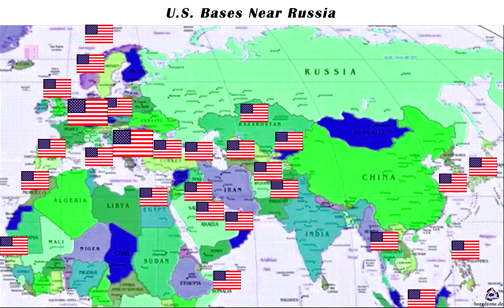
By Phil Wilayto Jul 23, 2022, ack in 1949, the United States, Canada and 10 Western European countries formed a military alliance called the North Atlantic Treaty organization, or NATO. Washington had decided that the Soviet Union, its wartime ally — the one that had broken the back of the Nazi war machine — now was its peacetime enemy.
By 1990, the Soviet Union and most of its socialist allies were collapsing, the result of internal contradictions and outside pressures. The U.S. was promoting the reunification of Germany — a move opposed by Soviet leader Mikhail Gorbachev, who still remembered how his country had lost 20 million people to the Nazi invasion, and was not real excited about the prospect of a revitalized Germany.
So U.S. Secretary of State James Baker offered a deal: If Gorbachev agreed to a united Germany, NATO — which, by that time, had grown from its original 12 members to 16 — would promise not to advance one inch eastward. Gorbachev agreed.
Today, each of the 14 new NATO member countries has been to the east. Of the seven countries bordering Russia’s western flank, Estonia, Latvia and Norway already are NATO members. Finland, Georgia and Ukraine have asked to join.
Once that process is completed, Russia’s only western border ally would be Belarus. Every other bordering country would be committed by Article 5 of the NATO Charter to come to each other’s defense in the event of a military confrontation.
And this should worry Russia, why?
In 1999, NATO carried out a 78-day air campaign in Yugoslavia that involved 400 aircraft, 5,000 personnel and the use of cancer-causing depleted uranium munitions……………………………………
Once that process is completed, Russia’s only western border ally would be Belarus. Every other bordering country would be committed by Article 5 of the NATO Charter to come to each other’s defense in the event of a military confrontation.
And this should worry Russia, why?
In 1999, NATO carried out a 78-day air campaign in Yugoslavia that involved 400 aircraft, 5,000 personnel and the use of cancer-causing depleted uranium munitions.
For NATO, combined military expenditures of all 30 member countries in 2021 was an estimated $1.2 trillion — more than 18 times that of Russia.
And even though Russia and NATO have rough parity when it comes to nuclear weapons, it’s just possible that the steady eastward expansion of a steadily growing, hostile NATO might have raised some legitimate security concerns in Russia.
Then, there’s the matter of U.S. support for the anti-Russian Ukrainian coup of 2014. This began as peaceful protests against then-President Viktor Yanukovych for his opposition to closer economic ties with Western Europe. It morphed into a violent uprising in which openly neo-Nazi organizations played a major role.
The U.S. support was not in dispute. Sen. John McCain, R-Ariz., had traveled to give encouraging speeches to the protesters. U.S. Assistant Secretary of State for European and Eurasian Affairs Victoria Nuland handed out pastries to the crowds. More importantly, she later openly bragged about how the U.S. had spent $5 billion promoting “pro-democracy” groups in the country.
The coup changed Ukraine in fundamental ways. The new government banned the use of the Russian language for official business, even though 17% of the population was ethnic Russian and some 30% spoke Russian as a first language.
Statues honoring Ukrainian fascists like Stepan Bandera, who had collaborated with the Nazi occuaption, were erected while memorials to Soviet war heroes were taken down. The neo-Nazi organizations were free to roam the streets, attacking anyone opposed to the coup. Those acts of violence included the May 2014 Odessa Massacre, where dozens of people were murdered in the Black Sea port city.
Meanwhile, Ukraine began to operate as a NATO member in everything but name, including carrying out joint military exercises right up to Russia’s border.
None of this is meant to endorse Russia’s war. But since the Biden administration already has given Ukraine $5.3 billion in military aid, it might be a good idea to view the war in a historical context.
And if we do that, “unprovoked” might not be the first word that comes to mind.
Phil Wilayto is editor of The Virginia Defender and coordinator of the Odessa Solidarity Campaign. Contact him at: virginiadefendernews@gmail.com
https://richmond.com/opinion/columnists/phil-wilayto-column-the-provocations-behind-the-unprovoked-war/article_ea0e7635-8bd4-5fa7-beef-56d0f2d149f6.html
The Great American Military Rebrand

A new defense bill crammed with political pork smashes records, but you likely didn’t hear the news, because War is Good again
Matt Taibbi Jul 21 Fifteen years ago……..A trifecta of scandals……………… exposed an intricate system of legalized payoffs both parties scrambled to oppose.
Earmarks, those handy appropriations tools congressfolk used to slip million-dollar favors into the budget, had been ballooning in number for over a decade and looked so bad upon reveal, “corruption and ethics” became the top issue in the 2006 midterms…………………. In return, the contractor showered the congressman with gifts — helping him finance a mansion in Rancho Santa Fe, a condo overlooking the nation’s capital, exclusive use of a yacht on the Potomac, antiques, private-jet travel and prostitutes.
Fast forward to last week. As January 6th hearings, a presidential fist-bump, and a Kardashian spawn’s gender reveal gobbled attention, the House quietly passed a monster $839 billion defense package. It was “the definition of a bipartisan bill,” chirped Alabama’s Mike Rogers, as 180 Democrats and 149 Republicans joined to smash by tens of billions previous records for military spending. With this already underreported story, just one news outlet, Roll Call, described a “first of its kind” report published by the Department of Defense Comptroller’s office, which revealed at least $58 billion of “congressional additions” above Joe Biden’s budget request.
As former Senate aide and defense budget analyst Winslow Wheeler puts it, these “additions” are “not (all) earmarks under either the House’s or Senate’s shriveled definition of them, but they are all earmarks… under the classic understanding……………. Billions of dollars in weapons the military did not seek, such as more than $4 billion worth of unrequested warships, many of them built by the constituents of senior appropriators.
……………………………….. the actual amount of “additions” is almost surely far higher than $58 billion.
…. Both the triumphant return of the earmark and the enormous defense hike should have been big stories. To put $58 billion (at least) in defense “increases” in context, the amount of overall federal earmarks in 2006, the infamous year that prompted so much outrage, was said to be $26 billion. Meanwhile Biden’s one-year arms increase exceeds the pace of Donald Trump’s infamous $200 billion collective defense hike between 2017-2019. These are major surges past the levels of both pork and weapons spending that had progressives roaring for “change,” yet there’s almost zero outcry now. Why?
It feels like just the latest echo in a prolonged, very successful re-marketing effort…………………
the U.S. embarked upon what geopolitical analyst Christopher Mott calls the “millennial rebrand of the neoconservative project,” and the Pentagon’s fortunes rose anew. In the Obama years, think-tankers, pundits, and other actors began to push inverted, left-friendly versions of Bush’s rejected military utopianism, this time focusing on using force to achieve social justice aims abroad. It worked, brilliantly……………..(Subscribers only) more https://taibbi.substack.com/p/the-great-american-military-rebrand
US Military Analyst: West Can’t Afford Ukraine Spending, Will Run Out of Ammo to Send to Kiev

Sputnik News 22 July 22…………………….What goals are the US and EU pursuing by pouring more money into the Ukrainian military?
Scott Ritter: The hope is to transform the conflict that is ongoing in Ukraine as a result of the Russian special military operation into a protracted conflict that can lead to a stalemate that would result in significant Russian costs, both in terms of manpower and military equipment, but also financial costs, and thereby weaken Russia. Ultimately what they are visualizing would be a Ukraine strong enough to evict Russia from its borders.
It’s not possible, this is fantasy in the extreme, but it’s politically inspired fantasy, meaning that the United States and its European allies have invested so much political capital into propping up the Ukrainian military and the Ukrainian government and the Ukrainian economy that even though most sound analysts understand that not only is Ukraine losing the conflict, but they can never win the conflict. Politically, Western politicians cannot divorce themselves from these policies. So in order to maintain a public perception at home of the chance of a Ukrainian victory, they will continue to squander the wealth of their respective nations.
Why are Western states prolonging the hostilities despite the growing discontent of their populations with economic problems?
Scott Ritter: There’s an old saying in the United States that I believe translates into most politics: “when you’re explaining, you’re losing.” And right now, these politicians would have to explain to their constituents why they were wrong about Ukraine, why they were wrong about Russia. And especially here in the United States, we’re dealing with the lead-up to very critical midterm elections. No politician wants to be explaining anything to anybody. They want to be shaping perceptions that build upon past performances. This is all about domestic politics. This has nothing to do with reality.
Why are Western states prolonging the hostilities despite the growing discontent of their populations with economic problems?
Scott Ritter: There’s an old saying in the United States that I believe translates into most politics: “when you’re explaining, you’re losing.” And right now, these politicians would have to explain to their constituents why they were wrong about Ukraine, why they were wrong about Russia. And especially here in the United States, we’re dealing with the lead-up to very critical midterm elections. No politician wants to be explaining anything to anybody. They want to be shaping perceptions that build upon past performances. This is all about domestic politics. This has nothing to do with reality. So it sounds good for a politician to be telling his or her constituents that we are providing the Ukrainians with the best equipment possible to include the top of the line fighter aircraft. What they really should be saying is we are guaranteeing that every Ukrainian pilot we train will die at the hands of the Russian Air Force, because that’s what the ultimate outcome will be.
The thing about, especially American, generals is that they are political animals. They didn’t get that fourth star necessarily because of their military competence. They got it because they impressed a politician with their political acumen. And so what we have is a general playing politics, a general who is saying what the politicians want to hear. And that’s not what his role is. His role is to provide sound military assessment, military advice to the politicians.
But if an American military officer did that today, they couldn’t agree with anything that the Biden administration or the US Congress was seeking to do in Ukraine, and therefore they would never get promoted. They would never get a good job. I don’t like to denigrate serving military officers, but this is a political decision, not a military decision, even though the man making it wears a military uniform.
Can the West collectively really afford such spending now, at a time of harsh polarization and soaring prices?
Scott Ritter: No, they can’t afford it. And we have some nations that are starting to realize this. The German defense minister, who is very hawkish against Russia, has acknowledged that Germany simply has no more weapons to give and they’re not in a position to build new weapons. They’re worrying about other economic realities. The same holds true with the United States.
At some point time in time, we are going to run out of materiel to give to Ukraine. I read somewhere that with all the HIMARS multiple launch rocket systems we’re providing to Ukraine, we’re also providing Ukraine with one third of the ammunition stockpiles for the HIMARS, meaning that we, the United States, only have two thirds of our ammunition stores available if we had to go to war, which means we will run out of ammunition.
This is insane, literally insane to be sacrificing the national security of the United States or of a European nation so that politicians can look and sound good for the next couple of weeks. But it will not change the equation on the battlefield in Ukraine. The Ukrainian Army is in an impossible situation. They literally cannot recover from the debacle that has befallen them.
The sad thing is that Ukrainian leaders are buying into the fiction provided by the West of if they just get more weapons, they can successfully defend against Russia. This means that more Ukrainian soldiers are going to die, more Russian soldiers are going to die, and tragically, more Ukrainian civilians are going to suffer.
Leaders of the Group of Seven recently pledged to stand with Ukraine “for as long as it takes.” How feasible is this pledge?
Scott Ritter: When the Group of Seven made that, one of the leaders was a guy named Boris Johnson. He’s not the leader anymore. The other guy was a gentleman whose last name was Draghi. He’s not the leader anymore. I think as the summer and the winter come along, more and more of these leaders are going to be removed from office because it’s an unsustainable policy. Politicians have a proclivity for saying things that have no basis in reality. It’s very inexpensive for a politician to say “we are going to support you forever.”
Forever in what sense? Boris Johnson is not supporting them forever – he’s out of power. Draghi is not supporting them forever – he’s out of power. And just about everybody who was on that stage at the G7 meeting will be out of power. Suddenly, we have a whole new definition of what “forever” means. It means “not now, not anymore.” https://sputniknews.com/20220721/us-military-analyst-west-cant-afford-ukraine-spending-will-run-out-of-ammo-to-send-to-kiev-1097671398.html
Shinzo Abe Failed to Rearm Japan. Let’s Keep It That Way

Houston Chronicle July 20, 2022, Koichi Nakano,
Japan had barely begun processing the shock of the former Japanese prime minister Shinzo Abe’s assassination by a gunman on July 8 before attention turned to whether his quest to remilitarize Japan, including the revision of its pacifist Constitution, would survive him.
Japan’s longest-serving prime minister, Mr. Abe was a towering presence at home and an influential statesman abroad. He advocated a more globally engaged Japan, was a driving force in the Quad alliance between the United States, Australia, India and Japan and is credited by some with initiating the very idea of the wider Indo-Pacific region.
He also envisioned a more militarily robust Japan, centered on his unfulfilled dream of revising its postwar Constitution, which prohibits his country from maintaining an offensive armed forces capability. His supporters have vowed to make these dreams — driven largely by fear of a more powerful China — a reality.
Yet it’s time for Japan to bid farewell not only to Mr. Abe but also to his nationalist rearmament agenda. Japan’s political and economic resources should be focused not on revising the Constitution and increasing defense spending but on maintaining peace through diplomacy and shoring up an economy left shaky by years of Mr. Abe’s trickle-down policies.
Critically, at a time when the United States is focused on confronting China, a humbler, more pacifist Japan could have an important role to play by re-engaging with Beijing to help decrease tensions between China and the United States.
Mr. Abe was shot while campaigning on behalf of his Liberal Democratic Party for parliamentary elections that were to be held just two days later. He leaves behind a personal legacy far more controversial and checkered than is warranted by the simplistic, fawning tributes that followed his demise.
………………………………… few aspects of Mr. Abe’s career threatened to alter Japan’s national character and role in the region as much as his crusade against Article 9, which renounces war as a means of solving international disputes and limits Japan’s military to a self-defense role. Mr. Abe unnerved millions of Japanese who see no reason to depart from a commitment to peace that kept Japan out of any direct involvement in war since 1945, allowing it to focus on becoming an economic power.
Mr. Abe failed to change the article despite two stints in power, from 2006 to ’07 and from 2012 to ’20. He settled instead for a reinterpretation that allows Japan to help close allies militarily under certain conditions but has been criticized as unconstitutional.
Japan looks no closer to revising Article 9 today, especially with the L.D.P.’s right wing now deprived of its uncontested standard-bearer. A commitment to peace runs deep in a country that was taken to war by a military government, causing huge suffering in Asia and ending in Japan’s total defeat and the distinction of being the only country attacked with nuclear weapons.
……………….. Attention now turns to Prime Minister Fumio Kishida, but it’s a measure of just how smothering Mr. Abe’s presence was — he forbade open dissent among party leaders — that the Japanese don’t really know what to expect from Mr. Kishida, who represents L.D.P. moderates who have opposed constitutional revision. After the election, Mr. Kishida promised greater defense spending and pledged renewed attention on Article 9 but gave no hint that this was more than a courteous nod to the departed Mr. Abe.
But there is no doubt that Mr. Kishida’s hand is strengthened. Mr. Abe left no clear right-wing successor, and his death throws the faction into disarray, allowing Mr. Kishida an opportunity to assert more control over the national agenda.
………………………
Stripping away the safeguards of Article 9 and remilitarizing Japan would only further inflame tensions with China and risk an arms race with potentially devastating consequences for Japan and the region. On the contrary, a reaffirmed commitment to peace would allow domestic resources to be focused on the economy and open the door for better relations with Japan’s neighbors founded on peace through diplomacy.
It’s time to beat Mr. Abe’s swords into plowshares. https://www.houstonchronicle.com/opinion/outlook/article/Opinion-Shinzo-Abe-failed-to-rearm-Japan-17320399.php
ISRAEL AND THE NUCLEAR NORM
How does existential fear interact with nuclear policy?
INKSTICK Doreen Horschig 22 July 22, Globally, if you ask people “do you support the use of a nuclear weapon?” most people will say “no.” Public opinion polls consistently reflect such anti-nuclear stances and norms. Citizens of EU states that host US nuclear weapons are in favor of a global nuclear weapons ban. Chinese citizens strongly oppose the use of nuclear weapons under any circumstances and a majority of Americans think that the very invention of nuclear weapons was bad. Even under the shadow of the Russia-Ukraine War, 85% of Central and Eastern Europeans reported in March 2022 that there are no situations in which using nuclear weapons would be morally justified.
However, this public aversion toward nuclear weapons can erode.
In a recent experimental study that I conducted in Israel, I found that when faced with a threat to their security, respondents showed high support for nuclear use. In light of this, I explored why it is that people might deviate from anti-nuclear norms and become willing to endorse a nuclear strike against a foreign country.
. I found that when respondents are reminded of their own mortality, they are more likely to support a nuclear strike.
In other words, psychological mechanisms explain why people may violate the nuclear norm. Individuals move away from their existing moral principles and resort to an aggressive defense mechanism that they perceive as effective in destroying the root cause of an existential threat.
ISRAELI SUPPORT FOR A NUCLEAR STRIKE
Israeli support for a retaliatory nuclear strike in a real-life scenario is likely to be even higher than in the theoretical study. First, because the main finding for the support of the use of nuclear weapons in the study is based on a first strike by Israel. If an adversary uses nuclear weapons first, support for a retaliatory strike in response tends to be higher than a nuclear first strike.
……… the results of the same study surveying Americans showed similar support for nuclear use in the case of an existential threat……………….
WHY PUBLIC OPINION MATTERS
Why should we be concerned about public support for nuclear weapons when elites hold the power in nuclear policy? After all, the current debate on gun legislation in the United States shows that public opinion has little to no impact on federal policy. Even though the majority of Americans support stronger gun control policies, few changes have been made. But public attitudes on nuclear weapons do matter for two main reasons, which are intensified by the rise of populism along with nationalist and authoritarian leaders.
First, leaders and war advocates can use the public’s existential fear to their advantage by inflating threats. ……………………
Second, leaders might be more inclined to use a nuclear weapon if they believe they have their public’s support……………………………..Recent research findings also suggest that the public is unlikely to act as a strong restraint on leaders seeking nuclear weapons. Hence, not only can a supportive public embolden leaders to use a nuclear weapon in nuclear-armed states, but also to proliferate in non-nuclear weapons states.
It is essential to educate the public on the realities of nuclear use. People support the use of nuclear weapons because they believe them to have a distinctive military utility. Yet, often conventional weapons are just as effective in destroying an adversarial target (unless, for example, it is a deeply buried weapons storage).
Beyond that, people need to understand the costs and consequences of such a strike. If aversion toward nuclear weapons can easily erode, public knowledge on nuclear weapons needs to be more robust to begin with. https://inkstickmedia.com/israel-and-the-nuclear-norm/
 | |||
|
Ukraine Defense Minister Offers Ukraine as a ‘Testing Ground’ for NATO Weapons
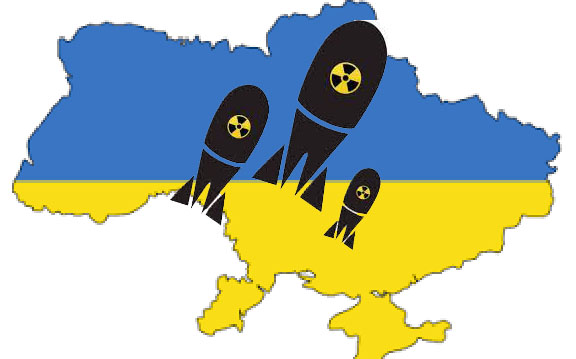
Oleksii Reznikov said Ukraine is ‘inviting arms manufacturers to test the new products here’ https://news.antiwar.com/2022/07/19/ukraine-defense-minister-offers-ukraine-as-a-testing-ground-for-nato-weapons/ by Dave DeCamp
Ukrainian Defense Minister Oleksii Reznikov on Tuesday openly offered Ukraine as a venue to test NATO weapons against Russia in an online conversation with the director of the Atlantic Council’s Eurasia Center.
Reznikov said that Ukraine “is essentially a testing ground” for the advanced weaponry the US and its allies are pouring into the country. “Many weapons are now getting tested in the field in the real conditions of the battle against the Russian Army, which has plenty of modern systems of its own,” he said.
The Ukrainian military chief made the offer in a fresh pitch for more Western arms. “We are interested in testing modern systems in the fight against the enemy and we are inviting arms manufacturers to test the new products here,” he said.
One weapons system that is getting its first use on the battlefield in Ukraine is the Polish Krab artillery system that was provided by Warsaw. “So, I think for our partners in Poland, in the United States, France, or Germany, it’s a good chance to test the equipment. So, give us the tools. We will finish the job and you will have all the new information,” Reznikov said.
The Western response to the war in Ukraine has been a boon for US arms makers, who are making money sending weapons into the war zone, replenishing NATO stockpiles, and selling arms to European countries that have decided to boost military spending.
Kyiv has been asking for more advanced arms than it has been sending, including F-15 and F-16 fighter jets. Ukrainian pilots would need to be trained to fly the US aircraft, and the House version of the National Defense Authorization Act includes $100 million to go towards that training, although the massive spending bill has not yet been finalized.
NATO: The Most Dangerous Military Alliance on the Planet

NATO is determined to stay in business. Its business is war. That meant expanding its war machine far beyond the border of Europe and engaging in ceaseless antagonism toward China and Russia.
NATO sees the future, as detailed in its “NATO 2030: Unified for a New Era,” as a battle for hegemony with rival states, especially China, and calls for the preparation of prolonged global conflict.
the U.S. and NATO seem determined to funnel billions of dollars of weapons into the conflict for months if not years — the more the unthinkable becomes thinkable.
The massive expansion of NATO, not only in Eastern and Central Europe but the Middle East, Latin America, Africa and Asia, presages endless war and a potential nuclear holocaust.
By Chris Hedges, July 16, 2022: Information Clearing House — The North Atlantic Treaty Organization (NATO), and the arms industry that depends on it for billions in profits, has become the most aggressive and dangerous military alliance on the planet. Created in 1949 to thwart Soviet expansion into Eastern and Central Europe, it has evolved into a global war machine in Europe, the Middle East, Latin America, Africa and Asia.
NATO expanded its footprint, violating promises to Moscow, once the Cold War ended, to incorporate 14 countries in Eastern and Central Europe into the alliance. It will soon add Finland and Sweden. It bombed Bosnia, Serbia and Kosovo. It launched wars in Afghanistan, Iraq, Syria and Libya, resulting in close to a million deaths and some 38 million people driven from their homes. It is building a military footprint in Africa and Asia. It invited Australia, Japan, New Zealand and South Korea, the so-called “Asia Pacific Four,” to its recent summit in Madrid at the end of June. It has expanded its reach into the Southern Hemisphere, signing a military training partnership agreement with Colombia, in December 2021. It has backed Turkey, with NATO’s second largest military, which has illegally invaded and occupied parts of Syria as well as Iraq. Turkish-backed militias are engaged in the ethnic cleansing of Syrian Kurds and other inhabitants of north and east Syria. The Turkish military has been accused of war crimes – including multiple airstrikes against a refugee camp and chemical weapons use – in northern Iraq. In exchange for President Recep Tayyip Erdoğan’s permission for Finland and Sweden to join the alliance, the two Nordic countries have agreed to expand their domestic terror laws making it easier to crack down on Kurdish and other activists, lift their restrictions on selling arms to Turkey and deny support to the Kurdish-led movement for democratic autonomy in Syria.
It is quite a record for a military alliance that with the collapse of the Soviet Union was rendered obsolete and should have been dismantled. NATO and the militarists had no intention of embracing the “peace dividend,” fostering a world based on diplomacy, a respect of spheres of influence and mutual cooperation. It was determined to stay in business. Its business is war. That meant expanding its war machine far beyond the border of Europe and engaging in ceaseless antagonism toward China and Russia.
NATO sees the future, as detailed in its “NATO 2030: Unified for a New Era,” as a battle for hegemony with rival states, especially China, and calls for the preparation of prolonged global conflict…………………………………….
NATO has provided more than $8 billion in military aid to Ukraine, while the US has committed nearly $54 billion in military and humanitarian assistance to the country.
China, however, is the main course. Unable to compete economically, the U.S. and NATO have turned to the blunt instrument of war to cripple their global competitor.
The provocation of China replicates the NATO baiting of Russia………………………..
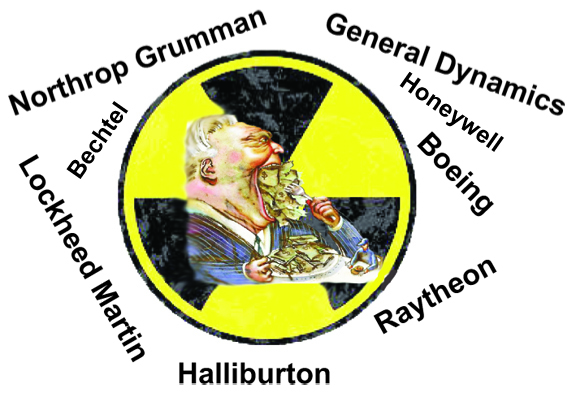
The conflict in Ukraine has been a bonanza for the arms industry, which, given the humiliating withdrawal from Afghanistan, needed a new conflict. Lockheed Martin’s stock prices are up 12 percent. Northrop Grumman is up 20 percent. The war is being used by NATO to increase its military presence in Eastern and Central Europe. The U.S. is building a permanent military base in Poland. The 40,000-strong NATO reaction force is being expanded to 300,000 troops. Billions of dollars in weapons are pouring into the region………………….
The war makers are frighteningly cavalier about the threat of nuclear war……………………………
The Biden administration has formed a Tiger Team of national security officials to run war games on what to do if Russia uses a nuclear weapon, according to The New York Times. The threat of nuclear war is minimized with discussions of “tactical nuclear weapons,” as if less powerful nuclear explosions are somehow more acceptable and won’t lead to the use of bigger bombs.
At no time, including the Cuban missile crisis, have we stood closer to the precipice of nuclear war. ………..
The longer the war in Ukraine continues — and the U.S. and NATO seem determined to funnel billions of dollars of weapons into the conflict for months if not years — the more the unthinkable becomes thinkable. Flirting with Armageddon to profit the arms industry and carry out the futile quest to reclaim U.S. global hegemony is at best extremely reckless and at worst genocidal. http://www.informationclearinghouse.info/57120.htm
Russia says Ukrainian drone struck nuclear plant, but caused no damage.
https://www.reuters.com/world/europe/russian-occupation-official-says-ukrainian-drone-struck-nuclear-plant-caused-no-2022-07-20/ July 20 (Reuters) – Russia on Wednesday accused Ukraine of firing two drones at a nuclear power station in the partially occupied Ukrainian region of Zaporizhzhia on Monday but said the reactor was undamaged.
Reuters could not independently verify the report and Ukrainian officials had no immediate comment. The facility is the largest nuclear plant in Europe.
“Ukrainian nationalist formations used two kamikaze drones to attack facilities at the Zaporozhzhia nuclear power plant – one drone was destroyed on approach to the plant,” Russia’s defence ministry said in a statement.
“It was only by sheer luck that this did not lead to damage to the plant’s equipment and a man-made disaster.”
Ukraine has previously accused Moscow of basing troops and storing military equipment on the grounds of the power station.
Earlier in the day Vladimir Rogov, a member of the Russian-installed regional administration, wrote on Telegram that three Ukrainian “kamikaze drones” had struck the plant.
Ukraine’s state nuclear company Energoatom, whose employees still run the plant despite the area being under Russian control, issued a statement later accusing Russian forces of demanding access to the machine halls of three reactors at the plant in order to store tanks and equipment there.
Energoatom said, without providing evidence, that Russian troops were doing so for fear of “presents” from Ukraine’s armed forces, an apparent reference to targeted strikes. The company did not comment on the alleged drone impact.
Reporting by Reuters Editing by Peter Graff, Mark Heinrich and Jonathan Oatis
Global action urged to block AUKUS plan on transfer of nuclear materials

The submarine purchase, if realized, “will be the first time” after the Nuclear Non-Proliferation Treaty went into force in 1970 that nuclear weapon states transfer tons of weapons-grade nuclear materials to a non-nuclear-weapon state
The plan is high on the agenda of the 10th Review Conference of the Parties to the Treaty on the Non-Proliferation of Nuclear Weapons, which is scheduled to open in New York on Aug 1
http://global.chinadaily.com.cn/a/202207/21/WS62d898fda310fd2b29e6d83a.html By ZHANG YUNBI | CHINA DAILY | Updated: 2022-07-21,
A report written by leading Chinese nuclear security researchers urged the global community to use an upcoming global conference on nuclear nonproliferation to deter the collaboration of the United States and the United Kingdom to transfer weapons-grade nuclear materials through nuclear-powered submarines to Australia.
“The weapons-grade nuclear materials to be transferred to Australia by the two countries would be sufficient to build as many as 64 to 80 nuclear weapons,” said Zhao Xuelin, a leading engineer at the China Institute of Nuclear Industry Strategy.
Such a move would be in “serious violation” of the objectives and purpose of the nonproliferation treaty and would cause enormous harm, he said.
“Washington has been busy building up blocs and small circles like AUKUS to shore up its overwhelming advantage in military areas and secure its hegemony in the Asia-Pacific and the whole world,” said Liu Chong, director of the Institute of International Security of the China Institutes of Contemporary International Relations.
“Such moves have run counter to many countries’ need to seek common security. The trilateral bloc’s members seek their own security at the cost of the other countries, sabotaging global security,” he added.
Zhang Yan, president of the China Arms Control and Disarmament Association, noted that the AUKUS partnership is a new political and military alliance that serves the US’ “Indo-Pacific Strategy”, which aims to provoke regional confrontation and step up a geopolitical zero-sum game.
The submarine purchase, if realized, “will be the first time” after the Nuclear Non-Proliferation Treaty went into force in 1970 that nuclear weapon states transfer tons of weapons-grade nuclear materials to a non-nuclear-weapon state, Zhang said.
“The US, the UK and Australia should seriously respond to the concerns of the international community and earnestly fulfill their obligations under international law,” he added.
Pan Qilong, chairman of the China Institute of Nuclear Industry Strategy, said the AUKUS nuclear-powered submarine collaboration sets a dangerous example of illegal transfer of weapons-grade nuclear materials.
Such a “blatant act of nuclear proliferation” has triggered widespread concern and criticism from the international community, he added
The US, Britain and Australia should “stop taking double standards” and halt their collaboration on nuclear-powered submarines, said the research report issued on Wednesday in Beijing.
Two leading Chinese nuclear research agencies-the China Arms Control and Disarmament Association and the China Institute of Nuclear Industry Strategy-issued the report.
“The international community should take action to urge the AUKUS countries to revoke their wrong decision, and jointly safeguard the integrity, authority and effectiveness of the international nuclear nonproliferation regime,” the report said.
The research report is the first of its kind made by Chinese think tanks focused on the collaboration of the three nations, and it offers abundant evidence and data to prove how the AUKUS countries-Australia, the UK and the US-affect the international nuclear nonproliferation system and stir up the arms race, Foreign Ministry spokesman Wang Wenbin said on Wednesday.
The report is the latest proof that the international community’s concerns on AUKUS collaboration “are well-founded by facts”, he added.
Washington, London and Canberra built the AUKUS trilateral security partnership last year. That prompted anger within and outside the Asia-Pacific region as they announced a plan to allow Australia to purchase nuclear-powered submarines from the UK.
The plan is high on the agenda of the 10th Review Conference of the Parties to the Treaty on the Non-Proliferation of Nuclear Weapons, which is scheduled to open in New York on Aug 1.
The conference, a top-level global meeting that aims to prevent a nuclear arms race and checks on the status quo of nuclear materials around the world, has been delayed for two years due to the COVID-19 pandemic.
Russia to Scrap World’s Largest Nuclear Submarine
https://www.themoscowtimes.com/2022/07/20/russia-to-scrap-worlds-largest-nuclear-sub-reports-a78349, 20 July 22, Russia has decommissioned the world’s largest nuclear ballistic missile submarine, state media reported Wednesday.
The Dmitry Donskoy, a Typhoon-class submarine that served in the Russian Navy’s Northern Fleet since 1980, stood at 175 meters in length. Its status as the world’s largest submarine will be taken by the 184-meter Oscar II-class Belgorod nuclear submarine, which was commissioned earlier in July.
“The submarine Dmitry Donskoy has been removed from the fleet and is to be scrapped,” the state-run RIA Novosti news agency quoted an unnamed Russian defense industry source as saying.
The Dmitry Donskoy was last spotted accompanying the Belgorod in the waters of northwestern Russia’s White Sea. . Analysts speculated at the time that the Dmitry Donskoy was accompanying the Belgorod for sea trials ahead of the latter vessel’s entrance into service.
In Ukraine, a proxy war on the planet
As the Ukraine crisis causes global havoc, US officials won’t negotiate with Russia to end the fighting — and are even willing to “countenance” mounting hunger as a result.
Aaron Maté, Jul 17, 22
In 2015, one year after a US-backed coup ushered in a US-friendly, far-right-dominated government in Kiev, University of Chicago professor John Mearsheimer issued a stark warning. “The West is leading Ukraine down the primrose path,” he said. “And the end result is that Ukraine is going to get wrecked.”
Mearsheimer’s cause for concern was what he identified as a US-led campaign to convert Ukraine into a NATO proxy on Russia’s border. The events since have proved him to be both tragically prescient, and understated.
In using Ukraine to “fight Russia over there”, as Adam Schiff put it in January 2020, the US has not only sacrificed countless Ukrainian lives. Four months into Russia’s invasion, the Biden administration is signaling its willingness to sacrifice the rest of the planet, particularly the most vulnerable areas.
In an article headlined “Ukraine War Pushes Millions of the World’s Poorest Toward Starvation,” the Wall Street Journal summarizes the impact of the Ukraine war on global hunger:………………………..
By invading Ukraine rather than exhausting all diplomatic solutions, Russia bears obvious responsibility for the crisis. Ukraine’s grain exports, which feed multiple countries, have plummeted. Russia has denied blocking Ukrainian grain, instead faulting Kiev’s extensive mining of its Black Sea ports. Ukraine has refused to de-mine those ports on self-defense grounds, claiming that doing so could invite further Russian incursions. Turkey, which has been brokering talks between the two sides, has just announced a pending deal to break the impasse.
But even if the Turkey-backed deal is implemented, a major cause of the food crisis will remain.
By invading Ukraine rather than exhausting all diplomatic solutions, Russia bears obvious responsibility for the crisis. Ukraine’s grain exports, which feed multiple countries, have plummeted. Russia has denied blocking Ukrainian grain, instead faulting Kiev’s extensive mining of its Black Sea ports. Ukraine has refused to de-mine those ports on self-defense grounds, claiming that doing so could invite further Russian incursions. Turkey, which has been brokering talks between the two sides, has just announced a pending deal to break the impasse.
But even if the Turkey-backed deal is implemented, a major cause of the food crisis will remain. The US-led sanctions regime against Russia has blocked international payments for Russian goods and necessary export licenses, including food shipments……………………
Rather than seek a diplomatic solution in Ukraine that could end the war and its worldwide deprivations, the US has shunned talks with Russia and made clear that it is even willing to tolerate global starvation………….
Left unquestioned is why a group of officials in Washington have arrogated themselves the right to “countenance” a global recession and mounting hunger – including pushing millions toward famine — on behalf of the rest of the planet.
Because the Biden administration is willing to countenance hunger, Africa is now being pushed into what a recent New York Times article describes as a major “dilemma.” African countries who seek to accept Russian grain imports, the Times notes, “potentially face a hard choice between, on one hand, benefiting from possible war crimes and displeasing a powerful Western ally, and on the other, refusing cheap food at a time when wheat prices are soaring and hundreds of thousands of people are starving.”
Under policies set by Washington, it is apparently a “dilemma” for Africa to have to choose between feeding hundreds of thousands of people or risk “displeasing” its “powerful Western ally,” — which would presumably prefer that they starve. https://mate.substack.com/p/in-ukraine-a-proxy-war-on-the-planet
Atomic Lies: New York’s bizarre Nuclear Preparedness PSA
http://www.envirosagainstwar.org/2022/07/16/atomic-lies-new-yorks-bizarre-nuclear-preparedness-psa/
July 16th, 2022 – by Gar Smith / Environmentalists Against War, ) — On July 11, New York City’s Emergency Management office released a Public Service Announcement that pretended to share important advice on steps New Yorkers could take to survive a nuclear attack. Here’s the PSA:
Re that “Don’t ask me how or why” PSA:
This updated version of the government’s misleading “duck-and-cover” nuclear war survival campaign from the 1950s begins by instructing New Yorkers to get away from the windows and huddle together “in the middle” of their building.
But, unlike a single-family suburban home, a typical New York high-rise apartment building can house thousands of individuals—so the “middle of the building” would get crowded pretty quickly.
While the PSA’s advice might help to survive a guided missile strike, it would be useless for a nuclear detonation. (All the more reason why there should be a nation-wide rebroadcast of ABC’s 1983 nuclear-strike enactment, “The Day After.”)
What Nuclear Scientists Say Would Happen
The New York PSA was so misleading that it prompted Steven Starr (a senior scientists with Physicians for Social Responsibility) to repost a 2015 research paper he co-authored with two other scientists. The article, which appeared in The Bulletin of the Atomic Scientists, addressed “the consequences of the detonation of a single [800 kiloton] warhead over midtown Manhattan.” Here are some sobering details:
“Within a few tenths of millionths of a second after detonation, the center of the warhead would reach a temperature of roughly 200 million degrees Fahrenheit (about 100 million degrees Celsius), or about four to five times the temperature at the center of the sun.”“
[T]he enormous heat and light from the fireball would almost instantly ignite fires over a total area of about 100 square miles.”
“The mass fire, or firestorm, would quickly increase in intensity, heating enormous volumes of air that would rise at speeds approaching 300 miles per hour.”
“The fireball would vaporize the structures directly below it and produce an immense blast wave and high-speed winds, crushing even heavily built concrete structures within a couple miles of ground zero. The blast would tear apart high-rise buildings and expose their contents to the solar temperatures; it would spread fires by exposing ignitable surfaces, releasing flammable materials, and dispersing burning materials.”
- “Two miles from ground zero, the Metropolitan Museum of Art, with all its magnificent historical treasures, would be obliterated. Two and half miles from ground zero, in Lower Manhattan, the East Village, and Stuyvesant Town, the fireball would appear 2,700 times brighter than a desert sun at noon.”
- ““Within tens of minutes, everything within approximately five to seven miles of Midtown Manhattan would be engulfed by a gigantic firestorm. The fire zone would cover a total area of 90 to 152 square miles. The firestorm would rage for three to six hours. Air temperatures in the fire zone would likely average 400 to 500 degrees Fahrenheit.”
Why Are They Telling Us To Prep For A Nuclear Attack??
Ellsberg on Nuclear Abolition or Annihilation
The following two short videos were released on July 11 by Defuse Nuclear War with the following introduction: Directed by Oscar-nominee Judith Ehrlich, this series explores the dangers of nuclear weapons and the politics that drive their existence. Hear firsthand accounts from Pentagon Papers whistleblower Daniel Ellsberg about his time as a nuclear war planner for the US military and learn hidden truth about realities of nuclear weapons.
ICBMs: Hair-Trigger Annihilation
Biden proved that Israel is a US proxy in the Middle East
Biden went on to stress that the US needs Israel to stand beside it in its fight in the Middle East, which America is returning to in order to prevent the Russian and Chinese influence.
Biden’s words have proven that Israel is an American proxy in the Middle East.
Motasem A Dalloul, July 15, 2022
American President Joe Biden landed in Israel on Wednesday and started his four-day tour of the Middle East, the first since he took office. Moments after landing in Tel Aviv, he delivered a speech which outlined his intentions during this controversial tour.
Biden has visited Israel several times before becoming president, with his first trip being in 1973 when he was a senator. He has repeatedly expressed his absolute support for Israel, regardless of its daily abuses of Palestinians and continuous violations against their legitimate rights.
In his speech on Wednesday, he repeated his support for the occupation state, highlighting that he is a Zionist Christian; emphasising that supporters of Israel don’t need to be Jews.
He also told the journalist: “As president, I’m proud to say that our relationship with the State of Israel is deeper and stronger, in my view, than it’s ever been. And with this visit, we are strengthening our connections even further. We’ve reaffirmed the unshakable commitment of the United States to Israel’s security, including partnering with Israel on the most cutting-edge defence systems in the world.”
Biden stressed that “generation after generation” the “connection grows,” adding: “We invest in each other. We dream together. We’re part of what has always been the objective we both have.” Thus highlighting that the two states have been working to achieve shared objectives and address global challenges.
The US president failed, once again, to mention Israeli violations and aggression against Palestinians and other countries in the region. “We’ll continue to advance Israel’s integration into the region; expand emerging forums and engagement,” he said.
He mentioned the two-state solution, which remains, in his view, “the best way to ensure the future of equal measure of freedom, prosperity and democracy for Israelis and Palestinians alike.” This, while Israeli occupation forces confiscated large swathes of Palestinian land slated for the potential Palestinian state just a few miles away.
Biden stated that Israel is united with the US, stressing that they have “shared values” and a “shared vision”. While making efforts to extend the US’ domination over the world, Biden wished America and Israel could “continue to grow and prosper together for the benefit of the entire world.”
The following day, Biden met with Israel’s caretaker Prime Minister Yair Lapid in Jerusalem, where Israel has been working to evict Palestinians and force them from their homes. There they signed “The Jerusalem US-Israel Strategic Partnership Joint Declaration” in which the US pledged to protect Israel and meet its security demands. “The United States and Israel reaffirm the unbreakable bonds between our two countries and the enduring commitment of the United States to Israel’s security,” the declaration stipulated.
Ignoring Israel’s abuses of human rights and violations of international law, it adds that the US and Israel share “unwavering commitment to democracy and the rule of law” in order to “repair the world.”
The declaration reiterated the US “commitment to Israel’s security, and especially to the maintenance of its qualitative military edge.” As part of the declaration, the US reiterated “its steadfast commitment to preserve and strengthen Israel’s capability to deter its enemies and to defend itself by itself against any threat or combination of threats.”
Touching on the alleged Iranian threat, it said the US is committed to “never allow Iran to acquire a nuclear weapon, and that it is prepared to use all elements of its national power to ensure that outcome.” The declaration also stipulated that the US will continue to help Israel in its attack on the non-violent grass roots Palestinian Boycott, Divestment and Sanctions (BDS) campaign, calling it an act of “self-defence” to do so.
“The United States and Israel affirm that they will continue to work together to combat all efforts to boycott or de-legitimise Israel, to deny its right to self-defence,” the declaration stated, stressing that “they firmly reject the BDS campaign.”
Biden went on to stress that the US needs Israel to stand beside it in its fight in the Middle East, which America is returning to in order to prevent the Russian and Chinese influence.
As part of this pledge, the US is working to integrate the occupation state in the Arab world, Biden said, adding that the US will not allow any of the region’s countries to have nuclear weapons or arms more qualitative than those in Israel’s possession in order to give Tel Aviv the military edge.
Biden’s words have proven that Israel is an American proxy in the Middle East.
BOEING’s executives rake $billions from tax-payers to spread weapons around the world

Taxpayers within the U.S. gave Boeing $21.33 billion through government contracts in 2020 alone.
While companies like Boeing continue to rake in billions from producing and selling weapons, there is a pathway for more communities to organize, to resist public dollars lining the pockets of war profiteers instead of going toward the public good.
”……………………………………………………………………Bush-Era Legislation Paves the Way for Corporate Exploitation,
Making commercial airplanes, what Boeing is most commonly known for, accounts for less than 30 percent of the company’s annual revenue. Boeing is primarily in the business of profiting from war and militarism, not airplanes. As the world’s third-largest profiter of weapons sales, the company rakes in billions in profit from arming the war on Yemen, Israel’s occupation of Palestine, and India’s ethnic cleansing of Kashmir.
Fifty-five percent of Boeing’s profits come from weapons sales, amounting to more than $32 billion in 2020, to both the U.S. government and 21 countries around the world. Taxpayers within the U.S. gave Boeing $21.33 billion through government contracts in 2020 alone. Chicago’s tax breaks for Boeing happened in the context of the company already reaping huge profit from public resources via U.S. government spending on things like military weapons, border surveillance and the creation of missile systems.
Boeing is in the business of selling weapons to governments that are used to wage war and enact state violence. In this case, a challenge to corporate tax incentives became a challenge to the whole business model of a war profiteer and a challenge to the idea that the public funds can or should subsidize militarism and profit.
Twenty years ago, Boeing’s move to Chicago was on the early edge of what has become a pattern of corporations relocating to places where they stand to benefit from tax incentives and mega-deals. Local governments compete to offer the best deals for the companies, which are often the worst deals for the public in terms of dollar-for-dollar outcomes.
This pattern was then codified and accelerated by President George W. Bush signing the “Job Creation & Worker Assistance Act” into law just months later in March 2002. Making way for corporations to pocket $300 billion over 10 years, this piece of legislation was a corporate tax break branded as a way to create jobs for everyday people. This narrative about corporations paying fewer taxes is rooted in the free market idea that relieving the “burden” of things like regulation and taxation allows corporations and the market to create economic growth, jobs and prosperity. However, what we see to actually be true is that corporations are driven by profit, something that is maximized via exploitation and extraction from our natural environment or, in this case, from public funds.
Then known as a Seattle-based company that makes airplanes, Boeing’s move in late 2001 exemplified a desire to separate their executives from their weapons manufacturing hubs and establish proximity to more global business leaders in a “world-class” city. In exchange for housing its headquarters in a downtown skyscraper and promising to maintain only 500 jobs to the city, Boeing would receive annual tax reimbursement checks from the City of Chicago, in addition to further tax breaks from the state. Even with an impressively low bar, Boeing repeatedly fell short and is now leaving the city after having taken in tens of millions of public dollars without consequence for its failure to deliver for Chicagoans or for the harm the company’s weapons have caused around the world.
Corporate Tax Incentives Benefit Executives, Not Residents or Workers
Corporations lured to cities and states by tax incentives consistently under-deliver and often are not held to whether they hold up their end of the bargain when it comes to providing jobs and economic growth in exchange for tax cuts. In 2017, then-Wisconsin Gov. Scott Walker brokered what was one of the largest corporate tax incentive deals ever approved. Electronics company Foxconn would receive more than $4 billion in state and local tax incentives on the premise of building a massive new factory that was to create 13,000 jobs.
Two years after the original deal was reached, plans for building a massive factory had been scaled back, and only 178 jobs were created. By 2021, the proposed factory and corresponding deal that former President Donald Trump lauded as being the “eighth wonder of the world” had shrunk dramatically in scope, and the contract was renegotiated after Governor Walker left office. Foxconn never delivered on visions of thousands of jobs created by a huge factory campus despite benefiting from more than a billion public dollars in forgone investment.
Despite the public narrative pushed by right-wingers, centrist Democrats and corporate elites — a narrative claiming that relieving taxes on corporations creates economic growth — those who stand to benefit most from these types of deals are high-level corporate executives, not workers or local residents. A recent study analyzing the effects of two specific corporate tax breaks showed that for every dollar a company benefits from certain tax breaks, the pay of the company’s top five executives increased by 17 percent to 25 percent.
Evidence does not support the idea that tax breaks actually result in higher wages or better jobs for workers. And a report published by the Action Center on Race and the Economy showed that in the case of Boeing specifically, “The creation of additional jobs and income as spending from the Boeing headquarters rippled through the economy was not significant.” This is despite the city and state giving $63 million in tax incentives to bring 500 jobs, which equate to about $126,000 per job per year financed by the city, most of which already existed before the move.
Imagine those funds invested in the public sector, in high-paying union jobs, dedicated to the programs and services that working communities are constantly seeking such as health care, education and needed social programs — we could create real jobs programs instead of lining the pockets of executives such as Boeing CEO David Calhoun, who recently bought a $2.7 million condominium in downtown Chicago………………………………….
Let’s Divert Resources From Militarized Violence to Community Investment
Not only does Boeing take resources away from other needed public goods and services by pulling in tax breaks and government contracts, it also profits from the production and sale of deadly weapons used to wage militarized violence around the world. Boeing earned over $62.29 billion in revenue in 2021.
Its fighter jets and helicopters were used in an attack that killed 256 Palestinians in May of last year. In the Saudi-led war on Yemen, the single largest weapon killing civilians has been guided missiles, of which Boeing had sold Saudi Arabia more than 6,000 guided bombs by 2019. In the 2016 bombing of a market in the Yemeni village of Mastaba, which killed 97 people (including 25 children), destroyed infrastructure and left massive destruction, Boeing weapons guidance kits were used to ensure the missile hit its target.
Boeing doesn’t limit its use of militarized technologies to violence abroad, however. Boeing is heavily involved in the lucrative business of militarizing the U.S.-Mexico border……………………………………..
While companies like Boeing continue to rake in billions from producing and selling weapons, there is a pathway for more communities to organize, to resist public dollars lining the pockets of war profiteers instead of going toward the public good. While Boeing leaving Chicago and taking its headquarters to Virginia may not be a standalone win, blocking the company from its last paycheck from the city and the precedent it sets certainly is. As local groups calling out Boeing emerge in more and more cities across the country, from the Washington, D.C., area to Seattle to St. Louis the company should expect and deserves heat wherever it goes.
Everyday people, like the young Black and Brown organizers resisting Boeing in Chicago, have the power to make it no longer politically acceptable to funnel public dollars toward the profits of a weapons-maker in any city. Wielding that power to make an impact requires us to be organized. It requires us to grow social movements that connect the dots between issues like militarized violence and corporate greed in order to paint a fuller picture of both what is wrong in the world and what is possible………………… https://truthout.org/articles/lets-replicate-chicagos-antiwar-organizing-victory-against-boeing/?eType=EmailBlastContent&eId=a0819f3e-09e9-4774-9b4a-fd30ff368bb3
1 This Month





PLEASE OPPOSE HR 8255 AND S.3639 – bills would accelerate satellite deployment, with no environmental review or safeguards – https://ncstd5li.quorum.us/campaign/169331/
To see nuclear-related stories in greater depth and intensity – go to https://nuclearinformation.wordpress.com
-
Archives
- October 2026 (29)
- September 2026 (339)
- August 2026 (330)
- July 2026 (355)
- June 2026 (287)
- May 2026 (306)
- April 2026 (356)
- March 2026 (251)
- February 2026 (267)
- January 2026 (308)
- December 2025 (358)
- November 2025 (359)
-
Categories
- 1
- 1 NUCLEAR ISSUES
- business and costs
- climate change
- culture and arts
- ENERGY
- environment
- health
- history
- indigenous issues
- Legal
- marketing of nuclear
- media
- opposition to nuclear
- PERSONAL STORIES
- politics
- politics international
- Religion and ethics
- safety
- secrets,lies and civil liberties
- spinbuster
- technology
- Uranium
- wastes
- weapons and war
- Women
- 2 WORLD
- ACTION
- AFRICA
- Atrocities
- AUSTRALIA
- Christina's notes
- Christina's themes
- culture and arts
- Events
- Fuk 2022
- Fuk 2023
- Fukushima 2017
- Fukushima 2018
- fukushima 2019
- Fukushima 2020
- Fukushima 2021
- general
- global warming
- Humour (God we need it)
- Nuclear
- RARE EARTHS
- Reference
- resources – print
- Resources -audiovicual
- Weekly Newsletter
- World
- World Nuclear
- YouTube
-
RSS
Entries RSS
Comments RSS

