The deceitfulness of the nuclear weapons industry -as it plays the jobs jobs jobs card

World-Ending Maneuvers? Inside the Nuclear-Weapons Lobby Today, TomDispatch, By Hekmat Aboukhater and William D. Hartung August 7, 2024
“……………………………………………………………………………Playing the Jobs Card
The argument of last resort for the Sentinel and similar questionable weapons programs is that they create well-paying jobs in key states and districts. Northrop Grumman has played the jobs card effectively with respect to the Sentinel, claiming it will create 10,000 jobs in its development phase alone, including about 2,250 in the state of Utah, where the hub for the program is located.
As a start, however, those 10,000 jobs will help a miniscule fraction of the 167-million-member American workforce. Moreover, Northrop Grumman claims facilities tied to the program will be set up in 32 states. If 2,250 of those jobs end up in Utah, that leaves 7,750 more jobs spread across 31 states — an average of about 250 jobs per state, essentially a rounding error compared to total employment in most localities.
Nor has Northrop Grumman provided any documentation for the number of jobs the Sentinel program will allegedly create. Journalist Taylor Barnes of ReThink Media was rebuffed in her efforts to get a copy of the agreement between Northrop Grumman and the state of Utah that reportedly indicates how many Sentinel-related jobs the company needs to create to get the full subsidy offered to put its primary facility in Utah.
A statement by a Utah official justifying that lack of transparency suggested Northrop Grumman was operating in “a competitive defense industry” and that revealing details of the agreement might somehow harm the company. But any modest financial harm Northrop Grumman might suffer, were those details revealed, pales in comparison with the immense risks and costs of the Sentinel program itself.
There are two major flaws in the jobs argument with respect to the future production of nuclear weapons. First, military spending should be based on security considerations, not pork-barrel politics. Second, as Heidi Peltier of the Costs of War Project has effectively demonstrated, virtually any other expenditure of funds currently devoted to Pentagon programs would create between 9% and 250% more jobs than weapons spending does. If Congress were instead to put such funds into addressing climate change, dealing with future disease epidemics, poverty, or homelessness — all serious threats to public safety — the American economy would gain hundreds of thousands of jobs. Choosing to fund those ICBMs instead is, in fact, a job killer, not a job creator……………………………… https://tomdispatch.com/world-ending-maneuvers/
The United States is launching a new nuclear arms race: to catch up and outsmart Russia and China

August 6th, 2024
Подробнее: https://eadaily.com/en/news/2024/08/06/the-united-states-is-launching-a-new-nuclear-arms-race-to-catch-up-and-outsmart-russia-and-china
Under the slogan of “nuclear deterrence”, the United States began investing in nuclear weapons. Washington plans to modernize and adopt new systems in order to catch up with Russia and China and be able to confront two adversaries at once.
“As a result of investments made under the Obama, Trump and Biden administrations, NNSA was able to deliver more than 200 upgraded nuclear weapons to the Department of Defense last year. This is our largest delivery in one year since the end of the Cold War,” Jill Hruby, administrator of the National Nuclear Safety Administration (NNSA), said at the breakfast of the National Institute for Deterrence Studies “Peace through Strength.“
She noted that the situation with US nuclear weapons has undergone significant changes compared to what it was just a few years ago. The representative of the NNSA explained the reasons for the sharp turn in US policy by external threats.▼ читать продолжение новости ▼
“This is a unique, unprecedented time in the field of global nuclear security. We face growing threats of nuclear weapons from Russia and an expanding nuclear arsenal in China. Russia has deployed nuclear weapons in Belarus, strengthened its partnership with China, and developed new military partnerships with North Korea and Iran.… It is also exploring the possibility of using nuclear weapons in space, which poses an asymmetric threat to the West. In addition to ramping up the pace of nuclear weapons production, China has demonstrated an amazing ability to improve its delivery systems, including deploying hypersonic missiles faster than the United States. If this direction does not change, China will become an equal nuclear adversary with significant economic power,” said Jill Hurby.
In her opinion, the current situation represents a fundamentally different “nuclear” landscape than the last 80 years.
“In general, this is a less predictable and more dangerous time, and our thinking about deterrence needs to be adjusted,” the representative of the department explained. She added that the situation is complicated by the fact that nuclear power is on the verge of revival to combat climate change.
“If this renaissance happens, there will be more nuclear materials and know-how in the world than ever before. In addition, advanced nuclear reactor technology is likely to use higher-grade low-enriched uranium instead of 5 percent low-enriched uranium. Reactor types and reactor fuels are likely to evolve. Despite the fact that this renaissance will bring the necessary options for an environmentally friendly electric power base, it will challenge the current nuclear non—proliferation regime,” the NNSA also notes the potential of breakthrough technologies such as artificial intelligence, which can simplify and accelerate the design of nuclear devices.
But for now, the United States is focusing on confrontation with Russia and China.
“Russia and China are ready to change and expand their nuclear arsenals. But so will we, if we continue to invest and support the program. This means that although we are facing a deteriorating global security situation, we do not need to panic. There is still a lot of work to do, but we also need to prepare well, take the time and think intelligently about the future,” Jill Hurby continued.
According to her, over the past few years, the United States has continued to implement five programs to modernize the weapons of the nuclear triad (strategic aviation, intercontinental ballistic missiles and nuclear submarines).
“Last year we added two more types of weapons to the existing program. These new systems directly respond to emerging deterrence needs and expand the nuclear capabilities available to the president,” the NNSA representative said that we are talking about the B61—13 nuclear bomb and the SLCM−N sea-based cruise missile.
“We now have seven systems that should be developed and put into production by the mid-2030s. This program is not only a major modernization of all three components of the nuclear triad, but also adds new deterrence capabilities that do not currently exist,” said Jill Hurby.
According to her, for 2025, NNSA has applied for the allocation of $ 25 billion from the state budget.
Since the end of the Cold War, a significant part of the scientific and industrial infrastructure in the United States has fallen into disrepair and needs to be restored and modernized, the NNSA representative noted.
“Some of the buildings that we currently use for key processes belong to the Manhattan project or use manufacturing technologies that are less safe and efficient than modern methods. Therefore, in our budget request over the past few years, approximately equal amounts have been spent on inventory modernization and infrastructure modernization,” said Jill Hurby.
The main priority, she added, is to restore the ability to produce new plutonium cores.:
“NNSA is implementing a production strategy at two sites at Los Alamos National Laboratory in New Mexico and at the Savannah River site in South Carolina. When both sites are fully operational, we expect that we will have the necessary capacity: Los Alamos will produce 30 cores per year, and Savannah River will produce at least 50.”
The construction of a uranium processing plant in Tennessee is also considered a priority in the United States. It is planned to complete its construction in 2027, and bring it to full capacity by 2031.
This year, the United States is completing work on the creation of a scheme that will identify high-priority facilities needed for science, production, safety and security until 2050.
“Our thinking about deterrence needs to be changed in order to create an effective deterrence of two equal opponents. Although we all recognize that Russia and China are innovating in their means of deterrence, we have not yet fundamentally changed our own thinking. But we know that we need to outsmart our opponents. It’s time to start this work seriously, not in a panic,” added Jill Hurby.
UK’s Astute nuclear submarines stuck in port waiting for maintenance
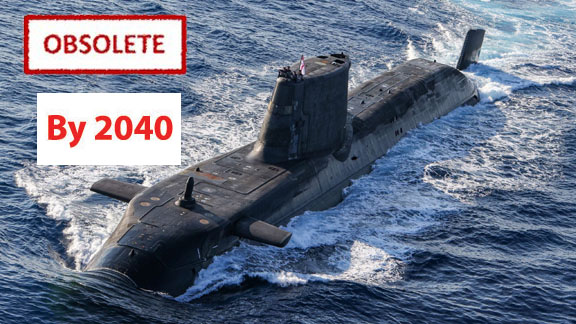
No Astute-class boat — the Royal Navy’s largest and most powerful — has completed an operational voyage this year
Britain’s “hunter-killer” submarines have been stuck in port for up
to two years because of a shortage of maintenance docks. The Astute-class
submarines, the newest in the Royal Navy’s fleet, were designed to hunt
Russian submarines and torpedo targets from up to 14 miles away. They are
the largest and most powerful attack submarines the navy has operated.
However, none of the class has completed an operational voyage so far this
year, while one has been stuck in Faslane — HMNB Clyde — for two years,
The Sun reported.
Times 5th Aug 2024
World-Ending Maneuvers? Inside the Nuclear-Weapons Lobby Today

A prime example of the power of the nuclear weapons lobby is the Senate ICBM Coalition. That group is composed of senators from four states — Montana, North Dakota, Utah, and Wyoming — that either house major ICBM bases or host significant work on the Sentinel. Perhaps you won’t be surprised to learn that the members of that coalition have received more than $3 million in donations from firms involved in the production of the Sentinel over the past four election cycles. Nor were they alone. ICBM contractors made contributions to 92 of the 100 senators and 413 of the 435 house members in 2024. Some received hundreds of thousands of dollars.
TomDispatch, By Hekmat Aboukhater and William D. Hartung August 7, 2024
The Pentagon is in the midst of a massive $2 trillion multiyear plan to build a new generation of nuclear-armed missiles, bombers, and submarines. A large chunk of that funding will go to major nuclear weapons contractors like Bechtel, General Dynamics, Honeywell, Lockheed Martin, and Northrop Grumman. And they will do everything in their power to keep that money flowing.

This January, a review of the Sentinel intercontinental ballistic missile (ICBM) program under the Nunn-McCurdy Act — a congressional provision designed to rein in cost overruns of Pentagon weapons programs — found that the missile, the crown jewel of the nuclear overhaul plan involving 450 missile-holding silos spread across five states, is already 81% over its original budget. It is now estimated that it will cost a total of nearly $141 billion to develop and purchase, a figure only likely to rise in the future.
That Pentagon review had the option of canceling the Sentinel program because of such a staggering cost increase. Instead, it doubled down on the program, asserting that it would be an essential element of any future nuclear deterrent and must continue, even if the funding for other defense programs has to be cut to make way for it. In justifying the decision, Deputy Defense Secretary William LaPlante stated: “We are fully aware of the costs, but we are also aware of the risks of not modernizing our nuclear forces and not addressing the very real threats we confront.”
Cost is indeed one significant issue, but the biggest risk to the rest of us comes from continuing to build and deploy ICBMs, rather than delaying or shelving the Sentinel program. As former Secretary of Defense William Perry has noted, ICBMs are “some of the most dangerous weapons in the world” because they “could trigger an accidental nuclear war.” As he explained, a president warned (accurately or not) of an enemy nuclear attack would have only minutes to decide whether to launch such ICBMs and conceivably devastate the planet.
Possessing such potentially world-ending systems only increases the possibility of an unintended nuclear conflict prompted by a false alarm. And as Norman Solomon and the late Daniel Ellsberg once wrote, “If reducing the dangers of nuclear war is a goal, the top priority should be to remove the triad’s ground-based leg — not modernize it.”
This is no small matter. It is believed that a large-scale nuclear exchange could result in more than five billion of us humans dying, once the possibility of a “nuclear winter” and the potential destruction of agriculture across much of the planet is taken into account, according to an analysis by International Physicians for the Prevention of Nuclear War.
In short, the need to reduce nuclear risks by eliminating such ICBMs could not be more urgent. The Bulletin of Atomic Scientists’ “Doomsday Clock” — an estimate of how close the world may be at any moment to a nuclear conflict — is now set at 90 seconds to midnight, the closest it’s been since that tracker was first created in 1947. And just this June, Russian President Vladimir Putin signed a mutual defense agreement with North Korean leader Kim Jong-un, a potential first step toward a drive by Moscow to help Pyongyang expand its nuclear arsenal further. And of the nine countries now possessing nuclear weapons, it’s hardly the only one other than the U.S. in an expansionist phase.
Considering the rising tide of nuclear escalation globally, is it really the right time for this country to invest a fortune of taxpayer dollars in a new generation of devastating “use them or lose them” weapons? The American public has long said no, according to a 2020 poll by the University of Maryland’s Program for Public Consultation, which showed that 61% of us actually support phasing out ICBM systems like the Sentinel.
The Pentagon’s misguided plan to keep such ICBMs in the U.S arsenal for decades to come is only reinforced by the political power of members of Congress and the companies that benefit financially from the current buildup.
Who Decides? The Role of the ICBM Lobby

A prime example of the power of the nuclear weapons lobby is the Senate ICBM Coalition. That group is composed of senators from four states — Montana, North Dakota, Utah, and Wyoming — that either house major ICBM bases or host significant work on the Sentinel. Perhaps you won’t be surprised to learn that the members of that coalition have received more than $3 million in donations from firms involved in the production of the Sentinel over the past four election cycles. Nor were they alone. ICBM contractors made contributions to 92 of the 100 senators and 413 of the 435 house members in 2024. Some received hundreds of thousands of dollars.
The nuclear lobby paid special attention to members of the armed services committees in the House and Senate. For example, Mike Turner, a House Republican from Ohio, has been a relentless advocate of “modernizing” the nuclear arsenal. In a June 2024 talk at the Center for Strategic and International Studies, which itself has received well over a million dollars in funding from nuclear weapons producers, he called for systematically upgrading the nuclear arsenal for decades to come, while chiding any of his congressional colleagues not taking such an aggressive stance on the subject.
Although Turner vigorously touts the need for a costly nuclear buildup, he fails to mention that, with $305,000 in donations, he’s been the fourth-highest recipient of funding from the ICBM lobby over the four elections between 2018 and 2024. Little wonder that he pushes for new nuclear weapons and staunchly opposes extending the New START arms reduction treaty.
In another example of contractor influence, veteran Texas representative Kay Granger secured the largest total of contributions from the ICBM lobby of any House member. With $675,000 in missile contractor contributions in hand, Granger went to bat for the lobby, lending a feminist veneer to nuclear “modernization” by giving a speech on her experience as a woman in politics at Northrop Grumman’s Women’s conference. And we’re sure you won’t be surprised that Granger has anything but a strong track record when it comes to keeping the Pentagon and arms makers accountable for waste, fraud, and abuse in weapons programs. Her X account is, in fact, littered with posts heaping praise on Lockheed Martin and its overpriced, underperforming F-35 combat aircraft.
Other recipients of ICBM contractor funding, like Alabama Congressman Mike Rogers, have lamented the might of the “far-left disarmament community,” and the undue influence of “anti-nuclear zealots” on our politics. Missing from the statements his office puts together and the speeches his staffers write for him, however, is any mention of the $471,000 in funding he’s received so far from ICBM producers. You won’t be surprised, we’re sure, to discover that Rogers has pledged to seek a provision in the forthcoming National Defense Authorization Act to support the Pentagon’s plan to continue the Sentinel program.
Lobbying Dollars and the Revolving Door

The flood of campaign contributions from ICBM contractors is reinforced by their staggering investments in lobbying. In any given year, the arms industry as a whole employs between 800 and 1,000 lobbyists, well more than one for every member of Congress. Most of those lobbyists hired by ICBM contractors come through the “revolving door” from careers in the Pentagon, Congress, or the Executive Branch. That means they come with the necessary tools for success in Washington: an understanding of the appropriations cycle and close relations with decision-makers on the Hill.
During the last four election cycles, ICBM contractors spent upwards of $226 million on 275 extremely well-paid lobbyists. For example, Bud Cramer, a former Democratic congressman from Alabama who once sat on the defense subcommittee of the House Appropriations Committee, netted $640,000 in fees from Northrop Grumman over a span of six years. He was also a cofounder of the Blue Dog Democrats, an influential conservative faction within the Democratic Party. Perhaps you won’t be surprised to learn that Cramer’s former chief of staff, Jefferies Murray, also lobbies for Northrop Grumman.
While some lobbyists work for one contractor, others have shared allegiances. For example, during his tenure as a lobbyist, former Senate Appropriations Committee Chair Trent Lott received more than $600,000 for his efforts for Raytheon, Textron Inc., and United Technologies (before United Technologies and Raytheon merged to form RX Technologies). Former Virginia Congressman Jim Moran similarly received $640,000 from Northrop Grumman and General Dynamics.
Playing the Jobs Card
The argument of last resort for the Sentinel and similar questionable weapons programs is that they create well-paying jobs…………………………………………………………………….
Unwarranted Influence in the Nuclear Age
Advocates for eliminating ICBMs from the American arsenal make a strong case. (If only they were better heard!) For example, former Representative John Tierney of the Center for Arms Control and Nonproliferation offered this blunt indictment of ICBMs:
“Not only are intercontinental ballistic missiles redundant, but they are prone to a high risk of accidental use…They do not make us any safer. Their only value is to the defense contractors who line their fat pockets with large cost overruns at the expense of our taxpayers. It has got to stop.”
The late Daniel Ellsberg made a similar point in a February 2018 interview with the Bulletin of the Atomic Scientists:
“You would not have these arsenals, in the U.S. or elsewhere, if it were not the case that it was highly profitable to the military-industrial complex, to the aerospace industry, to the electronics industry, and to the weapons design labs to keep modernizing these weapons, improving accuracy, improving launch time, all that. The military-industrial complex that Eisenhower talked about is a very powerful influence. We’ve talked about unwarranted influence. We’ve had that for more than half a century.”
Given how the politics of Pentagon spending normally work, that nuclear weapons policy is being so heavily influenced by individuals and organizations profiting from an ongoing arms race should be anything but surprising. Still, in the case of such weaponry, the stakes are so high that critical decisions shouldn’t be determined by parochial politics. The influence of such special interest groups and corporate weapons-makers over life-and-death issues should be considered both a moral outrage and perhaps the ultimate security risk.
Isn’t it finally time for the executive branch and Congress to start assessing the need for ICBMs on their merits, rather than on contractor lobbying, weapons company funding, and the sort of strategic thinking that was already outmoded by the end of the 1950s? For that to happen, our representatives would need to hear from their constituents loud and clear.
Follow TomDispatch on Twitter and join us on Facebook. Check out the newest Dispatch Books, John Feffer’s new dystopian novel, Songlands (the final one in his Splinterlands series), Beverly Gologorsky’s novel Every Body Has a Story, and Tom Engelhardt’s A Nation Unmade by War, as well as Alfred McCoy’s In the Shadows of the American Century: The Rise and Decline of U.S. Global Power, John Dower’s The Violent American Century: War and Terror Since World War II, and Ann Jones’s They Were Soldiers: How the Wounded Return from America’s Wars: The Untold Story. https://tomdispatch.com/world-ending-maneuvers/
Majority of Americans Oppose Using US Troops To Defend Israel
By Dave DeCamp / Antiwar.com, https://scheerpost.com/2024/08/07/majority-of-americans-oppose-using-us-troops-to-defend-israel/
The majority of Americans oppose the idea of US troops being used to defend Israel if it comes under attack by Iran, according to a poll conducted by the Chicago Council on Global Affairs that was released on Tuesday.
The poll, conducted from June 21–July 1, 2024, found that 56% of Americans oppose US troops defending Israel, while 42% support the idea. Support for defending Israel is stronger among Republicans, with 53% in favor and only 32% of Democrats in favor.
The survey also found that 55% of Americans oppose US troops defending Israel if it comes under attack by a neighboring country.
The results come as the Biden administration is vowing to defend Israel from an expected Iranian reprisal attack for the killing of Hamas’s political chief, Ismail Haniyeh, in Tehran. A major coordinated attack launched by Iran and its allies could result in American casualties, and the US support for Israel risks a major regional war.
The US defended Israel from an Iranian attack in April, which came in response to the Israeli bombing of the Iranian consulate in Damascus, Syria. The Biden administration intervened directly to protect Israel and is pledging to do so again without any authorization from Congress or any debate on the matter.
The Chicago Council showed the lowest level of support for defending Israel among Americans since the Chicago Council began asking the question in 2010. In 2015, 2018, and 2021, the majority of Americans (53%) supported the idea.
The Chicago Council attributed the lower level of American support for defending Israel to Israel’s onslaught in Gaza. “The unrelenting Israeli attacks against Gaza have likely dampened American willingness to defend Israel, especially among Democrats,” reads an article published on the Chicago Council website.
Nuclear weapons can never bring peace or security – only mass death

With the risk of all-out war ever-increasing, JEREMY CORBYN MP calls on Britain to lead by example, by signing the Global Nuclear Ban Treaty
AUGUST 6 is a poignant day. On this day in 1945, hundreds of thousands of people died in Hiroshima as the first atomic bomb was used as a weapon of war. A few days later, it was used again in Nagasaki.
The huge death toll from people being fried alive was compounded by death from cancers and the slow destruction of those who survived the initial attack. Others developed cancers later on and death was visited upon a whole generation by the two bombs.
The use of the atomic bomb set off the nuclear age as the United States expanded its nuclear arsenal. A few years later, the Soviet Union developed its own system, followed by others.
Britain, reeling from the economic destruction of World War II, tested its first atomic bomb in 1952. Clement Attlee, the prime minister, managed to expend, in complete secrecy, enough money to build an independent system. Not even the Cabinet was told, never mind Parliament or the people.
For two decades after the second world war there were atmospheric tests of nuclear weapons, with the resultant fallout killing people in the Pacific and beyond.
The nuclear Non-Proliferation Treaty has helped to stem the flow of nuclear weapons, which are restricted to the five declared nuclear weapons states (the US, Britain, France, Russia, China) and to India, Pakistan, Israel and North Korea, which are not treaty signatories.
The danger of a nuclear war is now greater than it has been for decades, as the Ukraine war drags on. Both Russia and Ukraine’s Nato backers have nuclear weapons at their disposal. Meanwhile, military spending is now rising around the world.
Britain has already committed to increasing defence spending to at least 2.5 per cent of GDP. Globally the number of nuclear warheads is also rising.
In the case of the war in Ukraine we see conscripted soldiers on both sides being slaughtered, and more and more weapons being delivered, and fewer and fewer politicians anywhere even raising the possibility of ending this appalling war. The language of peace is absent and there are few efforts being made now to broker a discussion that could lead to a ceasefire.
Nuclear weapons can never bring peace or security, only the assurance of deaths of millions followed by global climate catastrophe, nuclear winter and famine.
If Britain wanted to be a global leader, it would sign the Global Nuclear Ban Treaty and make the case for world peace.
Those used in 1945 were very small compared to the warheads of today; isn’t it time to remember the deaths of 1945 and ensure Hiroshima is never repeated?
Jeremy Corbyn is independent MP for Islington North.
South Korean nuclear weapons would break U.S. ties, Japan’s defense chief says
Japan Times, By Hyonhee Shin and Josh Smith
Reuters Aug 8, 2024, SEOUL –
South Korea could rupture its U.S. alliance and shock financial markets if it started building nuclear weapons, Defense Minister Shin Won-sik said, dismissing renewed domestic calls for the country’s own arsenal to deter North Korea.
As the neighboring North rapidly expands nuclear and missile capabilities, more South Korean officials and members of President Yoon Suk-yeol’s conservative ruling party have called in recent months for developing nuclear weapons.
The prospect of another term for former U.S. President Donald Trump, who complained about the cost of the U.S. military presence in South Korea and launched unprecedented talks with the North, has further fueled the debate………………..subscribers only https://www.japantimes.co.jp/news/2024/08/08/asia-pacific/politics/south-korean-nuclear-weapons-us/
The Impact of Nuclear Weapons on Children

Content warning: This report includes graphic stories, illustrations and photographs of extreme violence committed against children; detailed descriptions of children’s injuries, suffering and deaths; references to mental illness, suicide and child neglect; and stories of harm inflicted on pregnant women resulting in miscarriages and stillbirths.
Contents
Part I The Children of Hiroshima and Nagasaki
Part II Children Harmed by Nuclear Testing
Every day, children are killed or injured in armed conflicts around the world. Thousands of children – including many babies – are now counted among the dead in the ongoing wars in Gaza and Ukraine: a blight on humanity.
In both cases, the main perpetrators of violence against children are states armed with nuclear weapons; and in any war involving one or more such states, there is an inherent risk of nuclear catastrophe.
As this report shows in compelling and often gut-wrenching detail, it is children who would suffer the most in the event of a nuclear attack against a city today.
The Impact of Nuclear Weapons on Children is a dire warning to the governments of all nuclear-armed states and to the global public that urgent action is needed to rid the world of nuclear weapons.
By sharing the stories of children killed or injured in the US atomic bombings of Hiroshima and Nagasaki in 1945 and of children harmed by nuclear tests, we hope to honour them and ensure that no one else ever suffers as they have.
Hon. Melissa Parke, Executive Director, ICAN, August 2024
Executive Summary
Nuclear weapons are designed to destroy cities; to kill and maim whole populations, children among them.
In a nuclear attack, children are more likely than adults to die or suffer severe injuries, given their greater vulnerability to the effects of nuclear weapons: heat, blast and radiation. The fact that children depend on adults for their survival also places them at higher risk of death and hardship in the aftermath of a nuclear attack, with support systems destroyed.
Tens of thousands of children were killed when the United States detonated two relatively small nuclear weapons (by today’s standard) over the Japanese cities of Hiroshima and Nagasaki in 1945.
Many were instantly reduced to ash and vapour. Others died in agony minutes, hours, days or weeks after the attacks from burn and blast injuries or acute radiation sickness. Countless more died years or even decades later from radiation-related cancers and other illnesses. Leukaemia – cancer of the blood – was especially prevalent among the young.
In Hiroshima and Nagasaki, the scenes of devastation were apocalyptic: Playgrounds scattered with the dead bodies of young girls and boys. Mothers cradling their lifeless babies. Children with their intestines hanging out of their bellies and strips of skin dangling from their limbs.
At some of the schools close to ground zero, the entire student population of several hundred perished in an instant. At others, there were but a few survivors. In Hiroshima, thousands of school students were working outside to create firebreaks on the morning of the attack. Approximately 6,300 of them were killed.
Those children who, by chance, escaped death carried with them severe physical and psychological scars throughout their lifetimes. What they witnessed and experienced on 6 August and 9 August 1945 and in the days that followed was permanently seared into their memories.
Thousands of children lost one or both parents, as well as siblings. Some “A-bomb orphans” were left to roam the streets, with orphanages exceeding capacity.
Many of the babies who were in their mothers’ wombs at the time of the atomic bombings were also harmed as a result of their exposure to ionising radiation. They had a greater risk of dying soon after birth or suffering from congenital abnormalities such as brain damage and microcephaly, as well as cancers and other illnesses later in life.
Pregnant women in Hiroshima and Nagasaki also experienced higher rates of spontaneous abortions and stillbirths.
In communities around the world exposed to fallout from nuclear testing, children have experienced similar harm from radiation.
Since 1945, nuclear-armed states have conducted more than two thousand nuclear test explosions at dozens of locations, dispersing radioactive material far and wide.
Among the general population, children and infants have been the most severely affected, due to their higher vulnerability to the effects of ionising radiation. Young children are three to five times more susceptible to cancer in the long term than adults from a given dose of radiation, and girls are particularly vulnerable.
In the Marshall Islands, where the United States conducted 67 nuclear tests, children played in the radioactive ash that fell from the sky, unaware of the danger. They called it “Bikini snow” – a reference to the atoll where many of the explosions took place. It burned their skin and eyes, and they quickly developed symptoms of acute radiation sickness.
For decades after the tests, women in the Marshall Islands gave birth to severely deformed babies at unusually high rates. Those born alive rarely survived more than a few days. Some had translucent skin and no discernible bones. They would refer to them as “jellyfish babies”, for they could scarcely be recognised as human beings.
Similar stories have been told by people living downwind or downstream of nuclear test sites in the United States, Kazakhstan, Ma’ohi Nui, Algeria, Kiribati, China, Australia and elsewhere.
We have a collective moral duty to honour the memories of the thousands of children killed in Hiroshima and Nagasaki, as well as those harmed by the development and testing of nuclear weapons globally. And we must pursue the goal of a nuclear-weapon-free world with determination and urgency, lest there be any more victims, young or old.
Under international humanitarian law and the Convention on the Rights of the Child, governments have a legal obligation to protect children against harm in armed conflict. To fulfil this obligation, it is imperative that they work together now to eliminate the scourge of nuclear weapons from the world.
In this report, we describe how nuclear weapons are uniquely harmful to children, based on the experiences of children in Hiroshima and Nagasaki and those living near nuclear test sites. We share their first-hand testimonies and depictions of the toll of nuclear weapons on their lives. And we explain how the ever-present fear of nuclear war – the possibility that entire cities might be destroyed at any given moment – causes psychological harm to children everywhere.
Finally, we make an urgent appeal to all governments to protect current and future generations of children by eliminating nuclear weapons, via the landmark UN Treaty on the Prohibition of Nuclear Weapons, which entered into force in 2021.
Key findings
So long as nuclear weapons exist in the world, there is a very real risk that they will be used again, and that risk at present appears to be increasing.
In the event of their use, it is all but certain that many thousands of children – perhaps hundreds of thousands or more – would be counted among the dead and injured, and they would suffer in unique ways and out of proportion to the rest of the population.
In a nuclear attack, children would be more likely than adults:
- To die from burn injuries, as their skin is thinner and more delicate and burns deeper, more quickly and at a lower temperature;
- To die from blast injuries, given the relative frailty of their smaller bodies;
- To die from acute radiation sickness, as they have more cells that are growing and dividing rapidly and are significantly more vulnerable to radiation effects;
- To be unable to free themselves from collapsed and burning buildings or take other steps in the aftermath that would increase their chances of survival;
- To suffer from leukaemia, solid cancers, strokes, heart attacks and other illnesses years later as a result of the delayed effects of radiation damage to their cells; and
- To suffer privation in the aftermath of the attacks, as well as psychological trauma leading to mental disorders and suicide.
Furthermore, babies who were in their mothers’ wombs at the time of the attack would be at greater risk of:
- Death soon after birth or in early childhood;
- Microcephaly, accompanied by intellectual disability, given the higher vulnerability of the developing brain to radiation damage;
- Other developmental abnormalities;
- Growth impairment due to the reduced functioning of the thyroid; and
- Cancers and other radiation-related illnesses during childhood or later in life.
These horrifying realities should have profound implications for policy-making in countries that currently possess nuclear weapons or those that support their retention as part of military alliances.
They should also prompt organisations dedicated to the protection of children and the promotion of their rights to work to address the grave global threat posed by nuclear weapons.
While children played no part in developing these doomsday devices, it is children who would suffer the most in the event of their future use – one of the myriad reasons why such weapons must be urgently eliminated………………………………………………………………………………………………………………………………………………………….. more https://www.icanw.org/children?utm_campaign=2024_children_launch_an&utm_medium=email&utm_source=ican
Israeli policy means ‘difficult to know’ how close world is to nuclear war, warns International Campaign to Abolish Nuclear Weapons (ICAN)
By Thomas Moller-Nielsen | Euractiv, 6 August 24, https://www.euractiv.com/section/global-europe/news/israeli-policy-means-difficult-to-know-how-close-world-is-to-nuclear-war-warns-anti-nuclear-weapons-group/
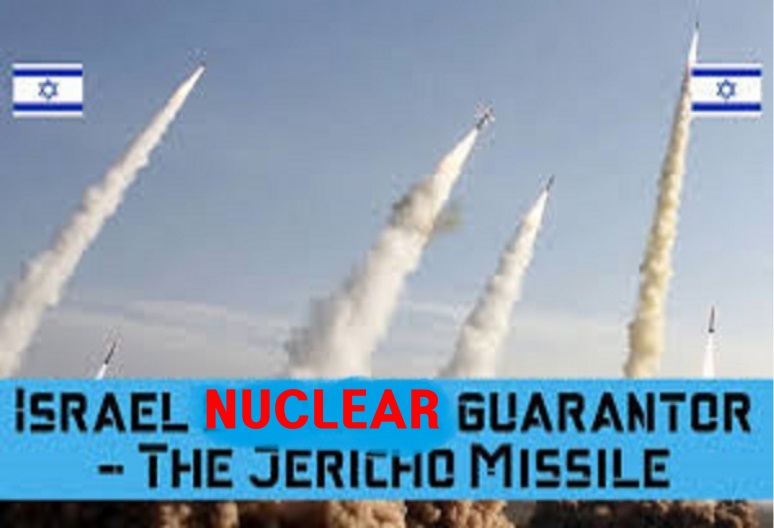
Israel’s policy of strategic ambiguity over its nuclear weapons arsenal makes it “difficult to know” how close the current crisis in the Middle East is to escalating into a nuclear war, a leading anti-nuclear weapons group has warned.
The International Campaign to Abolish Nuclear Weapons (ICAN)—a Geneva-based Nobel Peace Prize-winning group—said that Israel’s strategy of neither confirming nor denying its possession of nuclear weapons makes it hard to predict whether an imminent anticipated attack by Hezbollah or Iran could trigger a nuclear response.
“As the country refuses to confirm or deny it has such weapons, little is known about [Israel’s] arsenal, but experts believe it can launch nuclear weapons using missiles, submarines and aircraft,” Susi Snyder, ICAN’s Programme Coordinator, told Euractiv.
“Israel is also opaque about the circumstances under which it would use nuclear weapons so it is difficult to know how close we might be to the use of nuclear weapons,” she added.
Tensions have risen further in the Middle East following the assassination last week of Hezbollah commander Fuad Shukur in Beirut and Hamas political chief Ismail Haniyeh in Tehran. Both the Lebanese and Palestinian militant groups are backed by Iran.
Israel has confirmed that it killed Shukur but has neither confirmed nor denied its involvement in Haniyeh’s death. It blames Hezbollah for a rocket attack on a soccer field in the Israeli-occupied Golan Heights last month, in which 12 children were killed.
Hezbollah has continually exchanged rocket fire across Israel’s northern border with Lebanon since Hamas launched a surprise attack on Israel on 7 October that killed roughly 1,200 Israelis and triggered the current war in Gaza.
More than 40,000 Palestinians have been killed in Israel’s retaliatory offensive, according to Gaza’s health ministry.
EU continues to call for restraint
Asked about the potential of the current crisis to escalate further, a European Commission spokesperson directed Euractiv to a statement published on Sunday by G7 foreign ministers urging all relevant parties in the Middle East “to refrain from perpetuating the current destructive cycle of retaliatory violence, to lower tensions and engage constructively toward de-escalation”.
The spokesperson also confirmed that Enrique Mora, one of the EU’s top diplomats who was in Tehran at the time of Haniyeh’s assassination, had left the country.
Both Mora and Haniyeh had been in Tehran to attend the inauguration of Iran’s new president, Masoud Pezeshkian. Mora subsequently held talks with top Iranian officials and suggested on social media that EU-Iran relations had entered a “new chapter”.
Citing “three sources briefed on the call”, Axios reported that US Secretary of State Antony Blinken told his G7 counterparts over the weekend that an attack by Iran and Hezbollah against Israel could begin on Monday (5 August).
On Friday (2 August), the US sent additional fighter jets and warships to the region in an apparent bid to deter military action by Iran and Hezbollah, both of which have vowed retaliatory attacks on Israel.
US President Joe Biden was also reportedly set to meet with his national security team cabinet on Monday to discuss the crisis.
Israel, which has possessed nuclear weapons since the 1960s, has repeatedly said that it “will not be the first to introduce nuclear weapons into the Middle East”.
Together with India and Pakistan, it is one of three of the nine nuclear-armed countries that has never signed the Non-proliferation Treaty (NPT), which aims to prevent the global spread of nuclear weapons.
Arms Control Association, a US-based NGO, estimates that Israel currently has 90 plutonium-based nuclear warheads.
How to avoid ‘disaster’
Snyder also emphasised that “any use of nuclear weapons” in the current crisis “would be a disaster for the region and the world”.
“A single nuclear weapon would likely kill hundreds of thousands of civilians and injure many more; radioactive fallout could contaminate large areas, including in the country that used the weapon, particularly if used against a nearby target which would be the case in the Middle East,” she said.
Snyder also urged citizens to pressure their governments to sign up to the Treaty on the Prohibition of Nuclear Weapons (TPNW), a 2021 UN agreement more stringent than the NPT which expressly prohibits signatories from developing, possessing, or threatening to use nuclear weapons.
“Policymakers and the public in countries that have not yet joined the treaty should encourage their governments to join the TPNW without delay, as it is the only treaty which comprehensively outlaws nuclear weapons and provides for their elimination,” she said.
None of the world’s nine nuclear-armed countries have signed the TPNW. In addition to Israel, the US, Russia, China, the United Kingdom, France, North Korea, Pakistan and India all currently possess nuclear weapons.
Mutually assured destruction is an outdated nuclear deterrence doctrine

One of the most significant criticisms of MAD is its moral implications. The doctrine essentially holds entire populations hostage to the threat of annihilation. Critics argue that this strategy represents a form of global extortion, where the safety of millions is leveraged against the threat of total destruction. This ethical dilemma raises profound questions about the value we place on human life and the lengths to which we are willing to go in the name of national security.
As the world commemorates the Hiroshima bombing, it’s time to work toward mutual survival
Syed Munir Khasru, August 6, 2024 , https://asia.nikkei.com/Opinion/Mutually-assured-destruction-is-an-outdated-nuclear-deterrence-doctrine
Syed Munir Khasru is chairman of IPAG Asia Pacific, a Melbourne-based think tank. (www.syedmunirkhasru.org).
The Aug. 6 anniversary of the atomic bombing of Hiroshima is an annual occasion for somber reflection over the devastating impact of nuclear weapons and the strategies that evolved in the aftermath to prevent them from being used again.
The doctrine of mutually assured destruction (MAD), born in the crucible of the Cold War, has been a cornerstone of nuclear deterrence for decades. At a time of simmering global tensions and technological advancements, it is time to reflect on whether MAD has truly served the world well.
The MAD doctrine, formalized in the 1960s, posits that the threat of complete annihilation prevents nuclear-armed states from engaging in full-scale conflict. It is built on the principle of deterrence through the promise of overwhelming retaliation. In essence, MAD assumes that rational actors will refrain from initiating a nuclear attack, knowing that such an action would trigger a devastating counterattack, leading to the destruction of both parties.
This balance of terror, proponents argue, creates a paradoxical stability in which the very destructive power of nuclear weapons serves to prevent their use through the promise of overwhelming retaliation. This has been the dominant paradigm in international relations since the Cold War. It has shaped military strategies, diplomatic negotiations and the very fabric of the global security architecture.
Perhaps the most iconic example of MAD’s influence is the Cuban missile crisis of 1962. For 13 days, the world teetered on the brink of nuclear war as the U.S. and the Soviet Union engaged in a tense standoff over Soviet missiles in Cuba. According to historian Martin J. Sherwin, “The real possibility of mutual destruction … played a crucial role in the decision-making process of both Kennedy and Khrushchev.” The crisis ultimately ended with a negotiated settlement, demonstrating how the specter of mutual annihilation could drive the political leadership toward a diplomatic settlement.
On the other hand, a major concern with MAD is the potential for accidental nuclear war. False alarms, misinterpreted signals or technical malfunctions could potentially trigger a catastrophic response. The 1983 Soviet nuclear false alarm incident, where a Soviet lieutenant colonel correctly identified a system malfunction that had erroneously reported incoming U.S. missiles, underscores this risk.
Throughout the Cold War, the MAD doctrine underpinned arms control agreements like the Strategic Arms Limitation Talks (SALT) and the Anti-Ballistic Missile Treaty. These agreements, while not eliminating nuclear weapons, helped manage the arms race and reduce the risk of accidental war.
Even in the post-Cold War era, MAD’s influence persists. During the 2022 Russian invasion of Ukraine, despite Russia’s nuclear saber-rattling, the potential for mutual destruction deterred any nuclear escalation. While the risk of nuclear weapons use in the Ukraine conflict remains low, there is growing concern about the erosion of international nuclear arms control agreements. This deterioration of established safeguards could potentially increase global nuclear risks in the long term.
One of the most significant criticisms of MAD is its moral implications. The doctrine essentially holds entire populations hostage to the threat of annihilation. Critics argue that this strategy represents a form of global extortion, where the safety of millions is leveraged against the threat of total destruction. This ethical dilemma raises profound questions about the value we place on human life and the lengths to which we are willing to go in the name of national security.
This ethical quandary becomes even more pronounced when considering the potential for civilian casualties in a nuclear exchange. Experts in disaster response and humanitarian aid consistently warn that the immediate aftermath of a nuclear blast would overwhelm any existing emergency response capabilities. The scale and nature of destruction from such an event would render traditional humanitarian assistance efforts largely ineffective, leaving countless civilians without access to crucial medical care, food or shelter.
The world today is markedly different from the bipolar structure of the Cold War. The proliferation of nuclear weapons to countries like North Korea and the complex dynamics between nuclear powers like India and Pakistan present new challenges to the MAD doctrine.
Emerging technologies such as hypersonic missiles, cyberwarfare capabilities and artificial intelligence are reshaping the nuclear landscape. According to a comprehensive analysis by leading defense strategists, these advanced technologies have the potential to inadvertently escalate nuclear risks. By introducing new variables and uncertainties into strategic calculations, they may erode the stability that has traditionally underpinned nuclear deterrence frameworks like MAD.
As the only nation to have experienced the horrors of nuclear warfare firsthand, Japan occupies a unique position in the global dialogue on nuclear disarmament. This role was highlighted during last year’s Group of Seven summit in Hiroshima, where world leaders confronted the legacy of nuclear weapons.
Prime Minister Fumio Kishida, whose family hails from Hiroshima, has been a vocal advocate for nuclear disarmament. In his 2022 address to the U.N. General Assembly, Kishida stated, “We must never repeat the devastation of atomic bombings. Japan will continue to uphold the ‘three non-nuclear principles’ and lead the international community’s efforts toward the realization of a world without nuclear weapons.” Japan’s leadership, rooted in its unique historical experience, could be instrumental in forging a path beyond MAD.
While the MAD doctrine has arguably contributed to preventing nuclear conflict for nearly eight decades, its continued relevance in a fast-changing world merits reexamination. The moral implications, the risk of accidental war and the challenges posed by new geopolitical realities and technologies all suggest the need for new approaches to nuclear deterrence and disarmament.
The Hiroshima anniversary is not only a reflection on the past but also a look ahead to the future. The goal of a world free from the threat of nuclear annihilation remains as urgent and vital as ever. In the words of Hiroshima survivor Setsuko Thurlow, “Nuclear weapons are not a necessary evil; they are the ultimate evil.”
The time is ripe to move beyond the doctrine of mutual destruction and work toward mutual survival and shared prosperity.
79 Years After Hiroshima & Nagasaki: A Grim Reminder of Nuclear Annihilation

a group of elderly hibakusha, called Nihon Hidankyo, have dedicated their lives to achieving a non-proliferation treaty, which they hope will ultimately lead to a total ban on nuclear weapons.
By Thalif Deen, UNITED NATIONS, Aug 1 2024 (IPS) https://www.ipsnews.net/2024/08/79-years-after-hiroshima-nagasaki-a-grim-reminder-of-nuclear-annihilation/?utm_source=rss&utm_medium=rss&utm_campaign=79-years-after-hiroshima-nagasaki-a-grim-reminder-of-nuclear-annihilation– The upcoming 79th anniversary of the atomic bombings of Hiroshima and Nagasaki, which took place on August 6 and 9, 1945, remains a grim reminder of the destructive consequences of nuclear weapons.
The US bombings killed an estimated 90,000 to 210,000, with roughly half of the deaths occurring on the first day in Hiroshima.
But despite an intense global campaign for nuclear disarmament, the world has witnessed an increase in the number of nuclear powers from five—the US, UK, France, China and Russia—to nine, including India, Pakistan, North Korea and Israel.
Is the continued worldwide anti-nuclear campaign an exercise in futility? And will the rising trend continue—with countries such as Iran, Egypt, Saudi Arabia and South Korea—as potential nuclear powers of the future?
South Africa is the only country that has voluntarily given up nuclear weapons after developing them. In the 1980s, South Africa produced six nuclear weapons, but dismantled them between 1989 and 1993. A number of factors may have influenced South Africa’s decision, including national security, international relations, and a desire to avoid becoming a pariah state.
But there is an equally valid argument that there have been no nuclear wars—only threats—largely because of the success of the world-wide anti-nuclear campaign, the role of the United Nations and the collective action by most of the 193 member states in adopting several anti-nuclear treaties.
According to the UN Office for Disarmament Affairs (UNODA), the United Nations has sought to eliminate weapons of mass destruction (WMDs) ever since the establishment of the world body. The first resolution adopted by the UN General Assembly in 1946 established a commission to deal with problems related to the discovery of atomic energy, among others.
The commission was to make proposals for, inter alia, the control of atomic energy to the extent necessary to ensure its use only for peaceful purposes.
Several multilateral treaties have since been established with the aim of preventing nuclear proliferation and testing, while promoting progress in nuclear disarmament.
These include the Treaty on the Non-Proliferation of Nuclear Weapons (NPT), the Treaty Banning Nuclear Weapon Tests in the Atmosphere, in Outer Space and Under Water, also known as the Comprehensive Nuclear-Test-Ban Treaty (CTBT), which was signed in 1996 but has yet to enter into force, and the Treaty on the Prohibition of Nuclear Weapons (TPNW).
Jackie Cabasso, Executive Director, Western States Legal Foundation in Oakland, California, which monitors and analyzes US nuclear weapons programs and policies, told IPS: “As we approach the 79th anniversary of the U.S. atomic bombings of Hiroshima and Nagasaki, the world is facing a greater danger of nuclear war than at any time since 1945.”
The terrifying doctrine of “nuclear deterrence,” which should long ago have been delegitimized and relegated to the dustbin of history and replaced with multilateral, non-militarized common security, has metastasized into a pathological ideology brandished by nuclear-armed states and their allies to justify the perpetual possession and threatened use—including first use—of nuclear weapons,” she pointed out.
“It is more important than ever that we heed the warnings of the aging hibakusha (A-bomb survivors): What happened to us must never be allowed to happen to anyone again; nuclear weapons and human beings cannot co-exist; no more Hiroshimas, no more Nagasakis!”
This demands an irreversible process of nuclear disarmament. But to the contrary, all nuclear armed states are qualitatively and, in some cases, quantitatively upgrading their nuclear arsenals and a new multipolar arms race is underway, she noted.
“To achieve the elimination of nuclear weapons and a global society that is more fair, peaceful, and ecologically sustainable, we will need to move from the irrational fear-based ideology of deterrence to the rational fear of an eventual nuclear weapon use, whether by accident, miscalculation, or design.”
“We will also need to stimulate a rational hope that security can be redefined in humanitarian and ecologically sustainable terms that will lead to the elimination of nuclear weapons and dramatic demilitarization, freeing up tremendous resources desperately needed to address universal human needs and protect the environment.”
In this time of multiple global crises, “our work for the elimination of nuclear weapons must take place in a much broader framework, taking into account the interface between nuclear and conventional weapons and militarism in general, the humanitarian and long-term environmental consequences of nuclear war, and the fundamental incompatibility of nuclear weapons with democracy, the rule of law, and human wellbeing,” declared Cabasso.
Dr. M.V. Ramana, Professor and Simons Chair in Disarmament, Global and Human Security School of Public Policy and Global Affairs and Graduate Program Director, MPPGA at the University of British Columbia, Vancouver, told IPS, “The glass is half-full or half-empty depending on how one looks at it.”
“The fact that we have avoided nuclear war since 1945 is also partly due to the persistence of the anti-nuclear movement. Historians like Lawrence Wittner have pointed to the many instances when governments have chosen nuclear restraint instead of unrestrained expansion.”
While South Africa is the only country that dismantled its entire nuclear weapons program, many countries—Sweden, for example—have chosen not to develop nuclear weapons even though they had the technical capacity to do so. They did so in part because of strong public opposition to nuclear weapons, which in turn is due to social movements supporting nuclear disarmament, he pointed out.
Thus, organizing for nuclear disarmament is not futile. Especially as we move into another era of conflicts between major powers, such movements will be critical to our survival, declared Ramana.
According to the UN, a group of elderly hibakusha, called Nihon Hidankyo, have dedicated their lives to achieving a non-proliferation treaty, which they hope will ultimately lead to a total ban on nuclear weapons.
“On an overcrowded train on the Hakushima line, I fainted for a while, holding in my arms my eldest daughter of one year and six months. I regained my senses at her cries and found no one else was on the train,” a 34-year-old woman testifies in the booklet. She was located just two kilometres from the Hiroshima epicenter.
Fleeing to her relatives in Hesaka, at age 24, another woman remembers that “people, with the skin dangling down, were stumbling along. They fell down with a thud and died one after another,” adding, “still now I often have nightmares about this, and people say, ‘it’s neurosis’.”
One man who entered Hiroshima after the bomb recalled in the exhibition “that dreadful scene—I cannot forget even after many decades.”
A woman who was 25 years old at the time said, “When I went outside, it was dark as night. Then it got brighter and brighter, and I could see burnt people crying and running about in utter confusion. It was hell…I found my neighbor trapped under a fallen concrete wall… Only half of his face was showing. He was burned alive”.
The steadfast conviction of the Hidankyo remains: “Nuclear weapons are absolute evil that cannot coexist with humans. There is no choice but to abolish them.”
Addressing the UN Security Council last March, Secretary-General Antonio Guterres warned that with geopolitical tensions escalating the risk of nuclear warfare to its highest point in decades, reducing and abolishing nuclear weapons is the only viable path to saving humanity.
“There is one path—and one path only—that will vanquish this senseless and suicidal shadow once and for all. We need disarmament now,” he said, urging nuclear-weapon States to re-engage to prevent any use of a nuclear weapon, re-affirm moratoria on nuclear testing and “urgently agree that none of them will be the first to use nuclear weapons.”
He called for reductions in the number of nuclear weapons led by the holders of the largest arsenals—the United States and the Russian Federation—to “find a way back to the negotiating table” to fully implement the New Measures for the Further Reduction and Limitation of Strategic Offensive Arms, or START Treaty, and agree on its successor.
“When each country pursues its own security without regard for others, we create global insecurity that threatens us all,” he observed. Almost eight decades after the incineration of Hiroshima and Nagasaki, nuclear weapons still represent a clear danger to global peace and security, growing in power, range and stealth.”
“States possessing them are absent from the negotiating table, and some statements have raised the prospect of unleashing nuclear hell—threats that we must all denounce with clarity and force,” he said. Moreover, emerging technologies such as artificial intelligence and cyber and outer space domains have created new risks.”
From Pope Francis, who calls the possession of nuclear arms “immoral”, to the hibakusha, the brave survivors of Hiroshima and Nagasaki, to Hollywood, where Oppenheimer brought the harsh reality of nuclear doomsday to vivid life for millions around the world, people are calling for an end to the nuclear madness. “Humanity cannot survive a sequel to Oppenheimer,” he warned.
When Nagasaki marked the 78th anniversary of the U.S. atomic bombing of the city last year, the mayor Shiro Suzuki, urged world powers to abolish nuclear weapons, saying nuclear deterrence also increases risks of nuclear war, according to an Associated Press (AP) report.
He called on the Group of Seven (G7) industrial powers to adopt a separate document on nuclear disarmament that called for using nuclear weapons as deterrence.
“Now is the time to show courage and make the decision to break free from dependence on nuclear deterrence,” Suzuki said in his peace declaration. “As long as states are dependent on nuclear deterrence, we cannot realize a world without nuclear weapons.”
Russia’s nuclear threat has encouraged other nuclear states to accelerate their dependence on nuclear weapons or enhance capabilities, further increasing the risk of nuclear war, and that Russia is not the only one representing the risk of nuclear deterrence, Suzuki said.
Suzuki, whose parents were hibakusha, or survivors of the Nagasaki attack, said knowing the reality of the atomic bombings is the starting point for achieving a world without nuclear weapons. He said the survivors’ testimonies are a true deterrent against nuclear weapons use, the AP report said.
This article is brought to you by IPS Noram, in collaboration with INPS Japan and Soka Gakkai International, in consultative status with UN ECOSOC.
The Children of Hiroshima and Nagasaki

- How many children were killed?
- Burn injuries
- Blast injuries
- Acute radiation sickness
- Other causes of immediate death
- Searching for lost family members
- Cremating dead children
- Caring for babies and children in the aftermath
- Leukaemia and other cancers
- Stunted growth in exposed children
- Impact on babies exposed in utero
- Cataracts in exposed children
- Chromosomal aberrations
- Intergenerational effects
- ‘A-bomb orphans’
- Life for children after the nuclear attacks
- Psychological toll on children
- Memorials to the children killed
- Continued advocacy by children who survived
How many children were killed?
It is estimated that more than 38,000 children were killed in the atomic bombings of Hiroshima and Nagasaki.
According to surveys by the city of Hiroshima, 73,622 children under 10 years of age were exposed to the bombing, of whom 7,907 had died by the end of 1945. Among older children and adolescents, the death toll was thought to be 15,543.
In Nagasaki, authorities estimated that 49,684 children under 10 were exposed to the bombing, of whom 6,349 had died by the end of 1945, with 8,724 older children and adolescents also counted among the dead.
These official estimates, however, do not include the many children who died years after the attacks from cancers and other radiation-related illnesses.
Hiroshima:
Prior to the atomic bombing of Hiroshima, around 23,500 babies and children were evacuated from the city due to fears of possible US air raids. Many went to live with relatives in the countryside, which was deemed safer.
But tens of thousands of children remained in the city on the morning of 6 August 1945, including 26,800 students mobilised to perform various tasks, such as creating firebreaks in the city’s centre – a measure aimed at limiting destruction in the event of an air raid.
Of the 8,400 students performing this particular task, around 6,300 were killed. Most were 12 to 14 years old, in junior high school. Hundreds of students who had been mobilised to perform other tasks across the city were also killed. The total death toll for mobilised students was around 7,200.
In the aftermath of the attack, school officials in Hiroshima made earnest efforts to determine which of their students had died and which had survived. The schools closest to the bomb’s hypocentre (ground zero) generally had the highest death tolls.
In 1951, the US government published a multi-volume report on the medical effects of atomic bombs, which included detailed casualty figures for schoolchildren in Hiroshima as of the end of October 1945.
The report grouped the students according to their distance from the hypocentre. For the first group – those less than one kilometre away – 2,579 of the 3,440 students, or roughly three in four, were confirmed dead. A few hundred more were missing but presumed dead.
“In the centre of [Hiroshima] were some 8,400 students from grades seven and eight who had been mobilised from all the high schools in the city to help clear fire lanes … nearly all of them were incinerated and were vaporised without a trace, and more died within days. In this way, my age group in the city was almost wiped out.”
– Setsuko Thurlow, atomic bomb survivor and disarmament advocate
Many of the students close to the hypocentre were outside at the time of the attack, completely unshielded from the bomb’s effects. They stood little chance of survival.
Of the “unshielded” schoolchildren within one kilometre of the hypocentre, 94 per cent were killed, according to the casualty figures published by the US government. For those between one and two kilometres, around 85 per cent were killed. Relatively few students were indoors at the time of the attack.
At some schools close to the hypocentre, there were no known survivors. For example, of the 174 students attending the First Prefectural Girls’ School on the morning of the attack, all 174 were killed.
Around 400 students from the Honkawa Elementary School, a three-storey concrete building just 410 metres from the hypocentre, were killed. One student, 11-year-old Imori Kiyoko, miraculously survived.
At the First Hiroshima Prefectural Junior High School, hundreds of severely burnt students dived into the school’s swimming pool to escape the unbearable heat of the fires engulfing the city and to ease their pain. They died in the water.
While detailed records were made of children attending school on the day of the bombing or those mobilised to perform various tasks across Hiroshima, less is known about the fate of the city’s many children who had not yet attained school age, including babies.
In total, around 340,000 to 350,000 people were in Hiroshima at the time of the bombing, of whom an estimated 140,000 were killed instantly or had died from their injuries by the end of 1945. In addition, thousands succumbed to radiation-related illnesses years later, adding to the complexity of calculating the overall death toll.
Suffice it to say, the number of children killed in Hiroshima – with a single atomic bomb that US officials code-named “Little Boy” – was staggering.
Nagasaki:
For Nagasaki, the population on the day of the atomic bombing (9 August 1945) was around 240,000 people, of whom an estimated 74,000 were killed instantly or had died from their injuries by the end of 1945.
Prior to the attack, approximately 17,000 children and elderly persons had been evacuated from the city. It is thought that a large proportion of these evacuees were children, but there is no official record. Despite the evacuations, tens of thousands of children were still in Nagasaki on the day of the bombing.
The bomb devastated the Urakami district, where Nagasaki’s main residential communities and schools were concentrated.
“A mother cradled her headless infant and wailed … Tiny, barefoot children squatted in the ruins or wandered past corpses, calling out for their mothers and fathers. One woman whose husband had died, and who would soon lose her four daughters and four-year-old son, came to understand that when one of her children stopped asking for water, it meant that she or he had died.”
– Susan Southard, author of Nagasaki: Life After Nuclear War
From the Shiroyama Elementary School, close to the bomb’s hypocentre, over 1,400 students were killed in the attack; from Yamazato Elementary School, 1,300 students perished. Several other schools near ground zero also suffered high death tolls. In total, an estimated 5,500 students and teachers were killed.
As in Hiroshima, thousands of Nagasaki’s students had been mobilised to perform various tasks across the city, but a smaller proportion of them were outdoors at the time of the bombing. Still, many were killed, including 580 at one of the Mitsubishi factories close to the hypocentre.
Workers there expressed great distress that “many persons who were recognised as only very slightly injured at first gradually deteriorated in health and died” from acute radiation illness, and the “victims include many teenage students”.
Even among the mobilised students who were beyond the main zone of destruction – more than 1.5 kilometres from the hypocentre – approximately 680 were killed.
Several years after the attack, when US researchers began studying the impact of the Nagasaki bombing on children, they were able to identify just 134 surviving children who had been within one kilometre of the hypocentre. So many others had perished.
Dead bodies scattered over a playground
Fujio Tsujimoto, five years old, was at a school playground with his grandmother when they heard an aeroplane in the distance over Nagasaki.
I grabbed my grandmother by the hand and ran towards the shelter. “Enemy plane!” yelled the watchman on the roof of the school building as he struck the bell. “Look out!” People on the playground came running straight for the shelter. I was the first to plunge into the deepest part of the shelter. But at that moment – flash! – I was blown against the wall by the force of the explosion.
After a while, I peered out of the shelter. I found people scattered all over the playground. The ground was covered almost entirely with bodies. Most of them looked dead and lay still. Here and there, however, some were thrashing their legs or raising their arms. Those who were able to move came crawling into the shelter. Soon the shelter was crowded with the wounded. Around the school, all the town was on fire.
My brother and sisters were late coming into the shelter, so they were burnt and crying. Half an hour later my mother appeared at last. She was covered with blood. I will never forget how happy I was as I clung to my mother. We waited and waited for Father, but he never appeared.
Even those who had survived died in agony one after another. My younger sister died the next day. My mother, she also died the next day. And then my older brother. I thought I would die, too, because the people around me, lying beside each other in the shelter, were dying one by one. Yet, because my grandmother and I had been in the deepest part of the shelter, we apparently had not been exposed to [as much] radiation and in the end we were saved.
Among the victims of the nuclear attacks were people from outside Japan, including many who were brought to Japan from its colonised areas. This included as many as 70,000 Koreans – many of whom were forced labourers – and people from China and Taiwan. Some were children.
Lee Su-yong, from Korea, survived the attack on Hiroshima as a 15-year-old girl but sustained a permanent foot injury and developed uterine cancer and other illnesses later in life due to her exposure to radiation.
“Everything I could see was destroyed,” she said, describing the immediate aftermath. “Children were crying for their mothers. Charred bodies were strewn all over the city. Many people lost their arms or legs … It was horrendous.”………………………………………………………………………………………………………………………… more https://www.icanw.org/children?utm_campaign=2024_children_launch_an&utm_medium=email&utm_source=ican#childrenkilled
Hiroshima marks 79 years since atomic bombing, as nuclear war fears rise

Japan Times, By Kathleen Benoza, STAFF WRITER, 6 Aug 24
Raging conflicts across the globe are “reinforcing the public assumption” that military force — and nuclear deterrence — are needed to solve global issues, a view Hiroshima Mayor Kazumi Matsui rejected Tuesday in a speech at a ceremony marking 79 years since Hiroshima was devastated by an atomic bomb.
Citing former Soviet leader Mikhail Gorbachev and U.S. President Ronald Reagan’s push to end the Cold War, Matsui stressed the need to “not be resigned to pessimism” amid conflicts such as Russia’s invasion of Ukraine and the Israel-Hamas war, adding that the world must take collective action and show that dialogue can overcome conflict.
“Our unity will move leaders now relying on nuclear deterrence to shift their policies,” he said. “We can make that happen.”
Speaking after Matsui, Prime Minister Fumio Kishida emphasized in his own speech that the suffering that transpired in Hiroshima and Nagasaki “must never be repeated.”
“It is our country’s mission as the only nation to have suffered atomic bombings in war to steadily continue our efforts toward realizing a world without nuclear weapons,” he said…………………………………….
Noting that the number of nuclear weapons could soon increase for the first time since the peak of the Cold War, Kishida stressed the urgency of this effort.
To prevent this, he pledged to continue to promote the passage of the long-stalled Fissile Material Cut-off Treaty, which prohibits the production of fissile material for nuclear weapons, noting that Japan had established a framework for the FMCT that included both nuclear-armed and non-nuclear-armed states.
“I myself will take the lead and actively participate,” he said.
During the final days of World War II, the United States dropped atomic bombs on Hiroshima on Aug. 6, 1945 and again three days later on Nagasaki. The blasts killed hundreds of thousands and left many survivors — known as hibakusha — with lasting injuries and illnesses from radiation exposure.
This year’s ceremony saw the second-largest number of countries participating, with 109 nations involved, according to organizers. Roughly 50,000 people attended the event.
Nine countries currently maintain nuclear arsenals — the United States, Russia, China, France, the United Kingdom, North Korea, Pakistan, India and Israel, according to the International Campaign to Abolish Nuclear Weapons………………………………………………………………………………………………………….
Japan, despite being the sole country to be attacked with nuclear bombs, has faced criticism from some corners over its effort to rid the world of the weapons.
Critics note that Tokyo has not participated in more ambitious initiatives, including the Treaty on the Prohibition of Nuclear Weapons. Since 2018, Japan has consistently voted against an annual United Nations General Assembly resolution that supports adoption of the treaty — which would prohibit the development, testing, production, stockpiling, stationing, transfer, use and threat of use of nuclear weapons — due to its reliance on the U.S. nuclear deterrent. https://www.japantimes.co.jp/news/2024/08/06/japan/hiroshima-bombing-79-anniversary/
Shin Bet said to prepare bunker for Netanyahu, senior leadership amid Iranian threat
Known as the National Management Center, Jerusalem bunker can reportedly withstand hits from a range of existing weaponry, keep communications open to IDF headquarters
Times of Israel, By ToI Staff, 4 August 2024,
release hostages in the Gaza Strip, June 8, 2024. (Shin Bet security service)
An underground bunker in Jerusalem where senior leaders can remain for an extended period during a war has been prepared by the Shin Bet security service and is fully operational, the Walla news site reported on Sunday, amid fear of attacks on Israel from Hezbollah and Iran.
The bunker, reportedly built almost 20 years ago, can sustain hits from a range of existing weaponry, has command and control capabilities, and is connected to the Defense Ministry headquarters in Tel Aviv, the report said.
The bunker, which is also known as the National Management Center, has not been used in the past 10 months of Israel’s war in Gaza.
release hostages in the Gaza Strip, June 8, 2024. (Shin Bet security service)
An underground bunker in Jerusalem where senior leaders can remain for an extended period during a war has been prepared by the Shin Bet security service and is fully operational, the Walla news site reported on Sunday, amid fear of attacks on Israel from Hezbollah and Iran.
The bunker, reportedly built almost 20 years ago, can sustain hits from a range of existing weaponry, has command and control capabilities, and is connected to the Defense Ministry headquarters in Tel Aviv, the report said.
The bunker, which is also known as the National Management Center, has not been used in the past 10 months of Israel’s war in Gaza.
00:24
02:21
https://imasdk.googleapis.com/js/core/bridge3.656.2_en.html#goog_623417804
https://imasdk.googleapis.com/js/core/bridge3.656.2_en.html#goog_623417805
https://imasdk.googleapis.com/js/core/bridge3.656.2_en.html#goog_623417806
It has, however, been prepared for use now by Prime Minister Benjamin Netanyahu and other senior figures as Israel braces for possible attacks from Iran and Hezbollah amid escalating tensions in the Middle East.
Iran, its Lebanese ally Hezbollah, and the Palestinian Islamist terror group Hamas blame Israel for a blast that killed Hamas leader Ismail Haniyeh in Tehran last week. His assassination came just hours after a strike claimed by Israel killed Hezbollah’s military chief, Fuad Shukr, on Tuesday evening near Beirut. Israel has claimed responsibility for killing Shukr but has not officially commented on Haniyeh……………………………………………………………
The last time the bunker is known to have been used was in 2018 when Prime Minister Benjamin Netanyahu ordered a series of high-level security cabinet meetings to be held there, likely to prevent leaks to the media……………………………….. https://www.timesofisrael.com/shin-bet-said-to-prepare-underground-bunker-for-senior-leadership-amid-iranian-threat/
79 years since the unthinkable
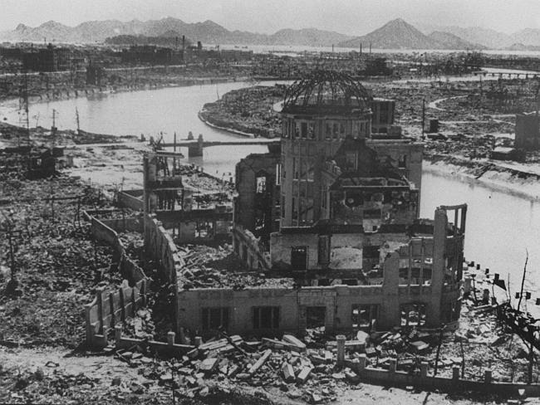
But are we closer than ever to nuclear war?
By Kate Hudson, August 4 2024 https://beyondnuclearinternational.org/2024/08/04/79-years-since-the-unthinkable/
As we mourn the loss of all those killed at Hiroshima and Nagasaki by US atomic bombs, in August 1945, we cannot avoid the fact that we are closer than ever to nuclear war. The war on Ukraine is greatly increasing the risk. So too is NATO’s location of upgraded nuclear weapons across Europe — including Britain — and Russia’s siting of similar weapons in Belarus. Irresponsible talk suggesting that “tactical” nuclear weapons could be deployed on the battlefield — as if radiation can be constrained in a small area — makes nuclear use more likely.
And our own government is leading the charge on greater militarisation and is in denial about the dangers it is unleashing. This is a bad time for humanity — and for all forms of life on Earth. It’s time for us to stand up and say No: we refuse to be taken into nuclear Armageddon.
Help in raising awareness of the existential peril of nuclear weapons is coming from an unusual quarter — Hollywood. Many of us have seen the blockbuster, Oppenheimer. Many in the movement have their criticisms but my own feeling is that you cannot leave the film without being aware of the terror of nuclear weapons, and their world-destroying capacity.
I attended a screening hosted by London Region CND; it was sold out within hours, and followed by a dynamic audience discussion that lasted till 11pm. I recognised only two people in the audience. That’s the crowd we need to engage with — none of us just want to preach to the converted. But there is a particular flaw in the film I must raise, as we remember Hiroshima Day.
It was repeatedly suggested that dropping the bomb was necessary to end the second world war. Although there was eventually a quick aside that countered this, it could easily have been missed. So for the record, this is the reality of what happened.
Conventional wisdom, especially in the US, is that it was necessary to drop the bomb to bring about a speedy conclusion to the war and save lives. Even today many people believe that the bomb was necessary to bring about a Japanese surrender and to avoid the need for an invasion of Japan by the US, which might have cost hundreds of thousands of lives.
But extensive scholarly research in the US, using primary sources from the time, shows that this just wasn’t true. By the time the bomb was ready for use, Japan was ready to surrender. As General Dwight Eisenhower said, Japan was at that very moment seeking some way to surrender with minimum loss of face, and “it wasn’t necessary to hit them with that awful thing.”
Here’s what was said at the time by some of the key players:
It is my opinion that the use of this barbarous weapon at Hiroshima and Nagasaki was of no material assistance in our war against Japan. The Japanese were already defeated and ready to surrender because of the effective blockade and successful bombing with conventional weapons … In being the first to use it we had adopted an ethical standard common to the barbarians of the Dark Ages. I was not taught to make war in that fashion and wars cannot be won by destroying women and children. – Admiral William Leahy, President Truman’s chief of staff
Nor were the atomic bombs decisive. It has long been held in justification that they made unnecessary an invasion of the Japanese mainland and thus saved the resultant fighting and thousands and possibly hundreds of thousands of casualties on both sides. On few matters is the adverse evidence so strong. The bombs fell after the decision had been taken by the Japanese government to surrender. That the war had to be ended was agreed at a meeting of key members of the supreme war direction council with the emperor on 20 June 1945, a full six weeks before the devastation of Hiroshima. – Professor JK Galbraith, official US investigator, Japan 1945
It would be a mistake to suppose that the fate of Japan was settled by the atomic bomb. Her defeat was certain before the first bomb fell and was brought about by overwhelming maritime power. – Winston S Churchill, British wartime leader
So if Japan was ready to surrender, why were atomic bombs dropped on Hiroshima and Nagasaki? A significant factor in the decision to bomb was the US’s desire to establish its dominance in the region after the war. Those planning for the post-war situation believed that this required US occupation of Japan, enabling it to establish a permanent military presence, shape its political and economic system and dominate the Pacific region. But the US’s key strategic concern, above all, was the position of the Soviet Union in the post-war world.
Evidence suggests that the US wanted to demonstrate its unique military power — its possession of the atomic bomb — in order to gain political and diplomatic advantage over the Soviet Union in the post-war settlement in both Asia and Europe. So nothing to do with ending the war with Japan.
I leave the final word to Joseph Rotblat — the true hero of the Manhattan Project. Whatever qualms Oppenheimer may have felt after the event, as shown in the film, the fact is he pursued the bomb to the bitter end. Rotblat was a nuclear physicist from a Polish-Jewish family. He had seen the development of the atomic bomb as a necessary evil in the arms race to defeat Hitler, and went to work on the Manhattan Project. At the end of 1944, it was clear that Germany was not going to succeed in making an atom bomb. In these circumstances, Rotblat left the Manhattan Project. Others tried to alert politicians to the dangers ahead. But top politicians pressed for the rapid completion of the bomb.
As Rotblat himself later pointed out: “There is good reason to believe that the destruction of Hiroshima and Nagasaki was not so much the end of the second world war as the beginning of the cold war, the first step in a fateful chain of events, the start of an insane arms race that brought us very close to a nuclear holocaust and the destruction of civilisation.”
In memory of all those who died at Hiroshima and Nagasaki, and those who have suffered the consequences since, let us do our utmost to prevent the same catastrophe happening again; let us take action to prevent our politicians catapulting us into nuclear war — and the destruction of all life on this planet.
Kate Hudson has been General Secretary of Campaign for Nuclear Disarmament (CND) since September 2010. Prior to this she served as the organisation’s Chair from 2003. She is a leading anti-nuclear and anti-war campaigner nationally and internationally. This article was originally published by CND in August 2023.
1 This Month
26 September – International Day for the Total Elimination of Nuclear Weapons





PLEASE OPPOSE HR 8255 AND S.3639 – bills would accelerate satellite deployment, with no environmental review or safeguards – https://ncstd5li.quorum.us/campaign/169331/
To see nuclear-related stories in greater depth and intensity – go to https://nuclearinformation.wordpress.com
-
Archives
- September 2026 (291)
- August 2026 (330)
- July 2026 (355)
- June 2026 (287)
- May 2026 (306)
- April 2026 (356)
- March 2026 (251)
- February 2026 (267)
- January 2026 (308)
- December 2025 (358)
- November 2025 (359)
- October 2025 (375)
-
Categories
- 1
- 1 NUCLEAR ISSUES
- business and costs
- climate change
- culture and arts
- ENERGY
- environment
- health
- history
- indigenous issues
- Legal
- marketing of nuclear
- media
- opposition to nuclear
- PERSONAL STORIES
- politics
- politics international
- Religion and ethics
- safety
- secrets,lies and civil liberties
- spinbuster
- technology
- Uranium
- wastes
- weapons and war
- Women
- 2 WORLD
- ACTION
- AFRICA
- Atrocities
- AUSTRALIA
- Christina's notes
- Christina's themes
- culture and arts
- Events
- Fuk 2022
- Fuk 2023
- Fukushima 2017
- Fukushima 2018
- fukushima 2019
- Fukushima 2020
- Fukushima 2021
- general
- global warming
- Humour (God we need it)
- Nuclear
- RARE EARTHS
- Reference
- resources – print
- Resources -audiovicual
- Weekly Newsletter
- World
- World Nuclear
- YouTube
-
RSS
Entries RSS
Comments RSS

