 How Bedrock Environmental Law Can Break the Nuclear Waste
  Logjam, https://news.bloomberglaw.com/environment-and-energy/insight-how-bedrock-environmental-law-can-break-the-nuclear-waste-logjam Geoffrey Fettus, NRDC 17 Aug 20
The 30-year battle over nuclear waste disposal at Yucca Mountain in Nevada shows it’s time for the Atomic Energy Act to be amended. Geoffrey Fettus, senior attorney for the Natural Resources Defense Council, says Congress should pass legislation to end the exemption of nuclear waste from hazardous waste and other bedrock environmental laws.
For more than 30 years, Congress and the federal government have tried again and again to shove our nation’s spent nuclear fuel down a hole at Yucca Mountain, Nev. It’s time to use our foundational environmental laws get out of this seemingly impenetrable maze.
Congress should amend the Atomic Energy Act to remove exemptions from environmental laws for radioactive waste, a proposal that got an important boost from the House Select Committee on Climate Crisis as it called for a task force of federal, state, local, and tribal officials to study the implications of this idea.
Earlier this year, President Trump bowed to reality and abandoned efforts to force the radioactive waste on Nevada, the Yucca mirage finally dissipated. What’s clear now is that trying to force Nevada, or Utah, or New Mexico, or Tennessee (or any other state) to take the entirety of the nation’s most toxic nuclear waste won’t work. Continuing down that path will get us nowhere.
Instead of seeing recalcitrant states as the problem, what if we acknowledge the reality that they must be a key part of the solution for nuclear waste?
Feds Have Exclusive Jurisdiction Over Radioactive Materials
Remarkably, our bedrock environmental laws don’t cover nuclear waste, and they should. The Atomic Energy Act started the nuclear industry and was enacted years before our key pollution safeguards were established.
Crucially, and mostly for nuclear weapons reasons, the AEA gave the federal government exclusive jurisdiction over all radioactive materials, including radioactive waste. When Congress enacted our foundational environmental laws decades later, each of them included an exemption that excludes radioactive waste except in limited or marginal ways.
This is the original sin that must be rectified.
To explain this pernicious problem, when Congress considered nuclear waste in its precedent setting 1982 Nuclear Waste Policy Act, it just accepted the AEA’s sole federal authority and nuclear waste’s exclusion from environmental law as the way of the world. Only a few years later, for the sake of political expedience, Congress cut short a well thought out siting process and required the Yucca Mountain repository as the only option.
This was supposed to expedite the process, but not surprisingly, it exploded in controversy and eventually ground to a halt. And now it has finally, truly, died. But nuclear waste remains just as toxic and problematic as ever.
If nuclear waste were covered by environmental laws, i.e., without the current exemptions that limit EPA and state authority, protective federal health and welfare standards can combine with state-level decision-making over where and how the waste could be stored within its borders.
Amending the AEA and removing the provisions that exempt nuclear waste from our hazardous waste and water laws would give us our best chance to garner public acceptance for a process to find safe, technically sound storage sites for toxic nuclear waste—waste that will remain dangerous to human health for hundreds of thousands of years.
Why This Can Work
Consider how things could change if environmental laws could operate as intended.
Under regular environmental law (that covers pollution of air, water, land), the EPA sets strong standards commensurate to the harm of the pollutant. States can then assume the management of that program (or leave it to the EPA) and set additional, stricter standards if they wish.
A state can have strong regulatory authority to set terms for how much waste it might dispose of, how the facility will operate, and the requisite power to enforce those protective standards and protect its citizens—all things it cannot do now for radioactive waste.
To be clear, the standards for high-level radioactive waste will need to be special and extraordinarily protective, and the rulemaking for those standards will be quite a technical ordeal. But, there’s no getting around doing that hard work; Congress tried to take a short cut and it failed.
Once those standards are in place, the EPA and the states can, as in other instances, share the necessary roles of guarding public safety and welfare from radioactive waste. This institutional framework allows for both scientific defensibility of potential sites and, importantly, public acceptance of the process.
The Task Falls to Congress
For far too long many members of Congress and officials in Washington fought any efforts like this as they sought the quick fix of Yucca. Now there’s evidence of change. The ambitious report from the House Select Committee on Climate Crisis included this key recommendation:
Congress should establish a task force comprised of federal, state, local, and tribal officials to study the implications of amending the Atomic Energy Act to remove exemptions from environmental laws for spent fuel and high-level waste, while maintaining federal minimum standards.
Lawmakers should pick up this recommendation, create just such a task force, and move forward with this plan. Will this work? Yes—but it will take both hard work and time.
One thing I can guarantee is that the current approach isn’t working and won’t ever work. No single state is going to willingly accept the entirety of the nation’s nuclear burden without any way to protect their citizens; we have decades of evidence for this proposition. No amount of stomping of feet in the halls of Congress can change that.
Author Information
Geoffrey Fettus is a senior attorney for the Natural Resources Defense Council’s climate and clean energy program in Washington, D.C. He litigates in federal courts and testifies before Congress on the beginning and end of the nuclear fuel cycle. Prior to joining the NRDC, he was a staff attorney at the New Mexico Environmental Law Center and an assistant attorney general in New Mexico’s Office of the Attorney General.
August 18, 2020
Posted by Christina Macpherson |
environment, politics, USA, wastes |
Leave a comment
 In deft, distressing ‘Apocalypse Factory,’ Seattle author details Hanford’s role in the dawn of the nuclear age, Aug. 5, 2020 By Michael Upchurch, The Seattle Times
Book review
On the list of self-inflicted threats to humanity that we shove to the side in order to preserve our sanity, nuclear disaster — along with climate change — ranks at the top. And in Washington state, the toxic legacy of the Hanford nuclear reservation is the chief reminder of that threat.
Hanford produced the plutonium used in the atomic bomb dropped on Nagasaki on Aug. 9, 1945 — 75 years ago this Sunday. It also supplied the plutonium for most of the thousands of American nuclear weapons manufactured since then. But in the popular imagination, Hanford looms less prominently than Los Alamos when it comes to stories about the dawn of the nuclear age.
In “The Apocalypse Factory: Plutonium and the Making of the Atomic Age,” Seattle writer Steve Olson — who grew up in the small town of Othello, roughly 25 miles northeast of Hanford — capably fills in the gap.
As a young writer, Olson studied with John Hersey — the author of the 1946 book “Hiroshima” — so it’s fitting that “The Apocalypse Factory” includes an expansive, Hersey-like chapter on the horrific consequences of the Nagasaki bombing, drawn from Japanese eyewitness accounts. Nagasaki residents, of course, didn’t know what had hit them and were confounded by the “atomic bomb sickness” that killed people who initially appeared to be uninjured.
The book also encompasses the political and military strategies of the period, along with the “fiendishly difficult” challenges of producing plutonium in a way that wouldn’t kill its makers. Olson writes lucidly, making even the most recondite details of the science involved clear to a nonscientist. And he’s eloquent in his chronicling of the lives affected — and sometimes destroyed — by the invention and use of the world’s most deadly weapon.
“Hanford,” he acknowledges, “represents one of humanity’s greatest intellectual achievements; it also embodies a moral blindness that could destroy us all.”………
The secrecy surrounding the bomb didn’t end with World War II. Censorship of details about Nagasaki’s destruction and vital info on what radiation sickness could do to humans continued for years. A story by one Chicago Tribune reporter who wangled his way to Nagasaki wasn’t just censored but destroyed. The carbon copy he kept only came to light 60 years later.
Initial jubilation at Japanese surrender was soon tempered by a realization among scientists of just how nightmarish the bombs’ effects were. Decades later, the radioactive pollution at Hanford likewise became impossible to ignore.
“The leaders of the Manhattan Project,” Olson concludes, “did not devote much thought to the mess they were creating.”
In this deft, informative, sometimes terrifying book, that sentence reads like a stinging understatement.
_____
“The Apocalypse Factory: Plutonium and the Making of the Atomic Age” by Steve Olson, Norton, 336 pp., $27.95
August 17, 2020
Posted by Christina Macpherson |
- plutonium, weapons and war |
Leave a comment
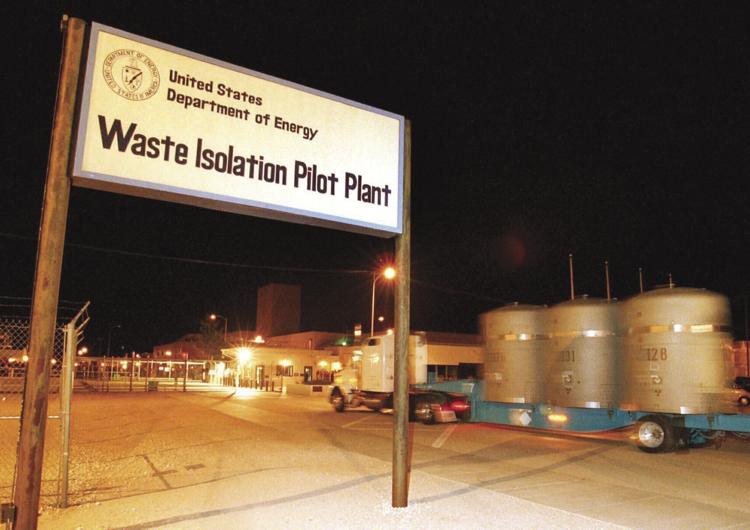
Work ongoing at US nuclear repository despite virus cases, AntelopeValley Press, 16 Aug 20, CARLSBAD, N.M. (AP) — Managers of the federal government’s underground nuclear waste repository in southern New Mexico say operations are ongoing despite a recent increase in COVID-19 cases among workers.
The Waste Isolation Pilot Plant has seen cases among workers more than double in the last week, the Carlsbad Current-Argus reported.
The plant last Monday announced four new cases among employees of Nuclear Waste Partnership, the contractor that oversees daily operations at the facility. In all, the plant has reported at least 14 positive cases among employees and subcontractors.
The plant is in the second phase of resuming normal operations after having slowed the emplacement of waste this spring when the pandemic began, said spokesperson Bobby St. John. ……….
|
The Waste Isolation Pilot Plant is the nation’s only location for disposing of tons of Cold War-era waste generated over years of bomb-making and nuclear weapons research. That includes gloves, clothing, tools and other debris contaminated by plutonium and other radioactive elements.
The waste is placed into vaults carved out of an ancient salt formation about a half-mile below the surface.
In January, two dozen shipments were accepted by the facility. Records show that was followed by 10 shipments in February, six in March and seven in April. May saw an increase to 20 shipments when the state of New Mexico began easing some restrictions related to the statewide public health order that had been enacted to slow the spread of the Coronavirus……..
The facility also marked a milestone in July, when it received the first shipments of waste from Sandia National Laboratories in Albuquerque since 2012. The shipments included waste that has to be handled remotely due to higher levels of radiation.
The shipments were packaged in lead-lined shielded containers that weigh about 1,700 pounds when empty. https://www.avpress.com/business/work-ongoing-at-us-nuclear-repository-despite-virus-cases/article_7821a9e6-df69-11ea-9eea-5f2008c15c73.html
|
|
August 17, 2020
Posted by Christina Macpherson |
health, wastes |
Leave a comment
|
 No Japan prefectures positive about hosting nuclear waste site https://www.japantimes.co.jp/news/2020/08/14/national/prefectures-nuclear-waste-site/ –14 Aug 20, KYODO Nearly half of Japan’s 47 prefectures said they are opposed to or held negative views about hosting a deep-underground disposal site for high-level radioactive nuclear waste, a Kyodo News survey showed Friday. No Japan prefectures positive about hosting nuclear waste site https://www.japantimes.co.jp/news/2020/08/14/national/prefectures-nuclear-waste-site/ –14 Aug 20, KYODO Nearly half of Japan’s 47 prefectures said they are opposed to or held negative views about hosting a deep-underground disposal site for high-level radioactive nuclear waste, a Kyodo News survey showed Friday.
None expressed a favorable stance. The result signals further woes for the central government in its attempt to find a permanent geological disposal repository.
Little progress has been made since the process to find local governments willing to host one started in 2002, due mainly to opposition from local residents.
The survey was sent to all prefectures in July, with additional interviews conducted depending on their answers.
While 16 prefectures such as Fukushima, Kanagawa and Okinawa clearly opposed hosting a site, seven others including Hokkaido, Kyoto and Nagasaki also expressed negative views.
Most of the others did not make their positions clear.
 Of the total 23 prefectures that opposed or showed negative views, seven host nuclear power plants. Of the total 23 prefectures that opposed or showed negative views, seven host nuclear power plants.
“We are already undertaking a certain amount of social responsibility by hosting nuclear plants and providing energy,” Niigata Prefecture said in its response.
Fukui Prefecture said, “We are generating power. Nuclear waste disposal should be handled by others.”
Meanwhile, Hokkaido mentioned its existing ordinance to prevent nuclear waste from being brought into the northernmost main island, a view that contradicts the relatively positive stance held by one of its municipalities. The town of Suttsu said Thursday it is considering signing up for preliminary research into its land to gauge its suitability for hosting a disposal site.
On Friday, however, its mayor, Haruo Kataoka, said the town has been asked by the prefecture not to apply for the preliminary study.
Before Suttsu, the town of Toyo in Kochi Prefecture applied for the study in 2007, but it later withdrew the application following strong protests by local residents.
In the Kyodo News poll, the western prefecture expressed opposition to hosting a disposal site, saying it faces the need to take measures against a possible major earthquake in the region.
For permanent disposal, high-level radioactive waste, produced as a result of the process of extracting uranium and plutonium from spent fuel, must be stored more than 300 meters underground so that it cannot impact human lives or the environment.
Elsewhere in the world, Finland and Sweden are the only countries to have decided on final disposal sites.
|
|
August 15, 2020
Posted by Christina Macpherson |
Japan, politics, wastes |
Leave a comment
BBC 13th Aug 2020, Scientists are looking at ways to make greater use of robots in cleaning up
and taking apart the most highly radioactive areas of Dounreay. The nuclear
power complex on the Caithness coast near Thurso is being decommissioned.
Robots have been used previously to reach contaminated parts of the site.
Dounreay’s operator said they were working with Robotics and Artificial
Intelligence in Nuclear (Rain), a consortium of universities. Led by the
University of Manchester, they are exploring the potential for using robots
in the Fuel Cycle Area (FCA), which has the most contaminated parts of the
site.
Dounreay said the most contaminated areas were “generally also the
most inaccessible”. A group of scientists from Rain carried out trials
earlier this year in the FCA laboratories of a small remotely operated
vehicle equipped with sensors, cameras and a manipulator “arm”.
https://www.bbc.co.uk/news/uk-scotland-highlands-islands-53763880
August 15, 2020
Posted by Christina Macpherson |
UK, wastes |
Leave a comment

Feds Propose More Sites For Nuke Waste Storage (Not Disposal) Forbes , Ed Hirs 12 Aug 20,
The Nuclear Regulatory Commission (NRC) is proposing that more locations around the country be used to dispose of very low level radioactive waste. This proposal has raised the ire of environmentalists and nuclear waste storage proponents alike…….
One intractable problem has been what to do with spent fuel rods, which generate very significant levels of radiation for a long time. They come only from nuclear power plants, for the most part, these spent rods are stored onsite while the reactors operate and even after decommissioning.
The very low level radioactive waste is at the heart of the NRC’s current proposal. Under current regulations, the user is required to store the contaminated materials onsite until “either until it has decayed away and can be disposed of as ordinary trash” or until it can be safely contained and shipped to one of four active NRC or state licensed storage
facilities. For many of these items—medical waste, syringes, gloves, clothing—the half-life of material is numbered in days, with a rapid decline to levels that are considered safe for disposal as ordinary trash. However,
radioactive waste from the decommissioning of nuclear reactors, coal ash, construction debris, and oilfield drilling remains radioactive above normal background levels for hundreds of years. Carelessly concentrating this material in landfills can create hazards, as can careless security.
Bad actors can make a considerable profit at the expense of public health. As the United Steelworkers union noted in their public comment urging the NRC against the ruling: “[the ruling]…requires workers with little to no training to handle contaminated material leading to a greater probability of mishandling or improper disposal; and the proposed rule lack[s] requirements to monitor surrounding soil and ground water from any exempt waste location to ensure there is no increase of radiological contamination outside of the potential dumping sites.”
Safe disposal does not equal safety when materials remain active for generations. To improve safety landfills need to keep records for generations, and to deal with low-level contamination appropriately. Over time landfills become golf courses, sources of methane for electricity generation, and mines for reclaiming metal. These activities result in exposure to radiation that future generations must be prepared for. This means meticulous record keeping, which is unlikely to be present across multiple changes of ownership and decades of time.
What the NRC proposes is an expansion of opportunities for things to go wrong. In the past this approach has given us names that remain infamous today: think Love Canal. Brio Refinery. Savannah River and DuPont. It gave us the remains of leaded gasoline.
Water supplies are particularly vulnerable. Historically, the dictum of chemists has been “dilution is the solution.” That works for chemicals. It does not work for radiation, which is being generated continuously.
The current system is better than what is being proposed. Expanding the opportunities for things to go wrong is a step backwards. If the proposal is adopted, today’s laxity and profits will become tomorrow’s health problems and remediation expenses. If we care about coming generations we should leave well enough alone. https://www.forbes.com/sites/edhirs/2020/08/11/hazardous-nuclear-waste-storage-its-not-disposal/#2086a6624ad3
August 13, 2020
Posted by Christina Macpherson |
USA, wastes |
Leave a comment
|
Dismantlement of Russia’s most radioactive ship reaches milestone https://bellona.org/news/nuclear-issues/2020-08-dismantlement-of-russias-most-radioactive-ship-reaches-milestone
The Lepse nuclear service ship, long one of the most dangerous Soviet era radiation hazards in Northwest Russia, has finally been emptied of the aged spent nuclear fuel in its holds, marking a major milestone in an international cleanup effort that Bellona helped bring to the fore. August 12, 2020 by Charles Digges
The Lepse nuclear service ship, long one of the most dangerous Soviet era radiation hazards in Northwest Russia, has finally been emptied of the aged spent nuclear fuel in its holds, marking a major milestone in an international cleanup effort that Bellona helped bring to the fore.
The new developments came in late July, when the European Bank of Reconstruction and Development, which is funding the project, announced that the last of hundreds of spent nuclear fuel assemblies had been removed from the ship’s hull and sent away for reprocessing.
The fuel removal effort has been one of the most technically demanding nuclear legacy cleanup operations in modern history, representing decades of preparation and the coordination of numerous international partners in often troubled political circumstances.
“This has been a technically complex and challenging task given the uncertainties associated with both the conditions of the old storage facility and spent nuclear fuel,” says Balthasar Lindauer, the EBRD’s director for nuclear safety. “Its successful completion advances nuclear and radiological safety in the region, addressing a serious danger to the people and the environment of the Barents Sea region.”
The news also marks another giant step toward cleaning up the Cold War’s naval and civilian nuclear debris in Northwest Russia. Early last month, officials at Andreyeva Bay, near the Norwegian border, announced they were just a year from removing some of that site’s most complex spent nuclear fuel assemblies.
The Lepse, which was used to unload spent nuclear fuel from Soviet nuclear icebreakers, spent more than two decades languishing at the Atomflot icebreaker port in Murmansk, just four kilometers from the city’s population of 300,000.
Its irradiated holds contained 639 spent nuclear fuel assemblies, many of which were damaged when the vessel refueled the Lenin Icebreaker in 1965 and 1967, and defied removal by conventional means.
The boat was finally towed from Atomflot to the Nerpa naval shipyard in September 2012, after more than a decade of strenuous and often tedious negotiations among Bellona, the Russian government and financial institutions – most notably the EBRD – geared toward ensuring its disposal.
Now, all the spent fuel assemblies from the Lepse have been transported from Nerpa back to Atomflot, from where they will be sent by rail for reprocessing at the Mayak Production Association, Russia’s nuclear fuel processing center in the Ural Mountains.
The vessel and its dangers caught Bellona’s eye in 1994, and the organization mobilized to lobby the European Union to allocated funding for its removal from Murmansk harbor and its safe dismantlement. In 2001, Bellona built a dormitory for Lepse’s cleanup technicians, who had before that lived amid the radiation aboard the ship itself.
Bellona’s connection to the Lepse runs even deeper. Andrei Zolotkov, the head of its Murmansk office, once worked in the vessel’s radiation safety service back in 1974.
“It was there that I worked with the technological water in the cooling tanks, where radiation levels approached some 1 Curie per kilogram,” says Zolotkov. “These are pretty serious radioactivity levels that spoke to the unsatisfactory condition of [the Lepse’s] spent fuel assemblies.”
He adds that it took more than a quarter of a century to fully address those dangerous conditions – and countless discussions and seminars. But Zolotkov now says that “the end of the project has become visible.”
The Lepse’s dismantlement has been supported by the Northern Dimension Environmental Partnership of the EBRD, whose Nuclear Window program has drawn together funds to address radioactive relics of the Cold War. Aside from the Lepse and Andreyeva Bay, the EBRD manages the Chernobyl Shelter Fund.
Funding for Nuclear the Window program have been contributed by Norway, Belgium, Canada, the United Kingdom, Finland, France, Germany and the Netherlands, as well as by the European Union.
|
|
August 13, 2020
Posted by Christina Macpherson |
Russia, wastes |
Leave a comment
Famette/Rice: And the nuclear waste? 12 Aug 20,
What about Vermont Yankee’s nuclear waste? Or dealing with it?
High-Level Nuclear Waste (HLNW) is a byproduct of nuclear power plants and is extremely dangerous for thousands of years. The Vermont Yankee Nuclear Power Plant, in Vernon, has been shut down since 2014 and the HLNW it produced over the years of operation has been transferred into stainless steel and concrete dry casks stored onsite. Currently, our federal government has not come up with a permanent site to store HLNW safely over time.
NorthStar, the corporation which now owns Vermont Yankee, wants to transport that waste to a Centralized “Interim” Storage (CIS) site that it owns in Texas. To transport this waste is a dangerous proposition since an accident would likely result in great damage to the environment and the life forms in the surrounding area. We should only move the material once to a permanent repository. Also, if Vermont Yankee’s HLNW is allowed to be transported across the country on our highways, railways and waterways to a temporary open-air storage site, such a precedent would likely result in thousands of shipments across the country as other nuclear plants are shut down during the coming four decades.
Communities in the Southwest are speaking out in opposition to accepting our toxic waste. As members of the Vermont Yankee Decommissioning Alliance (VYDA), we support their concerns and are against the transportation and interim storage of Vermont Yankee’s waste at a CIS. We feel it is safer to keep our waste within our state in monitored, hardened, onsite storage in stainless steel and concrete dry casks while a scientifically-based permanent storage site is located.
Audrey Famette lives in Montpelier. Nancy Rice lives in Randolph Center.
August 13, 2020
Posted by Christina Macpherson |
election USA 2020, USA, wastes |
Leave a comment
The Legislature passed a bill into law in 2019 that prohibits the disposal of high-level radioactive waste in North Dakota. For the rules to even take effect, “the first thing you have to do is get that law overturned or thrown out,” State Geologist Ed Murphy said.
What’s in the rules
If the ban is ever struck down and an entity were to approach the state about establishing a storage facility for high-level radioactive waste, officials would look to the 13 pages of rules passed by the Industrial Commission, a three-member panel chaired by Gov. Doug Burgum.
Regulators prep for an industry few want: nuclear waste disposal, Bismarck Tribune, AMY R. SISK, 10 Aug, 20
North Dakota is imposing its first comprehensive rules for nuclear waste disposal more than four years after Pierce County residents were caught off-guard by a proposal to drill test wells near Rugby.
The state Industrial Commission approved the regulations in late July, as well as new rules surrounding deep geothermal wells, another industry that does not exist in North Dakota but could emerge one day.
The waste disposal rules spell out all the steps an entity would have to go through if it were to propose storing “high-level radioactive waste” in North Dakota. Such waste is highly radioactive material generated from the reprocessing of spent nuclear fuel, for example, and it requires permanent isolation……
The Legislature passed a bill into law in 2019 that prohibits the disposal of high-level radioactive waste in North Dakota. For the rules to even take effect, “the first thing you have to do is get that law overturned or thrown out,” State Geologist Ed Murphy said.
“We were writing rules for a program that, by law, is prohibited,” he said.
Roers said the thinking behind establishing the rules in light of the ban is that if the federal government were ever to try to trump North Dakota’s prohibition, it might still agree to follow the regulations established by the state.
What’s in the rules
If the ban is ever struck down and an entity were to approach the state about establishing a storage facility for high-level radioactive waste, officials would look to the 13 pages of rules passed by the Industrial Commission, a three-member panel chaired by Gov. Doug Burgum.
The rules require that anyone looking to study the feasibility of storing the waste in North Dakota obtain an “exploration permit” from the state and secure financial assurance, such as a bond, in order to drill a test well. The state would have up to six months to make a permitting decision and would hold a public hearing. Along with the application, an entity would have to show that it had notified county officials about the project and given them a chance to take a position on it.
If the entity wanted to move forward with a project, it would then need a “facility permit,” which would prompt a similar vetting process. Officials would have up to a year to decide whether to issue a permit.
Before granting a permit, the operator would need to deposit at least $100 million in a new state fund.
“The half-lives of some of the radioactive waste will be dangerous much longer than any sign, monument, or avoidance structures would remain unless they are maintained in perpetuity,” the regulations state. “This money is to be used to ensure the passive institutional controls are maintained for thousands of years.”
If a facility were to make it through the permitting process, it would have to pay an annual operating fee of at least $1 million to the state. It also would need to provide monthly reports on activities at the site and comply with reclamation rules when the site is no longer in use.
Documents regarding the location and depth of the site, as well as details about the half-life of the radioactive waste buried there, must be stored in local, state and national archives — an effort to ensure they last in perpetuity in case the information is needed hundreds or thousands of years down the road, Murphy said.
While counties cannot outright impose a ban on the disposal of the materials, any project would need to adhere to local zoning regulations as to the size, scope and location of the site.
August 11, 2020
Posted by Christina Macpherson |
politics, USA, wastes |
Leave a comment
Nuclear fuel canisters all stored at decommissioned San Onofre nuclear station in California, A key late stage in the life of the retired San Onofre nuclear plant was completed this weekend, although the next move is uncertain.Crews safely stored the last of 73 spent nuclear fuel canisters in the Holtec dry storage system. Holtec International is contractor in the decommissioning efforts at San Onofre, which was closed by owner Southern California Edison in 2013 after some safety issues with its steam generators.
The latest milestone brings the spent fuel roads one step closer to relocation at an off-site facility. Currently, however, no such federally licensed facility exists…… https://www.power-eng.com/2020/08/10/nuclear-fuel-canister-all-stored-at-decommission-san-onofre-nuclear-station-in-california/
August 11, 2020
Posted by Christina Macpherson |
USA, wastes |
Leave a comment
Kerr: Army finally tearing down Fort Belvoir’s nuclear plant, Inside Nova, By David Kerr, 10 Aug 20, Northern Virginia’s very own nuclear reactor facility at Fort Belvoir, a product of our country’s initial research into nuclear power generation, is finally going to be torn down next year. The atomic core has long since been taken away and according to the Army Corps of Engineers, the still slightly radioactive components will be shipped off to long term nuclear storage sites. After which the buildings will be torn down and the Army will be free to do with the property what it pleases. Right now, the Army has no plans for the property, save just to leave the old site to nature…… It ran from 1954 until 1973. During those 20 years the SM-1 was also the site of the Army’s Nuclear Power school.
The Army had high hopes for building small nuclear generators for remote locations and for battlefield uses. These didn’t work out. ..
August 11, 2020
Posted by Christina Macpherson |
decommission reactor, USA |
Leave a comment
Nuclear watchdog opposes any agreement that would transfer ownership of Three Mile Island Unit 2 https://lancasteronline.com/news/local/nuclear-watchdog-opposes-any-agreement-that-would-transfer-ownership-of-three-mile-island-unit-2/article_20c1bc76-d8cb-11ea-9431-97c468d34a2b.html, SEAN SAURO | Staff Writer – 10 Aug 20,
Discussions are ongoing about a criticized plan to transfer ownership of Three Mile Island’s defunct Unit 2 reactor to a Utah-based company that would complete its dismantling.
-
And signs point to a settlement between state and federal regulators, and FirstEnergy, the power company that now owns the unit that partially melted down in 1979.
At least that’s what Dauphin County-based nuclear watchdog Eric Epstein said he suspects. Epstein said he opposes any kind of agreement that would advance the plan, which he worries could threaten radioactive disaster.
“We will not agree to allow Three Mile Island to become a radioactive waste site,” Epstein said. “An island in a river is the worst place for it.”
Spokespeople speaking on the behalf of the state Department of Environmental Protection and the U.S. Nuclear Regulatory Commission did not provide details about the negotiations.
“Regarding a settlement, DEP is evaluating the motion and will reach a decision soon,” DEP spokesman Neil Shader said. “More information will be available once a decision is reached.”
FirstEnergy spokeswoman Jennifer Young said much the same.
“FirstEnergy continues to work with the DEP as well as the NRC to address questions relevant to the license transfer and decommissioning plans for TMI-2,” she said. “Details of the settlement agreement are confidential.”
Last fall, Unit 2’s owners at FirstEnergy announced they planned to transfer ownership of all related licenses and assets to a subsidiary of Utah-based EnergySolutions, which would eventually dismantle the reactor.
The transfer must be approved by the Nuclear Regulatory Commission, and it’s to that commission that Epstein of the Harrisburg-based Three Mile Island Alert raised concerns, urging that the transfer not be approved before they are addressed.
Specifically, he worried about the environmental threats of leaving radioactive waste on the island, which is situated in the Susquehanna River just north of Conoy Township near the Dauphin-Lancaster counties line. That’s in addition to fears that rate-payer funded accounts will not have enough money to cover the cost of decommissioning.
Similar concerns were included in a letter sent earlier this year from DEP Secretary Patrick McDonnell to federal regulators.
But now, Epstein worries that DEP officials will settle, undermining those fears, though he admits he hasn’t been a part of ongoing discussions — a point of contention.
“I don’t know how you build public confidence by excluding the public,” he said.
Regardless of what may come from negotiations, Epstein said his organization plans to continue advocating for safety “by any legal means,” appealing decisions if necessary.
August 11, 2020
Posted by Christina Macpherson |
safety, USA, wastes |
Leave a comment
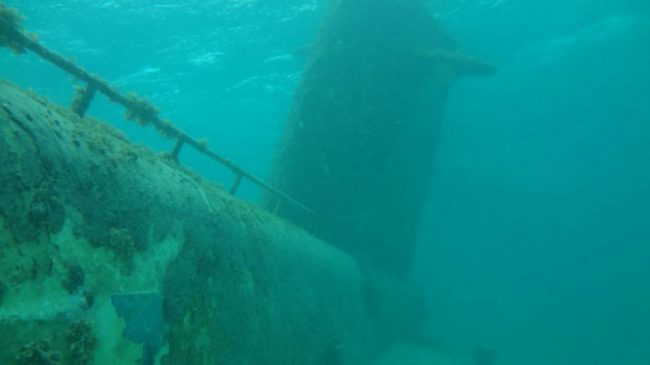
Russia to Remove Hazardous Nuclear Objects Dumped in Its Arctic Waters,
The country’s nuclear energy company will over the next eight years lift two submarines and four reactor compartments from the bottom of the Barents and Kara Seas. By The Barents Observer 5 Aug 20, Russia’s state nuclear agency plans to remove several nuclear objects from the depths of Russia’s Arctic waters in an effort to reduce environmental hazards, Rosatom said this week as it presented a clean-up plan for the region.
Russia’s state nuclear agency plans to remove several nuclear objects from the depths of Russia’s Arctic waters in an effort to reduce environmental hazards, Rosatom said this week as it presented a clean-up plan for the region.
From the late 1960s to the late 1980s, about 18,000 radioactive objects were dumped into Russia’s remote northern waters. Most of them present little environmental risk. But some are increasingly seen as a hazard to Arctic ecosystems.
“Rosatom over the next eight years intends to lift from the bottom of Russia’s Arctic waters six objects that are most dangerous in terms of radioactive pollution,” the company’s spokesperson told the state-run TASS news agency.
The company plans to lift the reactors from the K-11, K-19 and K-140 submarines as well as spent nuclear fuel from the reactor that served the Lenin icebreaker.
In addition, two entire submarines will be lifted: the K-27 from the Kara Sea and K-159 from the Barents Sea. While the former was deliberately dumped by Soviet authorities in 1982, the latter sank during a towing operation in 2003.
The K-27 is located in 33-meter depths east of the Novaya Zemlya archipelago. It has been described by experts as a potential radioactive “time bomb.” The K-159 is located in 200-meter depths off the coast of the Kola Peninsula.
These six objects represent more than 90% of radioactive sources dumped at sea, Rosatom said………
Lifting the six hazardous nuclear objects will not only be technically difficult, but also very expensive.
A recent report made for Rosatom and the European Commission estimated the costs of lifting these six objects at 278 million euros. That includes the cost of bringing them safely to a yard for decommissioning and long-term storage.
Lifting the K-159 alone is estimated to cost 57.5 million euros. Lifting the K-27 and transporting it to a shipyard for decommissioning and long-term storage in Saida Bay will carry a price tag of 47.7 million euros, the report said.
It’s unlikely that Russia’s increasingly cash-strapped treasury will have the 278 million euros needed for the cleanup.
Several countries have previously allocated billions to assist Russia’s post-Soviet efforts to cope with nuclear waste.
Norway has since the mid-90s granted about 1.5 billion kroner (140 million euros) to nuclear safety projects in the Russian part of the Barents region. https://www.themoscowtimes.com/2020/08/05/russia-to-remove-hazardous-nuclear-objects-dumped-in-its-arctic-waters-a71060
August 6, 2020
Posted by Christina Macpherson |
ARCTIC, oceans, Russia, wastes, weapons and war |
Leave a comment

Langston Hughes voiced the opinion that until racial injustice on home ground in the United States ceases, “it is going to be very hard for some Americans not to think the easiest way to settle the problems of Asia is simply dropping an atom bomb on colored heads there.”[25] While his statement was made in 1953, near the eighth anniversary of the Hiroshima and Nagasaki bombings, it remains equally relevant today, as we approach the 75th anniversary
Memorial Days: the racial underpinnings of the Hiroshima and Nagasaki bombings , Bulletin of the Atomic Scientists, Elaine Scarry, Elaine Scarry is the author of Thermonuclear Monarchy: Choosing between Democracy and Doom and The Body in Pain: the Making and Unmaking of the World. She is Cabot Profess… By Elaine Scarry, August 3, 2020
This past Memorial Day, a Minneapolis police officer knelt on the throat of an African-American, George Floyd, for 8 minutes and 46 seconds. Seventy-five years ago, an American pilot dropped an atomic bomb on the civilian population of Hiroshima. Worlds apart in time, space, and scale, the two events share three key features. Each was an act of state violence. Each was an act carried out against a defenseless opponent. Each was an act of naked racism. ……….
Self-defense was not an option for any one of the 300,000 civilian inhabitants of the city of Hiroshima, nor for any one of the 250,000 civilians in Nagasaki three days later. We know from John Hersey’s classic Hiroshima that as day dawned on that August morning, the city was full of courageous undertakings meant to increase the town’s collective capacity for self-defense against conventional warfare, such as the clearing of fire lanes by hundreds of young school girls, many of whom would instantly vanish in the 6,000° C temperature of the initial flash, and others of whom, more distant from the center, would retain their lives but lose their faces.[2] The bombing of Hiroshima and Nagasaki initiated an era in which—for the first time on Earth and now continuing for seven and a half decades—humankind collectively and summarily lost the right self-defense. No one on Earth—or almost no one on Earth[3]—has the means to outlive a blast that is four times the heat of the sun or withstand the hurricane winds and raging fires that follow………
Centuries of political philosophers have asked, “What kind of political arrangements will create a noble and generous people?” Surely such arrangements cannot be ones where a handful of men control the means for destroying at will everyone on Earth from whom the means of self-defense have been eliminated……..
When Americans first learned that the people of Hiroshima and Nagasaki had been collectively vaporized in less time than it takes for the heart to beat, many cheered. But not all. Black poet Langston Hughes at once recognized the moral depravity of executing 100,000 people and discerned racism as the phenomenon that had licensed the depravity: “How come we did not try them [atomic bombs] on Germany… . They just did not want to use them on white folks.”[4] Although the building of the weapon was completed only after Germany surrendered on May 7, 1945, Japan had been designated the target on September 18, 1944, and training for the mission had already been initiated in that same month.[5] Black journalist George Schuyler wrote: “The atom bomb puts the Anglo-Saxons definitely on top where they will remain for decades”; the country, in its “racial arrogance,” has “achieved the supreme triumph of being able to slaughter whole cities at a time.”[6]
Still within the first year (and still before John Hersey had begun to awaken Americans to the horrible aversiveness of the injuries), novelist and anthropologist Zora Neale Hurston denounced the US president as a “butcher” and scorned the public’s silent compliance, asking, “Is it that we are so devoted to a ‘good Massa’ that we feel we ought not to even protest such crimes?”[7] Silence—whether practiced by whites or people of color—was, she saw, a cowardly act of moral enslavement to a white supremacist. Continue reading →
August 4, 2020
Posted by Christina Macpherson |
2 WORLD, culture and arts, history, indigenous issues, Reference, social effects, wastes, weapons and war |
Leave a comment
 How to build a nuclear warning for 10,000 years’ time, The nuclear waste buried far beneath the earth will be toxic for thousands of years. How do you build a warning now that can be understood in the far future?, BBC Future, 3 Aug 20
“This place is not a place of honor,” reads the text. “No highly esteemed dead is commemorated here… nothing valued is here. What is here was dangerous and repulsive to us. This message is a warning about danger.”
It sounds like the kind of curse that you half-expect to find at the entrance to an ancient burial mound. But this message is intended to help mark the site of the Waste Isolation Pilot Project (WIPP) that has been built over 2,000 feet (610m) down through stable rocks beneath the desert of New Mexico. The huge complex of tunnels and caverns is designed to contain the US military’s most dangerous nuclear waste.
This waste will remain lethal longer than the 300,000 years Homo sapiens has walked across the surface of the planet. WIPP is currently the only licensed deep geological disposal repository in operation in the world. A similar facility should also open in Finland in the mid-2020s.
When the facility is full sometime in the next 10 to 20 years, the caverns will be collapsed and sealed with concrete and soil. The sprawling complex of buildings that currently mark the site will be erased. In its place will be “our society’s largest conscious attempt to communicate across the abyss of deep time”.
vThe plan calls for huge 25ft (7.6m) tall granite columns marking the four-sq-mile (10 sq km) outer boundary of the entire site. Inside this perimeter, there is an earth berm 33ft (10m) tall and 100ft (30m) wide marking the repository’s actual footprint. Then inside the berm will be another square of granite columns.
At the centre of this monumental “Do Not Enter” sign will be a room containing information about the site. In case the information becomes unreadable, there will be another buried 20ft below, and another buried in the earth barrier itself. Detailed information about the WIPP will be stored in many archives around the world on special paper stamped with the instruction that it must be kept for 10,000 years, the rather arbitrary length of the site’s license.
The plan calls for huge 25ft (7.6m) tall granite columns marking the four-sq-mile (10 sq km) outer boundary of the entire site. Inside this perimeter, there is an earth berm 33ft (10m) tall and 100ft (30m) wide marking the repository’s actual footprint. Then inside the berm will be another square of granite columns.
Welcome to the world of nuclear semiotics. The vast landscape proposed for the WIPP is partly influenced by science fiction. Nuclear physicists, engineers, anthropologists, sci-fi writers, artists and others have come together in the very broad, esoteric field of research into the way that future humans – and anything that comes after us – might be warned of our deadly legacy
Sadly, the idea to cover the site with a forest of massive concrete thorns was not taken up, nor the idea to create a self-perpetuating atomic priesthood who would use legend and ritual to create a sense of fear around the site for generations. Linguist Thomas Sebok first used the phrase “nuclear priesthood” in 1981. ……. https://www.bbc.com/future/article/20200731-how-to-build-a-nuclear-warning-for-10000-years-time
August 4, 2020
Posted by Christina Macpherson |
2 WORLD, wastes |
Leave a comment