France issues a 10,000-page dossier to convince people of the safety of the Cigeo nuclear waste site
.
Nuclear waste: a 10,000-page dossier to convince people of the safety of
the Cigeo landfill site.
The National Agency for the Management of
Radioactive Waste has submitted a creation authorization application which
opens the way to an investigation phase lasting several years.
This is a major step in view of the possible burial underground in the east of
France, on a still distant horizon, of the most dangerous nuclear waste.
The National Agency for Radioactive Waste Management (Andra) announced on
Tuesday, January 17, that it had officially sent the Ministry of Energy
Transition its request for authorization to create (DAC) for the Cigéo
deep geological disposal center on Monday. This file, heavy with 10,000
pages, opens the way to several years of investigation which could lead to
a green light from the authorities for the construction of infrastructures,
on land located on the border of the departments of Meuse and Haute- Marl.
Le Monde 17th Jan 2023
Many years for removal and disposal of radioactive waste from historic subterranean vaults at Berkeley nuclear power station.
Work is underway to remove intermediate level radioactive waste (ILW) from
historic subterranean vaults at Berkeley nuclear power station. The removal
and transfer of this ILW into newly designed concrete boxes before moving
it into an interim on-site storage facility is a milestone step in the
decommissioning of the site.
This is part of Magnox’s strategy for dealing
with legacy waste in a consistent and cost-effective manner across its
different sites. The first concrete box of radioactive waste has now been
filled and safely stored at the Gloucestershire site, pending long-term
disposal in a future Geological Disposal Facility (GDF).
It is expected to take between four and five years to remove the full inventory of waste from
the vaults at Berkeley. ONR has maintained regulatory oversight throughout
the planning phase and will continue to do as the retrieval phases
progress.
ONR 17th January 2023
France’s nuclear waste agency applies to create a long-term underground storage in Eastern France.
France’s national agency for managing nuclear waste has applied to the
ministry of ecological transition for the creation of a project for the
long-term storage of high-level radioactive waste, the agency said on
Tuesday. The application, which was filed on Monday, represents a new phase
in which French authorities will examine the plan for safety to ensure it
guards against radioactive leaks.
The project, called Cigéo, calls for the
waste to be stored 500 metres below ground in the Callovo-Oxfordian clay
formation in eastern France. Currently the waste is temporarily stored on
the surface, the agency said. Construction could begin as soon as 2027 if
the French nuclear safety authority approves the application. Authorisation
for an industrial pilot phase to store some waste could come from 2035 to
2040, with full operational approval between 2040 and 2050, the agency
said. Finland, Sweden, Switzerland, Belgium and the Netherlands are also
examining the construction of long-term high-level radioactive waste
storage sites.
Reuters 17th Jan 2023
China urges Japan to safely dispose of nuclear-contaminated water
China Daily, Xinhua 2023-01-16
BEIJING — China once again urges Japan to take the reasonable concerns of relevant parties seriously and dispose of its nuclear-contaminated water in a science-based, open, transparent and safe manner, Chinese Foreign Ministry spokesperson Wang Wenbin said on Monday.
Wang made the remarks at a daily news briefing here in response to reports that Japan would pipe nuclear-contaminated water from the Fukushima nuclear power station into the ocean during the spring and summer this year.
Wang said that over the past two years, the international community has strongly questioned and opposed the unilateral and erroneous decision of the Japanese government to discharge nuclear-contaminated water into the ocean, and expressed grave concerns over the impact such an action would have on the marine environment and public health.
Wang said the majority of the Japanese public is also opposed to this irresponsible approach. When polled, 55 percent of respondents opposed the disposal of contaminated water into the ocean.
“It is regrettable that the concerns of all parties have yet to be given due attention or be addressed by Japan,” Wang said, adding that Japan has failed to provide scientific and credible explanations concerning the legitimacy of its plan, the accuracy of data on the nuclear-contaminated water, the effectiveness of the treatment system, and the uncertainties about the environmental impact.
The International Atomic Energy Agency (IAEA) has sent three technical task forces to Japan and so far, there has been no conclusive resolution on Japan’s proposal, Wang said, noting that the agency has also issued many requests to Japan, seeking clarifications or making recommendations for improved disposal plans………. more https://www.chinadaily.com.cn/a/202301/16/WS63c551cea31057c47eba9e94.html—
Huge cost for Japanese tax-payers to clean up the botched nuclear waste storage at Tokai reprocessing plant
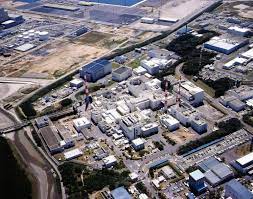
Righting shoddy nuclear waste storage site to cost Japan 36 bil. yen
https://english.kyodonews.net/news/2023/01/a53b75be634e-righting-shoddy-nuclear-waste-storage-site-to-cost-japan-36-bil-yen.html – 16 Jan 23, The Japan Atomic Energy Agency estimates that it will cost taxpayers 36.1 billion yen ($280 million) to rectify the shoddy storage of radioactive waste in a storage pool at the Tokai Reprocessing Plant, the nation’s first facility for reprocessing spent nuclear fuel, an official said Sunday.
Around 800 containers of transuranic radioactive waste, or “TRU waste,” were dropped into the pool from 1977 to 1991 using a wire in the now-disused plant in Tokai, a village in Ibaraki Prefecture northeast of Tokyo. They emit high levels of radiation.
The waste includes pieces of metal cladding tubes that contained spent nuclear fuel, generated during the reprocessing process. The containers are ultimately supposed to be buried more than 300 meters below surface.
The agency has estimated that 19.1 billion yen will be needed to build a new storage facility for the containers, and 17 billion yen for a building that will cover the storage pool and the crane equipment to grab containers.
The 794 containers each are about 80 centimeters in diameter, 90 cm tall and weigh about 1 ton, with many lying on their sides or overturned in the pool. Some have had their shape altered by the impact of being dropped.
The containers were found stored in the improper manner in the 1990s. While the agency said the storage is secure from earthquakes and tsunamis, it has nonetheless decided to improve the situation.
The extractions have been delayed by about 10 years from the original plan and are expected to begin in the mid-2030s.
The Tokai Reprocessing Plant was the nation’s first plant that reprocessed spent fuel from nuclear reactors to recover uranium and plutonium. Between 1977 and 2007, about 1,140 tons of fuel were reprocessed. The plant’s dismantlement was decided in 2014 and is expected to take about 70 years at a cost of 1 trillion yen.
Nuclear waste project in New Mexico opposed in recent poll, company asserts local support
Adrian Hedden, Carlsbad Current-Argus, 14 Jan 23,
New Mexicans in every region of the state allegedly opposed storing high-level nuclear waste in their state, according to a recent poll, as a New Jersey company hoped to build a facility to do so near Carlsbad.
The poll, commissioned by Albuquerque-based Southwest Research and Information Center in a partnership with the Center for Civic Policy surveyed 1,015 voters across the state from Dec. 7 to 14.
It found 60 percent of those surveyed were in opposition to the project, with 30 percent supporting and 10 percent undecided.
Holtec International applied in 2017 for a license from the federal Nuclear Regulatory Commission (NRC) to build and operate what it called a consolidated interim storage facility (CISF) in a remote area near the border of Eddy and Lea counties.
Last year, the NRC published its final environmental impact statement (EIS), contending the project would have little impact on the environment, and recommending the license be issued.
The CISF would temporarily store up to 100,000 metric tons of spent nuclear fuel rods, expected to be brought into the site via rail from nuclear power plants around the country through a 40-year license with the NRC.
The 1,000-acre plot of land where the facility would be built was owned by the Eddy-Lea Energy Alliance, a consortium of local leaders from the cities of Carlsbad and Hobbs, and Eddy and Lea counties.
The Alliance recruited Holtec and set up a revenue-sharing agreement with the company once the CISF goes into operations.
Despite the poll, Holtec officials argued the project was largely supported by New Mexico, after spokesman Gerges Scott said representatives traveled to local governments throughout the state.
Ed Mayer, Holtec project manager of the CISF said the company had adequate support for the project, after he and other representatives met with local leaders and first responders both around the site and along the rail lines.
“We are educating the affected populations, not only from the facility perspective in southeast New Mexico, but from a state perspective on the rail lines,” Mayer said. …………………………….
But opponents, including Southwest Research – a frequent critic of Holtec and the nearby Waste Isolation Pilot Plant repository for transuranic (TRU) nuclear waste – maintained the project would bring an undue risk to New Mexicans nearby and Americans along the waste transportation routes.
That’s why opposition was spread across political parties, gender and ethnicity, said Nuclear Waste Program Manager Don Hancock at Southwest Research and Information Center.
The poll showed more than half of those surveyed in the region were against the project, with opposition also coming irrespective of political affiliation. About 70 percent of Democrats polled opposed Holtec, along with 51 percent of Republicans and 55 percent of Independents.
When broken down by gender, more men supported the project than women, according to the poll.
A majority of Republican men polled were in favor at 51 percent, while 61 percent of Republican women were against the project, read the poll
White men were mostly for the project overall at 49 percent of voters polled in favor, while 71 percent of white women were against.
Hispanic men and women both mostly opposed the project at 51 and 78 percent against, respectively read the poll.
Central, northeast and southwest New Mexico showed opposition of 60 percent or more, while more conservative regions in the southeast and northwest showed 57 and 56 percent against, respectively, the poll showed.
Critics argue storing nuclear waste puts undue risk on New Mexico
Hancock said the poll showed temporary nuclear waste storage was not supported by New Mexico voters, arguing it was opposed through decades of proposals like Holtec’s.
“I’m not surprised by the results because for more than 45 years New Mexicans have strongly opposed high-level waste in New Mexico, whether the waste is proposed for the Waste Isolation Pilot Plant in the 1970s and ‘80s, for Mescalero Apache land in the 1990s, or by Holtec,” he said.
Opposition to the project also came from some of New Mexico’s highest-ranking state officials, and its Congressional delegation, with New Mexico Gov. Michelle Lujan Grisham calling the proposal “economic malpractice” for its potential, she said, of imperiling nearby oil and gas and agriculture industries.
U.S. Sen. Martin Heinrich (D-NM) co-sponsored a bill introduced in the U.S. Senate last year to block any federal funds from supporting such a project.
At the state level, New Mexico Sen. Jeff Steinborn (D-36) was a lead opponent of Holtec’s in the Legislature.
While Texas lawmakers recently passed a bill to ban high-level waste storage in their state, Steinborn said New Mexico policymakers should consider a similar measure to prevent the project coming to fruition.
“From the very beginning this has been a dangerous plan pushed on New Mexico, with real risks for all of our communities, and no end in sight,” Steinborn said. “It’s time for this project to be canceled and be replaced by the federal government committing to a true consent based siting process for the permanent storage of this waste.” https://www.currentargus.com/story/news/2023/01/14/nuclear-waste-project-new-mexico-opposed-recent-statewide-poll-holtec-international-energy/69802597007/
Savannah River Site, Los Alamos plutonium pit production plan could cost over $30 billion

Matthew Christian, Aiken Standard, S.C. Sat, January 14, 2023 https://news.yahoo.com/savannah-river-los-alamos-plutonium-005900374.html?guccounter=1&guce_referrer=aHR0cHM6Ly9uZXdzLmdvb2dsZS5jb20v&guce_referrer_sig=AQAAADJqdcGm_qX6CdNLQ8_g7p81OistELVP4KvAUR1PfQl-0Q2SBtdSRa8GwdKyTIcwvX8aofXxou_a1DmL9axGTUu9S4o5f35bRYrwMTXGG5ZaoooE2PgjQaFWi5uLyJbf3gg8EShjtVi5A26UqvyJcSYMPWp9GQCX2T9NlsjflzJW
Jan. 13—It could cost over $30 billion for the National Nuclear Security Administration to reestablish plutonium pit production, according to recently released report.
Allison Bawden, director of natural resources and environment at the Government Accountability Office, wrote Thursday the Government Accounting Office has identified between $18-$24 billion in potential costs to begin production of 80 plutonium pits per year by 2036 at the Savannah River Site and Los Alamos National Laboratory.
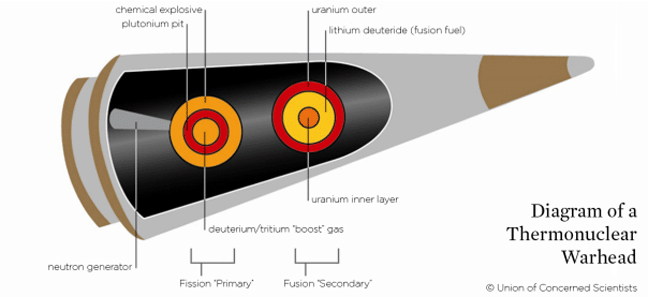
Plutonium pits are the core of a nuclear weapon into which a neutron is injected to begin an uncontrolled reaction.
The United States has been without a permanent capability for plutonium pit production since 1989 after a combination of environmental mismanagement — the EPA and the FBI raided the facility in 1989 after receiving reports of numerous environmental violations from employees — and the end of the Cold War stopped pit production at the Rocky Flats facility in Colorado.
From 2007-2012, around 10 pits per year were made at the Los Alamos National Laboratory.
Trying to restart plutonium pit production and modernizing the Los Alamos National Laboratory for production has cost $8.6 billion since 2005 according to the report.
NNSA plans to produce 50 pits per year at the Savannah River Site beginning in 2036 and 30 pit per year at the Los Alamos National Laboratory beginning in 2027.
At the Savannah River Site, the plans call for the failed Mixed-Oxide Fuel Fabrication Facility to be converted into the Savannah River Plutonium Production Facility.
Bawden says the NNSA estimates through 2035 a cost of between $6.9-$11.1 billion to make the conversion, which is in three steps: getting the main building ready, providing utilities and other infrastructure to the area and constructing an administration building, security facilities and a training area.
Other costs include $6.94 billion for plutonium modernization program at the Savannah River Site and the Los Alamos National Laboratory .
At the Savannah River Site, Bawden says costs include preparing employees to produce pits and learning from the Los Alamos National Laboratory how to produce pits more efficiently. She says at Los Alamos the costs include designing a pit production line, getting equipment, hiring and training staff and making sure the production line is working and checking the quality of the produced pits.
She adds other costs at the Los Alamos National Laboratory include between $4.17-$5.61 billion for capital projects, $240-244 million for support buildings and $45-46 million for maintenance and recapitalization.
Bawden spends a few pages in the 84-page report discussing activities at other Department of Energy-owned sites that are not included in the NNSA cost estimates.
Those activities include design of a warhead at Lawrence Livermore National Laboratory and the lab making sure the produced pits meet the specifications of the warhead, experimental facilities at the Nevada National Security Site, production of non-nuclear pit components at the Kansas City National Security Campus, disassembling pits at the Pantex Plant in Texas and storing produced waste at the Waste Isolation Pilot Plant in New Mexico.
Including these costs and developing more thorough estimates of the costs at the Savannah River Site and Los Alamos is one of two recommendations the GAO makes in the report.
The other is for the NNSA to develop a more complete schedule of activities and when they’re supposed to happen.
Bawden notes NNSA decision-makers said both recommendations will be implemented later in the process when firm construction plans for the Savannah River Plutonium Production Facility are set in 2024 or 2025. She adds the NNSA decision-makers said they are hesitant to make more thorough cost estimates because of a concern of making an estimate, then paying a higher cost and having the public concerned about rising costs for the project.
Significant environmental victory for Savannah River Site Watch in stopping import of high level nuclear waste from Germany
A decade-long effort to export a large volume of highly radioactive nuclear
waste from Germany to the U.S. Department of Energy’s Savannah River Site
(SRS) in South Carolina has been terminated, resulting in a significant
environmental victory.
The German company managing the waste at the Juelich
research site informed the public-interest group Savannah River Site Watch
(SRS Watch) that “the option to ship the aforementioned spent fuel has
indeed been terminated…” These definitive words bring an end to a
decade-long effort by DOE to import an unusual form of highly radioactive
spent fuel to SRS.
Savanah River Site Watch 10th Jan 2023
Does anyone know why I get this message? When I try to find out about Savanah River Site Watch, and especially when I try to find out about “a significant
environmental victory” . – Savanah River Site Watch 10th Jan 2023
https://srswatch.org/3832-2/
The U.S. Can’t Make Enough Plutonium Triggers for Its Nuclear Warheads
The Pentagon wants 80 new plutonium pits per year by 2030. It doesn’t look like that’s possible.
VICE, By Matthew Gault 13 Jan 23,
American power relies on the constant threat of nuclear annihilation. One of the reasons the U.S. military is so powerful is that the country is sitting on more than 5,000 potential world-ending nuclear weapons. But those nukes are aging and America hasn’t been building more. The Pentagon’s goal is to spin up production and make 80 plutonium pits—the trigger mechanism for nukes—a year by 2030. A new report from federal investigators said that’s a pipe dream.
A nuclear pit is a hollow ball of plutonium. On a basic level, nuclear weapons work by surrounding one of these balls with high explosives. When the high explosives go off, they apply uniform pressure to the plutonium pit and cause a nuclear explosion. They are a key ingredient in nuclear weapons, but America hasn’t made a new one since 1989.
America’s nuclear infrastructure is crumbling and in desperate need of modernization, according to the Pentagon. To keep America’s nukes running, the Pentagon wants to start production again. According to a new report from the Government Accountability Office (GAO), it’s not going well.
This isn’t shocking. The National Nuclear Safety Administration (NNSA) warned Congress in 2022 that the official plan to meet a deadline of 80 pits produced per year by 2030 wasn’t going to happen. According to the GAO, the NNSA doesn’t even know how much it will cost to create the infrastructure to build these pits, what resources it will need, or how long the project will take. “According to officials, such a life cycle cost estimate has not been completed because of concerns about releasing preliminary or uncertain information,” the report said.
For a brief period after the end of the Cold War it seemed like broad nuclear disarmament might be possible. That didn’t happen and now the U.S. is falling behind on modernization goals it set for itself. …………………….
America has pushed to modernize its nuclear forces. The U.S. Air Force is building a new intercontinental-ballistic missile and revealed a new stealth bomber last year with the fanfare of a Super Bowl halftime show. But these fancy new weapons require plutonium cores, and it doesn’t look like the U.S. can build them fast enough. https://www.vice.com/en/article/88qp5k/the-us-cant-make-enough-plutonium-triggers-for-its-nuclear-warheads
Slew of companies keeping watch on DOE nuclear cleanup work for small biz
More than 20 companies expressed interest to the Department of Energy’s Office of Environmental Management in landing a slice of various nuclear remediation projects set aside for small business. Twenty-one signed up by Dec. 20 to be on an “interested vendors”… (subscribers only) more https://www.exchangemonitor.com/slew-of-companies-keeping-watch-on-doe-nuclear-cleanup-work-for-small-biz-2/
Arctic nuclear waste ship gets funding

Russia’s Prime Minister Mikhail Mishustin has signed the decree granting 12,4 billion rubles to build a transport- and maintenance ship for spent nuclear fuel and radioactive waste from the country’s fleet of icebreakers.
Thomas Nilsen Barents Observer, 11 Jan 23
Not since Soviet days has more nuclear-powered icebreakers been operating at the same time in Arctic waters, the Barents Observer reported last week.
Russia has over the last few years put three brand new icebreakers of the Project 22220 class into operation. Two more are under construction in St. Petersburg and a sixth vessel recently got funding with a goal to put it into service by 2030.
Each of the new icebreakers is powered with two RITM-200 reactors, a reactor type larger than the older Arktika-class icebreakers.
New reactors require new technologies to reload nuclear fuel elements. The service vessel used by Rosatomflot today, the “Imandra”, is from 1980 and does not meet the demands of the new icebreaker fleet, larger in size and numbers.
The new service ship (Project 22770) will be nearly 160 meters long and carry its own cranes to lift in and out containers with spent nuclear fuel or fresh uranium fuel from the icebreaker reactors, either at Rosatom’s service base in Murmansk or in open sea anywhere along the Northern Sea Route………………….. more https://thebarentsobserver.com/en/nuclear-safety/2023/01/arctic-nuclear-waste-ship-gets-funding
Nuclear colonialism? Nuclear country Canada “helps” Ghana to develop nuclear waste disposal facility
Nuclear power ambitions in Ghana receive boost with disposal facilities, ESI Africa By Nomvuyo Tena, Jan 10, 2023
Ghana has joined a pilot project run by the International Atomic Energy Agency (IAEA) for the disposal of sealed radioactive sources. The disposal facilities will bring the country closer to its nuclear power ambitions.
The IAEA is providing technological and engineering support for the first of a kind construction and implementation of borehole disposal facilities for radioactive waste. This is part of a pilot project underway in Malaysia and Ghana, funded by Canada……………….
Significant progress in the regulatory framework bring nuclear power closer
Ghana is at an advanced stage of implementing its borehole project, with significant progress having been made in the regulatory authorisation processes. The borehole facility construction is expected to begin as soon as the licensing review process is completed.
“We are implementing the borehole disposal system as a final solution for disused sealed radioactive sources generated in the country,” said Eric Tetteh Glover, head of the Radioactive Waste Management Centre of the Radiation Protection Institute, Ghana Atomic Energy Commission. “The successful implementation of the borehole disposal system will provide the country with a licensed disposal facility, and at the same time will further enhance the human and technical capabilities required for the country’s nuclear power programme.”…………………………………….. more https://www.esi-africa.com/industry-sectors/smart-technologies/nuclear-power-ambitions-in-ghana-receive-boost-with-disposal-facilities/
Lithuania deal to dismantle Soviet-era nuclear reactors could be world first
Pamela Largue , January 9, 2023
https://www.powerengineeringint.com/nuclear/waste-management-decommissioning/lithuania-to-dismantle-soviet-era-nuclear-reactors/
Two contracts have been signed to plan the dismantling and waste management for the Ignalina Nuclear Power Plant in Lithuania.
The first of two four-year contracts was signed with a consortium led by Westinghouse Electric Spain, including Jacobs Slovakia, and Lithuanian Energy Institute.
The second contract was signed with another consortium led by the French company Electricite de France.
The dismantling services will be provided in two phases. The first will see contractors propose engineering solutions for dismantling the reactor.
The engineering design concept will be assessed and then further developed in consultation with stakeholders, namely the European Commission, Ministry of Energy of the Republic of Lithuania, CPVA (Central Project Management Agency) and VATESI (State Nuclear Power Safety Inspectorate).
Audrius Kamienas, director general of the Ignalina plant, said in a statement that the signing of the contracts is an important milestone, as dismantling the reactor core is the most challenging part of the decommissioning.
“There are only a few examples of graphite reactors being dismantled in the world today, but the RBMK reactor type has never been dismantled before.
“This is an extremely complex task, unprecedented in the world, for which preparatory work will continue for several more years.”
Physical dismantling of the reactor will commence in 2028 and will be funded by the EU Ignalina Programme.
Graphite-moderated reactor
Dismantling two of the most powerful RBMK reactors is believed to be a decommissioning first.
According to the World Nuclear Association, Soviet-designed RBMK (reaktor bolshoy moshchnosty kanalny, high-power channel reactor) is a water-cooled reactor with individual fuel channels and uses graphite as its moderator.
Ignalina could be the first graphite-moderated reactor plant to be dismantled, making it an important test bed for methodologies that could be used to decommission others of the same type, such as the UK’s Magnox and advanced gas-cooled reactors, which also have graphite cores.
Jacobs Energy, Security & Technology senior vice president Karen Wiemelt, commented: “Our teams based in the UK, France and Slovakia are applying decommissioning skills acquired through work on some of the world’s most complex and challenging nuclear sites including Sellafield and Fukushima.”
In 2002, the Lithuanian government decided to shut down Ignalina NPP, which supplied up to 88% of the country’s electricity.
Coal Boss Compiles Lastest Nuclear Dump Report for Government who have just Approved his Coal Mine.

Originally posted on Keep Cumbrian Coal in the Hole: High Level Cronyism and Corruption – Coal and Nuclear Waste Still not raising an eyebrow in the press or by NGOs is the fact that the coal boss Mark Kirkbride is the Government’s key advisor on the dumping of nuclear wastes in big holes. The latest…
Coal Boss Compiles Lastest Nuclear Dump Report for Government who have just Approved his Coal Mine. — RADIATION FREE LAKELAND
Indigenous Taiwanese kept in the dark as a massive nuclear waste dump was imposed on their island
No one bothered to inform the residents why the southern tip of their island home was suddenly no longer accessible. All they knew was that the place where women for generations had scoured the craggy tide pools for crabs and where farmers had long tended fields of taro and millet had suddenly been turned into a large construction site.
Rumors began to fly. It was a pineapple cannery. No, it was a cannery for fish. Whatever it was, the locals decided, it would mean more jobs for the islanders.
It was not until years later, in 1980, when a local pastor saw an article buried in the back of a newspaper, that the islanders found out what the site actually was: a massive nuclear waste dump.
New York Times 5th Jan 2023
-
Archives
- October 2026 (129)
- September 2026 (339)
- August 2026 (330)
- July 2026 (355)
- June 2026 (287)
- May 2026 (306)
- April 2026 (356)
- March 2026 (251)
- February 2026 (267)
- January 2026 (308)
- December 2025 (358)
- November 2025 (359)
-
Categories
- 1
- 1 NUCLEAR ISSUES
- business and costs
- climate change
- culture and arts
- ENERGY
- environment
- health
- history
- indigenous issues
- Legal
- marketing of nuclear
- media
- opposition to nuclear
- PERSONAL STORIES
- politics
- politics international
- Religion and ethics
- safety
- secrets,lies and civil liberties
- spinbuster
- technology
- Uranium
- wastes
- weapons and war
- Women
- 2 WORLD
- ACTION
- AFRICA
- Atrocities
- AUSTRALIA
- Christina's notes
- Christina's themes
- culture and arts
- Events
- Fuk 2022
- Fuk 2023
- Fukushima 2017
- Fukushima 2018
- fukushima 2019
- Fukushima 2020
- Fukushima 2021
- general
- global warming
- Humour (God we need it)
- Nuclear
- RARE EARTHS
- Reference
- resources – print
- Resources -audiovicual
- Weekly Newsletter
- World
- World Nuclear
- YouTube
-
RSS
Entries RSS
Comments RSS

