Spreading the Bomb – Will Ottawa revisit Canada’s support for plutonium reprocessing?

Canadian Coalition for Nuclear Responsibility
February 21, 2023
Today, the Canadian Coalition for Nuclear Responsibility and researchers from five universities are urging Ottawa to reconsider its financial and political support for reprocessing in Canada – extracting plutonium from used nuclear fuel.
Plutonium is one of the key materials needed to make nuclear weapons—the other alternative is highly enriched uranium. Plutonium is created as a byproduct in nuclear reactors. Once extracted, plutonium can be used either as a nuclear fuel or as a nuclear explosive. The chemical process used to separate plutonium from other radioactive substances produced in nuclear reactors is called reprocessing
In 1974 India used plutonium from a Canadian reactor to explode an atomic bomb in an underground test. The entire world was shocked to realize that access to plutonium and the making of an atomic bomb may be separated only by an act of political will.
Last week, a House of Commons committee released a report recommending that the government “work with international and scientific partners to examine nuclear waste reprocessing and its implications for waste management and [nuclear weapons] proliferation vulnerability.
The recommendation by the House of Commons committee echoes numerous calls by civil society groups and by U.S. and domestic researchers after Canada announced a $50.5 million grant to the Moltex corporation in March 2021 for a New Brunswick project to develop a plutonium reprocessing facility at the Point Lepreau nuclear site on the Bay of Fundy.
Allowing plutonium reprocessing in Canada sends a dangerous signal to other countries that it is OK to for them to extract plutonium for commercial use. Such a practice increases the risk of spreading nuclear weapons capabilities to countries that currently do not possess the means to make nuclear weapons. The risk is that much greater if Canada sells the technology, as is currently envisaged.
“By supporting the implementation of reprocessing technology intended for export, in connection with a plutonium-fuelled nuclear reactor, without regard for the weapons implications, Canada may be once again spreading the bomb abroad,” says Dr. Gordon Edwards, President of the Canadian Coalition on Nuclear Responsibility.
Reprocessing is often justified as a solution to the problem of dealing with nuclear waste, but in reality, it only makes the challenge even harder. Instead of having all the radioactive materials produced in solid spent fuel, these get dispersed into multiple solid, liquid and gaseous waste streams.
Researchers from the University of British Columbia, Princeton University and three New Brunswick universities are supporting the call for an international review. “We’re heartened that the House of Commons Committee listened to the concerns about plutonium reprocessing raised by numerous experts and concerned citizens,” says Dr. Susan O’Donnell, Adjunct Professor at the University of New Brunswick.
Dr. Edwards cited three letters written to Prime Minister Justin Trudeau by nine prominent nonproliferation experts, including plutonium expert Dr. Frank von Hippel. “The Prime Minister’s failure to respond indicates an appalling lack of good governance on the proliferation of nuclear weapons,” said Dr. Edwards.
To date the government has not responded to the letters or even acknowledged the monumental significance of the nuclear weapons connection with reprocessing. The House of Commons Science and Research Committee cited the letters by Dr. von Hippel and others as rationale for their recommendation to conduct the review.
Commercial reprocessing has never been carried out in Canada but in the past, Canada has been complicit in the production of nuclear weapons. During the Cold War some reprocessing was done at the federal government’s Chalk River Nuclear Laboratory, at a time when Canada sold both uranium and plutonium to the US army for use in nuclear weapons. These operations resulted in a permanent legacy of nuclear waste and radioactive contamination in Canada.
The first reactors were built to produce plutonium for bombs. The first reprocessing plants were built to extract plutonium to be used as a nuclear explosive. Following India’s use of plutonium from a nuclear reactor supplied by Canada in its 1974 weapon test, the United States banned commercial plutonium reprocessing in 1977 to reduce the danger of weapons proliferation.
Canada has had an informal ban on reprocessing since the 1970s. A 2016 Canadian Nuclear Laboratories report stated that reprocessing used CANDU fuel would “increase proliferation risk.” That CNL admission was fully confirmed in a major report (330 pages) released three months ago by a U.S. National Academy of Sciences. The expert panel reached a consensus that the reprocessing technology proposed for New Brunswick by the Moltex corporation “does not provide significant proliferation resistance.”
The need for an independent international review is urgent, as Moltex announced just last week that the company is seeking an additional $250 million in government funding.
The researchers supporting the call for an international review of plutonium reprocessing in relation to the spread of nuclear weapons are:
Dr. Gordon Edwards, President, Canadian Coalition for Nuclear Responsibility
Dr. Susan O’Donnell, Adjunct Professor and Principal Investigator of the Rural Action and Voices for the Environment [RAVEN] project, University of New Brunswick
Dr. Janice Harvey, Assistant Professor, Environment & Society Program, St. Thomas University
Dr. Jean-Philippe Sapinski, Assistant Professor of Environmental Studies, Université de Moncton
Dr. M.V. Ramana, Professor and Simons Chair in Disarmament, Global and Human Security, School of Public Policy and Global Affairs, University of British Columbia
Dr. Frank von Hippel, Senior Research Physicist and Professor of Public and International Affairs Emeritus, Program on Science & Global Security, Princeton University
Dumping 1M gallons of radioactive water in Hudson is ‘best option,’ per Indian Point nuclear plant owner

Gothamist, Rosemary Misdary, Feb 18, 2023
The owner of the defunct Indian Point nuclear facility says it’s planning to dump about 1 million gallons of radioactive water into the Hudson River. The move, which the company describes as the “best option” for the waste, could happen as early as August.
A Feb. 2 meeting of the Indian Point Decommissioning Oversight Board heated up when the plant’s owner Holtec International disclosed the plan as part of its lengthy closure process. The contaminated water could just naturally — and safely — decay in storage onsite.
Environmental groups and residents are also concerned this could harm their community, as the Hudson River is already a federally designated toxic Superfund site. Rich Burroni, Holtec’s site vice president for Indian Point, agreed to give the community at least a month’s notice before any radioactive discharge into the Hudson River begins.
But Holtec is well within its legal rights and permits to discharge waste at the same rate as it did when operating, and it does not need federal, state or local approval to dump the contaminated water. This practice is standard for nuclear plants.
Nearly two years have passed since Indian Point shut down its third and final reactor in the village of Buchanan, located on the Hudson’s east bank about 30 miles north of Midtown. Toward the end of its 59-year lifespan, the plant had more than a 2,000 megawatt capacity — providing electricity to more than 2 million homes, or 13% of the state’s power demand.
Holtec received about $2.4 billion in funds, shouldered by ratepayers, to decommission the plant. And it wants to do so in 12 years, which is in accordance with town’s wishes to repurpose the site. But Holtec and the surrounding community are still debating what to do with Indian Point’s radioactive remnants.
“Yes, you can do it [discharge radioactive water]. It’s normal practice. But should you when you have other options that might avoid this additional release of radioactivity to the environment?” said Edwin Lyman, director of nuclear power safety at the Union of Concerned Scientists, a nonprofit science advocacy organization. “It may only cause a low risk to the environment as far as we know, but there are other options here, and why not try to minimize the harm?”……………………………………………
Options are limited when it comes to disposing of radioactive waste, and only three methods are typically used for tainted water. ……………………………………………………..
Lyman said a fourth option would be leaving the radioactive water onsite to decay over time into non-harmful helium. “Keep storing indefinitely and eventually the problem will solve itself,” he said.
For tritium, this process would take just over 24 years. Lyman considers this the best option because it minimizes the effects on the environment. It’s also viable because other radioactive material — spent fuel generated from operating the plant — remains onsite and will take hundreds of thousands of years to decay. This material includes plutonium and uranium.
Lyman said this waste has no place to go and will be there for a long time, so there’s no rush to deal with the radioactive water while spent fuel continues to sit on the property. Most radioactive waste is stored where it is generated. And federal regulations allow 60 years for decommissioning. That spent fuel could remain at the site even after the decommissioning is completed, according to the Nuclear Regulatory Commission.
“In the long term, it’s going to degrade, and the only way to protect the environment from that degradation is to bury it in a deep geological repository,” Lyman said…………………………………..
The next meeting for the Indian Point Decommissioning Oversight Board will take place on April 27 at 6 p.m. at Cortlandt Town Hall. Participants have the option to attend virtually. https://gothamist.com/news/dumping-radioactive-water-hudson-river-best-option-indian-point-nuclear-plant-owner-holtec
The World’s Dumping Ground for Nuclear Waste Doesn’t Want Fukushima’s Wastewater
Japan’s plan to discharge more than 1,000 tanks of nuclear wastewater into the Pacific has incensed island nations.
VICE, By Hanako Montgomery 17 Feb 23,
TOKYO — In the middle of the Pacific Ocean, a group of tropical islands has never seen winter. But one morning 70 years ago, a loud bang followed by a flash of light made it “snow” for the first time.
Fluttery and white, the powdery material sank into the Marshall Islands’ deep blue lagoons. It lightly covered the palm trees that lined Rongelap Atoll, astounding those who came out of their thatched homes to watch it settle on roofs. Children played with it, scooping the dust into their mouths.
But within hours, the atoll’s residents mysteriously began falling ill. Hair fell out in clumps. Skin burned. People vomited. They were evacuated two days later, but the damage was already done. Years later, the Rongelapese would suffer heightened cases of cancer, miscarriages, and birth deformities.
This was the fallout of Castle Bravo, the U.S.’ largest-ever thermonuclear bomb test that sprinkled radioactive debris on that warm March day. Now, residents of the island nations that include Fiji, the Marshall Islands, and French Polynesia invoke the nuclear accident and its subsequent contamination to oppose Japan’s plan to release its nuclear wastewater into the Pacific.
“We have a legacy of being the dumping ground when it comes to the issue of nuclear waste,” James Bhagwan, a Fijian anti-nuclear activist and secretary-general of the Pacific Conference of Churches, told VICE World News.
“Pacific Islanders have a spiritual bond with both land and ocean. So this again speaks to the issue of poisoning a part of us, our family,” he said.
The comparison Bhagwan drew between the controlled release of treated wastewater and an atmospheric nuclear test gone wrong may sound like a stretch. But it speaks to how much Pacific Island nations fear Japan’s planned discharge in the coming months of more than 1.3 million metric tons of contaminated water into the world’s largest ocean.
The nuclear waste sits in over 1,000 water tanks in Japan’s northeastern prefecture of Fukushima, the product of the meltdown of the Daiichi nuclear reactors there in 2011. …………………………………….
In objecting to the release, Motarilavoa Hilda Lini, a Vanuatu stateswoman, has cited the slogan of the Nuclear Free and Independent Pacific movement: “If it is safe, dump it in Tokyo, test it in Paris, and store it in Washington, but keep our Pacific nuclear-free.”…………………………………………………………..
Ken Buesseler, a marine radiochemist and one of five experts on the Pacific Islands Forum’s panel of independent scientists, questioned TEPCO’s ability to sufficiently remove radioactive material from the liquid. He cited how, in 2020, the company had to retreat about 70 percent of the stored wastewater because it was found to contain amounts of radioactive substances exceeding standards.
“That doesn’t give me a lot of confidence,” he told VICE World News. Monitoring the wastewater after it was released into the ocean would be too late, Buesseler added, as once it’s in the ocean, TEPCO can’t get it back.
He also faulted the company for analyzing only about a quarter of the 1,061 tanks and providing testing results on just seven radioactive substances out of the dozens TEPCO said it would monitor. This, he said, ignored the possibility that there would be variation among the tanks, potentially overlooking harmful levels of more radioactive substances such as cesium-137 and strontium-90………………………………………………
Though the deadline for Japan’s release of the treated wastewater is fast approaching, the country is yet to fully convince Pacific Island nations that its plan won’t be harmful. The tanks fill up day by day, swelling to their 1.3 million ton limit.
Now, the Pacific Islands are running out of time to defend their oceans, the environmentalist Bhagwan said, warning Japan of the consequences that could lay ahead.
“The culture of shame will be laid upon the Japanese government and the people of Japan in years to come. Do they want that to be part of their legacy?” he said. https://www.vice.com/en/article/4axjk9/japan-nuclear-disaster-fukushima-wasterwater-pacific-islands
US takes another step toward gearing up nuclear plutonium pit factory
SUSAN MONTOYA BRYAN, Sat, February 11, 2023
ALBUQUERQUE, N.M. (AP) —
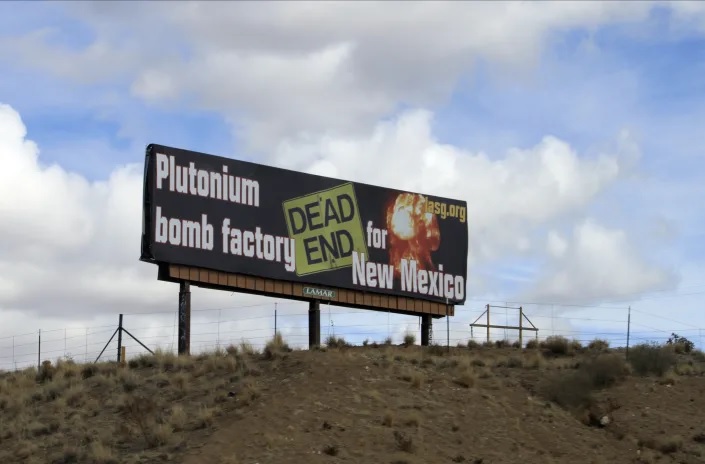
The U.S. agency in charge of producing key components for the nation’s nuclear arsenal has cleared the way for new equipment to be installed at a New Mexico laboratory as part of a multibillion-dollar mission, but nuclear watchdog groups say the project already is behind schedule and budgets have ballooned.
Approval for moving equipment into place at Los Alamos National Laboratory was first outlined in an internal memo issued by the deputy secretary of energy in January. The National Nuclear Security Administration, which is overseen by the U.S. Department of Energy, made a public announcement Thursday.
SUSAN MONTOYA BRYAN
Sat, February 11, 2023 at 8:42 AM GMT+11·3 min read
ALBUQUERQUE, N.M. (AP) —
The U.S. agency in charge of producing key components for the nation’s nuclear arsenal has cleared the way for new equipment to be installed at a New Mexico laboratory as part of a multibillion-dollar mission, but nuclear watchdog groups say the project already is behind schedule and budgets have ballooned.
Approval for moving equipment into place at Los Alamos National Laboratory was first outlined in an internal memo issued by the deputy secretary of energy in January. The National Nuclear Security Administration, which is overseen by the U.S. Department of Energy, made a public announcement Thursday.
The work will include the design, fabrication and installation of gloveboxes and other special equipment needed to make the plutonium cores. The work will be split between Los Alamos in northern New Mexico and the Savannah River Site in South Carolina, with the locations facing a congressional mandate to make at least 80 of the cores each year by 2030.
The deadline for meeting that capacity has been pushed back, with the memo being the latest evidence that the minimum equipment necessary will be in place at Los Alamos by August 2030, or four years later than expected…………………………………………..
Greg Mello, director of the watchdog Los Alamos Study Group, said the NNSA has made contradictory statements about the delays and what they mean for the overall plutonium pit project. He pointed to NNSA statements in 2017 and 2018 in which the agency predicted problems if it were producing pits while also replacing gloveboxes and other equipment at the same time.
“There is more they aren’t saying,” Mello said. “We believe NNSA and LANL will struggle mightily, with further setbacks, failures and accidents in a misguided attempt to produce any meaningful number of pits in that cramped, aging facility.”
SUSAN MONTOYA BRYAN
Sat, February 11, 2023 at 8:42 AM GMT+11·3 min read
ALBUQUERQUE, N.M. (AP) —
The U.S. agency in charge of producing key components for the nation’s nuclear arsenal has cleared the way for new equipment to be installed at a New Mexico laboratory as part of a multibillion-dollar mission, but nuclear watchdog groups say the project already is behind schedule and budgets have ballooned.
Approval for moving equipment into place at Los Alamos National Laboratory was first outlined in an internal memo issued by the deputy secretary of energy in January. The National Nuclear Security Administration, which is overseen by the U.S. Department of Energy, made a public announcement Thursday.
The work will include the design, fabrication and installation of gloveboxes and other special equipment needed to make the plutonium cores. The work will be split between Los Alamos in northern New Mexico and the Savannah River Site in South Carolina, with the locations facing a congressional mandate to make at least 80 of the cores each year by 2030.
– ADVERTISEMENT –
https://s.yimg.com/rq/darla/4-10-1/html/r-sf-flx.html
The deadline for meeting that capacity has been pushed back, with the memo being the latest evidence that the minimum equipment necessary will be in place at Los Alamos by August 2030, or four years later than expected.
The nuclear agency contends that installation of the equipment isn’t necessary for Los Alamos to produce 30 pits per year, and that the lab will be building war reserve pits using existing equipment as the project proceeds.
Agency spokeswoman Shayela Hassan said in an email to The Associated Press that the NNSA expects an increasing number of pits to be produced each subsequent year until the new equipment is installed. She said that’s when the capability will be in place to produce 30 pits each year “with moderate confidence.”
The long-shuttered Rocky Flats Plant outside Denver was capable of producing more than 1,000 war reserve pits annually before work stopped in 1989 due to environmental and regulatory concerns. In 1996, the DOE provided for limited production capacity at Los Alamos, which produced its first war reserve pit in 2007. The lab stopped operations in 2012 after producing what was needed at the time.
Greg Mello, director of the watchdog Los Alamos Study Group, said the NNSA has made contradictory statements about the delays and what they mean for the overall plutonium pit project. He pointed to NNSA statements in 2017 and 2018 in which the agency predicted problems if it were producing pits while also replacing gloveboxes and other equipment at the same time.
“There is more they aren’t saying,” Mello said. “We believe NNSA and LANL will struggle mightily, with further setbacks, failures and accidents in a misguided attempt to produce any meaningful number of pits in that cramped, aging facility.”
The memo provides formal cost and schedule estimates for getting equipment in place at Los Alamos, but it’s unclear when construction will begin. The cost has been pegged at roughly $1.85 billion.
More details about spending and schedules are expected when the NNSA submits its budget request to Congress next month.
In January, the Government Accountability Office said in a report that NNSA plans for reestablishing plutonium pit production do not follow best practices and run the risk of delays and cost overruns.
The GAO described the modernization effort as the agency’s largest investment in weapons production infrastructure to date, noting that plutonium is a dangerous material and making the weapon cores is difficult and time consuming. https://news.yahoo.com/us-takes-another-step-toward-214207395.html
Russia closes down the world’s largest nuclear-powered strategic submarine (they don’t say where the radioactive wastes go)
Russia Loses World’s Largest Nuclear Submarine, NewsWeek, BY BRENDAN COLE ON 2/6/23
The Russian Navy has confirmed it has decommissioned its nuclear-powered strategic submarine Dmitry Donskoy, which formed part of Moscow’s formidable Cold War weapon system.
There had been speculation for months about the fate of the submarine, which had been launched in 1980 and whose NATO reporting name was Typhoon.
In 2021, Russia’s state news agency Tass reported that the vessel would stay in service until 2026.
It was the first of six Akula-class Northern Fleet submarines laid down at the Sevmash shipyard in Severodvinsk on the White Sea which were commissioned in the 1980s.
At 574 feet long, Dmitry Donskoy‘s status as the world’s largest submarine was overtaken by the 608-feet-long Belgorod nuclear submarine, which was commissioned in July 2022. Dmitry Donskoy had a displacement of around 53,000 tons and was modernized and re-equipped in 2002 with the “Bulava” missile.
While it was reported in July 2022 that the vessel had been terminated, no official confirmation was expected until the end of the year. The vessel’s last reported activity was in the sea trials of SSN Krasnoyarsk in September 2022.
On Monday, Vladimir Maltsev, head of the Russian Movement for Navy Support, told TASS that the vessel had been “decommissioned” and would “await utilization at a naval base in Severodvinsk together with two other units of this project.”
The class was the backbone of the Soviet Union’s second-strike nuclear deterrent, with 20 massive R-39 “Rif” SLBMs (submarine-launched ballistic missile) having up to 200 warheads in total. The Drive described it as the “most deadly single weapon system” Russia had designed in the Cold War. Newsweek has contacted the Russian defense ministry for comment.
Russia suffered problems with another of its vessels recently, the 1000-foot flagship Admiral Kuznetsov, which is reportedly unable to move under its own power. Russia’s only aircraft carrier has been out of service and in dry dock for repairs for more than five years and has been beset by technical setbacks……………….. https://www.newsweek.com/donskoy-submarine-russia-nuclear-donskoy-1779194
Japan Plans to Dump Fukushima Wastewater Into a Pacific With a Toxic Nuclear History
In December, the U.S.-based National Association of Marine Laboratories also announced its opposition to TEPCO’s plans, publishing a position paper that says “there is a lack of adequate and accurate scientific data supporting Japan’s assertion of safety” while “there is an abundance of data demonstrating serious concerns about releasing radioactively contaminated water.”
BY AMY GUNIA , FEBRUARY 6, 2023,
Pacific Island nations have for decades been grappling with the environmental and health consequences of Cold War-era nuclear testing in the region by the likes of the U.S. and France. Now, they worry about another kind of nuclear danger from neighbors much closer to home.
As concerns over energy security and the desire to transition away from fossil fuels pushes several Asian nations to reconsider once-scrapped nuclear power programs, there is increasing anxiety over how the waste from those facilities—depending on the methods of disposal—might impact the lives of Pacific Islanders.
Notably, in the region, Philippines President Ferdinand “Bongbong” Marcos said in his first address to Congress in mid-2022 that he was open to adding nuclear energy to the country’s energy mix, the Indonesian government said in December it plans to build a nuclear power plant by 2039, and weeks later Japan announced that it plans to ramp up the use of nuclear energy.
Nuclear plants have long been touted as a reliable source of carbon-free energy, though many plants across the world had been shuttered in past decades over worries about the safety of nuclear waste disposal. In this new era of nuclear revival, similar uncertainties abound.
In Japan, one plant that isn’t even operational has become the frontline for the fight between activists seeking safety assurances for waste disposal and operators who are running out of space in on-site tanks to store the wastewater accumulating from keeping damaged reactors cool. Currently, Japan plans to release wastewater from the Fukushima Daiichi nuclear power plant into the Pacific Ocean later this year.
“It’s just horrendous to think what it might mean,” says Henry Puna, the secretary general of the Pacific Islands Forum (PIF), a regional intergovernmental organization that has more than a dozen member countries, including, for example, the Cook Islands, Fiji, Tonga, and Vanuatu. “The people of the Pacific are people of the ocean. The ocean is very much central to our lives, to our culture, to our livelihoods. Anything that prejudices the health of the ocean is a matter of serious concern.”
When a magnitude 9.1 earthquake and tsunami hit off the coast of Japan in 2011, it caused a meltdown at the Fukushima nuclear power plant. Since then, water is being used to cool the damaged reactors and prevent further catastrophe. Now, more than 1.3 million metric tons of radionuclide-contaminated water has been collected on site, and it continues to accumulate, as rain and groundwater seep in. Tokyo Electric Power Company (TEPCO), the operator of the plant, says that the storage tanks take up too much space and hinder decommissioning the plant. Japan initially said that it would begin releasing the water into the ocean in the spring of 2023. Chief Cabinet Secretary Hirokazu Matsuno told the media in January that the release target date is now around spring or summer, which appears to be a postponement, according to the Associated Press, due to construction delays on a pipeline and the apparent need to gain greater public support.
The plan has faced widespread opposition. Japanese fishermen, international environmentalists, and other governments in the region, including China, South Korea, and Taiwan, have all expressed concern. Some of the strongest pushback has come from Pacific Island countries, including from lawmakers, former leaders, regional fisheries management groups, and other organizations. Among those voices is the PIF, which is advocating for more time to deal with questions and concerns. Earlier this year, the PIF appointed a panel of independent global nuclear experts to help inform its members in their consultations with Japan and TEPCO. The experts have stressed that more data are needed to determine the safety of the water for disposal.
“We think that there is not enough scientific evidence to prove that the release is safe, environmentally, healthwise, and also for our economy in the Pacific,” says Puna, who is also the former Prime Minister of the Cook Islands. Until more information is shared and evaluated, he asks that Japan “please defer the discharge of the water.”
……………………………. there appears to be a major disconnect between TEPCO and others, including the PIF panel of experts—who say that they’re concerned with the adequacy, accuracy, and reliability of the data backing up the decision to release the water.
Robert H. Richmond, a research professor and the director of the Kewalo Marine Laboratory at the University of Hawaii at Manoa, who is one of the panel experts, tells TIME that “the critical, foundational data upon which a sound decision could be made was either absent or, when we started getting more data,” he says, “extremely concerning.” He also casts doubt on if the IAEA is in the best position to assess the risks. “They’re an agency that has a mandate to promote the use of nuclear energy,” says Richmond, “and our mandate is to look after the people, the ocean, and the people who depend on the ocean. And our unanimous conclusion … is that this is a bad idea that is not defended properly at this point, and that there are alternatives that Japan should really be looking at.”
“One of the biggest surprises to me was the fact that the data was so sparse,” says Ferenc Dalnoki-Veress, scientist-in-residence and adjunct professor at the James Martin Center for Nonproliferation Studies at the Middlebury Institute of International Studies at Monterey, who is also on the PIF panel of experts. “There were prolonged gaps in data collection, which suggests that the matter may not have been given the level of attention and importance it deserved.” He adds that only a fraction of the tanks had been sampled, and only a handful of some 60 isotopes were typically measured in the samples—fewer than he would expect for this kind of assessment. (TEPCO says that the analysis done on a sample of tanks so far is just to assess the water’s condition in storage but that, after the purification process, further measurements will be taken on all the treated water before discharge to ensure that only that which meets sufficient standards of safety is released into the ocean).
Some still fear the safety of the treated water, and the far-reaching implications if it’s dumped into the ocean. Puna points out, for example, that the waters of the Western and Central Pacific Ocean produce much of the world’s tuna. If the tuna were to be impacted, it would cause major problems for Pacific nations, for which fisheries are a significant source of income, as well as for consumers globally.
In December, the U.S.-based National Association of Marine Laboratories also announced its opposition to TEPCO’s plans, publishing a position paper that says “there is a lack of adequate and accurate scientific data supporting Japan’s assertion of safety” while “there is an abundance of data demonstrating serious concerns about releasing radioactively contaminated water.”
……………………………………. A scarring past and a new path forward
Other nuclear plants across the globe have released treated wastewater containing tritium. Rafael Mariano Grossi, the IAEA’s director general, said in 2021 that Japan’s plan is “in line with practice globally, even though the large amount of water at the Fukushima plant makes it a unique and complex case.”
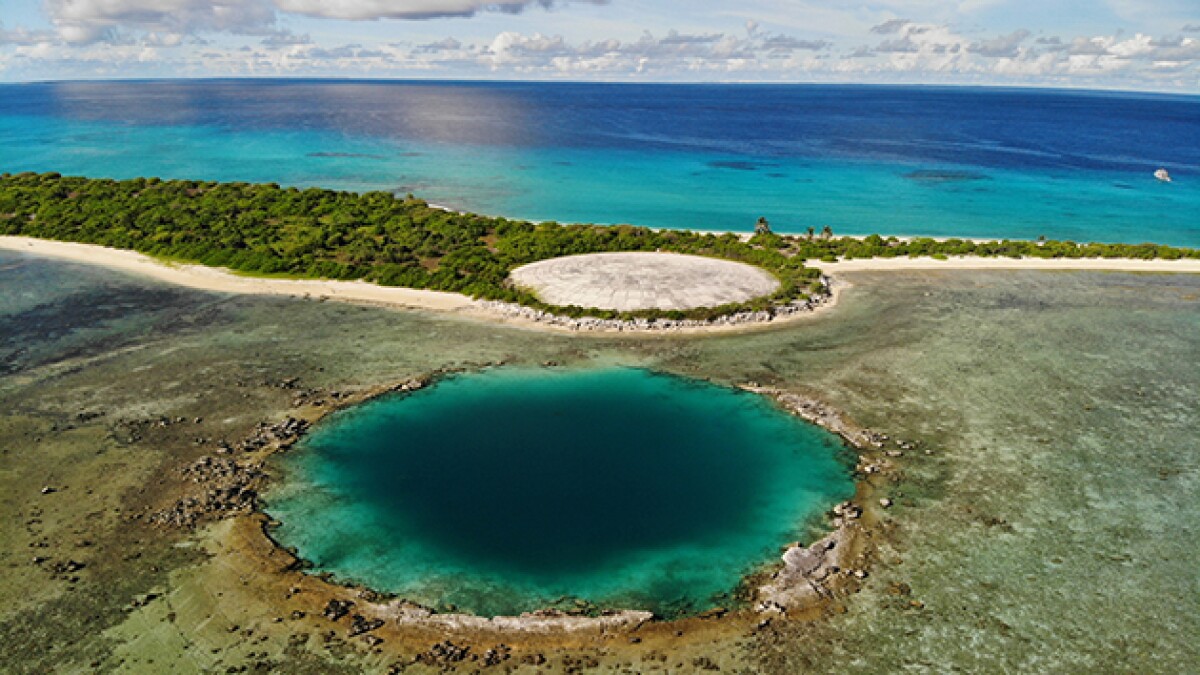
But Pacific Island nations have particular reason to be anxious. There is a noxious legacy of nuclear testing in the region, and other countries have historically treated the Pacific as a dumping ground for their waste. The U.S. conducted 67 nuclear tests in the Marshall Islands between 1946 and 1957—and disposed of atomic waste in Runit Dome, where it’s still stored. That testing led not only to forced relocations, but also to increased rates of cancers. Today there is concern that the dome is leaking and that rising sea levels might impact its structural integrity. France also conducted 193 nuclear tests from 1966 to 1996 at Moruroa and Fangataufa atolls in French Polynesia.
…………………….. Rather than let dumping wastewater into the ocean become the norm, at this juncture for nuclear energy, some say it’s an opportunity to explore different ways of doing things. The panel of PIF experts has proposed several alternative solutions, including treating the water and storing it in more secure tanks to allow the tritium time to decay, or using the treated water to make concrete for use in projects that won’t have high contact with humans.
“This is not the first nuclear disaster and by no means is it going to be the last,” says Richmond. “This is an opportunity for Japan,” he says, “to do the right thing and to invest time, effort, and money into determining and coming up with new ways of handling radioactive waste and setting a new trajectory.”
France what to do as nuclear waste site risks saturation point?
Should saturation happen, France’s reactors would have nowhere to place their spent fuel and would have to shut down
France seeks strategy as nuclear waste site risks saturation point
Reuters, By Benjamin Mallet 3 Feb 23
- Summary
- Macron to chair Council on Nuclear Policy on Friday
- Macron has announced plan for at least six new nuclear reactors
- EDF working on extra refrigerated pool
- France also considering plan to bury waste in clay
LA HAGUE, France, Feb 3 (Reuters) – At a nuclear waste site in Normandy, robotic arms guided by technicians behind a protective shield manoeuvre a pipe that will turn radioactive chemicals into glass as France seeks to make safe the byproducts of its growing reliance on atomic power.
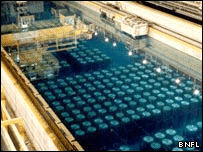
The fuel-cooling pools in La Hague, on the country’s northwestern tip, could be full by the end of the decade and state-owned Orano, which runs them, says the government needs to outline a long-term strategy to modernise its ageing facilities no later than 2025.
While more nuclear energy can help France and other countries to reduce planet-warming emissions, environmental campaigners say it replaces one problem with another.
To seek solutions, President Emmanuel Macron, who has announced plans to build at least six new reactors by 2050, on Friday chairs the first of a series of meetings on nuclear policy that will discuss investments and waste recycling.
“We can’t have a responsible nuclear policy without taking into account the handling of used fuel and waste. It’s a subject we can’t sweep under the rug,” a government adviser told Reuters, speaking on condition of anonymity…….
La Hague is the country’s sole site able to process and partially recycle used nuclear fuel.
France historically has relied on nuclear power for around 70% of its energy, although the share is likely to have fallen last year as the nuclear fleet suffered repeated outages.
Since the launch of the site at La Hague in 1976, it has treated nearly 40,000 tonnes of radioactive material and recycled some into nuclear fuel that can be re-used. The waste that cannot be recycled is mixed with hardening slices of glass and buried for short-term storage underground.
But its four existing cooling pools for spent fuel rods and recycled fuel that has been reused risk saturation by 2030, according to French power giant EDF (EDF.PA), which runs France’s 56-strong fleet of reactors, the world’s second biggest after the United States.
Should saturation happen, France’s reactors would have nowhere to place their spent fuel and would have to shut down – a worst-case scenario that led France’s Court of Audit to designate La Hague as “an important vulnerability point” in 2019.
COOL POOLS AND DEEP CLAY
EDF is hurrying to build an extra refrigerated pool at La Hague, at a cost of 1.25 billion euros ($1.37 billion), to store spent nuclear fuel – a first step before the waste can be treated – but that will not be ready until 2034 at the earliest.
Meanwhile, France’s national agency for managing nuclear waste last month requested approval for a project to store permanently high-level radioactive waste.
The plan, called Cigéo, would involve placing the waste 500 metres (1,640 ft) below ground in a clay formation in eastern France.
Construction is expected in 2027 if it gets approval. Among those opposed to it are residents of the nearby village of Bure and anti-nuclear campaigners
………… Orano, for which EDF accounts for 95% of its recycling business, says it needs clear direction from the government no later than 2025, to give it time to plan the necessary investments.
The costs are likely to be high. Just keeping up with current operations at La Hague costs nearly 300 million euros a year.
Options EDF and Orano are considering include finding a way to recycle the used fuel more than once, but critics say the recycling itself creates more radioactive waste and is not a long-term solution. For now, the backup plan is to fit more fuel containers into the existing pools.
After being cooled in a pool for about seven years, used nuclear fuel is separated into non-recyclable leftovers that are turned into glass (4% of the material), plutonium (1%) to create a new nuclear fuel called MOX, on which around 40% of France’s reactors can run, and reprocessed uranium (95%).
Options EDF and Orano are considering include finding a way to recycle the used fuel more than once, but critics say the recycling itself creates more radioactive waste and is not a long-term solution. For now, the backup plan is to fit more fuel containers into the existing pools.
After being cooled in a pool for about seven years, used nuclear fuel is separated into non-recyclable leftovers that are turned into glass (4% of the material), plutonium (1%) to create a new nuclear fuel called MOX, on which around 40% of France’s reactors can run, and reprocessed uranium (95%).
The uranium in the past was sent to Russia for re-enrichment and return for use in some EDF reactors, but EDF stopped doing that in 2013 as it was too costly.
In spite of the war in Ukraine, which has made many in the West avoid doing business with Russia, EDF is expected to resume sending uranium to Russia this year as the only country able to process it. It declined to confirm to Reuters it would do so.
The facility at La Hague, with its 1980s-era buildings and Star Wars-style control rooms, has its limitations.
“If we had to process MOX fuel in large quantities, the facility today isn’t adapted for it,” Varin said. “For multi-cycle recycling, the technology is not the same, so the modernisation or replacement of installations” would require “significant” investments, he said.
($1 = 0.9098 euros) https://www.reuters.com/business/environment/france-seeks-strategy-nuclear-waste-site-risks-saturation-point-2023-02-03/
The dirty secret of US nuclear energy
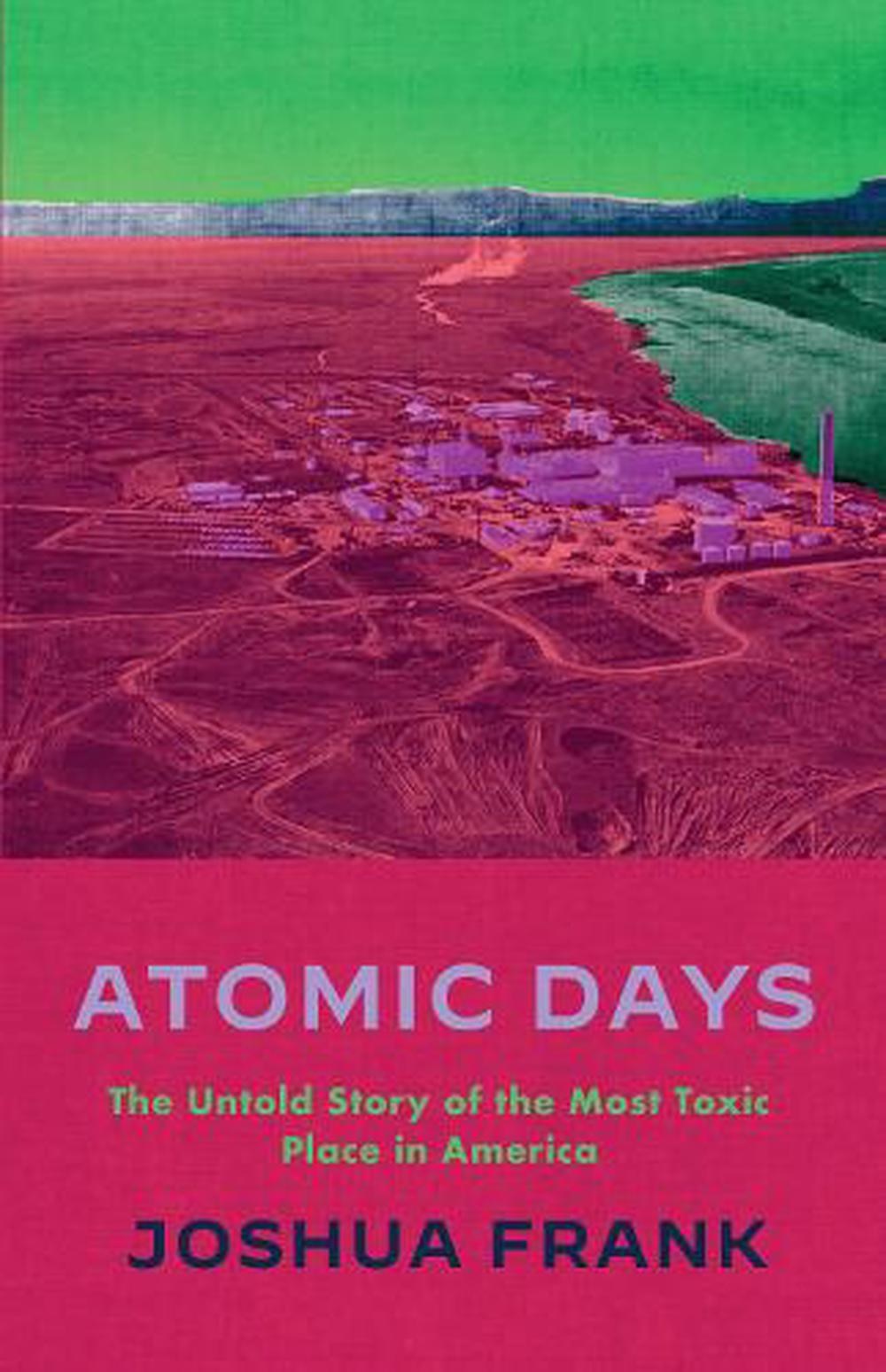
JOHN GREEN recommends an exposé of dangerous malpractice at the oldest and largest nuclear site in the US
Atomic Days: The Untold Story of the Most Toxic Place in America
By Joshua Frank
A DESCRIPTION of Hanford in Washington state — the place where the US stores much of its plutonium waste — sounds like something out of a dystopian novel by Kurt Vonnegut.
The town of Richland, a stone’s throw from Hanford’s boundary fence and where many of the workers’ families live, is an odd place. No rich mineral deposits, no surrounding agricultural landscape, no ski slopes or well-heeled tourists.
Richland was established by the atom bomb project and celebrates that history. The local pub is called Atomic Ale Brewpub. It showcases beers like Plutonium Porter, half-life Hefeweizen and Atom Bustin’ IPA.
The local school coat of arms boasts an exploding mushroom cloud. There is “a fervent mystifying patriotism” running deep in Richland, says Frank. The town also boasts more PhDs than any similar sized town in the state but voted overwhelmingly for Trump in recent elections.
Hanford’s B reactor has been designated a National Historic Landmark and was the first full scale plutonium production plant in the world. Those acting as guides do not appear to reflect on its legacy or suggest, perhaps, a moment of silence for the victims of nuclear bombs; for them it is a reason to rejoice at the ingenuity and superiority of the US war machine
Atomic Days reads at times like a political thriller, involving government lying and cover-ups, corruption, private-sector rapaciousness, spying on union “troublemakers” or anyone concerned about health and safety, and even the attempted murder of a whistleblower. There is no transparency and little accountability.
Many Hanford workers and their families have suffered serious illness as a result of radioactive contamination, from hyperthyroidism to miscarriages, disabilities and cancers, and numbers of unexplained deaths.
All this has been largely ignored by the national media, despite the fact that Hanford poses not only a danger to local people but to the whole country.
While focusing on Hanford, Frank encompasses the nuclear story on a global scale, from the US army injecting unsuspecting human guinea-pigs with plutonium in the 1940s, to the bombing of Hiroshima and Nagasaki, Chernobyl, Fukushima and the air crash over Spain involving nuclear weapons, to the legacy of nuclear bomb testing.
During the Cold War, the project expanded to include nine nuclear reactors and five large plutonium processing complexes, the last of which was decommissioned in 1987.
Once home to the US largest plutonium production site, the Hanford Nuclear complex is laced with 56 million gallons of radioactive waste. There have been numerous releases of radioactive isotopes into the ground water and into the atmosphere, but it has all been shrouded in secrecy. Today, the EPA has designated Hanford the most toxic place in America; it is also the most expensive environmental clean-up job the world has ever seen, with a soaring price tag of £553 billion.

At present, Hanford’s radioactive waste is stored in 177 waste tanks, 149 of them with just a single wall. The facility sits over a huge aquifer, above which 53 million gallons of radioactive and chemically hazardous waste are stored in leaky underground tanks.
These tanks are well past their life expectancy and full of boiling radioactive gunk. They are leaking, infecting groundwater supplies and threatening the nearby Columbia River. It also sits on around 750,000 cubic metres of buried solid waste, spent nuclear fuel and leftover plutonium.
The threat of an explosive accident at Hanford is all too real and could be more catastrophic than Chernobyl. There have already been numerous accidents, mostly unregistered and unknown to the public. It is one of the most radioactive wastelands on Earth.
It used to be home to several indigenous groups who once fished in the fish-rich Columbia River and hunted the deer and other animals in the surrounding woods. They were resettled from their ancestral lands once the US government determined to use the land to build the biggest plutonium production plant and waste dump in the country.
Frank’s chilling account should certainly disabuse the illusions of anyone out there who still views nuclear energy as a means of producing clean energy and saving the planet.
Joshua Frank is co-editor of the radical magazine, Counterpunch.
Appeals Court Tosses Suit from Environmentalists, Midland Oil Company Contesting Nuclear Waste Storage Permit
Various suits against the NRC and the storage site linger in courts across the country.
The Texan BRAD JOHNSON 27 Jan 23
The D.C. Circuit Court of Appeals tossed a challenge from anti-nuclear organization Beyond Nuclear, environmental groups the Sierra Club and Don’t Waste Michigan, and a Midland-based oil company against the approval of a spent nuclear fuel interim storage permit for a facility in West Texas.
In September 2021, the Nuclear Regulatory Commission (NRC) approved a permit application for the storage of spent nuclear fuel at an Andrews County facility. Interim Storage Partners is jointly owned by Orano USA and Waste Control Specialists — the latter of which has operated a storage facility for low-level radioactive waste at the site for more than a decade.
During the second special session of 2021, Gov. Greg Abbott and the Texas Legislature abruptly passed legislation banning the storage of high-level radioactive waste, including spent nuclear fuel, in response to the NRC. That led to the state suing the NRC over the permit, a case still pending in court.
But the permit approval also sparked other lawsuits from a collection of activists, interest groups, and Fasken Oil & Ranch, the Midland company, consolidated into one proceeding.
On Wednesday, the court dismissed the group’s various claims and tossed the suit; Beyond Nuclear contended that the NRC acted “arbitrarily and capriciously,” the environmental groups alleged the agency “ignor[ed] deficiencies in the project’s environmental impact statement,” and Fasken asserted that it was wrongfully denied the ability to insert into the record its arguments against issuance of the permit by the NRC.
Kevin Kamps, a spokesman for Beyond Nuclear, told The Texan, “We are certainly disappointed and unfortunately the ruling focuses on a procedural technicality.” Kamps said that there is a similar permit and suit in development in New Mexico for a planned interim storage site there. He’s also optimistic that a ruling in the State of Texas’ suit will help their case here, potentially creating contradicting court decisions.
He added that “we’re not going anywhere” and hopes that courts will consider whether the NRC even has the authority from Congress to grant these permits — which he argues the agency doesn’t…………………. more https://thetexan.news/appeals-court-tosses-suit-from-environmentalists-midland-oil-company-contesting-nuclear-waste-storage-permit/
Japan’s Plan To Discharge Water From Fukushima Nuclear Plant Faces Pacific Opposition
By BenarNews, By Stephen Wright
Officials from Pacific island nations will meet Japan’s prime minister in March in an effort to halt the planned release of water from the tsunami-damaged Fukushima Daiichi nuclear plant into the Pacific Ocean, a regional leader said.
Plans to dispose of Fukushima water over four decades are a source of tension between Japan and Pacific island nations and a possible complication for the efforts of the United States and its allies to show a renewed commitment to the Pacific region as China’s influence grows.
The planned discharges “are a very serious issue that our leaders have accepted must be stopped at all costs,” Henry Puna, secretary-general of the 18-nation Pacific Islands Forum, said Thursday at a press conference in the Solomon Islands capital Honiara.
The Japanese government’s timetable for disposal of Fukushima water indicates that releases could begin as soon as April this year – part of an effort to decommission the stricken power station over several decades. Water contaminated by the nuclear reactors damaged in a 2011 tsunami is stored in dozens of large tanks at the coastal Fukushima plant.
Japan’s method involves putting the contaminated water through a purification process known as the Advanced Liquid Processing System, which it says will reduce all radioactive elements except tritium to below regulatory levels. The treated water would then be diluted by more than 100 times to reduce the level of tritium – radioactive hydrogen used to create glow-in-the-dark lighting and signs……………………………
Data doubts
Five scientists working with the Pacific Islands Forum last week criticized the quality of data they had received from Tokyo Electric on the treated water in the tanks and expressed doubts about how well the purification process works.
Over more than four years, only a quarter of tanks had been tested for radiation, and testing rarely covered more than nine types of radiation out of 64 types that should be tested for, said the five scientists, who include Woods Hole Oceanographic Institution’s senior scientist Ken Buesseler.
“The accident is not over; this is not normal operations for a reactor. Therefore, extraordinary efforts should be made to prove operations are safe and will not cause harm to the environment,” the scientists’ presentation said.
The Pacific Islands Forum has described the scientists as independent nuclear experts. The forum’s secretariat didn’t respond to a question about whether the scientists are compensated for their work with the forum.
Nigel Marks, a materials scientist at Australia’s Curtin University and former nuclear reactor engineer, who is not advising the forum, said he is sympathetic to concerns that Tokyo Electric’s data could be more complete.
“But at the same time some recognition for Japan’s unique situation must be acknowledged,” he said. “The authorities have done their very best that technology allows. Eventually they reach a point where there is too much water to store.”
Puna said the Pacific islands delegation would meet with Japanese Prime Minister Fumio Kishida around March 7. They want a delay in water releases, at the very least, while more research is carried out, he said.
“There are serious gaps in the scientific evidence on the safety or otherwise of the proposed release,” Puna said. “I am pleased that the Japanese prime minister has finally agreed to meet with a high-level delegation from our region.”
Decades of Fukushima water discharges, Puna said, could “damage our livelihoods, our fisheries livelihoods, our livelihood as people who are dependent very much and connected to the ocean in our culture and identity.”
Mihai Sora, a Pacific analyst at Australia’s Lowy Institute, said it’s hard to imagine a more alarming proposition for Pacific island nations given the “toxic legacy” of nuclear weapons testing and waste dumping in the Pacific.
The timing, amidst regional geopolitical competition that has traditional powers falling over themselves to demonstrate who’s a better partner to the Pacific, could scarcely be worse,” Sora said.
The United States, United Kingdom and France carried out more than 300 nuclear detonations in the Pacific from 1946 to 1966, according to the International Disarmament Institute at Pace University in New York, which exposed thousands of military personnel and civilians to radiation and made some atolls uninhabitable.
“Decades of hard-won regional goodwill towards Japanese Pacific engagement are at risk with this single policy initiative,” Sora said……………….
Japan’s embassy in Suva, Fiji didn’t respond to a request for comment. https://www.eurasiareview.com/28012023-japans-plan-to-discharge-water-from-fukushima-nuclear-plant-faces-pacific-opposition/
US sweetens pot to study siting for spent nuclear fuel
https://journalrecord.com/2023/01/27/us-sweetens-pot-to-study-siting-for-spent-nuclear-fuel/ By: Associated Press January 27, 2023
ALBUQUERQUE, N.M. (AP) — The U.S. government has long struggled to find a permanent solution for storing or disposing of spent nuclear fuel from commercial nuclear power plants, and opposition to such a site is flaring up again as New Mexico lawmakers debate banning a facility without state consent.
The state’s prospective ban cleared its first legislative hurdle Tuesday with approval from a key committee. Supporters acknowledge that the bill has a long road ahead, but it does have the backing of Democratic Gov. Michelle Lujan Grisham.
State Sen. Jeff Steinborn, the bill’s sponsor, said momentum against New Mexico becoming a permanent dumping ground for the nation’s nuclear waste – including spent fuel from commercial power plants – is growing and he’s cautiously optimistic this is the year that the state takes a legislative stand.
Stenborn said consent should be mandatory and that the federal government should provide states with a significant financial incentive reflecting the risks associated with managing radioactive materials.
New Mexico and neighboring Texas have sued in federal court over two proposed multibillion-dollar interim storage facilities – one in southeastern New Mexico and the other in Andrews County, Texas.
“New Mexico has not been offered anything with this deal,” Steinborn said. “And even if we had, I don’t think any amount of money would convince me that it’s the right thing.”
The U.S. Nuclear Regulatory Commission approved a license for a facility in West Texas in 2021, and the agency plans to make a final decision as early as March on whether to grant a license for the planned storage complex in New Mexico. The two sites would be about 40 miles apart.
Environmental and nuclear watchdog groups have filed their own lawsuits, but a three-judge panel of the U.S. Court of Appeals for the District of Columbia dismissed all objections opposing the Texas project.
Federal appellate courts elsewhere have yet to rule on the state of Texas’ claims, which focus on whether federal nuclear regulators have authority to license such a facility, or on New Mexico’s claims that regulators did not do enough to vet plans by Holtec International.
The New Jersey-based company is seeking a 40-year license to build what it has described as a state-of-the-art complex near Carlsbad, which already is home to the federal government’s only underground repository for Cold War-era waste generated by decades of nuclear research and bomb-making.
From the decommissioned nuclear plant near the San Onofre Beach in Southern California to plants that have powered communities on the East Coast, spent fuel has been piling up for decades and elected officials in those communities want it shipped elsewhere.
The Biden administration sweetened the pot this month, putting up $26 million for communities interested in studying potential interim storage sites. Biden and his top energy officials have pointed to nuclear power as essential to achieving their goals of producing carbon-free electricity over the next decade.
According to the DOE, nuclear reactors across the country produce more than 2,000 metric tons of radioactive waste a year, with most of it remaining on-site because there’s nowhere else to put it. The federal government is paying to house the fuel, and the cost is expected to stretch into the tens of billions over the next decade, according to a review by independent government auditors.
Nuclear-powered rockets to Mars – there are serious safety risks.

No one wants to see nuclear debris raining down on the Florida coast or Disneyland, and that’s not the only possible scenario.
An accident in orbit could potentially drop radioactive material into the atmosphere.
Nuclear powered rockets could take us to Mars, but will the public accept them?
Bob McDonald’s blog: NASA and DARPA are beginning development of a new fission rocket, Bob McDonald · CBC Radio · Jan 27, 2023
NASA has signed an agreement with the U.S. Defense Advanced Research Projects Agency (DARPA) to develop a nuclear rocket that could shorten travel time to Mars by about one quarter compared to traditional chemical rockets. But before nuclear technology is launched into space, there are risks that need to be addressed to ensure public safety…………………….
While the technology of nuclear propulsion is certainly feasible, it may not be readily embraced by the public. The accidents at Chernobyl, Three Mile Island and Fukushima have left many people skeptical about nuclear safety. And there will be risk.
A nuclear rocket wouldn’t be used to launch a spacecraft from the Earth’s surface — it would be designed to run in space only. It would have to launch into orbit on a large chemical rocket — so the public would have to accept the risk of launching a nuclear reactor on a standard rocket filled with explosive fuel.
And rockets have and will malfunction catastrophically, in what with black humour rocket scientists sometimes call RUD — “rapid unscheduled disassembly.”
No one wants to see nuclear debris raining down on the Florida coast or Disneyland, and that’s not the only possible scenario. An accident in orbit could potentially drop radioactive material into the atmosphere.
Nuclear technology in another form has been used since the very beginning of the space program, just not for propulsion. Radioisotope Thermoelectric Generators (RTGs) have provided power to deep space probes for instruments, radios and cameras on a range of missions…………………….
The U.S. has seen several accidents, including one in 1968 when a launch failure of a Nimbus-1 weather satellite threw its RTG into the ocean. It was recovered intact and the fuel was reused on a later mission.
But there have been more serious accidents. Canadians may remember an incident from 1978, when a Soviet reconnaissance satellite scattered 50 kg of uranium from its nuclear thermal generator over 124,000 square kilometres of Canada’s North.
But a fission reactor is a much more complicated device involving higher temperatures, coolants and more nuclear fuel.
……………………. the engineers face a challenge to ensure that all checks and balances have been made to reassure the astronauts who will fly these machines — and people on the ground — that they can be operated safely before the technology is adopted. https://www.cbc.ca/radio/quirks/nuclear-powered-rockets-could-take-us-to-mars-but-will-the-public-accept-them-1.6727217
Don’t dump on us
Japan has also benefited from the (inevitable) support of the (nuclear power-promoting) International Atomic Energy Agency, an organization that never met a nuclear danger it couldn’t downplay. The agency has described the proposed discharges as “far below the Japanese regulatory limits,” in a statement last April.
Pacific Islanders, marine scientists, urge Japan not to dump Fukushima radioactive water into ocean
By Linda Pentz Gunter, Beyond Nuclear International, 24 Jan 23,
The nuclear power industry has a long history of disproportionately impacting people of color, Indigenous communities and those living in the Global South. As Japan prepares to dump more than 1 million tonnes of radioactive water from its stricken Fukushima-Daiichi nuclear power plant site into the Pacific Ocean some time this year, history is about to repeat itself.
To remind us of that — and to warn against this reckless and entirely unnecessary action (Japan could and should expand the cask storage pad on site and keep storing the radioactive water there) — the leader of the Pacific Islands Forum (PIF) has spoken out.
In a recent column in the UK daily newspaper, The Guardian, Henry Puna wrote that “continuing with ocean discharge plans at this time is simply inconceivable”, given how directly it once again discriminates against — and will likely seriously harm the health of — the peoples of the Pacific. Puna took care to remind readers “that the majority of our Pacific peoples are coastal peoples, and that the ocean continues to be an integral part of their subsistence living.”
Going forward with the dump without further study and serious consideration of viable alternatives, would, Puna said, mean that “the region will once again be headed towards a major nuclear contamination disaster at the hands of others.” Victims of years of atomic testing, Pacific Islanders are rightly not ready to be dumped on yet again.
Tepco and the lapdog Japanese government announced last May that they would release around 1.3 million tonnes of radioactive waste water from the Fukushima site next spring. Recently, authorities suggested the dump could be delayed until the summer but seem undeterred by the loud chorus of opposition from multiple quarters.
The plant produces 100 cubic metres of contaminated water daily, a combination of groundwater, seawater and water used to keep the reactors cool. The water is theoretically filtered to remove most harmful isotopes, other than tritium, which is radioactive hydrogen and cannot be separated from water. It is then stored in casks on site where authorities claim they are running out of space. However, independent watchdogs are not convinced that the filter system has successfully removed other dangerous radioactive isotopes from the waste water.
Most recently, the 100-member American group, the National Association of Marine Laboratories (NAML), expressed its fervent opposition in a strongly worded position paper released last month. Their opposition, they wrote, “is based on the fact that there is a lack of adequate and accurate scientific data supporting Japan’s assertion of safety. Furthermore, there is an abundance of data demonstrating serious concerns about releasing radioactively contaminated water.”
The report went on: “The proposed release of this contaminated water is a transboundary and transgenerational issue of concern for the health of marine ecosystems and those whose lives and livelihoods depend on them. We are concerned about the absence of critical data on the radionuclide content of each tank, the Advanced Liquid Processing System (ALPS), which is used to remove radionuclides, and the assumption that upon the release of the contaminated wastewater, ‘dilution is the solution to pollution.’”
The scientists accused Japan of ignoring the inevitable processes of bioaccumulation and bioconcentration, which contradict the dilution contention. The Association also called out what it saw as shoddy or incorrect science conducted by Tepco and the Japanese government, including “flaws in sampling protocols, statistical design, sample analyses, and assumptions, which in turn lead to flaws in the conclusion of safety and prevent a more thorough evaluation of better alternative approaches to disposal.”
Japan has consistently rejected on-going onsite storage — presumably due to the expense, given the land space is there and more casks could be provided. In the view of some, the eagerness to dump the water— largely contaminated with tritium (a form of radioactive hydrogen that cannot be separated from water) and likely other undeclared radionuclides — is a public relations exercise to make the problem “go away” and restore normal optics to the site. The site cannot also be fully decommissioned so long as the tanks are there.
Japan has also benefited from the (inevitable) support of the (nuclear power-promoting) International Atomic Energy Agency, an organization that never met a nuclear danger it couldn’t downplay. The agency has described the proposed discharges as “far below the Japanese regulatory limits,” in a statement last April.
After sending in a task force and several earlier reports, the IAEA released a new report in December in which it said “the IAEA will conduct its own independent checks of the radiological contents of the water stored in the tanks and how it will analyse environmental samples (for example seawater and fish) from the surrounding environment.” However, the IAEA has not expressed opposition to the dumping of the radioactive water even now and instead indicates that its safety reviews will continue “before, during, and after the discharges of ALPS treated water.”
Japan has faced down opposition from fishermen and environmentalists, particularly from those in the Marshall Islands who have suffered decades of horrific health issues, especially birth defects, after enduring 67 US atomic tests there. A Pacific region collective advocacy group, Youngsolwara Pacific, expressed dismay that the Japanese, of all people, would not empathize with them and condemn the Fukushima water dump………………………….. https://beyondnuclearinternational.org/2023/01/24/dont-dump-on-us/—
Cost Estimate for Plutonium Pit Project at Savannah River Site Hits $16.5 Billion, $5 Billion above Current Estimate
“Given the myriad of cost and schedule threats facing the SRS pit facility, it’s simply not acceptable that DOE will for four years hide updated costs estimate and technical updates for this daunting project,”
“The shocking cost jumps and continuous delays underscore questions about the need for the redundant SRS pit plant,
NEWS PROVIDED BY Savannah River Site Watch, January 25, 2023,
Public Interest Group Obtains and Releases DOE Assessment of the SRS Plutonium Processing Facility, to make Plutonium Pits for Provocative New Nuclear Warheads
Given the myriad of cost and schedule threats facing the SRS pit facility, it’s simply not acceptable that DOE is hiding updated cost estimates and technical information for this daunting project.”
— Tom Clements, Director, Savannah River Site Watch
COLUMBIA, SC, US, January 25, 2023 /EINPresswire.com/ — A key U.S. Department of Energy document assessing the progress of planning for the proposed plutonium pit project at the Savannah River Site reveals a cost range billions of dollars higher than what has been previously known. DOE has not made the document public and it is only now being released by a non-profit organization tracking the costly project.
The document prepared in 2021 by the DOE’s National Nuclear Security Administration (NNSA) – the nuclear weapons agency inside DOE – estimates that the controversial project to fabricate plutonium pits (cores) for new nuclear warheads could range from $8.7 billion to $16.5 billion, far higher than the currently known cost range of $6.9 billion to $11.1 billion.
The cost estimate for the SRS Plutonium Processing Facility (SRPPF) – also known as the SRS Plutonium Bomb Plant (SRS) PBP) – is presented in a report by a NNSA team that analyzed the SRS pit project in March 2021, three months before the current cost estimate was released and the project given the go-ahead. The review of the documentation to move ahead with the pit project is titled “Critical Decision (CD)-1 Independent Project Review (IPR) – Savanah River Plutonium Processing Facility (SRPPF).” [Correct spelling is “Savannah.”]
The SRS pit “project review,” requested by the acting administrator of the NNSA, was obtained on January 9, 2023 by the public interest organization Savannah River Site Watch via a Freedom of Information Act (FOIA) request. (Key documents are linked here, in SRS Watch news release.)
The document affirms that the congressionally mandated 2030 date to fabricate 50 or more plutonium pits at SRS, in the shell of the partially finished plutonium fuel (MOX) building, cannot be met and makes the startling revelation that the facility would not produce pits until February 2036, a full 2 years after the anticipated 2034 approval to operate, in so-called Critical Decsion-4.
That 2036 start date for the SRS nuclear bomb facility is beyond the 2032-2035 start date presented in congressional testimony by NNSA. The Critical Decision-1 go-ahead decision and rough cost estimate came in June 2021 but a more refined cost estimate might not be available for four years, when Critical Decision-2 is reached in mid-2025, with a new project cost baseline and a supposed 90% design completion. The just-revealed cost estimate includes CD-1 costs.
“Given the myriad of cost and schedule threats facing the SRS pit facility, it’s simply not acceptable that DOE will for four years hide updated costs estimate and technical updates for this daunting project,” said Tom Clements, director of SRS Watch, in Columbia, SC. “The shocking cost jumps and continuous delays underscore questions about the need for the redundant SRS pit plant, which is being pursued at SRS to fill the funding hole when the MOX boondoggle was terminated in 2018,” added Clements.
This significantly higher cost estimate of the program to make new plutonium pits for questionable new nuclear warheads is actually higher as “it does not include Fee or NNSA Other Direct Cost (ODC), both of which are still being developed, typically they are 4% and 2% respectively.”
SRS Watch is a non-profit, public-interest organization working on sound policies and projects by the U.S. Department of Energy, with a focus on the Savannah River Site in South Carolina.
Abandoned plutonium fuel (MOX) building at DOE’s Savannah River Site in South Carolina, coutersy High Flyer to SRS Watch; DOE aims to turn the building into the SRS Plutonium Bomb Plant.
Diagram of nuclear warhead, with plutonium pit. Image by South Carolina Environmental Law Project (SCELP).
Public Interest Group Obtains and Releases DOE Assessment of the SRS Plutonium Processing Facility, to make Plutonium Pits for Provocative New Nuclear Warheads
Given the myriad of cost and schedule threats facing the SRS pit facility, it’s simply not acceptable that DOE is hiding updated cost estimates and technical information for this daunting project.”
— Tom Clements, Director, Savannah River Site Watch
COLUMBIA, SC, US, January 25, 2023 /EINPresswire.com/ — A key U.S. Department of Energy document assessing the progress of planning for the proposed plutonium pit project at the Savannah River Site reveals a cost range billions of dollars higher than what has been previously known. DOE has not made the document public and it is only now being released by a non-profit organization tracking the costly project.
The document prepared in 2021 by the DOE’s National Nuclear Security Administration (NNSA) – the nuclear weapons agency inside DOE – estimates that the controversial project to fabricate plutonium pits (cores) for new nuclear warheads could range from $8.7 billion to $16.5 billion, far higher than the currently known cost range of $6.9 billion to $11.1 billion.
The cost estimate for the SRS Plutonium Processing Facility (SRPPF) – also known as the SRS Plutonium Bomb Plant (SRS PBP) – is presented in a report by a NNSA team that analyzed the SRS pit project in March 2021, three months before the current cost estimate was released and the project given the go-ahead. The review of the documentation to move ahead with the pit project is titled “Critical Decision (CD)-1 Independent Project Review (IPR) – Savanah River Plutonium Processing Facility (SRPPF).” [Correct spelling is “Savannah.”]
The SRS pit “project review,” requested by the acting administrator of the NNSA, was obtained on January 9, 2023 by the public interest organization Savannah River Site Watch via a Freedom of Information Act (FOIA) request. (Key documents are linked here, in SRS Watch news release.)
The document affirms that the congressionally mandated 2030 date to fabricate 50 or more plutonium pits at SRS, in the shell of the partially finished plutonium fuel (MOX) building, cannot be met and makes the startling revelation that the facility would not produce pits until February 2036, a full 2 years after the anticipated 2034 approval to operate, in so-called Critical Decsion-4.
That 2036 start date for the SRS nuclear bomb facility is beyond the 2032-2035 start date presented in congressional testimony by NNSA. The Critical Decision-1 go-ahead decision and rough cost estimate came in June 2021 but a more refined cost estimate might not be available for four years, when Critical Decision-2 is reached in mid-2025, with a new project cost baseline and a supposed 90% design completion. The just-revealed cost estimate includes CD-1 costs.
“Given the myriad of cost and schedule threats facing the SRS pit facility, it’s simply not acceptable that DOE will for four years hide updated costs estimate and technical updates for this daunting project,” said Tom Clements, director of SRS Watch, in Columbia, SC. “The shocking cost jumps and continuous delays underscore questions about the need for the redundant SRS pit plant, which is being pursued at SRS to fill the funding hole when the MOX boondoggle was terminated in 2018,” added Clements.
This significantly higher cost estimate of the program to make new plutonium pits for questionable new nuclear warheads is actually higher as “it does not include Fee or NNSA Other Direct Cost (ODC), both of which are still being developed, typically they are 4% and 2% respectively.”
The document is mentioned in a footnote (on page 3) in a report issued on January 13, 2023 by the Governmental Accountability Office – “NNSA Does Not Have a Comprehensive Schedule or Cost Estimate for Pit Production Capability” (https://www.gao.gov/products/gao-23-104661) but the cost information in the just-released NNSA report was not mentioned or analyzed by the GAO. Rather, GAO reported the NNSA’s cost figures from the Fiscal Year 2023 budget justification – $6.9 billion to $11.1 billion. – and cited NNSA’s “concerns that publicizing preliminary or uncertain information would lead to misinterpretation over increasing costs if preliminary numbers rise.”
The GAO also said that “using NNSA’s fiscal year 2023 budget justification GAO identified at least $18 billion to $24 billion in potential costs for the 80-pit-per-year” pit production construction costs at the Savannah River Site and the Los Alamos National Lab (LANL), where NNSA is aiming for production of 30 or more pits per year………………………………..
The just-revealed $8.7 billion to $16.5 billion SRS pit plant cost could increase the range of the cost of the two pit facilities to a staggering $19.8 billion to $29.4 billion. ………………………………..
“NNSA must immediately implement transparency about the challenging SRS pit project and regularly release cost and technical information but it appears they are choosing the path of needless secrecy and obfuscation, a sure sign the project isn’t healthy,” said Clements. “The clock is ticking on this project and it sadly looks like we could have another MOX debacle in the making by an inflexible bureaucracy that urgently needs an education in openness,” added Clements. https://www.einnews.com/pr_news/613279071/cost-estimate-for-plutonium-pit-project-at-savannah-river-site-hits-16-5-billion-5-billion-above-current-estimate
Diluted plutonium disposed of at Carlsbad nuclear waste site as program draws controversy
“DOE decided to do this before they did any of the analysis,” Hancock said. “All these documents are to give legal cover and justify decisions already made.”
Adrian Hedden, Carlsbad Current-Argus
Federal nuclear waste officials announced a shipment of diluted surplus, weapons-grade plutonium was disposed of using a repository near Carlsbad last month, after it was sent to New Mexico from South Carolina, amid criticism from nuclear watchdog groups in the state.
The shipment contained plutonium diluted using a process known as “downblending” that lowered its radioactivity to meet requirements at the Waste Isolation Pilot Plant, where the U.S. Department of Energy disposes of transuranic (TRU) nuclear waste in an underground salt deposit.
It was brought to WIPP from the DOE’s Savannah River Site, a laboratory where the federal government develops nuclear weapons.
After the downblending, the waste meets the definition of TRU waste, read an announcement from the DOE’s National Nuclear Security Administration (NNSA), and can be legally disposed of at WIPP.
Disposal at WIPP was in response to a 2020 agreement between the DOE and State of South Carolina that called for the removal of 9.5 metric tons (MT) of plutonium waste from the state, reached after years of negotiations and litigation.
The waste was initially brought to Savannah River to be irradiated at a mixed-oxide (MOX) facility, converting the nuclear waste into fuel…………………………………………………………
The initial shipment was announced as the DOE was underway with a public comment period on using the same “dilute and dispose” method for 34 metric tons (MT) of plutonium waste, most of which is at the Pantex Plant in Amarillo, Texas.
But this would entail shipping waste from Pantex to Los Alamos, then to Savannah River Site for final packaging before going to WIPP, meaning the waste would cross through New Mexico three times.
Opponents of this proposal in New Mexico feared the repeated trips through their state would increase the risk of exposing their communities to radiation.
Critics oppose use of New Mexico site to dispose of plutonium
Don Hancock, nuclear waste program manager at Albuquerque watchdog group Southwest Research and Information Center said the group and others in the state opposed the project and its use of WIPP.
He said DOE’s practice of seeking approval for separate segments of the plutonium waste, rather than for all of the waste at once was intended to protect decisions already made without public input.
“DOE decided to do this before they did any of the analysis,” Hancock said. “All these documents are to give legal cover and justify decisions already made.”…………………………………………
Hancock argued using WIPP as the disposal site for the plutonium, even after its diluted to meet the requirements of TRU waste, marked an undue expansion of WIPP’s mission beyond what the people of New Mexico agreed to when the facility was sited in their state.
“We don’t oppose geologic disposal. We don’t think WIPP is the right place,” he said. “WIPP has a limited mission. It was never intended for surplus plutonium. It’s already been decided. The public should be outraged.” https://www.currentargus.com/story/news/2023/01/20/diluted-plutonium-disposed-of-at-carlsbad-nuclear-waste-site/69811929007/
-
Archives
- October 2026 (129)
- September 2026 (339)
- August 2026 (330)
- July 2026 (355)
- June 2026 (287)
- May 2026 (306)
- April 2026 (356)
- March 2026 (251)
- February 2026 (267)
- January 2026 (308)
- December 2025 (358)
- November 2025 (359)
-
Categories
- 1
- 1 NUCLEAR ISSUES
- business and costs
- climate change
- culture and arts
- ENERGY
- environment
- health
- history
- indigenous issues
- Legal
- marketing of nuclear
- media
- opposition to nuclear
- PERSONAL STORIES
- politics
- politics international
- Religion and ethics
- safety
- secrets,lies and civil liberties
- spinbuster
- technology
- Uranium
- wastes
- weapons and war
- Women
- 2 WORLD
- ACTION
- AFRICA
- Atrocities
- AUSTRALIA
- Christina's notes
- Christina's themes
- culture and arts
- Events
- Fuk 2022
- Fuk 2023
- Fukushima 2017
- Fukushima 2018
- fukushima 2019
- Fukushima 2020
- Fukushima 2021
- general
- global warming
- Humour (God we need it)
- Nuclear
- RARE EARTHS
- Reference
- resources – print
- Resources -audiovicual
- Weekly Newsletter
- World
- World Nuclear
- YouTube
-
RSS
Entries RSS
Comments RSS

