Special investigation: UK’s nuclear waste a ‘calamity for future generations’.

Plans to dispose of high-level nuclear waste over the long
term remain uncertain. Plans to deal with nuclear waste must be considered by the new energy secretary Miatta Fahnbullaeh.
Britain is planning a new fleet of nuclear reactors – without a repository for high-grade legacy waste. The UK’s efforts to find a location for an underground nuclear waste burial site have stalled. New energy secretary Miatta Fahnbulleh must review two remaining areas in Cumbria, after three were abandoned following community pushback, Energy Voice has learned.
Two sites, Mid Copeland and
South Copeland, near existing nuclear waste storage facilities at
Sellafield, are being assessed for “permanent” nuclear waste storage in
a planned geological disposal facility (GDF), the Nuclear Decommissioning
Authority (NDA) confirmed in an emailed statement.
With a UK nuclear burial site undetermined, storage at Sellafield time-limited, and three major nuclear projects expected to operate beyond 2055, government has been accused of “kicking the can down the road”. Further, the National Wealth Fund (NWF) did not factor long-term waste disposal into decisions to invest in Sizewell C, Energy Voice has also learned.
The state-owned body backed the UK’s new 3.2GW nuclear power station in Suffolk with £36.6 billion in debt finance. Its chief investment officer Ian Brown told Energy Voice during an interview in March, months after the project reached a final investment decision: “I wouldn’t say it’s not something we look at, but at the moment… the proposal is that the waste material will just stayon site.
“It’s going to take a while to work out where in the country
we’re able to drop the stuff into the ground, if ever.” Professor Andrew
Blowers, co-chair of the NWS/NGO Exchange and former member of RadioactiveWaste Management Advisory Committee, said: “The new build programme is costly, risky with long timescales and makes little sense as a part of the energy mix needed to achieve net zero.
“Far from helping to deal with
climate change, the wastes from such a programme will add yet more calamity o future generations.”
NDA subsidiary National Waste Services (NWS),
created in 2022 to handle the UK’s “future radioactive waste”, has
submitted a decision to the energy secretary on where to locate a
high-grade nuclear waste burial site, a spokeswoman said. The energy
secretary must now formally respond to its proposal.
However, the Office
for Nuclear Regulation (ONR) told Energy Voice that NWS needs to “find a
suitable site and a willing community” to host nuclear waste. It said:
“No site has yet been identified.” Of five potential sites, three were
ruled out, including the coastal region of Seascale, a site near Sellafield
in Cumbria, and another in Lincolnshire, where the county council voted
unanimously to withdraw from the plans. “
Three other communities have
previously been involved in the process but are no longer,” the ONR said
in a statement to Energy Voice. “Allerdale in Cumbria was withdrawn due
to insufficient suitable geology. Theddlethorpe (Lincolnshire) and South
Holderness (Yorkshire) voluntarily withdrew from the process.” Blowers
said,
“At present a GDF is uncertain, its location unclear and its
timescale already far into the later part of this century. It is
irresponsible and immoral to create yet more wastes arising in the next
century for which no management provision can conceivably be made.”
“The mad rush to building yet more dangerous nuclear power stations with
their eternal dangerous radioactive debris should be stopped dead in its
tracks now,” Blowers said.
Energy Voice 17th Aug 2026,
https://www.energyvoice.com/renewables-energy-transition/nuclear/602330/uk-nuclear-waste-management-problem/
Summary of the Summary of the Integrated Guidelines – Deep Geological Repository (DGR) for Canada’s Used Nuclear Fuel Project
The document refers to ‘spatial and temporal boundaries’ and ‘follow up and monitoring’. AsI understand the project, the temporal boundary is several hundred thousand years.
But NWMO will not follow up or monitor beyond apx 160 years, instead handing the dgr to the public to follow up and monitor beyond that. If all the copper cladding corrodes away in 161 years, it’s not their problem.
Dated as having been posted August and without an explanatory note, the Impact Assessment Agency has posted a “Summary of the Integrated Guidelines” as Document 1117 at https://iaac-aeic.gc.ca/050/documents/p88774/167588E.pdf
The nine page document begins with a disclaimer: “This document is a summary of the requirements found in the Integrated Tailored Impact Statement Guidelines (the Guidelines) for the Deep Geological Repository for Canada’s Used Nuclear Fuel Project (the project), proposed by the Nuclear Waste Management Organization (the proponent). This document outlines, at a high level, the information that the proponent must provide in their Impact Statement. The purpose of this document is to serve as an engagement tool for participants to support their understanding of the requirements.”
The 100,000-year plan for Finland’s and Sweden’s nuclear waste turns on something very small — whether bacteria half a kilometre underground can make enough sulphide to eat through five centimetres of copper

Why don’t i find this terribly reassuring?
When I wonder aboutall the countries busily producing radioactive trash, why doesn’t this article make me feel that it is all OK?
Two centuries of engineering innovation may ultimately depend on whether microorganisms in the bedrock can generate enough corrosive compounds to breach the copper canisters meant to contain radioactive waste for the next hundred thousand years.
By Space Daily Editorial Team · Edited by Mal James, August 14, 2026, https://spacedaily.com/m-the-100000-year-plan-for-finlands-and-swedens-nuclear-waste-turns-on-something-very-small-whether-bacteria-half-a-kilometre-underground-can-make-enough-sulphide-to-eat-through-five-centim/
he strange thing about the biggest engineering promise being made in northern Europe right now is that it does not really hinge on the steel, the concrete, or the granite. It hinges on how fast a population of microbes, living in near-total darkness half a kilometre down, can turn one chemical into another.
Finland and Sweden are both burying spent nuclear fuel for good, using a Swedish method called KBS-3. It wraps three barriers around the waste: a copper canister with a cast-iron insert inside it, a thick jacket of packed clay called bentonite, and then the bedrock itself.
In Finland the repository is Onkalo, about 430 metres down. In Sweden it sits near Forsmark at roughly 500 metres. The copper shell around each canister is 50 mm thick, five centimetres of it. The design is supposed to keep the waste sealed off for at least 100,000 years.
We are not corrosion scientists, microbiologists, or nuclear engineers. What follows is reading and reflection on the published research, not a verdict on whether these repositories are safe. The studies cited are mostly lab experiments and modeled projections, and a lab result about clay in a test cell is not a guarantee about a specific canister in the ground 40,000 years from now.
What 100,000 years actually asks of a metal box
It is hard to hold the number in your head. These canisters need to outlast everything humans have ever built, several times over, with no maintenance and no one watching.
The clever part of the design is that copper is not being asked to do the impossible. In pure water with no oxygen and no aggressive chemistry, it just sits there. The catch is that the ground is not chemically dead. So the real question was never “is copper strong?” It was “what, specifically, in this rock and this water can attack copper over geological time?” The answer comes down to a surprisingly short list.
Why the enemy is sulphide, not oxygen
When the canisters go into the ground, there is a short window, perhaps a few years to a few decades, where trapped oxygen can corrode the copper a little. Then the oxygen gets used up and never comes back. From that point on the canister lives in an oxygen-free world for essentially its entire life. By one estimate, a KBS-3 canister spends more than 99.99% of its expected service life in these oxygen-free conditions.
That flips the corrosion problem on its head. Oxygen, the thing that rusts most metals, barely matters here. The agent that matters in an oxygen-free repository is sulphide, and sulphide is not just sitting in the rock waiting. Most of it has to be made by living things.
Deep groundwater carries dissolved sulphate. Sulphate on its own leaves copper alone. But a group of microbes called sulphate-reducing bacteria breathe sulphate the way we breathe oxygen, and their waste product is sulphide. That is the chemical that can actually corrode the copper. So the load-bearing question in a 100,000-year safety case turns out to be biological: how busy are the bacteria, and how much of their sulphide reaches the metal.
Meet the bacteria, and what they need
Sulphate-reducing bacteria are ancient, widespread, and perfectly at home in deep oxygen-free groundwater. Give them dissolved sulphate, an energy source, and liquid water they can move around in, and they will make sulphide. That this kind of microbe-driven corrosion is real, and can move fast in the right conditions, is not hypothetical. An in-ground study in packed bentonite soaked with groundwater at repository depth measured active sulphide production by bacteria, with the rate dropping sharply as the clay was packed to higher densities.
So why is anyone confident the canisters last? Because the whole design is arranged to deny the bacteria the one thing they need most: room to work and a clear path to the metal. That is the job of the clay.
The bentonite bottleneck
The bentonite around each canister is not passive packing material. When it gets wet it swells into a dense, gel-like barrier. Two things happen at high density. The pores get so small and the water so tightly held that bacteria struggle to live and move. And sulphide can no longer flow freely; it can only creep through slowly.
A 2000 lab study led by Karsten Pedersen and colleagues tested exactly this. They reported that “sulphate-reducing bacteria were found to be active, reducing sulphate at the lowest density studied, 1.5 g cm-3, but sulphate reduction activity ceased at higher densities.” The paper’s own conclusion is carefully hedged: at full repository packing, it says the bacteria will most probably not be able to induce corrosion. That is one study, on Swedish KBS-3 clay, and it reads as suggestive rather than final. But it points at something the whole safety case leans on: squeeze the clay hard enough and the microbial factory inside it may largely shut down.
That still leaves sulphide arriving from the surrounding groundwater. Here the argument shifts from biology to plumbing. A 2017 review by Fraser King and colleagues argues that the long-term corrosion rate is set not by how eagerly copper reacts, but by how slowly sulphide can travel to its surface through the clay. As long as the sulphide supply stays low, the corrosion is throttled to a crawl.
Put those numbers into a 100,000-year projection and the developers reach a comfortable conclusion. SKB’s own review estimates that, counting the sulphide already in the deposition holes plus what can seep in from groundwater, the copper corrosion depth after 100,000 years comes to less than 5 mm. Against a 50 mm wall, that leaves a large margin.
Closing thoughts
So the summary is a split one. That copper resists corrosion in an oxygen-free repository is well supported. That dense bentonite slows the bacteria and throttles the sulphide is supported by lab work, with the caveat that it is lab work. That the resulting rate holds steady for 100,000 years is a modeled projection, reasonable and carefully argued, but a projection all the same. The five centimetres of copper is the easy part. The hard part is a number about how much a colony of bacteria, buried in clay half a kilometre underground, can do over a span of time longer than civilisation.
Nuclear waste delivers a political haymaker. Five states say it can be done.
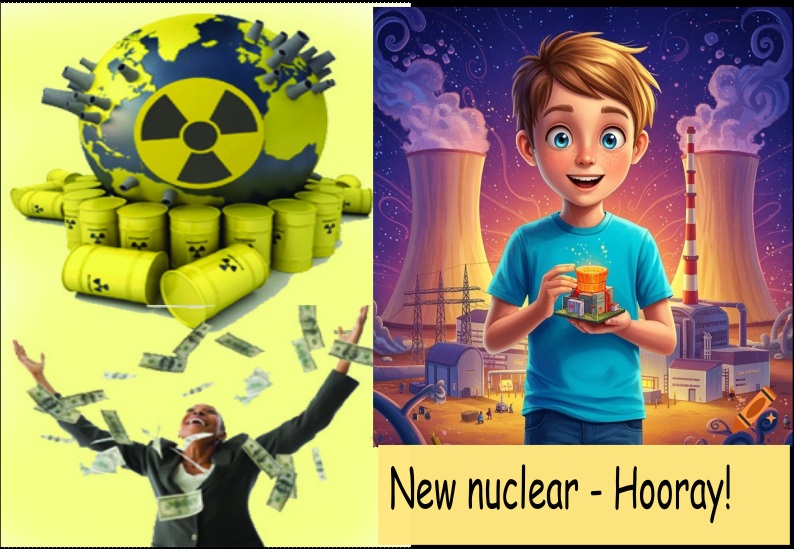
By Francisco “A.J.” Camacho, Hannah Northey | 08/05/2026, https://www.eenews.net/articles/nuclear-waste-delivers-a-political-haymaker-five-states-say-it-can-be-done/
From proposals to bury waste under the Gulf of Mexico to shooting canisters deep underground, GOP-led states mainly see economic opportunity.
Five Republican-led states are now jockeying to host nuclear technology hubs — and possibly spent nuclear fuel — in a show of heightened political interest in breaking through chronic barriers to new U.S. reactors.
Oklahoma, Louisiana, Idaho, Tennessee and Utah are in the running to host Nuclear Lifecycle Innovation Campuses — Energy Department-backed facilities that would support the full nuclear fuel cycle, from enriching uranium and fabricating fuel to reprocessing and disposing of waste.
But even as states raise their hands, and by and large view fuel enrichment and disposal as an economic opportunity, the thorny politics and financing of new long-term nuclear projects and waste disposal also remain challenges as they negotiate terms with the Trump administration.
All five finalists called for reprocessing nuclear waste into new reactor fuel, but they varied in tone and technique for ultimate disposal of nonrecycled waste.
“Oklahoma proposes to become the first U.S. state to establish a permanent disposal solution before it begins commercial nuclear deployment. No country in the world has done this,” Oklahoma officials said in the state’s proposal.
Idaho, in contrast, seems hesitant to handle waste long term, although it, alongside Utah and Oklahoma, expressed interest in drilling deep boreholes and dropping the waste hundreds of meters underground. Louisiana is eyeing underwater disposal underneath salt domes in the Gulf of Mexico. Tennessee seeks the more conventional route by mining a repository in the eastern part of the state.
“There have been some states that have been more open to this at times, and it sort of goes back and forth,” said Allison Macfarlane, a geologist and former Nuclear Regulatory Commission chair during the Obama administration, adding that New Mexico, Texas and Wyoming were all previously interested in hosting a repository before plans fizzled out. “It’s really important that you have an implementer that knows what it’s doing and does this carefully, because otherwise you’re looking at this going sideways yet again.”
A decade and a half ago, Congress slashed project funding and halted construction of a sole waste repository at Nevada’s Yucca Mountain, in line with opposition from state residents and its elected leaders. Then-Senate Majority Leader Harry Reid (D-Nev.) was a powerful critic of the Yucca solution. That left the United States with no effective long-term solution for the country’s most radioactive waste as it collected across America’s 57 nuclear power plants.
Nevada’s Democratic senators returned to the question Tuesday, introducing legislation that would change a legal framework put in place by Congress directing the federal government to identify a sole waste depository. The Jobs, Not Waste Act sponsored by Sens. Jacky Rosen and Catherine Cortez Masto would prohibit future consideration of Yucca Mountain as the nation’s permanent repository.
Getting state buy-in to host a voluntary disposal site is seen as crucial to avoid Yucca’s pitfalls, and DOE has offered some carrots with the new innovation campus program. The department says it may offer technical expertise, cost-sharing or loan guarantees to develop a campus, and it claims each campus could attract up to $50 billion in capital investment, $25 billion in state and local tax revenue, and 25,000 jobs.
With midterms looming in November, POLITICO spoke with elected officials and technical experts about each state’s disposal proposal for tackling the generational scientific, regulatory and political challenge.
Oklahoma
Oklahoma proposes working with a startup company to drill boreholes in the Anadarko sedimentary basin in western Oklahoma for permanent waste disposal.
“Oklahoma does not have a nuclear background, but knows energy well,” Lake Barrett, a former DOE nuclear staffer through several administrations, told POLITICO. “Their proposal is light on specifics, but seems serious.”
While partnering with Santa Clara, California-based Oklo for fuel reprocessing, Oklahoma would also work with Berkeley, California-based Deep Isolation on borehole disposal. Deep Isolation plans to drill 18-inch-wide boreholes “hundreds of meters” underground. Once drilled, canisters of waste can be slotted down until the given hole is full.
A 2020 paper co-authored by Macfarlane found few areas of the U.S. have optimal conditions for borehole waste disposal. The Anadarko Basin has shale gas reservoirs and heightened earthquake risks poorly suited for borehole waste, according to the article.
Barrett further notes that the Anadarko Basin partially overlaps with the Ogallala Aquifer, an underground freshwater supply.
Deep Isolation agrees that the concerns identified by Macfarlane and her co-authors must be evaluated through site-specific characterization and modeling, but it argues that their article overstates the technology’s hurdles.
“Oklahoma meets all preliminary site-screening criteria in Deep Isolation’s published site evaluation framework,” Oklahoma officials said in their pitch to DOE.
Louisiana
Among the potential hubs put forth by Louisiana Gov. Jeff Landry (R), one envisions storing waste in salt domes under the Gulf of Mexico.
Here again, there’s a long history. In 1987, then-Louisiana Sen. J. Bennett Johnston (D) successfully scuttled plans to dispose of waste in his state by diverting it to Nevada and Yucca Mountain. Some liberal groups are contrasting that with Landry’s willingness to entertain disposal more than 3 miles into the Gulf of Mexico.
“Even as Louisiana was at its economic nadir, fighting for solvency, [Johnston] realized that a nuclear waste dump was not the answer; that whatever short-term economic gains and temporary construction jobs would come into the state would not be worth the long-term damage to the state’s environment and reputation,” Jan Moller, CEO of the Louisiana Budget Project, wrote in a Substack post.
Republican Sen. John Kennedy of Louisiana, who also chairs the Energy and Water Appropriations Subcommittee, voiced caution about the state’s proposal. “I need to learn a lot more about it before I’m going to be supportive of the rest of the country dumping its nuclear waste on Louisiana,” Kennedy said.
“It seems to me a nonstarter,” said Macfarlane, the former NRC chair. “I say it’s the least serious in terms of disposal of spent fuel.”
While Macfarlane noted that an underwater repository can be done safely, as Sweden plans to do one near its coast, going so far offshore is likely to raise costs dramatically.
Barrett, the former DOE nuclear expert, noted regulators have long been wary of site problems such as volcanic activity or water pathways that might be discovered after a repository is filled. That’s why they required waste to be recoverable from Yucca Mountain, a rule that might be renewed with a new site.
“Salt’s difficult because the canisters will sink in the salt. Now you say I’m going to put the canister in the salt, and I’m going to put it more than 3 miles offshore. That’s a little more challenging [to recover],” Barrett said. “Can you do it? Yeah, with money you could.”
Idaho
Idaho’s proposal would build on expertise at the Idaho National Laboratory and include everything from fuel enrichment to recycling and waste storage. What the proposal does not call for is a permanent repository, which Utah is better suited to host, according to the proposal.
“While Idaho will not consider the establishment of a deep geologic repository below the [Idaho National Laboratory] site or above the Snake River Plain Aquifer, Idaho is willing to consider additional long-term monitored storage solutions for the DOE, possibly including deep borehole storage, in exchange for significant financial consideration,” the state’s 113-page report says.
While Republicans in Idaho are embracing the proposal as an extension of the state’s long history of developing nuclear power — it’s home to the Idaho National Laboratory — Democrats voiced concerns about a lack of details.
“This is an opportunity to build on that legacy, bringing new investment, new jobs, and new technology to Idaho while helping restore America’s leadership in the full nuclear fuel cycle,” Lt. Gov. Scott Bedke (R) said in a statement.
But state Senate Minority Leader Melissa Wintrow, a Democrat, said that while she supports exploring a federal program, she’s concerned about the state “taking on as much as one-third of the nation’s spent nuclear fuel, especially while major questions about long-term storage, safety and responsibility remain unanswered.”
“I cannot support a proposal without clear answers, binding protections, and full accountability,” said Wintrow. “No promise of federal funding or economic development is worth risking the health and safety of Idahoans or the future of our land and water.”
Tennessee
Tennessee’s proposal is centered on Oak Ridge, a major hub of nuclear military, energy and medical technologies for eight decades. The state says a repository could be mined somewhere between 25 and 75 miles west of the city on the Cumberland Plateau.
Barrett says Tennessee’s existing ecosystem of nuclear fuel cycle companies makes it an especially strong contender for the campus program and a repository.
“One thing Oak Ridge has done is they have made deals with Radiant Nuclear for microreactor manufacturing and Oklo for fuel recycling,” Barrett noted. “They’ve made deals on enrichment.”
An Orano uranium enrichment facility planned for Oak Ridge would be a major new nuclear investment if the French company commits to the plan.
DOE had planned a fuel storage facility at Oak Ridge in the 1980s, but it was rejected by state officials. Yet political support for the nuclear industry writ-large seems on the rise in the state.
“Tennessee leads the nation in nuclear energy, which is why our state was selected as a finalist to host [DOE’s] Nuclear Lifecycle Innovation Campus,” Republican Sen. Marsha Blackburn wrote on X.
“There is no better place to innovate,” she wrote.
Utah
Utah identifies Tooele County just west of Salt Lake City for possible deep boreholes and, as a secondary preference, a mined repository.
Republican Sen. Mike Lee of Utah, chair of the Energy and Natural Resources Committee, did not comment on whether he supported the state’s disposal options as presented in Gov. Spencer Cox’s (R) proposal for the program, but he expressed interest in formally taking Nevada’s Yucca Mountain off the table as the nation’s sole repository.
The top Republican and Democrat in the Utah Senate also weighed in.
If selected, the campus would strengthen America’s domestic nuclear supply chain, create thousands of high-paying jobs and help secure our nation’s energy future,” said state Senate President J. Stuart Adams, a Republican.
State Senate Minority Leader Luz Escamilla chastised the Trump administration for failing to address the uncertain future of the Great Salt Lake. “The federal government should help protect the Great Salt Lake because it is in the national interest to do so, not because Utah agrees to take on additional nuclear waste,” Escamilla said.
Macfarlane’s research suggests the earthquake risk in western Utah makes it inappropriate for the borehole approach, but she said Utah could be a good location for a deep geologic repository.
The state’s submission lists salt domes in Millard County as a possible location for a repository, which Barrett considers a good option at face value.
“Salt is a good geologic medium for high-activity nuclear waste disposal,” he said.
First measurement of antineutrinos from spent nuclear fuel confirms emissions persist after reactor shutdown
Phys Org, by Max Planck Societ, edited by Sadie Harley, reviewed by Robert Egan, August 4, 2026
Even when the lights go out and nuclear reactors are turned off, the story inside the reactor core still has a great deal to tell. Radioactive, long-lived fission products continue to decay for months or even years, producing a faint flux of a specific type of particle known as antineutrinos. (Anti)neutrinos are the lightest and most elusive known particles in the universe, allowing them to escape unhindered from both the reactor and the surrounding shielding.
Researchers in the Double Chooz collaboration have now measured this residual antineutrino emission for the first time. The study, which was published in Physical Review Letters, was led by Anthony Onillon and Thierry Lasserre from the Max-Planck-Institut für Kernphysik (MPIK) in Heidelberg, Germany.
The results demonstrate that antineutrino detectors can probe nuclear reactors even during shutdown periods, opening new perspectives for reactor monitoring, nuclear safety and safeguards.
How Double Chooz sees the signal
The measurement was performed at the Chooz nuclear power plant in northern France. The Double Chooz detector is located underground at a distance of about 400 meters (1,300 feet) from the two reactor cores. The detector contains more than 30 cubic meters of liquid scintillator, a material that emits tiny flashes of light when an antineutrino interacts inside the detector.
“Antineutrinos interact only extremely rarely with matter. However, when one interacts within the Double Chooz detector, a characteristic double-light signal is produced that can be distinguished from background events,” explains Lasserre from the independent research group OMINA, also located at MPIK. This allows researchers to identify the reactor antineutrinos.
The collaboration analyzed 17.2 days of data recorded while both reactor units were completely shut down. During this period, the detector observed around 100 antineutrino candidate events originating from residual radioactivity in the reactor cores and nearby spent-fuel cooling pools.
The measured signal agrees remarkably well with detailed simulations of the remaining nuclear fuel inventory and the decay of long-lived fission products. This constitutes the first direct experimental validation of predictions for antineutrino emission from shutdown reactors and spent fuel…………………………………………………………………………………………………………………………………………………………………………………………………………………………..https://phys.org/news/2026-08-antineutrinos-spent-nuclear-fuel-emissions.html
UK Radioactive Wastes 2025 Inventory reports

The 2025 United Kingdom Radioactive Waste and Materials Inventory (the 2025 Inventory) provides detailed information on radioactive wastes and materials in the United Kingdom (UK).
The following reports have been published:
Radioactive Waste Inventory; 2025 UK
Radioactive Materials Inventory; 2025
UK Radioactive Waste Detailed Data;
2025 Summary of UK Radioactive Waste and Materials Inventory for
International Reporting; NWS has also published a further publication to
accompany the 2025 reports: 2025
UK Radioactive Waste and Materials
Inventory: summary report. The 2025 United Kingdom Radioactive Waste and
Materials Inventory (the 2025 Inventory) provides detailed information on
radioactive wastes and materials in the United Kingdom (UK).
It is produced by Nuclear Waste Services (NWS).
The 2025 Inventory provides information on radioactive waste stocks (at 1 April 2025) and forecasts of future waste arisings. Information on radioactive materials that may be classed as waste in the future is also presented. The 2025 Inventory aims to provide data in an open and transparent manner for those interested in radioactive wastes and materials.
3 Aug 26, https://inventory.nuclearwasteservices.uk/data-hub/2025-inventory-reports/
Nuclear Watchdog Sues for Plutonium Pit Production “Special Study”


Jay Coghlan, Nuclear Watch New Mexico, 4 Aug 26, https://nukewatch.org/nuclear-weapons-watchdog-complaint-nnsa-pit-production-special-study
Santa Fe, NM – Nuclear Watch New Mexico has sued the Department of Energy under the Freedom of Information Act for its Special Study of the National Nuclear Security Administration’s Leadership and Management of the Plutonium Pit Production Mission. The National Nuclear Security Administration (NNSA) is the semi-autonomous nuclear weapons agency within DOE.
Plutonium “pits” are the radioactive cores or “triggers” of nuclear weapons. Their
expanded manufacturing has been the chokepoint of resumed industrial-scale nuclear
weapons production by the U.S. Crucially, no future pit production is to maintain the
safety and reliability of the existing stockpile. Instead, it is all for new-design nuclear
weapons for the new arms race. These new weapons can’t be tested because of the
existing global testing moratorium, thereby perhaps degrading confidence in the
stockpile. Or new-design nuclear weapons testing could prompt the U.S. to resume
testing, which would have severe international proliferation consequences.
Plutonium pit production is the NNSA’s most expensive and complex program to date.
However, the independent Government Accountability Office (GAO) has repeatedly
stated that the agency has no credible costs estimates and no “Integrated Master
Schedule” for simultaneous production at the Los Alamos National Laboratory (LANL)
in northern New Mexico and the Savannah River Site (SRS) in South Carolina. In fact,
DOE and NNSA have been on the GAO’s “High Risk List” for project mismanagement
and waste of taxpayers’ dollars since 1991. At more than $30 billion, the plutonium pit
plant at SRS is on track to become the most expensive building in U.S. history. A
comparable amount will be spent at LANL on facility upgrades and related projects, for
which the NNSA fails to keep total aggregated costs.
Even the Department of Energy recognizes how deeply troubled NNSA’s plutonium pit
production program is. In August 2025 DOE Deputy Secretary James Danly ordered the
“Special Study” completed within 120 days (i.e., mid-December 2025). On December 16,
2025, Sen. Elizabeth Warren and Rep. John Garamendi, both members of the Armed
Services Committees, unsuccessfully demanded the Special Study.
Nuclear Watch New Mexico filed a Freedom of Information Act request for the Special
Study on December 22, 2025. Having received no substantive response, in April 2026 we
requested expedited processing because of an open public comment period for a Pit
Production Programmatic Environmental Impact Statement (that we had to sue NNSA for
to begin with). Having received no further response from DOE we have therefore filed
this litigation in the Washington, DC federal court.
Nuclear Watch New Mexico’s counsel is Jules Zacher, who has successfully represented
us in two previous FOIA lawsuits. Apart from his legal practice, Mr. Zacher is also
chairman of the Board of Directors of the Council for a Livable World, founder of
Citizens for Transparency and on the Executive Board of the Center for Ethics and Rule
of Law at the University of Pennsylvania. He commented, “This Special Study has not
been classified to my knowledge and was completed before the end of 2025. The
American taxpayer deserves to see it. It’s an exorbitant amount of money he and she is
being asked to bear for a deeply troubled and provocative program.”
Jay Coghlan, Director of Nuclear Watch New Mexico, added, “There is a massive
coverup by DOE and NNSA over their plutonium pit production program. To grease
expanded nuclear weapons production, they have rescinded nuclear safety regulations,
illegally restricted the access of the independent Defense Nuclear Facilities Safety Board,
and are withholding crucial documents from the American taxpayer. We hope this
lawsuit will help to bring NNSA’s plutonium house of cards tumbling down.”
Japan begins 22nd release of Fukushima nuclear-contaminated wastewater into ocean

July 31, 2026, https://en.people.cn/n3/2026/0731/c90000-20483845.html
Japan on Thursday began a new round of discharge of nuclear-contaminated wastewater from the crippled Fukushima Daiichi Nuclear Power Plant into the sea, marking the 22nd such release since the controversial operation began in 2023.
According to the plant’s operator, Tokyo Electric Power Company Holdings (TEPCO), about 7,800 tonnes of wastewater containing approximately 1.3 trillion becquerels of radioactive tritium will be released into the ocean.
The latest discharge, also the fourth round of wastewater release for fiscal 2026, is scheduled to continue through Aug. 17.
In the fiscal year that began in April, TEPCO plans to release a total of about 62,400 tonnes of wastewater in eight rounds.
Struck by a 9-magnitude earthquake and the ensuing tsunami on March 11, 2011, the Fukushima nuclear plant suffered core meltdowns that released radiation, resulting in a level-7 nuclear accident, the highest on the International Nuclear and Radiological Event Scale.
Despite concerns and opposition from the international community, Japan unilaterally launched the ocean discharge of nuclear-contaminated water from the Fukushima Daiichi plant in August 2023. So far, TEPCO has completed 21 rounds of discharges, and around 165,000 tonnes of wastewater have been released into the sea.
Trump Administration Picks Five States for Nuclear Fuel-Cycle Hubs

By Tsvetana Paraskova – Jul 29, 2026
- The U.S. DOE selected five Republican-led states—Utah, Tennessee, Oklahoma, Louisiana, and Idaho—as potential sites for Nuclear Lifecycle Innovation Campuses to support fuel recycling, advanced reactors, and nuclear manufacturing.
- The campuses could attract up to $50 billion in investment, create nearly 25,000 jobs, and help address America’s growing stockpile of spent nuclear fuel while strengthening domestic nuclear fuel production.
- The initiative aims to boost U.S. energy security, reduce reliance on foreign enriched uranium, and support the Trump administration’s goal of quadrupling U.S. nuclear capacity to 400 GW by 2050.
The U.S. Department of Energy has picked five states led by Republican governors to potentially host nuclear fuel waste in exchange for billions of dollars of support to advance manufacturing in the full nuclear fuel cycle.
These so-called Nuclear Lifecycle Innovation Campuses are an ambitious project by the Trump Administration to store and repurpose spent nuclear fuel, support advanced reactor deployment, expand domestic manufacturing, and potentially co-host data centers. The campuses have the potential to attract up to $50 billion in capital investment, generate as much as $10 billion in state and local tax revenue, and create nearly 25,000 jobs with the establishment of a campus, DOE said this week.
The Department of Energy has picked Utah, Tennessee, Oklahoma, Louisiana, and Idaho as potential hosts of the Nuclear Lifecycle Innovation Campuses, part of the Administration’s ambition to expand America’s nuclear power industry, targeting to quadruple U.S. nuclear energy capacity from about 100 gigawatts (GW) now to 400 GW by 2050.
\Reestablishing the United States as the global leader in nuclear energy would also need the federal government to find hosts for the nuclear waste once its purpose to fuel reactors has been fulfilled.
Campuses in the five Republican-governed states would be designed to support activities across the full nuclear fuel lifecycle, including fuel fabrication, enrichment, reprocessing used nuclear fuel, and final disposition of used nuclear fuel.
In addition, depending on state priorities and regional capabilities, the campuses may also host advanced reactor deployment, power generation, advanced manufacturing, and co-located data centers, DOE said.
Storing nuclear fuel has been a multi-decade-old issue for U.S. Administrations, which have tried to find a solution to the problem.
There was a project to store spent fuel in Yucca Mountain in Nevada, but it was halted amid fierce opposition from the state.
White House wants to entice ‘willing states’ to take nation’s nuclear waste with promises of economic boost
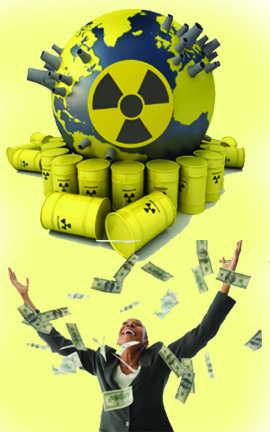
The plan could spur construction of ‘advanced reactors, data centers, and manufacturing facilities,’ according to the Trump administration
Bruce Golding, Tuesday 28 July 2026, https://www.independent.co.uk/news/world/americas/us-politics/white-house-states-nuclear-waste-economy-b3023034.html
The White House reportedly wants Congress to change federal law so “willing states” can store the nation’s nuclear waste — and potentially boost their economies as a result.
A leaked document circulating on Capitol Hill details an administration proposal to replace the abandoned plan to stash radioactive refuse deep inside Nevada’s Yucca Mountain, according to Politico.
It would allow the Energy Department to authorize the construction and operation of so-called nuclear life-cycle innovation campuses where waste could be stored for reprocessing “in willing states,” Politico said.The document reportedly also dangles the notion that creating the campuses would lead private industry to build “advanced reactors, data centers and manufacturing facilities” there.
“Change in legislation is a must,” an unidentified nuclear industry official told Politico. “Current law only allows the federal government to dispose of nuclear waste at Yucca Mountain and only allows money to be collected and spent for Yucca Mountain.”
In a Tuesday statement to The Independent, the White House didn’t deny the Politico report, with a spokesperson saying, “The Trump administration continues to prioritize advancing civilian nuclear energy.”
The Energy Department also announced Tuesday that it had selected five states — Idaho, Louisiana, Oklahoma, Tennessee and Utah — as potential hosts of the proposed nuclear campuses.
“These campuses will be massive generators of economic growth, create thousands of high-paying jobs, and be crucial to unleashing America’s nuclear renaissance,” Wright said in a prepared statement.
President Donald Trump last year issued a series of executive orders aimed at boosting U.S. nuclear power production, including one that calls for quadrupling capacity — to 400 gigawatts — by 2050 through “emerging technologies to safely accelerate the modeling, simulation, testing, and approval of new reactor designs.”
On Friday, he announced that four new reactors had met a July 4 deadline to begin operating and said America was “leading the world in pioneering the next generation of nuclear power,” PBS reported.
Congress designated Yucca Mountain, located about 100 miles northwest of Las Vegas, as the only potential site for a national nuclear-waste repository in 1987.
But the $8 billion project faced fierce opposition in Nevada, and then-President Barack Obama effectively killed it in 2009 when he made good on a campaign promise and cut funding for it from his budget proposal.
President Donald Trump repeatedly tried to revive the plan during his first term in office, but he gave up in February 2020, saying on social media, “Nevada, I hear you on Yucca Mountain and my Administration will RESPECT you!” Reuters reported at the time.
The U.S produces about 2,000 metric tons of nuclear waste annually, with more than 95,000 tons of spent nuclear fuel and waste from weapons production stockpiled in special pools or dry casks at 79 sites in 39 states, CNBC reported in November.
The Nuclear Energy Institute, an industry group, estimated in 2018 that the total amount of spent nuclear fuel rods would cover the area of a football field and reach 36 feet high.
5 states offer to accept nuclear waste in exchange for help developing nuclear energy!
By MATTHEW DALY and JENNIFER McDERMOTTUpdated 7:19 AM GMT+10, July 29, 2026
WASHINGTON (AP) — Five states have agreed to accept nuclear waste from around the country in exchange for federal help developing nuclear energy to create thousands of jobs.
The states — Tennessee, Louisiana, Oklahoma, Utah and Idaho — all have Republican governors who say they welcome the chance to help America reclaim its leadership in civilian nuclear energy.
If built, the storage sites would represent significant progress in a multi-decade effort to store more than 95,000 metric tons of spent nuclear fuel and radioactive waste. Plans for a permanent underground storage facility at Nevada’s Yucca Mountain have long been stalled because of staunch opposition from most residents and officials.
Spent fuel is currently stored at nuclear plants and former nuclear sites nationwide and is piling up. New storage sites would move the radioactive material away from population centers, fault lines and flood plains. Experts say the plan also should help officials gain consent from communities that will host the repositories.
Under the non-binding agreements, the states could host Nuclear Lifecycle Innovation Campuses that would include waste sites as well as uranium enrichment, spent-fuel reprocessing and fuel fabrication. The campuses may also host advanced reactor deployment, power generation and data centers, the Energy Department said………………………………………………
Tennessee is home to the Oak Ridge National Laboratory, which enriched uranium during World War II as part of the Manhattan Project, while Idaho hosts the Idaho National Laboratory, a key research site for nuclear energy and national security. Utah was a source of raw uranium for the Manhattan Project and a training site for crews that dropped atomic bombs on Japan in 1945…..
Solution for storing waste needed to expand nuclear power
The announcement comes as President Donald Trump attempts to quadruple domestic nuclear energy production because of surging electricity demand due to a data center and artificial intelligence boom. Trump also has moved to reshape the independent Nuclear Regulatory Commission to speed up nuclear reactor development. Under Trump’s direction, the commission has proposed eliminating a foundational safety principle that for 50 years minimized the radiation people in the United States are exposed to.
The NRC proposal would abandon a philosophy to keep radiation exposure “as low as reasonably achievable,” instead setting a separate standard on maximum radiation exposure that includes several actions facilities must take depending on the potential dose of radiation to workers…………….
Scott Roecker, a former official at the National Nuclear Security Administration who now advises the Nuclear Scaling Initiative, a pro-nuclear group, said the campuses are a good idea, though he cautions that spent nuclear fuel should not be reprocessed there to be recycled for new fuel because of the cost and security issues……. https://apnews.com/article/civilian-nuclear-energy-waste-states-campus-93d014e414bed86765e26d4572448a15
“Jobs Jobs Jobs” screams the media again as the nuclear lobby plans to brink Japan’s nuclear wastes to Cumberland

COMMENT Plan to Bring Failed Japanese Fast Breeder Reactor’s Contaminated Sodium to Workington – https://radiationfreelakeland.substack.com/p/plan-to-bring-failed-japanese-fast
Japanese reactor decommissioning to bring jobs to UK
Federica Bedendo 26 July 26, https://www.bbc.com/news/articles/c0kmxl6ydpjo
New “highly skilled jobs” have been promised in the UK as part of plans to clean-up a nuclear reactor in Japan.
Cavendish Nuclear and Amentum are planning to build a facility at the Port of Workington, Cumbria, to support the decommissioning of the Monju Prototype Fast Breeder Reactor (FBR), in Fukui Prefecture, Japan.
Cumberland Council, which owns the port, said the plant would support skilled jobs directly and across the supply chain.
Leader Mark Fryer said: “This is fantastic news for the port as this new development, subject to the necessary approvals, will bring good quality jobs to Workington.”
The construction phase is expected to be worth more than £25m and employ about 20 people during its seven-year operation, those behind the plans said.
The FBR was a sodium-cooled reactor that had been designed to burn most of its spent fuel, however it encountered several problems during its lifespan.
The Workington plant would be treating the sodium coolant, turning it into sodium hydroxide, a commercially usable product.
West Cumbria is a well-known area for the nuclear sector, due to the presence of the Sellafield nuclear plant, which is being decommissioned.
The Labour-led council has started work to clear the land at Workington’s Oldside as part of its wider regeneration plans in the town.
The aim is for the area to become a hub for clean energy, manufacturing and logistics, the council said.
A Cavendish Nuclear and Amentum spokesperson said: “We are fully committed to adding real social value to west Cumbia and this new venture will contribute to the regeneration on the Port of Workington and support the local economy.”
Leaked document reveals White House nuclear waste plan

By Hannah Northey, Francisco “A.J.” Camacho E & E News,| 07/27/2026
The Trump administration is seeking to move past Yucca Mountain as the nation’s sole repository and store waste in willing states.
The White House is pushing Congress to break a decades-long impasse around the handling of nuclear waste and entice states to get on board, according to a document obtained by POLITICO.
The Trump administration is seeking changes to federal law to allow the Department of Energy to partner with states willing to store waste generated at the nation’s nuclear reactors, according to the document laying out “legislative principles.” It has been circulating on Capitol Hill and among nuclear industry leaders.
When asked about the document, a White House official said Monday that the administration “is always looking for ways to advance our civil nuclear energy sector.”
The legislative blueprint comes as President Donald Trump pushes to quadruple America’s production of nuclear power over the next 25 years, despite there being no long-term solution for the waste piling up at active and decommissioned reactors across the country………………………………………………………………………………………….(Subscribers only) https://www.eenews.net/articles/leaked-document-reveals-white-house-nuclear-waste-plan/
Approval for VVER uranium/plutonium fuel production in Germany

VVER-440 fuel. A mixture of enriched uranium with RECYCLED URANIUM and PLUTONIUM received from the used nuclear fuel of other VVER reactors is used instead of a standard enriched uranium.
Friday, 24 July 2026,
https://www.world-nuclear-news.org/articles/approval-for-vver-fuel-production-in-germany
The Lower Saxony Ministry for the Environment, Energy and Climate Protection, acting on behalf of the federal government, has approved an application from Framatome subsidiary Advanced Nuclear Fuels to expand its facility in Lingen for the production of fuel for VVER-1000 reactors. The approval is subject to strict conditions.
Framatome subsidiary Advanced Nuclear Fuels (ANF) applied in March 2022 under the Atomic Energy Act for permission to begin producing hexagonal pressurised water fuel elements under licence with TVEL, the fuel arm of Russian state nuclear corporation Rosatom. The fuel elements are to be manufactured using Russian licences and Russian technology in a joint venture with TVEL for the Eastern European market. The licence application includes some changes to some manufacturing and testing equipment and the installation of some additional equipment in existing buildings to enable the manufacture of VVER fuel elements.
The federal government had already clarified in a supervisory letter to the state that, given the current assessment by federal security authorities regarding the risk of sabotage or espionage, there was no legal basis for denying the permit.
The Lower Saxony Ministry for the Environment, Energy and Climate Protection has now announced that it has approved ANF’s application, subject to a number of conditions, as “after intensive review and inquiries, [it] had no legal grounds under the Atomic Energy Act to reject or limit the application”. The restrictions it has imposed include a general ban on entry to the facility for employees of TVEL or Rosatom, as well as persons authorised by them. Entry is only permitted in very limited cases and under the supervision of the regulatory authority.
In addition, the ministry said the hardware and software of the TVEL-licensed machines must undergo external security audits, and these machines must be data-integrated with the rest of the fuel element factory’s operational technology and information technology infrastructure. Also, the finished gadolinium fuel rods arriving from Russia must be 100% inspected for potential tampering using active and passive scanners according to the ‘four-eyes’ principle. Furthermore, ANF employees must receive regular training and awareness programmes to protect against espionage and sabotage.
Lower Saxony’s environment ministry said the approval could be revisited “if new risks are identified”, particularly in “national security”, Euractiv reported.
ANF was created in 1975 and currently employs around 400 people in Lingen. ANF fabricates fuel rods and assemblies for pressurised water reactors and boiling water reactors for customers worldwide.
In recent years, especially since the war with Ukraine began, nuclear power operators in European Union countries who had previously relied on Russian-supplied fuel have sought alternative suppliers. Nineteen VVER reactors – developed during the time of the Soviet Union and historically reliant on Russian fuel supplies – are currently in operation in the EU, including four VVER-1000 reactors in Bulgaria and the Czech Republic, and 15 VVER-440 reactors in the Czech Republic, Finland, Hungary and Slovakia.
Framatome has “a dual-track approach” to supplying fuel to VVER reactors in operation in the EU. In the short term, it will fabricate fuel identical to the proven design currently used by the reactors. In parallel, Framatome is developing and qualifying European sovereign fuels of its own design for VVER-440 and VVER-1000 reactors. The qualification of a new design requires several years within the framework of regulatory and usual certification practices, Framatome notes.
Framatome had planned to produce both VVER-1000 and VVER-440 fuel under licence from and as part of a joint venture with Rosatom at its subsidiary Advanced Nuclear Fuels in Lingen. However, it was recently reported that Framatome has now decided to produce the VVER-440 fuel at its Romans-sur-Isere fuel production site in south-east France. The company expects to submit a request to the French nuclear regulator, the Autorite de Surete Nucleaire et de Radioprotection, by the end of 2026 for approval of the changes needed at the French plant for the production of VVER-440 fuel.
Fukushima nuke plant struggles to clear radioactive waste debris
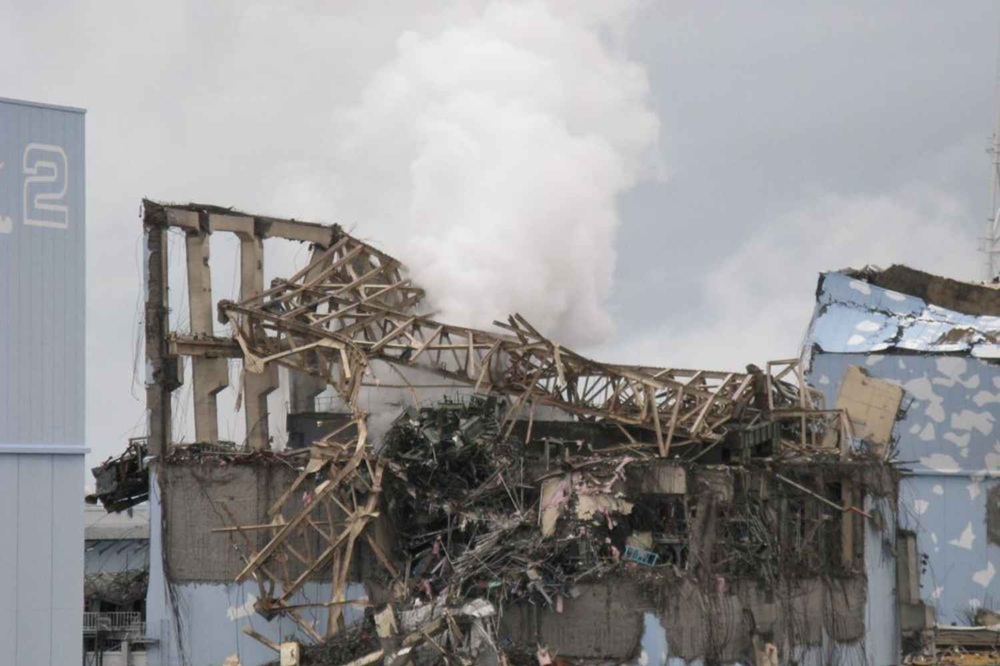
By TOMOYUKI SUZUKI/ Staff Writer, July 25, 2026 https://www.asahi.com/ajw/articles/16663961
Fifteen years after the nation’s worst nuclear accident, the upper floors of the No. 1 reactor at the Fukushima No. 1 nuclear power plant remain littered with wreckage from a hydrogen explosion.
Just clearing all the radioactive waste, a significant step toward decommissioning, remains a mountain to climb at the crippled plant, which suffered triple meltdowns.
The huge amount of debris must be cleared before the plant operator, Tokyo Electric Power Co., proceeds with the removal of spent nuclear fuel assemblies stored in the water-filled cooling pool located on the upper portions of the No. 1 reactor building.
But the long-overdue clearance would require TEPCO to construct new interim storage facilities in a race against time to keep up with the increasing waste volume in what is likened to a “cat and mouse game.”
Experts on nuclear decommissioning say TEPCO and other stakeholders should tackle reducing the radioactive waste as an urgent priority in tandem with the greatest challenge of removing the melted nuclear fuel.
The No. 1 reactor building holds 392 spent fuel assemblies in the cooling pool, apart from the melted nuclear fuel.
A new crane installed on the upper floor is expected to load debris from the hydrogen explosion into containers for the transfer to an on-site solid waste storage facility. The clearing work began on June 22.
The hydrogen explosion at the No. 1 reactor building occurred on March 12, 2011, the day after the magnitude-9.0 Great East Japan Earthquake and tsunami struck Japan’s eastern Tohoku region, resulting in the loss of power at the facility to cool the reactors.
The blast blew off the structure’s upper floors, scattering numerous pieces of the roof and the overhead crane.
Today, the No. 1 reactor building is shielded with a giant retractable cover, which measures 56 meters by 66 meters. The cover, together with a new crane, weighs about 7,900 tons, the equivalent of two Tokyo Towers.
The cover was installed in January to prevent radioactive dust from escaping into the air and rainwater from seeping inside during the spent nuclear fuel recovery, which is scheduled to begin between fiscal 2027 and 2028.
TEPCO has been conducting checks of the upper floors for potential large cracks. It has been moving some debris through a remote-controlled demolition system.
Containers holding the waste from the clearance work will be stored temporarily in a solid waste storage facility at the plant.
Known as the No. 10 storage facility, it consists of A, B and C buildings. Buildings A and B have been in use since 2024. The newest one, building C, is 50 meters by 180 meters and 20 meters in height.
Inside building C, containers are neatly stacked. Receptacles with readings of high levels of radiation are sited in the center of the building and surrounded by ones with lower readings, which serve as shields to lower air dose rates in the surrounding area.
In contrast, the grounds outdoors appeared jumbled. Trees chopped down to create space for tanks and working space for operators were left lying on some parts of the grounds while waste containers were piled up in the open.
In addition, TEPCO still relies on makeshift storage in areas along the coast that stores waste on an impermeable liner spread underground and covered with soil.
The company intends to house all the radioactive waste in the indoor facilities by fiscal 2028 to safeguard the containers from fire risks and corrosion.
Before the nuclear disaster, the nuclear plant had eight waste storage facilities. The No. 9 and No. 10 facilities were added after the 2011 accident. Construction of the No. 11 facility is underway for the planned opening for May 2028.
If everything goes as planned, the nuclear plant’s capacity for waste storage would rise to 216,000 cubic meters by the end of fiscal 2028, sufficient for an estimated 207,000 cubic meters of waste to be produced by the time.
It is clear, however, that TEPCO may need additional storage space. The company is considering constructing a No. 12 facility, given that the plant’s storage capacity is projected to be full by fiscal 2035.
The entire situation is even more concerning as little progress has been made in the discussion of the final disposal of the vast amount of radioactive waste.
Moreover, waste produced from the treatment of contaminated water, such as slurry and sorbents, is not included in the materials bound for these storage facilities.
TEPCO will transport parts of such waste into the No. 1 large-scale waste storage facility during the current fiscal year. The storage area, which measures 23 meters by 186 meters and 17 meters in height, underwent seismic retrofitting recently and is ready for use.
The big question is the total amount of radioactive waste that will be generated.
The utility estimates that there will be around 800,000 cubic meters of waste by the end of fiscal 2036. But it has not provided a figure for the overall amount during the decommissioning process.
An Atomic Energy Society of Japan committee advising on the decommissioning of the Fukushima No. 1 nuclear plant estimates there will be about 5.6 million cubic meters of radioactive waste–equivalent to 4.5 Tokyo Domes–unless reduction measures are taken.
TEPCO plans to sort waste by radiation level for interim storage. Of the projected 800,000 cubic meters of waste, 70 percent is eligible to be held in solid waste storage facilities.
While the company aims to halve the volume of this waste, it is set to recycle the remaining 30 percent.
Scrap metal or concrete waste with a dose of 0.005 millisievert per hour or more will be cut or partially crushed to reduce the size. For waste with a dose of less than 0.005 millisievert per hour, TEPCO will consider having it melted for recycling.
But the facility for melting metal will likely be completed between fiscal 2032 and 2034, three years behind schedule, due to a design review.
The amount of melted nuclear fuel, or fuel debris, is estimated at 880 tons at the No. 1 through No. 3 reactors where the meltdowns occurred.
TEPCO plans to eventually retrieve all the fuel debris, but it has yet to determine the final disposal method.
Satoshi Yanagihara, a guest professor for nuclear decommissioning at the University of Fukui, called on TEPCO to more aggressively reduce the waste volume.
“Since utilities’ primary focus is on operating power plants, they tend to invest less in the management of nuclear waste in terms of money and human resources,” he said. “Recovering melted fuel is certainly a daunting challenge, but TEPCO should also grapple with how to lessen the waste volume simultaneously.”
-
Archives
- October 2026 (129)
- September 2026 (339)
- August 2026 (330)
- July 2026 (355)
- June 2026 (287)
- May 2026 (306)
- April 2026 (356)
- March 2026 (251)
- February 2026 (267)
- January 2026 (308)
- December 2025 (358)
- November 2025 (359)
-
Categories
- 1
- 1 NUCLEAR ISSUES
- business and costs
- climate change
- culture and arts
- ENERGY
- environment
- health
- history
- indigenous issues
- Legal
- marketing of nuclear
- media
- opposition to nuclear
- PERSONAL STORIES
- politics
- politics international
- Religion and ethics
- safety
- secrets,lies and civil liberties
- spinbuster
- technology
- Uranium
- wastes
- weapons and war
- Women
- 2 WORLD
- ACTION
- AFRICA
- Atrocities
- AUSTRALIA
- Christina's notes
- Christina's themes
- culture and arts
- Events
- Fuk 2022
- Fuk 2023
- Fukushima 2017
- Fukushima 2018
- fukushima 2019
- Fukushima 2020
- Fukushima 2021
- general
- global warming
- Humour (God we need it)
- Nuclear
- RARE EARTHS
- Reference
- resources – print
- Resources -audiovicual
- Weekly Newsletter
- World
- World Nuclear
- YouTube
-
RSS
Entries RSS
Comments RSS

