Idaho’s New Nuclear Waste Deal done in secret – “DONE IN THE DARK OF NIGHT.

 Former Idaho Governors: Strong Words for Otter’s New Nuclear Waste Deal, Boise Weekly BY JESSICA MURRI ON THU, JAN 15, 2015 FORMER IDAHO GOVERNOR CECIL ANDRUS SAID GOV. C.L. “BUTCH” OTTER’S RECENT DECISION TO REOPEN IMPORTATION OF SPENT NUCLEAR FUEL TO THE IDAHO NATIONAL LABORATORY WAS “DONE IN THE DARK OF NIGHT.”
Democrat Andrus sat aside former Republican Governor Phil Batt, at the Andrus Center for Public Policy on Thursday morning, and both were clearly upset and appalled that Otter would break Batt’s 1995 landmark agreement, forbidding any more nuclear waste to come into Idaho.
“Neither one of us have any intention of letting this decision by two of the elected officials in the state of Idaho (Otter and Idaho Attorney General Lawrence Wasden) come to pass,” Andrus said.
Both the governors spent large amounts of their terms stopping the importation of spent nuclear fuel into Idaho. Batt produced the 1995 Agreement, which was then ratified by more than 60 percent of Idaho voters.
“It’s not my agreement, it’s Idaho’s agreement,” Batt said.
But in spite of that 1995 pact, Otter and Wasden have agreed to receive 50 spent nuclear rods, each weighting 1,500 pounds, for a total of 37.5 tons of nuclear waste, according to Andrus. The letter between Wasden and the Department of Energy states that the nuclear waste will be used for “research purposes.”
Batt doesn’t buy that. He wrote a letter to Otter on Jan. 12, criticizing Otter’s decision and reprimanding him for going ahead with it without consulting Batt or Andrus.
The danger of the waste accumulating at the Idaho National Laboratory, Batt said, is the risk it poses for the Snake River Aquifer, directly under the repository site.
“If there was contamination in that water,” Batt said, “it would cause our potato industry to fold up. It would cause fish farms to fold up in Magic Valley. It would create all kind of problems with municipal water.” “It could gain $10 million in revenue, but that isn’t one tenth of one percent of what you’re gambling against if any of that waste gets lose in the aquifer,” Andrus added……….
“If this was so important to the state of Idaho and how we were going to gain from it, why didn’t he mention it in his State of the State address?” Andrus said. “I’ll tell you why, it’s because he didn’t want the people to know what they’d done in the dark of night in secrecy, in breaking this agreement and letting new waste come into the state of Idaho. It’s a travesty,”………..http://www.boiseweekly.com/CityDesk/archives/2015/01/15/former-idaho-governors-strong-words-for-otters-new-nuclear-waste-deal
Japan’s electricity consumers to pay half the $180+ cost of dismantling each nuclear reactor
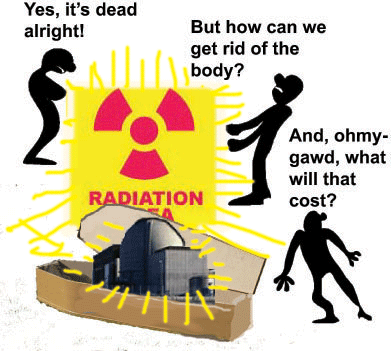
 Japanese electric power consumers to share NPP dismantling costs It costs at least $180 million to decommission one reactor TOKYO, January 14. /TASS/. The costs of dismantling of outdated or unsafe nuclear power plants in Japan will be equally shared by the country’s electric power consumers, a working group of the economy, trade and industry ministry said on Wednesday………The government said nuclear power plants will be decommissioned when their authorized 40-year lifespans expire. Some 5 reactors are expected to be dismantled and the plans will be officially announced next month.
The loss due to decommissioning of one reactor is estimated at least at $180 million. Such expenses could deal a serious economic blow to private companies, which own the power reactors, and weaken the country’s economy in general.
Japan’s energy companies have submitted applications for another 19 reactors to resume their operations, but the process has been slowed down by safety checks and paperwork…….http://itar-tass.com/en/world/771074
UK’s Sellafield clean-up mess: Amec, Areva and URS stripped of £20bn contract
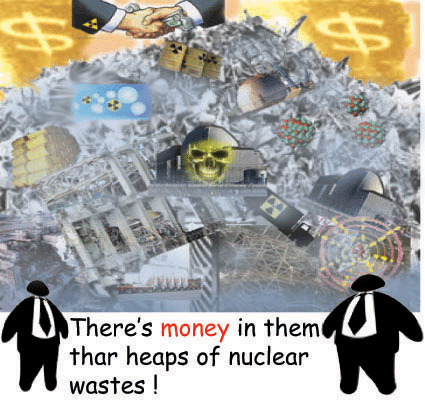
 Sellafield nuclear clean-up firms to be stripped of £20bn contract, Telegraph UK Management of Britain’s most toxic nuclear waste site expected to be taken back into state hands as heavily-criticised consortium of Amec, Areva and URS is stripped of its contract By Emily Gosden, Energy Editor 12 Jan 2015 Nuclear waste clean-up operations at Sellafield are expected to be taken back into state hands, as the private consortium managing the Cumbrian site is stripped of its £20bn contract.
The Government’s decision to axe Nuclear Management Partners (NMP), comprised of Britain’s Amec, France’s Areva and America’s URS, is expected to be formally announced on Tuesday, six years into a 17-year contract to work on decommissioning the site.
Ministers surprised many by shying away from an opportunity to cancel NMP’s contract at a formal “break point” last year, despite criticism of the consortium by the National Audit Office (NAO) and Public Accounts Committee (PAC) over a series of failings.
The Nuclear Decommissioning Authority (NDA) had said it was considering taking the management of Sellafield back into state hands, an option that would have required ministerial approval.
However, there were doubts about how state management of the nuclear site, the UK’s biggest and most hazardous, would work in practice. It is thought a plan has now been drawn up and the NDA will exercise its right to terminate NMP’s contract “for convenience” with 12 months’ notice.
A spokesman for the Department of Energy and Climate Change confirmed only that the NDA and Government had been working on “alternative options at Sellafield”……..
the costs of the clean-up have since spiralled and annual spending at the site last year was £1.8bn, implying the remaining 11 years of the contract would be worth £20bn.
NMP earns tens of millions of pounds each year for managing the multi-billion pound operations.
Lifetime costs for decommissioning Sellafield, which is likely to take more than 100 years, were last year estimated to have risen to in excess of £79bn, but the NDA warned at the time that the total would rise further.
The NAO and PAC both criticised delays and cost overruns in NMP’s management Sellafield, where failings also included accidentally sending radioactive waste to a landfill site, resulting in a £700,000 fine………http://www.telegraph.co.uk/finance/newsbysector/energy/11340733/Sellafield-nuclear-clean-up-firms-to-be-stripped-of-20bn-contract.html
Cumbria’s call for clean-up of Sellafield’s ‘Legacy’ spent nuclear fuel ponds
 Sellafield Ltd’s announcement of two ‘unusual finds’ on West Cumbrian beaches in May and June 2014 (the discovery attributed to the new Groundhog Synergy 2 monitoring system introduced in May) should be ringing public health alarms in the corridors of those tasked to protect beach users from the radioactive materials routinely washed up on local beaches from Sellafield’s historic discharges to the Irish Sea.
 Sellafield Catch Up 2015 nuClear News Jan 15 Eddie Martin of the Cumbria Trust wrote to Stephen Henwood chair of the NDA in November about the spent fuel ponds. He said, given that the Sellafield “Legacy Ponds” are over 60 yearsold, contain significant amounts of spent Magnox nuclear fuel and other radioactively
Money mess in escalating costs of dismantling Michigan nuclear facility
Exelon: Company dismantling Zion nuclear plant is running out of money By Julie Wernau Chicago Tribune, 9 Jan 12 contact the reporter The company dismantling the closed Zion nuclear plant on Lake Michigan is running out of money to finish the job, according to the site’s owner, Chicago-based Exelon.
The project, paid for with $800 million collected from state electric ratepayers over decades, is being closely watched by nuclear plant owners around the country who hope to replicate the arrangement. It was the first time regulators allowed a nuclear power plant owner to transfer a plant’s operating license and liabilities to a third-party decommissioner.
Utah-based EnergySolutions, the company dismantling Zion, wants to become the go-to decommissioner around the world. In the U.S., about 6 percent of nuclear plants face possible closing, according to the U.S. Environmental Protection Agency.

In Illinois, the Zion dismantling has taken on added significance as Exelon, the parent company of Commonwealth Edison, has said three of its six nuclear plants in the state could be closed. ………. Continue reading
The world’s first lump of plutonium – lost and found
How The First Lump Of Plutonium Made On Earth Got Lost http://www.gizmodo.com.au/2015/01/how-the-first-lump-of-plutonium-made-on-earth-got-lost/ SARAH ZHANG, 9 JAN 15, A few years ago, the first lump of plutonium scientists ever made on Earth disappeared from display in Berkeley’s Lawrence Hall of Science. Berkeley physicists think they have finally found it again — thankfullybefore it got thrown out as radioactive waste.
This precious lump of plutonium dates back to 1941. Plutonium doesn’t exist naturally on Earth, except in trace amounts. So to study plutonium, scientists first had to make it. Berkeley physicist Glenn Seaborg got access to a newly built cyclotron, where he and his collaborators bombarded uranium with neutrons. The material then decays into the new element of plutonium.
After a year, they had enough plutonium for the first sample large enough to weigh. It was all of 2.77 micrograms.
Seaborg would go on to win a Nobel Prize for his discovery of plutonium and other transuranium elements. The room where he did his work in Gilman Hall has since become a US National Historic Landmark. That historic sample was converted into plutonium oxide and placed in a glass tube, where it was put on display in Berkeley’s Lawrence Hall of Science.
In the late 2000s, however, Berkeley began to worry about the dangers putting the plutonium on display. The sample was removed and put away — except no one really knew where. Some time later, a box labelled “First sample of Pu weighed” was found at the Berkeley’s Hazardous Material Facility, a waystation for hazardous waste. Thankfully, a knowledgable eye saw it and discerned its historical value.
The label’s claim was promising, but how could we prove that this was actually Seaborg’s sample? With science, of course. The Physics ArXiv Blog explains:
It turns out that plutonium created in a cyclotron is very different from most plutonium, which is created inside nuclear reactors and then separated from spent nuclear fuel. That’s because this stuff always contains another isotope, plutonium-241.
This is a half-life of just over 14 years and decays into americium-241. So samples of plutonium from nuclear reactors, always contain americium-241 in amounts that grow over time. What’s more, Am-241 in turn decays producing gamma rays with an energy of 59 kiloelectron volts.
Eric Norman’s lab at Berkeley’s Department of Nuclear Engineering monitored the sample for gamma rays with an energy of 59 kiloelectron volts. They didn’t find any, meaning the sample was most likely created in a cyclotron like Seaborg’s. In addition, the mass matches up. The evidence all points toward this being the missing plutonium.
Now that Seaborg’s sample has been recovered, there’s talk of putting it back on display in his former office in Gilman Hall — perhaps a more fitting place than the trash bin. [The Physics ArXiv Blog]
USS Calhoun County and the dumping at sea of atomic waste
“Nuclear Waste Dumping Diary.”
Jan. 20 1957: “371 tons atomic waste.”
Feb. 7, 1957: “368 tons atom waste.”
Nov. 13, 1957: “299 (tons) poison gas (and) A.W.”
One of Albernaz’s last entries was on June 12, 1958: “200 tons. Spec. weapons,” or special weapons. That was the day, Albernaz later told his wife, that he helped dispose of an atomic bomb.
none of the men who served on theCalhoun County are eligible for automatic VA benefits for radiation illnesses because they did not participate in underwater or atmospheric atomic tests and related activities, the government says.
Thus, the crewmen do not meet their country’s definition of “Atomic Veteran.”
USS Calhoun County sailors dumped thousands of tons of radioactive waste into ocean, Tampa Bay Times , 20 Dec 2013 William R. Levesque, Times Staff Writer They asked the dying Pasco County man about his Navy service a half-century before. He kept talking about the steel barrels. They haunted him, sea monsters plaguing an old sailor.
“We turned off all the lights,” George Albernaz testified at a 2005 Department of Veterans Affairs hearing, “and … pretend that we were broken down and … we would take these barrels and having only steel-toed shoes … no protection gear, and proceed to roll these barrels into the ocean, 300 barrels at a trip.”

Not all of them sank. A few pushed back against the frothing ocean, bobbing in the waves like a drowning man. Then shots would ring out from a sailor with a rifle at the fantail. And the sea would claim the bullet-riddled drum.
Back inside the ship, Albernaz marked in his diary what the sailors dumped into the Atlantic Ocean. He knew he wasn’t supposed to keep such a record, but it was important to Albernaz that people know he had spoken the truth, even when the truth sounded crazy.
For up to 15 years after World War II, the crew of Albernaz’s ship, the USS Calhoun County, dumped thousands of tons of radioactive waste into the Atlantic Ocean, often without heeding the simplest health precautions, according to Navy documents and Tampa Bay Times interviews with more than 50 former crewmen………. Continue reading
Entergy can’t afford, for decades, to dismantle Vermont Yankee Nuclear Plant
Vermont Yankee Nuclear Plant Begins Slow Process of Closing, NYT By JESS BIDGOODJAN. 4, 2015 “………..The Entergy Corporation, a Louisiana-based energy company that operates nuclear plants around the country, purchased Vermont Yankee in 2002. The plant had withstood opposition from activists since it opened, but from 2007 to 2010, the collapse of a cooling tower, radioactive tritium leaks and misstatements from plant executives that had preceded them further eroded public confidence in the company.
State legislators tried to close the plant, but a judge ruled in 2012 that they could not. Shortly after that decision was upheld, in August 2013, Entergy announced it would nevertheless close the plant, citing economics.
“It became pretty clear that we could not, this would not be a financially viable resource going forward,” said Bill Mohl, the president of Entergy Wholesale Commodities, which owns the plant, last week. He cited the plant’s small size, the low cost of natural gas for producing electricity and other issues with the market.
“This plant, this area, ranks right up there with the highest antinuke sentiment across the entire country,” said Mr. Farabaugh, who worked in five other plants around the nation before coming to Vermont Yankee.
Entergy projects it will cost $1.2 billion to decommission Vermont Yankee, but its trust fund has about half of that, so the full dismantling of the plant will not begin for decades. Meanwhile, the operators will turn to the mammoth task of cooling, storing and securing the spent fuel there.
Federal law requires the government to develop a long-term storage facility for nuclear waste, but there is currently no plan in place. So the spent fuel at Vermont Yankee, like at closed nuclear facilities around the country, will stay on site, and officials say it will be safe.
The prospect of the plant’s future as a nuclear storage facility worries many of the area’s activists, like Clay Turnbull, the president of the New England Coalition on Nuclear Pollution, which is based in Brattleboro.
Enormous risk in France’s plan for nuclear garbage tip near the town Bure.

 Nuclear Waste on the Aquifer Nuclear free by 2045? http://nf2045.blogspot.com.au/2015/01/the-inconvenience-of-geothermic-energy.html by Professor Canardeau translation of Des déchets (nucléaires) sur la nappe Le Canard enchaîné December 2014
A huge pocket of warm water exists beneath what is supposed to be France’s largest nuclear garbage pit, located near the town Bure. This site is destined to store, for at least 100,000 years, the most dangerous high-level waste that has accumulated since France built its first reactor. 125 meters tall, 30 kilometers wide and dozens of kilometers long, this reserve of warm water could sooner or later be used to produce heat or energy. The water is a comfortable 66 degrees, but it is found at a depth of 1,800 meters, while the nuclear waste is to be buried above it at a depth of 500 meters.
On January 5, 2015, the agency for the management of radioactive waste (ANDRA) will find itself on trial in high court in Nanterre for having divulged false information concerning the supposed absence of concern about significant underground water tables at the site in Bure. The citizen groups Sortir du nucléaireand Stop Bure 55, and Mirabel Lorraine Nature Environnement have brought the charges.
Some background: The fundamental rules related to deep geological disposal of nuclear waste, established in 1991 and still in force, clearly state that sites should not involve significant concerns about geothermal sources or build-up of heat. But in 2002, the geophysicist André Mourot (now deceased) was going through the archives at the Bureau of Geological and Mining Research in Nancy, Reims, and he discovered the existence of this aquifer, and he realized its significance as a source of energy. The geologist Antoine Godinot remembers that André Mourot wrote a report and distributed it to all interested groups. Next, they demanded that ANDRA conduct testing to learn fully about the aquifer.
ANDRA made no response until 2008. “What a disaster, this drilling and testing,” laughed the nuclear physicist Monique Sené. “The probe got stuck. They couldn’t even reach the aquifer.”
This fiasco didn’t stop ANDRA from declaring in 2009 that the geothermic source is negligible. Since then it has stuck to this position. To the malcontents it accuses of spreading this information about a geothermic potential, it responds, “The studies done by ANDRA concern whether there is an exceptional geothermic resource.” For ANDRA, as far as Bure is concerned, there is “no geothermic resource of exceptional interest.” Everything hinges on what is understood by “exceptional.”
Tada! At the end of 2013, at the request of the local information committee tracking the Bure laboratory (composed of representatives of the State, local collectives, and civil society groups), a Swiss group called Geowatt, specializing in geothermic energy resources, produced a report that stated, “We are of the opinion that the geothermic resources of the Bure region could at present be developed at an economical cost with the use of appropriate technology. The nail in the coffin was the additional comment stating, “The burial of nuclear waste prevents access to the geothermic resource.”
The physicist Bernard Laponche points out, “If we build this project at this site, we are going to impose enormous risks on future generations, and for sure one day people will want to exploit this geothermic energy, but they will stumble upon the nuclear waste that is blocking access to it. ”
Perhaps ANDRA will be able to leave their contact information for future generations to get in touch.
Nowhere to put nuclear waste, so the companies just sue the USA government
 Vermont Yankee Nuclear Plant Just Shut Down; U.S. Still Has No System for Disposing of Nuclear Waste http://www.newsweek.com/vermont-yankee-nuclear-plant-just-shut-down-us-still-has-no-system-disposing-295775 BY ZOË SCHLANGER 12/31/14 The Vermont Yankee nuclear plant officially went offline Monday, halting the nuclear reaction process and beginning what could be a nearly 40-year process to fully decommission the plant. But what happens to all the plant’s nuclear waste at the end of those decades? No one knows for sure, because the U.S. government has nowhere to put it.
That’s also the case for the nuclear waste from decommissioned plants all over the country: Their spent fuel rods remain on the reactor property, trapped inside steel cylinders called “dry casks,” even after the reactor is disassembled.
Since 1998, the federal government has been legally bound to remove dry-casked nuclear waste from private plants and dispose of it in a secure facility. But it can’t, because no such facility exists. Yucca Mountain, the facility that might have been, has been in limbo since its conception in 1987. It was initially scheduled to come online in 1998, but never did. Only 5 miles of the 40-mile storage tunnel were ever built. With more than $30 billion already collected over three decades from taxpayers for the project, the Obama administration cut funding to the mostly-unbuilt project in 2011.
As it stands now, it’s predicted the waste from the plant will be transfered from cooling ponds into dry casks by 2020. Then those casks may end up sitting on the reactor’s property in Vernon, Vermont, indefinitely, like so many thousands of casks lying around on reactor sites all over the country. The Vermont Yankee lists 2052 as the year the federal government might come take them away, but that’s pending Congressional action that has not yet taken place. So what does a corporation do when a contract, government or otherwise, is violated? They sue.
“You then sue the Department of Energy for the costs that are incurred for storing the spent fuel. [So do] all the other decommissioned facilities—the dry casks still remain on the site because there’s no place to bring the spent fuel. So you sue the Department of Energy and they pay you back for the cost that you’ve incurred,” says Martin Cohn, a spokesperson Entergy Wholesale Commodities, which owns Vermont Yankee.
Savannah River Site Secretly Becoming World’s Nuclear Dumping Ground
Secretly Dumping Other People’s Problem Savannah River Site Becoming World’s Nuclear Dumping Ground, despite Safety Risks By: GLORIA TATUM Atlanta Progressive News 6-9-2014 (APN) ATLANTA — The U.S. Department of Energy (DOE) is close to finalizing plans to accept highly radioactive commercial spent nuclear fuel from Germany to be deposited at the Savannah River Site (SRS) in South Carolina, according to news reports that were buried deeper than the plutonium itself.However, it is not only Germany that is sending, or has sent, nuclear waste to SRS, but also Italy, Sweden, Belgium, Canada, and perhaps other countries not yet known, Atlanta Progressive News has learned.
Atlanta Progressive News can report that South Carolina’s Savannah River Site is quietly becoming the world’s nuclear dumping ground, and de facto nuclear waste storage site, despite the facts that frequent rain and an overlapping earthquake zone make the site extremely dangerous, especially to our water supply.
There is no long-term storage plan for the waste in the U.S., with the Yucca Mountain proposal on the rocks, as it were, and with a temporary nuclear waste storage site in New Mexico having been closed to new shipments indefinitely.
SRS is already quietly storing plutonium brought in from other countries, and is now also planning to import 23,000 liters of liquid high-level waste from the Chalk River Laboratories in Canada, which would end up in the already stressed high-level waste tank system, according to an SRS Watch news release.
Shipments of foreign plutonium appear to have been secretly brought in via Charleston, South Carolina, in February and March 2014 of this year, according to an article by the Ottawa Citizen, dated March 29, 2014.
The article has a photo of PNTL transport ship Pacific Egret, noting that the ship carried guns and cannons, and that the ship–which originated in Italy with sensitive nuclear material– disappeared from an online marine tracking system after entering Canadian waters:
http://www.ottawacitizen.com/news/Covert+mission+Plutonium+source+might+Canada/9675369/story.html
Italy and Belgium have announced the transfer of plutonium and highly enriched uranium (HEU) to the Department of Energy’s Savannah River Site. The Italy and Belgium imports are admitted to in two respective statements posted to the White House’s website, just days before the Ottawa Citizen report:
Meanwhile, according to Reuters and other reports, Japan will transfer HEU and plutonium to the U.S., but that the destination is not known. However, based on the closure of the New Mexico facility, it is highly reasonable to suspect that the Japanese shipment will also be dumped at SRS.
http://www.reuters.com/article/2014/03/24/nuclear-proliferation-idUSL5N0ML2MP20140324
At the National Security Summit at the Hague on March 24 and 25, 2014, a priority item on the agenda was to reduce the amount of dangerous nuclear material in the world. They issued a statement that countries should repatriate highly enriched uranium (HEU) to its country of origin, thereby reducing the number of locations that terrorist groups could target to obtain it.
With the U.S. being the country of origin for much of the world’s nuclear material, this means all our nuclear chickens are coming home to roost……. http://www.fairewinds.org/secretly-dumping-peoples-problems/#sthash.mtEhWriM.dpuf
Vermont Nuclear Shutdown highlights reality of nuclear’s radioactive legacy
 Another Reactor Closes, Punctuating New Reality for U.S. Nuclear Power As Vermont Yankee shuts down, the U.S. has yet to address industry issues that span decades Christina Nunez National Geographic JANUARY 1, 2015
As another nuclear power plant closed this week, the United States faced a dwindling fleet of aging reactors, few new projects, and the challenge of safely mothballing radioactive fuel for decades……..
So far, nuclear isn’t winning. Vermont Yankee, which shut down Monday after 42 years of operation, is the fourth U.S. nuclear facility to close in two years. For the owners of each recent retiree—from Vermont Yankee to San Onofre in California, Kewaunee in Wisconsin, and Crystal River in Florida—the math just didn’t work.
“When we looked at the cost of those improvements with what we projected as the cost of energy, the decision was that it would be better to shut the plant down,” said Martin Cohn, spokesperson for Vermont Yankee’s operator, Entergy.
More closures in the United States, the world’s largest producer of nuclear power, could lead to a far different nuclear landscape from the one imagined before the gas boom.
Nuclear’s Long-Term Legacy
Technically, the decades-long process of decommissioning a nuclear plant hasn’t changed much over the years: The reactor is shut down, the radioactive fuel is removed and encased for storage, and the plant itself is eventually dismantled.
“We will have a concrete pad with a bunch of casks of spent fuel on it that will look almost exactly like the ones at Maine Yankee or Yankee Rowe [in Massachusetts],” which retired in 1996 and 1991, respectively, said Chris Wamser, Vermont Yankee site vice president.
The rules surrounding that process haven’t changed either, which is a problem, according to Vermont Yankee executives. “Just because we shut down, we’re still a nuclear plant with a license,” said Barrett Green, who is leading the project. He said the NRC hasn’t finalized a road map for decommissioning.
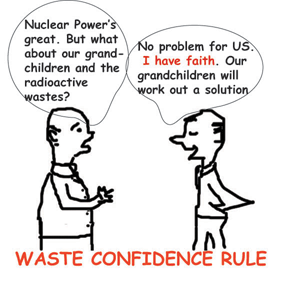
“We’ve had to make all sorts of petitions for amendments to the license, or exceptions to a rule, or various other allowances for the regulatory process to say it’s OK for us to stop maintaining a system that we’re never going to need again,” Green said.
Outgoing Nuclear Regulatory Commission Chairman Allison Macfarlane acknowledged this issue at a National Press Club luncheon in November, suggesting that the agency has not prepared for a future where, instead of overseeing new nuclear plants, it is reckoning with older plants such as Vermont Yankee retiring ahead of schedule.
“The predicted ‘nuclear renaissance’ did not materialize,” Macfarlane said. “It’s time for the NRC to develop regulations specific to the decommissioning of nuclear power plants and to structure public expectations of the process.”………On Twitter: Follow Christina Nunez and get more environment and energy coverage at NatGeoGreen. The story is part of a special series that explores energy issues. For more, visit The Great Energy Challenge. http://news.nationalgeographic.com/news/energy/2015/01/150101-vermont-yankee-shutdown-us-nuclear-issues/
Mixed Oxide Fuel (MOX) facility would further pollute and endanger Georgia and South Carolina
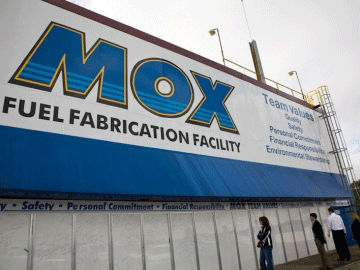 Savannah River Site Becoming World’s Nuclear Dumping Ground, despite Safety Risks By: GLORIA TATUM Atlanta Progressive News 6-9-2014
“……..We are wasting money and increasing the risk of a terrorist accident if we build that MOX plant at SRS. Plutonium fuel cost more than uranium fuel and there’s plenty of uranium on the planet. So we are taking other people’s plutonium to keep a MOX plant running and no one wants to buy the output from it,” Gundersen told APN.
Plutonium is a man made element derived from the transformation of uranium through fission. Plutonium, Pu-239, has a half life of 24,100 hundred years; that’s the time it will take for half of the plutonium to radioactively decay. Radioactive contaminants are dangerous for ten to twenty times the length of their half-lives, meaning that if plutonium gets into the environment, it will be dangerous essentially forever. If ingested into the body, it causes DNA damage in tissue, and cancer.
The use of MOX fuel does not get rid of plutonium; instead it becomes part of the lethal soup of ingredients termed “high level nuclear waste.” There are no safe long-term storage for nuclear waste, only interim storage solutions for waste that will remain hazardous for thousands of years.
“When I hear plutonium in the environment, it becomes a problem not only for the next generation – we were not even a [human] species a quarter of a million years ago – we might be a new species before this stuff completely disintegrates from the environment,” Gundersen said. http://www.atlantaprogressivenews.com/nuclear-dumping-ground-despite-safety-risks.html
Citizens living downstream from the site have complained for years of high levels of cancer and death in their community, which they attribute to the SRS and Plant Vogtle’s nuclear reactors across the river on the Georgia side.
“The DOE is more interested in jobs this year and totally forgetting about the environmental costs for the next 300 or a thousand years. It’s unfair to the people of Georgia and South Carolina to make some money now and pollute the Savannah River for a thousand years,” Gundersen said. http://www.fairewinds.org/secretly-dumping-peoples-problems/#sthash.mtEhWriM.dpuf
Nuclear clean-up contract in Idaho altered by DOE
Feds alter nuclear cleanup contract in Idaho Casper Star Tribune, The Associated Press 2 Jan 15 The U.S. Department of Energy has altered a proposed contract for radioactive waste cleanup after potential bidders warned that they could pull out of the process.. Last week, the agency issued a new plan that eliminated language requiring a contractor to pay for all cost overruns exceeding $150 million.
The Department of Energy’s Idaho Cleanup Project Core, known as ICP Core, is a five-year contract that also includes monitoring of spent nuclear fuel at the Idaho National Laboratory.
The new contract is set to begin in 2016 and consolidate responsibilities of the two primary nuclear waste contractors now working at the nuclear facility in southeast Idaho………..
In a 1995 agreement struck between the federal government and then-Gov. Phil Batt, a Republican, the Department of Energy was required to remove all high-level waste and spent nuclear fuel from Idaho by 2035.
The fear was that buried nuclear waste would seep into the huge Eastern Snake Plain aquifer, which provides water to much of the state’s agriculture industry.
But several problems have surfaced. In November, federal officials said a waste treatment facility planned to be operational by now won’t be ready for months.
The Department of Energy said malfunctions with the $571 million Integrated Waste Treatment Unit continue to cause delays in turning 900,000 gallons of liquid waste into a solid form.
The high-level radioactive waste came from the processing of spent nuclear fuel from Navy ships. It’s now stored in tanks at the INL’s Idaho Nuclear Technology and Engineering Center.
And in December, the federal agency said low-level radioactive waste that’s supposed to be sent out of Idaho is backing up because an underground nuclear waste repository in southern New Mexico is not taking shipments because of recent mishaps.
Officials said it’s not clear when those shipments will resume. http://trib.com/business/energy/feds-alter-nuclear-cleanup-contract-in-idaho/article_3977693d-05be-55da-8f3f-1c74d6e01574.html
Vermont Yankee has only half the $1.24B needed to get rid of the nuclear plant corpse
Nuclear plant predicts $1.24B decommissioning cost http://www.power-eng.com/articles/2014/12/nuclear-plant-predicts-1-24b-decommissioning-cost.html?cmpid=enl-poe-weekly-december-22-2014 12/22/2014 MONTPELIER, Vt. (AP) – The Vermont Yankee nuclear plant has made formal its prediction that decommissioning the reactor will cost $1.24 billion.
The plant currently has about half that amount saved up to dismantle the reactor and complete other tasks. It’s expected to be at least the early 2040s before the fund has grown enough to pay for full decommissioning.
Vermont Yankee owner Entergy Corp. announced in August of 2013 that it would shut down at the end of this year because the plant was no longer economical to operate.
1 This Month
23-25 October – on Zoom – World BEYOND War’s annual global conferenc


Shut down the radiation-damaged Heysham nuclear reactors now
To see nuclear-related stories in greater depth and intensity – go to https://nuclearinformation.wordpress.com

Say No to NASA’s Reckless Nuclear Reactor on the Moon
Say No to NASA’s Reckless Nuclear Reactor on the Moon

-
Archives
- October 2026 (219)
- September 2026 (339)
- August 2026 (330)
- July 2026 (355)
- June 2026 (287)
- May 2026 (306)
- April 2026 (356)
- March 2026 (251)
- February 2026 (267)
- January 2026 (308)
- December 2025 (358)
- November 2025 (359)
-
Categories
- 1
- 1 NUCLEAR ISSUES
- business and costs
- climate change
- culture and arts
- ENERGY
- environment
- health
- history
- indigenous issues
- Legal
- marketing of nuclear
- media
- opposition to nuclear
- PERSONAL STORIES
- politics
- politics international
- Religion and ethics
- safety
- secrets,lies and civil liberties
- spinbuster
- technology
- Uranium
- wastes
- weapons and war
- Women
- 2 WORLD
- ACTION
- AFRICA
- Atrocities
- AUSTRALIA
- Christina's notes
- Christina's themes
- culture and arts
- Events
- Fuk 2022
- Fuk 2023
- Fukushima 2017
- Fukushima 2018
- fukushima 2019
- Fukushima 2020
- Fukushima 2021
- general
- global warming
- Humour (God we need it)
- Nuclear
- RARE EARTHS
- Reference
- resources – print
- Resources -audiovicual
- Weekly Newsletter
- World
- World Nuclear
- YouTube
-
RSS
Entries RSS
Comments RSS

