Nuclear waste dumps can be forced on local communities – new British law

 Law changed so nuclear waste dumps can be forced on local communities http://www.theguardian.com/environment/2015/apr/05/law-changed-so-nuclear-waste-dumps-can-be-forced-on-local-communities Legislation rushed through in the final hours of parliament allows local planning laws to be bypassed, seriously alarming anti-nuclear campaigners Nuclear waste dumps can be imposed on local communities without their support under a new law rushed through in the final hours of parliament.
Under the latest rules, the long search for a place to store Britain’s stockpile of 50 years’ worth of the most radioactive waste from power stations, weapons and medical use can be ended by bypassing local planning.
Since last week, the sites are now officially considered “nationally significant infrastructure projects” and so will be chosen by the secretary of state for energy. He or she would get advice from the planning inspectorate, but would not be bound by the recommendation. Local councils and communities can object to details of the development but cannot stop it altogether.
The move went barely noticed as it was passed late on the day before parliament was prorogued for the general election, but has alarmed local objectors and anti-nuclear campaigners.
Friends of the Earth’s planning advisor, Naomi Luhde-Thompson, said: “Communities will be rightly concerned about any attempts to foist a radioactive waste dump on them. We urgently need a long-term management plan for the radioactive waste we’ve already created, but decisions mustn’t be taken away from local people who have to live with the impacts.”
Objectors worry that ministers are desperate to find a solution to the current radioactive waste problem to win public support to build a new generation of nuclear power stations.
Zac Goldsmith, one of the few government MPs who broke ranks to vote against the move, criticised the lack of public debate about such a “big” change. “Effectively it strips local authorities of the ability to stop waste being dumped in their communities,” he said.
Labour abstained in the vote, indicating that a future government will not want to reverse the change of rules. However, the shadow energy minister, Julie Elliott, has warned that the project is expected to take 27 years to build even after a preferred site was identified and would cost £4bn-5.6bn a year to build, plus the cost of running it for 40 years.
Since the Royal Commission on Environmental Pollution found in 1976 that it was “morally wrong” to keep generating nuclear waste without a demonstrably safe way of storing the waste, there have been at least four attempts to find the right site, all of them shelved after strong protest.
There are now 4.5m cubic metres of accumulated radioactive waste kept in secure containers at sites across Britain, though only 1,100m3 of this is the most controversial high-level waste, and 290,000m3 is intermediate-level waste. Itcosts £3bn a year to manage the nuclear waste mountain, of which £2bn comes from taxpayers.
The most recent proposal for a more permanent solution was to ask local authorities to volunteer to examine whether they could host the development. Initially, a coalition of Cumbria county council and Copeland and Allerdale borough councils put their names forward, but the policy stalled in 2013 when the county council pulled out.
Last year, the Department for Energy and Climate Change (DECC) published awhite paper which said ministers would prefer to work with public support, but reserved the right to take more aggressive action on planning if “at some point in the future such an approach does not look likely to work”.
The day before parliament rose, MPs voted in an unusual paper ballot to implement a two-page statutory instrument which adds nuclear waste storage to the list of nationally significant infrastructure projects in England, via the 2008 Planning Act.
Officials have said approval depends on a “test of public support” and any site would undergo extensive geological safety tests.
Copeland borough council, one of the two areas most affected by any such development at Sellafield, said it was pleased with the government’s change to planning rules.
Radiation-Free Lakeland – set up to block the Sellafield proposal because they claim there is no evidence deep storage is safe or that the geology of Cumbria is suitable – claimed, however, “the test of public support is a fig leaf: the government hast’t said what the public support will be”.
The only existing high-level radioactive underground waste storage, in New Mexico, USA, has been closed since last year following two accidents.
Germany has put similar plans for burying high-level waste on hold and four other countries, including France and Japan, are examining the idea.
The 211 radioactive poisons left in wastes from CANDU nuclear reactors
Chart of 211 Radioactive Poisons in 10-Year Old CANDU Spent Fuel
The following chart identifies 211 radioactive poisons which are present in every ten-year old irradiated CANDU fuel bundle. The list is not complete.These data, compiled from AECL-9881, refer to the radioactive contents of an irradiated fuel bundle from the Bruce A reactors.
The origin of each radioactive poison is also indicated in the chart:
- F.P. indicates ”Fission Products”: these are the broken pieces of atoms which were split or fissioned in the reactor to produce energy [fission products are also produced when an atomic bomb explodes].
- F.I.A.P. indicates ”Fuel Impurity Activation Products”: during fission, impurities in the fuel become radioactive by absorbing neutrons.
- Z.A.P. indicates ”Zircaloy-4 Activation Products”: elements in the zirconium sheath also become radioactive by absorbing neutrons.
- ”Actinides” refer to the radioactive decay products of uranium and the trans-uranium (heavier-than-uranium) elements created during fission, when uranium atoms absorb one or more neutrons without fissioning.
The radioactivity of each poison is only roughly indicated:
- a single yen-sign ¥ indicates the presence of a particular radioactive poison;
- a triple yen-sign ¥ ¥ ¥ indicates the presence of over a million becquerels of that radioactive poison
- per kg of uranium fuel (for FP, FIAP, and Actinides) or
- per kg of zirconium alloy (for ZAP).
The list is organized according to the electric charge of the nucleus (the so-called “atomic number [Z]”), from the smallest charge (Hydrogen-3, also known as “tritium”) to the largest charge (Californium-252). This is consistent with the order of the elements in the periodic table.Within each chemical species, the radioactive varieties (called “isotopes” or “nuclides”) are organized according to the mass of the nucleus, indicated by the accompanying number in the chart, called the “mass number [A]”…….
CHART – on original …..http://www.ccnr.org/hlw_chart.html
Two junior congressmen willing to pollute Nevada with nuclear waste
let’s look at how many states back in the 1980s had been willing to take the highly radioactive fuel rods off the hands of nuclear energy plant operators: zero. Not a one particular. In particular not Nevada, which currently had paid a human toll as the website of atmospheric atomic bomb detonations. No one gave much believed to the radioactivity in our sky — “don’t worry” — and, boy, had been we snookered.
The truth that two junior congressmen from Nevada would be open to filling a nearby mountain with radiation — placing not only Las Vegas’ economy, but the lives of our youngsters, grandchildren and generations of future Nevadans at threat — is beautiful.
Our delegation in Washington can definitely bicker more than other difficulties, but on Yucca Mountain, Nevadans anticipate solidarity, not betrayal, due to the fact absolutely nothing can be allowed to jeopardize our safe future.
Congressmen’s willingness to money in on Yucca Mountain endangers Nevadans, Herald Recorder ,  March 29, 2015 Two of our congressmen, who are the least skilled in our Capitol Hill delegation, have much to learn when it comes to watching out for the security, welfare and financial safety of Nevadans.
Cresent Hardy and Mark Amodei, a pair of Republicans, say they’d want Nevada to money in on the opening of Yucca Mountain as the final resting place for highly radioactive nuclear
waste if professionals are convinced it would be safe. If the feds and the nuclear power market genuinely want handle of Yucca Mountain, at least they can throw some money our way — perhaps to help fund education or enhance our public infrastructure.
In other words, they’re prepared to place Nevadans in harm’s way if the income is correct. In harm’s way, mainly because no one can be sure that the web site will remain safely benign when filled with this nuclear material. Hardy and Amodei definitely have signaled to Washington and the out-of-state nuclear energy industry that they’re open to bringing lethal nuclear waste to within 90 miles of Las Vegas.
We do not even know where to commence in showing how outrageous their position is…….. Continue reading
Ontario’s nuclear waste dilemma

 Burying nuclear waste big issue for Ontario now, Woodstock Sentinel Review, By Greg Van Moorsel, The London Free Press Monday, March 16, 2015……….. a federally-appointed panel’s report, due by May, on whether to allow Ontario Power Generation to bury its least dangerous nuclear waste in a site deeper than the CN Tower is tall.
Opposed by more than 140 Great Lakes centres, including Toronto and Chicago, the 680-m-deep disposal site could be years away even if a construction permit is granted. OPG still needs approval of the local first nation and would have to go through more lengthy review to operate and fill the site, where low- and intermediate-level nuclear waste — not spent nuclear fuel rods — would be stashed more than a kilometre from Lake Huron, in ancient rock in the shadow of one of the world’s largest nuclear plants.
But that’s not the only thing to thrust nukes back onto public radar in Ontario: .Late next year, an overhaul of Ontario’s newest nuclear plant, Darlington, east of Toronto, is set to begin. Already more than 20 years old, Darlington is now at mid-life. OPG says the refurbishment will cost under $10 billion and create 2,000 direct jobs and half as many indirect jobs. It will add 30 years to the plant’s life.
A generation of Ontarians who watched the old Ontario Hydro binge on costly nuclear projects, often with monstrous over-runs, can be forgiven if they’re nail-biting. Yesterday’s mega-projects, which made taxpayers run for the hills, are today sold as “infrastructure” projects we’ve been conditioned to think of only as good. Barring an explosion in oil prices, and new oilsands mines, Darlington will become a construction site like few others in Canada starting in fall 2016.
Whether you support nuclear power misses the point: Ontario is a nuclear power in energy, and that demands public attention.
With 20 reactors, including two in safe storage, Ontario’s nuclear muscle dwarfs almost everything in the U.S. Only Illinois and Pennsylvania come close to Ontario, whose nuclear backbone provides about 60% of its energy needs.
And, yet, even in Southwestern Ontario, where the province first tested nuclear at Douglas Point in the 1960s, atomic energy is often out of mind even though it supports thousands of area jobs.
Southwestern Ontarians, their region Ground Zero for big fights on wind farms, can tell you about highrise-sized turbines. But fewer know the Bruce nuclear plant has the world’s largest operating capacity, or that it’s where OPG wants to sink its deep-burial waste disposal site.
For nuclear in Ontario, the lights are on but too few of us are home. That will soon change. http://www.woodstocksentinelreview.com/2015/03/16/burying-nuclear-waste-big-issue-for-ontario-now
USA to establish a new “independent” Nuclear Waste Administration
Senators Propose New Nuclear WastAgency http://www.law360.com/publicpolicy/articles/635220/senators-propose-new-nuclear-waste-agency By Juan Carlos Rodriguez Law360, New York (March 24, 2015, — A bipartisan group of U.S. senators on Tuesday introduced legislation that would create a new agency to handle the disposal of spent nuclear fuel and establish a new working capital fund in the U.S. Treasury for nuclear waste projects.
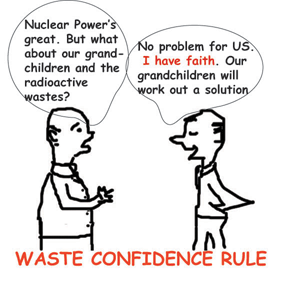 The act would establish the Nuclear Waste Administration, an independent agency to manage the country’s nuclear waste program in place of the U.S. Department of Energy. The agency would be headed by an administrator appointed by the president and subject to Senate confirmation, according to the senators.
The act would also require the NWA to establish siting processes for storage facilities and repositories and link those storage facilities and repositories. And the administrator would be authorized to begin siting a pilot storage facility for priority waste immediately, while not setting waste volume restrictions on storage.
“I appreciate my colleagues’ recognition that dealing with our nation’s defense waste — more than half of which exists at the Hanford Nuclear Reservation in Washington — is an important priority,” Cantwell, the Senate Energy Committee’s ranking member, said in a statement.
But the DOE said the U.S. is no longer generating defense high-level waste associated with weapons production, and the inventory and composition of defense high-level waste is finite, which means the department can use separate disposal pathways for some waste streams.
“In addition, some defense waste is less radioactive, cooler and easier to handle than commercial waste, which means a simpler design and potentially fewer licensing and transportation challenges for a defense repository. Separate disposal of defense high-level waste could allow greater flexibility in site selection — and that could help keep costs down,” the department said. http://www.law360.com/publicpolicy/articles/635220/senators-propose-new-nuclear-waste-agency
USA’s military and commercial nuclear wastes to be dealt with separately
Senators, Energy Department Float Nuclear Waste Proposals US News 25 Mar 15 A bipartisan group and Energy Secretary Ernest Moniz are exploring alternatives to a permanent storage facility in Nevada.
Four Senators from both sides of the aisle promoted legislation Tuesday calling for the construction of interim disposal sites for nuclear waste, a potential alternative to decades of deadlock over a permanent facility at Yucca Mountain in Nevada.
“Nuclear energy is a vital part of America’s energy portfolio, and for far too long, the American taxpayer has been on the hook for the federal government’s failure to implement an effective plan to handle the backend of the nuclear fuel cycle,” Sen. Lisa Murkowski, R-Alaska, and chairwoman of the Energy and Natural Resources Committee, said in a statement. “This legislation is an important step toward advancing the use of nuclear power in America.”
The bill does not mention Yucca Mountain, but it mirrors recommendations published in January 2012 by the Energy Department’s Blue Ribbon Commission on America’s Nuclear Future, a panel convened by President Barack Obama in 2010 to develop a new strategy for disposing of spent nuclear fuel. Continue reading
USA plans for storage of the 5% of nuclear wastes that originate from defense programs
 U.S. to pursue storage for nuclear waste from defense programs, Japan Times, BLOOMBERG
An administration official who requested anonymity to discuss the plan said building the storage site probably will face fewer obstacles than establishing a repository for waste from nuclear power plants.
That’s in part because U.S. defense programs produce about 5 percent of all nuclear waste, the official said. Waste from generating electricity accounts for 85 percent of the total…http://www.japantimes.co.jp/news/2015/03/25/world/u-s-pursue-storage-nuclear-waste-defense-programs/#.VRR7wfyUcnk
A win for future generations in Saskatchewan, as nuclear waste dump rejected
The powerful Nuclear Waste Management Organization with all their money and all their experts could not beat back the duty we have to protect our future generations”
there has been strong Indigenous opposition in Ontario for years. Both the Nishnawbe Aski Nation (NAN), representing 49 First Nations in northern Ontario, and the Anishinabek Nation, representing 39 member First Nations across Ontario, have formally declared their opposition to nuclear waste in all of their traditional territories……
“This is what happens when people stick together and fight for what they believe in,” said Fred Pederson, a Pinehouse resident and member of the Committee for Future Generations Continue reading
USA wants new nuclear waste storage (doesn’t occur to them to stop making this trash)
Under current law, the DOE is responsible for nuclear waste generated by electric utilities. The department has already paid out US$4 billion for failing to meet its obligation to remove waste that is now building up at nuclear power plants. It could be forced to shell out up to $23 billion more over the next 50 years if the issue isn’t resolved, Moniz said
US government seeks new sites for nuclear-waste storage Department of Energy pursues interim plan for commercial fuel and permanent location for defence waste. Nature Jeff Tollefson 24 March 2015 The US Energy Department will seek interim storage facilities for commercial nuclear waste and a permanent geologic repository for radioactive material from the country’s nuclear weapons programme, energy secretary Ernest Moniz said on 24 March. Continue reading
Small Nuclear Reactors turn out to have an equally Big Radioactive Waste problem
1. Small Reactors and the UK’s Long-Term Nuclear Strategy. nuClear News, March 2015 “……Waste Implications The Committee on Radioactive Waste Management (CoRWM) has looked at the waste implications of a 75GW programme [ i.e Small Modular Reactor or PRISM] which would be equivalent to a programme of over 50 new large-scale reactors.It said that since the Government has, so far, been mainly talking about the waste inventory from only a 16GW nuclear new build programme, it should consider defining a maximum size for a deep geological facility (GDF) and make clear that we might need multiple GDFs. (15)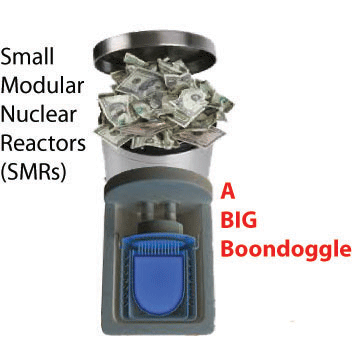 first someone needs to build a massive supply chain. Money for that would presumably come from customer orders – if there were any. The problem is it appears that no one actually wants to buy one
Germany’s nuclear power companies have not set aside sufficient funds for nuclear decommissioning
 Nuclear plant closure money insufficient – German gov’t report http://www.reuters.com/article/2015/03/20/germany-utilities-nadal-idUSB4N0VR00V20150320
BERLIN, March 20 Fri Mar 20, 2015 (Reuters) – A report commissioned by the German government believes nuclear power firms have not set aside enough money to cover the long-term costs of decommissioning plants, according to a copy of the report seen by Reuters on Friday.
The report from the law firm Becker Buettner Held said the 36 billion euros already set aside by Germany’s four nuclear operators E.ON, RWE, EnBW and Sweden’s Vattenfall was insufficient and meant the costs could fall on the public purse.
The report added the government should consider legal measures which would force the parent companies of nuclear power plant operators to assume liability in the case ofbankruptcy. (Reporting by Markus Wacket; Writing by Caroline Copley; Editing by Stephen Brown)
What to do with ever accumulating radioactive waste? – Belgium doesn’t know
And then there’s the more hope-inducing prospect of transmuting the most-highly-radioactive long-living radioactive wastes into shorter-lived less radioactive isotopes. This is one of the possibilities for the particle-accelerator-driven liquid-metal-cooled MYRRHA(Multi-purpose hYbrid Research Reactor for High-tech Applications), currently under construction in Mol as well…..
similar to certain Thorium reactors, there is a possibility that innovative reactor designs like MYRRHA could assist in the transition from the extremely irresponsible era of currently used nuclear technologies towards a post-nuclear era. (Problem is that fans of such new technologies seem just Gung ho about continuing the nuclear era, period, usually  while downplaying cleaner alternatives, ánd accompanied with spewing nuclear propaganda, including belittling the effects of Chernobyl and Fukushima, as well as current nuclear waste disposal issues, and thus end up ultimately undermining their own credibility… The shameful propaganda-shit-movie, Pandora’s Promise, was such a horrid feat of deception, for example.) ……
A Visit to Belgium’s Nuclear Waste Depository Lab, HADES, 750 feet Underground. Not All Alleged is Apparent, March 20, 2015 “……..Part of my concerns stem not from what is going on at the lab per se, but more so from the Belgian government’s irresponsible delays to tackle key decisions, such as giving the green light and allocate the needed funds to start the search for an actual waste deposit site. Unbelievable: Although scheduled, thát actually hasn’t even started yet.The radioactive waste are simply accumulating in spent fuel pools and bunkers. No long-term disposal site is even under construction yet. They have NO IDEA YET where they’ll put it! HADES, as it is now, is only an undergound laboratory. Belgium has been researching the waste disposal issue longer than most other countries, but is currently (2015) near the end of the line for implementation (2035?).
Yet, also true, since disposal can’t even start until a couple more decades anyhow (during which the spent fuel and other wastes need to cool down more), ongoing research should help with making better decisions when that time has come. Anyhow… “We’ll see.” is the very attitude of kicking the can onto the next generation… Continue reading
Radioactive waste produced by fracking for gas
Fracking Radiation– North Dakota Considers Weaker Landfill Rules, Less Oversight , CounterPunch, MARCH 19, 201 by JOHN LaFORGE
Radioactive waste produced by hydraulic fracturing or “fracking” is making headlines all over gas land, particularly in North Dakota’s booming Bakken gas and oil field.
National news coverage of the scandalous illegal dumping of radioactive filter “socks” there — on Indian Reservations no less — has led North Dakota’s legislature to consider changes to its radioactive waste laws so that fracking’s contaminated wastes can be dumped in ordinary landfills.
One current bill would permit fracking’s radioactive waste in state landfills to be contaminated with 10 times the radioactivity that state law now allows — as long as it’s covered with 10 feet of dirt. Radioactive fracking waste that’s not being illegally discarded — no Victoria, mobster dumping probably hasn’t ended — is supposed to be being trucked out of state.
ND House Bills 1113 and 1114 — reportedly requested by the State Health Department — are being contested by some law makers and journalists who question the right of the department to set its own rules.
The ND Newspaper Association and the ND Broadcasters Association complained that one bill eliminates mandatory public hearings about landfill rule changes and instead permits them “when appropriate.” The bill also cancels public notification of the permitting process for disposition of radioactive materials.
Dave Glatt of the State Health Department told the Bismarck Tribunethat his agency commissioned Argon National Laboratory in Chicago to study the issue and make recommendations. The department wanted to know “radiation limits that would be safe for workers and the public.” Glatt forgets that there are no safe radiation doses, only legally permitted ones.
Locals are Worried
“We don’t want to have, when this oil and coal is gone, nothing left here, a wasteland, and I’m afraid that’s what might happen,” said Underwood farmer Gene Wirtz to KXNET news reporter Ben Smith in January. Wirtz is worried about the increased radioactivity in local landfills. “Any amount of radiation beyond what you’re already getting is not a good thing,” he said.
Radioactive isotopes that contaminate fracking industry waste and its machinery include radon, radium-226, uranium-238, and thorium-232. According to the Health Department’s website, these long-lived radioactive pollutants come in six forms:
* “Produced water” which is injected underground but later brought to the surface as waste;
* “Sulfate scales,” which are hard, insoluble deposits that accumulate on frack sand and inside drilling and processing equipment;
* Contaminated soil and machinery;
* Filter socks, contaminated by filtering “produced water”;
* Synthetic “proppants” or sand; and
* Sludge and “filter cake” solids of mud, sand, scale and rust that precipitate or are filtered out of contaminated “produced water. They build up in “filter socks,” and in waste water pipes and storage tanks that can leak.http://www.counterpunch.org/2015/03/19/fracking-radiation/
Japan has no solution to nuclear wastes. Closing reactors should start the end of nuclear industry
 Decommissioning reactors should be step toward ending reliance on nuclear power Asahi Shimbun, 19 Mar 15 Kansai Electric Power Co. and Japan Atomic Power Co. on March 17 decided to decommission three nuclear reactors that have been in operation for more than 40 years. And on March 18, two more nuclear reactors, operated by Chugoku Electric Power Co. and Kyushu Electric Power Co., joined the “to be decommissioned” list.
This is the first application of the regulation that, in principle, limits the operation of nuclear reactors to 40 years. That rule was adopted after the March 2011 accident at the Fukushima No. 1 nuclear power plant.
Nearly 20 of Japan’s 48 commercial nuclear reactors have been in service for 30 years or longer. Utilities get a one-time-only chance to extend operations beyond 40 years, but the reactor in question must pass special inspections and will require further investments. As the reactors continue to age, the utilities will have to make up their minds from year to year.
Since succeeding in nuclear power generation in 1963, Japan has promoted nuclear energy without any plans for decommissioned reactors. As a result, the nation is now stuck with all sorts of issues that must be resolved if the decommissioning of older reactors is to proceed. Only by overcoming these challenges and becoming a “nation capable of decommissioning nuclear reactors” will Japan be able to take its first firm step toward weaning itself off nuclear energy.
NUCLEAR WASTE PROBLEMS UNRESOLVED
Nuclear waste poses the most critical challenge to the planned decommissioning of nuclear reactors. Directives are effectively nonexistent as to where to store spent nuclear fuel and nuclear waste left behind by dismantled reactors.
The government has never addressed this issue, citing its “nuclear fuel cycle” policy that presupposes the full recycling of all spent nuclear fuel. But in practice, this policy is completely useless. Utilities are effectively forced to resort to on-site storage of spent fuel in cooling pools or dry casks.
According to a promise made by Kansai Electric to the Fukui prefectural government, spent nuclear fuel will be “stored or disposed of outside the prefecture.” The utility’s decision to dismantle two reactors at the Mihama power plant means having to deal with this promise.
The handling of radioactive waste is just as problematic. While the waste is supposed to be sorted by the level of radioactivity and stored underground accordingly, nothing has been decided about specific storage locations, not only for highly radioactive waste but also for low-level waste. Nor have any standards been set for the management of buried waste.
Obviously, reactors cannot be dismantled in the absence of rules for spent fuel and nuclear waste disposal. In fact, Japan Atomic Power, which became the first in the nation to decide to decommission a reactor at the Tokai power plant in Ibaraki Prefecture, had to postpone the dismantling work for three years, and then an additional five years, because disposal rules for low-radiation nuclear waste could not be established in time.
Having given up on waiting for communities to volunteer as permanent storage sites for highly radioactive waste, the government has decided to take the initiative and start selecting candidate sites. But given that no community has ever volunteered, the selection process is obviously not going to be easy. To ensure that no community will be forced to become a nuclear waste dump against its will, the government must guarantee procedural transparency and be fully ready for dialogue with every candidate……..http://ajw.asahi.com/article/views/editorial/AJ201503180044
In just one year, Sellafield nuclear clean-up bill jumps an extra £5bn
Cost of nuclear clean up at Sellafield increased an extra £5bn in the past year Chronicle Live UK By Will Metcalfe 15 Mar 15 The Nuclear Decommissioning Authority has been slammed by MPs for the ever-increasing costs at the site in Cumbria Constantly increasing costs for the clean up of Sellafield are Britain’s bill for the Cold War, an MP has claimed.
This week MPs launched a fresh attack against the rising cost and delays of decommissioning and cleaning up the Sellafield nuclear site.
Leading figures from the nuclear industry were questioned by the Public Accounts Committee following the revelation that the expected costs have increased by £5 billion in a year, to £53 billion.
In a recent progress report on the work, the National Audit Office (NAO) criticised the Nuclear Decommissioning Authority (NDA), which oversees the plant, for delays in cancelling a clean-up contract with the consortium Nuclear Management Partners (NMP) after demands from MPs a year ago to do so.
The report said the contract was terminated only last month, at a cost to the taxpayer of £430,000 in cancellation fees.
- The site is used to store nuclear material from across the UK and was the host of a facility which secretly produced nuclear materials for the UK’s defence programme during the Cold War which was finally demolished in 2014……..
Labour MP Margaret Hodge, who chairs the committee, described the rise as “astonishing” and repeated her criticism during a hearing on Wednesday.
Delays had increased by 86 months since September 2013, while costs were going up by billions of pounds, she said…..
She said she was struck by the “unpredictable massive burden on future generations”, telling the nuclear industry officials it was a good idea to have strong targets and ambitions……..http://www.chroniclelive.co.uk/news/north-east-news/cost-nuclear-clean-up-sellafield-8838478
1 This Month
23-25 October – on Zoom – World BEYOND War’s annual global conferenc


Shut down the radiation-damaged Heysham nuclear reactors now
To see nuclear-related stories in greater depth and intensity – go to https://nuclearinformation.wordpress.com

Say No to NASA’s Reckless Nuclear Reactor on the Moon
Say No to NASA’s Reckless Nuclear Reactor on the Moon

-
Archives
- October 2026 (219)
- September 2026 (339)
- August 2026 (330)
- July 2026 (355)
- June 2026 (287)
- May 2026 (306)
- April 2026 (356)
- March 2026 (251)
- February 2026 (267)
- January 2026 (308)
- December 2025 (358)
- November 2025 (359)
-
Categories
- 1
- 1 NUCLEAR ISSUES
- business and costs
- climate change
- culture and arts
- ENERGY
- environment
- health
- history
- indigenous issues
- Legal
- marketing of nuclear
- media
- opposition to nuclear
- PERSONAL STORIES
- politics
- politics international
- Religion and ethics
- safety
- secrets,lies and civil liberties
- spinbuster
- technology
- Uranium
- wastes
- weapons and war
- Women
- 2 WORLD
- ACTION
- AFRICA
- Atrocities
- AUSTRALIA
- Christina's notes
- Christina's themes
- culture and arts
- Events
- Fuk 2022
- Fuk 2023
- Fukushima 2017
- Fukushima 2018
- fukushima 2019
- Fukushima 2020
- Fukushima 2021
- general
- global warming
- Humour (God we need it)
- Nuclear
- RARE EARTHS
- Reference
- resources – print
- Resources -audiovicual
- Weekly Newsletter
- World
- World Nuclear
- YouTube
-
RSS
Entries RSS
Comments RSS

