EPA Announces $125 million settlement for cleanup of the Nuclear Metals Superfund Site in Concord, Massachusetts
EPA Announces $125 million settlement for cleanup of the Nuclear Metals Superfund Site in Concord, Massachusetts USA EPA,
The site, also known as the Starmet Corporation site, includes the 46-acre parcel located at 2229 Main Street in Concord and the surrounding areas where groundwater contamination has migrated. Several prior owners/operators used the site for research and specialized metals manufacturing and were licensed to possess low-level radioactive substances.
From 1958 to 1985, wastes contaminated with depleted uranium, copper, and nitric acid were disposed into an unlined holding basin at the site. Volatile organic compounds (VOCs), which likely contained 1,4-dioxane as a stabilizer, were used as solvents and degreasers for the cleaning of machines and machined parts/products and discharged through floor drains to an on-site cooling water pond that resulted in contamination of an on-site supply well.
The facility was listed as a Superfund site in 2001, and EPA placed a temporary cover over the holding basin in 2002 to address one of the most immediate risks at the site. Approximately 185,000 square feet of building space was demolished between 2011 and 2017 at a cost of $54 million under a previous agreement with the EPA.
The long-term cleanup plan for the site was selected by EPA in 2015 and generally includes the following components, which will be completed under the proposed agreement:
- Excavation and off-site disposal of about 82,500 cubic yards of contaminated soils, sediment and debris.
- Stabilization of depleted uranium contaminated soils in the holding basin.
- Extraction and treatment of groundwater for VOCs and 1,4-dioxane.
- Treatment of depleted uranium and natural uranium in groundwater.
- Long-term monitoring and land use controls.
A portion of the groundwater cleanup was started in 2016 because a plume contaminated with 1,4-dioxane was migrating away from the property under the Assabet River towards the town of Acton’s water supply. The remainder of the groundwater cleanup will be done under the agreement.
The Consent Decree, lodged in the U.S. District Court for the District of Massachusetts on Oct. 9, 2019, is subject to a 30-day public comment period and approval by the federal court. A copy of the consent decree will be available on the U.S. Department of Justice’s website at https://www.justice.gov/enrd/consent-decrees.
Site cleanup work can begin upon approval of the consent decree by the court.
For more information on EPA’s cleanup of the Nuclear Metals site visit https://www.epa.gov/superfund/nmi……. https://www.epa.gov/newsreleases/epa-announces-125-million-settlement-cleanup-nuclear-metals-superfund-site-concord-0
Wisacasset community to learn more about status of its nuclear waste problem
Kathleen O’Brien WISCASSET — The Maine Yankee Community Advisory Panel on Spent Nuclear Fuel Storage will meet Tuesday to update Wiscasset residents on the status of the 64 containers of nuclear waste stored at the former Maine Yankee power plant site.The federal government was contractually obligated to remove the radioactive waste by 1998 after the plant was decommissioned in 1996. The advisory panel advocates for the removal of the spent nuclear fuel to a safe location outside New England.
Eric Howes, Maine Yankee director of public and government affairs, will also give an update on the Sensible, Timely Relief for America’s Nuclear Districts Economic Development (STRANDED) Act, which was introduced by U.S. Sens. Susan Collins, R-Maine, and Tammy Duckworth, D-Illinois, in July. The act is aimed at providing financial relief to communities like Wiscasset stuck with storing nuclear waste.
Should the STRANDED Act pass, Wiscasset would be eligible to receive $15 per kilogram of nuclear waste currently being housed at the site, which is the rate for impact assistance established under the Nuclear Waste Policy Act of 1982.
There are about 542 metric tons of spent nuclear fuel stored at Maine Yankee, meaning Wiscasset would collect over $8 million from the government. According to Maine Yankee, it costs roughly $10 million per year to maintain the 64 canisters of radioactive waste.
The spent nuclear fuel is housed in 64 dry storage casks, which stand on 16 3-foot-thick concrete pads. Each concrete cask is comprised of a 2.5-inch thick steel liner surrounded by 28 inches of reinforced concrete.
The meeting will be held at the Wiscasset Community Center on Tuesday, Oct. 15 from 4 – 6 p.m. kobrien@timesrecord.com
USA Congress needs a new approach to the intractable problem of nuclear wastes
 nuclear and climate change. While many argue that we have to do everything in our power to bolster nuclear energy in order to effectively fight the climate crisis, bluntly, nuclear energy is not a realistic solution.
 The price tag for new nuclear is too high and the timeline for expansion too long—Plant Vogtle and VC Summer show us that. And while nuclear reactors may not directly emit greenhouse gases, that doesn’t mean that it’s a clean energy source. There are significant traditional environmental impacts from nuclear energy, primarily regarding radiation risks and impacts to water quality. Then there’s the effects climate change will have on the functioning and safety of nuclear plants themselves. The more we look at the issue, the more we see that sea level rise and heat waves risk the safety and dependability of nuclear plants.
 It’s Time to Bury These Nuclear Waste Talking Points https://www.nrdc.org/experts/caroline-reiser/its-time-bury-these-nuclear-waste-talking-points
This year we’re seeing yet another attempt from Congress to address the fifty-year problem of what to do with the 80,000 tons of nuclear waste sitting across the country, with approximately 2,000 more tons produced every year by the 96 operating U.S. nuclear reactors. Unfortunately, the multiple nuclear waste bills that sprung up in both the House and Senate (including H.R.2699 which just cleared an Energy and Commerce subcommittee) simply offer the same worn out ideas.
So when NRDC was invited to testify—first by the Senate Committee on Environment and Public Works, then by the House Subcommittee on Environment and Climate Change, and finally by the Senate Committee on Energy and Natural Resources—we decided to present a new way forward.
NRDC has an answer to one difficult fact everyone at the hearings seemed to agree on—that all the important actors in the process have utterly lost trust in one another. As NRDC senior attorney Geoffrey Fettus explained: “Our government is at its strongest when each players’ role is respected. State consent and public acceptance of potential repository sites will never be willingly granted, unless and until power on how, when, and where the waste will be disposed of is shared, rather than decided by federal fiat.”
Trust—especially in a dangerous undertaking like deep geologic storage of nuclear waste—can only flourish when there is an equal balance of power. And consent to host a permanent nuclear waste repository will only be granted when states can trust the deal they are making. Right now, however, there is no equal balance of power and therefore states don’t trust that they can consent to hosting any nuclear waste without being forced to open their doors to the country’s entire waste burden.
Strong environmental laws founded on federalism have a proven track record on precisely this point. But because there has been a presumption of federal exclusivity over it, nuclear waste is exempt from environmental laws and therefore also exempt from the state and EPA regulatory oversight that comes with them. We think this needs to change. Giving states the regulatory authority over nuclear waste that they currently lack will build trust and allow states to consent on realistic scientific and political terms.
We presented this idea before all three Congressional Committees with growing interest from members. (See NRDC’s testimony here, here, and here). And yet Congress is still reluctant to move away from common talking points which have only led to the repeated failures of the past. So let’s take a minute to debunk some of those repetitive points.
First incorrect talking point: Yucca Mountain. Let’s be clear about how we got stuck on Yucca Mountain and why proceeding pretending that it is a ready or wanted solution is naive. Yucca Mountain was not picked as the permanent nuclear waste repository because it is the best scientifically and technically sound site. Originally, the law set out an adaptive, phased, and science-based process to narrow down potential repository sites. But in 1987, faced with the high cost of comprehensively comparing multiple potential sites, Congress abandoned all pretext of equity and scientific-basis, and instead simply picked the most politically expedient choice at the time, Yucca Mountain.
But Yucca Mountain did not remain the expedient, or for that matter the rational, choice. The science simply doesn’t line up—of particular note are the serious groundwater concerns with the site. And Nevada has been able to stand together for decades to say with one voice: “No!” If the Yucca Mountain process does ever get moving again, Nevada and its supporters are on-deck with the science to prove it’s a bad choice.
Nevada isn’t unique in rejecting any hint of a proposal to host nuclear waste. Utah, Tennessee, South Dakota, New Mexico, and Texas have all rejected nuclear waste storage just as firmly. This is why we need a new system that allows for real consent backed with state authority.
Second incorrect talking point: waste is holding the industry back. At the hearing before the House Energy and Climate Change Subcommittee, the expert witness from the Nuclear Energy Institute stated that the failure to address nuclear waste is “the albatross on the neck of the nuclear industry.” While this reference to Coleridge’s poem The Rime of the Ancient Mariner is a nice use of imagery to describe waste as the industry’s self-inflicted burden and curse, it’s a façade for the larger truth.
Since at least 1957, there has been consensus that nuclear waste must end up in a geologic repository. But no repository has been developed and licensed to address the 80,000 tons of nuclear waste from nuclear power plants that has been piling up in 35 states. And yet over the same timeframe more than 100 domestic commercial reactors were built. Even today two new reactors are being built at Plant Vogtle in Georgia with little discussion on how much it will add to the country’s nuclear waste burden.
So what is the real albatross on the nuclear industry’s neck? The gigantic up-front costs of building nuclear reactors and a lack of economic competitiveness in modern energy markets.
Existing nuclear plants exist thanks to decades of direct subsidies and legal protections provided by the federal government. These reactors are now at risk of early closure because they are no longer economical, have potential safety issues, and simply cannot compete in a marketplace dominated by low-priced natural gas and renewable energy.
The failed VC Summer plant in South Carolina and the on-going Vogtle construction in Georgia are stark examples of how the astronomical up-front costs of new reactors limit expansion of the nuclear industry. $9 billion went into the VC Summer project before the plug was pulled and Vogtle is now estimated to cost approximately $28 billion—twice its originally projected cost. (This isn’t just a US problem either).
It’s not nuclear waste that’s burdening nuclear growth, it’s simple economics.
Third incorrect talking point: reprocessing. While the process of using nuclear waste to create more fuel for energy production seems like a magic wand to wave away the nuclear waste problem, it ignores the reality of reprocessing. Reprocessing doesn’t just create more fuel for energy; it also separates plutonium, dramatically increasing the threat of nuclear proliferation. Further, reprocessing doesn’t consume all the nuclear waste—it has its own radioactive toxic waste streams like the Cold War legacy of reprocessing to create nuclear weapons left in Washington, South Carolina, and Idaho.
And even if you could ignore these bad by-products, reprocessing is simply not economic. Plants that use reprocessed fuel are even more expensive than the traditional nuclear plants that already struggle with upfront costs. So, while on the surface reprocessing may seem like the answer to our 80,000-ton problem, the truth is that reprocessing should never be on the table.
Final incorrect talking point: nuclear and climate change. While many argue that we have to do everything in our power to bolster nuclear energy in order to effectively fight the climate crisis, bluntly, nuclear energy is not a realistic solution.
The price tag for new nuclear is too high and the timeline for expansion too long—Plant Vogtle and VC Summer show us that. And while nuclear reactors may not directly emit greenhouse gases, that doesn’t mean that it’s a clean energy source. There are significant traditional environmental impacts from nuclear energy, primarily regarding radiation risks and impacts to water quality. Then there’s the effects climate change will have on the functioning and safety of nuclear plants themselves. The more we look at the issue, the more we see that sea level rise and heat waves risk the safety and dependability of nuclear plants.
This is why NRDC has laid out a clean energy pathway to cost-effectively reach a low-carbon future while allowing the role of nuclear energy to continue its decline.
Rather than continue to blunder blindly down a legislative path that only leads us through the same unrealistic circles of conversation laid out above, it is time for Congress to take a step back and forge a new path by regulating nuclear waste under standard environmental laws. This is a way to get states to say “yes,” and in a way that can work in our democracy.
That’s not to say that this change will be like waving a wand and suddenly all the waste is gone. But it’s a new direction with real potential because it relies on well-established laws. It is time to regulate nuclear waste the same way as every other pollutant, with the federal government and states sharing authority under our foundational environmental statutes. Now we just need someone brave enough to lead the way.
China buried nuclear waste in Sudan desert
Official: China buried nuclear waste in Sudan desert, Dabanga November 12 – 2015 KHARTOUM, China has buried dozens of containers with toxic waste in the desert of Northern Sudan, according to a high-ranking official. The waste was most probably coming from nuclear plants in China.
According to the former director of the Sudan Atomic Energy Commission in Sudan, Mohamed Siddig, 60 containers have been brought to Sudan together with construction materials and machinery for the building of the Merowe Dam (Hamdab Dam) in the Northern part of Sudan. He did not mention the exact year of the import and the date the nuclear waste was disposed. China worked on the dam between 2004 and 2009.
During a conference held by the Sudanese Standards and Metrology Organisation (SSMO) in Khartoum on Tuesday, he disclosed how the Sudanese authorities allowed the import of the waste ‘without inspection’. He told the audience that 40 containers were buried in the desert not far from the Merowe Dam construction site. Another 20 containers were also disposed in the desert, though not buried. Mohamed Siddig was quoted by several local reporters, of whom some did not mention China, but ‘an Asian country’ instead. During the conference, titled ‘Raising awareness of the danger of chemicals’, Siddig said that a ‘number of Asian industrial countries’ had approached African countries to dispose their nuclear and other toxic waste…….https://www.dabangasudan.org/en/all-news/article/official-china-buried-nuclear-waste-in-sudan-s-desert?fbclid=IwAR1ScnDQ-6EcDBv2m2EhIqjnunbBnCpt5Ell_xuiNgFAhQapNqR0dF1ykMI
Hanford nuclear waste cleanup unlikely ever to be complete, and with a poor safety culture
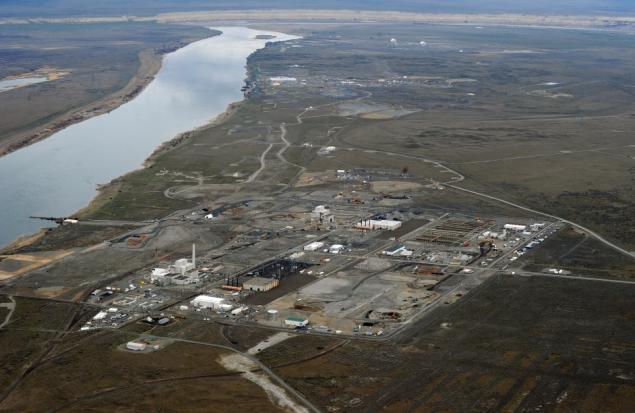
Now, a core piece of the cleanup program nears a milestone after 17 years and $17 billion of construction: startup of the first phase of a new production complex to transform much of Hanford’s 56 million gallons of long-stored radioactive waste from weapons-making into inert glass for safe disposal and future decay.

Nearly 3,000 on-site employees are attached to Hanford’s Tank Waste Treatment and Immobilization Plant, dubbed Vit Plant, including 1,500 trades workers. But as it pushes to meet court-imposed mandates, the project and its innovative technology still face big technical and funding uncertainties and stakeholder skepticism.
The project was conceived nearly two decades ago to pump the radioactive waste from 177 aging underground storage tanks, about 60 of which have leaked to the subsurface and likely into groundwater.
Using vitrification technology, the pumped waste will be heated to 2,100° F and blended with glass-forming materials. The molten mixture then will be poured into stainless steel canisters to cool and solidify, protecting humans and the environment from radioactivity as it dissipates over hundreds to thousands of years……..
the project—based on a design in a 1997 environmental impact statement—has been plagued by technical challenges and delays, and its cost now is about four times its original projection.
Project and government managers and regulators sparred regularly over scope changes, and progress and cost impacts that affected Bechtel performance incentives, most recently for 2018, says an April report in Tri-Cities-Herald, the regional newspaper that has followed the Vit Plant closely since its start. The newspaper notes improvements this year.
Even so, the current project price tag remains a moving target more than a decade from full completion, Years and billions of dollars beyond the original scope, DOE has tamped down expectations as safety and quality assurance issues emerged in the high-level waste (HLW) treatment process, some raised by whistleblowers, including one whose alarms resulted in his firing by site subcontractor URS, now part of AECOM, and a subsequent $4-million wrongful termination judgement.
Originally intending to treat all waste in a single stream, DOE in 2013 moved to create what is now called the Direct-Feed Low-Activity Waste (DFLAW) process, which will allow treatment of what the agency says is 90% of tank waste, which is considered “low-activity”, through a designated vitrification plant as engineers work out technical and design issues for high-level waste treatment.
Last month, Brian Vance, who heads DOE operations at Hanford, told the Washington state Dept. of Ecology in a “notice of serious risk” that his agency “cannot project with certainty” when the high-level waste or pretreatment plants will be completed…….
a congressionally mandated National Academies of Science draft report issued in mid-September raises concerns about the plant’s ability to treat the large amount of site low-level waste in time to meet the deadlines, based on existing design……..
Future Doubts
Tom Carpenter, executive director of leading site watchdog group Hanford Challenge, says no part of the Vit Plant should operate short of a complete and independent inspection that validates and verifies nuclear treatment quality.
“DOE seems to be doing everything in its power to simply walk away from its legal and moral obligations to deal with Hanford’s extraordinary radioactive waste inventories,” he contends, related to the proposed waste reclassification.
“I seriously doubt the HLW facility will ever operate for numerous reasons, and DOE will simply find that the waste is low-level, not high-level, dump concrete on the whole mess and call it good.”
While Carpenter supports vitrifying tank waste, he has concerns with what he calls consistent design flaws, a lack of quality control and a “poor nuclear safety culture” at the site.
Carpenter cites whistleblower lawsuits and reassignment of employees who raised safety concerns.
For DOE and Bechtel, the focus remains on the 90% of waste they say they can successfully treat via the DFLAW process.
“There have been quality issues in the past that slowed things, but those have been addressed,” McCain says. “Having legacy issues behind us was a big burden off the project.”
David Reeploeg, vice president of federal programs for local economic development group TRIDEC, is encouraged with progress made in recent years, but says funding remains the “single biggest challenge.”
Not only does the project need hundreds of millions of dollars every year to meet milestones and agreements, he says it will be “critically important for DOE and its regulators to identify ways to reduce the long-term cost and schedule for Hanford cleanup,” something that the Vit Plant’s history has already shown won’t be an easy task.https://www.enr.com/articles/47720-worst-us-nuclear-waste-dump-inches-closer-to-cleanup
Nuclear waste awareness tour begins

 stories/nuclear-waste-awareness-tour-begins,586462 October 3, 2019
BRATTLEBORO — Leona Morgan isn’t in Vermont this week for leaf peeping, but for environmental justice.
 The Navajo woman from Albuquerque, N.M., is an indigenous community organizer and she wants the people of Vermont and New England what getting rid of the nuclear waste from the Vermont Yankee nuclear power plant means to her community.
Morgan, along with a group of anti-nuclear activists are touring New England this week to draw attention to what they concede is an oft-forgotten or ignored problem — where does the nuclear waste go?
Pulling a giant wooden mock cask that was built to resemble a cask used to transport — not store — high level radioactive waste, the activists are hoping the large dumbbell-looking prop will prompt discussion of the unsolved issue.
“It’s our job to wake them up,” Deb Katz, the executive director of the Citizens Awareness Network, said of residents.
Morgan said the nuclear industry — whether it is the existing 14,000-acre Waste Control Specialties (WCS) facility in west Texas, or its proposed expansion or a proposed Holtec nuclear storage facility just over the border in New Mexico — was overwhelming the communities in that region.
She said putting nuclear waste in that area, which she said is geologically unstable from a huge amount of oil and gas drilling, is dangerous and racist. The area is already home to the U.S. Department of Energy’s waste isolation pilot plant, which houses government-generated nuclear waste, including low-level plutonium. All those projects, Morgan said, are within 50 miles.
It is a largely Hispanic and Navajo area, she said, and the companies and politicians who are behind the nuclear project are “old, white men.”
“We are specifically targeted,” Morgan said.
The six-day tour has been organized by Citizens Awareness Network, a regional anti-nuclear organization based in Shelburne Falls, Mass. Katz and others made a brief stopover in Brattleboro on Wednesday with its large mock canister, as the group was making its way from the Vermont Law School to Greenfield, Mass., for a rally and concert.
“It is vital that citizens understand the issues and what’s at stake,” said Katz. “Until the criteria of sound science and environmental justice are the drivers behind any disposition, high-level nuclear waste must remain onsite,” she said.
All three members of Vermont’s congressional delegation have supported consolidated interim storage facilities, Katz said. Their support, she said, is based on the desire to get the high-level radioactive waste out of Vermont.
But she said that inherently unfair and short-sighted.
The stalled construction of a national depository at Yucca Mountain outside Las Vegas is still stalled, despite statements by President Donald Trump that he supports it. The project had been suspended during the Obama administration.
“This is an old bad idea,” said Diane D’Arrigo, the radioactive waste project director for the Nuclear Information and Resource Service in Washington, D.C.
Vermont Yankee emptied its spent fuel pool and completed the transfer of its thousands of spent fuel rods — the most dangerous of the radioactive waste — last year into a storage facility on the grounds of Vermont Yankee in Vernon. The fuel is now in large concrete and steel canisters called dry cask storage and will remain there until the federal Department of Energy builds a nuclear waste facility to store it for the thousands of years it remains dangerous. Yucca Mountain was once targeted as that facility.
But the anti-nuclear activists said a new push for interim waste storage facilities in west Texas and eastern New Mexico would be dangerous and that the nuclear fuel “should only be moved once.”
Moving the waste comes with many complications and potential dangers, Katz said, not to mention that thousands of shipments would come from dozens of nuclear power plants that have either shut down or will be shutting down.
The “Environmental Justice and Nuclear Waste Tour” started in Burlington on Tuesday, and made appearances in Montpelier, South Royalton, Brattleboro and Greenfield, Mass., on Wednesday. On Thursday, there is a legislative briefing at the Massachusetts State House, and afterwards a series of meetings in Massachusetts communities near the now-closed Pilgrim nuclear station. Then on Sunday, it’s back to western Massachusetts for an event and concert in Florence, Mass.
Contact Susan Smallheer at ssmallheer@reformer.com or at 802 254-2311, ext. 154.
USA’s stranded plutonium nuclear wastes
Post & Courier 30th Sept 2019 Dogged by faulty assumptions and lacking political will, the federal
 government squandered billions of dollars and an opportunity to dispose of the nation’s most dangerous nuclear material by chasing a massive construction project in South Carolina that was doomed from the start.
Instead, the U.S. Department of Energy stranded a huge stockpile of plutonium — the lethal metal at the core of nuclear weapons — at a federal installation on the state’s wooded western edge, with plans to
leave it there for decades. https://www.postandcourier.com/news/how-the-us-government-wasted-billion-and-stranded-tons-of/article_24bc000a-da1d-11e9-bb44-87644323c969.html
.wordpress.com/
Nuclear waste is piling up – governments need to stop dithering and take action
Nuclear waste is piling up – governments need to stop dithering and take action https://theconversation.com/nuclear-waste-is-piling-up-governments-need-to-stop-dithering-and-take-action-123977 Claire Corkhill
Research Fellow in nuclear waste disposal, University of SheffieldSeptember 26, 2019 The UK government has launched a process to find a volunteer community who would be willing to host a £12 billion geological disposal facility for nuclear waste. It’s about time – the initiative comes after seven decades of successive governments putting the decision off. The situation is similar in many other countries, with dangerous nuclear material being stored unsafely because of political inaction.
In the UK, nuclear waste is currently kept in safe but high-maintenance conditions, with some canisters deteriorating, at Sellafield in Cumbria. This is costing tax payers £3 billion per year.
The new geological disposal facility is a vast underground bunker, to be buried around 500m below the Earth’s surface. It is intended to safely store approximately one Wembley Stadium’s worth of highly radioactive waste that has been generated over the past 70 years. Here, it will be isolated from the biosphere – and human populations – for the 100,000 years it will take for the radioactivity to decay to safe levels.
Radioactive waste is generated from nuclear energy, military uses and also the extensive use of isotopes in medicine. The most highly radioactive portion comes from spent nuclear fuel – the used uranium fuel from inside nuclear reactors and the materials produced through recycling of spent nuclear fuel. The latter includes fission products that are transformed to glass and plutonium (which is currently neither a resource nor a waste).
These materials contain radioactive isotopes that have half-lives (the amount of time taken for half of the radioactivity to decay) of tens to hundreds of thousands of years. This means any storage solution must be extremely long-lived. That’s a significant challenge – the oldest known man-made materials are of the order of several thousands of years old.
The principle of geological disposal of nuclear waste is to use multiple barriers, much like a set of Russian Dolls. This makes it possible to contain the waste and prevent it from meeting with groundwater which would start to dissolve it – releasing radioactive materials to the environment. Engineered barriers are intended to contain the waste until most of the radioactivity has decayed.
If the disposal vaults are dug in a good, impermeable rock (such as clay or mudstone), the geology provides a natural barrier that will isolate the waste from the biosphere. This will reduce the likelihood of human intrusion into the facility. Being several hundreds of metres below the ground, there will also be long transport pathways to delay any significant migration of radioactive materials from the waste to the biosphere until far into the future.
International issue
The UK is not the only country opting for this solution. In Finland, construction of the Onkalo facility has already begun. A licence application has even been made to start disposing of spent nuclear fuel.
But progress in other nations has stalled: in France protesters surround the disposal facility in the village of Bure, while in Sweden, the Environmental Court has rejected the construction licence for a facility near the coastal town of Forsmark, due to safety concerns over the corrosion resistance of copper canisters.
In the USA, senators are suing the Federal Government for not building a disposal facility. The lack of a disposal facility has meant that thousands of metric tonnes of spent nuclear fuel, have built up – stored temporarily in dry casks at sites across the country.
The controversy is expected to extend to the UK’s new geological disposal siting process. Recent media articles have criticised the idea that see all areas of the UK – including national parks – could be suitable to host a facility. A previous siting process, launched in 2003, failed to find a site. Although two local authorities from near the Sellafield site came forward, Cumbria County Council was able to veto the vote.
The government hopes that new communities will step forward in this second process. It has proposed an incentive package offering communities £1m per year for having discussions about hosting the facility. This will increase to £2.5m per year when geological investigations are undertaken.
But environmentalists are likely to object, as they fear a better storage facility will only lead to more nuclear power stations. And indeed, Oliver Eden, former parliamentary undersecretary for energy under Theresa May’s government between 2017-2019, highlighted the disposal facility as being “the key to the future of the UK’s new nuclear build programme … providing a safe and secure way to dispose of the waste new nuclear reactors produce.”
Whatever the outcome of the current siting process, something must be done about nuclear waste. Leaving it for our grandchildren to deal with is simply not fair. What’s more, we can’t assume that future civilisations will be able to keep it safe.
The first step on the road to a solution is to initiate a public conversation about what we should do with the world’s most dangerous materials in the long term. If you are interested, a good first step could be to watch the video above and start discussing the topic with your friends, family and local authorities.
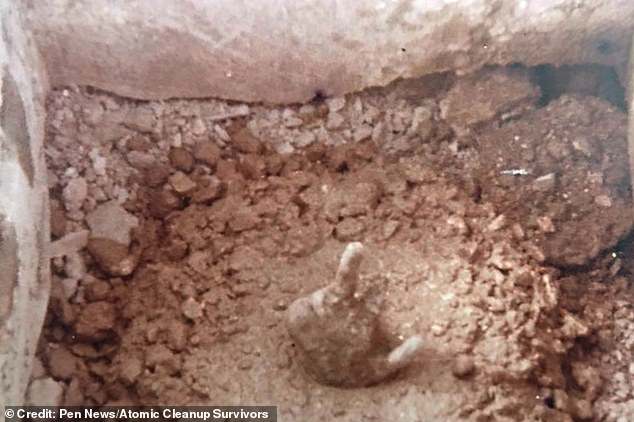
A rude concrete sign indicates a deadly truth about nuclear radiation and cancer
|
Nuclear tomb leaking radioactive waste into oceans has ‘rude message’ beneath crumbling shell https://www.thesun.co.uk/tech/9986929/nuclear-tomb-radioactive-waste-message-shell/
Harry Pettit, Senior Digital Technology and Science Reporter 23 Sep 2019, A CONCRETE tomb that’s haemorrhaging radioactive waste into the world’s oceans has a very rude hidden message beneath its shell. 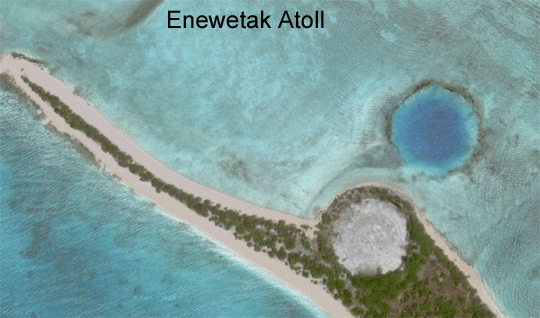 The men who built the dome in the 1970s sculpted a hand flipping the middle finger, which they buried inside the structure before it was sealed and left to crumble on a remote Pacific island. The Enewetak atoll in the South Pacific was used by the US government to test 30 megatons of atomic weapons – equivalent to 2,000 Hiroshima bombs – between 1948 and 1958. After 43 nuclear detonations, thousands of people were sent to clean the islands, shifting 3million cubic feet of contaminated soil and debris into a blast crater. He said: “The dome is a monumental size, so we wanted to put something inside there, but this was during the Cold War so the idea of an official time capsule wasn’t going to work. “So… a rubber glove? Well, we had plenty of those so that worked.” But if Mr Griego and his comrades left their mark on the island, it also left its mark on them. Our members were dying,” he said. “Dying of cancer. Given the damage wrought by the dome, the middle-finger message turned out to be more apt than anyone realised at the time. “The Runit salute turned out to be the right message in several ways,” said Paul, 62.
“One message is what’s happened to the men that were actually tasked to build this dome? What happens now to the Marshallese, the islanders? “What happens now to the Pacific Ocean, to the rest of the world? The dome is leaking and it has been leaking from the beginning.” The US government does not recognise those who worked to clean Enewetak as atomic veterans, so they cannot receive radiation exposure compensation from the Department of Veterans Affairs. |
|
Shutdown of Three Mile Island’s infamous nuclear plant symbolises the end of the nuclear energy era
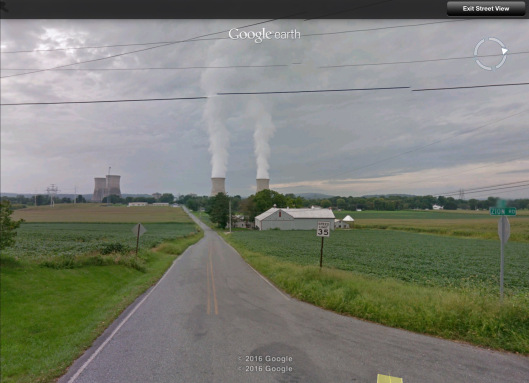 Three Mile Island’s infamous nuclear plant shuts down after 45 years https://www.engadget.com/2019/09/21/three-mile-island-nuclear-plant-shuts-down/
This doesn’t mark the end of the overall story, however, as it’ll take decades to clean up. Some of the teardown will take place quickly. Staff will remove the reactor’s fuel supply in the next few weeks and store it in the used fuel pool. It’ll take much longer to fully decommission the reactor, however. Exelon estimated that the plant won’t be fully clear of radioactive material until 2078, or more than a century after it entered service. Unit 2 is expected to close in 2036.
Unit 1 has been relatively safe, with the only notable incident being an air pressure change that briefly exposed 20 employees to a mild amount of radiation. However, the reactor has long lived in the shadow of Unit 2, whose partial meltdown exposed nearly 2 million people to radiation. There don’t appear to have been any publicly disclosed health effects, but the incident led to stricter oversight and, along with the Chernobyl disaster, defined the public perception of nuclear energy.
Exelon wasn’t shy in trying to pin the blame on local government. It claimed that Pennsylvania law “does not support the continued operation” of the reactor, and that rules “fail to evenly value clean energy resources” while dirty power sources could “pollute for free.” It doesn’t think nuclear is getting a fair shake compared to renewables and other clean energy sources, in other words. It has also complained about low natural gas prices that make Unit 1 difficult to run.
It’s not certain just what happens next, but the odds aren’t high for a revival. While nuclear is relatively clean, the rises of both renewables and natural gas have reduced the demand for it. Like it or not, the industry has moved on — the closure is a symbol of that transition.
Radioactive debris to stay above vital aquifer in Idaho for 20 years more?
Agency could keep Three Mile Island nuclear debris in Idaho, https://abcnews.go.com/Technology/wireStory/agency-mile-island-nuclear-debris-idaho-65652583 ByKEITH RIDLER, ASSOCIATED PRESS BOISE, Idaho — Sep 16, 2019,
Nuclear waste stored in underground containers at the Idaho National Laboratory near Idaho Falls, Idaho. Federal authorities want to store the partially melted core from one of the United States worst nuclear accident for another 20 years in Idaho.
The U.S. Nuclear Regulatory Commission said Monday, Sept. 16, 2019 it’s considering a request from the U.S. Department of Energy to renew a license to store the radioactive debris from the Three Mile Island nuclear power plant. The core of a reactor south of Harrisburg, Pa., partially melted in 1979.
The partially melted reactor core from the worst nuclear accident in U.S. history could remain in Idaho for another 20 years if regulators finalize a license extension sought by the U.S. Energy Department, officials said Monday.
The core from Three Mile Island in Pennsylvania partially melted in 1979, an event that changed the way Americans view nuclear technology.
The U.S. Nuclear Regulatory Commission has determined there would be no significant impact from extending the license to store the core at the 890-square-mile (2,305-square-kilometer) site that includes Idaho National Laboratory.
“No significant radiological or non-radiological impacts are expected from continued normal operations,” the commission said about its finding.
The agency would also have to complete a safety evaluation report before renewing the license. Commission spokesman David McIntyre said that will likely happen in the next several days.
Holly Harris, executive director of the Idaho-based nuclear watchdog group Snake River Alliance, wasn’t immediately available to comment.
The Energy Department site sits atop the Eastern Snake Plain Aquifer, a Lake Erie-size underground body of water that supplies cities and farms in the region with water.
The new license would be good through 2039, four years past a deadline the Energy Department initially set with Idaho to remove the radioactive waste.
State and federal officials say the waste could still be shipped out of Idaho ahead of the 2035 deadline and would not affect the 1995 agreement that contains penalties for missed deadlines.
Idaho is already fining the Energy Department for missing a deadline involving radioactive liquid waste stored at the site.
It’s not clear where the Three Mile Island waste could be moved, as the U.S. doesn’t have a designated repository.
The U.S. Energy Information Administration says there’s some 77,000 tons (70,000 metric tons) of spent nuclear fuel stored at commercial nuclear sites around the country because there’s no place else to put it.
The Department of Energy said no additional material would be added to the waste storage site in Idaho.
The previous license expired in March. It said the maximum amount of Three Mile Island debris that could be stored at the Idaho site was 183,000 pounds (83,000 kilograms) of damaged nuclear fuel assemblies and 308,000 pounds (140,000 kilograms) of material removed from the reactor vessel.
Court battles between Idaho and the federal government culminated with the 1995 agreement requiring the Energy Department to clean up the Idaho site as well as prevent the area from becoming the nation’s nuclear waste dump.
Exelon Generation, the company that owns the remaining nuclear power plant at Three Mile Island, has said it will shut down the facility by the end of this month.
The company blamed economic challenges and what it said are market flaws that fail to recognize the value of nuclear plants.
Agency keeps Three Mile Island nuclear debris in Idaho By KEITH RIDLER, ASSOCIATED PRESS
BOISE, Idaho — Sep 16, 2019,
The Energy Department site sits atop the Eastern Snake Plain Aquifer, a Lake Erie-size underground body of water that supplies cities and farms in the region with water.
The new license would be good through 2039, four years past a deadline the Energy Department initially set with Idaho to remove the radioactive waste.
State and federal officials say the waste could still be shipped out of Idaho ahead of the 2035 deadline and would not affect the 1995 agreement that contains penalties for missed deadlines.
Idaho is already fining the Energy Department for missing a deadline involving radioactive liquid waste stored at the site.
It’s not clear where the Three Mile Island waste could be moved, as the U.S. doesn’t have a designated repository.
The U.S. Energy Information Administration says there’s some 77,000 tons (70,000 metric tons) of spent nuclear fuel stored at commercial nuclear sites around the country because there’s no place else to put it.
The Department of Energy said no additional material would be added to the waste storage site in Idaho.
The previous license expired in March. It said the maximum amount of Three Mile Island debris that could be stored at the Idaho site was 183,000 pounds (83,000 kilograms) of damaged nuclear fuel assemblies and 308,000 pounds (140,000 kilograms) of material removed from the reactor vessel.
Court battles between Idaho and the federal government culminated with the 1995 agreement requiring the Energy Department to clean up the Idaho site as well as prevent the area from becoming the nation’s nuclear waste dump.
Exelon Generation, the company that owns the remaining nuclear power plant at Three Mile Island, has said it will shut down the facility by the end of this month.
The company blamed economic challenges and what it said are market flaws that fail to recognize the value of nuclear plants.
THE BIG LIE AS USUAL
“No significant radiological or non-radiological impacts are expected from continued normal operations,” the commission said about its finding. THE WASTE IS IMPROPERLY STORED IN BARRELS OVER ONE OF THE LARGEST AQUIFERS IN THE NW USA
Plan to keep Three Mile Island nuclear debris dumped in Idaho
Agency considering storing Three Mile Island nuclear debris in Idaho
The U.S. Nuclear Regulatory Commission said Monday it’s considering a request from the U.S. Department of Energy to renew a license to store the radioactive debris from the Three Mile Island nuclear power plant.
The core of a reactor south of Harrisburg, Pennsylvania, partially melted in 1979. The commission says continuing to store the debris at the Energy Department’s 890-square-mile site in eastern Idaho that includes the Idaho National Laboratory will have no significant impact.
The license would be good through 2039, four years past an agreement the Energy Department has with Idaho to remove the high-level radio
Russia’s nuclear torpedoes at the bottom of the sea
A Dead Russian Submarine Armed with Nuclear Torpedoes was Never Recovered, National Interest, Robert Farley, September 15, 2019
Key point: She rests at a depth of 15,000 feet —too deep to make recovery practical.
The Novembers (627):

How to warn distant future generations about nuclear waste?
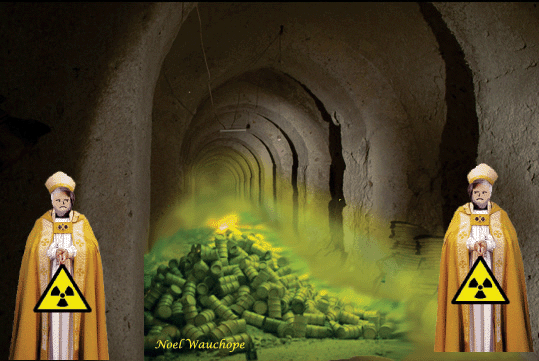
How do you leave a warning that lasts as long as nuclear waste? Phys Org, by Helen Gordon, 13 Sep 19 “……. First, it is difficult to predict how future generations will behave, what they will value and where they will want to go. Second, creating, maintaining and transmitting records of where waste is dumped will be essential in helping future generations protect themselves from the decisions we make today. Decisions that include how to dispose of some of today’s most hazardous material: high-level radioactive waste from nuclear power plants.
The red metal lift takes seven juddering minutes to travel nearly 500 metres down. Down, down through creamy limestone to reach a 160-million-year-old layer of clay. Here, deep beneath the sleepy fields and quiet woods along the border of the Meuse and Haute-Marne departments in north-east France, the French National Radioactive Waste Management Agency (Andra) has built its underground research laboratory.
The laboratory’s tunnels are brightly lit but mostly deserted, the air dry and dusty and filled with the hum of a ventilation unit. Blue and grey metal boxes house a series of ongoing experiments—measuring, for example, the corrosion rates of steel, the durability of concrete in contact with the clay. Using this information, Andra wants to build an immense network of tunnels here.
It plans to call this place Cigéo, and to fill it with dangerous radioactive waste. It is designed to be able to hold 80,000 cubic meters of waste……
High-level radioactive waste is primarily, spent fuel from nuclear reactors or the residues resulting from reprocessing that fuel. This waste is so potent that it must be isolated from humans until its levels of radiation, which decrease over time, are no longer hazardous. The timescale Andra is looking at is up to one million years……. Some scientists call this long-lived waste “the Achilles heel of nuclear power,” and it’s a problem for all of us—whatever our stance on nuclear. Even if all the world’s nuclear plants were to cease operating tomorrow, we would still have more than 240,000 tonnes of dangerously radioactive material to deal with.
Currently, nuclear waste is stored above ground or near the surface, but within the industry this is not considered an acceptable long-term solution. This kind of storage facility requires active monitoring. As well as regular refurbishment it must be protected from all kinds of hazards, including earthquakes, fires, floods and deliberate attacks by terrorists or enemy powers.
This not only places an unfair financial burden on our descendants, who may no longer even use nuclear power, but also assumes that in the future there will always be people with the knowledge and will to monitor the waste. On a million-year timescale this cannot be guaranteed.
So, after considering a range of options, governments and the nuclear industry have come to the view that deep, geological repositories are the best long-term approach. Building one of these is an enormous task that comes with host of complex safety concerns.
Finland has already begun construction of a geological repository (called Onkalo), and Sweden has begun the licensing process for its site. Andra expects to apply for its construction license within the next two years.
If Cigéo goes into operation it will house both the high-level waste and what is known as intermediate-level long-lived waste—such as reactor components. Once the repository has reached capacity, in perhaps 150 years’ time, the access tunnels will be backfilled and sealed up. If all goes according to plan, no one will ever enter the repository again……..
For waste buried deep underground, the major threat to public health comes from water contamination. If radioactive material from the waste were to mix with flowing water, it would be able to move relatively swiftly through the bedrock and into the soil and large bodies of water such as lakes and rivers, finally entering the food chain via plants, fish and other animals.
To prevent this, an underground repository such as Cigéo will take great care to shield the waste it stores. Within its walls there will be metal or concrete containers to block the radiation, and liquid waste can be mixed into a molten glass paste that will harden around it to stop leakage…….
Deep geological repositories are designed as passive systems, meaning that once Cigéo is closed, no further maintenance or monitoring is required. Much more difficult to plan for is the risk of human intrusion, whether inadvertent or deliberate.
In 1980, the US Department of Energy created the Human Interference Task Force to investigate the problem of human intrusion into waste repositories. What was the best way to prevent people many thousands of years in the future from entering a repository and either coming into direct contact with the waste or damaging the repository, leading to environmental contamination?
Over the next 15 years a wide variety of experts were involved in this and subsequent projects, including materials scientists, anthropologists, architects, archaeologists, philosophers and semioticians—social scientists who study signs, symbols and their use or interpretation………
In the very long term, though, these plans also have a major drawback: how can we know that anyone living one million years in the future will understand any of the languages spoken today?
Think of the differences between modern and Old English. Who of us can understand “Ðunor cymð of hætan & of wætan”? That—meaning “Thunder comes from heat and from moisture”—is a mere thousand years old.
Languages also have a habit of disappearing. Around 4,000 years ago in the Indus Valley in what is now Pakistan and north-west India, for example, people were writing in a script that remains completely indecipherable to modern researchers. In one million years it is unlikely that any language spoken today will still exist……. https://phys.org/news/2019-09-nuclear.html?fbclid=IwAR2Kyunn90VCKgkNnwyGsMDYSYi3-UghDX7UNKcZNILzBuflZq2Gkq7daZE
Strong drumbeat of opposition to Yucca Mountain nuclear dump continues
1 This Month
26 September – International Day for the Total Elimination of Nuclear Weapons





PLEASE OPPOSE HR 8255 AND S.3639 – bills would accelerate satellite deployment, with no environmental review or safeguards – https://ncstd5li.quorum.us/campaign/169331/
To see nuclear-related stories in greater depth and intensity – go to https://nuclearinformation.wordpress.com
-
Archives
- September 2026 (305)
- August 2026 (330)
- July 2026 (355)
- June 2026 (287)
- May 2026 (306)
- April 2026 (356)
- March 2026 (251)
- February 2026 (267)
- January 2026 (308)
- December 2025 (358)
- November 2025 (359)
- October 2025 (375)
-
Categories
- 1
- 1 NUCLEAR ISSUES
- business and costs
- climate change
- culture and arts
- ENERGY
- environment
- health
- history
- indigenous issues
- Legal
- marketing of nuclear
- media
- opposition to nuclear
- PERSONAL STORIES
- politics
- politics international
- Religion and ethics
- safety
- secrets,lies and civil liberties
- spinbuster
- technology
- Uranium
- wastes
- weapons and war
- Women
- 2 WORLD
- ACTION
- AFRICA
- Atrocities
- AUSTRALIA
- Christina's notes
- Christina's themes
- culture and arts
- Events
- Fuk 2022
- Fuk 2023
- Fukushima 2017
- Fukushima 2018
- fukushima 2019
- Fukushima 2020
- Fukushima 2021
- general
- global warming
- Humour (God we need it)
- Nuclear
- RARE EARTHS
- Reference
- resources – print
- Resources -audiovicual
- Weekly Newsletter
- World
- World Nuclear
- YouTube
-
RSS
Entries RSS
Comments RSS

