Germany must now face up to its nuclear waste problem

Germany is closing all its nuclear power plants. Now it must find a place  to bury the deadly waste for 1 million years
By Sheena McKenzie, [excellent diagrams]. CNN https://edition.cnn.com/2019/11/30/europe/germany-nuclear-waste-grm-intl/index.html When it comes to the big questions plaguing the world’s scientists, they don’t get much larger than this.
 Ben clock towers — of deadly radioactive waste for the next million years?
Searching for a nuclear graveyard
Between a rock and a hard place
People power
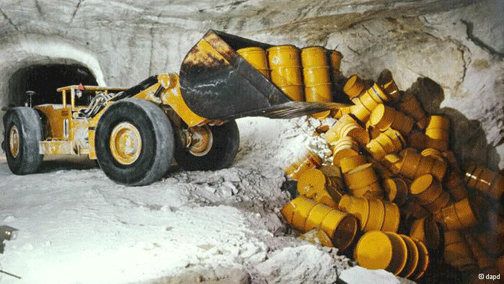 Former salt mines at Asse and Morsleben, eastern Germany, that were used for low- and medium-level nuclear waste in the 1960s and 1970s, must now be closed in multibillion-dollar operations after failing to meet today’s safety standards.
Plans for nuclear waste disposal, but there’s no long term solution
The Staggering Timescales Of Nuclear Waste Disposal, Christine Ro https://www.forbes.com/sites/christinero/2019/11/26/the-staggering-timescales-of-nuclear-waste-disposal/#621facec29cf
High-level nuclear waste consists largely of spent fuel from nuclear reactors. Though it makes up a small proportion of overall waste volumes, it accounts for the majority of radioactivity. This most potent form of nuclear waste, according to some, needs to be safely stored for up to a million years. Yes, 1 million years – in other words, a far longer stretch of time than the period since Neanderthals cropped up. This is an estimate of the length of time needed to ensure radioactive decay.
They’re also such mind-bogglingly long periods that in 1981, the US Department of Energy established the Human Interference Task Force to devise ways to warn future generations of the dangerous contents of nuclear repositories. This was a challenging task then, and nuclear semiotics remains the stuff of science fiction. Written language has only existed for about 5,500 years, so there’s no guarantee that Earth’s inhabitants, tens of thousands of years from now, would understand any of the writing systems currently in use. The meanings of visual signs also drift over time. The more whimsical “ray cat solution,” of genetically engineering cats to glow in the presence of radioactive material, is even less reliable.
Even stopping nuclear power operations is a necessarily drawn-out process. Decommissioning a single nuclear reactor typically takes about 20 years. Most countries grappling with nuclear waste are planning for at least 40 to 60 years just to implement their repository programs.
After brief flirtations with amusingly bad ideas including shooting nuclear waste into space, the consensus among nuclear scientists is that the best option for dealing with high-level nuclear waste is deep geological disposal. One of the International Atomic Energy Agency’s conditions for such a geological site is low groundwater content, which has been stable for at least tens of thousands of years, and geological stability, over millions of years. Thus, Japan, with its seismic instability, is unlikely to have any suitable candidates for deep geological disposal.
Like many countries, Japan is relying on interim storage of high-level waste while hoping that longer-term solutions will present themselves eventually. In fact, no country even has an operational deep geological repository for spent nuclear fuel. (The US has a deep disposal site in New Mexico for “transuranic” waste from nuclear weapons, which is long-lived and intermediate-level waste whose elements have higher numbers than uranium in the periodic table.)
It’s challenging to find a site that ticks all of the geological boxes (including relatively impermeable material with little risk of water infiltration), and that isn’t politically controversial. To take two notable examples, communities in Nevada, US and Bure, France have hotly opposed plans to establish repositories. Given the history of environmental justice globally, it’s likely that any future locations approved for nuclear waste dumps will be found in poor areas.
Only one country, Finland, is even building a permanent spent-fuel repository. Even in Finland, however, it’s estimated that a license won’t be issued until 2024. Similar licenses for other European countries scouting out possible locations likely wouldn’t be available until 2050 in Germany and 2065 in the Czech Republic. And these countries are outnumbered by those that don’t even have an estimated timeframe for licensing, as they’re so far back in the process of searching for a site.
Strategies remain worryingly short-term, on a nuclear timescale. Chernobyl’s destroyed reactor no. 4, for instance, was moved in July 2019 into a massive steel and concrete “sarcophagus” that will only last 100 years. Not only will containers like this one fall short of the timescales needed for sufficient storage, but no country has allotted enough funds to cover nuclear waste disposal. In France and the US, according to the recently published World Nuclear Waste Report, the funding allocation only covers a third of the estimated costs. And the cost estimates that do exist rarely extend beyond several decades.
Essentially, we’re hoping that things will work out once future generations develop better technologies and find more funds to manage nuclear waste. It’s one of the most striking examples of the dangers of short-term thinking.Check out my website.
Nuclear waste Bill in U.S. House of Representatives – resistance in New Mexico to nuclear waste dump
 Nuclear waste bill advances to House, could push forward storage site in New Mexico Adrian Hedden, Carlsbad Current-Argus Nov. 27, 2019 A federal bill to alter policy for nuclear waste advanced to the full U.S. House of Representatives and could support the case for temporary storage of temporary storage of high-level waste at a facility like the one Holtec International proposed to build in southeast New Mexico.
The Nuclear Waste Policy Amendments Act was advanced by a unanimous voice vote to the House by the Energy and Commerce Committee on Nov. 20.
The bill, if passed, would move forward with safety licensing for a permanent nuclear waste repository at Yucca Mountain, Nevada, while providing the U.S. Department of Energy the authority to proceed with a program for consolidated interim storage (CIS) while the Yucca Mountain project progresses.
It also prioritized the transportation of spent nuclear fuel from generator sites in seismically active areas, and ensured the DOE has the funds to build and operate a repository
U.S. Rep. Ben Ray Lujan (D-NM), the only representative from New Mexico who sits on the committee, introduced an amendment that was approved to create a grant program to study the impacts radiation exposure including family members and non-workers resulting from uranium mining.
“Though we have a responsibility to address the waste issues that result from our country entering the atomic age, I am deeply concerned that this bill makes it more likely that a future interim storage site — potentially one in New Mexico — becomes a permanent home for nuclear waste,” he said.
One such interim facility, proposed by Holtec to be built in a remote, desert area near the Eddy-Lea county line, drew concerns from New Mexico environmentalist groups as it could put local communities at risk as well.
Don Hancock, nuclear waste program director at the Southwest Research and Information Center in Albuquerque cited a clause in the bill that required the governor of a state that would host a CIS facility to consent before moving forward.
New Mexico Gov. Michelle Lujan Grisham voiced her opposition to the Holtec project earlier this year, calling it “economic malpractice” as it could negatively impact two of the state’s biggest industries: oil and gas and agriculture.
“The bill says you must have approval from the state’s governor,” Hancock said. “New Mexico would be a non-starter. She (Lujan Grisham) has said she’s opposed to it.”
Hancock said he also opposed the project and the bill over the suggestion of transporting the waste hundreds or thousands of miles away from generator sites where it is currently stored.
Even if the waste approved to be shipped to a remote location like southeast New Mexico, Hancock argued it would take years for the infrastructure to be built and the waste to be moved.
“This approach doesn’t make any sense,” he said. “Why not do it in places that already have storage sites? It’s going to sit there for years. Let’s make that less dangerous. It can be done without massive transportation around the country.”…….. https://www.currentargus.com/story/news/local/2019/11/27/nuclear-waste-bill-advances-house-may-support-new-mexico-holtec-site/4297822002/
South Africa to create extra space for nuclear waste
Business Times, WED, NOV 27, 2019 [JOHANNESBURG] Radioactive waste storage facilities at South Africa’s nuclear power station Koeberg will fill up next year, the power utility Eskom said Tuesday, adding it has begun creating extra space.
South Africa is the only country on the continent with a civilian nuclear industry, and its two reactors have been in service for more than 30 years.
The Koeberg nuclear power plant, located outside Cape Town, produces 1,860 megawatts contributing about four percent of the national power output.
Eskom in a statement that its “spent fuel pools are essentially full in 2020 and for this reason a project was initiated to create additional space”…….
Koeberg was originally set to be mothballed in 2024, four decades after its inception, but it is being upgraded and it is now expected to operate until 2044.
Environmental campaigners have warned against the nuclear project.
“It is incredibly short-sighted for the government to pursue extending Koeberg’s lifespan, potentially at the expense of our safety,” Melita Steele, Greenpeace Africa’s Climate and Energy Campaign Manager said Tuesday.
“Not only are South Africans going to have to fork out more money for more storage for high-level radioactive waste, but there is also no long-term solution for this waste, which can remain radioactive for hundreds of thousands of years,” Ms Steele said.
Currently, 90 per cent of the country’s electricity is generated from coal-fired stations.
The government last year dropped controversial plans to build new nuclear power stations, deals that had been initiated by former leader Jacob Zuma and that could have bankrupted the country to enrich his allies. https://www.businesstimes.com.sg/energy-commodities/south-africa-to-create-extra-space-for-nuclear-waste
South Africa’s nuclear waste storage almost completely full; a dangerous situation
 Waste storage at Africa’s only nuclear plant brimming, Channel News Asia, 25 Nov 19, CAPE TOWN: Spent fuel storage at South Africa’s Koeberg nuclear plant will reach full capacity by April as state power utility Eskom awaits regulatory approval for new dry storage casks, the company said on Monday (Nov 25).
Storage of high-level radioactive waste is a major environmental concern in the region, as South Africa looks to extend Koeberg’s life for another two decades and mulls extra nuclear power plants.
Koeberg, Africa’s only nuclear facility, is situated about 35km from Cape Town and was connected to the grid in the 1980s under apartheid.
“The Koeberg spent fuel pool storage capacity is currently over 90 per cent full. (These) pools will reach (their) capacity by April 2020,” Eskom told Reuters in a statement.
Koeberg produces about 32 tonnes of spent fuel a year. Fuel assemblies, which contain radioactive materials including uranium and plutonium that can remain dangerous for thousands of years, are cooled for a decade under water in spent fuel pools….
Anti-nuclear lobby group Earthlife Africa said South Africa could not afford the social, environmental and economic costs associated with nuclear waste.
“We have a ticking bomb with high-level waste and fuel rods at Koeberg,” said Makoma Lekalakala, Earthlife Africa’s director. https://www.channelnewsasia.com/news/world/waste-storage-at-africa-s-only-nuclear-plant-brimming-12123664 brimming-12123664
As the Runit nuclear waste dome crumbles, Marshall Islanders want honesty and justice
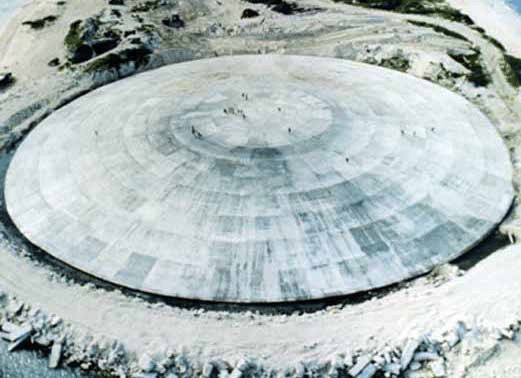
‘People want justice’: Marshalls’ fury over nuclear information US withheld– https://www.rnz.co.nz/international/programmes/datelinepacific/audio/2018723289/people-want-justice-marshalls-fury-over-nuclear-information-us-withheld From Dateline Pacific, 21 November 2019
|
The caretaker president of the Marshall Islands says it’s unconscionable that the United States kept secret key information about its nuclear tests for decades. New details reveal the US withheld information about the nuclear waste it left behind when the Marshall Islands gained independence, and the extent of the tests it carried out. Now, a dome that contains hundreds of tonnes of nuclear waste is at risk of crumbling into the ocean. But with Washington increasingly jittery about China, the small Pacific country’s finding it might now have some leverage to get something done. TRANSCRIPTEnewetak was once a paradise – a long atoll in the clear blue waters of the north Pacific, white sand and thick green palms. Today, it’s rutted with scars, after the US detonated dozens of nuclear bombs on, in and above it in the 1940s and ’50s. Whole islands were vaporised, deep craters carved into the coral. Jack Ading is a senator from Enewetak. His family was forced to move for the tests, and then allowed to return in the 1980s. “It appears that when we moved back to Enewetak in the 1980s after we were assured by the US government that it was safe. We were actually subjecting ourselves to a risk that we were never warned about.” Government documents reveal that beyond the nuclear blasts, the US also tested biological weapons, including an aerosol bacteria. Jamie Tahana reports. TRANSCRIPTEnewetak was once a paradise – a long atoll in the clear blue waters of the north Pacific, white sand and thick green palms. Today, it’s rutted with scars, after the US detonated dozens of nuclear bombs on, in and above it in the 1940s and ’50s. Whole islands were vaporised, deep craters carved into the coral. Jack Ading is a senator from Enewetak. His family was forced to move for the tests, and then allowed to return in the 1980s. “It appears that when we moved back to Enewetak in the 1980s after we were assured by the US government that it was safe. We were actually subjecting ourselves to a risk that we were never warned about.” Government documents reveal that beyond the nuclear blasts, the US also tested biological weapons, including an aerosol bacteria. But this was kept secret when the people from Enewetak were allowed to return, and other documents show that people were subjected to tests and experiments about the lingering effects of radiation. Last week, the Los Angeles Times also uncovered that the US didn’t tell the Marshallese it had shipped 130 tonnes of soil from its atomic testing grounds in Nevada in 1958 and dumped it at Enewetak. The caretaker president of the Marshall Islands, Hilda Heine, says the new details are disturbing. “To say the least you would have thought that all that information would have been shared with the Enewetak people before they went back to Enewetak. It is unbelievable that such information was held back, and as a result people have gone back and lived there for many years.” The nuclear waste from the era is stored in a pile at the end of the island of Runit, covered in a concrete dome. But a recent study by the Marshall Islands Nuclear Commission found the dome is now at risk of collapsing, and as rising seas erode beneath it, much of that waste is seeping into the lagoon. The commission’s chair, Rhea Moss-Christian, says information about the dome and the testing era was withheld throughout the independence process, while a compact of free association was negotiated in the 1980s. “We signed the compact in 1986 on the understanding that we had all the information we needed to have. It’s pretty hard for us to see this information, to have the level of detail that we now have, and to think that any of those previous agreements could stand.” The Marshall Islands has sought US help to clean up contamination and to shore up the dome, but American officials have declined, saying it’s on Marshallese land and, therefore, is the Marshall Islands’ responsibility. Ms Moss-Christian says that’s ridiculous. “How can it be that this radioactive waste and structure that we didn’t ask for. How can it be that this is ours and ours to deal with?” A Nuclear Claims Tribunal formed by the two countries in 1988 concluded that the US should pay $US2.2 billion in claims and settlements. But documents from both the Nuclear Commission and a 2010 US House inquiry show only $4 million has been paid. Last month, the Marshall Islands parliament – the Nitijela – endorsed a Nuclear Commission strategy which calls for, among other things, full compensation, better healthcare, and environmental protections. The US maintains it is upholding its responsibilities. It says it’s paid nearly a billion dollars, which has gone towards resettlement, rehabilitation and healthcare costs for affected communities, and that it’s funding tests of the water and atmosphere around the Runit dome. But Giff Johnson, the editor of the Marshall Islands journal and an author of books about the nuclear legacy, says that’s not enough. “People want justice for Marshall Islanders. The US government has to step up and address issues that it has addressed for American victims but is ignoring out here.” For the Marshall Islands, a smattering of atolls in the North Pacific – population 53,000 – it might be an opportune time to twist a superpower’s arm. Washington is increasingly nervous about a growing Chinese presence, and the compact of free association – which guarantees relations and funding from the US – expires in three years. Having initially maintained there won’t be a replacement compact, Washington is now keen to open talks for a new one, and has sent a string of high-ranking officials for visits. The caretaker president, Hilda Heine – who a few months ago was invited to the White House to meet President Donald Trump – says that could bode well. “The geopolitical situation in the Pacific is really helpful to the cause of the Marshall Islands. The US is now paying more attention to the Marshall Islands, so our issues around climate change, around our nuclear legacy, I think those will come to the forefront of our discussions going forward with the United States.” Whatever comes from those discussions, the people of Enewetak want more than they’re getting now. |
|
UK’s embarrassing, expensive, intractable trouble with dead nuclear submarines

Key point: Britain isn’t the only nation that has problems disposing of nuclear warships. When you need to dispose of an old car, you can take it to a junkyard.
But what do you do with a nuclear submarine whose reactor can make people glow in a most unpleasant way?
Britain has retired twenty nuclear submarines since 1980. None have been disposed of, and nine still contain radioactive fuel in their reactors, according to an audit by Britain’s National Audit Office. These subs spent an average of twenty-six years on active service—and nineteen years out of service.
“Because of this, the Department [Ministry of Defense] now stores twice as many submarines as it operates, with seven of them having been in storage for longer than they were in service,” the audit states.
Even worse is the price tag. Britain has spent 500 million pounds ($646.4 million) maintaining those decommissioned subs between 1980 and 2017. Full disposal of a nuclear sub would cost 96 million pounds ($112.1 million). As a result, the total cost for disposing of the Royal Navy’s ten active subs and twenty retired vessels would be 7.5 billion pounds ($9.7 billion), NAO calculated…….
The plan is to begin defueling subs, beginning with HMS Swiftsure, in 2023. But even then, the Ministry of Defense will have to deal with different subs that have different disposal requirements. “At present, the Department does not have a fully developed plan to dispose of Vanguard, Astute and Dreadnought-class submarines, which have different types of nuclear reactor,” NAO pointed out. “For the Vanguard and Astute-class it has identified suitable dock space which, if used, will need to be maintained.”
Interestingly, the British military gets an exemption when it comes to nuclear waste. “Within the civil nuclear sector, organizations must consider nuclear waste disposal during the design stage of power stations and nuclear infrastructure. The Department does not have a similar obligation.”
Safety problems with Holtec’s dry canisters for nuclear wastes
New Mexico not keen to take South Carolina’s plutonium wastes
|
LETHAL LEGACY, The US wants to bury SC’s plutonium stockpile forever. Its new home isn’t sure it wants it. Post and Courier, By Thad Moore tmoore@postandcourier.com Nov 23, 2019 In the time it will take for South Carolina’s stockpile of weapons-grade plutonium to decay, you could repeat most of human history, starting back in the Stone Age.
By the time its byproducts lose the explosive potential to be used in nuclear weapons, some 7 billion years will have passed. The Earth itself will have doubled in age, and then some. The U.S. government will officially decide in the next few years where the plutonium — the metal used to trigger nuclear weapons — will spend that eternity. And when it does, it will ask another part of the country to bear a profound burden: to house thousands of barrels filled with scraps of the Cold War and America’s nuclear arms race, a legacy that may well outlast our civilization.
That question will soon be posed to New Mexico, where the U.S. Department of Energy has excavated cavernous vaults deep below the ruddy soil in the state’s southeastern corner. The government hopes it will eventually hold tons of plutonium it has decided it no longer needs — enough to build a few thousand bombs the size of the one dropped over Nagasaki, Japan.
If it says yes, trucks will carry the plutonium load by load down Interstate 20 for the next three decades, and workers will lower it almost half a mile underground, where it will await its final fate: the mine’s slow collapse, and salt entombing it forever.
If New Mexico says yes, the Energy Department will bury some 20,000 steel drums deep underground there, in a ribbon of salt as thick as Charleston’s Ashley River is wide. And if New Mexico says yes, South Carolina will secure a new home for a nuclear stockpile it was wary of taking in the first place. The problem is, New Mexico isn’t sure if it will say yes. A new path The U.S.’s policy for disposing of plutonium has been in limbo for years. Congress had long planned to burn the material in commercial power plants, altering its atomic structure and making it harder to use in bombs. But the Energy Department’s project to convert plutonium into reactor fuel was deeply flawed: It started building a factory to do that work before it had a complete design, and it later discovered that finishing the plant would cost billions more than expected and stretch into the middle of the century. So the department proposed an alternative. It would convert its plutonium into a fine powder, and it would hire dozens of people in South Carolina to dilute it by hand, working in shifts around the clock. They would blend it with a secret combination of chemicals called “stardust,” designed to make it difficult to get the plutonium back out. When mixed with plutonium, stardust is said to foam up, create a gel and harden like concrete. Department officials have said the final product looks like sand on the beach. They’ve said it would save billions of dollars………. A long decay The Department of Energy grappled in the early 1990s with just how long WIPP’s legacy would survive. It hadn’t decided yet that plutonium should spend an eternity in the New Mexico desert, but it knew that America’s other nuclear waste would persist as long as anyone could comprehend. And it worried that some far-off civilization would find WIPP without understanding the invisible danger of radiation inside………When the calendar reaches the year 12000 — around the end of the team’s 10,000-year mandate — the plutonium underground will be less than halfway through its first half-life. The stockpile that currently sits in South Carolina will still be more than 200,000 years from completing its transformation into a potent type of uranium that is capable of powering cities or destroying them…… https://www.postandcourier.com/news/the-us-wants-to-bury-sc-s-plutonium-stockpile-forever/article_cbe6029e-07eb-11ea-9622-639a44471d1a.html |
|
India’s government ignores opposition as it plans to build spent nuclear fuel storage facility
|
Govt to build KNPP nuke fuel storage despite opposition Anirban Bhaumik, Deccan Herald, DHNS, New Delhi, NOV 20 2019, The Government is set to go ahead with its plan to set up a facility for storing spent fuel of the first and second units of the Kudankulam Nuclear Power Plant (KNPP) in Tamil Nadu – brushing aside opposition by political parties in the state.
Jitendra Singh, Union Minister of State (MoS) in charge of Department of Atomic Energy, on Wednesday informed the Lok Sabha that the designing of the “Away From Reactor” (or AFR) Spent Fuel Storage facility for the first and second units of the KNPP …….
The DMK MPs from Tamil Nadu were not convinced though. “I feel that it is unfair to decide about the necessity of repository considering the quantity of radioactive waste. Any day, an atomic reactor is like a Damocles Sword hanging over you,” Thamizhachi Thangapandian, the MP from Chennai South, said…….. https://www.deccanherald.com/national/govt-to-build-knpp-nuke-fuel-storage-despite-opposition-778172.html
|
|
|
Taiwan govt to give $2.55 billion to Orchid Island in nuclear waste compensation

 Orchid Island to get NT$2.55 billion in nuclear waste compensation, Focus Taiwan, (By Flor Wang, Elaine Hou, Lu Tai-cheng Taipei, Nov. 22 (CNA) The government will pay NT$2.55 billion (US$83.6 million) to Orchid Island residents to compensate them for infringing on their rights by maintaining a nuclear waste storage facility there over the past five decades, President Tsai Ing-wen (蔡英文) announced Friday.
Tsai announced the compensation at a news conference in Taitung and hailed the move as reflecting the goal of the current government to pursue transitional justice for indigenous tribes based on fact-finding efforts.
“Evidence we collected showed that the then-government decided to build a nuke waste storage in reserved lands for the Yami people on Orchid Island without their previous knowledge or agreement,” Tsai said.
She described the payment as a step toward compensating Orchid Island and its people, but said there was still a lot to do to “correct our past errors.”
The decision to position the facility to handle low- and medium-level nuclear waste from Taiwan’s nuclear power plants on Orchid Island was made in 1974 and it began receiving shipments in 1982.
The process has long been recognized as deceptive, with a report titled “Orchid Island: Taiwan’s Nuclear Dumpsite” in the newsletter Nuclear Monitor in 1993 detailing how residents were led to believe a cannery was being built.
The Executive Yuan brought up historical documents showing that former President Chiang Ching-kuo (蔣經國) and Premier Sun Yun-suan (孫運璿) went ahead with the decision to build the facility without informing the local Yami people in advance.
Since residents realized in the late 1980s what was actually on the site, they have feared it would contaminate the food chain and force them off the island and also led protests against nuclear power……http://m.focustaiwan.tw/news/aipl/201911220023.aspx
Toxic flushing of nuclear poisons into Lake Winnepeg
 Pinawa’s toxic predicament hurts Lake Winnipeg https://www.winnipegfreepress.com/opinion/analysis/pinawas-toxic-predicament-hurts-lake- Pinawa’s toxic predicament hurts Lake Winnipeg https://www.winnipegfreepress.com/opinion/analysis/pinawas-toxic-predicament-hurts-lake- winnipeg-564698971.html By: Dave Taylor 11/9/2019 winnipeg-564698971.html By: Dave Taylor 11/9/2019 How on Earth did humans ever think nature would absorb the nasty poisons we generate?
By now, we should realize that to bury or flush these toxins will not make them simply disappear. Many are insidious and will be back to bite us in the future. Putting a stop to these practices is paramount considering efforts to ameliorate past mistakes is such an onerous proposition, one that is even more demanding when the original polluter and their profits have disappeared.
We persist in flushing sewage into Lake Winnipeg and resist efforts to reduce phosphorus loads all in the name of financial savings. Ironically, there are no savings to be had, just a deferred payment plan. People will pay, it’s just a matter of when. The nuclear facility near Pinawa was built in the 1960s upon this very strategy of flushing wastes into the Winnipeg River and ultimately Lake Winnipeg, and continues to this day. The justification at that time was that they could dilute the radioactivity to levels that met their vague “as low as reasonably achievable” policy. Efforts continue to clean up the mess left behind in trenches, standpipes and bunkers, many of which are in disrepair and lead to the river. The subcontracting consortium that is attempting to deal with defunct sites across the country is Canadian Nuclear Labs (CNL). It is funded by the federal government and is led by SNC-Lavalin, whose lobbying efforts of the federal government are renowned and include bribery and fraud charges, as well as illegal election financing. The off-loading of the site and its problems have significantly altered the original decommissioning plans of 2001 and expedient shortcuts are being slipped by Canada’s nuclear regulator, the Canadian Nuclear Safety Commission, which we are obliged to trust to provide scrutiny of the cleanup and the ever-changing plans. CNL has applied for a 10-year licence and is being paid a king’s ransom ($1 billion annually) to restore the lands messed up by Atomic Energy of Canada at sites across the country. Placing our trust in CNL or the regulatory watchdog, commission, has never been more difficult. Not only are they administered by the same natural resources minister who advocates the expansion of nuclear power in Canada, but they have received a chastising by the International Atomic Energy Agency (IAEA) for what can only be described as a substandard approach to radioactive-waste disposal. The IAEA conducted a review mission in September and concluded the commission should enhance its policies and “should consider better aligning its radiation-protection requirements with IAEA safety standards.” In other words, shape up. At the very least, the federal watchdog should be placed under the environment portfolio so there is no perception of conflict of interest. The challenges for Pinawa are substantial as radioactive waste has been disposed of in decaying installations, some of which have required significant patching for cracks and, in a recent report made available to the public, they have discovered evidence of plutonium in the sewage lagoon not intended to receive radioactive materials. There are also the remains of Whiteshell Reactor No. 1 this consortium plans to seal up with concrete in hopes that the inevitable leaks will be absorbed by the river. Indigenous elders, including Dave Courchene, have taken a collaborative approach to dealing with this toxic predicament, which is upstream from them and entirely related to the concept of “flushing” wastes into a sacred river. Representatives of the Sagkeeng, Hollow Water and Peguis communities held a ceremony at Pinawa in September in hopes of changing the paradigm and promoting a much better solution. Since there is no solution to the problem of nuclear waste, they advocate isolating, containing, repackaging and consistent monitoring of these poisons over hundreds of years, a proposal that CNL is not likely to embrace as it will cut into their profits. Sagkeeng Chief Derrick Henderson stated: “We must be very careful with what we do to our land; we will be here forever and we all have that responsibility and duty.” Until the federal government assumes this duty of stewardship toward the Winnipeg River, “flushing” of radioactive waste will continue. The elders are sending SNC-Lavalin and friends a clear message. If they aren’t willing to adhere to traditional wisdom, keep them on a short leash with a year-to-year licence. Dave Taylor teaches at the University of Winnipeg.
|
|

Holtec’s proposed nuclear storage facility of little benefit to New Mexico
“There is no guarantee that high-level nuclear waste can be safely transported to and through New Mexico.”
“There is no guarantee that this site will truly be ‘interim’ and won’t become the permanent dumping ground for our nation’s nuclear waste.”
“I’ve never understood what the rationale was for transporting this nuclear waste for these many miles all the way down to New Mexico. I don’t have an answer as to why it can’t be stored close to where it was created,”
“We really have to think about our land use, to think about being able to build other kinds of businesses that don’t end up spoiling the land and air,”

|
Not much benefit to the state’: Legislators scrutinize details of Holtec’s proposed nuclear storage facility, New Mexico Political Report, By Kendra Chamberlain 20 Nov 19, “……. The firm Holtec International, which specializes in spent nuclear fuel storage, has applied for a license from the federal Nuclear Regulatory Commission to construct and operate the facility in southeastern New Mexico. The proposal, which is still moving through the licensing application process established by the NRC for consolidated interim storage, would house up to 120,000 metric tons of high-level waste at capacity — more nuclear waste than currently exists in the country.
During his presentation to the committee, Mayer pitched the project as an economic boon to the state that would not affect oil and gas activity in the area and assured committee members the facility would not threaten water resources in the area. But legislators at the meeting weren’t completely sold on the project. “I’m reminded of how [much] of a long-term legacy this project is creating for fellow New Mexicans,” said state Sen. Jeff Steinborn, D-Las Cruces. “We’re dealing with something that our successors’ successors’ successors will be dealing with, with not much benefit to the state and a very significant upfront cost.” Continue reading |
Nuclear wastes and other problems – nuclear power not low carbon, not safe
We beg to differ with Jonathan Ford’s view on nuclear waste, that decommissioning and storage should be manageable problems (“Nuclear liabilities need to be put into a clearer perspective”, Inside Business, November 18). As the recent World Nuclear Waste Report 2019, states, no country in the world has a deep geological repository for spent nuclear fuel in operation, and there remain significant scientific uncertainties associated with the deep disposal concept. Moreover, with costs of both interim and permanent storage of spent nuclear fuel ramping, no country has either securely estimated costs nor closed the gap between secured funds and cost estimates. The report adds that there is a lack of comprehensive, quantitative and qualitative information on risks associated with nuclear waste, with meta-analyses on the health impacts of nuclear waste notable for their virtual absence.
 We also take issue with Mr Ford’s claim that “nuclear power remains one of the few technologies the world has for reliably generating zero-carbon electricity”. The evidence base concludes that, taking account of the nuclear fuel cycle (uranium mining, fuel enrichment, construction of power stations and the waste stream), nuclear has CO2 emissions between 10 and 18 times those of renewables. And, in the light of major accidents, incidents, technical failures and outages, it is difficult to comprehend how the world’s ageing nuclear fleet can conceivably be described as reliable. Dr Paul Dorfman Senior Research Associate, UCL Energy Institute, University College London Prof Andy Blowers Author, ‘The Legacy of Nuclear Power’ Prof Keith Barnham Emeritus Professor of Physics, Imperial College London Paul Brown Co-Editor, Climate News Network Prof Tom Burke Founder and Chair, E3G Prof Steve Thomas Emeritus Professor of Energy Policy, University of Greenwich Dr David Toke Reader in Energy Policy, University of Aberdeen Prof Andy Stirling Science Policy Research Unit, Sussex Energy Group, University of Sussex Prof Brian Wynne Professor Emeritus of Science Studies, Lancaster University
World Nuclear Waste Report
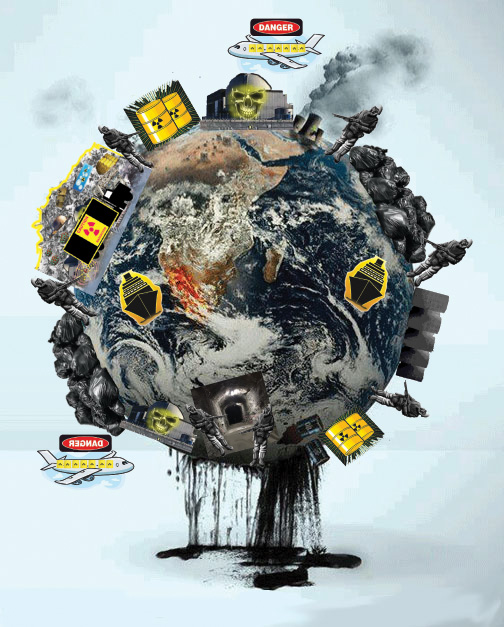
The final disposal of high-level radioactive waste presents governments worldwide with major challenges that have not yet been addressed, and entails incalculable technical, logistical, and financial risks. This is the conclusion of the first “World Nuclear Waste Report ‒ Focus Europe” launched in Berlin in November.
The World Nuclear Waste Report (WNWR) is a project by a group of renowned international experts who want to draw more attention to radioactive waste as a significant and growing challenge with no long-term solutions yet available. The project was initiated by Rebecca Harms, and the original outline was produced by Wolfgang Neumann, Mycle Schneider (coordinator of the annual World Nuclear Industry Status Reports) and Gordon MacKerron. Numerous experts have contributed to the first edition of the WNWR (including former US Nuclear Regulatory Commission chair Allison Macfarlane).
The WNWR aims to make a substantial contribution to understanding nuclear waste challenges for countries around the world. It does so by describing national and international classification systems, the risks posed by specific radioactive waste forms, generated and estimated future waste quantities, the waste management and disposal strategies of governments and their financing mechanisms.
According to the WNWR, over 60,000 tons of spent nuclear fuel alone are stored in interim storage facilities across Europe (excluding Russia and Slovakia). Spent fuel rods are highly radioactive waste. To date, no country in the world has a repository for high-level waste from nuclear power in operation. Within the EU, France accounts for 25 percent of the current spent nuclear fuel, followed by Germany (15 percent) and the United Kingdom (14 percent).
In addition, more than 2.5 million cubic metres of low- and intermediate-level waste has been generated in Europe (excluding Slovakia and Russia). Over its lifetime, the European nuclear reactor fleet will produce an estimated 6.6 million cubic metres of nuclear waste. Four countries are responsible for most of this waste: France (30 percent), the UK (20 percent), the Ukraine (18 percent) and Germany (8 percent).
According to the WNWR, many governments underestimate the costs of interim and final storage. No country has a consistent financing model to date in places. This poses further financial risk for taxpayers.
Marcos Buser, a Swiss geologist and co-author of the report, said: “Increasing amounts of high level waste have to be interim stored for ever longer periods of time, as no country in the world has yet commissioned a deep geological repository for such waste. The problem is that interim storage facilities have not been designed for such long-term use.”
The Swiss nuclear expert warned that the storage facilities are already reaching the limits of their capacities. For example, storage capacity for spent fuel in Finland has already reached 93 percent saturation. Sweden’s decentralized storage facility CLAB is at 80 percent saturation. “The shutdown and decommissioning of many nuclear power plants will again drastically increase the quantities of nuclear waste,” warns Buser.
In addition to the safety aspects, the report identifies the enormous costs of interim storage and final disposal as another risk. “National governments and operators often significantly underestimate the costs of decommissioning, storage, and disposal of nuclear waste,” said Ben Wealer, co-author of the study and industrial engineer at the Technical University of Berlin.
In many countries there is a large gap between the expected costs and the financial resources earmarked for them. The problem would be exacerbated by the fact that final disposal also involves incalculable risks, which could lead to enormous cost increases, as the German government experiences with the Asse repository illustrate.
Nearly every government claims to apply the polluter-pays-principle, which makes operators liable for the costs of managing, storing, and disposing of nuclear waste. In reality, however, governments fail to apply the polluter-pays-principle consistently. “No country in Europe has taken sufficient precautions to finance the costs of the final disposal of nuclear waste. There is a threat that the real, massive costs will ultimately be borne by the taxpayers,” Wealer warned.
Ellen Ueberschär, President of the Heinrich-Böll-Stiftung, said: “The numerous unsolved problems in dealing with nuclear waste show that nuclear power has no future. At the same time, the report makes clear that phasing out nuclear power is not enough. Insufficient financial provisions for disposing of nuclear waste must not undermine the care and safety of decisions for interim storage and final disposal. The search for a suitable final repository needs greater public attention. The report is intended to facilitate a qualified international debate.”
World Nuclear Waste Report https://worldnuclearwastereport.org/
World Nuclear Waste Report 2019 ‒ Focus Europe: https://worldnuclearwastereport.org/wp-content/themes/wnwr_theme/content/World_Nuclear_Waste_Report_2019_Focus_Europe.pdf
1 This Month
23-25 October – on Zoom – World BEYOND War’s annual global conferenc


Shut down the radiation-damaged Heysham nuclear reactors now
To see nuclear-related stories in greater depth and intensity – go to https://nuclearinformation.wordpress.com

Say No to NASA’s Reckless Nuclear Reactor on the Moon
Say No to NASA’s Reckless Nuclear Reactor on the Moon
-
Archives
- October 2026 (170)
- September 2026 (339)
- August 2026 (330)
- July 2026 (355)
- June 2026 (287)
- May 2026 (306)
- April 2026 (356)
- March 2026 (251)
- February 2026 (267)
- January 2026 (308)
- December 2025 (358)
- November 2025 (359)
-
Categories
- 1
- 1 NUCLEAR ISSUES
- business and costs
- climate change
- culture and arts
- ENERGY
- environment
- health
- history
- indigenous issues
- Legal
- marketing of nuclear
- media
- opposition to nuclear
- PERSONAL STORIES
- politics
- politics international
- Religion and ethics
- safety
- secrets,lies and civil liberties
- spinbuster
- technology
- Uranium
- wastes
- weapons and war
- Women
- 2 WORLD
- ACTION
- AFRICA
- Atrocities
- AUSTRALIA
- Christina's notes
- Christina's themes
- culture and arts
- Events
- Fuk 2022
- Fuk 2023
- Fukushima 2017
- Fukushima 2018
- fukushima 2019
- Fukushima 2020
- Fukushima 2021
- general
- global warming
- Humour (God we need it)
- Nuclear
- RARE EARTHS
- Reference
- resources – print
- Resources -audiovicual
- Weekly Newsletter
- World
- World Nuclear
- YouTube
-
RSS
Entries RSS
Comments RSS

