U.S. Congress members call on Trudeau to stop nuclear waste dumping near Great Lakes
|
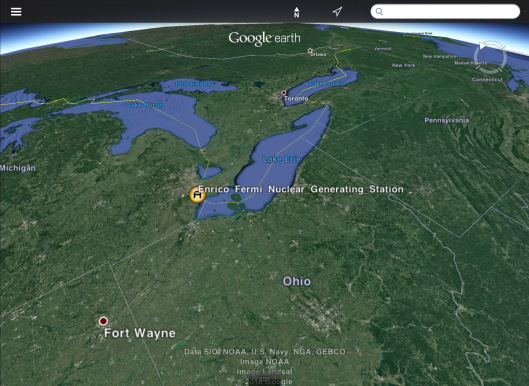
Upton, Dingell, Kildee and Mitchell Appeal to Trudeau: No Nuclear Waste In the Great Lakes Basin, https://whtc.com/news/articles/2019/dec/10/upton-dingell-kildee-and-mitchell-appel-to-trudeau-no-nuclear-waste-in-the-great-lakes-basin/965368/ When U.S. Representatives Fred Upton and Debbie Dingell joined with a handful of other House members last Friday, Dec. 6, 2019, to decry plans by Canadian officials to put a nuclear waste storage site in the Great Lakes basin, they were hoping to shame Canadian Prime Minister Justin Trudeau into some kind of protective action.
Tuesday, December 10, 2019 But something else happened, Upton explained.
“We’ve got other members now, on a bipartisan basis, coming to us saying, ‘Hey, we want to sign that same letter,'” he said. “So we’re going to be doing another letter, a little bit later this week, that’ll have broader appeal. Because we were sort of under the gun when we learned the news late Friday afternoon.” Upton and Dingell joined two other Michigan representatives, Paul Mitchell and Dan Kildee in signing a letter appealing to Trudeau to oppose any nuclear waste storage plans near the Great Lakes. The complete text of last week’s letter: Dear Prime Minister Trudeau: We write to you out of deep concern regarding reports that Canada is moving closer to selecting a permanent national repository for harmful nuclear waste along the shores of the Great Lakes. Allowing a permanent nuclear waste storage facility anywhere near the Great Lakes basin, for any amount of time, is a risk we cannot afford to take. The recent reporting also has us greatly concerned that the highest levels of radioactive waste would ultimately be stored at the proposed site. We know that there are other Members of Congress representing districts in the Great Lakes basin who are most concerned by this development and will certainly be joining with us in the days ahead. This is a grave concern. These waters have long united us—they should not divide us. In November, the Energy and Commerce Committee favorably advanced H.R. 2699, the Nuclear Waste Policy Amendments Act of 2019, to the House for final consideration and it included an important bipartisan amendment that expresses the Sense of Congress that the governments of the United States and Canada should not allow permanent or long-term storage of spent nuclear fuel or other radioactive waste near the Great Lakes. This amendment was unanimously supported and adopted. We stand in strong opposition to any decision by the Canadian government to select or consider a permanent national repository for nuclear waste storage anywhere near the Great Lakes. This is a treasured natural resource each of our countries share and we urge you to stand with us to protect these waters for future generations. Thank you for your consideration of this important request and we look forward to a timely response. |
2 nuclear reactors in Fukui Prefecture to be shut down
Kansai Electric Power Co. will spend ¥118.7 billion to dismantle the Nos. 1 and 2 units at the Oi nuclear power plant, with work expected to wrap up in the fiscal year ending March 2049.
The units, which each have an output capacity of more than 1 million kilowatts, are the most powerful reactors to be approved for decommissioning by the Nuclear Regulation Authority since a magnitude 9.0 earthquake and subsequent tsunami caused a meltdown at the Fukushima No. 1 plant in March 2011.
Following the disaster, the government placed a 40-year limit on the lifespan of reactors in the country, with a possible 20-year extension if strict safety standards are met.
As both units came online in 1979 and were approaching the 40-year limit, Kansai Electric had a choice of applying for the extension or scrapping them.
In December 2017, the utility announced it would scrap the aging reactors, citing the high cost of implementing additional safety measures. Kansai Electric submitted the decommissioning plan to the authority in November 2018.
The plant’s Nos. 3 and 4 units came online in 1991 and 1993, respectively, and are currently active.
Around 23,000 tons of low-level radioactive waste will be remain following the dismantling process, according to the plan, along with another 13,200 tons of nonradioactive waste.
The plan does not state where the waste will be stored.
The Santa Susana nuclear waste scandal

The Santa Susana Field Laboratory was established seventy years ago as a remote site for work too dangerous to conduct near communities. It’s situated on a rise on the north-west end of the Los Angeles Valley. What was once sparsely inhabited is now a packed community of 150,000 living within five miles of the site and more than half a million people living within 10 miles.
To the north, the community of Simi Valley. To the south-west, Thousand Oaks. And to the east, Chatsworth, Canoga Park, and West Hills. From these suburban streets, the hills around Santa Susana provide a beautiful backdrop of round sandstone and golden grass. But the picturesque view hides a secret—the fact that Santa Susana Field Laboratory is one of the most contaminated sites in California.
The site is no longer active; that doesn’t mean it’s benign. Over the years Santa Susana hosted a variety of activities, including ten nuclear reactors, a rocket engine testing facility, and multiple open-air “burn pits” where radioactively and chemically contaminated items were “disposed of” through burning. These activities left their mark. In 1959, one of the nuclear reactors partially melted down, an incident that scientists estimate may have released more radioactive iodine than Three Mile Island. And rocket-engine testing released toxic chemicals like TCE, dioxins, PCBs, and heavy metals. Wind and rain, and fires like the Woolsey Fire that burned 80 percent of the site in 2018, continue to carry contaminates from the site into the neighborhoods that have grown up around it.
All of this history is known, and really, none of these facts are in dispute. That’s why community members like Melissa Bumstead and Lauren Hammersley (both of whose daughters had rare forms of cancer), community organizations like Physicians for Social Responsibility–Los Angeles and Committee to Bridge the Gap, and celebrities like Kim and Kourtney Kardashian have all been advocating on this issue. The Santa Susana Laboratory must be cleaned up, and cleaned up quickly. But the Trump administration is trying to walk away from its commitments, and that’s a clear danger to nearby residents.
Today, responsibility for the site is shared by Boeing, the Department of Energy, and NASA. Back in 2010, the Energy Department and NASA both signed legally binding agreements with California setting strict levels of cleanup to “background levels.” Essentially, this means cleanup to the condition the site was in before all of the pollution. The agreements also require the federal agencies obtain approval from California for all aspects of the cleanup. This was the right deal to make; NRDC strongly supported the deal then, and still does to this day.
But now the Department of Energy and NASA seem to be trying to shirk their obligations.
First, the Energy Department issued a Final Environmental Impact Statement for remediation of the areas of the Field Lab it is responsible for. This is a legally required document designed to set forth the harms for the public, as well as the plan to mitigate those harms. In this document, the Department acknowledges that most of what it is considering violates its agreement with California, but it provides one-sided assurance that it will negotiate these points with California. Then in September, the Energy Department issued decisions to demolish multiple buildings without California’s consent, directly contradicting the cleanup obligations spelled out in the agreement.
NASA seems to be taking a similar course; in October it published a supplemental environmental impact statement proposing alternatives that would leave most of the contamination not cleaned up, in violation of its agreement with California. Absurdly, NASA argues that each of the alternatives it considers provides the same health benefits even though all but one of the alternatives would abandon in place most of the contaminated soil. It presented this information at “public meetings” in November but called the police when members of the public tried to share their concerns that NASA’s alternatives would breach the agreement to reach the required “background levels.” In short, NASA is setting itself up to violate the binding cleanup standards set by California and doesn’t seem to want the public to know that’s what it’s doing.
But under their agreements with California, and also under the primary hazardous waste law, the Resource Conservation and Recovery Act (RCRA), the Energy Department and NASA don’t have the authority to choose how much they must clean up and how much contamination they can abandon in place. This authority is California’s alone.
Luckily, the state of California is on top of it, closely monitoring the situation. Both the California EPA and the Department of Toxic Substances Control strongly reminded the Energy Department of its obligations and that the state would enforce the cleanup agreement. Should NASA follow through on any of the alternatives it has considered that would ignore its obligations, we are hopeful California stands ready again.
But enough is enough for all of this. The cleanup agreements are well thought out documents, have broad public support, and it’s readily apparent that the neighbors of Santa Susana Field Laboratory will continue to be at risk until the Department of Energy, NASA, and Boeing meet their full obligations to clean up the site. We stand beside California, local organizations, and community members to ensure that these toxic remnants will be removed and the site cleaned up so the nearby residents can live in safety and peace.
It’s time to reset US nuclear waste policy
 Life after Yucca Mountain: The time has come to reset US nuclear waste policy, The Hill, BY DAVID KLAUS AND ROD EWING, 12/09/19 After decades of inaction and stalemate, there are small but significant signs that the U.S. government may finally be ready to meet its legal commitment to manage and dispose of the more than 80,000 metric tons of used nuclear fuel at 74 operating and shut-down commercial nuclear reactors sites in 35 states across the country. The signs of progress include: Life after Yucca Mountain: The time has come to reset US nuclear waste policy, The Hill, BY DAVID KLAUS AND ROD EWING, 12/09/19 After decades of inaction and stalemate, there are small but significant signs that the U.S. government may finally be ready to meet its legal commitment to manage and dispose of the more than 80,000 metric tons of used nuclear fuel at 74 operating and shut-down commercial nuclear reactors sites in 35 states across the country. The signs of progress include:
While the debate over the fate of Yucca Mountain is primarily responsible for the current standoff, pressure for action is increasing at the local level where closed plants and what to do with the spent fuel stored on site has become a particularly hot political issue. Seven U.S. reactors were permanently closed from 2013 through 2018 and an additional 13 are set to close by 2025. There are now 21 “stranded sites” scattered across the country – closed reactor sites with no ongoing reactor operations. Moreover, the number of plant closures is expected to increase as plants age and state regulators refuse to adopt rate structures that value the type of base load power provided by nuclear reactors.
There also is pressure for action at the national level. The failure of the U.S. government to take ownership of the spent fuel has cost the taxpayers $7.4 billion in damages paid to utilities for continued storage at their reactor sites — and costs are projected to increase as more reactors close. With government payments to utilities already running some $600 million per year, the government estimates the total cost may ultimately be as high as $34 billion. Industry estimates are in the range of $50 billion……
Perhaps most significant obstacle is the dysfunction in our current political system. In normal times, political compromise to address the most significant current problem – the growing amounts of spent fuel at closed reactor sites around the country – should be in reach. It is time to reset U.S. policy and accept that the Yucca Mountain site is not going to be licensed and built. Legislators working in good faith should be able to resolve the funding issue, develop a fair, consent-based process for selecting a site for a long-term spent fuel repository and amend federal law to no longer hold the development of a consolidated interim storage facility hostage to that process. David Klaus formerly served, among other positions, as Deputy Under Secretary at the U.S. Department of Energy and Counsel to the Energy and Commerce Committee of the U.S. House of Representatives. He is an Affiliate of the Center for International Security and Cooperation at Stanford University. Professor Rod Ewing is the co-director of the Center for International Security and Cooperation at Stanford University and led a recent initiative – Reset of America’s Nuclear Waste Management Strategy and Policy. https://thehill.com/blogs/congress-blog/energy-environment/473627-life-after-yucca-mountain-the-time-has-come-to-reset#.Xe6gyaz6YH4.twitter
|
|
|
To store Canada’s nuclear wastes close to Lake Huron – the worst of the worst
|
Site near Lake Huron one of two finalists to store Canada’s nuclear waste, Herald Mail Media, By Keith Matheny Detroit Free Press (TNS), Dec 8, 2019
Canada has narrowed to two communities its list of potential hosts for a permanent national repository for its most radioactive waste — spent fuel from nuclear power generation. And one of those two finalists is on the shores of Lake Huron. If chosen, Huron-Kinloss/South Bruce, in Bruce County, Ontario, could host a large repository, 1,650 feet or more underground, to which the entire nation’s spent nuclear fuel supply would be transported and stored, essentially forever. “This is the worst of the worst” waste, said Kevin Kamps, radioactive waste specialist with the nonprofit Beyond Nuclear, based in Tacoma Park, Md. “It’s highly radioactive irradiated nuclear fuel. It is dangerous forever.”……
Canada has an inventory of almost 2.9 million used nuclear fuel bundles currently stored above-ground in wet pools and dry containers at the nuclear plant sites where the waste is generated. That’s about 128 million pounds of highly radioactive material, a number that is growing. The site along Lake Huron is in the same county where another underground storage facility — this one for low-to-intermediate-level radioactive waste from Ontario’s 19 nuclear reactors — was proposed. That plan, still under consideration, generated loud opposition throughout the Great Lakes Basin beginning about five years ago, especially in Michigan. Michigan’s Democratic U.S. senators, who were among those urging a halt to the lower-radiation waste storage on the Great Lakes, expressed alarm that Canada is now considering putting its most dangerous nuclear wastes along the Great Lakes as well. “This makes no sense,” U.S. Sen. Debbie Stabenow said. “Canada has as much at stake as we do in protecting our Great Lakes. There is no justification for a nuclear waste site so close to Lake Huron to even be under consideration.” Stabenow said she would reach out to the Canadian government regarding the issue. U.S. Sen. Gary Peters noted that the Great Lakes provide drinking water to 40 million people on the U.S. and Canadian sides. “That’s why we need to do everything we can to protect the Great Lakes for future generations,” he said. “I am extremely concerned about the possibility of hazardous nuclear waste being stored near the Great Lakes. Any accident could have catastrophic and long-term consequences to the health and well-being of Michigan and the country. I urge the Nuclear Waste Management Organization in Canada to reconsider naming a finalist location so close to the Great Lakes.” The finalist decision was made by the Nuclear Waste Management Organization, which consists of the nation’s generators of nuclear power and its wastes: Ontario Power Generation, New Brunswick Power Corp. and Hydro-Quebec. Under an act of Canada’s parliament in 2002, the organization is tasked with designing and implementing Canada’s plan for the safe, long-term management of used nuclear fuel. …… The sites were winnowed to five last month, and last week, the organization decided on its two finalists: Huron-Kinloss/South Bruce and Ignace, a rural community in northwest Ontario about 150 miles north of western Lake Superior….. Bruce County is home to Ontario Power Generation’s Bruce Nuclear Generation Station, which has eight reactors. “You have a company town, Kincardine Ontario, with one of the largest nuclear plants on Earth,” said Brennain Lloyd, project coordinator for NorthWatch, a regional coalition in northeast Ontario that works on regional issues.Many area residents, with family ties to the nuclear plant, expressed support for the low-to-intermediate radioactive waste repository, and would have an economic interest in the spent fuel disposal site, Lloyd noted. “Everybody who drinks Great Lakes water is being held hostage to the decision-making of these few thousand people,” she said. While several nations, including France, Sweden and Finland, are at various stages of designing deep geologic repositories for their spent nuclear fuel, there has not yet been any proof, anywhere, that the concept works over the very long term, said Gordon Edwards, president of the nonprofit Canadian Citizens for Environmental Responsibility, based in Montreal. ….. Belfadhel said the completed repository site would have on-site monitoring for “over 100 years.” Edwards said that’s a pittance of what will be needed. “The pyramids of Egypt are only 5,000 years old; the Great Lakes are only about 10,000 years old, created by the last Ice Age,” he said. “The idea that we can create structures that can last longer than the lifetime of the Great Lakes since they were first created is very presumptuous.” Another problem is transporting highly radioactive spent fuel to the site, Kamps said. “Are they going to use barges on the Great Lakes? What if they sink?” he said. “If not barges, are they going to use trains and trucks? What if they crash? What if they are attacked by terrorists? If there are releases, it’s probably going into the lakes. “You’re talking about concentrating 22 reactors’ worth of spent fuel. If you’re going to concentrate that much radioactivity in one place, terrorists might consider attacking it for the ultimate dirty bomb on the planet. …… The proposal to store the most dangerous waste in the world near the Great Lakes should not even be considered, Edwards said. “The people who previously expressed themselves against the low and intermediate-level waste dump need to rise up again,” he said. “All of the high-level waste from all of Canada’s nuclear reactors, it’s ridiculous to put it right beside the Great Lakes. It’s millions of times more radioactive than the low and intermediate level waste.” https://www.heraldmailmedia.com/news/nation/site-near-lake-huron-one-of-two-finalists-to-store/article_a98ff7b8-3b2f-52e7-b55c-c21a6e9d12ca.html |
|
New ship to handle all nuclear waste from Rosatom’s Arctic operations.
Barents Observer 5th Dec 2019, New ship to handle all nuclear waste from Rosatom’s Arctic operations.
The new special purpose vessel will serve the new icebreakers and the
floating nuclear power plants and possible other reactor installations.
Paducah, Kentucky – its nuclear waste tragedy is compounded by climate change
“I never said a bad thing about the plant the whole time I was growing up,” Lamb said. “It made the economy good. But then we got sick.”
“People who were not highly educated could make really good money working in these industries
“Not only that but the government was saying, this is your patriotic duty. We need this. So everybody just went along because the compensation was pretty good.”
a GAO report released in November showed that 60 percent of U.S. Superfund sites are at risk from the impacts of climate change.
Instead of focusing on cleanup plans, some state lawmakers and federal agencies are loosening regulations on hazardous sites…… Last year, the DOE also moved to relax restrictions on the disposal and abandonment of radioactive waste
|
For over half a century, the plant was Paducah’s main employer, providing up to 7,000 jobs in a place where nearly a quarter of people now live in poverty. But poor working conditions and unregulated waste disposal also harmed Paducah residents. The legacy of these problems have cost the town and taxpayers. Despite multiple recommendations from a watchdog government agency, the Department of Energy is decades behind schedule on cleanup efforts.
Some experts say the federal government doesn’t know the full cost or scope of what cleaning them up will entail, and that becomes more complicated with more frequent extreme weather. It’s a problem Superfund sites — and especially nuclear waste sites — around the country face.Lynn said there’s a lot of secrecy surrounding the cleanup, as well as the health risks that may be associated with it. He’s just one Paducah resident, along with a slew of former workers, who say they’ve been left in the dark about problems with a complex cleanup. ….
There are 16 nuclear sites still managed by the U.S. Department of Energy (DOE) across the country — from Vermont to Washington, Nevada to South Carolina — most of them built between the 1940s and 1950s. Some created nuclear defense materials like plutonium — a core ingredient in atomic bombs that is 100,000 times as radioactive as uranium and can cause liver, lung, and bone cancer.
The Paducah Gaseous Diffusion Plant was one of the smallest projects in the U.S. When the plant was built in 1952, the town proudly adopted a new moniker: “Atomic City.” While gaseous diffusion was the public face of the plant, there were other operations, including programs with NASA, storing defunct materials from Oak Ridge, and work for Sandia, a nuclear security laboratory. By the early 1990s, many of the plants, including Paducah, had started transitioning to produce uranium for the nuclear power reactors that now provide a fifth of U.S. electricity generation.
“People who were not highly educated could make really good money working in these industries so you could have a good house, a boat, a couple of cars, raise your kids and send them to college,” said Mark Donham, who used to manage the DOE’s Citizens Advisory Board, which helps the agency monitor the plant’s environmental remediation. “Not only that but the government was saying, this is your patriotic duty. We need this. So everybody just went along because the compensation was pretty good.” However, a 1999 investigation by The Washington Post revealed the federal government used the plant to illegally recycle over 103,000 tons of used nuclear reactor fuel containing plutonium and other transuranics — man-made heavy metals derived from splitting atoms. The same year, workers filed a $10 billion class action lawsuit against three federal government contractors that led to the passage of a federal law intended to compensate current and former employees (or their survivors) for exposure to cancer-causing radiation.
Greg Landhorff, a utilities worker at the plant for 30 years, wasn’t involved in the lawsuit, but said he was exposed to “all kinds of different chemicals.” He said the exposure was an open secret, and workers weren’t given proper equipment or training. He claims operators told him about the exposure when he was hired, but didn’t report it because they didn’t want to lose their jobs. Landhorff now rattles off his health issues like a grocery list: beryllium disease, COPD, chronic bronchitis, and skin cancer.
Although the plant closed in 2013, hundreds of people still work on site. Nuclear sites often function like small towns, with wastewater treatment and steam plants, sewers, landfills and lagoons, administrative offices, enormous water towers, and medical centers. David Trimble, director of the Government Accountability Office, or GAO, said 30 to 60 percent of the DOE’s cleanup budget goes toward these “recurring activities.” The same is true for Paducah: Dawn Harris-Young, a spokesperson for the southeast regional EPA, said that only a “small fraction” goes toward environmental cleanup post-closure. This means that until the site is torn down, day-to-day operation often takes up more of the DOE’s cleanup budget than the necessary environmental remediation.
The DOE has demolished 84 facilities, removed over 66 million pounds of contaminated scrap material, and dug up over a million cubic feet of contaminated soil. While there is no official estimation of how much contaminated material remains, at least 400 buildings — and everything inside them — still need to be decontaminated and demolished at the Paducah site. The DOE requested $277 million specifically for Paducah in 2020, despite its budget for nuclear cleanup shrinking by $50 million in the last five years. But it’s still a small fraction of the budget DOE will need: cleanup isn’t expected to be completed until 2065, and the EPA has said it could take even longer because of the lack of knowledge about sources of contamination and the vast size of the facility. The waste at Paducah includes the gaseous diffusion plant, buried radioactive disposal sites, and waste leftover from neighboring nuclear sites in Ohio and Tennessee. It also includes over 52,000 cylinders of uranium hexafluoride, or spent uranium fuel, much of it from Oak Ridge. But there is still no solution for how to dispose of spent nuclear fuel, except to bury it. In recent decades, federal and state regulators have strategized for the remediation of these sites. But some have faced major problems like fires, radioactive leaks, and spills. According to Rodney Ewing, nuclear security expert at Stanford University, “there’s no path forward” to dispose of uranium hexafluoride, either. “That’s why they’re still stored in tanks out back,” he said. When the leaves fall on Ronald Lamb’s property, he can see the water tower and the grey siding of facility buildings at the Paducah plant just two miles away. On the road near Big Bayou Creek, which runs through both the plant and his 120-acre property, signs warn against getting in the water. His well is padlocked because of groundwater contamination from trichloroethylene, or TCE — a degreaser used to clean uranium equipment — which can impact childhood development, damage the central nervous system, and is linked to cancer. Lamb said the well water left his family with severe gastrointestinal problems. “I never said a bad thing about the plant the whole time I was growing up,” Lamb said. “It made the economy good. But then we got sick.” DOE officials report that the agency has cleaned over four billion gallons of contaminated groundwater through a pump and treat system, but two toxic plumes of TCE still flow through four miles of groundwater that lead to the Ohio River. The DOE lacks a national strategy for nuclear cleanup, instead relying on site managers to contract with companies that manage, operate, and cleanup nuclear facilities. The Paducah cleanup is now being managed by Four Rivers Nuclear Partnership, a conglomeration of companies hired by the DOE for soil and groundwater remediation. One of them is Jacobs Engineering, a contractor that was sued for exposing hundreds of workers to toxic substances during cleanup of the nation’s largest coal ash spill in Tennessee; more than 40 have died. At least three other nuclear sites — Oak Ridge, Hanford in Washington, and Savannah River in South Carolina — have also contracted with Jacobs. (Jacobs Engineering declined an interview for this story.) The DOE also declined to answer questions but said the agency was committed to the safe remediation of the plant and that they “look forward to continuing successful cleanup efforts in the future.” The agency works with the Citizens Advisory Board — a group of community members who apply and are appointed as well as liaisons from Kentucky and the regional EPA office — on environmental management at the Paducah site, including the monitoring of groundwater and planning for the site’s future use. Lamb advocated for the board many years ago, and the bi-monthly meetings are supposed to serve as a public comment period. The board doesn’t have any power beyond giving recommendations to the agency, and current and former members are divided about its effectiveness. Lesley Davis joined for about a year in 2016; her grandfather had worked at the plant and died of cancer. “It was informational at times, but it didn’t feel like it was making much of a difference,” she said. “In hindsight, it felt like they were trying to keep a good public face.”…….. In February, Paducah put up its floodgates, families stacked sandbags, and the bridge over the Ohio River to Illinois closed as floodwaters as rains drowned the region. According to local news stations, highway crews reported so much water they had trouble setting up warning signs. Former Kentucky Gov. Matt Bevin declared a statewide emergency due to heavy rainfall and flooding. The Ohio River, three miles north of the Paducah plant, had record flooding in 2018 and 2019. Record flooding this year across the Midwest hit eight Superfund sites, and a GAO report released in November showed that 60 percent of U.S. Superfund sites are at risk from the impacts of climate change. By mid-century, there will be heavier rainfall, increased flooding, and more intense hurricanes in the Southeast, which has nearly a quarter of the 1,335 active Superfund sites on the EPA’s National Priority List. ……… The Green New Deal resolution, which has not yet passed through the U.S. House of Representatives, identified cleaning up brownfields — contaminated sites previously used for development — and hazardous waste sites like Paducah as a key priority in restoring the American landscape — but there’s not yet a road map for that plan. While underground waste repositories may provide a solution, Ewing said that over the long term, the changing climate could make it more challenging: in a wetter environment, the amount of water leaking through the rock over the repository could be expected to increase. Instead of focusing on cleanup plans, some state lawmakers and federal agencies are loosening regulations on hazardous sites. In 2017, Kentucky passed a bill lifting a nuclear moratorium, a move that some hope will turn the site into a research facility or nuclear reactor; the law loosens the requirements for toxic waste management. Last year, the DOE also moved to relax restrictions on the disposal and abandonment of radioactive waste………..https://www.scalawagmagazine.org/2019/12/nuclear-waste-paducah-kentucky/ . |


Germany must now face up to its nuclear waste problem

Germany is closing all its nuclear power plants. Now it must find a place  to bury the deadly waste for 1 million years
By Sheena McKenzie, [excellent diagrams]. CNN https://edition.cnn.com/2019/11/30/europe/germany-nuclear-waste-grm-intl/index.html When it comes to the big questions plaguing the world’s scientists, they don’t get much larger than this.
 Ben clock towers — of deadly radioactive waste for the next million years?
Searching for a nuclear graveyard
Between a rock and a hard place
People power
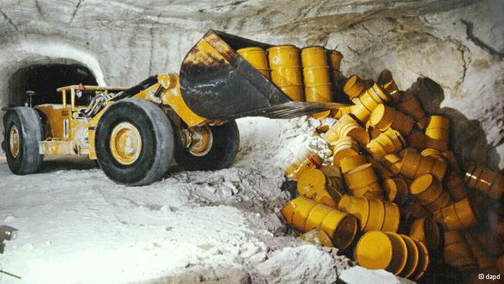 Former salt mines at Asse and Morsleben, eastern Germany, that were used for low- and medium-level nuclear waste in the 1960s and 1970s, must now be closed in multibillion-dollar operations after failing to meet today’s safety standards.
Plans for nuclear waste disposal, but there’s no long term solution
The Staggering Timescales Of Nuclear Waste Disposal, Christine Ro https://www.forbes.com/sites/christinero/2019/11/26/the-staggering-timescales-of-nuclear-waste-disposal/#621facec29cf
High-level nuclear waste consists largely of spent fuel from nuclear reactors. Though it makes up a small proportion of overall waste volumes, it accounts for the majority of radioactivity. This most potent form of nuclear waste, according to some, needs to be safely stored for up to a million years. Yes, 1 million years – in other words, a far longer stretch of time than the period since Neanderthals cropped up. This is an estimate of the length of time needed to ensure radioactive decay.
They’re also such mind-bogglingly long periods that in 1981, the US Department of Energy established the Human Interference Task Force to devise ways to warn future generations of the dangerous contents of nuclear repositories. This was a challenging task then, and nuclear semiotics remains the stuff of science fiction. Written language has only existed for about 5,500 years, so there’s no guarantee that Earth’s inhabitants, tens of thousands of years from now, would understand any of the writing systems currently in use. The meanings of visual signs also drift over time. The more whimsical “ray cat solution,” of genetically engineering cats to glow in the presence of radioactive material, is even less reliable.
Even stopping nuclear power operations is a necessarily drawn-out process. Decommissioning a single nuclear reactor typically takes about 20 years. Most countries grappling with nuclear waste are planning for at least 40 to 60 years just to implement their repository programs.
After brief flirtations with amusingly bad ideas including shooting nuclear waste into space, the consensus among nuclear scientists is that the best option for dealing with high-level nuclear waste is deep geological disposal. One of the International Atomic Energy Agency’s conditions for such a geological site is low groundwater content, which has been stable for at least tens of thousands of years, and geological stability, over millions of years. Thus, Japan, with its seismic instability, is unlikely to have any suitable candidates for deep geological disposal.
Like many countries, Japan is relying on interim storage of high-level waste while hoping that longer-term solutions will present themselves eventually. In fact, no country even has an operational deep geological repository for spent nuclear fuel. (The US has a deep disposal site in New Mexico for “transuranic” waste from nuclear weapons, which is long-lived and intermediate-level waste whose elements have higher numbers than uranium in the periodic table.)
It’s challenging to find a site that ticks all of the geological boxes (including relatively impermeable material with little risk of water infiltration), and that isn’t politically controversial. To take two notable examples, communities in Nevada, US and Bure, France have hotly opposed plans to establish repositories. Given the history of environmental justice globally, it’s likely that any future locations approved for nuclear waste dumps will be found in poor areas.
Only one country, Finland, is even building a permanent spent-fuel repository. Even in Finland, however, it’s estimated that a license won’t be issued until 2024. Similar licenses for other European countries scouting out possible locations likely wouldn’t be available until 2050 in Germany and 2065 in the Czech Republic. And these countries are outnumbered by those that don’t even have an estimated timeframe for licensing, as they’re so far back in the process of searching for a site.
Strategies remain worryingly short-term, on a nuclear timescale. Chernobyl’s destroyed reactor no. 4, for instance, was moved in July 2019 into a massive steel and concrete “sarcophagus” that will only last 100 years. Not only will containers like this one fall short of the timescales needed for sufficient storage, but no country has allotted enough funds to cover nuclear waste disposal. In France and the US, according to the recently published World Nuclear Waste Report, the funding allocation only covers a third of the estimated costs. And the cost estimates that do exist rarely extend beyond several decades.
Essentially, we’re hoping that things will work out once future generations develop better technologies and find more funds to manage nuclear waste. It’s one of the most striking examples of the dangers of short-term thinking.Check out my website.
Nuclear waste Bill in U.S. House of Representatives – resistance in New Mexico to nuclear waste dump
 Nuclear waste bill advances to House, could push forward storage site in New Mexico Adrian Hedden, Carlsbad Current-Argus Nov. 27, 2019 A federal bill to alter policy for nuclear waste advanced to the full U.S. House of Representatives and could support the case for temporary storage of temporary storage of high-level waste at a facility like the one Holtec International proposed to build in southeast New Mexico.
The Nuclear Waste Policy Amendments Act was advanced by a unanimous voice vote to the House by the Energy and Commerce Committee on Nov. 20.
The bill, if passed, would move forward with safety licensing for a permanent nuclear waste repository at Yucca Mountain, Nevada, while providing the U.S. Department of Energy the authority to proceed with a program for consolidated interim storage (CIS) while the Yucca Mountain project progresses.
It also prioritized the transportation of spent nuclear fuel from generator sites in seismically active areas, and ensured the DOE has the funds to build and operate a repository
U.S. Rep. Ben Ray Lujan (D-NM), the only representative from New Mexico who sits on the committee, introduced an amendment that was approved to create a grant program to study the impacts radiation exposure including family members and non-workers resulting from uranium mining.
“Though we have a responsibility to address the waste issues that result from our country entering the atomic age, I am deeply concerned that this bill makes it more likely that a future interim storage site — potentially one in New Mexico — becomes a permanent home for nuclear waste,” he said.
One such interim facility, proposed by Holtec to be built in a remote, desert area near the Eddy-Lea county line, drew concerns from New Mexico environmentalist groups as it could put local communities at risk as well.
Don Hancock, nuclear waste program director at the Southwest Research and Information Center in Albuquerque cited a clause in the bill that required the governor of a state that would host a CIS facility to consent before moving forward.
New Mexico Gov. Michelle Lujan Grisham voiced her opposition to the Holtec project earlier this year, calling it “economic malpractice” as it could negatively impact two of the state’s biggest industries: oil and gas and agriculture.
“The bill says you must have approval from the state’s governor,” Hancock said. “New Mexico would be a non-starter. She (Lujan Grisham) has said she’s opposed to it.”
Hancock said he also opposed the project and the bill over the suggestion of transporting the waste hundreds or thousands of miles away from generator sites where it is currently stored.
Even if the waste approved to be shipped to a remote location like southeast New Mexico, Hancock argued it would take years for the infrastructure to be built and the waste to be moved.
“This approach doesn’t make any sense,” he said. “Why not do it in places that already have storage sites? It’s going to sit there for years. Let’s make that less dangerous. It can be done without massive transportation around the country.”…….. https://www.currentargus.com/story/news/local/2019/11/27/nuclear-waste-bill-advances-house-may-support-new-mexico-holtec-site/4297822002/
South Africa to create extra space for nuclear waste
Business Times, WED, NOV 27, 2019 [JOHANNESBURG] Radioactive waste storage facilities at South Africa’s nuclear power station Koeberg will fill up next year, the power utility Eskom said Tuesday, adding it has begun creating extra space.
South Africa is the only country on the continent with a civilian nuclear industry, and its two reactors have been in service for more than 30 years.
The Koeberg nuclear power plant, located outside Cape Town, produces 1,860 megawatts contributing about four percent of the national power output.
Eskom in a statement that its “spent fuel pools are essentially full in 2020 and for this reason a project was initiated to create additional space”…….
Koeberg was originally set to be mothballed in 2024, four decades after its inception, but it is being upgraded and it is now expected to operate until 2044.
Environmental campaigners have warned against the nuclear project.
“It is incredibly short-sighted for the government to pursue extending Koeberg’s lifespan, potentially at the expense of our safety,” Melita Steele, Greenpeace Africa’s Climate and Energy Campaign Manager said Tuesday.
“Not only are South Africans going to have to fork out more money for more storage for high-level radioactive waste, but there is also no long-term solution for this waste, which can remain radioactive for hundreds of thousands of years,” Ms Steele said.
Currently, 90 per cent of the country’s electricity is generated from coal-fired stations.
The government last year dropped controversial plans to build new nuclear power stations, deals that had been initiated by former leader Jacob Zuma and that could have bankrupted the country to enrich his allies. https://www.businesstimes.com.sg/energy-commodities/south-africa-to-create-extra-space-for-nuclear-waste
South Africa’s nuclear waste storage almost completely full; a dangerous situation
 Waste storage at Africa’s only nuclear plant brimming, Channel News Asia, 25 Nov 19, CAPE TOWN: Spent fuel storage at South Africa’s Koeberg nuclear plant will reach full capacity by April as state power utility Eskom awaits regulatory approval for new dry storage casks, the company said on Monday (Nov 25).
Storage of high-level radioactive waste is a major environmental concern in the region, as South Africa looks to extend Koeberg’s life for another two decades and mulls extra nuclear power plants.
Koeberg, Africa’s only nuclear facility, is situated about 35km from Cape Town and was connected to the grid in the 1980s under apartheid.
“The Koeberg spent fuel pool storage capacity is currently over 90 per cent full. (These) pools will reach (their) capacity by April 2020,” Eskom told Reuters in a statement.
Koeberg produces about 32 tonnes of spent fuel a year. Fuel assemblies, which contain radioactive materials including uranium and plutonium that can remain dangerous for thousands of years, are cooled for a decade under water in spent fuel pools….
Anti-nuclear lobby group Earthlife Africa said South Africa could not afford the social, environmental and economic costs associated with nuclear waste.
“We have a ticking bomb with high-level waste and fuel rods at Koeberg,” said Makoma Lekalakala, Earthlife Africa’s director. https://www.channelnewsasia.com/news/world/waste-storage-at-africa-s-only-nuclear-plant-brimming-12123664 brimming-12123664
As the Runit nuclear waste dome crumbles, Marshall Islanders want honesty and justice
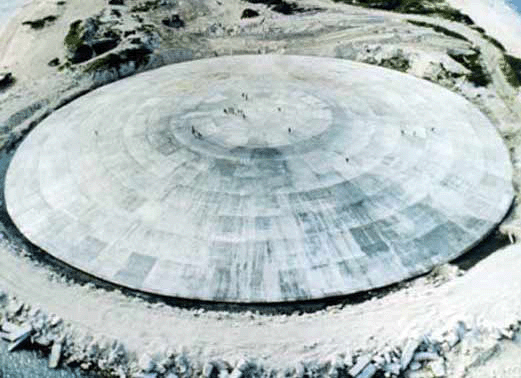
‘People want justice’: Marshalls’ fury over nuclear information US withheld– https://www.rnz.co.nz/international/programmes/datelinepacific/audio/2018723289/people-want-justice-marshalls-fury-over-nuclear-information-us-withheld From Dateline Pacific, 21 November 2019
|
The caretaker president of the Marshall Islands says it’s unconscionable that the United States kept secret key information about its nuclear tests for decades. New details reveal the US withheld information about the nuclear waste it left behind when the Marshall Islands gained independence, and the extent of the tests it carried out. Now, a dome that contains hundreds of tonnes of nuclear waste is at risk of crumbling into the ocean. But with Washington increasingly jittery about China, the small Pacific country’s finding it might now have some leverage to get something done. TRANSCRIPTEnewetak was once a paradise – a long atoll in the clear blue waters of the north Pacific, white sand and thick green palms. Today, it’s rutted with scars, after the US detonated dozens of nuclear bombs on, in and above it in the 1940s and ’50s. Whole islands were vaporised, deep craters carved into the coral. Jack Ading is a senator from Enewetak. His family was forced to move for the tests, and then allowed to return in the 1980s. “It appears that when we moved back to Enewetak in the 1980s after we were assured by the US government that it was safe. We were actually subjecting ourselves to a risk that we were never warned about.” Government documents reveal that beyond the nuclear blasts, the US also tested biological weapons, including an aerosol bacteria. Jamie Tahana reports. TRANSCRIPTEnewetak was once a paradise – a long atoll in the clear blue waters of the north Pacific, white sand and thick green palms. Today, it’s rutted with scars, after the US detonated dozens of nuclear bombs on, in and above it in the 1940s and ’50s. Whole islands were vaporised, deep craters carved into the coral. Jack Ading is a senator from Enewetak. His family was forced to move for the tests, and then allowed to return in the 1980s. “It appears that when we moved back to Enewetak in the 1980s after we were assured by the US government that it was safe. We were actually subjecting ourselves to a risk that we were never warned about.” Government documents reveal that beyond the nuclear blasts, the US also tested biological weapons, including an aerosol bacteria. But this was kept secret when the people from Enewetak were allowed to return, and other documents show that people were subjected to tests and experiments about the lingering effects of radiation. Last week, the Los Angeles Times also uncovered that the US didn’t tell the Marshallese it had shipped 130 tonnes of soil from its atomic testing grounds in Nevada in 1958 and dumped it at Enewetak. The caretaker president of the Marshall Islands, Hilda Heine, says the new details are disturbing. “To say the least you would have thought that all that information would have been shared with the Enewetak people before they went back to Enewetak. It is unbelievable that such information was held back, and as a result people have gone back and lived there for many years.” The nuclear waste from the era is stored in a pile at the end of the island of Runit, covered in a concrete dome. But a recent study by the Marshall Islands Nuclear Commission found the dome is now at risk of collapsing, and as rising seas erode beneath it, much of that waste is seeping into the lagoon. The commission’s chair, Rhea Moss-Christian, says information about the dome and the testing era was withheld throughout the independence process, while a compact of free association was negotiated in the 1980s. “We signed the compact in 1986 on the understanding that we had all the information we needed to have. It’s pretty hard for us to see this information, to have the level of detail that we now have, and to think that any of those previous agreements could stand.” The Marshall Islands has sought US help to clean up contamination and to shore up the dome, but American officials have declined, saying it’s on Marshallese land and, therefore, is the Marshall Islands’ responsibility. Ms Moss-Christian says that’s ridiculous. “How can it be that this radioactive waste and structure that we didn’t ask for. How can it be that this is ours and ours to deal with?” A Nuclear Claims Tribunal formed by the two countries in 1988 concluded that the US should pay $US2.2 billion in claims and settlements. But documents from both the Nuclear Commission and a 2010 US House inquiry show only $4 million has been paid. Last month, the Marshall Islands parliament – the Nitijela – endorsed a Nuclear Commission strategy which calls for, among other things, full compensation, better healthcare, and environmental protections. The US maintains it is upholding its responsibilities. It says it’s paid nearly a billion dollars, which has gone towards resettlement, rehabilitation and healthcare costs for affected communities, and that it’s funding tests of the water and atmosphere around the Runit dome. But Giff Johnson, the editor of the Marshall Islands journal and an author of books about the nuclear legacy, says that’s not enough. “People want justice for Marshall Islanders. The US government has to step up and address issues that it has addressed for American victims but is ignoring out here.” For the Marshall Islands, a smattering of atolls in the North Pacific – population 53,000 – it might be an opportune time to twist a superpower’s arm. Washington is increasingly nervous about a growing Chinese presence, and the compact of free association – which guarantees relations and funding from the US – expires in three years. Having initially maintained there won’t be a replacement compact, Washington is now keen to open talks for a new one, and has sent a string of high-ranking officials for visits. The caretaker president, Hilda Heine – who a few months ago was invited to the White House to meet President Donald Trump – says that could bode well. “The geopolitical situation in the Pacific is really helpful to the cause of the Marshall Islands. The US is now paying more attention to the Marshall Islands, so our issues around climate change, around our nuclear legacy, I think those will come to the forefront of our discussions going forward with the United States.” Whatever comes from those discussions, the people of Enewetak want more than they’re getting now. |
|
UK’s embarrassing, expensive, intractable trouble with dead nuclear submarines

Key point: Britain isn’t the only nation that has problems disposing of nuclear warships. When you need to dispose of an old car, you can take it to a junkyard.
But what do you do with a nuclear submarine whose reactor can make people glow in a most unpleasant way?
Britain has retired twenty nuclear submarines since 1980. None have been disposed of, and nine still contain radioactive fuel in their reactors, according to an audit by Britain’s National Audit Office. These subs spent an average of twenty-six years on active service—and nineteen years out of service.
“Because of this, the Department [Ministry of Defense] now stores twice as many submarines as it operates, with seven of them having been in storage for longer than they were in service,” the audit states.
Even worse is the price tag. Britain has spent 500 million pounds ($646.4 million) maintaining those decommissioned subs between 1980 and 2017. Full disposal of a nuclear sub would cost 96 million pounds ($112.1 million). As a result, the total cost for disposing of the Royal Navy’s ten active subs and twenty retired vessels would be 7.5 billion pounds ($9.7 billion), NAO calculated…….
The plan is to begin defueling subs, beginning with HMS Swiftsure, in 2023. But even then, the Ministry of Defense will have to deal with different subs that have different disposal requirements. “At present, the Department does not have a fully developed plan to dispose of Vanguard, Astute and Dreadnought-class submarines, which have different types of nuclear reactor,” NAO pointed out. “For the Vanguard and Astute-class it has identified suitable dock space which, if used, will need to be maintained.”
Interestingly, the British military gets an exemption when it comes to nuclear waste. “Within the civil nuclear sector, organizations must consider nuclear waste disposal during the design stage of power stations and nuclear infrastructure. The Department does not have a similar obligation.”
Safety problems with Holtec’s dry canisters for nuclear wastes
1 This Month
26 September – International Day for the Total Elimination of Nuclear Weapons





PLEASE OPPOSE HR 8255 AND S.3639 – bills would accelerate satellite deployment, with no environmental review or safeguards – https://ncstd5li.quorum.us/campaign/169331/
To see nuclear-related stories in greater depth and intensity – go to https://nuclearinformation.wordpress.com
-
Archives
- September 2026 (305)
- August 2026 (330)
- July 2026 (355)
- June 2026 (287)
- May 2026 (306)
- April 2026 (356)
- March 2026 (251)
- February 2026 (267)
- January 2026 (308)
- December 2025 (358)
- November 2025 (359)
- October 2025 (375)
-
Categories
- 1
- 1 NUCLEAR ISSUES
- business and costs
- climate change
- culture and arts
- ENERGY
- environment
- health
- history
- indigenous issues
- Legal
- marketing of nuclear
- media
- opposition to nuclear
- PERSONAL STORIES
- politics
- politics international
- Religion and ethics
- safety
- secrets,lies and civil liberties
- spinbuster
- technology
- Uranium
- wastes
- weapons and war
- Women
- 2 WORLD
- ACTION
- AFRICA
- Atrocities
- AUSTRALIA
- Christina's notes
- Christina's themes
- culture and arts
- Events
- Fuk 2022
- Fuk 2023
- Fukushima 2017
- Fukushima 2018
- fukushima 2019
- Fukushima 2020
- Fukushima 2021
- general
- global warming
- Humour (God we need it)
- Nuclear
- RARE EARTHS
- Reference
- resources – print
- Resources -audiovicual
- Weekly Newsletter
- World
- World Nuclear
- YouTube
-
RSS
Entries RSS
Comments RSS

