South Texans are publicly fighting SpaceX after second Starship launch
Starship’s second launch brought more outcry from local organizations.
Chron, By Andrea Guzmán, Nov 22, 2023
SpaceX’s second launch attempt of its Starship rocket on Saturday has been commended for its improvement from the first launch, which ended with the rocket exploding after reaching 24 miles into the air.
But for some South Texas residents, SpaceX’s operations are not a cause for celebration.
In a press release after Saturday’s launch, South Texas organizations said that local residents again experienced their homes shaking and debris falling on the community.
“Musk and his pet vanity project continue to pollute and destroy our beautiful beach, coastline, and wildlife. SpaceX, an unnecessary, private money grab that only serves the wealthy, refuses to follow safety regulations, environmental regulations, and the wishes of local communities and the original people of the land,” said Christopher Basaldú with South Texas Environmental Justice Network.
Meanwhile, grassroots collaborative Another Gulf Is Possible, which has members from Brownsville, Texas, to Pensacola, Florida, has invited the public to a documentary screening in Brownsville about community objection to SpaceX on Dec. 1. The film will explore how Brownsville residents and the Carrizo/Comecrudo Tribe of Texas have battled “the encroachment of SpaceX on pristine lands,” an event invitation says. The documentary will also look at how South Texans have fought against two proposed LNG projects. ……………………………………………………………………………………… Next Friday’s documentary screening will be held at Brownsville’s Rio Bravo Office Space from 6 p.m. to 9 p.m.
more https://www.chron.com/culture/article/texas-starship-second-launch-18508949.php—
U.S. Space Force and the dangerous clutter of human-produced stuff in space

What Does the U.S. Space Force Actually Do? Inside the highly secretive military branch responsible for protecting American interests in a vulnerable new domain
NYT, By Jon Gertner, Nov. 8, 2023
Chief Master Sgt. Ron Lerch of the U.S. Space Force sat down in his office in Los Angeles one morning in September to deliver a briefing known as a threat assessment. The current “threats” in space are less sci-fi than you might expect, but there are a surprising number of them: At least 44,500 space objects now circle Earth, including 9,000 active satellites and 19,000 significant pieces of debris.
What’s most concerning isn’t the swarm of satellites but the types. “We know that there are kinetic kill vehicles,” Lerch said — for example, a Russian “nesting doll” satellite, in which a big satellite releases a tiny one and the tiny one releases a mechanism that can strike and damage another satellite. There are machines with the ability to cast nets and extend grappling hooks, too. China, whose presence in space now far outpaces Russia’s, is launching unmanned “space planes” into orbit, testing potentially unbreakable quantum communication links and adding A.I. capabilities to satellites.
An intelligence report, Lerch said, predicted the advent, within the next decade, of satellites with radio-frequency jammers, chemical sprayers and lasers that blind and disable the competition. All this would be in addition to the cyberwarfare tools, electromagnetic instruments and “ASAT” antisatellite missiles that already exist on the ground. In Lerch’s assessment, space looked less like a grand “new ocean” for exploration — phrasing meant to induce wonder that has lingered from the Kennedy administration — and more like a robotic battlefield, where the conflicts raging on Earth would soon extend ever upward.
The Space Force, the sixth and newest branch of the U.S. military, was authorized by Congress and signed into law by President Donald Trump in December 2019. Its creation was not a partisan endeavor, though Trump has boasted that the idea for the organization was his alone. The initiative had in fact been shaped within the armed forces and Congress over the previous 25 years, based on the premise that as satellite and space technologies evolved, America’s military organizations had to change as well……………………………………………………………………………….
nearly every aspect of modern warfare and defense — intelligence, surveillance, communications, operations, missile detection — has come to rely on links to orbiting satellites………………
the strategic exploitation of space now extends well beyond military concerns. Satellite phone systems have become widespread. Positioning and timing satellites, such as GPS (now overseen by the Space Force), allow for digital mapping, navigation, banking and agricultural management. A world without orbital weather surveys seems unthinkable. Modern life is reliant on space technologies to an extent that an interruption would create profound economic and social distress…………………………………………………………………………………………………………………
Guardians tend to think of the realm they patrol as a kind of structured multilevel terrain — Earth as being surrounded by three highways, or three rings. The nearest level, low Earth orbit (LEO), is host to constellations like SpaceX’s Starlink network and the International Space Station, which moves about 250 miles above us at 17,500 miles per hour. A medium Earth orbit (MEO), between 1,200 and 22,000 miles above, is where GPS satellites circle. At the highest ring — at least for now — is a track known as “geosynchronous” orbit (GEO), because an object in such an orbit keeps pace with Earth’s rotation. This band is home to DirectTV satellites, weather-tracking instruments from the National Oceanic and Atmospheric Administration and crucial Defense Department communication links.
It’s a technological zoo up there. The satellite mix is foreign and domestic, young and old, sinister and peaceful. The technologies are all different sizes, flying at different speeds and altitudes. The challenge for the force is to monitor all movement but also to track the threatening presence of debris, some of which is naturally occurring (tiny rocks, for instance) and some of which has human origins (like shards of old rockets). Because space junk can move at extraordinary velocities, a floating screw might pack a destructive punch equivalent to a small bomb……………………………………………………………………………………………………………………………………
Capt. Raymond Pereira, drawing on a white board, pointed me to another concern: the crowd of satellites in low Earth orbit. “I would say we’re probably already entering into an area where congestion is a problem,” he said, “and anything that would generate debris would be catastrophic for the domain.” One plausible theory is known as the Kessler Syndrome, named after the former NASA scientist Donald Kessler, which posits that a release of wreckage and fragments in this orbit could eventually lead to a domino effect of unstoppable destruction. Pereira pointed out that if someone (or something) were to touch off such an event, “they would not only be harming their adversary; they would be harming themselves.” But even short of that, a single collision or attack might hamstring science missions to the moon, or to Mars, or lead to failures for GPS and communications systems, a problem that could have huge consequences for life on Earth.
………………………. A treaty from the late 1960s, signed by most of the major nations on Earth, prohibits the use of nuclear weapons in space and designates the moon for peaceful purposes. But recently, I was told, satellites from foreign adversaries have been coming close to machines from the United States and its allies. The treaty says nothing about such provocations — or about grappling hooks, nesting dolls and cyberwarfare.
Space Force leaders readily describe their guardians as working toward a state of combat readiness…………………………………………………………..
Debris has led military strategists to ponder a related issue: In space, it’s difficult to get out of the way of conflict……………………………………………………………………………………………………………….
………………….. “And then potentially every satellite becomes more debris,” Saltzman remarked. “Every peaceful satellite could become a weapon accidentally.”…………………………………………………………………………………. more https://www.nytimes.com/2023/11/08/magazine/space-force.html
At SpaceX, worker injuries soar in Elon Musk’s rush to Mars
Reuters documented at least 600 previously unreported workplace injuries at Musk’s rocket company: crushed limbs, amputations, electrocutions, head and eye wounds and one death. SpaceX employees say they’re paying the price for the billionaire’s push to colonize space at breakneck speed.
A REUTERS INVESTIGATION, By MARISA TAYLOR , Nov. 10, 2023,
One windy night at Elon Musk’s SpaceX facility in McGregor, Texas, Lonnie LeBlanc and his co-workers realized they had a problem.
They needed to transport foam insulation to the rocket company’s main hangar but had no straps to secure the cargo. LeBlanc, a relatively new employee, offered a solution to hold down the load: He sat on it.
After the truck drove away, a gust blew LeBlanc and the insulation off the trailer, slamming him headfirst into the pavement. LeBlanc, 38, had retired nine months earlier from the U.S. Marine Corps. He was pronounced dead from head trauma at the scene.
Federal inspectors with the U.S. Occupational Safety and Health Administration (OSHA) later determined that SpaceX had failed to protect LeBlanc from a clear hazard, noting the gravity and severity of the violation. LeBlanc’s co-workers told OSHA that SpaceX had no convenient access to tie-downs and no process or oversight for handling such loads. SpaceX acknowledged the problems, and the agency instructed the company to make seven specific safety improvements, including more training and equipment, according to the inspection report.
It was hardly the last serious accident at SpaceX. Since LeBlanc’s death in June 2014, which hasn’t been previously reported, Musk’s rocket company has disregarded worker-safety regulations and standard practices at its inherently dangerous rocket and satellite facilities nationwide, with workers paying a heavy price, a Reuters investigation found. Through interviews and government records, the news organization documented at least 600 injuries of SpaceX workers since 2014.
Many were serious or disabling. The records included reports of more than 100 workers suffering cuts or lacerations, 29 with broken bones or dislocations, 17 whose hands or fingers were “crushed,” and nine with head injuries, including one skull fracture, four concussions and one traumatic brain injury. The cases also included five burns, five electrocutions, eight accidents that led to amputations, 12 injuries involving multiple unspecified body parts, and seven workers with eye injuries. Others were relatively minor, including more than 170 reports of strains or sprains.
Current and former employees said such injuries reflect a chaotic workplace where often under-trained and overtired staff routinely skipped basic safety procedures as they raced to meet Musk’s aggressive deadlines for space missions. SpaceX, founded by Musk more than two decades ago, takes the stance that workers are responsible for protecting themselves, according to more than a dozen current and former employees, including a former senior executive.
Musk himself at times appeared cavalier about safety on visits to SpaceX sites: Four employees said he sometimes played with a novelty flamethrower and discouraged workers from wearing safety yellow because he dislikes bright colors.
The lax safety culture, more than a dozen current and former employees said, stems in part from Musk’s disdain for perceived bureaucracy and a belief inside SpaceX that it’s leading an urgent quest to create a refuge in space from a dying Earth.
“Elon’s concept that SpaceX is on this mission to go to Mars as fast as possible and save humanity permeates every part of the company,” said Tom Moline, a former SpaceX senior avionics engineer who was among a group of employees fired after raising workplace complaints. “The company justifies casting aside anything that could stand in the way of accomplishing that goal, including worker safety.”
One severe injury in January 2022 resulted from a series of safety failures that illustrate systemic problems at SpaceX, according to eight former SpaceX employees familiar with the accident. In that case, a part flew off during pressure testing of a Raptor V2 rocket engine – fracturing the skull of employee Francisco Cabada and putting him in a coma.
The sources told Reuters that senior managers at the Hawthorne, California site were repeatedly warned about the dangers of rushing the engine’s development, along with inadequate training of staff and testing of components. The part that failed and struck the worker had a flaw that was discovered, but not fixed, before the testing, two of the employees said……………………………………………………………………………………………………………………………………………
NASA said it has paid SpaceX $11.8 billion to date as a private space contractor. The agency did not comment on the company’s safety record but said it has the option of enforcing contract provisions that require SpaceX to “have a robust and effective safety program and culture.”……………………………………………………………………………………………………………………………………………………..
Shortcutting safety
On Jan. 18 of last year, part of a Raptor V2 engine broke away during pressure testing at the SpaceX facility in Hawthorne, California. The part, a fuel-controller assembly cover, careened into the head of Cabada, a SpaceX technician. Nearly two years later, the father of three young children remains in a coma with a hole in his skull, family members said.
The accident generated news last year but little has emerged until now about the causes. The incident stemmed from several safety lapses at the Hawthorne site, according to Reuters interviews with eight former SpaceX employees familiar with the incident and the testing preparations…………………………………………………………………………………………………………………………………….
SpaceX’s rejection of a more rigorous training program, its moves to limit testing, and the discovery of the cover’s defect before the accident haven’t been previously reported……………………………………………………………………………………………………………………………
Flamethrowers and safety yellow
Musk is well-known as a hands-on manager. He was directly involved in handing down sometimes unrealistic deadlines, said current and former employees. Musk’s heavy involvement in scheduling resulted in “significantly more unsafe working conditions than would have existed otherwise,” said Moline, the engineer.
One former SpaceX executive defended Musk, saying he would listen to employees who were willing to go “toe-to-toe” with him on safety issues and took them seriously.
Another former executive said Musk cared about his workers and was bothered when they got hurt, but that safety was not one of Musk’s priorities. Musk, the ex-manager said, thought that “workers take care of their safety themselves.”
This former executive said that top company officials knew its injury rates ran high but attributed the problem to employing a largely young workforce in a dangerous industry. SpaceX leaders also believed the company shouldn’t be held to the same standard as competitors because SpaceX oversees more missions and manufacturing, the two former executives said.
That attitude is a red flag that a company is rationalizing a fundamentally unsafe environment, according to four worker-safety experts interviewed by Reuters, including Barab, the former OSHA deputy assistant secretary.
“SpaceX shouldn’t be exempt from protecting workers from being injured or killed,” Barab said, “just because they’re doing innovative work.
A video posted widely online shows Elon Musk playing with a novelty flamethrower produced by his tunneling firm, the Boring Company.
Four SpaceX employees told Reuters they were disturbed by Musk’s habit of playing with a flamethrower when he visited the SpaceX site in Hawthorne. The device was marketed to the public in 2018 as a $500 novelty item by Musk’s tunnel-building firm, the Boring Company. Videos posted online show it can shoot a thick flame more than five feet long. Boring later renamed the device the “Not-A-Flamethrower” amid reports of confiscations by authorities.
For years, Musk and his deputies found it “hilarious” to wave the flamethrower around, firing it near other people and giggling “like they were in middle school,” one engineer said. Musk tweeted in 2018 that the flamethrower was “guaranteed to liven up any party!” At SpaceX, Musk played with the device in close-quarters office settings, said the engineer, who at one point feared Musk would set someone’s hair on fire……………………………………………………………………………………………..
A death and a $7,000 fine
SpaceX has faced few consequences from safety regulators for its failure to report annual safety data and to protect workers in incidents reviewed by federal and state inspectors, agency records show.
OSHA and CalOSHA have fined the billionaire’s rocket company a total of $50,836 for violations stemming from one worker’s death and seven serious safety incidents, regulatory records show.
OSHA did not comment on the modest penalties that resulted from inspections of SpaceX.
SpaceX’s history of injuries and regulatory run-ins in California underscores the limits of worker-safety regulation. Fines are capped by law and pose little deterrent for major companies, experts in U.S. worker safety regulation said. Federal and state regulators also suffer from chronic understaffing of inspectors, they said. OSHA did not address questions about staffing levels but said it “focuses its resources on hazardous workplaces.”……………………………………………………………………………………………………………..
Safety at SpaceX: How Reuters analyzed workplace injuries
Reuters documented at least 600 injuries at SpaceX through a variety of public records, including the company’s own injury logs at three facilities that were inspected by regulators…………………………………………………………………………………………………………………………………….. more https://www.reuters.com/investigates/special-report/spacex-musk-safety/—
Book Review: Are We Ready to Head to Mars? Not So Fast.

“A City on Mars” is Kelly and Zach Weinersmith’s cheeky account of the many challenges to visiting the red planet.
Undark, BY CHRISTIE ASCHWANDEN, 11.10.2023
IN AUGUST 1998, 700 people came to Boulder, Colorado to attend the founding convention of the Mars Society. The group’s co-founder and president, Robert Zubrin, extolled the virtues of sending humans to Mars to terraform the planet and establish a human colony. The Mars Society’s founding declaration began, “The time has come for humanity to journey to the planet Mars,” and declared that “Given the will, we could have our first crews on Mars within a decade.” That was two and a half decades ago.
In their hilarious, highly informative and cheeky book, “A City on Mars: Can We Settle Space, Should We Settle Space, and Have We Really Thought This Through?”, Kelly and Zach Weinersmith inventory the challenges standing in the way of Zubrin-like visions for Mars settlement. The wife-and-husband team serves a strong, but never stern, counterargument to the visionaries promising that we’ll put humans on Mars in the very near future. “Think of this book as the straight-talking homesteader’s guide to the rest of the solar system,” they write.
Just as in their previous book, “Soonish: Ten Emerging Technologies That’ll Improve and/or Ruin Everything,” the authors — she’s a faculty member in the biosciences department at Rice University and he’s a cartoonist — use humor and science to douse techno dreams with a dose of reality. “After a few years of researching space settlements, we began in secret to refer to ourselves as the ‘space bastards’ because we found we were more pessimistic than almost everyone in the space-settlement field,” they write. “We weren’t always this way. The data made us do it.”
While working on their deeply researched book, the Weinersmiths came to view sending people to Mars as a problem far more complicated and difficult than you’d know by listening to enthusiasts like Elon Musk or Robert Zubrin. It’s a challenge that “won’t be solved simply by ambitious fantasies or giant rockets.” Eventually humans are likely to expand into space, the Weinersmiths write, but for now, “the discourse needs more realism — not in order to ruin everyone’s fun, but to provide guardrails against genuinely dangerous directions for planet Earth.”………………………………………………………………………………………………………………………..
Living on Mars, which has no birds or rain, gets less than half the sunlight per area that Earth does, and is often plagued by dust storms that further blot out the sun, could be a soul-deadening experience.
………………………………………. They also run through a list of “Bad Arguments for Space Settlement,” which include “Space Will Save Humanity from Near-Term Calamity by Providing a New Home,” and “Space Exploration Is a Natural Human Urge.” These detailed examinations of the stark realities regarding space travel and habitation serve as a foil to the breathlessly optimistic accounts that are so ubiquitous in popular media……………………. more https://undark.org/2023/11/10/review-city-on-mars/?utm_source=Undark%3A+News+%26+Updates&utm_campaign=448a889155-RSS_EMAIL_CAMPAIGN&utm_medium=email&utm_term=0_5cee408d66-185e4e09de-%5BLIST_EMAIL_ID%5D
Nuclear lobby and NASA propagandising to schoolkids

NASA Seeks Students to Imagine Nuclear Powered Space Missions
NASA 8 Nov 23
The third Power to Explore Student Challenge from NASA is underway. The writing challenge invites K-12th grade students in the United States to learn about radioisotope power systems, a type of nuclear battery integral to many of NASA’s far-reaching space missions, and then write an essay about a new powered mission for the agency.
For more than 60 years, radioisotope power systems have helped NASA explore the harshest, darkest, and dustiest parts of our solar system and has enabled many spacecrafts to conduct otherwise impossible missions in total darkness. Ahead of the next total solar eclipse in the United States in April 2024, which is a momentary glimpse without sunlight and brings attention to the challenge of space exploration without solar power, NASA wants students to submit essays about these systems.
Entries should detail where students would go, what they would explore, and how they would use the power of radioisotope power systems to achieve mission success in a dusty, dark, or far away space destination with limited or obstructed access to light. Submissions are due Jan. 26, 2024.
“The Power to Explore Student Challenge is part of NASA’s ongoing efforts to engage students in space exploration and inspire interest in science, technology, engineering, and mathematics,” said Nicola Fox, associate administrator of NASA’s Science Mission Directorate in Washington. “This technology has been a gamechanger in our exploration capabilities and we can’t wait to see what students – our future explorers – dream up; the sky isn’t the limit, it’s just the beginning.”……………………………..
The Power to Explore Student Challenge is funded by the NASA Science Mission Directorate’s Radioisotope Power Systems Program Office and managed and administered by Future Engineers under the direction of the NASA Tournament Lab, a part of the Prizes, Challenges, and Crowdsourcing Program in NASA’s Space Technology Mission Directorate. https://www.nasa.gov/news-release/nasa-seeks-students-to-imagine-nuclear-powered-space-missions/ #nuclear #antinuclear #nuclearfree #NoNukes #radioactive
Number of planned low-orbit satellites NOW EXCEEDS ONE MILLION

ARTHUR FIRSTENBERG, NOV 1, 2023
https://arthurfirstenberg.substack.com/p/number-of-planned-low-orbit-satellites?utm_source=profile&utm_medium=reader2
On Sunday, SpaceX launched 23 satellites from Cape Canaveral in the morning, and 22 more from Vandenberg Air Force Base in the evening. This brought the total number of operating satellites irradiating the Earth to about 8,800.
SpaceX has been sending up satellite-laden rockets every few days this year, in its haste to satisfy an insatiable demand for bandwidth by the billions of human beings who use cell phones. But SpaceX is not the only one. Hundreds of companies are competing for a share of the global market to supply Internet from the sky to the world’s population.
On January 5, 2022, I sent out a newsletter listing 147 companies and government agencies from 34 countries that were operating, launching, or planning fleets of satellites that, if they were all launched, would total about half a million in our skies, far outnumbering the visible stars. On October 17, 2023, the journal Science, reviewing filings with the International Telecommunication Union, informed the world that the number of filings and the number of planned satellites have again more than doubled. There are more than 90 filings for constellations of over 1,000 satellites each. Twenty-three have over 5,000 satellites, and eight have over 10,000 satellites. As of December 31, 2022, the number of satellites being planned by 300 companies and governments exceeded one million. And in June, 2023, E-Space, a company based in France and founded by Greg Wyler in 2022, filed a plan for a single megaconstellation containing 116,640 satellites. E-Space had previously filed a plan, via the government of Rwanda, for an even larger constellation containing 327,320 satellites. Two days after his new filing with the ITU, Wyler clarified that “Our filing in France is in addition to our filings in Rwanda.”
Our new network, People Without Cell Phones, is more important than ever. The only way to diminish the demand for bandwidth that is turning the Earth into a giant computer, with all living beings electrocuted inside of it, is to stop using cell phones. Not to use them less frequently, but to throw them away. The ability to use them, no matter how infrequently, requires the entire planet to be irradiated. Please join our network by forming a local chapter where you live. You can set your own rules, but it is important to have meetings in person. Please contact me if you need help and let me know that you are doing it. Our goal is to establish an expanding global presence of communities that do not use cell phones. It is up to us. #nuclear #antinuclear #nuclearfree #NoNukes
Arthur Firstenberg
President, Cellular Phone Task Force
Author, The Invisible Rainbow: A History of Electricity and Life
P.O. Box 6216
Santa Fe, NM 87502 USA
phone: +1 505-471-0129
arthur@cellphonetaskforce.org
Space debris
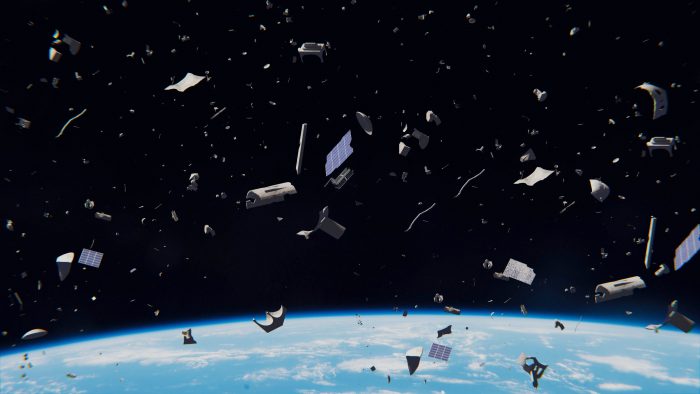
https://interconnectedrisks.org/tipping-points/space-debris 25 Oct 23
Thousands of satellites orbit the Earth, gathering and distributing vital information for weather monitoring, disaster early warning systems and communications. Recent technological advancements have made it easier and more affordable for countries, companies and even individuals to put satellites into space. Satellites make our lives safer, more convenient and connected, and represent critical infrastructure that is now essential for a functioning society. However, as the number of satellites increases, so does the problem of space debris, which poses a threat to both functioning satellites and the future of our orbit.
Space debris consists of various objects, from minuscule flecks of paint to massive chunks of metal. Out of 34,260 objects tracked in orbit, only around 25 per cent are working satellites while the rest are junk, such as broken satellites or discarded rocket stages. Additionally, there are likely around 130 million pieces of debris too small to be tracked, measuring between 1 mm and 1 cm. Given that these objects travel over 25,000 kilometres per hour, even the smallest debris can cause significant damage. Each piece of debris becomes an obstacle in the orbital “highway”, making it increasingly difficult for functional satellites to avoid collisions.
Key Numbers
8,300 functioning satellites in orbit
34,260 tracked objects in orbit
25,000 kilometres per hour travel speed
The danger is more than just theoretical. In 2009, a collision between a defunct satellite and an active communications satellite created thousands of debris pieces that still orbit Earth today. This debris can impact other objects, such as the International Space Station, which conducts manoeuvres around once per year to avoid such debris. Satellites can be warned of impending collisions; in fact, the European Sentinel-2 satellite registered more than 8,000 alerts between 2015 and 2017. Collision avoidance even between active satellites can also be difficult since agencies often need to communicate and quickly come to agreements. For example, in 2019, a European Space Agency satellite had to perform an emergency manoeuvre to avoid colliding with a communications satellite after an agreement with the operator could not be reached.
More than 100,000 new spacecraft could be launched into orbit by 2030, compared to the approximately 8,000 we have now. As more satellites are launched, the orbit becomes more crowded, increasing the risk of collisions. Each collision creates millions more pieces of debris, which can then collide with other debris or satellites, creating even more shrapnel. Eventually, this will reach a point where one crash sets off a chain reaction, causing our orbit to become so dense with shrapnel that it becomes unusable. The existing space infrastructure would eventually be destroyed and future activities in space could become impossible.
Space is the final frontier, and with countries and companies racing to stake their claim, we must consider what kind of future we want to create. If we continue on the current trajectory, we risk sacrificing Earth’s orbits and the opportunities they offer to society now and in the future. Importantly, we must regulate space launches more strictly and ensure that satellites and other spacecraft are disposed of responsibly, while also investing in technologies for tracking and removing orbital debris. By coming together as a global community to treat Earth’s orbits as a precious common good, we can safeguard our future in space before it is too late. #nuclear #antinuclear #nuclearfree #NoNukes
Nuclear companies sign up for space technology missions
WNN, 20 October 2023
With nuclear technology set to underpin new developments in space travel, NASA has awarded Ultra Safe Nuclear Corporation a contract to manufacture and test fuel and develop the design of a nuclear thermal propulsion engine for near-term missions. Separately, Space Nuclear Power Corporation has partnered with Lockheed Martin Corporation and BWX Technologies for the US Space Force/Air Force’s JETSON nuclear electric propulsion demonstration project, while Framatome has announced the creation of a new brand, Framatome Space.
……………………………………………………………………..The JETSON – Joint Emergent Technology Supplying On-orbit Nuclear Power – nuclear electric propulsion demonstration project was launched in January when the US Air Force Research Laboratory (AFRL)/Space Vehicle Directorate issued solicitations to industry for high and low-power spacecraft concepts and designs using nuclear fission, rather than solar panels, for propulsion. On 3 October, the AFRL awarded Lockheed Martin, Westinghouse Government Services and Intuitive Machines LLC separate contracts totalling over USD53 million to develop the technologies and spacecraft concepts.
………………………………………………………………………………The JETSON – Joint Emergent Technology Supplying On-orbit Nuclear Power – nuclear electric propulsion demonstration project was launched in January when the US Air Force Research Laboratory (AFRL)/Space Vehicle Directorate issued solicitations to industry for high and low-power spacecraft concepts and designs using nuclear fission, rather than solar panels, for propulsion. On 3 October, the AFRL awarded Lockheed Martin, Westinghouse Government Services and Intuitive Machines LLC separate contracts totalling over USD53 million to develop the technologies and spacecraft concepts.
………………………….Framatome joins space race

Framatome has announced the creation of Framatome Space, which it said is putting the French company’s 65 years of nuclear and industrial expertise at the service of the space industry. The company is already supporting the French Alternative Energies & Atomic Energy Commission (CEA) and Ariane Group with a feasibility study on an nuclear thermal propulsion engine and earlier this year announced plans with USNC to form a joint venture to manufacture TRISO particles on a commercial scale………………………………………………………… https://www.world-nuclear-news.org/Articles/Nuclear-companies-sign-up-for-space-technology-mis #nuclear #antinuclear #nuclearfree #NoNukes
Burned-up space junk pollutes Earth’s upper atmosphere, NASA planes find
Space.com, By Tereza Pultarova, 19 Oct 23
Chemicals created by fiery satellite re-entries could affect Earth’s climate.
Scientists have long thought that the burning up of space junk in Earth’s atmosphere creates air pollution that can affect the planet’s climate. Now, for the first time, they’ve managed to detect the presence of these pollutants in the air high above our planet.
A team of researchers flew high-altitude NASA aircraft over Alaska and the U.S. mainland to sample the chemical composition of the thin air in the stratosphere, the second-lowest layer of Earth’s atmosphere, which extends from about 6 miles to 30 miles (10 to 50 kilometers) above the planet’s surface.
The planes, NASA’s WB-57 and ER-2 aircraft, allowed the researchers to reach altitudes of up to 11.8 miles (19 km), which is about five miles (9 km) above the cruising altitude of commercial airliners.
Sensitive sensors in the nosecones of the planes analyzed the chemical compounds diluted in the thin, pristine stratospheric air, which is out of reach of Earth-based air pollution sources. The researchers found traces of lithium, aluminum, copper and lead in the sampled air. The detected concentrations of these compounds were much higher than what could be caused by natural sources, such as the evaporation of cosmic dust and meteorites upon their encounter with the atmosphere. In fact, the concentrations of these pollutants reflected the ratio of chemical compounds present in alloys used in satellite manufacturing, the researchers said in a statement.
“We are finding this human-made material in what we consider a pristine area of the atmosphere,” Dan Cziczo, a professor of Earth, atmospheric, and planetary sciences at Purdue University in Indiana and one of the authors of the study, said in the statement. “And if something is changing in the stratosphere — this stable region of the atmosphere — that deserves a closer look.”
In recent years, scientists have been sounding alarm bells about the possible effects of the rising number of rocket launches and satellite re-entries on the upper layers of Earth’s atmosphere. …………………………………………………………………………………………………………………………………………………
The study was published in the journal Proceedings of the National Academy of Sciences on Monday (Oct. 16). https://www.space.com/air-pollution-reentering-space-junk-detected #nuclear #antinuclear #nuclearfree #NoNukes
Star Wars? Learned professor speaks of threat to peace in space

https://www.nuclearpolicy.info/news/star-wars-learned-professor-speaks-of-threat-to-peace-in-space/ 6 Oct 23 #nuclear #antinuclear #nuclear-free #NoNukes
Space-based weapons and nuclear-powered space vehicles might seem the stuff of Science Fiction but many of the leading militaries in the world now have ‘Space Commands’, an armed service dedicated ‘dominance’ in the world of space. Representatives from the UK/Ireland Nuclear Free Local Authorities heard today about the threat to peace now being posed by the increasing militarisation of space.
Professor Emeritus Dave Webb was the guest speaker at the October meeting of the NFLA Steering Committee. Dave is the former Chair of the Campaign for Nuclear Disarmament and is now the Convenor of the Global Network Against Weapons and Nuclear Power in Space. Established in 1992, the network is an international body of academics and activists opposed to the militarisation and the use of nuclear power in space.
In 1999, the United Nations General Assembly declared that October 4-10 every year would be designated as ‘World Space Week’ to ‘celebrate the contributions of space science and technology to the betterment of the human condition’; in response the Global Network designates 7-14 October as ‘Keep Space for Peace Week’.
Despite being signatories to the Outer Space Treaty of 1967 which prohibits nuclear weapons in space; limits the use of the Moon and all other celestial bodies to peaceful purposes; establishes that space shall be freely explored and used by all nations; and precludes any country from claiming sovereignty over outer space or any celestial body, many of the world’s leading powers have established new military commands to establish a presence in space.
With communications, navigation, command-and-control, surveillance, espionage, and the detection of threats being reliant on signals beamed from space, each of the world’s major powers wants to be able to ensure that its satellites remain safe from electronic interference, sabotage, or destruction, whilst over time being able to develop the capability to destroy those of their adversaries in time of war.
As militarisation continues, tensions between the powers engaged in this space race will increase and so war will become more likely. This year’s theme for ‘Keep Space for Peace Week’ reflects one such source of tension – the increasingly crowded skies above our Earth.
Professor Webb explains: “This year we are highlighting the danger posed to peace by our crowded Low Earth Orbit.
“In 1985 – 1988, there were about 5,000 – 6,000 objects in orbit, there are now about 27,000 and this figure is increasing rapidly. Elon Musk’s Space X has launched about 12,000 satellites and various other companies are now planning 71,000 more.
“The United States being especially aggressive in working to secure as many of the remaining slots as possible, seeking to freeze out its rivals generating resentment. The Global Network is currently engaged in legal action in the US to pressure the Federal Communications Commission to follow the law and conduct environmental impacts assessments before approving any further launches,
6th October 2023
Star Wars? Learned professor speaks of threat to peace in space
Space-based weapons and nuclear-powered space vehicles might seem the stuff of Science Fiction but many of the leading militaries in the world now have ‘Space Commands’, an armed service dedicated ‘dominance’ in the world of space. Representatives from the UK/Ireland Nuclear Free Local Authorities heard today about the threat to peace now being posed by the increasing militarisation of space.
Professor Emeritus Dave Webb was the guest speaker at the October meeting of the NFLA Steering Committee. Dave is the former Chair of the Campaign for Nuclear Disarmament and is now the Convenor of the Global Network Against Weapons and Nuclear Power in Space. Established in 1992, the network is an international body of academics and activists opposed to the militarisation and the use of nuclear power in space.
In 1999, the United Nations General Assembly declared that October 4-10 every year would be designated as ‘World Space Week’ to ‘celebrate the contributions of space science and technology to the betterment of the human condition’; in response the Global Network designates 7-14 October as ‘Keep Space for Peace Week’.
Despite being signatories to the Outer Space Treaty of 1967 which prohibits nuclear weapons in space; limits the use of the Moon and all other celestial bodies to peaceful purposes; establishes that space shall be freely explored and used by all nations; and precludes any country from claiming sovereignty over outer space or any celestial body, many of the world’s leading powers have established new military commands to establish a presence in space.
With communications, navigation, command-and-control, surveillance, espionage, and the detection of threats being reliant on signals beamed from space, each of the world’s major powers wants to be able to ensure that its satellites remain safe from electronic interference, sabotage, or destruction, whilst over time being able to develop the capability to destroy those of their adversaries in time of war.
As militarisation continues, tensions between the powers engaged in this space race will increase and so war will become more likely. This year’s theme for ‘Keep Space for Peace Week’ reflects one such source of tension – the increasingly crowded skies above our Earth.
Professor Webb explains: “This year we are highlighting the danger posed to peace by our crowded Low Earth Orbit.
“In 1985 – 1988, there were about 5,000 – 6,000 objects in orbit, there are now about 27,000 and this figure is increasing rapidly. Elon Musk’s Space X has launched about 12,000 satellites and various other companies are now planning 71,000 more.
“The United States being especially aggressive in working to secure as many of the remaining slots as possible, seeking to freeze out its rivals generating resentment. The Global Network is currently engaged in legal action in the US to pressure the Federal Communications Commission to follow the law and conduct environmental impacts assessments before approving any further launches,
“NASA scientists have warned that growing space debris could lead to likely-cascading collisions in orbit, however accidental. This ‘Kessler Syndrome’ could lead to military tensions as collisions would often involve space vehicles of competing nations, and retaliation and further escalation might result.”
In readiness for possible future warfighting in space, the UK Government has also established a Space Command as the fourth branch of the armed forces, with a mission to ‘protect and defend UK and allied interests in, from, and to space’.
UK government funding is also backing research at the Universities of Bangor and Southampton to develop nuclear propulsion systems for the next generation of rockets and Rolls Royce has received a grant to develop a nuclear power plant for deployment at a future crewed moon-base. In addition, seven space ports are in development in the UK, five in Scotland, one in Snowdonia, and one at Newquay.
The NFLAs have real worries about the use of the space ports for military purposes and the deployment of nuclear power in space.
NFLA Steering Committee Chair, Councillor Lawrence O’Neill explained: “With new space ports, UK Space Command will be looking to deploy more military spy satellites to further its mission, but over time a new generation of military space vehicles may be developed with the capacity to carry conventional or non-conventional weapons. Although this might seem fanciful, this pattern has been followed with drones.
“At first these unmanned aerial vehicles were used for surveillance, but they have since been developed into formidable weapons platforms bristling with missiles, with strikes guided by anonymous remote operators located thousands of miles from the battlefield; coupled with AI, they would be more formidable still as a robot never tires nor has second thoughts. Who is to say that space vehicles will not be developed in a same pattern, if left unchecked?”
The NFLAs are also concerned that a British manned moon base might be usurped for military, rather than altruistic scientific, purposes, and that any use of nuclear power there will lead to the contamination of space and the lunar surface, and pose a real of radioactive contamination if an explosion took place on Earth.
Cllr O’Neill concluded: “Any failed launch or re-entry of a nuclear-powered space vehicle could, if an explosion occurred, lead to the dispersal of radioactive contamination into our atmosphere. This fear was one of the reasons cited by the advisory body CORWM, the Committee on Radioactive Waste Management, for not recommending to government any plan to blast radioactive waste into space.
“These are the many reasons why it is so important that we Keep Space for Peace.”
Elon Musk’s satellites litter the heavens as astonishing video shows how 5,000 Starlink aircraft are whizzing around the Earth and will soon outnumber the stars.
- Elon Musk’s 5,000 Starlink satellites are on track to surpass the number of visible stars in the sky, around 9,000
- A fascinating video showed the staggering number floating around in space
- Scientists fear for the future of astronomy as Musk’s space junk litters our sky

Unbalanced science. All about technology. But what about nature? What about light pollution? What about the moths, and all the other creatures that depend on the night darkness?
By MARTHA WILLIAMS FOR DAILYMAIL.COM 30 September 2023
Elon Musk‘s satellites are littering the heavens and an astonishing video has revealed how 5,000 of his Starlink aircraft are whizzing around the Earth.
Staggering footage posted by X user @flightclubio on September 18 shows thousands of little orange dots, representing the satellites, orbiting the planet and illustrating the vast scale of his investment.
But though Starlink has been hailed for providing internet in war-torn Ukraine, astronomers fear that the devices may soon obstruct our view of the cosmos – with around 9,000 stars visible from our planet.
New research showed that low-frequency radio waves – like the ones produced by Musk’s machines – are leaking into the sky which makes it difficult for scientists to make astronomical observations.
Scientists are also concerned that Musk’s ‘space junk’ could cause an extreme collision event. The ‘Kessler syndrome’ – proposed by NASA scientist Donald Kessler in 1978 – said that if there is too much space junk in the earth’s orbit then the objects could collide and make MORE space junk. This would result in Earth’s orbit becoming unstable.
SpaceX launched Starlink satellites in May 2019 and have already sent over 5,000 of the mass-produced objects into space.
The company announced reaching over 2 million subscribers in September 2023 and plan to deploy 12,000 satellites – a goal which could be raised to 42,000.
The SpaceX Starlink is a low orbit satellite that provides internet with unlimited data and quick broadband speeds.
The satellites offer fixed-location or portable internet options to users for a hefty price.
Internet provider T-mobile provide broadband for $50 monthly with no installation fee – while Starlink charges up to $2,500 for installation and can cost users up to $250 a month.
Viewers expressed their fear in the comments of the astonishing video that was uploaded to Musk’s social media website X (formerly known as Twitter).
One user said: ‘The size and scale of the Starlink project concerns astronomers, who fear that the bright, orbiting objects will interfere with observations of the universe, as well as spaceflight safety experts who now see Starlink as the number one source of collision hazard in Earth’s orbit.’
Researchers at Max Planck Institute used a telescope in the Netherlands to observe 68 devices made by Starlink, finding 47 were emitting ‘unintended electromagnetic radiation’ emanating from onboard electronics.
The team feared that the amount of emissions could be enough to be mistaken as radio waves from celestial objects.
The SpaceX CEO filed paperwork with the International Telecommunications Union for the operation of 30,000 more small devices in October 2019.
In its filings, SpaceX said the additional 30,000 satellites would operate in low Earth orbit at altitudes ranging from 1,076 feet to 1,922 feet. …………….. https://www.dailymail.co.uk/news/article-12575221/Elon-Musks-starlink-satellites-spacex-soon-outnumber-stars.html
Star-crossed States: No result from the UN Working Group on Reducing Space Threats
The long-standing goal of preventing an arms race in outer space could be slipping away
OPEN CANADA, BY: PAUL MEYER / 24 SEPTEMBER, 2023
It has become a challenge these days to keep up with the exponential growth in the number of satellites orbiting this planet. Current estimates of active satellites are upwards of 6000 with tens of thousands more launches planned by the end of the decade. The private sector is driving this growth with Elon Musk’s Starlink telecommunication constellation constituting almost half of the satellites operating in low earth orbit (the closest and most congested orbital slot).
The world is increasingly dependent on satellites to provide a vast spectrum of services essential for global security and well-being, and it is all the more regrettable therefore that this surge of activity in outer space is coinciding with what appears to be a nadir in the level of cooperation amongst leading space powers. Although objectively it would be in the interests of all spacefaring states, and the entire international community reliant on space-enabled services, to cooperate to ensure the continued safe and secure utilisation of outer space, the current situation is fraught with tension and mistrust. For over 40 years the UN has sought to prevent an arms race in outer space, but besides the repeated declarations that this remains a common goal there is little evidence of meaningful efforts to ensure it.
It was back in 1981 that the “Prevention of an Arms Race in Outer Space” (aka PAROS) item was added to the agenda of the UN General Assembly and the negotiating forum of the Conference on Disarmament in Geneva. While member states agreed to put this topic on the UN’s agenda, ever since they have held contending views as to how best to make progress on outer space security. The 1967 Outer Space Treaty (with 112 states parties) provided some common ground in calling for the peaceful uses of outer space and prohibiting the stationing in orbit of weapons of mass destruction, but was silent on other types of weaponry. Although the treaty required its parties to exercise “due regard” for the space operations of other states and to avoid “harmful interference” with such operations these terms have lacked a common understanding as to their import.
The Cold War era development of space weapons including anti-satellite weapons (ASATs) demonstrated that the legal regime established by the Outer Space Treaty was insufficient to ensure that the peace was kept in outer space and almost all states agreed that “further measures” would be required to strengthen it. This broad consensus that the Outer Space Treaty needed to be reinforced with complementary agreements however, quickly broke down over the specific content and form such additional measures should take.
One camp led by China and Russia, although including many other states such as Brazil, India, Mexico and Indonesia, favours legally binding agreements to supplement the Outer Space Treaty. They argue that only legal agreements will have the authority and staying power to ensure compliance with their provisions. Political measures at best might supplement a legally binding instrument, but could never substitute for one.
The other camp led by the United States, supported by many of its allies, argue that at this stage it is best to develop politically binding measures, such as so-called Transparency and Confidence Building Measures .
dherents of this approach argue that the negotiation of a legally binding agreement would take too long and would flounder over issues of definition and verification. In their view, settling on a set of practical measures would be a quicker and more effective means of agreeing “rules of the road” for state-conducted space operations.
This argument over the best diplomatic path to take to prevent armed conflict in space has gone on for decades without a resolution. As a result, in recent years the relations among leading space powers have deteriorated significantly with mutual accusations of “weaponizing” outer space and the development of “counter-space capabilities” in the arsenals of states. ……………………………………………………………… more https://opencanada.org/star-crossed-states-no-result-from-the-un-working-group-on-reducing-space-threats/
Pentagon’s new plan to counter China includes swarms of smart satellites

Deputy Secretary Kathleen Hicks: DoD wants to “leverage platforms that are small, smart, cheap, and many”
Space News, Sandra Erwin, September 6, 2023
ARLINGTON, Va. — Under a new strategy to counter China’s military buildup, the Pentagon is advocating the use of low-cost autonomous platforms that can be mass produced and deployed at sea, on land, in the air and in space.
“This is about driving culture change just as much as technology change — so we can gain military advantage faster,” Deputy Defense Secretary Kathleen Hicks, said Sept. 6 at the DefenseNews annual conference.
Hicks discussed DoD’s plan to field thousands of autonomous systems across all domains within the next 18 to 24 months. China’s advantage is “mass,” said Hicks. DoD will continue to invest in its traditional platforms but will counter with “mass of our own,” or large numbers of autonomous systems.
DoD would field fleets of tiny drones and swarms of satellites that would be inexpensive to replace.
“Imagine constellations of autonomous, attritable systems on orbit, flung into space scores at a time, numbering so many that it becomes impossible to eliminate or degrade them all,” she said.
The strategy is to “leverage platforms that are small, smart, cheap, and many,” Hicks said. …………………………………………………….
The U.S. military’s Space Development Agency is building a government-owned proliferated constellation. DoD is also a major customer of Starlink, SpaceX’s massive internet in space. ……………….. https://spacenews.com/pentagons-new-plan-to-counter-china-includes-swarms-of-smart-satellites/?utm_medium=email
Space agency NASA and bro billionaires conspire to trash the moon

Two days before the Lockheed Martin news broke, NASA had announced a literally lunatic plan to trash the Moon with nuclear waste. It’s as if our species has learned nothing at all after ruining our own planet to the point of extinction as a livable organism.
We are arming the heavens
NASA joins the lunatic fringe, By Linda Pentz Gunter, https://beyondnuclearinternational.org/2023/08/27/nasa-joins-the-lunatic-fringe/
Russia just crash-landed on the moon. India’s lunar rover is trundling across its surface. Are their intentions purely benign? Just about science? Or something more?
There are no such doubts lingering over US lunar plans, however. The mistakes made on Planet Earth will now be repeated on the moon.

In his fascinating and frightening 2012 book — A Short History of Nuclear Folly — that I somehow maddeningly missed on publication, Rudolph Herzog writes:
“There are places where radioactive substances have no business being. One of them is space.”
Herzog, son of the famous film director Werner, and whose book, written in German, was translated into English in 2013, details a whole panoply of terrifying nuclear accidents and near-misses, including disasters that could have befallen us in and from space.
But no lessons have been learned and no such warnings heeded.
Consequently, we now learn that NASA and the US Defense Department have awarded nuclear weapons company, Lockheed Martin, a contract to build a nuclear powered rocket to speed humans on their way to Mars.
“Higher thrust propulsion” is what Lockheed Martin is seeking to develop, but is travel speed to Mars really the only motivation? Of course not. The Pentagon admits it is also keen to develop nuclear reactor technology that will power satellites with more “fuel-efficient fuel sources” so that they can maneuver in space in such a way as to “make them more difficult for adversaries to target” reported the Washington Post.
As Herzog recounts in his book, we have been here before, and the outcome could have been catastrophic. In his chapter, Flying Reactors, he recounts how in the 1960s, the then Soviet Union developed miniature nuclear reactors to power their RORSAT military surveillance satellites. At the end of their life they were simply blasted into deeper space where their radioactive load would decay far from human exposure risk. Or, at least, that is what was supposed to happen.
Needless to say, eventually one of the Soviet reactor-powered satellites failed to follow orders and instead began plummeting toward Earth. The Soviets warned the US it could crash in North America on January 24, 1978.
Panicked headlines ensued as the media began to speculate on worst case scenario crash landing locations. As Herzog relates, “Time magazine calculated that if the satellite had orbited the Earth one more time it could have crashed in New York City in rush hour.”
Instead, luck prevailed, although not for northwestern Canada where it eventually reached Earth in the middle of the Arctic winter, prompting a challenging and month-long search party to find it and clean up the “mess”.
Despite this, the Soviets continued right on and lost several more of these Cosmos satellites, although none, apparently, crashed on land.
Two days before the Lockheed Martin news broke, NASA had announced a literally lunatic plan to trash the Moon with nuclear waste. It’s as if our species has learned nothing at all after ruining our own planet to the point of extinction as a livable organism.
A total of $150 million in contracts are to be awarded by NASA to “build landing pads, roads and habitats on the lunar surface, use nuclear power for energy, and even lay a high-voltage power line,” reported the Washington Post.
Yes, the USA is going to pave the moon and put up a parking lot.
The endgame is to allow human beings to live on the moon for extended periods of time. And to contaminate it with nuclear waste while they’re about it. And to dig it up and pave it over and, most absurdly, to “Iive off the land” as one NASA administrator put it.
That means implementing an extractive industry to mine the moon for construction materials such as metals, as well as to find water. And, presumably, to dispose of all the waste on other parts of the moon not targeted for human living spaces.

A major recipient of NASA’s lunatic largesse was, needless to say, one of the bro billionaires who are already heavily invested in the futile and expensive space odyssey that will eventually allow human habitation on the moon and Mars (presumably for a handful of other bro billionaires and their cronies.) So Amazon and Washington Post owner, Jeff Bezos, is first in line for a $43.7 million handout to support these goals.
Solar arrays for the moon are also in the offing, but this does little to nullify the awful prospect of the moon turning into Thneed-Ville (see Dr. Seuss’s seminal book on industrial destruction, The Lorax).
As these latest NASA announcements reveal, without actually spelling it out, the agenda here goes well beyond the thrill of human space exploration. We are arming the heavens and that, as Herzog points out, can only go badly.

The madness of nuclear power and nuclear weapons in space has been well documented in War in Heaven: The Arms Race in Outer Space by Helen Caldicott and Craig Eisendrath and The Wrong Stuff: The Space Program’s Nuclear Threat to Our Planet, by Karl Grossman.We also examine the more sinister agenda behind all this in the Beyond Nuclear Handbook — The U.S. Space Force and the dangers of nuclear power and nuclear war in space.
But there is also another question: What gives the United States the right to decide, unilaterally, that it will colonize the moon and Mars? When did the US annex these celestial territories? Human beings have for centuries waxed lyrical and poetic about the moon as it shines down on us with its magical and ethereal glow. But do any of us own it? Surely it belongs in the commons and we, as a collective species, should decide whether or not it can be plundered and desecrated by one country alone, or, preferably, not at all?
Ironically, after all the sci-fi fantasies about evil Martians invading Planet Earth, it turns out that it is we humans who are about to invade Mars and the moon, bringing our heedless and destructive ways with us. And all this, while we leave a spectacularly beautiful planet behind us to decay and degenerate as a result of our selfish greed.
Ukraine Providing an Important Testing Ground For Space-Based Weapons

Covert Action Magazine, By Jeremy Kuzmarov, August 23, 2023
Weapons Straight Out of a Science Fiction Novel Have Not Been Able to Turn the Tide on the Battlefield
In his 1988 book War Stars: The Superweapon in the American Imagination, H. Bruce Franklin traces a deep-rooted cultural belief in the magic of futuristic weapon systems that would enable the U.S. to defeat any foreign adversary.
Franklin dates the infatuation to the era of the revolutionary war with the development of the combat submarine by Robert H. Fulton to pulverize the British Navy.
He in turn shows a direct line through World War I and World War II and the development of air power and the atomic bomb, through the Vietnam War where sophisticated U.S. war machines could not defeat the guerrilla warfare tactics of the Vietcong.
Franklin could easily include a new chapter on Ukraine, whose summer counteroffensive has fizzled despite the country’s function as a testing ground for new American weapon systems.
These include space-based satellites and sensors that have been used by the Ukrainians to track Russian troop movements and assist in navigation, mapping and electronic warfare, and positioning systems that guide precision weapons and drones.
A webinar in mid-July hosted by the War Industry Resistance Network placed the U.S. strategy in Ukraine in the context of a broader attempt by the U.S. to militarize space and use it to destroy its leading geopolitical rivals—Russia and China.
The first speaker, Dave Webb, a retired engineering and peace studies professor from England, emphasized that the 1991 Operation Desert Storm set the groundwork for Ukraine as the first space war in which the U.S. showed off new satellite and precision guided missiles that wound up devastating Iraq.
In 1997, the U.S. Space Command outlined its goal of obtaining full-spectrum military dominance over land, sea, air and space by the year 2020—which achieved partial fulfillment with the Trump administration’s creation in 2019 of a new Space Force as a branch of the U.S. military.
By 2024, the budget of the Space Force reached $30.3 billion, a 15% increase over 2023 and a doubling of the budget from 2020.
Congress has in a not so veiled way tried to legitimate these budget increases by holding hearings raising alarm about the threat of Unidentified Flying Objects (UFO’s).
One in late July featured a former intelligence officer, David Grusch, who claimed that he faced retaliation at the Pentagon for his confidential disclosure that “non-human beings” had been retrieved from spacecraft.[1]
On August 11, the 75th Intelligence, Surveillance and Reconnaissance Squadron (ISRS) was activated at Peterson Space Force Base in Colorado. It has been tasked with identifying and destroying or disrupting adversary satellites and ground-based lasers aimed at preventing the U.S. from using its own satellites during a conflict.
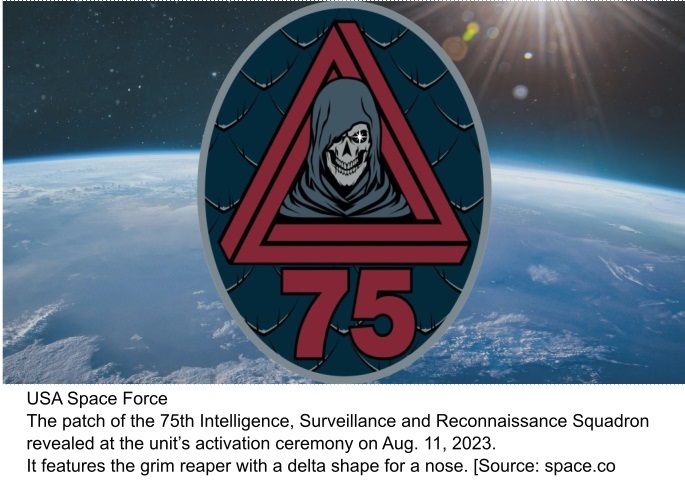
Space.com reported that the U.S. Space Force has conducted multiple training exercises to practice “live fire” satellite jamming [of Russian and Chinese space based satellites] and “simulated on-orbit combat training” as part of a growing commitment to space-based war.
The Space Force’s operations have been made possible by a $1.5 billion space surveillance radar center built by Lockheed Martin in an atoll in the Marshall Islands, which became operational in March 2020. The center now tracks more than 26,000 objects in space, some the size of a marble.
Additional surveillance centers have recently been built in Texas, Australia and Great Britain while Boeing is building a secret military space plane, the X-37B, which can carry out orbital space flight missions.
Webb ended his talk by noting that the spirit of a 1967 Outer Space Treaty that was designed to prevent the militarization of Outer Space is not being followed.
Space exploration is giving way to space exploitation and growing competition with Russia, which has developed its own space-based weapon systems in response to what the U.S. is doing.
The second speaker at the webinar, Bruce Gagnon, coordinator of the Global Network Against Weapons & Nuclear Power in Space, pointed out that, for the last quarter century, Russia has presented its demand for a new cooperative space treaty before the United Nations but has been blocked by the U.S., Israel and a few of their allies.
The Russians have stated unequivocally, as have the Chinese, that they do not want to devote their countries’ resources to a destructive and fruitless arms race in space, though the U.S. believes it can be master in space and has been taken over totally by the military-industrial complex.
When the creation of the new Space Force came up for a vote in 2019, the Democratic-controlled House of Representatives supported it, though it had wanted to call it Space Corps.
………………………………………….Gagnon’s concern about the militarization of Outer Space began when he read a book by Linda Hunt called Secret Agenda, which detailed the CIA’s recruitment of Nazi scientists under Operation Paperclip who helped found the U.S. space program.
Chief among them was Wernher von Braun, who had helped develop the V-2 rocket in Germany using slave labor.
Gagnon said he finds it chilling that the U.S. Space Force carries out yearly war-game exercises where they simulate fighting using space-based weapons right out of science fiction novels. Among these is the “Rod from God,” a weapon in which tungsten steel rods are fired from orbiting satellites, smacking the Earth from the sky as if sent by God.
Right now, Gagnon says, we are living through a Cuban Missile Crisis in reverse as the U.S. has pointed nuclear weapons directly at Russia from a U.S. military base in Deveselu, Romania, and another in Redzikowo, Poland off the Baltic Sea.
The U.S. goal is to break up Russia as it did Yugoslavia in the 1990s because Russia is the world’s largest resource base and threatens the ability of the U.S. to extract resources from the Arctic unencumbered.
Along with World War III, the current U.S. space strategy is threatening to unleash a major environmental catastrophe as space-based satellites and weapons are leaving debris that cannot be cleaned up.
According to Gagnon, exhaust from escalating numbers of rocket launches is diminishing the ozone layer, and the growing space debris could even cause the Earth to go dark as collisions become more likely………………….. more https://covertactionmagazine.com/2023/08/23/ukraine-providing-an-important-testing-ground-for-space-based-weapons/
1 This Month
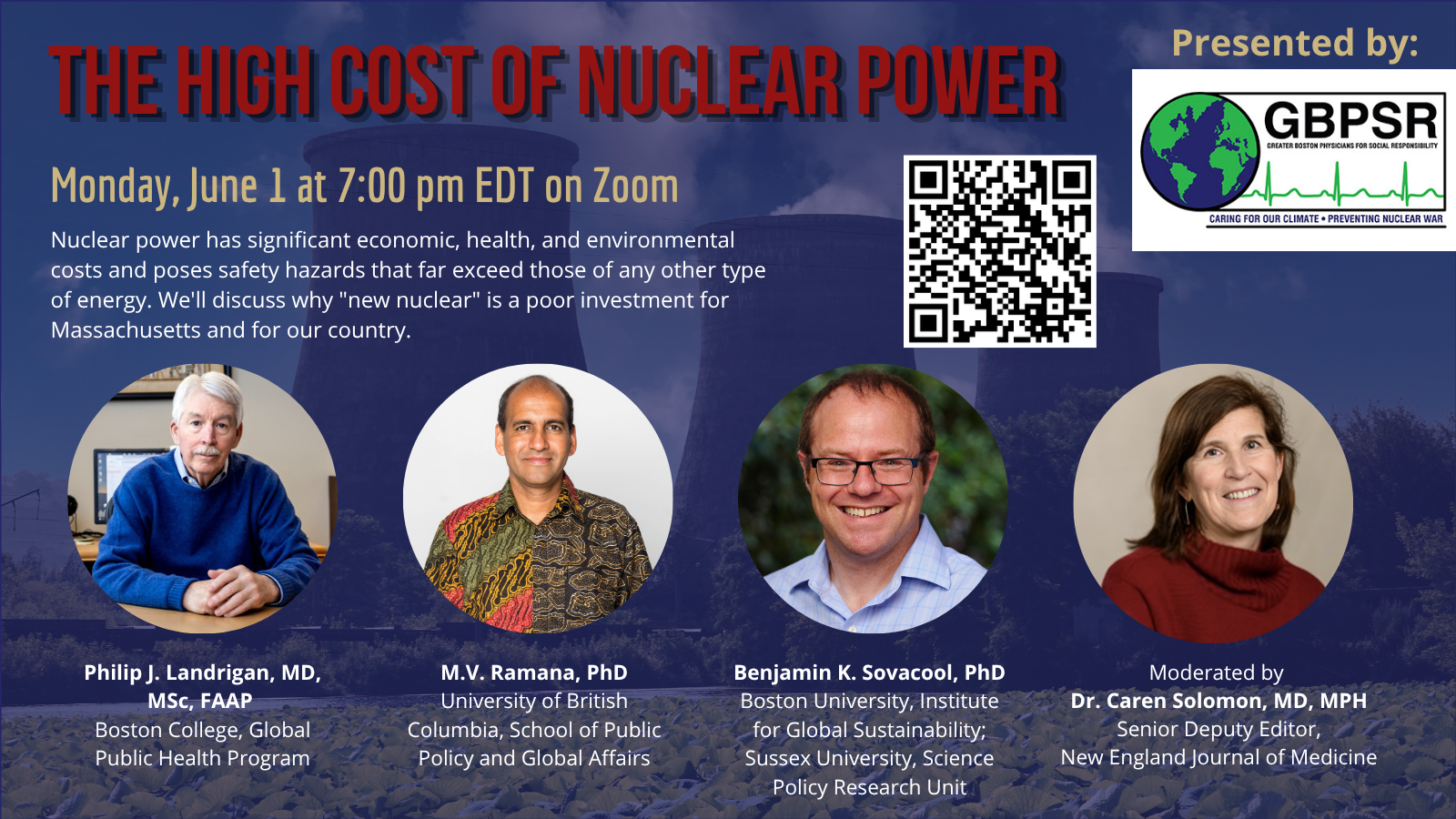
1 June Webinar – The High Cost of Nuclear Power – Register
6 June – WEBINAR- Get Inspired by Protests Against Military Bases!


Cuba Is Not a Failed State – It Is a Besieged State
PETITION: “Global Appeal to Endorse Palestinian Right of Return of Refugees”



of the week– Nuclear Reactor Information Task Force
To see nuclear-related stories in greater depth and intensity – go to https://nuclearinformation.wordpress.com
-
Archives
- June 2026 (27)
- May 2026 (306)
- April 2026 (356)
- March 2026 (251)
- February 2026 (268)
- January 2026 (308)
- December 2025 (358)
- November 2025 (359)
- October 2025 (376)
- September 2025 (257)
- August 2025 (319)
- July 2025 (230)
-
Categories
- 1
- 1 NUCLEAR ISSUES
- business and costs
- climate change
- culture and arts
- ENERGY
- environment
- health
- history
- indigenous issues
- Legal
- marketing of nuclear
- media
- opposition to nuclear
- PERSONAL STORIES
- politics
- politics international
- Religion and ethics
- safety
- secrets,lies and civil liberties
- spinbuster
- technology
- Uranium
- wastes
- weapons and war
- Women
- 2 WORLD
- ACTION
- AFRICA
- Atrocities
- AUSTRALIA
- Christina's notes
- Christina's themes
- culture and arts
- Events
- Fuk 2022
- Fuk 2023
- Fukushima 2017
- Fukushima 2018
- fukushima 2019
- Fukushima 2020
- Fukushima 2021
- general
- global warming
- Humour (God we need it)
- Nuclear
- RARE EARTHS
- Reference
- resources – print
- Resources -audiovicual
- Weekly Newsletter
- World
- World Nuclear
- YouTube
-
RSS
Entries RSS
Comments RSS
 nuclear-news