Two more Czech sites lined up for Rolls-Royce SMRs
The Czech Ministry of Industry and Trade, ČEZ and Rolls-Royce SMR have
signed a memorandum of understanding to start preparatory activities for
small modular reactor projects at two more locations. There is already a
project being worked on by ČEZ and Rolls-Royce SMR for the UK-based
company’s 470 MWe small modular reactors (SMRs) at the existing nuclear
power plant site of Temelín, in the South Bohemian region. The
newly-signed agreement means work can take place for the next proposed SMR
projects at the Tušimice site in the Ústí nad Labem region and
Dětmarovice site in the Moravian-Silesian region.
World Nuclear News 21st July 2026, https://www.world-nuclear-news.org/articles/two-more-czech-sites-lined-up-for-rolls-royce-smrs
First SMR deal in Argentina is ‘nuclear investment landmark’
The plan would mark the largest investment in Argentina’s nuclear sector and add a
privately financed Gen III+ SMR to a site already home to Atucha I, Atucha
II, and the ongoing Atucha I life-extension programme.
Modern Power Systems 21st July 2026, https://www.modernpowersystems.com/news/first-smr-deal-in-argentina-is-nuclear-investment-landmark/
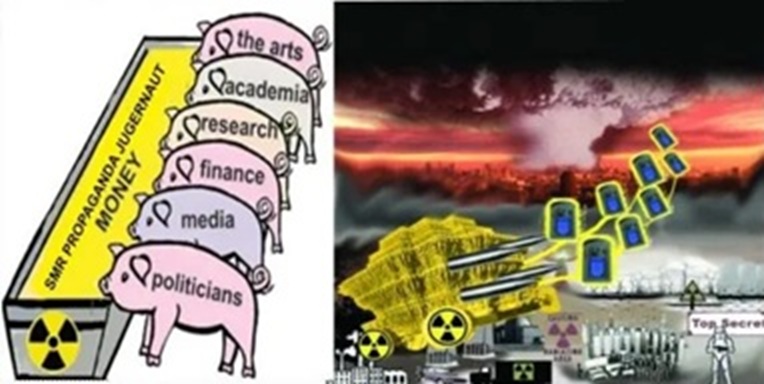
Crunch time for the nuclear lobby’s biggest lie (Small Modular Nuclear Reactors)?
22 July 2026, https://theaimn.net/crunch-time-for-the-nuclear-lobbys-biggest-lie-small-modular-nuclear-reactors/
There could be a big drama now, about Small Modular Nuclear Reactors sort of not really going to happen in the UK. But I don’t think so. The nuclear lobby is adept at twisting a negative outlook into a sorta positive one. And I’m sorry to say, but I think that Andy Burnham might just co-operate in this process.
At the moment, the UK, and the world, are waiting for the UK’s new progressive poster boy, Andy Burnham, to declare his policies on all sorts of things. His general theme is “left of centre”, socially progressive, with the emphasis on economic reform – “business-friendly socialism”. Most likely, Burnham’s approach to the big issues of climate and nuclear will be a cautious “business-as usual.” Those who are deeply concerned about climate and nuclear issues can hardly blame him. Unfortunately, the reality is that Burnham could never have got where he is now, if he bucked the prevailing system, with Labour now a kind of weaker Tory party.
At the moment, the UK, and the world, are waiting for the UK’s new progressive poster boy, Andy Burnham, to declare his policies on all sorts of things. His general theme is “left of centre”, socially progressive, with the emphasis on economic reform – “business-friendly socialism”. Most likely, Burnham’s approach to the big issues of climate and nuclear will be a cautious “business-as usual.” Those who are deeply concerned about climate and nuclear issues can hardly blame him. Unfortunately, the reality is that Burnham could never have got where he is now, if he bucked the prevailing system, with Labour now a kind of weaker Tory party.
What has this got to do with Small Modular Nuclear Reactors?
Well, as I have written before, the global nuclear lobby now depends on the UK to kick off the new nuclear renaissance, with a fleet of small nuclear reactors in the UK, as promised by the previous Prime Minister with his Great British Energy – Nuclear. The stated purpose is to provide the UK soon, with cheap, plentiful, clean, climate-friendly, proven technology, safe, community-welcomed, waste-free, peaceful electricity. In that statement there are already 10 lies. Of all those lies, I would say that “soon” is the biggest whopper of them all.
SOON
The most “exciting” SMR plan, that of Poland-based SGE (Synthos Green Energy), promises 14 SMRs in operation by 2034. That would provide about the same amount of electricity as one large nuclear reactor. However, SMRs that each provide 300 MW would provide very much more – but then they would have to be larger, and no longer qualify as “small”. Either way, that would be only a beginning – many, many more SMRs would be needed to meet the UK’s electricity needs. And, let’s not forget – the coming wave of data farms for artificial intelligence is going to probably double that need.
So, even in the most optimistic scenario, SMRs are not going to cut the mustard for showing the world that soon Small Modular Nuclear Reactors will power a nation. Of course the promise of “soon” also relates to the claim that SMRs are needed for action on climate change. Clearly, they are going to be irrelevant, too late for reducing greenhouse gas emissions, whereas we have renewable energy right now. And of course, but rarely mentioned – energy efficiency, energy conservation – the really effective way to reduce greenhouse emissions.
CHEAP
The next biggest whopper about Small Modular Nuclear Reactors is the statement that they would be cheap. Here we get into the minefield of deliberate obfuscation about the financial facts. The cost of building SMRs is likely to be astronomic, and the only practicable way is to build them en masse. That would mean that the company building them would need to have big orders, not just for one or two reactors. Big orders bring with them a heap of problems. Like an IKEA cupboard, these “modular” items are all the same – if you buy a whole lot of them they’d better all work out perfectly – no chance really to just try out one. Buyers are reluctant, and so are investors.
Of course, the argument will be that SMRs will provide cheap electricity. Well that absolutely would necessitate economies of scale. That was the reason that the idea of small reactors was abandoned in the past. Simply, a large reactor producing a huge amount of electricity has got to produce it more efficiently and cheaply. The proponents of SMRs never talk about the accompanying costs – insurance, the security staff required, the transport and disposal of toxic long-lasting wastes. The truth is, those proponents absolutely know that their product is in fact very expensive. And that is why the subservient corporate media consistently baffle us with convoluted arguments that minimise the cost to tax-payers. They know damn well that the only way that SMRs could possibly be developed is by government funding. Keir Starmer backed a Rolls Royce plan that would be blatantly funded by the tax-payer. The SGE plan purports to be privately funded, but it’s tangled up with various government-funded schemes.
These were 2 lies – but there are 8 more to go.
Plentiful? – well, apart from Russia and China’s 2 duds – SMR’s don’t actually exist – quite the reverse of plentiful.
Clean? They are still part of a dirty production system, starting from uranium mining, with its workers exposed to radiation, and its piles of radioactive tailings.
Climate-friendly? There is a whole chain of steps from mining through to waste disposal that involve fossil fuel energy.
Proven technology? Well, they don’t even exist.
Safe? SMRs can’t melt down in the same way as big reactors, but still contain radioactive material, a target for theft, terrorists or military attacks Can still have accidents releasing radiation.
Community-welcomed? This really is a big one, with a lack of proper consultation on plans – There’s strong resistance from some local groups, such as Radiation Free Lakeland.
Peaceful? The hidden military pressures behind the new push for small nuclear reactors.
Wastes? Stanford-led research finds small modular reactors will exacerbate challenges of highly radioactive nuclear waste.
Now that Starmer, with his big promises, has gone, it’s probably no longer up to the UK’s Prime Minister to lead the global charge on small nuclear reactors. Andy Burnham has to negotiate the whole troubled energy scene, try to be progressive, placate the fossil fuel lobbies, and the nuclear lobby. He has been very quiet on nuclear policy, but he is committed to the existing defence and AUKUS nuclear agreements. So for “peaceful” nuclear, he’s most likely to go for a compromise – SMRs, supporting just a few, rather than the much-touted “fleets” of them.
So, no doubt the USA will take up the torch – One Year After Executive Orders, U.S. Nuclear Energy Renaissance is in Full Swing.
The media is awash with the wonder of new nuclear reactors, in concert with the AI data farm boom. The few voices who call for restraint, and point out the problems, are drowned out by the cacophony of handouts from the companies promising SMRs, handouts faithfully regurgitated by the corporate media, and by those universities which have bought into the propaganda.
There are the many good, decent people, whose living depends on their work within the uranium-nuclear-defence industries. And communities that are caught up in the nuclear industry, and its associated government bonuses. And many professionals, especially journalists, who, if they paused to look at the whole picture, might see the folly and the danger and the lies, of this so much touted technology. And of course, politicians who would be out of a job if they opposed the sacred cows of new energy and nuclear defence. So the whole SMR juggernaut moves on, bit by bit, and has itself become one big lie.
Are Trump and AI driving a nuclear power boom?

July 20, 202 By Berly McCoy, Geoff Brumfiel, Regina G. Barber, Rebecca Ramirez, https://www.npr.org/2026/07/20/nx-s1-5884889/are-trump-and-ai-driving-a-nuclear-power-boom
A race started by President Trump is leading to the rapid construction of new, experimental nuclear reactors. If they work, they could power data centers for artificial intelligence. But critics worry that the breakneck pace is compromising safety and public trust. NPR correspondent Geoff Brumfiel talks about the potential risks and benefits, and whether this may lead to a new nuclear age.
Red, white and glowing blue: Trump’s push for new reactors reaches the finish line
June 29, 2026, Geoff Brumfiel, https://www.npr.org/2026/06/29/nx-s1-5847944/new-nuclear-reactors-america-250-safety-concerns
A little over a year ago, President Trump set an ambitious goal: He wanted to see American companies build at least three new experimental nuclear reactors by July 4, 2026, the 250th anniversary of the Declaration of Independence.
Shortly after Trump signed an executive order enshrining his goal, the Department of Energy launched its Reactor Pilot Program. The program is designed to help companies build and run test reactors quickly, in part by radically cutting back on the regulations required for such reactors.
That program has sparked a nuclear race, and with less than a week to go, two companies have already reached the goal of switching on their reactor (“going critical” in nuclear-speak).
On June 4, Antares Nuclear announced it had gone critical, and Valar Atomics said it went critical on June 18 and is now producing tens of kilowatts of heat from its new reactor core, which is operating out of a tentlike structure in the Utah desert.
Other companies are getting close to making the deadline, and all this happened in less than the span of a year.
“We haven’t done anything this fast, basically ever,” said Nick Touran, chief nuclear officer at Ocean Atomics, which seeks to put nuclear power onto civilian ships. His company isn’t part of this program, but he has been tracking it closely.
He says this pilot program could jump-start America’s nuclear industry.
“I’m just excited that we’re now actually building these little reactors and trying it out and we’re going to look at what the economic story is and find out if there’s a market,” he said. “It’s going to be so much better than sitting there talking about it like we did for the last 40 years.”
But for others, the speed sparks alarm. The race is “essentially an exercise in public relations,” said Edwin Lyman, director of nuclear power safety at the Union of Concerned Scientists. And, he added, the slashing of regulations undoes decades of safety lessons learned in the nuclear industry.
“This is taking us back to the 1950s, and that is not progress,” he said.
Building the core
A lot of the action is happening at the Department of Energy’s Idaho National Laboratory, where several of the companies have set up shop. One of them is Radiant, which hopes to build small reactors for everything from disaster relief to data centers. Rita Baranwal, the firm’s chief nuclear officer, said they are assembling their reactor inside a special secure building called the DOME.
“By July 4, we’re tracking to get the reactor into DOME and to initiate the testing,” she told NPR this month.
Initiating testing isn’t quite the same as going critical, and Baranwal said Radiant probably won’t be critical by the July 4 deadline. But she does expect that Radiant’s reactor will be running soon. “The only thing we will not be doing at [Idaho National Laboratory] this summer is generating electricity,” she said.
Radiant’s reactor looks radically different from the massive reactors that exist today. It’s far smaller, and its nuclear fuel takes a different form. In a modern power reactor, nuclear fuel is loaded into long tubes, but Radiant’s reactor uses little nuclear fuel balls filled with grains of uranium. “Do you remember gobstoppers?” Baranwal said
These nuclear gobstoppers can operate at higher temperatures and are more resistant to melting down. Radiant and several other companies plan on using this type of fuel along with other tech to build a bunch of smaller, more mobile reactors.
“We have broken ground on our factory to mass-produce reactors. We’re targeting around 50 per year,” she said. (Currently, 96 reactors are operating in the United States.).
Safety worries
To get the reactors built this quickly comes at a cost. This year, NPR reported that the Energy Department completely rewrote its safety and security standards to make it easier for companies to win regulatory approval. The department has said that the cut regulations were “unnecessary” and that safety hasn’t been compromised.
The department consulted with the companies but not with the public. It also exempted the new reactors from environmental reviews.
And that has some skeptics of the program worried.
“Yes, of course, if you bend all the rules, you can do things quickly,” said Lyman, referring to the Energy Department’s decision to rewrite its rules for the program.
The test reactors might be working, he said, “but that should not be confused with anything related to a nuclear power reactor that’s capable of producing electricity in a stable and safe way.”
Lyman said he worries that deregulation will erode standards for things like how much security is required or how much environmental monitoring should be done, at a time when these mass-produced little reactors could start popping up at locations all over the country.
BEC showcases nuclear powered A.I data centre, Pioneer Park (and Radiation Free Lakeland protestors were there)
RESIDENTS of West Cumbria were given the chance to shape a nuclear-powered
AI data centre, at a consultation event on Tuesday. Early ideas and
ambitions for Pioneer Park were showcased to the public at The Peddler in
Whitehaven on Tuesday July 14.
BEC is planning the community impact of the
development and overseeing the production of a master-plan. Appointed to
the project by Cumberland Council and the Nuclear Decommissioning Authority
(NDA), BEC says it is committed to ensuring Pioneer Park improves the lives
of West Cumbrians.
Pioneer Park will see a Small Modular Reactor (SMR)
developed at Moorside, neighbouring Sellafield, the immense amounts of
energy it will generate will be used to power an innovative A.I data
centre. Attendees of the event heard that excess energy produced by the
nuclear reactor could support Sellafield in its decommissioning mission and
even power homes to support those in fuel poverty.
The nuclear industry and
Cumberland Council is also considering whether the development could be
used to lower the cost of energy for communities and improve efficiency for
community facilities. Chief Executive Michael Pemberton told Newsquest
Cumbria that BEC is an enabler for the project.
Activists from Radiation
Free Lakeland protested the event, holding placards and flags about the
potential impact on the River Ehen as well as the ‘false advertising’ of
clean energy. Marianne Birkby told Newsquest Cumbria that Radiation Free
Lakeland were protesting the event “to show some resistance to the plan
that’s been called clean energy, which is a nuclear powered A.I data centre
between Sellafield, the River Ehen and Beckermet. BEC tasked Mott MacDonald
and WSP with the creation of Pioneer Park masterplan in March. Mr Pemberton
said that although the Government asked for the master-plan to be completed
in 18 months, he challenged its authors to have it ready in six.
Carlisle News & Star 16th July 2026
Holtec bets big on small nuclear reactors in its IPO filing
As it pivots from shutting down nuclear plants to building them, Holtec says small modular reactors can cut costs and speed construction. Now it has to prove it.
By Alexander C. Kaufman, 15 July 2026, https://www.canarymedia.com/articles/nuclear/holtec-ipo-small-modular-reactors
Nuclear giant Holtec International is betting big that its 300-megawatt small modular reactors are the future of atomic energy.
On Friday, the Florida-headquartered firm filed paperwork with the Securities and Exchange Commission in order to sell shares in the company on the Nasdaq.
Across hundreds of pages, the disclosure document outlines the 40-year-old Holtec’s plans to transform itself from the industry’s undertaker — manufacturing canisters to safely store radioactive spent fuel and decommissioning shuttered nuclear plants — to its midwife, producing and operating new electrical stations. This transition comes as nuclear energy regains popularity in the U.S. as a way to meet booming power demand without creating more planet-warming pollution.
Developers have traditionally offset nuclear’s high up-front costs by building ever-larger reactors to capture the economies of scale. Since the early 2000s, however, a number of companies have proposed building small modular reactors that can be constructed identically and in batches. SMRs could generate about a third of the electricity of conventional large-scale plants, but, proponents argue, would bring down costs through assembly-line repetition rather than physical scale.
That cost reduction has yet to be proven out in the real world with actual plants. But in its S-1 filing, Holtec said, “SMRs will offer scalable, cost-effective solutions for new capacity with enhanced safety features, reduced construction timelines and reduced land and transmission infrastructure needs as compared to traditional, larger-scale reactors.” It noted that a single-unit SMR plant would only need 15 acres of land and take a mere three years to build. By contrast, the big reactors on the grid today can take up hundreds of acres, and construction typically drags on for nearly a decade.
Holtec’s SMR-300, as the pressurized-water reactor is named, “is expected to receive regulatory approval for deployment in 2029” and reach its first deployment “in the early 2030s,” according to the filing.
The company said it expects SMRs to play “a meaningful role in the expansion of nuclear capacity,” noting that they can “complement large-scale nuclear generation through lower upfront costs” and more flexible planning around how much power is needed.
For example, smaller reactors may be better suited for converting some old coal-fired stations into nuclear plants. The DOE has been researching the idea for years, given that nuclear and coal are both thermal resources that operate with similar rates of frequency and therefore use similar equipment to generate electricity from steam — which in nuclear plants is made from the heat created by splitting atoms and in coal plants is made from heat created by burning the black rocks. Converting a 400-MW coal plant into a similar-size nuclear reactor makes more financial sense than using a bigger reactor, which could require costly transmission upgrades and more space
“We believe that our SMR-300 plant can become a favored nuclear generation source over large reactors because of certain advantages,” the company said in its filing.
The future of restarts
The company will also operate at least one conventional reactor, the 800-MW unit it’s currently restoring at its Palisades nuclear station, in western Michigan. That project — the nation’s first effort to return a permanently shuttered nuclear reactor to service — could be completed within months, though its contract to sell power to the local grid won’t kick in until next year.
Holtec hopes to combine its plant-restart strategy with its SMR vision. It’s planning to deploy two SMRs at the Palisades site; if that works out, the company has said it may build SMRs at New Jersey’s Oyster Creek nuclear plant, which it’s been in the process of decommissioning for eight years.
Holtec owns three other defunct nuclear plants — Massachusetts’ Pilgrim, Michigan’s Big Rock Point, and New York’s Indian Point — that it could also try to rebuild. The Trump administration has called for reconstructing Indian Point, but Albany remains opposed to the controversial proposal.
Local opposition isn’t Holtec’s biggest hurdle, however. That would be competition from the nuclear behemoths in Russia and China. Virtually every Western nuclear developer is facing an uphill battle to compete with the Kremlin’s state-owned Rosatom, by far the biggest international vendor of nuclear technology in the world, and China’s two state-owned nuclear companies, which are building more than three dozen reactors at home and are expected to enter the export game soon.
Still, among its domestic rivals, Holtec may be the best positioned to hold its own on a global playing field. It is an established company with profitable enterprises in a dozen countries across four continents, and has experience managing infrastructure so sensitive it’s overseen by a dedicated agency, the U.S. Nuclear Regulatory Commission. The company has facilities with electrical equipment on-site that can be potentially used to deploy SMRs. It also has won significant support from the federal government, both in the form of a $1.52 billion loan the Department of Energy provided to finance the Palisades restart and the $400 million the agency gave the company to support construction of its first SMR-300s.
“We began work in 2011 on a small modular reactor solution, and drawing on our in-house capability to design, license, manufacture, construct, and commission nuclear systems, honed through decades of turnkey supply, we are now uniquely positioned to launch the development of our small nuclear reactor,” Krishna Singh, Holtec’s founder and chief executive, said in a letter to prospective investors.
Insuring Small Modular Nuclear Reactors.
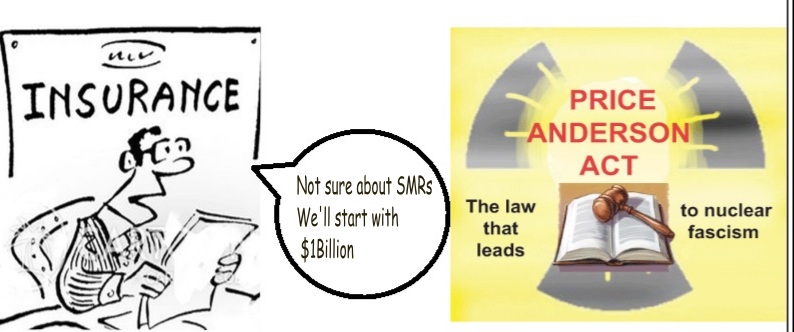
Deploying the next generation of nuclear technologies is likely to present a number of novel challenges, notably securing appropriate insurance coverage for both property and liability. Without early engagement developers could face significant obstacles to commercial roll-out.
Nuclear Engineering International, By Ron Rispoli, Senior Vice President, Energy Group, Stephens Insurance, LLCJuly 9, 2026
s small modular reactors (SMRs) move from concept to commercialisation, one of the least visible yet most critical enablers of deployment is insurance. Property and liability coverage for nuclear are not only a financial safeguard, they are also a regulatory requirement. However, nuclear insurance is highly specialised, capacity constrained, and dependent on early engagement with underwriters.
Insurance requirements for SMRs and microreactors may vary based on reactor size, design, fuel forms, coolant types, and power levels. Existing regulatory frameworks establish baseline liability and financial protection requirements, but these were developed for large, traditional light water reactors. As a result, regulators and insurers may apply a more risk-informed approach when determining appropriate insurance levels for smaller or non-traditional designs.
The US liability insurance framework
In the United States, nuclear liability insurance is governed by the Price-Anderson Act, a federal programme designed to ensure compensation to the public following a nuclear incident. The Act establishes a two-tier structure………
In addition to the Price-Anderson Act, Nuclear Regulatory Commission (NRC) regulations in 10 CFR Part 140 establish detailed financial protection requirements based on reactor size and operating status. These regulations differentiate between nuclear power plants with a rated capacity of 100 MWe or greater and those with lower electrical output, a distinction that is particularly relevant for small modular reactors (SMRs) and microreactors. For smaller units, required liability coverage may be reduced or determined on a case-specific basis, reflecting their lower potential risk profile. The regulations also include provisions for multiple reactors located at a single site. This allows the NRC to evaluate financial protection requirements on a site-specific basis. This introduces additional flexibility for SMR deployments but also creates complexity in structuring appropriate liability coverage for multi-unit configurations.
…..In the United States, reactor licensees are generally required to maintain approximately $1.06bn in onsite property insurance per reactor site. ….
Globally, nuclear liability is governed by a set of international conventions, including the Convention on Supplementary Compensation for Nuclear Damage (CSC), the Paris Convention and Brussels Supplementary Convention, and the Vienna Convention and Joint Protocol. While implementation varies by jurisdiction, these frameworks share core principles: liability is channelled exclusively to the operator, with liability caps supplemented by public funds.
For SMR developers pursuing international deployment, this creates a jurisdiction-by-jurisdiction insurance strategy that often requires coordination across multiple national insurance regimes…………
A constrained market and specialised brokerage
Existing insurance frameworks were developed for large, traditional reactors, creating added complexity for SMR deployment. Unlike conventional insurance markets, nuclear insurance is provided by a small number of highly specialised pools and mutual insurers. Global underwriting capacity is limited, and participation is tightly controlled.
This dynamic is particularly relevant for SMRs, as developers may pursue multi-unit deployments, novel reactor designs, or non-traditional ownership structures – all of which introduce new risks from an underwriting perspective. In practice, access to insurance capacity – not reactor design – may become a gating factor for deployment. Given the complexity of the nuclear insurance market, engaging a broker with demonstrated experience in nuclear insurance is essential. Nuclear insurance is not transacted in a broad, competitive marketplace; rather, it is concentrated among a small number of insurers each with distinct underwriting requirements and processes…….
Emerging technologies, multi-unit deployment strategies, and evolving regulatory frameworks introduce uncertainties that must be translated into insurable risk. Without specialised expertise, projects may face delays, higher costs, or challenges in securing adequate coverage.
Insurance cannot be treated as an afterthought…..Delayed engagement with insurance markets can expose developers to significant risks, including coverage exclusions, insufficient limits, or, in extreme cases, an inability to secure required insurance. Coverage is not guaranteed to be available in the necessary amount, form, or timeframe. As the SMR market grows, competition for limited insurance capacity is likely to intensify….https://www.neimagazine.com/analysis/smrs-advanced-reactors/insuring-smrs/?cf-view
The global small nuclear reactor bandwagon is led by Britain. It ought to fail, but will it?

14 July 2026 Noel Wauchope, https://theaimn.net/the-global-small-nuclear-reactor-bandwagon-is-led-by-britain-it-ought-to-fail-but-will-it/
Why on Earth does the Small Nuclear Reactor media bandwagon exist?
That’s a fair question, because it has been shown time and time again that small modular nuclear reactors (SMRs) are not an economically viable way to provide electricity.
I can only conclude that there are other reasons for the present juggernaut of promotion of SMRs.
You may not have noticed the blithering onslaught of media promotion of SMRs going on over the past weeks, (interestingly, in conjunction with the political demise of Sir Keir Starmer). With the dramatic events in the Persian Gulf, and in climate extremities, dominating the media, a fuss about SMRs seems a small matter.
But it is not a small matter.
The global media juggernaut for SMRs is potentially essential for the survival of the global nuclear industry. If one nation sets up a multitude of, or even a few, small nuclear reactors, that will provide the necessary respectability for the industry – to be accepted as cheap. clean. safe, and embraced by local communities.
Hooray – Britain to the rescue!.
Now, there’s extraordinary excitement in both the British and overseas media. A current example:
The High Value Manufacturing (HVM) Catapult has launched a national consultation, to help UK industry capture the economic and industrial benefits of more than £100bn of expected investment in the country’s civil and defence nuclear programmes over the next decade. Industry, government, academia and regional partners are invited to contribute to the consultation through written submissions, stakeholder workshops and a programme of regional engagement running throughout 2026.
HVM Catapult doesn’t specifically state SMRs, but that’s where the UK media fervour is at. In a previous article, I have mentioned The Times, Telegraph, PR Newswire, Energy Live, Business Green, among the British enthusiasts. Internationally, there’s Construction News, Global Banking and Finance Review, World Nuclear News, Indux, and more.
What is new and remarkable about this UK SMR media fervour?
Well, there are two things. One is that it is all pitching the UK as the leader for the new nuclear renaissance. The other is that this will be a privately-led renaissance. Hence the importance of the “private” SGE £35bn plan for a fleet of SMRs across Britain, rather than the government supported Rolls Royce plan.
I digress here to point out that three nations have tried and failed to set up small nuclear reactors. Russia and China have each managed to develop one actually functioning small nuclear reactor. – in both cases – that took decades, and neither is working out very successfully – Russia – (Akademik Lomonosov floating NPP) and China (HTR-PM high temperature gas cooled reactor). The USA nearly got one happening – The Rise and Fall of NuScale: a nuclear cautionary tale.
So – at last it’s all going to happen ! And the UK is the leader – hip hip hooray! Except that the UK’s biggest SMR promoter, PM Keir Starmer is about to bow out at any moment. The policies of the heir apparent, Andy Burnham, are curiously unknown. He’s got a respectably Leftie background in supporting nuclear veterans, but I couldn’t find anything on his nuclear industry views. And, I’m inclined to think that he, or any new UK Prime Minister, would not be able to withstand the pressure of the cavalcade of vested interests in the nuclear industry. Those vested interests include not only all the UK and global stakeholders in the industry’s supply chain, but the fawning corporate media and the financially dependent universities.
There are some strong voices that speak out against this smr folly. Phil Johnstone and Andy Stirling of the University of Sussex have given a powerful condemnation of this SMR push – The hidden military pressures behind the new push for small nuclear reactors.
The nuclear industry was inaugurated in the early 1940s, specifically for creating an atomic bomb. That has continued to be its purpose for nearly a century, and it its sole real purpose today. Commercial “peaceful” nuclear power was set up as a temporarily successful fig leaf over that truly inhuman purpose. Temporarily successful, because it did provide efficient and seemingly cheap, seemingly clean, seemingly safe electricity for millions of people. We now know that not only are there long term costs – financial, environmental, health and safety costs – but that new big nuclear reactors are monumentally unaffordable.
In this 21st Century – how to make this industry look peaceful, clean, safe, and attractive to bright young career-oriented people? Well if that’s now an impossible task for dirty great Big nuclear reactors, how about a plethora of Small fig-leaves – Small Modular Nuclear Reactors.?
There may be a continued media deluge about UK’s golden SMR future, as promised by the dear soon-to- be-departed Starmer. But I doubt that there will be a deluge of investors keen to get on board the juggernaut. One saving grace of our capitalist society is that our financial writers tend to tell the truth about investment prospects. They might save the UK from this SMR folly. Then the nuclear lobby will have to really ramp up the war-mongering fever that already exists.
The hidden military pressures behind the new push for small nuclear reactors
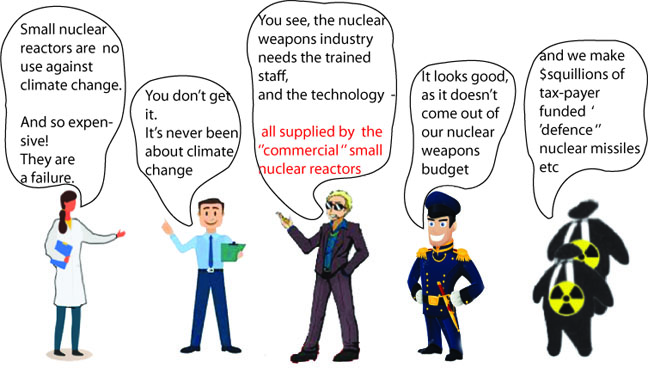
The neglected factor is the military dependence on civil nuclear industries.
By funding civil nuclear projects, taxpayers and consumers cover military uses of nuclear power in subsidies and higher bills – without the added spending appearing in defence budgets
October 28, 2025, Phil Johnstone, Visiting Fellow, School of Global Studies, University of Sussex; University of Tartu; Utrecht University, Andy Stirling, Professor of Science & Technology Policy, SPRU, University of Sussex Business School, University of Sussex, https://theconversation.com/the-hidden-military-pressures-behind-the-new-push-for-small-nuclear-reactors-266301
Donald Trump’s recent visit to the UK saw a so-called “landmark partnership” on nuclear energy. London and Washington announced plans to build 20 small modular reactors and also develop microreactor technology – despite the fact no such plants have yet been built commercially anywhere in the world.
The UK prime minister, Keir Starmer, promised these plans will deliver a “golden age” of nuclear energy that will also “drive down bills”. Yet the history of nuclear power has been decades of overhype, soaring costs and constant delays. Around the world, the trends point the wrong way.
So why the renewed excitement about going nuclear? The real reasons have less to do with energy security, or climate change – and far more to do with military power.
At first sight, the case may seem obvious. Nuclear supporters frame small modular reactors, or SMRs, as vital for cutting emissions, meeting rising demand for electricity from cars and data centres. With large nuclear plants now prohibitively expensive, smaller reactors are billed as an exciting new alternative.
But these days even the most optimistic industry analyses concede that nuclear – even SMRs – is unlikely to compete with renewables. One analysis in New Civil Engineer published earlier this year concluded that SMRs are “the most expensive source per kilowatt of electricity generated when compared with natural gas, traditional nuclear and renewables”.
Independent assessments – for instance by the formerly pro-nuclear Royal Society – find that 100% renewable systems outperform any energy system including nuclear on cost, flexibility and security. This helps explain why worldwide statistical analysis shows nuclear power is not generally linked to carbon emissions reductions, while renewables are.
Partly, the enthusiasm for SMRs can be explained by the loudest institutional voices tending to have formal pro-nuclear remits or interests: they include the industry itself and its suppliers, nuclear agencies, and governments with entrenched military nuclear programmes. For these interests, the only question is which kinds of nuclear reactors to develop, and how fast. They don’t wonder if we should build reactors in the first place: the need is seen as self-evident.
At least big nuclear reactors have benefited from economies of scale and decades of technological optimisation. Many SMR designs are just “powerpoint reactors”, existing only in slides and feasibility studies. Claims these unbuilt designs “will cost less” are speculative at best.
Investment markets know this. While financiers see SMR hype as a way to profit from billions in government subsidies, their own analyses are less enthusiastic about the technology itself.
So why then, all this attention to nuclear in general and smaller reactors in particular? There is clearly more to this than meets the eye.
The hidden link
The neglected factor is the military dependence on civil nuclear industries. Maintaining a nuclear armed navy or weapons programme requires constant access to generic reactor technologies, skilled workers and special materials. Without a civilian nuclear industry, military nuclear capabilities are significantly more challenging and costly to sustain.
Nuclear submarines are especially important here as they would very likely require national reactor industries and their supply chains even if there was no civil nuclear power. Barely affordable even vessel by vessel, nuclear submarines become even more expensive when the costs of this “submarine industrial base” is factored in.
Rolls-Royce is an important link here, as it already builds the UK’s submarine reactors and is set to build the newly announced civil SMRs. The company said openly in 2017 that a civil SMR programme would “relieve the Ministry of Defence of the burden of developing and retaining skills and capability”.
Here, as emphasised by Nuclear Intelligence Weekly in 2020, the Rolls-Royce SMR programme has an important “symbiosis with UK military needs”. It is this dependency that allows military costs (in the words of a former executive with submarine builders BAE Systems), to be “masked” behind civilian programmes.
By funding civil nuclear projects, taxpayers and consumers cover military uses of nuclear power in subsidies and higher bills – without the added spending appearing in defence budgets.
When the UK government funded us to investigate the value of this transfer, we put it at around £5 billion per year in the UK alone. These costs are masked from public view, covered by revenues from higher electricity prices and the budgets of supposedly civilian government agencies.
This is not a conspiracy but a kind of political gravitational field. Once governments see nuclear weapons as a marker of global status, the funding and political support becomes self-perpetuating.
The result is a strange sort of circularity: nuclear power is justified by energy security and cost arguments that don’t stand up, but is in reality sustained for strategic reasons that remain unacknowledged.
A global pattern
The UK is not unique, though other nuclear powers are much more candid. US energy secretary Chris Wright described the US-UK nuclear deal as important for “securing nuclear supply chains across the Atlantic”. Around US$25 billion a year (£18.7 billion) flows from civil to military nuclear activity in the US.
Russia and China are both quite open about their own inseparable civil-military links. French president Emmanuel Macron put it clearly: “Without civilian nuclear, no military nuclear, without military nuclear, no civilian nuclear.”
Across these states, military nuclear capabilities are seen as a way to stay at the world’s “top table”. An end to their civilian programme would threaten not just jobs and energy, but their great power status.
The next frontier
Beyond submarines, the development of “microreactors” is opening up new military uses for nuclear power. Microreactors are even smaller and more experimental than SMRs. Though they can make profits by milking military procurement budgets, they make no sense from a commercial energy standpoint.
However, microreactors are seen as essential in US plans for battlefield power, space infrastructure and new “high energy” anti-drone and missile weaponry. Prepare to see them become ever more prominent in “civil” debates – precisely because they serve military goals.
Whatever view is taken of these military developments, it makes no sense to pretend they are unrelated to the civil nuclear sector. The real drivers of the recent US-UK nuclear agreement lie in military projection of force, not civilian power production. Yet this remains absent from most discussions of energy policy.
It is a crucial matter of democracy that there be honesty about what is really going on.
The UK’s countryside could be filled with small nuclear reactors after billionaire announces £35bn new investment
techradar pro7 July 26, By Rahim Ami
- Polish billionaire Michał Sołowow’s SGE announces £35bn plan to build 14 GE Vernova Hitachi BWRX-300 reactors across three UK sites
- The project aims to deliver 4.2GW of power starting in 2034, effectively powering 8m homes for over 60 years
- The project is looking to secure government backing, with guaranteed prices intended to be locked in for the power producer before it would be offered to investors
…………. Poland-based SGE (Synthos Green Energy) is looking to build up to 14 reactors across three locations in the UK, with six at its primary site and four each at its two secondary sites.
With an estimated build-out cost of £35 billion ($46.5 billion), the project, if approved, is expected to be one of the biggest SMR projects the UK government signs on to as part of its Advanced Nuclear Framework, unveiled earlier this year, to support the development of privately funded projects.
………….. The first disclosed site for SME’s project, Oldbury in South Gloucestershire, is a former Magnox nuclear station that generated up to 434MW of power, is now expected to be home to as many as six 300W SMRs, according to SGE’s plans
While the other two sites are not yet publicly named, they are expected to have a 4+4 reactor split, bringing the total to 14 reactors.
Part of the reason the UK government is interested in outsourcing power generation, even nuclear, to private equity is that it expects a spike in power demand from AI datacenters over the next few years, even as the nation’s overall power needs increase.
This is also why Google Cloud, a key AI data center player, has joined in on SME’s project as a strategic partner that could, as per Michał Sołowow, invest as much as £4.5 billion in data centers in the country to make use of some of the added capacity.
Given that both SMRs (including the proposed GE Vernova Hitachi BWRX-300) and data centers require access to water and space for construction, one can assume that both will prefer cheap, easily accessible coastal, estuarine, or riverside land, which means that the UK’s countryside could soon see certain areas change meaningfully in terms of aesthetics at the very least.
Smaller rivers, however, might not cut it, as SMRs also require the water bodies they use to act as ‘heatsinks’ for their operation, and 6 or 4 in the same location might overwhelm them, limiting the number of areas that are viable for such buildouts, which means that SME’s proposed project might set the baseline for how privatized nuclear power will shape the UK countryside in the days to come even as AI data center demand is expected to increase pressure on the national grid.
For now, SME’s proposal has yet to be approved by the government, making the £35 billion figure an estimate that may or may not apply, given that it still needs to secure financing and lock in government guarantees on pricing before it moves meaningfully towards construction. https://www.techradar.com/pro/the-uks-countryside-could-be-filled-with-small-nuclear-reactors-after-billionaire-announces-gbp35bn-new-investment
Great British Energy appoints Amentum and Cavendish in £360M SMR deal
06 Jul, 2026 By Gavin Pearson, https://www.newcivilengineer.com/latest/great-british-energy-appoints-amentum-and-cavendish-in-360m-smr-deal-06-07-2026/
Great British Energy – Nuclear (GBE‑N) has awarded a long-term Owner’s Engineer (OE) contract worth up to £300M to two contractors.
Amentum Clean Energy and Cavendish Nuclear were signed to the role in a 14‑year contract which formally runs from 23 April 2026 to 23 April 2040.
The contract notice also states the possibility for an extension that could take it to October 2041.
The total value for the contract including VAT is listed as £360M and £300M without VAT, although GBE‑N said the contract’s final value is uncertain and depends on how the project progresses.
This will include timetables and milestones agreed with the SMR technology partner but the procurement notice envisages the OE supporting the client up to the completion of the first fuel cycle for the initial reactor.
The OE role will provide independent technical assurance and oversight to GBE‑N’s “Intelligent Customer” and “Intelligent Client” teams as the SMR programme moves through design stages and towards a final investment decision.
Responsibilities will include specification, audit, review and advice on design, scope, budgets, risk, delivery and contract compliance and acting as a subject matter expert delivering “Line of Defence 2” assurance on major design and build contracts.
Amentum and Cavendish are both established contractors in energy and nuclear services. Cavendish Nuclear is part of Babcock International Group, known for nuclear construction and engineering work in the UK and Amentum is an international engineering and technical services company.
The contract includes monthly reporting against key performance indicators such as deliverable quality, core team availability and social value measures, including targets for female apprenticeships.
Stirling nuclear site plan mooted in new report as politicians hit out

A report from Great British Energy Nuclear has highlighted a number of potential sites in Scotland which could host a nuclear power station – with a location in Stirling among them.
Stuart McFarlane, 07 Jul 2026, https://www.dailyrecord.co.uk/news/local-news/stirling-nuclear-site-plan-mooted-37398446
A report identifying Stirling as a possible location for a future nuclear power station has been met with criticism.
The report was penned by Great British Energy Nuclear on behalf of UK Government Energy Secretary Ed Miliband amid a possible push into increasing the capacity of nuclear power across the UK.
As part of the document, a number of potential sites across Scotland are put in the spotlight for being host sites if the Scottish Government’s opposition to hosting nuclear sites was to change in the future.
Among the six locations of interest is the south bank of the River Forth in Stirling.
The experts commissioned for the report state: “Parts of the south bank of the River Forth meet key siting criteria, offering flat land, access to transport networks and proximity to an established energy producing region.
“Cooling water availability is likely to be a limiting factor, with reliance on river abstraction and no supporting flow data currently available.
“The inland nature of the area suggests smaller scale reactors and cooling units may be more appropriate than large GW-scale deployment. Flood risk, interaction with other river users and nearby COMAH sites require further assessment.”
Stirling is mentioned alongside Torness in East Lothian, the land around the existing nuclear site at Dounreay in Caithness, Hunterston in North Ayrshire, the north shore of the Firth of Forth Estuary and the coastline of Angus and Aberdeenshire as possible locations.
But Mid Scotland and Fife Green MSP Mark Ruskell hit out at UK Government ministers and energy chiefs for the report.
Mr Ruskell said: “Labour’s obsession with forcing a new generation of nuclear power on Scotland rides roughshod over devolution and ignores the will of the Scottish Parliament.
“It is also a costly and counterproductive distraction from the real energy priorities facing Scotland.
“It’s an absurd suggestion from the Labour Westminster Government that there could be a nuclear power station in the Stirling area.
“We generate far more energy than we need locally, with wind farms and hydro power schemes benefiting the climate, energy security and local communities. We can’t let this Westminster Government impose a toxic legacy on Scotland. Folks in Stirling do not want to be part of this costly nuclear power experiment.
“Instead of pouring money into expensive nuclear projects, the UK Government should be backing renewable energy that can create jobs, cut bills and strengthen energy security at a fraction of the cost.
“Our priority should be creating clean, green, secure jobs that support nuclear workers into new industries while revitalising communities across Scotland
The opposition was echoed by Stirling MSP Alyn Smith, who posted on his Facebook page: “This very odd paper just published by Labour’s GB Energy Nuclear has identified Stirling as a suitable site for a nuclear plant, but also seemingly dismissed it, read for yourself.
“The paper also recognises that Scotland’s government will block any new nuclear, and quite right too because we don’t need this old expensive tech when Scotland has won the energy lottery with renewables.”
Great British Energy – Nuclear offers £1bn contract for SMR partner
The company is seeking aid in delivering its programme of building a power plant by the 2030s.
Energy Voice July 7th 2026,
Great British Energy – Nuclear is seeking a delivery partner for its small modular reactor (SMR) programme in a £1.08 billion procurement contract.
The successful applicant will support the state-backed company deliver its programme by providing expertise across programme management, infrastructure delivery, commercial management, engineering support, and risk management.
Working alongside GB Energy – Nuclear, the company will help drive collaboration across suppliers, support effective programme delivery, and ensure value for money over the lifetime of the programme
The procurement process will include an initial selection stage, followed by tender. evaluation, dialogue, due diligence and a final selection stage before the appointment of a preferred bidder. Tenders must be submitted by 6 August 2026.
The long-term deal has the possibility of running until 2046.
Great British Energy – Nuclear interim chief commercial officer Beverley Grey said. “The appointment of a delivery partner will help ensure we have the capability, expertise and capacity needed to support the successful development and delivery of our Small Modular Reactor programme.
“This is a significant long-term procurement which will bring together technical, commercial and project delivery expertise to help us achieve our objectives and support the delivery of new nuclear capacity in the UK.”
GB Energy – Nuclear has £2.6bn to spend on its SMR programme and previously brought in Rolls‑Royce to provide the design the reactors………………………..
The government-run scheme aims to deliver a new nuclear power plant using SMRs by the mid-2030s, helping the UK seize part of a market estimated to be worth £500bn by 2050. https://www.energyvoice.com/renewables-energy-transition/nuclear/600336/gb-energy-nuclear-smr-partner/
Agreement could see Odin prototype microreactor built at Berkeley

Chiltern Vital Group has signed a letter of intent with Cambridge Atomworks to consider the construction of the prototype Odin microreactor on the Berkeley Green Science and Technology Park in Gloucestershire, England.
In September last year, a planning application was submitted for a new nuclear energy-focused facility on a brownfield site that was once part of the Berkeley nuclear power plant in south-west England. Planning and development consultancy Turley submitted the outline planning application for the proposal, which would feature nuclear and clean energy research and development facilities, on behalf of Chiltern Vital Berkeley (CVB), part of Chiltern Vital Group (CVG).
The site comprises a parcel of previously developed land which formed part of the wider Berkeley nuclear power station. It is currently occupied by the Gloucestershire Science and Technology Park, acquired by CVB in 2024, and has an established history for nuclear, employment and education uses. If approved, the development will offer up to 600,000 square feet (5.6 hectares) of new R&D, laboratory, office, manufacturing, and education facilities, creating up to 1,000 jobs.
CVB says it is in final-stage negotiations with multiple nuclear and energy technology companies wishing to locate on the Berkeley Green site.
Cambridge Atomworks has now announced that it has signed a letter of intent with CVG on building its prototype Odin microreactor on the site.
The Odin microreactor is described as “a low-pressure, molten-salt-cooled, solid-fuel fission reactor integrated with power conversion and heat rejection systems, enabling substantial and compact, standalone electricity supply without external connections”. Cambridge Atomworks plans to have an operational prototype by 2030………………………………………………………………………………………………………………………………
https://www.world-nuclear-news.org/articles/agreement-could-see-prototype-microreactor-built-at-berkeley
Last Energy nabs $40M to realize vision of super-small nuclear reactors

These investors are joining the wave in public and private financing of nuclear energy that has swelled to $14 billion so far this year — double last year’s total, according to Axios. Investment in new fission technologies, such as microreactors, has increased tenfold from 2023.
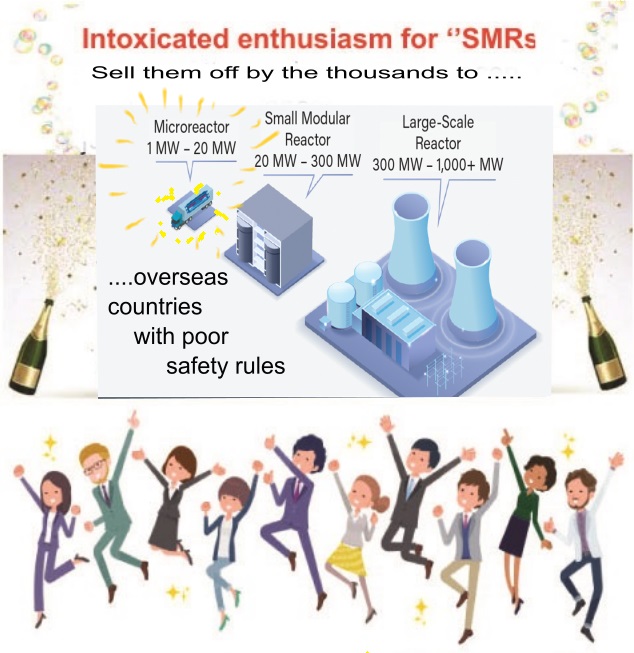
The startup wants to mass-manufacture 20MW nuclear reactors that can be built and shipped within 24 months. It’s looking to get its first reactor online in Europe.
By Eric Wesoff, 29 August 2024
A startup looking to build really small nuclear reactors just announced a big new funding round.
Last Energy, a Washington, D.C.–based next-generation nuclear company, announced that it closed a $40 million Series B funding round, a move that will add more financial and human capital to the reinvigorated nuclear sector.
The startup aims to eventually deploy thousands of its modular microreactors, though to date it has not brought any online. The first reactor might appear in Europe as soon as 2026, assuming Last Energy manages to meet its extremely aggressive construction, financial, and regulatory timelines — not a common occurrence in the nuclear industry. Venture capital heavyweight Gigafund led the round, which closed early this year but was revealed only today. The startup has raised a total of $64 million since its 2019 founding.
Last Energy is part of a cohort of companies betting that small, replicable, and mass-produced reactors will overcome the economic challenges associated with building emissions-free baseload nuclear power — and restore the moribund U.S. nuclear industry to its former glory. But the microreactor dream has yet to be realized; few of these small modular reactors (SMRs) have been built worldwide. None have been completed in the U.S., though one design from long-in-the-tooth startup NuScale Power has gotten regulatory approval.
The 20-megawatt size of Last Energy’s microreactor stands in stark contrast to that of a conventional nuclear reactor like the recently commissioned Vogtle units in Georgia, which each generate about 1,100 megawatts. A Last Energy microreactor, the size of about 75 shipping containers, might power a small factory, while a Vogtle unit can power a city.
Instead of the cathedral-style stick-built construction of modern large reactors, SMRs and microreactors are meant to be manufactured at scale in factories, transported to the site, and assembled on location. Rather than develop an advanced reactor design with exotic fuels — an approach taken by other SMR hopefuls, including the Bill Gates–backed TerraPower — Last Energy chose to scale down the well-established light-water reactor technology that powers America’s 94 existing nuclear reactors.
“We came to the conclusion that using the existing, off-the-shelf technology was the way to scale,” CEO Bret Kugelmass said in a 2022 interview with Canary Media. “We don’t innovate at all when it comes to the nuclear process or components — we do systems integration and business-model innovation.”
The startup claims that its microreactor is designed to be fabricated, transported, and built within 24 months, and is the right size to serve industrial clients. Under its business model, Last Energy aims to build, own, and operate its power plant at the customer’s site, avoiding the yearslong wait times to plug a new generation project into the power grid.
Like an independent power producer, Last Energy doesn’t sell power plants; instead, it sells electricity to customers through long-term power-purchase contracts.
“Data centers and heavy industry are trying to grapple with a very complex set of energy challenges, and Last Energy has seen them realize that micro-nuclear is the only capable solution,” said Kugelmass, who claims in today’s press release that the startup has inked commercial agreements for 80 units — with 39 of those units destined to serve power-hungry data center customers.
Last Energy isn’t the only microreactor company attracting venture funding. There are several other examples from this month alone: Aalo Atomics raised $27 million from 50Y, Valor Equity Partners, Harpoon Ventures, Crosscut, SNR, Alumni Ventures, Preston Werner, Earth Venture, Garage Capital, Wayfinder, Jeff Dean, and Nucleation Capital to scale up a 85-kilowatt design from the U.S. Department of Energy’s MARVEL program. While Deep Fission, a startup aiming to bury arrays of microreactors 1 mile underground, just raised $4 million led by 8VC, a venture firm founded by Joe Lonsdale.
These investors are joining the wave in public and private financing of nuclear energy that has swelled to $14 billion so far this year — double last year’s total, according to Axios. Investment in new fission technologies, such as microreactors, has increased tenfold from 2023.
Investors happen to be backing startups in a heavily subsidized market. Tens of billions of dollars from the Bipartisan Infrastructure Law, the U.S. DOE’s Loan Programs Office, and the Inflation Reduction Act support the development of a non-Russian supply of enriched uranium; the IRA also introduced a ridiculously generous $15-per-megawatt-hour production tax credit, meant to keep today’s existing nuclear fleet competitive with gas and renewables, as well as a similarly charitable investment tax credit to incentivize new plant construction.
The flood of funding comes as nuclear power enjoys the most public support it has had in years. Nuclear now has a favorable public opinion, with the majority of Americans supporting atomic energy and its record of safety and performance. And nuclear energy is one of the few topics that Democrat and Republican politicians have been able to agree on in recent memory.
Still, despite the rising financial, political, and public support, the U.S. nuclear industry remains frozen, plagued by a legacy of cost and timeline overruns for conventional reactors and regulatory challenges around new designs. It’s unclear when the country will get another nuclear reactor online — as of last year, the leading contender was an SMR project from NuScale, but that fell apart due to cost. In all likelihood, the next reactor to plug into the grid will be the mothballed Palisades nuclear plant in Michigan, which won government support for an unprecedented effort to recommission the plant by the end of next year.
For its part, Last Energy is not banking on the U.S. to lead the charge; it’s targeting industrial customers in Poland, Romania, and the U.K. for its initial sites, in the hopes that it will find a more favorable regulatory and financial environment.
Ryan McEntush of investment firm a16z suggests in an essay that “the success of nuclear power is much more about project management, financing, and policy than it is cutting-edge engineering or safety.”
That’s Last Energy’s philosophy too — and it’s going to need more money and more years to prove it’s the right one.
1 This Month



Shut down the radiation-damaged Heysham nuclear reactors now
To see nuclear-related stories in greater depth and intensity – go to https://nuclearinformation.wordpress.com

Say No to NASA’s Reckless Nuclear Reactor on the Moon
Say No to NASA’s Reckless Nuclear Reactor on the Moon
-
Archives
- October 2026 (256)
- September 2026 (339)
- August 2026 (330)
- July 2026 (355)
- June 2026 (287)
- May 2026 (306)
- April 2026 (356)
- March 2026 (251)
- February 2026 (267)
- January 2026 (308)
- December 2025 (358)
- November 2025 (359)
-
Categories
- 1
- 1 NUCLEAR ISSUES
- business and costs
- climate change
- culture and arts
- ENERGY
- environment
- health
- history
- indigenous issues
- Legal
- marketing of nuclear
- media
- opposition to nuclear
- PERSONAL STORIES
- politics
- politics international
- Religion and ethics
- safety
- secrets,lies and civil liberties
- spinbuster
- technology
- Uranium
- wastes
- weapons and war
- Women
- 2 WORLD
- ACTION
- AFRICA
- Atrocities
- AUSTRALIA
- Christina's notes
- Christina's themes
- culture and arts
- Events
- Fuk 2022
- Fuk 2023
- Fukushima 2017
- Fukushima 2018
- fukushima 2019
- Fukushima 2020
- Fukushima 2021
- general
- global warming
- Humour (God we need it)
- Nuclear
- RARE EARTHS
- Reference
- resources – print
- Resources -audiovicual
- Weekly Newsletter
- World
- World Nuclear
- YouTube
-
RSS
Entries RSS
Comments RSS

