Blykalla seeks state aid for second SMR plant
Wednesday, 2 September 2026,
https://www.world-nuclear-news.org/articles/blykalla-seeks-state-aid-for-second-smr-plant
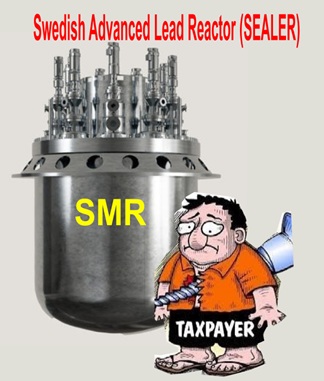
Sweden’s Blykalla has applied for state support for its proposed small modular reactor power plant at Untra in the Tierp municipality, for which the company applied for governmental approval last week.
On 25 August, Blykalla submitted a proposal to the Swedish government for a nuclear power plant at Untra which would feature up to eight lead-cooled small modular reactors (SMRs) with a total capacity of up to 440 MWe. The application followed an earlier one, submitted in May, for a six-unit project in Norrsundet in the Gävle municipality, which is also in the same region of east central Sweden.
Blykalla has established Untra Nuclear Power AB as the licence holder and financing vehicle for the Untra plant, with strategic and financial investors expected to enter its ownership over time. Blykalla – through Untra Nuclear Power – has now applied for state support for the construction of the Untra plant, having applied in early June for government financing for its planned power plant in Norrsundet.
The Swedish state aid framework is designed to support new nuclear power through a state loan, a two-way contract for difference and a risk-sharing mechanism. The detailed terms of the state aid are agreed between the project company and the Swedish state, and any support would require approval by the European Commission in accordance with EU State aid rules. Negotiations on the terms of state support begin once the government decides to proceed with the application.
Following the receipt last week of Blykalla’s application to establish the nuclear power plant at Untra, the government has tasked the County Administrative Board in Uppsala County with preparing a proposal for a facility plan. This plan will guide how land and water areas should be used when establishing a nuclear facility. According to recent legislation, the government may approve an application if there is a valid facility plan for the facility in question. The proposed construction plan must be accompanied by an environmental impact statement and a plan description. This statement must include a description of the planning conditions and how the plan can be implemented. The plan must be submitted no later than 30 April 2027……………
Blykalla – formerly called LeadCold – is a spin-off from the KTH Royal Institute of Technology in Stockholm, where lead-cooled reactor systems have been under development since 1996. The company – founded in 2013 as a joint stock company – is developing the SEALER (Swedish Advanced Lead Reactor). The company’s goal is for its first 140 MWt/55 MWe SEALER-55 commercial reactor to be ready for operation in the early 2030s.
In October 2022, Sweden’s incoming centre-right coalition government adopted a positive stance towards nuclear energy. In November 2023, it unveiled a roadmap which envisages the construction of new nuclear generating capacity equivalent to at least two large-scale reactors (2,500 MWe) by 2035, with the equivalent capacity of up to 10 new large-scale reactors (which may include SMRs) coming online by 2045. A new act on state aid entered into force on 1 August 2025, since when interested companies have been able to apply for the aid.
So far, approval has been sought for nuclear facilities at five sites with a total output of up to 3,700 MWe. In addition, the government has received applications for financial support to build nuclear reactors at two additional locations, with seven projects applying for state aid.
A nuclear reactor is being installed a mile underground in Kansas
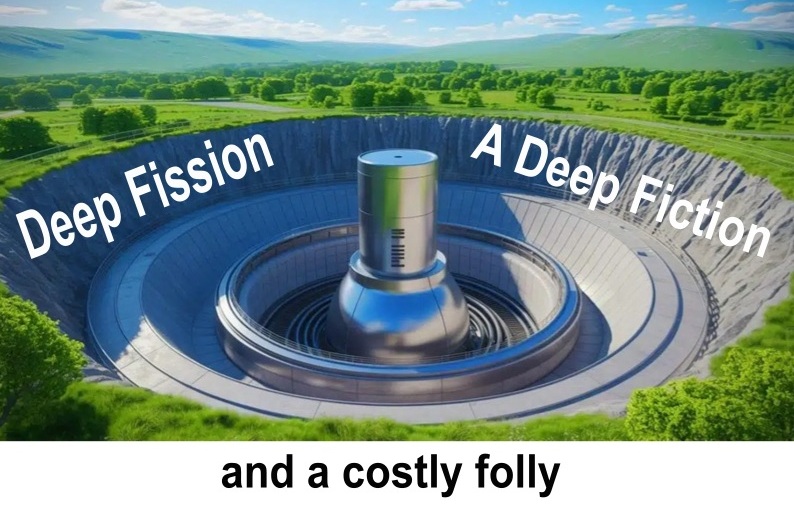
Deep Fission has just received safety approval from the US Department of Energy for a reactor design that it plans to install at the bottom of a deep hole
By Vanessa Bates Ramirez, New Scientist 2nd Sept 2026
Nuclear power start-up Deep Fission wants to put a reactor where no reactor has gone before: a mile underground. The California-based company received safety approval for its reactor design from the US Department of Energy earlier this month, and is preparing the site for its commercial pilot outside Parsons, a small city in south-east Kansas.
The company hopes that placing a reactor deep underground will cut installation and operational costs, particularly since the bedrock can provide natural containment and pressure for the reactor. This eliminates the need for a heavy-duty concrete containment dome like those that enclose conventional nuclear reactors, which account for a significant portion of their cost and the time it takes to build them. But independent engineers say it is unclear how successful the approach will be. ………………….(Subscribers only)
https://www.newscientist.com/article/2587049-a-nuclear-reactor-is-being-installed-a-mile-underground-in-kansas/
200-MWe marine microreactors could power ports, desalination and electro-fuel plants.

The nuclear barge could supply power to ports, isolated regions and coastal industries. (Ed – they don’t mention the wastes)
By Atharva Gosavi, Aug 29, 2026, https://interestingengineering.com/energy/200-mwe-marine-reactors-could-power-ports-desalination-and-electro-fuel-plants
A consortium led by advanced reactor developer newcleo has begun studying a floating nuclear power plant designed to supply low-carbon electricity to ports, coastal industrial hubs and isolated regions.
Named n-Floating, the project will examine a non-self-propelled barge housing multiple lead-cooled LFR-AS-200 reactors, each capable of producing 200 MWe.
The initiative has received nearly €1 million through a Bpifrance-managed program supporting the decarbonization of the maritime sector.
Work is underway and will continue for approximately 18 months, with potential industrial deployment targeted by 2036.
Multiple reactors aboard one floating unit
newcleo is working with classification society Bureau Veritas Marine & Offshore and French engineering company ABMI Groupe.
Together, the three companies will assess whether advanced nuclear reactors can be safely and competitively integrated into floating infrastructure.
The initial phase will focus on conceptual studies for the nuclear barge. Researchers will evaluate possible applications, including electricity supply for ports, associated industrial facilities, coastal areas and regions that may face land, grid or infrastructure constraints.
The barge could also support energy-intensive processes such as desalination and the production of low-carbon fuels.
However, the project remains at the study stage, and its technical feasibility, regulatory requirements and commercial prospects still need to be evaluated.
“Maritime deployment of advanced reactors opens a broader and still largely unexplored market for nuclear energy,” said Stefano Buono, CEO of newcleo.
“Floating nuclear offers an opportunity to bring reliable, low-carbon power to applications at sea and in coastal locations,” he added.
Borrowing experience from offshore energy
The concept will draw on established methods used by the maritime, oil and gas industries to design, construct and operate floating facilities for energy production, storage, liquefaction and regasification.
Building and integrating major plant systems inside a controlled shipyard environment could support greater standardization and repeatable construction.
Once completed, the unit could then be transported to its intended operating location rather than being built entirely at the deployment site. Bureau Veritas will contribute expertise in classification, certification and risk assessment.
Its work will help the consortium examine the safety, regulatory and technical questions created by combining a nuclear installation with a floating maritime platform.
ABMI Groupe will contribute engineering and project-delivery experience from complex maritime and nuclear programs.
The consortium will also establish a development roadmap covering the steps required to move from the present conceptual phase toward possible construction and deployment.
Safety and licensing remain central
Floating reactors would need to comply with both nuclear and maritime safety requirements. Licensing, physical security, operations and regulatory oversight will therefore form important parts of any future development program.
The study begins as international discussions around maritime nuclear technology gather pace.
The International Atomic Energy Agency launched its ATLAS initiative on August 26 to encourage dialogue and improve technical understanding of innovative nuclear applications and their safety and regulatory implications.
The consortium ultimately aims to create a standardized floating energy system that can be deployed at scale. Under its current roadmap, the nuclear barge could progress toward industrial deployment by 2036.
US Army to spend $2 bln on nuclear microreactors for bases
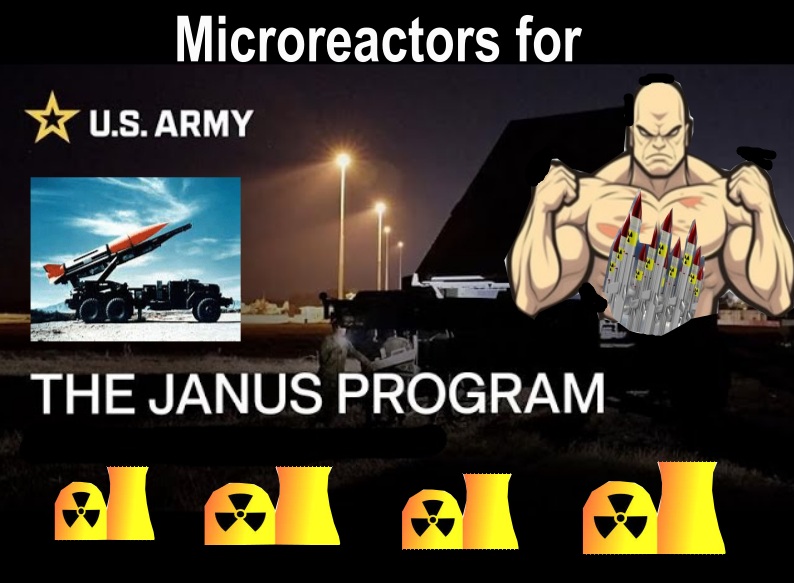
The Army program uses the military’s “deep pockets to provide a hidden subsidy” to nuclear companies that can’t find private-sector customers for their hypothetical and uneconomical reactors
DW Sean Sinico with AP, Reuters, August 27, 2026
The US Army has announced a plan to install what it calls nuclear microreactors at five of its bases across the country. The move would ensure the facilities’ energy independence from the rest of the electric grid.
The United States Army said Wednesday that it will award $2.2 billion (€1.7 billion) in contracts to five companies to build and operate small nuclear reactors on military bases. The program set a goal of deploying the first such reactor by the end of September 2028.
Called microreactors, developers say each of the nuclear plants would be easy to transport and provide up to 20 megawatts of power.
The reactors will adhere to all environmental and safety regulations that apply to commercial reactors, but an Army spokesperson said the reactors will be regulated by the Army rather than the US Nuclear Regulatory Commission, which regulates commercial reactors.
“The whole idea here is that at the back end of this we want a commercial product,” said Jeff Waksman, principal deputy assistant secretary of the Army for Installations, Energy and Environment.
Army Secretary Dan Driscoll said the awards will speed up the military’s ability “to deliver safe, reliable baseload power directly to our installations.”
“We are building the energy resilience necessary to project combat power globally, without relying on potentially vulnerable external grids,” he added………………………………………………………………………
‘Hidden subsidy’ for expensive reactors, critics say
Critics of microreactors say they will be expensive compared to conventional reactors. Safety advocates point out that nuclear technology carries significant risks that other low-carbon energy sources don’t, such as the danger of accidents or targeted attacks.
The Army program uses the military’s “deep pockets to provide a hidden subsidy” to nuclear companies that can’t find private-sector customers for their hypothetical and uneconomical reactors, Alan J. Kuperman, associate professor at the Lyndon B. Johnson School of Public Affairs at the University of Texas at Austin and coordinator of the Nuclear Proliferation Prevention Project, told the AP news agency.
The Army’s Waksman said nobody thinks that microreactors will be lower in cost than conventional plants.
“What we are trying to do here with Janus … is to flesh out how can we get those prices down,” he said.
What will happen with the radioactive waste?
Waksman said the microreactors would safely shut down in case of a failure and that the Army wouldn’t add them to installations without being certain they are safe.
He added that the Army is working on a deal with the Energy Department to remove radioactive waste, and there won’t be any long-term storage on these installations.
Last month, five states offered to accept nuclear waste in exchange for federal support in developing nuclear energy facilities.
Trump pushing nuclear power in US
Executive orders signed by US President Donald Trump in May 2025 aimed to accelerate the development of nuclear power. Trump has called for the US to quadruple its nuclear energy production — just two new large reactors have been built from scratch in the United States in nearly 50 years. Those two reactors were completed years late and at least $17 billion over budget, AP reported.
The nation’s 94 nuclear reactors supply about 19% of U.S. electricity, compared to about 60% for fossil fuels and 21% for renewables, according to the US Energy Information Administration. https://www.dw.com/en/us-army-to-spend-2-billion-on-nuclear-microreactors-for-bases/a-78518374
How to get filthy rich via Small Modular Nuclear Reactors.
30 August 2026 Noel Wauchope AIM Extra, https://theaimn.net/how-to-get-filthy-rich-via-small-modular-nuclear-reactors/
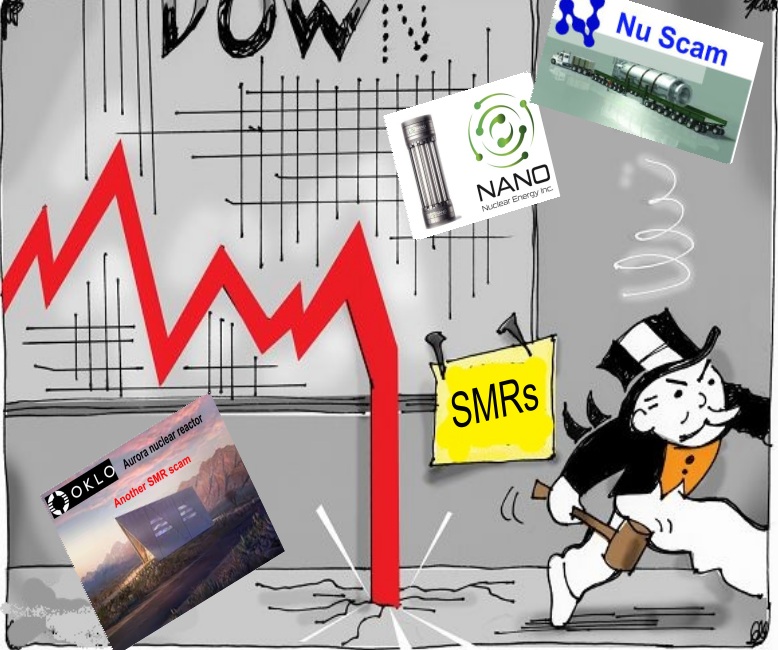
Well, I hasten to warn you that you need to be already rich, for this to work. It has already worked for some alert rich investors. What they did was – they noted the soaring share prices of small nuclear reactor companies, a soaring that was accompanied by an awful lot of media hype.
And then they noted some salient facts about those companies – for example:
OKLO – has a market cap of $8 billion, and its shares jumped more than 12% on Aug. 25 Sounds great doesn’t it? BUT:
- OKLO had a net loss of $81.6 million in the second quarter this year.
- It went public through a SPAC (special purpose acquisition company) in 2025.
- It generates no commercial energy income today.
- Its first Small Modular Reactor (SMR), the Aurora Powerhouse, isn’t expected to enter commercial operation for years.
- Oklo is incurring tens of millions in operating losses annually.
- It is $78.6 million in debt, so interest and loan payments eat into its earnings.
- OKLO is still in discussions with the regulator NRC, regarding the fuel, high-assay low-enriched uranium, or HALEU, and other supply chain issues.
Similarly, stocks of both NuScale Power, and Nano Nuclear have soared over the past year. Yet both are making little or no money, and both have suffered operational losses over this year. NuScale is now facing a class action by investors who claim that the company misrepresented the prospects for small nuclear reactors.
So – what have the smart rich investors done? Basically, they’ve gambled on these stocks being over-priced, and soon to go down. Investment strategies are not my strong point, but it seems that short selling is one hedge fund strategy. So these clever investors, noting the unsustainable rise in share prices, borrow shares and soon sell them at the inflated price, and can buy them back later as the price plunges down.
So , it’s estimated that investors made over $2 Billion over the past months by short selling shares in these three small nuclear reactor companies – OKLO, NuScale, and Nano Nuclear.
The rage for investing in SMRs is still on, as the world is gripped by the mania for AI hyperscalers. (AI hyperscalers are companies investing grotesque amounts of money in building data centres world-wide)
Neither the hyperscalers nor the small reactor companies are actually making money at present. But the hype is all-consuming.
This is the prevailing hype –
The AI Boom Is Making Nuclear Power Bankable Again – America’s nuclear power landscape is undergoing a dramatic transformation, driven by the immense energy needs of artificial intelligence. Tech giants like Microsoft, Google, Amazon, and Meta are directly financing nuclear projects, committing billions to secure nearly 10 gigawatts of capacity. ………..
Almost everything tech companies are funding—Meta, Amazon, most of Google’s bets—is small modular reactors: compact designs.
Will AI kickstart a new age of nuclear power? IAEA Director General Manuel Grossi believes that the nuclear industry is destined to be the energy partner of the AI revolution. “Only nuclear energy can meet the five needs of low-carbon power generation, round-the-clock reliability, ultra-high power density, grid stability and true scalability”……………………..the IAEA is working closely with regulators and the industry to make them a viable proposition and we could soon be seeing large numbers of small reactors being deployed to meet the demand.
So- we have the Trumpian process in the USA, of the weakening of radiation and safety regulation of nuclear reactors, and of the government already funding 8 SMR companies.
With the claim that nuclear power combats climate change, with the accepted belief in the necessity for AI hyperscale, governments, academia, the corporate media, and the UN all promote this new marriage of nuclear and Big Tech. So – all the stars are aligned for the rise and rise of small nuclear reactors.

Incidentally, don’t look to the UN, the World Health Organisation (WHO)or anyone like that to cry foul. I think that most people have forgotten, if they ever knew it , but the 1959 agreement between the WHO and the International Atomic Energy Agency (IAEA) effectively prevents the WHO from criticising things nuclear.
One important part – “Whenever either organization proposes to initiate a programme or activity on a subject in which the other organization has or may have a substantial interest, the first party shall consult the other with a view to adjusting the matter by mutual agreement.”

And, in this time of vulnerability of nuclear sites, to war and terrorism, you wonder how Rafael Grossi, Director of the IAEA reconciles his conflicting duties, that of promoting nuclear power and of assuring of its safety.
But I digress. We are talking about money, and how to get rich through investing in small nuclear reactors. Well, that is still a goer. But perhaps you’d better be quick, as investment advisors are now dithering about the share price of commercial SMR companies, even though the Big Tech- SMR teams are apparently still booming.
However, the global nuclear lobby is now turning its attention to military microreactors, so there’s hope for future stock market gains as governments splurge tax-payers money into companies in that area.
Army reaches agreement with private industry for nuclear micro-reactors
By U.S. Army Communication and Outreach OfficeAugust 26, 2026, https://www.army.mil/article/294891/army_reaches_agreement_with_private_industry_for_nuclear_micro_reactors
WASHINGTON — The Department of the Army is announcing today that the Janus Program has selected five nuclear energy vendors, and five initial locations.
In partnership with the Department of War Innovation Unit (DIU), the Army is awarding up to a combined $2.2 billion to own, construct, and operate nuclear microreactors on military installations. These vendors will deliver safe, secure, and reliable nuclear power, strengthening the Army’s ability to project power globally, while supporting the revitalization of American industrial capacity and technological leadership. With the private sector funding expected along with these government dollars, the Army expects more than 20 total nuclear microreactors will be built and operated across Department of War installations.
The five selected vendors and installations are as follows:
- Antares Nuclear, Inc. – Fort Bragg, North Carolina
- BWXT Advanced Technologies, LLC – Fort Campbell, Kentucky
- General Atomics Electromagnetic Systems – Fort Hood, Texas
- Radiant Industries, Inc. – Fort Benning, Georgia
- Westinghouse Government Services – Fort Drum, New York
“Since launching the Janus Program, our mandate from President Trump and Secretary Hegseth has been clear: secure the power our warfighters need to train, deploy and win,” said Dan Driscoll, Secretary of the Army. “Awarding these contracts accelerates our ability to deliver safe, reliable baseload power directly to our installations. We are building the energy resilience necessary to project combat power globally, without relying on potentially vulnerable external grids.”
“The Janus Program is grabbing the baton from Project Pele and the [Department of Energy’s] Reactor Pilot Program,” said Dr. Jeff Waksman, principal deputy assistant secretary of the Army for Installations, Energy and Environment. “We are seeking not just reactors capable of turning on for a brief demonstration, but rather systems able to deliver power with high-capacity factors for years of operation. The Janus Program will be a complete success when and only when we have assisted multiple nuclear companies in developing truly reliable and affordable nuclear microreactors which they can sell to other buyers beyond just the military
After gathering technical and operational information from industry via an Area of Interest released by DIU, the Army down-selected potential industry awardees for negotiation of Other Transactions Authority-based agreements. A decision board and panel of top nuclear and technical experts from the Department of Energy, national laboratories and representatives across the services provided deeply rigorous input on the technical risks, financial situation, and management capabilities of the solutions. The close collaboration with technical experts and service representatives ensured selected vendors would provide solutions to enhance energy resilience for specific operational needs at military installations.
“When DOE created an authorization pathway for the demonstration of advanced reactor designs, we quickly began to realize how valuable these technologies could be for fortifying our national defense infrastructure,” said Assistant Secretary of Nuclear Energy Ted Garrish. “We are honored to work in lockstep with the Army to leverage nuclear energy innovation in support of our country’s military operations at home and abroad.”
The alignment of these vendors with Army installations represents the culmination of a year-long effort to evaluate and prioritize installations based on a multitude of factors from energy needs to seismic and hydrological considerations, all with a primary focus on safety. As the Janus Program moves forward, it is intended that these vendors will also site nuclear technologies on other service installations for continued energy resilience across the entire DOW. Additional Army and other Service sites will be announced at a later date. The Army continues to drive towards the September 2028 target outlined in President Trump’s Executive Order 14299 for operation of a first reactor, regulated by the Army, on a military installation.
“The Army is leading the nation in its return to nuclear preeminence via the Janus Program,” said Jason Craft, Janus Program manager. “Our selected industry awardees represent the most viable technologies to achieve this capability, setting conditions for both installation energy resilience and operational energy solutions.”
Using a milestone-based payment model, vendors will receive government funding only after successfully hitting specific technical goals. This investment model brings together approximately $2.2 billion across FY2027-2031 along with significant capital investment from each vendor. This technology development model will speed up the delivery of next-generation energy solutions to the warfighter and promote innovation while ensuring accountability. The prototype reactors will be contractor-owned and operated.
“We need more power. We need it delivered faster and cheaper, and we need it to be more reliable,” said Owen West, director, DIU. “With Janus, DIU is assisting the Army’s micro reactor build — speeding military energy production to protect the nation.”
Collaboration with utility providers is essential to the success of Army’s nuclear power strategy and the Janus Program. The Army will work closely with serving utilities and privatized utility providers on the Janus Program to ensure the best possible outcomes. The Army also invites continued collaboration with utilities both now and in the future on utility-scale, grid-facing power generation opportunities sited on Army installations.
“The Army’s Janus Program has my full support, said Emil Michael, the War Department’s Chief Technology Officer. “The War Department is acting swiftly to implement President Trump’s Executive Order, Deploying Advanced Nuclear Reactor Technologies for National Security, to deploy a nuclear reactor on a military installation by September 2028. We are unleashing America’s domestic nuclear industrial base to ensure a more resilient and secure energy supply for the joint force.”
Reliable energy underpins national defense. The down-selection to these five vendors represents a critical step forward in securing the operational readiness of our forces. The Army is committed to fortifying the defense and strength of the nation now and for future generations.
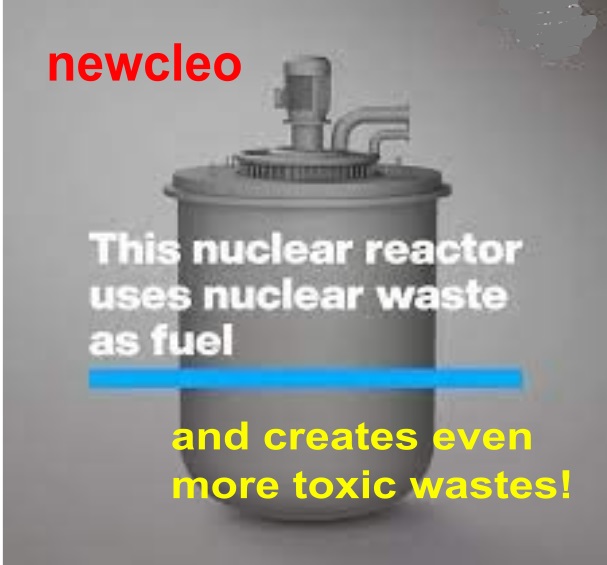
Newcleo-Led Consortium Chosen For French Project On Floating Nuclear Power Plants
By David Dalton, 27 August 2026, https://www.nucnet.org/news/newcleo-led-consortium-chosen-for-french-project-on-floating-nuclear-power-plants-8-4-2026
Maritime sector a ‘largely unexplored opportunity’ for reactor industry
A consortium led by France-based advanced reactor and nuclear fuel company Newcleo has been selected to take part in a project supporting the decarbonisation of the French maritime sector.
The project, managed by France-based investment bank Bpifrance and named “n-Floating”, aims to demonstrate the relevance and technical feasibility of an innovative floating nuclear power solution, consisting of a non-self-propelled floating unit housing multiple Newcleo-developed LFR-AS-200 reactors, each offering an electrical output of 200 MW.
The consortium brings together Newcleo, Bureau Veritas Marine & Offshore, a leading classification society, and ABMI Groupe, a French engineering company with expertise both in maritime and nuclear sectors.
The project has been awarded almost €1m ($1.1m) in funding under the programme.
Work has already begun and is expected to run for approximately 18 months.
“Maritime deployment of advanced reactors opens a broader and still largely unexplored market for nuclear energy” said Newcleo chief executive officer Stefano Buono.
“Floating nuclear offers an opportunity to bring reliable, low-carbon power to applications at sea and in coastal locations.”
Newcleo said the project aims to develop a standardised, deployable and competitive solution for low-carbon energy generation at sea and in coastal locations.
The initial phase of the n-Floating project will focus on conceptual studies for a nuclear barge, assessing its potential to deliver reliable, low-carbon and competitive energy across a range of applications. These include supplying isolated regions, ports and associated industrial hubs, and coastal areas, as well as supporting energy-intensive applications such as desalination and the production of low-carbon fuels.
The project will also define the subsequent development programme and roadmap towards potential industrial deployment by 2036, with the ambition to design and build the solution in France.
Army to spend $2B to build nuclear microreactors at 5 bases as US seeks to ramp up nuclear power
By JENNIFER McDERMOTT and MATTHEW DALY , August 27, 2026
WASHINGTON (AP) — The U.S. Army announced Wednesday that it plans to add nuclear microreactors at five military bases from New York to Texas as a reliable source of energy independent of the commercial electric grid.
The announcement comes as the Trump administration pushes hard to develop the next generation of nuclear power, including billions in loans for large nuclear reactors to meet skyrocketing power demand from data centers and a pilot program to boost advanced reactor designs and projects for military and civilian use. No nuclear microreactors are supplying power to the commercial electric grid in the United States today.
Five companies selected by the Army will be awarded up to $2.2 billion in total over five years to own, construct and operate the microreactors, if they hit set milestones along the way for their performance. The Army expects that more than 20 nuclear microreactors will be built and operated………….. https://apnews.com/article/nuclear-trump-army-microreactors-janus-200edd5fb98b6fe04d029a3c1dba1a4a
Army Selects Vendors, Sites for Nuclear Microreactors
Aug. 27, 2026 | By U.S. Army Communication and Outreach Office , https://www.war.gov/News/News-Stories/Article/Article/4584583/army-selects-vendors-sites-for-nuclear-microreactors/
The Army announced yesterday that the Janus Program selected five nuclear energy vendors and five initial locations to build and operate nuclear microreactors.
In partnership with the War Department’s Defense Innovation Unit, the Army is awarding up to $2.2 billion in total for these microreactors. The project will deliver safe, secure and reliable nuclear power, strengthening the Army’s ability to project power globally, while supporting the revitalization of American industrial capacity and technological leadership.
“Since launching the Janus Program, our mandate from President [Donald J.] Trump and Secretary [Pete] Hegseth has been clear: secure the power our warfighters need to train, deploy and win,” said Dan Driscoll, Army secretary. “Awarding these contracts accelerates our ability to deliver safe, reliable baseload power directly to our installations. We are building the energy resilience necessary to project combat power globally, without relying on potentially vulnerable external grids.”
With private sector funding expected alongside government investment, the Army expects to build and operate more than 20 nuclear microreactors across War Department installations.
The five selected vendors and installations are:
- Antares Nuclear Inc. at Fort Bragg, North Carolina.
- BWXT Advanced Technologies LLC at Fort Campbell, Kentucky.
- General Atomics Electromagnetic Systems at Fort Hood, Texas.
- Radiant Industries Inc. at Fort Benning, Georgia.
- Westinghouse Government Services at Fort Drum, New York.
………………………………………………………………………………………………………………………………………………………………As the Janus Program moves forward, vendors will bring nuclear technologies to other military installations for continued energy resilience across the entire War Department. The Army will announce additional military sites at a later date and continues to drive toward the September 2028 target outlined in Executive Order 14299 for operation of a first reactor.
“The Army is leading the nation in its return to nuclear preeminence,” said Jason Craft, Janus Program manager. “Our selected industry awardees represent the most viable technologies to achieve this capability, setting conditions for both installation energy resilience and operational energy solutions.”
Using a milestone-based payment model, vendors will receive government funding only after successfully hitting specific technical goals. This investment model brings together approximately $2.2 billion across fiscal years 2027-2031, along with significant capital investment from each vendor.
This technology development model will speed up the delivery of next-generation energy solutions to the warfighter and promote innovation while ensuring accountability, Craft said. The prototype reactors will be contractor-owned and operated. Collaboration with utility providers is needed for the success of the Army’s nuclear power strategy and the Janus Program. The Army will work closely with providers on the program to ensure the best possible outcomes, while continuing to collaborate with them now and in the future.
“The Army’s Janus Program has my full support,” said Emil Michael, undersecretary of war for research and engineering and War Department chief technology officer. “The War Department is acting swiftly to implement President Trump’s executive order. … We are unleashing America’s domestic nuclear industrial base to ensure a more resilient and secure energy supply for the joint force.”
New nuclear plan could deliver up to 6 GW of power to data centers by 2040

NANO Nuclear and Tillman are planning up to 6 GW of advanced nuclear power for future data-center campuses.
Interesting Engineering. By Neetika Walter, Aug 24, 2026
US-based nuclear technology company NANO Nuclear Energy has signed a non-binding commercial framework with Tillman Global Holdings to explore deploying advanced nuclear reactors across large AI data-center developments in the US.
The companies are targeting at least 2 gigawatts of advanced nuclear capacity by the mid-2030s and 6 GW or more by 2040. The plans remain subject to definitive agreements, customer commitments, financing, regulatory approvals and other project requirements.
The framework identifies NANO Nuclear as Tillman’s anticipated preferred nuclear technology provider for its planned AI industrial zones. Tillman is developing a multi-state pipeline of sites designed around the large power requirements of hyperscale and AI customers.
The companies plan to evaluate potential sites, licensing requirements, customer demand, and project financing as individual developments move forward. The broader strategy is to reserve space for nuclear generation alongside other power sources as data-center campuses expand.
Nuclear enters the data-center mix
NANO Nuclear’s KRONOS MMR Energy System is a 15-megawatt high-temperature gas-cooled reactor designed for modular and phased deployment. The companies say that architecture could allow nuclear capacity to be added in stages as electricity demand grows across large data-center campuses.
The arrangement pairs Tillman’s experience in developing and financing large digital and energy infrastructure with NANO Nuclear’s reactor technology and nuclear licensing capabilities. The proposed model could also allow Tillman or its affiliates to own and finance qualifying power projects while NANO Nuclear supplies reactors and fuel and supports development and operations………………….
Gigawatts planned for AI
The proposed deployment pathway would start with 2 GW or more of advanced nuclear capacity by the mid-2030s before expanding to at least 6 GW by 2040. The companies are also evaluating potential projects in selected international markets where Tillman has digital infrastructure interests.
The framework contemplates a milestone-based equity arrangement as well. Tillman could receive warrants to purchase up to $100 million of NANO Nuclear stock, with most of the warrants tied to future reactor purchase commitments and project-development milestones.
It also includes a proposed $5 million initial restricted stock grant to Tillman, with most of that grant subject to additional milestones. The terms remain subject to definitive agreements.
Tillman Co-President Sachit Ahuja said the company is planning for the long-term electricity requirements of its AI campuses…………
The companies now need to move from the commercial framework to site-specific development, licensing and financing agreements before any reactors can be deployed. https://interestingengineering.com/energy/advanced-nuclear-power-ai-data-centers
The Race to Power AI Is Reviving America’s Nuclear Ambitions
By Haley Zaremba – Aug 25, 2026, https://oilprice.com/Alternative-Energy/Nuclear-Power/The-Race-to-Power-AI-Is-Reviving-Americas-Nuclear-Ambitions.html
- Surging AI and data-center electricity demand is attracting billions of dollars to advanced nuclear technologies.
- SMRs could offer a cheaper and more flexible alternative to traditional nuclear plants, but none are commercially operating in the United States yet.
- Applied Atomics is reviving BWXT’s shelved mPower technology and Virginia test infrastructure in an effort to commercialize modular nuclear power.
The artificial intelligence boom is supercharging the development of next-gen nuclear energy technology. Big Tech and private equity are catalyzing the research and development of cutting-edge approaches to round-the-clock clean energy production as hyperscalers add power-hungry data centers to the grid at a blistering rate.
“A single hyperscale data center can consume as much electricity as 50,000 homes,” writes the MIT Energy Initiative. “U.S. data centers consumed more than 4% of the country’s total electricity in 2023, and by 2030 that fraction could rise to 9%,” MIT goes on to warn. This means that the expansion of data centers to fuel the integration of AI into everything from your email provider to your electric toothbrush is seriously changing the way we consume – and therefore the way we produce – energy in the United States and beyond. Not only do we need to expand energy production capacity at a breakneck pace, but we also need to find a way to do so without throwing climate goals out the window.
As a result, venture capital funding is going gangbusters for both nuclear fusion and fission startups. According to a recent report from Axios, global investment in both fission and fusion has topped USD $4.5 billion across 81 companies in 2026 so far. At this rate, projections show that 2026 will shatter the previous annual record of $6.2 billion for 93 companies in 2025.
Some of the biggest figures and deepest pockets in Silicon Valley are throwing their weight behind nuclear energy advancement as a silver bullet solution to the energy monster that AI is creating. Major investors include Microsoft’s Bill Gates and OpenAI’s Sam Altman. “There’s no way to get there without a breakthrough,” Altman said at the 2024 World Economic Forum in Davos, Switzerland. “It motivates us to go invest more in fusion.”
In addition to nuclear fusion, there is a lot of buzz around the potential for small modular reactors (SMRs) to transform the aging and ailing nuclear power sector in the United States. These smaller and cheaper reactors hold considerable promise for overcoming some of the hurdles that have been causing nuclear energy to fall out of fashion in the last several decades.
Traditional nuclear power plants are enormously expensive and time-consuming to develop. The United States’ newest traditional nuclear power plant, Georgia’s Plant Vogtle, finally came online in 2024, years late and billions of dollars over budget. While this has scared a lot of policymakers and investors away from large-scale nuclear power, there is hope that SMRs could allow for a more agile energy future at a time when carbon-free energy sources are sorely needed.
However, SMRs have been slow to deliver on the considerable hype behind them. While billions of dollars have gone toward developing the technology, and the Nuclear Regulatory Commission only approved NuScale’s uprated SMR design last year, there are still zero commercial SMRs operating in the country. Some experts think that the buzz has turned to bust. But others, buoyed by the new wave of investment interest driven by the AI boom, think that the timing is finally right for the SMR revolution.
For example, a duo of scientists with SpaceX pedigrees is taking advantage of an abandoned SMR test facility in Virginia, with the hopes of being the team to push the SMR revolution over the finish line and into commercial reality. “We’re standing on the shoulders of giants here, right?” Applied Atomics co-founder Ben Kellie recently told the Washington Post. “We’re starting with something that had $400 million in investment put into it, and significant time and effort. That’s a leg up.”
Whether this project is the one that will ultimately serve as a proof-of-concept for SMRs, it will at the very least provide more data in a nascent field where hard numbers are sorely needed. “It is not just about whether the technology is viable,” David Schlissel, a ‘longtime nuclear consultant to consumer and environmental groups,’ told the Washington Post. “It is also whether the cost is viable. … The industry is running around with all this hype trying to sell nuclear broadly. But they still have not fully tested and built any of these new reactors.”
Polish billionaire’s financing plans for 14 UK SMRs analysed

“I think the price projections are utterly worthless. If you don’t know the construction cost and time, the cost of capital, the equity structure, not to mention the O&M (operation and maintenance) cost, you have no idea what the power price will be.”
“So if things don’t go to plan, it will be the government’s fault, not theirs. (SGE’s)”
– Stephen Thomas, professor at the University of Greenwich Business School, working in the area of energy policy.
25 Aug, 2026 By Tom Pashby, https://www.newcivilengineer.com/latest/polish-billionaires-financing-plans-for-14-uk-smrs-analysed-25-08-2026/
Financing plans from Polish billionaire Michał Sołowow’s SGE to enable the deployment of 14 small modular reactors (SMRs) in the UK have been revealed by NCE and analysed by an expert.
In July, SGE – described as a dedicated European SMR development and investment platform – announced its plans to build 14 GE Vernova Hitachi BWRX-300 Small Modular Reactors on three sites in the UK.
In total, the investment is expected to be around £35bn and the first SMRs are hoped to be operational in 2034.

To achieve that, SGE has submitted an application under the UK’s Advanced Nuclear Framework (ANF) to develop the combined 4.2GW fleet which, if successful, could deliver 11% of UK power demand for at least sixty years.
Using the Freedom of Information (FOI) Act, New Civil Engineer (NCE) has secured correspondence between SGE and the Department for Energy Security and Net Zero (DESNZ) where SGE set out more details about its ambitions to finance its SMRs.
SGE’s representatives at etara – a power, energy and infrastructure advisory firm – sent a letter from SGE to DESNZ deputy director for advanced nuclear Andrew Cooke dated 26 June.
The letter was addressed to the then DESNZ secretary of state Ed Miliband.
“We are writing to set out how SGE’s privately led SMR fleet deployment programme can support DESNZ’s priorities on clean power, energy security, industrial growth and reliable nuclear baseload, ahead of our application to the Advanced Nuclear Framework (ANF) which we plan to submit next week on the 1 July 2026,” it said.
SGE said it is “bringing forward one of the UK’s most mature privately led SMR propositions”, and this would be “on better value for money terms helping reduce the long-term impact on UK bill payers”.
It backed up the promise of value for money by saying: “Our fleet approach across Europe, including leveraging our regional exclusivity on the GE Vernova technology deployment and our 14 unit programme in Poland with our JV partner Orlen, gives us confidence that we can deliver on attractive economic terms
Their plans were shown to University of Greenwich emeritus professor of energy policy Steve Thomas, who shared his analysis with NCE. SGE provided NCE with responses to his analysis.
SGE’s letter said: “Our preliminary financial modelling is indicating that the CfD (contracts for difference) strike price is expected to be below that of Hinkley Point C with a lesser risk transfer than the Sizewell C Rab (regulated asset base) model, offering better value for money.”
Thomas said: “As I never tire of pointing out, CfD tells you nothing other than that the plant is not bidding into the market. Hinkley has one, so will Sizewell. The very big difference is that for Hinkley, the price is fixed and the investor income will be what it will be and for Sizewell, the investor income is fixed and the electricity price will be what it will be.
“I think the price projections are utterly worthless. If you don’t know the construction cost and time, the cost of capital, the equity structure, not to mention the O&M (operation and maintenance) cost, you have no idea what the power price will be.”
Responding to Thomas’s analysis, SGE said: “It is true that for Hinkley the CfD price is fixed and the pain of overruns is impacting the investors.
“For Sizewell it is true that the consumer will pay whatever it costs, but it is not quite right that there will be a CfD, there already are charges to consumers under the Rab model – well before the plant is constructed or produces power.
“The CfD model proposed by SGE, as with Hinkley pre-sets at FID the strike price, so keeps the completion risk and majority of cost outturn risk with the investors, hence the projections do matter for the investors and for the value for money evaluation by the government.
“As with all standard project appraisals, our financial model underpins the indicative strike price. It is informed by live data from construction of the first BWX300 SMR in Canada and benefits from economies of scale from our projects across Europe.”
The letter said SGE’s offer would involve “lesser risk transfer than the Sizewell C Rab model”.
Thomas said it was “interesting that this is implicit criticism of the Sizewell deal and I wonder how that will go with DESNZ, which sold Sizewell on the basis it was better for consumers than Hinkley, now we are going back to the Hinkley model because it is better than Sizewell.”
Responding to Thomas’s analysis, SGE said: “There is no criticism of the Sizewell model, just a factual reference to the relative risk allocation – the CfD model keeps a greater level of risk (e.g. completion risk) with the investors, not with taxpayers or consumers.
“It is common practice to benchmark, and this is all that the reference does. The proposed model draws on lessons from Hinkley Point C, Sizewell C and other reference projects across Europe.”
SGE’s letter said the success of its proposition is “subject to supportive government engagement” and said, “our delivery team with the capability of GE Vernova and Samsung is capable of delivering first power to the grid by 2034”.
Thomas said: “So if things don’t go to plan, it will be the government’s fault, not theirs.”
SGE responded, saying: “This is not a fault allocation point but a simple point that nuclear projects require state engagement – self-evidently, the CfD agreement needs the state’s agreement and signature.
“Delivery of any major infrastructure project requires close collaboration between government and the client organisation across planning, regulation, financing and delivery.”
The letter said: “To convert this mature proposition into delivery, we are seeking government support that is practical, targeted and designed to be off government balance sheet to mobilise our private capital.”
Thomas analysed, saying: “That sounds like the Rab process which didn’t go well as the government ended up having to take near enough half the project, so definitely not off the government balance sheet.”
SGE responded, saying: “The support proposed is not Rab but CfD. The ANF is seeking a structure that mobilises private capital. SGE is offering such private capital under CfD terms.
“Our proposal is designed to mobilise private capital through a structure that is intended to remain off the government balance sheet, subject to the final model and accounting treatment.”
Finally, the letter also said: “Utilising the CfD and SoSIA (Secretary of State Investor Agreement) contractual frameworks with specific modifications that take the lessons learnt from Hinkley Point C (HPC) and from a number of new nuclear projects across Europe that have since HPC been enabled under CfD structures.”
Thomas said: “I will give very good odds that one of the specific modifications is that the strike price is not fixed at the time of FID (final investment decision), but if costs go up, so will the strike price.”
SGE said: “As per the CfD structures in Europe that are referred to, there are pain share mechanisms, as well as gain share mechanisms, but not full pass-through to the strike price.
“SGE is an equity investor into a new nuclear programme and, along with its strategic partners, it intends to take development and construction risks – it will not simply transfer any cost increase into the CfD.
“Any modifications to the CfD and SoSIA frameworks would be subject to agreement with government and reflected in the agreed contractual and regulatory framework and be subject to the controls that exist for any state support regarding value for money considerations.”
Later in the correspondence between SGE and DESNZ officials, public relations staff working on behalf of SGE asked DESNZ officials to attend their press launch event in July and for a minister to provide a quote for their press release.
Officials were unavailable for the launch event.
In response to the request for a quote, a DESNZ official said: “As the submission of a proposal is part of a routine administrative process, consistent with the department’s approach to comparable processes such as entry into the Generic Design Assessment (GDA), DESNZ does not provide public quotes or commentary at the point of application.
“This approach helps ensure that the department remains impartial throughout the assessment process and avoids any perception that a submission has been endorsed or prejudged prior to the completion of the relevant assessment and decision-making processes.
“Should a proposal be successful, there may be opportunities for communications and stakeholder engagement at the appropriate stage. However, at the point of submission, the department will not be providing a quote.”
An SGE spokesperson told NCE: “SGE’s interactions with DESNZ have been and remain positive and constructive.
“We understand the department’s approach that reflects its standard policy in relation to the ANF process. We look forward to continuing our engagement with DESNZ as we progress our UK project.”
Russia builds 15 small marine nuclear reactors with 175-MWt capacity for icebreakers
Russia has built 15 RITM-200 reactor units. Rosatom chief
Alexey Likhachev outlined plans to use these small-scale systems for
broader energy needs during a government meeting on nuclear infrastructure.
He reported that Russian factories have manufactured 15 of these reactors
so far, while workers are building 13 more.
Interesting Engineering 23rd Aug 2026,
https://interestingengineering.com/energy/russia-builds-15-small-marine-reactors
£1.1bn works package lined up as Wylfa nuclear plans gather pace

22 Aug 2026, Mark Mansfield,
https://nation.cymru/news/1-1bn-works-package-lined-up-as-wylfa-nuclear-plans-gather-pace/
Preparatory works worth up to £1.1bn are being lined up as part of plans to build the UK’s first small modular nuclear reactors at Wylfa on Ynys Môn.
Great British Energy – Nuclear (GBE-N) has begun sounding out contractors for a major package of work including site clearance, earthworks, infrastructure and utilities.
The procurement notice does not name the site, but Wylfa has been selected for the UK’s first SMR development, with an initial three Rolls-Royce reactors planned.
GBE-N signed a contract with Rolls-Royce SMR in April to begin design work on the reactors, which are expected to generate enough electricity to power the equivalent of around three million homes.
The newly disclosed early works package has an estimated value of between £730m and £1.1bn and would prepare the site for the main construction programme.
Work could include species relocation, remediation, site clearance, construction utilities, drainage and haul roads, as well as extensive earthworks.
GBE-N said the work would establish the required ground levels and safe access routes for later construction, creating the physical platform needed for the main development.
The contract is currently expected to run from June 2028 until June 2034, with an option to extend it until June 2037.
GBE-N had considered dividing the work into two contracts but has opted for a single package in an effort to reduce the risks associated with different contractors working across interconnected elements of the project.
However, the organisation cautioned that the scope, timetable and estimated value could change as the programme develops.
The procurement process is expected to formally begin with publication of a tender notice in March 2027.
Webinar
GBE-N is also due to hold a webinar for potential suppliers on September 3 outlining the proposed procurement approach and details of the early works.
The package has been identified as particularly suitable for small and medium-sized businesses, potentially opening opportunities for companies in Wales to become involved in the supply chain.
The latest development follows the signing of the contract between GBE-N and Rolls-Royce SMR earlier this year.
The Wylfa project is expected to support around 8,000 jobs across the UK, including up to 3,000 locally during peak construction, according to industry estimates.
Rolls-Royce SMR chief executive Chris Cholerton said at the time: “This contract unlocks the delivery of our first three units at Wylfa and brings certainty to the UK SMR programme.”
The former nuclear power station stopped generating electricity in 2015 after more than four decades of operation.
Previous plans by Japanese company Hitachi for a new large-scale nuclear power station at Wylfa were abandoned in 2020 after funding could not be secured.
The Wylfa scheme is subject to regulatory approvals and a final investment decision, with electricity generation expected to begin in the 2030s.
Floating 10 MW nuclear reactor proposed for California.

By Efosa Udinmwen, 22 Aug 26, https://www.techradar.com/pro/floating-10-mw-nuclear-reactor-proposed-for-california-barge-mounted-smr-aims-to-power-15-000-homes
The Port of Long Beach is exploring small modular reactors that could eventually supply electricity for port operations and ships.
Bluecore Energy, a startup building compact nuclear reactors meant to operate from floating barges, is leading the proposal.
This marks a potential return of nuclear power development in California after nearly five decades under state restrictions.
A startup’s barge-based reactor plan
Bluecore has leased space at Berth 48 within the Port of Long Beach, where it intends to develop and test its floating reactor system.
The company’s initial system is rated at 10 MWe, a capacity the startup says can scale through pairing multiple units together, an approach which suits continuous port operations partly because individual reactors are designed to run for years on a single fueling cycle.
1 This Month



Shut down the radiation-damaged Heysham nuclear reactors now
To see nuclear-related stories in greater depth and intensity – go to https://nuclearinformation.wordpress.com

Say No to NASA’s Reckless Nuclear Reactor on the Moon
Say No to NASA’s Reckless Nuclear Reactor on the Moon
-
Archives
- October 2026 (256)
- September 2026 (339)
- August 2026 (330)
- July 2026 (355)
- June 2026 (287)
- May 2026 (306)
- April 2026 (356)
- March 2026 (251)
- February 2026 (267)
- January 2026 (308)
- December 2025 (358)
- November 2025 (359)
-
Categories
- 1
- 1 NUCLEAR ISSUES
- business and costs
- climate change
- culture and arts
- ENERGY
- environment
- health
- history
- indigenous issues
- Legal
- marketing of nuclear
- media
- opposition to nuclear
- PERSONAL STORIES
- politics
- politics international
- Religion and ethics
- safety
- secrets,lies and civil liberties
- spinbuster
- technology
- Uranium
- wastes
- weapons and war
- Women
- 2 WORLD
- ACTION
- AFRICA
- Atrocities
- AUSTRALIA
- Christina's notes
- Christina's themes
- culture and arts
- Events
- Fuk 2022
- Fuk 2023
- Fukushima 2017
- Fukushima 2018
- fukushima 2019
- Fukushima 2020
- Fukushima 2021
- general
- global warming
- Humour (God we need it)
- Nuclear
- RARE EARTHS
- Reference
- resources – print
- Resources -audiovicual
- Weekly Newsletter
- World
- World Nuclear
- YouTube
-
RSS
Entries RSS
Comments RSS

