Once again, pro small nuclear reactor propaganda covers itself with warnings on what could go wrong – this time it’s Centrica’s Xe-100 plan
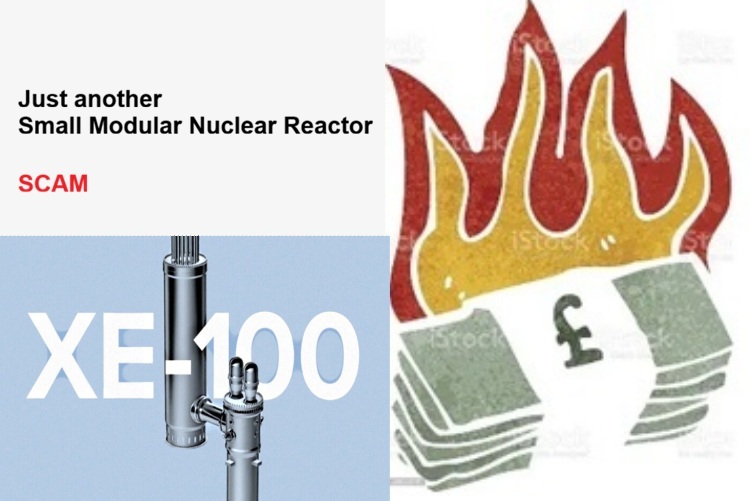
Centrica, X-energy Advance Nuclear Plans as UK Regulators to Begin Design Review for Xe-100
X.Energy Sep 15, 2026
“…………………………………………………………………………………………..You should not rely on these forward-looking statements as predictions of future events. Actual results may differ materially due to a number of factors, including, but not limited to: delays or setbacks in the GDA process; site-specific issues related to licensing, permitting, consenting, or scaling of Xe-100 plants in the UK; changes, delays, or the inability to obtain and maintain licenses or governmental approvals from the UK Office for Nuclear Regulation or other regulatory authorities, and the risk that anticipated cooperation between jurisdictions does not occur as expected; risks relating to the Company’s partnership with Centrica, including the parties’ ability to perform under and realize the anticipated benefits of the Joint Development Agreement, to secure site development, and to meet expected timelines; changes in UK or U.S. government policy, funding, or support for advanced nuclear; supply chain and supplier constraints; and first-of-a-kind risks and the Company’s limited operating experience at intended scale, including latent design or operational issues. More information about potential risks is detailed under “Risk Factors” in X-energy’s Form 10-Q filed with the Securities and Exchange Commission (the “SEC”), and in subsequent SEC filings, available on X-energy’s Investor Relations website at https://investors.x-energy.com/ and on the SEC website at www.sec.gov. Any forward-looking statements herein are based on assumptions believed reasonable as of, and speak only as of, the date of this press release. Except as required by law, X-energy undertakes no obligation to update these statements as a result of new information or future events. https://x-energy.com/news/centrica-x-energy-advance-nuclear-plans-as-uk-regulators-to-begin-design-review-for-xe-100/
Centrica, X-energy Advance Nuclear Plans as UK Regulators to Begin Design Review for Xe-100, (but with a warning)

You should not rely on these forward-looking statements as predictions of future events. Actual results may differ materially due to a number of factors, including, but not limited to: delays or setbacks in the GDA process; site-specific issues related to licensing, permitting, consenting, or scaling of Xe-100 plants in the UK; changes, delays, or the inability to obtain and maintain licenses or governmental approvals from the UK Office for Nuclear Regulation or other regulatory authorities, and the risk that anticipated cooperation between jurisdictions does not occur as expected;
risks relating to the Company’s partnership with Centrica, including the parties’ ability to perform under and realize the anticipated benefits of the Joint Development Agreement, to secure site development, and to meet expected timelines; changes in UK or U.S. government policy, funding, or support for advanced nuclear; supply chain and supplier constraints; and first-of-a-kind risks and the Company’s limited operating experience at intended scale, including latent design or operational issues. More information about potential risks is detailed under “Risk Factors” in X-energy’s Form 10-Q filed with the Securities and Exchange Commission (the “SEC”), and in subsequent SEC filings, available on X-energy’s Investor Relations website at https://investors.x-energy.com/ and on the SEC website at www.sec.gov. Any forward-looking statements herein are based on assumptions believed reasonable as of, and speak only as of, the date of this press release. Except as required by law, X-energy undertakes no obligation to update these statements as a result of new information or future events.
- On the one-year anniversary of the Centrica X-energy partnership being signed, the UK Government has directed regulators to accept the X-energy Xe-100 Advanced Modular reactor into the Generic Design Assessment, marking a significant step toward UK commercial licensing.
- Under their partnership, the companies intend to deploy up to 6 GW of new nuclear capacity in the UK (10-20 Xe-100 power stations depending on size of each installation)
LONDON, England – September 15, 2026 – Centrica plc (“Centrica”) and X-Energy, Inc. (Nasdaq: XE) (“X-energy”), a leading developer of advanced nuclear reactors and fuel technology, today announced that X-energy’s Xe-100 Generation IV advanced Small Modular Reactor (“SMR”) has been accepted into the United Kingdom’s Generic Design Assessment (“GDA”) process.
GDA acceptance formally triggers the process of assessing the design’s acceptability for deployment and operation ahead of the technical and environmental evaluations required for site-specific licensing and permitting. The assessment is expected to take approximately three years and will be administered by the UK Office for Nuclear Regulation (“ONR”), the Environment Agency (EA), and Natural Resources Wales.
The submission builds on the Xe-100’s U.S. licensing progress and is expected to benefit from expanded collaboration between the UK regulators and the U.S. Nuclear Regulatory Commission (“NRC”), enabling transfer of NRC-reviewed design documentation and safety analyses into UK design reviews.
This press release contains forward-looking statements within the meaning of the Private Securities Litigation Reform Act of 1995, which X-energy and its subsidiary TRISO-X intend to be covered by the safe harbor provisions of Section 27A of the Securities Act of 1933, as amended, and Section 21E of the Securities Exchange Act of 1934, as amended. Words such as “assume,” “believe,” “continue,” “could,” “estimate,” “expect,” “intend,” “may,” “plan,” “potential,” “predict,” “project,” “will,” “seek,” the negative of these words, or similar terms may identify forward-looking statements, but their absence does not mean a statement is not forward-looking. These include, but are not limited to, statements regarding the intended deployment of up to 6 GW of new nuclear capacity; the expected timing, conduct and completion of the GDA; the anticipated benefits of the expanded collaboration between the UK Regulators and the U.S. Nuclear Regulatory Commission; and the anticipated development and completion of X-energy’s other ongoing reactor projects.
You should not rely on these forward-looking statements as predictions of future events. Actual results may differ materially due to a number of factors, including, but not limited to: delays or setbacks in the GDA process; site-specific issues related to licensing, permitting, consenting, or scaling of Xe-100 plants in the UK; changes, delays, or the inability to obtain and maintain licenses or governmental approvals from the UK Office for Nuclear Regulation or other regulatory authorities, and the risk that anticipated cooperation between jurisdictions does not occur as expected; risks relating to the Company’s partnership with Centrica, including the parties’ ability to perform under and realize the anticipated benefits of the Joint Development Agreement, to secure site development, and to meet expected timelines; changes in UK or U.S. government policy, funding, or support for advanced nuclear; supply chain and supplier constraints; and first-of-a-kind risks and the Company’s limited operating experience at intended scale, including latent design or operational issues. More information about potential risks is detailed under “Risk Factors” in X-energy’s Form 10-Q filed with the Securities and Exchange Commission (the “SEC”), and in subsequent SEC filings, available on X-energy’s Investor Relations website at https://investors.x-energy.com/ and on the SEC website at www.sec.gov. Any forward-looking statements herein are based on assumptions believed reasonable as of, and speak only as of, the date of this press release. Except as required by law, X-energy undertakes no obligation to update these statements as a result of new information or future events.
European Investment Bank makes first investment in modular nuclear reactors
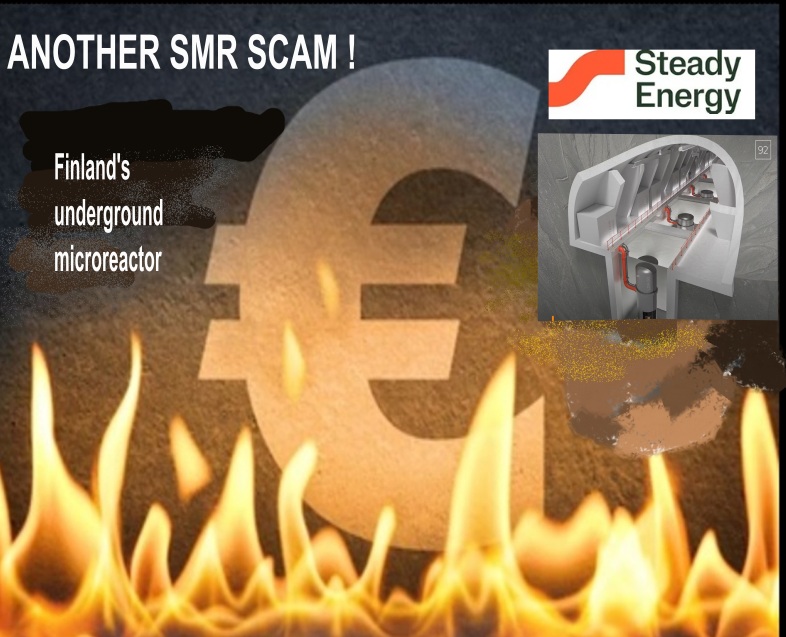
by Global Banking & Finance Review, September 15, 2026
Quick Summary
The European Investment Bank has extended a €40 million loan to Finnish startup Steady Energy to support its development of a 50 MW small modular reactor for district heating—its first investment in SMR technology, anchored within the EU’s broader strategy to deploy SMRs by the early 2030s.
………….Currently, only two commercial SMRs are in operation, in Russia and China. The European Commission wants Europe to have its first SMRs up and running by the early 2030s.
Industry and Political Reactions
“The EIB’s support to nuclear sends a positive signal to investors,” said Emmanuel Brutin, the head of industry association nucleareurope.
EU Policy and Nuclear Energy
EU countries have long been at loggerheads over whether to promote atomic power, reflecting a split between members like France and Sweden which have nuclear power plants, and traditionally anti-nuclear countries like Germany and Austria, which cite concerns over safety and nuclear waste management.
As a result, the EU budget does not directly fund nuclear plants, although the EIB loan to Steady Energy comes with an EU budget guarantee.
Future Prospects for SMRs
More than 80 SMR designs are in development worldwide, according to the International Atomic Energy Agency. ($1 = 0.8662 euro)………………………………………………………………..
EIB’s Loan to Steady Energy
The EIB will provide a €40 million ($46.18 million) loan to Finnish nuclear energy startup Steady Energy, which is developing a small modular reactor for producing heat, for a local district heating network, the bank said in a statement.
The loan is the first in a pipeline of SMR investments the EIB has planned, an official told Reuters.
Technical Details of the Project
The 50-megawatt reactor, which is still in the concept stage, will use existing light water reactor technology, in which water moderates the nuclear chain reaction and cools the reactor. It is designed to be built underground, to [?] increase the reactor’s security.
Currently, only two commercial SMRs are in operation, in Russia and China. The European Commission wants Europe to have its first SMRs up and running by the early 2030s.
Industry and Political Reactions
“The EIB’s support to nuclear sends a positive signal to investors,” said Emmanuel Brutin, the head of industry association nucleareurope.
EU Policy and Nuclear Energy
EU countries have long been at loggerheads over whether to promote atomic power, reflecting a split between members like France and Sweden which have nuclear power plants, and traditionally anti-nuclear countries like Germany and Austria, which cite concerns over safety and nuclear waste management.
As a result, the EU budget does not directly fund nuclear plants, although the EIB loan to Steady Energy comes with an EU budget guarantee. ……………………………………………….https://www.globalbankingandfinance.com/eib-makes-first-investment-modular-nuclear-reactors/
Great British Energy – Nuclear (GBE-N) and SGE at Oldbury: land interest dispute and SMR site risks for engineers

September 15, 2026|, by Tom Sullivan
Great British Energy – Nuclear (GBE-N) says it has no record of any
approach from small modular reactor (SMR) developer SGE about acquiring
land at the former Oldbury nuclear power station site for new SMR units.
SGE maintains it lodged an “indicative interest” in purchasing the
Oldbury land, which previously hosted twin Magnox reactors, as part of its
UK deployment plans. The dispute leaves ownership clarity and programme
timing for any SMR build at Oldbury unresolved, complicating early-stage
site assessment and grid-connection planning.
GBE‑N’s lack of record of
SGE’s interest in Oldbury comes as the agency is already managing a nuclear
commercial pipeline of up to £4.6bn, suggesting it will prioritise
counterparties that align cleanly with its structured SMR programme rather
than unsolicited approaches.
With Jacobs already engaged on planning and
consenting for GBE‑N’s proposed SMR fleet, any credible bid for Oldbury
is likely to be assessed against a system-wide siting and sequencing
strategy rather than on a standalone site-opportunity basis. Across our 915
Infrastructure stories, GBE‑N appears as one of the more frequently
referenced UK public-sector clients, signalling that clarity over site
control at Oldbury will matter for a wide range of prospective early-works
and delivery-partner bidders tracking its £730M-£1.1bn pre-construction
packages.
Geomechanics 15th Sept 2026, https://www.geomechanics.io/news/article/gbe-n-and-sge-at-oldbury-land-interest-dispute-and-smr-site-risks-for-engineers
NuScale Power Is Closing In on a Deal That Could Transform the Small Modular Reactor Industry
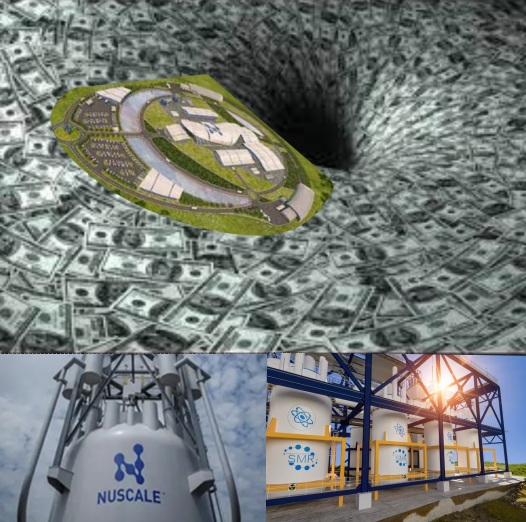
deal could be central to the company’s future, but uncertainty and risks remain.
NuScale Power could be on the verge of a game-changing deal to build nuclear reactors for the Tennessee Valley Authority.
By Ben Gran – Sep 15, 2026
Key Points
- NuScale Power executives have expressed optimism about the progress of the company’s framework agreement with the Tennessee Valley Authority.
- That agreement hasn’t translated into revenue yet.
- This nuclear energy stock has lost about 75% of its value in the past 12 months.
NuScale Power (SMR-1.16%) has developed some of the nuclear power industry’s most promising technology for small modular reactors (SMRs), which could make nuclear power more affordable, adaptable, and scalable. And as demand for electricity to power artificial intelligence data centers continues to soar, the time could be right for SMRs to step into the spotlight.
So far, NuScale is the only company that has gotten a small modular reactor design approved by the U.S. Nuclear Regulatory Commission (NRC). But is its technology ready to go from “promising” to “proven?”
Based on what management said on the company’s second-quarter earnings call on Aug. 5, NuScale might be getting closer to the final stages of a game-changing nuclear energy deal with the Tennessee Valley Authority (TVA).
That deal could be central to the company’s future, but uncertainty and risks remain.
NuScale’s TVA deal: 6 gigawatts of nuclear power
In September 2025, the TVA announced that it had signed an agreement with ENTRA1 Energy, NuScale’s strategic partner, to develop plants capable of providing up to 6 gigawatts of new nuclear power generation. ENTRA1 would build the nuclear plants, while NuScale would provide the small modular reactors to power them.
If and when they’re completed, these plants would provide enough energy to power about 4.5 million homes or 60 data centers. As of 2025, the entire U.S. nuclear energy industry generated 97 gigawatts of power, so this single project would boost total U.S. nuclear energy production by about 6.2%.
That would all be great news for the outlook for SMRs. But there’s a lot of uncertainty about when or if it will become a reality.
Will the NuScale TVA deal happen?
As of this writing, the TVA’s deal with NuScale is not yet final. There’s a non-binding agreement, but no power purchase agreement (PPA) to buy nuclear energy or start the process of breaking ground for construction of the nuclear plants. That means NuScale isn’t making any money from it yet…………..
If or when the TVA signs on the dotted line, this project could be a game-changer for the company and its stock. But investors are getting impatient. NuScale’s share price has declined by about 75% over the past year…………..
For the second quarter, the company reported only $75,000 of revenue, down from $8.05 million in the prior-year period. It has about $1.9 billion in cash on its books, which could be enough liquidity to keep it operating until it can successfully commercialize its technology. But NuScale stock was recently downgraded by a prominent UBS analyst.
NuScale’s advanced SMR technology has helped make it one of the most-promising nuclear energy stocks. But whether it’s the TVA deal or other opportunities, this company needs to sign some money-making deals sometime soon. https://www.fool.com/investing/2026/09/15/nuscale-power-is-closing-in-on-a-deal-that-could-t/
Rolls-Royce boss bets big on new engines and small nuclear

he declared that Rolls-Royce was a “burning platform”.
The second big bet is on small modular reactors (SMRs),
analysts say the promised cost savings of SMRs have yet to be proven.
Having led an extraordinary turnaround since 2023, Tufan Erginbilgiç is staking the company’s continued growth on small modular reactors and a return to the single-aisle commercial jet market
Jeevan Vasagar, Observer 6th Sept 2026
he chief executive of Rolls-Royce was in typically forthright form at the Farnborough International Airshow in July. More than a decade after exiting the market for narrow-body aircraft, the British engineering company planned to return to making engines for the single-aisle planes that are the world’s bestselling commercial jets – but the CEO wanted government support to do so.
If it were not forthcoming, Tufan Erginbilgiç added, then Rolls-Royce had other options.
Erginbilgiç, a former BP executive, has led an extraordinary turnaround. At his first town hall meeting as chief executive, he declared that Rolls-Royce was a “burning platform”. The pandemic, which brought global air travel shuddering to a halt, could not be blamed for the engine-maker’s troubles, Erginbilgiç said, telling staff: “We underperform every key competitor out there.”
Rolls-Royce’s share price has soared from about 99p when Erginbilgiç took the helm in January 2023 to £14.67 this week, an increase similar to Nvidia’s surge in that time. “Rolls is a great business, and Tufan has played the City like a piano,” one aviation industry insider said.
The question is: can it last?
……………………………………………………………………………………………………………………………………………………………………………………………………………………………………Rolls-Royce’s defence business, making power and propulsion systems for combat aircraft and submarines, has benefited from the increase in defence spending. The power systems division, supplying diesel generators and gas engines, has thrived with the boom in data centre construction. But here too Rolls-Royce is not just surfing the rising market. Profit margins have gone up as well, analysts point out……………………………………………………………………………………………………………………
The second big bet is on small modular reactors (SMRs), a technology that’s meant to reduce the time and cost of delivering nuclear fission at a moment when the uncertainty of fossil fuel markets, soaring electricity demand and emissions goals are driving renewed interest in nuclear power.
Delivering emissions-free energy is a valuable sideline for a company that relies for most of its business on burning kerosene. But analysts say the promised cost savings of SMRs have yet to be proven.
If Erginbilgiç can pull off either of these moonshots, the post-pandemic surge in Rolls-Royce’s valuation might just be the beginning.
https://observer.co.uk/news/business/article/rolls-royce-boss-bets-big-on-new-engines-and-nuclear
NUCLEAR GUINEA PIGS
How a Small Kansas Town Became the Site of a Nuclear Experiment to Power AI
Artificial intelligence needs more power than America will give it, so
the industry went looking for ground where nobody gets a vote. In Parsons,
Kansas, where one in five residents lives in poverty, that means the first
nuclear reactor in history designed to operate underground, drilled through
the aquifer, on land where the Army still detonates waste explosives under
federal permit.
Kansas City Defender 9th Sept 2026, https://kansascitydefender.com/justice/investigation/nuclear-guinea-pigs-parsons-kansas/
Gates-backed TerraPower targets British nuclear power plant start by 2034
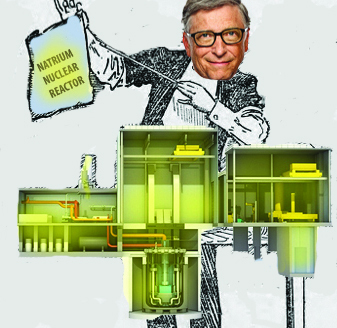
Sodium cooled nuclear reactors are not necessarily safer. https://blog.ucs.org/dlochbaum/nuclear-plant-accidents-fermi-unit-1/
By Susanna Twidale, September 7, 2026, https://www.reuters.com/business/energy/gates-backed-terrapower-targets-british-nuclear-power-plant-start-by-2034-2026-09-07/
- Summary
- Companies
- Britain would be TerraPower’s first market outside United States
- First UK plant could be operational by 2034
- Electricity cost expected under £100 per megawatt hour
ONDON, Sept 7 (Reuters) – TerraPower, the U.S. nuclear developer backed by Bill Gates, expects its Natrium reactors to begin generating electricity in Britain by 2034, its CEO told Reuters, making the UK its first market outside the United States.
Britain has backed the development of small modular reactors (SMRs) to help to increase energy security and meet climate targets, launching an Advanced Nuclear Framework this year to support privately funded projects.
Chris Levesque, TerraPower’s president and CEO, said progress on the company’s first Natrium reactor, due to be completed in 2031, showed that “2034 nuclear electricity in the UK from Natrium is very possible”.
The technology has cleared regulatory requirements in the United States, where the first plant is being constructed in Wyoming and is currently being assessed under Britain’s Generic Design Assessment (GDA) process.
Each sodium-cooled Natrium reactor generates 345 megawatts of baseload power and includes storage capable of boosting output to 500 MW for more than five hours. The reactors run on high-assay, low-enriched uranium (HALEU).
Britain and the U.S. are both building plants to produce the fuel, which was previously only commercially available from Russia.
Levesque said electricity generated by Natrium plants would be competitive with other low-carbon technologies, including combined solar-and-battery projects, at less than £100 ($135.32) per megawatt hour.
TerraPower has yet to choose a site for its first UK project, but said its British subsidiary is likely to be based in Liverpool, northwest England, close to the country’s nuclear regulator.
In the U.S., the company has an agreement with tech giant Meta (META.O), opens new tab to develop up to eight reactors. Levesque said TerraPower could seek similar partnerships in Britain.
ABB and Rolls-Royce sign SMR agreement

According to the International Energy Agency SMRs can be a catalyst for change if boosted by government support and new business models.
Rolls-Royce SMR is currently progressing site-specific design and delivery activities for three units planned for North Wales, while also working with ČEZ on deployment at the Temelín NPP site in the Czech Republic.
BB has signed a Memorandum of Understanding with Rolls-Royce SMR, a nuclear power company developing small modular reactor (SMR) technology. Within the scope of the MoU the two companies will explore collaboration opportunities on Rolls-Royce SMR’s plans to develop a fleet of units, each of which will generate 470 MW of low-carbon electricity. ABB will explore how its automation, electrification, instrumentation and communication solutions across its three business areas can enable the SMR projects to scale.
Rolls-Royce SMR has begun site-specific design and delivery activities for the UK’s first SMRs, initially comprising three units in North Wales, expected to create thousands of jobs and boost local-for-local supply chains. The company is also working with ČEZ to deploy Rolls-Royce SMRs at Temelín – with potential for additional units at Tušimice and Dětmarovice – and has recently been selected by Videberg Kraft to deliver three SMRs on Sweden’s Värö Peninsula. The MoU collaboration will be developed through ABB’s UK operations, which are headquartered in Warrington, UK.
According to the International Energy Agency SMRs can be a catalyst for change if boosted by government support and new business models. With current policy settings, the IEA forecasts that total SMR capacity will reach 40 GW by 2050 – but with tailored policy support for nuclear power, streamlined regulations for SMRs and industry delivery on new designs, capacity could reach 120 GW…………………………. https://www.modernpowersystems.com/news/abb-and-rolls-royce-sign-smr-agreement/?cf-view
Small modular reactor client lines up £1.1bn Wylfa early works deal

07 Sep 2026 By Harmsworth,
https://www.constructionnews.co.uk/buildings/small-modular-reactor-client-lines-up-1-1bn-wylfa-early-works-deal-07-09-2026/
CGI of former plans for a nuclear site at Wylfa Newydd
Great British Energy – Nuclear (GBE-N) has outlined plans for an early works contract worth up to £1.1bn as part of its small modular reactor (SMR) programme.
The government-owned nuclear developer said the package would cover civil engineering, infrastructure, buildings, mechanical and electrical work and earthworks at the Wylfa site in Anglesey, north Wales.
The contract has an indicative value of £730m-£1.1bn and is expected to run from June 2028 until June 2034, GBE-N said in a preliminary market engagement notice.
It also included an option to extend the contract until June 2037.
The client said it had previously considered splitting the work into two packages but ultimately decided to combine them to reduce interfaces between contractors.
The successful supplier will take responsibility for design from RIBA stage four and delivery of site-enabling works.
07 Sep 2026 By Harmsworth
CGI of former plans for a nuclear site at Wylfa Newydd
Great British Energy – Nuclear (GBE-N) has outlined plans for an early works contract worth up to £1.1bn as part of its small modular reactor (SMR) programme.
The government-owned nuclear developer said the package would cover civil engineering, infrastructure, buildings, mechanical and electrical work and earthworks at the Wylfa site in Anglesey, north Wales.
The contract has an indicative value of £730m-£1.1bn and is expected to run from June 2028 until June 2034, GBE-N said in a preliminary market engagement notice.
It also included an option to extend the contract until June 2037.
The client said it had previously considered splitting the work into two packages but ultimately decided to combine them to reduce interfaces between contractors.
The successful supplier will take responsibility for design from RIBA stage four and delivery of site-enabling works.
Work will include species relocation, remediation, site clearance, site establishment, construction utilities, drainage and haul roads supporting bulk earthworks.
The works are intended to establish ground levels, provide construction access and create the physical platform required for later phases.
GBE-N said the programme will cover planning, licensing, design and construction needed before its technology partner installs and commissions SMR technology.
Key parts for a new UK nuclear power station will be made in the North East.
The Siemens Energy plant in Byker, Newcastle, will manufacture steam turbines for Rolls-Royce’s flagship small modular reactors (SMRs) being built on Anglesey in North Wales.
It is the first time that such components will be produced for a small modular reactor anywhere in Europe.
Energy secretary Miatta Fahnbulleh visited Siemens Energy’s Shields Road facility on Thursday morning and said that the deal showed “what our golden age of nuclear looks like in practice”…………….
Ms Fahnbulleh said that the SMR station, which is due to open in the mid-2030s, would help deliver long-term energy bill savings for families……………
Rolls-Royce SMR selected Siemens Energy as its global turbine supplier in 2025 and has also secured contracts for similar nuclear power stations in Sweden and Czechia……………………
Rolls-Royce SMR CEO, Chris Cholerton, called Siemens Energy a “world class” supplier.
He said: “This is a perfect example of reindustrialisation and the golden age of nuclear bringing that to life.” https://www.northumberlandgazette.co.uk/news/politics/nuclear-power-station-parts-to-be-built-in-the-north-east-under-deal-for-siemens-energy-factory-8960138
America Is Betting Big on a New Generation of Small Nuclear Reactors

In addition to private-sector development, the U.S. Army has taken the lead in microreactor development in recent years, following Trump’s Executive Order 14299 – Deploying Advanced Nuclear Reactor Technologies for National Security, which established the Army as the lead agency for military nuclear energy efforts. The directive required the Army to create an official programme with a deadline for an operational reactor at a domestic military installation by September 30, 2028.
In August, the U.S. Army announced plans to award up to $2.2 billion to five companies to construct new-generation microreactors at military bases across the United States. The deployment of these reactors will be supported by the federal easing of regulations for innovative reactor designs.
The Army will provide financing to Antares Nuclear at Fort Bragg in North Carolina; BWX Technologies at Fort Campbell in Kentucky; General Atomics at Fort Hood in Texas; Radiant Industries at Fort Benning in Georgia; and Westinghouse Government Services at Fort Drum in New York, with the aim of deploying at least one microreactor by the third quarter of 2028. The companies will be expected to raise billions in private investment to support development efforts.
By Felicity Bradstock – Sep 05, 2026, 2:00 PM CDT
- The U.S. Army has selected five companies and five military installations for its Janus microreactor program, backed by up to $2.2 billion in federal funding.
- The Army aims to have at least one microreactor producing usable electricity at a military installation by September 30, 2028.
- Private developers, including Aalo, are also advancing reactor technology, supported by federal programs and efforts to streamline nuclear regulation.
Governments worldwide are racing to develop small modular reactors (SMRs) as part of their plans for a nuclear power renaissance, with significant progress being seen in recent years. However, the United States appears to be leading the way in nuclear microreactor development, with significant investment in the technology recently announced by the U.S. Army……………
A microreactor is even smaller than an SMR, for which a range of designs are currently under development in the United States with the aim of launching the first versions within the next decade. The compact nuclear reactors will be small enough to be transported by truck, boat, or plane ……
Microreactors will be produced and assembled in factories for transport to a wide range of sites, reducing capital costs and accelerating production. They are expected to have a simple, responsive design that allows them to self-adjust without requiring many specialised operators to make these changes, and will be developed with safety systems to prevent overheating or a reactor meltdown.
Most microreactors are being designed to generate between 1 MW and 20 MW of thermal energy, which could be used directly to heat or converted into clean electricity. They will run on a higher concentration of uranium-235 than is currently used in conventional reactors and can be connected to microgrids alongside renewable energy sources. They may also be useful for use in emergency response following a natural disaster. In addition, they can operate for up to 10 years without refuelling and be quickly removed from sites and replaced with new ones.
In the United States, the Department of Energy (DoE) supports a variety of advanced reactor designs, in line with President Trump’s support for a nuclear power resurgence. Trump has voiced support for a wide range of nuclear technologies, from conventional nuclear plants to SMRs and microreactors, aiming to quadruple nuclear power production in the United States by 2050.
In July, Texas-based Aalo announced that its Critical Test Reactor (CTR) had achieved criticality – the point at which a nuclear reactor is capable of sustaining a controlled, self-supporting chain reaction. Aalo said in a statement, “Our CTR went from groundbreaking to a sustained chain reaction in less than eight months – one of the fastest reactor builds in 80 years – and our company has gone from founding to fission in less than three years.” Aalo is focusing on producing 10 MWe reactors for deployment in 50 MWe Aalo Pods to power AI data centres.
In addition to private-sector development, the U.S. Army has taken the lead in microreactor development in recent years, following Trump’s Executive Order 14299 – Deploying Advanced Nuclear Reactor Technologies for National Security, which established the Army as the lead agency for military nuclear energy efforts. The directive required the Army to create an official programme with a deadline for an operational reactor at a domestic military installation by September 30, 2028.
In August, the U.S. Army announced plans to award up to $2.2 billion to five companies to construct new-generation microreactors at military bases across the United States. The deployment of these reactors will be supported by the federal easing of regulations for innovative reactor designs.
The Army will provide financing to Antares Nuclear at Fort Bragg in North Carolina; BWX Technologies at Fort Campbell in Kentucky; General Atomics at Fort Hood in Texas; Radiant Industries at Fort Benning in Georgia; and Westinghouse Government Services at Fort Drum in New York, with the aim of deploying at least one microreactor by the third quarter of 2028. The companies will be expected to raise billions in private investment to support development efforts.
Jeff Waksman, the principal deputy assistant secretary of the Army for installations, energy and environment, stated, “We believe that this will be the spear tip not just for microreactors but for all advanced reactors in the United States… There have been a lot of microreactor companies that have popped up recently, but we need to get them over the hump.”
While there has been greater discussion around SMR development, the United States is also investing heavily in microreactor construction, aiming to launch the first reactors within the next two years. Funding from the DoE and support from favourable national policies and regulations are expected to help rapidly advance development in the coming years. https://oilprice.com/Alternative-Energy/Nuclear-Power/America-Is-Betting-Big-on-a-New-Generation-of-Small-Nuclear-Reactors.html
Consortium formed for Swedish SMR project
Thursday, 3 September 2026
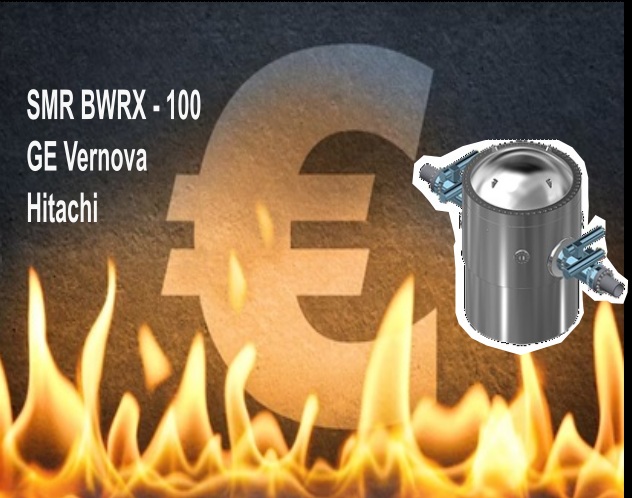
Studsvik has selected GE Vernova Hitachi Nuclear Energy and Samsung C&T as its strategic partners for an initial four-unit BWRX-300 small modular reactor project, either at its existing licensed nuclear site in Nyköping or at the Målma site in Valdemarsvik.
Swedish nuclear technical services provider Studsvik, GE Vernova Hitachi Nuclear Energy (GVH), GE Vernova Financial Services, DS Investment Partners and Samsung C&T announced the signing of an agreement to advance the ReFirm nuclear programme at Studsvik’s sites in Sweden. The agreement is exclusive for a fixed period, which the parties may extend.
ReFirm is a multi-site small modular reactor (SMR) and new nuclear development programme that became part of the Studsvik Group through the acquisition of Kärnfull Next earlier this year. The programme is focused on light-water SMR technology, with plans for multiple units at “SMR parks”. Its plan is for the first unit to be commissioned in the mid-2030s. Kärnfull Next has worked with GE Vernova Hitachi on BWRX-300 deployment in Sweden since 2022 and entered a strategic teaming agreement with Samsung C&T in December 2024.
Under the new agreement, the partners will begin joint development work immediately, including commercial, technical, regulatory and financing activities during the exclusivity period. Studsvik will lead permitting, the environmental impact assessment, site rights, community engagement and the dialogue with the Swedish state. GVH will lead reactor design, licensing support and cost estimation and acts as design authority, and, together with Samsung C&T, acts as the execution team, giving the project single-point responsibility for design and construction delivery. During the exclusivity period, South Korean investment firm DS Investment Partners will lead the investment and GE Vernova Financial Services participates in an advisory and financial structuring capacity in support of the consortium.
A joint project company will be established to support development, financing, construction, ownership and operation of the plants, with details to be finalised in definitive agreements, Studsvik said. It noted that the agreement marks the next phase of development and does not constitute a final investment decision or authorisation to construct.
Nuclear microreactors move towards operational capability for military, space energy solutions
Robert Dougherty, Space Connect, 04 September 2026
Advanced nuclear microreactors are moving towards operational capability as military and space energy solutions, according to recent comments from Antares Nuclear co-founder and CEO Jordan Bramble.
Bramble, speaking to a US House science committee on 2 September, confirmed that the microreactors are expected to have major implications for military energy resilience, national security, and space power.
Antares Nuclear’s Mark-0 reactor reportedly reached criticality on 4 June this year at Idaho National Laboratory, and the company plans to operate its Mark-1 reactor at INL for six months in 2027, followed by military deployments at Fort Bragg and Joint Base San Antonio in 2028.
He also credited the US ADVANCE Act of 2024 and 2025 presidential executive orders with streamlining regulatory processes and establishing a Department of Energy Reactor Pilot Program.
“As Antares ramps up production, we are actively exploring commercial applications to provide resilient power to compute capabilities, remote oil and gas hubs, austere mining environments, fulfilment and distribution centres, and more,” Bramble said.
“We are also building nuclear power for space. In December 2025, President Trump signed his Space Superiority executive order 14369, which was followed in April 2026 by the National Science and Technology Memorandum-3, the National Initiative for American Space Nuclear Power. We at Antares are responding to this charge.
“The same heat-pipe architecture, passive safety, TRISO fuel, and manufacturability that define our terrestrial microreactor form the design basis for space applications. This dual-use approach aligns directly with NASA’s plans for lunar fission surface power and the Space Reactor-1 Freedom pathfinder. Let me be clear, Antares is eager to build to support NASA’s planned 2028 nuclear electric propulsion demonstration mission as well as lunar surface reactors ready for launch by 2030.”
Bramble speculated around first deployment of an advanced small modular reactor at a military installation by 2028, aligning with an existing executive-order target for an Army-regulated reactor………………………………… https://www.spaceconnectonline.com.au/industry/7263-nuclear-microreactors-move-towards-operational-capability-for-military-space-energy-solutions
Great British Energy -Nuclear (GBE-N) reveals £20bn SMR TP Contract forecast breakdown after saying it didn’t have budget details
Tom Pashby, Sep 03, 2026, https://tompashby.substack.com/p/gbe-n-reveals-20bn-smr-tp-contract?utm_source=post-email-title&publication_id=6735486&post_id=213980624&utm_campaign=email-post-title&isFreemail=true&r=ln98x&triedRedirect=true&utm_medium=email
Great British Energy – Nuclear (GBE-N) has admitted it does have a breakdown of the forecast £20bn initial estimate for its small modular reactor (SMR) technical partner contract (TP Contract), despite having previously said it didn’t have details of the budget.
GBE-N is the UK Government’s body responsible for building the UK’s first government-supported SMRs. Rolls-Royce SMR has been selected by GBE-N to built three of its SMRs at the Wylfa nuclear site in North Wales.
In May, GBE-N announced it had awarded Rolls-Royce SMR stage 1 of the SMR TP Contract. It said: “The forecast Stage 1 price of the TP Contract is £359,000,000. This forecast price may change.
“The forecast Stage 2 price of the TP Contract is approximately £8,168,000,000. This forecast price is indicative only as the pricing mechanism for Stage 2 remains subject to negotiation during Stage 1.”
Taken together, that placed the forecast cost of the total TP Contract at £8,527,000,000. It is worth noting that the TP Contract does not capture the full cost of GBE-N’s Wylfa SMR project.
The contract award announcement also said: “The estimated total value within the tender notice for the two-stage TP Contract was £20,000,000,000 excluding VAT. This value was indicative only and based upon GBE-N’s initial understanding of the potential costs of developing a first of a kind technology.
“This estimated total value was based on the fact that in the tender notice GBE-N reserved the right to make up to four awards, although GBE-N also reserved the right to award three, two or only one contract(s). GBE-N has ultimately decided to award only one TP Contract and the contract award notice value reflects this.”
Given that the notes say GBE-N had an initial estimated £20bn for the TP Contract, and that it reserved the right to make up to four awards, it could reasonably be assumed that it had estimated each contract would have a value of £5bn. However, this was unclear.
Via the Freedom of Information (FOI) Act, GBE-N was asked to provide a breakdown of the £20bn figure.
In response, New Civil Engineer revealed that GBE-N said: “Following reasonable and proportionate searches of our records, we confirm that Great British Energy – Nuclear (GBE-N) does not hold the information you have requested.”
20 Working Days challenged this response via a request for an internal review and GBE-N chief financial officer Neil Cooper responded to say that upon further inspection, the organisation did have a breakdown of the figure.
“In our original decision, we concluded that GBE-N does not hold the information requested,” Cooper said.
He went on to say that, following the internal review, GBE-N concluded that it “does hold information within the scope of your request.
“Our review has found that our original decision did not identify this information because it sits within a document whose predominant purpose is not to explain the calculation of the £20bn figure and which was therefore not considered to fall within the scope of your request.
“We consider it was reasonable to have concluded initially that the document did not contain information within the scope of your request. On further review, however, we are satisfied that it does, and we have therefore continued to assess whether the information we hold is disclosable under the EIR (Environmental Information Regulations).”
However, he added: “Our review has concluded that the information held by GBE-N should be withheld from disclosure under the exceptions in Regulation 12(5)(e) (Confidentiality of commercial or industrial information) and Regulation 12(5)(b) (The course of justice and inquiries) of the EIR.”
He went on to explain this further, saying: “We are withholding the requested information in reliance on Regulation 12(5)(e) of the EIR, which permits a public authority to refuse to disclose information to the extent that disclosure would adversely affect the confidentiality of commercial or industrial information where such confidentiality is provided by law to protect a legitimate economic interest.
“The information you have requested includes inter alia vendor cost estimates, government funding assumptions, the approach to negotiation strategies, and assessments of vendor capability relating to the Small Modular Reactor Technology Selection Process.
“Much of this information was obtained through confidential market engagement, and the information is identified as being market-sensitive.”
Cooper did find that he was able to provide an explanation for the £20bn figure without releasing internal documents.
“Although we have concluded that the information that you have requested is exempt from disclosure, we have set out below an explanation of how the £20bn figure was derived,” he said.
“The £20bn estimated total value in the Contract Notice of 2023 was an indicative, best-estimate at the time figure, published to meet the legal requirement to state the total potential value of the contract award including all options on the number of sites and technology providers.
“It was arrived at on an objective basis reflecting GBE-N’s understanding at the time, and anticipating a procurement capable of supporting up to two small modular reactor projects (broadly £10bn per project), across the whole life of a project, from early development through to commercial operation.”
It is unclear whether a single SMR ‘project’ would cover the three Rolls-Royce SMRs which are proposed for the Wylfa site, or whether that would mean a single reactor.
Cooper continued: “Because the technology is first-of-a-kind and yet to be developed, the estimate necessarily carried significant uncertainty, as the Contract Notice made clear.
“The detailed assumptions underpinning the figure comprise commercially sensitive vendor cost information and funding and negotiating assumptions obtained through confidential market engagement, and to the extent that they fall within the scope of your request these are withheld under regulation 12(5)(e) of the EIR for the reasons set out in this response.”
GBE-N was approached for comment.
1 This Month



Shut down the radiation-damaged Heysham nuclear reactors now
To see nuclear-related stories in greater depth and intensity – go to https://nuclearinformation.wordpress.com

Say No to NASA’s Reckless Nuclear Reactor on the Moon
Say No to NASA’s Reckless Nuclear Reactor on the Moon
-
Archives
- October 2026 (256)
- September 2026 (339)
- August 2026 (330)
- July 2026 (355)
- June 2026 (287)
- May 2026 (306)
- April 2026 (356)
- March 2026 (251)
- February 2026 (267)
- January 2026 (308)
- December 2025 (358)
- November 2025 (359)
-
Categories
- 1
- 1 NUCLEAR ISSUES
- business and costs
- climate change
- culture and arts
- ENERGY
- environment
- health
- history
- indigenous issues
- Legal
- marketing of nuclear
- media
- opposition to nuclear
- PERSONAL STORIES
- politics
- politics international
- Religion and ethics
- safety
- secrets,lies and civil liberties
- spinbuster
- technology
- Uranium
- wastes
- weapons and war
- Women
- 2 WORLD
- ACTION
- AFRICA
- Atrocities
- AUSTRALIA
- Christina's notes
- Christina's themes
- culture and arts
- Events
- Fuk 2022
- Fuk 2023
- Fukushima 2017
- Fukushima 2018
- fukushima 2019
- Fukushima 2020
- Fukushima 2021
- general
- global warming
- Humour (God we need it)
- Nuclear
- RARE EARTHS
- Reference
- resources – print
- Resources -audiovicual
- Weekly Newsletter
- World
- World Nuclear
- YouTube
-
RSS
Entries RSS
Comments RSS

