“Without civilian nuclear energy there is no military use of this technology — and without military use there is no civilian nuclear energy,” admitted French President Emmanuel Macron in 2019. No surprise then, that France is investing billions in SMR technology.
If you didn’t know better, you’d think Lloyd Marbet was a dairy farmer or maybe a retired shop teacher. His beard is thick, soft, and gray, his hair pulled back in a small ponytail. In his mid-seventies, he still towers over nearly everyone. His handshake is firm, but there’s nothing menacing about him. He lumbers around like a wise, old hobbling tortoise.
We’re standing in the deco lobby of the historic Kiggins Theater in downtown Vancouver, Washington, about to view a screening of Atomic Bamboozle, a remarkable new documentary by filmmaker Jan Haaken that examines the latest push for atomic power and a nuclear “renaissance” in the Pacific Northwest. Lloyd, a Vietnam veteran, is something of an environmental folk hero in these parts, having led the early 1990s effort to shut down Oregon’s infamous Trojan Nuclear Plant. He’s also one of the unassuming stars of a film that highlights his critical role in that successful Trojan takedown and his continued opposition to nuclear technology.
I’ve always considered Lloyd an optimist, but this evening I sense a bit of trepidation.
“It concerns me greatly that this fight isn’t over yet,” he tells me in his deep baritone. He’s been at this for years and now helps direct the Oregon Conservancy Foundation, which promotes renewable energy, even as he continues to oppose nuclear power. “We learned a lot from Trojan, but that was a long time ago and this is a new era, and many people aren’t aware of the history of nuclear power and the anti-nuclear movement.”
The new push for atomic energy in the Pacific Northwest isn’t just coming from the well-funded nuclear industry, their boosters at the Department of Energy, or billionaires like Bill Gates. It’s also echoing in the mainstream environmental movement among those who increasingly view the technology as a potential climate savior.
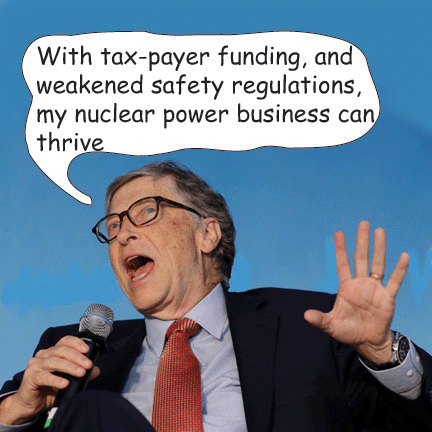
In a recent interview with ABC News, Bill Gates couldn’t have been more candid about why he’s embraced the technology of so-called small modular nuclear reactors, or SMRs. “Nuclear energy, if we do it right, will help us solve our climate goals,” he claimed. As it happens, he’s also invested heavily in an “advanced” nuclear power start-up company, TerraPower, based up in Bellevue, Washington, which is hoping to build a small 345-megawatt atomic power reactor in rural Kemmerer, Wyoming.
The nuclear industry is banking on a revival and placing its bets on SMRs like those proposed by the Portland, Oregon-based NuScale Power Corporation, whose novel 60-megawatt SMR design was approved by the Nuclear Regulatory Commission (NRC) in 2022. While the underlying physics is the same as all nuclear power plants, SMRs are easier to build and safer to run than the previous generation of nuclear facilities — or so go the claims of those looking to profit from them.
NuScale’s design acceptance was a first in this country where 21 SMRs are now in the development stage. Such facilities are being billed as innovative alternatives to the hulking commercial reactors that average one gigawatt of power output per year and take decades and billions of dollarsto construct. If SMRs can be brought online quickly, their sponsors claim, they will help mitigate carbon emissions because nuclear power is a zero-emissions energy source.
Never mind that it’s not, since nuclear power plants produce significant greenhouse gas emissions from uranium mining to plant construction to waste disposal. Life cycle analyses of carbon emissions from different energy sources find that, when every stage is taken into account, nuclear energy actually has a carbon footprint similar to, if not larger than, natural gas plants, almost double that of wind energy, and significantly more than solar power.
“SMRs are no longer an abstract concept,” Assistant Secretary for Nuclear Energy Kathryn Huff, a leading nuclear advocate who has the ear of the Biden administration, insisted. “They are real and they are ready for deployment thanks to the hard work of NuScale, the university community, our national labs, industry partners, and the NRC. This is innovation at its finest and we are just getting started here in the U.S.!”
A Risky (and Expensive) Business
Even though Huff claims that SMRs are “ready for deployment,” that’s hardly the case. NuScale’s initial SMR design, under development in Idaho, won’t actually be operable until at least 2029 after clearing more NRC regulatory hurdles. The scientists of the Intergovernmental Panel on Climate Change are already calling for fossil-fuel use to be cut by two-thirds over the next 10 years to transition away from carbon-intensive energy, a schedule that, if kept, such small reactors won’t be able to speed up.
And keep in mind that the seemingly prohibitive costs of the SMRs are a distinct problem. NuScale’s original estimate of $55-$58 per megawatt-hour for a proposed project in Utah — already higher than wind and solar which come in at around $50 per megawatt-hour — has recently skyrocketed to $89 per megawatt-hour. And that’s after a $4 billion investment in such energy by U.S. taxpayers, which will cover 43% of the cost of the construction of such plants. This is based on strikingly rosy, if not unrealistic, projections. After all, nuclear power in the U.S. currently averages around $373 per megawatt-hour.
And as the Institute for Energy Economics and Financial Analysis put it:
“[N]o one should fool themselves into believing this will be the last cost increase for the NuScale/UAMPS SMR. The project still needs to go through additional design, licensing by the U.S. Nuclear Regulatory Commission, construction, and pre-operational testing. The experience of other reactors has repeatedly shown that further significant cost increases and substantial schedule delays should be anticipated at any stages of project development.”
Here in the Pacific Northwest, NuScale faces an additional obstacle that couldn’t be more important: What will it do with all the noxious waste such SMRs are certain to produce? In 1980, Oregon voters overwhelmingly passed Measure 7, a landmark ballot initiative that halted the construction of new nuclear power plants until the federal government established a permanent site to store spent nuclear fuel and other high-level radioactive waste. Also included in Measure 7 was a provision that made all new Oregon nuclear plants subject to voter approval. Forty-three years later, no such repository for nuclear waste exists anywhere in the United States, which has prompted corporate lobbyists for the nuclear industry to push several bills that would essentially repeal that Oregon law.
NuScale, no fan of Measure 7, has decided to circumvent it by building its SMRs across the Columbia River in Washington, a state with fewer restrictions. There, Clark County is, in its own fashion, beckoning the industry by putting $200,000 into a feasibility study to see if SMRs could “benefit the region.” There’s another reason NuScale is eyeing the Columbia River corridor: its plants will need water. Like all commercial nuclear facilities, SMRs must be kept cool so they don’t overheat and melt down, creating little Chernobyls. In fact, being “light-water” reactors, the company’s SMRs will require a continuous water supply to operate correctly.
Like other nuclear reactors, SMRs will utilize fission to make heat, which in turn will be used to generate electricity. In the process, they will also produce a striking amount of waste, which may be even more challenging to deal with than the waste from traditional reactors. At the moment, NuScale hopes to store the nasty stuff alongside the gunk that the Trojan Nuclear Plant produces in big dry casks by the Columbia River in Oregon, near the Pacific Ocean.
As with all the waste housed at various nuclear sites nationwide, Trojan’s casks are anything but a permanent solution to the problem of such waste. After all, plutonium garbage will be radioactive for hundreds of thousands of years. Typically enough, even though it’s no longer operating, Trojan still remains a significant risk as it sits near the Cascadia Subduction Zone, where a “megathrust” earthquake is expected someday to violently shake the region and drown it in a gigantic flood of seawater. If that were to happen, much of Oregon’s coastline would be devastated, including the casks holding Trojan’s deadly rubbish. The last big quake of this sort hit the area more than 300 years ago, but it’s just a matter of time before another Big One strikes — undoubtedly, while the radioactive waste in those dry casks is still life-threatening.
Nuclear expert M. V. Ramana, a soft-spoken but authoritative voice in Jan Haaken’s Atomic Bamboozle documentary, put it this way to me:
“The industry’s plans for SMR waste are no different from their plans for radioactive waste from older reactors, which is to say that they want to find some suitable location and a community that is willing to accept the risk of future contamination and bury the waste underground.
“But there is a catch [with SMR’s waste]. Some of these proposed SMR designs use fuel with materials that are chemically difficult to deal with. The sodium-cooled reactor design proposed by Bill Gates would have to figure out how to manage the sodium. Because sodium does not behave well in the presence of water and all repositories face the possibility of water seeping into them, the radioactive waste generated by such designs would have to be processed to remove the sodium. This is unlike the fleet of reactors [currently in operation].”
Other troubles exist, too, explains Ramana. One, in particular, is deeply concerning: the waste from SMRs, like the waste produced in all nuclear plants, could lead to the proliferation of yet more atomic weaponry.
Nuclear Hot Links
As the pro-military Atlantic Council explained in a 2019 report on the deep ties between nuclear power and nuclear weapons in this country:
“The civilian nuclear power sector plays a crucial role in supporting U.S. national security goals. The connectivity of the civilian and military nuclear value chain — including shared equipment, services, and human capital — has created a mutually reinforcing feedback loop, wherein a robust civilian nuclear industry supports the nuclear elements of the national security establishment.”
In fact, governments globally, from France to Pakistan, the United States to China, have a strategic incentive to keep tabs on their nuclear energy sectors, not just for potential accidents but because nuclear waste can be utilized in making nuclear weapons.
Spent fuel, or the waste that’s left over from the fission process, comes out scalding hot and highly radioactive. It must be quickly cooled in pools of water to avoid the possibility of a radioactive meltdown. Since the U.S. has no repository for spent fuel, all this waste has to stay put — first in pools for at least a year or more and then in dry casks where air must be constantly circulated to keep the spent fuel from causing mayhem.
The United States already has a troubling and complicated nuclear-waste problem, which worsens by the day. Annually, the U.S. produces 88,000 metric tons of spent fuel from its commercial nuclear reactors. With the present push to build more plants, including SMRs, spent fuel will only be on the rise. Worse yet, as Ramana points out, SMRs are going to produce more of this incendiary waste per unit of electricity because they will prove less efficient than larger reactors. And therein lies the problem, not just because the amount of radioactive waste the country doesn’t truly know how to deal with will increase, but because more waste means more fuel for nukes.
As Ramana explains:
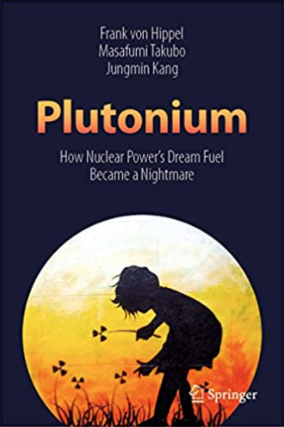
“When uranium fuel is irradiated in a reactor, the uranium-238 isotope absorbs neutrons and [transmutes] into plutonium-239. This plutonium is in the spent fuel that is discharged by the reactor but can be separated from the rest of the uranium and other chemicals in the irradiated fuel through a chemical process called reprocessing. Once it is separated, plutonium can be used in nuclear weapons. Even though there are technical differences between different kinds of nuclear reactors, all reactors, including SMRs, can be used to make nuclear weapons materials… Any country that acquires a nuclear reactor automatically enhances its ability to make nuclear weapons. Whether it does so or not is a matter of choice.”
Ramana is concerned for good reason. France, as he points out, has Europe’s largest arsenal of nuclear warheads, and its atomic weapons industry is deeply tied to its “peaceful” nuclear energy production. “Without civilian nuclear energy there is no military use of this technology — and without military use there is no civilian nuclear energy,” admitted French President Emmanuel Macron in 2019. No surprise then, that France is investing billions in SMR technology. After all, many SMR designs require enriched uranium and plutonium to operate, and the facilities that produce materials for SMRs can also be reconfigured to produce fuel for nuclear weapons. Put another way, the more countries that possess this technology, the more that will have the ability to manufacture atomic bombs.
As the credits rolled on Atomic Bamboozle, I glanced around the packed theater. I instantly sensed the shock felt by movie-goers who had no idea nuclear power was priming for a comeback in the Northwest. Lloyd Marbet, arms crossed, was seated at the back of the theater, looking calmer than most. Still, I knew he was eager to lead the fight to stop SMRs from reaching the shores of the nearby Columbia River and would infuse a younger generation with a passion to resist the nuclear-industrial complex he’s been challenging for decades.
“Can you believe we’re fighting this shit all over again?” he asked me later with his usual sense of urgency and outrage. “We’ve beat them before and you can damn well bet we’ll do it again.”
The diminutive reactors are likely to be just as prone to delays and cost overruns as their behemoth predecessors.
I just read Pal Hockenos’ fine story about small nuclear reactors. But Hockenos is naive to think that Bill Gates and co. give a hoot about our future. What they do care about is their own increasing $squillions. And the coming source of new $squillions is in weaponry – that’s where all sorts of applications for SMRs lie. And Gates etc are well aware that the fixing-climate story is just a cover for the real practical purpose.
IN RECENT YEARS, the nuclear power lobby and its advocates have begun to sing a new song. They have bailed on the monstrous reactors of the 20th century — not because of safety or toxic waste concerns, but because of the reactors’ exorbitant expense and ponderous rollout schedules. And they have switched their allegiance to a next generation nuclear fission technology: small modular reactors, which they claim will help rescue our warming planet, as well as the nuclear power industry— once they exist.
Respected thinkers such as former U.S. president Barack Obama, French president Emmanuel Macron, and Microsoft co-founder and philanthropist Bill Gates have toasted the idea of small modular reactors, or SMRs, as a potentially reliable, almost-emissions-free backup to intermittent renewable energy sources like wind and solar. Advocates claim that because SMRs will be smaller than the giants that currently dominate horizons, they will be safer, cheaper, and quicker to build. Although SMRs will have only a fraction of the power-generating capacity of traditional nuclear power reactors, proponents envision that they will, one day, be assembled in factories and transported as a unit to sites — like Sears’ mail-order Modern Homes of the early 1900s.
Currently, half of the states in the EU, both major political parties in the U.S, and the five BRICS nations — Brazil, Russia, India, China, and South Africa — have indicated that they want to split atoms for the purpose of generating energy. U.S. President Joe Biden included billions of dollars in tax credits for nuclear energy in the Inflation Reduction Act and the Infrastructure Investment and Jobs Act. Gates has gone so far as to invest a chunk of his fortune in a firm he founded, TerraPower, a leading nuclear innovation company. But despite the prodigious chatter, the endeavor to blanket the Earth with SMRs is a Hail Mary pass that’s very unlikely to succeed.
Granted, it is certainly a step in the right direction that most observers now see the postwar, giga-watt-scale water-cooled reactors as obsolete. When constructed new, these behemoths generate electricity at up to nine times the cost of large-scale solar and onshore wind facilities, and can take well over a decade to get up and running. Perhaps for this reason, there has been one, and only one, new nuclear power project initiated in the U.S. since construction began on the last one 50 years ago: a two-reactor expansion of the Vogtle Electric Generating Plant in Georgia. The first of the reactors came online this year — seven years behind schedule. The staggering $35 billion cost for the pair is more than twice the original projection.
But SMRs are just as likely to face similar delays and cost overruns. Currently, there are just two existing advanced SMR facilities in the world that could be reasonably described as SMRs: a pilot reactor in China and Russia’s diminutive Akademik Lomonosov. More small reactors are under construction in China, Russia, and Argentina, but all of them are proving even more expensiveper kilowatt than traditional reactors.
It’s worth noting that in the U.S., and everywhere else in the world, nuclear policy relies heavily on subsidies to be economically competitive. Starting next year, utilities operating nuclear facilities in the U.S. can qualify for a tax credit of $15 per megawatt-hour — a break that could be worth up to $30 billion for the industry as a whole. However, even these giveaways won’t reduce the projected costs of SMR-generated electricity to anywhere near the going prices of wind and solar power.
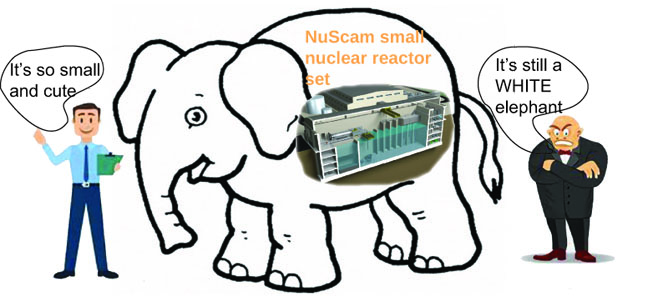
In the U.S., the only SMR developer with a design approved by the Nuclear Regulatory Commission is NuScale, which plans to deploy six modules at one site in Idaho that will together generate less electricity than a smallish standard nuclear reactor. So far, however, NuScale has yet to lay a single brick. Its biggest win to date is securing $4 billion in federal tax subsidies. In January of this year, NuScale announced plans to sell electricity not at $58 per megawatt-hour, as originally pledged, but at $89 per megawatt-hour, citing higher than anticipated construction costs. The new projection is nearly twice the average global cost of utility-scale solar and onshore wind, according to calculations by BloombergNEF. And without the government subsidies, NuScale’s price tag would be that much higher.
In fact, there’s a fair chance that not a single NuScale SMR will ever be built: The company has said it will not begin construction until 80 percent of its expected generation capacity is subscribed, and currently buyers have signed up for less than a quarter of the plant’s capacity.
Gates’s TerraPower has an even longer way to go, although it too is cashing in on subsidies. The U.S. Department of Energy has pledged up to $2 billion in matching funds to construct a demonstration plant in Wyoming. Yet TerraPower recently announced it’s facing delays of at least two years because of difficulties securing uranium fuel from its lone supplier: Russia.
Even if the unlikely rollout of SMRs eventually happens, it will unfold too late to curb the climate crisis. And the reactors will face many of the same safety and radioactive waste concerns that plagued their larger counterparts, if only at smaller scales. Meanwhile, the siren song of nuclear energy is diverting critical resources from the urgent task of building out clean technologies. And the idea that nuclear reactors would serve as “backups” for wind and solar is misguided because the reactors can’t be ramped up and down quickly.
……………………………The technology of the future is already here. Clean wind and solar energy — coupled with updated smart grids, expanded storage capacity, hydrogen technology, virtual power plants, and demand response strategies — can work. Our energy systems of the future will look like a patchwork quilt, with diverse energy sources kicking in at different times during the day, and with the mix differing from one day to the next.
Bill Gates and like-minded innovators should put their minds and fortunes to work on this futuristic project of the present — and leave the 20th century relic that is nuclear power in the past, where it belongs
The UK government is to offer grants of £157m as part of its launch of a new body to support the nuclear power industry.
Great British Nuclear (GBN) will be tasked with helping deliver the government’s commitment to provide a quarter of the UK’s electricity from nuclear energy by 2050.
The new body will help drive rapid expansion of nuclear power plants in the UK, boost energy security and reduce dependence on fossil fuel imports, said the energy security secretary, Grant Shapps.
It is hoped that a competition to develop small modular reactors (SMRs) will drive billions of pounds of investment into the technology, which the government hopes will be cheaper and quicker to build than traditional large nuclear power plants.
However, environmental campaigners and academics have argued that SMRs have no track record and that time and resources would be better spent on renewables such as more offshore wind.
The launch at the Science Museum in London on Tuesday was delayed from last week after it clashed with the government’s public sector pay deal announcement.
The government’s previous attempts to attract funding for conventional large reactors have so far only yielded the much delayed and over-budget Hinkley Point C nuclear plant in Somerset.
Shapps is expected to announce the winners of the competition in the autumn, with a number of manufacturing firms such as Rolls-Royce and Hitachi interested in developing SMRs.
The government said it was still committed to Hinkley Point C and also Sizewell C, a nuclear power plant in Suffolk that was announced last year and has been backed with £700m of public funds.
In addition to the competition launch, Shapps announced that up to £157m of grant funding would be available. There will be up to £77m to accelerate the development of a nuclear business in the UK and support new designs, and a further £58m for the development and design of a new advanced modular reactor that operates at higher temperatures……………………………………….
Dr Doug Parr, the chief scientist for Greenpeace UK, accused the government of “obsessing” over nuclear power and decried SMRs.skip past newsletter promotion.
“As the government tries to whip up investment for the latest generation of reactors, it is striking how many of the nuclear industry’s speculative claims are being repeated by ministers as fact,” he said. “The hype seems to have been enough to convince our government that nuclear’s last gasp is in fact a new dawn, but at their radioactive cores SMRs remain the same bad bet.
“SMRs have no track record, but initial indications are that the familiar problems of cost overruns and delays will be repeated, and the accumulation of unmanageable waste will continue.”
Parr added: “By continually obsessing about nuclear, the government is taking its eye off the net zero ball, which will have to be delivered through a predominantly renewable, modern electricity grid. No number of SMRs will fix the government’s lacklustre effort to address issues of delayed connections, smart local grids and home efficiency.”
Steve Thomas, an emeritus professor of energy policy at the University of Greenwich, said: “Yet again, the British government has proved credulous to the claims of the nuclear industry that a new generation of technology will solve all the problems of its predecessors.
The government delayed the event over “unforeseen circumstances”
Mini nuclear reactor developers including Rolls-Royce Holdings PLC (LSE:RR.) have been left in the dark after the official launch of Great British Nuclear was delayed on Thursday.
Net zero secretary Grant Shapps had been due to unveil the new public body at London’s science museum before the event was cancelled over “unforeseen circumstances”.
Great British Nuclear, originally announced in the chancellor’s spring budget, will be an arms-length body set up to support the roll-out of small modular reactors (SMRs) in the UK……………..
Rolls-Royce and General Electric (NYSE:GE) had been among those due to attend the event, having both proposed designs for prospective use in the UK.
Rolls is currently the only company which has an SMR design currently passing through regulatory assessments though, carried out by the Office for Nuclear Regulation, Environment Agency and Natural Resources Wales.
2 Mycle Schneider, who produces the World Nuclear Industry Status Report (WNISR) says that the recent announcements by the Ontario government about new nuclear reactors at Darlington and Bruce amount to “a mixture of tech fantasy and collective denial of the state of the industry.”
He gave evidence to the Belgian Parliament on SMRs on 20 June 2023, following a first hearing on 30 May 2023. Six of ten presentations were given by technology providers, one by a former administrator of the French Alternative Energies and Atomic Energy Commission (CEA), one by an International Energy Agency representative, and one by a Dutch ex-government “expert” — a very open, balanced panel – sound familiar?
All ten presentations – including Mycle’s – are available in one volume here. Most are in English. He says they provide “useful documentation on current SMR strategies. NuScale and Rolls Royce were invited but did not show up. Maybe NuScale did not feel like coming… When it became public that the NuScale CFO has sold most of his shares, their value on the stock market plunged even further.
The videos of the hearings, including Q&A are here and here.
Two energy experts discuss the design risks and excessive costs of the NuScale small modular nuclear reactor.
NuScale project distracts from the need to push clean energy sources.
Despite its small size, NuScale has outsize cost and safety problems.
NuScale is one of several companies making long-shot attempts to commercialize what are known as small modular nuclear reactors, or SMRs. Its 77-megawatt project is the furthest along in the Nuclear Regulatory Commission, or NRC, licensing approval process, but in the earliest stages, with a long way to go. But the NRC has identified serious safety concerns, and cost estimates have ballooned in recent years.
EWG has long warned about the folly of investing in nuclear power, including SMRs that are unlikely ever to get off the ground.
And in a new analysis commissioned by EWG, two nuclear experts with decades of experience note significant NuScale cost and safety drawbacks that have been raised by NRC staff.
The experts recently analyzed the November 15, 2022, pre-application readiness assessment report the NRC issued to NuScale, which details many concerns about the project’s safety. The two authors are Arjun Makhijani, Ph.D., president of the Institute for Energy and Environmental Research, which advocates for a safer environment, and M.V. Ramana, Ph.D., a professor at the School of Public Policy and Global Affairs, University of British Columbia.
Their findings further strengthen the case against more funding for NuScale – yet another nuclear boondoggle that will fleece American taxpayers.
The primary issues they identified were escalation costs and design issues, for which the company has not properly addressed the safety issues involved. These include:
Costs. The projected construction costs of the first proposed NuScale project have grown from $5.3 billion, as estimated in November 2021, to $9.3 billion, in January 2023.
Risks. The NRC and its Advisory Committee on Reactor Safeguards identified several safety risks in the design for the reactor, in particular with the steam generator.
Energy companies, states and the government should stop throwing good money after bad, wasting it on lofty “all of the above” nuclear plans that will never come to fruition.
Instead they should focus on promoting workable, clean power solutions that already exist, like wind, solar and distributed generation, and associated technologies. Taxpayer dollars should be spent only on technologies that fight the climate crisis and do not have a history of persistent, inevitable ratepayer and taxpayer bailouts. Nuclear power and carbon capture and sequestration both fail that test.
The nuclear money pit
The nuclear industry survives in part thanks to assertions of clean, cheap power, which have never materialized, and an oversize influence in Congress and state legislatures………………………………….
Experts: NuScale’s costs soaring
NuScale’s first SMR plant is intended for the Utah Associated Municipal Power Systems, or UAMPS. The goal is to provide power to electric utilities in Utah and surrounding states. The target date is 2029, though nuclear plants have typically been plagued by significant delays. Its estimated cost is over $9 billion for just six small reactors that would, in total, be less than half the size of the standard large nuclear unit.
That estimate has increased by $4 billion in less than two years.
But the government keeps throwing taxpayer dollars at NuScale, promising $1.4 billion to the UAMPS project on top of the $400 million it has already squandered.
Other than these expected costs spiraling out of control, Makhijani and Ramana in their analysis find that even though NuScale keeps changing design specifications for its unit, NuScale’s safety analyses have not evaluated the impact of these design changes.
Experts: Changes in design present dangerous power projections
NuScale has increased by 50 percent the power output of its yet-to-be-built SMR reactor design. This means there will be more heat, pressure and radioactivity, which will further stress critical components of the reactor. These factors increase the risk of a catastrophic breakdown and radiation leak.
Unlike any nuclear power plant that’s already online, NuScale would house the reactor core – the nuclear fuel – and steam generator in the same vessel. This would be a departure from the traditional design, in which the steam generator is separated from the fuel, outside the reactor vessel but inside the secondary containment.
The helical design of the steam generator has also never been used in any other commercial nuclear power plant, which makes it hard to evaluate how it would behave in the long run.
Experts: Risky reactor design
The NRC has preliminarily approved NuScale’s design, despite serious questions about the steam generator. And NuScale still hasn’t produced the necessary analysis of all the accidents that could occur. …………………………………………………………….
Experts: NRC ignored risk guidance
The Advisory Committee on Reactor Safeguards, or ACRS, warned in a letter to NRC the “design and performance of the [NuScale] steam generators have not yet been sufficiently validated.”
The 1954 Atomic Energy Act requires ACRS to review and report to the NRC commissioners and staff about safety studies and reactor facility license and license renewable applications, among other issues.
The ACRS noted that NuScale’s plan “introduces different failure modes.”…………………………………………..
Experts: A flawed energy plan
Makhijani and Ramana conclude that the NuScale project, referred to as VOYGR, has too many problems and that there is insufficient information to justify NuScale’s safety claims.
“[T]he 77-MW VOYGR . . . has not received standard design approval, much less full Commission certification. On the contrary, it has received a letter from the NRC staff with 99 ‘significant’ observations and six major challenges,” they write.
Further, they warn:
These problems need real-world analysis, design, and most important, real-world testing to be resolved. Premature wear of the steam generators and their potential failure were not analyzed properly and insufficiently tested even for the (previous) 50 MW design. The hurdles are even higher with the 77-MW version.
The NuScale project is a trainwreck waiting to happen.
The climate problem is too serious to engage in unrealistic modelling exercises. Wishful thinking about nuclear energy will only thwart our ability to act meaningfully to lower emissions rapidly.
On June 20, the Canada Energy Regulator (CER) released its 2023 Canada’s Energy Future report, developing scenarios for a path to net zero by 2050. These scenarios project roughly a tripling of nuclear energy generation capacity in Canada by 2050, seemingly reinforcing then-natural resources minister Seamus O’Regan’s statement in 2020 that there is “no path to net zero without nuclear.”
However, underlying both the scenarios and O’Regan’s contention is wishful thinking about the economics of nuclear energy, and how fast nuclear power can be scaled up.
The new nuclear capacity the report envisions consists of so-called small modular nuclear reactors (SMRs), which have so far not been built in Canada. Aside from refurbishing existing CANDU reactors, the CER does not think any more standard sized nuclear reactors will be built in Canada. Most of this buildup is to happen between 2035-2050, meaning that nuclear power will not help meet the government’s stated goal of decarbonizing the electricity grid by 2035.
But can SMRs be built rapidly after 2035? Only two Crown companies in the business of generating electricity for the grid have proposed to build SMRs: NB Power in New Brunswick, and Ontario Power Generation (OPG).
The reactor designs proposed for New Brunswick are cooled by molten salts and liquid sodium metal. Despite decades of development work and billions of dollars invested, major technical challenges have prevented molten salt reactors and sodium-cooled reactors from commercial viability, making it highly unlikely that the New Brunswick designs can be rapidly deployed in the time frame envisioned by the CER.
Assuming that OPG’s chosen design—the 300-megawatt BWRX-300—is the one to be deployed widely, then around 70 SMR units would need to be built and operating effectively on the grid between 2030-2050. The BWRX-300 design is yet to be approved by any safety regulator anywhere in the world.
But the report has an even more serious problem: economics. Nuclear power cannot compete economically, which is why its share of global electricity generation has declined from 17.5 per cent in 1996 to 9.2 per cent in 2022. Because SMRs lose out on economies of scale, they will produce even more expensive electricity.
The CER’s scenarios for nuclear power are based on the Electricity Supply Model, meant to calculate “the most efficient and cost-effective way to meet electricity demand in each region.” Such models are widely used in energy analysis and policymaking, but their utility depends on the validity of the assumptions used; garbage in, garbage out.
Two key parameters underlie the report’s scenarios: the capital cost of an SMR, and how that cost evolves with time. The CER’s assumptions in the two net-zero scenarios are that a SMR costs $9,262 per kilowatt in 2020, falling to $8,348 per kW by 2030, and to $6,519 per kW by 2050. Both these assumptions are ridiculously out of touch with the real world.
Consider the CAREM-25 SMR designed to feed 25 megawatts of electricity into the grid, being built in Argentina since 2014. Its original cost estimate in 2014 of US$446-million has escalated significantly since then, but even using these original costs, the project costs nearly $30,000 per kilowatt in 2022 Canadian dollars.
The NuScale design, arguably the closest to deployment in the United States, has been in development since 2007 with the build not yet begun. The January 2023 cost estimate for six NuScale SMRs with a total capacity of 462 megawatts is $9.3-billion, or over $26,000 per kilowatt in Canadian dollars.
Finally, the cost of the five-megawatt Micro Modular Reactor Project at Chalk River, Ont., was estimated by the proponent in May 2020 to be between $100- and $200-million. In 2022’s Canadian dollars, that works out to $22,000 to $44,000 per kilowatt.
In other words, the CER’s cost assumptions are wild underestimates, two-and-a-half to four times lower than the current evidence.
The second incorrect assumption is that costs will decrease with time. Both in the United States and France, the countries with the highest number of nuclear plants, the trend was the opposite: costs went up—not down—as more reactors were built. In both countries, the estimated construction cost of the most recent reactors being built—Vogtle in the United States and Flamanville-3 in France—have broken new records.
We need government organizations to do better. The climate problem is too serious for such unrealistic modelling exercises. Wishful thinking will only thwart our ability to act meaningfully to lower emissions rapidly.
M.V. Ramana is the Simons Chair in Disarmament, Global and Human Security and professor at the School of Public Policy and Global Affairs at the University of British Columbia. Susan O’Donnell is adjunct research professor and primary investigator of the CEDAR project at St. Thomas University in Fredericton, N.B.
High inflation and rising interest rates are driving up the cost of a new generation of miniature atomic reactors that the nuclear industry is relying on to lift sales and help meet climate targets.
Nuclear-company executives and regulators met this week at the International Atomic Energy Agency to negotiate potential manufacturing and technology standards, a key step the industry needs to take in order to make prices competitive with other emissions-free energy sources. There are currently more than 80 unique small modular reactor, or SMR, designs under development, resulting in sprawling supply chains and caps on scaling up production.
“With higher interest rates to deal with and inflation pushing up the cost of steel, copper wire and just about everything else that goes into building an SMR, we know that even the most promising projects are having to tell their investors and buyers that prices have risen substantially,” IAEA Director General Rafael Mariano Grossi said at the meeting in Vienna. “Avoiding, or at least mitigating, cost rises and delays is now even more crucial.”
……………………. Nuclear energy costs in the U.S. currently level out to an average of $373 a megawatt hour, according to the latest estimates by BloombergNEF. That’s significantly higher than solar or onshore wind at $60 and $50 a megawatt hour, respectively.
Enter companies like NuScale Power Corp., the first U.S. SMR developer with a licensed design, and which wants to begin generating at the end of the decade. NuScale originally foresaw average generation costs of $55 a megawatt hour in 2016, which was slightly lifted to $58 five years later.
But new estimates show costs surged to almost $120 a megawatt hour this year, according to company data analyzed by the Institute for Energy Economics. Skyrocketing prices of commodities including steel, carbon fiber and copper drove the increase, according to the report. NuScale’s stock has tumbled a third a third this year.
U.S. defense department proposal to use a nuclear micro-reactor as a power backup for the planned missile defense system on Guam is now being considered by Congress.
But a local watchdog group is sounding the alarm over the danger of the largely untested technology.
Leland Bettis of the local think tank and research group, pacific center for island security has been tracking the missile defense system plans for Guam and the potential for a nuclear micro-reactor.
“That’s not been disclosed by the MDA yet but we’ve sorta been tracking this. I think what really drew our attention was over the weekend the Senate Armed Services Committee’s executive summary, their NDAA language includes this piece which asks for a briefing for the Senate about the possibility of placing microreactors in Guam. 109
Bettis acknowledges that nuclear power has proven to be safe, and can provide huge cost savings even for private commercial use. [??]
But he believes a red line is crossed if they become targets in a combat situation.
“Just imagine if these reactors are a principal source of power for some of the measures, and counter-measures that the military is operating they’re certainly gonna be a target,” Bettis said. “That means that the environmental impact is not just about how does the nuclear reactor perform in producing power but how might a micro nuclear reactor perform if it’s targeted and hit.”
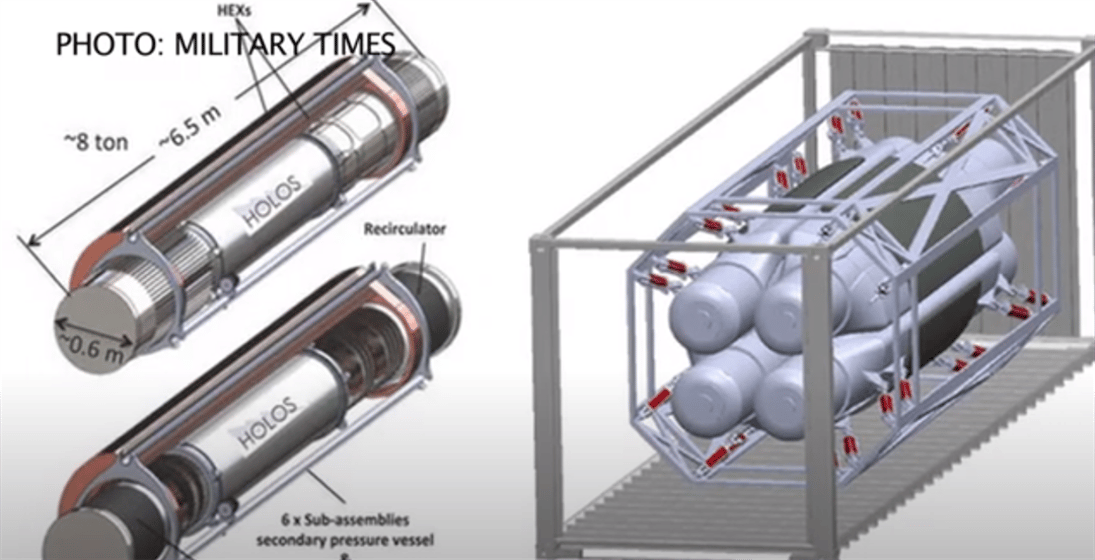
An article last year in the “Military Times” mentions Guam as a potential site for the mobile nuclear equipment.
It describes a 40-ton reactor that can fit into three to four 20-foot containers and can provide up to 5 megawatts of power.
The army has been considering the use of mobile nuclear power for years in a program called project pele, ironically named after the Hawaiian goddess of fire and volcanoes.
The benefits as a power source in remote, austere locations is clear, but there are drawbacks in battle situations.
If however that reactor is struck during conflict all the troops that are around that will be affected. So I think the concerns that they had about the use of these particular power devices for military people is magnified ten-fold when you think about the possibility that these might be placed in proximity to a civilian community.
And the military has confirmed that the planned 360-degree missile defense system could have as many as twenty different sites scatttered across the island.
Bettis says we need to know now more than ever, what’s going into each of these sites.
The people that I’ve talked to talk about a micro nuclear reactor and say if it hits you need a set-aside that’s at least a mile. That’s gonna be a very different sort of thing then if you had command and control module in your neighborhood, so I think as a community we need better transparency about what is being planned at all these locations.
Today a network of groups across Canada announces the launch of the SMR Education Task Force to share under-reported facts about small modular nuclear reactors (SMRs) with members of Parliament and provincial legislatures.
We begin with the latest report from Canada Energy Regulator (CER). This federal document, called Canada’s Energy Future, projects that enough new nuclear reactors (SMRs) will be operational by 2050 to more than double Canada’s existing nuclear electricity generation.
Canada currently has 19 operating power reactors, built over 58 years. The new report claims that we will build more than 50 new reactors in much less time.
This fantasy has no basis in reality. It is inconsistent with independent analyses by energy researchers not tied to the nuclear industry. One such study in the Bulletin of Atomic Scientists makes it clear that SMRs have at best a marginal role to play in a truly effective climate action plan. SMRs fail the tests of timeliness and affordability – they take too long and cost too much.
In addition to Ontario and Alberta, the CER report imagines deploying SMRs in Quebec and British Columbia. This is news to citizens in those provinces. BC ratepayers have rejected nuclear power in the past, and Quebec phased out of nuclear power in 2012. With every reactor comes long-lived radioactive waste — including the structure itself, which is a provincial responsibility to safeguard for thousands of years after shutdown.
Yesterday, the Coalition for Responsible Energy Development in New Brunswick (CRED-NB) sent a letter to Canada’s Natural Resources Minister reminding him that more than 120 civil society, public interest, faith-based and Indigenous groups across Canada have signed a statement warning that SMRs are a dirty, dangerous distraction from urgent climate action.
These groups understand that responding to the climate emergency does not require gambling on untested nuclear reactors. They know that energy efficiency measures and renewable sources cost at least 3 to 7 times less than nuclear power per tonne of carbon emissions avoided.
The groups oppose using public funds earmarked for climate action to support the nuclear industry’s eager experimentation with novel reactor designs. We are challenging the government to release the research and data that support its nuclear-based strategy.
Nuclear promoters, with long-standing allies embedded in the federal and provincial governments, are making unsubstantiated promises about SMRs in an audacious attempt to grab as much public funding as possible to keep their dying industry alive.
Worldwide, nuclear’s share of global electricity has dropped over the last 25 years from 17% to less than 10%. The International Energy Agency forecasts that more than 90% of all new electricity installations worldwide over the next 5 years will be non-hydro renewables.
The industry’s money-grab will succeed only if our public representatives remain uninformed about the facts. That is why we are pleased to announce the SMR Education Task Force and look forward in the months ahead to share information about SMRs based on independent science and research.
Ah, the USSR. It was a strange place with strange ideas. Ideas such as planting unprotected mini nuclear power sources into inhospitable and hard-to-reach areas. I mean, nothing should go wrong as long as the government always exists to maintain them, right?
Welcome to the world of Radioisotope Thermoelectric Generators or RTGs. It’s a piece of nuclear history I only recently learned about and thought I should bring this whole new horror to your attention as well. These things are just kind of rolling around famously stable Russia, and it seems like it should be a cause for concern.
RTGs are not nuclear reactors, nor are they “nuclear batteries.” Rather they work by converting the heat caused by radioactive decay into electricity. Due to the dangerous nature of the materials used however, countries like America only use RTGs in applications such as space exploration. Voyager, Cassini and New Horizons uses RTGs for power, as do the Mars rovers Perseverance and Curiosity. These probes however, use expensive plutonium-238 as their power sources and we launch them far the hell away from us.
The USSR though? Nah. It’s going to use super cheap, super radioactive Strontium-90 instead, though later, smaller RTGs used equally cheap Caesium-137 or Cerium-144. These three isotopes all have one thing in common; they’re all the products of spent nuclear fission. In other words, waste. The terrestrial Beta-M RTG is about 1.5 meters wide and 1.5 meters tall and weight about one metric ton, according to the International Atomic Energy Agency. The entire unit put out about between 1 and 1000 watts (quite the spread) and had a working life of 10 to 20 years.
Originally built by the USSR’s Navy to power lighthouses and radio navigation beacons along Russia’s expansive arctic coastline, the RTGs provided power hundreds or even thousands of miles from civilization, occasionally completely unprotected and always unsupervised. They were occasionally secured by metal frames or sheds, but sometimes these lighthouses and radio beacons were set up on little more than rough structures hastily constructed out of nearby timber with the RTG stuck outside to face the harsh arctic elements. While the USSR provided regular rolling patrols to maintain the RTGs, that came to a screeching halt in 1991 when the Soviet Union fell. After that, there was no money to maintain the hard-to-reach RTGs, and they became victims of neglect and metal thieves.
After it proved useful for the Navy, the Soviets put the RTGs into service in other rough terrains. That’s how several ended up in the mountains of the former Soviet state of Georgia. Three residents from the village of Lia, Georgia, found a canister high up in the mountains. Since this strange material gave off heat, the three used it to stay warm overnight, but they woke up vomiting and dizzy. A week later, a military hospital diagnosed the three with radiation sickness. Two of the men would make it out with the help of dozens of skin grafts and months in the hospital. But the man who slept closest to the radioisotope source and handled it the most could not be saved.
Their arrival at the hospital launched a mad scramble from the international atomic community to find the orphan source of radiation. Footage of the clean-up crew both training for retrieval and actually snaring the Strontium-90 core shows just how dangerous RTGs are:
That wasn’t the only incident involving RTGs however. In 2001, scrappers broke into a lighthouse on Kandalashka Bay and stole three radioisotope sources (all three were recovered and sent to Moscow). Three men in the mountains of Georgia were also exposed in 2002 after stumbling upon cores left out in the woods. In 2003, scrappers hurled a core into the Baltic Sea, where a team of experts retrieved it.
The future of energy: small modular reactors (SMRs) and nuclear power, small caps, By Colin Hay June 5, 2023
‘………………………………………………………………………………………… A recent report from international energy analysts Wood Mackenzie, suggested that lower costs technological developments such as small modular reactors (SMRs) may help speed up the introduction of new nuclear power plants……………………
However, the company added that for nuclear power to flourish, governments, developers and investors must work together to establish a new nuclear ecosystem, one that makes nuclear affordable………………
According to one Wood Mackenzie report, ‘The nuclear option: Making new nuclear power viable in the energy transition’, despite policy support and market growth, cost is the biggest economic hurdle to the uptake of more nuclear power and the much-vaunted small modular reactors systems…………………..
“The nuclear industry will have to address the cost challenge with urgency if it is to participate in the huge growth opportunity that low-carbon power presents. At current levels, the cost gap is just too great for nuclear to grow rapidly,” said David Brown, a Director, Energy Transition Service at Wood Mackenzie, and lead author of the report.
Mr Brown said scaling up the SMR market will depend on how fast costs fall to a level that is competitive against other forms of low-carbon power generation.
According to Wood Mackenzie estimates, conventional nuclear power currently has a levelised cost of electricity (LCOE) of at least four times that of wind and solar……………..
CSIRO plays down SMR’s Australian potential
Australia’s leading science agency, the CSIRO, has also recently raised the cost issue with regard to the local introduction of new nuclear technology.
In a recent report, “The question of nuclear in Australia’s energy sector”, the CSIRO noted that there has been increased debate around the use of nuclear power in Australia.
………. the report suggested that at present, the numbers don’t stack up.
“… a review of the available evidence makes it clear that nuclear power does not currently provide an economically competitive solution in Australia – or that we have the relevant frameworks in place for its consideration and operation within the timeframe required,” the CSIRO report said.
……. The report noted that only two SMRs are currently in operation, located in Russia and China, and both have experienced cost blowouts and delays.
Paul Graham, a CSIRO energy economist and lead author of the Australian Energy Market Operator’s (AEMO) GenCost report, says more data needs to be provided to support the push for nuclear power in Australia.
He said that with the use of standard formula for levelised costs, plus the additional calculations specific to storage and transmission, wind and solar come in at a maximum of $83 per megawatt hour in 2030.
Get used to the phrase “small modular nuclear reactor” and its abbreviation, SMR. A global debate about this old-made-new energy idea is already heating up, with big implications for the people and environs of the Pacific Northwest.
SMRs are either the cleaner, safer, cheaper future of nuclear power or the return of the same old bundle of hazards, dressed up in newly attractive camouflage.
“They’re going to make nuclear energy cool again,” said former Trump administration energy secretary Rick Perry (consistently mispronouncing the word “nuclear”) in a news clip featured in the new documentary film “Atomic Bamboozle.”
“Atomic Bamboozle” is the latest in a series of timely, social-issue documentaries directed by Jan Haaken, a retired Portland State University psychology professor. Last year, Haaken produced a film about the courtroom victories of local oil-train protesters called “Necessity: Climate Justice and the Thin Green Line,” which screened, along with a panel discussion, at Vancouver’s Kiggins Theatre.
The same will happen at a Wednesday screening of “Atomic Bamboozle” at Kiggins. Environmental activists featured in the film will discuss the potential resurgence of nuclear power in the Pacific Northwest through supposedly safe, small, factory-built nuclear plants.
Panelists are Cathryn Chudy and Lloyd Marbet of the Oregon Conservancy Foundation; Desiree Hellegers, English professor and director of the Collective for Social and Environmental Justice at Washington State University Vancouver; public interest attorney Dan Meek; Dr. Patricia Kullberg, former medical director of the Multnomah County Health Department; “Atomic Days” author Joshua Frank; and film director Haaken.
(Frank’s book about the decommissioned Hanford nuclear site in Eastern Washington, “Atomic Days: The Most Toxic Place in America,” is the Fort Vancouver Regional Library system’s “Revolutionary Reads” book for this year. Free copies of the book are available to all at library branches.)
Climate wedge
Although small modular nuclear reactors are still more blueprint than reality, they’ve become a wedge issue among some environmentalists who are desperate to beat climate change, said Chudy, who lives in Vancouver.
“SMRs sound pretty cool but there are very big problems that they don’t want to talk about,” Chudy said during a phone interview with The Columbian.
“Atomic Bamboozle” reviews the troubled history of Oregon’s only commercial nuclear power plant, Trojan, which operated from 1976 through 1992 near Rainier, just across the Columbia River from Kalama. Trojan’s cooling tower dominated the skyline until it was demolished in 2006, but problems plagued the plant throughout its short life, including construction flaws, unexpected cracks, steam leaks and discovery of previously unknown earthquake fault lines nearby.
“We had assurances the plant was safe. The public relations around Trojan were amazing,” said Chudy, a pediatric mental health therapist at Legacy Emanuel Medical Center in Portland.
Chudy said today’s youth are struggling as never before with existential worry about a world that grown-ups have failed to steward. Proposed SMRs represent an opportunity to choose wisely and safely now rather than punting complicated problems into an unknown future, she said.
“Kids don’t trust adults to make good decisions,” Chudy said. “We are all putting our lives in the hands of people we elect … but I don’t think we can rely on them to steer the ship in the right direction without all of us being involved.”
Unsolved problems
Both Oregon and Washington have adopted clean energy policies for the future, Chudy said, but both include a loophole for nuclear power because nuclear plants do not emit carbon pollution.
She argues that nuclear power is actually a big cause of carbon pollution and a driver of global warming from many sources other than operating the plants themselves, including uranium mining as well as construction, decommissioning and materials transportation.
Necessary economies of scale are another serious question about nuclear power, Chudy added.
SMR boosters like them because they’re small. But what they contain is standard, old-school nuclear technology that’s simply operating on a tiny scale, M.V. Ramana, professor of physics, public policy and global affairs at the University of British Columbia, said in the film.
Early experiments with nuclear power started small too, Ramana said, but grew huge in pursuit of financial efficiency. Nothing has changed about that, he argues in the film, and new forecasts show the productions costs of nuclear power climbing.
“All nuclear reactors used to be small. The only way the nuclear industry could figure out to reduce cost was to go to larger reactors,” Ramana said. “There’s no way small modular reactors are going to be economically competitive.”
Soaring projected costs have led some members to drop out of a consortium of Western cities now pursuing an SMR on the Snake River in Idaho, according to Reuters.
The risk of nuclear accidents always remains, Ramana said in the movie. But siting decisions are made by politicians and investors in state and national capitals, far removed from the action.
Nuclear power may again be on horizon for Clark County , By Lauren Ellenbecker, Columbian staff writer, June 2, 2023
Clark Public Utilities delays decision on helping fund study
“…………………..Energy Northwest invited Clark Public Utilities to participate in a feasibility study on its proposed small nuclear reactor development in Richland. The agency is considering creating four to 12 modular reactors, projected to generate 320 to 960 megawatts of power — less than its existing Columbia Generating Station, which has a capacity of 1,200 megawatts.
During a Clark Public Utilities Board of Commissioners meeting in May, Energy Northwest representatives sought $200,000 of ratepayer funds for the study, which is projected to cost $4 million. The body did not approve the request, as its three-member vote was split.
Commissioners Nancy Barnes and Jane Van Dyke both requested more time to consider Energy Northwest’s request and speak with other utilities, saying further clarity was needed.
Commissioner Jim Malinowski, who sits on Energy Northwest’s board of directors, advocated for Clark Public Utilities’ involvement. By providing funding, the utility would be “keeping the effort live” and showing there’s regional support for nuclear energy, he said.
Following the May meeting, skeptics said that discussions surrounding Energy Northwest’s project haven’t been substantive or transparent to the public, given the agency’s initial request for ratepayer funds.
“It seems this proposed financial investment is on a fast track with no obvious reason for the rush and shortchanges the public’s opportunity to ask questions and weigh meaningfully,” Cathryn Chudy of Vancouver wrote to the Clark Public Utilities commission.
Commissioners are expected to revisit Energy Northwest’s small modular reactor developments at their June 6 meeting.










 nuclear-news