Kepco has held early-stage discussions with British officials over mothballed Wylfa site. South Korea’s state energy monopoly is in talks with the UK government about building a new nuclear power station off the coast of Wales, in what could be a big boost to Britain’s plans for a new nuclear fleet.
Kepco has held early-stage discussions with British officials about a new facility at the Wylfa site in Anglesey, and a ministerial meeting is expected this coming week, according to people briefed on the matter.
In his March Budget, chancellor Jeremy Hunt announced the government would buy the mothballed site and another from Hitachi for £160mn. In 2019, the Japanese industrial group scrapped its plans to develop a nuclear project at Wylfa, writing off £2.1bn in the process.
Hunt’s move was designed to facilitate a fresh deal with a new private sector partner to build a power station at Wylfa, which could boost the government’s plans to replace Britain’s current ageing fleet of nuclear power stations.
A consortium including US construction group Bechtel and US nuclear company Westinghouse has already proposed building a new plant on the Wylfa site using Westinghouse’s AP1000 reactor technology.
Another industry figure said Wylfa’s future would depend on a decision by GB Nuclear, the government quango which now owns the site. GBN could give the go-ahead for a large reactor or reactors at Wylfa or judge that it is a suitable site for building a cluster of new “small modular reactors”.
Supporters of SMRs claim their modular design would make them relatively quick and cheap to build. “Wylfa is now the next priority site for the UK so it makes sense that Kepco are interested, but they just need GBN to make a decision soon about whether they do want a traditional nuclear power station there,” the figure said.
One senior Korean government official struck a cautious note about the prospect of Kepco buying the site, saying that building nuclear power stations in the UK was “difficult”.
The company is trying to not only reinvent reactors but also reinvent fuel production and transportation. It’ll take several years yet before we know if it works.
“…….. This week, a two-year-old company, Nano Nuclear Energy, is expected to go public on Nasdaq with a plan to solve what ails the nuclear power business.
The company, officially based on the 30th floor of an office building in New York’s Times Square, is a “distributed” company, meaning, its 27 staff members live and work here and there. The company is run by CEO James Walker, a physicist who was previously a nuclear engineer at Rolls-Royce.
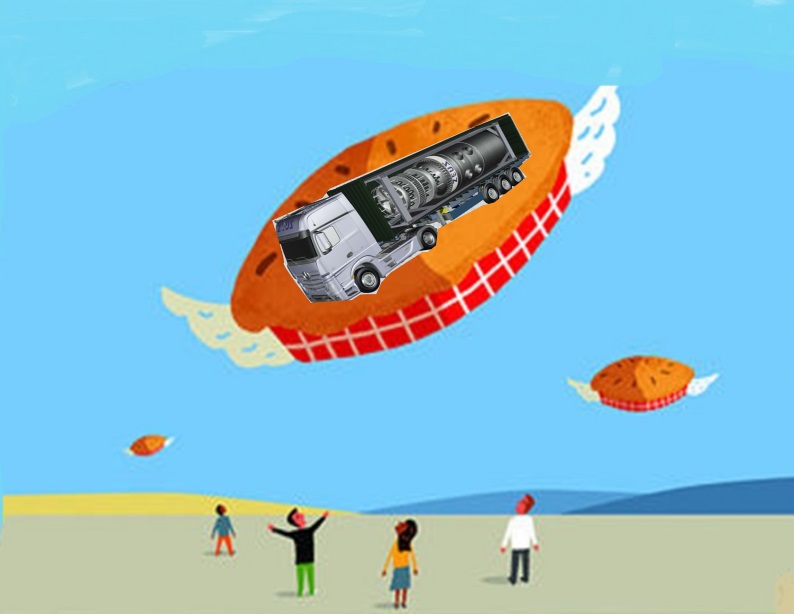
Walker has gathered a mish-mash of engineering talent and former bankers to build what’s called a “microreactor,” also known as a “small modular nuclear reactor,” which can be hitched to a tractor trailer and driven around the country to wherever it is needed—be it a remote mining site that needs power, or an AI data center.
Walker has also assembled a star-studded advisory board that includes former U.S. presidential candidate and NATO commander Wesley Clark, and former New York governor Andrew Cuomo, who hold stock options in the company.
The premise of Nano Nuclear is the same that propels competitors such as privately held Terrapower and X-Energy: conventional nuclear energy is too costly…………………………………………………………………………………………………………………
Nano Nuclear and competitors have jumped on the DOE’s effort to make “advanced” reactors, things so compact they can ride around on a semitruck and be parked where needed. They produce far less energy, on the scale of tens of megawatts, but also can cost far less, claims the DOE, and they can be run with minimal safety oversight because of their advanced design.
Just about every company in nuclear power is working on such innovation, including Westinghouse, Terrapower, X-Energy, and publicly traded NuScale of Portland, Oregon. Walker and team contend, however, that those companies are going about it all wrong. They haven’t done enough to solve the main limiting factor of small reactors, adequate fuel supply, the enriched uranium that creates the nuclear chain reaction.
“Large SMR companies have raised billions of dollars for development but have been stalled by the lag in developing or acquiring the fuel necessary to advance their reactors,” states Nano Nuclear’s IPO prospectus. The fuel is critical because small reactors need uranium with more of the uranium isotope U235 in order to be so compact. It’s the density of power per unit of volume of fuel that lets microreactors be made very small.
The DOE has been fostering collaboration among many parties on what’s called “High-Assay Low-Enriched Uranium,” or, HALEU, which is uranium enriched more than the 5% standard in the industry, as high as 20%. Without enough HALEU, many of the advanced reactors being developed “do not have the fuel supply infrastructure necessary to succeed,” claims Nano Nuclear.
To secure HALEU, Nano Nuclear has started two subsidiaries, one to produce HALEU uranium, HALEU Energy Fuel Inc., and another to transport it in large quantities, Advanced Fuel Transportation, Inc. The company even has a subsidiary to mine for uranium.
You could say Nano Nuclear has formed a vertically integrated nuclear firm, going from uranium mining through fuel production and trucking to supplying the finished reactor.
Will it work? We won’t know for some time. The company’s two proposals for microreactors, “Zeus” and “Odin,” are not even built. The company has no revenue at present. Nano Nuclear hopes to have one of the reactors in production by 2030. The company apparently hasn’t begun the licensing process with the U.S. Nuclear Regulatory Agency, which can take several years. The fuel manufacturing, moreover, is not expected to be operational until 2027……………………….
Nano Nuclear nabbed almost ten million dollars with the IPO, but it expects to need “a significant infusion of additional capital for successful deployment, even following this offering.” Just the Zeus and Odin reactors alone are expected to cost four million dollars to develop. That means potential dilution of investors by lots of follow-on stock offerings.
The tiny staff of 27 is not entirely full-time. All the senior executives, including Walker and CFO Jaisun Garcha, are working as independent contractors, and they all have jobs running other companies.
You can’t scrutinize Nano Nuclear’s technology plans to know if they make sense because Nano Nuclear has filed no patent applications, instead preferring to keep its intellectual property secret.
The rest of this year, Nano Nuclear expects to use its IPO money to buy another company in order to get into the nuclear consulting business. The idea is to get some paying work in order to subsidize Zeus and Odin.
Fusion plants will not be subject to the same nuclear site licensing process as fission reactors, with the UK government instead proposing developer-led site selection and their designation as nationally significant infrastructure projects.
The European Commission (EC) has approved, under European Union (EU) state aid rules, a €300m ($320m) French measure to support Electricité de France’s (EDF) subsidiary Nuward in researching and developing small modular nuclear reactors (SMRs). The EC said the measure will contribute to the achievement of the strategic objectives of the European industrial strategy and the European Green Deal.
France notified to the Commission its plan to grant €300m to Nuward to support its research and development (R&D) project on SMR technology. The project aims to develop processes for the design and construction of SMRs based on a simple and modular design and with a power output equivalent to or less than 300 MWe. The front-end design is the third phase of the overall Nuward project, which contains five distinct phases.
In December 2022, the Commission already approved a €50m French measure to support the second phase of the project, aimed at acquiring new knowledge for the design and construction of SMRs. The aid will take the form of a direct grant of up to €300m that will cover the R&D project until early 2027. The measure will support Nuward in sizing the modules and components of the SMRs and validating their integration in the SMRs by means of numerical simulators and laboratory tests. Nuward will also carry out industrialisation studies relating to the modular design and mass production of SMRs. Finally, the measure will also support Nuward in the preparation of the required safety demonstrations for the approval of the project by the national nuclear safety authorities.
Concern over the risks of enabling nuclear weapons development is usually focused on nuclear fission reactors, but the potential harm from more advanced fusion reactors has been underappreciated
Fusion reactors could allow a country to accelerate its development of nuclear weapons, producing the necessary radioactive ingredients in as little as a few weeks.
Nuclear weapons need specific radioactive isotopes, normally uranium-235 or plutonium-239, that can be easily split and start a chain reaction. This so-called fissile material is rare in nature, but can be produced artificially by a source that produces a lot of neutrons, such as a nuclear fission reactor of the kind in use today.… (Subscribers only) more https://www.newscientist.com/article/2430012-fusion-reactors-could-create-ingredients-for-a-nuclear-weapon-in-weeks/
INTERNATIONAL DARK SKY ASSOCIATION vs. FCC AND SPACEXOn December 29, 2022, the International Dark-Sky Association (IDA) sued the U.S. Federal Communications Commission over its decision to approve SpaceX’s application for up to 30,000 more low-orbit satellites, in addition to the 12,000 already approved and in process of filling our skies. This is Case No. 22-1337 before the United States Court of Appeals for the District of Columbia Circuit, and has not yet been decided by the court.
American plasma physicist Sierra Solter implored the FCC to “please save our night sky… Please, please, don’t take away my stars. To feel that my place of comfort and calm — a starry sky — is being taken away and given to billionaires is suffocating.”
On December 18, 2023, Ms. Solter published a scientific article detailing her fear for our planet. Each of the 42,000 planned Starlink satellites, she wrote, has a design lifespan of only 5 years, after which it will be de-orbited, burned up in the atmosphere, and replaced. She calculated that this will require 23 satellites per day — each the size of an SUV or truck — to be burned up in the atmosphere forever into the future, leaving an enormous amount of toxic chemicals and metallic dust to accumulate in the air we breathe and in the ionosphere.
This is already happening, she wrote, and should be stopped if we value our lives. “Since the beginning of the space industry, approximately 20,000 tons of material have been demolished during reentry… This is over 100 billion times greater than [the mass of] the Van Allen Belts.” She estimated that if 42,000 Starlink satellites are deployed and regularly demolished — let alone the 1,000,000 satellites planned by other companies and governments — “every second the space industry is adding approximately 2,000 times more conductive material than mass of the Van Allen Belts into the ionosphere.”
“Unlike meteorites, which are small and only contain trace amounts of aluminum, these wrecked spacecraft are huge and consist entirely of aluminum and other exotic, highly conductive materials,” she explained in an April 16, 2024 article in The Guardian.
Much of the metallic dust will settle into the ionosphere where, she says, it could act as a magnetic shield, reducing the magnitude of the Earth’s magnetic field in space. If that happens, the atmosphere itself could eventually be destroyed, because the Earth’s magnetic field — the magnetosphere — is what deflects the solar wind and prevents it from stripping away Earth’s atmosphere, as she told Teresa Pulterova in an interview on Space.com.
Other astronomers involved in the litigation before the FCC and now the Court of Appeals include Meredith Rawls with the Vera C. Rubin Observatory in Chile; Gary Hunt with Action Against Satellite Light Pollution in the UK; Samantha Lawler at the University of Regina in Canada; Graeme Cuffy of Port of Spain, Trinidad and Tobago; Mark Phillips, President of the Astronomical Society of Edinburgh; Roberto Trotta of the Imperial Centre for Inference and Cosmology in London; Carrie Nugent, Associate Professor of Computational Physics and Planetary Science at the Olin College of Engineering in Massachusetts; and Cameron Nelson of Tenzing Startup Consultants in Virginia.
Other issues are also mentioned in the appeal. For example, the burned up aluminum produces aluminum oxide, which destroys ozone and contributes to climate change. So does the water vapor, soot, and nitrogen oxides in rocket exhaust.
Cameron Nelson told the FCC that “Humans, not to mention all other animal and plant life, have not given our consent for SpaceX to send the signals it is proposing into our bodies and irrevocably alter us.”
The BroadBand International Legal Action Network (BBILAN) mentioned “RF/EMF radiation from linked base and earth stations” in comments sent to the FCC. Starlink earth stations, also called Gateways, are far more powerful than the Starlink dishes that people are putting on their homes. The (as of March 2024) 2.6 million Starlink dishes each send one signal up to the moving network of satellites above them. All of this traffic is coordinated in space by thousands of lasers linking the satellites to one another, and on the ground by Gateways, which relay the thousands of signals in a large geographic area to and from the satellites. This is what a Gateway with 5 antennas (“radomes”) looks like:
Some Gateways have up to 40 radomes. Each of those domes weighs 1750 kilograms. Each aims a narrow beam at moving satellites. According to FCC filings by SpaceX, each beam can have an effective radiated power of more than 1,000,000 watts, which it can aim as low as 25 degrees above the horizon. If you are a bird you do not want to fly anywhere near a Starlink Gateway. And if you are a human you do not want to live near one either. When a satellite aims its beam containing thousands of signals at a Gateway, that beam is about 10 miles in diameter by the time it reaches the Earth.
At last count there were 277 Starlink Gateways in operation or under construction in the world: 181 in North America and the Caribbean, 26 in South America, 2 in Africa, 26 in Europe, and 42 in Asia and the Pacific.
The FCC maintains a webpage listing thousands of licenses that it has handed out to hundreds of companies to operate both fixed and mobile satellite earth stations in the United States. Some of these stations are far more powerful than the Starlink Gateways. SES’s earth station at Bristol, Virginia emits up to 1,900,000,000 watts of effective radiated power, and it is allowed to aim it as low as 5 degrees above the horizon. SES’s earth station at Brewster, Washington is allowed to emit almost 1,000,000 watts in the actual direction of the horizon! SES owns O3b mPOWER, which is the satellite system that had its first radomes on board the Diamond Princess cruise ship, the ship that had the famous outbreak of disease blamed on COVID-19 at the beginning of the pandemic.
On 24 April, the Security Council voted on a resolution tabled by the United States and Japan, which reaffirmed our commitment to the Outer Space Treaty. Thirteen Member States voted in favour. One, the Russian Federation, used its veto.
Outer space belongs to all humankind and space technologies are critical to our daily lives. From using maps and checking the weather on our phones, to international shipping and large-scale disaster risk reduction programmes, the far-reaching applications of space technologies are embedded in all of our economies.
For this reason, we need to protect and regulate the safe use of space, while taking appropriate steps to prevent it becoming the backdrop of the next arms race.
“We let a genie out of the bottle when we developed nuclear weapons,” he said Saturday. “AI is somewhat similar — it’s part way out of the bottle.”
The so-called Oracle of Omaha acknowledged to his audience that he has little idea about the tech behind AI, but said he still fears its potential repercussions. His image and voice were recently replicated by an AI-backed tool, he said, and they were so convincing that they could have fooled his own family. Scams using these deep fakes, he added, will likely become increasingly prevalent.
“If I was interested in investing in scamming, it’s going to be the growth industry of all time,” he told the crowd…………………………………………………………………………………..
Forty-two percent of CEOs surveyed at the Yale CEO Summit last summer said AI has the potential to destroy humanity five to 10 years from now, according to survey results shared exclusively with CNN.
“It’s pretty dark and alarming,” Yale professor Jeffrey Sonnenfeld said of the findings.
Sonnenfeld said the survey included responses from 119 CEOs from a cross-section of business,…………………………..
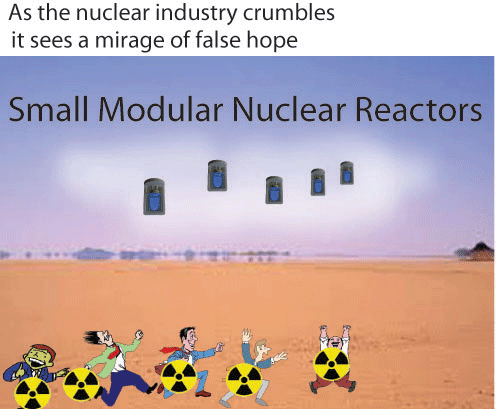
The nuclear industry has been offering so-called Small Modular Reactors (SMRs) as an alternative to large reactors as a possible solution to climate change.
SMRs are defined as nuclear reactors with a power output of less than 300 megawatts of electricity, compared to the typically 1000 to 1,500 megawatts power capacity of larger reactors.
Proponents assert that SMRs would cost less to build and thus be more affordable.
This ‘diseconomy of scale’ was demonstrated by the now-terminated proposal to build six NuScale Power SMRs (77 megawatts each) in Idaho in the United States.
The final cost estimate of the project per megawatt was around 250 percent more than the initial per megawatt cost for the 2,200 megawatts Vogtle nuclear power plant being built in Georgia, US.
Previous small reactors built in various parts of America also shut down because they were uneconomical.
The high cost of constructing SMRs on a per megawatt basis translates into high electricity production costs.
According to the 2023 GenCost report from the Australian Commonwealth Scientific and Industrial Research Organisation (CSIRO) and the Australian Energy Market Operator, the estimated cost of generating each megawatt-hour of electricity from an SMR is around AUD$400 to AUD$600.
In comparison, the cost of each megawatt-hour of electricity from wind and solar photovoltaic plants is around AUD$100, even after accounting for the cost involved in balancing the variability of output from solar and wind plants.
Building SMRs has also been subject to delays. Russia’s KLT-40 took 13 years from when construction started to when it started generating electricity, instead of the expected three years.
One 2022 study calculated that various radioactive waste streams from SMRs would be larger than the corresponding waste streams from existing light water reactors.
The bottom line is that new reactor designs, such as SMRs, will not rescue nuclear power from its multiple problems. Any energy technology that is beset with such environmental problems and risks cannot be termed sustainable.
Nuclear energy itself has been declining in importance as a source of power: the fraction of the world’s electricity supplied by nuclear reactors has declined from a maximum of 17.5 percent in 1996 down to 9.2 percent in 2022. All indications suggest that the trend will continue if not accelerate.
The decline in the global share of nuclear power is driven by poor economics: generating power with nuclear reactors is costly compared to other low-carbon, renewable sources of energy and the difference between these costs is widening.
Nuclear reactors built during the last decade have all demonstrated a pattern of cost and time overruns in their construction.
In 2011, when the utility company building the reactor sought permission from the American Nuclear Regulatory Commission, it projected a total cost of USD$14 billion, and ‘in-service dates of 2016 and 2017’ for the two units.
In France, the 1,630-megawatt European Pressurised Reactor being built in Flamanville was originally estimated to cost 3 billion euros and projected to start in 2012, but the cost has soared to an estimated 13.2 billion euros and is yet to start operating as of March 2024.
These cost increases and delays confirm the historical pattern identified in a study published in 2014: of the 180 nuclear power projects around the world it studied, 175 had exceeded their initial budgets, by an average of 117 percent, and took 64 percent longer than initially projected.
However, the recent projects are even more extreme in the magnitude of the disconnect between expectations and reality.
The climate crisis is urgent. The world has neither the financial resources nor the luxury of time to expand nuclear power. As physicist and energy analyst Amory Lovins argued: “… to protect the climate, we must save the most carbon at the least cost and in the least time.”
Expanding nuclear energy only makes the climate problem worse.
The money invested in nuclear energy would save far more carbon dioxide if it were instead invested in renewables.
And the reduction in emissions from investing in renewables would be far quicker.
Sophie Groll is a master’s student at the School of Public Policy and Global Affairs, at the University of British Columbia in Vancouver, Canada studying public policy and global affairs. Her focus is on environmental policy, low-carbon energy sources, and net-zero transition discourses.
Could a nuke be used in space? Last month, Russia seemingly took a step toward making the idea a reality. In defiance of a US and Japan-sponsored UN resolution, the country vetoed plans to prevent the development and deployment of off-world nuclear weapons.
Fortunately, the country didn’t actually threaten to launch such a device into space, an act that would violate the 1967 Outer Space Treaty. However, the UN representative for Russia did call the new resolution a “cynical ploy” and claimed “we are being tricked”.
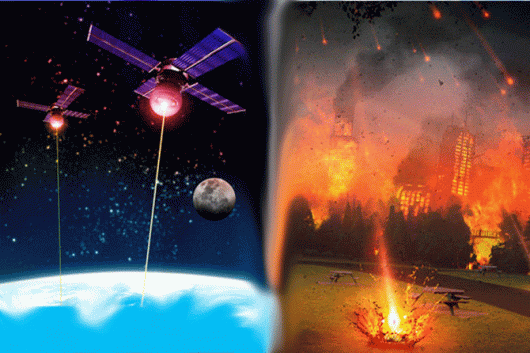
But what would actually happen if Russia – or any other country – detonated a nuke above Earth? The worrying answer: such an explosion could be as devastating as one on ground level.
What happens if you detonate a nuclear warhead in space?
There are some pretty stark differences between setting off a nuke at ground level and up in orbit.
“When nuclear weapons go off on the ground, a lot of energy is initially released as X-rays,” Dr Michael Mulvihill, vice chancellor research fellow at Teesside University, tells BBC Science Focus.
“Those X-rays superheat the atmosphere, causing it to explode into a fireball – that’s what produces the shockwave and characteristic mushroom cloud that sucks up dirt and produces fallout.”
But in space there is no atmosphere. So no mushroom clouds or shockwaves are formed when you set off a nuke in space. That doesn’t mean the effects are any less terrifying, however.
“In space, a nuclear explosion releases a huge amount of energy as X-rays, gamma rays, intense flows of neutrons and subatomic charged particles. It also produces what’s known as an electromagnetic pulse, or EMP,” Mulvihill says.
An EMP is effectively a burst of electromagnetic energy; when one interacts with the upper atmosphere, it strips electrons from it, blinding radar systems, knocking out communications and wiping out power systems.
After the initial explosion, a belt of radiation wraps around the Earth that persists for months, possibly even years – no one knows for sure. The radiation can damage satellites and, as Mulvihill points out, would pose a serious risk to anyone in space at the time – such as astronauts on the ISS.
“The EMP would knock out power systems on the ISS, effectively destroying the life support systems and everything that circulates the atmosphere within the space station. And I imagine the astronauts would be exposed to high levels of radiation too,” Mulvihill explains.
“It would be highly hostile to life in orbit.”
Space is becoming more and more crowded with satellites – approximately 10,000 satellites are in low earth orbit right now, and tens of thousands more are planned for launch in the coming years. This significantly raises the stakes of unleashing nuclear energy in space, as we become more reliant on the systems we put into orbit.
From ground level, however, other than blowing power grids and disrupting communications, the effects could also be somewhat beautiful.
As charged particles from the explosion interact with the Earth’s magnetic field and the atmosphere, they would cause brilliant auroras, stretching across huge distances that could last for days. So there’s that, at least.
Have nuclear explosions reached space before?
Unsurprisingly, during the Cold War, global superpowers (namely, the US and Russia) tested nukes in just about every scenario imaginable. On land, underwater, in a mountain – you name it, they tried blowing it up.
It comes as no surprise then, that detonating nuclear weapons in space has been done before. In total, the US conducted five space nuclear tests in space; the most famous of which, according to Mulvihill, occurred on 9 July 1962 near(ish) to the Pacific island paradise of Hawaii.
Starfish Prime was launched 400km (250 miles) above Johnston Island and had an explosive power of 1.4 megatons – about 100 times more powerful than the Hiroshima bomb.
The EMP was much larger than expected, compromising the classified nature of the test as streetlights and phone lines were knocked out in Hawaii 1,450 km (900 miles) away from the detonation point.
The ensuing red auroras stretched across the Pacific Ocean and lasted for hours.
“At the time there were around 22 satellites in space, of which around a third were knocked out,” Mulvihill says. The casualties included the world’s first TV communication satellite, Telstar 1, which had been a beacon of US technological development until Starfish Prime caused it to prematurely fail after just seven months in orbit.
In the following years, everyone came to their senses a bit and decided that testing nuclear warheads in space constituted a bad idea. Thus, the Outer Space Treaty (OST) was born.
Signed in 1967 by the US, UK and Soviet Union, the OST now has over 100 signatories and designates space as free for all to use for peaceful purposes only. The world breathed a sigh of relief and got on with using space for nice things like astronomy, space stations and WiFi for the next 60 years. So, what’s changed?
How worried should we be?
Rumours of a change in the orbital security situation began swirling when earlier this year the US House Intelligence Committee chairman Mike Turner issued a vague warning about a “serious national security threat” posed by Russia.
Following this, news outlets began reporting that the threat pertained to a possible “nuclear weapon in space”.
“It’s certainly concerning, but don’t lose sleep over it,” Mulvihill says. “Russia is still a signatory of the OST, so any sort of weapon in space would be absolutely illegal.”
He also points out that as Starfish Prime demonstrated, nuclear weapons in space are indiscriminate, meaning any detonation would do just as much damage to Russia and its allies as anyone else.
“It wouldn’t just knock out Starlink [the SpaceX system of satellites that provides internet to 75 countries]. It would knock out Chinese satellites and everyone else’s too.”
Another possibility, Mulvihill thinks, is that countries could develop nuclear-powered ‘jammers’. In other words, not a bomb (phew), but something that uses nuclear power to generate a signal that could disrupt, rather than destroy, other satellites.
Ultimately, though, this could all be little more than geopolitical posturing. “Deterrence is all about messaging and trying to persuade somebody that you would do it without ever actually getting there. I think that’s probably the psychology that’s going on with this,” Mulvihill concludes.
A UK Government nuclear quango has dropped Trawsfynydd from the initial rollout of small modular reactors. Former Prime Minister Boris Johnson had said in 2022 that the UK Government are “looking to build another small modular reactor(SMR) on the site at Trawsfynydd”.
The Nuclear Decommissioning Authority (NDA) and Welsh Government owned Cwmni Egino had been working up plans for a new nuclear station close to the former power station, which stopped generating in 1991 and is in the long process of being decommissioned. The location had also previously been tipped by Rolls Royce SMR as a location for an SMR.
But those hopes have been dealt a blow after Great British Nuclear(GBN) said the site would not be considered in its initial rollout phase. It is understood the size of the site and the volume of cooling water counted against it. They also said it may not be able to deploy as quickly as some other sites.
It has though not been ruled out completely and could play a part in the future. A source explained that the initial rollout was looking at locations that could host four or five SMRs, which Traws does not have capacity for.
But once these larger sites are developed a further rollout would consider smaller sites that could host one or two SMRs, with would put the Gwynedd site back in contention.
On Anglesey, UK Government is buying the Wylfa site in a bid to progress nuclear development on the island after two failed attempts for a Wylfa B. This could be used for four or five SMRs or a single large scale nuclear power station…………………………………
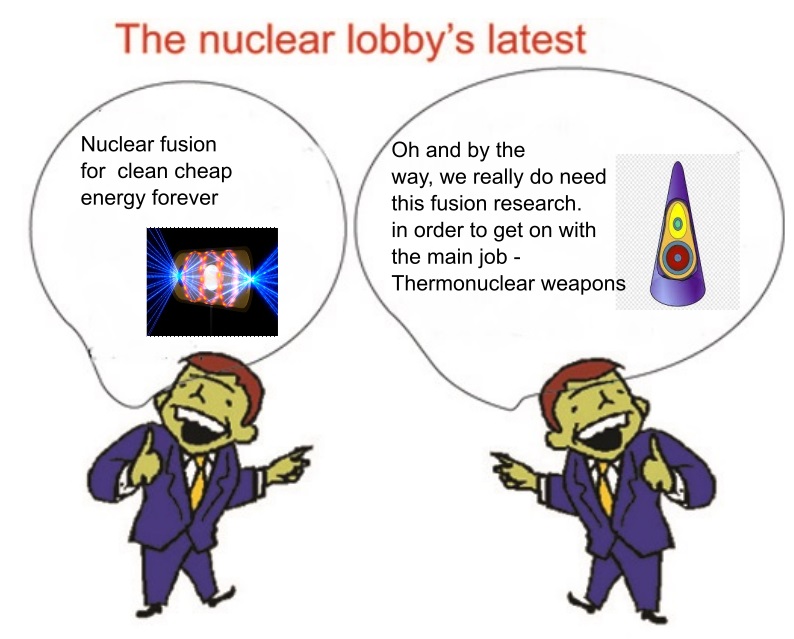
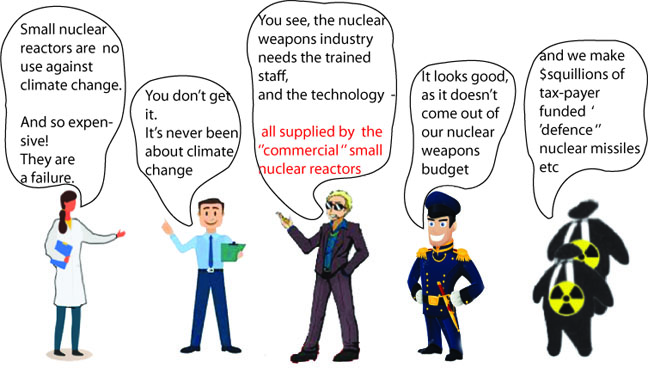
Well, we all do know why. The small nuclear reactor (SMR)power industry – moribund though it is, is essential for the nuclear weapons industry – for a number of reasons, but importantly – to put a sweet gloss on that murderous industry.
Never mind that USA’s NuScale’s SMRs were a resounding flop – NuScale is still being touted, along with all the other little nuclear unicorns manouvreing to get tax-payer funding.
The facts remain, and apparently just need to be hammered again and again:
SMRs are not cheap, not safe, do not reduce wastes, are not reliable for off-grid power, are not more efficient fuel users than are large reactors.
The latest hyped -up push for SMRs is in Canada – with the boast that they will benefit indigenous communities . Successful bribery of indigenous people would give a huge boost to the global nuclear lobby, – as indigenous people have historically been the most distrustful of uranium mining and of the whole nuclear fuel chain.
The gimmicks this time are floating nuclear power plants – barges carrying Westinghouse’s eVinci microreactors. These would take over from the current deisal power plants serving remote communities. There are already some solar, wind and battery projects – frowned upon by the nuclear lobby, of course.
These projects are being strongly promoted, but poorly explained to indigenous communities, would bring radiological hazards along Canada’s Northern shoreline
And what really are the chances that these little nuclear power sources would be effective anyway? Recent reports by the International Atomic Energy Agency (IAEA) reveal that while 83 small nuclear reactors are “in development”, but there are only 2 in operation.
In both cases, the development of the reactors was a very lengthy and expensive process.
The Chinese SMR HTR-PM- “Between January and December 2022, the reactors operated for only 27 hours out of a possible maximum of 8,760 hours. In the subsequent three months, they seem to have operated at a load factor of around 10 percent.”
For the Russian SMR – “The operating records of the two KLT-40S reactors have been quite poor. According to the IAEA’s PRIS [Power Reactor Information System] database, the two reactors had load factors of just 26.4 and 30.5 percent respectively in 2022, and lifetime load factors of just 34 and 22.4 percent.”
Will Canada’s remote indigenous communitites buy the duplicitous nuclear lobby’s propaganda on SMRs ? And then, subsequently, will the rest of us buy it, despite the facts. I guess that the corporate media will help, – if lies are repeated often enough, people come to believe them.
A new type of theoretical nuclear power plant design called small modular reactors (SMRs) has been in the news of late. Earlier this year, at the 2020 Canadian Nuclear Association conference, Minister of Natural Resources Seamus O’Regan announced that the federal government will release an SMR Action Plan this fall. Ontario, New Brunswick and Saskatchewan have announced their backing and possibly some financial support for the development of these reactors.
Promoters suggest that remote communities and off-grid mining operations are promising markets for SMRs in Canada. These communities and mines pay a lot for electricity because they are reliant on diesel generators, and transporting and storing diesel to these locations can be very expensive. Thus, supporters hope, SMRs might be a way to lower electricity costs and carbon dioxide emissions.
We examined this proposition in detail in a recently published paper and concluded that this argument has two problems. First, the electricity that SMRs produce is far more expensive than diesel-based electricity. Second, even ignoring this problem, the total demand for electricity at these proposed markets is insufficient to justify investing in a factory to manufacture the SMRs.
SMRs have been proposed as a way to deal with many problems associated with large nuclear power plants, in particular the high costs of construction, running to tens of billions of dollars. SMR designs have much in common with large nuclear reactors, including, most basically, their reliance on nuclear fission reactions to produce electricity. But they also differ from large nuclear reactors in two ways. First, they have electricity outputs of less than 300 megawatts (MW) and sometimes as low as a few MW, considerably lower than the outputs of 700 to 1500 MW typical of large nuclear reactors. Second, SMR designs use modular means of manufacturing, so that they need only be assembled, rather than fully constructed, at the plant site. While large reactors that have been constructed in recent years have also adopted modular construction, SMR designers hope to rely more substantially on these techniques.
A standard metric used to evaluate the economics of different energy choices is called the levelized cost of energy (LCOE). We calculated that the LCOE for SMRs could be over ten times greater than the LCOE for diesel-based electricity. The cheapest options are hybrid generation systems, with wind or solar meeting a part of the electricity demand and diesel contributing the rest.
Why this high cost? The primary problem is that the small outputs from SMRs run counter to the logic of economies of scale. Larger reactors are more cost-efficient because they produce more electricity for each unit of material (such as concrete and steel) they use and for the number of operators they employ. SMR proponents argue that they can make up for this through the savings from mass manufacture at factories and the learning that comes with manufacturing many reactors. The problem is that building a factory requires a sizable market, sometimes referred to as an order book. Without a large number of orders, the investment needed to build the factory will not be justified.
We estimated the potential market for SMRs at remote mines and communities in Canada. We drew primarily upon two databases produced by Natural Resources Canada regarding mining areas and remote communities. As of 2018, there were 24 remote mining projects that could be candidates for SMR deployment within the next decade. Currently, these projects use diesel generators with a total installed capacity of 617 MW. For remote communities, we calculated a fossil fuel (primarily diesel) generation capacity of 506 MW. But many of these communities had demands that were too low for even the smallest-output SMR under review at the Canadian Nuclear Safety Commission.
Even if all these potential buyers want to adopt SMRs for electricity supply, without regard to the economic or noneconomic factors weighing against the construction of nuclear reactors, the combined demand would likely be much less than 1000 MW. The minimum demand required to justify the cost of producing SMRs would be three to seven times higher.
Furthermore, we concluded that the economics of SMRs don’t compete when compared with other alternatives. The cost of electricity from SMRs was found to be much higher than the cost of wind or solar, or even of the diesel supply currently used in the majority of these mines and communities.
Of course, our estimates for the LCOEs of different sources are dependent on various assumptions. We tried varying these assumptions within reasonable limits and found that the main result — that electricity from SMRs is far more expensive than the corresponding costs of generating electricity using diesel, wind, solar or some combination thereof — remains valid. All else being equal, the assumed capital cost of constructing a SMR would have to decline by over 95 percent to be competitive with a wind-diesel hybrid system. The limited experience with SMRs that are being built around the world suggests that construction costs will be higher, not lower, than advocates promise.
Meanwhile, renewables and storage technologies have seen substantial cost declines over the past decades. Recent estimates place wind, solar and hybrid systems at costs competitive with diesel power. Successful demonstrations suggest that renewable hybrid applications are becoming increasingly feasible for heavy industry, and the implementation of numerous numerous projects in northern communities suggests a high level of social acceptance. Many northern and, in particular, Indigenous communities have an interest in self-determined decision-making and maintaining a good relationship with the land. In June 2019, for example, the Anishinabek Chiefs-in-Assembly, representing 40 First Nations across Ontario, unanimously expressed opposition to SMRs. Grand Council Chief Glen Hare announced that the Anishinabek Nation is “vehemently opposed to any effort to situate SMRs within our territory.”
Instead of focusing on SMRs, policy-makers should bolster support for other renewable generation technologies as key mechanisms to reduce carbon emissions and align with community values.
There are literally dozens of small modular reactor (SMR) and microreactor designs being developed by different companies around the world, and some of the work has been going on for decades. Yet, only two designs have actually been built and put into commercial operation. POWER takes a closer look at both of them.
Many nuclear power supporters have long thought small modular reactors (SMRs) would revolutionize the industry. Advocates expect SMRs to shorten construction schedules and bring costs down through modularization and factory construction. They often cite numerous other benefits that make SMRs seem like no-brainers, and yet, only two SMR designs have ever been built and placed in commercial operation.
The International Atomic Energy Agency (IAEA) publishes booklets biennially on the status of SMR technology. In the IAEA’s most recent booklet, it notes 25 land-based water-cooled SMRs and another eight marine-based water-cooled designs are under development globally. It also lists 17 high-temperature gas-cooled SMRs, eight liquid-metal-cooled fast-neutron-spectrum SMRs, 13 molten-salt SMRs, and 12 microreactors. If you do the math, that’s 83 SMR designs under development, but only the KLT-40S and HTR-PM are actually operational.
KLT-40S
The KLT-40S is a pressurized water reactor (PWR) that was developed in Russia. It is an advanced version of the KLT-40 reactor, which has been used in nuclear-powered icebreakers. The first KLT-40S units, and, to date, the only two of these units to enter commercial operation, were deployed in the Akademik Lomonosov—the world’s first purpose-built floating nuclear power plant (FNPP, Figure 1 on original).
Main Design Features.………………………………………………………………………………………………………….
Deployment Details.…………………………….
Construction and testing of the FPU was completed in 2017 at the Baltic shipyard. In May 2018, the vessel was towed 4,000 kilometers (km), around Finland and Sweden, to Murmansk, completing the first leg of its journey to Pevek. Fuel loading was completed in Murmansk in October 2018. First criticality was achieved in November 2018, then in August 2019, the vessel embarked on the second leg of its journey—a distance of 4,700 km—towed by two tugboats to the Arctic port town of Pevek, where it was connected to the grid on Dec. 19, 2019. Akademik Lomonosov was fully commissioned on May 22, 2020, and it currently provides heat to the town of Pevek and supplies electricity to the regional Chaun-Bilibino power system.
Main Design Features.…………………………………………………………………………………………………..
Deployment Details.……………………………………………………………………. The civil work for the nuclear island buildings was completed in 2016 with the first of two reactor pressure vessels installed in March that year. The fuel plant reached its expected production capacity in 2017. Startup commissioning and testing of the primary circuit were finished by the end of 2020. The HTR-PM achieved first criticality in September 2021, and was ultimately grid connected on Dec. 20, 2021.
Spotty Results at Best
While it is laudable that these SMRs—the KLT-40S and HTR-PM—have been placed in commercial operation, their performance since entering service has come under fire. In The World Nuclear Industry Status Report 2023 (WNISR), a Mycle Schneider Consulting Project, co-funded by the German Federal Ministry for the Environment, Nature Conservation, Nuclear Safety, and Consumer Protection, it says both designs have operated at low capacity factors recently.
Concerning the Chinese HTR-PM, the WNISR says, “Between January and December 2022, the reactors operated for only 27 hours out of a possible maximum of 8,760 hours. In the subsequent three months, they seem to have operated at a load factor of around 10 percent.” The Russian units’ performance has been nearly as dismal. “The operating records of the two KLT-40S reactors have been quite poor. According to the IAEA’s PRIS [Power Reactor Information System] database, the two reactors had load factors of just 26.4 and 30.5 percent respectively in 2022, and lifetime load factors of just 34 and 22.4 percent. The reasons for the mediocre power-generation performance remain unclear,” the report says.
Meanwhile, the promises of shortened timelines and lower costs were not borne out by these projects. “The experience so far in constructing these two SMRs as well as estimates for reactor designs like NuScale’s SMR show that these designs are also subject to the historical pattern of cost escalations and time overruns. Those cost escalations do make it even less likely that SMRs will become commercialized, as the collapse of the Carbon Free Power Project involving NuScale reactors in the United States illustrated,” the WNISR says………….. https://www.powermag.com/a-closer-look-at-two-operational-small-modular-reactor-designs/
Susan O’Donnell, 2 May 24 To clarify, there’s currently no enrichment plant in the US that produces HALEU (fuel enriched between 5 and 20 percent), as far as I’m aware. Any nuclear fuel enrichment happening in the U.S. would be for the existing light-water reactors that use fuel enriched to less than 5 percent. My take: the idea that the ARC reactor design could change from using HALEU fuel to low enriched uranium is frankly ridiculous. It would not be the same reactor at all, it would be a completely different design.
Quote: “It’s not something that can’t be fixed,” Sawyer said.
The article above is about the shortage of HALEU, the fuel currently only available in Russia that is needed by the designs of advanced reactors cooled by liquids other than water. The design for the ARC reactor slated for Point Lepreau in New Brunswick requires HALEU.
New Brunswick’s Telegraph Journal:
ARC might need to redesign its SMR technology: former president
Norm Sawyer points to other companies around the world that pivoted quickly to address the lack of enriched uranium available
Adam Huras Published May 01, 2024
The former president and CEO of ARC Clean Technology says the company might need to redesign its small modular nuclear reactor technology.
Norm Sawyer points to other companies around the world that pivoted quickly to address the lack of enriched uranium available.
Brunswick News reported earlier this week that ARC is still in search of a new enriched uranium supplier, after it originally planned to buy from Russia.
Meanwhile, Energy Minister Mike Holland says he has been assured that “there’s a queue for North American enriched uranium and we’re in it,” maintaining the company that the Higgs government spent $20 million on won’t be shut out.
Firms around the world developing a new generation of small nuclear reactors to help cut carbon emissions have been forced to face a big problem: The only company that sells the enriched fuel they need is Russian.
“It’s not only ARC, the industry in general is really dealing with the fallout of the war,” Sawyer said, who is now a nuclear consultant through his own firm. “Russia is the main supplier of HALEU around the world.”
High-assay low-enriched uranium (HALEU) is an integral component of the company’s ARC-100 sodium-cooled fast reactor, as well as a number of other advanced reactors currently in development attempting to achieve smaller designs.
But it’s not as simple as finding that enriched uranium closer to home.
While Canada mines uranium – there are currently five uranium mines and mills operating in Canada, all located in northern Saskatchewan – it does not have uranium enrichment plants.
The U.S. opened its first and only enrichment plant last year, operated by Centrus Energy in Ohio, amid a federal push to find a solution to the Russia problem.
It remains the only facility in the U.S. licensed to enrich uranium.
It currently has contracts with two American companies pursuing SMR technology, although it says it could rapidly expand production with federal investment.
One of those, TerraPower, a nuclear reactor developer founded by Bill Gates, has said Russia’s invasion would mean a delay to the deployment of its Natrium reactor by at least two years.
Other companies have pivoted.
Sawyer pointed to Denmark’s Seaborg Technologies that announced last year it would be changing its proposed SMR fuel from HALEU to low-enriched uranium “due to the risks associated with developing a sufficient supply.”
That resulted in design changes.
It was a move the company said was necessary to meet its planned timeline to see a first group of SMRs ready by 2028……………………………………………………..
What I’ve been told that there are a number of things taking place to ensure that there’s a queue for North American enriched uranium and we’re in it,” Holland said.
“That’s what I’ve been told and told definitively.”
Holland said the U.S. has a “vested interest” in aiding Canada and its SMR technology because Canada has the uranium they’re going to need as well.
“There are people saying ‘hey, if Canada is going to be your large supplier we’re going to have to work out, quid pro quo, that we don’t get excluded,’” he said.
Holland maintained that “our toe is stuck in the door so we have an opportunity to be part of that supply chain………………………………..
Sawyer said making a change to a different fuel means components will need to be redesigned.
“Obviously, you design a reactor for the type of fuel you’re going to use so there’s obviously some work to be done to realign the reactor core to the new type of fuel,” he said. “Is it easy? I’m not sure if it’s easy. There is some work to be done, there’s no doubt.”
Sawyer added that there’s two components to SMRs: the reactor design, construction and deployment, and then the fuel.
“Any delay on either one of those sides of the equation could cause a delay later on,” he said.











 nuclear-news