USA’s MOX plutonium nuclear fuel plant a costly, dangerous, flop
 “The government would be crazy to consider building another MOX plant. MOX cannot be recycled.”….
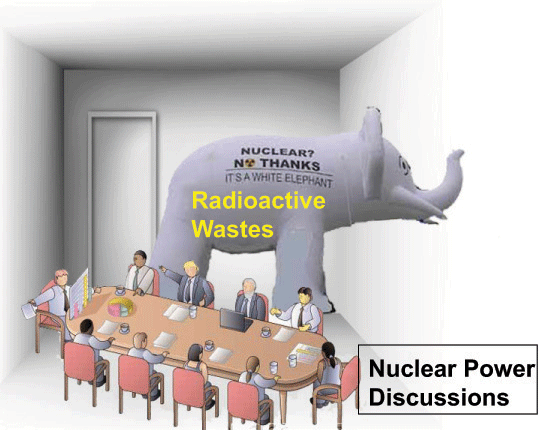 The Bomb Plant: A MOX White Elephant?, DC Bureau By Joseph Trento, on October 20th, 2011 The National Nuclear Security Administration may have a $10 billion taxpayer-financed white elephant on its hands based on Britain’s experience with a similar plant that has been shuttered after a decade of failed operations. Continue reading
Plutonium nuclear plant project stopped, – Japan
 Japan utility to freeze nuclear power project, Monsters and Critics, Oct 17, 2011, Tokyo – Hokkaido Electric Power Co said Monday it would postpone a plutonium-thermal power generation project at its nuclear power plant on Japan’s northern island, after the company was accused of manipulating public opinion.
A report filed by an independent panel said the utility had asked employees and residents supporting the project to express opinion in favour of the nuclear energy at symposiums and other events organized by the central and local governments.
Hokkaido Electric was planning to implement its so-called pluthermal power generation in spring of 2012 at reactor 3 at the Tomari Nuclear Power Plant on the island.
Hokkaido Electric president Yoshitaka Sato told a news conference that the utility would accept the findings by the panel set up by the company to investigate the scandal…..
The scandal reinforced public mistrust in the nuclear power industry and apparently made it difficult for the restart of idled nuclear reactors….. Plutonium-thermal generation uses fuel made from a mixed oxide of plutonium and uranium (MOX fuel)… http://www.monstersandcritics.com/news/business/news/article_1669319.php/Japan-utility-to-freeze-nuclear-power-project
Through Google Earth, researcher tracks India’s nuclear program

 Researcher Uses Google Earth to Track India’s Nuclear Program, PC World, By John Ribeiro, IDG News Oct 13, 2011 The Institute for Science and International Security in Washington has used imagery from Google Earth to arrive at the conclusion that India may be constructing a gas centrifuge plant for uranium enrichment for military purposes, reinforcing Indian fears that Google Earth can be misused to compromise national security. Continue reading
Concern over India’s Kalpakkam nuclear reprocessing facility
Indian peace activists have expressed suspicions that the plutonium separated at Indian civilian reprocessing facilities will be diverted and used to increase the country’s stock of atomic weapons.
Technological preparations towards the building of a full-scale fast breeder reactor at Kalpakkam are reportedly in an advanced stage.
Anti-Nuclear Struggle Has Large Fallout, International News Magazine, 05 October 2011 Peter Custers “……..The Kalpakkam complex does not just harbour a nuclear power plant, but also a reprocessing facility- a plant where nuclear fuel rods, after they have outlived their use in reactors, are chemically treated so as to extract raw materials for re-use as energy source.
Storage of such high-level waste in tanks has resulted in catastrophic accidents, Continue reading
Problems of Finland’s Olkiluoto nuclear plant and waste storage plans
the companies are planning to make Onkalo only large enough for waste from their own potential seven reactors
the Finnish Radiation and Nuclear Safety Authority (STUK) has identified safety concerns at operating Finnish power plants as part of stress tests conducted after last spring’s Fukushima crisis in Japan. These include the lack of backup cooling systems that are independent of electrical supply at the Olkiluoto1 and 2 reactors.
a honeycomb of storage sites extending over an area of several square kilometres will weaken the bedrock, making it vulnerable to earthquakes,


 includes VIDEO TVO: No room for Fennovoima waste in nuclear cave, YLE FI 4 oct 11, Onkalo on Finland’s west coast will be the world’s first permanent nuclear waste repository. The project director of the Olkiluoto 3 nuclear power plant, TVO Senior Vice President Jouni Silvennoinen, insists there is no space for waste from utilities other than TVO or Fortum in the Onkalo underground disposal site on Finland’s west coast. Continue reading
Nuclear Reprocessing not looking good, following France’s nuclear accident
French Nuke Accident Leads India To Reexamine Its Nuclear Ambitions, Forbes, Erica Giles, 20 Sept 11, “……..reprocessing is no silver bullet; in fact, it has created a bitter divide among nuclear experts – and not just because it can be a gateway to proliferation, as India itself so aptly demonstrated in 1974. “At this point, it’s like creationism versus evolution,” said Edwin Lyman, senior scientist at the Union of Concerned Scientists, indicating that in his view, the anti-reprocessing camp has science on its side.
Reprocessing via the current commercial-scale process used in France, called PUREX, recovers only a small amount of additional energy and is more expensive than using virgin uranium, he said. And instead of reducing waste, it merely changes its form. “There’s no feasible, practical way to take material from the waste and use it in a nuclear power system so you could get rid of it over any kind of reasonable time frame,” he said.
Many Indians are protesting their country’s rapid nuclear expansion, most recently exemplified by a mass fast in Tamil Nadu state against the Koodankulam Nuclear Power Project. But neither their concerns nor nuclear accidents are likely to alter India’s plans…. http://www.forbes.com/sites/ericagies/2011/09/19/french-nuclear-explosion-causes-india-to-think-hard-about-its-nuclear-ambitions/
Stuxnet computer worm could target nuclear warheads
 Nuclear warheads could be next Stuxnet target: Check Point, Code in Stuxnet worm can be modified with right skills, says security expert, CIO Hamish Barwick (Computerworld), 09 September, 2011, Due to the complexity and sophistication of the code contained within the Stuxnet worm, the possibility of it being used to take control of a nuclear warhead is high, according to a security expert.
At Check Point’s Sydney conference this week, Check Point Israel security evangelist, Tomer Teller, said he analysed the code of the Stuxnet worm, which was used to take control of a nuclear facility in Iran in June, 2009. “This is a huge file, it’s 1 megabyte [MB] of code and I respect the skill required to engineer that code as it is very complex,” he said.
Teller confirmed the code in Stuxnet could be modified to launch new SCADA attacks. “Nuclear warheads are controlled by computers so if someone managed to slip a worm inside a facility that will reach the warhead component, they could launch it and than aim it back at the country’s facility,” he said.
“Stuxnet is the first cyber weapon that could cause major disruption.”…..According to Teller, Stuxnet is a blueprint for future SCADA attacks, and he is aware that people have downloaded and modified the worm. “Stuxnet may have been deployed already but we don’t know about it because some companies won’t disclose breaches,” he said. https://mail.google.com/mail/?hl=en&tab=wm#compose
NASA hoping to overcome ionising radiation so people can live in space
My question is, who in their right mind would want to live in space, rather than on this beautiful, and less irradiated Earth? – Christina Macpherson
 NASA Awards Space Radiobiology Research Grants,The Sacramento Bee, By NASA WASHINGTON, Sept. 9, 2011 — NASA is funding nine proposals from eight states to investigate space radiation’s effect on human explorers. The proposals from researchers in California, Colorado, Florida, Georgia, Maryland, Massachusetts, New York and Texas have a total value of approximately $12 million.
The ground-based studies will work to better understand and mitigate risk of damage to the heart and central nervous system from cosmic rays. The studies also will assess cancer risks and how genetics affect space radiation risks.
“These studies will pave the way for new approaches to better prepare astronauts for living in space,” http://www.sacbee.com/2011/09/09/3897143/nasa-awards-space-radiobiology.html
Something rather unsafe about nuclear powered cars
Forgive me for playing the devil’s advocate here, but aren’t suitcase nukes a huge terrorist threat? Just asking. By the way, I have a hazy memory of visiting that same Idaho National Lab some years ago and seeing the huge carcass of what was described as an experimental nuclear car from the 1950s.
Nuclear cars: They’re not science fiction anymore | MNN – Mother Nature Network, 1 Sept 11, In the nuke-crazed 1950s, Ford wanted to put mini reactors in cars. That didn’t fly, but now we’re hearing of radioactive thorium lasers that could power a car 300,000 miles without recharging. But what if two of them have an accident? Continue reading
Silex laser uranium enrichment process classified secret under Atomic Energy Act
 Some New Wrinkles in Nuclear Weapons Secrecy, Secrecy News, August 22nd, 2011 by Steven Aftergood “………At this late date in the nuclear era, there are still other “innovations” in nuclear technology and nuclear secrecy. The New York Times reported last weekend on an apparent breakthrough in the use of lasers to enrich uranium. This laser enrichment process, known as SILEX (Separation of Isotopes by Laser Excitation), also poses new proliferation issues. See “Laser Advances in Nuclear Fuel Stir Terror Fear” by William J. Broad, August 21.
Though the Times story did not mention it, the SILEX process is also a unique case in which information that was privately generated was nevertheless classified by the government. …..
As far as could be determined, the decision to classify this non-governmental information under the Atomic Energy Act is the first and only time that such authority has been exercised. See this 2001 “Record of Decision to Classify Certain Elements of the SILEX Process as Privately Generated Restricted Data.” (See also “A Glimpse of the SILEX Uranium Enrichment Process,” Secrecy News, August 22, 2007.) Some New Wrinkles in Nuclear Weapons Secrecy | Secrecy News
Silex laser uranium enrichment opening opportunities for nuclear terrorism
Dr. Slakey of the American Physical Society noted that the State Department a dozen years ago warned that the success of Silex could “renew interest” in laser enrichment for good or ill — to light cities or destroy them.
Laser Advances in Nuclear Fuel Stir Terror Fear, NYT, By WILLIAM J. BROAD,August 20, 2011 Twenty miles southwest of Sydney, in a wooded region, Horst Struve and Michael Goldsworthy kept tinkering with the idea at a government institute. Finally, around 1994, the two men judged that they had a major advance.
The inventors called their idea Silex, for separation of isotopes by laser excitation. “Our approach is completely different,” Dr. Goldsworthy, a physicist, told a Parliamentary hearing… Continue reading
A new route to more nuclear bombs – Silex laser enrichment
Laser advance may increase spread of nuclear bomb, SMH, William Broad, August 22, 2011 In a little-known effort, General Electric has successfully tested laser enrichment for two years and is seeking permission from the US government to build a $US1 billion ($960 million) plant that would make reactor fuel by the tonne.
That might be good news for the nuclear industry, but critics fear that if the work succeeds and the secret gets out, rogue states and terrorists could make bomb fuel in much smaller plants that are difficult to detect……. critics want a detailed risk assessment. Recently, they petitioned Washington for a formal evaluation of whether the laser initiative could backfire and speed the global spread of nuclear arms.
”We’re on the verge of a new route to the bomb,” said Frank von Hippel, a nuclear physicist who teaches at Princeton University. ”We should have learnt enough by now to do an assessment before we let this kind of thing out.” New varieties of enrichment are considered dangerous because they simplify obtaining the fuel……http://www.smh.com.au/technology/sci-tech/laser-advance-may-increase-spread-of-nuclear-bomb-20110821-1j4mm.html
A scientific measure of the radiation leaked from Fukushima
Measurements Reveal Extent of Leakage from Japan’s Damaged Fukushima Reactor ScienceDaily (Aug. 16, 2011) — Atmospheric chemists at the University of California, San Diego, report the first quantitative measurement of the amount of radiation leaked from the damaged nuclear reactor in Fukushima, Japan,….. Continue reading
Sounding the alarm on China’s plans for nuclear technology

 Chinese decision-makers should avoid being overly confident about untried safety technologies. No matter how sound newer-generation nuclear technologies appear, such technologies may never have been sufficiently tested in any part of the world. All newer-generation nuclear technologies still impose significant risks in terms of design experience, construction safety and operational reliability
A warning for China’s nuclear sector, China dialogue, Kevin Jianjun Tu, August 10, 2011 “………The deadly Wenzhou [train] crash highlights the dangers of mega-infrastructure projects moving too far, too fast. Chinese decision-makers should take note, argues Kevin Jianjun Tu…..
Fukushima sounded warning bells with the Chinese government and gave policymakers another chance to reconsider plans for 2020. At a March 16 meeting chaired by premier Wen Jiabao, the State Council decided to call a temporary halt to approval of new nuclear-power plants pending new safety rules, and to adjust mid- and long-term nuclear power plans. This indicated a more cautious national strategy for nuclear power development.
Unfortunately, due to a lack of effective checks and balances on nuclear interest groups, there are signs that the great nuclear leap forward is reemerging. Continue reading
Isle of Man wants full closedown of Sellafield nuclear plant
Closure of nuclear plant is welcomed, Isle of man Examiner, 4 August 2011 GREEN campaigners and the island’s Environment Minister have welcomed news that a part of the reprocessing operation at Sellafield nuclear plant is to close…
Japan was the only customer for the MOX plant,
Environment Minister John Shimmin welcomed the news but pointed out the MOX plant was only a small part of the operation at Sellafield. The Manx government’s long-held policy is to call for the full closure of all operations at Sellafield. Continue reading
1 This Month



19 November – Webinar – The Reality of Reprocessing
Time: 11:00 AM Pacific Time (US & Canada) / 2:00 PM Eastern / 7:00 PM UK / 8:00 PM CET
Register for the Zoom Event Here



Shut down the radiation-damaged Heysham nuclear reactors now
To see nuclear-related stories in greater depth and intensity – go to https://nuclearinformation.wordpress.com

Say No to NASA’s Reckless Nuclear Reactor on the Moon
Say No to NASA’s Reckless Nuclear Reactor on the Moon
-
Archives
- November 2026 (54)
- October 2026 (302)
- September 2026 (339)
- August 2026 (330)
- July 2026 (355)
- June 2026 (287)
- May 2026 (306)
- April 2026 (356)
- March 2026 (251)
- February 2026 (267)
- January 2026 (308)
- December 2025 (358)
-
Categories
- 1
- 1 NUCLEAR ISSUES
- business and costs
- climate change
- culture and arts
- ENERGY
- environment
- health
- history
- indigenous issues
- Legal
- marketing of nuclear
- media
- opposition to nuclear
- PERSONAL STORIES
- politics
- politics international
- Religion and ethics
- safety
- secrets,lies and civil liberties
- spinbuster
- technology
- Uranium
- wastes
- weapons and war
- Women
- 2 WORLD
- ACTION
- AFRICA
- Atrocities
- AUSTRALIA
- Christina's notes
- Christina's themes
- culture and arts
- Events
- Fuk 2022
- Fuk 2023
- Fukushima 2017
- Fukushima 2018
- fukushima 2019
- Fukushima 2020
- Fukushima 2021
- general
- global warming
- Humour (God we need it)
- Nuclear
- RARE EARTHS
- Reference
- resources – print
- Resources -audiovicual
- Weekly Newsletter
- World
- World Nuclear
- YouTube
-
RSS
Entries RSS
Comments RSS

