nuclear-news

The News That Matters about the Nuclear Industry Fukushima Chernobyl Mayak Three Mile Island Atomic Testing Radiation Isotope

Just another example of the nuclear lobby infiltrating education

Teenager bags nuclear apprenticeship spot, Leigh Journal 15 Oct 18  A TEENAGER is celebrating after being appointed as a nuclear service’s first apprentice. ….. The 18-year-old Wigan and Leigh College student impressed bosses at INS in his interview to get the job. …… 
Leigh College has developed partnerships with engineering companies such as Sellafield Ltd, MBDA Missile Systems and HUSCO International. …….https://www.leighjournal.co.uk/news/16980140.teenager-bags-nuclear-apprenticeship-spot/

October 15, 2018 Posted by | Education | Leave a comment

Poorly researched pro nuclear propaganda. Critic busts cover-up about tsunami risk to Fukushima

Prof. Brook is probably, in my opinion, clearly very inadequate when he researches things such as nuclear industry. He claims academic privilege when he communicates his mere opinions related to a field he possesses no training or little training or qualifications in. He can’t have it both ways. The privilege which springs from his actual qualifications may give him status in other things on campus. Away from the lecture theatre though, his opinions of the nature of nuclear industry have zero academic weight….“I’m an academic and therefore I am right” does not wash with me

2003 saw Prof. Shimazaki speak at the first meeting of the government’s Disaster Management Council. This council formed government disaster policy. He urged the council to study the Jogan earthquake of 869 and warned the Japanese Trench could generate earthquakes anywhere along Japan’s Pacific coast.

since 2008 TEPCO management had been busy suppressing THE SAME CONCLUSION of grave risk of 15 metre tsunamis hitting the Fukushima coast, made by TEPCO’s own engineers using simulations and mathematics. 

Expert fore warning of the 2011 Tsunami Ignored and Suppressed by Nuclear Authorities.Nuclear Exhaust 12 Oct 18 

this post is in progress. Not finished.

I am again going to contrast the statements made by Barry Brook in regard to the tsunami defences at Fukushima Daiichi with the facts as presented by Mark Willacy. These facts are published in Willacy’s book, “Fukushima – Japan’s tsunami and the inside story of the nuclear meltdowns”, Willacy, M., Pan Macmillan, copyright 2013, Mark Willacy.

An interesting aspect of the work of Barry Brook is this: The views expressed by Barry are very frequently attributed by Barry to people who are, according to Barry, experts in nuclear industry. I have heard Barry’s public broadcasts in which Barry makes this attribution. I have not heard Barry give the names of his advisors and friends in the nuclear industry. However it is extremely likely Barry is correct in his attributions. Barry’s statements of opinions and claimed facts can reasonably be assumed to have been provided to Barry by unnamed – as far as I am aware – experts in the nuclear industry. The credibility of Barry statements ride therefore upon the credibility of the nuclear industry.

Of course it is no surprise to hear Barry Brook mirror the statements of nuclear experts from around the world in 2011. The narrative of the global nuclear industry as broadcast by the mass media and the narrative provided by Barry Brook were, as I recall, mutually re-affirming.

Here again is a selected, partial transcript of Barry Brook’s Australian ABC TV interview (please watch the complete interview at the youtube link  https://www.youtube.com/watch?v=SFs_-8DtZvo

“Prof. Brook: “I think they (events) show the vulnerability of any human infrastructure to the forces of nature. Especially when they are unleashed with such fury as they were with that massive earthquake, the largest one to hit Japan in recorded times, and a 10 metre tsunami. I don’t think it’s reasonable to expect any infrastructure along a coastline like that to survive an event like that. But what it does highlight is that decisions were made back in the ‘60s, when that nuclear power plant was planned and built, they did not anticipate the scale of the natural disaster that occurred here.”

Prof. Brook: “They predicted up to a 6.5 metres tsunami and protected against that. But of course, as events turned out, the tsunami was even bigger than that………

In a previous post I pointed out that Willacy had found that Dr.Yukinobu Okamura, the director of Japan’s Active Fault and Earthquake Research Centre, had, in 2007, found evidence in the geologic record that the Fukushima coast had been hit by massive tsunamis in its past. (Fukushima, page 26) Continue reading

October 15, 2018 Posted by | Japan, spinbuster | Leave a comment

Dubious claim from Russia, about bacteria “neutralising nuclear waste”

Andrew Allison comments on this Russian claim Biological processes operate at the chemical level (electronic structure around atoms) these would be ineffective at changing anything at the nuclear level (strong and weak forces between parts of the nucleus). I would expect that the *most* that bacteria could do would be to concentrate and to isolate distributed atoms that happen to be radioactive.

Russian Scientists Discover Bacteria That Neutralizes Nuclear Waste   https://sputniknews.com/science/201810081068701682-nuclear-waste-neutralizing-bacteria/ The unique bacteria, discovered in a nuclear waste storage site in Siberia, shows promise as a tool for the creation of a natural barrier to the spread of radionuclides.

Researchers from the Moscow-based Frumkin Institute of Physical Chemistry and the Russian Academy of Sciences’ Federal Research Center for Biotechnology have been able to isolate microorganisms which can be used to safeguard the surrounding environment from liquid radioactive waste.

Scientists made the discovery while conducting microbiological studies of the groundwater at the Seversky deep radiation burial site in Seversk, Tomsk region, Siberia, where liquid radioactive waste from the Siberian Chemical Combine, which supplies and reprocesses low enriched uranium for nuclear fuel, is stored.

Their research, recently published in Radioactive Waste, a Russian scientific journal, suggests that the bacteria is capable of converting radionuclide ions, including those found in uranium and plutonium, into sedentary forms, thereby preventing the spread of dangerous radiation into the surrounding environment. Through lab experimentation, the scientists were able to fine tune the conditions necessary for the bacteria to carry out its useful work.

The researchers say their findings are a first step in creation a biogeochemical barrier for radionuclides for use in deep burial sites containing liquid radioactive waste.

Research into microbiological tools to limit the effects of nuclear waste have been conducted since the 1980s, with scientists from around the world saying microbial processes must be taken into account in projects to bury and store nuclear waste which can otherwise decay over a period of millions or even billions of years.

October 9, 2018 Posted by | Russia, spinbuster, wastes | Leave a comment

Low carbon myth of nuclear power debunked (again)

David Lowry’s Blog 4th Oct 2018 ,

At the Conservative Party Conference in Birmingham this week, energy minister Richard Harrison asserted on a 100% pro-nuclear panel: “I still believe the whole base case with nuclear power that we do need this base of power production,” while widely praising  new nuclear as reliable and increasingly  cost-competitive.
(https://www.politicshome.com/news/uk/energy/nuclear-power/opinion/nuclear-industry-association/98770/arguments-nuclear-power-have)

It makes you wonder who briefs him.

A week or so earlier, a pro-nuclear lobby group, New Nuclear Watch Institute, which masquerades as a think tank, issued a tendentiously inaccurate 34 page report, arguing that new nuclear is essential to meet  carbon emission reduction targets. It was reported in The Guardian

In response I wrote this unpublished letter, below, correcting certain factual mistakes:

Here we go again! Your energy editor’s on line article  (“Abandoning nuclear power plans ‘would push up carbon emissions,” 26 Sept) reports lobby group the New Nuclear Watch Institute as claiming nuclear power is both low carbon and its alternatives “ will raise the cost of electricity.
All the robust evidence demonstrates the opposite in both cases. Just over a year ago you published a letter from me challenging the low or even zero carbon claims of nuclear ( “Beware nuclear industry’s fake news on being emissions free,”17 Sept 2017;www.theguardian.com/environment/2017/sep/17/beware-nuclear-industrys-fake-news-on-being-emissions-free)
In my letter from a year ago, I pointed out I had challenged this nuclear low carbon myth in your columns 12 years earlier. (“There is nothing green about Blair’s nuclear dream, “ 20 October 2005<https://www.theguardian.com/politics/2005/oct/20/greenpolitics.world.
I said in my letter a year ago “It  is about time this dangerous falsehood was confined to the dustbin of history.”
Sadly it seems, like Freddy, it seems it is going to be resurrected each mellow autumn!

Here are some of the more egregiously challengeable extracts  from the report……..

https://docs.wixstatic.com/ugd/2bb616_6657309359e9460f86801598980dc296.pdf

http://drdavidlowry.blogspot.com/2018/10/low-carbon-myth-of-nuclear-power.html

October 5, 2018 Posted by | politics, spinbuster, UK | Leave a comment

Another nuclear film advertisement – “The New Fire”

Film review:  ‘The New Fire’ and the old Gen IV rhetoric  Author: Jim Green ‒ Nuclear Monitor editor NM866.4751, October 2018   The New Fire is a pro-nuclear propaganda film directed and produced by musician and film-maker David Schumacher.It’s similar in some respects to the 2013 film Pandora’s Promise.1,2 The New Fire premiere was held in October  2017 and it can be streamed online from 18 October 2018.

Promotional material claims that the film lacked “a supportive grant” (and celebrity endorsements and the backing of a major NGO) but the end-credits list numerous financial contributors: Berk Foundation, Isdell Foundation, Steven & Michele Kirsch Foundation, Rachel Pritzker, Roland Pritzker, Ray Rothrock, and Eric Uhrhane.

The film includes interviews with around 30 people (an overwhelming majority of them male) interspersed with footage of interviewees walking into buildings, and interviewees smiling. The musical underlay is a tedious drone ‒ a disappointment given Schumacher’s musical background.

A highlight is hearing Eric Meyer ‒ an opera singer turned pro-nuclear activist ‒ bursting into song at various locations around the COP21 climate conference in Paris in December

2015, while he and his colleagues handed out free copies of the pro-nuclear book Climate Gamble  Interviewees are mostly aging but the film’s main  message is that young entrepreneurs may save the  planet and its inhabitants with their Generation IV reactor projects. The film’s website states: “David Schumacher’s film focuses on how the generation facing the most severe impact of climate change is fighting back with ingenuity and hope. The New Fire tells a provocative and startlingly positive story about a planet in crisis and the young heroes who are trying to save it.”3

Schumacher writes (in the press kit): “These brilliant young people – some of the most gifted engineers of their generation, who in all likelihood could have cashed in for a fortune by doing something else – believe deeply that nuclear power could play a key role in saving the planet. And they are acting on that conviction. They did the research. They raised the money. They used cutting edge computer technology to perfect their designs. They are the new face of nuclear power, and to me, the newest and most unlikely climate heroes.”

These climate heroes are contrasted with anti-nuclear environmentalists. One interviewee says that “people of our generation are the first ones that have the opportunity to look at nuclear power without all the emotional baggage that previous generations have felt.” Another argues that anti-nuclear environmentalists are “very good, decent, smart people” but the “organizational DNA … that they have inherited is strongly anti-nuclear.” Another argues that environmental organizations “have been using nuclear power as a whipping boy for decades to raise funds”. Another interviewee attributes opposition to nuclear power to an “irrational fear of the unknown” (which surely poses a problem for the exotic Generation IV concepts promoted in the film) and another says that “once people sort of understand what’s going on withnuclear, they are much more open to it”.

The film trots out the usual anti-renewables tropes and falsehoods: 100% renewables is “just a fantasy”, renewables can contribute up to 20% of power supply and the remainder must be baseload: fossil fuels or nuclear power.

In rural Senegal, solar power has brought many benefits but places like Senegalese capital Dakar, with a population of one million, need electricity whether the sun is shining or not. A Senegalese man interviewed in the film states: “Many places in Africa definitely need a low cost, reliable, carbon neutral power plant that provides electricity 24/7. Nuclear offers one of the best options we have to do that kind of baseload.” The film doesn’t explain how a 1,000 megawatt nuclear plant would fit into Senegal’s electricity grid, which has a total installed capacity of 633MW.4 The ‘microreactors’ featured in The New Fire might help … if they existed.

Accidents such as those at Fukushima and Chernobyl get in the news because they are “so unusual” according to interviewee Ken Caldeira. And they get in the news, he might have added, because of the estimated death tolls (in the thousands for Fukushima5, ranging to tens of thousands for Chernobyl6), the costs (around US$700 billion for Chernobyl7, and US$192 billion (and counting) for Fukushima8), the evacuation of 160,000 people after the Fukushima disaster and the permanent relocation of over 350,000 people after the Chernobyl disaster.9

“Most people understand that it’s impossible for a nuclear power plant to literally explode in the sense of an atomic explosion”, an interviewee states. And most people understand that chemical and steam explosions at Chernobyl and Fukushima spread radionuclides over vast distances. The interviewee wants to change the name of nuclear power plants to avoid any conflation between nuclear power and weapons. Evidently he didn’t get the memo that the potential to use nuclear power plants (and related facilities) to produce weapons is fast becoming one of the industry’s key marketing points.

Conspicuously absent from the film’s list of interviewees is pro-nuclear lobbyist Michael Shellenberger. We’ve taken Shellenberger to task for his litany of falsehoods on nuclear and energy issues10 and his bizarre conversion into an advocate of worldwide nuclear weapons proliferation.11 But a recent article by Shellenberger on Generation IV nuclear technology is informative and insightful ‒ and directly at odds with the propaganda in The New Fire.12

So, let’s compare the Generation IV commentary in The New Fire with that in Shellenberger’s recent article.

Transatomic Power’s molten salt reactor concept The film spends most of its time promoting Generation IV reactor projects including Transatomic Power’s molten salt reactor (MSR) concept. [Ed note. recently failed and abandoned] .

Scott Nolan from venture capital firm Founders Fund says that Transatomic satisfies his four concerns about nuclear power: safety, waste, cost, proliferation. And he’s right ‒ Transatomic’s MSRs are faultless on all four counts, because they don’t exist. It’s doubtful whether they would satisfy any of the four criteria if they did actually exist.

Shellenberger quotes Admiral Hyman Rickover, who played a leading role in the development of nuclear-powered and armed submarines and aircraft carriers in the US: “Any plant you haven’t built yet is always more efficient than the one you have built. This is obvious. They are all efficient when you haven’t done anything on them, in the talking stage. Then they are all efficient, they are all cheap. They are all easy to build, and none have any problems.”

Shellenberger goes on to say:12 “The radical innovation fantasy rests upon design essentialism and reactor reductionism. We conflate the 2-D design with a 3-D design which we conflate with actual building plans which we conflate with a test reactor which we conflate with a full-sized power plant.

 “These unconscious conflations blind us to the many, inevitable, and sometimes catastrophic “unknowns” that only become apparent through the building and operating of a real world plant. They can be small, like the need for a midget welder, or massive, like the manufacturing failures of the AP1000.

“Some of the biggest unknowns have to do with radically altering the existing nuclear workforce, supply chain, and regulations. Such wholesale transformations of the actually existing nuclear industry are, literally and figuratively, outside the frame of alternative designs.

“Everyone has a plan until they get punched in the face,” a wise man once said. The debacles with the AP1000 and EPR are just the latest episodes of nuclear reactor designers getting punched in the face by reality.”

 Shellenberger comments on MSR technology:12

New designs often solve one problem while creating new ones. For example, a test reactor at Oak Ridge National Laboratory used chemical salts with uranium fuel dissolved within, instead of water surrounding solid uranium fuel. “The distinctive advantage of such a reactor was that it avoided the expensive process of fabricating fuel elements, moderator, control rods, and other high precision core components,” noted Hewlett and Holl.

 “In the eyes of many nuclear scientists and engineers these advantages made the homogeneous reactor potentially the most promising of all types under study, but once again the experiment did not reveal how the tricky problems of handling a highly radioactive and corrosive fluid were to be resolved.”

In The New Fire, Mark Massie from Transatomic promotes a “simpler approach that gives you safety through physics, and there’s no way to break physics”. True, you can’t break physics, but highly radioactive and corrosive fluids in MSRs could break and rust pipes and other machinery.
Leslie Dewan from Transatomic trots out the silliest advantage attributed to MSRs: that they are meltdown-proof. Of course they are meltdown-proof ‒ and not just in the sense that they don’t exist. The fuel is liquid. You can’t melt liquids. SMR liquid fuel is susceptible to dispersion in the event of steam explosions or chemical explosions or fire, perhaps more so than solid fuels.

Michael Short from MIT says in the film that over the next 2‒3 years they should have preliminary answers as to whether the materials in Transatomic MSRs are going to survive the problems of corrosion and radiation resistance. In other words, they are working on the problems ‒ but there’s no guarantee of progress let alone success.

Dewan claims that Transatomic took an earlier MSR design from Oak Ridge and “we were able to make it 20 times as power dense, much more compact, orders of magnitude cheaper, and so we are commercializing our design for a new type of reactor that can consume existing stockpiles of nuclear waste.”

Likewise, Jessica Lovering from the Breakthrough Institute says: “Waste is a concern for a lot of people. For a lot of people it’s their first concern about nuclear power. But what’s really amazing about it is that most of what we call nuclear waste could actually be used again for fuel. And if you use it again for fuel, you don’t have to store it for tens of thousands of years. With these advanced reactors you can close the fuel cycle, you can start using up spent fuel, recycling it, turning it into new fuel over and over again.”

But in fact, prototype MSRs and fast neutron reactors produce troublesome waste streams (even more so than conventional light-water reactors) and they don’t obviate the need for deep geological repositories. A recent article in the Bulletin of the Atomic Scientists ‒ co-authored by a former chair of the US Nuclear Regulatory Commission ‒ states that “molten salt reactors and sodium-cooled fast reactors – due to the unusual chemical compositions of their fuels – will actually exacerbate spent fuel storage and disposal issues.”13 It also raises proliferation concerns about ‘integral fast reactor’ and MSR technology:

“Pyroprocessing and fluoride volatility-reductive extraction systems optimized for spent fuel treatment can – through minor changes to the chemical conditions – also extract plutonium (or uranium 233 bred from thorium).”

Near the end of the film, it states: “Transatomic encountered challenges with its original design, and is now moving forward with an updated reactor that uses uranium fuel.” Transatomic’s claim that its ‘Waste-Annihilating Molten-Salt Reactor’ could “generate up to 75 times more electricity per ton of mined uranium than a light-water reactor” was severely downgraded to “more than twice” after calculation errors were discovered. And the company now says that a reactor based on the current design would not use waste as fuel and thus would “not reduce existing\ stockpiles of spent nuclear fuel”

So much for all the waste-to-fuel rhetoric scattered throughout The New Fire.

Michael Short from MIT claims MSRs will cost a “couple of billion dollars” and Dewan claims they will be “orders of magnitude cheaper” than the Oak Ridge experimental MSR. In their imaginations, perhaps. Shellenberger notes that “in the popular media and among policymakers, there has remained a widespread faith that what will make nuclear power cheaper is not greater experience but rather greater novelty. How else to explain the excitement for reactor designs invented by teenagers in their garages and famous software developers [Bill Gates / TerraPower] with zero experience whatsoever building or operating a nuclear plant?”12

Shellenberger continues:12

Rather than address the public’s fears, nuclear industry leaders, scientists, and engineers have for decades repeatedly retreated to their comfort zone: reactor design innovation. Designers say the problem isn’t that innovation has been too radical, but that it hasn’t been radical enough. If only the coolant were different, the reactors smaller, and the building methods less conventional, they insist, nuclear plants would be easier and cheaper to build.

“Unfortunately, the historical record is clear: the more radical the design, the higher the cost. This is true not only with the dominant water-cooled designs but also with the more exotic designs ‒ and particularly sodium-cooled ones.”

Oklo’s sodium-cooled fast neutron microreactor The New Fire promotes Oklo’s sodium-cooled fast neutron microreactor concept, and TerraPower’s sodium cooled fast neutron ‘traveling wave’ reactor (TerraPower is also exploring a molten chloride fast reactor concept).

Oklo co-founder Jacob DeWitte says: “There’s this huge, awesome opportunity in off-grid markets, where they need power and they are relying on diesel generators … We were talking to some of these communities and we realized they use diesel because it’s the most energy dense fuel they know of. And I was like, man, nuclear power’s two million times as energy dense … And they were like, ‘Wait, are you serious, can you build a reactor that would be at that size?’ And I said, ‘Sure’.”

Which is all well and good apart from the claim that Oklo could build such a reactor: the company has a myriad of economic, technological and regulatory hurdles to overcome. The film claims that Oklo “has begun submission of its reactor’s license application to the [US] Nuclear Regulatory Commission” but according to the NRC, Oklo is a “pre-applicant” that has gone no further than to notify the NRC of its intention to “engage in regulatory interactions”.16

There’s lots of rhetoric in the film about small reactors that “you can roll … off the assembly line like Boeings”, factory-fabricated reactors that “can look a lot like Ikea furniture”, economies of scale once there is a mass market for small reactors, and mass-produced reactors leading to “a big transition to clean energy globally”. But first you would need to invest billions to set up the infrastructure to mass produce reactors ‒ and no-one has any intention of making that investment. And there’s no mass market for small reactors ‒ there is scarcely any market at all.17

TerraPower   TerraPower is one step ahead of Transatomic and Oklo ‒ it has some serious funding. But it’s still a long way off ‒ Nick Touran from TerraPower says in the film that tests will “take years” and the company is investing in a project with “really long horizons … [it] may take a very long time”.

TerraPower’s sodium-cooled fast neutron reactor remains a paper reactor. Shellenberger writes:12

“In 2008, The New Yorker profiled Nathan Myhrvold, a former Microsoft executive, on his plans to re-invent nuclear power with Bill Gates. Nuclear scientist Edward “Teller had this idea way back when that you could make a very safe, passive nuclear reactor,” Myhrvold explained. “No moving parts. Proliferation-resistant. Dead simple.”

“Gates and Myhrvold started a company, Terrapower, that will break ground next year in China on a test reactor. “TerraPower’s engineers,” wrote a reporter recently, will “find out if their design really works.”

“And yet the history of nuclear power suggests we should have more modest expectations. While a nuclear reactor “experiment often produced valuable clues,” Hewlett and Holl wrote, “it almost never revealed a clear pathway to success.” …

“For example, in 1951, a reactor in Idaho used sodium rather than water to cool the uranium ‒ like Terrapower’s design proposes to do. “The facility verified scientific principles,” Hewlett and Holl noted, but “did not address the host of extraordinary difficult engineering problems.” …

“Why do so many entrepreneurs, journalists, and policy analysts get the basic economics of nuclear power so terribly wrong? In part, everybody’s confusing nuclear reactor designs with real world nuclear plants. Consider how frequently advocates of novel nuclear designs use the future or even present tense to describe qualities and behaviors of reactors when they should be using future conditional tense.

“Terrapower’s reactor, an IEEE Spectrum reporter noted “will be able to use depleted uranium … the heat will be absorbed by a looping stream of liquid sodium … Terrapower’s reactor stays cool”.

 “Given that such “reactors” do not actually exist as real world machines, and only exist as computer-aided designs, it is misleading to claim that Terrapower’s reactor “will” be able to do anything. The appropriate verbs for\ that sentence are “might,” “may,” and “could.” …

“Myhrvold expressed great confidence that he had proven that Terrapower’s nuclear plant could run on nuclear waste at a low cost. How could he be so sure? He had modeled it. “Lowell and I had a month-long, no-holdsbarred nuclear-physics battle. He didn’t believe waste would work. It turns out it does.” Myhrvold grinned. “He concedes it now.”

 “Rickover was unsparing in his judgement of this kind of thinking. “I believe this confusion stems from a failure to distinguish between the academic and the practical,” he wrote. “The academic-reactor designer is a dilettante. He has not had to assume any real responsibility in connection with his projects. He is free to luxuriate in elegant ideas, the practical shortcomings of which can be relegated to the category of ‘mere technical details.””

October 1, 2018 Posted by | 2 WORLD, Reference, spinbuster, technology | 5 Comments

Authorities deceive the public on radiation from Fukushima Daiichi

Dr Yamashita is only one among a host of politicians, bureaucrats, experts and advertising and media consultants who support the post-3.11 safety mantra of anshin (secure 安心), anzen (safe 安全), fukkō (recovery 復 興). Through public meetings, media channels, education manuals and workshops,54 local citizens in Fukushima Prefecture were inundated with optimistic and reassuring messages.
*********************************************
At the same time, to reduce ‘radiophobia’ and anxiety, while focusing on the psychological impact from stress, health risks from radiation exposures have been trivialised and/or normalised for the general public.
*********************************************
This approach is backed up by international nuclear-related agencies. As stipulated on 28 May 1959 in the ‘WHA12-40’ agreement, the WHO is mandated to report all data on health effects from radiation exposures to the IAEA, which controls publication.
*********************************************
Nevertheless, it is no longer possible to ignore a significant body of research, including 20 years of scientific studies compiled in Belarus and Ukraine that show serious depopulation, ongoing illnesses and state decline.

Informal Labour, Local Citizens and the Tokyo Electric Fukushima Daiichi Nuclear Crisis: Responses to Neoliberal Disaster Management Adam Broinowski {extensive footnotes and references on original]  September 2018, “……… (Official Medicine: The (Il)logic of Radiation Dosimetry On what basis have these policies on radiation from Fukushima Daiichi been made? Instead of containing contamination, the authorities have mounted a concerted campaign to convince the public that it is safe to live with radiation in areas that should be considered uninhabitable and unusable according to internationally accepted standards. To do so, they have concealed from public knowledge the material conditions of radiation contamination so as to facilitate the return of the evacuee population to ‘normalcy’, or life as it was before 3.11. This position has been further supported by the International Atomic Energy Agency (IAEA), which stated annual doses of up to 20 mSv/y are safe for the total population including women and children.43 The World Health Organisation (WHO) and United Nations Scientific Commission on the Effects of Atomic Radiation (UNSCEAR) also asserted that there were no ‘immediate’ radiation related illnesses or deaths (genpatsu kanren shi 原発 関連死) and declared the major health impact to be psychological.

While the central and prefectural governments have repeatedly reassured the public since the beginning of the disaster that there is no immediate health risk, in May 2011 access to official statistics for cancer-related illnesses (including leukaemia) in Fukushima and southern Miyagi prefectures was shut down. On 6 December 2013, the Special Secrets Protection Law (Tokutei Himitsu Hogo Hō 特定秘密保護法) aimed at restricting government employees and experts from giving journalists access to information deemed sensitive to national security was passed (effective December 2014). Passed at the same time was the Cancer Registration Law (Gan Tōroku Hō 癌登録法), which made it illegal to share medical data or information on radiation-related issues including evaluation of medical data obtained through screenings, and denied public access to certain medical records, with violations punishable with a 2 million yen fine or 5–10 years’ imprisonment. In January 2014, the IAEA, UNSCEAR and Fukushima Prefecture and Fukushima Medical University (FMU) signed a confidentiality agreement to control medical data on radiation. All medical personnel (hospitals) must submit data (mortality, morbidity, general illnesses from radiation exposures) to a central repository run by the FMU and IAEA.44 It is likely this data has been collected in the large Fukushima Centre for Environmental Creation, which opened in Minami-Sōma in late 2015 to communicate ‘accurate information on radiation to the public and dispel anxiety’. This official position contrasts with the results of the first round of the Fukushima Health Management Survey (October 2011 – April 2015) of 370,000 young people (under 18 at the time of the disaster) in Fukushima prefecture since 3.11, as mandated in the Children and Disaster Victims Support Act (June 2012).45 The survey report admitted that paediatric thyroid cancers were ‘several tens of times larger’ (suitei sareru yūbyōsū ni kurabete sūjūbai no ōdā de ōi 推定される有病数に比べて数十倍の オーダーで多い) than the amount estimated.46 By 30 September 2015, as part of the second-round screening (April 2014–March 2016) to be conducted once every two years until the age of 20 and once every five years after 20, there were 15 additional confirmed thyroid cancers coming to a total of 152 malignant or suspected paediatric thyroid cancer cases with 115 surgically confirmed and 37 awaiting surgical confirmation. Almost all have been papillary thyroid cancer with only three as poorly differentiated thyroid cancer (these are no less dangerous). By June 2016, this had increased to 173 confirmed (131) or suspected (42) paediatric thyroid cancer cases.47

The National Cancer Research Center also estimated an increase of childhood thyroid cancer by 61 times, from the 2010 national average of 1–3 per million to 1 in 3,000 children. Continue reading

September 22, 2018 Posted by | Fukushima continuing, radiation, Reference, secrets,lies and civil liberties, spinbuster | 4 Comments

Exploding Michael Shellenberger’s extraordinary sales pitch for nuclear weapons

Nuclear power’s weapons link: Cause to limit, not boost exports https://thebulletin.org/2018/09/nuclear-powers-weapons-link-cause-to-limit-not-boost-exports/By Victor GilinskyHenry Sokolski, September 20, 2018 The criticism that supporters of US nuclear exports have found most difficult to counter has been that their wares give an importing country a big leg up on getting a bomb. For decades the exporters’ response has been to pretend this was not so. Now comes Michael Shellenberger, a prominent nuclear power advocate, who casts all this aside. Yes, he writes, there is a strong link between nuclear electricity and weapons, and in fact most countries that built nuclear power plants did so with weapons at least partly in mind. But this is not so much a confession as a sales pitch. He thinks the weapons potential of nuclear power plants actually prevents war—the weapons shadow cast by nuclear plants itself deters enemies—and that this attribute should be exploited as a sales advantage by US nuclear exporters.

Shellenberger’s assessment of the nuclear power-weapons link is important rhetorically because it comes from the nuclear side of the house. He has been celebrated by the nuclear industry and the conservative press as one of the new breed, “pro-technology,” environmental activists who joined the nuclear ranks and are not afraid to do battle with their colleagues over nuclear power. So, his admission about the closeness of civilian and military nuclear technology—realistically what lawyers call a declaration against interest—carries a certain weight and may convince people who have up to now resisted the notion.

But Shellenberger goes on. He was always a bit unrestrained in his advocacy of nuclear power, and in speaking of nuclear weapons he surpasses himself. In an earlier piece, he presents an anecdotal case on why nuclear weapons were a cure-all for world conflict.

He said if only “weak” France had nuclear weapons in 1940 then “strong” Germany would not have attacked. But what if Germany was the one with the bomb?

He also points to India and Pakistan: They had three large wars before they armed themselves with nuclear weapons but none afterwards, only “border skirmishes” with relatively low casualties. And if such conflicts got out of hand and led to nuclear weapon use, well, not to worry—Shellenberger cites an academic “expert” who claims that the nuclear conflict would surely be contained at the “tactical” level. In truth, of course, no one has any idea.

That the presence of nuclear weapons has reduced the frequency of war is an arguable proposition. But one only has to consider the experience of the Cuban Missile Crisis to realize it comes at the price of gambling on nuclear war. Most people have forgotten about them, but our nuclear forces are still on alert, and their use is not ruled out. The “experts” speak of deployment for deterrence only, but deterrence is predicated on use in certain circumstances.

All these inescapable uncertainties apparently got swept away in Shellenberger’s mind by the “Eureka” moment he describes in the latest article: Based on a paper by a couple of political science professors, he asserts that a nuclear power program itself provides a significant level of “deterrence-related” benefits—“a bomb isn’t even required.” He says that when he thought of this, he almost fell off his chair. Why, he wondered, was this fact “not being promoted as one of nuclear power’s many benefits?”

One reason is that it’s a ridiculous proposal based on half-baked ideas.

But there is a serious side to this too. Unfortunately, his views, foolish as they are, are not so different from primitive views privately held in high official and semi-official nuclear circles. It is useful to bring them out of hiding, and we have to thank Shellenberger for that.

Take the Bush Administration’s 2005 nuclear deal with India. It tore a gaping hole in the Non-Proliferation Treaty and yet was described as promoting nonproliferation. Is there anyone so foolish as to believe that hypocrisy? Or to doubt that India’s interest in the arrangement was mainly fortifying its nuclear weapons? And wasn’t the notion of supporting India as a strategic foil to China at the core of US interest?

Consider also the current administration’s efforts to negotiate a nuclear agreement with Saudi Arabia to facilitate nuclear exports to that country. One doesn’t even have to speculate about the Saudis’ interest in bombs—the Crown Prince famously made that clear. And from the US side, it is also clear that a reason to put nuclear technology in the hands of the Saudis is to frighten Iran.

The immediate nuclear issue now is what controls, if any, our government should impose on the proposed US-Saudi nuclear cooperative agreement. The sensible course from the security point of view, which Secretary of State Pompeo has publicly backed, is to make sure Saudi Arabia will not have the capacity to produce nuclear explosives—a controlling condition called the gold standard. But the Saudis are pushing back on that—for obvious reasons—and their supporters in the administration would like to relax the export controls that would apply, in part to get the business but also to have another stick to shake at Iran.

We should have none of this. It has been settled US policy for decades that we don’t want more countries with nuclear weapons or countries threatening to make them. Where we haven’t been consistent in applying that policy regarding nuclear power exports, we need to make corrections, not by exporting more, but less.

September 21, 2018 Posted by | spinbuster, USA, weapons and war | 1 Comment

The second nuclear industry stillbirth – Small Modular Nuclear Reactors (SMRs)

 SMR – The Second Make-Believe Renaissance – Gordon Edwards, 18 Sept 18 SMR stands for “Small Modular Reactor(s)”. It is the latest effort by an increasingly desperate nuclear industry to create a “Nuclear Renaissance”. Nuclear Renaissance I
……. The originally planned renaissance depended on plants that were larger-than-ever and safer-than-ever. The French company Areva proudly announced the EDF reactor. “The first two EPR projects, in Olkiluoto, Finland, and Flammanville, France, were meant to lead a nuclear renaissance but both projects ran into costly construction delays” and so many billions of euros over budget that Areva was virtually bankrupted, but was bailed out by the French government. “Construction commenced on two Chinese EPR units in 2009 and 2010. The Chinese units were to start operation in 2014 and 2015,[11] but the Chinese government halted construction because of safety concerns.”…….
  The Canadian “Advanced CANDU Reactor” (ACR) never saw the light of day either, and led to the sale of the AECL CANDU division to SNL-Lavalin for a paltry $15 million in 2011. ACR was supposed to be another cornerstone of the Nuclear Renaissance, originally planned for either 1000 MW or 700 MW. It did not make it out of the womb.
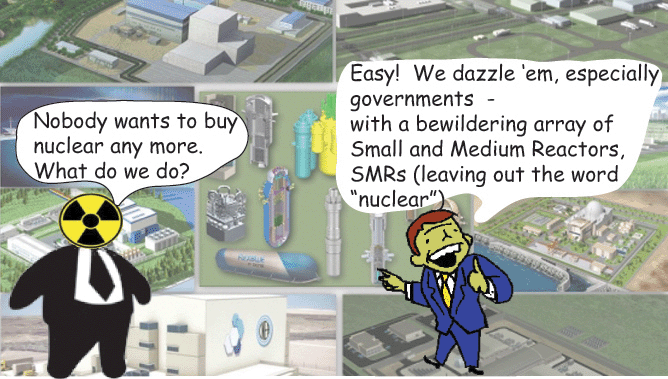
  Nuclear Renaissance II So now the nuclear industry, imagining itself rising from the ashes of its own calamitous failure, is launching a NEW nuclear renaissance based on “Small Modular Reactors” (SMRs). There is no precise definition of an SMR except that it should be no more than 300 MW in power output, and could be as little as 10 MW or less.
…… There is a bewildering variety of SMR designs, using uranium, plutonium, or thorium in the fuel, using molten salt, liquid metal, or ordinary water as coolant, but all intended to run for a long time with a replaceable core.
The Catch-22 in all of this is that Small Reactors are NOT cheaper than large reactors, quite the contrary! Because of the safety features that must be included in order to be licensed needed to contain the enormous inventory of intensely radioactive fission products and extremely radiotoxic actinides and prevent them from escaping, these SMR’s can only begin to break even if they are purchased in the THOUSANDS of units. The economies of scale only kick in when they are mass-produced. So mass-marketing is absolutely essential
  Already the Canadian government (which has, at least tentatively, bought into this SMR scheme through its adherence to “NICE: Nuclear Innovation = Clean Energy”) is scouring the country for possibilities. In Alberta dozens of SMRs might be employed to “cook” the oil sands in order to extract the bitumen. In the northern regions SMRs might be used to replace diesel generators, especially in arctic and subarctic conditions. In New Brunswick SMRs could be sold to appease those who have over the years clamoured for a second Lepreau.
 But it is pretty certain that none of these plans could be realized without very hefty federal subsidies, because these SMRs will be initially sold at a loss just to “prime the pump” in hopes that a profitable market will eventually materialize. And of course the SMRs themselves are purely conjectural at this point, none have them have been built or licensed or operated. It will take at least a decade or two to get them up and running, if ever that happens. Meanwhile the economic prospects for nuclear, especially in the west, are dismal. As the senior vice-president of Exelon said recently:
Due to their high cost relative to other generating options, no new nuclear power units will be built in the US, an Exelon official said Thursday.
“The fact is — and I don’t want my message to be misconstrued in this part — I don’t think we’re building any more nuclear plants in the United States. I don’t think it’s ever going to happen,” William Von Hoene, senior vice president and chief strategy officer at Exelon, told the US Energy Association’s annual meeting in Washington. With 23 operational reactors, Exelon is the US’ largest nuclear operator.
 “I’m not arguing for the construction of new nuclear plants,” Von Hoene said. “They are too expensive to construct, relative to the world in which we now live.”
Von Hoene’s stance includes so-called small modular reactors, or SMRs, and advanced designs, he said.
 “Right now, the costs on the SMRs, in part because of the size and in part because of the security that’s associated with any nuclear plant, are prohibitive,” Von Hoene said.
“It’s possible that that would evolve over time, and we’re involved in looking at that technology,” Von Hoene said. “Right now they’re prohibitively expensive.”
 In a later article I will address the particular kind of SMR intended for NB. It is a kind of mini-breeder in the sense that it uses plutonium in the fuel and liquid sodium as coolant. Bad news! …. http://www.ccnr.org/SMR_Second_Make-Believe_Renaissance_2018.pdf1 

September 18, 2018 Posted by | business and costs, Small Modular Nuclear Reactors, spinbuster | Leave a comment

Change public view of nuclear from “acceptance” to “DEMAND” – the new spin from International Atomic Energy Agency (IAEA)

September 17, 2018 Posted by | 2 WORLD, spinbuster | 2 Comments

EDF misrepresents Greenpeace – Greenpeace DOES see the Hinkley mud as radioactive and toxic

Glamorgan Gem 13th Sept 2018 , Greenpeace has complained that EDF Energy, which owns the power station at Hinkley Point, has misrepresented the Greenpeace position on the dredging of mud from the Hinkley site and its disposal off the south Wales coast.

EDF says the mud poses no risk and Natural Resources Wales says it is safe, but local campaigners are demanding more tests are done. Disposal of the
mud began on Monday, September 10.

On Wednesday this week Greenpeace released a statement demanding that EDF stops stating that Greenpeace accepts the mud isn’t ‘toxic’. A Greenpeace spokesman said: “We request in the strongest terms that EDF ceases from stating that Greenpeace accepts that the mud is not toxic as that is not our current view.
http://www.glamorgan-gem.co.uk/article.cfm?id=122935&headline=Greenpeace%20and%20EDF%20in%20%E2%80%98toxic%E2%80%99%20stand-off%20on%20Hinkley%20mud§ionIs=news&searchyear=2018

September 17, 2018 Posted by | spinbuster, UK | Leave a comment

The Fukushima nuclear crisis: How communities, doctors, media, and government have responded

Chapter Title: Informal Labour, Local Citizens and the Tokyo Electric Fukushima Daiichi Nuclear Crisis: Responses to Neoliberal Disaster Management Chapter Author(s): Adam Broinowski Book Title: New Worlds from Below [extensive footnotes and references on original]

Faced with the post-3.11 reality of government (and corporate) policy that protects economic and security interests over public health and wellbeing, the majority of the 2 million inhabitants of Fukushima Prefecture are either unconscious of or have been encouraged to accept living with radioactive contamination. People dry their clothes outside, drink local tap water and consume local food, swim in outdoor pools and the ocean, consume and sell their own produce or catches. Financial pressure after 3.11 as well as the persistent danger of social marginalisation has made it more difficult to take precautionary measures (i.e. permanent relocation, dual accommodation, importing food and water) and develop and share counter-narratives to the official message. Nevertheless, some continue to conceal their anxiety beneath a mask of superficial calm.

As Fukushima city resident Shiina Chieko observed, the majority of people seem to have adopted denial as a way to excise the present danger from their consciousness. Her sister-in-law, for example, ignored her son’s ‘continuous nosebleeds’, while her mother had decided that the community must endure by pretending that things were no different from pre-3.11 conditions.75 Unlike the claim that risk is evenly distributed, it is likely that greater risk is borne by those who eat processed foods from family restaurants and convenience stores, as well as infants, children and young women who are disproportionately vulnerable to internal radiation exposures. Most mothers, then, have an added burden to shield their children while maintaining a positive front in their family and community.

Some, such as Yokota Asami (40 years old), a small business owner and mother from Kōriyama (60 km from FDNPS), demonstrated initiative in voluntarily evacuating her family. She decided to return (wearing goggles and a mask, she joked) in September 2011 when her son’s regular and continuous nosebleeds (in 30-minute spells) subsided. The Yokotas found themselves the victims of bullying when they called attention to radiation dangers, and were labelled non-nationals (hikokumin 非国民) who had betrayed reconstruction efforts. Her son was the only one to put up his hand when he was asked along with 300 fellow junior high school students if he objected to eating locally produced school lunches. He also chose not to participate in outdoor exercise classes and to go on respite trips instead. When it came time to take the high school entrance exam, he was told by the school principal that those who took breaks could not pass. He took the exam and failed. When he asked to see his results he found that he had, in fact, enough points to pass (the cut-off was 156 while he received 198 out of 250 points). The Yokotas decided that it was better to be a ‘non-national’ and protect one’s health. Their son moved to live in Sapporo.76

In March 2015, Asami reported that doctors undertook paediatric thyroid operations while denying any correlation (inga kankei 因果 関係) with radiation exposures. They also urged their patients to keep their thyroid cancer a secret to enhance their employment or marriage prospects, although it would be difficult to conceal the post-operation scar.77 Yokota also indicated she knew of students having sudden heart attacks and developing leukaemia and other illnesses.78

This seems to be supported by Mr Ōkoshi, a Fukushima city resident, whose two daughters experienced stillbirths after 3.11. WhileŌkoshi found that doctors have regularly advised women in the area to abort after 3.11, presumably to avoid miscarriages and defects, they do not discuss direct causes. He also observed regular illnesses experienced by many of his friends, and some sudden deaths. After a friend (62 years old) started saying strange things, he was diagnosed with brain dysfunction. He died quickly. Another friend (53 years old) was advised by a doctor to monitor a polyp in her breast. When she sought second opinions, she discovered she had accumulated an internal dose of 22 mSv and had a rapidly developing liver cancer. She also died quickly.79 There are many more such stories that are being actively ignored by the authorities. As Shiina put it, ‘we’re getting leukaemia and cataracts and we die suddenly. The TEPCO registrar has been inundated with complaints’.80

While radiation contamination is clearly a health and environmental issue, state-corporate methods deployed by executives to protect (transnational) financial, industry and security interests and assets also make it a political issue.81 As things do not change by themselves, rather than turning one’s frustration inward in self-blame, turning to prayer or deceiving oneself into returning to pre-3.11 lifeways in contaminated areas, Shiina states that people, particularly those most affected, must develop political consciousness.

To achieve this ambitious objective is not as complicated as it might sound. Nishiyama Chikako (60 years old), for example, returned to Kawauchi village to run for the local assembly after the mandatory order was lifted in December 2011. She found, as she commented in her blog, a link between TEPCO and the tripling of the Kawauchi budget post-3.11. Subsequently, she reported that her blog was shut down by unknown hackers on several occasions.82

This sort of information and communication control appears to be widespread. After 3.11, the central government hired advertising companies Dentsū and Hakuhōdō (formerly McCann Ericson Hakuhodo) to run a ‘public acceptance’ campaign. Young teams were dispatched nationwide to conduct ‘public opinion guidance’ (yoron yūdō 世論誘導). The teams consisted of casual labour (earning 2,000–4,000 yen per hour) hired under a confidentiality clause (shuhi gimu 守秘義務) to manipulate information (jōhō kōsaku 情報工作) and harass internet users.83

Media professionals have been subjected to similar tactics. The Asahi TV journalist Iwaji Masaki (Hōdō Station), one of the few mainstream journalists covering the Fukushima Daiichi nuclear accident in depth, for example, was intimidated by police for interviewing (December 2012) informal nuclear workers who showed shoddy decontamination practices that entailed contaminated waste disposal rather than removal and the mother of a child with thyroid cancer. Airing the program was delayed until August 2013. Before he could complete his planned segments on the US$1 billion class action for compensation for unusual and serious illnesses filed against TEPCO, General Electric, Hitachi and Tōshiba in 2015 by sailors from the USS Ronald Reagan (which provided assistance quickly after the disaster, and among whose crew 250 were ill and three had died),84 on 29 September 2013, Iwaji was reportedly found dead in his apartment (having suffered carbon monoxide poisoning in a sealed room as he slept). Much speculation followed on social media, including both plausible reasons for suicide and testimonies from friends that knew him well that Iwaji himself stated he would never commit suicide, but the story was conspicuously ignored by major news channels.85

The former mayor of Futaba village Idogawa Katsuichi was harassed on social media for calling attention to illnesses and for the resettlement of pregnant women and children. When Kariya Tetsu characterised Idogawa in his popular manga series (Oishinbo 美味しんぼ), and depicted the manga’s main character as suffering from nosebleeds after visiting Fukushima, Kariya’s editors shut the series down following accusations of ‘spreading rumours’ from some readers, media commentators and high level politicians. Similarly, Takenouchi Mari, a freelance journalist and mother who evacuated from Fukushima in 2011, received thousands of slanderous messages and threats to her two-year-old son and her property after criticising the co-founder of Fukushima ETHOS on her blog in mid-2012. She too reported that her internet account was suspended and her request for a police investigation ignored. She was counter-sued for harassment and subjected to a criminal investigation and civil law suit.86

Among the activists who have been arrested for anti-nuclear protests, the academic Shimoji Masaki of Hannan University (9 December 2012) was arrested by Osaka Prefectural Police and charged with ‘violating the Railway Operation Act’ for walking through an Osaka station concourse while participating in a demonstration against radioactive waste incineration (17 October 2012). Shimoji had reiterated that residents, due to radioactive incineration (which was due to commence in Osaka in February 2013), would be forced to bear the burden of air, food and water contamination.8

Despite such obstacles to developing a political consciousness as well as the obvious difficulties in permanently resettling large populations, it has been not only evacuees who have had to think about their fundamental life priorities after the Fukushima Daiichi nuclear distaster. Some have adopted real (not only psychological) self-protection mechanisms. The  voluntary Fukushima Collective Health Clinic (Fukushima Kyōdō Shinryōjo 福島共同診療所), for example, is founded on three principles: respite (hoyō 保養), treatment (shinryō 診療) and healing (iryō 医療). Co-founder Dr Sugii, advocates a return to the 1 mSv/y limit, and seeks to inform those who for whatever reason cannot move from contaminated areas in Fukushima Prefecture.88 This is modelled on Belrad, the independent health clinic in Belarus run by Alexey Nesterenko, which prioritises knowledge, safety and open information on radiation and its health impacts. 86

To counteract the misinformation residents were exposed to post Chernobyl, over time and with limited resources, Belrad and other organisations have disseminated information and organised respite trips for children in affected areas. In 2015, for example, subsidised respite trips were organised for 50,000 children, and results have shown that  over  two  continuous years of respite those who accumulated 25– 35 Bq/kg had reduced the amount to 0 Bq/kg. Unlike the flat limit of 100 Bq/kg of Caesium in food in Japan (50 Bq/kg for milk and infant foods, 10  Bq/kg for drinking water), Belrad recommends an internal radiation limit of 10–30 Bq/kg in the body (although it advises below 10 Bq for infants to avoid lesions and heart irregularities).89 It should be noted that these limits do not guarantee safety against the effects of repeating internal radiation exposure from consuming contaminated foods, which is relative to the length of time the radiation remains and its location in the body.

While some communities, such as the town of Aketo in Tanohama, Iwate Prefecture, have struggled to block the siting of nuclear waste storage facilities,90 others are also organising to reduce radio-accumulation in their children through respite trips,91 as well as concentrating on indoor activities, measuring hotspots and decontaminating public areas and pathways, pooling funds for expensive spectrometers to monitor internal exposure and food and water, incorporating dietary radioprotection, as well as finding ways to reduce anxiety

Many local farmers cannot admit the already near-permanent damage to their land (which may continue for hundreds of years) because it would imply the devaluation of their property and produce as well as threatening their ancestral ties to the land, commitments and future plans. While many are keenly aware of their responsibilities, the push by the Fukushima and central governments to identify and gain access to markets for produce from irradiated areas would make it easier to overlook uncomfortable factors. Some have argued that given the reassurances of safety from the highest authorities, these offical figures should therefore relocate to contaminated areas and consume these products regularly. Despite the fairness of this statement, a more utilitarian logic has prevailed. In the name of reconstruction and revitalisation of Fukushima and the nation, the dilution of Fukushima produce with unirradiated produce to return measurements just under the required limits, radiation spikes in soil and food or the mutation of plants as Caesium replaces potassium (K40), for example, tend to be minimised. In this climate, the distribution and relabelling of Fukushima produce for urban and international markets (i.e. in a black market of cut-price bulk produce picked up by yakuza and other brokers) is likely to continue.

To date, the majority of evacuees have refused to return to (de)contaminated areas. Some claim they are yet to receive accurate information to justify it. Independent specialists such as Hosokawa Kōmei (Citizens’ Commission on Nuclear Energy), who develops models for transition to renewable alternatives, anticipate an increase in evacuee populations as they predict increased resettlement of Fukushima residents over 20–30 years.92 As some evacuees recognise the potential for second or third Fukushimas, they have sought to strengthen their collective identities and rights. Through local organisation and alternative life practices, whether in micro-scale ecovillages and transition towns93 with communal occupancies and squats, parallel currencies and local exchange systems (roughly 70 substantive projects), organic food co-ops, self-sufficient energy systems, local production and recycling, carpools and free kindergartens, such groups are seeking to reconstruct and model core social priorities, focusing on clean food, health and community cooperation rather than the internalised and dreary competition for material accumulation.

Although the accountability of authorities with prior knowledge has yet to be properly investigated, one of the largest groups of collective legal actions  to be mounted in Japanese history includes some 20 lawsuits by  10,000 plaintiffs. The Fukushima genpatsu kokuso-dan (Group of Plaintiffs for Criminal Prosecution 福島原発告訴団), formed on 20 April 2012, filed a criminal case (lodged 3 September 2013, Fukushima District Court) against 33 previous and present officers of TEPCO, government officials and medical experts for ‘group irresponsibility’ and the neglect of duty of care, environmental damage and harm to human health. Mutō Ruiko, one of the key plaintiffs, declared the main aim to be symbolic: to publicly record injury, reclaim the victims’ sense of agency and protect the next generation. In short, they were seeking recognition of wrong and harm done rather than primarily financial redress. This moderate aim was undoubtedly tempered by recognition of regulatory capture: those who were cavalier with safety procedures ‘were now in charge of restarts; those responsible for the “safety” campaign were now in charge of the Health Survey; [there has been] no responsibility for the SPEEDI cover-up; and TEPCO is not being held responsible for [faulty] decontamination’.94

The judgement of this case was handed down at the Tokyo District Court on the same day as the announcement of Tokyo’s successful Olympics bid (9  September 2013). The case was dismissed on the grounds that the disaster was beyond predictability (sōteigai 想定外), which made negligence  hypothetical.95 A citizens’ panel (Committee for inquest of Prosecution) overturned the dismissal and renewed the claim against three TEPCO executives on 18 December 2013. They demanded, alongside a  ruling of negligence against three former TEPCO executives, the inclusion of physical, economic, social and psychological harms: illness, paediatric underdevelopment (radiation exposures, excessive isolation indoors), financial losses (unemployment, loss in property value, rental costs of two homes, relocation, travel, etc.), family and community division, ijime (bullying いじめ) and stress. Many plaintiffs also claimed that their disrupted reliance upon nature,96 as inviolable and precious,97 should be recognised as harm. This too was dismissed and again a citizen’s panel found against the three TEPCO executives.98 In May 2015, 10 groups of plaintiffs formed a network named Hidanren (被弾連, Genpatsu Jiko Higaisha Dantai Renrakukai) comprising 20,000 people. The Fukushima kokuso-dan again made a claim to another citizens’ panel, which found in July 2015 in favour of indicting the three TEPCO executives for trial.99 In addition, a civil case filed in June 2015 by 4,000 plaintiffs from Iwaki seeking to prove negligence and not just harm sought to use previously withheld evidence to show fair warning of a 3.11-type scenario was given. This case focused the court on the operator’s calculation of risk probability of a tsunami of that size and, rather than aiming at financial compensation, it sought to deter nuclear operators from future negligent practices if ruled in favour. In anticipation of out-of-court settlements, the Japanese Government increased the budget for compensation payments to 7 trillion yen (US$56 billion). https://www.jstor.org/stable/pdf/j.ctt1pwtd47.11.pdf?refreqid=excelsior%3Af507747c78b2f0fba7a19d91222e4a72

September 10, 2018 Posted by | Japan, media, politics, psychology - mental health, spinbuster | Leave a comment

Irrational optimism about Small Modular Nuclear Reactors (SMRs)

“Panglossian puffery”, says David Lowry. The report ignores the security and nuclear waste problems of small modular reactors.

The Nuclear Free Local Authorities (NFLA) says this is yet another attempt to promote the benefits of SMRs despite large and quite possibly insurmountable hurdles to cross. The Government suggests the report was produced by an ‘independent’ group, yet at least half of the group have strong links to the nuclear industry, including the Nuclear Industry Association. The UK appear to be one of the few governments pursuing a strategy of promoting SMRs. Even France and Finland, the only other countries in Europe currently developing large nuclear projects, have no plans to develop such technology. Indeed France has just commissioned a whole raft of new smaller-scale solar energy projects.

the finance sector is accurate in being sceptical of new nuclear developments given the rapidly decreasing costs of renewable energy.

Rolls-Royce warned last month that it was preparing to shut down the [Small Modular Nuclear Reactor] project if the government did not make a long-term commitment to its technology.

Panglossian SMRs , NuClear News Sept 18, The government should subsidise the deployment of small modular nuclear reactors in order to speed the transition to a low carbon energy system, according to an independent review into the technology commissioned by Ministers. The Expert Finance Working Group on Small Reactors (EFWG) said in a report that government should offer subsidies for small nuclear reactors to help de-risk the technology and kickstart cost reductions. (1)

Small modular reactors (SMRs) generally have a capacity less than 600MW, with the costs ranging from £100 million to £2.3 billion, which the experts suggest could be delivered by 2030. The EFWG has recommended the government to help de-risk the small nuclear market to enable the private sector to develop and finance projects – it believes SMRs could be commercially viable propositions both in the UK and for an export market.

The report says the “Government should establish an advanced manufacturing supply chain initiative, as it did with offshore wind, to bring forward existing and new manufacturing capability in the UK and to challenge the market on the requirement for nuclear specific items, particularly Balance of Plant (BOP), thereby reducing the costs of nuclear and the perceived risks associated with it.”

Nuclear Energy Minister Richard Harrington said: “Today’s independent expert report recognises the opportunity presented by small nuclear reactors and shows the potential for how investors, industry and government can work together to make small nuclear reactors a reality. Advanced nuclear technologies provide a major opportunity to drive clean growth and could create high-skilled, well-paid jobs around the country as part of our modern Industrial Strategy.” (2) Continue reading

September 10, 2018 Posted by | Small Modular Nuclear Reactors, spinbuster, UK | Leave a comment

Pro nuclear lobbyist Michael Shellenberger enthuses for nuclear weapons. Has he lost the plot?

we can now add preventing war” to the list of nuclear energy’s superior characteristics – Shellenberger
Who are we to deny weak nations the nuclear weapons they need for self-defense? – Shellenberger
We “should be glad that North Korea acquired the bomb” according to Shellenberger. And on it goes ‒ his enthusiasm for nuclear weapons proliferation knows no bounds.
Understanding of the power-weapons connections, combined with opposition to nuclear weapons, is one of the motivations driving opposition to nuclear power.
Nuclear lobbyist Michael Shellenberger, learns to love the bomb, goes down a rabbit hole, NUCLEAR MONITOR , 7 Sept 18  Author: Jim Green ‒ Nuclear Monitor editor and national nuclear campaigner with Friends of the Earth Australia, NM865.4744 [original has many footnotes and references]

In 2015, Nuclear Monitor published a detailed critique of the many ways nuclear industry insiders and lobbyists trivialize and deny the connections between nuclear power (and the broader nuclear fuel cycle) and nuclear  weapons proliferation.

Since then, the arguments have been turned upside down with prominent industry insiders and lobbyists openly acknowledging power-weapons connections. This remarkable about-turn has clear origins in the crisis facing nuclear power and the perceived need to secure increased subsidies to prevent reactors closing and to build new ones. Continue reading

September 8, 2018 Posted by | spinbuster, USA | Leave a comment

Nuclear enthusiasts not impressed with Michael Shellenberger’s “incoherent” support for nuclear weapons

Nuclear lobbyist Michael Shellenberger, learns to love the bomb, goes down a rabbit hole, NUCLEAR MONITOR , 7 Sept 18  Author: Jim Green ‒ Nuclear Monitor editor and national nuclear campaigner with Friends of the Earth Australia, NM865.4744 [original has many footnotes and references]
Michael Shellenberger is the latest nuclear lobbyist to acknowledge systemic
connections between the civil nuclear fuel cycle and weapons proliferation.
Bizarrely, he argues that nuclear weapons are a force for peace and he
promotes worldwide weapons proliferation.
‘Almost Trumpian in its incoherence’: Critical responses to Michael
Shellenberger’s promotion of nuclear weapons proliferation
Michael Shellenberger’s promotion of nuclear weapons proliferation has
attracted little or no support from nuclear enthusiasts but a good deal of
criticism.
Environmental Progress attorney Frank Jablonski argues that
Shellenberger “seems to presume that if the nuclear non-proliferation
framework is eliminated, nuclear capabilities will be quickly equalized
through some kind of dystopian Oprah episode in which “YOU get a
weapon, YOU get a weapon, EVERYBODY gets a weapon!!!”. The resulting
equalization of capabilities will lead to peace, kind of in the vein of the NRA
slogan that “an armed (international) society is a polite society”…..

September 8, 2018 Posted by | 2 WORLD, spinbuster | Leave a comment

Following Chernobyl, Britain’s District Councils’ information role was limited to PR for the government

**Chernobyl & Sellafield**  Slugger O’Toole 26th Aug 2018 , The Chernobyl disaster released fission products into the atmosphere above the Ukrainian nuclear power plant on 25 and 26 April 1986 which drifted over the Soviet Union and Europe scattering radioactive contamination.
In the months and years that followed, UK government working groups wrote reports on “the Lessons of Chernobyl”.
“After some initial problems” officials in Northern Ireland were “closely involved” with the working party as it drew up plans to build a radiation monitoring network (RIMNET) to automate the measurement of radioactivity in the air at stations across the UK to aid the response to “peace time nuclear accidents”.
Official papers released under the 20 year rule in file NIO/28/2/44A [PDF] indicate that the Northern Ireland Office wished to site automated monitoring stations in Aldergrove; Silent Valley; Ballinrees; Castle Archdale; They also desired the continuous measurement of radioactivity levels in drinking water in key locations – the Silent Valley reservoir and at a DOE Water Extraction Plant at Dunore Point on Lough Neagh – which “provide the vast majority of the Northern Ireland
population with drinking water”.
If you head down to the Public Records Office you can check out file NIO/28/2/44A and read how the Secretary of
State Tom King’s office responded to a letter from the clerk of Omagh District Council In November 1987 who wrote “on behalf of a convocation of Councils … pledged to achieving the closure of the Sellafield Nuclear Complex”.
On the one hand … Mr S McKillop described the press release which accompanied the letter as “tendentious and unconstructively critical of government policy as regards nuclear installations generally” and prepared a draft response.
On the other … the official did concede that the council “does however raise a relevant practical issue as
regards the necessity, post Chernobyl of reviewing emergency planning procedures and the role of District Councils in the process”. However, he concluded that “it is difficult to identify any significant role for them within the monitoring or scientific assessment aspects of the Contingency Plan” and suggested that “their input may be confined mainly to a P/R
advisory role where indeed their access and proximity to the general public could prove a most valuable asset”.
https://sluggerotoole.com/2018/08/26/chernobyl-and-sellafield-encouraging-council-interest-in-emergency-planning-but-dismissing-their-nuclear-scepticism-20yearrule/

August 27, 2018 Posted by | spinbuster, UK | Leave a comment