Julian Assange dragged from embassy “on the orders of the president”
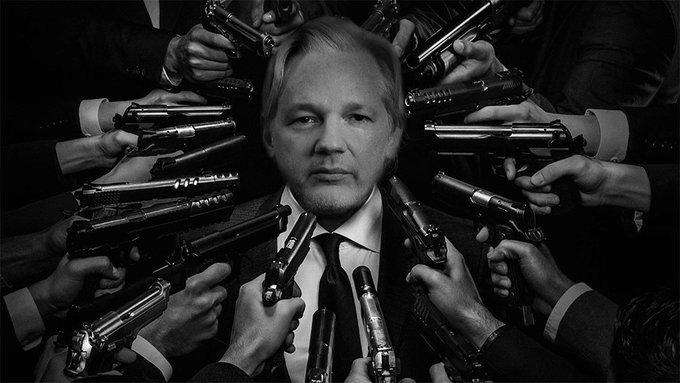 Explosive evidence from Trump insider,Assange dragged from embassy “on the orders of the president”, WSWS, By Laura Tiernan and Thomas Scripps, 22 September 2020
Alt-right media personality Cassandra Fairbanks’ witness testimony was read out in court yesterday, providing evidence that Julian Assange’s April 2019 arrest at the Ecuadorian Embassy in London was politically motivated and directed by United States President Donald Trump.
Fairbanks testified that Arthur Schwartz, a wealthy Republican Party donor and key Trump ally, had told her that Assange was taken from the Ecuadorian Embassy “on orders from the president.” The conversation between Schwartz and Fairbanks occurred in September 2019 and was recorded by Fairbanks.
Schwartz, a frequent visitor to the White House and “informal adviser” or “fixer” to Donald Trump Jr., told Fairbanks the president’s orders were conveyed via US Ambassador to Germany Richard Grenell, who brokered a deal with the Ecuadorian government for Assange’s removal. Grenell was appointed acting director of national intelligence by Trump in February this year, holding the position until May.
Assange’s lawyer, Edward Fitzgerald QC, spelled out the significance of Fairbanks’ disclosures, telling Judge Vanessa Baraitser they were, “evidence of the declared intentions of those at the top who planned the prosecution and the eviction from the embassy.”
Fairbanks, who writes for the pro-Trump Gateway Pundit, is a prominent Assange supporter who visited the WikiLeaks founder at the Embassy on two key occasions. Her evidence was read into proceedings yesterday afternoon unopposed, with Fitzgerald explaining, “My learned friend [James Lewis QC for the prosecution] reserves the right to say ‘because she’s a supporter of Julian Assange you must take that into account in weighing her evidence.’ But we say [her evidence] is true.”
Given her close connections to leading figures in the Trump administration’s fascistic entourage, Fairbanks is uniquely positioned to expose key aspects of the politically motivated vendetta against the WikiLeaks founder. Throughout the extradition hearing, lawyers for the US government have repeatedly claimed the charges against Assange under the Espionage Act are motivated by “criminal justice concerns” and are “not political.”
Fairbanks’ evidence shreds the official narrative of the Department of Justice (DoJ) that Assange was arrested on April 11, 2019 in relation to “hacking.” In a phone call with Schwartz on October 30, 2018, he made clear that Assange would be arrested as political payback for his role in “the Manning case,” i.e., the disclosure by US Army whistle-blower Chelsea Manning of US war crimes in Afghanistan and Iraq……………
Speaking outside the court, Assange’s father, John Shipton, said, “Today we had the prosecution trying to prove that water runs uphill and up is down. … The defence replied and conclusively demonstrated that it was David Leigh [who caused the unredacted cables to be released]. We can only conclude from the amount of time that the prosecution spent defending David Leigh that David Leigh is a state asset.”
At the end of the hearing’s morning session, an exchange between District Judge Vanessa Baraitser and the legal teams pointed to further restrictions being imposed on the defence’s ability to present its case.
Seizing on the delays caused by a potential COVID-19 outbreak in the first week of the hearing, Baraitser insisted that the defence prepare a timetable that allowed the hearing to “finish within two weeks.” When the defence replied that this would leave no time for closing submissions, she reacted enthusiastically to the suggestion of prosecution lawyer James Lewis QC that these could be submitted in written form and summarised in just half a day each for the prosecution and the defence. A final decision is forthcoming.
The hearing continues today……… https://www.wsws.org/en/articles/2020/09/22/assa-s22.html
Lawsuit: Ohio Attorney General sues to stop nuclear bailout money, and break up dark money groups

Ohio Attorney General Dave Yost sues to block nuclear bailout money from being paid, The lawsuit also seeks to dissolve the dark money groups involved in the bribery scheme. Author: WKYC Staff, Associated Press, 10TV Web Staff, September 23, 2020
COLUMBUS, Ohio — Ohio Attorney General Dave Yost filed a lawsuit on Wednesday to block the state’s nuclear plants from collecting fees on electricity bills that were authorized in a new law at the center of a $60 million federal bribery probe involving the former speaker of the Ohio House.
The suit was filed in Franklin County Court in Columbus against Energy Harbor, asking the judge to block payments to the company’s two nuclear plants near Cleveland and Toledo that were bailed out through the now-tainted legislation.
Energy Harbor is the former FirstEnergy Solutions, a onetime subsidiary of FirstEnergy Corp. The subsidiary filed for Chapter 11 bankruptcy in 2018 amid a mounting load brought on by the rise of competition from natural gas power in the East and Midwest.
HB 6, a roughly $1 billion financial bailout, was signed into law in July 2019. It added a new fee to every electricity bill in the state and directed over $150 million a year through 2026 to the plants in Lake and Ottawa counties. The fee will be added to every electricity bill in the state starting January 1.
Federal prosecutors allege that from March 2017 to March 2020, former Ohio House Speaker Larry Householder and others received millions of dollars in exchange for help in passing HB 6.
Wednesday’s lawsuit came hours after a House committee looking at repealing the law heard varying proponent testimony from energy lobbying groups and state office representing consumers. Governor Mike DeWine has said he supports a repeal of the law.
Yost had previously promised he would take the legal remedies necessary if the General Assembly could not do so in time.
The lawsuit also seeks to freeze the assets of former House Speaker Larry Householder’s $1 million campaign fund and dissolve the dark money groups involved in the bribery scheme, Yost said.
“Corruption like this doesn’t happen without cash, lots of cash,” he said.
Federal prosecutors in July accused Householder and four others of shepherding energy company money for personal and political use as part of an effort to pass the legislation, then kill any attempt to repeal it at the polls. All five men have pleaded not guilty………. https://www.wkyc.com/article/news/politics/attorney-general-dave-yost-sues-to-stop-nuclear-bailout-money-from-being-paid/95-431fd46c-44c0-440a-9076-46e1c9d23f8a
False report of a nuclear disaster in Ukraine
Hackers spread false reports of nuclear disaster, death of US troops in Ukraine, https://www.kyivpost.com/ukraine-politics/hackers-spread-false-reports-of-nuclear-disaster-death-of-us-troops-in-ukraine.html?cn-reloaded=1
Notably, the fake news campaign occurred during the climax of the large Ukrainian-American-British-Canadian military exercises Joint Endeavor 2020, which continue all across the country since Sept. 19, and during yet another round of Ukrainian-American anti-terror drills Rapid Trident in Lviv Oblast.
Moreover, the fake stories were published and massively spread not only by dubious Facebook accounts but also by hacked websites of local authorities and even the police.
The reports started off with a post published on the official website of the local government in the town of Varash some 340 kilometers northwest of Kyiv. The town is located just near the Rivne Nuclear Power Plant and is home to most of the enterprise’s personnel.
The message stated that during Rapid Trident drills, one of the Rivne power plant blocks was accidentally cut off from the electricity supply, which resulted in a catastrophic radioactive release, with severely contaminated materials spilled into the Styr River nearby. According to the fake report, the leak constituted 10% of the radioactive fallout registered during the 1986 Chornobyl accident, the worst nuclear disaster in human history.
So, the website said, the Varash town government had made a decision to declare the state of emergency and launch an operation to evacuate the civilian population from a newly established 30-kilometer alienation zone around the power plant.
The message stated that during Rapid Trident drills, one of the Rivne power plant blocks was accidentally cut off from the electricity supply, which resulted in a catastrophic radioactive release, with severely contaminated materials spilled into the Styr River nearby. According to the fake report, the leak constituted 10% of the radioactive fallout registered during the 1986 Chornobyl accident, the worst nuclear disaster in human history.
So, the website said, the Varash town government had made a decision to declare the state of emergency and launch an operation to evacuate the civilian population from a newly established 30-kilometer alienation zone around the power plant.
Simultaneously with the Lviv report, the Kherson police website said the local law enforcers investigated “the death of American military councilors” in the oblast, which also on Sept. 23 hosted a major round of Ukrainian-American maneuvers Joint Endeavor 2020, which were visited by Ukraine’s President Volodymyr Zelensky.
And at the same time, an official website of the police department of Vinnytsya Oblast, also a scene of the Joint Endeavor exercises, suddenly said a U.S. military serviceperson was arrested on charges of raping a 16-year-old girl.
In all cases, the country’s police immediately refuted the claims on its official Telegram channel, adding that some of its regional websites were hacked simultaneously at 11:45 a.m. Kyiv time.
The police’s main website was switched off for emergency works. As of Sept. 23 evening, it was still not available for users.
Later in the day, the police said it had initiated a criminal case regarding the hacking campaign.
Julian Assange case: Witnesses recall Collateral Murder attack: “Look at those dead bastards,” shooters said
|
Witnesses recall Collateral Murder attack: “Look at those dead bastards,” shooters said, WSWS, By Thomas Scripps and Laura Tiernan, 19 September 2020New Zealand investigative journalist Nicky Hager testified in Julian Assange’s extradition hearing yesterday morning. Hager has extensive experience in reporting imperialist violence and intrigue. In 2017, he released the book Hit and Run with co-author Jon Stephenson exposing the killing of civilians by New Zealand and United States forces in Afghanistan. He worked with WikiLeaks in the release of US diplomatic cables from November 2010 and made use of other releases in his writing. Hager explained that serious journalists routinely make use of classified materials when reporting on conflicts and potential state crimes. This, he said, was “generally impossible … without access to sources that the authorities concerned regard as sensitive and out of bounds. Consequently, information marked as classified is essential to allow journalism to perform its role in informing people about war, enabling democratic decision making and deterring wrongdoing.” The Iraq and Afghanistan war logs and US embassy cables obtained by WikiLeaks, Hager said, were documents “of the highest public interest—some of the most important material I have ever used in my life.” Referring to the “Collateral Murder” video, which District Judge Vanessa Baraitser intervened to stop him describing in full, he said, “After the shooting, the pilot and the co-pilot were heard saying ‘Look at those dead bastards,’ with the other replying ‘Nice’ … My belief is … the publication of that video and those words was the equivalent of the death of George Floyd and his words ‘I can’t breathe.’ They had a profound effect on public opinion in the world.” The Iraq and Afghanistan war logs and US embassy cables obtained by WikiLeaks, Hager said, were documents “of the highest public interest—some of the most important material I have ever used in my life.” Referring to the “Collateral Murder” video, which District Judge Vanessa Baraitser intervened to stop him describing in full, he said, “After the shooting, the pilot and the co-pilot were heard saying ‘Look at those dead bastards,’ with the other replying ‘Nice’ … My belief is … the publication of that video and those words was the equivalent of the death of George Floyd and his words ‘I can’t breathe.’ They had a profound effect on public opinion in the world.”……………. Yesterday’s cross-examination centred on the scope of the Espionage Act, with US prosecutors making clear that journalists and media outlets are now a legitimate target—especially those which are deemed “non-conventional.” …….. Throughout the hearing, US prosecutors have claimed the “Collateral Murder” video is not part of their case against Assange. But as Fitzgerald argued, after taking instruction from his client, the “Collateral Murder” video is connected “indivisibly” from the Iraq Rules of Engagement published by WikiLeaks and named in the US indictment. It was on the basis of these Rules of Engagement that Apache’s crew member “Crazy Horse 1-8” fired on civilians, leaving 18 dead and horrifically injuring two children. The hearing continues on Monday. https://www.wsws.org/en/articles/2020/09/19/assa-s19.html |
|
Julian Assange aimed for ‘stringent redactions’, extradition court hears

 Julian Assange aimed for ‘stringent redactions’, extradition court hears, SMH, Latika Bourke. September 18, 2020 London: Julian Assange was “insistent” on redacting the names of Iraqi informants and even deployed software to remove Iraqi words from WikiLeaks cables which he later published in full, a prominent NGO told the Australian’s extradition hearing.John Sloboda who founded Iraq Body Count, a London-based non-government organisation that tallies civilian casualties gave evidence at London’s Old Bailey, on behalf of the defence.
he US Department of Justice wants Assange extradited to the United States so he can face 18 charges of computer hacking and for publishing the names of informants.
Sloboda, who worked with Assange and the WikiLeaks team on the Iraq war logs in 2010, said the Australian was determined to scrub sources’ names from the documents before publishing.
“It was impressed upon us that the aim was a very, very stringent redaction of the logs before publication.
“That was the aim of Mr Assange and WikiLeaks,” he told Assange’s lawyer.
Sloboda said it would have taken an “army of people” “a very long time” to redact the files by hand and that it was his colleague who came up with the idea of developing software that would scrub non-English words from the documents.
He said redactions of occupations were also carried out to stop informants’ identities being guessed.
He said this laborious process created tensions between WikiLeaks and the media outlets they were partnering with at the time, as the news organisations wanted to begin publishing documents they had already redacted. ………..
Assange has spoken out in court to deny he put lives in harm’s way. He faces a combined sentence of up to 175 years if convicted of all counts in the US. His extradition hearing is expected to run until October. https://www.smh.com.au/world/europe/julian-assange-aimed-for-stringent-redactions-extradition-court-hears-20200917-p55ws5.html
Julian Assange was offered a pardon, if he would name a source
Trump ‘associates’ offered Assange pardon in return for emails source, court hears
WikiLeaks founder was asked to reveal source of leak damaging to Hillary Clinton, hearing told, Guardian, Peter Beaumont in London, Sat 19 Sep 2020 Two political figures claiming to represent Donald Trump offered Julian Assange a “win-win” deal to avoid extradition to the US and indictment, a London court has heard.
Under the proposed deal, outlined by Assange’s barrister Jennifer Robinson, the WikiLeaks founder would be offered a pardon if he disclosed who leaked Democratic party emails to his site, in order to help clear up allegations they had been supplied by Russian hackers to help Trump’s election in 2016.
According to a statement from Robinson read out to the court, the offer was made by the then Republican congressman Dana Rohrabacher and Trump associate Charles Johnson at a meeting on 15 August 2017 at the Ecuadorian embassy in London where Assange was then sheltering. At the time he was under secret investigation by a US grand jury.
Robinson added: “The proposal put forward by Congressman Rohrabacher was that Mr Assange identify the source for the 2016 election publications in return for some kind of pardon, assurance or agreement which would both benefit President Trump politically and prevent US indictment and extradition.”
……….. The barrister added that Assange did not name the source of the emails.While Assange’s legal team first made the claim in February detailing a deal for a pardon in exchange for denying the source of the emails was Russia, Robinson’s statement – admitted as evidence by the court – provides substantial details of the meeting………
Robinson’s description of the offer suggests Trump was prepared to consider a pardon for Assange in exchange for information almost a year before a federal grand jury issued a sealed indictment against the WikiLeaks founder.
If it is confirmed that the approach did indeed have the approval of Trump, it would mark the latest in a number of interventions by the US president in relation to the investigation into Russian election interference.
In her statement, Robinson said Rohrabacher and Johnson “wanted us to believe they were acting on behalf of the president”.
“They stated that President Trump was aware of and had approved of them coming to meet with Mr Assange to discuss a proposal – and that they would have an audience with the president to discuss the matter on their return to Washington DC,” she said……
Appearing to confirm that the approach had been made, James Lewis QC, for the US government, said: “The position of the government is we don’t contest these things were said,” adding: We obviously do not accept the truth of what was said by others.” ……. https://www.theguardian.com/media/2020/sep/18/trump-offered-julian-assange-pardon-in-return-for-democrat-hacking-source-court-told
Julian Assange exposed “a very serious pattern of actual war crimes”
Speaking on the significance of the WikiLeaks releases, Ellsberg said, “It was clear to me that these revelations, like the Pentagon papers, had the capability of informing the public that they had been seriously misled about the nature of the [Iraq and Afghan] war[s], the progress of the war, the likelihood that it would be ended successfully or at all, and that this was information of the highest importance to the American public.”
Characterising the wars that WikiLeaks exposed, Ellsberg explained, “The Iraq war was clearly recognisable, even to a layman, as a crime against the peace, as an aggressive war.”
|
Assange exposed “a very serious pattern of actual war crimes,” Daniel Ellsberg tells extradition hearing https://www.wsws.org/en/articles/2020/09/17/ells-s17.html, By Thomas Scripps, 17 September 2020Daniel Ellsberg gave powerful testimony to the Julian Assange extradition hearing yesterday, speaking via videolink to London’s Old Bailey. Ellsberg’s release of the top-secret Pentagon Papers in 1971 exposed the US government’s lies and criminality in the Vietnam War. “[T]he Afghan war was immediately recognisable as what might be called ‘Vietnam-istan.’ It was a rerun of the Vietnam war despite the great differences in terrain, in religion, in language … [T]he basic nature of the war, as basically an invasion and occupation of a foreign country against the wishes of most of its inhabitants, was the same. And that meant the prospects were essentially the same, which were for an endless stalemate which we’ve now experienced in Afghanistan for 19 years. And it might have gone on that long in Vietnam had not truths that the government was trying to withhold been made public.” Referring to the brutality of these occupations which the WikiLeaks releases uncovered, Ellsberg said, “I saw for the first time in virtually forty years … since the Pentagon papers, the release of a sufficient quantity of documentation to make patterns of decision making [in the war] very evident, to show that there were policies at work and not merely aberrant incidents.” He drew special attention to how the documents had exposed “a very serious pattern of actual war crimes. … In the Afghan case the reports of torture and of assassination and death squads were clearly describing war crimes. I would have, by the way, been astonished to see such reports in Secret level communications [as opposed to Top Secret] in 1971 or 1964 in the Pentagon. They would have been much higher in classification. What these reports revealed was that in the intervening years, in the Iraq War and the Afghan War, torture had become so normalised, and death squads and assassination, that reports of them could be trusted to a network at the Secret level available to … people with low-level clearances.” Ellsberg said of the Iraq “Collateral Murder” video, “We were watching somebody pursue with his machine gun an unarmed man, wounded, crawling for safety. … I was very glad that the American public was confronted with this reality of our war.” Speaking on the significance of the WikiLeaks releases, Ellsberg said, “It was clear to me that these revelations, like the Pentagon papers, had the capability of informing the public that they had been seriously misled about the nature of the [Iraq and Afghan] war[s], the progress of the war, the likelihood that it would be ended successfully or at all, and that this was information of the highest importance to the American public.” Characterising the wars that WikiLeaks exposed, Ellsberg explained, “The Iraq war was clearly recognisable, even to a layman, as a crime against the peace, as an aggressive war.” Continue reading |
U.S. Securities and Exchange Commission investigating FirstEnergy over its involvement in the Ohio nuclear corruption scandal
Now the SEC is investigating FirstEnergy and Ohio’s $1 billion nuclear bailout bill: This Week in the CLE, By Laura Johnston, cleveland.comCLEVELAND, Ohio — Who’s investigating FirstEnergy, in relation to the $1 billion nuclear bailout bill?
We’re talking about the U.S. Securities & Exchange Commission investigation on This Week in the CLE…….
|
Is the U.S. Securities and Exchange Commission the latest agency to investigate FirstEnergy over its involvement in a $60 million bribery scheme to bail out nuclear plants and get other goodies from the Ohio Legislature? Yes. The SEC has launched a separate probe of the company tied to the $60 million House Bill 6 bribery scandal. The examination became public in a federal lawsuit the company and a consulting firm filed against a former employee. Just how little do likely voters in Ohio think of Larry Householder, the disgraced and ousted former Ohio House speaker? Householder is now rated one of the most unpopular state politicians in recent history, with a favorable rating at 7% among likely voters.………… With all the corruption talk swirling around FirstEnergy and utilities in Ohio, in the Ohio Power Siting Board really going to stand behind its inexplicable decision that is killing the proposed offshore Lake Erie wind farm? The Ohio Power Siting Board is preparing to rule that it won’t revisit its decision, even though neither side is happy. The board says the the turbines can’t move at night between March 1 and Nov. 1. ……….. https://www.cleveland.com/news/2020/09/now-the-sec-is-investigating-firstenergy-and-ohios-1-billion-nuclear-bailout-bill-this-week-in-the-cle.html |
|
|
France’s secrecy over its deplorable history of nuclear bomb testing in Algeria

|
Algeria: France urged to reveal truth about past nuclear tests, https://www.theafricareport.com/41067/algeria-france-urged-to-reveal-truth-about-past-nuclear-tests/, By Farid Alilat, Thursday, 10 September 2020, A study released shows the presence of waste tied to French nuclear tests in Algeria done during the 1960s. Jeune Afrique/The Africa Report had a chance to consult the report.
On 13 February 1960 at 7:04 a.m., France tested its first nuclear bomb, named Gerboise bleue, over Reggane. At the time, the French authorities explained that the tests were being conducted in uninhabited and deserted areas. However, at least 20,000 people were living at the sites, which still to this day have yet to be fully decontaminated. What waste remains of the 17 nuclear tests France carried out in Algeria between 1960 and 1967? What kind of condition is it in, and what repercussions does it have on the health of residents and the environment? Is France ready to assist Algerians in locating this waste and decontaminating sites, at a time when both countries show a willingness to work together on a memorial initiative regarding the colonial past? More than 60 years after Gerboise bleue, was conducted, a report from the International Campaign to Abolish Nuclear Weapons (ICAN) recommends that France answer these questions and provide Algeria with assistance in cleaning up the relevant sites. ‘Radioactivity Under the Sand’, a study led by Patrice Bouveret, director of the French Centre for Documentation and Research on Peace and Conflicts (Observatoire des armements), and Jean-Marie Collin, co-spokesperson for ICAN France, provides a comprehensive review of the presence of French nuclear waste in Algeria. Between February 1960 and February 1967, France carried out 17 atmospheric and underground nuclear tests in the Reggane and Hoggar regions, not far from a natural museum housing cave paintings which date back to the Neolithic period. Nine of these tests were conducted after Algeria gained independence in July 1962.
In accordance with a clause contained in the Evian Agreements of March 1962, France was permitted to continue its testing programme until 1967. On paper, the testing came to an end that year. However, the Algerian government under Chadli Bendjedid’s presidency secretly granted the French permission to continue carrying out tests at the B2-Namous site in Reggane until 1986. Radioactive materials left out in the openAlthough some of the facilities used for the tests were dismantled prior to and after the programme’s shutdown, waste is still present both above and below ground. At the end of the Algerian War, the two parties failed to negotiate a clause which would have forced France to decontaminate the sites or provide Algerians with archives and documentation related to the nuclear tests. “After seven years [from 1960 to 1967] of conducting a range of tests, the two sites at Reggane and In Ekker were handed over to Algeria without providing for any procedures to control and monitor radioactivity,” reads a December 1997 report from the French Senate. The institution acknowledged that the French authorities displayed “a certain lack of concern”, noting that local residents “could have been treated with at least a little consideration”. According to the authors of the ICAN report: “From the beginning of nuclear tests, France set up a policy of burying all waste in the sand. Everything that may have been contaminated by radioactivity had to be buried.” This included planes, tanks and other equipment. Worse still, radioactive materials (vitrified sand and contaminated rocks and lava) were left out in the open, thereby exposing the population and the environment to assured danger.
The report also mentions that since France is not subject to any obligation under agreements it has established with Algeria, it has never revealed the location or quantity of the buried waste. The authors add: “The nuclear past should no longer remain buried deep in the sand.” Lack of transparencyIn a 1996 ‘classified defence’-level report held in the archives of the French Ministry of Defence and which remains classified, the French authorities indicate that the tests had been halted without taking any initiative to provide documentation to their Algerian counterparts. “No memorandum and no report have been found that provide information about the radiological condition of the launch bases when they were returned to the Algerian authorities [in 1967],” the report reads. Not only does waste remain under the sand, but “the sites are not subject to checks for radioactivity and are even less the subject of campaigns to raise awareness among local residents about the health risks”. Although the Morin Law of 2010 (of which France recognised victims through its nuclear testing ) opened the doors to granting compensation to nuclear test victims in French Polynesia and Algeria, it failed to take environmental consequences into account. The Treaty on the Prohibition of Nuclear Weapons (TPNW), adopted in July 2017 and signed by Algeria, requires State Parties to take measures to assist the residents and areas contaminated by the tests. In addition, the treaty stipulates that “a State Party that has used or tested nuclear weapons or any other nuclear explosive devices shall have a responsibility to provide adequate assistance to affected States Parties, for the purpose of victim assistance and environmental remediation”. The issue is that, thus far, France has declined to sign the TPNW. What’s more, a lack of transparency still dominates. For example, ICAN’s report cites a secret agreement between France and Algeria regarding nuclear decontamination which was reportedly signed during former French President François Hollande’s visit with his Algerian counterpart, Abdelaziz Bouteflika, in Algiers in December 2012. The agreement concerned the notorious B2-Namous site in Reggane. A set of recommendationsWill the memorial initiatives recently undertaken by both countries – with the appointment of two experts, Benjamin Stora for France and Abdelmadjid Chikhi for Algeria – be a game changer for this chapter of history which continues to put a strain on relations between France and Algeria? According to Algeria’s veterans affairs minister, the memorial initiatives integrate the nuclear waste question. In keeping with these efforts, ICAN’s report recommends that the two parties hold discussions and that France improve Algerian citizens’ access to French medical archives, as well as that French legislation from 2010 “delineating the affected areas in the Sahara” be amended “so that they can be expanded, as was done for French Polynesia”. Other recommendations concern nuclear waste, with the report suggesting that “France should provide the Algerian authorities with a full list of sites where contaminated waste was buried, in addition to the precise location of each of these sites (latitude and longitude), a description of this material, as well as the type and thickness of the materials used to cover them”. The report also proposes that France “provide Algeria with the plans of the French Alternative Energies and Atomic Energy Commission’s [CEA] underground installations under the Reggane plateau military base, as well as the plans of the various galleries excavated in the Tan Afella mountain”. On 13 February 1960 at 7:04 a.m., France tested its first nuclear bomb, named Gerboise bleue, over Reggane. At the time, the French authorities explained that the tests were being conducted in uninhabited and deserted areas. However, at least 20,000 people were living at the sites, which still to this day have yet to be fully decontaminated. |
|
|
Your Man in the Public Gallery – Assange Hearing Day 8
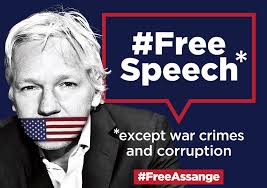 Your Man in the Public Gallery – Assange Hearing Day 8, Craig Murray September 10, 2020 The great question after yesterday’s hearing was whether prosecution counsel James Lewis QC would continue to charge at defence witnesses like a deranged berserker (spoiler – he would), and more importantly, why? Your Man in the Public Gallery – Assange Hearing Day 8, Craig Murray September 10, 2020 The great question after yesterday’s hearing was whether prosecution counsel James Lewis QC would continue to charge at defence witnesses like a deranged berserker (spoiler – he would), and more importantly, why?
QC’s representing governments usually seek to radiate calm control, and treat defence arguments as almost beneath their notice, certainly as no conceivable threat to the majestic thinking of the state. Lewis instead resembled a starving terrier kept away from a prime sausage by a steel fence whose manufacture and appearance was far beyond his comprehension. Perhaps he has toothache. PROFESSOR PAUL ROGERS The first defence witness this morning was Professor Paul Rogers, Emeritus Professor of Peace Studies at the University of Bradford. He has written 9 books on the War on Terror, and has been for 15 years responsible for MOD contracts on training of armed forces in law and ethics of conflict. Rogers appeared by videolink from Bradford. Prof Rogers’ full witness statement is here. Edward Fitzgerald QC asked Prof Rogers whether Julian Assange’s views are political (this goes to article 4 in the UK/US extradition treaty against political extradition). Prof Rogers replied that “Assange is very clearly a person of strong political opinions.” Fitzgerald then asked Prof Rogers to expound on the significance of the revelations from Chelsea Manning on Afghanistan. Prof Rogers responded that in 2001 there had been a very strong commitment in the United States to going to war in Afghanistan and Iraq. Easy initial military victories led to a feeling the nation had “got back on track”. George W Bush’s first state of the union address had the atmosphere of a victory rally. But Wikileaks’ revelations in the leaked war logs reinforced the view of some analysts that this was not a true picture, that the war in Afghanistan had gone wrong from the start. It contradicted the government line that Afghanistan was a success. Similarly the Wikileaks evidence published in 2011 had confirmed very strongly that the Iraq War had gone badly wrong, when the US official narrative had been one of success. Wikileaks had for example proven from the war logs that there were a minimum of 15,000 more civilian deaths than had been reckoned by Iraq Body Count. These Wikileaks exposures of the failures of these wars had contributed in large part to a much greater subsequent reluctance of western powers to go to war at an early stage. Fitzgerald said that para 8 of Rogers’ report suggests that Assange was motivated by his political views and referenced his speech to the United Nations. Was his intention to influence political actions by the USA? Rogers replied yes. Assange had stated that he was not against the USA and there were good people in the USA who held differing views. He plainly hoped to influence US policy. Rogers also referenced the statement by Mairead Maguire in nominating Julian for the Nobel Peace Prize:
Rogers stated that Assange had a clear and coherent political philosophy. He had set it out in particular in the campaign of the Wikileaks Party for a Senate seat in Australia. It was based on human rights and a belief in transparency and accountability of organisations. It was essentially libertarian in nature. It embraced not just government transparency, but also transparency in corporations, trade unions and NGOs. It amounted to a very clear political philosophy. Assange adopted a clear political stance that did not align with conventional party politics but incorporated coherent beliefs that had attracted growing support in recent years. Fitzgerald asked how this related to the Trump administration. Rogers said that Trump was a threat to Wikileaks because he comes from a position of quite extreme hostility to transparency and accountability in his administration. Fitzgerald suggested the incoming Trump administration had demonstrated this hostility to Assange and desire to prosecute. Rogers replied that yes, the hostility had been evidenced in a series of statements right across the senior members of the Trump administration. It was motivated by Trump’s characterisation of any adverse information as “fake news”. Fitzgerald asked whether the motivation for the current prosecution was criminal or political? Rogers replied “the latter”. This was a part of the atypical behaviour of the Trump administration; it prosecutes on political motivation. They see openness as a particular threat to this administration. This also related to Trump’s obsessive dislike of his predecessor. His administration would prosecute Assange precisely because Obama did not prosecute Assange. Also the incoming Trump administration had been extremely annoyed by the commutation of Chelsea Manning’s sentence, a decision they had no power to revoke. For that the prosecution of Assange could be vicarious revenge. Several senior administration members had advocated extremely long jail sentences for Assange and some had even mooted the death penalty, although Rogers realised that was technically impossible through this process. Fitzgerald asked whether Assange’s political opinions were of a type protected by the Refugee Convention. Rogers replied yes. Persecution for political opinion is a solid reason to ask for refugee status. Assange’s actions are motivated by his political stance. Finally Fitzgerald then asked whether Rogers saw political significance in the fact that Assange was not prosecuted under Obama. Rogers replied yes, he did. This case is plainly affected by fundamental political motivation emanating from Trump himself. James Lewis QC then rose to cross-examine for the prosecution. His first question was “what is a political opinion?” Rogers replied that a political opinion takes a particular stance on the political process and does so openly. It relates to the governance of communities, from nations down to smaller units………. https://www.craigmurray.org.uk/?fbclid=IwAR1SSVvRVbh8_y-5pargeR-U2E6JHQDcGUq_752VyejbktpjIbMY-g-MdnA |
Big Oil is cheating the public on “recycling” of plastic
These commercials carried a distinct message: Plastic is special, and the consumer should recycle it.
It may have sounded like an environmentalist’s message, but the ads were paid for by the plastics industry, made up of companies like Exxon, Chevron, Dow, DuPont and their lobbying and trade organizations in Washington.
The oil industry makes more than $400 billion a year making plastic, and as demand for oil for cars and trucks declines, the industry is telling shareholders that future profits will increasinglycome from plastic.
an industry that didn’t want recycling to work. Because if the job is to sell as much oil as you possibly can, any amount of recycled plastic is competition.
Analysts now expect plastic production to triple by 2050.
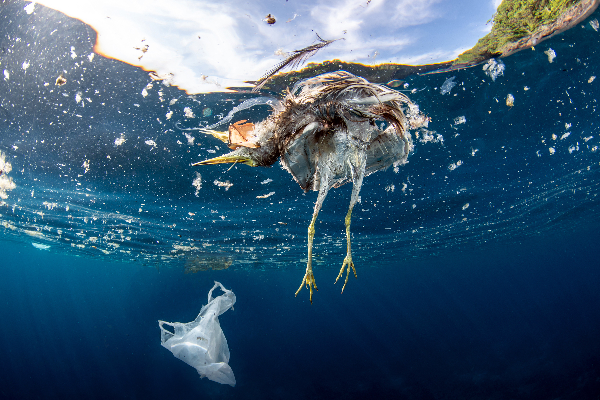 How Big Oil Misled The Public Into Believing Plastic Would Be Recycled, NPR, LAURA SULLIVAN,– 11 Sept 20 Laura Leebrick, a manager at Rogue Disposal & Recycling in southern Oregon, is standing on the end of its landfill watching an avalanche of plastic trash pour out of a semitrailer: containers, bags, packaging, strawberry containers, yogurt cups.
None of this plastic will be turned into new plastic things. All of it is buried.
“To me that felt like it was a betrayal of the public trust,” she said. “I had been lying to people … unwittingly.”
Rogue, like most recycling companies, had been sending plastic trash to China, but when China shut its doors two years ago, Leebrick scoured the U.S. for buyers. She could find only someone who wanted white milk jugs. She sends the soda bottles to the state.
But when Leebrick tried to tell people the truth about burying all the other plastic, she says people didn’t want to hear it.
“I remember the first meeting where I actually told a city council that it was costing more to recycle than it was to dispose of the same material as garbage,” she says, “and it was like heresy had been spoken in the room: You’re lying. This is gold. We take the time to clean it, take the labels off, separate it and put it here. It’s gold. This is valuable.”
But it’s not valuable, and it never has been. And what’s more, the makers of plastic — the nation’s largest oil and gas companies — have known this all along, even as they spent millions of dollars telling the American public the opposite.
“If the public thinks that recycling is working, then they are not going to be as concerned about the environment,” Larry Thomas, former president of the Society of the Plastics Industry, known today as the Plastics Industry Association and one of the industry’s most powerful trade groups in Washington, D.C., told NPR………. Continue reading
Professor Paul Rogers – a witness explaining how Julian Assange is to be extradited for POLITICAL REASONS
Julian Assange clearly political, says extradition trial witness, https://www.theaustralian.com.au/world/julian-assange-clearly-political-says-extradition-trial-witness/news-story/735ef7d40551d52f4f7f12d9d6c318d7 JACQUELIN MAGNAY, FOREIGN CORRESPONDENT@jacquelinmagnay, THE TIMES, SEPTEMBER 10, 2020
Julian Assange’s nomination for the Senate during the 2013 federal election campaign and the establishment of the WikiLeaks political party the year before “clearly shows’’ the WikiLeaks founder has a political view and a libertarian standpoint, a witness has told the Old Bailey.
Professor Paul Rogers, the emeritus professor of peace studies at Bradford University, was called as a witness by Assange’s team to persuade the judge that Assange is being targeted for political means, and thus an extradition to the US should not be permitted under the Anglo-US extradition treaty.
In day three of the court hearing where Assange, 49, is objecting to extradition to the US, Professor Rogers said in written testimony that Assange’s expressed views, opinions and activities demonstrate very clearly “political opinions”. He cited how Assange had formed the political party to contest the Australian general election and “central of this is his view to put far greater attention to human rights’’.
He added: “The clash of those opinions with those of successive US administrations, but in particular the present administration which has moved to prosecute him for publications made almost a decade ago, suggest that he is regarded primarily as a political opponent who must experience the full wrath of government, even with suggestions of punishment by death made by senior officials including the current President.’’
But US prosecutor James Lewis QC said: “Assistant US Attorney Gordon D. Kromberg explicitly refutes that this is a political prosecution but rather an evidence-based prosecution.’’
In documents to the court, the prosecution says the investigation into Assange had been ongoing before the Trump administration came into office.
“Assange’s arguments are contradicted by judicial findings, made in the US District Court of the District of Columbia, that the investigation into the unauthorised disclosure of classified information on the WikiLeaks website remained ongoing when the present administration came into office,” the prosecution says.
Mr Lewis added: “If this was a political prosecution, wouldn’t you expect him to be prosecuted for publishing the collateral murder video?’’https://www.theaustralian.com.au/world/julian-assange-clearly-political-says-extradition-trial-witness/news-story/735ef7d40551d52f4f7f12d9d6c318d7
He said Assange was being extradited to face charges relating to complicity in illegal acts to obtain or receive voluminous databases of classified information, his agreement and attempt to obtain classified information through computer hacking; and publishing certain classified documents that contained the unredacted names of innocent people who risked their safety and freedom to provide information to the United States and its allies, including local Afghans and Iraqis, journalists, religious leaders, human rights advocates, and political dissidents from repressive regimes.
Professor Rogers told the court the motivation of Assange and WikiLeaks was to achieve greater transparency and was political. The trial continues.
Julian Assange’s extradition hearing in London. What can we expect?
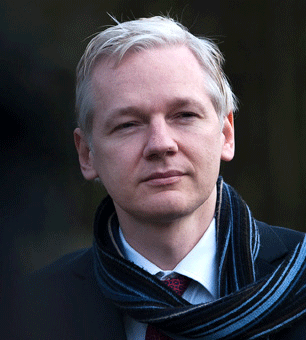 What’s at stake at Julian Assange’s long-awaited extradition hearing?, ABC 8 Sept 20, Julian Assange is fighting an attempt by the United States to extradite him to face charges on what it says was “one of the largest compromises of classified information in the history of the United States”.
It marks the culmination of a nearly decade-long pursuit by US authorities of the Australian-born WikiLeaks founder over the publication of secret documents and files in 2010 and 2011.
Assange’s extradition hearing had initially begun in February but was delayed for several months, and the coronavirus pandemic added additional delays, meaning Assange has been kept on remand in Belmarsh prison in south-east London since last September.
As reported by Background Briefing, Assange’s defence team will attempt to persuade the court he is unfit to travel to the US to face trial, and that the attempt to send him there is essentially an abuse of process.
How did he get to this point?
WikiLeaks made international headlines in April 2010 when it published a classified US military video showing an Apache attack helicopter gunning down 11 civilians, including two Reuters journalists, on a street in Baghdad in 2007.
Later that year, WikiLeaks released hundreds of thousands of US military messages and cables, a leak that saw former US Army intelligence analyst Chelsea Manning jailed……..
Assange, 49, has always denied the allegations, saying they were part of a US plot to discredit him and eventually extradite him to the US, and the investigation was eventually dropped in 2017.
He remained holed up in the embassy for seven years until April 2019, when the Ecuadorian government withdrew his asylum and Metropolitan Police officers arrested him for failing to surrender to the court over an arrest warrant issued in 2012……..
In May 2019, Assange was sentenced to 50 weeks in jail for breaching bail conditions, and during that time the US Justice Department brought 18 charges against him.
What is Assange accused of?
Assange is facing 17 charges relating to obtaining and disclosing classified information, and one charge concerning an alleged conspiracy to crack passwords on government servers.
The US alleges he conspired with Chelsea Manning to hack into US military computers to acquire the classified information published by WikiLeaks.
What can we expect from this hearing?
The court must examine a series of factors before any extradition can be granted, such as if the alleged crimes have equivalent offences in the UK and could lead to trial.
“It’s what’s called double criminality, in other words, whether the offences for which Assange is being sought in under US law are broadly being recognised under UK law,” Professor Don Rothwell, from the Australian National University, told Background Briefing.
Prosecutors have argued there is no doubt his actions would amount to offences under the UK’s Official Secrets Act.
If the court agrees, it must then consider how extradition would affect Assange’s health.
Previous court appearances this year have been delayed due to health issues, and his lawyers say his efforts to protect himself from US extradition and being stuck inside the Ecuadorian embassy for seven years had taken its toll.
If the court accepted it would be detrimental to his health, it could open up the possibility of protecting Assange in the UK under European human rights law.
The magistrate may also take issue with how the prosecutors are seeking to impose American law on what Mr Assange is alleged to have done outside of US territory.
“In this matter, US law is seeking to extend all the way, not only from the United States, but into the United Kingdom and into parts of Europe and basically impact upon the activities that Assange has undertaken associated with WikiLeaks over 10 years ago,” Professor Rothwell said…….
Assange’s legal team contends the US is seeking to prosecute Assange for political offences and that he is thereby exempt from extradition under the terms of the UK-US extradition treaty…….
What happens next?
The hearing is expected to last between three and four weeks, with any decision made likely to be appealed and go to a higher court, meaning the legal battle would likely drag into next year and possibly beyond that.
If Assange is eventually extradited to the United States and found guilty, he faces a maximum 175 years imprisonment for the 18 offences listed in the indictment. https://www.abc.net.au/news/2020-09-09/julian-assange-what-does-extradition-hearing-mean/12642972
Australian government’s cowardly double standards: saves its citizens from Chines oppression, but not Assange from American oppression
DOUBLE STANDARDS! What a glaring example of kowtowing to USA!
The Australian government has just deftly extricated two journalists from probably gaol in China. But what about Australian citizen Julian Assange. As usual, Australia kowtows to the mighty USA.
Julian Assange is not getting fair treatment at the Old Bailey (London) hearing about whether or not he should be extradited to the USA, to face 175 years of gaol, on “espionage” charges. Independent journalists, people from Amnesty, or anyone else likely to give Assange’s side of the story, in reporting this bizarre hearing, is excluded from the courtroom. That’s despite the Old Bailey’s tradition of an open courtroom.
As far as I can ascertain, they’re now charging Julian with publicising the names of USA agents. But in fact, Assange gave the documents to newspapers, I think it was the Guardian and the New York Times, with an express request to NOT publish those names. And the papers went ahead and published them. Julian didn’t. I also understand that, even then no harm came to any of those agents.
It’s all a trumped up thing. Julian being oppressed because he revealed evidence of USA military atrocities. So, like Wilfred Burchett, decades ago, he must be punished by almighty America, and Australia must dutifully follow suit.
INJUSTICE in the court? The extradition trial of Julian Assange
UK: Assange extradition hearing will be a key test for UK and US justice https://www.amnesty.org/en/latest/news/2020/09/uk-assange-extradition-hearing-will-be-a-key-test-for-uk-and-us-justice/?fbclid=IwAR2HY0lPIxV4m0h3u7ikxEmtaJ0m5YxUITtTgqmVViX03L6qsd40vHEwq2Y 4 September 2020,
US authorities must drop all charges against Julian Assange relating to his publishing activities, and UK authorities must reject the related US extradition request, said Amnesty International ahead of Julian Assange’s extradition hearing which resumes on Monday and is expected to last several weeks.
The hearing will decide on the Trump administration’s request for Julian Assange’s extradition to the US, where he faces a sentence of up to 175 years for publishing materials that document possible war crimes committed by the US military.
“This hearing is the latest worrying salvo in a full-scale assault on the right to freedom of expression. If Julian Assange is prosecuted it could have a chilling effect on media freedom, leading publishers and journalists to self-censor in fear of retaliation,” said Amnesty International’s Europe Director, Nils Muižnieks.
“If Julian Assange is extradited it will have far reaching human rights implications, setting a chilling precedent for the protection of those who publish classified information in the public interest.”
The US extradition request is based on charges that stem directly from the publication of classified documents as part of Assange’s journalistic work with Wikileaks. Publishing such information is a cornerstone of media freedom and the public’s right to access public interest information, and must be protected rather than criminalized.
n the US, Julian Assange could face trial on 18 charges, 17 of them under the Espionage Act; and one under the Computer Fraud and Abuse Act. He would also face a real risk of serious human rights violations including detention conditions that could amount to torture or other ill-treatment, including prolonged solitary confinement. Julian Assange is the first publisher to face charges under the Espionage Act.
The fact that Assange was the target of a negative public campaign by US officials at the highest levels undermines his right to be presumed innocent and puts him at risk of an unfair trial.
“The UK must abide by its obligations under international human rights law, which forbid the transfer of individuals to another country where they would face serious human rights violations,” said Nils Muižnieks.
The case will begin at the Old Bailey, London, on the morning (9.30am UK time) of 7 September. Stefan Simanowitz will be outside the court with an Amnesty International spokesperson. Follow @StefSimanowitz for updates and analysis
Amnesty will have trial observers monitoring remotely the entire series of hearings. During the first week, Sebastian Elgueta (@sebelgueta), a UK based barrister, will be monitoring.
Background:
Amnesty International also has concerns with regard to Julian Assange’s physical and mental well-being, particularly with the spread of COVID-19.
Conditions in UK prisons and detention centres are substandard. It is imperative that health and safety protocols are put in place to reduce the risk of COVID-19 infection, while ensuring that prisoners’ and detainees’ rights are protected. Bail or release should be considered for any detainee or prisoner who has serious underlying health conditions and is particularly at risk of infection.
See Amnesty International’s statement on prison conditions for Assange here
1 This Month
Chernobyl: The Lost Tapes – A good documentary on Chernobyl on SBS available On Demand for the next 3 weeks– https://www.sbs.com.au/ondemand/tv-program/chernobyl-the-lost-tapes/2352741955560

of the week–London Campaign for Nuclear Disarmament

Tell the Ukrainian Government to Drop Prosecution of Peace Activist Yurii Sheliazhenko
To see nuclear-related stories in greater depth and intensity – go to https://nuclearinformation.wordpress.com
-
Archives
- April 2026 (139)
- March 2026 (251)
- February 2026 (268)
- January 2026 (308)
- December 2025 (358)
- November 2025 (359)
- October 2025 (376)
- September 2025 (257)
- August 2025 (319)
- July 2025 (230)
- June 2025 (348)
- May 2025 (261)
-
Categories
- 1
- 1 NUCLEAR ISSUES
- business and costs
- climate change
- culture and arts
- ENERGY
- environment
- health
- history
- indigenous issues
- Legal
- marketing of nuclear
- media
- opposition to nuclear
- PERSONAL STORIES
- politics
- politics international
- Religion and ethics
- safety
- secrets,lies and civil liberties
- spinbuster
- technology
- Uranium
- wastes
- weapons and war
- Women
- 2 WORLD
- ACTION
- AFRICA
- Atrocities
- AUSTRALIA
- Christina's notes
- Christina's themes
- culture and arts
- Events
- Fuk 2022
- Fuk 2023
- Fukushima 2017
- Fukushima 2018
- fukushima 2019
- Fukushima 2020
- Fukushima 2021
- general
- global warming
- Humour (God we need it)
- Nuclear
- RARE EARTHS
- Reference
- resources – print
- Resources -audiovicual
- Weekly Newsletter
- World
- World Nuclear
- YouTube
-
RSS
Entries RSS
Comments RSS
 nuclear-news