A Seat Cushion Triggered One Of History’s Strangest Nuclear Accidents And A Geopolitical Scandal That Lasted Decades
A cushion, a crash, and a Cold War cover-up.
Tom Hale,19 July 26, https://www.iflscience.com/a-seat-cushion-triggered-one-of-historys-strangest-nuclear-accidents-and-a-geopolitical-scandal-that-lasted-decades-84141
There have been 32 known incidents where the US has accidentally detonated, misfired, or lost nuclear warheads (at least those that the public is allowed to know about). Just one of these accidents, however, became an international scandal and environmental disaster thanks to a cozy seat cushion for someone’s ass.
The incident unfolded in early 1968, a time when The Beatles were blasting on the radio, the Vietnam War was raging, and the threat of full-blown nuclear war between the US and the USSR was still very much on the cards.
Ever paranoid about the atomic threat, the US had launched an airborne patrol of up to 12 nuclear-armed bombers to constantly patrol the skies. Known as Operation Chrome Dome, the fleet of planes flew 24/7, non-stop from 1961 to 1968.
The operation’s routes regularly shifted to keep the USSR on its toes, but many of the flights cruised around the upper reaches of the Northern Hemisphere, a nice vantage point from which the US could hop over the Soviet Union and casually obliterate a few million people.
The incident unfolds, then explodes
On the morning of January 21, 1968, a B-52 bomber loaded with four B28FI thermonuclear bombs flew out of Plattsburgh Air Force Base in New York to take up its shift policing the skies.
It was mid-winter and temperatures were achingly low as the giant plane headed northeastwards into the Arctic Circle by mid-afternoon. In a struggle to keep warm, some of the crew had reportedly covered parts of the cabin with cushions. Unbeknownst to them, they had been placed over a heating vent that was blasting hot air from the overheating engine. The cushions turned into a smoldering tinder, and flames slowly engulfed the aircraft.
As the plane headed near the US Thule Air Base in Greenland, the crew bailed. Six of the seven successfully parachuted to safety, but one crew member, co-pilot Leonard Svitenko, attempted to escape through the lower hatch and sustained a fatal head injury.
They drifted down to the ice-covered expanse below, watching the plane turn into a fireball as it nosedived towards Wolstenholme Fjord. The plane exploded on impact, rupturing the nuclear warheads and spreading radioactive debris for miles around like a dirty bomb.
It was about to become a very long day for the US State Department, to say the least. First, they had to find the bombs and the nuclear debris, then they had to consider how they were going to clean up the mess. To make matters even more complicated, nukes weren’t technically allowed in Greenland, a territory under Danish control, and Denmark was keen to maintain its reputation as a nuclear-free zone (at least in public).
“Aircraft carried four repeat four nuclear weapons,” reads a telegram between the State Department and the US Embassy in Denmark. “Wreckage covers five mile area. Difficult climate conditions and lack of daylight hampering search operations. Special USAF team being sent.”
What followed was a nine-month cleanup operation, one of the largest and strangest in Cold War history. Hundreds of US airmen and Danish workers spent the sunless Arctic winter traveling via dog sleds and scraping contaminated ice, snow, and wreckage off the fjord by hand. Greenlandic Inuit people reportedly joined the charge, building a village of igloos to shelter the crews when the wind and chills became too much to bear.
Eventually, some 600 containers of contaminated snow had been gathered and were shipped to the US. Three of the nuclear bombs were accounted for, but the fourth was never fully recovered, presumably buried somewhere in ice.
“Thulegate”
Dealing with the contamination was one thing, but the political fallout was just as tricky to traverse. Publicly, the US and Denmark claimed the B-52 had been diverted over Greenland because of an unexpected in-flight emergency. But both governments were lying.
In the 1990s, declassified documents and journalistic investigations revealed that nuclear-armed bombers had been routinely flying over Greenland throughout the 1960s, unbeknownst to the Danish public. It became a political scandal dubbed “Thulegate” that deepened when it was revealed the Danish government had secretly signed a deal with the US to hold 50 nuclear weapons at the Thule base between 1958 and 1965.
Almost six decades later, Washington’s interest in Greenland hasn’t cooled with President Trump’s repeated demands to acquire the territory, one way or another.
Hopefully, a chilly pilot won’t threaten to turn tempers nuclear once again.
Witness- A visit to Donald Morrison, a chief witness in the case of Willie McRae
I took a trip to Benbecula to visit Donald Morrison, a chief witness in
the case of Willie McRae, a prominent Scottish lawyer who was found dying
of a bullet wound in a car that had gone off the road in 1985. Donald was
the last person to see Willie McRae alive and whenever I have spoken to him
on the phone about this, he has always urged me to visit. The case has been
bugging me and so eventually I decided to take him up on the invitation.
McRae was an SNP politician, activist-lawyer and anti-nuclear campaigner.
On a misty April night 41 years ago, his car went off a quiet road – it
must have been going at speed – and came to rest 90 feet away. It was
spotted by an eagle-eyed accident investigator and his wife the next
morning at ten am. They glimpsed the car, which was partially hidden by a
gully, turned back to check on it and found Willie unconscious but still
breathing.
Neither they nor the other passers-by they flagged down, who
included a doctor, nor the paramedics, nor the nurses who received McRae at
the hospital noticed a bullet wound. However, an MRI scan after McRae was
transferred to Raigmore revealed that he had been shot. The authorities
later said that McRae had committed suicide by shooting himself in the
temple. But it seems unbelievable that all of the professionals who cared
for him would have failed to wash the blood away and see a bullet wound if
it was in his temple. A nurse who treated McRae came forward later and said
that there was a small entry wound under the hairline at the back of his
neck.
This is much more consistent with an attempted covert murder than
suicide. Donald was a beat policeman who walked the streets of the centre
of Glasgow, sometimes chatting in Gaelic to other Highland cops. He had
frequent interactions back then with McRae, because of a series of
break-ins at his office
Jackie Kemp 18th July 2026, https://substack.com/home/post/p-207141868
Ministry of Defence (MoD) finally admits ‘extensive’ human radiation experiments on nuclear test veterans

“There’s no truth, no justice. We were labrats in a government experiment which they didn’t bother to keep the paperwork for. But worse is the cover-up which continues.”
Susie Boniface Reporter, 16 Jul 2026, https://www.mirror.co.uk/news/politics/nuclear-test-veterans-ministry-defence-37439854
The Ministry of Defence has finally admitted it ran an “extensive” programme of human radiation experiments on troops.
A two-year review has confirmed ministers and officials falsely denied that medical data was collected from servicemen and civilians at nuclear weapons tests for more than a decade. Worse, the MoD says it has been unable to locate the results – leaving veterans continuing to suffer after 70 years without answers.
The results were published online, with a host of other last-minute announcements, a few hours before kick off in England’s semi-final match against Argentina. John Morris, who has waited a lifetime to find out why his son Steven died in his cot aged four months, and why he he’s had cancer and a blood condition, said: “This is vindication, but there’s no relief.
“There’s no truth, no justice. We were labrats in a government experiment which they didn’t bother to keep the paperwork for. But worse is the cover-up which continues.
“They lied, hid it all behind national security, and have come clean now only because we forced them. People should go to jail for this.”
- The review, ordered after the Mirror exposed the Nuked Blood Scandal in 2022, has found:
- A secret hoard of 50,000 files that include nuclear veteran records but have not been examined
- More than 5,000 nuclear test veterans deliberately excluded from government health studies
- Veterans who applied for a war pension had their medical records permanently stripped, denying them proper diagnosis and treatment
- Thousands of medical records were unlawfully destroyed, some as recently as last year
Prime Minister-in-waiting Andy Burnham has privately told staff to begin work on reparations, compensation and commemoration for the nuclear test programme, including setting up a special tribunal to determine the extent of government lies.
Criminal allegations of perjury, perverting the course of justice, fraud by false representation and misconduct in public office are being considered in a major crime review by Thames Valley Police. Officers have asked the Atomic Weapons Establishment to provide details of emails from 2014 which we reported this week, discussing a whistleblower report about fallout on inhabited areas, which was also covered up.
The review has not looked into how thousands of records were classified, why courts were told monitoring never happened, or why in 2018 Parliament was told by a minister that the MoD was “unable to locate any information” about blood testing. As recently as 2023, ministers said “only one blood test” existed.
It has also failed to look into the records of civilians, indigenous people, merchant navy crews and RAF units monitoring foreign nuclear weapons tests, who were all similarly monitored.
Lord Tom Watson, who as deputy Labour leader asked the first questions about the blood tests, said: “I am sure this report will deeply concern the new Prime Minister. It is extraordinary that veterans’ medical records were lost or destroyed, affecting their health and compensation claims. We now need to establish who knew what, when, and why nobody acted sooner.”
Iran Accuses Kushner, Witkoff of Pursuing Profits Over Peace in Diplomatic Talks
Drop Site reported that Iran warned Vice President JD Vance that “the pair were more interested in exploiting insider knowledge of the negotiations to profit in financial markets than they were in reaching a deal.”
Jake Johnson, Common Dreams, Jul 16, 2026
Iranian officials reportedly warned US Vice President JD Vance late last month that two officials leading the Trump administration’s diplomatic efforts in the Middle East—special envoys Steve Witkoff and Jared Kushner—were trying to profit from their proximity to critical negotiations rather than working to secure a lasting peace agreement.
According to Drop Site, which cited an unnamed Iranian official, “Iran conveyed to Vance that the pair were more interested in exploiting insider knowledge of the negotiations to profit in financial markets than they were in reaching a deal.” The Iranian side also “expressed concern about repeated leaks from Kushner to Israeli Prime Minister Benjamin Netanyahu.”
Iranians estimated that people with inside information have raked in $9 billion in profits stemming from financial market moves related to the US-Israeli war on Iran, which sparked significant volatility in energy and equity prices.
On several occasions during the war, massive trading volumes have closely preceded major conflict-related announcements by US President Donald Trump. (Kushner is Trump’s son-in-law, and Witkoff is a close personal friend of the president.)
Mohammad Bagher Ghalibaf, speaker of the Iranian Parliament and the country’s top negotiator, accused the Trump administration in March of peddling “fake news” to “manipulate the financial and oil markets and escape the quagmire in which the US and Israel are trapped.”……………………………………………..
“The public has no reason to trust Jared Kushner’s integrity as a government official to put their interests above his financial benefit,” Donald Sherman, president of Citizens for Responsibility and Ethics in Washington, said after Trump formally named Kushner a special peace envoy in February.
Less than a month later, The New York Times reported that Kushner was trying to raise at least $5 billion in funding for his private equity firm, Affinity Partners, from Middle East governments. Saudi Arabia’s Public Investment Fund is the largest investor in Affinity.
Witkoff, a real estate investor, has also faced scrutiny for potentially massive conflicts of interest.
Rep. Greg Stanton (D-Ariz.) noted during a House hearing last month that Witkoff “co-founded the cryptocurrency venture firm World Liberty Financial, alongside President Trump and President Trump’s children.”……………………………………. https://www.commondreams.org/news/kushner-witkoff-profit-iran-war
Trump claimed Iran’s nuclear sites were ‘obliterated’. Now another is in his sights

Buried under 600m of granite, the site is assessed as beyond the reach of even the US’ most powerful bunker-buster bombs.
In brief
- Donald Trump has threatened to destroy Pickaxe Mountain, a deeply buried Iranian nuclear site — unreachable by US weapons.
- It comes a year after he declared the country’s nuclear program had been “obliterated”.
A year after US President Donald Trump declared Iran’s nuclear sites had been “obliterated”, his latest target is drawing attention to a facility that survived both phases of the war untouched — and raising questions about why it’s now in his sights.
On Monday, Trump threatened to destroy Pickaxe Mountain, a buried nuclear site near Natanz in north-central Iran where Western intelligence suspects Iran is building an undeclared enrichment facility.
“We’re going to take out Pickaxe Mountain. Tell the Iranians to be ready,” he said on Monday.
“We’re watching (Pickaxe Mountain) closely. We see no activity there. They’re not doing well with their nuclear situation. Every time we hear about it, we blow it up. So they don’t like talking about it.”
The threat comes as just last week, Trump said Iran “will never have a nuclear weapon” and that its stockpile of enriched uranium was now “so far under a mountain” that it was unreachable by anyone except the US.
That follows comments last June, where Trump declared “all” nuclear sites in Iran had been “obliterated”, raising a key question: If Iran’s nuclear sites were obliterated last year, why is a previously untouched one now a key target?
What is Pickaxe Mountain?
Pickaxe Mountain is a heavily fortified site near Iran’s already-damaged Natanz facility, housing two deeply buried tunnel complexes suspected of containing uranium enrichment capabilities and stockpiles.
Experts have assessed its depth at about 600m below granite, meaning it’s beyond the reach of even the most powerful ‘bunker-buster’ bombs in the US arsenal.
The site was not among the three sites — Fordow, Natanz and Isfahan — targeted by US airstrikes last June, which were believed to house Iranian nuclear facilities.
Construction at Pickaxe Mountain began in 2020 and has sped up since June last year — with the Iranian government describing the site as a centrifuge assembly plant.
As of June 2025, the facility was not assessed as operational — something the Institute of Science and International Security says could have been a “key reason why the site was not attacked by airstrikes in the June war”.
The institute said satellite analysis and monitoring have raised questions about the “the nuclear activities Iran has planned for the site, specifically whether it includes plans for an enrichment plant”.
What survived the ‘obliteration’?”Monumental damage was done to all nuclear sites in Iran, as shown by satellite images,” Trump said on 25 June 2025. “Obliteration is an accurate term!”
Pickaxe Mountain isn’t the only thing to have survived the alleged “obliteration”.
Deakin University professor of global Islamic politics Greg Barton said that, despite Trump’s claim, it’s believed 440kg of enriched uranium remains buried underground and is “relatively accessible”.
In June 2025, US B-2 bombers dropped GBU-57 Massive Ordnance Penetrator bombs, or ‘bunker-buster’ bombs, on two Iranian nuclear facilities — Fordow and Natanz — while Isfahan was hit only with Tomahawk missiles.
Barton said intelligence reporting and satellite imagery suggests the U-235 (an isotope of uranium that fuels most nuclear reactors and nuclear weapons) was moved from Fordow to Isfahan days before the strikes — meaning it likely survived.
“There were no bunker bombs dropped at Isfahan, so if it was taken there, as widely speculated, it’s still there and relatively accessible,” Barton said.
Furthermore, enriched uranium and equipment at other facilities may not be totally destroyed.
“Each of these three sites had underground bunkers, underground tunnel complexes. Fordow was thought to be 90 metres deep. The bunker-buster bombs only go down 60 metres,” he said.
“If some of the U-235 was left at Fordow, it would likely be buried but not destroyed because it’s below the level of 90 metres.”
While the 440kg of 60 per cent enriched uranium was “just below weapons grade”, Barton said further enrichment could be possible.
While centrifuges at facilities like Fordow may have been damaged by vibrations, Iran’s ability to refine uranium to nuclear weapons grade would be “set back” but not eliminated.
Could the US reach what lies beneath Pickaxe Mountain?
The challenges that limited last year’s strikes are, if anything, more acute at Pickaxe Mountain……………………………………………………………………………………….https://www.sbs.com.au/news/article/trump-iran-pickaxe-mountain-nuclear-site/qihp4srwx
2009 quake may have prompted data rigging by central Japan nuclear operator

July 10, 2026 (Mainichi Japan),
https://mainichi.jp/english/articles/20260710/p2g/00m/0bu/008000c
NAGOYA (Kyodo) — Chubu Electric Power Co. may have begun manipulating earthquake resistance data for its nuclear power plant in central Japan after a 2009 earthquake subjected one of its reactors to shaking beyond its design limits, a source familiar with the matter said Thursday.
The latest revelation came after the utility admitted earlier this year that it had, by no later than 2012, begun cherry-picking favorable data to set earthquake-resistance standards for the Nos. 3 and 4 reactors at its Hamaoka nuclear power plant, which it has been seeking to restart.
The data rigging was initially believed to have begun under tougher safety requirements imposed after the Fukushima Daiichi nuclear power plant disaster, which was triggered by a massive earthquake and tsunami in 2011. But the source said the practice may have begun even before the disaster, as part of efforts to restart the No. 5 reactor after it was shut down following the 2009 earthquake.
In the magnitude-6.5 earthquake that struck Omaezaki, Shizuoka Prefecture, in August 2009, the No. 5 reactor experienced seismic shaking several times stronger than that recorded at the Nos. 1 to 4 reactors, partially exceeding its design limits.
Chubu Electric found that unusual ground conditions had amplified the seismic waves. After the No. 5 reactor automatically shut down in the quake, the company allegedly began generating seismic data and selecting favorable results to avoid being ordered by the government to implement additional earthquake-resistance measures, according to the source.
The company switched to a different contractor around the same time, allowing it to generate seismic wave data more quickly and “creating the perfect circumstances and motive,” the source said.
The nuclear regulator at the time approved the safety of the No. 5 reactor in late 2010, paving the way for its restart in February 2011.
The fresh allegation could mean Chubu Electric engaged in data manipulation involving the Hamaoka plant’s three operable reactors, further undermining confidence in the country’s nuclear safety screening process.
“Details of what happened will be determined through a third-party investigation. We will cooperate sincerely with the inquiry,” Chubu Electric said in a statement.
Located on the Pacific coast in central Japan, the Hamaoka complex sits near the expected epicenter of a potential massive earthquake in the Nankai Trough. It was shut down in May 2011 at the request of then Prime Minister Naoto Kan over safety concerns.
Chubu Electric applied for state safety screenings between 2014 and 2015 to restart the Nos. 3 and 4 reactors, but the review process has been halted amid the scandal.
According to a report compiled by Chubu Electric in March this year on its data misconduct involving the Nos. 3 and 4 reactors, the utility told regulators it had generated 20 sets of seismic motion data under different conditions and selected the one closest to the average — known as the “representative wave” — to establish a benchmark for earthquake-resistant design.
In reality, however, the company had been generating numerous combinations of seismic motion data and representative waves before selecting a set from among them. In 2018, it began deliberately selecting the representative wave and ensuring the other data were consistent with it.
The Nuclear Regulation Authority also recently revealed it had learned from an external source that Chubu Electric continued manipulating data even after the investigation began in May 2025.
Revealed: landmark Scottish AI project has no prospect of meeting renewables promise

“the AI growth zone designation is based more on optimistic and flashy promotional material than anything technically viable,”
The question of whether AI is a boom or bubble now largely rests on huge infrastructure projects such as Lanarkshire.
a series of high-profile projects announced over the past years were “phantom investments”, with the government failing to examine claims of job creation or audit multibillion-pound sums.
“Instead of governing for their communities, they choose the AI narrative.”
Government and developers privately acknowledged Lanarkshire datacentre site had power provision ‘issue’
- ‘It’s smoke and mirrors’: hope turns to fear in Scottish village chosen for AI datacentre
- What are Britain’s AI growth zones and are the plans feasible or ‘complete bunk’?
Aisha Down, Guardian, 6 July 2026
A landmark AI development billed as delivering jobs and prosperity has misrepresented its plans to channel a nuclear reactor’s worth of power to a site in rural Scotland, a Guardian investigation has found.
When it was announced in January, the government promised that an £8.2bn AI datacentre complex in Lanarkshire – built by the US firm CoreWeave and the Scottish company DataVita – would be powered entirely from on-site renewables and built by 2030.
The AI datacentre complex represented a large part of Britain’s ambitions to keep up in the global AI race by building the infrastructure that underpins artificial intelligence. A central plank of the project’s viability was its ability to power itself.
But documents obtained through freedom of information (FoI) requests and analysis of public records suggest the datacentre has no prospect of meeting that goal.
The Guardian obtained internal correspondence showing that the government and the site’s developers, even as they publicly promised that the Lanarkshire site would have up to 1GW of “new energy infrastructure”, were privately acknowledging that the site had an “issue” with “power provision” and that this would not happen.
In response to questions from the Guardian, the government said the Lanarkshire complex would connect to the grid. This means it will either join a years-long queue or be expedited ahead of hundreds of other projects also vying for a connection. A government spokesperson said the site’s needs would still be met “overwhelmingly” with renewables.
The findings raise critical doubts over the UK’s ability to confront the key question now facing the world’s massive AI buildout: how to provide the extraordinary energy required to make it plausible.
At best indicative, at worst complete bunk’
AI datacentres are, essentially, buildings full of very specialised silicon chips. The chips do the calculations that underpin artificial intelligence models. The world’s biggest tech companies are now ploughing hundreds of billions of dollars into the buildout of AI datacentres. Behind all this spending is the belief that AI will fundamentally transform the global economy, and that once it does, the AI datacentres will pay for themselves.
The question of whether AI is a boom or bubble now largely rests on huge infrastructure projects such as Lanarkshire.
The new details are not the first signal of problems in the UK’s burgeoning datacentre industry. In March, the Guardian reported that a series of high-profile projects announced over the past years were “phantom investments”, with the government failing to examine claims of job creation or audit multibillion-pound sums.
Power is a particularly fraught issue in the UK, where it is more expensive than anywhere else in Europe. There is an eight- to 10-year queue for new developments to connect to the grid, a delay that hangs over houses and hospitals as well as datacentres.
Britain is not the only place where political ambitions appear blind to the cost and difficulty of massive datacentre projects. Cecilia Rikap, an associate professor at University College London, said: “Governments around the world, including in the UK, are making political promises that ignore the realities of building infrastructure.
“Instead of governing for their communities, they choose the AI narrative.”
An analyst for a UK engineering consultancy who has advised several AI growth zone projects said: “There doesn’t seem to be appropriate scrutiny, public or otherwise, on these nationally significant projects. The figures and designs behind many schemes are at best indicative, and at worst complete bunk.”……………………………………………………………………………………………………………………………………………………………………………
…………………………The energy consultant who reviewed the figures said: “To go from ‘nothing public’ to ‘country’s largest operational onshore windfarm’ in four years is pretty ambitious.” Given that DataVita has no plans on file for such a development, he concluded that the 2030 deadline was unlikely to be met.
HfD Group, DataVita’s parent company, recently posted plans for an “energy park” in Lanarkshire. These plans do not appear to have entered the planning process yet, but envision “up to 19” wind turbines being built in Lanarkshire. This would still only provide about 5% of what DataVita claims it will generate.
DataVita said the delivery of its energy commitments was “subject to final commercial agreements, planning, grid and consenting processes”.
Kat Jones, the director of APRS, said: “There is a wave of applications for hyperscale AI datacentres coming to Scotland and they all say they’re going to use renewable energy. We have examined DataVita’s plans to build renewables to power their 500MW datacentre and found them wanting.
“Even if they could build the amount of energy infrastructure they say they will, it would cover 100 kilometres squared, but only provide for half their energy requirements on average.”
‘Power provision remains a key issue’
This shortfall is not only DataVita’s problem. As a “growth zone”, Lanarkshire is a centrepiece of the UK’s AI ambitions – one of five sites designated to receive broad government support in building out vast datacentre parks.
On paper at least, AI growth zones need to meet a strict set of requirements, the most important being that they should have a realistic path to powering themselves. These requirements were set out in an application last summer that invited sites across the UK to apply to be AI growth zones.
The government asked applicants to show they had an already allotted grid connection or an alternative “behind-the-meter” solution – that is, a way to generate energy independently without a grid connection.
The Guardian established that the Lanarkshire site did not have the necessary grid connection, through an FoI inquiry to the UK’s National Energy System Operator (Neso). DataVita’s stated plans to generate its own electricity, meanwhile, do not appear to hold water.
Documents obtained by the Guardian through an FoI suggest both the government and DataVita are aware of these issues but that the government chose to designate Lanarkshire as an AI growth zone anyway.
In February, Scotland’s first minister, John Swinney, addressed a letter to the managing director of DataVita, Danny Quinn, about Lanarkshire’s designation as an AI growth zone. He said: “I recognise that power provision remains a key issue and we will continue to engage with the UK government and relevant partners to secure timely grid connections that enable and support the development to proceed at pace.”
In a meeting in March, DataVita and officials from NatureScot appeared to bank on an expedited grid connection for the project: “DV4 will be driven by Scottish Power connections timescales which we expect to be brought forward to 2027.”
Meanwhile, other internal communications show that shortly before the Lanarkshire project was announced, UK and Scottish officials appeared to entertain the idea that DataVita’s site would simply burn gas to power itself. (DataVita said gas or any other fossil-fuel generation would not be used to power its datacentres.)
The consultant said DataVita’s own publications, and the fact they contain no indication of how it could realistically generate the energy it claims, called into question the seriousness of the government’s policymaking around a central component of its growth plans.
“It indicates that the AI growth zone designation is based more on optimistic and flashy promotional material than anything technically viable,” he said.
As for the government’s apparent willingness to later help DataVita get a grid connection, he said: “It now appears that the government is willing to loosen their own criteria to meet the arbitrary political timescales they set themselves.”
In response to a query from the Guardian, DataVita said the Lanarkshire development’s “energy strategy is based on new renewable generation, private-wire infrastructure, and intelligent connection to Scotland’s electricity system, with delivery subject to final commercial agreements, planning, grid and consenting processes”.
A government spokesperson said: “The Lanarkshire AI growth zone is on track to be the biggest datacentre development in Scottish history. AI is critical to the UK’s future prosperity and security – and to unlock its benefits, we need the infrastructure that underpins it.
“The whole government is determined to create the right conditions for investment in the UK’s AI and datacentre infrastructure – with Lanarkshire set to be the first AI growth zone in the country to see hardware rolled out.” https://www.theguardian.com/technology/2026/jul/06/lanarkshire-scotland-ai-datacentre-project-renewable-energy
Labour minister dodges question on SNP Government and UK nuclear plans.
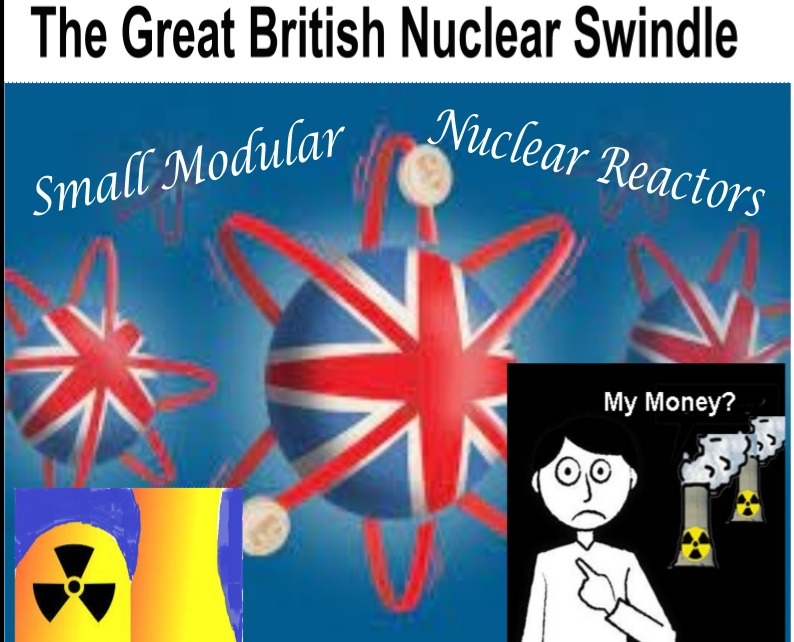
A LABOUR energy minister has refused to say if his Scottish counterparts were
consulted before the UK Government published a report on building new
nuclear power stations north of the Border.
Last week, the nuclear wing of
GB Energy – set up by Labour after the 2024 General Election –
published a scoping study into building nuclear power plants in Scotland
despite the SNP-led Scottish Government’s opposition to new nuclear.
In the Commons on Tuesday, SNP MP Graham Leadbitter asked whether the UK
Government had held discussions with the Scottish Government or any local
authorities prior to announcing the list of potential nuclear energy sites.
Michael Shanks, a UK energy minister and Scottish Labour MP, avoided the
question, saying only that the Westminster Government was “open to
discussions with the Scottish Government on opportunities for new nuclear
in Scotland”.
Leadbitter then said: “Two years ago, Labour promised to
cut bills for every household by £300. “Not only are households now
paying hundreds of pounds more instead of less, Labour’s nuclear tax on
household energy bills will cost Scots a further £300 million over the
next decade.
The National 7th July 2026, https://www.thenational.scot/news/26259570.labour-minister-dodges-question-snp-government-uk-nuclear-plans/
Cleaning up: Ukrainian Woman suspected of Monaco bombing found shot dead near Kyiv
The affair could prove politically costly for Kyiv. Any evidence linking members of Ukraine’s intelligence services to a bombing on European soil would be deeply damaging, coming as President Volodymyr Zelenskyy arrived at a Nato summit on Tuesday seeking to shore up western support while Russia continues its deadly bombardment of Ukrainian cities.
Last week, German prosecutors accused Ukrainian “state authorities” of ordering the 2022 explosives attack on the Nord Stream gas pipelines linking Russia with Europe.
Pjotr Sauer, The Guardian, Tue, 07 Jul 2026, https://www.sott.net/article/507300-Cleaning-up-Ukrainian-woman-suspected-of-Monaco-bombing-found-shot-dead-near-Kyiv
Anastasiia Berezovska was being sought by police over attack that seriously injured a Ukraine-born businessman
A woman suspected of carrying out last week’s bomb attack in Monaco that seriously injured a Ukraine-born business tycoon has been found shot dead near Kyiv, in the latest twist in a case that has shaken the wealthy Mediterranean principality.
Ukrainian prosecutors said on Tuesday the woman had been found with a gunshot wound to the head and that two men had been arrested in connection with the case, including an officer with Ukraine’s military intelligence agency (HUR) and a former law enforcement officer.
On Friday, Interpol issued a red notice for 39-year-old Anastasiia Berezovska, a Ukrainian national who speaks German. The notice – a request to law enforcement agencies worldwide to locate and provisionally arrest a suspect pending extradition – said Berezovska was wanted by Monaco on charges of attempted murder, placing an explosive device in a public place with criminal intent, and criminal conspiracy.
Prosecutors said in a statement that Berezovska received cryptocurrency payments from the two men who were later arrested, leading investigators to treat them as “individuals potentially involved in the attempted murder in Monaco”. They added that the serving HUR officer was “acting on his own initiative” and did not inform his superiors about his contacts with Berezovska.
Prosecutors also released footage showing a blood-stained “torture chamber”, containing hammers and other equipment, which they said was discovered during searches of the men’s properties.
The Guardian could not independently verify the prosecutors’ account.
The affair could prove politically costly for Kyiv. Any evidence linking members of Ukraine’s intelligence services to a bombing on European soil would be deeply damaging, coming as President Volodymyr Zelenskyy arrived at a Nato summit on Tuesday seeking to shore up western support while Russia continues its deadly bombardment of Ukrainian cities.
Prince Albert II of Monaco previously condemned the bombing as “an odious act” and said all the principality’s security services had been mobilised.
The victims have not been officially identified, but police and judicial sources told French media they were Vadym Iermolaiev, 58, a businessman originally from Ukraine who now holds Cypriot citizenship, his girlfriend and their son. Iermolaiev and his partner were taken to hospital with serious injuries, while the child sustained minor injuries.
French prosecutors allege Berezovska, who had been living in Germany, disguised herself as a man before placing an explosive device in the entrance hall of the family’s apartment building in Monaco.
Since Russia’s full-scale invasion of Ukraine, Iermolaiev had been living in Monaco as part of a group of wealthy Ukrainian businessmen and politicians that independent Ukrainian media labelled the “Monaco battalion”.
Ukraine imposed sanctions on Iermolaiev in 2023, alleging he had maintained business links with Russian entities operating in Ukrainian territories occupied by Moscow, including Crimea, which Russia illegally annexed in 2014.
Comment: The Guardian hews to the narrative . . . .
Monaco’s deputy prosecutor said last week that the suspected attacker fled the principality on foot into neighbouring France before travelling by car to Germany via several European countries, including Italy.
Ukraine has carried out numerous lethal operations involving explosive devices against senior Russian military officers and Kremlin-backed Ukrainian officials inside Russia, but there is no established precedent for such attacks on European territory.
Last week, German prosecutors accused Ukrainian “state authorities” of ordering the 2022 explosives attack on the Nord Stream gas pipelines linking Russia with Europe.
Comment: Among other criminal activities, Vadym Iermolaiev apparently ran a number of call center scamming operations. From the Daily Mail:
Now, Ukrainian police sources have claimed that the violent attack is directly linked to a network of fraudulent call centres in Dnipro, Ukraine, allegedly used to carry out large-scale financial scams across Europe.
The Yermolaiev family is alleged to have played a significant role in the scheme, with the oligarch’s name reportedly at the centre of a sprawling pan-European investigation into clandestine call centres operating out of Ukraine.
According to sources, the so-called ‘boiler room’ operations defrauded thousands of investors in Germany, Estonia and Ukraine of more than €100million (£86million) between 2019 and 2022, through fake cryptocurrency investment schemes.
The network also allegedly sold fraudulent divorce advice to unsuspecting victims.
Ukrainian law enforcement sources say that French investigators believe the murder attempt may have been orchestrated by members of a criminal network in retaliation.
Ukrainian outlet Ukrainska Pravda reported that the attempted assassination stemmed from a failed agreement to divide territory and unpaid debts allegedly owed to organised crime bosses in Dnipro.
While Vadym, who is currently subject to sanctions in Ukraine, handled the financial side of the operation, it was his son, Artur, who reportedly ran the network.
According to local reports, Artur was arrested by Interpol in Cyprus at the end of 2025 following an Estonian arrest warrant.
Although it isn’t mentioned, Zelensky is known to demand a cut of criminal profits made in Ukraine in exchange for looking the other way. The professionalism of the operation certainly points to a state operation.
From ZeroHedge:
Per Euronews:
After the explosion, she is believed to have walked to the nearby French town of Beausoleil, where she retrieved her rental car and drove through Italy to Germany, her last known country of residence, Morgan Raymond, Monaco’s deputy public prosecutor, told reporters.
“The relative sophistication of the explosive device and the modus operandi appear to indicate that the person who planted the device did not act alone,“ the prosecutor said, confirming that the individual was “a woman posing as a man.”
Given that Ukrainian businessman Iermolaiev had long ago been declared an enemy of the Ukrainian state, and has been under sanctions for years for his extensive business dealings in Crimea, Ukrainian intelligence has come under the spotlight for possible involvement in the Monaco bomb attack – a first of its kind in the small, wealthy principality.
Le Figaroreported that the investigation focuses on Zelensky’s secret police (SBU) in the Monaco bomb attack: “According to several concurring sources at Le Figaro, investigators are focusing on the possibility that the attack was orchestrated by the SBU, the Ukrainian intelligence service.”
So already the Zelensky government is desperately trying to distance itself from the ordeal, claiming that Ukraine’s own intelligence officer was merely “acting on his own”. More details are as follows:
Ukrainian authorities said they detained two men on suspicion of murdering Berezovska “by prior conspiracy.”
Police said that one of the men – a current employee of the Ukrainian Defense Ministry’s Main Intelligence Directorate – confessed to the murder of Berezovska and claimed that the second suspect, who is a former law enforcement officer, was an accomplice.
We’re being asked to save two buckets of water a day. Meanwhile data centres drink a town’s worth

England is heading for a 5bn-litre daily water shortfall by 2055 – so why is the government fast-tracking one of the most water-hungry industries there is, and letting it keep its consumption private, asks campaigner Adele Walton
Adele Walton, Jul 8, 2026, https://www.thenerve.news/p/adele-walton-heatwave-data-centres-water-shortage?utm_source=www.thenerve.news&utm_medium=newsletter&utm_campaign=farage-under-fire-tuesday-edition&_bhlid=8b1d393304f745e4dafb1328c154dd5ec4a3e882
Lying on my bedroom floor in front of a fan with a wet flannel on my head, desperately trying to cool down in the middle of the UK’s historic heatwave last month, I couldn’t stop thinking about one thing. Data centres.
Every time I had a cold shower for a temporary relief, I was haunted by the knowledge that AI data centres are already gobbling up millions of litres of water that they require for cooling, and I became fearful of a day where I might turn on the tap and not be able to get a drop. I would go to my local park to seek shade and a cool breeze to no avail and have pressing visions of superscale data centres that endlessly whir and hum and churn out emissions. This is dystopian, but it’s not unrealistic. Lying on my bedroom floor in front of a fan with a wet flannel on my head, desperately trying to cool down in the middle of the UK’s historic heatwave last month, I couldn’t stop thinking about one thing. Data centres.
Every time I had a cold shower for a temporary relief, I was haunted by the knowledge that AI data centres are already gobbling up millions of litres of water that they require for cooling, and I became fearful of a day where I might turn on the tap and not be able to get a drop. I would go to my local park to seek shade and a cool breeze to no avail and have pressing visions of superscale data centres that endlessly whir and hum and churn out emissions. This is dystopian, but it’s not unrealistic.
England is predicted to reach water shortages of 5bn litres a day by 2055. Data centres are increasingly becoming one of the most water-intensive forms of infrastructure and the AI hype is rapidly exacerbating the speed at which our natural resources get stolen by Big Tech. Research by the campaign group Global Action Plan reveals that 84% of projected data centre developments in the UK are expected in areas already water-stressed or projected to be water-stressed by 2040.
What makes this even more scandalous is the fact that the UK government classified data centres as critical infrastructure in September 2024, ranking them as important as essential services such as water, energy and even emergency services systems. Far from proceeding with caution, the government is bending over backwards to appease AI companies and attract their investment, at the expense of our planet.
Andy Burnham’s recent appointment of James Purnell – the former chief executive of corporate lobbying firm Flint Global, whose clients included Apple, Google, Amazon and other tech giants – as his chief of staff highlights the revolving-door relationship between lobbyists and government. The EU, which had previously seemed to be taking a stronger stance on regulating the AI industry, is caving in to pressure, and is already preparing to water down plans to rate data centres on energy and water use, after pressure from tech lobby groups.
It’s vital that the next prime minister prioritises public need over private greed if we are to avoid heading straight into a climate crisis sponsored by Silicon Valley
How can we trust that our government will act in our interests when they consistently prioritise Silicon Valley’s financial motives? Eager to position itself as a global leader in the space race unfolding across the AI industry, the UK government is fast-tracking £14bn of private investment into data centres and AI growth zones.
Quite frankly, it’s insulting that the government has launched their biggest ever campaign to encourage the British public to reduce water usage in a heatwave, while charging full steam ahead with data centre expansion. The government campaign urges Brits to cut their daily use by 28 litres; meanwhile, hyperscale data centres consume the equivalent of 10,000 people’s daily needs in a single day. Time and time again, the onus is put on individuals to make lifestyle changes that will barely make a dent, while tech corporations are given a get-out-of-jail-free card by our governments.
As it stands, data centres are not required to disclose their water usage, and tech companies that do consistently underestimate their environmental impact. In May, Google’s developers were found to have understated by a factor of five the carbon emissions of two proposed AI data centres in Essex, again highlighting the lack of transparency within the industry. This is why climate charities and local communities are calling for a moratorium on all new data centre developments until necessary environmental regulations are in place. Our politicians ought to be managing data centre development, making decisions that protect our communities from the extractive nature of the AI boom.
Just a few weeks ago, I helped organise a protest at London’s historic Truman Brewery venue on Brick Lane with Pull The Plug and Global Action Plan, because while the AI hype was being championed locally at the SXSW festival, lots of people weren’t aware of the current plans to turn part of this popular social and creative hub into a data centre. AI data centre development is being rushed through, right under our noses, while we get no say in where they’re built, what resources they access and how they’ll affect our lives. But now, the difficulty of just existing in a heatwave makes the need to push back against AI data centre development in the UK more urgent.
It’s vital that the next prime minister prioritises public need over private greed if we are to avoid heading straight into a climate crisis sponsored by Silicon Valley. Unquestioned AI expansion is directly in conflict with the planet’s limits, and the burden of political shortsightedness will fall on us if our government presses on – manifesting in unbearable temperatures, water and energy scarcity, and loss of life. Across the political spectrum the general public want stronger regulation of AI; politicians ought to see taking a bold stance on AI governance as a political opportunity, not a problem.
Adele Walton is a journalist and online safety campaigner. She is the author of Logging Off: the Human Cost of our Digital World and co-founder of Logging Off Club
Australia’s Royal Commission on cohesion hears only half the story
the same evening news that reports rising antisemitism in Australia – correctly, and without my objection – routinely fails to report the parallel rise in anti-Muslim and anti-Palestinian abuse, the vandalised mosques, the women afraid to wear hijab in public, the children told by implication that their faith makes them suspect
By Wayne Hawkins | 2 July 2026, https://independentaustralia.net/politics/politics-display/royal-commission-on-cohesion-hears-only-half-the-story,21247
Australia’s Royal Commission on Antisemitism and Social Cohesion risks undermining its own purpose by excluding evidence of Islamophobia and anti-Palestinian racism, writes Wayne Hawkins.
AUSTRALIA’S Royal Commission on Antisemitism and Social Cohesion is now in its third Sydney hearing block, running until 10 July.
It was established in January, in the aftermath of the Bondi Beach attack that killed 15 people on a night meant for celebration. Nobody disputes that the Commission has real work to do. The rise in antisemitic incidents recorded since October 2023 is documented, severe and deserving of the most rigorous scrutiny our institutions can offer.
But an inquiry into hatred reveals something about itself in who it decides not to hear from. And on that count, this Commission has already answered the question.
In May, the Loud Jewish Collective applied for leave to appear before the first hearing block, wanting to give evidence about their own members’ experiences of antisemitism. They were refused — the Commissioner was, in the words used to reject them, “not satisfied” that they had a direct and substantial interest in the matter.
The Australian Palestine Advocacy Network met the same fate. Two organisations, both with members who have lived antisemitism or anti-Palestinian racism directly, both judged to be outside the scope of an inquiry into hatred and social cohesion in Australia.
I find it hard to read that as anything other than a decision about which Australians get to define what cohesion means.
I wrote a parliamentary submission earlier this year arguing that Islamophobia is racism — not by analogy, not as a lesser cousin of antisemitism, but structurally, mechanistically, the same thing happening to a different group. Collective blame. The demand that an entire community continuously prove its loyalty to the actions of people who share only its faith. The recasting of legitimate political grievance – in this case, mass civilian death in Gaza – as evidence of an inherent, civilisational danger.
These are not two separate phenomena needing two separate inquiries that never speak to each other. They are the same mechanism, pointed in two directions at once, often by the same actors in the same news cycle.
The Commission’s own proceedings have illustrated the problem it was never asked to examine. Commissioner Virginia Bell described the 7 October attack, in passing, as a “Hamas invasion”, a characterisation that quietly recasts a population under decades of occupation as the invading force on their own land.
Witnesses in an SBS News report on the second hearing block have testified to being “tired” of seeing Palestinian flags at cultural events, of overhearing artists call for a free Palestine, of having to scroll past footage of starvation in Gaza on their phones.
These are real discomforts and I don’t dismiss them. But an Inquiry that treats a 45-second elevator ride past distressing news as a harm worth recording, while refusing entry to the people living the underlying catastrophe, has told us where its sympathies sit before a single recommendation is written.
This is not a call to relitigate the Commission’s right to exist, or to diminish what Jewish Australians have endured since the Bondi attack and well before it. It is a call to notice the asymmetry, because the asymmetry is the story.
No one has asked Christian Australians to account for Christian nationalist violence as the price of being heard on social cohesion. No one demands that Buddhist or Hindu Australians distance themselves from documented nationalist violence against Muslim minorities in Myanmar and India before their testimony is taken seriously. Only one direction of scrutiny in this country currently requires an entire community to prove, in advance and as a condition of entry, that it is not secretly the threat.
I don’t say this to score a point against the Commission. I say it because the same evening news that reports rising antisemitism in Australia – correctly, and without my objection – routinely fails to report the parallel rise in anti-Muslim and anti-Palestinian abuse, the vandalised mosques, the women afraid to wear hijab in public, the children told by implication that their faith makes them suspect.
A Royal Commission with “social cohesion” in its title, that structurally cannot hear from the second-largest group experiencing religious and racial hostility in this country, is not examining social cohesion. It is examining one half of a single problem and calling the result whole.
The fix here isn’t complicated and it doesn’t require abandoning the Commission’s core purpose. It requires the Commissioner to recognise that anti-Palestinian racism and Islamophobia sit inside the same terms of reference as antisemitism, not outside them — because they are produced by the same mechanism of collective blame, and because a finding on “social cohesion” that only canvasses the cohesion of part of the country isn’t a finding at all.
Bell still has time, before her final report in December, to widen the door rather than defend its current width.
Naming a mechanism early is not alarmism — it’s the only thing that has ever interrupted one before it finishes running its course. Every Australian who has had a synagogue vandalised, a mosque firebombed, or a hijab grabbed in the street deserves the same seriousness from the institutions meant to protect them.
An Inquiry that only extends that seriousness in one direction isn’t building cohesion. It’s choosing sides while insisting it isn’t.
Wayne Hawkins is an independent commentator based in Tasmania and an independent candidate for the federal seat of Clark.
Revealed: Illegal West Bank settlements advertised at Israeli event in London

Despite denials from organisers, evidence gathered inside the event shows occupied Palestinian land was being marketed
DANIA AKKAD, 15 June 2026, https://www.declassifieduk.org/revealed-illegal-west-bank-settlements-advertised-at-israeli-event-in-london/
Properties from seven illegal settlements were advertised at the Great Israeli Real Estate Event on Sunday in London, days after more than 100 MPs and groups urged the UK government to ban it.
Organisers had told journalists last week that all exhibitors at the event “without exception” would only provide information about properties for sale within the Green Line – the internationally recognised border between Israel and Palestine.
But brochures circulated at the event which Jewish Anti-Zionist Action (JAZA) shared with Declassified and others posted online show companies touting properties for sale in the West Bank and East Jerusalem.
In one pamphlet, Harry Zahev Developers advertises apartments and private homes in Kfar Eldad and Teneh Omarim, illegal settlements in the occupied West Bank near Palestinian towns and communities.
“Bringing gardens and spaces where nature is your closest neighbour,” the pamphlet reads.
In another brochure, the Jerusalem Real Estate company offers the city’s “most sought-after Anglo neighborhoods” including French Hill and Ramat Eshkol, two settlement neighbourhoods in occupied east Jerusalem.
Neither company responded immediately to requests for comment on Monday. Declassified attempted to reach the event organisers, but could not find any contact details.
Other illegal Israel settlements featured in the promotional materials which JAZA collected include the West Bank settlements of Ma’ale Adumim and Givat Ze’ev, and Givat Hamatos, a settlement currently under construction in East Jerusalem.
“Through these pamphlets and information we collected on the inside, we can prove that this event was selling properties in the occupied West Bank,” said Guy Zilberman, a JAZA activist who gained entry to the exhibition.
‘Crazy times’
Zilberman described his experience at the real estate show. “After passing through security, I was given a free tote bag and a booklet advertising the different real estate companies present at the fair that day,” he said.
At the stall for one developer, he said he was told the company had “properties they were selling in ‘Judea and Samaria’ that he thought would be perfect for me”.
The company representative “had all the booklets and papers for it but couldn’t get them out because the police had said in order for the event to go ahead they couldn’t advertise properties illegal under international law,” Zilberman said.
The man then told him these were “crazy times we live in” and asked for Zilberman’s contact details so he could follow up after the event.
He visited another stall and said he was given a leaflet advertising properties in Ma’ale Adumim, which is an illegal West Bank settlement.
After about an hour inside, Zilberman disrupted the event, calling for “sanctions now” and saying “don’t steal” in Hebrew.
“After disrupting the event, I was pulled out by my neck by security,” Zilberman said.
He noted that the Board of Deputies had said that the event was “an excuse to harass and intimidate members of the Jewish community”.
“I would invite the Board of Deputies to look at the documents here that clearly depict in writing that these properties in illegally occupied territories…have been advertised at this event,” he said.
The Board of Deputies did not immediately respond to a request for comment on Monday.
We’re Expected To Remember October 7 But Never Ask Questions About It
The Israeli press are reporting that police documents on the security for the October 7 2023 Nova music festival were mysteriously deleted at some point in early January 2024. The Jerusalem Post reports that “it is unknown who removed them and whether copies still exist.”
A new article from the Israeli outlet YNet reports that the IDF had planned to kill an Israeli soldier who was captured by Hamas in 2006, with one document stating “Hannibal in effect.” The Hannibal Directive is an Israeli military protocol ensuring that extreme measures be taken to prevent Israelis from capture by Palestinian resistance groups, even if it means killing the Israelis.
Israel’s Channel 12 has shown footage of Israeli officers demanding that the Hannibal Directive be implemented on October 7 to prevent hostages from being taken by Hamas, with a senior officer saying “(Strike) Gaza. Break it all apart. Along with the soldiers who got abducted.”
Many Israeli soldiers and civilians are on record saying that Israeli forces fired upon their own people on October 7.
How many of the 1,195 people killed in Operation Al-Aqsa Flood were actually killed by Israeli forces? We don’t know, and we’re not allowed to know. Electronic Intifada’s Asa Winstanley has argued that the number was in the hundreds.
Did Israel deliberately leave its people undefended from an impending Hamas attack in order to advance pre-existing agendas? We don’t know, and we’re not allowed to know, but there are mountains of evidence indicating that they did.
Ask why there’s been so much violence in the middle east these last three years and you’ll be told it’s because of October 7.
Ask why October 7 happened and you’ll be called an antisemite.
Ask what specifically transpired on that day and you’ll be called a conspiracy theorist.
It’s just so crazy how often apologists for Israel and the western empire will cite October 7 as the spark that set off all these wars of far-reaching consequence, but it’s taboo to talk about exactly what happened on that day, and it’s taboo to talk about how Israel’s abuses provoked the attack.
The official mainstream position on October 7 is that Hamas killed 1,195 Israelis for no reason other than because they are evil and wanted to kill Jews, and that anyone who suggests it may have happened for actual material reasons is an antisemitic monster. Whenever anyone spouts the official mainstream position on October 7 at me I just want to make “goo goo ga ga” baby noises at them until they shut up and go away, because such people are not thinking like adults.
Everyone who’s been watching Israel’s behavior since October 7 now understands why Palestinian resistance fighters carried out October 7 in the first place. We’re expected to avert our eyes from the glaring plot holes in the official narrative and never suggest that Israel’s horrific abuses of the Palestinians may have played some role in giving rise to the attack, but after watching a live-streamed genocide month after month after horrifying month, we all know October 7 was just Israel reaping what it sowed.
And we know there is no evil these freaks are not capable of.
Pentagon raised threat of Israeli spying on U.S. to highest level, sources say.
Peter Thiel through Palantir is doing the same thing to US citizens that the IDF has been doing to Palestinians for over 50 years. That is, being gifted massive US government defense contracts to surveil, oppress and kill innocent civilians.
The counterintelligence threat level was raised by the Defense Intelligence Agency in recent weeks after growing concerns that Israeli espionage had become more aggressive than usual, sources say.
In the case of Israel, under the guise of combating “terrorism,” the IDF is allowed to test with impunity all their latest, most sophisticated weapons technologies on Palestinian civilian bodies, for their own benefit, but also for the benefit of those US Zionist interests that control our foreign policy and provide a majority of the funding and weapons – no matter the war crimes or death toll.
In the case of Palantir, under the guise of “domestic terrorism,” it is contracting to provide high tech surveillance technology for ICE’s use on unwitting American citizens, so Palantir (who it is believed acquired all our personal records from Elon Musk’s DOGE theft at the White House), may continue to perfect and expand his hegemony into a gigantic global monopoly on behalf of Israel.
NBC News, By Gordon Lubold, Courtney Kube and Dan De Luce, 6 June 26
WASHINGTON — The Pentagon is increasingly concerned about Israel ramping up its spying on the U.S., recently raising the counterintelligence threat level from America’s top ally in the Middle East to the highest level, according to two U.S. officials and one former U.S. official.
The DIA assessment includes a seven-page document and features a chart, according to one of the current U.S. officials. The document says the assessment of Israel is that its ability to conduct human espionage and technical collection is at a “critical level,” according to the official.
It also identifies a series of specific incidents that heightened U.S. concerns, the official said………………………………
While it is commonplace for allies and adversaries across the globe to spy on each other, the current and former U.S. officials said Israel’s recent efforts have gone well beyond what is typical and expected espionage. The officials did not know if a specific incident triggered the DIA’s decision to raise the counterintelligence threat level.
The heightened alert comes as President Donald Trump and Israeli Prime Minister Benjamin Netanyahu have clashed over the war with Iran and Israel’s military operations in Lebanon, including in a tense phone call this past week, NBC News reported. Trump acknowledged afterward to reporters that he called Netanyahu “crazy” during the call as questions mount about whether the two countries’ objectives in the Middle East are beginning to significantly diverge.
Since a ceasefire deal was reached in early April, Trump has been pursuing a diplomatic deal with Iran to end the war Israel and the U.S. launched on Feb. 28. Israel has publicly expressed skepticism that Iran would abide by any negotiated deal. Netanyahu has pushed for a resumption of bombing raids against Iran and disagreed with Trump, who has pressed him to scale back attacks against Hezbollah in Lebanon, according to Western officials.
Israel is keenly interested in whether Trump decides to resume major combat operations against Iran or to end the conflict, the current and former U.S. officials and outside experts said. https://www.nbcnews.com/politics/national-security/pentagon-raised-threat-israeli-spying-us-highest-level-sources-say-rcna348565
Underestimating the potential impacts of attacks on Iran’s nuclear facilities

| Tilman Ruff, Jun 24, 2026 |
I worked with Kristina Kukolja, a journalist who obtained (heavily redacted) FOI files about the Australian government’s assessment and responses to Israel/US attacks on Iran’s nuclear facilities in 2025 and 2026. Its clear the Australian Radiation Protection and Nuclear Safety Agency underestimated the possible resultant radiological releases. Australia was one of the first countries to support those attacks both in 2025 and 2026 on the basis that any measures to avoid Iran acquiring nuclear weapons were a good thing, despite criticising Russia’s attacks on nuclear facilities in Ukraine.
Close monitoring of developments and modelling of possible scenarios including worst-case scenarios from attacks on nuclear facilities is something one would expect any responsible government to undertake and to use as the basis for informing and protecting their staff and the public, particularly the substantial number of Australian citizens in the Middle East (at least 115,000).
An additional reason for Australia to thoroughly assess attacks by allies on nuclear power plants is that during 2025-6 Australia chairs the IAEA board of governors. In relation to both Ukraine and the Middle East, the IAEA Director General has been consistently calling out the severe radiological risks of military attacks on nuclear facilities and calling for such attacks, in violation of international law, to end. Australia’s position here was clearly divergent from the IAEA’s.
One wonders whether underestimating the potential risks and keeping the assessments secret might be connected with an incentive to downplay the risks for political reasons. See article in the last Saturday Paper (below)_ o you don’t get stuck behind a paywall.
A year ago the government began receiving modelling on radiation risks from the war in the
Middle East, which experts say understated the danger and should be made public.
Exclusive: DFAT’s secret nuclear briefings
By Kristina Kukolja, Jun 24, 2026
Documents obtained under freedom of information show that a year ago the
Australian government began secretly receiving detailed modelling of radiation risks
from the war in the Middle East and the protective action Australian citizens may
need to take, but did not share this with Australians in the region.
American and Israeli strikes on sites in Iran and Iran’s retaliation against US targets
prompted the Australian government agency responsible for nuclear safety to
produce numerous reports to the Department of Foreign Affairs and Trade (DFAT) –
at times, on a daily basis – detailing “credible worst-case scenarios” for possible
nuclear incidents in Iran, Israel and the United Arab Emirates.
The reports outline protective measures such as evacuation, sheltering and
restrictions of food and drinking water. Australian Radiation Protection and Nuclear
Safety Agency (ARPANSA) experts also briefed the Inter-Departmental Emergency
Task Force (IDETF), convened to manage Australia’s response to the war, chaired by DFAT and attended by top government agencies including the Australian Defence
Force.
The Saturday Paper asked DFAT whether it had informed citizens about the
government’s monitoring and modelling for nuclear worst-case scenarios; whether
diplomatic staff were told to prepare food and water supplies; whether other
Australians, including military personnel, received the same advice; and whether
Australian embassies had secured supplies of potassium iodide tablets for
distribution.
DFAT declined to respond to these questions. A spokesperson said the department
“maintains internal contingency action plans at all Australian embassies and
consulates, intended to respond to crises and support Australians overseas.
Requests for technical advice, such as modelling, are part of prudent, scenario-
based planning and help inform our understanding of how an incident could affect
Australians in different locations.”
As the strikes escalated around nuclear facilities this year, an email to ARPANSA
staff from the emergency management project leader on March 9 said: “DFAT is
facing a major consular crisis, with many Australians unable to return home.
“It’s important to be supportive and respectful of their situation … We should also not
overwhelm DFAT or crowd their decision space unnecessarily.”
At the time of that update, there were about 115,000 Australians in the Middle East,
says DFAT – 24,000 in the UAE.
The results of ARPANSA’s modelling should be made “widely and promptly publicly
available … to inform Australians in making travel or evacuation decisions and be
better equipped to take timely protective measures”, says Dr Tilman Ruff, co-founder
of the Nobel Prize-winning International Campaign to Abolish Nuclear Weapons
(ICAN), based in Australia.
The radiation assessment reports and electronic correspondence released under
freedom of information are heavily redacted, including on the grounds that disclosing
certain information could damage the Commonwealth’s defence or international
relations.
In a statement, ARPANSA says the reports were prepared “for a specific operational
purpose but shared more broadly across government, including through the IDETF”
and “informed public-facing messaging, including through Smartraveller”.
The Smartraveller website provides general advice on nuclear incidents. Despite the
Middle East war, Ukraine is still the only country where Australians have been
specifically warned about a nuclear risk, stating that Russian actions “pose a threat
to Ukraine’s nuclear power plants”.
ARPANSA’s reports to DFAT began in June 2025 after Israel attacked Iranian
nuclear sites and scientists, followed by US strikes the Trump administration
declared had obliterated Iran’s nuclear facilities. Prime Minister Anthony Albanese
said Australia, which had just taken over chairing the International Atomic Energy Agency board of governors, supported the attacks, on the grounds they were
designed to prevent Iran acquiring a nuclear weapon.
The assessments contain plume modelling – how far radiation could spread – and
exposure estimates for 48 hours after a possible incident at facilities such as the
targeted Natanz and Fordow fuel enrichment plants and Isfahan nuclear technology
centre. Projected plumes from Israel’s Dimona nuclear research facility and Iran’s
Bushehr nuclear power station – potentially causing the “greatest radiological
hazard” – reached neighbouring countries, including Iraq, Kuwait, Saudi Arabia,
Qatar and the UAE.
“A military attack, even unintentional, could cause a catastrophic
nuclear accident such as Chernobyl or Fukushima.”
One simulation on June 20 last year showed radiation from a potential Bushehr
incident extending hundreds of kilometres into the Persian Gulf to Abu Dhabi and
Dubai, where Australian civilians and diplomatic staff are based, and the Al Minhad
Air Base, where Australian troops are stationed. While the report noted low
radiological risks for Australian “embassy locations in Kuwait City, Doha, Riyadh and
Bahrain”, the unredacted section did not address cities that would be affected by the
plume.
At the same time, IAEA director-general Rafael Grossi told the United Nations
Security Council an operating nuclear power plant hosts thousands of kilograms of
nuclear material, and a direct hit, or hits to electricity supply, could cause its reactor
core to melt, potentially causing “a very high release of radioactivity to the
environment”.
In the worst case, Grossi said, protective actions would be required: “evacuations and sheltering of the population or the need to take stable iodine, with the reach
extending to distances from a few to several hundred kilometres. Radiation
monitoring would need to cover distances of several hundred kilometres and food
restrictions may need to be implemented.”
“Are we getting this wrong?” asked ARPANSA’s emergency project leader in an
email to a redacted recipient on June 21 referencing DFAT concerns that Grossi’s
comments differed from earlier assessments.
ARPANSA’s subsequent report assured there was no conflict, citing findings of
“similar distances for urgent protective action”. Declassified text messages between
agency staff acknowledge that environmental damage “would be a big issue
following the event”.
The agency’s worst-case scenario for Bushehr involved a “station blackout due to
loss of power after damage to plant infrastructure and backup power supply”.
“Although it is not an ideal state for a nuclear reactor, the backup systems mean that
a core meltdown would not be an immediate concern,” the report stated.
Tilman Ruff says this assessment “unduly downplays the real risks, particularly when
the cause of loss of external power is a major aerial bombardment, which risks
widespread and uncontrolled damage to plant systems.”
Ruff says the reports show the “greatest radiological risks in Iran and Israel arise
from damage to the Bushehr power plant, with 3000 megawatts of thermal capacity,
much larger than the next largest facility between the two countries, the Dimona
nuclear site, with a reactor estimated at 150MWt. Yet in none of the scenarios is the
possibility of damage to reactor containment included for Bushehr, as it is for smaller
reactors at Soreq, Tehran and Dimona.”
He says the reports also fail to specify scenarios involving a core meltdown, reactor
explosion or fire, “or consideration of spent fuel pools, which often contain larger and
longer-lived amounts of radioactive materials than are present in reactor cores”.
Professor Tatsujiro Suzuki, former vice-chairman of Japan’s Atomic Energy
Commission, agrees spent fuel pools are “the most vulnerable part of the nuclear
power project”.
“A military attack, even unintentional, could cause a catastrophic nuclear accident
such as Chernobyl or Fukushima.”
Over time “the radiation consequences could reach India or Pakistan, potentially the
Mediterranean area or even northern Europe”.
When the US and Israel launched new attacks on Iran in February, ARPANSA’s
Radiation Emergency Coordination Centre (RECC) in Melbourne was placed “on
heightened readiness”.
New reports from the RECC warned a large release of radioactive material from
Bushehr or the UAE’s Barakah nuclear power plant could see “radioactive
contamination deposited on land used for food production and in water bodies” in the
region. In worst-case events, they say, embassy staff may need to take protective
actions including sheltering in place with doors and windows sealed and awaiting
further advice.
“Use of potassium iodide tablets may be directed. As a precautionary measure, and
if feasible, having a short-term stockpile of food and water (seven days) at the
Kuwait and Doha embassies may be prudent to avoid ingesting potentially
contaminated food and water … And to provide additional reassurance to embassy
staff as they are within several hundred kilometres of the reactor site.”
Throughout March and into April, the period covered by the 2026 documents, Iran
reported strikes on multiple nuclear sites to the IAEA, including the Bushehr power
plant. Missiles were also reported near Israel’s Dimona facility. No off-site radiation
was recorded, but Rafael Grossi repeatedly warned attacks on Bushehr threaten a
“major radiological accident affecting a large area in Iran and beyond”.
In late March, DFAT requested radiation projections for possible nuclear incidents in
Pakistan, Türkiye, Syria, Armenia and Iraq. The 2026 modelling generally indicated more severe off-site releases than the 2025 assessments, says Tilman Ruff.
“The maps also depict higher levels of radioactive fallout, with potential exposure
near multiple facilities, including the relatively small research reactors at Soreq and
Tehran reaching over 50 mSv [millisieverts]. The estimated exposures are
significantly greater for Isfahan, Natanz and Fordow enrichment sites.”
Kristina Kukolja is a Walkley Award-winning journalist and broadcaster.
1 This Month
23-25 October – on Zoom – World BEYOND War’s annual global conferenc


Shut down the radiation-damaged Heysham nuclear reactors now
To see nuclear-related stories in greater depth and intensity – go to https://nuclearinformation.wordpress.com

Say No to NASA’s Reckless Nuclear Reactor on the Moon
Say No to NASA’s Reckless Nuclear Reactor on the Moon

-
Archives
- October 2026 (247)
- September 2026 (339)
- August 2026 (330)
- July 2026 (355)
- June 2026 (287)
- May 2026 (306)
- April 2026 (356)
- March 2026 (251)
- February 2026 (267)
- January 2026 (308)
- December 2025 (358)
- November 2025 (359)
-
Categories
- 1
- 1 NUCLEAR ISSUES
- business and costs
- climate change
- culture and arts
- ENERGY
- environment
- health
- history
- indigenous issues
- Legal
- marketing of nuclear
- media
- opposition to nuclear
- PERSONAL STORIES
- politics
- politics international
- Religion and ethics
- safety
- secrets,lies and civil liberties
- spinbuster
- technology
- Uranium
- wastes
- weapons and war
- Women
- 2 WORLD
- ACTION
- AFRICA
- Atrocities
- AUSTRALIA
- Christina's notes
- Christina's themes
- culture and arts
- Events
- Fuk 2022
- Fuk 2023
- Fukushima 2017
- Fukushima 2018
- fukushima 2019
- Fukushima 2020
- Fukushima 2021
- general
- global warming
- Humour (God we need it)
- Nuclear
- RARE EARTHS
- Reference
- resources – print
- Resources -audiovicual
- Weekly Newsletter
- World
- World Nuclear
- YouTube
-
RSS
Entries RSS
Comments RSS

