Secretive Trans Pacific Partnership copyright details leaked
Trans-Pacific Partnership accord’s copyright details leaked As suspected, Pacific Rim trade deal mimics US on copyright term: life plus 70 years. http://arstechnica.com/tech-policy/2015/10/trans-pacific-partnership-accords-copyright-details-leaked/ by David Kravets – Oct 7, 2015 A day after 11 Pacific Rim nations and the US agreed to the wording of the secret Trans-Pacific Partnership trade deal, New Zealand revealed Tuesday that the section on intellectual property lines up with how copyright terms are treated in the US.
The deal, which now needs approval from the pact’s member nations, makes copyrights last for the life of the creator plus 70 years after death, according to the New Zealand government (PDF). That’sbasically the same as in the US.
The New Zealand government wrote:
TPP requires New Zealand to move to 70 years as well, but allows for a transition to do this over time.
This change could benefit New Zealand artists in some cases, but the benefits are likely to be modest. Extending the copyright period also means New Zealand consumers and businesses will forego savings they otherwise would have made from books, music and films coming off copyright earlier. The net cost of extending New Zealand’s copyright term from 50 to 70 years will be small to begin with and increases gradually over 20 years, reaching a relatively constant level after that. Over the very long term, including the initial 20-year period, the average annual cost is estimated to be around $55 million.
New Zealand also said the accord would not require Internet service providers “to terminate accounts for Internet copyright infringements.” In the US, many of the top ISPs have a six-strikes consumer infringement program.
The nations included in the accord, which took more than five years to negotiate, include the US, Japan, Australia, Peru, Malaysia, Vietnam, New Zealand, Chile, Singapore, Canada, Mexico, and Brunei. They represent about 40 percent of the global economy.
The text of the deal still remains secret and is expected to become public by year’s end.
Tick of approval for NRC’s decision to Restore Public Access to Information

 The NRC’s decision continues to protect against radiological sabotage while restoring public access to many records
NRC Restores Public Access to Information Dave Lochbaum, director, Nuclear Safety Project http://allthingsnuclear.org/nrc-restores-public-access-to-information/ September 22, 2015
In July 2014, UCS learned that the Nuclear Regulatory Commission had for nearly a decade been blanket withholding all documents it received from nuclear plant owners about fire protection and emergency planning.
In November 2014, I wrote the NRC Chairman on behalf of UCS, Beyond Nuclear,Greenpeace, Nuclear Information and Resource Service, and Enformable.com requesting that the Commission revisit this policy and revise it to restore the public’s access to non-sensitive information.
The blanket withholding policy had been adopted in the wake of the 9/11 tragedy as one of the measures intended to protect against the successful sabotage of U.S. nuclear power plants. The fire protection and emergency planning documents might contain information useful to potential saboteurs. The documents probably lacked such information, but the NRC opted to err on the side of caution.
Our group letter pointed that that during the intervening years, the NRC and the nuclear industry had made considerable progress identifying the kinds of information that should not be publicly available. Additionally, the NRC had established a process for plant owners to use when submitting documents to the NRC that contained this sensitive information.
We requested that the NRC discontinue the blanket withholding policy and instead rely on the common understanding the agency had reached with nuclear plant owners about sensitive information and the process developed by the NRC for handling such information.
The NRC staff revisited the issue, but did so from the wider perspective of information withholding practices in general. Whereas we had narrowly asked that the policy as applied to fire protection and emergency planning documents for operating nuclear power reactors be revised, the NRC staff reassessed its document withholding policies more broadly. Following this reassessment, the NRC staff in March 2015 asked its Commission for approval to restore public access to many documents but restrict access to documents containing sensitive information. The Commission voted unanimously in June 2015 to approve the NRC staff’s request.
Bottom Line
UCS appreciates the NRC granting our request and restoring public access to fire protection and emergency planning documents submitted to it by nuclear plant owners.
UCS is even more appreciative of the NRC reassessing its document withholding policies holistically and revising them globally. As a result, not only will the public regain access to fire protection and emergency planning documents, but also to appropriate documents spanning the NRC’s wide range of responsibilities.
The NRC’s decision continues to protect against radiological sabotage while restoring public access to many records. In late 2004 when the blanket withholding policy was adopted, “sensitive information” was like beauty in that it was subjectively in the eyes of the beholder. And even had “sensitive information” been objectively discernible to all parties, the NRC lacked a process for plant owners to use when submitting documents containing this information. With both of these issues long since resolved, the NRC can restore public access to the majority of documents lacking “sensitive information” while withholding from ne’er do wells the few documents containing “sensitive information.”
The UCS Nuclear Energy Activist Toolkit (NEAT) is a series of post intended to help citizens understand nuclear technology and the Nuclear Regulatory Commission’s processes for overseeing nuclear plant safety.
Japn’s govt closing down Social sciences and humanities faculties
Social sciences and humanities faculties to close in Japan after ministerial decree https://www.timeshighereducation.co.uk/news/social-sciences-and-humanities-faculties-close-japan-after-ministerial-decree Seventeen universities are to close liberal arts and social science courses September 14 2015 BY JACK GROVE
Many social sciences and humanities faculties in Japan are to close after universities were ordered to “serve areas that better meet society’s needs”.
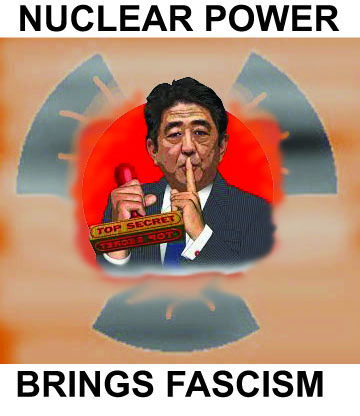
Of the 60 national universities that offer courses in these disciplines, 26 have confirmed that they will either close or scale back their relevant faculties at the behest of Japan’s government.
It follows a letter from education minister Hakuban Shimomura sent to all of Japan’s 86 national universities, which called on them to take “active steps to abolish [social science and humanities] organisations or to convert them to serve areas that better meet society’s needs”.
The ministerial decree has been denounced by one university president as “anti-intellectual”, while the universities of Tokyo and Kyoto, regarded as the country’s most prestigious, have said that they will not comply with the request.
However, 17 national universities will stop recruiting students to humanities and social science courses – including law and economics, according to a survey of university presidents by The Yomiuri Shimbun newspaper, which was reported by the blog Social Science Space.
It reports that the Science Council of Japan put out a statement late last month that expressed its “profound concern over the potentially grave impact that such an administrative directive implies for the future of the HSS [humanities and social sciences] in Japan”.
The call to close the liberal arts and social science faculties are believed to be part of wider efforts by prime minister Shinzo Abe to promote what he has called “more practical vocational education that better anticipates the needs of society”.
However, it is likely to be connected with ongoing financial pressures on Japanese universities, linked to a low birth rate and falling numbers of students, which have led to many institutions running at less than 50 per cent of capacity.
Resentencing of USA’s nun who broke into nuclear weapons complex
 Nun who broke into nuclear weapons complex resentenced http://www.cbsnews.com/news/nun-85-who-broke-into-nuclear-weapons-complex-resentenced-megan-rice/ NASHVILLE, Tenn. 15 Sep 15— An 85-year-old nun and two fellow Catholic peace activists have been resentenced to time served for vandalizing a storage bunkerthat held much of the nation’s bomb-grade uranium.
Sister Megan Rice, Michael Walli and Greg Boertje-Obed were originally convicted of felony sabotage for their 2012 actions in Oak Ridge, Tennessee, where they cut through fences and sneaked into the most secure area of the Y-12 National Security Complex. Once there, they hung banners, prayed and hammered on the outside wall of the bunker to symbolize a Bible passage that refers to the end of all war: “They will beat their swords into ploughshares.”
Rice was sentenced to nearly three years in prison while Walli, 66, and Boertje-Obed, 60, were each sentenced to just over five years. The 6th U.S. Circuit Court of Appeals threw out the sabotage charge in May, leaving a conviction on the lesser charge of injuring government property. When they were released from prison in June, the anti-nuclear activists had already served two years.
Government prosecutors had asked U.S. District Judge Amul Thapar to put the activists on supervised released.
Defense attorney Judy Kwan said the judge on Tuesday ordered two years of unsupervised release instead. During that time the activists are prohibited from going onto the grounds of any nuclear facilities.
The activists asked the judge to reduce the amount of restitution they were ordered to pay for damage at Y-12, nearly $53,000. He denied that request, Kwan said.
Rice and Walli, who live in Washington, D.C., and Boertje-Obed, who lives in Minnesota, are part of a loose network of activists who oppose the spread of nuclear weapons through provocative non-violent protests they call ploughshares actions. In the aftermath of their break-in at Y-12, federal officials implemented sweeping changes, including new management and a new defense security chief to oversee all of the National Nuclear Security Administration’s sites.
Nuclear whistleblower Mordechai Vanunu again under house arrest in Israel
 Israeli nuclear whisteblower Vanunu under house arrest over TV interview, DW, 10 Sept 15
More than a decade since completing his 18-year jail-term for exposing details of Israel’s nuclear weapons, Mordechai Vanunu has been put under house arrest. His detention follows a TV interview regarding the disclosure. Army radio reported on Thursday that Vanunu had been arrested in the early hours of September 5, hours after privately owned Channel 2 broadcast an interview which authorities said violated the terms of his 2004 release.
The 60-year-old reportedly appeared in a Jerusalem court before he was confined to his home for seven days. The court also imposed a ban on Vanunu using the Internet.
A senior Israeli security official later confirmed Vanunu’s detention, telling DPA news agency that he was forbidden from sharing any classified information which he learned while working at the Israeli nuclear plant in Dimona, “even if he already published that information in the past.”
Nucelar whistleblower
Vanunu was first imprisoned in 1986 for exposing details behind Israel’s nuclear weapons plan to British newspaper “The Sunday Times.”
He spent more than 10 years of his sentence in solitary confinement.
In 2010, Vanunu was imprisoned for a second time after a court ruled that he had broken the terms of his release by talking to a foreigner……
Police have demanded to see last week’s interview in its entirety. Channel 2 has refused to hand over the unedited footage, however, on the grounds of the journalistic principle of the protection of sources. The television station is now taking the case to court.
Israel has neither confirmed nor denied that it owns nuclear weapons – the only Middle East country to do so.
It has also refused to sign the nuclear Non-Proliferation Treaty – which aims to prevent the spread of nuclear weapons – or to allow international surveillance of the Dimona plant in the country’s south east. http://www.dw.com/en/israeli-nuclear-whisteblower-vanunu-under-house-arrest-over-tv-interview/a-18707561
Transatlantic trade and investment partnership (TTIP) provisions undermine democracy
TTIP: what does the transatlantic trade deal mean for renewable energy?, Guardian, Tim Smedley, 5 Aug 15
Trade partnership between the EU and US could remove barriers facing the green energy sector, but experts warn of potential dangers. In July the transatlantic trade and investment partnership (TTIP) came a step closer to reality. Formal talks have been ongoing for two years, but trying to create the world’s biggest free trade zone is no mean feat. Essentially, if passed, the EU and US will be able to trade without each other’s pesky tariffs or regulations getting in the way.
David Cameron is a big advocate, arguing it could add £10bn to the UK economy. Many others, meanwhile, criticise the undemocratic nature of the closed-door talks and sinister influence of powerful lobbyists.
But what would TTIP mean for renewable energy?………
TTIP could even undermine the democratic authority of local government. The UK’s Local Government Association representative in Brussels, Dominic Rowles, imagines a situation “whereby a public authority, whether local or national, takes a democratic decision on energy generation … that TTIP then makes easier for corporations to challenge.”
More opportunities to sue
The bone of contention here is the investor state dispute settlement (ISDS), which allows private companies to sue governments for loss of profits connected to regulation. It is seen as a key US demand for the trade partnership. Precedents include a US tobacco firm suing the Australian government over packaging restrictions and a US fracking company suing the Québec government following a moratorium on drilling under the St Lawrence River.
“Where the US wants to engage it does so pretty forcefully”, says David Baldock, executive director of the Institute for European Environmental Policy. He questions why an ISDS provision is needed at all, given the robust nature of the courts in both jurisdictions and the “huge levels of trade already between the EU and the US”. Yet an ISDS independent tribunal which would bypass national courts (and “doesn’t sit at all comfortably with the European decision-making process”, says Baldock) appears to be strongly favoured by US negotiators.
Race to the bottom on regulation Baldock also argues, “If you add TTIP to the language coming out of the commission about being less regulatory, lighter governance, letting states off binding targets around renewables and energy efficiency, then it is another layer that feeds … angst and lack of confidence for investors.”
Chair of the UK environmental audit committee, Joan Walley, believes there is a danger of TTIP coming at “the expense of throwing away hard-won environmental and public-health protections” and that combining US and EU regulatory systems becomes a “race to the bottom” – agreeing to harmonise the lowest regulations on either side, not the highest.
Baldock believes there could also be “a chill effect”, meaning that any new, stricter regulation is less likely to pass in future. “If we’re going to have a low carbon world we’ve got to [set] more targets, more product standards, more eco design directives,” he says. “The question is how far those are going to be inhibited by TTIP and giving the Americans a seat at the table.”……..http://www.theguardian.com/public-leaders-network/2015/aug/05/ttip-free-trade-deal-renewable-energy-transatlantic-partnership-eu-us
India bans entrance of Greenpeace member
India barred activist from entry: Greenpeace , Arab News 9 June 15 NEW DELHI: Greenpeace said Monday an Australian staff member had been barred from entering India despite holding a valid visa, in what it said was the latest crackdown against the group.
Aaron Gray-Block was on his way to meetings in India when immigration officials stopped him at Bangalore airport on Saturday night and put him on a flight to Kuala Lumpur without explanation, the campaign group said.
His passport was seized and only returned to him once he had landed in the Malaysian capital, the environmental group said in a statement.
“Our colleague has a valid business visa, and yet he was prevented from entering India with no reason given,” Divya Raghunandan, program director of Greenpeace India, said.
“We are forced to wonder if all international staff of Greenpeace will now be prevented from entering the country?“
Local media reports cited unnamed home ministry sources saying Gray-Block was denied entry because his name figured in an official ‘black list’.
But the activist said he had “not received any communication” from the government of being placed on such a list, demanding “an explanation to this.”
“I arrived at Bangalore Airport with a valid business visa issued by the Indian embassy in Australia… Any suggestion of wrongdoing is a farce and a smear,” Gray-Block said in a statement late Monday.
“There is no reason for me to be included in any blacklist,” he added……
A court last month ordered authorities to unfreeze some of Greenpeace’s accounts, handing the group a lifeline after it faced closure of its local operations.
Greenpeace has accused the government of waging a “malicious campaign” against it. Authorities prevented one of its campaigners in January from leaving Delhi after she was placed on a suspicious persons list. According to Indian media, a secret report by the main intelligence agency recently warned that delays to key development projects being sought by Greenpeace and other activist groups could knock up to three percentage points off India’s annual growth rate.
Greenpeace has been at loggerheads with the government over claims of environmental damage caused by India’s heavy reliance on coal and the impact of deforestation and nuclear projects. http://www.arabnews.com/news/758971
USA Senate passes Act Restricting NSA Surveillance Powers
 Senate Passes USA Freedom Act, Restricting NSA Surveillance Powers http://www.truthdig.com/eartotheground/item/senate_passes_usa_freedom_act_restricting_nsa_surveillance_powers_20150602 by Roisin Davis Jun 2, 2015 In a move seen to vindicate whistleblower Edward Snowden, the Senate on Tuesday passed the USA Freedom Act, which will end the bulk collection of Americans’ phone records.
As the Guardian explains, this is the most significant surveillance reform for decades, “a direct result” of Snowden’s revelations to the paper two years ago. “The passage of the USA Freedom Act,” the Guardian states, “paves the way for telecom companies to assume responsibility of the controversial phone records collection program, while also bringing to a close a short lapse in the broad NSA and FBI domestic spying authorities. Those powers expired with key provisions of the Patriot Act at 12.01 am on Monday amid a showdown between defense hawks and civil liberties advocates.”
Needing only a simple majority to pass, the final tally of the vote showed that 67 senators were in favor of the measure and 32 against.
The vote comes only two days after key parts of the Patriot Act expired, and BBC News compares the two:
What is changing? The expiry of the Patriot Act brings to an end bulk collection of Americans’ phone metadata – who called who, when and for how long, but not the content of calls – by the US. Under its successor, records must be held by telecommunications companies and investigators need a court order to access specific information. Technology companies will be given greater leeway to reveal data requests. The measures are intended to balance concerns on privacy with providing the authorities the tools they need to prevent attacks.
What stays the same? Key parts of the Patriot Act are retained in the Freedom Act. They include the provision allowing the monitoring of “lone wolf” suspects – potential attackers not linked to foreign terror groups, despite the US authorities admitting the powers have never been used. The Freedom Act also maintains a provision allowing investigators to monitor travel and business records of individuals, something law officers says is more effective than bulk collection.
Washington was contaminated with radiation in 1949 secret Air Force experiment
 The Secret 1949 Radiation Experiment That Contaminated Washington, Gizmodo, 3 June 15 Sarah Zhang The physicists who invented the nuclear bomb worked out of Los Alamos in New Mexico, but the people who did the dirty work of making the bombs were in Hanford, Washington. Throughout the Cold War, Hanford churned out plutonium for our nuclear arsenal. It was also, conveniently, a place to experiment with radiation.
Today, Hanford is the most contaminated radioactive site in America—the site of a massive (and troubled) cleanup effort. Radioactive material is still accidentally leaking into the ground. Though Hanford’s plants routinely released small doses of radioactive material into the air, most of this damage came from an event in 1949 called Green Run.
Green Run was a secret Air Force experiment that released Hanford’s largest single dose of radioactive iodine-131. On the night of December 2, 1949, at the behest of the military, scientists at Hanford let 7,000 to 12,000 curies of iodine-131 into the air, where it rode the wind as far as 200 miles. For a sense of scale, the Three Mile Island nuclear power plant accident released an estimated 15 to 24 curies of iodine-131 and the Chernobyl accident 35 million to 49 million curies.
The Green Run stayed secret until the 1980s, when it was revealed by Freedom of Information Act requests from local newspapers. The military details are still classified. More than half a century later, suspicion and controversy continue to lurk around Green Run, especially among the residents who lived downwind of Hanford.
There’s still much that we don’t know about the Green Run, but here is what we do.
Hanford, Factory and Farm …….Hanford was always more than a production facility; it was also a research complex. Up to 1,000 animals were housed on a farm near reactor F for experiments on the effects of radiation. The animals included fish, dogs, pigs, sheep, and even alligators. Sheep, especially, were given feed with iodine-131, the same radioactive material that the reactors were discharging into the air…….http://gizmodo.com/the-secret-1949-radiation-experiment-that-contaminated-1707748721
Corporate control of government, and the Internet – the goals of the Trans Pacific Partnership
The largest-ever international economic treaty that has ever been negotiated
Only five of the 29 chapters are about traditional trade. The others are about regulating the Internet and what Internet—Internet service providers have to collect information. They have to hand it over to companies under certain circumstances. It’s about regulating labor, what labor conditions can be applied, regulating, whether you can favor local industry, regulating the hospital healthcare system, privatization of hospitals. So, essentially, every aspect of the modern economy, even banking services, are in the TPP.
 Julian Assange on the Trans-Pacific Partnership: Secretive Deal Isn’t About Trade, But Corporate Control democracynow.org/2015/5/27/julian_assange_on_the_trans_pacific As negotiations continue, WikiLeaks has published leaked chapters of the secret Trans-Pacific Partnership — a global trade deal between the United States and 11 other countries. The TPP would cover 40 percent of the global economy, but details have been concealed from the public. A recently disclosed “Investment Chapter” highlights the intent of U.S.-led negotiators to create a tribunal where corporations can sue governments if their laws interfere with a company’s claimed future profits. WikiLeaks founder Julian Assange warns the plan could chill the adoption of health and environmental regulations.

Abe government trampling on press freedoms – concern grows in Japan
 In Japan, anger at Shinzo Abe’s heavy hand on press turns mainstream (+video)
By Justin McCurry, Correspondent MAY 21, 2015 TOKYO — Is Japan’s commitment to free speech foundering?
A growing chorus of critics accuses the Abe administration of trampling on press freedoms, moving the issue beyond a coterie of academics and journalists……http://www.csmonitor.com/World/Asia-Pacific/2015/0521/In-Japan-anger-at-Shinzo-Abe-s-heavy-hand-on-press-turns-mainstream-video
UK Navy investigating Trident nuclear submatine whistle-blower William McNeilly

 Royal Navy investigates Trident whistle-blower William McNeilly who claims nuclear programme is a ‘disaster waiting to happen’ , The Independent 17 May 15 The Royal Navy is investigating claims by an apparent whistle-blower that there is a “complete lack of concern for security” that makes the Trident nuclear weapons programme vulnerable to terror attack.
The claims were made in an online post by 25-year-old William McNeilly, and included a photograph of his Navy ID card.
McNeilly said he had “sacrificed” his freedom and a well-paid career to make the claims in an 18-page report entitled “The Secret Nuclear Threat”, and that after posting it he had gone on the run.
The Ministry of Defence confirmed that McNeilly was a member of the naval service, and a source said the Navy was “concerned for the whereabouts and wellbeing of AB (able seaman) McNeilly and working closely with civilian police to locate him”.
In his report, McNeilly claimed he had witnessed a host of inadequate systems and checks while training with the Trident programme, from “things like food hygiene” to failed launch tests, flooding on board submarines, fires in the missile compartment and “a complete lack of security”.
“If airport security and nuclear weapon security were both compared to prisons,” McNeilly writes, “the airport would be Alcatraz and base security would be house arrest.”
McNeilly’s report: Key claims
• Missile launch tests failed on three occasions
• Collision with French nuclear sub covered up
• Failures to carry out security checks on bags
• Computer waste representing major fire risk
• Missile safety alarms muted and ignored
• Accidental flooding of torpedo compartment
• Failure to question recording of top-secret info
McNeilly described the state of Trident security as “the biggest threat the UK faces”, and said he was only releasing “selected information” in order to avoid damaging security further.
“I’m releasing this information in this way because it’s the only way I can to be sure it gets out,” he said, adding that he had “raised concerns through the chain of command on multiple occasions” and got nowhere……….http://www.independent.co.uk/news/uk/home-news/royal-navy-investigates-trident-whistleblower-william-mcneilly-who-claims-nuclear-programme-is-a-disaster-waiting-to-happen-10256148.html
Sister Megan Rice Michael Walli, and Greg Boertje-Obed still in prison with no sentence at all
TNP attorneys file motion for immediate release https://transformnowplowshares.wordpress.com/2015/05/15/tnp-attorneys-file-motion-for-immediate-release/ BY TNPLOWSHARES ⋅ MAY 15, 2015
Everyone seemed to have the same question following the news that the Sixth Circuit Court of Appeals had thrown out the sabotage charge against Michael Walli, Megan Rice and Greg Boertje-Obed and vacated the sentences on both the sabotage and the depredation charges. The court noted if the three had been sentenced only on the depredation charge, according to the sentencing guidelines, they would likely have received shorter sentences and would have already served their full time. So the question of the day: When are they getting out?
A fair question—they now are being held in federal prison with no sentence at all.
Within days of the Sixth Circuit’s ruling, Judge Amul Thapar, who handled the original case, convened a conference call with the lawyers from both sides. He apparently told them he had not yet been assigned the case, but he wanted to set a schedule in case he was. The result was a July 8 date set for resentencing. (The Court’s decision to throw out the sabotage charge and vacate the sentences could be appealed by the prosecutor, a decision we are told would be made not in Knoxville, but in Washington; the feds have two weeks to file a notice of appeal, then as much as 90 days to actually file the appeal, after which the defense gets time to respond, and the feds get more time for a final response—you can see how this would drag out with Greg, Megan and Michael still in prison.
But the case resides still in the Sixth Circuit (Thapar, who is a federal judge in Lexington, KY, originally drew the case because the Knoxville court had a vacancy on the bench; the judge who had been assigned the case had retired; Thapar drew the reassignment. That empty seat in Knoxville has since been filled, so it is not absolutely certain that the case would be remanded to Thapar for re-sentencing.) So, long story short, attorneys for MGM filed a motion with the Sixth Circuit on Thursday, May 15, asking for immediate release.
The Sixth Circuit wasted no time. Within hours, it issued an order requiring the government to respond to the motion for immediate release by noon on Monday, May 18.
That is where things stand at this moment.
Here is a copy of the Defense Motion for Immediate Release:Def Motion for Immediate Release 5-14-15
India’s government action may force Greenpeace to close there

 Greenpeace India could close within a month due to government crackdown Guardian, Adam Vaughan, 6 May 15 Organisation faces 340 job losses in what would be the only forced closure since it was founded in 1971 because Indian government has frozen its bank accounts Greenpeace India will be forced to close within a month with the loss of 340 jobs because of a government crackdown on its funding, the organisation’s chief has warned.
The Indian home ministry froze seven bank accounts connected with the organisation last month, the latest in a series of moves against the NGO since Narendra Modi’s government came to power.
The international group said that if it was forced to close the Indian operation, it would be the first time since it was founded in 1971 that one of its national organisations was forcibly closed down………http://www.theguardian.com/environment/2015/may/05/greenpeace-india-could-close-within-a-month-due-to-government-crackdown
Monatana’s new law to Protect Journalists’ Electronic Privacy
Montana Becomes First State To Pass Law Protecting Journalists’ Electronic Privacy
By: Rachel Blevins Apr 17, 2015, Benswann1
Montana recently passed a bill, sponsored by Liberty Republican Rep. Daniel Zolnikov, which closed a loophole in the state’s media shield law, making Montana the first state to include a provision protecting journalists’ electronic communications from government entities.
Last week, Montana became the first state to include a provision in its Media Confidentiality Act that protected journalists’ electronic communications from the government when Governor Steve Bullock signed a bill “prohibiting disclosure of media info from electronic communications services.”…………..
The text of the bill states that it both prohibits “governmental bodies from questing or requiring the disclosure of privileged news media information from services that transmit electronic communications,” and prohibits “an electronic communication service from being adjudged in contempt” if that service “refuses to disclose certain information.”
Zolnikov tells Benswann.com that he created the bill to help Montana set the precedent at the state level for the rest of the nation.
“Freedom of the press is one of the most crucial rights contained in the First Amendment,” Zolnikov said. “The federal government has cracked down on whistleblowers and journalists in the past few years, and many have said this has a ‘chilling effect’ on news reporting.”……….http://benswann.com/montana-becomes-first-state-to-pass-law-protecting-journalists-electronic-privacy/
1 This Month



26 September – International Day for the Total Elimination of Nuclear Weapons


PLEASE OPPOSE HR 8255 AND S.3639 – bills would accelerate satellite deployment, with no environmental review or safeguards – https://ncstd5li.quorum.us/campaign/169331/
To see nuclear-related stories in greater depth and intensity – go to https://nuclearinformation.wordpress.com
-
Archives
- September 2026 (233)
- August 2026 (330)
- July 2026 (355)
- June 2026 (287)
- May 2026 (306)
- April 2026 (356)
- March 2026 (251)
- February 2026 (267)
- January 2026 (308)
- December 2025 (358)
- November 2025 (359)
- October 2025 (375)
-
Categories
- 1
- 1 NUCLEAR ISSUES
- business and costs
- climate change
- culture and arts
- ENERGY
- environment
- health
- history
- indigenous issues
- Legal
- marketing of nuclear
- media
- opposition to nuclear
- PERSONAL STORIES
- politics
- politics international
- Religion and ethics
- safety
- secrets,lies and civil liberties
- spinbuster
- technology
- Uranium
- wastes
- weapons and war
- Women
- 2 WORLD
- ACTION
- AFRICA
- Atrocities
- AUSTRALIA
- Christina's notes
- Christina's themes
- culture and arts
- Events
- Fuk 2022
- Fuk 2023
- Fukushima 2017
- Fukushima 2018
- fukushima 2019
- Fukushima 2020
- Fukushima 2021
- general
- global warming
- Humour (God we need it)
- Nuclear
- RARE EARTHS
- Reference
- resources – print
- Resources -audiovicual
- Weekly Newsletter
- World
- World Nuclear
- YouTube
-
RSS
Entries RSS
Comments RSS
 nuclear-news