Rating the Fukushima damage on a nuclear danger scale
On Saturday, before emergency measures were announced at a second reactor at that plant, Japanese nuclear safety experts rated the accident a four, putting it just behind the Three Mile Island accident in 1979 near Harrisburg, Pa. That accident, the worst in United States history, was designated a five……..The government issued evacuation orders for about 170,000 people in the surrounding area……..

Nuclear Emergency Is Worst in Decades, NYTimes.com, By ANAHAD O’CONNOR March 12, 2011 The earthquake and tsunami that battered northern Japan on Friday set in motion one of the worst nuclear accidents in over two decades. The International Atomic Energy Agency rates the severity of radiological events, with a scale starting at one, an “anomaly,” and rising to seven, a “major” accident. A six and seven designate full meltdown, where the nuclear fuel or core of a reactor overheats and melts. The scale of the ensuing uncontrolled release of radiation that follows differentiates the two. Partial meltdowns, in which the fuel is damaged, are rated a four or a five. Continue reading
Technical information on the Fukushima nuclear loss of coolant
Moreover, in the spent fuel pools usually situated next to nuclear power plants, there are large numbers of additional fuel rods, used ones, disposed of as waste. There must be constant water circulation in the spent fuel pools. In what is labeled a “loss-of-water’ accident in a spent fuel pool, the zirconium cladding of the fuel rods is projected as exploding—sending into the environment the lethal nuclear poisons in a spent fuel pool…….
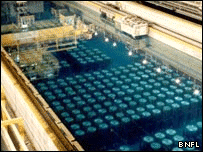
Behind the Hydrogen Explosion at the Fukushima Nuclear Plant, Common Dreams, by Karl Grossman, 12 March 11, The explosion at the Fukushima nuclear power plant is being described as caused by a “hydrogen build-up” The situation harks back to the “hydrogen bubble” that was feared would explode when the Three Mile Island plant in 1979 underwent a partial meltdown…… Continue reading
Japan could be the new Chernobyl, as nuclear radiation emergency continues
Given the large quantity of irradiated nuclear fuel in the pool, the radioactivity release could be worse than the Chernobyl nuclear reactor catastrophe of 25 years ago.”
Risk of Nuclear Catastrophe Escalates in Japan – ‘Worse than Chernobyl’, Forbes, William Pentland -m Mar. 11 2011 The Institute for Public Accuracy issued the following statement by nuclear expert, Kevin Kamp, about the risk of nuclear disaster in post-Earthquake Japan:
Continue reading
Nuclear emergency in Japan
Radiation 1000 times above normal at nuclear plant
Radiation 1000 times above normal at nuclear plant | The Australian
Japan earthquake forces thousands to evacuate in nuclear plant emergency- Thousands of people were being evacuated from their homes as Japan scrambled to shut down reactors and prevent a catastrophic meltdown
Japan earthquake forces thousands to evacuate in nuclear plant emergency | World news |
Japan earthquake: nuclear disaster fears as reactor overheats Japan was battling to avoid a nuclear disaster after a reactor was critically damaged by the country’s biggest earthquake. Japan earthquake: nuclear disaster fears as reactor overheats – Telegraph
Japan Reactor Damaged in Quake May Need to Vent Radiation, Official Says,
Japan Reactor Damaged in Quake May Need to Vent Radiation, Official Says – Bloomberg
Fire breaks out at Japanese nuclear power plant, World affairs | Fire breaks out at Japanese nuclear power plant
Hundreds perish in 8.9 earthquake, tsunamis as minister warns of nuclear radiation Hundreds perish in 8.9 earthquake, tsunamis as minister warns of nuclear radiation | The Australian
—
Japan Earthquake: The Energy Players Who Stand to Benefit | BNET, 12 Marcg 11,
Japan Earthquake: The Energy Players Who Stand to Benefit | BNET
Factbox: Japan quake tears through commodity, energy sectorsFactbox: Japan quake tears through commodity, energy sectors | Reuters
Nuclear plants,waste pools, waste storage – targets for terrorism
we must very carefully consider the vulnerability of reactor fuel, spent fuel pools, dry storage casks, and related fissile materials and facilities to sabotage, attack, and theft.
Gorbachev Warns of Terrorist Threat to Nuclear Power Plants, NTI: Global Security Newswire, March 2, 2011 The 1986 Chernobyl disaster offers a “warning” of the potential human and environmental cost of a terrorist attack against an atomic energy facility, former Soviet President Mikhail Gorbachev wrote in a commentary published yesterday by the Bulletin of the Atomic Scientists Continue reading
The danger of nuclear plants that are out of sight
The concern arises from new and anticipated developments that will allow nuclear fuel facilities — uranium enrichment technologies — to get so small and so efficient that U.S. surveillance methods can’t spot them.
Why we need to keep nuclear facilities in plain sight, The Hill, By Francis Slakey – 03/02/11 ……… technology over the last few decades that got smaller, more efficient, and easier to conceal. Facilities that manufacture nuclear fuel are following that same trend – one that’s creating a national security risk . Continue reading
Unstable Chernobyl structure means risk of radiation catastrophe
the structure has become extremely unstable, with experts warning that if it collapses, a catastrophic amount of radiation could be released into the atmosphere.
Fears over new leak at Chernobyl spark plea for radiation shield – The Independent. By Shaun Walker in Chernobyl 28 February 2011 Fears that the destroyed nuclear reactor at Chernobyl could collapse and again leak deadly radiation have prompted European agencies to seek hundreds of millions of pounds to fund the construction of a vast steel building to encase the site. Continue reading
Iran’s nuclear reactor in serious safety trouble?
Signs of serious trouble at Iran’s nuclear reactor, guardian.co.uk, Julian Borger, 26 Feb 2011, “……Today, Iran confirmed a UN report that it will have to remove the uranium fuel rod assemblies from the reactor core, a significant setback.The reactor has been under construction since the Shah’s era in the 1970’s. The fuel assemblies were finally introduced into the reactor four months ago and it was meant to start producing electricity in January, but that deadline was missed.
Ali Asghar Soltanieh, Tehran’s envoy to the International Atomic Energy Agency, told the ISNA news agency that the fuel was being removed on Russian advice……Signs of serious trouble at Iran’s nuclear reactor | World news | guardian.co.uk

Arrest of bomber suspect, with nuclear plants on his list
files included information about hydroelectric dams, nuclear power plants,
Saudi bomb suspect eyed home of President Bush, dams, nuclear plants CSMonitor.com, By Warren Richey, February 24, 2011 Washington, Federal officials on Thursday announced the arrest of a Saudi citizen who was attending a community college in Texas while allegedly plotting to conduct a bombing campaign within the United States. Continue reading
Nuclear plants not safe from airplane crash risk
Nuclear risk from plane crashes is higher than estimated, inquiry shows A plane crash could trigger a ‘significant radiological release’, according to an inquiry into the expansion of Lydd airport in Kent Rob Edwards guardian.co.uk, 21 February 2011The risk that planes will crash into nuclear plants and release potentially lethal clouds of radioactivity is significantly higher than off icial estimates, according to expert evidence to a public inquiry. Continue reading
South Korea radiation leaks from nuclear power centre
Radiation leaks reported at nuke power research center in S.Korea 2011-02-20 SEOUL, Feb. 20 (Xinhua) — A South Korean nuclear power research center issued a warning of radiation leaks on Sunday, which forced its staff there to evacuate immediately, according to local media. A “white” warning was issued at around 2:32 p.m. local time at the state-run Korea Atomic Energy Research Institute (KAERI), located in the central city of Daejeon, about 160 km south of Seoul, after minor radiation leaks were detected at a 30 megawatt research reactor, HANARO, at around 1:03 p.m. local time, the KAERI told local media….Radiation leaks reported at nuke power research center in S.Korea
Safety hazards at more than 24 USA nuclear reactors
Report: Monticello nuclear plant among those with potential safety hazard, – TwinCities.com 02/17/2011 A major manufacturer in the nuclear industry is reporting a potential “substantial safety hazard” with control rods at more than two dozen nuclear reactors around the country, including the Xcel Energy plant near Monticello….. Continue reading
Electricite de France admits to safety flaws in 34 nuclear reactors
EDF’s 900 megawatt reactors, built in the 1970s, do not meet current standards of precision required for measuring water flows in their water injection systems. Water injection is used as a key safety measure to cool down a reactor’s core in case of an accident…..EDF says flaw in 34 reactors could affect safety | Agricultural Commodities | Reuters
Radioactive shipments across Great Lakes exceed international safety limits
The Canadian Nuclear Safety Commission has agreed that this shipment clearly exceeds the international safety limits for total amount of radioactivity allowed on a single ship.”
Blue Mountains mayor continues to rail against radioactive shipments Collingwood Enterprise Bulletin – Ontario, CA, 11 Feb 2011, THE BLUE MOUNTAINS — Mayor Ellen Anderson of The Blue Mountains is not happy that sixteen radioactive waste steam generators from the Bruce Powers nuclear station could be shipped out of Owen Sound and across the Great Lakes.Anderson said she was disappointed with the decision of the Canadian Nuclear Safety Commission (CNSC) to approve the shipment of on the Great Lakes and St. Lawrence River. Continue reading
Safety breaches covered up at Australia’s nuclear reactor
Nuclear safety breaches concern Opposition – ABC Sydney – Australian Broadcasting Corporation February 9, 2011 “……..The Comcare report, which was obtained by the ABC, found the Australian Nuclear Science and Technology Organisation (ANSTO) under-reported accidents and breached basic safety standards at the reactor.The ABC has also learnt of another incident that left a newly appointed supervisor contaminated…………. Continue reading
1 This Month



19 November – Webinar – The Reality of Reprocessing
Time: 11:00 AM Pacific Time (US & Canada) / 2:00 PM Eastern / 7:00 PM UK / 8:00 PM CET
Register for the Zoom Event Here



Shut down the radiation-damaged Heysham nuclear reactors now
To see nuclear-related stories in greater depth and intensity – go to https://nuclearinformation.wordpress.com

Say No to NASA’s Reckless Nuclear Reactor on the Moon
Say No to NASA’s Reckless Nuclear Reactor on the Moon
-
Archives
- November 2026 (84)
- October 2026 (302)
- September 2026 (339)
- August 2026 (330)
- July 2026 (355)
- June 2026 (287)
- May 2026 (306)
- April 2026 (356)
- March 2026 (251)
- February 2026 (267)
- January 2026 (308)
- December 2025 (358)
-
Categories
- 1
- 1 NUCLEAR ISSUES
- business and costs
- climate change
- culture and arts
- ENERGY
- environment
- health
- history
- indigenous issues
- Legal
- marketing of nuclear
- media
- opposition to nuclear
- PERSONAL STORIES
- politics
- politics international
- Religion and ethics
- safety
- secrets,lies and civil liberties
- spinbuster
- technology
- Uranium
- wastes
- weapons and war
- Women
- 2 WORLD
- ACTION
- AFRICA
- Atrocities
- AUSTRALIA
- Christina's notes
- Christina's themes
- culture and arts
- Events
- Fuk 2022
- Fuk 2023
- Fukushima 2017
- Fukushima 2018
- fukushima 2019
- Fukushima 2020
- Fukushima 2021
- general
- global warming
- Humour (God we need it)
- Nuclear
- RARE EARTHS
- Reference
- resources – print
- Resources -audiovicual
- Weekly Newsletter
- World
- World Nuclear
- YouTube
-
RSS
Entries RSS
Comments RSS

