New Jersey Nuclear plant only 10 miles from gas fires

 Gas fires still burning 10 miles from NJ nuclear plant after Sandy — Official: Devastation can’t be seen from the air… It’s beyond imagination (PHOTOS) http://enenews.com/gas-fires-still-burning-10-miles-from-nj-nuclear-plant-official-the-devastation-is-nothing-that-could-be-seen-from-the-air-it-is-beyond-imagination
November 1st, 2012
Title:Title: New Jersey Natural Gas shutting off service to barrier islands
Source: The Star-Ledger
Author: Seth Augenstein
Date: November 01, 2012
The natural gas fires that have burned for days along the ravaged barrier islands, spanning from Bay Head south to Seaside Park [10 miles north of Oyster Creek Nuclear Generating Station] and also Long Beach Island, are about to be snuffed by New Jersey Natural Gas, the company said this afternoon. […]
Brick Township (Andrew Mills/The Star-Ledger)
The company cannot give an estimate of the number of fires that have burned in the devastated areas. […]
In Brick, roughly a half dozen natural gas fires have burned for three days — and are still going — on the township’s 3-mile stretch of barrier island […]
Authorities are now monitoring the gas fires as they wait for a chance to get into the storm-ravaged area. […]
Title: New Jersey Natural Gas to snuff gas fires on barrier islands
Source: The Asbury Park Press
Date: November 01, 2012 at 1:30 PM
[…] Over the past three days, New Jersey Natural Gas has plugged more than 1,300 leaks in those areas. […]
“Our crews did everything we could to save the system,” said Kathleen T. Ellis, chief operating officer of New Jersey Natural Gas. “We were only able to gain access to some of the most damaged areas within in the last 24 hours, and the devastation is nothing that could be seen from the air.
“It is beyond imagination,” Ellis said. “The only safe thing to do is shut down the system.” [.. Watch: ABC 10 miles from NJ nuke plant: We can hear gas lines hissing — Fire dept. says one spark and town could blow (VIDEO)
Unanswered questions about Oyster Creek nuclear power plant
 Oyster Creek Nuclear Alert: As Floodwaters Fall, More Questions Arise TruthOut , 01 November 2012 11:38By Gregg Levine, capitoilette | News Analysis New Jersey’s Oyster Creek Nuclear Generating Station remains under an official Alert, a day-and-a-half after the US Nuclear Regulatory Commission declared the emergency classification due to flooding triggered by Hurricane Sandy. An Alert is the second category on the NRC’s four-point emergency scale. Neil Sheehan, a spokesman for the federal regulator, said thatfloodwaters around the plant’s water intake structure had receded to 5.7 feet at 2:15 PM EDT Tuesday, down from a high of 7.4 feet reached just after midnight.
Water above 6.5 to 7 feet was expected to compromise Oyster Creek’s capacity to cool its reactor and spent fuel pool, according to the NRC. An “Unusual Event,” the first level of emergency classification, was declared Monday afternoon when floodwaters climbed to 4.7 feet.
Though an emergency pump was brought in when water rose above 6.5 feet late Monday, the NRC and plant owner Exelon have been vague about whether it was needed. As of this writing, it is still not clear if Oyster Creek’s heat transfer system is functioning as designed. Continue reading
USA came all too close to nuclear catastrophe
America’s nuclear safety under scrutiny after Oyster Creek’s Sandy alert
US nuclear regulators model risk from seismic activity or flooding based on past history. That’s leaving way too much to luck Richard Schiffman
guardian.co.uk, 1 November 2012 Oyster Creek nuclear power station was offline on Monday for maintenance, but officials said Sandy’s storm surge came within 6in of damaging its cooling system. Photograph: PR
We know the bad news about superstorm Sandy: the Jersey shore was devastated and many towns remain waterlogged. New York suffered a direct hit, with the city’s mass transit system flooded and part-paralyzed for days to come….. luckily, it did not trigger an even greater disaster at one of the region’s nuclear power plants. But it could have. Continue reading
Is Hanford Nuclear Reservation safe?
Salem and Indian Point nuclear reactors remain offline
Storm-Area Nuclear Reactors Remain Offline WSJ,By RYAN TRACY, 31 Oct 12 Two nuclear reactors in New Jersey and New York that had shut down during superstorm Sandy remained offline Wednesday, but waters receded from one plant that had issued a safety alert.
In Southern New Jersey, Public Service Enterprise Group‘s PEG +0.95% Salem nuclear plant shut down its Unit 1 after experiencing water-pump problems as the storm moved past. U.S. regulators said the pumps were affected by debris and high water levels near the plant.
The company is “developing a repair plan” and will “make repairs as needed to return the plant to safe operation,” a spokesman said on Wednesday, offering no timeline for bringing the plant back to power. Another reactor at the site, Unit 2, is out of service for refueling.
An Entergy Corp. ETR +0.67% spokesman said the Unit 3 reactor at the Indian Point plant north of New York City was still offline Wednesday, though the company was prepared to return it to service “when the grid is ready to accept the power.” The unit shut down Tuesday after an electrical-grid disturbance…. http://online.wsj.com/article/SB10001424052970203707604578090523975335526.html
Oyster Creek nuclear power plant still under alert
http://enenews.com/gundersen-suspect-going-reports-spent-fuel-pools-heating-new-jersey-nuclear-plants-video NRC: Alert still in effect at NJ nuclear plant — High water levels in Oyster Creek’s water intake structure remain
Title: ALERT REMAINS IN EFFECT AT OYSTER CREEK NUCLEAR POWER PLANT
Source: U.S. NUCLEAR REGULATORY COMMISSION
Oct. 30, 2012
[…] Heightened coverage will continue at Oyster Creek, a plant in Lacey Township, N.J., still in an “Alert” due to high water levels in its water intake structure. […]
At Oyster Creek, the Alert – the second lowest of four levels of emergency classification used by the NRC – remains in effect as plant operators wait for the water intake levels to drop to pre-designated thresholds. The water level rose due to a combination of a rising
tide, wind direction and storm surge. Oyster Creek was shut down for a refueling and maintenance outage prior to the storm and the reactor remains out of service. Water levels are beginning to subside to more normal levels, but the plant remains in an Alert status until there is enough confidence levels will remain at more normal levels. Offsite
power at the plant is in the process of being restored. […]
Corruption in Pacific rim countries means that nuclear power safety is unlikely
 Karamoskos points to an international transparency-and-corruption scale compiled by Transparency International (partially supported by AusAID) as a reasonable indicator of whether countries can take on the complex safety responsibilities of nuclear power. Indonesia doesn’t rate highly on this scale, coming in at 100 of 183 countries on the Corruption Perception Index; Vietnam and Bangladesh are worse, at 112 and 120 respectively. India ranks 95th.
“That’s my first and foremost concern — do these countries have the underlying principles … to foster a robust safety culture?”
Asia’s Nuclear Feeding Frenzy Global Mail By Clare Blumer October 30, 2012
How safe is the Pacific rim, where 100 reactors in 10 years are planned, some in earthquake-prone, developing nations? Ask the fish.
“You can’t decontaminate that forest,” says Australian radiologist Dr Peter Karamoskos about Fukushima, the region of Japan hardest hit by last year’s deadly earthquake and tsunami.
“The stuff is on the ground — in the leaves, in the trees,” he says, referring to the radioactive matter that has blanketed the region since the disaster. Inside the 20 kilometre exclusion zone, radiation from the earth — known as “ground shine’’ — is so bad people are still not allowed to enter. Continue reading
UK nuclear power plants – safety problems not fixed
 Third of U.K. Nuclear-Safety Concerns Unresolved, Regulator Says http://www.bloomberg.com/news/2012-10-31/third-of-u-k-nuclear-safety-concerns-unresolved-regulator-says.html
The ONR will “if necessary, consider enforcement action to ensure that appropriate measures are implemented,” said Deputy Chief Inspector Andy Hall. Reactors must be better prepared to respond to natural disasters and other emergencies, the ONR said, calling for plant reinforcements, reviews of cooling systems and ventilation routes for combustible gases.
The regulator’s recommendations last year followed the results of so-called stress tests on U.K. reactors after the 2011 earthquake and tsunami in Japan caused a meltdown at Tokyo Electric Power Co.’s Dai-Ichi plant. The crisis triggered similar reviews in other countries and led some, including Germany, to decide to phase out nuclear power altogether.
“Much work is still to be done to implement the lessons from Fukushima,” the ONR report shows. “We expect the licensees to make proposals on how they intend to meet the required safety outcomes, and to justify why their proposal represents the safest reasonably practicable option for improvement.”
All USA’s nuclear plants can withstand hurricane and flooding – Nuclear Regulatory Comission
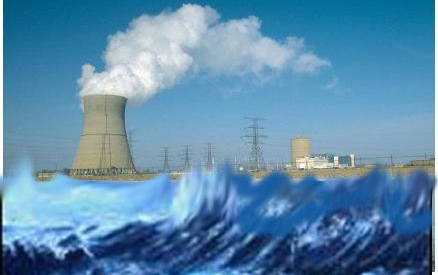 “All plants have flood protection above the predicted storm surge, and key components and systems are housed in watertight buildings capable of withstanding hurricane-force winds and flooding,” the NRC said in a statement earlier today.
Inspectors Dispatched to Nuclear Reactors in Sandy’s Path By Mark Drajem, Kasia Klimasinska and Christine Harvey – Oct 30, 2012 Extra federal inspectors were dispatched to U.S. nuclear-power plants in the path of Hurricane Sandy as operators and officials reassured the public that they are prepared for high winds, power outages and flooding associated with the massive storm.
The Nuclear Regulatory Commission said it sent additional inspectors to 10 sites from Maryland to Connecticut, and issued the employees satellite telephones, as regulators and plant operators grappled with the worst storm to threaten U.S. nuclear facilities since a nuclear disaster in Japan last year. Procedures require the sites to be shut before winds are forecast to exceed hurricane force, the commission said today in a statement.
“Given the breadth and intensity of this historic storm, the NRC is keeping a close watch on all of the nuclear power plants that could be impacted,” NRC Chairman Allison Macfarlane said in a statement. “Our extra inspectors sent to the potentially affected sites will continue, on an around-the-clock basis, to independently verify that the safety of these plants is maintained until the storm has passed and afterwards.” Continue reading
USA: nuclear reactors – assurances of safety precautions
they are unlikely to be affected by strong winds or unusually high tides.
Hurricane Sandy and N.J. nuclear power plants: Keeping it cool in high
winds http://www.newjerseynewsroom.com/science-updates/nj-nukes-prepare-for-sandy , 28 OCTOBER 2012 BY ROBERT KINKEAD On Sunday, New Jersey’s four nuclear power stations, along with another dozen or so along the Eastern Seaboard,were prepped to deal with Hurricane Sandy as that massive storm crawls up the East Coast toward the Garden State.
Federal regulators require nuclear reactors to be in a safe shutdown condition at least two hours before hurricane force winds strike, according to Alec Marion, VP of nuclear operations at the Nuclear Energy Institute, an energy industry association.
Typically, plant operators begin shutting down reactors about 12 hours before winds exceeding 74 miles per hour arrive. One of the most significant challenges in the shutting down process is keeping the reactor core cool. Continue reading
AUDIO: Hazards of power loss, in nuclear reactors’ shutdown
 Gundersen: 26 nuclear plants in area where Hurricane Sandy likely to hit — If power lost, only plan is to let spent fuel pools heat up… no generators to pump in water (AUDIO) http://enenews.com/gundersen-26-nuclear-plants-area-hurricane-sandy-hit-power-lost-only-plan-spent-fuel-pools-heat-diesel-generators-pump-water-audio October 28th, 2012
Transcript Summary of an excerpt from the October 28, 2012 podcast by Fairewinds Energy Education:
You’ll hear in the next 2 days, “We’ve safely shutdown the plant”
What Fukushima taught us is that doesn’t stop the decay heat
You need the diesels to keep the reactors cool
26 plants in the East Coast are in the area where Sandy is likely to hit
Fuel pools not cooled by diesels, no one wanted to buy them
If recent refuel, hot fuel will throw off more and more moisture from pool
Reactor buildings not meant to handle the high humidity
Fuel pool liner not really designed to approach boiling water, may unzip if water gets too hot
A lot of problems with allowing fuel pool to over
Need water in around 2 days if hot fuel in pool
The only fall-back if power is lost is to let fuel pools heat up
Swollen river necessitates nuclear plant shutdown, Slovenia
Slovenia shuts nuclear plant after Sava river swells, Yahoo News 29 Oct12, Slovenia preventively shut down production Sunday at its only nuclear power plant after a steep increase in the flow of the Sava river used for cooling the system, the Krsko nuclear plant said in a statement.
The plant’s production was stopped manually due to the “great amount of leaves and other garbage on the Sava river that had decreased the efficiency of the cooling system on the secondary side of the plant,” it said….. http://uk.news.yahoo.com/slovenia-shuts-nuclear-plant-sava-river-swells-181351905.html?utm_source=twitterfeed&utm_medium=twitter
Nuclear industry prepared for hurricane, is confident of safety
Nuclear Reactors Await Hurricane Sandy By MATTHEW L. WALD, NYT October 28, 2012, Among the various immobile pieces of infrastructure in the path of the East Coast hurricane are around 20 nuclear reactors, from Calvert Cliffs in southern Maryland to Pilgrim in Plymouth, Mass., and Vermont Yankee, just north of the Massachusetts line in Vernon, Vt.
But the industry and regulatory officials say that this is an anticipated challenge…. The most severe weather to afflict nuclear reactors may have been Hurricane Andrew, in August 1992, which was a Category 5 storm when it hit the Turkey Point reactors 25 miles south of Miami. The plant lost telephone communications with the outside world, and
the access road was blocked by fallen trees, but there was no significant damage to safety systems, the regulatory commission found later …. http://green.blogs.nytimes.com/2012/10/28/nuclear-reactors-await-hurricane-sandy/
Harvey Wasserman lists America’s rust bucket nuclear reactors
 The Rust-Bucket Reactors Start to Fall http://www.nukefree.org/editorsblog/rust-bucket-reactors-start-fall , Harvey Wassermann, 26 Oct 12, The US fleet of 104 deteriorating atomic reactors is starting to fall. The much-hyped “nuclear renaissance” is now definitively headed in reverse.
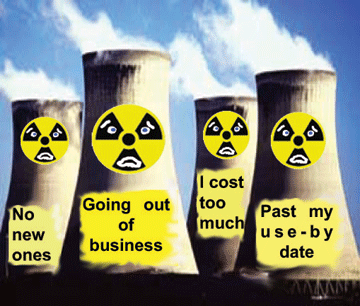
The announcement that Wisconsin’s Kewaunee will shut next year will be remembered as a critical dam break. Opened in 1974, Kewaunee has fallen victim to low gas prices, declining performance, unsolved technical problems and escalating public resistance.
Many old US reactors are still profitable only because their capital costs were forced down the public throat during deregulation, through other manipulations of the public treasury, and because lax regulation lets them operate cheaply while threatening the public health.
Nuclear power obstacle in Japan: new evacuation plans
under the new radiation forecast, many more local governments will have to compile disaster management plans for areas that could require evacuation.
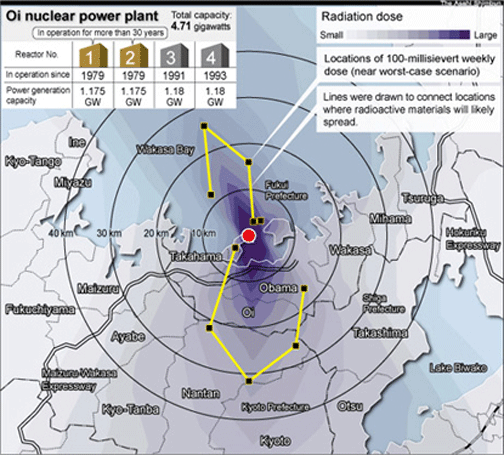
Radiation forecast creates hurdle in resuming nuclear plant operations UPDATE: Forecast predicts wider evacuations needed if nuclear disaster repeated October 25, 2012 THE ASAHI SHIMBUN Municipalities are demanding a greater say in whether utilities can restart their reactors after the new industry watchdog placed more communities in the danger zone of possible nuclear accidents. Continue reading
1 This Month




PLEASE OPPOSE HR 8255 AND S.3639 – bills would accelerate satellite deployment, with no environmental review or safeguards – https://ncstd5li.quorum.us/campaign/169331/
To see nuclear-related stories in greater depth and intensity – go to https://nuclearinformation.wordpress.com
-
Archives
- September 2026 (330)
- August 2026 (330)
- July 2026 (355)
- June 2026 (287)
- May 2026 (306)
- April 2026 (356)
- March 2026 (251)
- February 2026 (267)
- January 2026 (308)
- December 2025 (358)
- November 2025 (359)
- October 2025 (375)
-
Categories
- 1
- 1 NUCLEAR ISSUES
- business and costs
- climate change
- culture and arts
- ENERGY
- environment
- health
- history
- indigenous issues
- Legal
- marketing of nuclear
- media
- opposition to nuclear
- PERSONAL STORIES
- politics
- politics international
- Religion and ethics
- safety
- secrets,lies and civil liberties
- spinbuster
- technology
- Uranium
- wastes
- weapons and war
- Women
- 2 WORLD
- ACTION
- AFRICA
- Atrocities
- AUSTRALIA
- Christina's notes
- Christina's themes
- culture and arts
- Events
- Fuk 2022
- Fuk 2023
- Fukushima 2017
- Fukushima 2018
- fukushima 2019
- Fukushima 2020
- Fukushima 2021
- general
- global warming
- Humour (God we need it)
- Nuclear
- RARE EARTHS
- Reference
- resources – print
- Resources -audiovicual
- Weekly Newsletter
- World
- World Nuclear
- YouTube
-
RSS
Entries RSS
Comments RSS

