Inadequate emergency plan for UK’s Sizewell nuclear power station
Sizewell nuclear incident plan post Fukushima ‘inadequate’, BBC News,
7 Jan 13, Sizewell C could be built next to the existing A and B
nuclear power stations
Changes to Suffolk’s emergency plan for Sizewell nuclear power station
after the Fukushima disaster in Japan have been called “totally
inadequate”.
Suffolk Resilience Forum, made up of local councils and groups, is
reviewing incident plans for nearby residents.
An inner emergency zone is to be extended from 1.5 miles (2.4km) to
2.3 miles (4km) with an outer precautionary area of 9 miles (15km).
Shut Down Sizewell campaigners said the danger zone should be 18 miles
(30km)……..
Charles Barnett, from the Shut Down Sizewell Campaign, welcomed the
review but called the 1.5 mile (4km) radius of danger “totally
inadequate”.
He said: “The precaution zone should be 18 miles (30km) so that
hundreds of thousands of people would be made aware of the dangers.
“Fukushima has demonstrated that nuclear power stations should be
closed down as the only safe precaution and we are working towards
that….. Consultation and information documents have been circulated
and views are invited from the public up to the closing date of 8
April for publication of a detailed plan in June.
http://www.bbc.co.uk/news/uk-england-suffolk-20937668
Radiation violations by California’ s Caltrans’ Transportation Laboratory
The Public Eye: Caltrans cited for radiation violations with test
meters, Sacramento Bee, By Charles Piller, Jan. 6, 2013 Caltrans’
Transportation Laboratory, which houses the agency’s radiation-based
testing equipment, was cited by the California Department of Public
Health in October for numerous radiation handling and training
violations. Many of the transgressions, according to documents
released to The Bee late last month, had gone on for years and
involved devices used to test concrete in the foundations of some
freeway structures. The test meters, called gamma-gamma loggers, also
were implicated in problems reported by The Bee last year in which a
former state technician falsified data. Continue reading
Nuclear speak about nuclear weapons accidents
When two nukes crashed, he got the call, Orange County Register, 31
Dec 12, First of two parts: After two nuclear bombs fell out of a
plane in 1961, the U.S. turned to Jack ReVelle. Read Part 2. By
KEITH SHARON In the U.S. military’s
euphemistic lexicon of nuclear warfare, there are four terms no one
wants to hear. A “dull sword” is a minor incident involving a nuclear
weapon. A “bent spear” is a breach in the handling of a nuclear
weapon.
An “empty quiver” is a nuclear weapon that has been stolen or lost.
And then there is a “broken arrow,” a nuclear weapon that has somehow
gone awry. According to the book “Broken Arrow: The Declassified
History of U.S. Nuclear Weapons Accidents,” published in 2008, the
United States government has publicly acknowledged 36 broken arrows in
history.
Only one of those involved the potential detonation of two megaton
nuclear bombs on U.S. soil. Only one of those could have wiped out
half the state of North Carolina and, in the process, triggered a
nuclear war.
That broken arrow involved a guy named Jack ReVelle…..
http://www.ocregister.com/articles/revelle-381835-nuclear-bombs.html
Japan’s Monju nuclear reprocessing plant on an earthquake fault
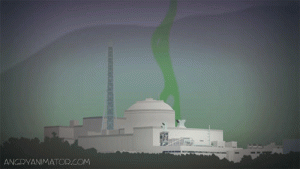 Japan Experts: Active fault runs underneath MOX fuel plant — Warnings of massive quake http://enenews.com/japan-experts-active-fault-runs-underneath-mox-fuel-plant-warnings-of-massive-quake
Title: Quake risk at Japan atomic recycling plant: experts
Source: AFP
Author: Kyoko Hasegawa
Date: December 19, 2012
Japan’s only reprocessing plant for spent nuclear fuel could sit on an active seismic fault vulnerable to a massive earthquake, experts warned Wednesday.
If regulators agree they will have to order its closure and Japan would be without any recycling capacity of its own, a government official told AFP on condition of anonymity. […]
Yasutaka Ikeda, assistant professor of geomorphology at Tokyo University, said a nearly 100-kilometre (60-mile) fault runs under the Rokkasho reprocessing plant in northern Japan.
“Even though experts’ opinions are divided on whether this fault is active or not, I think the possibility of it being an active fault is extremely high, given the evidence,” Ikeda told AFP.
“This fault could cause an 8-magnitude earthquake, so any nuclear-related facilities in the region are in danger,” he said, referring to the Shimokita Peninsula where the Rokkasho plant is located.
Mitsuhisa Watanabe, professor of geomorphology at Tokyo University, separately told Wednesday’s Tokyo Shimbun that part of an active fault runs directly under the Rokkasho plant, warning it is likely to move when the bigger fault moves. […]
Under government guidelines atomic installations cannot be sited on a fault if it is still classed as active. […]
Rokkasho Reprocessing Plant – Wikipedia:
At the same site there will also be:
A high level nuclear waste monitoring facility
A MOX fuel fabrication plant
A uranium enrichment plant
At last, Nuclear Regulatory Commission is asking hard questions, about San Onofre nuclear plant
“Edison’s design errors have led to the multi-hundred million-dollar
failure of brand new equipment which has in turn endangered the lives
and livelihoods of millions of people in Southern California,”
the NRC is asking hard questions
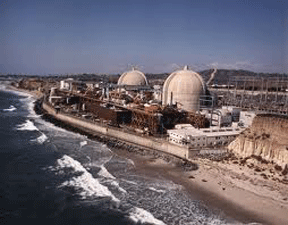 Feds do not consider San Onofre nuclear powerplant safe
http://rt.com/usa/news/san-plant-power-tubes-959/
27 December, 2012 Federal regulators have expressed
significant concern about the safety of the San Onofre nuclear power
plant, asking for more analysis on its damaged steam generators and
requesting the plant to be able to run safely at full capacity.
The power plant has been inactive since January, when a radiation leak
led to the discovery of significant damage on many of its generator
tubes. Many worried that the dangerous conditions at the plant could
lead to California’s own Fukushima-like meltdown.
Southern California
Edison, which runs the plant, has since asked for permission to
restart one of its twin reactors, Unit 2, at 70 percent power, Continue reading
An overview of the Fukushima nuclear plant situation
 Two high school girls that were affected by the disaster are launching a peace discussion forum devoted to expanding the dialogue about nuclear power and weapons. One of the young women said, “My parents’ and grandparents’ generations may be to blame for allowing the nuclear power plants, but both adults and children are responsible for thinking together about the problem.”
 Japan Continues Struggle with Aftermath from the Fukushima Nuclear Disaster http://blog.cleanenergy.org/2012/12/26/japan-continues-fukushima-struggle/
December 26th, 2012 › As 2012 draws to a close, evaluating the ongoing effects of the March 2011 Fukushima Daiichi nuclear disaster on the people of Japan is a difficult and depressing task. After having fled their homes due to the tsunami and resulting triple nuclear meltdown, 21 months later an estimated160,000 citizens still have not returned home.
Reports of illness in humans and livestock continue to underscore the far reaching and difficult to predict impacts that a nuclear accident can cause. In July, 36% of Japanese children screened were found to have abnormal thyroid growths. This fall, an illness dubbed the “Fukushima syndrome” was reported to be killing cattle near the Fukushima prefecture. Mutations are already observed inbutterflies and other insects, whose shorter life cycles allow genetic disruptions to display more quickly than in mammals or humans.

Fukushima type accident risk at Indian Point and Oconee nuclear plants
 Engineers warn: Two US nuclear plants may cause new Fukushima
http://rt.com/usa/news/two-nuclear-nrc-facilities-604/
21 December, 2012, Nuclear engineers have warned the
Senate of the threats facing two US nuclear power facilities, which
could result in enormous explosions or a Fukushima-like meltdown if
natural phenomena or weather conditions cause the facilities to fail.
Senator Joe Lieberman is the current chairman of the Senate Committee
on Homeland Security & Government Affairs, but will retire in 2013.
Two nuclear engineers have asked him to spend his last days in
Congress investigating the threats posed by two nuclear power
facilities. Continue reading
What would be the consequences of a flooded nuclear power plant?
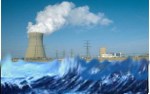
What would be the consequences were a nuclear power plant to flood?
In the case of a natural disaster like a hurricane, the direct impact on a single nuclear power station would likely be exacerbated by a cascade of indirect effects: a range of emergencies and failures unfolding throughout the surrounding area. As during Sandy, transportation would be radically curtailed with roads, bridges, tunnels, trains, and airports shut, as well as some roads blocked by floodwaters, felled trees, and large-scale debris. There could also be widespread power and water outages, fuel shortages, and downed communication lines..
Nuclear power plant flood risk: Sandy was just a warm-up Remapping Debate, By Heather Rogers Dec. 20, 2012 — As Hurricane Sandy approached the East Coast late last October, more than a dozen nuclear power plants from North Carolina stretching up to New England were in its wide-ranging path. On Oct. 29, the night that the eye of the storm made landfall near Atlantic City, New Jersey, five nuclear plants were forced to either reduce power or make emergency shutdowns.
“These facilities need to be hardened more because if they were faced with a Category 2 or a Category 3 [hurricane], it makes me concerned about whether or not they’d be able to safely shut down.” — Michael J. Reilly, National Center for Disaster Preparedness at Columbia University Continue reading
Trouble with nuclear fuel rods in Japan’s Kashiwazaki-Kariwa plant
Kyodo: Level 1 incident at Japan nuclear plant — Deformed fuel rods stuck together in pool http://enenews.com/kyodo-level-1-incident-at-japan-nuclear-plant-deformed-fuel-rods-stuck-together-in-pool
December 19th, 2012
Regulators confirm ‘level 1’ incident (on 7 level scale) at TEPCO nuclear plant in west Japan. Deformed fuel rods stuck together in pool
18 Dec 12
Title: Regulators confirm level 1 incident at Kashiwazaki-Kariwa plant
Source: Kyodo
Date: Dec. 19, 2012
Japan’s nuclear regulatory authority said Wednesday that recently confirmed trouble with fuel rods stored in a spent nuclear fuel pool at Tokyo Electric Power Co.’s Kashiwazaki-Kariwa plant is a level 1 incident on a 7-point international scale.
A pair of fuel rods was touching as a result of deformation in the bundle of fuel rods, leading the Nuclear Regulation Authority to determine that the fuel had likely been loaded to the reactor core “in an abnormal situation.” The NRA’s assessment of the incident is provisional. […]
also: Nuclear fuel rods touching — “Serious fuel failure accident” risked at Japan plant
South Korea’s nuclear power bungles
 A Year Of Nuclear Bungles, New Matilda, By Jim Green, 19 Dec 12,“……In South Korea, five engineers were charged with covering up a potentially dangerous power failure at the Kori-I reactor in May. The accident occurred because of a failure to follow safety procedures. The manager of the reactor decided to conceal the incident and to delete records, despite a legal obligation to notify the Nuclear Safety and Security Commission.
In early November, the South Korean government shut down two reactors at Yeonggwang to replace thousands of parts that had been supplied with forged quality and safety warranties. Plant owner Korea Hydro and Nuclear Power (KHNP) has acknowledged possible bribery and collusion by KHNP officials as well as corruption by firms supplying reactor parts. In late November there were further revelations and the current total stands at 8601 reactor parts, 10 firms and six reactors. Inadequate and compromised regulation has been a key contributor to the problems in South Korea’s nuclear industry — just as it was a key factor behind the Fukushima disaster in Japan.
South Korea wants to develop uranium enrichment technology (a direct route to nuclear weapons material) in violation of its commitments under the 1992 Joint Declaration on the Denuclearization of the Korean Peninsula……. http://newmatilda.com/2012/12/19/year-nuclear-bungles
Fukushima nuclear situation still critical, with “makeshift” cooling system
 Fukushima plant situation ‘volatile,’ a year after cold shutdown declared, Asahi Shimbun December 18, 2012 By NAOYA KON/ Staff Writer Workers are nowhere close to determining the state of melted fuel at the Fukushima No. 1 nuclear plant, a year after the government declared the damaged reactors were in a “cold shutdown” state.
Storage tanks at the site are nearing capacity for radioactive water. A makeshift system is still being used to cool the nuclear fuel. And leaks of contaminated water and quake-induced collapses of plant facilities remain a threat. Continue reading
Sweden: 2 aging nuclear reactors shutdown after failing safety tests
 Backup power problems put two Swedish reactors on ice – and cast an unpleasant light on age, Bellona, 18 Dec 12 Safety concerns over backup diesel power generators have forced the closure of two of the three reactors in operation at Sweden’s Oskarshamn nuclear power plant after safety tests revealed problems with one of the generators, which failed to start within specified time parameters. Charles Digges, 17/12-2012
Diesel generators are a critical failsafe against loss of coolant during a catastrophic reactor accident, as bitterly illustrated by Fukushima, where a tsunami knocked out back-up and diesel generators, resulting in a triple meltdown.
The shutdown of the reactors comes as unwelcome news to OKG, the utility that runs the plant as Sweden marshals its energy resources with the onset of the Scandinavian country’s coldest months yet to come.
Bellona general manager and nuclear physicist Nils Bøhmer said the discoveries “show that Sweden’s ageing nuclear industry is coming to a point where it can no longer reliably supply power.”….. http://www.bellona.org/articles/articles_2012/oskar_1_2
Mitsubishi faulted by nuclear watchdog, over San Onofre equipment tests
Nuclear watchdog faults Mitsubishi over San Onofre equipment tests
LA Times, December 17, 2012 Federal regulators found flaws in the process followed by Mitsubishi Heavy Industries in building and testing mock-up replacement parts for the troubled San Onofre nuclear plant.
The plant has been out of service for more than 10 months because of excessive wear on tubes carrying radioactive water, one of which leaked a small amount of radioactive steam in January, prompting the plant’s shutdown.
The tubes are part of the four massive replacement steam generator assemblies manufactured by Mitsubishi for plant operator Southern California Edison.
The replacement project cost Edison and San Diego Gas & Electric, which co-owns the plant, a combined $771 million, a cost passed on to ratepayers. A warranty on the equipment is capped at $137 million. Continue reading
Japan admits to errors in radiation data for every nuclear power plant in the country
Japan’s ‘nuclear radiation projection’ had errors http://zeenews.india.com/news/world/japans-nuclear-radiation-projection-had-errors_816717.html, December 14, 2012, Washington: The Nuclear Regulation Authority of Japan said a thorough review of its mistake-plagued projections for the spread of radiation, in a case of possible meltdown like the Fukushima crisis, turned up errors in the data for every atomic power plant in the country. Continue reading
USA’s inadequate radiation detection in overseas megaports
NUCLEAR SMUGGLING MONITORS CUT BACK Program intended to detect potential threats aimed at U.S. WND, by F. MICHAEL MALOOF WASHINGTON 14 Dec 12– The federal government is dramatically cutting back on funds to install nuclear and radiation detection equipment in overseas megaports to scan the contents of shipping containers destined for the United States, according to a report from Joseph Farah’s G2 Bulletin. Continue reading
1 This Month



19 November – Webinar – The Reality of Reprocessing
Time: 11:00 AM Pacific Time (US & Canada) / 2:00 PM Eastern / 7:00 PM UK / 8:00 PM CET
Register for the Zoom Event Here



Shut down the radiation-damaged Heysham nuclear reactors now
To see nuclear-related stories in greater depth and intensity – go to https://nuclearinformation.wordpress.com

Say No to NASA’s Reckless Nuclear Reactor on the Moon
Say No to NASA’s Reckless Nuclear Reactor on the Moon
-
Archives
- November 2026 (74)
- October 2026 (302)
- September 2026 (339)
- August 2026 (330)
- July 2026 (355)
- June 2026 (287)
- May 2026 (306)
- April 2026 (356)
- March 2026 (251)
- February 2026 (267)
- January 2026 (308)
- December 2025 (358)
-
Categories
- 1
- 1 NUCLEAR ISSUES
- business and costs
- climate change
- culture and arts
- ENERGY
- environment
- health
- history
- indigenous issues
- Legal
- marketing of nuclear
- media
- opposition to nuclear
- PERSONAL STORIES
- politics
- politics international
- Religion and ethics
- safety
- secrets,lies and civil liberties
- spinbuster
- technology
- Uranium
- wastes
- weapons and war
- Women
- 2 WORLD
- ACTION
- AFRICA
- Atrocities
- AUSTRALIA
- Christina's notes
- Christina's themes
- culture and arts
- Events
- Fuk 2022
- Fuk 2023
- Fukushima 2017
- Fukushima 2018
- fukushima 2019
- Fukushima 2020
- Fukushima 2021
- general
- global warming
- Humour (God we need it)
- Nuclear
- RARE EARTHS
- Reference
- resources – print
- Resources -audiovicual
- Weekly Newsletter
- World
- World Nuclear
- YouTube
-
RSS
Entries RSS
Comments RSS

