U.S. Nuclear Plants Vulnerable to Terrorist Drones – NRC says “not our problem”
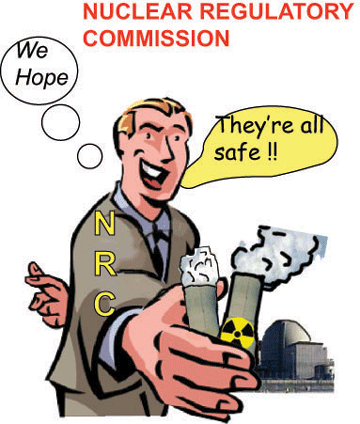 NRC Decision Leaves U.S. Nuclear Plants Vulnerable to Terrorist Drones, https://www.ucsusa.org/about/news/nrc-decision-leaves-nuclear-plants-vulnerable-terrorist-drones NRC Decision Leaves U.S. Nuclear Plants Vulnerable to Terrorist Drones, https://www.ucsusa.org/about/news/nrc-decision-leaves-nuclear-plants-vulnerable-terrorist-drones
WASHINGTON (November 4, 2019)—After a two-year review, the Nuclear Regulatory Commission (NRC) has declined to require owners of U.S. nuclear power reactors and some nuclear material processing plants to defend against unmanned aerial vehicles, commonly known as drones. As a result, commercial nuclear facilities will remain unprepared to cope with the additional capabilities that these rapidly evolving technologies could provide to terrorist groups seeking to sabotage nuclear reactors or steal weapon materials, according to the Union of Concerned Scientists (UCS). The decision was disclosed in an unclassified summary document posted on the NRC’s public document server on October 30.“The NRC’s irresponsible decision ignores the wide spectrum of threats that drones pose to nuclear facilities and is out of step with policies adopted by the Department of Energy and other government agencies,” said physicist Edwin Lyman, acting director of the UCS Nuclear Safety Project. “Congress should demand that the NRC require nuclear facility owners to update their security plans to protect against these emerging threats.”
The NRC requires nuclear power reactor owners to protect their facilities against attacks by terrorists assumed to have a defined set of capabilities known as the “design basis threat.” After the September 11, 2001, attacks on the World Trade Center in New York and the Pentagon outside of Washington, D.C., the NRC considered but ultimately rejected requiring nuclear plants to defend against attacks by jets or other types of aircraft.
The NRC argued that protecting nuclear facilities from aircraft is the responsibility of the Transportation Security Administration and other federal agencies. Rapid advancements in drone technology since then, however, have introduced new ways in which terrorists could use readily available aerial systems to defeat nuclear plant security measures that are designed only to defend against ground-based assaults and vehicles. Drones have been misused to spy on the U.S.-Mexican border, smuggle contraband into prisons, and—most recently—to attack oil processing facilities in Saudi Arabia. Drones are difficult to detect and defeat without specialized equipment.
According to an April 2019 report by the Department of Energy (DOE) inspector general, “the increasing availability and improved capabilities of small [drones] enhances the potential for use in illicit operations, including surveillance, disruption, and weaponization.” The report recommended that the DOE “use the appropriate process to update security controls based on the most recent information available concerning [drone] capabilities.” In response, the agency is revising its design basis threat policy, but the details of its revision—like the original design basis threat policy—are classified. By contrast, the NRC’s own threat assessment resulted a recommendation of no action.
The NRC summary claims that drones would not be able to exploit security vulnerabilities at nuclear reactors or other facilities or provide any surveillance capabilities beyond what potential adversaries are already assumed to have. It is true that small payload drones would not likely to be able to cause major damage by themselves to safety structures and equipment. But there are many ways in which drones could assist ground-based attackers, including delivering more weapons, explosives and other equipment to a nuclear facility’s protected areas than an attacking force could carry. Drones also could create disturbances to confuse plant security forces and disrupt their response, as well as provide real-time aerial surveillance as an attack progresses. “Many companies are developing technologies to protect critical infrastructure from drone attacks through early detection, tracking, and jamming,” said Lyman. “If the NRC were to add drones to the design basis threat, nuclear plant owners would likely to have to purchase such systems. Laws would also have to be changed to allow private facilities to disrupt hostile drone flights. But plant owners are loath to spend more on safety and security at a time when many of their facilities are struggling to compete with cheap natural gas, wind and solar. “The NRC seems more interested in keeping the cost of nuclear plant security low than protecting Americans from terrorist sabotage that could cause a reactor meltdown,” he added. “The agency needs to remember that it works for the public, not the industry it regulates.” |
|
Pilgrim Nuclear Power Station to Shrink Emergency Planning Zone
 FEMA and some states dispute the Nuclear Regulatory Commission staff’s premise that “all hazards planning” would be enough to address a nuclear accident. Planning experts recommend the planning zone remain in place. Government Technology Emergency Managdement, FEMA and some states dispute the Nuclear Regulatory Commission staff’s premise that “all hazards planning” would be enough to address a nuclear accident. Planning experts recommend the planning zone remain in place. Government Technology Emergency Managdement,
BY CHRISTINE LEGERE, CAPE COD TIMES, HYANNIS, MASS. / NOVEMBER 5, 2019
(TNS) — Despite opposition from the region’s legislators and even the Federal Emergency Management Agency, the Nuclear Regulatory Commission has voted to allow the owners of Pilgrim Nuclear Power Station to shrink the plant’s emergency planning zone from the current 10-mile radius down to its own property line. Pilgrim’s reactor ceased operation May 31. The NRC will allow elimination of the zone, which encompasses sections of Plymouth, Kingston, Carver, Marshfield and Duxbury, come April. And with that elimination will come the loss of about $2 million in annual funding for those towns, to be put toward safety training, staffing, equipment and expenses. “The exemption saves Holtec money at the cost of public safety,” Mary Lampert, president of Pilgrim Watch, said. “NRC rationalizes its decision to grant the exemption on a false assumption. They incorrectly claim that the risk of a rapidly occurring offsite radiological release is significantly lower at a nuclear power reactor that has permanently ceased operations and removed fuel from the reactor vessel. Wrong. There is far more radiation in the spent fuel pool than in the reactorcore when Pilgrim is operating.”……. A single NRC member voted against the exemption, citing a number of issues of concern, including increased possibility of an earthquake in the region. The earthquake risks at the Pilgrim site are greater than previously understood, Commissioner Jeff Baran wrote in a statement explaining his vote. In May 2014, as part of the post-Fukushima seismic hazard reevaluation, the NRC published updated ground motion response spectra for Pilgrim, Baran said. “The results revealed the potential for an earthquake at Pilgrim significantly stronger than the safe shutdown earthquake the plant was designed to handle,” Baran wrote. “In fact, the gap between the previously understood seismic risk and the updated seismic risk was larger at Pilgrim than at any other nuclear power plant in the country.” Baran said the Federal Emergency Management Agency, along with several states including Massachusetts, have disputed the NRC staff’s premise that so-called “all hazards planning” would be sufficient to address a spent nuclear fuel accident. “FEMA notes that it is ‘unrealistic’ to ‘scale up non-existent plans’ and that the resulting ‘lack of necessary equipment and shortage of trained emergency personnel could have unfortunate consequences,'” Baran wrote, citing an August letter to the NRC from Michael Casey, director of FEMA’s technical hazards division. …… , emergency planning experts have recommended the planning zone remain in place until all spent fuel on a reactor site is stored in dry casks. About 3,000 radioactive spent fuel rods remain in a massive pool at Pilgrim. U.S. Sen. Edward Markey, D-Mass, blasted the NRC’s decision to exempt Pilgrim from emergency planning requirements……… To date, every nuclear plant in the U.S. that has decommissioned has requested an exemption from the emergency planning requirements, and in every instance the NRC has granted it…….. https://www.govtech.com/em/disaster/-Pilgrim-Nuclear-Power-Station-to-shrink-emergency-planning-zone.html |
|
Australia’s bushfire risks – threat to planned 1700 km transport of nuclear wastes

“The Fire Brigade Union contradicted this view stating that everything burns under the right conditions and that an accident, particularly with a fuel tanker, could generate enough heat to burn concrete and steel containers and vaporise the waste. This would transform the waste into a form in which it presents the greatest risk to human health.
“Concrete burns, it spalls, it expands and it explodes. That is what happens to it if it is subject to fire for long enough. You can put it in concrete and you can have steel mesh holding the whole thing together, but when you apply heat, the granules grow and things start spalling, just throwing out bits of itself everywhere until, in the end, that concrete or the integrity of the structure that encases it is broken.
Britain’s Dungeness nuclear reactors -extended outages, since corrosion found in pipes
|
Reuters 31st Oct 2019, EDF’s EDF Energy has extended outages at its Dungeness B21 and B22 nuclear reactors in Britain to around the end of January, its website shows. Dungeness B-21 reactor went offline in September 2018 and was scheduled to come back online in November. That outage has now been extended to January 2020.
Dungeness B-22 reactor went offline in August 2018 and was scheduled to come back in December. That has been extended to January 31. EDF Energy is carrying out inspection and repair of steam line pipes which carry steam from the boilers to the turbine. Corrosion was
identified during previous inspections. |
|
|
Beware of secrecy over Russian Nuclear explosion, and of American nuclear dangers
Nuclear Shutdown News chronicles the decline and fall of the nuclear power industry and highlights the efforts of those working to create a nuclear free world.
Last Summer’s “Mysterious” Nuclear Explosion
As this year winds down a nuclear weapons explosion last summer still begs for our attention.
What does this incident, half way around the world in another country, have to do with the nuclear power plants in this country?
Let’s remember though, the “Atoms For Peace” program wherein the federal government encouraged (and heavily subsidized) the development of civilian nuclear reactors to produce electricity. The idea was to try to overshadow the images of the nuclear holocaust in Hiroshima and Nagasaki caused by the US.
So it is far from ironic that the nuclear explosion in question occurred on August 8, the 74th anniversary of Nagasaki’s immolation.
Novaga Gazeta also reported that an anonymous hospital worker said that “traces of Cesium 137 (which remains dangerously radioactive for 300 years) were detected in the emergency room area an hour after the patients were brought in.” Doctors and nurses had only face masks for protection, and nothing but soap solutions to decontaminate the ER.
The nearby city of Serevdinsk’s 183,000 residents were initially told to evacuate because of the radiation released by the explosion, but then the evac order was abruptly canceled. Instead they were told to stay inside and close their windows.
Authorities later claimed the disaster wasn’t as bad as the 1986 nuclear disaster in the Ukraine at Chernobyl in 1986, then ruled by the USSR.
More Fallout
Later in August it emerged that there may have been two nuclear explosions, and that actually seven people had died in the blasts.
The debacle supposedly happened while testing a new type of long range Russian nuclear powered cruise missile. Or, as unnamed US intelligence sources claimed, as reported by CNBC on August 28, it may have occurred while trying to recover one such missile from the bottom of the White Sea.
Post Script Many people are not aware that US nuclear power reactors regularly release radiation into our air and water in order to operate. You may have heard about this at the Three Mile Island plant in 1979 in Pennsylvania (whose remaining reactor just shut down) or the Millstone nuke in my home state of Connecticut.
Although this happens all the time at the nation’s 90-some nuclear plants, the public is usually not informed of these potentially carcinogenic releases. As with nuclear weapons operations, US nuclear power doings are largely carried on in secret.
After all, we wouldn’t want the enemy to find out, would we? Except, all too often, the”enemy” is us!
Sources: Fox News, foxnews.com; Moscow Times, moscowtimes.com; CNBC, cbnbc.com; Nuvaya Gazeta, nugayagazeta.ru.
U.S. Nuclear Regulatory Commission approves Westinghouse atomic fuel factory despite its leaks and spills
|
Leak-plagued nuclear plant gets blessing of federal safety regulators, despite concerns, The State, BY SAMMY FRETWELL, OCTOBER 31, 2019 Despite a five-decade history of leaks and spills at the Westinghouse atomic fuel factory near Columbia, the U.S. Nuclear Regulatory Commission is downplaying the possibility of major environmental damage at the site over the next 40 years.
But in releasing a study of the plant’s impact on the environment, the federal oversight agency drew withering criticism for not considering how past operating practices might foreshadow future factory operations. “The past predicts the future,’’ said Virginia Sanders, an eastern Richland County resident who works with the national Sierra Club. “How could you expect all of a sudden for Westinghouse to start improving their safety standards when over the years, time after time, they have had accidents at the plant?’’ The NRC’s environmental assessment is significant because it will help the agency decide whether to issue a 40-year license so the plant can continue operating. Federal regulators say the plant will have some impact on the environment, but they don’t think the damage will be substantial because many of Westinghouse’s past problems are being addressed. The report said the NRC determined that “there could be noticeable impacts to the soil, surface water and groundwater; however, the impacts will be adequately monitored and mitigated. Therefore, the NRC’s evaluation preliminarily concludes that continued operations for an additional 40 years would not have a significant impact on the environment.’’ Located on Bluff Road between Columbia and Congaree National Park, the Westinghouse fuel factory began to take a toll on the environment not long after opening in 1969, records show. Impacts to the environment date to the early 1970s, when ammonia and fluoride spilled, federal records show. The factory also is blamed for a fish kill in 1980 and for allowing toxic nitrates to seep into groundwater in the 1980s. Problems have continued in recent years, with the discovery since 2016 of radioactive leaks and the buildup of nuclear materials at the fuel factory. In the latter case, the buildup could have caused a burst of radiation near workers. Sanders and Tom Clements, a nuclear safety watchdog from Columbia, said the NRC’s assessment is hard for the agency to justify. “There were already environmental impacts and there will be in the future,’’ Clements said. “They should have not made the determination the license should be extended 40 years because the documentation doesn’t support that.’’ …… Among the leaks examined in the 2019 report was a uranium spill through a hole in the floor of the plant in the summer of 2018, as well as the discovery that leaks had also occurred in 2008 and 2011 but had not been reported by Westinghouse to the NRC. The reporting wasn’t required, but federal officials said Westinghouse should have flagged the problems to the agency. ……. https://www.thestate.com/news/local/environment/article236794528.html |
|
|
French activists broke into nuclear plant, demonstrating the risk of terrorism
 Greenpeace 28th Oct 2019, In the early hours of 12 October 2017, eight people sneaked inside the grounds of the Cattenom nuclear plant in northern France. Without much difficulty, they reached the foot of a spent fuel pool – where the still highly radioactive fuel rods are stored after use.
It was a scenario Greenpeace France had been warning about since 2001 through numerous reports, letters and speeches. France’s aging fleet of reactors is poorly protected, and not designed to withstand big impacts, such as an explosion set off by terrorists.
A loss of water from the spent fuel pools – protected by walls only 30cm thick – could lead to a massive release of radioactivity. Fortunately, the eight intruders turned out to be peaceful activists from Greenpeace France; they set off some fireworks to demonstrate their presence and then allowed themselves to be led away.
The ease with which they had penetrated alarmed the government of Luxembourg, which lies just north of Cattenom. It also finally spurred the French authorities into action; a parliamentary investigation into nuclear safety
was announced the following month. It’s a textbook example of the role of
non-violent direct action (NVDA) in a democracy, much like the recent
climate strikes.
When the authorities are sleeping at the wheel, and not
responding to polite arguments, citizen action is needed to wake them up.
In this case, it did. A happy end? Unfortunately not.
In a classic case of shooting the messenger, prosecutors have pressed for stiff penalties. In February 2018, a court in Thionville sentenced the ‘Cattenom nine’ – the eight activists and a Greenpeace France employee. It imposed a 2-month jail sentence on two of the individuals, and suspended sentences on the
rest. It also ordered Greenpeace France to pay €50,000 to the power
company, EDF as ‘moral damages’.
Regulators to review Fukushima Daiichi plant work
Regulators to review Fukushima Daiichi plant work, NHK. 30 Oct 19, Japan’s nuclear regulators plan to look into work management at the crippled Fukushima Daiichi nuclear plant, which is being decommissioned following the 2011 accident.
The move follows a series of mistakes and violations. In June this year, smoke came out when workers misconnected power lines at the No.5 and No.6 reactors.
It has also come to light that water servers were placed for the past four years in restricted areas where radioactive materials are stored.
The commissioners at the Nuclear Regulation Authority on Wednesday certified both incidents as safety violations.
In addition, work to remove nuclear fuel from the No.3 reactor’s storage pool has been delayed due to repeated mechanical problems…..https://www3.nhk.or.jp/nhkworld/en/news/20191030_40/
Environmentalists concerned: Turkey Point nuclear station could be allowed to operate for 80 years
 FPL on the way to licensing Turkey Point nuclear plant for another 20 years, By MARCIA HEROUX POUNDS, SOUTH FLORIDA SUN SENTINEL , OCT 29, 2019 Turkey Point nuclear power plant, which is located about 20 miles south of Miami and helps power Florida Power & Light’s electric grid, has gotten a green light for extending its license.
The staff of the Nuclear Regulatory Commission recommended Monday that the commission approve the extension of Turkey Point for another 20 years, given its “limited” environmental impact. Renewing the licenses, as requested by FPL, “would not be unreasonable,” the staff says in its favorable report.
Juno Beach-based FPL said it was “pleased with this step forward,” which would allow FPL to operate the nuclear power plant for as long as 80 years total. If the extensions are approved, Turkey Point could be the oldest nuclear power plant in the country, according to data by the Nuclear Regulatory Commission.
……… Environmentalists have objected to extension of nuclear licenses or new plants due to concerns about climate change and environmental issues.
In 2018, FPL requested that customers pay more than $100 million to clean up environmental issues caused by Turkey Point’s cooling tanks leaking into Biscayne Bay. In April of this year, the Florida Supreme Court sided with the Florida Public Service Commission in allowing FPL to collect from customers for the cleanup.
If the license extension is granted, the twin nuclear units 3 and 4 at Turkey Point could be operated through 2052 and 2053. That could also have an impact on other nuclear power plants built in the 1970s and 1980s that are looking to extend their licenses. …….
FPL also has proposed two new nuclear power plants at the Turkey Point site, and has received a license. “We’re not planning to build a new nuclear plant at this time,” Silagy told the Sun Sentinel’s Editorial Board. https://www.sun-sentinel.com/business/fl-bz-fpl-turkey-point-extension-20191029-eqspitkaa5bkbc2td4a6nl25di-story.html

U.S. Military wants more rules for turbines near nuclear missiles
Military wants more rules for turbines near nuclear missiles, Star Tribune By JAMES MacPHERSON Associated Press, OCTOBER 29, 2019 —BISMARCK, N.D. — The military wants North Dakota and four other states with nuclear missile arsenals to consider introducing new rules aimed at preventing conflicts between wind turbines and helicopters that provide security at launch facilities.
Department of Defense and Air Force officials outlined their concerns in a letter before meeting Tuesday with North Dakota lawmakers and regulatory officials.
“Wind turbine development near launch facilities and missile alert facilities compromise the use of military helicopters to provide overhead security in sensitive locations,” the letter said…… http://www.startribune.com/military-wants-more-rules-for-turbines-near-nuclear-missiles/564045252/
Warning on Fukushima fallout for Tokyo 2020 Olympians,
Warning on Fukushima fallout for Tokyo 2020 Olympians, https://www.theaustralian.com.au/sport/olympics/warning-on-fukushima-fallout-for-tokyo-2020-olympians/news-story/ed7bf1f0415ca7eb05ce9587b6d1989f, VICTORIA LAURIE. SENIOR REPORTER. OCTOBER 29, 2019
The Australian Olympic Committee has been urged to inform its athletes and team members about the ongoing health effects of the 2011 Fukushima nuclear reactor disaster for those attending the 2020 Tokyo Games.
 Tilman Ruff, a public health expert who co-founded the Nobel Peace Prize-winning International Campaign to Abolish Nuclear Weapons (ICAN) in Melbourne, said he had written to the AOC to warn that levels of radioactivity in certain areas could be above the recommended maximum permissible exposure level. He said the Japanese Olympic Committee planned to host baseball and softball competitions and part of the torch relay in Fukushima City, 50km away from the ruins of the Fukushima Dai-ichi nuclear power plant.
In 2011, multiple nuclear meltdowns at the damaged facility caused radioactivity to leak out across Japan and the Pacific.
“It was a catastrophe comparable only to the nuclear meltdown of Chernobyl,” he said. While contamination was not as severe as at Chernobyl, “it was widespread and persists”.
At least 50,000 residents have not yet been able to return to the most affected areas in Fukushima prefecture. “The Japanese government is making a concerted effort to present the Fukushima nuclear disaster as over and effectively dealt with in the lead-up to the Olympics. Some of these efforts are misleading and should not be accepted at face value,” Dr Ruff said.
He said thyroid cancers had notably increased among young people in Fukushima, with a total of about 200 cases.
He has made several visits to Fukushima since 2011, the latest in May when he provided radiation health advice to the Fukushima prefectural government.
Dr Ruff said he then wrote to the AOC urging it to “properly inform and safeguard the best interests of the Australian staff and team, and their accompanying families, especially women who may be pregnant and young children”.
He said short-term visits to areas contaminated by radioactive fallout “now involve low to minimal risk”.
“However, if any (AOC) members or athletes plan to be based in Fukushima or neighbouring contaminated prefectures for weeks or months, they should be informed about the health risks of radiation exposure,” Dr Ruff said.
International physician groups have criticised the Japanese government’s decision shortly after the 2011 disaster to increase the maximum permissible radiation dose for Japanese citizens from one to 20 millisieverts. “Eight years later, it has not reversed that decision,” Dr Ruff said. “No other government in the world has ever accepted such a high level of radiation beyond the immediate emergency phase of a nuclear disaster for its citizens.”
An AOC spokesman said Tokyo 2020 provided regular updates to the IOC regarding the situation. “We have been given assurances that radiation levels in Fukushima City are safe, noting that the IOC Co-ordination Team has made several visits to the region and that ongoing monitoring is conducted independently of the Japanese government,” the spokesman said.
The hazards of nuclear submarines
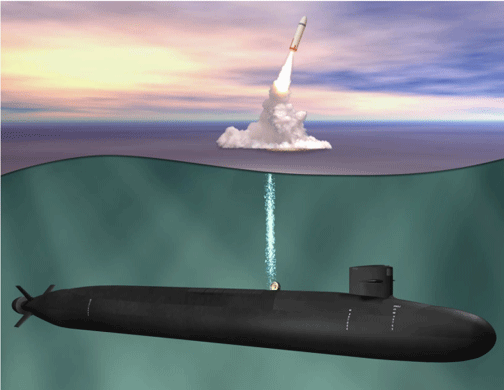
In 2019, a new set of nuclear dangers emerged for Southasia. The growing danger was underscored during the military crisis between India and Pakistan in February 2019, when India put one or more of its nuclear submarines on “operational deployment mode.” During the crisis, the Pakistani Navy claimed to intercept an Indian submarine. No one has confirmed if this interception involved an Indian submarine carrying nuclear weapons. With India and Pakistan on an accelerated programme of acquiring and developing nuclear submarines, Southasia needs to pay urgent attention to the risks of nuclear accidents at sea.
The expansion of nuclear operations to the sea also raises issues about who has the ability to authorise the use of these weapons, especially in a crisis. This is of particular concern in the case of India because it has already deployed such weapons. According to a November 2018 announcement by Prime Minister Narendra Modi, the Arihant nuclear-powered submarine successfully completed its maiden “patrol”.
A further source of concern is the August 2019 announcement by India’s defence minister to the effect that the country’s ‘No First Use’ (NFU) policy – which pledges not to attack with nuclear weapon unless attacked first – “would depend on the circumstances.” His comments, made during a period of increased tension between India and Pakistan following the amendment to Article 370 of India’s Constitution conferring special status to Jammu & Kashmir, underscore these risks.
India’s nuclear submarines……… Strategic competition with China in the Indian Ocean may be another factor. Serving and retired members of India’s Navy publicly express concerns about the deployment of Chinese submarines, warships and tankers in the Indian Ocean.
India’s growing arsenal also makes it a more valuable ally for the United States in its efforts to deal with the growth in China’s political and military power. For some time now, the US and India have been conducting joint naval exercises.
Pakistan’s naval force
Pakistan, for its part, announced the setting up of a Naval Strategic Force Command in 2012. Pakistan’s Navy has started preparing to put nuclear-armed cruise missiles on conventional submarines. The cruise missile is expected to be the 450-kilometer range Babur, which had a successful underwater test launch in 2018. There are reports that Pakistan is seeking to develop or acquire a nuclear-powered submarine…..
Submarine accidents
Almost all the countries operating nuclear-powered or nuclear-armed submarines have experienced accidents, often with significant loss of life and the spread of radioactivity in the environment. There have been over 40 accidents involving nuclear-powered submarines, claiming a total of over 650 lives. Of these accidents, more than half involved Soviet/Russian submarines resulting in over 400 deaths. The United States comes next, with at least a dozen submarine accidents leading to well over 200 deaths.
Two accidents have involved India’s nuclear submarines. …….
It would be unreasonable to expect that no more accidents involving nuclear submarines would ever take place. Nuclear submarines involve many technologies that are susceptible to a range of accidents affecting the submarine, nuclear reactor, missiles and nuclear weapons. All of these are operating under challenging conditions: deep under water, with limited supplies of air and water, possibly under attack. None of these factors is likely to change…….. Should a naval nuclear-reactor accident occur, especially at or near a naval base, coastal city or town the consequences could extend far beyond the vessel and its crew……
Pathways to war
The introduction of nuclear armed submarines, whether diesel or nuclear-fuelled, increases the likelihood of conventional conflicts escalating to a nuclear one. Any use of nuclear weapons would have devastating consequences, especially if the use of nuclear weapons by one country sets off a nuclear response from the other side.
In a military crisis, nuclear armed submarines increase the potential for nuclear war because they open up new risk pathways. The Australian strategist Desmond Ball pointed out in 1985 that “the sea is the only area where nuclear weapon platforms [of adversary states] … actually come into physical contact” and this contact can lead to accidents from several kinds of what seem to be typical naval operations.
There have already been incidents of Indian and Pakistani naval platforms coming into physical contact, for example in 2011, when the Pakistani vessel PNS Babur brushed past India’s INS Godavari. Contact between Navy forces from India and Pakistan might also result from deliberate attempts to attack submarines. Both countries are known to be acquiring anti-submarine warfare capabilities.The consequences of such events could be worse if submarines come into contact with each other during periods of heightened tensions or crises.
During a crisis, there may be inadvertent attacks on submarines carrying nuclear weapons, because these are intermingled with submarines carrying only conventional weapons. One notable instance occurred during the Cuban Missile Crisis, when US ships used practice depth charges against Soviet nuclear-armed submarines. This almost led to the use of nuclear weapons by the Soviet submarine.
Challenges to controlling nuclear weapons
A significant new challenge resulting from the deployment of nuclear weapons at sea is managing command and control. To the extent that such things are publicly known, India and Pakistan were believed to keep their nuclear weapons on land separate from the delivery vehicles, be they missiles or aircraft. This separation makes it harder for the weapons to be used without proper authorisation. With submarines armed with nuclear weapons at sea, this separation may not be possible and so the risk of unauthorised use is greater.
At the same time, one purpose of the nuclear-armed submarine is to be a final fail-safe means of nuclear attack even if a country’s political leadership is killed and its cities destroyed. To serve this role, the nuclear weapons on the submarine cannot rely on timely launch orders from political authorities. A further problem for submarines is that they are supposed to remain hidden from the enemy. Constant communication from the submarine to the military or civilian leadership may make it easier to detect. All of this means that during the time of a crisis, the personnel in a nuclear submarine might be the ones making decisions on whether or not to use nuclear weapons.
Southasians need to consider how they feel about trusting their lives in some future crisis to the restraint of Indian or Pakistani submariners far from home and fearful that their vessel is under attack, trying to decide about launching their nuclear missiles in a ‘use them or lose them’ scenario. The consequences would be devastating.
~Zia Mian is co-director of Princeton University’s Program on Science and Global Security, where he also directs the Project on Peace and Security in South Asia.
~M V Ramana is the Simons Chair in Disarmament, Global and Human Security at the Liu Institute for Global Issues in the School of Public Policy and Global Affairs at the University of British Columbia in Vancouver, Canada.
~Abdul H Nayyar is a physicist and a founder and former President of the Pakistan Peace Coalition, a national network of peace and justice groups. https://himalmag.com/nuclear-dangers-of-the-naval-kind-2019/?fbclid=IwAR0G8NZSV5ANg7Ag7KcuJU_80iv3pNJiqb6E_T12sylV9BaJWIvcZ3Vb_j0
 |
ReplyForward
|
Why nuclear reactors are the perfect missile target in the Middle East, or anywhere, really
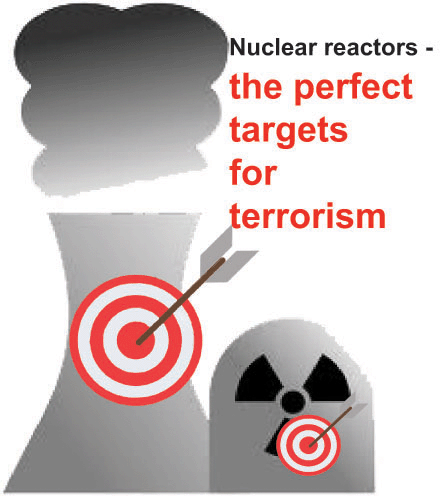
Saudi Arabia has plans to build an array of large nuclear power plants. Next door, the United Arab Emirates is spending $20 billion to complete four commercial reactors at Barakah. Egypt and Turkey both have begun constructing two massive Russian-designed nuclear power plants. Meanwhile, Iran has two operating reactors and has begun constructing two more. After Iran’s Sept. 14 missile attack against Saudi Arabia, though, all of these plants risk being wiped out.
Precision guided missiles are the reason why. Shortly after the Iranian attack on Saudi Arabia, pictures revealed each of the oil tanks struck at Abqaiq were hit in the exact same spot. The missiles’s estimated accuracy was one meter. That makes even the hardiest of large reactors easy marks. Rather than target the most protected part of the plant, the large concrete containment building covering the reactor’s core, accurate missiles can put key auxiliary reactor facilities at risk.
One such aim point is the power plant’s emergency electrical diesel generator building. Knock the generators out and you deprive the reactor of emergency backup power needed to keep its safety and coolant pump systems operating when external, grid-supplied electricity is cut off by blackouts, storms, or attacks.
Then, there are the main electrical power lines coming into the plant. Hit both of these and the emergency diesel backup generators and you rob the plant’s coolant pumps and safety systems of all power. Reactor core meltdowns and fuel fires in the reactor’s spent fuel storage pond are assured (similar to Fukushima).
Yet, another aim point is the reactor’s control room, which is often located outside the reactor’s containment walls. Knock it out and you lobotomize the plant, which again will set the reactor on a meltdown trajectory.
Finally, there’s the reactor’s spent fuel storage pond building. If it is hit and subsequently drained of coolant, the spent fuel it contains will catch fire, risking a major release of radioactivity.
How large of a release? The U.S. Nuclear Regulatory Commission estimated a spent fuel fire at a typical power plant would likely discharge 100 times as much damaging radiation as was spread in the Fukushima accident. Accordingly, the Nuclear Regulatory Commission projected a desired evacuation area more than 700 times larger than what the Fukushima accident required.
Some nuclear reactor owners recognize the risks of aerial attacks. Belarus just announced its deployment of modern air and missile defenses to counter possible military attacks against its new nuclear plant. Iran and Algeria have air-defended their reactors, as has Israel. UAE officials also have suggested they have such systems.
But will they work against the kind of high-accuracy missiles Iran fired at the Saudis? In the September attack, all 25 of the low-flying attack drones and missiles flew undetected. None of Riyadh’s air defenses (which included U.S. Patriot, German Skyguard, and French Shahine systems) engaged.
Yet, some experts doubt any current air defense system could do any better. The Pentagon’s top policy official and Israel’s prime minister were both rattled by the Saudi attack. The United States publicly warned that NATO currently can’t cope with such low-flying missiles. Israeli Prime Minister Benjamin Netanyahu called for a crash multibillion-dollar Israeli air defense development program to deal with them. Securing such defenses won’t be easy.
In the meantime, Middle Eastern states need more large reactors like a hole in the head. That goes for Iran, Turkey, Egypt, the UAE, Jordan, Morocco, and Algeria, as well as Saudi Arabia. In fact, no one in the natural gas and the sun-drenched Middle East needs nuclear power. Renewable and gas-fired electricity are much cheaper, quicker to build, and far less provocative…..https://www.washingtonexaminer.com/opinion/the-ultimate-middle-east-missile-target-nuclear-reactors
Columbia nuclear fuel factory in trouble again, with safety problems
The Westinghouse nuclear plant discovered last week that it had a device in place that was not adequate to prevent uranium from leaking into chemical supply drums at the site, federal records show.
That’s potentially significant because the drums were in a “non-favorable’’ position, which under certain circumstances could increase chances of a radiation burst inside the 1,000-employee plant.
The Nuclear Regulatory Commission is looking into the matter, reported by Westinghouse to the agency Oct. 16. Westinghouse shut down part of the plant where the improper equipment was found, a spokesman for the NRC said this week………
The nuclear fuel factory, one of only three of its kind in the country, has a long history of incidents, including events in which some workers were exposed to radiation or injured. But concerns have intensified in recent years among people who live in eastern Richland County, near the plant.
Since 2016, the facility has run afoul of federal regulators for allowing uranium to build up in an air pollution control device, leaking uranium through a hole in the plant floor and failing to notify authorities of historic leaks on the property. This past summer, federal officials learned that water had dripped through a rusty shipping container onto a barrel of nuclear waste, causing a leak into the ground. Officials also learned about a small fire this summer that erupted in a container that held nuclear material.
Groundwater beneath the site is polluted with an array of toxins, including nitrate, solvents and nuclear materials, dating as far back as the 1980s. Neighbors near the plant are leery, with some saying they don’t trust Westinghouse to safeguard the environment. The company has pledged to do better.
Westinghouse’s plant supplies fuel rods for atomic power plants across the country. Located between Interstate 77 and Congaree National Park, the 550,000-square-foot factory has been a key part of the Columbia economy since opening in 1969. The plant employs about 1,000 people. Operators are now seeking to renew a federal license, as well as state discharge permits. https://www.thestate.com/news/local/environment/article236495448.html
USA has 90 old nuclear reactors unreinforced and unsupervised
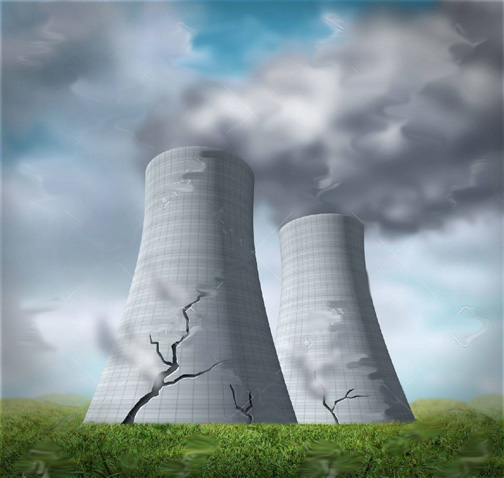 Dr W. 20 Oct 19, Anyone of dozens of reactors, in america could explode in the next year because they are embrittled deteriorating , more than 20 or 30 yers old and completely unsupervised.
Waterford in La was damaged by massive flooding from the Midwest USA and 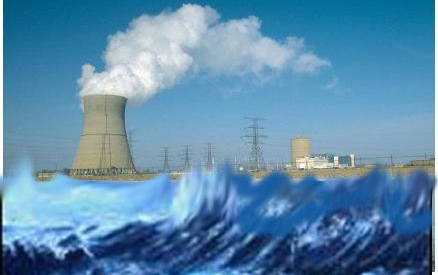 the last Hurricane.
8 reactors in Florida, Tennessee and Georgia could go with the Tropical storm currently pounding them, since hurricane Michael.
 Diablo Canyon was severely damaged by a 7.0 earthquake in southern california in the last few months. It was damaged, embrittled and crumbling before that.
STP has no backuup . It has a cracked fuel pool.
Brunswick in carolina has damaged containment multiple leaks and no access to aome areas, after hurricane maria.
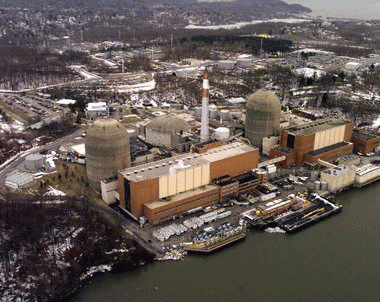 Indian point is at the brink of melltdown by New York City because it is so old and it has had so many transformer fires. It continues to leak tritium like a sieve by New York City.
Davis Besse, Fermi, Oyster Creek all have holes in their containtment.
All 90 shitty old reactors unreinforced and unsupervised under fuko the clown, and the brain damaged coked-out fairy Rick Perry. The other 6 in flood and earthquake zones along with th 90 other, very old death machines. Fuko is refusing to cleanup santa susana and hanford now. Fuko is responsible for Davis Besse fuko is allowing radioactive food to come from Japan. Fuko is responsible for the nuclear catastrophes at santa susana and idaho nuclear laboratory, in the past two years . Fuko is responsible for the nuclear explosion in russia recently by abrogating nuclear arms treaties and massively escalating nuclear arms proliferations and a new nuclear arms race.. Fuko is responsible for upcoming nuclear catastrophe in the USA in the next 6 months.
1 This Month



26 September – International Day for the Total Elimination of Nuclear Weapons


PLEASE OPPOSE HR 8255 AND S.3639 – bills would accelerate satellite deployment, with no environmental review or safeguards – https://ncstd5li.quorum.us/campaign/169331/
To see nuclear-related stories in greater depth and intensity – go to https://nuclearinformation.wordpress.com
-
Archives
- September 2026 (257)
- August 2026 (330)
- July 2026 (355)
- June 2026 (287)
- May 2026 (306)
- April 2026 (356)
- March 2026 (251)
- February 2026 (267)
- January 2026 (308)
- December 2025 (358)
- November 2025 (359)
- October 2025 (375)
-
Categories
- 1
- 1 NUCLEAR ISSUES
- business and costs
- climate change
- culture and arts
- ENERGY
- environment
- health
- history
- indigenous issues
- Legal
- marketing of nuclear
- media
- opposition to nuclear
- PERSONAL STORIES
- politics
- politics international
- Religion and ethics
- safety
- secrets,lies and civil liberties
- spinbuster
- technology
- Uranium
- wastes
- weapons and war
- Women
- 2 WORLD
- ACTION
- AFRICA
- Atrocities
- AUSTRALIA
- Christina's notes
- Christina's themes
- culture and arts
- Events
- Fuk 2022
- Fuk 2023
- Fukushima 2017
- Fukushima 2018
- fukushima 2019
- Fukushima 2020
- Fukushima 2021
- general
- global warming
- Humour (God we need it)
- Nuclear
- RARE EARTHS
- Reference
- resources – print
- Resources -audiovicual
- Weekly Newsletter
- World
- World Nuclear
- YouTube
-
RSS
Entries RSS
Comments RSS
 nuclear-news