Indonesia warned on dangers of nuclear power, advantages of renewable energy
|
Indonesia should focus on renewable energy, not nuclear, activists say
A. Muh. Ibnu Aqil, The Jakarta Post, Jakarta / Fri, March 13, 2020
Activists are warning the government to steer clear of building nuclear power plants, citing safety concerns and urging Indonesia to focus on renewable energy instead. A Greenpeace Indonesia official, Satrio Swandiko, said Indonesia should heed the lessons of the Fukushima Daiichi nuclear power plant disaster in Japan, which was caused by an earthquake and tsunami in March 2011. Greenpeace’s Japan chapter surveyed Fukushima city, as well as the nearby towns of Naraha and Okuma in Fukushima prefecture in October and November 2019. In Fukushima’s city center, Greenpeace found at least 45 radioactive hot spots — 11 of which had radiation levels equal to and even above the Japanese government’s decontamination target of 0.23 microSieverts per hour. It showed that the impact of the nuclear meltdown continued years after the incident. “Indonesia has a high risk of… (subscribers only) https://www.thejakartapost.com/news/2020/03/12/indonesia-should-focus-on-renewable-energy-not-nuclear-activists-say.html |
|
Westinghouse nuclear reactors – a very poor deal for India
Pushing the wrong energy buttons, https://www.thehindu.com/opinion/op-ed/pushing-the-wrong-energy-buttons/article30965454.ece?fbclid=IwAR1ymOL6TLlSxlUKkVVSL6_ukPPeiSzDlI_JM-He3CMG2qBD4HaBU0vezog, M.V. Ramana, Suvrat Raju, MARCH 03, 2020
The idea of India importing nuclear reactors is a zombie one with serious concerns about their cost and safety
Red flags in the U.S. deal
Because of serious concerns about cost and safety, the two organisations should have been told to abandon, not finalise, the proposal.
Indeed, it has been clear for years that electricity from American reactors would be more expensive than competing sources of energy. Moreover, nuclear reactors can undergo serious accidents, as shown by the 2011 Fukushima disaster. Westinghouse has insisted on a prior assurance that India would not hold it responsible for the consequences of a nuclear disaster, which is effectively an admission that it is unable to guarantee the safety of its reactors.
The main beneficiaries from India’s import of reactors would be Westinghouse and India’s atomic energy establishment that is struggling to retain its relevance given the rapid growth of renewables. But Mr. Trump has reasons to press for the sale too. His re-election campaign for the U.S. presidential election in November, centrally involves the revival of U.S. manufacturing and he has been lobbied by several nuclear reactor vendors, including  Westinghouse, reportedly to “highlight the role U.S. nuclear developers can play in providing power to other countries”. Finally, he also has a conflict-of-interest, thanks to his son-in-law and adviser, Jared Kushner, who accompanied him during the India visit.
In 2018, the Kushner family’s real-estate business was bailed out by a Canadian company that invested at least $1.1-billion in a highly unprofitable building in New York. Earlier that year, Brookfield Business Partners, a subsidiary of that Canadian company, acquired Westinghouse Electric Company. It violates all norms of propriety for Mr. Kushner to be anywhere near a multi-billion dollar sale that would profit Brookfield enormously.
What renewables can offer
Analysts estimate that each of the two AP1000 units being constructed in the U.S. state of Georgia may cost about $13.8 billion. At these rates, the six reactors being offered to India by Westinghouse would cost almost ₹6 lakh crore. If India purchases these reactors, the economic burden will fall upon consumers and taxpayers. In 2013, we estimated that even after reducing these prices by 30%, to account for lower construction costs in India, the first year tariff for electricity would be about ₹25 per unit. On the other hand, recent solar energy bids in India are around ₹3 per unit. Lazard, the Wall Street firm, estimates that wind and solar energy costs have declined by around 70% to 90% in just the last 10 years and may decline further in the future.
How safe?
Nuclear power can also impose long-term costs. Large areas continue to be contaminated with radioactive materials from the 1986 Chernobyl accident and thousands of square kilometres remain closed off for human inhabitation. Nearly a decade after the 2011 disaster, the Fukushima prefecture retains radioactive hotspots and the cost of clean-up has been variously estimated to range from $200-billion to over $600-billion.
The Fukushima accident was partly caused by weaknesses in the General Electric company’s Mark I nuclear reactor design. But that company paid nothing towards clean-up costs, or as compensation to the victims, due to an indemnity clause in Japanese law. Westinghouse wants a similar arrangement with India. Although the Indian liability law is heavily skewed towards manufacturers, it still does not completely indemnify them. So nuclear vendors have tried to chip away at the law. Instead of resisting foreign suppliers, the Indian government has tacitly supported this process.
Starting with the Tarapur 1 and 2 reactors, in Maharashtra, India’s experiences with imported reactors have been poor. The Kudankulam 1 and 2 reactors, in Tamil Nadu, the only ones to have been imported and commissioned in the last decade, have been repeatedly shut down. In 2018-19, these reactors produced just 32% and 38%, respectively, of the electricity they were designed to produce. These difficulties are illustrative of the dismal history of India’s nuclear establishment. In spite of its tall claims, the fraction of electricity generated by nuclear power in India has remained stagnant at about 3% for decades.
The idea of importing nuclear reactors is a “zombie idea” that, from a rational viewpoint, should have been dead long ago. In fact an earlier plan to install AP1000s in Mithi Virdi, Gujarat was cancelled because of strong local opposition. In 2018, Gujarat Chief Minister Vijay Rupani declared that the reactors “will never come up” in Gujarat. The Prime Minister should take a cue from his own State and make a similar announcement for the rest of the country.
Nuclear – a failing technology, example Canada’s risky CANDU reactors
Ask yourself: Would we build a massive nuclear power station in the middle of Canada’s largest urban area today? The answer, of course, is a common sense “no.”
It’s common sense because nuclear energy, despite its boosters’ assurances, is not without risk. And while the risk of something going wrong may be small, the consequences could be catastrophic. Just ask the people of Japan.
There is a persistent myth that there is something “special” about CANDU (Canada’s nuclear) technology. But that’s just wishful thinking. CANDU’s are just as prone to risk as any other type of system for splitting atoms.
In fact, the inability of nuclear engineers to address some of the risks built into the CANDU process led to the shelving of both the CANDU 6 “advanced” reactor design and the Maple small reactors that were to supply medical isotopes (a role that is now being increasingly filled by non-nuclear technologies). Those failures cost us billions in wasted taxpayer dollars.
Furthermore, with their miles and miles of corrosion-prone piping and complex designs, CANDUs are notoriously hard to maintain, and all our reactors have had to undergo significant rebuilding well before reaching the end of their promised lifetimes………
The total radioactivity in Pickering’s spent nuclear fuel is 200 times greater than the total radiation released to the atmosphere by the Fukushima accident in 2011.
Maybe the risk involved in storing 15,000 tonnes of radioactive waste next to the source of our drinking water and surrounded by millions of people would be worth it if we had no alternatives. But we have plenty of options to keep our lights on and our beer cold. What we don’t have is any viable solution for the long-term storage of highly radioactive waste that will have to be kept absolutely secure for hundreds of thousands of years.
There’s no shortage of happy talk about deep geologic waste disposal or even miraculous waste-consuming mini breeder reactors (a technology long since dismissed by countries around the world due to its horrendous risk profile). What you won’t find are any actual operational solutions — or even any ready-to-implement plans on the near horizon.
And then there’s the danger to your wallet. Nuclear power — with risks so huge that no commercial insurance industry will touch it for any amount of premium — is no bargain. Today, Ontario Power Generation is charging 9.5 cents per kilowatt hour for nuclear power; within 5 years that will jump to 16.5 cents as OPG deals with the huge cost of rebuilding Darlington’s reactors.
That is three times the cost of renewable power we could secure from Quebec, twice what Ontario was paying for wind power (and about equal to solar) four years ago, and eight times what we pay to help our industries and businesses improve their energy efficiency and reduce their need for power (and their bills).
So, the calculus is simple. On one hand we have a fading technology — nuclear now generates half the power it did worldwide 10 years ago — with rising costs and security concerns, and a long history of bringing in projects behind schedule and massively over budget.
On the other, a 100 per cent renewable system where costs continue to plummet, technology — including storage — is leaping ahead, and safety is about making sure workers wear harnesses, not radiation monitors. Which one would you choose for your neighbourhood?
Hanford’s radioactive underground structures likely to collapse
|
Otherwise, the U.S. Department of Energy has concluded the structures on the Hanford Nuclear Reservation could fail and release radioactive contamination, the Tri-City Herald reported Tuesday. “A number of structures are over-stressed and at risk of age-related failure, which could result in a release of contamination with impacts to human health and the environment,” DOE said in a letter last week to the Environmental Protection Agency, which regulates nuclear waste at Hanford.
The Hanford site, located near Richland, Washington, for decades made plutonium for nuclear weapons. The sprawling site for the past 30 years has been engaged in cleaning up a massive amount of radioactive waste left over from making plutonium. Two of the underground structures, a trench and a tank, are estimated to be contaminated with a combined 170 to 255 pounds of plutonium.
DOE could award a contract for grouting as soon as March, according to the letter. After the partial collapse of a waste storage tunnel at Hanford’s PUREX plant in 2017, DOE and its contractor CH2M Hill Plateau Remediation Co. analyzed other old and contaminated structures to determine if they were at risk of collapsing. They determined that the three below-ground structures at the Plutonium Finishing Plant presented the highest risk. Hanford Challenge, a Seattle-based Hanford watchdog group, does not object to the grouting as a short-term solution, but it should not be a substitute for complete cleanup, said Tom Carpenter, executive director..
|
|

Terrorism risks in Pakistan’s upgraded nuclear weapons
Pakistan’s Nuclear Weapons Get a Longer Range and Greater Precision
Pakistan successfully test-fired a new version of its Ra’ad ii nuclear-capable air-launched cruise missile on February 16, in the latest sign of the nation’s thermonuclear weapons advancement.
The Pakistan military’s Inter-Services Public Relations (ispr) said in a statement that the new version of the Ra’ad ii can travel up to 375 miles, nearly twice the range of the earlier model. It noted that the missile is “equipped with state-of-the-art guidance and navigation systems ensuring engagement of targets with high precision.” The combination of the longer range and the precision navigation “significantly enhances” the military’s “air delivered strategic standoff capability on land and at sea,” the ispr said…….
Pakistan has steadily developed more powerful, more compact and more numerous nuclear warheads—and, as evidenced by the new Ra’ad ii variant, more deft systems to deliver them.
Meanwhile, parts of Pakistan have become hotbeds of intensifying Islamic radicalism, which calls the security of these unfathomably destructive weapons into question. “Pakistan is the most dangerous country in the world,” Michael Morell, a former acting Central Intelligence Agency director, told Axios in 2018. “[A]nti-state jihadist extremism is growing in Pakistan, creating the nightmare society down the road: an extremist government in Islamabad with nuclear weapons.”
The Pakistani military has control over the nation’s 70 to 90 nuclear weapons. But the military routinely works with some of the most dangerous terrorist groups on the planet, including the ruthless Haqqani branch of the Afghan Taliban. The Brookings Institution noted, “Pakistan has provided direct military and intelligence aid” to the Haqqani, which has resulted in “the deaths of U.S. soldiers, Afghan security personnel and civilians, plus significant destabilization of Afghanistan.” …….. https://www.thetrumpet.com/21979-pakistans-nuclear-weapons-get-a-longer-range-and-greater-precision
Poor quality nuclear spent fuel casks at Pilgrim Nuclear Power Station
 Push for better storage of spent Pilgrim Nuclear Power Station fuel, Cape Cod Times, Christine Legere Feb 23, 2020
Citizen activists in Barnstable County communities will ask voters at spring town meetings, or via local election ballots, to support an advisory question that would direct Gov. Charlie Baker and state legislators to require that the radioactive waste is stored in “better quality” dry casks than those planned for use, and that the casks are protected by earthen berms or within enclosures with heightened security.,
The Cape Downwinders wrote the advisory question.
“Fifty percent of Americans live within 50 miles of a nuclear power plant,” Turco said. “Safety is a right. Our petition is to raise consciousness: educate the public about ongoing issues at Pilgrim.”
The selectmen in Orleans and Brewster voted to put the advisory question on their respective spring election ballots, Turco said. In Bourne, the question will go on the town meeting warrant.
Other Barnstable County communities will be presented with the advisory in the coming weeks.
Entergy Corp., Pilgrim’s longtime owner, sold the plant to Holtec International, a New Jersey-based company that will handle decommissioning, spent fuel management and site cleanup.
Turco and other Pilgrim critics have complained that Holtec has a conflict of interest since the company uses dry casks that it manufactures. The Holtec Hi-Storm 100s the company uses are concrete-encased stainless steel canisters that are a little over a half-inch thick.
“That’s just three-eighths of an inch thicker than a Yeti cup,” Turco said.
There is no way to monitor the steel canisters once they are sealed, critics say, and there is no aging management plan.
Concern also has been expressed over Holtec’s plan to store spent fuel on a concrete pad just a short distance from a well-traveled road. A vanity fence, rather than earth berms or enclosures, will block the view from the street.
“In this day and age, Pilgrim is an open door for any bad actors who want to cause serious damage to our country,” Turco said. “Nuclear waste is a predeployed nuclear weapon. Its safe storage is being ignored.”………
tate Attorney General Maura Healey filed a motion to intervene in the license transfer several months ago, but the motion remains under review by the Nuclear Regulatory Commission.
Frustrated by the lack of action, Healey sued the NRC last fall in U.S. District Court for approving the transfer of Pilgrim’s license from Entergy Corp. to Holtec International without first listening to what state officials and the public had to say about it. The case is pending.
Healey contends that Holtec is inexperienced in decommissioning and will likely run out of money before the job is done. Holtec will use the plant’s decommissioning trust fund, which contains $1.1 billion in ratepayer money.
The Nuclear Decommissioning Citizens Advisory Panel, which is made up of local officials, representatives from state agencies and members of the public, has been frustrated by Holtec’s lack of response during monthly meetings regarding decommissioning and spent fuel.
Holtec’s continuing refusal to answer the advisory panel and the public’s questions about the safety and expected longevity of the company’s dry cask storage technology is not only disturbing, it’s outrageous,” Sean Mullin, chairman of the advisory panel, wrote in an email. “The citizens of the Commonwealth have a right to know how, for example, Holtec can accurately monitor the sealed casks for problems and, if detected, how these can be repaired.”
The NRC director of the Division of Nuclear Materials Safety, a senior health physicist, senior materials engineer and chief of the NRC’s Storage and Transportation Licensing Branch will attend an advisory panel meeting set for 6:30 p.m. Monday in Plymouth Town Hall to discuss the region’s concerns.
Follow Christine Legere on Twitter: @ChrisLegereCCT. https://www.capecodtimes.com/news/20200223/push-for-better-storage-of-spent-pilgrim-nuclear-power-station-fuel
Safety check records falsified at SC nuclear plant,
|
Workers falsified fire inspection records at SC nuclear plant, feds say, The State, BY SAMMY FRETWELL, FEBRUARY 24, 2020 Two contract workers at the V.C. Summer atomic power plant falsified records last year to show that they were making fire safety checks, even though they had not done so, according to a federal nuclear oversight agency. In a Feb. 13 letter to plant owner Dominion Energy, the U.S. Nuclear Regulatory Commission said the utility violated federal rules by failing to ensure fire safety checks were done as required. Dominion did not respond to questions about whether the two contract employees still worked at the power plant near Columbia. But a federal official said they didn’t get the job done. “They provided inaccurate information,’’ NRC spokesman Roger Hannah said. An inspection report accompanying the agency’s Feb. 13 letter says federal inspectors found problems with records used to document that workers had made fire safety checks inside an auxiliary building at the Summer nuclear site in Fairfield County. Workers were supposed to conduct regular fire watch checks every 20 minutes while fire suppression systems in a section of the plant were shut down for repairs. “Inspectors reviewed the completed logs for Sept. 26, 2019, and discovered multiple discrepancies when compared to the observations that the inspectors made’’ in the auxiliary building, the inspection report said. “The fire watch log readings were recorded as being completed at times and locations when the NRC inspectors observed that fire watches had not been conducted.’’……… The agency’s Level 4 violation notice follows a radioactive water leak in 2019 that prompted Dominion to shut the plant down while repairs were made. The company said the water came in contact with reactor fuel, but never escaped the plant’s containment building. The leak occurred in piping that connects the nuclear reactor with steam generators, The State reported last year. ….. https://www.thestate.com/news/local/environment/article240486456.html |
|
Outage’s at EDF’s Hinkley nuclear station extended until June
 EDF Energy extends outages at Hinkley Point B nuclear plant https://www.reuters.com/article/edf-energy-nuclear/update-1-edf-energy-extends-outages-at-hinkley-point-b-nuclear-plant-idUSL5N2AO3DT
 LONDON, Feb 24 (Reuters) – EDF Energy has extended two planned outages at Britain’s Hinkley Point B nuclear plant to June to complete further inspections of the reactor cores, the company said on Monday.
|
A planned outage at Britain’s Hinkley Point B-8 nuclear reactor has been extended by three months, data from EDF Energy shows. The 480 megawatt reactor went offline on Friday night and was originally due to return to service on March 17. The restart date has now been extended to June 5.
An upcoming outage from April at Hinkley Point B-7 reactor has been extended to June 20 from May 19.“We have decided to take more time to complete the forthcoming inspection outages at Hinkley Point B to allow for additional analysis and review of the core inspection findings which as always we will share with our regulator, ONR,” a company spokesman said, referring to the Office for Nuclear Regulation. The reactors have to undergo such inspections after cracks developed faster than expected in graphite bricks in the reactor core at another of the company’s nuclear fleet in Britain. Reporting by Nina Chestney; Editing by Edmund Blair and Jane Merriman
|
|
|
USA’s Energy Dept’s failure to monitor Hanford nuclear site, parts not inspected for 50 years

Parts of Hanford nuclear waste site have not been inspected in 50 years, government auditors say, The former defense site in Washington state has a troubled past. The latest lapse involves the Energy Department’s failure to analyze the cause of a tunnel collapse.WP, By Aaron Gregg Feb. 22, 2020
Companies responsible for cleaning up a decommissioned plutonium plant in rural Washington state failed to conduct comprehensive safety checks at facilities containing nuclear waste, even after a 2017 tunnel collapse put surrounding communities on lockdown, government auditors reported Thursday.
The report about the Hanford nuclear waste site raises new concerns about environmental and safety risks posed by one of the United States’ worst toxic waste sites.
The Government Accountability Office found that the Energy Department waived a “root cause analysis” of the tunnel collapse because it was asked to do so by the contractor handling inspections, a subsidiary of Dallas-based Jacobs Engineering. The department did conduct a separate review to determine weaknesses and risks related to contaminated facilities, but that evaluation “was based largely on old data” and “did not include any physical or non-physical inspection” to flag facilities for cleanup, the office reported.
Sitting in a rural area of southwestern Washington, the Hanford site was once the U.S. military’s primary source of enriched plutonium used in nuclear warheads, including one of the weapons dropped on Japan at the end of World War II. Hanford’s workforce once numbered more than 50,000 people. Plutonium production ended in 1987.
Parts of the site have not been entered or inspected in more than 50 years, the Government Accountability Office reported, suggesting there could be additional safety risks of which the Energy Department is not aware. And the inspections that were carried out found structural problems severe enough that they “could lead to the potential release of hazardous or nuclear materials” at five of 18 facilities there, the office reported……..
The project has been fraught with waste, with milestones continually pushed back as contractors experienced difficulties. Earlier reports found that the department spent more than $19 billion over 25 years on “treatment and disposition of 56 million gallons of hazardous waste” without actually treating any hazardous waste. The project was originally scheduled to be completed in 2011 at a cost of $4.3 billion.
Besides the cost overruns, the haphazard way in which some waste was stored has made cleanup a hazardous task for the thousands of workers…….
U.S. Sen. Ron Wyden (D-Ore.) scolded the Energy Department for its handling of the nuclear waste cleanup effort in a letter to Energy Secretary Dan Brouillette. The letter notes that the department has accepted all of the office’s recommendations but says those changes are not sufficient to protect the lives of workers and citizens throughout the region.
Wyden blamed the 2017 tunnel collapse on the Energy Department’s failure to conduct comprehensive inspections.
The tunnel collapse “seems largely due to a failure of [the Energy Department] and its contractors to independently verify the tunnel’s physical condition ― a state of affairs replicated over many years across the site’s facilities,” Wyden wrote. https://www.washingtonpost.com/business/2020/02/21/parts-hanford-nuclear-waste-site-have-not-been-inspected-50-years-government-auditors-say/
Positive tests for Caesium-137 in some South Tangerang residents
Radioactive leaks and other problems at Westinghouse nuclear fuel factory near Columbia
|
Inspectors at the Westinghouse nuclear fuel factory near Columbia recently found 13 small leaks in a protective liner that is supposed to keep pollution from dripping into soil and groundwater below the plant.
Now, the company plans to check a concrete floor beneath the liner, as well as soil below the plant, for signs of contamination that could have resulted from the tears, which were characterized in a federal inspection report as ‘’pinhole leaks.’’ The pinhole leaks, discovered by Westinghouse late in 2019, may have formed after company employees walked across the liner and weakened it, according to the U.S. Nuclear Regulatory Commission. If that’s true, it would mark the second time in two years that Westinghouse has run into trouble over employees walking across protective liners. Foot traffic weakened a liner in another part of the plant that contributed to a 2018 leak of uranium solution through the plant’s floor, according to the NRC. The 2018 leak, which occurred near a spiking station that mixes solutions, contaminated soil, prompting an outcry from community residents about operating practices at Westinghouse. Since the leak of uranium solution, state and federal agencies have revealed the existence of previously unreported leaks at the plant. Troubles at the plant have sparked public meetings in eastern Richland County, where many neighbors have criticized Westinghouse for not keeping them informed. The Westinghouse plant converts uranium hexafluoride into uranium dioxide to make nuclear fuel assemblies for atomic power plants. Chemicals used in the process can be hazardous if people are exposed to substantial amounts. Among the threats are kidney and liver damage. Uranium is a radioactive material that also can increase a person’s risks of cancer. …… The NRC inspection report, completed in January, said Westinghouse was supposed to ensure that walking pads were across the liner to prevent problems, but “this proved to be ineffective.’’ The report said “13 pinhole leaks were found in the liner, indicating that the liner had been walked on.’’ The problems, discovered Dec. 9, occurred in a section of the plant with a second spiking station, similar to the spiking station where the leak was found in 2018……. Established in 1969 between Columbia and what today is Congaree National Park, the factory makes fuel rods for the nation’s atomic power plants. The company has a decades long history of groundwater contamination. ……. Concerns have risen recently upon the revelation of previously unknown leaks at the plant in 2008 and 2011. Westinghouse knew about the leaks but did not inform regulators for years. Westinghouse also has had multiple problems in the past five years complying with federal nuclear standards. In addition to the 2018 uranium leak, the company also had troubles in 2016 when inspectors found that uranium had built up in an air pollution control device, creating a potentially dangerous situation for workers. Last year, the company dealt with a small fire in a bin containing nuclear plant refuse, as well as uranium-tainted water leaking from a rusty shipping container. https://www.thestate.com/news/local/environment/article240309966.html |
|

189 nuclear and radioactive material incidents in 2019
 IAEA reports 189 nuclear and radioactive material incidents in 2019, https://www.power-technology.com/news/iaea-reports-189-nuclear-and-radioactive-material-incidents-in-2019/ By Ilaria Grasso Macola,
The International Atomic Energy Agency (IAEA) reported 189 incidents involving nuclear and radioactive material falling out of regulatory control in 2019, highlighting the nuclear sector’s need to improve its security measures.
According to data submitted to the IAEA Incident and Trafficking Database (ITDB), out of 189 incidents – reported by 36 countries on a voluntary basis – six involved trafficking, following a downward trend since a peak registered in 2006. Of the remaining 183, there was insufficient information to determine a connection with illegal activities.
“These cases highlight the international character of the issue of illicit trafficking and the need for cooperative efforts, such as the ITDB, to counter these threats and challenges we face globally.”Since 1993, a total of 3,686 incidents have been reported to the ITDB, of which 290 involved trafficking and malicious intent; 12 incidents included enriched uranium and two plutonium.
On Monday ministers of 140 countries signed a declaration to enhance global nuclear security and counter the threat of terrorism.
Romanian foreign minister and co-president of the conference Bogdan Aurescu said: “The adoption of a declaration at ministerial level is indicative of the continuous commitment to nuclear security of IAEA member states. It is a concise, politically driven and forward-looking document, adding value to the efforts of strengthening nuclear security worldwide.”
India’s problematic nuclear security
Mapping the Negative Indian Nuclear Security, https://moderndiplomacy.eu/2020/02/14/mapping-the-negative-indian-nuclear-security/ By Rabia Javed, 14 Feb 20, Nuclear security has been a key issue for South Asia for several decades since India conducted its nuclear tests in 1974. Indian struggle to attain the maximum number of weapons is still underway since New Delhi conducted its so called peaceful nuclear test. While living with the kind of achieving the maximum numbers of nuclear weapons by India, the Indian struggle to achieve the maximum is moving steadily forward without great exertion but with abundant support.That is unfortunate.
Overall, the issue mainly revolves around the dangerous bargain that India had with the United States (U.S.) under the civil nuclear cooperation. Countries with major powers has up till now bend the rules for making India’s nuclear program to maintain the cooperation U.S. had with India in nuclear trade. Supporting India was also done with the aim of countering China’s emergence as a super power and controlling its influence. These steps taken in support of India have encouraged New Delhi more in expanding her nuclear weapons program that is already expanding at a higher rate.
By and large, India has on various accounts progressed below par in a comprehensive international reportage, such as the Nuclear Threat Initiative’s Nuclear Security Index. There have been other many reports that have shown that India’s nuclear security is quite under the negative flex. Ignoring these reports, it still is continuing to expand her nuclear forces.
Traditionally, the growing and bulging danger of insider threats also highlights the importance of personnel reliability programs (PRPs).Interestingly such issues exist in Indian facilities at larger scale.
While turning down pages from the past one can found that, CISF man kills 3 colleagues at Kalpakkam atomic plant. The incident occurred was though a fresh example which must have considered as India’s serious shortcomings in securing its nuclear facilities. Where later estimates given by Stockholm International Peace Research Institute found that an estimate of around 110 nuclear bombs are stored in such or same facilities which are being guard by these security forces.
With large number of such incidents that started happening or being covered by mainstream media starting from 1993, there exists another important instance that happened in 2008.
A criminal gang was found in smuggling low grade uranium which can be used in a radiation dispersal device, from India to Nepal. However, in the same year another gang was caught in smuggling such materials that have close connections with an employee at India’s Atomic Minerals Division. Similar lapses had occurred in 2018 where, a uranium smuggling racket was busted by the Kolkata police with one kilogramme of radioactive material which has a market value of INR 30 million ($440,000). All of aforementioned factors highlight the security measure India has up till now in securing its facilities that cannot be ignored.
India is operating a plutonium production reactor, Dhruva, and a uranium enrichment facility that are not subject to IAEA safeguards. India’s build-up of South Asia’s largest military complex of nuclear centrifuges and atomic-research laboratories is somehow threatening efforts related to nuclear security and safety. These facilities will ultimately give India the ability to make more large-yield nuclear arms & hydrogen bombs. The international task force on the prevention of nuclear terrorism is of the view that the possibility of nuclear terrorism is increasing keeping in mind the rapid nuclear development by India. Whereas, U.S. officials and experts are of the view that India’s nuclear explosive materials are vulnerable to theft.
Amusingly, in India, nuclear facilities are guarded by Central Industrial Security Force (CISF) and CISF guard admitted that security at the installations needs more enhancements. Mysterious deaths of Indian nuclear scientists is a matter of concern as some were reported suicide and some were murdered. The possibility of nuclear secrecy gets out in the hands of terrorists cannot be ignored.
Such risks stemmed in part from India’s culture of widespread corruption. India has refused and rebuffed repeated offers of U.S. help in countering such issue and alignments. The U.S. president’s coordinator for arms control and weapons of mass destruction from 2009 to 2013, Gary Samore, stated that:
We kept offering to create a joint security project [with India] consisting of assistance of any and every kind. And every time they would say, to my face, that this was a wonderful idea and they should grasp the opportunity. And then, when they returned to India, we would never hear about it again.”
India has a dangerous history of unsafeguarded sensitive facilities, where exist larger insider threats of nuclear bomb being stolen by insiders with grievances, ill motives, or in the worst case, connections to terrorists.
At the bottom of this entire debate is a disturbing fact concerning how a country can be trusted with uranium and nuclear deals with over dozens of countries ignoring its security issues related to nuclear safety. What might change India’s calculation that more deals and weapons would not equates to more security? The safest route to reduce nuclear dangers on the subcontinent is through concerted efforts to improve relations. A nuclear arsenal built by proliferation, as India did in 1974, is inherently unstable.
Plutonium-affected U.S. airmen, cancers, deaths, and a new legal ruling
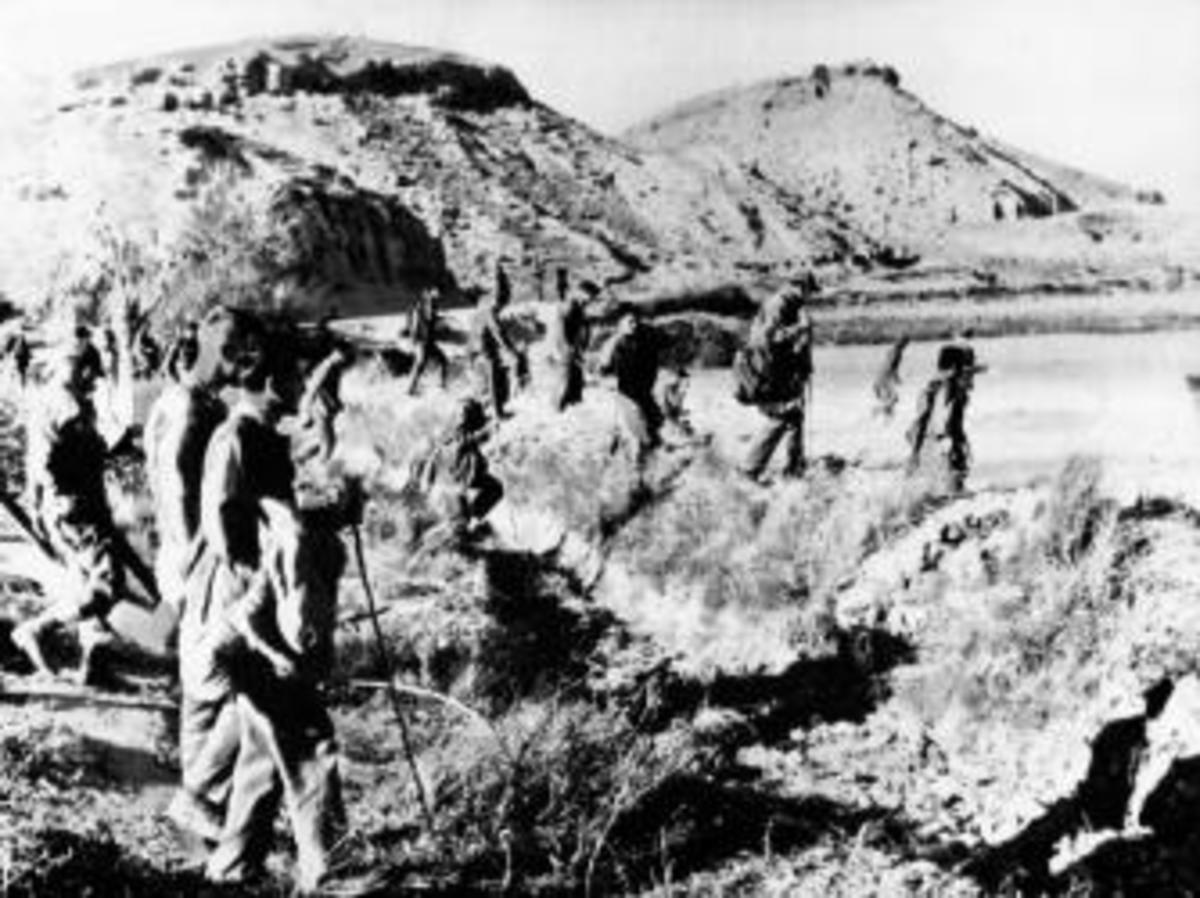
The Palomares disaster occurred on Jan. 17, 1966, when an American B-52 bomber on a Cold War patrol exploded during a midair refueling accident, sending four hydrogen bombs hurtling toward the ground. They were not armed, so there was no nuclear detonation, but the conventional explosives in two of the bombs blew up on impact, scattering pulverized plutonium over a patchwork of farm fields and stucco houses.
Plutonium is extremely toxic, but it often acts slowly. The alpha-particle radiation it gives off travels only a few inches and would not penetrate skin. But inhaled plutonium dust can lodge in the lungs and steadily irradiate surrounding tissue, gradually inflicting damage that can cause cancer and other ailments, sometimes decades later. A single microgram absorbed in the body is enough to be harmful; according to declassified Atomic Energy Commission reports, the bombs that blew apart at Palomares contained more than 3 billion micrograms.
|
For Many Who Cleaned Up a Nuclear Mess, a Key Ruling Comes Too Late
Air Force veterans who dealt with a Cold War-era atomic accident in Spain won the right to sue collectively for health benefits — but not before many had lost battles with cancer. https://www.nytimes.com/2020/02/11/us/palomares-air-force-nuclear.html By Dave Philipps SPRINGFIELD, Mo. — On Christmas Eve, Victor Skaar mailed a stack of letters to Air Force veterans he had served with in Palomares, Spain, scrawling a simple headline at the top of each one: “Great News!” Mr. Skaar, a retired chief master sergeant, was one of 1,600 troops scrambled by the Air Force in 1966 to clean up a classified nuclear disaster by collecting debris and shoveling up plutonium-laced soil. Many were later stricken with cancer and other ailments, and tried without success to get the federal government to take responsibility and pay for their medical care. He wanted to spread the word about an encouraging development: A lawsuit he had filed against the Department of Veterans Affairs had been certified as a class action, meaning that there was finally a chance to set the plutonium case straight, not just for him but for everyone who was there. But his letters soon began trickling back to him: Undeliverable. No forwarding address. One brought a reply from a widow. Each one in his mailbox made his heart sink. “For many of them, it’s too late,” he said of his comrades. “They’re gone.” As one of the first cases ever granted class-action status by the Court of Appeals for Veterans Claims, the Skaar lawsuit represents a major step forward for veterans with long-term health issues linked to toxic exposure in the service.
|
5.2-magnitude earthquake near Fukushima
Japan is rattled by 5.2-magnitude earthquake near Fukushima, Daily Mail UK
- The earthquake struck around 20 miles off the coast of Fukushima province
- Witnesses said they had felt a 10-second long shake during the tremor today
- No tsunami warning has been put in place by Japan’s meteorological agency
By TIM STICKINGS , 12 February 2020 Japan was rattled by a 5.2-magnitude earthquake off the coast of Fukushima province today.
The quake struck just over 50 miles from the city of Fukushima where the nuclear disaster occurred in 2011.
Witnesses said they had felt a 10-second long shake during the tremor at around 7.30pm local time.
No tsunami warning has been put in place by Japan’s meteorological agency.
The US Geological Survey said today’s earthquake had struck at a depth of around 50 miles under the sea.
One witness told earthquake monitoring service EMSC that the quake produced a ‘weak but long shake’ lasting about 10 seconds.
Another said their heater had moved around on its four wheels while making a sound.
Officials in Fukushima prefecture warned residents that there could be aftershocks and directed them to official public safety advice. Energy company TEPCO, which runs four nuclear power plants in the prefecture, said it was awaiting further information about the earthquake’s impact. …..https://www.dailymail.co.uk/news/article-7995301/Japan-rattled-5-2-magnitude-earthquake-near-Fukushima.html
1 This Month



26 September – International Day for the Total Elimination of Nuclear Weapons


PLEASE OPPOSE HR 8255 AND S.3639 – bills would accelerate satellite deployment, with no environmental review or safeguards – https://ncstd5li.quorum.us/campaign/169331/
To see nuclear-related stories in greater depth and intensity – go to https://nuclearinformation.wordpress.com
-
Archives
- September 2026 (257)
- August 2026 (330)
- July 2026 (355)
- June 2026 (287)
- May 2026 (306)
- April 2026 (356)
- March 2026 (251)
- February 2026 (267)
- January 2026 (308)
- December 2025 (358)
- November 2025 (359)
- October 2025 (375)
-
Categories
- 1
- 1 NUCLEAR ISSUES
- business and costs
- climate change
- culture and arts
- ENERGY
- environment
- health
- history
- indigenous issues
- Legal
- marketing of nuclear
- media
- opposition to nuclear
- PERSONAL STORIES
- politics
- politics international
- Religion and ethics
- safety
- secrets,lies and civil liberties
- spinbuster
- technology
- Uranium
- wastes
- weapons and war
- Women
- 2 WORLD
- ACTION
- AFRICA
- Atrocities
- AUSTRALIA
- Christina's notes
- Christina's themes
- culture and arts
- Events
- Fuk 2022
- Fuk 2023
- Fukushima 2017
- Fukushima 2018
- fukushima 2019
- Fukushima 2020
- Fukushima 2021
- general
- global warming
- Humour (God we need it)
- Nuclear
- RARE EARTHS
- Reference
- resources – print
- Resources -audiovicual
- Weekly Newsletter
- World
- World Nuclear
- YouTube
-
RSS
Entries RSS
Comments RSS
 nuclear-news